down to earth

  • Home
  • About Us
  • Down To Earth Book
  • Privacy Policy
When I first started living simply, I didn't know what I was doing.  I had no plan and no recipe for success but I knew what I didn't want so in the first few weeks I just did the opposite of what I usually did.  Eventually I found a few books that helped me.  I read The Simple Living Guide by Janet Luhrs, The Encyclopaedia of Country Living by Carla Emery, Your Money or your Life by Joe Dominquez and Vicki Robin, and I found an American forum that I eventually became an admin on and I helped start an Australian forum, all of them helped me start my brand new life.  I wish I could have found one book that contained everything I wanted to do, instead I stumbled along doing what I felt was right and developed an idea of what I thought a simple life could be.  Eventually I connected up all the dots and I'm now living that life.


In the early days most people writing about living simply were writing about the philosophical and financial aspects of living.  Most of them, except Carla Emery, left the practical bits out.  But to me, the ordinary day-to-day living parts were the real crux of it.  If I didn't simplify how I lived it wouldn't matter how much money I didn't spend or how I thought about my life. If I didn't simply my daily life and all the day -to-day things I constantly repeated, what was the point?


Another big turning point for me was when I found blogs.  Here was a wonderful unseen world where people wrote about things that interested me.  I could see into their lives, get to know their families, understand how they lived and be part of a big neighbourhood that supported each other.  When I found blogs, it didn't matter much that I didn't know anyone in my real life that was doing what I was doing, I felt comfortable here.  Still, I didn't find many people living my dream life.   I found blogs talking about global warming, lightening your footprint, going green and peak oil but none that wrote about how each one of us could do our own bit in our own homes doing ordinary things like changing how we shop, mending clothes and making do with what we have.  So I dived in and started writing about what I was doing.  I had already started writing a book and much of that then went into the blog.  Writing everyday made me accountable and gave me a clear record of what I was doing.  Slowly, my life took me by the hand and one by one I added things I wanted to learn.  I was on my way.  This felt right!


So what did I do?  Basically I stopped spending, made a budget and stuck to it, shopped in a different way, started stockpiling, cooked from scratch, decided that growing the majority of our food in the backyard was possible, started making bread everyday, looked for ways to clean without chemicals, started sewing, mending and knitting, made soap and laundry powder and a million other things that although they came slowly and had to be learnt or re-learnt, are now all a normal part of my life and what define my days.  I no longer struggled to earn a living to pay for food and clothes to be made for me, I stopped buying what was fashionable and went for the practical.  I was over looking like everyone else, I couldn't be bothered with who the latest celebrities were or who they were divorcing, I stopped focusing on myself and came home in the truest sense.  I started to fluff my nest and make my home warm, comfortable and inviting.  I changed my life on purpose and while I was doing that, reinvented myself as well.  Hanno was slower to realise this new direction was right for us, but when he did, he dived right in with few doubts.  Now we are happier than we've ever been - the way we live encourages and supports that.


But the path is different for all of us.  If you have a look at your mainstream friends, even though they're all living in the same way - with debt, convenience foods and keeping up with the Joneses, they all have their differences.  This way of living is the same.  My way of living won't suit all of you, you have to define for yourself what you want your life to be, then step by step move towards that life.  You will probably have to give up much of what supported you in the past but that is replaced by the security of knowing deep down that what you're doing is good for you and your family.

Don't be fooled into believing that a simple life - or whatever you call it, is easy. It usually involves doing more work because you give away convenience and you trade fast for slow.  And don't live your life according to mine, think about what you want and custom make the life you want.

No matter what the final version of your life is, it will probably involve some of these changes:
  • Thinking about what kind of life you want to live - this is a conscious thing, you don't have to stay the same as you are now
  • Controlling your spending with the aim of being debt-free
  • Learning how to look after yourself and your family, reskilling
  • Shopping in a different way
  • Eating healthy, local food
  • Growing some of your own food
  • Disposing of disposables
  • Green cleaning
  • Using your time wisely
  • Cutting back and making do
  • Looking after what you own
  • Making home your centre and connecting with your family and community
  • Changing your definition of success
  • Becoming independent - setting yourself free
Tomorrow I'll write about the thing we all hate - budgeting.  Today, right now, I want you to think about your life and how you want to live.  Get yourself a notebook and write down all the ideas you come up with.  It doesn't matter if it doesn't make much sense, edit it later, just let the ideas flow.  From your list, come up with a paragraph that describes the life you want.  Then make some dot points of all those things you need to change to make that life a reality.  That will be your starting point - you've just written the beginnings of your simple life plan. It's going to be an incredible journey.
Another year has been put to rest and now I'm popping my head up again on my first day of work.  Hanno and I had a lovely rest over the holidays, although truth be told, we both had a cold. I picked it up at our Christmas breakfast, with lots of hugs from people I didn't know, and gave it to Hanno a couple of days later.  Two weeks down the track and we're just both getting over it but it did us a favour really. It made us rest and sleep and take it easy and now- here we are a fresh as two daisies ready for whatever 2010 will bring.


Today, my plan is to let you know a few of the happenings here over the holidays and tomorrow I'll start my simple living series.  The popular kitchen sink photos will continue, I still have a enough for a couple of weeks and then I'll be calling for more photos to be sent, so don't be shy, join in and show us your kitchen sink.


I love the end of the year.  I don't like the hot and humid weather, although this year is another mild one for us, but I love the feeling that most of the year's work is over and it's time to sit back, rest, watch cricket and plan for another year.  We decided to stop planting in our garden a while back. We wanted to rest the garden because of a couple of bug and disease problems that were starting to show.  For the past month we've had no tomatoes, although a few are coming on now, and there hasn't been any lettuce, but we've been harvesting perfect black and shiny eggplant, heavy, juicy capsicums (peppers), sweet corn, zuchinni, enough beans to sink a ship, herbs, sunflowers and cucumbers.  Last week we let the chook forage in there.  Hanno took out a panel of the fence between the chook run and the garden and instead of letting them free range in the backyard, they can quickly pop into the garden and eat to their heart's delight.  I've seen them eating grasshoppers and caterpillars and I know they're also eating bug eggs and scratching around aerating the soil and the compost and leaving little parcels of nitrogen.   They'll be allowed to roam freely in there until we start putting the new garden together in March.  I hope the sweet potatoes, herbs and pumpkin survive, they're all still growing nicely.  While they're feasting on the old silverbeet, cucumbers and carrot tops, they're reducing the amount of work we have to do to get the garden reading for the new season and they're getting rid of more bugs than we could ever hope to find.


While I was watching the cricket, and in between those times when I nodded off for a while, I made a cotton cover for my steel water bottle.  It's a simple thing, just cast on and all plain knitting with a crocheted circle bottom.  I usually fill my bottle with cold water and when it evaporates drops of water slide down the side and onto my desk, it makes a mess.  I sat the bottle on a dishcloth for a day or two, then decided to make the cover.  I'm testing it out today when I go back to work and I hope it will absorb the water and dry out.  I'll keep you posted on that one.

Yesterday Hanno and I drove into Brisbane to buy a floor rug and to spend some time with Shane and Sarndra.  We found the rug we wanted, the last one in the shop, and then made our way to Coopooroo where we had a nice lunch of sandwiches and cold drinks.  Shane and Sarndra have made themselves a lovely little nest there.  Everything is set out well, it's nice and tidy, the wedding quilt is on the bed - all is good.


We drove back home and picked up Alice who stayed with Jens and  Cathy while we were out and all walked in here about 3pm.  We spread the rug out to lay down a non-slip backing and Alice decided it was her space.  I'm sad to say that Alice hasnt improved at all since she ran into the creek in November.  She has periods of breathlessness and sits panting on her bed.  But she still enjoys her food and when we looked after Koda, her cousin, for a few weeks, they had a good time together with a little play every afternoon.  It's what she used to do when Rosie was alive.  But I have no false hopes that the future is bright for Alice.  The vet has told us she has a heart valve problem and as she's 12 years old, she doesn't have long to live.  So we are giving her treats and looking after her as best we can and hope to make these next few months comfortable and pleasant for her.

I woke early today eager for this new year to begin.  Today I go back to work at my voluntary job.  We move into our new building in a couple of weeks so from today we'll be planning, packing and measuring spaces for the new furniture and equipment we'll buy to go into the new centre.  I don't know what else this year will bring but I have a feeling it will be a busy one and I hope it is full of interesting work and wonderful surprises.  Thank you to everyone who left comments over the holiday period.  Long time lurkers came out of hiding, that always pleases me a lot, and many new folk introduced themselves.  Well, hang on to your hats, everyone. Let move forward together into this new year and prove what our grannies all knew, that with hard work and persistence, anything is possible.


Lettuce, bok choi and cabbages.
One of my fantasies when I was younger was to wander off into the bush and live off the land. In the 1970s, many young people thought that was an attractive proposition and while some did it, my life lead in a different direction. I guess the phrase ‘living off the land’ has a romantic ring to it but I had no doubt how much energy it would take and how difficult it would be; even so, I probably underestimated it by a long shot.


A green crossroad.

Full of vitamins C and A the purple top turnip. You eat the root and the green top.

A lot of time has passed since then and many of the things I once thought of as great ideas now leave me underwhelmed and with a wry smile. But not that notion – living off the land, I still look back to a life when I would have, could have and maybe, should have. I’ve kept chooks and a vegetable garden for many years now, not in the wild and crazy way I once wanted to do it - living in the bush and foraging for food, but the more sensible and productive option of growing conventional fruit, nuts and vegetables, and that, combined with chooks, suits me just fine. Now, instead of it being a crazy way to live, my understanding of living off the land is more holistic, now it really fits into my life.


These delicious lettuce grow well here during the colder months.

I have no doubt that if we wanted to put more time and energy into our garden, if we dug up more lawn to double the size of it, we could live off our backyard produce all year long. But we are getting older and the time and energy we wish to give the garden is what we give it – and that results in us producing about half the vegetables we eat and about one tenth the fruit. Many fruits and nuts take a lot longer to produce than vegetables. Bananas, for instance, take about 18 months to produce a good sized bunch here, and then that part of the banana has to be cut down to allow others to produce. Unlike oranges, they don’t produce for many years on the same tree. Our pecan tree took 12 years before it gave us the first nuts. We have an excellent Eureka lemon tree that has been a prolific producer almost year round for the past ten years. When it comes to choosing fruit and nut types, make sure your choice is the right one for your area because you will either hit the jackpot or be wondering when and if that tree will ever bear the fruit and nuts you bought it for.


Sugarloaf cabbages. These are the only cabbages we can grow in our short winter season.


And when you grow cabbages, cauliflowers or broccoli, you'll have white cabbage moth caterpillars. When we have only a few of these, we sacrifice the one plant they're on - they usually go for the weakest one. When there are a lot of them, like we have this year, we spray with the organic bacterial spray - Dipel.

But I know now that living off the land in our own backyard is possible for us and it's also possible in varying degrees for many people. If you list what vegetables you usually buy and work out a plan to grow those vegetables right there in your back yard, not only will it give you inexpensive organic vegetables, it will teach you the many skills you need to be successful at it and give you the independence and freedom of being able to feed yourself. If you live in a warm climate, you’ll probably have at least six months of growing time, if you’re in a colder place, maybe four or five months That is ample time to get in a few decent crops and to freeze or preserve/can your excess – spreading that backyard cheer over a longer period.


The celery is tall and starting to fill out.


The other day I read that in the UK, USA and Australia, vegetable gardening has recently increased 30 percent in popularity. While I would love to think that all those people new to the vegie patch were doing it because they have changed the way they live, I think it is the result of the global economical crisis. But for what ever reason you’ve taken to growing food in your backyard, it is a good one because I think it will teach you a lot more than you think it will. All of our ancestors survived because they had the ability to produce or gather their own food. It is a powerful and significant skill. Our survival doesn't depend on it now but the feeling you get when you pull those early carrots, dig your first potatoes or freeze an abundance of beans will be very close to self respect.


I laughed when I saw this photo. The white girl is Germaine. It looks like she's creeping up on Mary.

When we decided to live a more simple life, I wanted to use every asset we had to produce what we needed to live - our land was one of our major assets. So when it came down to it, I did live off the land and it makes me proud to know I can because learning to grow food also teaches you a lot about the natural world we live in, and that is always a good thing.

Have you started a garden this year?

[I'll be back tomorrow.]


If you're not already baking your own bread, I want you to think about doing it. Not only is it preservatives-free, it's cheaper, tastes better and it a great skill to have. Bread is one of our staple foods and in days gone past everyone, and I mean everyone, knew how to make it. Bread baking is just one of the skills we've traded for the sake of convenience - we give them our money and our independence, they give us back a loaf of bread (usually inferior to what we'd make) and the convenience of not having the bake the bread ourselves.

I know that many of you don't have a lot of time to spend in the kitchen baking bread. If you are one of those people, I encourage you to buy, barter, or swap your way to a breadmaker. It doesn't have to be new or fancy, it just has to knead the dough for you. Then you shape the loaf and bake it in the regular oven. Making bread this way will take you about 10 minutes in the various stages of putting the ingredients in the machine, shaping the loaf and taking it from the oven. Baking bread using a breadmaker does NOT make you an inferior cook. If using a breadmaker allows you to make your own bread, then go for it. Don't think you HAVE to make the dough by hand, it doesn't matter! The object of the exercise is to produce bread and if using a bread maker is how you do it, so be it.

I did a tutorial for hand making bread
so you can try that if you want to. I added gluten flour to that recipe because it is a beginner's loaf and the gluten flour helps with the rise. You can leave it out if you can't find gluten or if you feel you'll knead the dough well enough without it.

In the posts here and here I'm talking about the cost of bread. If you can find a supplier of good high protein flour - or bakers flour - you will be able to produce loaf after loaf at a fraction of the price of store bought bread. BTW, the protein in bread flour is gluten so if you can't find high protein flour or bakers flours, use your plain all purpose flour and add gluten to it - ratio is one cup of flour to one teaspoon of gluten.

There are two more posts about bread making here and here.

There are thousands of recipes for bread and this is the one I used to make my flower pot loaves last weekend.

SOY AND LINSEED BREAD - MADE IN A BREADMAKER

First take two teaspoons of dry yeast and a tablespoon of sugar or honey, add to a cup of warm water and stir. Let that sit on the bench to prove (bubble up) while you prepare your other ingredients.

In this order, or the order described in your breadmaker manual, place in your breadmaker:

3 cups bread flour/bakers flour/high protein flour or plain flour with 3 teaspoons of gluten flour added to it. I used soy and linseed flour, you can use white, wholemeal, wholegrain or whatever flour you have.
1 teaspoon of salt
1 tablespoon of milk powder -- if you have no milk powder leave it out

If you have no milk powder, add some milk as part of your liquid component. You've already got a cup of water that the yeast is proving in, when the yeast has bubbled up (therefore you know it's alive and will activate the bread properly) pour the cup of yeast water in the breadmaker on top of the flour. If you didn't add milk powder, add half a cup of milk. If you did add milk powder, add another half cup of water.

Now, here is where you have to use your common sense. Turn on your machine on the "dough" setting and let it mix all the ingredients for a few minutes. Stay at the machine and watch it. You probably need to add more liquid. I can't tell you how much to add because all flour is different and even the humidity in your home will effect the amount of water you'll need to add at this point. If the dough is too dry, start adding water from a cup in very small amounts. Let the machine mix it in well before you judge whether you need more. One of the skills of breadmaking is judging the right amount of water and I always poke my finger in to check it. You're hoping for a moist dough that has mixed in all the ingredients - you don't want dry dough and you don't want sloppy dough. When you're happy that you've got it right, let the machine do it's work. I'll just say that the amount of liquid you'll add will be between 1½ cups and 2 cups. How much of that extra ½ cup you add you'll have to decide.

When the machine is finished, take the dough out, sprinkle a small amount (one tablespoon) of flour on your bench and knead the dough into a smooth ball. You'll notice at this stage, the dough is elastic - if you pull a piece out, it's springy. Shape the loaf, put it in a greased or lined bread tin and let it sit in a warm place until the bread has risen. This will take about 30 minutes in a warm kitchen but up to an hour in a cool one. You could also put your tin on top of a hot water system, or in the sun with a moist tea towel on the top to help it rise. I used three flower pots and divided the dough equally into three portions and added them to the pots.

When the dough is doubled in size and has risen just above the top of the bread tin, place it in a hot oven. Preheat your oven to its highest temperature, then when you put the bread in, lower the temp to 200C (395F). Bake until you smell the delicious smell of bread and the top is golden. It will take between 20 - 30 minutes.

And that's it. Even though there are a lot of instructions above, they have been written for those of us who have little experience. Anyone who has baked before will just need the recipe and will go on with it. As I said, it will only take about 10 minutes in various stages.


The little flower pot loaves were baked in real plant pots, but they need to be seasoned. DON"T BUY CHINESE POTS and don't use old pots that have had plants in them. I think mine were 5 inch pots. Clean them thoroughly with soap and warm water, rinse well and allow to dry for at least 12 hours. Rub cooking oil into the pots and make sure you cover ever part of every pot. The oil will soak into the terracotta. Make sure you apply a good amount of oil. Put the pots into a COLD oven and turn the heat up to 180C (350F). Let the pots cook in the oven for 20 minutes, then turn the heat off. Leave them in the oven, with the door closed, overnight to cool completely. Next day, repeat that process again. When they come out of the oven the second time, they're ready to be used for baking.


You can bake anything in these pots. I have used them in the past for baking little Christmas cakes that I gave as Christmas gifts - still in the pot - and tied with a red ribbon. They were a real hit. But on the weekend I baked bread in them. I lined them with parchment paper, both on the bottom and sides, to make sure the bread didn't stick.


If you're not a baker, or if you're young and new to home cooking, I hope you'll try making bread. It will save you money and it's better for you because there is no preservative in home baked bread. But best of all, it tastes like bread should taste and you'll be gaining back your independence because you'll be able to provide for yourself.

I wonder how many of you are having problems with bread making. Are there many? Read through my tutorial and try the recipe above and see how you go with it. If there are a few still having problems making a decent loaf, I'll do a troubleshooting post in the next week or so and well see if we can work out the problems together.

Happy baking!

While the shops get busier with the excesses of Christmas shopping, my simple life continues at a gentle pace. It was a cooking and odds and ends day yesterday. I baked two fruit cakes, one for my family and one for a gift, and then made butter with local Guernsey cream for a batch of shortbread, also a gift. Hanno had a garage sale happening outside with the results of our decluttering over the past couple of months. Luckily we sold our old stove and oven and some other bits and pieces, and ended up making around $400. There was a constant stream of people and also tea being made and taken out to him, then, later, cold drinks with ice.

I wanted to get all my gifts organised yesterday. I don't give much now and I don't send cards at all, but those I do give to, are very special people. The gifts must be exactly right. I've been storing the last of the luffas from a crop earlier this year and yesterday afternoon I peeled and cleaned them. They've been soaking overnight with a little bleach added to the water as a couple of them were slightly mouldy. A luffa and homemade olive oil soap is a lovely combination and every time I give them as a gift, they're always appreciated.

Homemade soap is a real luxury. It's creamy and leaves my skin feeling clean and cared for. Most commercial soap doesn't contain glycerin, and that is what nourishes the skin. Usually the commercial makers extract the glycerin and sell that as a separate product because it's more valuable than the soap it comes from. That's why those soaps often make your skin dry and itchy. When you make your own soap, the glycerin stays in it and when you use the soap every day it gently cares for and nourishes your skin. Homemade soap, used with a luffa, is the perfect simple indulgence. Skin is the largest organ of the body and you should be careful with those products that touch your skin every day. Using an organically grown luffa from your garden, with homemade soap, is the most gentle and wholesome type of daily skin care.

This photo was taken in February of this year. Luffas are a hot weather crop and are harvested in this area in late February. We grew these next to our poly tank. When they're small and green you can eat luffas as a vegetable. They're pretty bland but, like eggplant, they take on the flavour of what they're cooked with.

This is what they looked like yesterday. I think I harvested about 30 luffas and these are the last of them. That hole at the end is where the seeds fall from.

Seeds and the peeled luffas. They look pretty ordinary at this stage.

They sat in a bucket of water with a small amount of bleach overnight. That was to kill the mould that was on some of them, but it also lightens the luffas.

And here they are this morning drying on the back verandah.


The addition of a good homemade olive oil soap makes this a wonderful gift for either a woman or a man.

I'll finish preparing my gifts this morning. I'm also baking bread, washing the floors and ironing. Things not sold in the garage sale will be boxed up and given to our local St Vinnies. This afternoon I'm writing letters and a couple of reports for work that have to be ready tomorrow afternoon. I doubt I'll have time to do them tomorrow.
If I were to write up a list of To Do's everyday, it would go something like this:
  • Sweep floor
  • Wash dishes
  • Talk to Hanno
  • Bake bread and biscuits
  • Make bed
  • Smile
  • Relax
  • Sew and knit
  • Water garden
  • Clean cupboards
  • Harvest paw paws
  • Enjoy yourself
  • Cook two dinners, freeze one
  • Get enough sleep
I don't make a list for myself any more, I used to, but now my daily rhythm sweeps me along. But if there were such a list in my home, every day, in among the housekeeping tasks, without fail, Rhonda-keeping tasks would be listed too. 'Talk to Hanno, smile, relax, sew and knit, enjoy yourself and get enough sleep' have as much to do with keeping my home in order as sweeping the floor and baking bread. Without those elements in my day, it's just a list of chores, and while I find joy in working at home now, it wasn't always so and might not always be. I need to relax, smile, talk, knit and sew to enjoy what I'm doing.


I know I'm in that laid back phase of my life now, and there are many of you who are run off your feet with the work you need to do each day, but my days are also full to bursting at the moment, so I make sure I look after myself as I go. If I don't who will? No one. It's not Hanno's job to walk around with me and make me smile, I have no personal assistant who tells me to sit down and have morning tea while she types up a report for me, or does a couple of pages of book writing. It is my responsibility to do what I can to look after my well being as I work. If I don't do that, my well being will run off down the street screaming "I told you so!"

So every day I make time for morning tea on the front verandah. Hanno and I reconnected out there when we both gave up work. For years we'd worked in our jobs, separated every day, and too busy to talk at night. Those morning teas and the talking that went with them brought us back together again, it reinvented US. That 30 - 40 minutes not only gives us a rest after our early morning work, it also sets us up for the rest of the day, we discuss plans, solve problems and draw closer to each other. It also helps us do an extra 60 minutes work for the investment of that restful 30.


I have written before about not seeing knitting and sewing as a craft, but instead as part of my housework. I love to sew, but when I do, I am producing items for our home, or mending clothes or sheets, making curtains, or sewing on buttons, applying patches or restitching a hem. All things that allow us to keep using what we already own or to create what we need from what we already have. Looking after our clothes and soft furnishings is part of my house work. And so is knitting dishcloths, rugs, tea cosies, hats, mittens and scarves. So I don't feel I'm taking time for myself when I knit or sew, even though I love doing it, it's part of my housework.

Finding joy in daily life is just one of the ways I have made this housework thing work for me. Instead of being the misery it used to be, I look for ways to enjoy my day, I smile, talk, relax and rest when I feel like it. It makes a difference, especially on the busiest of days. But you have to remind yourself to do it when you start, so make a written list, or a mental one, and list what you need to do to enjoy your day. And then, even if it puts you behind a bit, do it - look after yourself so you can look after your family. If you get sick, or if you hate what you're doing, everyone will suffer. So give yourself time to do a few things you enjoy throughout the day. Rest. Sit down with a cup of coffee and talk to the children, or who ever is in the house. If no one is there, email or phone a friend. Look for joy in your day, find happiness in the pantry, reinvent your routines so they work for you, and respect the work you do for you are making a warm and comfortable home, and that is one of the most important jobs there is.

As most of your know Hanno and I took the plunge a few years ago and stopped working. We now use the hours we used to sell to others on ourselves, making an interesting life on our own little patch of Australian earth. I sometimes get emails from younger readers asking about living simply while working for a living. I've said many times that you can live simply anywhere at any time. Simple living has little to do with location, income or age, it's primarily a state of mind.

I want to emphasise first that your simple life isn't a cookie cutter version of my life, or someone else's life you've read about. Every single one of us creates our own version of what our life is. If you were intending to live forever in an un-simple world, you know your life would differ at many points to your friends and neighbours' lives. The same applies to your simple life. There will be points of similarity and points of difference but I hope that many of the new things you incorporate into your life will be environmentally sound.

I believe the best start to any simple life is to decide what it is you want your life to be, write that down and make that the focus of your new life. Know where you're headed but then work with what you have right now. If you feel like your life is a bit out of control, start with small steps towards the life you want - all those small steps will add up to make a big difference.

Work on one goal at a time, you'll probably find that whatever you work on will lead on to other things. For instance, if you want to change the way you shop for groceries, focus on that. You'll find that when you get into it, you might want to plan your menus, you might decide to stockpile, and to declutter to make a space for your stockpile. You might start cooking from scratch, so that will involve learning how to do it and finding recipes your family enjoy. The same will apply if you decide to grow vegetables. You'll learn all you can about gardening, but that might lead you to worm farms, compost heaps, chickens and preserving.

Forget all the grand gestures - small things matter. Make your lunch when you go to work, take a thermos flask of coffee or tea, always take a bottle of water with you when you go out. Your water bottle should be one that is reused many times. Stop buying water unless you absolutely have to. Add the money you would have spent to a change jar. When it's built up, pay it off your credit card debt, or pay an extra mortgage payment. If you have no debt, start a savings account to help you buy your own home, or donate your savings to your local homeless shelter or neighbourhood centre.

Say NO. Make your time your own, stop giving it away to insignificant things and people. Make sure the time you spend away from your own home and family is spent in the most worthwhile way. Time is really all we have. Use the time you have wisely. Stop shopping for junk, stop going to shopping malls - they will create a need to spend, if you habitually watch TV, stop. It all wastes your time. When you have some spare time, do something you love. Write down what you value and make sure you spend your time in line with those values. Now that you're living in a new way, you'll shed a few things that you used to do but now get in the way of living the life you want. Stop multi-tasking, stop living on auto-pilot. When you decide to spend your time doing something - be mindful of what you are doing. Concentrate on your tasks, think about them, make sure they matter and do them well.

Find beauty in your own life. That might be through obvious things that everyone would recognise as beautiful, but it might also encompass a passion for bee keeping, teaching yourself how to speak a foreign language or volunteering your time to a local cause that means a lot to you. Create a new standard of quality for yourself. Make sure you do everything to the best of your ability.

Learn to be frugal. Reuse, repair, recycle and make do with what you have.

There will probably be a long period of time when you feel like you're using simple living strategies but not really living simply. But you will come to the point when you feel it all falls into place and that you've built your version of a simple life. And when you do that, when you reach a point when you feel comfortable with your life, you know you're growing stronger and what you're doing is significant, you will begin to thrive and then no other way of living will be good enough for you.
It seems to be agreed now, we are headed for a few shaky years ahead. Some are saying it will be the same or worse than the Great Depression, but the truth is no one knows what will happen. Some people feel secure because they have superannuation/401k plans, or stocks, but another stock market crash might wipe a lot of the value from those investments. Our governments are trying to keep us calm by offering stimulus cheques. They want us to spend those stimulus cheques on TVs, cars and other products they believe will help boost the economy. I hope anyone who gets one of these payments uses it to build a grocery stockpile, buy vegetable seeds, fruit trees and chooks, or build an organic garden, because no matter what happens, we all know we have to keep food on the table.

In hard economic times, the real currency is life skills.

I'm not sure if our economic conditions now are the same as they were during the Great Depression (GD); my parents lived through it, I didn't, but I do know that almost everything else is different. During the GD almost all women knew how to cook from scratch, make do, substitute ingredients, sew, knit, mend and live without electricity. Now very few do. During the GD, most men could do the repairs in the home, repair a bicycle, hunt, barter, kill and pluck a chicken or skin a rabbit, and would walk miles for a day of paid work. Now very few do. Most families then didn't have cars, no one had credit cards, there were no TVs or computers. The debt ordinary people carried in the GD were mortgages, other kinds of debt were uncommon.

During the Great Depression people were equipped to look after themselves using the life skills most people had then, now those skills are lost to many. They used to support each other, their extended family and the neighbourhood. If the economic conditions are the same now as in the GD, everything else is different.


If I were a young wife now, with children to raise, I would be learning everything I could about how to do the work in my home without modern appliances. I would learn to make bread by hand - good bread not just a get-by loaf; I would work out easy ways to do the family laundry - in case a time came when I didn't want to use electricity - once I worked it out, I'd go back to my washing machine; I would create a stockpile of groceries, and if I had a backyard I would learn to garden and raise chickens. I would teach myself to sew and knit. I would start mending clothes, I'd recycle and reuse everything I could. I'd start cooking from scratch with the intention of learning how to produce the most delicious and nutritious meals for the lowest cost.

If I were a young wife and mother now, I would take it upon myself to save every penny I could to pay off our debt. I would encourage my husband and children to economise, make do and learn to go without. My focus would be on the long-term health and prosperity of my family and I would hope to teach myself enough to give us the best chance in this tough economic climate.


It is often thought that the person who goes out to work has the important job in the family and will be the deciding factor in how well the family lives. And while that bread winner role is still vitally important, the stay at home partner is equally important. It is the person in the home who will feed the family, manage the money and pinch every penny until it hurts. It is an exciting time for homemakers. Our jobs have always been significant, more so than we were ever given credit for, but now we have the added responsibility of stretching our dollars to get the maximum value from them and helping our family get through the next few years while who knows what will happen. And if we come out of this quickly and unscathed, well, we'll have those skills to help us in the future. It's a win/win situation.

There has never been a better time to know how to run a home efficiently. There has never been a more pressing need to know the skills of the homemaker. If you still need to learn a few things, you'd better get cracking, because what you learn soon and what you know now might mean make or break for your family. So don't be scared, be energised by this. There are many ways to learn what you need to know. You could start by reading some of my archives, or visit the co-op, and read through any of the archives of the writers who have links to their own blogs there, or find a blog you relate to and learn from it. Books you might find helpful are Encyclopedia of Country Living, Nourishing Traditions, or (for Australia/NZ) Easy Organic Gardening.

And, as always, I'm happy to answer your questions.

I'm looking forward to a restful weekend, full of knitting and a little writing. For all the knitters in the knit-along, I've just finished my fifth square. I'll take some photos and show them on Monday. I hope you enjoy your weekend and have the chance to relax and unwind. Welcome to the new readers who arrived this week. Please drop a comment and say hello. Thank you for all the kind and generous comments left during the week. Take care, everyone.


Fifteen years ago, when Hanno and I first bought this little house, we drove along a one lane street, turned onto a dirt driveway and saw a very basic house on a magnificent piece of land surrounded by pine and rainforest. We didn't know it at the time, but this home, of all those we have shared over the years, would nurture us, bring us closer together and ease us along the path to a more simple life. We made some improvements as soon as we moved in to better suit our family, and put up fences to keep the dogs in, and in the time since then, apart from an interior paint job, we've been happy here and content to wake up each day within these walls.

I am still in awe of the land we live upon. I never say we own it because as far as I'm concerned, we are merely the custodians here until we pass it on to our sons; and in truth, the land probably owns us. We wake up surrounded by trees, sometimes we hear the rushing of the creek that is our back boundary, and when I walk into our back yard, even after living here 11 years, I often just stop and look, amazed at what I see. All my life's roads have lead to this place.

Our gate has been closed these past few days and if I didn't know better, I would say we had been cast adrift, completely cut off from the rest of the world. There is peace here, we hear birds call, and sometimes a train in the distance, but apart from that, it's a wind rushing through the trees type of silence that feels alive with activity and energy.


There has been the undeniable whiff of self-reliance in the air over Easter. I've baked bread and nut slices, made a simple evening meal each night, set the table numerous times, washed dishes and clothes, swept, lit candles, watered plants on the verandah, watched rain fall and thought about my life here, on this land with my family, and you, my blog family. I also worked on my project, did some writing, knitting and a stocktake of the soap, yarn and fabric I have on hand. There are a hundred things I could do, and one by one I get to those that need my attention, all else can wait until its time. It's been a beautiful Easter when we both worked to produce what we need here and mended a couple of things to keep them going a while longer. After such days, it's easy to go to bed pleased with the work we've completed and tired enough to sleep deeply until the next morning.


The simple life, full of the home tasks of cooking, mending, cleaning and growing has been the way of life for the majority for many hundreds of years. But now, in the context of our modern times, when shops are full of fashions, leaf blowers, designer dog collars and pre-cooked food, when it's compared to what is available to us now, now it feels like it's in sharp contrast to how most people live. Working with one's own hands and producing the goods we need to live is truly empowering but the wonder of it is that is so easy to do. These are just life skills that are easily passed on to all of us by example, by just watching others.

I look at TV sometimes and I wonder if what they show is real. Are the streets really that mean in cities? Do people really kill each other over drugs and money, and for no reason at all? Is road rage real? What life skills are being passed on by watching all that? I suppose I know the answers to all those questions and for now, on this Easter weekend, I've been content and well and truly happy to stay cocooned here, listening to the rain, stitching and knitting, and wondering if living simply can make a significant and real difference outside my gate. I wonder if Hanno thinks these same thoughts. I wonder if you do.

Thank you for coming here to share our days, it still amazes me that you do. Thank you for sharing your thoughts and lives with us here too. Welcome to the new readers, warm hugs to all the older ones. Let's all work towards getting the simple message out to all those who surround us in the normal course of our lives, and show, by example, that this way of living not only empowers and enriches us, it builds contentment and greater expectations.

This is the quark I made from my yoghurt last week. It drained for four days before I could get back to it, but that's fine as long as it's kept refrigerated. The cheese on the left is savory with cucumber, red capsicum (red pepper), green onion and salt and pepper. It's great on crackers or a sandwich. The one on the right is sweet with honey stirred through it. It's delicious on toast for breakfast. I also collected a small jug of whey that I'll use to make a cake and pikelets (flapjacks).

Housework never ends! You could work half the day just doing what needs to be done in your home, or you could work to a schedule and have your chores organised for the days during the week, but even if you stuck rigidly to your schedule, you'd still have to do it all again tomorrow or next week. Because housework never ends.

I used to struggle with this. I had real trouble coming to terms with the endless nature of it. How could you ever want to do any chore, and get joy from it, when it would never end? No matter how well I did what I had to do, there would always be something else to do tomorrow - or I would have to do the same thing, over and over again.

When I first starting living simply, this was the one thing that didn't just fall into place for me. If I wanted to live well, get joy from the simple things that made up my day and provide a good home for my family and myself, then I had to look at my chores in a different way. I am one of those women who, although I've worked outside the home most of my life, when I became a full time homemaker/housewife, I wore that badge with pride and wanted to live up to the true and full meaning of the name.

So I started thinking about the never-ending nature of housework, as that was the bit that bothered me the most. I didn't have a problem with most of the chores themselves. One of the things Hanno impressed me with early on in our relationship was his attitude of "It has to be done, I'll just do it." So I started with that and I just did what had to be done. I made sure I didn't do all the things I liked doing on the same day, and sprinkled them throughout the week so there were always days I did chores I liked doing - like cooking, baking, gardening and mending with things I didn't like so much - like cleaning toilets, ironing and vacuuming. That worked! But no matter how many times I packed the dishwasher or cleaned the shower, or how well I did it, it still had to be done the next day or next week. Hmmmmm.

Then it hit me like a ton of bricks. If housework never ends then I should get rid of that feeling that if I clean the fridge out or mop the floor, then that's done. Over with. Finished. Completed. All fixed. If housework never ends, then I never have to finish it. Eureka!

When I stopped thinking that I'd work through my chores, get everything finished and then they'd get messed up again so I'd have to start over again, and replaced it with I'll do the ironing, mopping, washing up, make the beds and bake today and if I don't have time for the mopping, I'll do that tomorrow, that made a difference. I continued working with chores I liked, mixed with those I didn't like so much, and that worked well for me. I also changed things to better suit the way I worked. I stopped vacuuming so much and started sweeping. I liked sweeping, so I could still keep the floors clean without the vacuum cleaner. Now I vacuum once a week and sweep the rest of the time. I stopped using the dishwasher and started washing up by hand, and found I really liked it. I stopped ironing everything we wore and now just iron my work clothes and the napkins, tablecloths and pillow slips that I like ironed. I stopped washing everything that had been used once and now only wash what is dirty or smelly - this helped reduce my washing to two or three loads a week. That made a big difference to the amount of housework I did and also cut back on our power and water usage. A big plus.

I guess what I'm saying is that if you want to live in a clean and comfortable home that you can enjoy with your family and friends, then housework is a part of your life. If it's inevitable then you should try to make the most of it. You might end up liking most of it, like I do. Rethink how you work. Just because you've always done something one way, it doesn't mean it has to be like that forever. If you can modify something to better suit how you work, do it. Streamline your tasks and don't aim for perfection. Take breaks. Do everything you do well and find the pleasure in it - it will be there lurking, you just have to find it. Be proud of what you achieve every day because you are providing a comfortable home for your family, you are making the most of the resources you have and looking after what you own. That is a good thing. And most of all, stop thinking that you'll never get through it all. Housework never ends, so don't try to finish it.


I wrote yesterday about my life and how I have changed. I want to take that a step further today and write about how you might simplify, if you haven't already done so. When I do something new that requires me to change my behaviour, I think about it for a while, work out the ins and outs of it, I might do some reading, think some more and then I dive in. Often the diving is the most difficult part of that process but when that first step is taken, it's usually easier than I imagined.

A change towards a simple life is similar. From the outside it looks difficult - you want the peace of mind it brings, you want to regain your independence and live well, you want to be environmentally sound, but it looks like hard work. Instead of holding yourself back, I encourage you to dive in. It's okay to be a bit scared of change, it's normal to be apprehensive, but don't let that stop you.

Dive.

Your first step might be to declutter one room. It might be to stop buying coffee on your way to work. You might start taking lunch to work. Maybe you'll start hand washing dishes, or hanging the laundry on the line to dry instead of machine drying. Or will you start stockpiling and cooking from scratch? Drawing up a budget would be a good first step. Or will you say "no" to that next invitation for lunch with the girls so you can save that money and spend some time relaxing at home. There is also mending, learning to knit, starting a vegetable garden, looking for an organic supplier of local vegetables, buying milk from a local dairy or bartering. There are so many first steps, I have to stop now or I'll be here all day. But the big question is, what will your first step be, or if you've made your first step, what will your next step be, or your next?

It really is as simple as making the decision to simplify and then doing those things you want to have as part of your life. Everyone will decide on different things, and you might want to do things I've not written about nor ever mentioned here. You don't have to tell your family or friends what you're doing, or you might have a family meeting to talk it over with them, the choice is yours. The important thing is to start.

You'll probably find, like I did, that once the move towards simplicity has started, a new thing can be added each day or week, and once you have that momentum happening, nothing will hold you back. In six months time you'll take stock and see just how far you've come.

I'm not going to lie and tell you that every single thing you do will be easy and will bring you joy. It won't, some things will be a struggle. I think you'll fnd that overcoming difficulties and persevering will bring you to a place where you'll feel you've done your best and you'll feel good about that. Look for joy in your everyday life and try to find happiness and contentment in your life. Celebrate your new skills; it's okay to feel good about what you're doing.

I hope that as you settle into your stride you'll start not only doing for yourself but also for others. Generosity and kindness are the icing on the cake for me and I hope you will get the same amount of pleasure and satisfaction from giving to others as I do. I'm not talking about grand gestures - there are none of those in a simple life - it's more about the tiny, and often silent, things, that with a small effort from yourself, will make a difference to someone else.

As you can see, there is no formula for simple living. It's diverse, there is no one size sits all. That's what makes it wonderful - when you think carefully about what you want in your life and then start doing those things, it feels right. Your version of simple living will be different to mine and everyone else's, even though we will have elements of it that are similar. But when you get it right, when you work on your own version of your life, and not that one designed for you by advertisers and marketers (or friends), when you set to and start doing for yourself, when you regain your independence and feel deep within that you're doing the right thing, then, my friends, you'll know you're on the right path and a team of wild horses won't pull you away from it.

I'd love to know what your first step will be, or was. :- )
I had a wonderfully restful day yesterday and feel better for it today. Thank you for all the good wishes you sent.


I've had some emails recently from younger women thanking me for being their role model. I love getting those emails because one of the things I hope to achieve writing on my blog is to show, by example, how we can work towards a better future simply by living according to our values and putting in the hard work when it's necessary. I am quite confident in this role because I grew up in a time when mothers, aunts, grandmothers, teachers and older women in general supported other women, especially the younger ones new to married life and raising children. I grew up knowing that when it was my turn, I would pass on what I know and would encourage other women in their various roles, both as homemakers and working women.

I didn't know then that our culture would change so much and that instead of looking to the women around them, it would be celebrities who would be seen as role models. I didn't know that women would become so competitive and try to outshine each other. I didn't know that overseas holidays and flash houses would replace the hope of a good life as the prize everyone worked towards. How times have changed.


At the risk of sounding like my mother and grandmother, in my day we women supported and encouraged our friends, work mates and neighbours. We didn't envy each other; if one of us had something outstanding, it was a joy to everyone that one of us had such a prize. That doesn't happen much now. Now, in general, we are all trying to keep up with the Joneses. And I don't know why. Mr and Mrs Jones are probably up to their eyeballs in debt.

I hope that part of your return to a simpler life will allow you to show support to others. I hope you'll share what you know so that others might benefit through your knowledge. Selfishness and resentment belittle us all. Having more than someone else doesn't make you better than them, it just means you have more. I hope we're all able to open our hearts up to those around us and be a role model. If they are mean spirited, show, by example, how life should be lived, don't descend to their level.


If we are to change this sad trend towards selfish and mean lives, we will do it by living our lives with generosity and kindness and by modelling that behaviour. We all need to be proud of how we are living and what we're striving for and be open enough to talk about what we want in life. If we start doing that, and let others see we are living well, it will make a difference. Like everything it will be slow but that shouldn't stop us from starting. Live your life with confidence, show respect to those around you, give more and expect less. And when your friends ask you why you changed and if you're happy, tell them (without preaching), be their role model, and support and encourage them to follow your lead.

ADDITION: I've been thinking for a long time that I'll add a forum to my blog. You'd be able to ask questions, support each other and generally be part of an open community. Would you like this? Would you visit? It will be free. If so, I'll need a couple of people, with experience, to help me as moderators. Is anyone interested? The forum is almost ready to launch but I need your input to progress further.
Newer Posts Older Posts Home

MY BOOKS

MY BOOKS


My books were all published by Pengiun, and are available at Amazon US, Amazon UK and Amazon Au

Search here

Total Pageviews

Translate


I'm Rhonda Hetzel and I've been writing my Down to Earth blog since 2007. Although I write the occasional philosophical post, my main topics include home cooking, happiness and gardening as well as budgeting, baking, ageing, generosity, mending and handmade crafts. I hope you enjoy your time here.

MY FAVOURITE PLACES

  • Grandma Donna's Place
  • Grandma Donna's YouTube
  • Grandma Donna's Instagram
  • This Simple Day
  • Nicole's Instagram

Give More

Give More

Popular posts last year

Making ginger beer from scratch

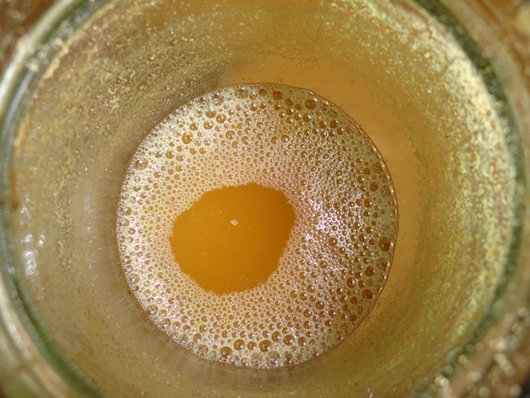
We had a nice supply of ginger beer going over Christmas. It's a delicious soft drink for young and old, although there is an alcoholic version that can be made with a slight variation on the recipe. Ginger beer is a naturally fermented drink that is easy to make - with ginger beer you make a starter called a ginger beer plant and after it has fermented, you add that to sweet water and lemon juice. Like sourdough, it must ferment to give it that sharp fizz. To make a ginger beer plant you'll need ginger - either the powdered dry variety or fresh ginger, sugar, rainwater or tap water that has stood for 24 hours to allow the chlorine to evaporate off. You'll also need clean plastic bottles that have been scrubbed with soap, hot water and a bottle brush and then rinsed with hot water. I never sterilise my bottles and I haven't had any problems. If you intend to keep the ginger beer for a long time, I'd suggest you sterilise your bottles. MAKING THE STARTER In a...
Image

NOT the last post

This will be my last post here.  I've been writing my blog for 18 years and now is the time to step back. I’ve stopped writing the blog and come back a couple of times because so many people wanted it, but that won’t happen again, I won’t be back.  I’ll continue on instagram to remain connected but I don’t know how frequent that will be. I know some of you will be interested to know the blog's statistics. 
Image

How to make cold process soap

I'm sure many of you are wondering: "Why make soap when I can buy it cheaply at the supermarket?" My cold process soap is made with vegetable oils and when it is made and cured, it contains no harsh chemicals or dyes. Often commercial soap is made with tallow (animal fat) and contains synthetic fragrance and dye and retains almost no glycerin. Glycerin is a natural emollient that helps with the lather and moisturises the skin. The makers of commercial soaps extract the glycerin and sell it as a separate product as it's more valuable than the soap. Then they add chemicals to make the soap lather. Crazy. Making your own soap allows you to add whatever you want to add. If you want a plain and pure soap, as I do, you can have that, or you can start with the plain soap and add colour, herbs and fragrance. The choice is yours. I want to add a little about animal and bird fat. I know Kirsty makes her soap with duck fat and I think that's great. I think t...
Image

Preserving food in a traditional way - pickling beetroot

I've had a number of emails from readers who want to start preserving food in jars but don't know where to start or what equipment to buy.  Leading on from yesterday's post, let's just say up front - don't buy any equipment. Once you know what you're doing and that you enjoy preserving, then you can decide whether or not to buy extra equipment. Food is preserved effectively without refrigeration by a variety of different methods. A few of the traditional methods are drying, fermentation, smoking, salting or by adding vinegar and sugar to the food - pickling. This last method is what we're talking about today. Vinegar and sugar are natural preservatives and adding one or both to food sets up an environment that bacteria and yeasts can't grow in. If you make the vinegar and sugar mix palatable, you can put up jars of vegetables or fruit that enhance the flavour of the food and can be stored in a cupboard or fridge for months. Other traditional w...
Image

Cleaning mould from walls and fabrics

With all this rain around we've developed a mould problem in our home. Usually we have the front and back doors open and that good ventilation stops most moulds from establishing. However, with the house locked up for the past week, the high humidity and the rain, mould is now growing on the wooden walls near our front door and on the lower parts of cupboards in the kitchen. Most of us will find mould growing in our homes at some point. Either in the bathroom or, in humid climates, on the walls, like we have now. You'll need a safe and effective remedy at some point, so I hope one of these methods works well for you. Mould is not only ugly to look at, it can cause health problems so if you see mould growing, do something about it straight away. The longer you leave the problem, the harder it will be to get rid of it effectively. If you have asthma or any allergies, you should do this type of cleaning with a face mask on so you don't breathe in any spores. Many peopl...
Image

Five minute bread

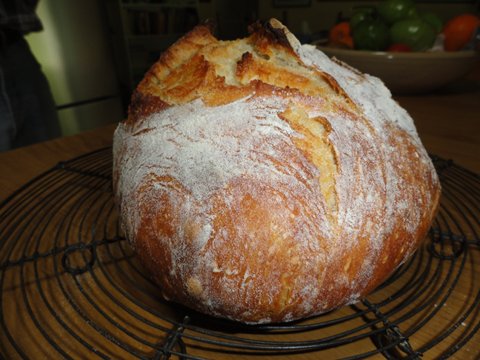
Bread is one of those foods that, when made with your own hands, gives a great deal of satisfaction and delight. It's only flour and water but it symbolises so much. I bake bread most days and use a variety of flours that I buy in bulk. Often I make a sandwich loaf because we use most of our bread for lunchtime sandwiches and for toast. Every so often I branch out to make a different type of loaf. I have tried sour dough in the past but I've not been happy with any of them. I'll continue to experiment with sour dough because I like the idea of using wild yeasts and saving the starter over a number of years to develop the flavour and become a part of the family. However, the loaf I've been branching out to most often is just a plain old five minute bread. By five minutes I mean it takes about five minutes actual work to prepare but it's the easiest of all bread to make and to get consistently good loaves from. If you're having people around for lunch or...
Image

This is my last post.

I have known for a while that this post was coming, but I didn't know when. This is my last post. I'm closing my blog, for good, and I'm not coming back like I have in the past.  I've been writing here for 16 years and my blog has been many things to me. It helped me change my life, it introduced me to so many good people, it became a wonderful record of my family life, it helped me get a book contract with Penguin, and monthly columns with The Australian Women's Weekly and Burke's Backyard . But in the past few months, it's become a burden. In April, I'll be 75 years old and I hope I've got another ten years ahead. However, each year I'll probably get weaker and although I'm fairly healthy, I do have a benign brain tumour and that could start growing. There are so many things I want to do and with time running out, leaving the blog behind gives me time to do the things that give me pleasure. On the day the blog started I felt a wonderful, h...
Image

What is the role of the homemaker in later years?

An email came from a US reader, Abby, who asked about being a homemaker in later years. This is part of what she wrote: "I am a stay-at-home mum to 4 children, ages 9-16. I do have a variety of "odd jobs" that I enjoy - I run a small "before-school" morning drop-off daycare from my home, I am a writing tutor, and I work a few hours a week at a local children's bookstore. But mostly, I cherish my blissful days at home - cooking, cleaning (with homemade cleaners), taking care of our children and chickens and goats, baking, meal-planning, etc. This "career" at home is not at all what I imagined during my ambitious years at university, but it is far more enriching. I notice, though, that my day is often planned around the needs of my family members. Of course, with 4 active kids and a husband, this is natural. I do the shopping, plan my meals, cook dinner - generally in anticipation of my family reconnecting in the evening.  I can't h...
Image

Every morning at home

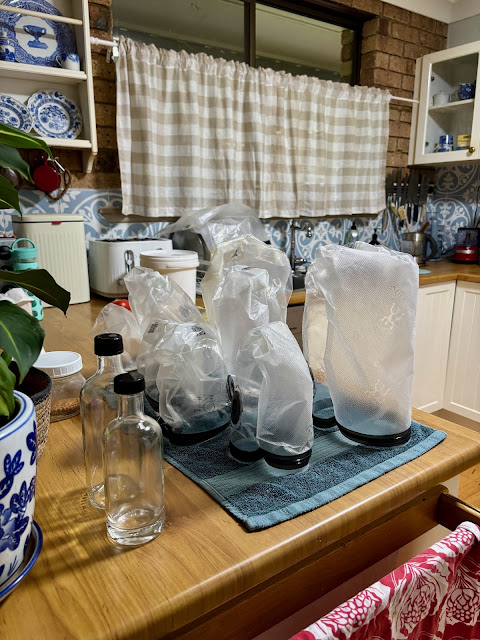
Every morning when I walk into my kitchen it looks tidy and ready for a day's work. Not so on this morning (above), I saw this when I walked in. Late the previous afternoon when I was looking for something, I came across my rolled up Zwilling vacuum bags and decided they had to be washed and dried. So I did that and although I usually put them outside on the verandah to dry it was dark by then. I turned the just-washed bags inside out and left them like this on a towel. It worked well and now the bags are ready to use when I bring home root vegetables, cabbages or whatever I buy that I want to last four or five weeks.
Image

You’ll save money by going back to basics

When I was doing the workshops and solo sessions, I had a couple of people whose main focus was on creating the fastest way to set up a simple life. You can't create a simple life fast, it's the opposite of that It's not one single thing either - it's a number of smaller, simpler activities that combine to create a life that reflects your values; and that takes a long to come together. When I first started living simply I took an entire year to work out our food - buying it, storing it, cooking it, preserving, baking, freezing, and growing it in the backyard. This is change that will transform how you live and it can't be rushed.  
Image

All previous blog posts

  • 2026 3
    • February 3
      • Workshops starting 1 March
      • Planting vegetable seeds and new workshops
      • Back where we belong
  • 2025 7
    • July 1
    • June 2
    • May 1
    • April 2
    • February 1
  • 2024 25
    • December 2
    • November 1
    • October 2
    • September 3
    • August 1
    • July 3
    • June 1
    • May 3
    • April 2
    • March 3
    • February 2
    • January 2
  • 2023 13
    • December 1
    • November 2
    • October 1
    • September 3
    • August 2
    • February 2
    • January 2
  • 2022 17
    • November 3
    • October 4
    • September 3
    • August 2
    • July 3
    • June 2
  • 2021 50
    • December 1
    • November 6
    • October 7
    • September 5
    • August 4
    • July 5
    • June 2
    • May 2
    • April 6
    • March 4
    • February 4
    • January 4
  • 2020 68
    • December 3
    • November 5
    • October 4
    • September 4
    • August 4
    • July 4
    • June 4
    • May 8
    • April 7
    • March 8
    • February 8
    • January 9
  • 2019 66
    • December 2
    • November 4
    • October 5
    • August 3
    • July 4
    • June 6
    • May 8
    • April 8
    • March 8
    • February 11
    • January 7
  • 2018 82
    • December 1
    • September 2
    • August 10
    • July 4
    • June 11
    • May 9
    • April 12
    • March 10
    • February 10
    • January 13
  • 2017 129
    • December 7
    • November 10
    • October 6
    • September 13
    • August 11
    • July 13
    • June 12
    • May 9
    • April 9
    • March 14
    • February 11
    • January 14
  • 2016 125
    • December 7
    • November 13
    • October 10
    • September 11
    • August 11
    • July 8
    • June 9
    • May 9
    • April 12
    • March 10
    • February 13
    • January 12
  • 2015 184
    • December 7
    • November 15
    • October 20
    • September 18
    • August 19
    • July 18
    • June 12
    • May 15
    • April 12
    • March 21
    • February 13
    • January 14
  • 2014 203
    • December 11
    • November 8
    • October 17
    • September 20
    • August 17
    • July 19
    • June 17
    • May 17
    • April 23
    • March 15
    • February 18
    • January 21
  • 2013 225
    • December 13
    • November 17
    • October 17
    • September 17
    • August 21
    • July 24
    • June 20
    • May 19
    • April 17
    • March 22
    • February 17
    • January 21
  • 2012 245
    • December 17
    • November 20
    • October 20
    • September 18
    • August 15
    • July 24
    • June 21
    • May 26
    • April 23
    • March 23
    • February 19
    • January 19
  • 2011 257
    • December 18
    • November 24
    • October 27
    • September 23
    • August 24
    • July 21
    • June 24
    • May 24
    • April 16
    • March 22
    • February 14
    • January 20
  • 2010 283
    • December 20
    • November 18
    • October 18
    • September 19
    • August 25
    • July 24
    • June 25
    • May 26
    • April 25
    • March 22
    • February 29
    • January 32
  • 2009 293
    • December 29
    • November 18
    • October 23
    • September 25
    • August 22
    • July 28
    • June 22
    • May 21
    • April 27
    • March 26
    • February 24
    • January 28
  • 2008 387
    • December 24
    • November 23
    • October 25
    • September 26
    • August 27
    • July 27
    • June 37
    • May 34
    • April 44
    • March 53
    • February 32
    • January 35
  • 2007 372
    • December 37
    • November 40
    • October 55
    • September 51
    • August 49
    • July 63
    • June 49
    • May 28


Trending Articles

NOT the last post

This will be my last post here.  I've been writing my blog for 18 years and now is the time to step back. I’ve stopped writing the blog and come back a couple of times because so many people wanted it, but that won’t happen again, I won’t be back.  I’ll continue on instagram to remain connected but I don’t know how frequent that will be. I know some of you will be interested to know the blog's statistics. 
Image

Every morning at home

Every morning when I walk into my kitchen it looks tidy and ready for a day's work. Not so on this morning (above), I saw this when I walked in. Late the previous afternoon when I was looking for something, I came across my rolled up Zwilling vacuum bags and decided they had to be washed and dried. So I did that and although I usually put them outside on the verandah to dry it was dark by then. I turned the just-washed bags inside out and left them like this on a towel. It worked well and now the bags are ready to use when I bring home root vegetables, cabbages or whatever I buy that I want to last four or five weeks.
Image

You’ll save money by going back to basics

When I was doing the workshops and solo sessions, I had a couple of people whose main focus was on creating the fastest way to set up a simple life. You can't create a simple life fast, it's the opposite of that It's not one single thing either - it's a number of smaller, simpler activities that combine to create a life that reflects your values; and that takes a long to come together. When I first started living simply I took an entire year to work out our food - buying it, storing it, cooking it, preserving, baking, freezing, and growing it in the backyard. This is change that will transform how you live and it can't be rushed.  
Image

Creating a home you'll love forever

Living simply is the answer to just about everything. It reduces the cost of living; it keeps you focused on being careful with resources such as water and electricity; it reminds you to not waste food; it encourages you to store food so you don't waste it and doing all those things brings routine and rhythm to your daily life. Consciously connecting every day with the activities and tasks that create simple life reminds you to look for the meaning and beauty that normal daily life holds.  It's all there in your home if you look for it. Seemingly mundane tasks like cleaning and cooking help you with that connection for without those tasks, the home you want to live in won't exist in the way you want it to.  Creating a home you love will make you happy and satisfied.
Image

Time changes everything

I've been spending time in the backyard lately creating a contained herb and vegetable garden. My aim is to develop a comfortable place to spend time, relax, increase biodiversity and encourage more animals, birds and insects to live here or visit. Of course I'd prefer my old garden which was put together by Hanno with ease and German precision. Together, we created a space bursting at the seams with herbs, vegetables and fruity goodness ready to eat and share throughout the year. But time changes everything. What I'm planning on doing now, is a brilliant opportunity for an almost 80 year old with balance issues. In my new garden I'll be able to do a wide range of challenging or easy work, depending on how I feel each day. It’s a daily opportunity to push myself or sit back, watch what's happening around me and be captivated by memories or the scope of what's yet to come.
Image

It's the old ways I love the most

I'm a practical woman who lives in a 1980’s brick slab house. There are verandahs front and back so I have places to sit outside when it's hot or cold. Those verandahs tend to make the house darker than it would be but they're been a great investment over time because they made the house more liveable. My home is not a romantic cottage, nor a minimalist modern home, it's a 1980’s brick slab house. And yet when people visit me here they tell me how warm and cosy my home is and that they feel comforted by being here. I've thought about that over the years and I'm convinced now that the style of a home isn't what appeals to people. What they love is the feeling within that home and whether it's nurturing the people who live there.
Image

Back where we belong

Surprise! I'm back ... for good this time. Instagram became an impossible place for me. They kept sending me messages asking if I'd make my page available for advertisers! Of course, I said no but that didn't stop them. It's such a change from what Instagram started as. But enough of that, the important part of this post is to explain why I returned here instead of taking my writing offline for good. For a few years Grandma Donna and I have talked online face-to-face and it's been such a pleasure for me to get to know her. We have a lot in common. We both feel a responsibility to share what we know with others. With the cost of living crisis, learning how to cook from scratch, appreciate the work we do in our homes, shop to a budget and pay off debt will help people grow stronger. The best place to do that is our blogs because we have no advertising police harassing us, the space is unlimited, we can put up tons of photos when we want to and, well, it just feels li...
Image

Making ginger beer from scratch

We had a nice supply of ginger beer going over Christmas. It's a delicious soft drink for young and old, although there is an alcoholic version that can be made with a slight variation on the recipe. Ginger beer is a naturally fermented drink that is easy to make - with ginger beer you make a starter called a ginger beer plant and after it has fermented, you add that to sweet water and lemon juice. Like sourdough, it must ferment to give it that sharp fizz. To make a ginger beer plant you'll need ginger - either the powdered dry variety or fresh ginger, sugar, rainwater or tap water that has stood for 24 hours to allow the chlorine to evaporate off. You'll also need clean plastic bottles that have been scrubbed with soap, hot water and a bottle brush and then rinsed with hot water. I never sterilise my bottles and I haven't had any problems. If you intend to keep the ginger beer for a long time, I'd suggest you sterilise your bottles. MAKING THE STARTER In a...
Image