down to earth

  • Home
  • About Us
  • Down To Earth Book
  • Privacy Policy
I want to sincerely thank everyone who has sent prayers and good wishes for my foot to heel. I tried all the natural remedies before I went to the doctor. Unfortunately, in this instance, they didn't work; I'd left it too long.  I'm going back to the doctor today and I think he'll start me on stronger antibiotics. The first two packs didn't work as expected. I haven't taken antibiotics for about 15 years so I don't really know what the common ones are now. Anyhow, I'll go back and talk to the doctor and hopefully I'll be on the mend soon. 

Thank you for your patience. I'll be posting old blogs again this week. This one is from 19 March 2009.


We've all wanted her to return. That icon of the fifties, the housewife in the Audrey Hepburn dress and frilly apron who had perfect lipstick and a hot meal waiting for her man. Well, it looks like she's back, but she's changed a lot. Now our homemaker is dressed in jeans and a T shirt, a long linen skirt, or pretty dress. The apron is still there, it might even be "vintage", purchased on eBay for a price we would have laughed at back then, but apart from the apron and the kids, our modern homemaker is nothing like her 1950s counterpart. In the 1950s, housewives were looking for convenience and Laminex, and were embracing plastic. Now we are getting back to basics, going green and reskilling ourselves. Convenience has been replaced by authenticity.

Today's homemaker lives with increasing prices in an international economic crisis. She lives in a world of sharp contrasts - on the one hand she has the internet to connect with others, learn her craft and reskill herself, but that same technology also brings danger into her home in the form of scammers, paedophiles and conmen. She lives with the convenience of mobile phones, but also their cost and proliferation into the lives of our young children. She lives in a world of man-made antibiotics, chemicals and preservatives that are added to our foods and drinks, but some of those antibiotics and chemicals have reduced common illnesses and virtually eliminated some diseases. She also lives in a world that gives little respect to the role of the homemaker, while courting her to spend her money in this store or that.

Nowadays, women are returning to their homes for a number of reasons. They may have decided to raise their family and not return to work, they may have lost their job and realised they can add to their family's health and well being by working in a more frugal home. There are also all those women who I include in this huge shift in thinking - working women who must go out to work but who know the true value of the home and dive into it head first in the evenings and on the weekends. Altogther, we are the women who will change the face of homemaking in the coming years.

I am proud of the work I do in my community, I am equally proud of the work I do here at home. Working side by side with Hanno, we have created a life that enriches us and allows us to live with independence and freedom. We are independent in that we know how to look after ourselves, to grow food and make a comfortable home, and we are free in that we owe no debt. And there are many people who look at us and say how much they admire what we do and wish to do the same, but if truth be told, we are just enacting the role of the homemaker where we make do, repair, cook, bake and clean, using what some might see as old-fashioned techniques, but within a modern context.

Big deal, we are doing what our grandmas used to do. There is nothing new in this. But maybe the pride in doing it is new. I want to encourage all of you, whether you are just starting on this path or have been on it longer than I have, to take pride in your work and to support other women who are homemakers. The work we do in our homes is significant and vital, not only for our selves and our families but for the nation.

I hope you all know how important you are in your own homes. Take back your power to look after yourself and your home. Use the power of your hard earned dollars to support your family and the local businesses you believe give you the best value for money. Complain when you don't get good service and prices and tell that store manager you will take your business elsewhere. They might pretend to ignore you, but a business who doesn't take their customers seriously doesn't last too long. If things don't change, shop somewhere else, then tell your friends. The power of the dollar is an incredible force and we homemakers do most of the buying for our homes, let's use the power we have. Now, more than ever, it is vital that we get value for our money. We need to help our families through this crisis by cutting back as much as we can. We have to learn new skills to do that and we have to learn how to shop for food in innovative ways that stretch our dollars. You are your family's role model right now, it is up to you to show your family that personal growth is possible at such a time and the days of buying whatever you want are behind you. Thrift is back.

Let us welcome the happy homemaker. The move is on to make our homes a haven from the stresses of the world, take control of your life, change how you look at housework and look to the future with knowledge that whatever effort and energy you put into your home will be returned to you, plus some. Sure, nothing is good all the time, you will have bad days, I know I do, but the good days should far out number the bad.

As modern homemakers we have the power of our shopping dollars, we have the power of our technology, and we can choose to see the work of our homes are challenging, satisfying and enriching. You can make your home a place of contentment and comfort. You can change the way you think of housework and see it as an investment in your family's well being. You will be very influential in seeing your entire family through this economic crisis. What you learn now and what you already know could very well mean make or break for your family.

There is a significant job of work to be done here in our homes. We need to plan what we're doing, learn the skills we need to get us through this and work for the good of our families. Let's put our aprons on and begin.

My sincere thanks to everyone who sent a comment or email. I'm doing fairly well with my foot but it's so slow to heal. I'm going back to the doctor tomorrow and I'm pretty sure I need another course of antibiotics.

This post was written on 9 August 2007.
. . . . . . ♥ . . . . . . 

I live a life of contentment in a beautiful part of Australia. I grow some of my own vegetables, keep a few hens in the backyard, I bake bread and preserve food. I live well with no debt on a low income. My goal is to continue living this way and if I can convince a few others to walk this path less travelled, I’ll be a happy woman.

There was a time when I worked as a technical writer, paid a mortgage and shopped at mainstream supermarkets and department stores. There was no method to my madness and I didn’t know where I was headed. Yet from the time I was around 25 years old I had a buried yearning to live the type of simple life my contemporaries viewed with contempt. In those quiet hours of 4.00 am contemplation, I knew that my future held a new direction where less was more and contentment would fill the sweet air I breathed; but I didn’t know almost 30 years would pass before I started to live that dream. I wish I’d been serious about simplicity long before I turned 50, because this way of life holds appeal for all age groups, and will change the way you view the world.

The most common question I hear regarding simple living is: “How do I start?” Well the answer to that seemingly simple question is not so straight forward. It depends on why you want to change. The end result will be the similar but your focus will be slightly different. Hopefully this blog will show you the steps needed to start living simply, whatever your reason.

I also want this blog to encourage people, young and older, to take charge of their lives by not buying into the materialism trap. I think there has been a major shift in thinking in Australia in the last ten years or so. As a society we are moving closer to a kind of moral and material bankruptcy because we trust self-indulgent, unsustainable promises that tell us living a good life requires the latest product in this year’s “must have” colour. We have to have the biggest and the best and it is fine to go into debt to get it. Those promises are problematic. They require that you mortgage your life, enclose yourself with debt obligations and work non-stop to pay for stress-filled fake living that doesn’t allow you enough time to enjoy what you have. Those promises don’t allow for enjoyment of the natural world, they encourage a consumerist approach to life when what is needed for long-term gratification is a prudent and simple one.

Your life should be about you, your family and the people you choose to include in your daily activities. What you see portrayed in today’s advertising is a false representation of modern Australian life. It is a glamorised lie to encourage you to spend money on products you don’t need.

Reinvent your life. Think about what is really important to you and develop a set of values that reflect your true beliefs. Respect and nurture your values. Discover what it is you really want your life to be and then make plans to live that life. Define for yourself what are needs and what are wants. Be courageous and change your attitude about what success means to you. Free yourself of the conventional idea of what you should own and want, strip yourself of pretension and in the process you’ll discover your true self.

I want this blog to take you on a journey inside yourself to discover your passions, uncover your true potential and to help you be the authentic you. Mindless consumerism masks us all. It surrounds us with junk that turns us into curators of merchandise. Free yourself of all that ties you down, be that debt, clutter, stress, envy, or wanting too much. In a world filled with overindulgence, simplicity will liberate you.

If you’re wondering why you work from dawn till dark just to pay the mortgage and put food on the table, this blog is for you. If you just bought more clothes and yet more things to put in your home and still feel a sense of emptiness, this blog is for you. If you don’t have enough money to live on, or if you have too much, this blog is for you. If you feel trapped by modern living, welcome home.

Many of us may voluntarily choose to live simply but even if it chooses you, the result is similar. You live a life that is marked by less rather than more, you organise your home to nurture and support you and your family members, you help develop a caring and supportive community, you make from scratch much of what you consume, you aim to live debt-free, you respect your environment, minimise waste and you are content with your life choices and the kind of person you are.

Living a simple life is about beating the system and not following the same road everyone else is on. Stop following what your friends and neighbours are doing. They’re probably up to their ears in debt too. Reinvent your life. Be bold, live a life you care about, simplicity can make you soar.

I hope this blog will help you discover the essence of simple living and how to apply it to your own circumstances. Please remember that we are diverse nation and have different aspirations. What is right for some is wrong for others. So cherry pick the information here and apply as much as you can to your own life while keeping an open mind about developing new strategies and ways of living that suit you. There is no one size fits all formula when simplifying your life.

To help you simplify I have included information about the practical aspects of day-to-day living. Some readers will already be familiar with some of the activities contained within these pages, others will be novices. There was a time when much of this was common knowledge but our consumer culture has conned us into relying on products to sustain and support us. We’ve forgotten old ways and instead work our entire lives to pay for merchandise that others create for us. The more we have, the more we want, and so the never-ending cycle continues. It wasn’t like that in the past and it doesn’t have to be like that now. We can relearn our collective heritage of basic skills and apply them to our modern lives.

So, what do you really want out of life? If you want more of everything, if you know that you’ll never have enough or be enough, then stop reading this blog now and go back to work. But if you want to live an authentic life, if you want to enjoy time with your family, if you want to help save dwindling resources, if you want to become more self-reliant and build your skills, if you want to discover the real you and live the kind of life you dream for yourself, then read on, the simple life is for you. When you know that buying more of everything will not make you happier and that saving resources is better than spending them, then you will really know that less is more. Welcome to your new life.


Hello friends.

I've added the subscribe to the newsletter sign in on the sidebar. It's just near the book cover. Add your email there if you'd like to be on my email list for extra news about ebooks, workshops or general news from the Hetzel family. Your email will never be shared or given to anyone else.

I hope to be sending the first newsletter out next week with news of the dairy ebook and some workshops.   :- )  If you sent me your email address to me yesterday, please add it again to this list so I can keep it all together and organised. Thanks!

ADDITION: I just subscribed myself to the service to see what the process is all about and because Chele just emailed to tell me there is nowhere to add her name. So, when you get your confirmation email, mine went to the junk mail folder, if you click on "add us to your address book" that will stop the next newsletter from me going to your junk mail.  Also, if you find the "update your preferences button" or "update profile" button in the conformation email, click that because that is where you can add your name, in addition to your email address. Having looked through the list this afternoon, most people haven't given me their name, so their newsletters will just be addressed to their email address. It will still get to you but it's not as personal as I'd like it to be.
This post is from 2008

We say a lot about respect when we use the full measure of what we grow or buy. In the old days it was common practice to use every part of a slain animal; and many people who slaughter their own livestock still do it today. From cow horns being broken down and used as a fertiliser, or filled with cow dung and buried to produce the magical biodynamic Formula 500, to using bones for stocks and gelatine, and the meat, including the offal, for nutrition and the hide for warmth or furniture. Crafters do a similar thing with patchwork. They don't waste any scraps and by taking the time to piece the fabrics together, either randomly or in time honoured patterns, they produce beautiful quilts, bags and clothing that are sometimes featured on the walls of galleries, but always yield their true qualities of warmth and comfort.

Respect is expressed in those actions of honouring the life of the animal or the work involved to grow the cotton and produce the fabric, by using every part for a worthwhile purpose and by making sure there is no waste to pollute or be part of a landfill dump.

We can carry those principles on very easily when we use our fruit and vegetables too. Again, they can be either grown at home or purchased, the respect for the work and resources involved in producing what you have before you is clear and unambiguous if you use every part of what you have. Take our pineapple, for instance. That pineapple was grown from the top of a local pineapple we bought a few years ago and it will continue on because I will plant this top to grow two more pineapples.


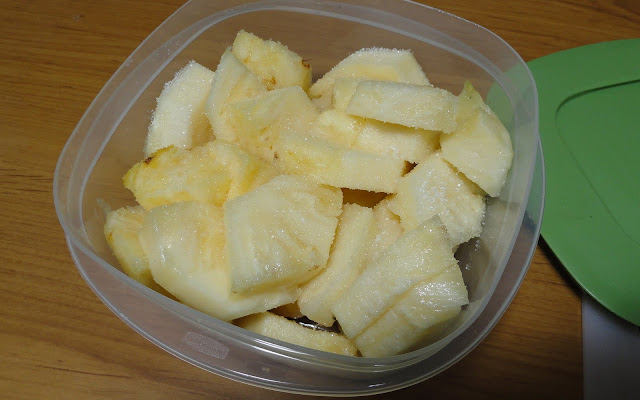
Growing pineapples in a warm climate is simple, it takes a long time, but you will be rewarded for you patience when you taste that sweet juicy organic fruit. I sliced ours down the middle and cut it into chunks. We've feasted on it twice now after our tea and we will finish it off tonight. It is so sweet! When I tasted it I forgot about those years of growing and thought only that we grew it, it was organic and we used every part of it - no waste, everything was used. So how do we get to that point?


Take the top from your pineapple - if you have a choice, use the best pineapple - the juiciest and the sweetest. You will be passing on those genes to your next fruit. Remove all flesh from the base of the top, then peel off several layers of leaves. You want a cutting that is clean and undamaged at the base. Allow it to dry out for a few days, then plant it in the garden in a sunny spot where it can grow for at least two years. Don't put it where you plan on planting tomatoes next season. If you live in a colder climate, I believe you can plant pineapple tops in large pots, at least the size of a bucket, filled with good quality potting mix. Keep the top in the sun for as long as possible, then move inside to a sunny window during the cold weather. Pineapples don't need a lot of water but you'll need to water it in well and water every couple of days for about two or three weeks until the roots start reaching out into the soil.


We didn't fertilise our pineapple much. It got some liquid fertiliser occasionally and natural rainfall, otherwise it sat quietly doing its own thing. They do take up a fair bit of space when the top has fully developed so if you're planting a number of tops, make sure you give them a metre / three feet space in which to develop. When it's been in a year or so, you'll notice a tiny pineapple emerge from the centre. That slowly develops for about six to nine months and ripens to a perfect fruit. It is ready to pick when, instead of standing upright, it falls over while still attached to the centre. Cut the pineapple stalk off the main plant and leave the plant in the ground. Fertilise with liquid fertiliser and continue as before - this same plant will produce a second pineapple and will take the same amount of time doing it.

When you harvest your pineapple, cut the top off and replant. Eat the fruit and make the skin and the off cuts into pineapple vinegar. I've written about that here. Wonderful! No waste at all. You've used the entire fruit and that one top will continue producing pineapples for as long as you continue to plant the tops.

Respectful. Economical. Productive.
Hello everyone.

SEE UPDATE BELOW

While I'm resting with my feet up I thought I'd create a private list of your email addresses so I can send out the occasional newsletter. It's been something I've been thinking about for a while. If you'd like to receive emails from me every so often, when I'm releasing a new ebook or doing something new, I'll need your address.

If I have your email I can tell you about what's happening, when a book will be released, where you can buy it and how much it will be. I will also send information about my workshops; I'm thinking of doing one in the Blue Mountains in June. Of course, I won't give your email address to anyone else. It's for my personal use, just so I can keep in touch with you.

UPDATE: Don't send me your address right now. I've decided to download a program that I can install on my side bar and you can enter your own email addresses into the box provided. It will save me cutting and pasting hundreds of addresses over manually. To everyone who has already sent their address, I'll get you to enter in the new program when it is up. It will be there in the next day or so and I'll remind you all when it's ready for use.

Thanks everyone.

This is from 31.3.2010. Little did I know that 12 months after that day our first grandson, Jamie, would be born. :- )

 The beginnings of our new season garden.

From the outside, our simple house belies the fact that such rich lives are being lived here. You can see and feel it in the backyard with the abundance of life evident there, but at the front, well, our small home looks like many others dotted endlessly throughout the urban and rural areas of Australia. But Hanno and I have found the secret of living well and we are developing the art of it every day. It took that break away from blogging for me to step back and look at what we've got here. Our lives are not just skin deep, there is real depth here.

 Tomatoes, capsicums and green onions.

Taking a break from this blog, even though it is a familiar friend to me now, helped me step back and take in how our lives here have evolved and shaped us. During my break I made sure I slowed down. It's one aspect of this simple life that I always need to readjust. Swiftness and efficiency often take over from slow and mindful, especially on work days and when I'm away from home. I need to slow myself back down again, put the brakes on and remind myself that work done slowly and mindfully easily gets through the chores and there is no stress at the end of the day.

Here is my main gardener, Mr Hetzel.

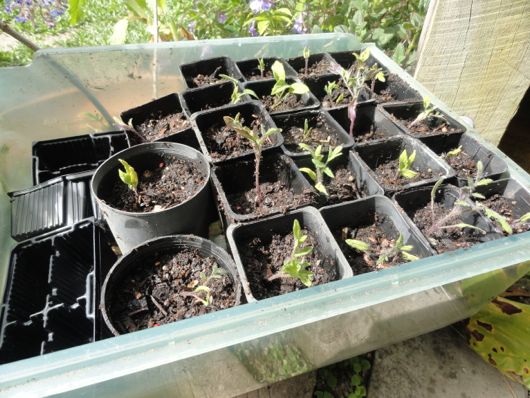
So while I've been away, Hanno has been working on the garden and I have to tell you that the soil this year is the best it's ever been. From almost empty beds just a few short weeks ago, we now have cucumbers nearly ready to eat, capsicums (peppers), lettuces, tomatoes, bok choy, beetroot, radishes, sugarloaf cabbages and green beans. In the bushhouse, we planted seeds for leeks, tomatoes, more sugarloaf cabbages, silverbeet and those wildly mad zinnias that bring bright colour to the garden. The zinnias are ready for planting now, the vegetables need another week or two.

Bok choy growing fast in front of grass clippings waiting to be made into compost.

Inside our home I've been knitting Hanno a jumper (sweater) and am just finishing the back. I hope to have him in it by June. I've also been reading new books and re-reading older ones, especially the wonderful Simple Living by Frank Levering and Wanda Urbanska. I read it several years ago but I'm enjoying it more now because I understand, from experience, what it is they hoped to do and how they fashioned their lives to suit themselves. I also have The New Compete Book of Self Sufficiency by the late John Seymour, sent to me as a blog giveaway by Steel Kitten, that I'm enjoying a lot. She actually sent two copies because the first one took months to arrive and she immediately ordered another copy when I told her it hadn't arrived. Naturally, when one turned up, so did the other. Thank you, Sarah. And thanks to everyone who sent a comment about my return. It gives me a wonderful feeling knowing that I'm welcomed back and have been missed.

Yes, it came back again.  It was hiding behind the nesting boxes.

The chooks are healthy and happy, even though they had another visit from that snake. Alice is doing well, despite her old age and ill health. Things are starting to settle down at my voluntary job and I imagine that in a month or so the slow rhythm of my days will return there as well. I've rearranged and stopped a few things I was doing so that now I feel quietly confident that I can keep up my home duties, work in my community and at a couple of little jobs and get everything done that needs doing. It's a good feeling knowing those tasks I've set myself will be carried out as planned. I do not need every day to be a good one, but I do need to know that I have done my best everyday.


Cucumber tendrils have grown higher than they ought. In the background is a lemon tree with about one hundred lemons growing fat and juicy.

I remember when I first stopped working for a living, one of the things I hoped the days ahead would hold was richness. I was not seeking richness in a monetary sense but more a life that was multi-layered, that built on its foundations and add layer upon layer the kind of work that would result in an unusual life by today's standards, as well as a rich and rewarding one. Tick.

Some of the seeds we planted.  The zinnias will be planted out today.

There is nothing better than waking to a new day that you know will be full of productive and interesting work around the home.  Pottering with this and that, putting things right, cooking, gardening, baking, sewing, sitting and thinking - all the things that went into old fashioned lives and not so much into those that are modern. Those things, to me, make a perfect day.  And the truth is these days are so easy to home make.   All they require is a commitment to one's self - a promise to stay true to our values and to live as we wish, not part of an homogeneous crowd, but as individuals who think about how we live.  I do not need many of those perfect days to keep me going, just the promise of one tomorrow or next week is enough.  And enough is all I'm after.

I want to thank you for the loving comments and emails you sent yesterday. Sometimes it takes my breath away when I feel the level of goodness you send to me.

- - - - - - ♥- - - - - -

Dec 16, 2009
We are back to a practical subject again today because I've been thinking about the word "germaphobe" and it scares me a little. I've come across this word a few times recently and I want to comment on it. We all know it makes good sense to keep a clean house, to raise children to wash their hands before they eat and, in general, to maintain good levels of cleanliness in the home. But you can be too clean.


Hang your dirty dishcloths and rags over the side of the laundry bin to dry while they're waiting to be washed.

Since television advertising started blabbing on about the benefits of whiter than white and how we can rid our homes of germs, we've been brainwashed to believe that every germ is harmful, every germ must be killed and if we don't do that, we're not as good as our next door neighbours. What hogwash!

There are many medical studies around now that assure us that exposing children to pets and normal household dirt is good for them. It builds up the immune system and allows their little bodies to naturally develop antibodies to fight those germs. Back a few years, when I was growing up, and even when my boys were young in the 1980s it was common for children to play out side. Out there, among the dirt, bugs and grass, not only were they having fun swinging on ropes and riding bikes, they were building bone strength, muscle tissue and healthy immune systems. Nowadays there is a tendency for children to play inside on computers and playstations, and inside is becoming increasingly clean. We have gone from the common family home with a dirt floor in the 1800s to stainless steel and the war against germs now.

We are surrounded by millions of bacteria and viruses but only a small number actually cause us any harm, the rest we live with, have evolved with, and being exposed to them has helped build tolerance and resistance to many of them. When we do our daily chores it's not necessary to rid the home of germs - it's impossible, and it's not a healthy option. I'm not advocating that we leave ours sink dirty and not sweep the floor. Of course we continue to do those things. We also need to wipe handles, cupboard doors, remote controls, light switches etc, but we shouldn't be using antibacterial wipes. Soap and water, vinegar or bicarb will do the trick. Using bleach, peroxide or disinfectant every day is overkill.

Wash your dishcloths once or twice a week, depending on how dirty they are. In between times, thoroughly rinse the cloth, wring it out and hang it over the tap or sink to dry. Few bacteria can survive dry conditions, they need moisture to propagate and thrive. Hang your dirty dishcloths and cleaning rags over the side of the laundry bin/basket so if they're wet they can dry out and not sit in the pile of dirty laundry, wet, waiting for a few days to be washed.

Take the pressure off yourself to kill germs, your aim should be to have a clean home. You'll never eliminate germs completely. So relax, put the bleach bottle away, stop buying the antibacterial wipes and allow the short sharp exposure to pathogens in the normal home to build your immune system. If you do that, your immune system will not only protect you from colds and flu but also from more sinister ailments.

I'm taking a bit of time away from the blog. I've been having a problem with an infection in my foot and the doctor advised me that if I want to keep it attached to my leg, I need to rest it. He wanted me to cancel the workshops, go to hospital and be treated there, but we arrived at a compromise and now I'm at home sitting down with my leg up as much as I can. Hanno has taken over the home chores and is treating me like a queen on her throne. I'll still be doing the workshops but then I have to come straight home and rest again. So I thought that I'd offer you a few old posts that you may have missed. I'll be back with new posts as soon as I can manage it. :- )

The post below was written on 21 December 2008.


When I gave up work and returned to my home I promised myself that all the days of multitasking, doing too much in a half-hearted way, and second best were in my past. I decided that I wanted to live deliberately, that the decisions I made would be carried out with care, and from then on, I would do my best, no matter what the task was.

It took a while to get used to that change. I had to slow down and concentrate on what I was doing. I had to focus on one thing at a time and do it to the best of my ability. The pace of my work slowed down and, after a while, so did I. My mind stopped racing and I adopted a slow and mindful approach to everything I did. The strange thing to me was that even though I slowed everything down, I still got my house work done, and I came out the other end of it much more relaxed and pleased with what I achieved. I realised then that putting housework off, or not doing it at all, added to the stress of it. Doing it slowing, one task at a time, gave a rhythm to the day that helped the work flow.

But it wasn't only the housework that I applied this new philosophy to. It was also my relationships with people. I found that when I slowed down and concentrated on the person I was with, it made a difference. When I stopped thinking about what I would do later in the day, or tomorrow, and gave my thoughts as well as my time to the person I was with, I gave more and got a lot more in return. When I gave my best, they gave their best too.

When I started writing this blog I wanted it to be the best. Not the best blog, but the best that I could do. Some days I struggle with what I should write, mainly because I think it's too mundane to be a subject. Some days I use my blog to work out things in my own head - like thinking aloud. Some days the words flow like honey from a honey pot and I have to stop myself for fear of overwhelming you. It's been up and down, but I think I can say that every day I've written here has been the best I could give on that particular day; I have not written half-heartedly.

That has paid off handsomely. I gave my best and got your best in return. Sure, there have been a couple of hiccoughs, but over the year the comments have become a genuine and substantial part of this blog. You give a lot when you comment, it's like a payment for the writing, it not essential but when it happens it rewards me because I know my words are finding you and not just floating out there. That is true of everyone's blog, not just mine.

I am looking forward to Christmas because all my boys will be here, one with his special girl. We are having a family dinner on Christmas Eve with seven of us sitting down to eat, the first time we've all been together for a long, long time. On Christmas morning, we'll all help cook and serve at the free Christmas breakfast I have been organising at work this past month. Last year we served 450 breakfasts, I wonder how many there will be this year. I hope this year will be our best.

This is the last post I'll write for a while because I need to have a break. I'll be enjoying my family, working on my book, watching the cricket, knitting, relaxing and generally getting ready for another good year. A special thank you to Sharon who has been such a help to me throughout the year, both here and at the co-op blog. Thank you for your visits and comments during the year, you have made this blog writing thing a real joy for me. Have a merry Christmas, stay safe and enjoy your holidays. I send you and your family my best.

We did it! The first of 16 free workshops at our local libraries. The session was booked out, they had seven on the waiting list and six walked in without booking. I'm not sure what happened to them, they were redirected back to the front desk. We had a look at the feedback forms and we had very positive feedback from the group who came along.


Of course there are a few things we have to change, but we knew we'd be doing that; it would be a rare workshop it the first run through was perfect. I can say that the future of blogging looks pretty secure if our first group is anything to go by. About eight of them already had blogs, the rest were absolute beginners and I think they are keen to get at it because there were a lot of sensible questions.

The staff at the Maroochydore library were wonderful. I had given an author talk there before so I knew we'd be looked after. Libraries as so much more than books now. The head librarian there was talking about seeds saving groups this morning, which I think is a brilliant idea.  Tomorrow afternoon we do the first writers workshop at Noosa then there are two and a half weeks of workshops on every day except Mondays. All the blogging workshops are booked out and the writing ones are almost full. Ernie created a new website for us - http://thebloggingworkshop.com and if you look in the blog menu, there is a post there about yesterday's workshop.

Thank you for your visits during the week. I hope your weekend is all you hope for.

WEEKEND READING

Common sense returning to milk sales

What's mine is mine

Liberty tea towels at Purl Bee

Capturing a bee swarm - You Tube

Darning a jumper/sweater

FROM THE COMMENTS DURING THE WEEK

Rebecca at Life at 60

Lynne at Textile Treasury

Annemarie Elizabeth at Lightly Sweetened


Just a quick few lines to let you know what's happening here. The first workshop is on at the library today so instead of writing a longer post, I'm putting some added touches to the presentation and making myself look presentable. All the blogging workshops, except one, have been booked out so we're looking forward to a great morning meeting all those people and sharing what we know about blogging.

We have a writing workshop on Saturday so after today's workshop we'll be going over our material for that. These are our first two workshops so it's just a matter of checking we have everything covered. Hopefully, after today's event, I'll have time to write a longer post. I was hoping to get into the garden before now but, you guessed it, it's still raining, even though it's mostly clear on the weather radar. Strange.

Anyhow friends, wish me luck, I'll be back soon.
I will start writing my next book in July. It will continue the simple life theme but look at it from a different angle. So one of the things I'm doing again is to forensically examine the importance of organisation and routines in the home and what impact convenience has on our lives when we have to pay for it.  I'm not against convenience or progress but I know first hand how much you have to pay if you buy it and when you're trying to live a more modest and frugal life, for me the price of convenience when I can make it, wash it or mend it myself, is just too high. It also makes sense in other ways too. I want to maintain my homemaking, cooking and traditional skills, and what I make here is healthier and fresher than anything I can buy. It's really a no brainer - as long as I can organise the time.


Almost all of us have bought a pizza for dinner instead of making a meal from scratch when we're tired and short of time. I've bought seedlings instead of seeds for the sake of convenience too. Just recently when I was short of time and I had visitors coming, I bought a date loaf from the local baker. But I would never buy sliced apples in a bag, washed salad, or shredded cheese. That's going too far for me. I'm sure you have your own particular items you just won't compromise on and those that don't seem such a big deal. Just to illustrate the price of convenience when it's applied to food: ready to use, washed Asian greens are $5 for 350 grams. However, a bunch of baby pak choi (3) is $1.96, baby wombok is $2.98 = $4.94 and you'd have enough for at least two meals. So in that instance, it's double the price. Or 1 kg of coleslaw already made is $10 - but a ½ cabbage is $2.49, two carrots about 40 cents, an onion 30 cents and some homemade dressing about 50 cents = $3.69, a saving of $6.31 on one item. These are Woolworth's prices.

Ernie, during one of work sessions last week.

I know that if I was better organised than I am now, I would have been able to make my own date loaf and sown seeds to grow into seedlings here. It really does come down to organising the time you have to fit in what you have to do and what you want to do. I'm having a really busy time here at the moment. I'm getting ready for the writing and blogging workshops, writing material for simple living workshops coming up in July, trying to finish off the cheese and dairy book (it's nearly there), make up an ebook version of Down to Earth for the north American market, write my blog and visit the forum as much as I can. I do that as well as my house work, which is an important part of my life, I hope to get into the garden more as the season progresses and, last but never least, my family - I want to spend time with them or at least talk on the phone whether they're close or far away.


I'm getting back into my heavy work routine again now and I hope it helps me do all the things I want and need to do. I also have Hanno's help. He volunteers to do a lot of things when he knows they need to be done. He's happy to do the washing, vacuum the floor, shop for groceries and (occasionally) wash up. He's my main support and back up because I know if I ask him to do anything, he'll do it.  I'm still getting up early and it's then I do my blog and read emails. By 9am I have to have breakfast finished, the kitchen tidy, bread on and the bed made. Then I write. When I need a break I generally have a tea break around 10am, then I check the bread and get dinner organised. If it's something that requires long slow cooking I start it, if not, I'll get the supplies out if they're frozen, if it's all fresh I'll leave it till the afternoon. Lunch around 12 ish, when I have a real break - lunch and knitting. After lunch I write again and when I have my afternoon break it will be to do something like gardening, baking or cleaning. I'll do whatever I can fit into 30 minutes, no more. It's important to not go over my self-imposed time limits.


If I stick to that routine, I'll be able to do my housework, writing and make all the things I currently make. I never want to get to the stage of paying someone to wash my lettuce or make my soap and biscuits and I know that if I am organised, have clear goals and stick to my routine, I'll be fine. But it's not easy. I also know that nothing is perfect and if there are days when I don't do what I'd planned, that the world won't end and I'll probably do it the following day, or the next. My routine rules are: have set time frames, don't go over them, write down what I have to do each morning, take breaks and look after me as well.

Routines and organisation are such an important part of any homemaker's day, including those who work in the home full-time, those who do paid work part-time at home and those who go out to work and house keep before and after work and on weekends. How do you organise your days?


We've finally made it to autumn, my favourite of all the seasons. I start looking forward to autumn on the summer solstice, which was December 21 last year, the longest day of the year and the start of shortening days.  After that, even though we still have a lot of heat and humidity to endure, little by little I know it's trickling slowly down towards autumn, cool days, warm cardigans, flannel sheets, hearty homemade soups and lambswool Ugg slippers.


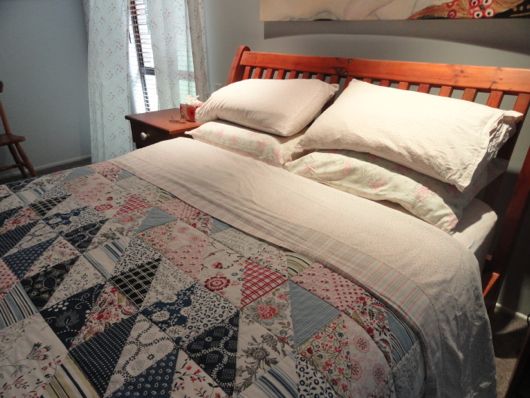
It's now the fourth day of autumn in Australia and the coolness has come early to our area this year. I think it's still warm north and south of us. On Saturday night Hanno woke up cold and had to put another quilt on the bed. So yesterday, I carried out one of my favourite annual rituals - making the first winter bed, with flannel sheets and an extra layer on top. It's such a defining moment when I think about the coming season, when we'll be working in the vegetable garden, cooking and baking warm food in the kitchen and closing the doors and windows early to keep the cooler air out.

The strange weather is continuing. We've had so much rain here - since the beginning of the year 42 wet days and 20 dry days. This is our wet season but usually we'd get a handful of storms in the afternoon and evening, not all day rain for weeks. I am grateful for it though. It's drenched the gardens and given the trees and land the boost they need after a six month drought. Our local dam is full again.


Ernie and I start our workshops this week and I'm looking forward to it very much. We'll get the update on the bookings tomorrow but last week the blogging ones were almost all booked out. There will be more writing workshops than blogging workshops and I have to admit, it's the writing sessions I'm looking forward to the most. I don't claim to be a master writer but I'm keen to share what I do know with my community and, hopefully, get others on the road to self expression.

I'm writing this on a cloudy Sunday afternoon and it's just started raining again. Soon we'll have dinner, and after I tidy up and do a spot of knitting, I'll have a shower and get into that fluffy winter bed and listen to the rain on the roof. In the meantime though, corn beef and cabbage are slowly cooking in the kitchen so I'd better get a wriggle on.

What is your favourite time of year?

Newer Posts Older Posts Home

MY BOOKS

MY BOOKS


My books were all published by Pengiun, and are available at Amazon US, Amazon UK and Amazon Au

Search here

Total Pageviews

Translate


I'm Rhonda Hetzel and I've been writing my Down to Earth blog since 2007. Although I write the occasional philosophical post, my main topics include home cooking, happiness and gardening as well as budgeting, baking, ageing, generosity, mending and handmade crafts. I hope you enjoy your time here.

MY FAVOURITE PLACES

  • Grandma Donna's Place
  • Grandma Donna's YouTube
  • Grandma Donna's Instagram
  • This Simple Day
  • Nicole's Instagram

Give More

Give More

Popular posts last year

Making ginger beer from scratch

We had a nice supply of ginger beer going over Christmas. It's a delicious soft drink for young and old, although there is an alcoholic version that can be made with a slight variation on the recipe. Ginger beer is a naturally fermented drink that is easy to make - with ginger beer you make a starter called a ginger beer plant and after it has fermented, you add that to sweet water and lemon juice. Like sourdough, it must ferment to give it that sharp fizz. To make a ginger beer plant you'll need ginger - either the powdered dry variety or fresh ginger, sugar, rainwater or tap water that has stood for 24 hours to allow the chlorine to evaporate off. You'll also need clean plastic bottles that have been scrubbed with soap, hot water and a bottle brush and then rinsed with hot water. I never sterilise my bottles and I haven't had any problems. If you intend to keep the ginger beer for a long time, I'd suggest you sterilise your bottles. MAKING THE STARTER In a...
Image

NOT the last post

This will be my last post here.  I've been writing my blog for 18 years and now is the time to step back. I’ve stopped writing the blog and come back a couple of times because so many people wanted it, but that won’t happen again, I won’t be back.  I’ll continue on instagram to remain connected but I don’t know how frequent that will be. I know some of you will be interested to know the blog's statistics. 
Image

How to make cold process soap

I'm sure many of you are wondering: "Why make soap when I can buy it cheaply at the supermarket?" My cold process soap is made with vegetable oils and when it is made and cured, it contains no harsh chemicals or dyes. Often commercial soap is made with tallow (animal fat) and contains synthetic fragrance and dye and retains almost no glycerin. Glycerin is a natural emollient that helps with the lather and moisturises the skin. The makers of commercial soaps extract the glycerin and sell it as a separate product as it's more valuable than the soap. Then they add chemicals to make the soap lather. Crazy. Making your own soap allows you to add whatever you want to add. If you want a plain and pure soap, as I do, you can have that, or you can start with the plain soap and add colour, herbs and fragrance. The choice is yours. I want to add a little about animal and bird fat. I know Kirsty makes her soap with duck fat and I think that's great. I think t...
Image

Preserving food in a traditional way - pickling beetroot

I've had a number of emails from readers who want to start preserving food in jars but don't know where to start or what equipment to buy.  Leading on from yesterday's post, let's just say up front - don't buy any equipment. Once you know what you're doing and that you enjoy preserving, then you can decide whether or not to buy extra equipment. Food is preserved effectively without refrigeration by a variety of different methods. A few of the traditional methods are drying, fermentation, smoking, salting or by adding vinegar and sugar to the food - pickling. This last method is what we're talking about today. Vinegar and sugar are natural preservatives and adding one or both to food sets up an environment that bacteria and yeasts can't grow in. If you make the vinegar and sugar mix palatable, you can put up jars of vegetables or fruit that enhance the flavour of the food and can be stored in a cupboard or fridge for months. Other traditional w...
Image

Cleaning mould from walls and fabrics

With all this rain around we've developed a mould problem in our home. Usually we have the front and back doors open and that good ventilation stops most moulds from establishing. However, with the house locked up for the past week, the high humidity and the rain, mould is now growing on the wooden walls near our front door and on the lower parts of cupboards in the kitchen. Most of us will find mould growing in our homes at some point. Either in the bathroom or, in humid climates, on the walls, like we have now. You'll need a safe and effective remedy at some point, so I hope one of these methods works well for you. Mould is not only ugly to look at, it can cause health problems so if you see mould growing, do something about it straight away. The longer you leave the problem, the harder it will be to get rid of it effectively. If you have asthma or any allergies, you should do this type of cleaning with a face mask on so you don't breathe in any spores. Many peopl...
Image

Five minute bread

Bread is one of those foods that, when made with your own hands, gives a great deal of satisfaction and delight. It's only flour and water but it symbolises so much. I bake bread most days and use a variety of flours that I buy in bulk. Often I make a sandwich loaf because we use most of our bread for lunchtime sandwiches and for toast. Every so often I branch out to make a different type of loaf. I have tried sour dough in the past but I've not been happy with any of them. I'll continue to experiment with sour dough because I like the idea of using wild yeasts and saving the starter over a number of years to develop the flavour and become a part of the family. However, the loaf I've been branching out to most often is just a plain old five minute bread. By five minutes I mean it takes about five minutes actual work to prepare but it's the easiest of all bread to make and to get consistently good loaves from. If you're having people around for lunch or...
Image

This is my last post.

I have known for a while that this post was coming, but I didn't know when. This is my last post. I'm closing my blog, for good, and I'm not coming back like I have in the past.  I've been writing here for 16 years and my blog has been many things to me. It helped me change my life, it introduced me to so many good people, it became a wonderful record of my family life, it helped me get a book contract with Penguin, and monthly columns with The Australian Women's Weekly and Burke's Backyard . But in the past few months, it's become a burden. In April, I'll be 75 years old and I hope I've got another ten years ahead. However, each year I'll probably get weaker and although I'm fairly healthy, I do have a benign brain tumour and that could start growing. There are so many things I want to do and with time running out, leaving the blog behind gives me time to do the things that give me pleasure. On the day the blog started I felt a wonderful, h...
Image

What is the role of the homemaker in later years?

An email came from a US reader, Abby, who asked about being a homemaker in later years. This is part of what she wrote: "I am a stay-at-home mum to 4 children, ages 9-16. I do have a variety of "odd jobs" that I enjoy - I run a small "before-school" morning drop-off daycare from my home, I am a writing tutor, and I work a few hours a week at a local children's bookstore. But mostly, I cherish my blissful days at home - cooking, cleaning (with homemade cleaners), taking care of our children and chickens and goats, baking, meal-planning, etc. This "career" at home is not at all what I imagined during my ambitious years at university, but it is far more enriching. I notice, though, that my day is often planned around the needs of my family members. Of course, with 4 active kids and a husband, this is natural. I do the shopping, plan my meals, cook dinner - generally in anticipation of my family reconnecting in the evening.  I can't h...
Image

Every morning at home

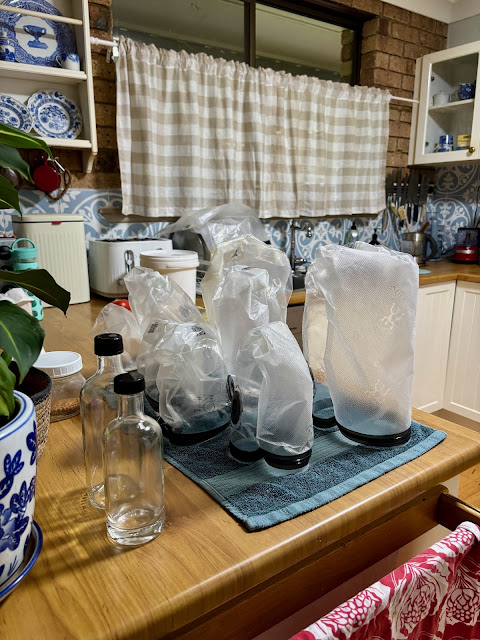
Every morning when I walk into my kitchen it looks tidy and ready for a day's work. Not so on this morning (above), I saw this when I walked in. Late the previous afternoon when I was looking for something, I came across my rolled up Zwilling vacuum bags and decided they had to be washed and dried. So I did that and although I usually put them outside on the verandah to dry it was dark by then. I turned the just-washed bags inside out and left them like this on a towel. It worked well and now the bags are ready to use when I bring home root vegetables, cabbages or whatever I buy that I want to last four or five weeks.
Image

You’ll save money by going back to basics

When I was doing the workshops and solo sessions, I had a couple of people whose main focus was on creating the fastest way to set up a simple life. You can't create a simple life fast, it's the opposite of that It's not one single thing either - it's a number of smaller, simpler activities that combine to create a life that reflects your values; and that takes a long to come together. When I first started living simply I took an entire year to work out our food - buying it, storing it, cooking it, preserving, baking, freezing, and growing it in the backyard. This is change that will transform how you live and it can't be rushed.  
Image

All previous blog posts

  • 2026 3
    • February 3
      • Workshops starting 1 March
      • Planting vegetable seeds and new workshops
      • Back where we belong
  • 2025 7
    • July 1
    • June 2
    • May 1
    • April 2
    • February 1
  • 2024 25
    • December 2
    • November 1
    • October 2
    • September 3
    • August 1
    • July 3
    • June 1
    • May 3
    • April 2
    • March 3
    • February 2
    • January 2
  • 2023 13
    • December 1
    • November 2
    • October 1
    • September 3
    • August 2
    • February 2
    • January 2
  • 2022 17
    • November 3
    • October 4
    • September 3
    • August 2
    • July 3
    • June 2
  • 2021 50
    • December 1
    • November 6
    • October 7
    • September 5
    • August 4
    • July 5
    • June 2
    • May 2
    • April 6
    • March 4
    • February 4
    • January 4
  • 2020 68
    • December 3
    • November 5
    • October 4
    • September 4
    • August 4
    • July 4
    • June 4
    • May 8
    • April 7
    • March 8
    • February 8
    • January 9
  • 2019 66
    • December 2
    • November 4
    • October 5
    • August 3
    • July 4
    • June 6
    • May 8
    • April 8
    • March 8
    • February 11
    • January 7
  • 2018 82
    • December 1
    • September 2
    • August 10
    • July 4
    • June 11
    • May 9
    • April 12
    • March 10
    • February 10
    • January 13
  • 2017 129
    • December 7
    • November 10
    • October 6
    • September 13
    • August 11
    • July 13
    • June 12
    • May 9
    • April 9
    • March 14
    • February 11
    • January 14
  • 2016 125
    • December 7
    • November 13
    • October 10
    • September 11
    • August 11
    • July 8
    • June 9
    • May 9
    • April 12
    • March 10
    • February 13
    • January 12
  • 2015 184
    • December 7
    • November 15
    • October 20
    • September 18
    • August 19
    • July 18
    • June 12
    • May 15
    • April 12
    • March 21
    • February 13
    • January 14
  • 2014 203
    • December 11
    • November 8
    • October 17
    • September 20
    • August 17
    • July 19
    • June 17
    • May 17
    • April 23
    • March 15
    • February 18
    • January 21
  • 2013 225
    • December 13
    • November 17
    • October 17
    • September 17
    • August 21
    • July 24
    • June 20
    • May 19
    • April 17
    • March 22
    • February 17
    • January 21
  • 2012 245
    • December 17
    • November 20
    • October 20
    • September 18
    • August 15
    • July 24
    • June 21
    • May 26
    • April 23
    • March 23
    • February 19
    • January 19
  • 2011 257
    • December 18
    • November 24
    • October 27
    • September 23
    • August 24
    • July 21
    • June 24
    • May 24
    • April 16
    • March 22
    • February 14
    • January 20
  • 2010 283
    • December 20
    • November 18
    • October 18
    • September 19
    • August 25
    • July 24
    • June 25
    • May 26
    • April 25
    • March 22
    • February 29
    • January 32
  • 2009 293
    • December 29
    • November 18
    • October 23
    • September 25
    • August 22
    • July 28
    • June 22
    • May 21
    • April 27
    • March 26
    • February 24
    • January 28
  • 2008 387
    • December 24
    • November 23
    • October 25
    • September 26
    • August 27
    • July 27
    • June 37
    • May 34
    • April 44
    • March 53
    • February 32
    • January 35
  • 2007 372
    • December 37
    • November 40
    • October 55
    • September 51
    • August 49
    • July 63
    • June 49
    • May 28


Trending Articles

NOT the last post

This will be my last post here.  I've been writing my blog for 18 years and now is the time to step back. I’ve stopped writing the blog and come back a couple of times because so many people wanted it, but that won’t happen again, I won’t be back.  I’ll continue on instagram to remain connected but I don’t know how frequent that will be. I know some of you will be interested to know the blog's statistics. 
Image

Every morning at home

Every morning when I walk into my kitchen it looks tidy and ready for a day's work. Not so on this morning (above), I saw this when I walked in. Late the previous afternoon when I was looking for something, I came across my rolled up Zwilling vacuum bags and decided they had to be washed and dried. So I did that and although I usually put them outside on the verandah to dry it was dark by then. I turned the just-washed bags inside out and left them like this on a towel. It worked well and now the bags are ready to use when I bring home root vegetables, cabbages or whatever I buy that I want to last four or five weeks.
Image

You’ll save money by going back to basics

When I was doing the workshops and solo sessions, I had a couple of people whose main focus was on creating the fastest way to set up a simple life. You can't create a simple life fast, it's the opposite of that It's not one single thing either - it's a number of smaller, simpler activities that combine to create a life that reflects your values; and that takes a long to come together. When I first started living simply I took an entire year to work out our food - buying it, storing it, cooking it, preserving, baking, freezing, and growing it in the backyard. This is change that will transform how you live and it can't be rushed.  
Image

Creating a home you'll love forever

Living simply is the answer to just about everything. It reduces the cost of living; it keeps you focused on being careful with resources such as water and electricity; it reminds you to not waste food; it encourages you to store food so you don't waste it and doing all those things brings routine and rhythm to your daily life. Consciously connecting every day with the activities and tasks that create simple life reminds you to look for the meaning and beauty that normal daily life holds.  It's all there in your home if you look for it. Seemingly mundane tasks like cleaning and cooking help you with that connection for without those tasks, the home you want to live in won't exist in the way you want it to.  Creating a home you love will make you happy and satisfied.
Image

Time changes everything

I've been spending time in the backyard lately creating a contained herb and vegetable garden. My aim is to develop a comfortable place to spend time, relax, increase biodiversity and encourage more animals, birds and insects to live here or visit. Of course I'd prefer my old garden which was put together by Hanno with ease and German precision. Together, we created a space bursting at the seams with herbs, vegetables and fruity goodness ready to eat and share throughout the year. But time changes everything. What I'm planning on doing now, is a brilliant opportunity for an almost 80 year old with balance issues. In my new garden I'll be able to do a wide range of challenging or easy work, depending on how I feel each day. It’s a daily opportunity to push myself or sit back, watch what's happening around me and be captivated by memories or the scope of what's yet to come.
Image

It's the old ways I love the most

I'm a practical woman who lives in a 1980’s brick slab house. There are verandahs front and back so I have places to sit outside when it's hot or cold. Those verandahs tend to make the house darker than it would be but they're been a great investment over time because they made the house more liveable. My home is not a romantic cottage, nor a minimalist modern home, it's a 1980’s brick slab house. And yet when people visit me here they tell me how warm and cosy my home is and that they feel comforted by being here. I've thought about that over the years and I'm convinced now that the style of a home isn't what appeals to people. What they love is the feeling within that home and whether it's nurturing the people who live there.
Image

Back where we belong

Surprise! I'm back ... for good this time. Instagram became an impossible place for me. They kept sending me messages asking if I'd make my page available for advertisers! Of course, I said no but that didn't stop them. It's such a change from what Instagram started as. But enough of that, the important part of this post is to explain why I returned here instead of taking my writing offline for good. For a few years Grandma Donna and I have talked online face-to-face and it's been such a pleasure for me to get to know her. We have a lot in common. We both feel a responsibility to share what we know with others. With the cost of living crisis, learning how to cook from scratch, appreciate the work we do in our homes, shop to a budget and pay off debt will help people grow stronger. The best place to do that is our blogs because we have no advertising police harassing us, the space is unlimited, we can put up tons of photos when we want to and, well, it just feels li...
Image

Making ginger beer from scratch

We had a nice supply of ginger beer going over Christmas. It's a delicious soft drink for young and old, although there is an alcoholic version that can be made with a slight variation on the recipe. Ginger beer is a naturally fermented drink that is easy to make - with ginger beer you make a starter called a ginger beer plant and after it has fermented, you add that to sweet water and lemon juice. Like sourdough, it must ferment to give it that sharp fizz. To make a ginger beer plant you'll need ginger - either the powdered dry variety or fresh ginger, sugar, rainwater or tap water that has stood for 24 hours to allow the chlorine to evaporate off. You'll also need clean plastic bottles that have been scrubbed with soap, hot water and a bottle brush and then rinsed with hot water. I never sterilise my bottles and I haven't had any problems. If you intend to keep the ginger beer for a long time, I'd suggest you sterilise your bottles. MAKING THE STARTER In a...
Image