down to earth

  • Home
  • About Us
  • Down To Earth Book
  • Privacy Policy
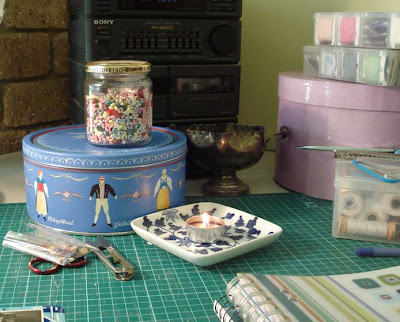
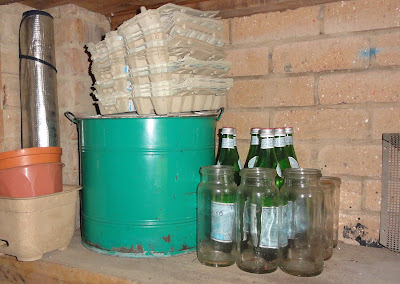
Last week, one of the ladies here ask me to show my preserving kit. Here it is in our brick garden shed. I also store excess jars and bottles there, as well as egg cartons that have been given to us. The preserver is a circa 1970s Fowlers Vacola stove-top boiler. I bought it for $20, I think, many years ago. I also have a range of FV jars, lids, rings and clips but I prefer to use screw top jars. I recycle good wide mouthed glass jars and use them several times for jams or relish. You can buy new lids for recycled jars here. The only other tools I use are preserving tongs and a wide mouthed funnel. I bought my preserving tools in a pack of five utensils several years ago but looking online just now I can't find anything like it. You can easily find funnels but you'll also need jar tongs.
If you don't have a preserving kit and want to start preserving a small amount of food, you can use a large stockpot with a round cake stand in the bottom, or, alternatively, a tea towel folded and placed on the bottom of the pan to prevent the jars touching the super hot base. Please be aware that there are several health risks associated with preserving and although the process is a simple one, you need to be aware of the risks as well. You can read some of my previous posts on preserving here, here and here.

Preserving your excess food in a water bath, which is what my preserving kit is, or making jams, pickles chutneys, relish etc, is a very worthwhile skill to learn. If you're new to it, try it first using a stockpot and if you want to get into it in earnest, buy a kit second hand.


I'd like to show you a new addition to my food kittery. My good friend Patrick gave me this wine making kit (above) a few weeks ago. He's decluttering and it was taking up space in his shed. Naturally, I accepted it with open arms. I'd like to make Perry - pear wine, as well as apple cider, elderberry wine and elderflower champagne. I've been looking for a good Perry recipe but many of them recommend Campden tablets, a sulfer tablet, which I don't want to use. Are there any experienced wine or cider makers out there who can tell me an organic alternative?

I'm looking forward to making wine. Not that we drink much of it nowadays, but it's a skill I've always wanted to learn. I'd like to hear from anyone who has already tried it. In the meantime though, I'm starting a ginger beer plant today. I've often made ginger beer in summer in past years. It's a delicious non-alcoholic drink that has that sharp and snappy gingery taste I love. If you'd like to brew along side me, it should take us about two weeks to get our ginger beer ready. We'll be just in time for Christmas day. Every couple of days, I'll show a picture of my ginger beer plant and we'll go through making the ginger beer together. It should be fun.

MAKING GINGER BEER
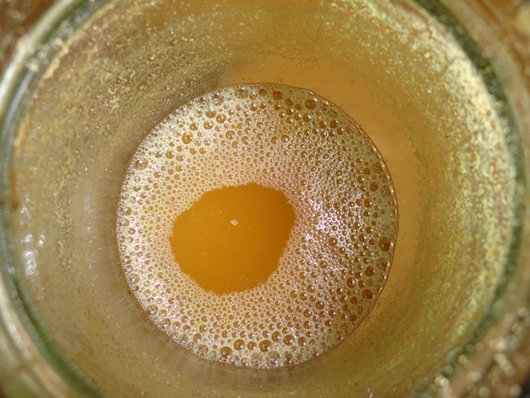
In a wide mouth jar, start by adding 1 level tablespoon of raw or white sugar to 1 level tablespoon of ginger powder (crushed, dried ginger). Add one cup of rainwater, or tap water that's been allowed to stand for 24 hours to allow the chlorine to evaporate off. Mix this all together and cover the jar with an open weave cotton cover that will allow the wild yeasts in but keep insects out. A crocheted milk jug cover would be perfect. Leave this concoction on the bench to collect wild yeasts and start fermenting. Well, that's our ginger beer started, we'll come back to it on Thursday.


Thank you for all the lovely, warm comments made yesterday and thank you for coming to visit me today. I always look forward to reading what you're up to and making connections with like minded people helps keep me going.

Pets become a favourite part of the family very soon after they come into our lives. We feed them, care for them, provide comfort and warmth and make sure they're healthy. Every day I see their faces, they're as familiar to me as Hanno's, but life is relatively short for our pets and in a heart beat they're gone.

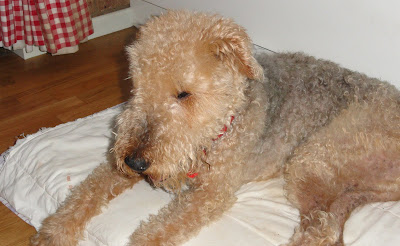
Alice, our Airedale Terrier, is 13. We've had her since she was a puppy. She came to us from the same person who bred her Aunty Rosie. It seems like yesterday when we had Rosie here with us too but it's over two years now since she died. Now Alice is declining in health, she's weak and she may not last too much longer. She's deaf and can't see properly because she has cataracts. She is very thin, although she's still eating a lot, she's incontinent at times, she has a lot of growths - the vet says they're similar to the growths old ladies get, her hair is thinning, and she often stumbles when she walks. She spends most of her day in bed in the kitchen, either asleep or watching Hanno and I as we go about our daily chores.

There are times when she's alert and runs around like a puppy. She likes to walk out to the front gate with Hanno or I to bring in the bins or close the gate. She still sniffs her way around our boundary fences every time she's out there. When she knows it's dinner time, she comes looking for us and bounces around like a clown. Yep, there are plenty of signs of the younger Alice still there, but there is nothing the vet can do for Alice. She is nearing the end of her life, she has leaking heart valves, so we have to accept that and make her as comfortable as we can.

And we have to enjoy every day we have with her and take lots of photos.

Pets require a different kind of care when they're young, during their prime and when they age. You need to adjust what you do and keep on the lookout for signs of ageing. We decided Alice needed a softer bed. She's slept on the same bed for a number of years but with no fat on her body and not as much hair, she needed a softer, warmer bed. Hanno bought a nice piece of thick foam rubber a couple of weeks ago. It supports her weight nicely and I think she'd find it's a big improvement on the older bed. Yesterday I made a cover for it. Her bedding needs to be changed quite frequently now so we need two such covers. I'll do up another one during the week. We're also feeding her three times a day now. She has two Weetbix with milk for breakfast, a raw chicken carcass or a raw egg flip for lunch and her usual homemade dog food for dinner. Apart from that she drinks water and she has the occasional piece of toast or biscuit.

Hettie is our white cat. She's a bit older than Alice and she's slowing down too. She's never been a wanderer but sometimes she used to go into the bush near the house, now she sleeps on a table or a chair on the back verandah all day. At night she sleeps on a soft bed on another table a bit further back. She's still in reasonably good health but she can't jump like she used to. She hesitates and has a few tries at jumping on the table where she is fed. I moved a chair closer to her second table so she can get up there easily. Hettie's meals haven't changed much; we do buy the senior biscuits for her now.

They give us a lot of pleasure, these animals, and it will be a sad day here when they die. I clearly remember the day we buried Rosie under the Banksia Rose in the backyard. We were both devastated. I used to think we'd get another dog straight away when Alice died, but now I'm not so certain of that. I don't want to think about a time when she's not here so that decision will have to wait. I am sure those of you with pets will know how we feel. How have you looked after your ageing pets?


This is on my mind is a Friday photo feature that anyone with a blog can join. It opens the door to us sharing our lives with these photos and gives us all a new way to discover each other, and maybe form new friendships. Your photo should show something at home that you're thinking about. It could be something already done but still on your mind, something you're about to do and you're working out how to do it, or a place at home where you've spent a lot of time during the past week. It could be anything.

To take part in this, all you have to do is post your photo and write a short caption explaining it. When your photo is published, come back here and add a comment, with a link to your blog photo. We will all be able to follow the breadcrumbs in the woods that lead to each new photo. Who know where these trails will lead us.

PS: Please label your photo: This is on my mind, and please, post a new photo today, otherwise I'm not sure if I'm commenting on the right post.

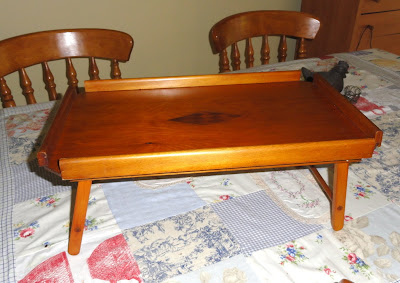
Hanno and I went to a couple of thrift shops last week and I found this beautiful vintage table tray for $10. I'm thinking it was hand made in someone's backyard shed. It's solid wood and there is a little inlaid check diamond in the centre. The legs fold under when it's not in use. I found it at the bottom of a stack of plastic and tin trays just waiting for me to come along.

I came to the computer this morning without much of an idea of what, if anything, to write today but a comment from yesterday has me here tapping away again.

Dear Root and Twig,

Thank you for your comment. It made me smile and highlighted for me, again, why I have continued blogging for so long. You have a blog, as many of the readers here do, and I'm sure you know that you go through periods when you really don't know what to write or even if you should. The criticisms that sometimes come in emails, the occasional jibes in comments and seeing yourself written about in other blogs or forums, not always in the kindest of lights, can make in real impact on the enthusiasm one writes with. I am very lucky in that 99 percent of what I've seen written here and in other places has been positive. I am grateful for that, I'm not sure I'd still be here if it were different. I know it's cut many good bloggers off at the knees.

I never aim for perfection. I have written about that in the past on a few occasions mainly for the reason you state in your comment - "If we had to be perfect at this endeavor, in order for it to 'count,' I would be too discouraged to even try." I'm not perfect, there is no such thing, not for any of us. All I try for each day is to do the best I can do on that day. Sometimes the bar is high, sometimes it's not, but the important thing is that I try. I'm as flawed as the next person. I make mistakes. There are days I don't want to do what I know I should, but I always live by my values. If I fall short one day I know there will be other days when I excel and over time I hope the scale balances out in my favour.

I'm not going to self-censor either. What you see is what you get. I don't stage my photos. What would be the point of that. Some people don't understand that to try to be perfect all the time, is so exhausting and pointless it takes time away from the important things. So I'm pleased to know you're out there not expecting perfection from me, or from yourself. Let's move forward together trying not for perfection but to do our best each day. It's gentler, kinder and we open ourselves up to learn more.

With respect, appreciation and love,
Rhonda


I received an email the other day from a lady who wanted to know why I don't do more canning/preserving posts. The plain and simple answer is that I only post about what I do, I don't do a lot of preserving, so I can't write about it more than I do.

We do things differently here. Speaking from my own experience, we don't have to put up a lot of food in jars because we have a garden we can walk out to most of the year to pick fresh what we want to eat. In colder climates, where growing food is impossible half the year, canning gives options that otherwise are not available. The theory is to grow as much as you can during the warm months, harvest in autumn and can the excess for eating over the cold winter. That is a great way to save money, eat the best organic produce and know for sure what you're eating.

In Australia it's fairly common to put up those foods that you really enjoy, that you can make yourself, and that taste better homemade than bought. I usually put up various tomato products - sauce, pasta sauce/pizza topping and tomato relish. I generally do some sort of jam - I love peach jam so I buy a box of peaches in season and put up several jars of peach jam. Some years I'll do a strawberry jam as well, but they're different seasons here. Strawberries are a winter crop, peaches are abundant in summer. At some time during lemon season, which is winter and again in early spring here, I'll make up several jars of lemon butter and juice all the lemons I can lay my hands on. I freeze the juice in two litre containers to make cordial with it year round, but especially in summer. Late summer I'll put up a few jars of bread and butter cucumbers and pickled beetroot. But none of these foods are meant specifically for winter meals - we never can meat, soup or salmon, we eat it all fresh, year round. When there is an abundance of beans, carrots, peas or silverbeet, I blanche and freeze - it's easier, cheaper and takes less time.

For those reasons, a small preserving kit, circa 1970s, suits me well. It's not a handsome unit but it does the job required for my sporadic preserving sessions. And let me tell you that nothing you can buy in the shops is better than homemade lemon butter, peach jam or tomato relish; it's like manna from heaven. I've never had the need for a pressure canner and most of the time I use recycled jars. And we're still here to tell the tale.

Don't get me wrong, I think the ability to preserve food for later use is one of the most helpful of all the household tasks we can learn. It's complex, in that it has health and safety aspects, but when the time it put into the learning of it, it is a fairly straight forward task. It's just that with a garden full of fresh food most of the year, we don't need to preserve food unless we have too much of it.

What do you put up and when do you do your canning/preserving?

Are you thinking of Christmas yet? I wonder what your plans are, what traditions you follow, how many will sit at your table this year. Christmas can be one of those times of year when you either commit to the family traditions you grew up with and carry them on, or you decide that now you have your own family, new traditions will define you. It is a choice. If Christmas is being held in your home, you will lead the way, you can change or follow.

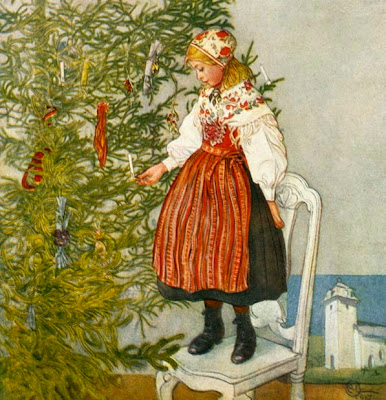
Carl Larsson's Christmas from the gallery.

We're at a point of transition. This will be the last year we'll spend Christmas without babies or children so it is special in its own right. Since our sons have grown and left home, I've realised that the real excitement of Christmas comes from having children around. When it's all adults, it's a celebration of family, an enjoyable feast, but there is not that barely contained crazy excitement that children bring. I didn't realise I missed it but I'm ready to decorate Christmas trees with tiny lights and put out fruit cake and beer for Santa and the reindeer all over again.

This Christmas will be the first one in a long time when we haven't organised and lead the Christmas breakfast at our Neighbourhood Centre. Hundreds come to that free breakfast - it's a feast of sharing and community spirit. So with Christmas morning free, as well as Christmas lunch, we might have Kerry and Sunny here. Both our sons are chefs so they often work on Christmas day. Kerry and Sunny think they have the day off, Shane thinks he'll be working, so we might not see him and Sarndra. We'll mould ourselves around our family. If they're here, we'll celebrate with organic roast chickens and salad, tropical fruit pavlova and homemade elderflower champagne, if they're not here, Hanno and I will share a small celebration of roast chicken washed down with Scrumpy - apple cider. Either way, we'll enjoy the day for what it is, the end of an era.

What are you doing, what are you eating, what gifts are you making and where will you be?

I crept out of bed early with the sound of rain still falling, put the kettle on for a cup of tea while I let Alice out, then in again, made the tea and came to the computer. By the time Hanno was awake, I'd already watched Dr Finlay that I recorded the night before. I really love that program. I vaguely remember it being on back in the old days but the 60s, 70s and 80s were too full of other things to watch TV so I haven't seen it till now. Now it mesmerises me with ladies embarrassed and hushed discussions about their husband's snoring (gasp!) and seemingly sweet and gentle Janet who, I think, is as sharp and cold as a steel pin, sails through it all with the perfect expression of 50s morality. I got another cup of tea, there is so much tea drunk around the doctors' kitchen table I feel left out with empty hands.

The rain always slows things down. Rain is not commonplace here and steady soaking rain makes us stop and notice the weather; we watch and we listen to it. The pattern of rainfall on the tin roof makes me feel that we are all safe, we can slow down and take it easy and with Sunday as an added bonus, the hours are ours to do with as we please. Well, I didn't stay in that relaxed mode for long because I was back at the computer, writing again, for much of the day. For those lovely readers who sent thoughtful messages about the book, the plan is to have it on the shelves in February 2012. My deadline for the first draft is March 1, then we have two months of editing, then it is sent off to the printer in May 1. I am thrilled to be working with Penguin and a wonderful editor, Jo.


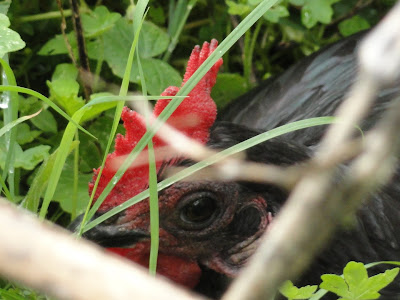
When there was a break in the rain, Hanno tidied up in the garden but rushed in and asked me to follow him outside. He was removing the trellis the cherry tomatoes had been growing on and there, amidst the chick weed in the softest green nest, sat Lucy, our stately English Game hen. She sat on six eggs and only moved when the entire trellis came down around her. I wish we could give her chicks to raise. She had a brood of chicks when she came to us - a motley crew of a white leghorn, two bantam Australorps and a green legged rooster of unknown breed. But we're not set up for tiny chicks now and I fear they'd be lost to the snakes and feral cats.

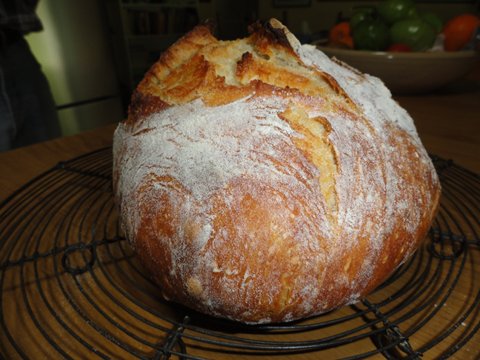
Soon after breakfast I removed the sourdough starter from the fridge and fed it. After mixing in the new flour, I transferred the entire living mass to a clean jar and left it to come to life for a loaf later in the week. Washing up done, I tidied the kitchen and went back to my room to start writing again.


Late in the afternoon I made caramelised apples, to use up some excess apples, and banana cupcakes for morning teas during the week, although there are still a few biscuits left. I'll probably freeze some tomorrow. Sunday night's tea was ham and salad. The rest of the time, when I wanted to relax, I knitted. I'm knitting baby wash clothes at the moment, they're nothing fancy, just practical bamboo and cotton square cloths suitable for the most beautiful of grand babies.

There is so much that is new and exciting happening right now. These changes have brought reflection and growth but mainly a feeling that everything is right and as it should be. There is always work to be done, but that keeps us active and engaged and we enjoy most of it. Sometimes I look back to my younger years and remember good times when I thought it couldn't get any better. But it did. It got better. It still does.

I am taking the lead from Soulemama here and doing a Friday photo feature. I hope she doesn't mind. This will allow us all to connect via a simple photo of the week, featured on our blogs, for all to see. Our previously unpublished photos will show something at home that we're thinking about. It can be something already done but still on your mind, something you're about to do and you're working out how to do it, or a place at home where you've spent a lot of time during the past week. It opens the door to us sharing our lives with these photos and, after my post yesterday, gives us all a new way to discover each other, and maybe form new friendships.

To take part in this, all you have to do is post a photo of something on your mind that reflects the guidelines above. Please write a short caption to explain your photo. When your post is published, come back here and add a comment, with a link to your blog photo. We will all be able to follow the breadcrumbs in the woods that lead to each new photo. Who know where these trails will lead us. You should add "This is on my mind. ..." then tell us about the photo, to identify you're part of this.

This is on my mind...

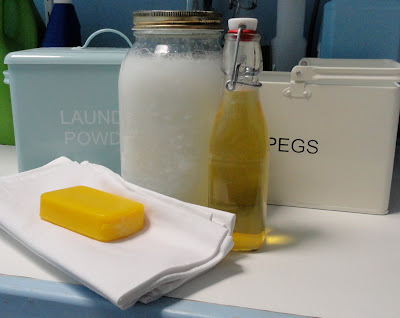
I'm taking photos for my book and need a photo of a cleaning goods gift basket. I have the basket and the homemade cleaning goods but I need to add some pretty little additions to make the basket really special. I need ribbons and cellophane! And maybe more dishcloths. :- )

I had a phone conversation with Little Jenny Wren earlier this week. She contacted me via email about a fabric I'd commented on, she included her phone number in the email, so I took the opportunity to call her. There was no hesitation, no shyness or wondering about whether I should, I just did. I felt I already knew her.

Blogs are like that. When you read someone's blog over a period of time you feel you know them. We both agreed it was weird to be talking, but the conversation was relaxed, friendly and wonderful. We talked about the fabric, and our families. We didn't have to explain who, what and why, we already knew those details because we've been reading about each others lives for years. We've seen each other's kitchens, I know Jenny dries her washing in front of her wood stove in the winter, I know how old her children are. I know all those details because she's shared her interesting life on her blog.


I read the other day that sociologists have yet to agree on the meaning of the word "community". So far there are 94 definitions of the word, and "since the advent of the Internet, the concept of community no longer has geographical limitations, as people can now virtually gather in an online community and share common interests regardless of physical location."


I try to read as many blogs as I can and although I don't have much time and don't read every day, there are some women out there who I feel I know well, even though we've never spoken in person. For instance, I've been following Amanda's move to a new home and silently sharing their joy and excitement. I've just read how Farmama and her husband were lead to their own farm, and like me, how she picks up on the treasures left in her comments box. She's just tied her fabric stash in bundles, but I'll let you find out why. And I've been slowly reading through the archive at A Joyful Chaos - a blog about growing up Amish, and I'm keeping up to date with all sorts of delicious food at Food in Jars. If her food is half as satisfying as her photos, she would be setting the finest table each night. And speaking of good food, Almost Bourdain captures me with thoughts of Anthony Bourdain as well as her thoughtful and innovative approach to food. Who could forget her Tiramisu with laminations and Anzacs and her Balinese spicy fried chicken. Mmmmm.


I learn so much from my blog community. I learn from those I read and from the wonderful comments made here every day. These computers of ours are powerful things. They stretch us across our own countries and into international lands. They take us by the hand and help us wander through kitchens and barnyards, we see tomatoes growing and being put into jars, we watch and learn as cardigans are being knitted and skirts stitched; we see how others live. Blogs, unlike magazines, are written without filters, they're showing real life, not a set stage. Blogs, especially the good blogs, come straight from the heart and they record everyday, ordinary living. And best of all, blogs, while telling their daily stories, teach us what we didn't even know we wanted to learn.


We say a lot about respect when we use the full measure of what we grow or buy. In the old days it was common practice to use every part of a slain animal; and many people who slaughter their own livestock still do it today. From the horns being broken down and used as a fertiliser, or filled with cow dung and buried to produce the magical biodynamic Formula 500, to using bones for stocks and gelatine, and the meat, including the offal, for nutrition and the hide for warmth. Crafters do a similar thing with patchwork. They don't waste any scraps and by taking the time to piece the fabrics together, either randomly or in time honoured patterns, they produce beautiful quilts, bags and clothing that are sometimes featured on the walls of galleries, but always yield their true qualities of warmth and comfort.

Respect is expressed in those actions of honouring the life of the animal or the work involved to grow the cotton and produce the fabric, by using every part for a worthwhile purpose and by making sure there is no waste to pollute or be part of a landfill dump.

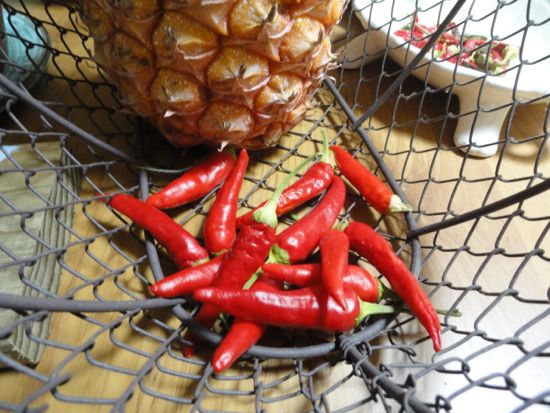
We can carry those principles on very easily when we use our fruit and vegetables too. Again, they can be either grown at home or purchased, the respect for the work and resources involved in producing what you have before you is clear and unambiguous if you use every part of what you have. Take our pineapple, for instance. That pineapple was grown from the top of a local pineapple we bought a few years ago and it will continue on because I will plant this top to grow two more pineapples.


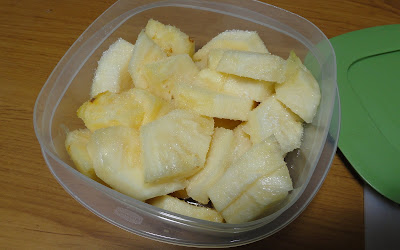
Growing pineapples is simple, it takes a long time, but you will be rewarded for you patience when you taste that sweet juicy organic fruit. I sliced ours down the middle and cut it into chunks. We've feasted on it twice now after our tea and we will finish it off tonight. It is so sweet! When I tasted it I forgot about those years of growing and thought only that we grew it, it was organic and we used every part of it - no waste, everything was used. So how do we get to that point?


Take the top from your pineapple - if you have a choice, use the best pineapple - the juiciest and the sweetest. You will be passing on those genes to your next fruit. Remove all flesh from the base of the top, then peel off several layers of leaves. You want a cutting that is clean and undamaged at the base. Allow it to dry out for a few days, then plant it in the garden in a sunny spot where it can grow for at least two years. Don't put it where you plan on planting tomatoes next season. If you live in a colder climate, I believe you can plant pineapple tops in large pots, at least the size of a bucket, filled with good quality potting mix. Keep the top in the sun for as long as possible, then move inside to a sunny window during the cold weather. Pineapples don't need a lot of water but you'll need to water it in well and water every couple of days for about two or three weeks until the roots start reaching out into the soil.


We didn't fertilise our pineapple much. It got some liquid fertiliser occasionally and natural rainfall, otherwise it was sat quietly doing its own thing. They do take up a fair bit of space when the top has fully developed so if you're planting a number of tops, make sure you give them a metre / three feet space in which to develop. When it's been in a year or so, you'll notice a tiny pineapple emerge from the centre. That slowly develops for about six to nine months and ripens to a perfect fruit. It is ready to pick when, instead of standing upright, it falls over while still attached to the centre. Cut the pineapple stalk off the main plant and leave the plant in the ground. Fertilise with liquid fertiliser and continue as before - this same plant will produce a second pineapple and will take the same amount of time doing it.

When you harvest your pineapple, cut the top off and replant. Eat the fruit and make the skin and the off cuts into pineapple vinegar. I've written about that here. Wonderful! No waste at all. You've used the entire fruit and that one top will continue producing pineapples for as long as you continue to plant the tops.

Respectful. Economical. Productive.

I'm often intrigued by the questions asked in emails, particularly when they're about the most simple things. It always reinforces for me the need to learn new skills correctly and for that reason I never tire of explaining the most simple of tasks. The other day, Matthew asked how to hang washing on the line and if there are any tricks or ways of doing it well.

With many simple household tasks, knowing the right way to do something, and consistently doing it that way, results in jobs being carried out efficiently and before you know it, it becomes second nature to you. I remember when I first decided that making the bed every day was important to me. It seemed like a big thing to give that time every day to just making the bed. Now, after years of making sure the bed was just right every day, it seems like a tiny commitment to a very small task. Now it's just part of what I do.

One of the other small things we do here is to hang washing on the line to dry and as I often think about what I'm doing while I'm doing it, I have formed a few opinions about this simple task. It is common practice in Australia to line dry. It's been done that way since we Europeans arrived here and it's still the most frugal and effective way. Generally we have good weather, ideal for drying and a line of clothes set out early in the morning will be ready to bring in after lunch. Luckily, Hanno built me an all weather line too, so in addition to our Hill's hoist, that umbrella shaped Australian icon, I can quickly line dry clothes on our back verandah, even when it's raining.

When the washing machine finishes the cycle, take the clothes out immediately and head out to the line. If you leave the washing in the machine, or in your washing basket, for a period of time, you'll have more creases than is necessary. The thing that makes the most difference when hanging washing is to shake and snap. I mean by that to shake the item and give it a sharp hard whip snap before you peg it up. You'll remove some of the wrinkles in cotton and linen, and with terry towels, it will help fluff up the pile. When you remove towels from the line, shake them again to fluff up the pile. When you peg the item to the line, smooth it out with your hand and make sure the edges are straight. You don't want the hem of a skirt or a shirt sleeve to be crumpled up. Straighten and smooth collars, sleeves, facings, pockets and hems before going on to the next item.

Peg towels, tea towels, pillowcases and napkins by two opposite corners, shirts and blouses upside-down on the side seam, jeans (with the zipper undone) and skirts by the waist, and dresses on the shoulder seam. Hang sheets, tablecloths and doona|duvet covers by the two top corners in one layer, then make a U shape and peg the bottom corners to the line behind it. This will create better drying conditions for these large items and sometimes, the wind takes up the sheet like a sail and if you're using a circular line, it will spin the line around. If you have enough room and sturdy coat hangers, you could hang dresses, shirts and anything permanent press on a coathanger and peg it to stop it slipping along the line. Traditionally, socks and underwear are hung near the centre of the line and hidden by the larger items. I have to confess I still do this. If you're using a straight line, hang the heavy items first at the ends of the line, where there is more support, and fill in the middle with the smaller items.

If you have brightly coloured or black clothing, turn them inside out to help prevent fading but all your whites will benefit from drying in the sun because it will have a slightly bleaching effect.

Never hang woollens or any natural fibres like alpaca in the sun. They should be laid out flat on a large towel and dried in the shade.

I use plastic pegs but I like wooden pegs better. Here in our climate, the wooden pegs go mouldy and often end up marking the clothes. Plastic pegs will serve you better in humid or moist climates. And don't do what we do here and keep the pegs on the line. It's best to store plastic pegs out of sunlight, they'll last much longer if you take care of them.

If you intend to iron anything you have hanging on the line as soon as it's dry, remove it when it's still slightly damp. That will make ironing easier. For the rest of it, fold each item before it goes in the basket, or if you don't want to stand in the sun too long, as soon as you go inside the house.

The end of November. This year has gone so fast, and soon we'll be faced with the new year and all it will bring. It doesn't feel like November because this year, although the temperature has risen, we haven't had much humidity. In the tropics and sub tropics, where we live, it's not the heat that affects you, it's the humidity. But we're still sleeping with a quilt and a blanket on our bed and usually, during November, we have just a sheet and the fan on. I wonder when it will change.

We had a wonderful weekend. It showered on and off but the first match of the test cricket started so I had to watch some of that. In years gone by it used to mark that last part of the school year just before Shane and Kerry had six to eight weeks off school, and sometimes we'd go away to visit family or friends. In those days I would use the end of November to relax and prepare for Christmas and the summer holidays, with one eye on the cricket, and I always sat down and watched the first few overs, if not the entire day's play. I couldn't do that this year because I've been concentrating on the book, but I did sit and watch the first few overs while I did a bit of knitting.

Some days it seems like all I do is write but I'm not complaining, I am very grateful for the opportunity I have to work with Penguin. Besides, who would complain when every time I look up, I see what is in the photo above. That is the view from the window where I sit most of the day typing my words. The greenery here envelopes and protects us from the hot sun and the little single vehicle lane way that leads to our door carries only our neighbours coming home or an occasional car that is lost. Our back boundary is an ever flowing creek so most days here are quiet and slow with bird song rather than traffic noise surrounding us. No, I have nothing to complain about.

I did do some baking on the weekend. Bread and biscuits|cookies were made and now we have two jars of biscuits to have with our tea that should last a couple of weeks. The biscuits were made using the cheap and easy biscuit recipe on the forum. One lot I turned into jam drops, the others have almonds.

Apart from some knitting, cooking and making the bed, the only other thing I did on the weekend was talk on the phone to my sister Tricia, my DIL Sandra and my friends Diane and Susan. Tricia sold her house and is in the process of buying a much smaller cute cottage higher up in the Blue Mountains. I can already see what she will do with her cottage and I'm really excited for her. It's a little two bedroom home, built a long time ago with many of the original features still there. I particularly love the old wood stove in the kitchen that looks like a little Aga and she even found the original wooden wire screen doors under the house. It will be a labour of love to do the small amount of renovating she'll be doing and I'm looking forward to many visits there sitting in the kitchen with that fire burning and the snow falling.

But far away from thoughts of snow is my last tale to tell you. I picked THE pineapple yesterday. Those of you who've been reading here for a while will know that we planted a pineapple top a couple of years ago. We harvested the first pineapple a year after we planted it, then had to transplant it to the front garden. Well, it grew another healthy looking pineapple - pineapples usually set fruit for two years - and tonight I'll be cutting it open so we can eat a couple of juicy chunks for dessert.

While I was out in the garden, I also picked some red and orange lilies and gardenias for the table. Our garden is full of flowers right now so how could I resist bringing the fragrance of gardenias into the house.

I hope your weekend was what you wanted it to be. I wish you well as we go into that busiest of seasons in the run up to Christmas. Enjoy your days.

Newer Posts Older Posts Home

MY BOOKS

MY BOOKS


My books were all published by Pengiun, and are available at Amazon US, Amazon UK and Amazon Au

Search here

Total Pageviews

Translate


I'm Rhonda Hetzel and I've been writing my Down to Earth blog since 2007. Although I write the occasional philosophical post, my main topics include home cooking, happiness and gardening as well as budgeting, baking, ageing, generosity, mending and handmade crafts. I hope you enjoy your time here.

MY FAVOURITE PLACES

  • Grandma Donna's Place
  • Grandma Donna's YouTube
  • Grandma Donna's Instagram
  • This Simple Day
  • Nicole's Instagram

Give More

Give More

Popular posts last year

Making ginger beer from scratch

We had a nice supply of ginger beer going over Christmas. It's a delicious soft drink for young and old, although there is an alcoholic version that can be made with a slight variation on the recipe. Ginger beer is a naturally fermented drink that is easy to make - with ginger beer you make a starter called a ginger beer plant and after it has fermented, you add that to sweet water and lemon juice. Like sourdough, it must ferment to give it that sharp fizz. To make a ginger beer plant you'll need ginger - either the powdered dry variety or fresh ginger, sugar, rainwater or tap water that has stood for 24 hours to allow the chlorine to evaporate off. You'll also need clean plastic bottles that have been scrubbed with soap, hot water and a bottle brush and then rinsed with hot water. I never sterilise my bottles and I haven't had any problems. If you intend to keep the ginger beer for a long time, I'd suggest you sterilise your bottles. MAKING THE STARTER In a...
Image

NOT the last post

This will be my last post here.  I've been writing my blog for 18 years and now is the time to step back. I’ve stopped writing the blog and come back a couple of times because so many people wanted it, but that won’t happen again, I won’t be back.  I’ll continue on instagram to remain connected but I don’t know how frequent that will be. I know some of you will be interested to know the blog's statistics. 
Image

How to make cold process soap

I'm sure many of you are wondering: "Why make soap when I can buy it cheaply at the supermarket?" My cold process soap is made with vegetable oils and when it is made and cured, it contains no harsh chemicals or dyes. Often commercial soap is made with tallow (animal fat) and contains synthetic fragrance and dye and retains almost no glycerin. Glycerin is a natural emollient that helps with the lather and moisturises the skin. The makers of commercial soaps extract the glycerin and sell it as a separate product as it's more valuable than the soap. Then they add chemicals to make the soap lather. Crazy. Making your own soap allows you to add whatever you want to add. If you want a plain and pure soap, as I do, you can have that, or you can start with the plain soap and add colour, herbs and fragrance. The choice is yours. I want to add a little about animal and bird fat. I know Kirsty makes her soap with duck fat and I think that's great. I think t...
Image

Preserving food in a traditional way - pickling beetroot

I've had a number of emails from readers who want to start preserving food in jars but don't know where to start or what equipment to buy.  Leading on from yesterday's post, let's just say up front - don't buy any equipment. Once you know what you're doing and that you enjoy preserving, then you can decide whether or not to buy extra equipment. Food is preserved effectively without refrigeration by a variety of different methods. A few of the traditional methods are drying, fermentation, smoking, salting or by adding vinegar and sugar to the food - pickling. This last method is what we're talking about today. Vinegar and sugar are natural preservatives and adding one or both to food sets up an environment that bacteria and yeasts can't grow in. If you make the vinegar and sugar mix palatable, you can put up jars of vegetables or fruit that enhance the flavour of the food and can be stored in a cupboard or fridge for months. Other traditional w...
Image

Cleaning mould from walls and fabrics

With all this rain around we've developed a mould problem in our home. Usually we have the front and back doors open and that good ventilation stops most moulds from establishing. However, with the house locked up for the past week, the high humidity and the rain, mould is now growing on the wooden walls near our front door and on the lower parts of cupboards in the kitchen. Most of us will find mould growing in our homes at some point. Either in the bathroom or, in humid climates, on the walls, like we have now. You'll need a safe and effective remedy at some point, so I hope one of these methods works well for you. Mould is not only ugly to look at, it can cause health problems so if you see mould growing, do something about it straight away. The longer you leave the problem, the harder it will be to get rid of it effectively. If you have asthma or any allergies, you should do this type of cleaning with a face mask on so you don't breathe in any spores. Many peopl...
Image

Five minute bread

Bread is one of those foods that, when made with your own hands, gives a great deal of satisfaction and delight. It's only flour and water but it symbolises so much. I bake bread most days and use a variety of flours that I buy in bulk. Often I make a sandwich loaf because we use most of our bread for lunchtime sandwiches and for toast. Every so often I branch out to make a different type of loaf. I have tried sour dough in the past but I've not been happy with any of them. I'll continue to experiment with sour dough because I like the idea of using wild yeasts and saving the starter over a number of years to develop the flavour and become a part of the family. However, the loaf I've been branching out to most often is just a plain old five minute bread. By five minutes I mean it takes about five minutes actual work to prepare but it's the easiest of all bread to make and to get consistently good loaves from. If you're having people around for lunch or...
Image

This is my last post.

I have known for a while that this post was coming, but I didn't know when. This is my last post. I'm closing my blog, for good, and I'm not coming back like I have in the past.  I've been writing here for 16 years and my blog has been many things to me. It helped me change my life, it introduced me to so many good people, it became a wonderful record of my family life, it helped me get a book contract with Penguin, and monthly columns with The Australian Women's Weekly and Burke's Backyard . But in the past few months, it's become a burden. In April, I'll be 75 years old and I hope I've got another ten years ahead. However, each year I'll probably get weaker and although I'm fairly healthy, I do have a benign brain tumour and that could start growing. There are so many things I want to do and with time running out, leaving the blog behind gives me time to do the things that give me pleasure. On the day the blog started I felt a wonderful, h...
Image

What is the role of the homemaker in later years?

An email came from a US reader, Abby, who asked about being a homemaker in later years. This is part of what she wrote: "I am a stay-at-home mum to 4 children, ages 9-16. I do have a variety of "odd jobs" that I enjoy - I run a small "before-school" morning drop-off daycare from my home, I am a writing tutor, and I work a few hours a week at a local children's bookstore. But mostly, I cherish my blissful days at home - cooking, cleaning (with homemade cleaners), taking care of our children and chickens and goats, baking, meal-planning, etc. This "career" at home is not at all what I imagined during my ambitious years at university, but it is far more enriching. I notice, though, that my day is often planned around the needs of my family members. Of course, with 4 active kids and a husband, this is natural. I do the shopping, plan my meals, cook dinner - generally in anticipation of my family reconnecting in the evening.  I can't h...
Image

Every morning at home

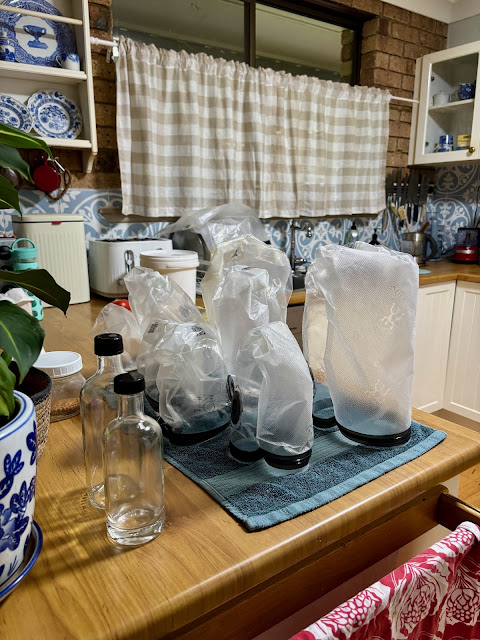
Every morning when I walk into my kitchen it looks tidy and ready for a day's work. Not so on this morning (above), I saw this when I walked in. Late the previous afternoon when I was looking for something, I came across my rolled up Zwilling vacuum bags and decided they had to be washed and dried. So I did that and although I usually put them outside on the verandah to dry it was dark by then. I turned the just-washed bags inside out and left them like this on a towel. It worked well and now the bags are ready to use when I bring home root vegetables, cabbages or whatever I buy that I want to last four or five weeks.
Image

You’ll save money by going back to basics

When I was doing the workshops and solo sessions, I had a couple of people whose main focus was on creating the fastest way to set up a simple life. You can't create a simple life fast, it's the opposite of that It's not one single thing either - it's a number of smaller, simpler activities that combine to create a life that reflects your values; and that takes a long to come together. When I first started living simply I took an entire year to work out our food - buying it, storing it, cooking it, preserving, baking, freezing, and growing it in the backyard. This is change that will transform how you live and it can't be rushed.  
Image

All previous blog posts

  • 2026 3
    • February 3
      • Workshops starting 1 March
      • Planting vegetable seeds and new workshops
      • Back where we belong
  • 2025 7
    • July 1
    • June 2
    • May 1
    • April 2
    • February 1
  • 2024 25
    • December 2
    • November 1
    • October 2
    • September 3
    • August 1
    • July 3
    • June 1
    • May 3
    • April 2
    • March 3
    • February 2
    • January 2
  • 2023 13
    • December 1
    • November 2
    • October 1
    • September 3
    • August 2
    • February 2
    • January 2
  • 2022 17
    • November 3
    • October 4
    • September 3
    • August 2
    • July 3
    • June 2
  • 2021 50
    • December 1
    • November 6
    • October 7
    • September 5
    • August 4
    • July 5
    • June 2
    • May 2
    • April 6
    • March 4
    • February 4
    • January 4
  • 2020 68
    • December 3
    • November 5
    • October 4
    • September 4
    • August 4
    • July 4
    • June 4
    • May 8
    • April 7
    • March 8
    • February 8
    • January 9
  • 2019 66
    • December 2
    • November 4
    • October 5
    • August 3
    • July 4
    • June 6
    • May 8
    • April 8
    • March 8
    • February 11
    • January 7
  • 2018 82
    • December 1
    • September 2
    • August 10
    • July 4
    • June 11
    • May 9
    • April 12
    • March 10
    • February 10
    • January 13
  • 2017 129
    • December 7
    • November 10
    • October 6
    • September 13
    • August 11
    • July 13
    • June 12
    • May 9
    • April 9
    • March 14
    • February 11
    • January 14
  • 2016 125
    • December 7
    • November 13
    • October 10
    • September 11
    • August 11
    • July 8
    • June 9
    • May 9
    • April 12
    • March 10
    • February 13
    • January 12
  • 2015 184
    • December 7
    • November 15
    • October 20
    • September 18
    • August 19
    • July 18
    • June 12
    • May 15
    • April 12
    • March 21
    • February 13
    • January 14
  • 2014 203
    • December 11
    • November 8
    • October 17
    • September 20
    • August 17
    • July 19
    • June 17
    • May 17
    • April 23
    • March 15
    • February 18
    • January 21
  • 2013 225
    • December 13
    • November 17
    • October 17
    • September 17
    • August 21
    • July 24
    • June 20
    • May 19
    • April 17
    • March 22
    • February 17
    • January 21
  • 2012 245
    • December 17
    • November 20
    • October 20
    • September 18
    • August 15
    • July 24
    • June 21
    • May 26
    • April 23
    • March 23
    • February 19
    • January 19
  • 2011 257
    • December 18
    • November 24
    • October 27
    • September 23
    • August 24
    • July 21
    • June 24
    • May 24
    • April 16
    • March 22
    • February 14
    • January 20
  • 2010 283
    • December 20
    • November 18
    • October 18
    • September 19
    • August 25
    • July 24
    • June 25
    • May 26
    • April 25
    • March 22
    • February 29
    • January 32
  • 2009 293
    • December 29
    • November 18
    • October 23
    • September 25
    • August 22
    • July 28
    • June 22
    • May 21
    • April 27
    • March 26
    • February 24
    • January 28
  • 2008 387
    • December 24
    • November 23
    • October 25
    • September 26
    • August 27
    • July 27
    • June 37
    • May 34
    • April 44
    • March 53
    • February 32
    • January 35
  • 2007 372
    • December 37
    • November 40
    • October 55
    • September 51
    • August 49
    • July 63
    • June 49
    • May 28


Trending Articles

NOT the last post

This will be my last post here.  I've been writing my blog for 18 years and now is the time to step back. I’ve stopped writing the blog and come back a couple of times because so many people wanted it, but that won’t happen again, I won’t be back.  I’ll continue on instagram to remain connected but I don’t know how frequent that will be. I know some of you will be interested to know the blog's statistics. 
Image

Every morning at home

Every morning when I walk into my kitchen it looks tidy and ready for a day's work. Not so on this morning (above), I saw this when I walked in. Late the previous afternoon when I was looking for something, I came across my rolled up Zwilling vacuum bags and decided they had to be washed and dried. So I did that and although I usually put them outside on the verandah to dry it was dark by then. I turned the just-washed bags inside out and left them like this on a towel. It worked well and now the bags are ready to use when I bring home root vegetables, cabbages or whatever I buy that I want to last four or five weeks.
Image

You’ll save money by going back to basics

When I was doing the workshops and solo sessions, I had a couple of people whose main focus was on creating the fastest way to set up a simple life. You can't create a simple life fast, it's the opposite of that It's not one single thing either - it's a number of smaller, simpler activities that combine to create a life that reflects your values; and that takes a long to come together. When I first started living simply I took an entire year to work out our food - buying it, storing it, cooking it, preserving, baking, freezing, and growing it in the backyard. This is change that will transform how you live and it can't be rushed.  
Image

Creating a home you'll love forever

Living simply is the answer to just about everything. It reduces the cost of living; it keeps you focused on being careful with resources such as water and electricity; it reminds you to not waste food; it encourages you to store food so you don't waste it and doing all those things brings routine and rhythm to your daily life. Consciously connecting every day with the activities and tasks that create simple life reminds you to look for the meaning and beauty that normal daily life holds.  It's all there in your home if you look for it. Seemingly mundane tasks like cleaning and cooking help you with that connection for without those tasks, the home you want to live in won't exist in the way you want it to.  Creating a home you love will make you happy and satisfied.
Image

Time changes everything

I've been spending time in the backyard lately creating a contained herb and vegetable garden. My aim is to develop a comfortable place to spend time, relax, increase biodiversity and encourage more animals, birds and insects to live here or visit. Of course I'd prefer my old garden which was put together by Hanno with ease and German precision. Together, we created a space bursting at the seams with herbs, vegetables and fruity goodness ready to eat and share throughout the year. But time changes everything. What I'm planning on doing now, is a brilliant opportunity for an almost 80 year old with balance issues. In my new garden I'll be able to do a wide range of challenging or easy work, depending on how I feel each day. It’s a daily opportunity to push myself or sit back, watch what's happening around me and be captivated by memories or the scope of what's yet to come.
Image

It's the old ways I love the most

I'm a practical woman who lives in a 1980’s brick slab house. There are verandahs front and back so I have places to sit outside when it's hot or cold. Those verandahs tend to make the house darker than it would be but they're been a great investment over time because they made the house more liveable. My home is not a romantic cottage, nor a minimalist modern home, it's a 1980’s brick slab house. And yet when people visit me here they tell me how warm and cosy my home is and that they feel comforted by being here. I've thought about that over the years and I'm convinced now that the style of a home isn't what appeals to people. What they love is the feeling within that home and whether it's nurturing the people who live there.
Image

Back where we belong

Surprise! I'm back ... for good this time. Instagram became an impossible place for me. They kept sending me messages asking if I'd make my page available for advertisers! Of course, I said no but that didn't stop them. It's such a change from what Instagram started as. But enough of that, the important part of this post is to explain why I returned here instead of taking my writing offline for good. For a few years Grandma Donna and I have talked online face-to-face and it's been such a pleasure for me to get to know her. We have a lot in common. We both feel a responsibility to share what we know with others. With the cost of living crisis, learning how to cook from scratch, appreciate the work we do in our homes, shop to a budget and pay off debt will help people grow stronger. The best place to do that is our blogs because we have no advertising police harassing us, the space is unlimited, we can put up tons of photos when we want to and, well, it just feels li...
Image

Making ginger beer from scratch

We had a nice supply of ginger beer going over Christmas. It's a delicious soft drink for young and old, although there is an alcoholic version that can be made with a slight variation on the recipe. Ginger beer is a naturally fermented drink that is easy to make - with ginger beer you make a starter called a ginger beer plant and after it has fermented, you add that to sweet water and lemon juice. Like sourdough, it must ferment to give it that sharp fizz. To make a ginger beer plant you'll need ginger - either the powdered dry variety or fresh ginger, sugar, rainwater or tap water that has stood for 24 hours to allow the chlorine to evaporate off. You'll also need clean plastic bottles that have been scrubbed with soap, hot water and a bottle brush and then rinsed with hot water. I never sterilise my bottles and I haven't had any problems. If you intend to keep the ginger beer for a long time, I'd suggest you sterilise your bottles. MAKING THE STARTER In a...
Image