down to earth

  • Home
  • About Us
  • Down To Earth Book
  • Privacy Policy

This candle, made of beeswax, was sent to me over the ocean by the lovely Niki at rural writings. Hi Niki!

We have a public holiday here next Monday so yesterday I brought home my work laptop and the new standards manual and I'm not going back to work till next Wednesday. At work I am interrupted with phone calls, meetings and people coming in to talk, so I'll get this project started at home, then go back.

I feel like I'm on a tiny holiday.

But today I'll get reacquainted with my home. I haven't seen the chooks since last week, nor been into the garden, so that will be my first priority this morning. There are also clothes to be washed, bread to be baked and the bed linen needs changing. House keeping is a great leveller. It doesn't matter how many people line up to see me at work, at home here I am the one who puts things to rights, I pick up, wash, clean and sweep, and get renewed in the process.

Generally I do my everyday chores when it is their time but if there is something unusual that I don't like doing, I try to do it as soon as I can. That gives me the satisfaction of completing an unwanted task early on and I don't have to work through the day thinking about doing something I don't want to do. It squares the unwanted out of the way and leaves ample room for enjoyment.

Hanno is still fast asleep now but when he wakes, we'll have breakfast and talk about what we'll do over the coming days. We may well go out! I have an idea forming about him taking me to lunch and me taking him to the movies afterwards. We haven't been out together since we picked up the chickens so it will be nice to take a day off and just float around.

On the crafting front, I'm still knitting dishcloths, I have a lot of work to do (still) on Shane's birthday quilt and I haven't yet started a winter knitting project. I have some lovely yarn to use so I'll have to get onto that soon. My thoughts are wandering to a cosy shawl. Does anyone know of a nice pattern? This afternoon I'll be drawing stitchery patterns for Liz A, Lightening and Ann so I'll check out their blogs first to see what I can find to include in their patterns.

As usual I'm behind in answering emails. I apologise if you're waiting for a reply, I hope to do some tomorrow morning. I also want to get back to the comments that I haven't answered. I read them all every day but often I don't have the time to reply. Again I apologise. I love the comments and I build up pictures in my mind of the people who comment regularly and each new comment adds another piece of the puzzle. So thank you for your contributions to this blog. The comments here really add a lot to the big picture of simple living.
This is the kind of recipe that should be in everyone's meal rotation. It's cheap, healthy, easy to make, delicious and can be eaten hot or cold. I am hungry just looking at this first photo because I remember so well the taste of it. This is our meal last Sunday night, we had leftovers on Monday night.

SPINACH OR SILVERBEET PIE

You'll need:
  • freshly picked silverbeet or spinach - maybe 20 leaves of silverbeet. If you use frozen spinach, and that is absolutely fine to use, you'll need two of those small boxes.
  • 1 onion, chopped.
  • 1 clove garlic, crushed.
  • 1 tablespoon olive oil x 2 (one for frying, one for brushing the pastry).
  • 5 eggs.
  • cheese - if you can use a few different varieties you'll get a better taste. I used 250 grams (½ lb) ricotta and about a cup of mixed cheddar and parmesan - grated. The ricotta is necessary, the others aren't, but add a lot of taste.
  • salt and pepper.
  • 4 sheets filo pastry. If you don't know what this is, it's a low fat pastry that you'll find in the refrigerated or frozen section of your supermarket.

HOW TO... Chop up the silverbeet/spinach, onion and garlic and add to a frying pan with the oil. Cook on medium until everything is soft.

While that is happening. mix your eggs and ricotta together. Add salt and pepper to taste.

Grate the other cheese and mix in.

Add the cooked silverbeet/spinach mix to the eggs and combine well.

With a pastry brush and some olive oil, take each sheet of filo pastry and brush the oil over it. Double it up and place it in a pie dish. Each sheet of pastry should have a light brushing of oil over it. Cover the base of your pie plate with all the sheets. You might like to fold the edges under or you can leave then out like I do. Work quickly when you work with filo as it dries out fast. If you need to leave your work station, cover the pastry with a clean moist tea towel.

Pour the egg and spinach mixture into the pie dish and bake in a medium hot over - around 180C (350F) until the top is golden. Don't overcook as it will make the eggs rubbery.

Serve with a salad or vegetables. You can eat it hot or cold.

We had ours with a salad just picked from the backyard and with another leftover birthday beer. We're living high on the hog this week, my friends. ;- )

Although I live a simple life and I am free, on any given day, to do as I please, I find that work is an part essential of my everyday life. Work partly defines who I am now, it's part of how I live. If I want to live outside the mindset of endless consumption, working in various ways help me reach that goal.


When I think of work I think about what I do at home and what I do in my community. My home work gives me the lifestyle I want, my community work helps make me the person I want to be. It's a tough juggling act sometimes. Now as I'm aging, I don't have the strength and endless energy I once had, but I toddle along and get by.

I'd hate to live in a world where I didn't have work
to do. Sitting around all day would be a nightmare. Work gives me a feeling of self worth, it fills my hours with meaning and it gives me reason to sleep well every night.


There have been very busy times where I work lately but that has made my time at home even sweeter. The work I do here makes the kind of home I want to live in and come home to. It might be the modern romantic view of home life but in my home we really do have soup cooking on the stove, bread baking in the oven and the sweet feeling of satisfaction and loving warmth in the air. Work gives us that.

There was a time when I hated housework
but I've moved on from that limited view. I know now that the only way I can make my house a home is by the work I do in it. I came home from work yesterday through driving rain, stressed by my day and the drive home, but as I walked inside with my husband and dogs pleased to see me, dinner already cooked and with a clean house waiting to be enjoyed, I knew deep down to my bones that I am one lucky woman. Funny thing is, the harder I work, the luckier I get.

Once you’ve mastered a good everyday loaf of bread, it’s time to branch out and push your own boundaries. You could do that by either experimenting with new recipes or making the bread look great. Either way you'll probably get around to both at some point, the aim here is to add to your basic skills and be creative.

Let me first say that you aren’t at this stage yet if you haven’t mastered basic bread baking. You can read about baking here and here in some previous posts I’ve written. Both these recipes are easy, but you need time when baking, it’s slow food. Don’t try this when you’re ready to rush out the door to pick up the kids, or 15 minutes before your guests arrive. Put these things on your lists for alone time, slow yourself down, concentrate and think about what it is you’re doing. Hopefully what you will be doing it to develop a simple skill that will stand you in good stead for years to come, hopefully you will give it the time and attention it deserves, and hopefully this skill will be passed down to your children and grandchildren. It needs time but it will stand the test of time.

So let’s assume you’ve got your bread to something you really enjoy eating. It’s a good healthy basic loaf that your family loves and lines up for when they smell that distinctive aroma of fresh bread. But it looks a bit boring, or it looks the same every day. What is the next step in expanding your repertoire before moving on to more advanced recipes? It’s shaping and decorating the loaf.

The reason bakers get those wonderfully crusty loaves is that they often have wood fired or steam ovens. A little bit of moisture in the oven will work its charm by making a good crust. While you can’t really duplicate the baker's crustiness in a domestic oven, you can get almost as good as a baker’s crust by brushing the loaf with cold water just before it goes in the oven.
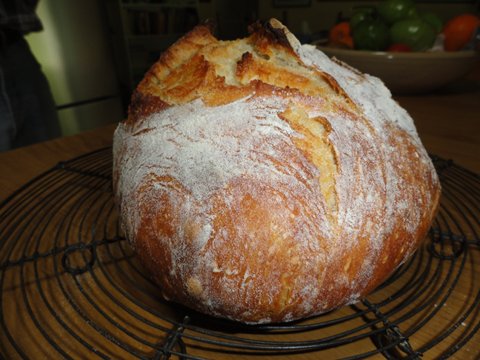
Once you have moistened the loaf, you have also created a kind of glue on which to stick all manner of seeds and grains. The traditional seeds for white bread are poppy seeds and sesame seeds. Caraway seeds are used on rye bread (see loaf below). Adding seeds will add extra nutrition to the bread; here is some nutritional info about various seeds. But you can also add things like rolled oats, polenta, crushed wheat (burghal), pumpkin and sunflower seeds. When you add anything to your loaf, sprinkle it on for a light covering and then press it in lightly. For a heavy coating, like the loaf above, place your seeds/oats on the bench and roll the loaf over the seeds.
If you want a soft crust, brush the top of the bread with melted butter or olive oil just before it goes into the oven for baking. You can also do this after baking to give the loaf a very shiny appearance.
I have also seen bread with a sprinkling of rock salt on the top, as well as a floured top. If you decide to go for the old fashioned floured top, pat off the excess flour. You can also get a good effect for the kids by having a floured top and then painting their name or a smiley face on the bread with a wet brush. As the bread bakes, the face or name will show up in the space where the flour has been brushed off.

Decorate your loaf after the first rise and punch down. Reform the dough into the shape you want, add your seeds/decoration, then slash it if you want to and leave it to rise for the second time. Slashing will allow the dough to rise to it's full potential.

Don't forget that most bread doughs can be formed into plaits/braids, bread rolls, or rounds if you don't want a traditional loaf. Experiment with the dough and see what happens. You may go back to your traditional loaf, but you may discover something you really like that will make the bread you bake distinctive.

One thing is certain, once you know how to make good bread, it's wise to try new recipes, add things to your favourites and play with the shape. As with all things in this simple life, you push your boundaries and see where it will take you.

Never stand still.

EXCELLENT RESOURCES

Baking 911
Home baked bread
Hello ladies. I am going to announce the winners of Rhonda's contest. I say "winners" because I found three who exemplified the reasons we have swaps-to practice our skills or to learn new skills and to recycle or re-purpose one thing-such as a fabric- to another thing. The shopping tote swap was so much fun and everyone was so creative that I have spent many days trying to chose a winner. If I had my way everyone would win a prize because every tote bag was a winner. Rhonda then would have been making prizes for years and had my hide to boot! So, I couldn't do that even though I wanted to. In a way we are all already winners, for we are each trying to simplify and "green" our lives, and the shopping totes help us on the way. We are also getting to know each other and strengthening our community. Since I did have to choose, I chose three ladies who went above and beyond the call, learned or practiced new skills and gave their best to their swap project. The winners are: Lightening, Liz A, and Ann (Still at home). I am proud of all the swappers and congratulate the winners. Each of the winners will receive a stitchery pattern designed by Rhonda! You may visit Lightening: http://www.lighteningonline.com/2008/04/21/learning-new-skills/ You may visit Ann at: http://notworkingyet.blogspot.com/
Everyone has the greatest suggestions for our next swap. I am putting them in a list-we have so many great ideas it will take many swaps to do them all! I am in the process of uploading the photos I have received this week to our flickr photostream and I hope to get the tea cosies uploaded this weekend-I am still receiving those photos. If you don't see your photo up, please re-send it to me in jpeg format so I can get it in its proper place. The creativity of all the ladies just astounds me. Tomorrow I will announce the winner(s)of the swap tote contest that Rhonda put me in charge of. Rhonda will be in charge of the prizes! Until tomorrow, Sharon
With the rain and cold weather yesterday I started thinking of a good old fashioned baked dinner. My fellow Australians would know this as a meal that featured either roast lamb, chicken or beef which an assortment of vegetables and gravy. My vegetarian version of a baked dinner is pictured here. This is what we ate last night.

I often get requests to write posts about frugal vegetarian meals so I thought this might be a good time to do one. Let me say first that I don't consider myself to be vegetarian. I take emu oil capsules every day that require the death of the bird to produce, I wear leather shoes and sit on a leather sofa. I have disqualified myself from using the vegetarian term, but having said that, I don't eat meat.

My version of a baked dinner cost about two dollars for two portions. The meal is made up of potato, pumpkin, and onion - all peeled and baked in the oven with a little olive oil; steamed silverbeet and a portion of cauliflower bake.

A cauliflower bake is simply cauliflower washed and cut into flower heads and placed in a dish - microwave on high to half cook the cauliflower. Drain the water from it. Make a cheese sauce from scratch, pour that over the cauliflower and bake in the oven at the same time you're baking the vegetables.

CHEESE SAUCE
Place a tablespoon of butter in a small saucepan and melt over medium heat. Add a tablespoon of cornflour or plain (all purpose) flour and mix together. When the butter is melted and the flour combined, add about a cup of milk and mix. Make sure your heat is low now as you don't want it to come together too fast - that will create lumps. Add a cup of shredded cheese and mix in. Add salt and pepper to taste and a pinch of nutmeg. Keep stirring until the sauce is thickened and smooth.

I bought this cauliflower for $2 at my local market. The cheese sauce would cost about $1 to make. There is enough in this to last Hanno and I for three meals. Tonight it will be reheated to have with mashed potato with onion and parsley, carrots, cabbage and button squash. Tomorrow night I'll mash the last of it up to make bubble and squeak.

I always aim to make five different vegetables per evening meal. My version of the baked dinner gives you the baked vegetables that are crispy and caramelised, the protein part of the meal is the cheese sauce on the cauliflower. We followed this with simple fruit salad from the back yard of fresh oranges, bananas and passionfruit all cut up and combined. Oh, and we each had a bottle of Corona beer left over from my birthday party. ;- )

And just for good measure here is the bread baked yesterday. It's a corn and barley loaf with poppyseeds, made in a cake tin. I had mine hot with butter and vegemite and a cup of tea.

It's been a busy week. I've worked every day since Sunday, and have today off but there is a training day tomorrow. After Friday everything will settle down again. Thank goodness. I'm tired.

I slept really well last night with rain falling on the roof and filling the tanks. Today I'll get reacquainted with the chooks and check out the garden. I have silverbeet to freeze, rosella jam to make and a basket full of button squash sitting on the table waiting for me. I'm not sure yet what I'll do with it. There are a couple of loads of laundry to do that will have to hang under shelter because today, and the next few days, we have rain.

As well as all the catch up work here at home, I'm working on a project that I can't tell you about yet, but will soon. I hope to get to that later in the morning after my chores are done and I have time to sit and think.

Overall though, today will be a day when I can regain my strength here at home, get things in order and regroup. This is the only place I can truly relax and recover so I will squeeze every bit of life from this day at home to be ready for what follows with all the joys and challenges that might pose.

I haven't had the time to answer emails for a while so there are quite a few of you waiting. I'll try to square them all away on the weekend. Thank you for being patient and for making contact. I thank you all for your wonderful comments over the past week. I've had the best time reading them, smiling, agreeing and learning about what you're all doing out there. It is very heartwarming to read your stories and I'm thankful for the time you take to be a part of my blog community.

I have often thought that modern society has divided into two camps – adults and children. This might seem quite obvious to you but I don’t mean it the way it sounds. I mean that governments, corporations, media and the advertising industry are the adults and all of us are children. They tell us, we listen. We are expected to be dependent and compliant, we are told constantly that we will be made happy with ‘stuff’, that part of modern life is to carry a large amount of debt and if we work hard, we’ll be able to pay off our life as we live it and retire at 65 to enjoy what we have. We have these messages coming at us every day about what’s right for us and how we should live, and we are encouraged to be dependent and work in the system so that big business remains healthy, the country prospers and we skill ourselves in how to earn a living rather than how to make a life.

Now let me be the first to say that I love being an Australian with all the advantages that offers. I’m grateful that our country has a sound financial base, a thriving business community and a compassionate welfare system. I don’t want that to change. I want us to. I want us to stop believing the messages that one size fits all, and to see for ourselves the value of stepping outside what is considered normal. I want us to grow up.

We need to stop listening to outside advice about what makes us happy and fulfilled and find out for ourselves. For me happiness was found in being at home and working everyday to give my family and myself a quieter, safer, healthier and more independent life. I grew up the day I discovered that work at home is satisfying and significant. That is when I stopped believing that more money and more possessions would make me happy. As I worked more in my home, I realised that for me, happiness was found in being independent of the shops, being able to make do from scratch and in leading my life away from buying convenience.

That is what worked for me. I want you to find your own happiness. I can’t tell you what will make you happy, only you know that. I can tell you that happiness isn’t one thing. It’s a whole lot of tiny fragments that you find every day that add up to a deep feeling of contentment and knowing you’re doing the right thing. And I know that you won’t find true and enduring happiness in any shopping mall, I can only encourage you to look in places unexpected, and to show you through my blog that it is easy to live well outside the modern perception of what makes a good life.

I’m not telling you to give up your job if you work outside the home, I’m not telling you to live as we do. I am saying that whatever you do, fashion it to suit yourself so that it gives you a life worth living. If you are working hard at an outside job make sure you give yourself time to enjoy what you’re working for. If you’re working at home, be mindful of happiness and what’s around you, not just getting the job done.

Many people are stressed in their day-to-day lives and worried about their future. I think that is sometimes because they don’t feel in control of their own lives. Prices are rising, the climate is changing and often it all seems too much. But don't let that stop you, don't be scared into standing still, because that is the very time you need to do something. If you can gain independence by changing in some way, do it. I felt a growing independence when I started learning how to look after myself and I realised I did not need to shop to provide all I needed to live. When I knew that I could step away from what I was expected to do and instead do what I wanted, I started to build my own unique life. I moved away from the life prescribed for me by outsiders, I took my life by the throat and gave it a good shaking. In a sense, I grew up. I stopped listening to what I was being told, I identified how I wanted to live and then worked towards it, and that, my friends, has made all the difference.
It's easy to get caught up in posts about producing food when we're trying to live a frugal and sustainable life but the truth of it is that there are other things we can be doing in our own homes that will help us move towards a simple life. Food and groceries are the easy ones because they are products we use everyday but other things can help up live well and remain green, and be doing it quietly in the background.


Above is a photo of part of our roof. Further down, unseen in this photo, is an unused satellite dish that we used to use for our pay TV, but what I have photographed is far more exciting than that - in this photo are our solar hot water unit, some skylights and a whirlybird. Australia has been making solar hot water systems for at least 30 years that I can remember. We have had solar hot water for 25 of those years. It's fairly cheap to install and free to run. Ours can be plugged into an electrical socket in case of a few days of cloudy weather, we rarely use that. When we know bad weather is coming, Hanno and I are very conservative with our water usage until the sun shines again. That way we have enough water for showering and we don't have to rely on electrical or gas to heat it. I think we've plugged into the grid with our system maybe twice since this unit was installed, which was about five or six years ago. This unit and our previous ones have all been Solarharts and we have never had a problem with any of them.

There are two skylights in the photo but we have three installed, they are in the kitchen, the spare bathroom and laundry room. We installed them because we needed more light in the house and I didn't want to have lights on all the time. Shortly after we came to live in our home we built verandahs front and back. We needed sheltered areas for drying clothes, storing bits and pieces and an area for the dogs to sit out of the sun and rain. But our main reason for adding the verandahs was to create cool air around the house. In the style of the old colonial houses, we wanted to create cross ventilation of cool air through our home and for this reason, our house is comfortable in all but the hottest summer weather. The air is cooled just outside the windows and doors, and by opening the windows and doors the cool air flows in one side of the house and out the other. There is more information about passive design here.

There is a price that is paid for that cooled air, the rooms are darker because of the verandahs. No sunlight reaches the windows and while that is fine, it makes the rooms inside darker. Enter the skylights. They give us good natural light every day and have paid for themselves over the 11 years they've been providing that light.

Whirlybirds are a great idea in any hot climate. We have two and they've made a big difference to the heat retained in the house during summer. True, there are days when nothing like this helps, but there are many days when it's hot outside but okay inside because the hot air is constantly escaping from the roof.

I've blogged about our rain collection tanks before. We have two tanks that hold a total of 15000 litres and that is the water we use to keep our vegetable garden going. The tanks silently collect rain water, with no help from us, and that water is stored until it's needed on the garden. If you can harvest some of your rain water it will be a great help in maintaining a sustainable vegetable garden.

So that is some of the hardware we're using here but how could I leave a post about home production of simple needs without mentioning sewing and knitting. The ability to sew and knit will help you keep your family clothed. Mending will help you look after the clothes you have and will keep them wearable for a much longer period. I think of the days I used to throw away clothes that needed mending as the 'dark ages'. That was when I had more money than sense and before I realised that by teaching myself a few simple skills I would be a much better custodian of my belongings, and in doing that would cut down dramatically on what I need to buy.

Simple living isn't all about cooking from scratch and stockpiling, it's a holistic approach to life that relies as much on your silent partners working away in the background, and your ability to reskill, to look after what you have and to produce as much as you can at home. Sometimes there is a price to pay to have the hardware installed, but often our lives are made easier and greener by just learning how to do something we couldn't do before.

I would be really interested in hearing about what you have at your home that helps you live simply. Do you have water tanks, knitting needles, a sewing machine, solar panels or a solar oven? How have you reksilled yourself? What do you know now that you didn't know last year? If I walked down your street today, what would make me know that yours was that one house where people were getting back to basics and living a simple life?

According to our local news, grocery prices will continue to rise along with the fuel price in the coming months. Almost everything we consume is reliant on oil – either when it is made or when it is delivered, or both. With this in mind, Hanno and I decided to do two month's shopping instead of the normal one month when we went to Aldi last week. Our trip to Aldi takes us about 30 kms from our home so we squeezed every drop of value from the fuel we used by also buying bulk supplies of baker’s flour, nuts, seeds, yeast, dried fruit, lentils and beans, as well as biscuits for the dogs and grain for the chooks.

Apart from
buying milk, cream and cheese from the local dairy – where it is cheaper, and maybe potatoes, we won’t have to restock for at least two months. We will live off our stockpile, our garden and fresh eggs from the backyard. The stockpile is full now and we will be saving money, time and fuel because of it.

I have
written about setting up a stockpile here and here. If you're new to this concept, please read the previous entries before you carry on with this post.

Our shopping trip took about five hours and the last thing I wanted to do when we got home was to pack everything away. I was tired and all I wanted was a cuppa and a sit down but I soldiered on and before we knew it the stockpile cupboard was full, the fridge packed and the freezer filled to the top.

I have several places to store food and supplies – items that are currently being used go in the pantry, which is in the kitchen; extra (unopened) food items are stored in the stockpile cupboard at the side of the kitchen; cleaning goods and soap-making supplies are stored in the laundry; toilet paper and tissues in the spare bathroom.

We have a chest freezer to store all our flour
and dried goods like nuts, seeds, beans etc. We usually don’t eat meat but we have a stockpile of minced beef for the homemade dog food in the small freezer, when we buy fresh fish that is also stored in the small freezer on top of our fridge. There are a couple of large bags of bread flour and oats that were being stored in the freezer, we replaced them with the new supplies and the older bags are now being stored in the spare bathroom and will be used next.

The main thing to remember when you’re restocking is to rotate your stock. This is a simple matter of moving what is already there to the front and placing the newly bought goods behind. I make sure all my items are grouped with similar items so when I go looking for baked beans they’re all together, just like the canned tomatoes and the honey. However, having written that, I have not done it. I've rotated the stock but everything now needs to be grouped and I haven't had time to do it yet.

It’s a good idea to check your cupboards before restocking. If they need a clean out, do it before your new supplies arrive. Check for dust, pantry moths and bugs. If you're going to store food at home, your storage areas must be kept as clean as possible.

If you’re driving to the shops a few times a week to buy a few items, you’re not only wasting your time, you’re using more fuel than you need to. Now is a good time to rethink how you buy your food. If you would love to have a little shop close by, where you could find all those things you forgot to buy and where items are always on sale, create that store for yourself in your own home. Because, my friends, that is what a stockpile is - it's your own open-all-hours convenience store offering the best prices.

Now that we see
prices rising so frequently, don't just accept it as a sign of the times, do something positive. Start a stockpile, or stock up your stockpile as much as you can, because as sure as eggs, the more you can buy right now at a good price and store at home, the more money you'll save.
Today I want to talk about some minor changes we are making to the swaps. We have decided that we want the swaps to better reflect our simple lives. We want each swap to use a skill that we now need and can enjoy learning or practising, such as sewing, knitting, stitchery and quilting, for example. We want to emphasize the reuse, re-purposing, and the recycling of items we have in our homes, as we did with the shopping tote swap. We also know all of us are being hit hard with the rise in prices for the basics that we all use and need, such as food and petrol (gasoline). We think that swapping 4 times a year-every 3 months- will allow us to have more time in the crafting of the swap and also allow us to use the cheapest means of shipping possible. We are going to try to match swap buddies within their own countries when possible, unless the swapper specifically asks to swap overseas or is the only swapper in that country. This will help us keep costs down, while still creating and "growing" a community or, rather, a large family. I would also ask everyone to take a photo of their project since there have been some broken cameras and other problems this time so that we will always have a photo available. I want everyone to feel free to "put their two cents" in with ideas for swaps-we have gotten so many great ones so far! We are thinking about our next swap already, so please leave a comment with an idea and I will add to the list!
Newer Posts Older Posts Home

MY BOOKS

MY BOOKS


My books were all published by Pengiun, and are available at Amazon US, Amazon UK and Amazon Au

Search here

Total Pageviews

Translate


I'm Rhonda Hetzel and I've been writing my Down to Earth blog since 2007. Although I write the occasional philosophical post, my main topics include home cooking, happiness and gardening as well as budgeting, baking, ageing, generosity, mending and handmade crafts. I hope you enjoy your time here.

MY FAVOURITE PLACES

  • Grandma Donna's Place
  • Grandma Donna's YouTube
  • Grandma Donna's Instagram
  • This Simple Day
  • Nicole's Instagram

Give More

Give More

Popular posts last year

Making ginger beer from scratch

We had a nice supply of ginger beer going over Christmas. It's a delicious soft drink for young and old, although there is an alcoholic version that can be made with a slight variation on the recipe. Ginger beer is a naturally fermented drink that is easy to make - with ginger beer you make a starter called a ginger beer plant and after it has fermented, you add that to sweet water and lemon juice. Like sourdough, it must ferment to give it that sharp fizz. To make a ginger beer plant you'll need ginger - either the powdered dry variety or fresh ginger, sugar, rainwater or tap water that has stood for 24 hours to allow the chlorine to evaporate off. You'll also need clean plastic bottles that have been scrubbed with soap, hot water and a bottle brush and then rinsed with hot water. I never sterilise my bottles and I haven't had any problems. If you intend to keep the ginger beer for a long time, I'd suggest you sterilise your bottles. MAKING THE STARTER In a...
Image

NOT the last post

This will be my last post here.  I've been writing my blog for 18 years and now is the time to step back. I’ve stopped writing the blog and come back a couple of times because so many people wanted it, but that won’t happen again, I won’t be back.  I’ll continue on instagram to remain connected but I don’t know how frequent that will be. I know some of you will be interested to know the blog's statistics. 
Image

How to make cold process soap

I'm sure many of you are wondering: "Why make soap when I can buy it cheaply at the supermarket?" My cold process soap is made with vegetable oils and when it is made and cured, it contains no harsh chemicals or dyes. Often commercial soap is made with tallow (animal fat) and contains synthetic fragrance and dye and retains almost no glycerin. Glycerin is a natural emollient that helps with the lather and moisturises the skin. The makers of commercial soaps extract the glycerin and sell it as a separate product as it's more valuable than the soap. Then they add chemicals to make the soap lather. Crazy. Making your own soap allows you to add whatever you want to add. If you want a plain and pure soap, as I do, you can have that, or you can start with the plain soap and add colour, herbs and fragrance. The choice is yours. I want to add a little about animal and bird fat. I know Kirsty makes her soap with duck fat and I think that's great. I think t...
Image

Preserving food in a traditional way - pickling beetroot

I've had a number of emails from readers who want to start preserving food in jars but don't know where to start or what equipment to buy.  Leading on from yesterday's post, let's just say up front - don't buy any equipment. Once you know what you're doing and that you enjoy preserving, then you can decide whether or not to buy extra equipment. Food is preserved effectively without refrigeration by a variety of different methods. A few of the traditional methods are drying, fermentation, smoking, salting or by adding vinegar and sugar to the food - pickling. This last method is what we're talking about today. Vinegar and sugar are natural preservatives and adding one or both to food sets up an environment that bacteria and yeasts can't grow in. If you make the vinegar and sugar mix palatable, you can put up jars of vegetables or fruit that enhance the flavour of the food and can be stored in a cupboard or fridge for months. Other traditional w...
Image

Cleaning mould from walls and fabrics

With all this rain around we've developed a mould problem in our home. Usually we have the front and back doors open and that good ventilation stops most moulds from establishing. However, with the house locked up for the past week, the high humidity and the rain, mould is now growing on the wooden walls near our front door and on the lower parts of cupboards in the kitchen. Most of us will find mould growing in our homes at some point. Either in the bathroom or, in humid climates, on the walls, like we have now. You'll need a safe and effective remedy at some point, so I hope one of these methods works well for you. Mould is not only ugly to look at, it can cause health problems so if you see mould growing, do something about it straight away. The longer you leave the problem, the harder it will be to get rid of it effectively. If you have asthma or any allergies, you should do this type of cleaning with a face mask on so you don't breathe in any spores. Many peopl...
Image

Five minute bread

Bread is one of those foods that, when made with your own hands, gives a great deal of satisfaction and delight. It's only flour and water but it symbolises so much. I bake bread most days and use a variety of flours that I buy in bulk. Often I make a sandwich loaf because we use most of our bread for lunchtime sandwiches and for toast. Every so often I branch out to make a different type of loaf. I have tried sour dough in the past but I've not been happy with any of them. I'll continue to experiment with sour dough because I like the idea of using wild yeasts and saving the starter over a number of years to develop the flavour and become a part of the family. However, the loaf I've been branching out to most often is just a plain old five minute bread. By five minutes I mean it takes about five minutes actual work to prepare but it's the easiest of all bread to make and to get consistently good loaves from. If you're having people around for lunch or...
Image

This is my last post.

I have known for a while that this post was coming, but I didn't know when. This is my last post. I'm closing my blog, for good, and I'm not coming back like I have in the past.  I've been writing here for 16 years and my blog has been many things to me. It helped me change my life, it introduced me to so many good people, it became a wonderful record of my family life, it helped me get a book contract with Penguin, and monthly columns with The Australian Women's Weekly and Burke's Backyard . But in the past few months, it's become a burden. In April, I'll be 75 years old and I hope I've got another ten years ahead. However, each year I'll probably get weaker and although I'm fairly healthy, I do have a benign brain tumour and that could start growing. There are so many things I want to do and with time running out, leaving the blog behind gives me time to do the things that give me pleasure. On the day the blog started I felt a wonderful, h...
Image

What is the role of the homemaker in later years?

An email came from a US reader, Abby, who asked about being a homemaker in later years. This is part of what she wrote: "I am a stay-at-home mum to 4 children, ages 9-16. I do have a variety of "odd jobs" that I enjoy - I run a small "before-school" morning drop-off daycare from my home, I am a writing tutor, and I work a few hours a week at a local children's bookstore. But mostly, I cherish my blissful days at home - cooking, cleaning (with homemade cleaners), taking care of our children and chickens and goats, baking, meal-planning, etc. This "career" at home is not at all what I imagined during my ambitious years at university, but it is far more enriching. I notice, though, that my day is often planned around the needs of my family members. Of course, with 4 active kids and a husband, this is natural. I do the shopping, plan my meals, cook dinner - generally in anticipation of my family reconnecting in the evening.  I can't h...
Image

Every morning at home

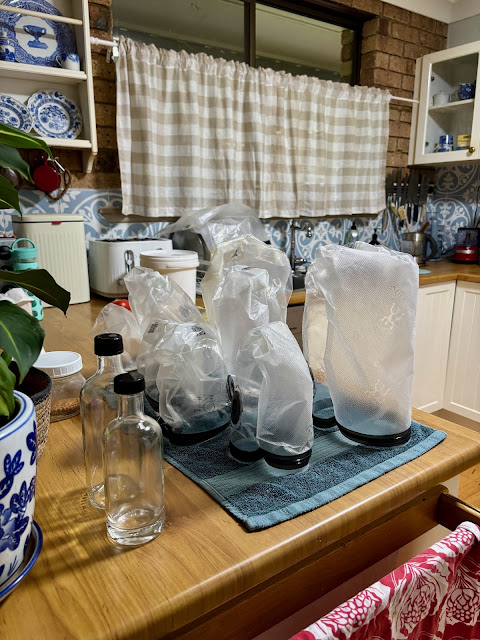
Every morning when I walk into my kitchen it looks tidy and ready for a day's work. Not so on this morning (above), I saw this when I walked in. Late the previous afternoon when I was looking for something, I came across my rolled up Zwilling vacuum bags and decided they had to be washed and dried. So I did that and although I usually put them outside on the verandah to dry it was dark by then. I turned the just-washed bags inside out and left them like this on a towel. It worked well and now the bags are ready to use when I bring home root vegetables, cabbages or whatever I buy that I want to last four or five weeks.
Image

You’ll save money by going back to basics

When I was doing the workshops and solo sessions, I had a couple of people whose main focus was on creating the fastest way to set up a simple life. You can't create a simple life fast, it's the opposite of that It's not one single thing either - it's a number of smaller, simpler activities that combine to create a life that reflects your values; and that takes a long to come together. When I first started living simply I took an entire year to work out our food - buying it, storing it, cooking it, preserving, baking, freezing, and growing it in the backyard. This is change that will transform how you live and it can't be rushed.  
Image

All previous blog posts

  • 2026 3
    • February 3
      • Workshops starting 1 March
      • Planting vegetable seeds and new workshops
      • Back where we belong
  • 2025 7
    • July 1
    • June 2
    • May 1
    • April 2
    • February 1
  • 2024 25
    • December 2
    • November 1
    • October 2
    • September 3
    • August 1
    • July 3
    • June 1
    • May 3
    • April 2
    • March 3
    • February 2
    • January 2
  • 2023 13
    • December 1
    • November 2
    • October 1
    • September 3
    • August 2
    • February 2
    • January 2
  • 2022 17
    • November 3
    • October 4
    • September 3
    • August 2
    • July 3
    • June 2
  • 2021 50
    • December 1
    • November 6
    • October 7
    • September 5
    • August 4
    • July 5
    • June 2
    • May 2
    • April 6
    • March 4
    • February 4
    • January 4
  • 2020 68
    • December 3
    • November 5
    • October 4
    • September 4
    • August 4
    • July 4
    • June 4
    • May 8
    • April 7
    • March 8
    • February 8
    • January 9
  • 2019 66
    • December 2
    • November 4
    • October 5
    • August 3
    • July 4
    • June 6
    • May 8
    • April 8
    • March 8
    • February 11
    • January 7
  • 2018 82
    • December 1
    • September 2
    • August 10
    • July 4
    • June 11
    • May 9
    • April 12
    • March 10
    • February 10
    • January 13
  • 2017 129
    • December 7
    • November 10
    • October 6
    • September 13
    • August 11
    • July 13
    • June 12
    • May 9
    • April 9
    • March 14
    • February 11
    • January 14
  • 2016 125
    • December 7
    • November 13
    • October 10
    • September 11
    • August 11
    • July 8
    • June 9
    • May 9
    • April 12
    • March 10
    • February 13
    • January 12
  • 2015 184
    • December 7
    • November 15
    • October 20
    • September 18
    • August 19
    • July 18
    • June 12
    • May 15
    • April 12
    • March 21
    • February 13
    • January 14
  • 2014 203
    • December 11
    • November 8
    • October 17
    • September 20
    • August 17
    • July 19
    • June 17
    • May 17
    • April 23
    • March 15
    • February 18
    • January 21
  • 2013 225
    • December 13
    • November 17
    • October 17
    • September 17
    • August 21
    • July 24
    • June 20
    • May 19
    • April 17
    • March 22
    • February 17
    • January 21
  • 2012 245
    • December 17
    • November 20
    • October 20
    • September 18
    • August 15
    • July 24
    • June 21
    • May 26
    • April 23
    • March 23
    • February 19
    • January 19
  • 2011 257
    • December 18
    • November 24
    • October 27
    • September 23
    • August 24
    • July 21
    • June 24
    • May 24
    • April 16
    • March 22
    • February 14
    • January 20
  • 2010 283
    • December 20
    • November 18
    • October 18
    • September 19
    • August 25
    • July 24
    • June 25
    • May 26
    • April 25
    • March 22
    • February 29
    • January 32
  • 2009 293
    • December 29
    • November 18
    • October 23
    • September 25
    • August 22
    • July 28
    • June 22
    • May 21
    • April 27
    • March 26
    • February 24
    • January 28
  • 2008 387
    • December 24
    • November 23
    • October 25
    • September 26
    • August 27
    • July 27
    • June 37
    • May 34
    • April 44
    • March 53
    • February 32
    • January 35
  • 2007 372
    • December 37
    • November 40
    • October 55
    • September 51
    • August 49
    • July 63
    • June 49
    • May 28


Trending Articles

NOT the last post

This will be my last post here.  I've been writing my blog for 18 years and now is the time to step back. I’ve stopped writing the blog and come back a couple of times because so many people wanted it, but that won’t happen again, I won’t be back.  I’ll continue on instagram to remain connected but I don’t know how frequent that will be. I know some of you will be interested to know the blog's statistics. 
Image

Every morning at home

Every morning when I walk into my kitchen it looks tidy and ready for a day's work. Not so on this morning (above), I saw this when I walked in. Late the previous afternoon when I was looking for something, I came across my rolled up Zwilling vacuum bags and decided they had to be washed and dried. So I did that and although I usually put them outside on the verandah to dry it was dark by then. I turned the just-washed bags inside out and left them like this on a towel. It worked well and now the bags are ready to use when I bring home root vegetables, cabbages or whatever I buy that I want to last four or five weeks.
Image

You’ll save money by going back to basics

When I was doing the workshops and solo sessions, I had a couple of people whose main focus was on creating the fastest way to set up a simple life. You can't create a simple life fast, it's the opposite of that It's not one single thing either - it's a number of smaller, simpler activities that combine to create a life that reflects your values; and that takes a long to come together. When I first started living simply I took an entire year to work out our food - buying it, storing it, cooking it, preserving, baking, freezing, and growing it in the backyard. This is change that will transform how you live and it can't be rushed.  
Image

Creating a home you'll love forever

Living simply is the answer to just about everything. It reduces the cost of living; it keeps you focused on being careful with resources such as water and electricity; it reminds you to not waste food; it encourages you to store food so you don't waste it and doing all those things brings routine and rhythm to your daily life. Consciously connecting every day with the activities and tasks that create simple life reminds you to look for the meaning and beauty that normal daily life holds.  It's all there in your home if you look for it. Seemingly mundane tasks like cleaning and cooking help you with that connection for without those tasks, the home you want to live in won't exist in the way you want it to.  Creating a home you love will make you happy and satisfied.
Image

Time changes everything

I've been spending time in the backyard lately creating a contained herb and vegetable garden. My aim is to develop a comfortable place to spend time, relax, increase biodiversity and encourage more animals, birds and insects to live here or visit. Of course I'd prefer my old garden which was put together by Hanno with ease and German precision. Together, we created a space bursting at the seams with herbs, vegetables and fruity goodness ready to eat and share throughout the year. But time changes everything. What I'm planning on doing now, is a brilliant opportunity for an almost 80 year old with balance issues. In my new garden I'll be able to do a wide range of challenging or easy work, depending on how I feel each day. It’s a daily opportunity to push myself or sit back, watch what's happening around me and be captivated by memories or the scope of what's yet to come.
Image

It's the old ways I love the most

I'm a practical woman who lives in a 1980’s brick slab house. There are verandahs front and back so I have places to sit outside when it's hot or cold. Those verandahs tend to make the house darker than it would be but they're been a great investment over time because they made the house more liveable. My home is not a romantic cottage, nor a minimalist modern home, it's a 1980’s brick slab house. And yet when people visit me here they tell me how warm and cosy my home is and that they feel comforted by being here. I've thought about that over the years and I'm convinced now that the style of a home isn't what appeals to people. What they love is the feeling within that home and whether it's nurturing the people who live there.
Image

Back where we belong

Surprise! I'm back ... for good this time. Instagram became an impossible place for me. They kept sending me messages asking if I'd make my page available for advertisers! Of course, I said no but that didn't stop them. It's such a change from what Instagram started as. But enough of that, the important part of this post is to explain why I returned here instead of taking my writing offline for good. For a few years Grandma Donna and I have talked online face-to-face and it's been such a pleasure for me to get to know her. We have a lot in common. We both feel a responsibility to share what we know with others. With the cost of living crisis, learning how to cook from scratch, appreciate the work we do in our homes, shop to a budget and pay off debt will help people grow stronger. The best place to do that is our blogs because we have no advertising police harassing us, the space is unlimited, we can put up tons of photos when we want to and, well, it just feels li...
Image

Making ginger beer from scratch

We had a nice supply of ginger beer going over Christmas. It's a delicious soft drink for young and old, although there is an alcoholic version that can be made with a slight variation on the recipe. Ginger beer is a naturally fermented drink that is easy to make - with ginger beer you make a starter called a ginger beer plant and after it has fermented, you add that to sweet water and lemon juice. Like sourdough, it must ferment to give it that sharp fizz. To make a ginger beer plant you'll need ginger - either the powdered dry variety or fresh ginger, sugar, rainwater or tap water that has stood for 24 hours to allow the chlorine to evaporate off. You'll also need clean plastic bottles that have been scrubbed with soap, hot water and a bottle brush and then rinsed with hot water. I never sterilise my bottles and I haven't had any problems. If you intend to keep the ginger beer for a long time, I'd suggest you sterilise your bottles. MAKING THE STARTER In a...
Image