down to earth

  • Home
  • About Us
  • Down To Earth Book
  • Privacy Policy

I've included the map above for the international readers. We are starting just north of Brisbane, half way up the east coast, and travelling to Townsville, which is going up towards the pointy bit.

The big day has arrived. I feel like I'm about to embark on an around the world voyage on the QE11 instead of a simple and leisurely trip up the coast on a train. The excitement is due to us not having been away on a holiday for a long time. It's been years since we just packed up and took off. The anticipation of it is lovely too. Looking forward to doing nothing but enjoying our time with friends is doubling the pleasure we'll get from this little holiday.

I have a full day ahead of me with packing, tidying up, one load of washing, some ironing, making lists for Shane, charging various batteries and my iPod. I have a lot of podcasts ready to download - everything from Phillip Adams on Late Night Live and the Science Show to a few other radio programs I never have time to listen to. I also have to test the aquaponics water, water the gardens and pot plants, make some chocolate muffins for Shane and prepare some knitting to take with me.

Thank you all for your good wishes. I fully intend to enjoy every moment of this trip. I'm looking forward to being on the train, watching backyards fly past our window, stopping at little railway stations up the coast, seeing little peeks of the grand Pacific Ocean as we snake out way up north and finally being greeted by Kathleen when we reach our destination. Life's
good!

(I'll take lots of photos.)

We'll be back next Monday. : )
OK, I have to do somethng about these awards before I go away. I really don't like leaving things undone, and although it might look like I didn't care about the awards when they were given, I do appreciate it when anyone gives me anything. So to everyone who gave me an award, it wasn't disinterest, just lack of time.


Nice Matters Award

I received this award from Shropshire Girl and it was started by Bella-Enchanted. Bella describes the award: "This award will be awarded to those that are just nice people, good blog friends and those that inspire good feelings and inspiration! Those that care about others that are there to lend support or those that are just a positive influence in our blogging world!"
Thank you Shropshire Girl. I award the following five bloggers with this award:
Lisa at Altered Cutlery
Kris at Garden Variety
Robin at simple aussie
Rosehip
Jewels at eyes of wonder

The Power of Smooze Awards


Mike at Pink Reviews started this award. You can read about it here: http://shopautodotcaseo.tripod.com/blogspot/2007/07/power-of-schmooze-awards.html


I was award my smoozer badge by Angie at children in the corn Thanks Angie!
My smoozer awards go to:
Mrs Pivec at Golightly Place
Suse at Pea Soup
Ali at Our Patch


The internationally renowned Frugal Subversive Award

This was started by, umm, me. LOL So I'm quite chuffed to be given the award. I am giving my award to bloggers who turn their backs on consumerism to live frugally in a creative and authentic way. These bloggers have made me think in innovative ways about my own life and how I can make a difference making, reusing, and just saying "no" to mindless spending.
I've been awarded this twice - once by Simply Authentic whose blog is here and once by the lovely Lightening whose blog is here.
My awards go to:
fiveandtwo
tinyhappy
I just discovered this blog and I'm giving another FS award to brandy at Where Lillies Bloom. Check out her blog, it's very interesting.
Congratulations everyone.

Apart from buying lunch a few months ago when we travelled away for a friend's funeral, I haven't bought tea, coffee or water to drink while I've been out for years. The reason? Well, you know the frugal word will be in there somewhere, but it's also because I realised it was a habit of convenience and now that habit is broken. The lunch we bought a few months ago also made me realise that now, many shops are serving their drinks in disposable cups, with disposable spoons, sugar and milk in single serve containers, oh, and while you're about it, take a single use napkin. What a waste!

It is so easy to get out of the habit of buying drinks while you're away from home. I must tell you I have a bit of a thing about people in shops preparing drinks (or food) for me. I watched a girl serve a milk drink at a cafe a few years ago, and when she spilt some, she licked it off her fingers! =: O Anyhow, you break the buying habit by having good flasks that will keep your drinks really hot, and you take your favourite drink from home - be that good organic coffee or tea.

When I started work at the Neighbourhood Centre I had to start packing food and drink to eat while I was there. I already had a one litre Thermos flask for the black organic tea I like to drink, but I found that over summer, it's also very good for taking lemon cordial with lots of ice. My good friend Kathleen bought me a great little lunch box a few months ago, one that has a little freezable ice block as well as some small containers that all fit together in one box. It's great for taking nuts, salad, leftovers, cut up fruit, or anything that my heart desires. I like taking a good lunch to work, because I usually share it with whoever is in the office and often the person I share with has not had home made food for a long time. Even a homemade sandwich is a real treat. You can see the post I wrote about that here.

So it probably won't surprise you to know that last week I bought another Thermos, this one holds 1.8 litres. It was bought mainly for our trip on the train, so we'll have enough tea with us for the entire trip, but it will also be used when we travel away in the car, or any time we'll be away from home for the day. Having enough tea for the two of us for a full day is great, and I wonder why I hadn't thought to buy a larger Thermos flask well before this.

In the week since I bought the flask, it's been earning its keep by keeping tea hot for us during the day. We usually drink tea at breakfast, morning tea, lunch time, occasionally for afternoon tea and sometimes for dinner. I've been filling the flask up in the morning after I make our breakfast tea and it's there hot and ready for us whenever we want another cup. It holds seven cups, so there's plenty to keep us going during the day. The great thing about this is that it saves time and it saves electricity as the hot water is only heated once.

When we go on our trip tomorrow, I'll fill the small flask with hot chocolate as we leave at 8pm and we can drink that after we've settled in on the train, and we'll have the large flask full of tea, that will keep us going the entire 17 hour trip. We'll also have a couple of bottles of water filled at our filtered tap at home. Along with our apple cinnamon muffins, Lindt chocolate and sharp cheese and home made pickles sandwiches, we'll be eating like kings as we speed our way north at 160 kms an hour. Who said you miss out when you eat frugally? pfffffffffft

After much thought, yesterday I started work on my simple living ebook. I'm pretty excited about it too as I've thought of a few things that will make it really useful and interesting. I wonder if you can help me with something, and I'd like to get as many opinions as I can on this - like everyone who reads this, including all the lurkers. : ) If you bought the ebook, do you think you'd print it out and put it in a folder, would you just print out the pages with instructions on them, would you read the entire thing on your computer? Or if you have any ideas about use, please let me know them. It makes a difference as to how I do the layout. Thanks your your help.


This second post for the day is for our stitchers. Here are some more of my stitchery patterns. They are free to download.


I've had a number of emails this past month from readers who asked about significant changes - the grand gestures of life - and how their move to a simple life will have to wait until the large change falls into place. While there is no right or wrong way to look at simplifying your life, I think that waiting for the big changes might complicate lives rather than simplify them.

You can start living
simply right at this moment if you choose to. It will take no change in your circumstances, no change in location, no more money, nor less of it, no joint decision with your partner or change in employment. Small steps are the way to go. Do tiny things, little gestures that make a small difference. Small steps are easy and you will be more inclined to do a small thing rather than wait for the major ones. And when you look back on them, those small steps make all the difference.

So just what is a small step
- it is anything that makes you smile, makes you feel good, makes you feel that you've done the right thing, such as ...

Put a small bunch of flowers in a cup or glass - it doesn't have to be fancy, just a little bit of nature brought inside for your pleasure.

Talk to your next door neighbour.

Phone your sister, a friend, your mum or dad and say whatever is in your heart.

Declutter your cutlery drawer.

Enjoy what's around you.

Take your old magazines to the doctors surgery.

Make your husband's favourite meal for dinner tonight and tell him it's because you appreciate him.

Take the dog for a walk.

Smile.

Start a change jar.

Make yourself a cup of your favourite tea or coffee and sit down to enjoy it.

Write a real letter to your best friend.

Make bread, soap or laundry liquid.

Look critically at your values and what you think is important to you and your family. Don't be afraid to reinvent parts of your life that need changing.

Plant some seeds.

Breathe in really deep and think to yourself: 'this feels really good'.

Write up a budget.

Change your idea of success. If you have the view that success means living in a big house, driving an expensive car and living the high life, reassess that. When you live a simple life, old symbols will be replaced by innovative ones and a shiny new car will just symbolise petrol consumption and too many dollars spent on transport.

So you can see that starting your simple journey need not be a grand statement. It's more than likely going to be small, easy to do steps. There are many things that are very difficult in this life, starting to simplify is not one of them. All it takes is your decision to start.

This blog passed the 15000 visitors mark today. We're now on 15044. Wow! It's really incredible to me that so many people have visited since I start blogging in May. I hope the blog tempts you to move towards a simpler life and provides some of the information you seek. I know you all keep me on my toes and I enjoy your comments and emails very much. If you have any suggestions, or would like me to write about anything in particular, just drop me a line. And thanks to all of you for reading.

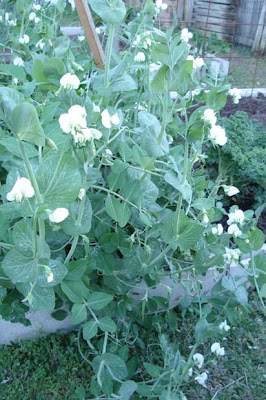
Nothing is better than crunching on snow peas while you work in the winter garden.

Growing your own food, or even some of it, is an important part of simple living. It gives you a good supply of fresh, organic food, it saves you money, it provides valuable exercise and it helps reconnect you with the earth. As a society we've moved away from viewing the earth as the source of our food. We've become reliant on whatever is presented for sale at the supermarket and while it's appealing to have that convenience, those supermarket vegetables do not contain the nutrients that will be ever present in your own back yard produce.

Not everyone can grow,
or will want to grow, a vegetable garden but for those of you who do, you’ll find it to be a great way to unite with nature and the seasons. If you have some space that will be suitable for growing food, I encourage you to set out on a journey of discovery, abundant harvests, and fully flavoured natural food. If you live in your own home a vegetable garden and a few fruit trees is a wonderful investment in your future health and will enable you to reduce the amount you spend on fresh food. If you live in rented accommodation, growing herbs, vegetables and fruit in containers is an activity that will provide a source of cheap organic food that can be a rewarding and enlightening pastime.

Planted up yesterday - four Richmond Green Apple cucumbers. These are a delicious cucumber that used to be very popular in Australia in the 1950s, sadly it's hardly grown at all now. I think it's got a better taste than the Lebanese cucs.

Organic growing is back to basics gardening the old fashioned way. If you decide to grow organically, the food you produce will be healthy with no synthetic chemicals or poisons added, and it will be fresh. I often wonder how old those supermarket vegetables are and where they’re from, but something tells me I don’t want to know the answer. One thing is certain, the fresher the food when you eat it, freeze it or preserve it, the better it is for you.

What is better than fresh English spinach with a few new potatoes, all freshly picked and served with a little butter, salt and pepper.

I kept chickens and dabbled in vegetable production long before I worked consciously towards my simple life. We had our first chickens when our sons were very young and I don't remember a time when I wasn't growing something. I don’t know how I’d get on now without my vegetable garden and chooks. At the moment, our garden supplies about eighty percent of our fresh food. We are working towards year round food production but this is the aspect of food gardening that I've found the most difficult to work out - the continual supply of vegetables and fruit. We'll get there one day.

WHAT IS THE FIRST SIMPLE STEP TO BACKYARD VEGIES?
Work out what you are capable of growing. If you have a small backyard or a unit, you’ll be looking to smaller crops, vegetables that will grow well in containers, sprouting and mushrooms. If you have a reasonable sized backyard with a sunny area for a vegie patch, you could plant almost anything that is suited to your climate. So, work out what you like to eat and grow the vegetables that are expensive to buy or the ones that are best fresh – like corn, lettuce, celery and potatoes.

A garden is a great place to recycle many commonly discarded items like egg cartons, milk bottles and newspapers. Here you can see the recycled reinforcing steel we found which mades an idea trellis for cucumbers.

THE PATCH – STARTING A NEW GARDEN
Go out into the yard and check where the sun rises. You will need a sunny position with full sun if you live south of Brisbane, but if you’re in a sub-tropical or tropical area, you’ll need some afternoon shade. Vegetables need about eight hours of full sun to grow to maturity. The further north you live, the greater the need for shade in the afternoon.

You also need to locate the patch close to a hose or a tap so you can water the garden when it doesn’t rain. If you have a water tank, your vegetables will benefit from the rainwater, so make sure the tank hose can reach the vegetable garden. If you don't have a tank, look into what rebates you're offered in your part of the country and take advantage of them. It is quite an easy exercise to harvest the rain from your roof to be used later on your vegetables and fruit. It is the ultimate in recycling.

Instead of repeating the very good advice of a follow blogger, I'll refer you on to scarecrow's garden. Scarecrow has an excellent section on her blog on how to start your vegetable garden - Food gardening for beginners, which you'll find here.

If you have any specific questions, please email me and I'd be happy to help.

CONTAINER VEGETABLES
You can grow a wide range of vegetables in containers. Try to pick up some polystyrene boxes from the greengrocer or supermarket. You could also use plastic garbage containers or buckets, as well as conventional plant pots. Make sure whatever you use has adequate drainage holes, if they don’t, poke or drill some in. Fill the container with good quality potting mix, if you have compost, use about a third compost to two thirds potting mix. Don’t be tempted to save money by using garden soil as it won’t drain properly and your vegetables won’t grow.

I was given the seeds for these pigeon peas by Elizabeth Fekonia over at the permaculture garden at Yandina. It's a fine garden Elizabeth and her volunteers have going over there. If you have a chance, drop in for a look. I'm growing these pigeon peas for soup - they are the lentils you buy as split peas.

SEEDS
When you think about it, a seed is an amazing thing. Given the right conditions, it contains everything necessary to grow into whatever species it happens to be. It’s a dried up hard packet of potential life. How good is that! Usually, the most thrifty way to grow vegetables is to grow from seeds. The most frugal seeds are those you save from last year’s harvest or swap with someone in your neighbourhood. You could also swap seeds online. There are a couple of Australian online seed swap sites, this is one I am a member of. You have to join, but it’s free and there are many other resources on this site that will help you in your quest for simple living. http://www.aussieslivingsimply.com.au/news.php

To get yourself started, buy some organic vegetable seeds. You can buy these seeds from:
http://www.greenharvest.com.au/
http://www.edenseeds.com.au/content/default.asp
http://www.selectorganic.com.au/content/default.asp
Or, you might find some at your local hardware store or plant nursery. Make sure the seeds you buy are open pollinated varieties of vegetables or herbs, and they should be fresh (check the use by date). Here are two excellent online resources with photos and information about heirloom open pollinated tomatoes:
http://www.reimerseeds.com/heirloom-tomato_798.aspx
http://www.heirloomtomatoes.bizland.com/varieties.htm
Do some research on what tomatoes will suit you and then buy them from a place close to you.

Use some of the seeds you buy to plant in your own garden and swap the rest to get the other vegetables you need. You’ll be able to build up a big bank of seeds doing this and your new seeds will only cost you a stamp and a trip to the post office.

I believe the best seeds to choose are open pollinated types. In the old days all seeds were open pollinated but as a result of pressure to produce standardised fruit and vegetables several decades ago, some seed companies started to hybridise. In effect what they did was to breed vegetables for specific purposes and size. In the case of tomatoes, old-fashioned tomatoes were mainly the big beef steak types, these were no good for supermarkets. They had delicate skin that didn’t travel or store well and when trying to weigh a pound of tomatoes, two tomatoes where often well over a pound. So seed companies developed tomatoes with tougher skin (for transport) that were smaller and generally would weigh up as four to a pound. The problem was that when they were reinventing the tomato wheel, they forget to include the taste factor. When you taste a home grown open pollinated tomato it will taste like tomatoes used to taste like, it’s a hundred times better than a supermarket tomato. Aside from the superior taste, open pollinated vegetables are capable of passing on exactly the same characteristics to each generation. If you use seeds from hybrid vegies, sometimes the seeds will be sterile and sometimes they’ll not grow to type. You might be expecting a medium sized sweet tomato and you’ll get a small bitter one. Hybrid vegies can throw back to any of the types used to create it. So in essence, every year you will need to buy new seeds instead of being able to save the seeds from open pollinated vegies.

Another advantage to growing open pollinated seeds is that they will modify themselves
to suit your growing conditions. According to the Seed Savers website: “Food plants, grown organically, that have adapted themselves to your garden over generations of seed saving, will perform noticeably better in your kitchen than generalized hybrid plants, grown by chemical methods far away from your region, and subject to transportation and storage.”

I hope this has convinced you to start off with heirloom or open pollinated seeds. Don’t worry if you go the other road but in the future, when you can afford it or when you want to eat food like your grandma had, go the open pollinated route.

When you start, don’t be over ambitious in your first few years of gardening. There will be a lot to learn and there is a lot work involved in bringing your crops to harvest. Vegetable gardening is not for wimps. Go slow to start and add a couple of new vegies every year until you’ve reach your vegetable growing goal.

If you don’t have any idea about what you want to grow but like the idea of gardening, growing your own food, or living organically, then make a list of the vegetables you enjoy eating. Don’t grow what you won’t eat.

I think the most important piece of information
I can give you about gardening is that you feed the soil, not the plant. If you dig a garden plot and plant vegetable seedlings in it, without enriching the soil in any way, you'll get vegetables, but they'll be small and miserly. You must - I repeat, you must build up your soil with organic matter before you start plating. The more organic matter you have in your garden beds, the more abundant your harvests will be.

Yesterday H and I did a fair bit of work in our vegie garden. We pulled out a lot of old vegetables and fed them to the chooks. We're clearing an entire garden bed for potatoes we'll plant when we return from our trip. The next two months is our main planting time so as we plant, I'll take photos and show you what we're doing. So if you want to be ready for Spring, start planning now, start reading Scarecrow's guides, start enriching your soil, and soon we'll start our planting.

H and I ate this entire basket of silverbeet last night for dinner along with carrots, pumpkin, shallots, turnips and kipfler potatoes - all grown in our backyard.

I planted up some more capsicums (peppers) in the aquaponics garden yesterday. The fish are starting to become quite active again and the plants have responded to the current warm weather, so when we come back from our trip, I'll write more about the aquaponics system.


I've just done a bit of baking before I start my sewing. Some bread rolls for lunch and another dozen for the freezer, and a dozen granny smith apple and cinnamon sugar buttermilk muffins. I'll freeze some of these for our train trip next week.

Apple and Cinnamon Sugar Muffins

Ingredients:
½ cup butter, very soft
¾ cup sugar
1 beaten egg

Beat these three ingredients together with a wooden spoon.

Add and stir in:
1 cup buttermilk
½ teaspoon salt
1½ cups diced Granny Smith apples. I dice the apples, then cooked then for about 4 minutes in a tablespoon of butter and a tablespoon of brown sugar.

Add and stir in:

1 cup plain flour
¾ cup wholemeal plain flour
2 teaspoons baking powder
1 teaspoon cinnamon

Top with this:
1 teaspoon cinnamon
1 teasonspoon sugar

Bake in a moderate oven 20 minutes.


I thought I knew what was going on in my backyard but I didn't. I didn't really discover the microcosm out there until I stopped rushing through my day and learnt to look with kinder eyes. It's one of the things you'll be rewarded with when you simplify - you'll discover a greater depth in your immediate surroundings.

Oh I knew we had birds visiting, but I wasn't aware of the vast numbers that stop at the pond to rest and drink on their migrations from Papua New Guinea, Asia and Europe - they range from tiny finches to hefty magpie geese. I knew there were snakes but was rewarded one day with the sight of a 12 foot python with the girth of a dog sliding across the grass. Frogs are there too - tiny sedge frogs the size of my little finger nail as well as big rubbery green tree frogs that aways look like they're smiling. There are also echidnas, waters dragons, goannas and the strangest of insects, including an 18 inch long stick insect that looks a bit like a lobster and lives in the tops of local trees. We saw him when he was ill and fell from the tree tops. My kids were teenagers then and called him "the freak". But we cared for the freak until he died, I hope, a comfortable death in a box away from his natural predators.

We'd been living here a few years before we discovered all this wildlife in the backyard. It was waiting for us to slow down, to be content enough to stay home, to sit in the back yard with reading or knitting, or just to look, and then the parade started and hasn't stopped since.

Today I'll be picking some green beans and will be blanching them to freeze along with the carrots and turnips picked yesterday. We are growing a lot of snow peas at the moment but between H and I and Alice, who eat them while we're in the garden, I doubt any of them will see the inside of the house. When we come back from holidays, I'll be picking all the cabbages to make a big crock of sauerkraut. I haven't done it before but I've talked to a German chef who told me a couple of tricks so I think it will be fairly straight forward. While I'm out in the garden this morning, I'll plant up some capsicum (peppers) seedlings and a few zucchini seeds in the aquaponics garden, and there is some borage and lemon balm to plant in the vegie garden. It's been a very cold winter this year and although the vegetable garden coped well, it hasn't produced as much as our previous winter crops. I'm desperate to get some more brandywine tomatoes - they're the best I've ever eaten. I've got a few seedlings still too small to plant in the gravel but I hope to get them in as soon as we return from our trip.

This afternoon will be spent sewing. I want to make a few things to take to Kathleen when we are privileged to be the first guests in her new house. Milestones need to be celebrated and marked with gifts and celebratory meals - it's how we remember those important times and acknowledge the importance of those friends we share them with. Kathleen doesn't sew so I'm making a few things that will make her new home look like her. I have known Kathleen for about 20 years and I feel honoured to be the one who makes these little bits and pieces for her. These simple hand made gifts will express our love and respect for her and when we leave they will be reminders of H and I, and this important milestone.

I thank you all for stopping by today and hope you all have a wonderful weekend.
I've just been outside talking to H while he waters the fruits trees and the pumpkins. I have high hopes for the pumpkins this year. We're growing them earlier and they should be harvested before the really hot and humid weather is upon us.

Here are a few photos I took while I was out there. This is the back yard just 10 minutes ago. That's Alice there watching the chooks. She gently herds them up if they get too close to the fence or the fruit trees.


This is Rhococobelle, my favourite chook. Doesn't she have the most beautiful feathers.

Finally, a part of the vegetable garden. Here we see a forest of cabbages and cauliflowers, bok choy, potatoes, lots of herbs and lettuce seeding in the distance.

Looks like what ever the problem was with the blog loading is now fixed.

I thought some of you might like some more details on the lamp skirt. I've made a few of these and have always done it the same way but I have seen them gathered at the top with elastic as well. I pleat mine.

Basically all you need to do is measure the circumferance of the lamp shade at the lower/larger end. Find a piece of cotton or linen fabric twice that length and a little wider than the depth of the shade. You need to hem top and bottom, so add another few centimetres for your hems. Making fairly large pleats, pin each pleat in place and when you've got it all done to your liking, sew and iron the skirt. I've gone over the top of mine with some crossgrain ribbon and stitched again. You can put anything, or nothing, along the hems.

The good thing about these little skirts is that you can change them as often as you like, depending on how much fabric you have on hand.

H has been in the garden and just came in with a nice little harvest of carrots and turnips. I think I might blanche these and put them in the freezer for later in the year.

It's not finished yet but it's looking good enough to show. The walls that we started a few weeks ago, and stopped for visitors and when we got our colds, are finished; we still have to paint the skirting boards, trims and doors. The walls are a lovely pale lemon yellow called Milk Maiden, the doors will be a bluish grey called Smoke Rings.

We had quite a search for fabric for our curtains. I rang all over the Sunshine Coast, went to a remnant place in Brisbane and searched online, but finally my sister found exactly what I wanted at Ikea in Sydney. It's a cherry red and white check pure heavy cotton. I'm recycling the linings on the old curtains I have hanging now and I'll make the curtains when my sister comes to visit soon.

Apart from the paint and fabric I wanted to use what we already had here to change the look we had. I found a few red "things" around the place - an old red Japanese wooden box, some red China from the dinner service I bought in Germany at the end of the 1970s, red felt trims on a lampshade skirt and I'm going to make a few more red fabric decorations that I'll add to the wall with the prints. As you can see, there is a fairly big gap between the top prints and the one below, I'll add a tiny swag of check hearts there. That's the plan, anyway. I might make some red check seat cushions too.

We still have to paint this shelving unit. It will probably be an off blueish white, or if we have any Smoke Rings left over, we'll use that. That's the good thing about decorating your own home, you can do exactly what you want and have no one whispering in your ear that you should go and buy new shelves.

This is an old lamp that
has a plain white shade. It was too bland for this new look so I made a little skirt to just fit over the top of the shade. I cut out some red felt flowers shapes and added them. I think it looks quite nice and just shows what you can do with a little creativity and a sewing machine. When I finish the curtains and other little red touches, I'll take another photo to show the finished room. BTW, if you click on the photos they will be bigger.

Is anyone having problems loading my blog this morning? It's very slow for me and I'm not sure if it's my computer or the blog - although other blogs seem to be opening just fine.
Newer Posts Older Posts Home

MY BOOKS

MY BOOKS


My books were all published by Pengiun, and are available at Amazon US, Amazon UK and Amazon Au

Search here

Total Pageviews

Translate


I'm Rhonda Hetzel and I've been writing my Down to Earth blog since 2007. Although I write the occasional philosophical post, my main topics include home cooking, happiness and gardening as well as budgeting, baking, ageing, generosity, mending and handmade crafts. I hope you enjoy your time here.

MY FAVOURITE PLACES

  • Grandma Donna's Place
  • Grandma Donna's YouTube
  • Grandma Donna's Instagram
  • This Simple Day
  • Nicole's Instagram

Give More

Give More

Popular posts last year

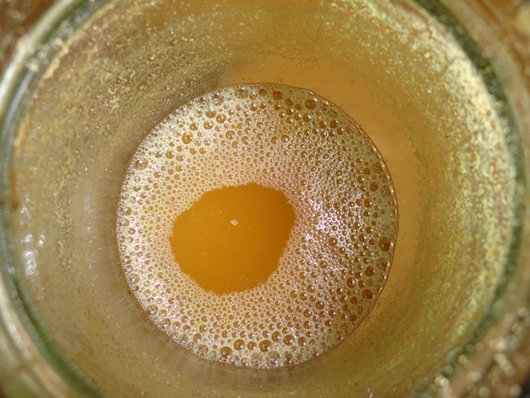
Making ginger beer from scratch

We had a nice supply of ginger beer going over Christmas. It's a delicious soft drink for young and old, although there is an alcoholic version that can be made with a slight variation on the recipe. Ginger beer is a naturally fermented drink that is easy to make - with ginger beer you make a starter called a ginger beer plant and after it has fermented, you add that to sweet water and lemon juice. Like sourdough, it must ferment to give it that sharp fizz. To make a ginger beer plant you'll need ginger - either the powdered dry variety or fresh ginger, sugar, rainwater or tap water that has stood for 24 hours to allow the chlorine to evaporate off. You'll also need clean plastic bottles that have been scrubbed with soap, hot water and a bottle brush and then rinsed with hot water. I never sterilise my bottles and I haven't had any problems. If you intend to keep the ginger beer for a long time, I'd suggest you sterilise your bottles. MAKING THE STARTER In a...
Image

NOT the last post

This will be my last post here.  I've been writing my blog for 18 years and now is the time to step back. I’ve stopped writing the blog and come back a couple of times because so many people wanted it, but that won’t happen again, I won’t be back.  I’ll continue on instagram to remain connected but I don’t know how frequent that will be. I know some of you will be interested to know the blog's statistics. 
Image

How to make cold process soap

I'm sure many of you are wondering: "Why make soap when I can buy it cheaply at the supermarket?" My cold process soap is made with vegetable oils and when it is made and cured, it contains no harsh chemicals or dyes. Often commercial soap is made with tallow (animal fat) and contains synthetic fragrance and dye and retains almost no glycerin. Glycerin is a natural emollient that helps with the lather and moisturises the skin. The makers of commercial soaps extract the glycerin and sell it as a separate product as it's more valuable than the soap. Then they add chemicals to make the soap lather. Crazy. Making your own soap allows you to add whatever you want to add. If you want a plain and pure soap, as I do, you can have that, or you can start with the plain soap and add colour, herbs and fragrance. The choice is yours. I want to add a little about animal and bird fat. I know Kirsty makes her soap with duck fat and I think that's great. I think t...
Image

Preserving food in a traditional way - pickling beetroot

I've had a number of emails from readers who want to start preserving food in jars but don't know where to start or what equipment to buy.  Leading on from yesterday's post, let's just say up front - don't buy any equipment. Once you know what you're doing and that you enjoy preserving, then you can decide whether or not to buy extra equipment. Food is preserved effectively without refrigeration by a variety of different methods. A few of the traditional methods are drying, fermentation, smoking, salting or by adding vinegar and sugar to the food - pickling. This last method is what we're talking about today. Vinegar and sugar are natural preservatives and adding one or both to food sets up an environment that bacteria and yeasts can't grow in. If you make the vinegar and sugar mix palatable, you can put up jars of vegetables or fruit that enhance the flavour of the food and can be stored in a cupboard or fridge for months. Other traditional w...
Image

Cleaning mould from walls and fabrics

With all this rain around we've developed a mould problem in our home. Usually we have the front and back doors open and that good ventilation stops most moulds from establishing. However, with the house locked up for the past week, the high humidity and the rain, mould is now growing on the wooden walls near our front door and on the lower parts of cupboards in the kitchen. Most of us will find mould growing in our homes at some point. Either in the bathroom or, in humid climates, on the walls, like we have now. You'll need a safe and effective remedy at some point, so I hope one of these methods works well for you. Mould is not only ugly to look at, it can cause health problems so if you see mould growing, do something about it straight away. The longer you leave the problem, the harder it will be to get rid of it effectively. If you have asthma or any allergies, you should do this type of cleaning with a face mask on so you don't breathe in any spores. Many peopl...
Image

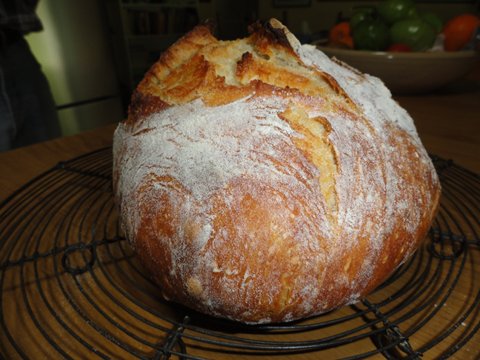
Five minute bread

Bread is one of those foods that, when made with your own hands, gives a great deal of satisfaction and delight. It's only flour and water but it symbolises so much. I bake bread most days and use a variety of flours that I buy in bulk. Often I make a sandwich loaf because we use most of our bread for lunchtime sandwiches and for toast. Every so often I branch out to make a different type of loaf. I have tried sour dough in the past but I've not been happy with any of them. I'll continue to experiment with sour dough because I like the idea of using wild yeasts and saving the starter over a number of years to develop the flavour and become a part of the family. However, the loaf I've been branching out to most often is just a plain old five minute bread. By five minutes I mean it takes about five minutes actual work to prepare but it's the easiest of all bread to make and to get consistently good loaves from. If you're having people around for lunch or...
Image

This is my last post.

I have known for a while that this post was coming, but I didn't know when. This is my last post. I'm closing my blog, for good, and I'm not coming back like I have in the past.  I've been writing here for 16 years and my blog has been many things to me. It helped me change my life, it introduced me to so many good people, it became a wonderful record of my family life, it helped me get a book contract with Penguin, and monthly columns with The Australian Women's Weekly and Burke's Backyard . But in the past few months, it's become a burden. In April, I'll be 75 years old and I hope I've got another ten years ahead. However, each year I'll probably get weaker and although I'm fairly healthy, I do have a benign brain tumour and that could start growing. There are so many things I want to do and with time running out, leaving the blog behind gives me time to do the things that give me pleasure. On the day the blog started I felt a wonderful, h...
Image

What is the role of the homemaker in later years?

An email came from a US reader, Abby, who asked about being a homemaker in later years. This is part of what she wrote: "I am a stay-at-home mum to 4 children, ages 9-16. I do have a variety of "odd jobs" that I enjoy - I run a small "before-school" morning drop-off daycare from my home, I am a writing tutor, and I work a few hours a week at a local children's bookstore. But mostly, I cherish my blissful days at home - cooking, cleaning (with homemade cleaners), taking care of our children and chickens and goats, baking, meal-planning, etc. This "career" at home is not at all what I imagined during my ambitious years at university, but it is far more enriching. I notice, though, that my day is often planned around the needs of my family members. Of course, with 4 active kids and a husband, this is natural. I do the shopping, plan my meals, cook dinner - generally in anticipation of my family reconnecting in the evening.  I can't h...
Image

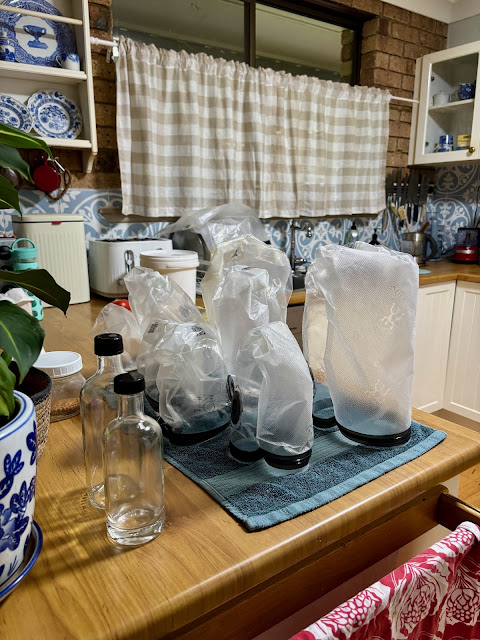
Every morning at home

Every morning when I walk into my kitchen it looks tidy and ready for a day's work. Not so on this morning (above), I saw this when I walked in. Late the previous afternoon when I was looking for something, I came across my rolled up Zwilling vacuum bags and decided they had to be washed and dried. So I did that and although I usually put them outside on the verandah to dry it was dark by then. I turned the just-washed bags inside out and left them like this on a towel. It worked well and now the bags are ready to use when I bring home root vegetables, cabbages or whatever I buy that I want to last four or five weeks.
Image

You’ll save money by going back to basics

When I was doing the workshops and solo sessions, I had a couple of people whose main focus was on creating the fastest way to set up a simple life. You can't create a simple life fast, it's the opposite of that It's not one single thing either - it's a number of smaller, simpler activities that combine to create a life that reflects your values; and that takes a long to come together. When I first started living simply I took an entire year to work out our food - buying it, storing it, cooking it, preserving, baking, freezing, and growing it in the backyard. This is change that will transform how you live and it can't be rushed.  
Image

All previous blog posts

  • 2026 3
    • February 3
      • Workshops starting 1 March
      • Planting vegetable seeds and new workshops
      • Back where we belong
  • 2025 7
    • July 1
    • June 2
    • May 1
    • April 2
    • February 1
  • 2024 25
    • December 2
    • November 1
    • October 2
    • September 3
    • August 1
    • July 3
    • June 1
    • May 3
    • April 2
    • March 3
    • February 2
    • January 2
  • 2023 13
    • December 1
    • November 2
    • October 1
    • September 3
    • August 2
    • February 2
    • January 2
  • 2022 17
    • November 3
    • October 4
    • September 3
    • August 2
    • July 3
    • June 2
  • 2021 50
    • December 1
    • November 6
    • October 7
    • September 5
    • August 4
    • July 5
    • June 2
    • May 2
    • April 6
    • March 4
    • February 4
    • January 4
  • 2020 68
    • December 3
    • November 5
    • October 4
    • September 4
    • August 4
    • July 4
    • June 4
    • May 8
    • April 7
    • March 8
    • February 8
    • January 9
  • 2019 66
    • December 2
    • November 4
    • October 5
    • August 3
    • July 4
    • June 6
    • May 8
    • April 8
    • March 8
    • February 11
    • January 7
  • 2018 82
    • December 1
    • September 2
    • August 10
    • July 4
    • June 11
    • May 9
    • April 12
    • March 10
    • February 10
    • January 13
  • 2017 129
    • December 7
    • November 10
    • October 6
    • September 13
    • August 11
    • July 13
    • June 12
    • May 9
    • April 9
    • March 14
    • February 11
    • January 14
  • 2016 125
    • December 7
    • November 13
    • October 10
    • September 11
    • August 11
    • July 8
    • June 9
    • May 9
    • April 12
    • March 10
    • February 13
    • January 12
  • 2015 184
    • December 7
    • November 15
    • October 20
    • September 18
    • August 19
    • July 18
    • June 12
    • May 15
    • April 12
    • March 21
    • February 13
    • January 14
  • 2014 203
    • December 11
    • November 8
    • October 17
    • September 20
    • August 17
    • July 19
    • June 17
    • May 17
    • April 23
    • March 15
    • February 18
    • January 21
  • 2013 225
    • December 13
    • November 17
    • October 17
    • September 17
    • August 21
    • July 24
    • June 20
    • May 19
    • April 17
    • March 22
    • February 17
    • January 21
  • 2012 245
    • December 17
    • November 20
    • October 20
    • September 18
    • August 15
    • July 24
    • June 21
    • May 26
    • April 23
    • March 23
    • February 19
    • January 19
  • 2011 257
    • December 18
    • November 24
    • October 27
    • September 23
    • August 24
    • July 21
    • June 24
    • May 24
    • April 16
    • March 22
    • February 14
    • January 20
  • 2010 283
    • December 20
    • November 18
    • October 18
    • September 19
    • August 25
    • July 24
    • June 25
    • May 26
    • April 25
    • March 22
    • February 29
    • January 32
  • 2009 293
    • December 29
    • November 18
    • October 23
    • September 25
    • August 22
    • July 28
    • June 22
    • May 21
    • April 27
    • March 26
    • February 24
    • January 28
  • 2008 387
    • December 24
    • November 23
    • October 25
    • September 26
    • August 27
    • July 27
    • June 37
    • May 34
    • April 44
    • March 53
    • February 32
    • January 35
  • 2007 372
    • December 37
    • November 40
    • October 55
    • September 51
    • August 49
    • July 63
    • June 49
    • May 28


Trending Articles

NOT the last post

This will be my last post here.  I've been writing my blog for 18 years and now is the time to step back. I’ve stopped writing the blog and come back a couple of times because so many people wanted it, but that won’t happen again, I won’t be back.  I’ll continue on instagram to remain connected but I don’t know how frequent that will be. I know some of you will be interested to know the blog's statistics. 
Image

Every morning at home

Every morning when I walk into my kitchen it looks tidy and ready for a day's work. Not so on this morning (above), I saw this when I walked in. Late the previous afternoon when I was looking for something, I came across my rolled up Zwilling vacuum bags and decided they had to be washed and dried. So I did that and although I usually put them outside on the verandah to dry it was dark by then. I turned the just-washed bags inside out and left them like this on a towel. It worked well and now the bags are ready to use when I bring home root vegetables, cabbages or whatever I buy that I want to last four or five weeks.
Image

You’ll save money by going back to basics

When I was doing the workshops and solo sessions, I had a couple of people whose main focus was on creating the fastest way to set up a simple life. You can't create a simple life fast, it's the opposite of that It's not one single thing either - it's a number of smaller, simpler activities that combine to create a life that reflects your values; and that takes a long to come together. When I first started living simply I took an entire year to work out our food - buying it, storing it, cooking it, preserving, baking, freezing, and growing it in the backyard. This is change that will transform how you live and it can't be rushed.  
Image

Creating a home you'll love forever

Living simply is the answer to just about everything. It reduces the cost of living; it keeps you focused on being careful with resources such as water and electricity; it reminds you to not waste food; it encourages you to store food so you don't waste it and doing all those things brings routine and rhythm to your daily life. Consciously connecting every day with the activities and tasks that create simple life reminds you to look for the meaning and beauty that normal daily life holds.  It's all there in your home if you look for it. Seemingly mundane tasks like cleaning and cooking help you with that connection for without those tasks, the home you want to live in won't exist in the way you want it to.  Creating a home you love will make you happy and satisfied.
Image

Time changes everything

I've been spending time in the backyard lately creating a contained herb and vegetable garden. My aim is to develop a comfortable place to spend time, relax, increase biodiversity and encourage more animals, birds and insects to live here or visit. Of course I'd prefer my old garden which was put together by Hanno with ease and German precision. Together, we created a space bursting at the seams with herbs, vegetables and fruity goodness ready to eat and share throughout the year. But time changes everything. What I'm planning on doing now, is a brilliant opportunity for an almost 80 year old with balance issues. In my new garden I'll be able to do a wide range of challenging or easy work, depending on how I feel each day. It’s a daily opportunity to push myself or sit back, watch what's happening around me and be captivated by memories or the scope of what's yet to come.
Image

It's the old ways I love the most

I'm a practical woman who lives in a 1980’s brick slab house. There are verandahs front and back so I have places to sit outside when it's hot or cold. Those verandahs tend to make the house darker than it would be but they're been a great investment over time because they made the house more liveable. My home is not a romantic cottage, nor a minimalist modern home, it's a 1980’s brick slab house. And yet when people visit me here they tell me how warm and cosy my home is and that they feel comforted by being here. I've thought about that over the years and I'm convinced now that the style of a home isn't what appeals to people. What they love is the feeling within that home and whether it's nurturing the people who live there.
Image

Back where we belong

Surprise! I'm back ... for good this time. Instagram became an impossible place for me. They kept sending me messages asking if I'd make my page available for advertisers! Of course, I said no but that didn't stop them. It's such a change from what Instagram started as. But enough of that, the important part of this post is to explain why I returned here instead of taking my writing offline for good. For a few years Grandma Donna and I have talked online face-to-face and it's been such a pleasure for me to get to know her. We have a lot in common. We both feel a responsibility to share what we know with others. With the cost of living crisis, learning how to cook from scratch, appreciate the work we do in our homes, shop to a budget and pay off debt will help people grow stronger. The best place to do that is our blogs because we have no advertising police harassing us, the space is unlimited, we can put up tons of photos when we want to and, well, it just feels li...
Image

Making ginger beer from scratch

We had a nice supply of ginger beer going over Christmas. It's a delicious soft drink for young and old, although there is an alcoholic version that can be made with a slight variation on the recipe. Ginger beer is a naturally fermented drink that is easy to make - with ginger beer you make a starter called a ginger beer plant and after it has fermented, you add that to sweet water and lemon juice. Like sourdough, it must ferment to give it that sharp fizz. To make a ginger beer plant you'll need ginger - either the powdered dry variety or fresh ginger, sugar, rainwater or tap water that has stood for 24 hours to allow the chlorine to evaporate off. You'll also need clean plastic bottles that have been scrubbed with soap, hot water and a bottle brush and then rinsed with hot water. I never sterilise my bottles and I haven't had any problems. If you intend to keep the ginger beer for a long time, I'd suggest you sterilise your bottles. MAKING THE STARTER In a...
Image