down to earth

  • Home
  • About Us
  • Down To Earth Book
  • Privacy Policy
There are many ways of living simply, this is one of them.

Making the move from being a two income family to one income can create stress because of the uncertainty but when you settle into it, those feelings peel away, you start organising yourself in your new job and life on one income becomes your new normal. The key to this - in the early days and in the longer term - is organisation and team work.


The partner who goes out to work needs to understand the budget so creating one is a job for both of you. Ideally, this should be done before your change.  Sit down together, discuss your goals, know what your income will be and start tracking your expenses. Write up the budget, or do one online, it needs to be something you can both see, not just an idea in your head. You should both know what amounts can be spent on food, fuel, transport, entertainment, clothing, etc. so you can work as a team. Then one partner goes out to work to bring in the money and the other partner works at home saving as much of that income as possible. There are many ways of doing that but in those early days it will probably involve food shopping,  cooking from scratch and home production of common things such as yoghurt, bread, sauces, jams and cleaning products.


One of the early things I did that was very helpful was to make up a normal week's shopping list, then go through that list and make a second list of the things I could make at home. My second list contained bread, yoghurt, cheese, crackers, biscuits, cakes, jams, sauces, dressings, spice mixes, drinks, cleaners, laundry liquid etc. All these years later I reckon I've saved a lot of money doing those things and we're healthier because of it. We consume few preservatives here and we live with fewer chemicals than we used to.


When I first started living this way I did a lot of research about how to do many things. If you're like me you'll have a lot of printouts, various notes, spreadsheets, flyers, even pages from magazines. You'll need to organise these too. Enter the household manual. It contains everything that you need to keep the home - recipes, information about your rubbish collection, seed catalogues, vaccination dates, your pet's flea and tick treatments, handy ideas about sewing, planting, cleaning etc.  If you haven't started one of these, I encourage to towards it and to edit it every few months to keep it current and relevant.

Here is a short list of some of the things you might want to do in your first year:
  • Budget and save an emergency fund.
  • Change your home to better suit you and the way you work there.
  • Monitor your water, electricity and gas usage.
  • Get better deals on your regular bills such as insurances, internet, phone.
  • Set up a pantry and stockpile.
  • Declutter and sell the excess - money made goes towards the emergency fund or savings.
  • Learn to bake and preserve.
  • Grow some food.
  • Start composting.
  • Make an effort to reduce the amount of waste you generate.
There are so many things to do when you live a more simple life, you'll never get through all of them in one life time. But the most important thing to remember from this post and the previous one is to live your life, not mine, not your best friend's or your parents', live your life. We're all so different, we're different ages, we have different types of families, different aspirations, values, incomes, needs and desires. So go slowly, work hard, identify what you want and how to get it. By taking the small steps methods over many years, you'll build yourself a mighty fine life and I hope that on your dying day, you'll be proud of what you managed to achieve.


The paid worker no doubt will work hard for their money and when they come home, dinner will probably be cooked, there will be clean sheets on the beds and clothes ready to wear. The partner who works at home will do the majority of that work. However, that doesn't mean the home worker does eveything in the home. When the paid worker is at home, they should help with whatever needs doing. Going out to work doesn't make you the king or queen, it just means your doing different types of work and if you're really working as a team, you'll do your fair share when it's needed, without being asked.  

If you have children, teach them as much as you can while they're growing up.  One of the biggest gifts you can give your children is to love them and your partner, and show them how happy your family and the way you've chosen to live makes you. As you get older you'll go through a lot of life stages so don't be afraid to change as you need to. Just keep in mind your simple values and work out ways to remain productive for as long as you can. This is an enriching and significant way to live and it will change you like nothing else can.  Good luck. ♥︎


I'm queen of my home and here with my king, we grow, make, recycle, mend, bake, ferment, preserve, cook and do as much for ourselves as we can. Doing that helps us live a frugal life where we make the most of our assets and live according to our values and not those of multi-national corporations, advertising agencies or politicians who tell us to keep spending for the sake of the economy. I gave up full time paid work about ten years before the accepted retirement period and I have never regretted it for one moment. But this lifestyle is not only for retirees, it's here for anyone who is willing to do the work. Age is irrelevant.  The best way forward is to pay off your mortgage while you're both still working. That will secure your home as your major asset and you won't have mortgage payments hanging over your head every month. Hanno and I paid off our 25 year mortgage in eight years by paying fortnightly instead of monthly, and extra payments when we had any spare cash. It's not easy but it's doable and all the hard work will pay off as you cruise into life without a mortgage.


If you've still got a way to go on your morttage, this post is for you too but it isn't for the faint hearted. It involves much more than wishing you could pay off the mortgage, it's about planning to do it then following through on that plan. Not everyone will want to do this, some won't have the will power or even the opportunity to do it but the payoff is magnificent if you succeed. If you've been thinking about this for a while and decide to go for it, you'll need to plan out your debt reduction, then work towards that magical day when you breathe out and say: We did it!

Then the fun starts.


It's a really good idea to organise yourself well and have a clear plan. In those early weeks the aim for both of you is to set a budget and continue to deliver the same standard of food and house work as you did in the past.  You'll have to continue feeding the family and keeping your home clean so the areas you'll probably concentrate on first are finances, food shopping, food storage, and making your own cleaning products. In the following weeks, the person who is working at home can review all expenses, start a major home audit, then begin the life-long commitment to learning the skills needed to carry out the work you want to do. These new skills might include baking, cooking form scratch, food storage, fermenting, cheese making, and making the cleaning products you want to use. There is no doubt that if you master these more traditional skills - either one, two or many of them, you'll save money and increase your independence while moving further away from mainstream life. Hopefully, as you move through these stages, your sense of well being improves and a warm feeling of calm contentment will settle on you as you carry out your daily work.


When you first leave work and become a full time homemaker, you'll probably focus on setting your home up to support the family in a different way. You'll go from shopping weekly for most of your food and cleaning needs, to fewer trips to the supermarket. You'll probably stop buying convenience items and buy more ingredients to make what you need at home. These simple steps reduce the cost of living a lot but they also increase your self-reliance and resilience. This period of reskilling, or learning new skills from scratch is important and it never ends. You'll probably teach yourself how to do all the things your immediate future holds but as time goes on, there will always be more to learn as you go through different stages of your life.


And before this turns into War and Peace, let me finish by saying that gender is irrelevant in the choice of who will do their work at home and who will go out to work. There are so many things to consider - who works best with the children, who enjoys paid work, who gets paid more, who already has the homemaking and garden skills. The important thing is that you work with your partner as a team, make joint decisions, don't blame each other for past mistakes, share work when you're there together, and look to your future with shared optimism. This is the best way of living I've ever known but if I told you it's easy, I'd be lying. But if you want your life to be about more than working to pay bills, if you want to discover your true mettle, if you want to live on your own terms, if you want to spend time with your children and be the one who teaches them most of what they learn in those early years, then this is the life for you.

In the next post, I'll continue on this theme and discuss life after that initial change.


I got through a lot of writing work this week and now my desk is clear for a while. I'm looking forward to being in the garden this weekend and spending time with Hanno and Jamie. I hope you've got something to look forward to as well.

♥︎ = ♥︎ = ♥︎
The Shaker way to Cook and Eat
Sew it again
Good cooking tips I apologise for linking to yet another article telling us how we should eat but there are a couple of good points, especially about chicken.
Aussie Bird Count  Got a spare 20 mins? Take part in our Aussie Backyard Bird Count from the 19 - 25 October.
Australian bird finder to help you identify birds in your backyard
Baby orangutan and her mother are released after rescue – in pictures
Joel's projects for kids
Norwegian Mountain Bread
Warning: Earthing: Health Implications of Reconnecting the Human Body to the Earth's Surface Electrons is a scientific report and heavy reading. It is interesting though and may be worth your time.
Food dehydration basics
Recipes and tips
Tutu-torial
Nest of baby dinosaurs found in ‘dragon’s tomb’


I had some time in the garden yesterday. It was so nice out there; not too hot, the soil was moist from overnight rain and the plants were standing to attention as they often do after rain.  I wanted to cut back the lavender, tie up the tomatoes and remove some of the leaves effected by tomato blight. I was delighted to see our first ripe Rapunzel tomatoes.  Rapunzel is new to us. It's a hybrid in our garden which is full of open pollinated plants but I wanted to try them and see if they were as good as the label implied.  


This is only half the size the trusses can grow.

I'm pretty happy with them so far. The one I tasted yesterday was slightly sour but the seeds were still slightly green so I think I need to give them longer on the vine.  The fruit are egg-shaped and slightly larger than a Tommy Toe. True to its namesake, the trusses can hang down about a metre and hold up to 40 little tomatoes.


When you prune tomatoes, cut off all the damaged branches, like this bent one above.

This tomato has been tidied up and pruned, it just needs weeding now and then a thick layer of straw around the base to protect the leaves from the water splashes that cause blight.

Blight-affected tomato leaves.

When you grow tomatoes you have to watch them because they need some help to grow to their potential. Make sure you tie them to a strong support and if you're new to gardening, watch this youtube video for pruning and staking techniques.  It looks like he's growing Rapunzels too but this is the way I grow my tomatoes and I know it works. Other youtube videos on this subject aren't particularly helpful. The main points to watch out for are to cut off the lower leaves so you have a clean steam from the soil up to at least 12 - 14 inches.  If branches spread out and get out of control, cut them off if you have a tall vining tomato but not for the shorter bushy types. Pruning your tomatoes will help you get through the season without blight - a fungal disease that lives in the soil. As soon as you see a mottled brown and yellow leaf, or part of a leaf, cut it off and solarise it in a plastic bag. Pruning will give the plant better air circulation too and without it blight will thrive once it's established.  When you've finished removing those lower leaves and branches, spread out some straw mulch around the base of the tomato to stop dirty water spraying up on the leaves when you water your plants. Usually the tomatoes are fine to eat, even if the plant is fairly badly affected.

If you don't cut off the leaves, blight will slowly rise up to the top of the plant, killing the leaves as it goes. That will weaken the plant and it will eventually die.  


Blueberry flowers and forming fruit.
The elder tree is the best it has ever been.
A tray of lettuce seedlings. I'll keep this growing in the bush house all summer.
Mint is also in the bush house. It gets morning sun and sits in shade for the rest of the time. It dies back in winter and shoots again in Spring.
Raspberries starting to climb the trellis. We'll have raspberry pavlova on Christmas day.


I managed to get a few lettuces in too. I just grabbed some from my packed tray of lettuce in the bushhouse. I intend to leave them in there so we have lettuce even when the hot weather makes the lettuce in the ground bolt to seed.

It feels good working out there. The backyard is surrounded by rainforest and a fence so it's cut off from the neighbourhood and whatever is happening out there. The pecan tree is putting on new leaves, a warm breeze blows through, birds are visiting for a drink at the bird bath and life here is pretty good. I can't think of anything I'd rather be doing.

I still haven't done all my gardening projects because Hanno and I had to go out yesterday and when we came home, it rained. So I've moved favourite place to here and I'll write something tomorrow.

= = = ♥︎ = = = 

We're stretching across the planet again today with photos from Illinois, USA and Western Australia.

From the USA, Carolyn writes:
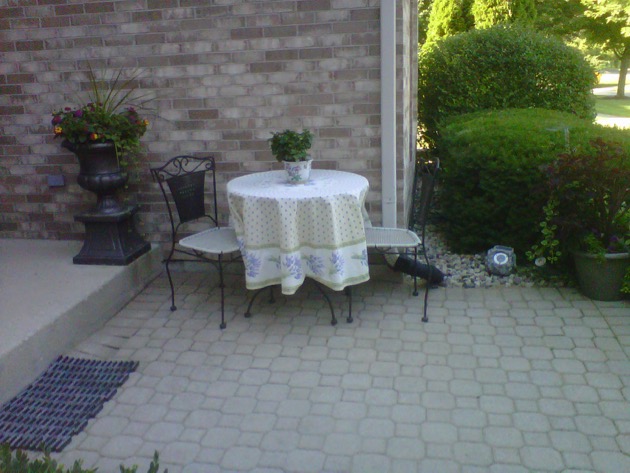
Thanks so much for your interest in "my favorite place." I live in Illinois, so we only have pleasant weather for being outside  from May through October. During those months I like to take advantage of being outside on my front patio relaxing at my tea table with a cup of  tea and my kindle for my afternoon break each day. 


 It is a protected area from the afternoon sun and also from wind where I can view the birds and also see neighbor children running past to play with a friend. It is a very relaxing break and rejuvenates me to return to my chores around the home.  Sometimes if one of my grandchildren visit, they also enjoy a tea break with Grandma on the front patio.

= = = ♥︎ = = = 

And now from Western Australia, Farmwife writes:
My favourite place is my kitchen. We built our forever home on our property in the south west of Western Australia and the house was designed to look "old" even though it was new. We designed our kitchen to feature this little antique table that was purchased years before our plans were even drawn up. 


The morning sun streams into the window making it a wonderful calming space to gather your thoughts while sipping coffee before the day has begun. It's a nice big space that accommodates our large family gatherings and it truly is the heart of our home and where everything is made with love.


I didn't finish my gardening yesterday so I'll write about it tomorrow. Instead, this is a sad and sorry tale about my recent experience with Hanno's Black Forest birthday cake. Someone asked me to post the recipe and while I'm not going to give you a recipe for a disaster, here is the sad tale of the cake. :- )


I wanted this cake to be the best Black Forest cake I'd ever made and yes, it was memorable but not in the way I wanted it to be.  My downfall began when I decided to use a different recipe. I'd always made a chocolate butter cake in the past but the new recipe, from a German site, advised making three layers of chocolate sponge. I only had two round cake tins the same size and one slightly bigger so I baked three cakes in those tins and when they were cold, I used the smaller cake tin to cut the larger one to size. I made three light, text book sponges. They were perfect but I was about to descend deep into a dark pit.


I made a chocolate ganache, whipped the cream, thickened the juice the cherries were packed in and started assembling the cake. I used one of the uncut cakes as the base, added a layer of ganache, topped that with cherries in thickened juice and added the cream. Then I used the cut layer. I repeated the process of adding the layers, and I descended deeper into the darkness. When the final cake layer had been added with its ganache, cherries and cream, slowly but surely, the middle layer collapsed and slid sideways, then ganache, cream and cherries started to waterfall off the sides of the cake plate. Hanno and Kerry stood and watched as it happened. I put the cake onto a larger plate and then into the fridge. As I cleaned up the spillage I wondered if I'd hit rock bottom yet. Clearly, the sponge was too light for the filling and with the walls of the middle layer removed, the forces of gravity took over and there was a landslide in the Black Forest.

Leaving the cake in the fridge for a couple of hours allowed it to firm up and stabilise. Hanno couldn't wait any longer so I cut two slices and with a cup of tea to brace me, we had our cake. It was delicious - a delicious disaster. As we worked our way through the cake over the following days, I discovered that by adding raspberries it looked okay, even good! So when we shared the cake with others, they got a helping of raspberries along with their cherries.

I have said many times before that mistakes are gifts that allow us to learn lessons we don't forget. So what did I learn from this? 
  • Don't use a new, untested recipe for anything important.
  • One more spoonful of ganache will NOT make it better. 
  • Never cut the edges off a cake that will be filled. The walls are there for a reason, Rhonda!
  • No matter what it looks like, raspberries will save even the worst disaster. :- )


A small group of very interesting women came along to my first blogging workshop on Saturday. I held it here at home and as the weather was warm and sunny, we all sat on the back verandah overlooking the garden. I had a wonderful time, I enjoyed sharing what I know about blogging and I think everyone went home happy. I wish all the ladies well with their blogs and when they're up and running, I'll give you the links so you can visit them.

When I was a young girl, we had a roast lunch every Sunday - and I do mean every Sunday - and what was left over was eaten as another meal on Monday night. For instance if we had a leg of lamb, we always had Shepherd's Pie for tea on Monday. My parents would have been astounded at the lunch we had yesterday. We had Shepherd's Pie. I roasted a leg of lamb and instead of having the big roast Sunday lunch, I cut up the leg of lamb, minced it and made a pie. My mother would have shaken her head at that. A leg of lamb was a good meal and you didn't go mucking around with it unless it was leftovers.  But Hanno's been having problems with his teeth for the past six months and he still can't wear the partial denture he's supposed to wear. I've been cooking a lot of soups and soft food because he has a real problem eating salads and the food we'd normally be eating now.

I made the pie in a slightly unorthodox way. I cut up the meat then ground it with the mincer attachment on my mixer; I put the vegetables through the mincer as well. Doing it that way saves on peeling, dicing and cooking the vegetables separately and they're ground up fine enough to cook well in the time they're in the oven and also fine enough for Hanno to eat. 


After making a good gravy from scratch, and mashing potatoes and turnips together, I topped the pie and it spent about 30 minutes in the oven. I served steamed pak choi fresh from the garden, dressed with a little honey soy. Just as the pie came out of the oven, in walked Sunny, Kerry and Jamie so I was delighted to have plenty to share with them. We all enjoyed it very much. The addition of the turnips to the mashed potato was to use up some of the leftover winter vegetables from the garden. It was delicious.

I forgot to take a photo of the cooked pie until after we'd had lunch.

Today I plan on spending some time in the garden to tend the tomatoes, tie up some rapidly growing raspberries, move the Welsh onions, mulch and fertilise. I have a few things to do in the bush house as well. Time is moving on and soon it will be too humid and hot to garden. If I can get these few things done today, I'll be happy knowing we've done most of what needs to be done and we'll only need to water and harvest in the coming months.  I'll take a few photos when I'm out there and be back tomorrow with another post.  :- )

What are your plans for this week?


I'm happy to announce that Emma, who commented here on October 8 at 8.42am, has won the tickets to Adelaide's Craft Fair.  Emma, please email me or comment below again and I'll get those tickets out to you.

I hope you've had a good week and have plans for a relaxed weekend. Thanks for your visits here and for your comments. I'll see you again next week.  ♥︎

: : : ♥︎ : : :

Winter wreath in felt
How to save a cooking disaster
How wool got cool
For all the sewing ladies and patchworkers - the new Tilda catalogue
If you're looking for inspiration for winter knitting or if you knit all year long, look here at Cozy Things
5 Strategies to Organize Your Pantry
Pantry Before and After
Planet Grief
iOS 9: 21 tips and tricks to unlock Apple's new functions
The eco guide to plastic bags
Surrogate Mother Hens
Turning a $10,000 house into a home
I gave it all up … to live off the land
This week we have photos from Keriann in New Zealand and Corinne in England. Again they show the diversity of the readers here and the interesting and often beautiful places we all call home. Thanks for taking part Keriann and Corinne.

I'm taking no more photos in this series. I'd like to finish the segment before Christmas.

= = = ♥︎ = = =

Our first photos today are from Kerinann who writes:
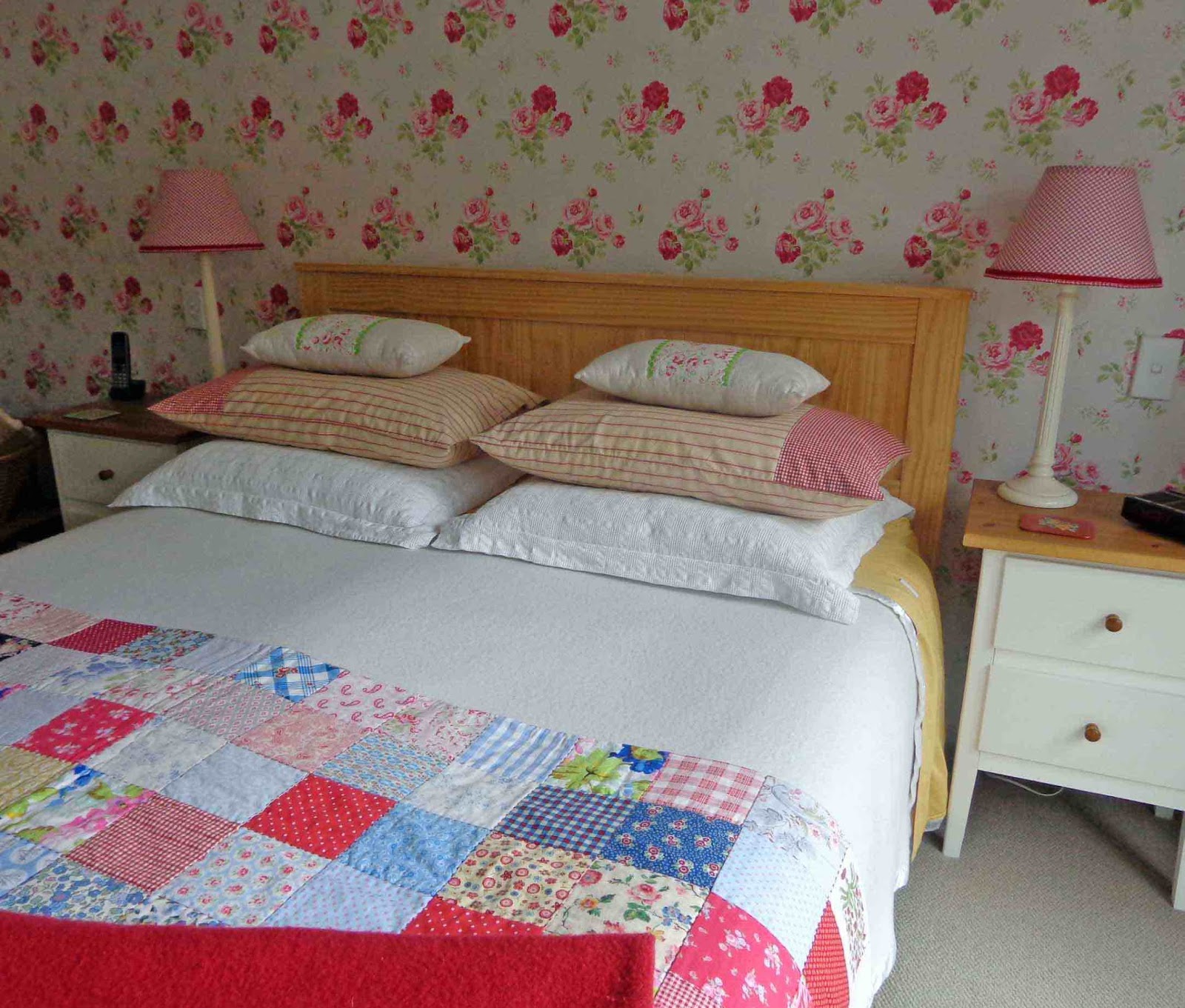
I was hard pressed to choose my favourite room in our home, would it be the kitchen, the garden or the sewing room? In the end I chose our bedroom as it makes me smile just about every time I enter it. My husband is a very tolerant man, not objecting when I filled this sunny room with flowers, from the rose printed wallpaper to the "all my favourite fabrics" quilt. In the afternoons the sun pours in making it hard to resist a small reading and cup of tea break. We have doors out onto the garden and on a mild winter day I leave them open to air the room as I potter around doing my housekeeping jobs. We have a sweet puppy called Charlie and he also likes this room, sitting and looking out over him kingdom, dreaming that one day he will get the better of those pesky cats. The first photo is the tidied room and the second photo is before the morning tidy and from a different angle.  


I live in the Hawkes Bay region of New Zealand, a big fruit growing area which also includes many vineyards. Currently its winter on the cusp of spring. We still have cold nights, sometimes down to 1 degrees celsius but during the day it hovers around 15.  I write a blog which you can visit if you like: www.sweetmarynz.blogspot.com

= = = ♥︎ = = =

Now Corinee writes: 
My name is Corinne and I live in the South East of England. To be honest, I have 2 favourite places at home - my sewing/ spare room and my veg patch. But this is the first year for my veg patch and my sewing room has been taken over by our new kitten, so veg patch it is!

It took a while to persuade my husband to start the veg patch.... I do have a bit of previous with forgetting to water plants.... But once he saw our 2 small kids eagerly eating the peas straight from the plant and tasted the veggies himself, I think I have him convinced! And just getting to escape for even a few minutes each day into the veg patch to tend the plants has kept me sane this summer!

I don't have a blog, but I do post photos on Instagram under the name Salapes.


This year’s Adelaide Craft and Quilt Fair, November 5 - 8 at Adelaide Event and Exhibition Centre, will feature the latest trends including adult colouring-in, textile and wearable art, embroidery, knitting, paper craft, vintage fashion and a stunning array of quilts! I have two tickets for the Fair to give away. If you live in Adelaide and can go during November 5 - 8, make a comment below and I'll put all the names in a hat to choose. If you're one of the readers who can't comment, leave a post on the forum and I'll include your name in the draw.  FINISHED

A few people asked for the fruit bread recipe shown in Monday's post. It's from my Sunbeam bread maker manual, with a few minor changes.  I mix the dough in the bread maker, then bake in the oven.


INGREDIENTS
  • 375 mls water - depending on the weather and the flour, you may use more or less water.
  • 2 teaspoons ground cinnamon
  • 2 tablespoons room temperature butter
  • pinch salt
  • 3 tablespoons brown sugar
  • 2 tablespoons milk powder
  • 1 teaspoon bread improver - I put this in because it's a dense loaf and bread improver lightens it
  • 4 cups bread flour
  • 2 teaspoons yeast
  • 1 cup dried fruit
  • ½ cup chopped dried apricots - add the fruit 15 minutes before the end of the kneading process
Add ingredients in the order given in the above list. Turn your machine on to "dough", it will take about 90 minutes to mix and rise the first time.  Look at the dough as it starts mixing and if it needs more water, add it tablespoon by tablespoon. 

About 15 minutes before the end of the cycle, add the dried fruit to the dough.  When the cycle finishes, take the dough out, knead it a couple of times, then shape it and sit it in a warm place until it almost doubles in size. When the dough has risen, brush the top with beaten egg, slash the top a few times with a very sharp knife and put it in a pre heated oven at 200C. Ten minutes into the bake, turn the oven down to 180C.  This is a sweet loaf and it can burn easily. Check 20 minutes into the bake and if it looks too brown on the top, cover it with foil until it's finished baking. Depending on your oven, it will take 30 - 40 minutes to bake.

I serve it warm, with butter. The loaf will keep for two or three days in a plastic bag in the fridge.

I hope you enjoy it.

Yesterday Meg wrote a lovely and much appreciated comment: 
This post kind of sums it all up for me, this idea of simple living. Making what you can, finding better ways of doing things, giving back to community and recognising the beauty in the simplicity. Reading your book earlier this year set in motion a whole string of changes for me. I was raised to frugality and resourcefulness so was nodding in agreement with most of it, but your writing reminds me to take pride in what I do and to enjoy it. And I made my first batch of soap, which I have been wanting to do for years but have been too daunted by the caustic soda aspect. It was so easy and so much fun, thanks to your instructions. So really, this is my thankyou letter to you. Thank You!

When comments such as these arrive, I am delighted my work has helped someone and that they take the time to reach out and tell me that. I like to be appreciated, it gives me reasons to carry on. Meg's comment encouraged me to write today about how simple life is a multi-faceted diamond. It's making what you can, finding better ways of doing things, giving back to community and recognising the beauty in the simplicity. When lived well, this life isn't just about the physical work we do, although that is an important part of it, it's also about feeling valued and enjoying your productivity.


I think we should all be proud of the continuing stream of work we do in our homes. I'm not talking about the boastful pride you sometimes see. This is more a calm contentment that for you, for today, this work made a difference and it was enough. There is loneliness attached to our work sometimes, because often our days are spent alone or with small children, or out in the workforce, and there isn't anyone to say we're doing okay. Many of us also deal with families who don't express their appreciation. And some of us get so busy with the daily chores, or the combination of chores and paid work, we don't stop to think about our role in the family home. But there is a reason we are working as we do and while some of our motives are connected to thrift, health, sustainability, productivity, ethics and values, there is also generosity, acceptance, kindness, appreciation and pride in work well done. These things give our lives meaning.


Life isn't about working till you drop, we all have to find purpose in what we do. When we find that, it's the eureka moment - much like Meg's, when you feel the need to change and then continue that change every day in many ordinary and extraordinary ways. If you can see passed the work and always be mindful of the reason for it, you'll find it easier to continue. And I hope you feel proud of your achievements and enjoy what you do because how you see your work can make or break you.

Newer Posts Older Posts Home

MY BOOKS

MY BOOKS


My books were all published by Pengiun, and are available at Amazon US, Amazon UK and Amazon Au

Search here

Total Pageviews

Translate


I'm Rhonda Hetzel and I've been writing my Down to Earth blog since 2007. Although I write the occasional philosophical post, my main topics include home cooking, happiness and gardening as well as budgeting, baking, ageing, generosity, mending and handmade crafts. I hope you enjoy your time here.

MY FAVOURITE PLACES

  • Grandma Donna's Place
  • Grandma Donna's YouTube
  • Grandma Donna's Instagram
  • This Simple Day
  • Nicole's Instagram

Give More

Give More

Popular posts last year

Making ginger beer from scratch

We had a nice supply of ginger beer going over Christmas. It's a delicious soft drink for young and old, although there is an alcoholic version that can be made with a slight variation on the recipe. Ginger beer is a naturally fermented drink that is easy to make - with ginger beer you make a starter called a ginger beer plant and after it has fermented, you add that to sweet water and lemon juice. Like sourdough, it must ferment to give it that sharp fizz. To make a ginger beer plant you'll need ginger - either the powdered dry variety or fresh ginger, sugar, rainwater or tap water that has stood for 24 hours to allow the chlorine to evaporate off. You'll also need clean plastic bottles that have been scrubbed with soap, hot water and a bottle brush and then rinsed with hot water. I never sterilise my bottles and I haven't had any problems. If you intend to keep the ginger beer for a long time, I'd suggest you sterilise your bottles. MAKING THE STARTER In a...
Image

NOT the last post

This will be my last post here.  I've been writing my blog for 18 years and now is the time to step back. I’ve stopped writing the blog and come back a couple of times because so many people wanted it, but that won’t happen again, I won’t be back.  I’ll continue on instagram to remain connected but I don’t know how frequent that will be. I know some of you will be interested to know the blog's statistics. 
Image

How to make cold process soap

I'm sure many of you are wondering: "Why make soap when I can buy it cheaply at the supermarket?" My cold process soap is made with vegetable oils and when it is made and cured, it contains no harsh chemicals or dyes. Often commercial soap is made with tallow (animal fat) and contains synthetic fragrance and dye and retains almost no glycerin. Glycerin is a natural emollient that helps with the lather and moisturises the skin. The makers of commercial soaps extract the glycerin and sell it as a separate product as it's more valuable than the soap. Then they add chemicals to make the soap lather. Crazy. Making your own soap allows you to add whatever you want to add. If you want a plain and pure soap, as I do, you can have that, or you can start with the plain soap and add colour, herbs and fragrance. The choice is yours. I want to add a little about animal and bird fat. I know Kirsty makes her soap with duck fat and I think that's great. I think t...
Image

Preserving food in a traditional way - pickling beetroot

I've had a number of emails from readers who want to start preserving food in jars but don't know where to start or what equipment to buy.  Leading on from yesterday's post, let's just say up front - don't buy any equipment. Once you know what you're doing and that you enjoy preserving, then you can decide whether or not to buy extra equipment. Food is preserved effectively without refrigeration by a variety of different methods. A few of the traditional methods are drying, fermentation, smoking, salting or by adding vinegar and sugar to the food - pickling. This last method is what we're talking about today. Vinegar and sugar are natural preservatives and adding one or both to food sets up an environment that bacteria and yeasts can't grow in. If you make the vinegar and sugar mix palatable, you can put up jars of vegetables or fruit that enhance the flavour of the food and can be stored in a cupboard or fridge for months. Other traditional w...
Image

Cleaning mould from walls and fabrics

With all this rain around we've developed a mould problem in our home. Usually we have the front and back doors open and that good ventilation stops most moulds from establishing. However, with the house locked up for the past week, the high humidity and the rain, mould is now growing on the wooden walls near our front door and on the lower parts of cupboards in the kitchen. Most of us will find mould growing in our homes at some point. Either in the bathroom or, in humid climates, on the walls, like we have now. You'll need a safe and effective remedy at some point, so I hope one of these methods works well for you. Mould is not only ugly to look at, it can cause health problems so if you see mould growing, do something about it straight away. The longer you leave the problem, the harder it will be to get rid of it effectively. If you have asthma or any allergies, you should do this type of cleaning with a face mask on so you don't breathe in any spores. Many peopl...
Image

Five minute bread

Bread is one of those foods that, when made with your own hands, gives a great deal of satisfaction and delight. It's only flour and water but it symbolises so much. I bake bread most days and use a variety of flours that I buy in bulk. Often I make a sandwich loaf because we use most of our bread for lunchtime sandwiches and for toast. Every so often I branch out to make a different type of loaf. I have tried sour dough in the past but I've not been happy with any of them. I'll continue to experiment with sour dough because I like the idea of using wild yeasts and saving the starter over a number of years to develop the flavour and become a part of the family. However, the loaf I've been branching out to most often is just a plain old five minute bread. By five minutes I mean it takes about five minutes actual work to prepare but it's the easiest of all bread to make and to get consistently good loaves from. If you're having people around for lunch or...
Image

This is my last post.

I have known for a while that this post was coming, but I didn't know when. This is my last post. I'm closing my blog, for good, and I'm not coming back like I have in the past.  I've been writing here for 16 years and my blog has been many things to me. It helped me change my life, it introduced me to so many good people, it became a wonderful record of my family life, it helped me get a book contract with Penguin, and monthly columns with The Australian Women's Weekly and Burke's Backyard . But in the past few months, it's become a burden. In April, I'll be 75 years old and I hope I've got another ten years ahead. However, each year I'll probably get weaker and although I'm fairly healthy, I do have a benign brain tumour and that could start growing. There are so many things I want to do and with time running out, leaving the blog behind gives me time to do the things that give me pleasure. On the day the blog started I felt a wonderful, h...
Image

What is the role of the homemaker in later years?

An email came from a US reader, Abby, who asked about being a homemaker in later years. This is part of what she wrote: "I am a stay-at-home mum to 4 children, ages 9-16. I do have a variety of "odd jobs" that I enjoy - I run a small "before-school" morning drop-off daycare from my home, I am a writing tutor, and I work a few hours a week at a local children's bookstore. But mostly, I cherish my blissful days at home - cooking, cleaning (with homemade cleaners), taking care of our children and chickens and goats, baking, meal-planning, etc. This "career" at home is not at all what I imagined during my ambitious years at university, but it is far more enriching. I notice, though, that my day is often planned around the needs of my family members. Of course, with 4 active kids and a husband, this is natural. I do the shopping, plan my meals, cook dinner - generally in anticipation of my family reconnecting in the evening.  I can't h...
Image

Every morning at home

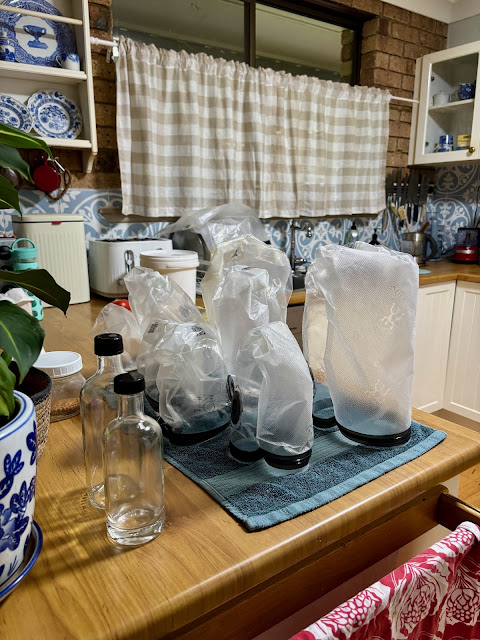
Every morning when I walk into my kitchen it looks tidy and ready for a day's work. Not so on this morning (above), I saw this when I walked in. Late the previous afternoon when I was looking for something, I came across my rolled up Zwilling vacuum bags and decided they had to be washed and dried. So I did that and although I usually put them outside on the verandah to dry it was dark by then. I turned the just-washed bags inside out and left them like this on a towel. It worked well and now the bags are ready to use when I bring home root vegetables, cabbages or whatever I buy that I want to last four or five weeks.
Image

You’ll save money by going back to basics

When I was doing the workshops and solo sessions, I had a couple of people whose main focus was on creating the fastest way to set up a simple life. You can't create a simple life fast, it's the opposite of that It's not one single thing either - it's a number of smaller, simpler activities that combine to create a life that reflects your values; and that takes a long to come together. When I first started living simply I took an entire year to work out our food - buying it, storing it, cooking it, preserving, baking, freezing, and growing it in the backyard. This is change that will transform how you live and it can't be rushed.  
Image

All previous blog posts

  • 2026 3
    • February 3
      • Workshops starting 1 March
      • Planting vegetable seeds and new workshops
      • Back where we belong
  • 2025 7
    • July 1
    • June 2
    • May 1
    • April 2
    • February 1
  • 2024 25
    • December 2
    • November 1
    • October 2
    • September 3
    • August 1
    • July 3
    • June 1
    • May 3
    • April 2
    • March 3
    • February 2
    • January 2
  • 2023 13
    • December 1
    • November 2
    • October 1
    • September 3
    • August 2
    • February 2
    • January 2
  • 2022 17
    • November 3
    • October 4
    • September 3
    • August 2
    • July 3
    • June 2
  • 2021 50
    • December 1
    • November 6
    • October 7
    • September 5
    • August 4
    • July 5
    • June 2
    • May 2
    • April 6
    • March 4
    • February 4
    • January 4
  • 2020 68
    • December 3
    • November 5
    • October 4
    • September 4
    • August 4
    • July 4
    • June 4
    • May 8
    • April 7
    • March 8
    • February 8
    • January 9
  • 2019 66
    • December 2
    • November 4
    • October 5
    • August 3
    • July 4
    • June 6
    • May 8
    • April 8
    • March 8
    • February 11
    • January 7
  • 2018 82
    • December 1
    • September 2
    • August 10
    • July 4
    • June 11
    • May 9
    • April 12
    • March 10
    • February 10
    • January 13
  • 2017 129
    • December 7
    • November 10
    • October 6
    • September 13
    • August 11
    • July 13
    • June 12
    • May 9
    • April 9
    • March 14
    • February 11
    • January 14
  • 2016 125
    • December 7
    • November 13
    • October 10
    • September 11
    • August 11
    • July 8
    • June 9
    • May 9
    • April 12
    • March 10
    • February 13
    • January 12
  • 2015 184
    • December 7
    • November 15
    • October 20
    • September 18
    • August 19
    • July 18
    • June 12
    • May 15
    • April 12
    • March 21
    • February 13
    • January 14
  • 2014 203
    • December 11
    • November 8
    • October 17
    • September 20
    • August 17
    • July 19
    • June 17
    • May 17
    • April 23
    • March 15
    • February 18
    • January 21
  • 2013 225
    • December 13
    • November 17
    • October 17
    • September 17
    • August 21
    • July 24
    • June 20
    • May 19
    • April 17
    • March 22
    • February 17
    • January 21
  • 2012 245
    • December 17
    • November 20
    • October 20
    • September 18
    • August 15
    • July 24
    • June 21
    • May 26
    • April 23
    • March 23
    • February 19
    • January 19
  • 2011 257
    • December 18
    • November 24
    • October 27
    • September 23
    • August 24
    • July 21
    • June 24
    • May 24
    • April 16
    • March 22
    • February 14
    • January 20
  • 2010 283
    • December 20
    • November 18
    • October 18
    • September 19
    • August 25
    • July 24
    • June 25
    • May 26
    • April 25
    • March 22
    • February 29
    • January 32
  • 2009 293
    • December 29
    • November 18
    • October 23
    • September 25
    • August 22
    • July 28
    • June 22
    • May 21
    • April 27
    • March 26
    • February 24
    • January 28
  • 2008 387
    • December 24
    • November 23
    • October 25
    • September 26
    • August 27
    • July 27
    • June 37
    • May 34
    • April 44
    • March 53
    • February 32
    • January 35
  • 2007 372
    • December 37
    • November 40
    • October 55
    • September 51
    • August 49
    • July 63
    • June 49
    • May 28


Trending Articles

NOT the last post

This will be my last post here.  I've been writing my blog for 18 years and now is the time to step back. I’ve stopped writing the blog and come back a couple of times because so many people wanted it, but that won’t happen again, I won’t be back.  I’ll continue on instagram to remain connected but I don’t know how frequent that will be. I know some of you will be interested to know the blog's statistics. 
Image

Every morning at home

Every morning when I walk into my kitchen it looks tidy and ready for a day's work. Not so on this morning (above), I saw this when I walked in. Late the previous afternoon when I was looking for something, I came across my rolled up Zwilling vacuum bags and decided they had to be washed and dried. So I did that and although I usually put them outside on the verandah to dry it was dark by then. I turned the just-washed bags inside out and left them like this on a towel. It worked well and now the bags are ready to use when I bring home root vegetables, cabbages or whatever I buy that I want to last four or five weeks.
Image

You’ll save money by going back to basics

When I was doing the workshops and solo sessions, I had a couple of people whose main focus was on creating the fastest way to set up a simple life. You can't create a simple life fast, it's the opposite of that It's not one single thing either - it's a number of smaller, simpler activities that combine to create a life that reflects your values; and that takes a long to come together. When I first started living simply I took an entire year to work out our food - buying it, storing it, cooking it, preserving, baking, freezing, and growing it in the backyard. This is change that will transform how you live and it can't be rushed.  
Image

Creating a home you'll love forever

Living simply is the answer to just about everything. It reduces the cost of living; it keeps you focused on being careful with resources such as water and electricity; it reminds you to not waste food; it encourages you to store food so you don't waste it and doing all those things brings routine and rhythm to your daily life. Consciously connecting every day with the activities and tasks that create simple life reminds you to look for the meaning and beauty that normal daily life holds.  It's all there in your home if you look for it. Seemingly mundane tasks like cleaning and cooking help you with that connection for without those tasks, the home you want to live in won't exist in the way you want it to.  Creating a home you love will make you happy and satisfied.
Image

Time changes everything

I've been spending time in the backyard lately creating a contained herb and vegetable garden. My aim is to develop a comfortable place to spend time, relax, increase biodiversity and encourage more animals, birds and insects to live here or visit. Of course I'd prefer my old garden which was put together by Hanno with ease and German precision. Together, we created a space bursting at the seams with herbs, vegetables and fruity goodness ready to eat and share throughout the year. But time changes everything. What I'm planning on doing now, is a brilliant opportunity for an almost 80 year old with balance issues. In my new garden I'll be able to do a wide range of challenging or easy work, depending on how I feel each day. It’s a daily opportunity to push myself or sit back, watch what's happening around me and be captivated by memories or the scope of what's yet to come.
Image

It's the old ways I love the most

I'm a practical woman who lives in a 1980’s brick slab house. There are verandahs front and back so I have places to sit outside when it's hot or cold. Those verandahs tend to make the house darker than it would be but they're been a great investment over time because they made the house more liveable. My home is not a romantic cottage, nor a minimalist modern home, it's a 1980’s brick slab house. And yet when people visit me here they tell me how warm and cosy my home is and that they feel comforted by being here. I've thought about that over the years and I'm convinced now that the style of a home isn't what appeals to people. What they love is the feeling within that home and whether it's nurturing the people who live there.
Image

Back where we belong

Surprise! I'm back ... for good this time. Instagram became an impossible place for me. They kept sending me messages asking if I'd make my page available for advertisers! Of course, I said no but that didn't stop them. It's such a change from what Instagram started as. But enough of that, the important part of this post is to explain why I returned here instead of taking my writing offline for good. For a few years Grandma Donna and I have talked online face-to-face and it's been such a pleasure for me to get to know her. We have a lot in common. We both feel a responsibility to share what we know with others. With the cost of living crisis, learning how to cook from scratch, appreciate the work we do in our homes, shop to a budget and pay off debt will help people grow stronger. The best place to do that is our blogs because we have no advertising police harassing us, the space is unlimited, we can put up tons of photos when we want to and, well, it just feels li...
Image

Making ginger beer from scratch

We had a nice supply of ginger beer going over Christmas. It's a delicious soft drink for young and old, although there is an alcoholic version that can be made with a slight variation on the recipe. Ginger beer is a naturally fermented drink that is easy to make - with ginger beer you make a starter called a ginger beer plant and after it has fermented, you add that to sweet water and lemon juice. Like sourdough, it must ferment to give it that sharp fizz. To make a ginger beer plant you'll need ginger - either the powdered dry variety or fresh ginger, sugar, rainwater or tap water that has stood for 24 hours to allow the chlorine to evaporate off. You'll also need clean plastic bottles that have been scrubbed with soap, hot water and a bottle brush and then rinsed with hot water. I never sterilise my bottles and I haven't had any problems. If you intend to keep the ginger beer for a long time, I'd suggest you sterilise your bottles. MAKING THE STARTER In a...
Image