down to earth

  • Home
  • About Us
  • Down To Earth Book
  • Privacy Policy

The leaves are starting to turn yellow and soon they'll fall, but it's still hot and humid in my neck of the woods. I'm hoping cooler weather arrives soon.  Whatever you do this weekend, I hope you enjoy yourself.  See you next week!

Simple living inspiration - I recommend this to you. These are unique events and, I expect, will be honest, enlightening and inspirational.
I'm so sad to see The Hoopla go
The antibiotics problem in meat
Making dish washing easier
Old and interesting
Back to Eden film
Self-saucing orange pudding
Cornell University home economics library
What they do to food
Sunny and Jamie are over in South Korea at the moment enjoying some family time. They went over for the wedding of Sunny's younger sister Sung Ji, who married Dong Ho Choi. He is a career soldier in the South Korean army. Sunny sent some of the family wedding photos and said I can share some of them here. 

 Sung Ji and Dong Ho being saluted by the soldiers.

And here is the guard of honour, under drawn swords.
This beautiful photo is of the bride, Sun Ji, with her mother Sunja Cho (left), Sunny and her sister Yeon Hee. Sunny, her mother and sister are wearing the traditional Korean chima jeogori, worn during festivals and celebrations.

 And look who is here. Jamie in traditional Australian dress of socks with sandals :- ) Very cute. 

Sunny and Jamie again.

It's so interesting seeing how other cultures celebrate important events such as weddings. Congratulations to Sung Ji and Dong Ho. I hope they have many happy years together ahead of them.

Dear friends, I've opened the Simple, Green Frugal Co-op blog again. I started the blog back in 2008 with a group of bloggers I invited to join me. When things got busy, I retired it but now it's back with its unique take on simple life.  Click here to go there.

= = = ♥︎ = = =

I unintentionally fell into retirement when I stopped working because my head was about to explode. When I tried to reorganise my world so I spent less, one thing lead to another, everything started getting better and I never returned to work; I was in my mid-50s. Even though my retirement wasn't planned, it's been the most wonderful time for me with my family. I don't think I really thought about retirement before I realised I'd retired but I have to say, it's the golden treasure at the end of the working rainbow. Hanno planned his retirement and we'd paid of our debts before he retired but after retirement, he was bored so he bought a little shop in Montville and worked another six years.

This isn't where you'll be most of the time.  : - )

Being self-employed all those years, I only had a small superannuation package because there was always something else to spend the money on. Had we not been debt-free, there would have been no way I could have thought about retiring when I did. Now we're both on the pension and because we don't pay rent, have paid off the mortgage and have no other debt, we save a couple of hundred dollars every fortnight. And we live well. Our friends think we should travel but we're content being here and doing what we do. We might go for a trip to Tasmania and Victoria next year after the new book is out but that will be it. There will be no flying holidays and no extravagance.

We taught ourselves to be frugal because we could see that if we cut our living expenses, we would have a good life using our time wisely. I suppose we swapped working for a living for working for a life. We became much more productive at home and made a lot of the things we used to buy, and that made all the difference. That's one of the wonderful things about retirement, you have time. Your time to do as you wish. So if it is your wish to cut expenses, look for bargains and be more productive at home, you'll have the time it takes to do all it. And instead of being one of the people who feel useless in retirement, you can take control of your life and lead it to places unexpected.

There is a trap a lot of us fall into, and I fell too. And that is not taking retirement seriously, not making a retirement plan and not making your own estimate of how much money you'll need. The way we live doesn't fit into the mainstream estimates because a lot of our value and assets is in the work we do. And that's extremely difficult to plan for because you don't know how fit you'll be and how much you'll be able to take on yourself. My only advice is to judge your future in part on how you are today. If you've been healthy most of your life and plan to live the way we do, be optimistic and believe you can do the work. If there's some doubt, be more cautious.

You need to be doing this from when you first start working and although I don't think you need the amount of money our governments tell us we need, you do need enough to cover the kind of lifestyle you wish to live in retirement. So if you want to travel, you'll have to factor that in to your retirement estimate but if you're content to travel locally, then stay at home, you'll need much less. Don't forget, if you are very young now, you might not have the benefit of a pension so this long term planning is vital for you.

So what are the other things that can be planned along the way?
  • Pay down your debt as quickly as you can. Once you've done that, you can start saving or adding more to your retirement fund. Don't put all your eggs in one basket either. I know a couple of people who lost half their retirement savings during the GFC because all their investments were in real estate. Diversify, use your common sense and treat this money like it's your lifeline, because it is.
  • If you think you'll move before you retire, do it well before hand. There are a lot of things you can do in your own home to help you stay fit and healthy long into your old age. Things like fences, solar panels, vegetable gardens, chickens and bee hives. So if you need to move or you want to make those modifications to help you when you've retired, do it beforehand, not afterwards. You'll have the money for it and the energy to do the work yourself.
  • Learn how to cook, sew, mend, recycle, garden, ferment, knit, fish, and as much about the maintenance on your house and car as you possibly can.
  • Make a budget that you can live on and put your savings to work. Then menu plan, stockpile, shop for bargains, bake and do as much for yourself as you can before you retire. If you're using those skills when they're not essential, you'll adjust to retirement more easily.
  • Try to live near your family or connect with your community so you have a support system around you. Stay healthy and fit and in your own home for as long as possible.  Despite the scaremongering, most people live out their lives in their own homes, not in retirement homes. The more you can prepare for a long life at home, the more successful you will be.
  • Remain interested and involved and don't believe that older people can't do much. There isn't much respect for older folk now but don't ever let that stop you doing what you want, when you want to do it. 
  • Make your own rules.
This is a question for all the stay at home mums and dads out there: Do you have a retirement plan that includes savings or insurance? I think most people will say no but it's an important part of our life's planning. The unexpected does happen and you have to be prepared for it. If you are working at home and have made plans for your financial future, please share  how you've done that.


There is some excellent information here about retirement for Australians. Even if you're 30, it's essential reading.  Information about getting ready for retirement. And here is a retirement planner, it's an Australian government product so don't worry about investment people harassing you after you fill it in. It's confidential and very helpful. Again, for every age and even if you don't live in Australia, it will give you some good ideas.


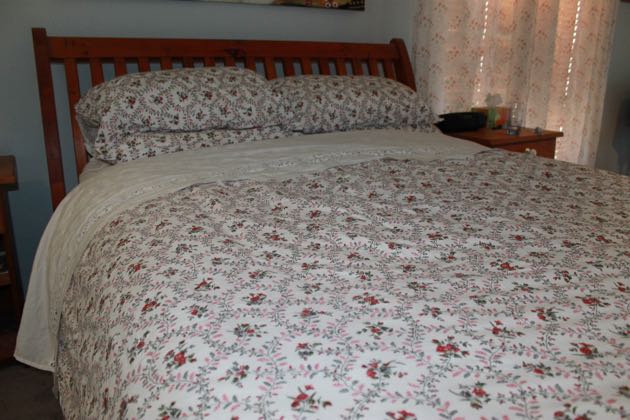
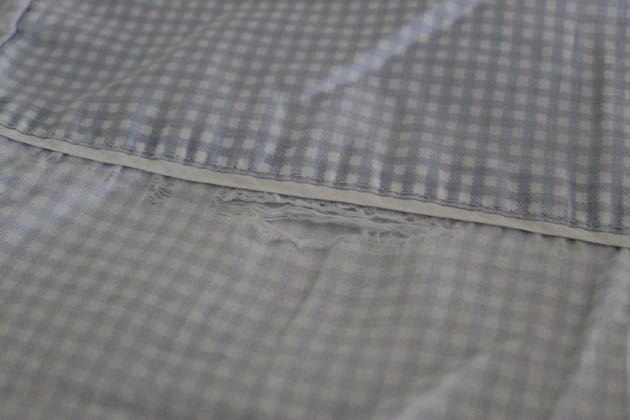
During the week as I was ironing I came across a pillow case that was frayed and very thin in a few places. It came in a set of a fitted sheet, top sheet and two pillow cases and to the best of my knowledge it's about ten years old. A lovely pair of blue and white check sheets that I always enjoyed using and thought looked lovely and fresh on the bed. Oh well, all good things must end, the rest of the set survived. I got four good sized rags from that one pillow case and they will probably last for another year, working for a different purpose. I love doing those little things that help me save money and lighten our foot print here. Such a short amount of time to make a difference.


As the fabric was so thin, I decided to make the rags double thickness so after I cut it into four, I stitched the perimeter to keep it together, then pinked the frayed ends off. The pinking will ensure the edges don't fray again and when I'm cleaning, I won't leave threads of cotton behind.


I haven't bought any sort of cleaning or washing up cloth for about 12 years now and have been very happy with how I can extend the life of worn out fabrics simply by cutting them to shape and tidying up the edges. I smile when I think of young Rhonda buying cleaning cloths and throwing out useful old towels to landfill. Such an innocent I was, working for the enemy. I think in those 12  years I probably saved close to $500 just on cleaning cloths. Amazing eh? Here are the current cleaning cloth prices at my local shop: Chux original 10 pack $3.99, Chux super giant 5 pack $3.99, Jif Ballerina cloth @ $1.70 each, Woolworths cleaning cloth domestic wipes extra $3.29, Chux kitchen scrubs non-scratch 4 pack $2.54. On the other side of the coin, a recycled pillow case, towels and sheets: zero, maybe five cents for the electricity. And it has the added advantage of not sending more rubbish to the tip - not the old commercial cloth when it's short life is over and not the packaging that it comes in. I wonder what a ballerina cloth is.


And speaking of dish and cleaning cloths, Faye's post on The Blessed Hearth about loving your kitchen struck a cord with me.  I took Faye's lead and decided to make up a couple of fabric cleaning cloths to see if I liked them. The answer is a resounding YES! I love using them for washing up, wiping down the bench tops and general cleaning. So I made up a few more to test over the coming months.

 Right sides together on the inside when they're sewn.


Cut off the inside corner so it doesn't bulk up when you turn it out and form the corner.

When the sides are sewn together and the cloth is turned out to the right side, edge the border with zig zag stitch.
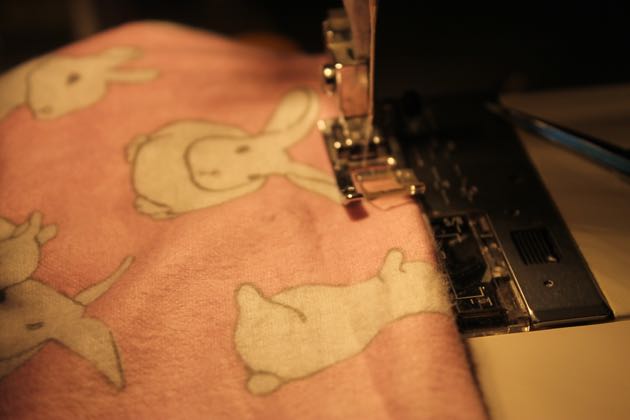
This is the most basic of sewing so if you've never attempted anything on the sewing machine before, this is your project. Simply cut out a square as big as you want it to be, mine are about 10 inches square. I think you need two layers for absorbency, and they have to be sewn together.
  1. Turn them so the right sides are facing inwards, then stitch around three sides. 
  2. Cut the right angle corner off fairly close to the stitch line so it will sit properly. 
  3. Turn the cloth right side out, turn the hem of the fourth side under and pin it, then zigzag stitch around the border of the cloth. 
  4. Finished, but don't forget to wash the cloths before you use them. Many fabrics are dressed with chemicals and it needs to be washed off.
I made two cloths with flannel one side and recycled terry towelling on the other for heavier cleaning. They don't dry as fast as the knitted cloths, but it's not a problem if I hang them to dry in between uses or on the side of the laundry hamper when they need a wash.

I made seven cloths in about 25 minutes. So if you aren't a knitter, here is a good way of making cleaning and washing up cloths that provide a good cleaning tool and cost next to nothing. Believe in yourself, you can do this.


If you've ever been to Nundle NSW, you'll know it's an old gold mining area. Tucked into the rolling hills between the coast and Tamworth, it's a beautiful area with a lot to offer driving tourists. If you're looking for something to do on Easter Saturday and Sunday, look no further than Nundle. That is the weekend of the Nundle Go For Gold Festival.

While you're there, pop in and treat yourself by looking through the wonderful Odgers and McClelland Exchange Stores, one of my favourite stores.  Megan and Duncan have been to Sydney buying at the wholesale fairs and the shop is full. "We always aim to have the store looking fantastic for the festival. We prepare a special traditional boiled lolly stall out the front of our shop with tall glass jars filled with Red Backs, Butter Balls, Aniseed Balls, Raspberry Drops, made in South Australia," Megan said.

Megan sorting through lollies at the front of their store.


The Nundle Go For Gold Festival, started as a Nundle and District Lions Club activity about 18 years ago, is now the second largest festival in north west NSW, after the Tamworth Country Music Festival. And it is hosted by a small community of 300 people and organised by half a dozen volunteers.

The Chinese theme was introduced to highlight the population of Chinese migrants attracted to the goldfields after gold was first discovered at Hanging Rock in 1852. The Chinese made up the majority of the population at that time.

Over the Easter weekend the quiet streets of Nundle are transformed with the noisy percussion, colourful costumes and acrobatic movement of the Chinese Lion and Dragon Dances. Performed by the Australian Yau Kung Mu Association from Sydney, the troupe of about 40 dancers and support crew perform twice daily and put a LED light show on Saturday evening. 

Panning for gold.

Another highlight of the weekend is the gold panning. If you need evidence that gold fever is alive and well you'll find it at Nundle at Easter. At last year's festival more than 600 people panned for gold in tubs filled with gravel and peppered with gold, including four nuggets, worth more than $1000.

The street market attracts about 100 market stalls selling fresh produce, preserves, honey, homemade cakes, clothing, food, toys, plants and the ubiquitous takeaway espresso. Live music will feature the Sax Summit, Dylan Hartas, the Blues Martyrs, Nundle musician Jeff Gibson, and traditional Chinese music by David Wei and Eva Timms. 

If you're inclined to stay overnight or for the weekend, there is a range of accommodation such as tent and caravan camping, motel, bed and breakfast, cabins and a self-contained cottage. More details are available here. It looks like a great weekend.

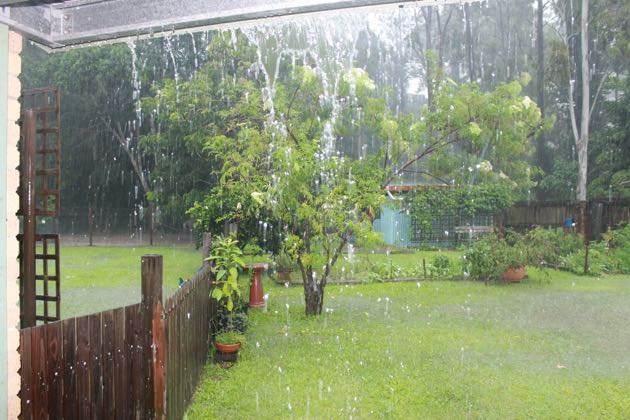
This is the rain exactly one month ago when the last cyclone passed by. It's been as dry as a bone ever since.

We're going through very warm patch with another cyclone up north. We need rain but it looks like being a dry and warm weekend ahead, not the ideal time for planting out seedlings. Looks like we'll have to wait another week. I hope the weather where you are is better than ours and you have the chance to either plant out or defrost your garden.

Why are white people expats when the rest of us are immigrants?  good question.
20 Satisfying, Wholesome Lunches You Can Make the Night Before
Before and After: How I Organized All My Little Bags of Gluten-Free Flour
Ready to eat boiled eggs, are they the most pointless convenience food?
Eight egg recipes to go to work on
The ultimate Swedish meatballs
I'm proud of my Irish heritage - I hope you enjoyed St Patrick's Day, here are some photos from around the world
From old laundries
Visiting an historic kitchen with eyes wide open
Learn to Knit for beginners You Tube
Fix a Leak Week
I was talking to a friend the other day and told her that I'd never been so busy in my life. It's true, I am busier now with family, friends, work, creative projects and a life that makes me feel such gratitude and peace that every day feels like a magnificent gift.  Most people think simple life is quiet and steady, and while it has those periods, it also has times like those we're going through now that are hectic and full of life. There are so many things happening here. You'd think that having two weeks off the blog I'd have a few posts lined up to share with you, but no, time has not allowed me to do that so instead, I want to update you on some of the things going on around our place with a few photos.


Sunny and Jamie are going to Korea today so they can be at Sunny's sister's wedding. Kerry is running the sushi shop while she's away. It's been wonderful having Jamie here every afternoon for the past couple of weeks. He comes in full of stories about what happened at kindy and while I make him a snack and a drink, it takes me back 30 years when I did the same thing for my boys. How time flies.


I've been tested with my cooking skills lately because Hanno has had a tooth out on one side, then next week he has one out on the other side.  Weeks of soft food have left me wondering if we'll ever return to the freedom of selecting whatever we want to eat and not what we have to eat. I've been fiddling around with lemons too, it feels good to see plenty of ripening lemons on the tree. Our new lemon tree is in fruit too this year. There is no such thing as having too many lemon here at our place. I'll show you what I did with them next week.


Pork meatballs with herb gravy, steamed cauliflower and potatoes.
I'm having a love affair with Medjool dates at the moment. Here they are baked in a bar cake with walnuts.
Homemade potato and sweet potato wedges ready to go into the oven. I forgot to take a photo when they came out.
Above and below is the front verandah now. It's been like that for a week. There was concrete cancer in several spots near the front door so we got a tradesman in to get rid of it and tile over the top. I would have liked to tile the entire verandah but we can't afford that so this little area will provide a safe entrance to our home and when everything is back in place, I hope it still looks like an inviting and relaxing place.


And the first of the raspberries crept up on us. Jamie brought in a small handful during the week. They're Heritage raspberries, the first time we've grown them here, and they look like being a good cropper. We haven't done any planting in our garden yet. We usually plant up in March, and we will do that, but we're slower now and planting has to wait until we have the time for it. I hope we have seedlings in the ground by the end of the month and even with our smaller garden we hope to produce enough herbs, lettuce, tomatoes and possibly potatoes to keep us happy for a while.

So there it is in a nutshell. I'll stop here and instead of talking about work, I'll do some of it. I'm sure you get the picture, it's probably the same at your place. It's just life expanding to fill the space provided for it. I hope you have a lovely day.


Of all the elements that make up many convenience foods, preservatives are the ones that make the hairs on my neck stand up. Give me butter, fat, gelatine made from boiled cow heads, colouring that I know is crushed beetles, live bacteria and fungus. I'll take them all many times over before I knowingly consume food containing preservatives. Of course they tell us that all the additives they put in food are there to protect the food from invading pathogens, to add flavour; it's there for our own good!  And it just happens to be cheaper. These additives increase the profit margin for manufacturers. While cancer rates are increasing around the world, our health is being traded for profit.

I came across this article recently and since then I've read it a few times. I knew food manufacturers were adding all sorts to our food, but when I read this article, I was shocked. And terrified. One of my fears is that it's being using on what is supposedly 'fresh' food too. How did things get so bad? Why have our governments allowed this to happen?


I don't have any answers. My only strategy is to stay away from highly processed food but I do think we should all contact our local politicians and talk loudly and publicly about our concerns. Personally, I'd like to see better food labelling laws in every country. Surely we have the right to know exactly what is in our food and to make informed decisions over whether to buy or not. 

I have no magic wand that will make this better. It makes me resolve to continue to cook from scratch but I doubt even that will completely protect us. I hope you read the article and vote for it to change by using the power of your dollars when you shop. If we don't buy this stuff and start demanding better quality food through our politicians, then the "it just happens to be cheaper" will become less of a player in the way food is processed and sold to us.  Because the problem isn't just the fact that our food can be tampered with in this way but also that the labelling laws help hide that it has been done.

I've not had a lot of time for reading this week but here is my list for you. I'll be back to blogging next week so I'll see you then. Take it easy over the weekend. Spend some time doing something you love and enjoy the seasons as they change.

Good enough
The bird tree of life
Japanese milk bread recip
Overnight pleasant bread, baked in pyrex, not cast iron
What it's really like to stop using beauty productsRemove hair dye from porcelain
Studio portraits of owls
How to make a sewing kit for a young girl
Can I recycle all these plastic food wrappers?

Originally published 15 December 2009

I enjoyed your post. I'm wondering, though, how much your slower more deliberate life is possible because your children are grown and gone? I have tried to be more deliberate in my life, but I have children and I teach them at home. It's certainly a challenge to take from your posts and apply them to my busy life, but I have learned from you and the others. What's really working for me is to take one change at a time. That was great advice. ~ Anonymous

This is a comment from those made yesterday. I'm sorry I can't name the person who wrote as she is only know to me as anonymous. Anonymous, I wanted to address your comment today because I think "living deliberately" can confuse some of us. My interpretation of deliberate living is that I have intentionally taken my life in the direction of my values. I needed to sit and think, and I needed to work out for myself what was important to me. I knew how I didn't want to live, but what exactly did I want? When I changed, I knew I didn't want to keep spending and rushing around like a loon but I had to replace that with something, and that required me to decide on what my core values were and how I could live by those values.


I deliberately focused on my values - generosity, kindness, independence, self reliance, self respect and respect for others - and I made my everyday life reflect those values. That, to me, is living deliberately. You make a deliberate decision to live a certain way and every day make sure your life stays true to that. It sounds like a huge commitment, and it is, but it is done in small steps, every day, without fail, deliberately following that path.

I read Walden by Henry David Thoreau about 15 years ago, well before I made my changes towards simplicity. I have no doubt that book, and in particular this quote below, influenced me more than anything else; although I didn't know it at the time and only made that discovery in retrospect.

I went to the woods because I wished to live deliberately, to front only the essential facts of life, and see if I could not learn what it had to teach, and not, when I came to die, discover that I had not lived. I did not wish to live what was not life, living is so dear; nor did I wish to practise resignation, unless it was quite necessary. I wanted to live deep and suck out all the marrow of life, to live so sturdily and Spartan-like as to put to rout all that was not life, to cut a broad swath and shave close, to drive life into a corner, and reduce it to its lowest terms, and, if it proved to be mean, why then to get the whole and genuine meanness of it, and publish its meanness to the world; or if it were sublime, to know it by experience ... 

It still takes my breath away to read those words. I am trying to live deep and to suck all the marrow out of life; I want to know if life is mean or sublime, and I want to know it by experience. I do not want to read about it in a magazine or a blog, I want to truly experience my life every day, and every day it is deliberately focused on the values I want to live by.


Now to answer your question: I'm wondering, though, how much your slower more deliberate life is possible because your children are grown and gone? Living deliberately isn't reliant on who is living in your house. It is the decision to discover your real values and live them, on purpose, everyday. That is important when you're raising children. You want them to live to your values until they have grown and are capable of making a sound decision for themselves on how they want to live. Hopefully, by that stage, your life and the way they were raised will influence them towards the kind of life you want for them. So for instance, deliberate living would be to decide you want to pay off your debt: you want to homeschool your children: you want to instil in them the values of care for others, kindness and generosity; you want to be healthy and connect with nature. Once those decisions on values (whatever they are) are made, everyday from then on, you would make sure your every day life reinforced those ideals, and deliberately move your family towards them. Every day you would deliberately work towards the outcomes you want by the way you homeschool, the behaviour you model for your children and the example your life sets for those young eyes. You would make sacrifices to pay off debt, even when it's difficult, you would continue to homeschool, you would plan into your homeschooling a few nature days and read books about the natural world. You would do all that deliberately - even when it's difficult to do.


Walden, and in particular the quote above did more for my resolve to live as I do than anything else I've read. As I said I read it many years ago, but reread it when I started to live a slower and more deliberate life. That second reading made me certain of the truth of Thoreau's words and I have tried to live true to them ever since. Walden is available free online here. I have it quietly tucked away on my computer and frequently revisit it. It is fine inspiration. It's not an easy read because it is written in the vernacular of the 19th century, but if you decide to take it on, I'm sure you be rewarded for the effort. It would be a great holiday project to read a little bit of Walden every day and if you do that, I hope you gain as much as I did from it.

This was originally published on 3 August 2009


While I don't want to make DTE a question and answer blog, I do want to address a question Donetta posed last week. In part, she wrote:

I see your Dear Hanno laboring in the garden often in your images. What percentage of the physical labor are you able to tend to in the garden? You see many of us women have this heart and the efforts tend to come from our hand. I think it would encourage us to see that it is your combined physical efforts that achieve those awesome wonders grown on your hand. It is a very different story if the woman tends to much if not all of the hard labor of tending the earth. Truly Rhonda do you do the hard labor too?

Donetta and friends, our work here is truly a partnership. Sometimes one of us may do hard work while the other doesn't, but overall, it evens out. We have tended to divide our work according to what we like doing and what we're good at. We both work in our community, me as the manager of our local Neighbourhood Centre, which I do twice a week + extra bits and pieces at home, Hanno drives the bus from the Centre to take elders on shopping trips and to pick up food from the Foodbank. He does that about once a month. We consider that work is part of our normal weekly work.


But on a daily basis, Hanno likes working outside and does most of the gardening. However, I set up the gardens with one of our sons when we first came to live here 12 years ago, and carried on gardening over the years until Hanno took over when he retired about three years ago. Now, he does the day to day tending of the gardens, while I sow seeds, tend seedlings and look after the worm farm. I harvest and still plant a few things, but Hanno likes everything tidy and in straight lines and I'm not a straight line gardener, so I usually leave it to him.


These are the seedlings Hanno planted before the wedding earlier in the year. Shane and Sarndra married in our garden in June 2009. It was a beautiful family garden wedding, made better by the gardening Hanno did beforehand.

I do most of the inside work - the baking, cooking, cleaning etc but now that I'm writing my book and a monthly column for a magazine, writing is a large part of my daily work now, so Hanno helps with the laundry and some cleaning. Now that we're here by ourselves now, that is minimal. When we clean something it tends to stay clean - unlike when our boys lived at home; we do laundry about once a week.

We each work on our little projects - Hanno's are usually outside and mine inside. Hanno worked on making a new lid for the worm farm today while I recovered from a bout of the flu, the first I've had in years. When I work inside I'll do a project like the oil lamps, make soap, sew, knit or mend; at the moment I'm knitting a jumper for Hanno. When Hanno is outside his projects are things like mowing the lawn, making compost, tending the chooks, house and car maintenance.


I have to tell you, none of it seems like hard labour, although in the past I would have seen it as such. Now there is a gentle flow to most days. We rise when we feel like it, we work at whatever task or project we choose for that day along with the normal daily chores. At 10 am each day, tea is taken on the front veranda and we take the time to relax and talk about what we're doing and what we have planned. If we don't want to work, we don't. But we both know that if we want to live this way for a long time, there is work to be done, so we get to and do it. Not every day is a diamond but generally the work we do is enjoyable, gratifying and enriching - not only in what it gives our home but also in what it gives us.

How do you divide up the work to be done at your home?

This post was first published on 16 December 2009

We are back to a practical subject again today because I've been thinking about the word "germaphobe" and it scares me a little. I've come across this word a few times recently and I want to comment on it. We all know it makes good sense to keep a clean house, to raise children to wash their hands before they eat and, in general, to maintain good levels of cleanliness in the home. But you can be too clean.

Hang your dirty cloths and rags over the side of the laundry bin to dry while they're waiting to be washed.

Since television advertising started blabbing about the benefits of whiter than white and how we can rid our homes of germs, we've been brainwashed to believe that every germ is harmful, every germ must be killed and if we don't do that, we're not as good as our next door neighbours. What hogwash!

There are many medical studies around now that assure us that exposing children to pets and normal household dirt is good for them. It builds up the immune system and allows the body to naturally develop antibodies that fight those germs. Back a few years, when I was growing up, and even when my boys were young in the 1980s it was common for children to play out side. Out there, among the dirt, bugs and grass stains, not only were they having fun swinging on ropes and riding bikes, they were building bone strength, muscle tissue and healthy immune systems. Nowadays there is a tendency for children to play inside on computers and playstations, and inside is becoming increasingly clean. We have gone from the common family home with a dirt floor in the 1800s to stainless steel and the war against germs now.

We are surrounded by millions of bacteria and viruses but only a small number actually cause us any harm, the rest we live with, have evolved with, and being exposed to them has probably helped build tolerance to many of them. When we do our daily chores it's not necessary to rid the home of germs - it's impossible, and it's not a healthy option. Now, I'm not advocating that we leave our sink dirty and not sweep the floor. Of course we continue to do those things. We also need to wipe handles, cupboard doors, remote controls, light switches etc, but we shouldn't be using antibacterial wipes. Soap and water, vinegar or bicarb will do the trick. Using bleach, peroxide or disinfectant every day is overkill.

Wash you dishcloths once or twice a week, depending on how dirty they are. In between times, thoroughly rinse the cloth, wring it out and hang it over the tap or sink to dry. Few bacteria can survive dry conditions, they need moisture to propagate and thrive. Hang your dirty dishcloths and cleaning rags over the side of the laundry bin/basket so if they're wet they can dry out and not sit in the pile of dirty laundry, wet, waiting for a few days to be washed.

Take the pressure off yourself to kill germs, your aim should be to have a clean home. You'll never eliminate germs completely. So relax, put the bleach bottle away, stop buying the antibacterial wipes and allow the short sharp exposure to pathogens in the normal home to build your immune system. If you do that, your immune system will not only protect you from colds and flu but also from more sinister ailments.


Newer Posts Older Posts Home

MY BOOKS

MY BOOKS


My books were all published by Pengiun, and are available at Amazon US, Amazon UK and Amazon Au

Search here

Total Pageviews

Translate


I'm Rhonda Hetzel and I've been writing my Down to Earth blog since 2007. Although I write the occasional philosophical post, my main topics include home cooking, happiness and gardening as well as budgeting, baking, ageing, generosity, mending and handmade crafts. I hope you enjoy your time here.

MY FAVOURITE PLACES

  • Grandma Donna's Place
  • Grandma Donna's YouTube
  • Grandma Donna's Instagram
  • This Simple Day
  • Nicole's Instagram

Give More

Give More

Popular posts last year

Making ginger beer from scratch

We had a nice supply of ginger beer going over Christmas. It's a delicious soft drink for young and old, although there is an alcoholic version that can be made with a slight variation on the recipe. Ginger beer is a naturally fermented drink that is easy to make - with ginger beer you make a starter called a ginger beer plant and after it has fermented, you add that to sweet water and lemon juice. Like sourdough, it must ferment to give it that sharp fizz. To make a ginger beer plant you'll need ginger - either the powdered dry variety or fresh ginger, sugar, rainwater or tap water that has stood for 24 hours to allow the chlorine to evaporate off. You'll also need clean plastic bottles that have been scrubbed with soap, hot water and a bottle brush and then rinsed with hot water. I never sterilise my bottles and I haven't had any problems. If you intend to keep the ginger beer for a long time, I'd suggest you sterilise your bottles. MAKING THE STARTER In a...
Image

NOT the last post

This will be my last post here.  I've been writing my blog for 18 years and now is the time to step back. I’ve stopped writing the blog and come back a couple of times because so many people wanted it, but that won’t happen again, I won’t be back.  I’ll continue on instagram to remain connected but I don’t know how frequent that will be. I know some of you will be interested to know the blog's statistics. 
Image

How to make cold process soap

I'm sure many of you are wondering: "Why make soap when I can buy it cheaply at the supermarket?" My cold process soap is made with vegetable oils and when it is made and cured, it contains no harsh chemicals or dyes. Often commercial soap is made with tallow (animal fat) and contains synthetic fragrance and dye and retains almost no glycerin. Glycerin is a natural emollient that helps with the lather and moisturises the skin. The makers of commercial soaps extract the glycerin and sell it as a separate product as it's more valuable than the soap. Then they add chemicals to make the soap lather. Crazy. Making your own soap allows you to add whatever you want to add. If you want a plain and pure soap, as I do, you can have that, or you can start with the plain soap and add colour, herbs and fragrance. The choice is yours. I want to add a little about animal and bird fat. I know Kirsty makes her soap with duck fat and I think that's great. I think t...
Image

Preserving food in a traditional way - pickling beetroot

I've had a number of emails from readers who want to start preserving food in jars but don't know where to start or what equipment to buy.  Leading on from yesterday's post, let's just say up front - don't buy any equipment. Once you know what you're doing and that you enjoy preserving, then you can decide whether or not to buy extra equipment. Food is preserved effectively without refrigeration by a variety of different methods. A few of the traditional methods are drying, fermentation, smoking, salting or by adding vinegar and sugar to the food - pickling. This last method is what we're talking about today. Vinegar and sugar are natural preservatives and adding one or both to food sets up an environment that bacteria and yeasts can't grow in. If you make the vinegar and sugar mix palatable, you can put up jars of vegetables or fruit that enhance the flavour of the food and can be stored in a cupboard or fridge for months. Other traditional w...
Image

Cleaning mould from walls and fabrics

With all this rain around we've developed a mould problem in our home. Usually we have the front and back doors open and that good ventilation stops most moulds from establishing. However, with the house locked up for the past week, the high humidity and the rain, mould is now growing on the wooden walls near our front door and on the lower parts of cupboards in the kitchen. Most of us will find mould growing in our homes at some point. Either in the bathroom or, in humid climates, on the walls, like we have now. You'll need a safe and effective remedy at some point, so I hope one of these methods works well for you. Mould is not only ugly to look at, it can cause health problems so if you see mould growing, do something about it straight away. The longer you leave the problem, the harder it will be to get rid of it effectively. If you have asthma or any allergies, you should do this type of cleaning with a face mask on so you don't breathe in any spores. Many peopl...
Image

Five minute bread

Bread is one of those foods that, when made with your own hands, gives a great deal of satisfaction and delight. It's only flour and water but it symbolises so much. I bake bread most days and use a variety of flours that I buy in bulk. Often I make a sandwich loaf because we use most of our bread for lunchtime sandwiches and for toast. Every so often I branch out to make a different type of loaf. I have tried sour dough in the past but I've not been happy with any of them. I'll continue to experiment with sour dough because I like the idea of using wild yeasts and saving the starter over a number of years to develop the flavour and become a part of the family. However, the loaf I've been branching out to most often is just a plain old five minute bread. By five minutes I mean it takes about five minutes actual work to prepare but it's the easiest of all bread to make and to get consistently good loaves from. If you're having people around for lunch or...
Image

This is my last post.

I have known for a while that this post was coming, but I didn't know when. This is my last post. I'm closing my blog, for good, and I'm not coming back like I have in the past.  I've been writing here for 16 years and my blog has been many things to me. It helped me change my life, it introduced me to so many good people, it became a wonderful record of my family life, it helped me get a book contract with Penguin, and monthly columns with The Australian Women's Weekly and Burke's Backyard . But in the past few months, it's become a burden. In April, I'll be 75 years old and I hope I've got another ten years ahead. However, each year I'll probably get weaker and although I'm fairly healthy, I do have a benign brain tumour and that could start growing. There are so many things I want to do and with time running out, leaving the blog behind gives me time to do the things that give me pleasure. On the day the blog started I felt a wonderful, h...
Image

What is the role of the homemaker in later years?
An email came from a US reader, Abby, who asked about being a homemaker in later years. This is part of what she wrote: "I am a stay-at-home mum to 4 children, ages 9-16. I do have a variety of "odd jobs" that I enjoy - I run a small "before-school" morning drop-off daycare from my home, I am a writing tutor, and I work a few hours a week at a local children's bookstore. But mostly, I cherish my blissful days at home - cooking, cleaning (with homemade cleaners), taking care of our children and chickens and goats, baking, meal-planning, etc. This "career" at home is not at all what I imagined during my ambitious years at university, but it is far more enriching. I notice, though, that my day is often planned around the needs of my family members. Of course, with 4 active kids and a husband, this is natural. I do the shopping, plan my meals, cook dinner - generally in anticipation of my family reconnecting in the evening.  I can't h...
Image

Every morning at home

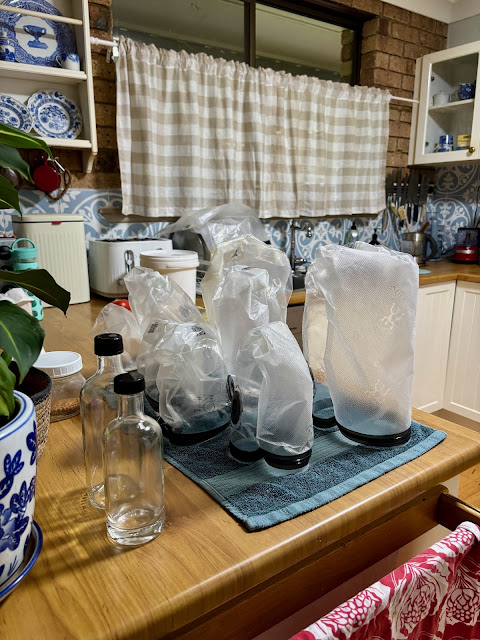
Every morning when I walk into my kitchen it looks tidy and ready for a day's work. Not so on this morning (above), I saw this when I walked in. Late the previous afternoon when I was looking for something, I came across my rolled up Zwilling vacuum bags and decided they had to be washed and dried. So I did that and although I usually put them outside on the verandah to dry it was dark by then. I turned the just-washed bags inside out and left them like this on a towel. It worked well and now the bags are ready to use when I bring home root vegetables, cabbages or whatever I buy that I want to last four or five weeks.
Image

You’ll save money by going back to basics

When I was doing the workshops and solo sessions, I had a couple of people whose main focus was on creating the fastest way to set up a simple life. You can't create a simple life fast, it's the opposite of that It's not one single thing either - it's a number of smaller, simpler activities that combine to create a life that reflects your values; and that takes a long to come together. When I first started living simply I took an entire year to work out our food - buying it, storing it, cooking it, preserving, baking, freezing, and growing it in the backyard. This is change that will transform how you live and it can't be rushed.  
Image

All previous blog posts

  • 2026 3
    • February 3
      • Workshops starting 1 March
      • Planting vegetable seeds and new workshops
      • Back where we belong
  • 2025 7
    • July 1
    • June 2
    • May 1
    • April 2
    • February 1
  • 2024 25
    • December 2
    • November 1
    • October 2
    • September 3
    • August 1
    • July 3
    • June 1
    • May 3
    • April 2
    • March 3
    • February 2
    • January 2
  • 2023 13
    • December 1
    • November 2
    • October 1
    • September 3
    • August 2
    • February 2
    • January 2
  • 2022 17
    • November 3
    • October 4
    • September 3
    • August 2
    • July 3
    • June 2
  • 2021 50
    • December 1
    • November 6
    • October 7
    • September 5
    • August 4
    • July 5
    • June 2
    • May 2
    • April 6
    • March 4
    • February 4
    • January 4
  • 2020 68
    • December 3
    • November 5
    • October 4
    • September 4
    • August 4
    • July 4
    • June 4
    • May 8
    • April 7
    • March 8
    • February 8
    • January 9
  • 2019 66
    • December 2
    • November 4
    • October 5
    • August 3
    • July 4
    • June 6
    • May 8
    • April 8
    • March 8
    • February 11
    • January 7
  • 2018 82
    • December 1
    • September 2
    • August 10
    • July 4
    • June 11
    • May 9
    • April 12
    • March 10
    • February 10
    • January 13
  • 2017 129
    • December 7
    • November 10
    • October 6
    • September 13
    • August 11
    • July 13
    • June 12
    • May 9
    • April 9
    • March 14
    • February 11
    • January 14
  • 2016 125
    • December 7
    • November 13
    • October 10
    • September 11
    • August 11
    • July 8
    • June 9
    • May 9
    • April 12
    • March 10
    • February 13
    • January 12
  • 2015 184
    • December 7
    • November 15
    • October 20
    • September 18
    • August 19
    • July 18
    • June 12
    • May 15
    • April 12
    • March 21
    • February 13
    • January 14
  • 2014 203
    • December 11
    • November 8
    • October 17
    • September 20
    • August 17
    • July 19
    • June 17
    • May 17
    • April 23
    • March 15
    • February 18
    • January 21
  • 2013 225
    • December 13
    • November 17
    • October 17
    • September 17
    • August 21
    • July 24
    • June 20
    • May 19
    • April 17
    • March 22
    • February 17
    • January 21
  • 2012 245
    • December 17
    • November 20
    • October 20
    • September 18
    • August 15
    • July 24
    • June 21
    • May 26
    • April 23
    • March 23
    • February 19
    • January 19
  • 2011 257
    • December 18
    • November 24
    • October 27
    • September 23
    • August 24
    • July 21
    • June 24
    • May 24
    • April 16
    • March 22
    • February 14
    • January 20
  • 2010 283
    • December 20
    • November 18
    • October 18
    • September 19
    • August 25
    • July 24
    • June 25
    • May 26
    • April 25
    • March 22
    • February 29
    • January 32
  • 2009 293
    • December 29
    • November 18
    • October 23
    • September 25
    • August 22
    • July 28
    • June 22
    • May 21
    • April 27
    • March 26
    • February 24
    • January 28
  • 2008 387
    • December 24
    • November 23
    • October 25
    • September 26
    • August 27
    • July 27
    • June 37
    • May 34
    • April 44
    • March 53
    • February 32
    • January 35
  • 2007 372
    • December 37
    • November 40
    • October 55
    • September 51
    • August 49
    • July 63
    • June 49
    • May 28


Trending Articles

NOT the last post

This will be my last post here.  I've been writing my blog for 18 years and now is the time to step back. I’ve stopped writing the blog and come back a couple of times because so many people wanted it, but that won’t happen again, I won’t be back.  I’ll continue on instagram to remain connected but I don’t know how frequent that will be. I know some of you will be interested to know the blog's statistics. 
Image

Every morning at home

Every morning when I walk into my kitchen it looks tidy and ready for a day's work. Not so on this morning (above), I saw this when I walked in. Late the previous afternoon when I was looking for something, I came across my rolled up Zwilling vacuum bags and decided they had to be washed and dried. So I did that and although I usually put them outside on the verandah to dry it was dark by then. I turned the just-washed bags inside out and left them like this on a towel. It worked well and now the bags are ready to use when I bring home root vegetables, cabbages or whatever I buy that I want to last four or five weeks.
Image

You’ll save money by going back to basics

When I was doing the workshops and solo sessions, I had a couple of people whose main focus was on creating the fastest way to set up a simple life. You can't create a simple life fast, it's the opposite of that It's not one single thing either - it's a number of smaller, simpler activities that combine to create a life that reflects your values; and that takes a long to come together. When I first started living simply I took an entire year to work out our food - buying it, storing it, cooking it, preserving, baking, freezing, and growing it in the backyard. This is change that will transform how you live and it can't be rushed.  
Image

Creating a home you'll love forever

Living simply is the answer to just about everything. It reduces the cost of living; it keeps you focused on being careful with resources such as water and electricity; it reminds you to not waste food; it encourages you to store food so you don't waste it and doing all those things brings routine and rhythm to your daily life. Consciously connecting every day with the activities and tasks that create simple life reminds you to look for the meaning and beauty that normal daily life holds.  It's all there in your home if you look for it. Seemingly mundane tasks like cleaning and cooking help you with that connection for without those tasks, the home you want to live in won't exist in the way you want it to.  Creating a home you love will make you happy and satisfied.
Image

Time changes everything

I've been spending time in the backyard lately creating a contained herb and vegetable garden. My aim is to develop a comfortable place to spend time, relax, increase biodiversity and encourage more animals, birds and insects to live here or visit. Of course I'd prefer my old garden which was put together by Hanno with ease and German precision. Together, we created a space bursting at the seams with herbs, vegetables and fruity goodness ready to eat and share throughout the year. But time changes everything. What I'm planning on doing now, is a brilliant opportunity for an almost 80 year old with balance issues. In my new garden I'll be able to do a wide range of challenging or easy work, depending on how I feel each day. It’s a daily opportunity to push myself or sit back, watch what's happening around me and be captivated by memories or the scope of what's yet to come.
Image

It's the old ways I love the most

I'm a practical woman who lives in a 1980’s brick slab house. There are verandahs front and back so I have places to sit outside when it's hot or cold. Those verandahs tend to make the house darker than it would be but they're been a great investment over time because they made the house more liveable. My home is not a romantic cottage, nor a minimalist modern home, it's a 1980’s brick slab house. And yet when people visit me here they tell me how warm and cosy my home is and that they feel comforted by being here. I've thought about that over the years and I'm convinced now that the style of a home isn't what appeals to people. What they love is the feeling within that home and whether it's nurturing the people who live there.
Image

Back where we belong

Surprise! I'm back ... for good this time. Instagram became an impossible place for me. They kept sending me messages asking if I'd make my page available for advertisers! Of course, I said no but that didn't stop them. It's such a change from what Instagram started as. But enough of that, the important part of this post is to explain why I returned here instead of taking my writing offline for good. For a few years Grandma Donna and I have talked online face-to-face and it's been such a pleasure for me to get to know her. We have a lot in common. We both feel a responsibility to share what we know with others. With the cost of living crisis, learning how to cook from scratch, appreciate the work we do in our homes, shop to a budget and pay off debt will help people grow stronger. The best place to do that is our blogs because we have no advertising police harassing us, the space is unlimited, we can put up tons of photos when we want to and, well, it just feels li...
Image

Making ginger beer from scratch

We had a nice supply of ginger beer going over Christmas. It's a delicious soft drink for young and old, although there is an alcoholic version that can be made with a slight variation on the recipe. Ginger beer is a naturally fermented drink that is easy to make - with ginger beer you make a starter called a ginger beer plant and after it has fermented, you add that to sweet water and lemon juice. Like sourdough, it must ferment to give it that sharp fizz. To make a ginger beer plant you'll need ginger - either the powdered dry variety or fresh ginger, sugar, rainwater or tap water that has stood for 24 hours to allow the chlorine to evaporate off. You'll also need clean plastic bottles that have been scrubbed with soap, hot water and a bottle brush and then rinsed with hot water. I never sterilise my bottles and I haven't had any problems. If you intend to keep the ginger beer for a long time, I'd suggest you sterilise your bottles. MAKING THE STARTER In a...
Image