down to earth

  • Home
  • About Us
  • Down To Earth Book
  • Privacy Policy

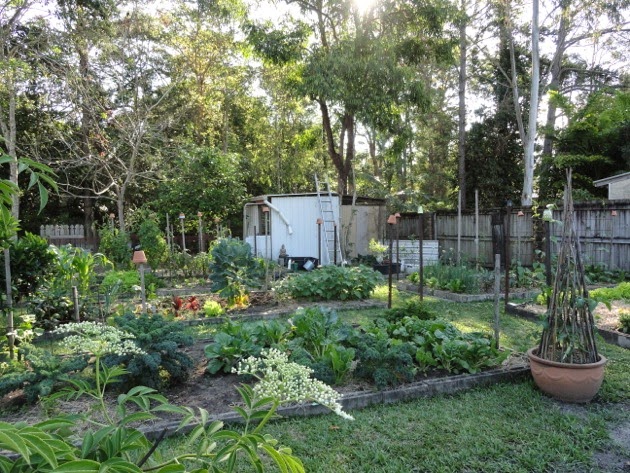
Our garden changes are almost complete and I'm looking forward to working in this smaller but still productive garden. The major changes we made were to remove two entire garden beds. One has gone but we still have the remants of the second bed there because we have some onions to harvest and the parsley is flowering so I want to save the seeds. When that garden goes, we'll move a table and chairs into the cleared space so we can sit IN the garden and enjoy the view from a different angle. For most of the years here, I've looked out from the house to the garden. Now I want to challenge myself and change that. Who knows what thoughts will brew when I look in instead of out.  It reminds me of that wonderful Robin Williams movie, Dead Poets Society, when Mr Keating, the Williams character, encouraged the students to stand on their desks.  He says: I stand upon my desk to remind myself that we must constantly look at things in a different way. Finally, I'm seizing the day.


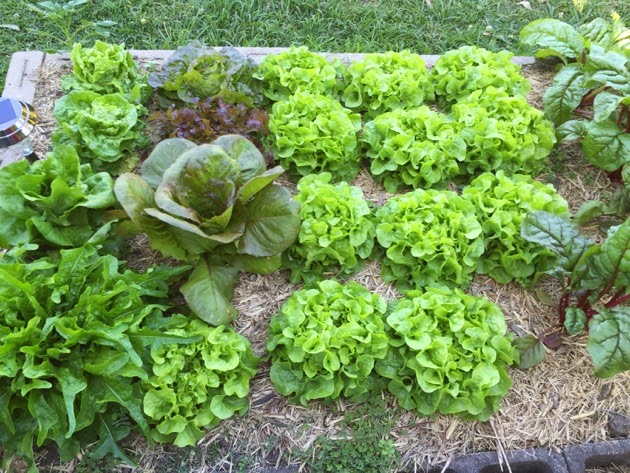
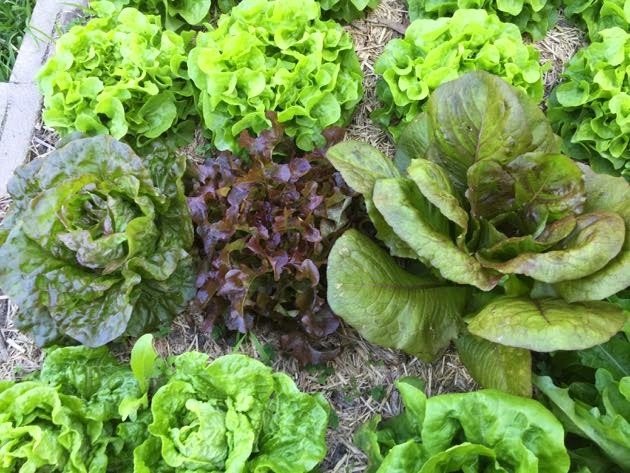
The garden will still be a productive one. I use a lot of herbs and I know it would send me haywire if I had to buy them all the time. Herbs are so expensive now. In the next day or so we'll plant two heritage raspberries alongside the six month old passionfruit. We have a good stand of curly kale in the first garden which we'll keep for occasional meals for ourselves, and frequent scratchings for the chooks.  In the second bed we have just planted beetroot and there are bok choy, various lettuces, ruby chard and Swiss chard. All those leaves are ready for harvest. 

 This is Tricia. No, not my sister, one of the frizzles.  ;- )  (I'll get into trouble for that.)

Our silver laced, rose combed Wyandotte, Miss Tammy, with Bluebelle, one of the blue Australorps. They've been sitting on those nests for a few weeks now. We just let them sit there, as long as we see them out to feed and water themselves. This broodiness gives them a natural break from constant egg production.


 Free ranging girls in the late afternoon sunshine.

The chickens are a big part of our backyard production too. We have 12 pure breed chickens that give us eggs all through the year.  Three of them are broody at the moment but with no rooster no chicks will hatch; they sit there in vain.


This beautiful purple flowering plant is culinary sage. I think all plants have the potential for beauty and I am certainly planting for beauty as well as nutrition.

This is a purple and white granny's bonnet, the yellow flower is a small Dahlia. On the other side of the grate are three cherry tomatoes, all volunteers, that I know will easily survive our hot and humid summer.

In the other two beds we have nasturtiums, three Lebanese cucumbers, garlic, Jalapeno chilli, five capsicum/pepper bushes, borage, cosmos, Dahlias, granny's bonnets (aquilegia), flowering purple daisy, flat leaf parsley and white flowering sage. And in the last bed we have one curly parsley and four flat leaf parsley, three cherry tomatoes, more granny's bonnets, more white flowering sage, two stocks, culinary sage, cos lettuce, rosemary, Welsh onions, Swiss chard.  On the side of the gardens we have potted lemon thyme, regular thyme, Buddleia (butterfly bush) and lavendars. On the edge of the compost, comfrey is growing and at the door of the bushhouse, I have a large pot of mint and another of oregano. We have four large potted blueberry bushes and two blueberry seedlings, a potted bay tree and two potted avocados  - a Reed and a Hass, both grown from seed.

In almost every bed there are seedling cherry tomatoes and calendulas growing. If I could pass on one good gardening tip for you that you'll never see in a gardening book, it would be to learn to identify the leaves of every plant you grow. Not only will that help you when you're weeding and save you pulling out seedlings that you should let grow, it will also allow you to nurture those volunteers and maybe transfer them to a more suitable growing position.  That will save you both time and money.


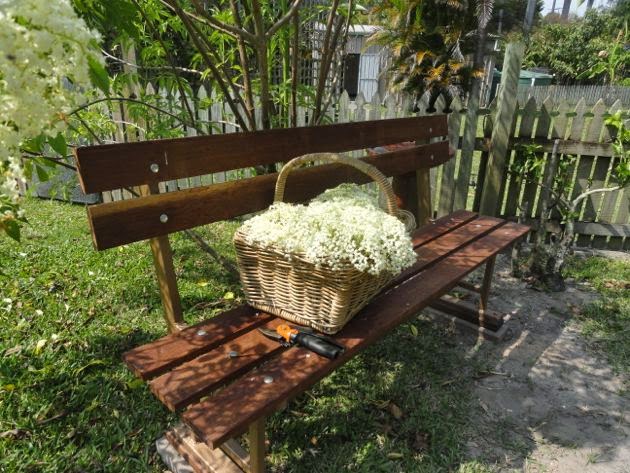
On a trellis just beyond the garden area there is a green grape vine and two new passionfruits. In the chook run there are two lemon trees, a native fig and a pecan. The pecan is currently alive with bees pollinating the nut tassles. Further over near our large water tank, we have bananas, oranges, loquat, youngberries, cumquat and mandarin. And of course we have our old friend the elder tree which is currently bearing and holding onto a good quantity of berries that I'll pick today, along with some flowers for elder flower cordial.


We have a large backyard but the land under fruit and vegetable cultivation is small in comparison. It just goes to show that even a small garden is a valuable asset to any backyard. The trick is to grow what you eat and if you eat almost all vegetables, grow what is difficult to find, or expensive.  This year, Hanno and I will be out there, planted in with the vegetables, sitting at our cast iron table on chairs under the shade of an umbrella and the neighbouring trees. I'll enjoy looking at the house from that angle. I wonder what thoughts that will bring.

Looking out to the chicken yard with its pecan, native fig and two lemons. 

How is your garden going now? I'm sure our northern friends have put their gardens to bed, or are in the process of doing it.  Here in Australian our seasons just roll into each other so we don't lift and protect but it's always intrigued me that cold weather climate gardeners do.  Here, our southern gardeners will have their salad vegetables planted, or close to it, and the tropical gardeners will be looking to provide more shade and water after the last two days of very high temperatures. What will you be doing in your garden this weekend?  Happy gardening everyone!
Wandering around our backyard, sitting under the elder tree, watching the birds fly and admiring the vegetables in the straight rigid lines of first planting, it's easy to feel the contentment of living here. I notice the minutiae of life out there, or life as I know it. Out in that backyard I do a lot of thinking about the changes we're going through now; the changes that age brings. Like everyone, Hanno and I are ageing, although the older we get, the faster that seems to happen. I consider us to be lucky because so many people who were born at the same time as us died too soon; cut down in their prime before they knew a full life of human experience - the good and the not so good. One thing is for sure, these changes need careful thought and planning just like all the others we've implemented.


We're classified as young/old and even when we're old/old, we both want to be here, living an independent and engaged life, possibly assisted occasionally by our family, friends and the community. There is so little written about proactive ageing. We have a lot of information about disease in old age, how to manage illness, where to get help, where to socialise. There are also, increasingly, articles such as this one on loneliness and disengaging from community life as we age and as partners and friends die.

We are lucky, we two. We've established ourselves here, we have work to do every day, we have family and friends dropping in and phoning, and because we've voluntarily rejected the glitz and glamour of what modern life has become, we don't worry about money. We're productive, providing for ourselves and sometimes for our family, so our days are full and we enjoy what we do. But it's not one hundred percent comfy-cosy. There are days when we're not feeling the best or have pain, but on those days we look after each other and know it will pass. I can truthfully say that most of the time, life's good.


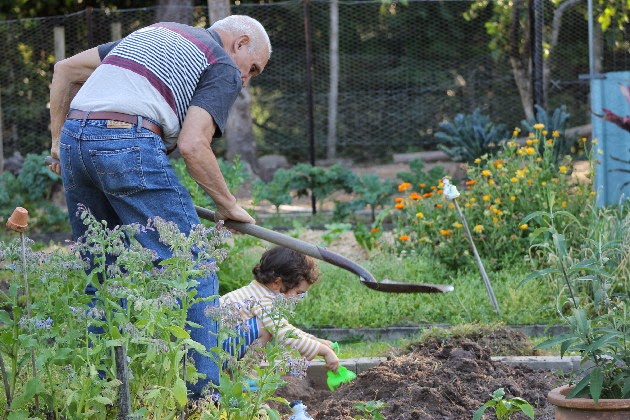
Over the years we've always adjusted our routines and chores according to our needs and the time we had available. Now we do the same thing but everything takes longer to do now and we've had to make major adjustments to help us along. One of those changes has been our vegetable garden. We took out two garden beds in the past month or so. We still have the wonderful opportunity to grow some of our own food, but we've made it easier for ourselves after many years of sowing and harvesting as much as we could. Another big change is that we're looking after Jamie three days a week now so on those days, we don't plan much except to provide meals, snacks and drinks and to show him, by example, the appeal of living this way.

We also have a handy man who comes in when we need him. He does the roof work and the hard physical chores Hanno used to do. Hanno loved fixing everything that needed fixing, and took pride in knowing he had those skills, but Mark the handyman does the potentially dangerous work for us now, while Hanno still does the garden and lawns and most of the outside work.


There will come a time when you too will start to slow down and scale back on what you do. What you can do will depend on your physical capabilities when you're older, but I think the key to this is to keep doing what you can and stay interested.  I guess my main concern is that one of us will die well before the other and our motivation and some opportunities might fly out the window. I'm not scared of death but I'm aware that it's one of the few things we face totally alone. Sure, you may have someone sitting beside you, but they don't experience it with you, they simply watch. Death is not something either of us expect to visit soon, but the thoughts are there and like every stage of life we go through, we have to be as prepared as we can be. 

Have you changed how you work and live as you age?


I love hand sewing much more than machine sewing.

Next month, I'm taking a trip to the Blue Mountains to visit my sister. I have no doubt that we'll do a lot of sitting around while we talk, knit and sew. We have plans for two outings - to visit my nephews, Johnathan and baby Alanna, and to the Brett Whiteley exhibition in Katoomba. We'll probably go out for lunch and morning tea a couple of times too. The rest of the time we'll be alone, together, at Tricia's beautiful little 1930s cottage, slowly sewing and knitting like two grannies.  :- ) 

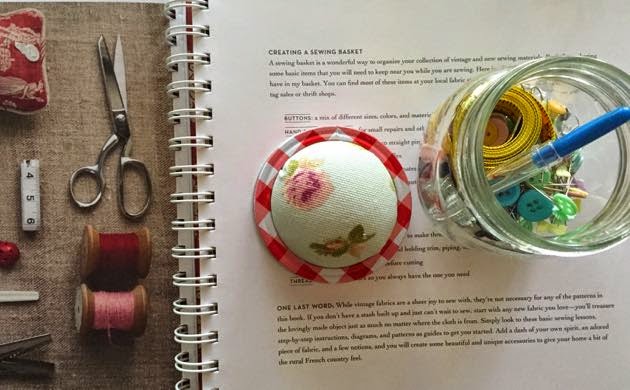
I've just made a little gift to take. A pin cushion jar for Tricia, the same as the one I have, full of bits and pieces to keep close at hand when sewing. There is nothing more annoying that having to go searching for a safety pin or tape measure when you're in the middle of a project.

 This is Tricia's pin cushion jar.

Have you seen the book Home Sewn? I bought it last month and have just looked through it. Home Sewn is beautifully presented with some excellent ideas, patterns and drawings for home projects.  If you look inside the front cover (below), the patterns have their own special envelope so they can always stay with the book.  Most of the projects are for the home - an apron, tablecloth, sheets, shower curtain, bath mat, bread bag, floor cushion, lavender hearts etc, and a few for outside the home - tote bag, sling tote and a travel bag. There is also some interesting information about finding and caring for vintage fabrics and notions, and creating a sewing basket.

This is the book cover (above) and the inside cover of the book. In the photo below you can see the patterns and drawings envelope on the left.

I don't have a sewing basket because I usually sew in my work room and my sewing supplies are all around me, but I find this little jar-pin cushion comes in handy. When I'm hand sewing in the lounge room I just take the jar with me and I have what I need for most small sewing projects.


If you're making up a jar or a sewing basket for someone else as a gift, think about the kind of sewer the person is who'll be receiving your lovely gift.  I am a general sewer, so in my jar, for instance, I have a tape measure, an unpicker, straight pins, safety pins, darning needles, plain sewing needles and a couple of thimbles.  Tricia is a quilter, so in her jar I've included a tape measure, quilting pins and needles, safety pins, an unpicker and a few buttons.  If you're making one up for an embroider, you'd add two or three shanks of embroidery cotton and embroidery needles as well.


This is one of those little projects that even the most inexperienced among us can carry out with confidence. All you need is a small preserving jar with a two piece lid, a small piece of fabric, wadding and some glue. Take the lid apart, fashion a small dome over the inner lid piece and glue it in. It's fiddly but straightforward. When you fill the jar, be sure to match the sewing needles, pins etc to the type of sewer you're giving it to. I think it would make a very sweet Christmas gift. And I for one like nothing better than receiving a practical gift.  Happy sewing everyone.  ♥︎

Added to include: I used spray glue. Make a neat edge around the outer fabric and glue it onto itself on the top of the inner circle. Don't use too much wadding and be tidy around the edges because if there is too much fabric and wadding under the ring, you'll have trouble closing the lid.

Image from here.

I couldn't let this pass without commenting on it. One of my political heroes (I only have two), Gough Whitlam, died this morning, aged 98. Gough was prime minister of Australia when I was in my early 20s and did he shake things up! He brought Australia screaming and kicking into the modern world. He implemented indigenous land rights and established the Racial Discrimination Act. He gave us Medibank and universal health care, he abolished university fees (yes, there was a time when it didn't cost anything to go to university in Australia), he introduced environmental protection legislation, no fault divorce and established the Family Court. He stopped conscription and the death penalty. He supported the arts, established Triple J and helped strengthen the Australian film industry. The wonderful group The Whitlams were named for Gough and the campaign song for the 1972 election was the only campaign song to ever enter the pop charts.

All these initiatives sound quite commonplace today but when I was a young woman this new way of thinking and looking at the world was revolutionary. I think many people my age would look back at that time and think the same. Gough and his wife Margaret, who died in 2012, were intelligent, professional people who worked with the working class and the increasingly influential middle class and in doing so, made Australia a better place. I will always be grateful for the new freedoms they brought to me personally and to Australia in general. When I think of 1962 and 1972, that one decade brought about the most amazing changes to how ordinary Australians lived. Gough was a true leader and a great Australian.

RIP Gough. You really made a difference. Thank you.
I'm pleased to tell you that I won the Green Lifestyle Magazine's Local Green Hero Award yesterday. Other winners in the People category were David Holmgren, who was inducted into the Hall of Fame, and Ben Dessen, who won the Junior Local Hero Award. I applaud David and Ben for the fine work they are doing. They're both leaders in this field. There was also a large group of organisations and businesses recognised for their work as well. You can read all about it and see a list of the winners here.  Thanks to Green Lifestyle Magazine for recognising all of us.

My acceptance speech on You Tube.


I'm busy here at the moment so there'll be fewer posts in the coming weeks. Be patient with me, I'll be back to a more regular schedule when I can be.  Thanks for your visits this week and if you commented, I appreciate the time you took to connect with me. It does make a difference to read those comments. It's like you're waving back to me from the great unknown.

After reading the comments yesterday I know that a lot of you are busy too but pleased take time out when you can over the weekend. It will take commitment from you to do it but the rewards will be there.  See you soon.

The benefits of living alone on a mountain
How instant purchases change the way we see the world.
I went a year without flying
Hooked on grocery shopping with glass jars
Easy to make stool
20 thrifty decorating ideas
Incredible cakes
When to leave the lights on
Stain removal database
Gen Y ditching the car?
The no shampoo experiment six months later
During the week I had a question from a young woman, Ms J, asking: As with all of us life tends to increase its demands at different times, whether it be work, additional family members, sickness etc. I was wondering at times like that, what chores do you tend to leave for when things settle down again?

Well Ms J, you're right. I doubt there is anyone who can say everything goes smoothly, every day. It might be something unexpected, like a family member being sick, it might be extra paid work, or it could just be that I just don't feel I have the energy to do the work I need to do.  When there is a spanner in the works, the first thing that goes out of my routine is making bread, and I buy bread from our local baker. I tend to drop the easy things that take up time - I don't water the garden, sweep the floor or make dinner. But it's easy for me because there's no one here to complain, except Hanno, and he doesn't.


Most things work themselves out. I just have to sweep more and water more the following day, but not making dinner tends to pose a problem. Usually I have a homemade frozen meal lurking in the freezer or I'll just whip up some herby scrambled eggs and toast. That fills the gaps.


Now I'm older with no children to look after I don't have a regular schedule for my household chores. I don't vacuum on Mondays or wash on Wednesdays. I don't set aside a specific time to tidy up. I generally do things when they need doing and when I feel like doing them. But I know Ms J, that you have small children and I'm pretty sure you'd have to do chores when you don't feel like it. I did when I had a young family.

There is no one-size-fits-all when it comes to household chores - we should all do what works for us. The trick is to feel no guilt about leaving work undone occasionally. We all know that housework never ends, so if it's not finished, what's the problem? I wrote a post about that same subject, good lord, seven years ago! It might help explain how I go about leaving work undone with the blissful lack of guilt I wear like a cloak of honour. I'll add this one about organising housework too for good measure.


There are many differences between house work and paid work but I think the biggest difference is that when you go out to work, you can choose (or have chosen for you) a finishing time when you can walk away and go home. You know your work has finished for the day. You've been given permission to stop. You don't have that option as a homemaker. There will always be work to do, you know that, your partner knows it and probably even the kids know it. So you have to make the decision when to draw your own line. When do you step away and say, that's it for today. And how do you feel good about doing it?


It wasn't always so clear cut for me. In the beginning I struggled with knowing when enough was enough. I felt guilty about sitting down and having a cup of tea. When I started working in my home full time, I had to rethink a lot of the expectations I had of myself and those my family had of me too. I wanted my days to be meaningful and satisfying, and that didn't involve working like a robot. Now when I stop work, I feel satisfied with the work I've done and I know that it's okay to walk away. I know work at home is not one solid block of unrelenting work. It is up to me to find a balance, to find enjoyment in the work and meaning in my days. I have to establish healthy boundaries for myself, so I won't feel resentful about the work I do in my home. And if part of that is walking away, even though there is still work to be done, then that is what I do.  It was not an easy transition going from a busy-must-get-this-done kind of homemaker to a more relaxed one. Like all processes, it was one step at a time until I felt right about where I was. And I was surprised along the way that my more relaxed approach still got jobs done. A new start every day and an end point too, because housework never ends.


So, what chores to you tend to leave when things are hectic or when you don't have the time and energy to do what you normally do?


It's very easy to spend a lot of money in the garden. Raised beds, top soil from the garden supplier, blocks, sleepers, fertiliser, tools, fences, wheel barrows, water, and then there's the plants. But like many other things, if you're organised you can save a lot of money creating a garden without pouring money into it. Let's face it, if it's going to cost too much to produce your own, you're better off buying fruit and veg until you can grow your own at a reasonable cost.

Before you start, work out how much you spend on weekly fruit and vegetables and that will be your budgeting guide. You'll have to spend a little bit more to set up your garden and that cost should be returned to you over the following years, but if your gardening costs are too high, you may have to rethink. Always work to a year's budget, weekly budgets don't work here. You'll spend a lot the week you buy seeds and seedlings and then you may not buy anything for a month or so. But the main thing is to work out what your budget will be, and then stick to it.


  SEEDS  
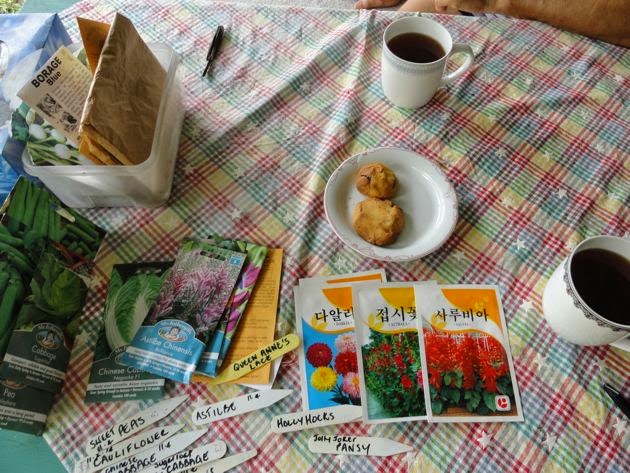
The cheapest way of growing vegetables year after year is to use open pollinated (heirloom) seedlings and save the seeds at the end of the season to be planted out again the next seasons.  This is how all our ancestors would have produced their backyard food. It was a source of pride for gardeners to have a large collection of viable seeds to plant out and swap with neighbours every year. You can't plant seeds from hybrid plants, they don't reproduce true to type. They must be open pollinated. If you start out using that seeds, you'll cut down on your costs because, theoretically, you'll only have to buy the seeds once, and when you want to add new varieties to your collection. You can buy these seeds online in almost every country now.

Here are some older posts on:
How to work out what to grow
How to test for seed viability
How to save seeds


  SEEDLINGS  
Sometimes you just miss the deadline for planting out your seeds and before you know it, it's time to plant. When that happens, go to your local market to buy your seedlings. We can buy seedlings from the garden nursery here at about $3 for four or six seedlings but at the market they're $1 for 12.

  CUTTINGS, SLIPS, TUBERS  
As in ornamental gardens, you can grow plants from cuttings, slips and seeds in a vegetable garden too.  Before you buy all your supplies, check the post below for what you can grow from what you may already have in your kitchen right now. Remember, the rule of enriched soil stands for these too. There are several perennial vegetables that will just keep growing for donkeys years. For instance, we have a stand of Welsh onions given to me by a reader many years ago and they're still going strong. You can also find a perennial leek, rhubarb and asparagus.  Even if you have to buy these vegetables to start them, they'll keep you going for many many years.


I've planted up some avocado seeds and they're doing really well. I know some will say they'll never have fruit or it will take too long, but I'm more optimistic than that and I prefer to think things will work. So far, they are. Just today I snapped off a piece of ginger from a fresh rhizome bought at the shop. I'll keep it in the kitchen until it sprouts, then I'll plant it. Gardening is full of these type of plants, keep your eyes open for them because they'll never be advertised.

Sweet potato can be grown from slips. These are sprouts that form on the vegetable and develop into a long vine. You can cut then off, very close to the sweet potato and plant them in a pot. Soon you'll see new growth and you can plant it in the garden.  Please note, sweet potatoes need a warm climate and a lot of room to grow.

We have three new blueberry bushes because I took cuttings from the bushes we have growing here. I took eight cuttings, three of them took and are growing well now the warmer weather his here. Some might think that three from eight isn't much but I just know that for very little effort and no cost, I have three new blue berry bushes growing outside now. (BTW, Jamie calls them blue bellies).

Elder grows really well from cuttings. You can remove the runners from strawberries to form new plants. Pineapples will grow from the spiky top if you live in a warm climate. There are so many things that can be done.

What can be grown from cuttings? 

  COMPOST  and MANURE   
The best thing you can do for your garden is to add compost to it. As soon as you decide to garden, start a compost heap. Even if it just sits in the corner and rots slowly, it will be worthwhile when you come to planting your garden. There is a composting guide here.

Compost is a great help in cutting down on your household waste. All your kitchen scraps, old newspapers, garden waste, old chook nesting material and chook manure can go in the compost and over a couple of months it will turn itself into the most wonderful soil additive.

You may have to buy cow or horse manure, another excellent soil additive, but if you have a paddock or farm near by, ask if you can collect the manure. Often farmers are happy to be rid of it. If you do collect it, ask if the animals have recently been wormed. Worming medication will kill the worms in your soil and you won't want that.


  MULCH  
Mulching will help keep the moisture in the soil and the soil at an even temperature. It's essential in most Australian and dry gardens. You can harvest your grass, dry it out for a month or so and use that as mulch but you have to keep fluffing it up because it has a tendency to matt up and block the rain from getting through to the roots of your plants.

Mulch is one of the few things we buy for the garden. We buy organic sugar cane mulch and it works really well in our garden. It's holds the moisture in and at the end of the season, we can dig it in to add more organic matter to the soil.

  HOMEMADE LIQUID FERTILISERS  
This is a no brainer. If you're growing comfrey, yarrow, nettles, or even weeds, you can pick them, add it to water in a bucket, wait for a couple of weeks, and you'll have excellent fertiliser. Here is a guide that I wrote a while back.

We still buy sulphate of potash, Seasol and trace elements (all organic) and we buy them in large containers so they're cheaper. But our main fertiliser is comfrey which is made for next to nothing and can be used as a weak tea every two weeks on most vegetables.


  BENEFICIAL INSECTS AND PLANTS  
When left alone, natural systems balance themselves out with no help from us. It's when we try to manipulate things, killing insects we are scared of, that things start going wrong. There are plenty of of insects that will help you in the garden by killing off or keeping away other pest insects. If you can attract those insects, you'll help create a natural balance in your garden. So put away the sprays and start growing the plants the beneficial insects love. They'll do the work for you. Here is an old post about what to plant and the insects you want in your garden.

  TOOLS  
At the moment, we need a new spade. The one Hanno has used for years is bent and needs replacing. We could get a cheap one from the hardware store but there is a man at our local Sunday market who sells old tools. They're much better quality than those on sale now, so that's where we'll buy our new spade. I'm not sure how much he'll charge, but I doubt it will be the same price as a new one. If you can buy old tools, often they'll be better quality than those you'll buy new now. Many of them are made in China and just don't stand up to the tough work of gardening. It's a shame that so many people see buying cheap tools as an option because instead of lasting for many years, most of them break and you have to buy it again. And again. If you need garden tools, ask around. Many older people get rid of their tools when they down size. It's worthwhile looking out for them.  Gumtree is a good place to look, so is your local newspaper.

  WATER  
Many of us forget the obvious things and water is one of those. Every garden needs water; some more than others. If you're gardening and you have to pay for your water, I encourage you to collect as much water as you can from your own roof. You can go the traditional Australian route and install a water tank. Unfortunately, most of the government rebates for water tanks have ended but it's still worthwhile looking to see if you can get a rebate and then decide if it's an option for your garden. I reckon the average backyard vegetable patch would need at least 50 litres of water a week during the summer, give or take. You should factor that cost into your gardening costs when you're planning your garden. 

Even if you don't install a tank, you can still rig up the down pipes to spill into a barrel or large container. In addition to our two large water tanks, we have a 200 litre open bin in our garden that Hanno has rigged up to collect the water from the chicken house roof. That's 200 litres of water we can use that is free. A bucket will hold 10 litres of water. If you have a down pour, place your buckets outside to catch every drop you can. It's being proactive like this that makes the difference. And yes, the mosquitoes will breed in still water, so every couple of days, run an old fine kitchen sieve through the water to catch the larvae. Just tip them out on the ground, they die out of water.

There are many other things I could keep writing about but as you can see, this post is long enough already. So take it slow, don't take on too much when you start, try to do as much for yourself as you can, and think about your purchases before you make them.  Happy gardening everyone!


There is no doubt you can save money if you have the space, time and energy to produce organic vegetables and fruit in your backyard. Hanno and I have been doing that on and off for almost forty years but it can be a balancing act because if you're not careful, gardening can become a very expensive exercise. During those years we've worked out how to work a garden, produce food and do it with an eye on the costs too. So I thought I'd spend some time today and tomorrow bringing those ideas together in two posts with the hope of sharing how to save money and showing that a productive garden can be a thrifty one too.

Before we start on frugal gardening though I'm going to address other issues that will effect how some of you garden. It's not the main reason for the post on this topic but unless I address these issues, some new gardeners will waste a lot of time wondering why they can't produce the fresh food they hope for.


I'm directing this post mainly, but not exclusively, at the new gardeners, so, let's talk a bit about our similarities and our differences. Now we have the benefit of blogs and can see what ordinary folk grow, and not just the idealised gardens featured in magazines, that ability to look into each other's backyards can sometimes create problems. I've lost count of the number of times I've blogged about preparing soil before you start, but every time I do my library talks and in frequent emails, people ask me what they're doing wrong. Their problem is that their garden doesn't look like our garden. When I ask how they prepared their soil for planting,  usually the answer is: huh!?

The black kale plant above is one of several we grew about five years ago. They looked like a mini forest because they all grew to about six feet tall.

The health of your plants and abundance of your harvests depends on building up your soil before you start planting. Plants need nutrients in the soil to give the best results and if the soil is depleted or has never been productive, your plants might survive, but they won't thrive. You'll do the same amount of work week by week, but you won't get the great results you will get if you take the time to enrich your soil before you plant. If you don't add organic matter - compost, manures, green manure crops etc into your soil, no amount of fertiliser added later will make up for it. Please prepare your soil well and keep on enriching it between crops. Every time you plant something new, get into the habit of adding manure or compost to the soil. As they grow, plants use the organic matter in the soil to help them grow. This must be replenished frequently.  It is for that reason that you should start composting before you start planting. Here is one of my composting posts about how to start a compost heap. You can buy compost but making your own will make your garden sustainable and it will help you manage your household waste. It's also much cheaper.


There are a lot of differences in gardens world-wide, soil and climate differ but the actual planting methods are generally the same everywhere. If you're a new gardener, or you've just moved to a new location, try to find a local planting guide to help you decide how to start. You might also ask gardening neighbours or join a community garden to find out what and when to plant, and all the things you need to know in your area.


Backyard vegetable production varies a lot depending on what climate you live in. Here in Australia we have a fairly warm climate but it varies a lot from north to south. Our country goes from the hot tropics right down to the cooler regions of Tasmania, which gets the winds right off Antarctica. Overall, but with a few exceptions, we can grow food all year long here. Naturally it's the salad type crops in summer and things like cabbages, cauliflowers, potatoes, parsnips etc in winter.  And because we can grow fresh food all year, in Australia we usually grow small amounts over a long period and preserve whatever excesses we have along the way.

In the colder countries such as Canada, USA, UK, Ireland and many parts of Europe, the growing period is shorter but there are much larger amounts grown. This allows cold climate gardeners to eat the vegetables fresh during the summer and autumn and then to preserve the excess in various ways, seeing them through the winter months when snow covers the ground and gardening is impossible. No matter where you live though, please start slow, planting the vegetables you like to eat or are hard to find. You'll need a couple of years to build up soil fertility, work out what and how to grow and what will work best in your garden. Gardening can be hard work. The last thing I want to do is for you to stop after the first year because it's too difficult. Start small and slow and with the easier vegetables and after you develop your skills you can expand your garden and grow more.

Plant flowers in the garden to encourage pollinators and put some herbs into pots on the side of the garden to add interest and save space.

There are a million things I could tell you about gardening but I've highlighted these paragraphs above because sometimes young gardeners write to me upset that their gardens are failing. The message here is, if you can, connect with local gardeners so you know how to enrich your soil, what the best plants are for your region, when to plant them and what pests to look out for.

I didn't expect that to take up so much space - gardening is a multifaceted topic and it's easy to spill out the words. Tomorrow I'll write all about the thrift aspect of gardening - how you can save as much money as possible while producing fresh organic vegetables for your family.


I usually start preparing my fermented ginger beer around this time of the year. I like having it on hand to offer to family and friends when they visit. It's a simple process but it takes over a week to get the finished drink into a bottle and sometimes, as it's a natural fermented drink, it doens't go according to plan and I end up with a ginger concoction I have to throw away.  This way of living is an ever-evolving process, I'm always hoping to improve what I do, so I decided to look for a healthy drink that I could make up overnight, or in one day, and still be happy to offer it to guests.

Enter ginger cordial.  I wanted to stay with a ginger drink because I can grow ginger here and I think the ginger family - ginger, turmeric, cardamom and galangal - contains many health giving properties. 

The easiest way to peel ginger is by scraping a teaspoon over the skin. When the skin is off, just cut the hard bits off with a sharp knife.

  GINGER CORDIAL  
  • piece fresh ginger about three inches/8cm
  • 1½ litres/quarts tap water
  • 1 cup sugar
  • rind one lemon
Peel and grate the ginger. Grating is better than slicing because the greater surface area you have, the better the flavour. Place the grated ginger, water, sugar and lemon rind in a saucepan and bring to the boil. Stir to make sure all the sugar dissolves. Turn off the heat, put the lid on the saucepan and leave on the stove top over night. The next morning, strain the ginger liquid through a muslin cloth over a strainer, sitting in a jug. Pour the ginger cordial into clean bottles and store it in the fridge.

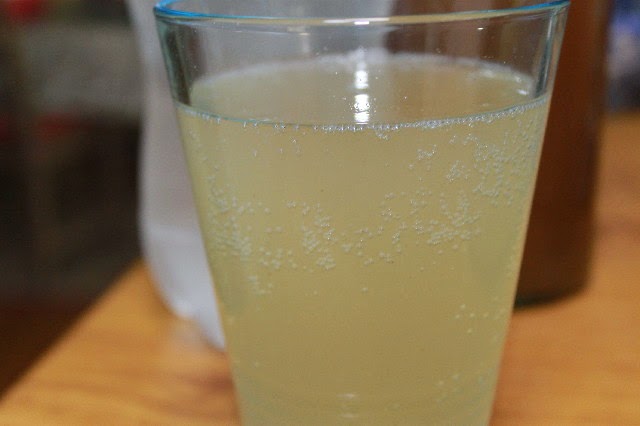
To make up a drink, pour a small amount (40mls/2oz) of ginger cordial into a glass and fill the glass with cold natural mineral water or soda water. We're using the Aldi mineral water which is 79 cents per 1.25 litre bottle. Add ice and a lemon slice. You can also drink it using cold tap water or as an addition to your hot black tea.


I didn't use the muslin with this batch and ended up with sediment in the bottles. Next time I'll remove that by using a muslin cloth to strain the liquid.


This is a really delicious drink, and I think it's as good (or better) as the well known ginger beer brands, including Bundaberg. This is the ingredients list for Bundaberg ginger beer: Carbonated water, cane sugar, ginger root, natural flavours, acid (citric acid), yeast, preservatives (202, 211), antioxidant (ascorbic acid). 

I encourage you to try it. It's easier to make than the fermented drink and you can cook up a batch in a short amount of time instead of waiting over a week for it to ferment. Having said that, I'll still be making the fermented drink as well when I have more time. This is an addition to my homemade drinks repertoire, not an instead-of.


Newer Posts Older Posts Home

MY BOOKS

MY BOOKS


My books were all published by Pengiun, and are available at Amazon US, Amazon UK and Amazon Au

Search here

Total Pageviews

Translate


I'm Rhonda Hetzel and I've been writing my Down to Earth blog since 2007. Although I write the occasional philosophical post, my main topics include home cooking, happiness and gardening as well as budgeting, baking, ageing, generosity, mending and handmade crafts. I hope you enjoy your time here.

MY FAVOURITE PLACES

  • Grandma Donna's Place
  • Grandma Donna's YouTube
  • Grandma Donna's Instagram
  • This Simple Day
  • Nicole's Instagram

Give More

Give More

Popular posts last year

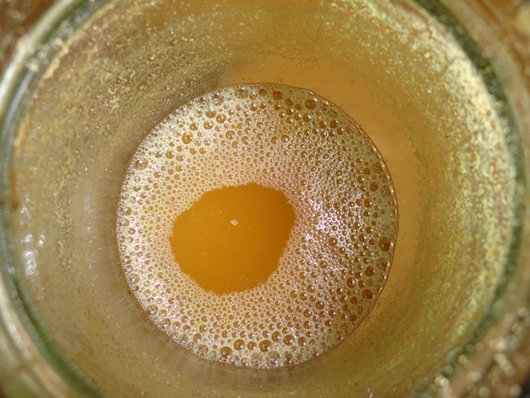
Making ginger beer from scratch

We had a nice supply of ginger beer going over Christmas. It's a delicious soft drink for young and old, although there is an alcoholic version that can be made with a slight variation on the recipe. Ginger beer is a naturally fermented drink that is easy to make - with ginger beer you make a starter called a ginger beer plant and after it has fermented, you add that to sweet water and lemon juice. Like sourdough, it must ferment to give it that sharp fizz. To make a ginger beer plant you'll need ginger - either the powdered dry variety or fresh ginger, sugar, rainwater or tap water that has stood for 24 hours to allow the chlorine to evaporate off. You'll also need clean plastic bottles that have been scrubbed with soap, hot water and a bottle brush and then rinsed with hot water. I never sterilise my bottles and I haven't had any problems. If you intend to keep the ginger beer for a long time, I'd suggest you sterilise your bottles. MAKING THE STARTER In a...
Image

NOT the last post

This will be my last post here.  I've been writing my blog for 18 years and now is the time to step back. I’ve stopped writing the blog and come back a couple of times because so many people wanted it, but that won’t happen again, I won’t be back.  I’ll continue on instagram to remain connected but I don’t know how frequent that will be. I know some of you will be interested to know the blog's statistics. 
Image

How to make cold process soap

I'm sure many of you are wondering: "Why make soap when I can buy it cheaply at the supermarket?" My cold process soap is made with vegetable oils and when it is made and cured, it contains no harsh chemicals or dyes. Often commercial soap is made with tallow (animal fat) and contains synthetic fragrance and dye and retains almost no glycerin. Glycerin is a natural emollient that helps with the lather and moisturises the skin. The makers of commercial soaps extract the glycerin and sell it as a separate product as it's more valuable than the soap. Then they add chemicals to make the soap lather. Crazy. Making your own soap allows you to add whatever you want to add. If you want a plain and pure soap, as I do, you can have that, or you can start with the plain soap and add colour, herbs and fragrance. The choice is yours. I want to add a little about animal and bird fat. I know Kirsty makes her soap with duck fat and I think that's great. I think t...
Image

Preserving food in a traditional way - pickling beetroot

I've had a number of emails from readers who want to start preserving food in jars but don't know where to start or what equipment to buy.  Leading on from yesterday's post, let's just say up front - don't buy any equipment. Once you know what you're doing and that you enjoy preserving, then you can decide whether or not to buy extra equipment. Food is preserved effectively without refrigeration by a variety of different methods. A few of the traditional methods are drying, fermentation, smoking, salting or by adding vinegar and sugar to the food - pickling. This last method is what we're talking about today. Vinegar and sugar are natural preservatives and adding one or both to food sets up an environment that bacteria and yeasts can't grow in. If you make the vinegar and sugar mix palatable, you can put up jars of vegetables or fruit that enhance the flavour of the food and can be stored in a cupboard or fridge for months. Other traditional w...
Image

Cleaning mould from walls and fabrics

With all this rain around we've developed a mould problem in our home. Usually we have the front and back doors open and that good ventilation stops most moulds from establishing. However, with the house locked up for the past week, the high humidity and the rain, mould is now growing on the wooden walls near our front door and on the lower parts of cupboards in the kitchen. Most of us will find mould growing in our homes at some point. Either in the bathroom or, in humid climates, on the walls, like we have now. You'll need a safe and effective remedy at some point, so I hope one of these methods works well for you. Mould is not only ugly to look at, it can cause health problems so if you see mould growing, do something about it straight away. The longer you leave the problem, the harder it will be to get rid of it effectively. If you have asthma or any allergies, you should do this type of cleaning with a face mask on so you don't breathe in any spores. Many peopl...
Image

Five minute bread

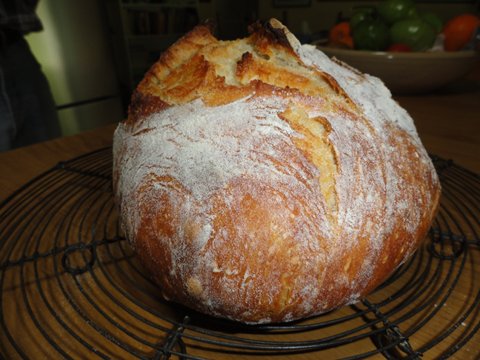
Bread is one of those foods that, when made with your own hands, gives a great deal of satisfaction and delight. It's only flour and water but it symbolises so much. I bake bread most days and use a variety of flours that I buy in bulk. Often I make a sandwich loaf because we use most of our bread for lunchtime sandwiches and for toast. Every so often I branch out to make a different type of loaf. I have tried sour dough in the past but I've not been happy with any of them. I'll continue to experiment with sour dough because I like the idea of using wild yeasts and saving the starter over a number of years to develop the flavour and become a part of the family. However, the loaf I've been branching out to most often is just a plain old five minute bread. By five minutes I mean it takes about five minutes actual work to prepare but it's the easiest of all bread to make and to get consistently good loaves from. If you're having people around for lunch or...
Image

This is my last post.

I have known for a while that this post was coming, but I didn't know when. This is my last post. I'm closing my blog, for good, and I'm not coming back like I have in the past.  I've been writing here for 16 years and my blog has been many things to me. It helped me change my life, it introduced me to so many good people, it became a wonderful record of my family life, it helped me get a book contract with Penguin, and monthly columns with The Australian Women's Weekly and Burke's Backyard . But in the past few months, it's become a burden. In April, I'll be 75 years old and I hope I've got another ten years ahead. However, each year I'll probably get weaker and although I'm fairly healthy, I do have a benign brain tumour and that could start growing. There are so many things I want to do and with time running out, leaving the blog behind gives me time to do the things that give me pleasure. On the day the blog started I felt a wonderful, h...
Image

What is the role of the homemaker in later years?

An email came from a US reader, Abby, who asked about being a homemaker in later years. This is part of what she wrote: "I am a stay-at-home mum to 4 children, ages 9-16. I do have a variety of "odd jobs" that I enjoy - I run a small "before-school" morning drop-off daycare from my home, I am a writing tutor, and I work a few hours a week at a local children's bookstore. But mostly, I cherish my blissful days at home - cooking, cleaning (with homemade cleaners), taking care of our children and chickens and goats, baking, meal-planning, etc. This "career" at home is not at all what I imagined during my ambitious years at university, but it is far more enriching. I notice, though, that my day is often planned around the needs of my family members. Of course, with 4 active kids and a husband, this is natural. I do the shopping, plan my meals, cook dinner - generally in anticipation of my family reconnecting in the evening.  I can't h...
Image

Every morning at home

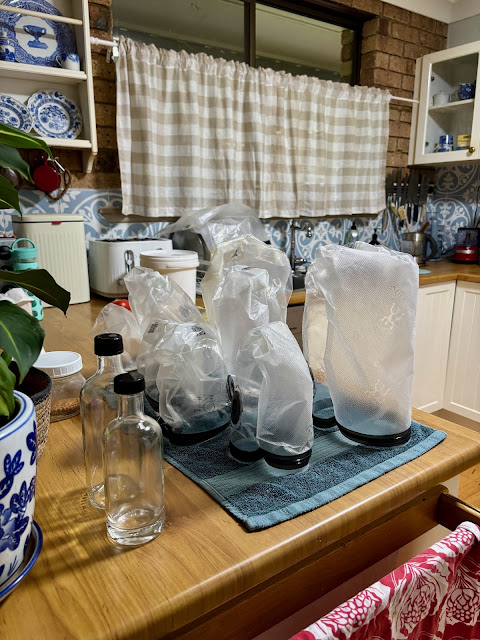
Every morning when I walk into my kitchen it looks tidy and ready for a day's work. Not so on this morning (above), I saw this when I walked in. Late the previous afternoon when I was looking for something, I came across my rolled up Zwilling vacuum bags and decided they had to be washed and dried. So I did that and although I usually put them outside on the verandah to dry it was dark by then. I turned the just-washed bags inside out and left them like this on a towel. It worked well and now the bags are ready to use when I bring home root vegetables, cabbages or whatever I buy that I want to last four or five weeks.
Image

You’ll save money by going back to basics

When I was doing the workshops and solo sessions, I had a couple of people whose main focus was on creating the fastest way to set up a simple life. You can't create a simple life fast, it's the opposite of that It's not one single thing either - it's a number of smaller, simpler activities that combine to create a life that reflects your values; and that takes a long to come together. When I first started living simply I took an entire year to work out our food - buying it, storing it, cooking it, preserving, baking, freezing, and growing it in the backyard. This is change that will transform how you live and it can't be rushed.  
Image

All previous blog posts

  • 2026 3
    • February 3
      • Workshops starting 1 March
      • Planting vegetable seeds and new workshops
      • Back where we belong
  • 2025 7
    • July 1
    • June 2
    • May 1
    • April 2
    • February 1
  • 2024 25
    • December 2
    • November 1
    • October 2
    • September 3
    • August 1
    • July 3
    • June 1
    • May 3
    • April 2
    • March 3
    • February 2
    • January 2
  • 2023 13
    • December 1
    • November 2
    • October 1
    • September 3
    • August 2
    • February 2
    • January 2
  • 2022 17
    • November 3
    • October 4
    • September 3
    • August 2
    • July 3
    • June 2
  • 2021 50
    • December 1
    • November 6
    • October 7
    • September 5
    • August 4
    • July 5
    • June 2
    • May 2
    • April 6
    • March 4
    • February 4
    • January 4
  • 2020 68
    • December 3
    • November 5
    • October 4
    • September 4
    • August 4
    • July 4
    • June 4
    • May 8
    • April 7
    • March 8
    • February 8
    • January 9
  • 2019 66
    • December 2
    • November 4
    • October 5
    • August 3
    • July 4
    • June 6
    • May 8
    • April 8
    • March 8
    • February 11
    • January 7
  • 2018 82
    • December 1
    • September 2
    • August 10
    • July 4
    • June 11
    • May 9
    • April 12
    • March 10
    • February 10
    • January 13
  • 2017 129
    • December 7
    • November 10
    • October 6
    • September 13
    • August 11
    • July 13
    • June 12
    • May 9
    • April 9
    • March 14
    • February 11
    • January 14
  • 2016 125
    • December 7
    • November 13
    • October 10
    • September 11
    • August 11
    • July 8
    • June 9
    • May 9
    • April 12
    • March 10
    • February 13
    • January 12
  • 2015 184
    • December 7
    • November 15
    • October 20
    • September 18
    • August 19
    • July 18
    • June 12
    • May 15
    • April 12
    • March 21
    • February 13
    • January 14
  • 2014 203
    • December 11
    • November 8
    • October 17
    • September 20
    • August 17
    • July 19
    • June 17
    • May 17
    • April 23
    • March 15
    • February 18
    • January 21
  • 2013 225
    • December 13
    • November 17
    • October 17
    • September 17
    • August 21
    • July 24
    • June 20
    • May 19
    • April 17
    • March 22
    • February 17
    • January 21
  • 2012 245
    • December 17
    • November 20
    • October 20
    • September 18
    • August 15
    • July 24
    • June 21
    • May 26
    • April 23
    • March 23
    • February 19
    • January 19
  • 2011 257
    • December 18
    • November 24
    • October 27
    • September 23
    • August 24
    • July 21
    • June 24
    • May 24
    • April 16
    • March 22
    • February 14
    • January 20
  • 2010 283
    • December 20
    • November 18
    • October 18
    • September 19
    • August 25
    • July 24
    • June 25
    • May 26
    • April 25
    • March 22
    • February 29
    • January 32
  • 2009 293
    • December 29
    • November 18
    • October 23
    • September 25
    • August 22
    • July 28
    • June 22
    • May 21
    • April 27
    • March 26
    • February 24
    • January 28
  • 2008 387
    • December 24
    • November 23
    • October 25
    • September 26
    • August 27
    • July 27
    • June 37
    • May 34
    • April 44
    • March 53
    • February 32
    • January 35
  • 2007 372
    • December 37
    • November 40
    • October 55
    • September 51
    • August 49
    • July 63
    • June 49
    • May 28


Trending Articles

NOT the last post

This will be my last post here.  I've been writing my blog for 18 years and now is the time to step back. I’ve stopped writing the blog and come back a couple of times because so many people wanted it, but that won’t happen again, I won’t be back.  I’ll continue on instagram to remain connected but I don’t know how frequent that will be. I know some of you will be interested to know the blog's statistics. 
Image

Every morning at home

Every morning when I walk into my kitchen it looks tidy and ready for a day's work. Not so on this morning (above), I saw this when I walked in. Late the previous afternoon when I was looking for something, I came across my rolled up Zwilling vacuum bags and decided they had to be washed and dried. So I did that and although I usually put them outside on the verandah to dry it was dark by then. I turned the just-washed bags inside out and left them like this on a towel. It worked well and now the bags are ready to use when I bring home root vegetables, cabbages or whatever I buy that I want to last four or five weeks.
Image

You’ll save money by going back to basics

When I was doing the workshops and solo sessions, I had a couple of people whose main focus was on creating the fastest way to set up a simple life. You can't create a simple life fast, it's the opposite of that It's not one single thing either - it's a number of smaller, simpler activities that combine to create a life that reflects your values; and that takes a long to come together. When I first started living simply I took an entire year to work out our food - buying it, storing it, cooking it, preserving, baking, freezing, and growing it in the backyard. This is change that will transform how you live and it can't be rushed.  
Image

Creating a home you'll love forever

Living simply is the answer to just about everything. It reduces the cost of living; it keeps you focused on being careful with resources such as water and electricity; it reminds you to not waste food; it encourages you to store food so you don't waste it and doing all those things brings routine and rhythm to your daily life. Consciously connecting every day with the activities and tasks that create simple life reminds you to look for the meaning and beauty that normal daily life holds.  It's all there in your home if you look for it. Seemingly mundane tasks like cleaning and cooking help you with that connection for without those tasks, the home you want to live in won't exist in the way you want it to.  Creating a home you love will make you happy and satisfied.
Image

Time changes everything

I've been spending time in the backyard lately creating a contained herb and vegetable garden. My aim is to develop a comfortable place to spend time, relax, increase biodiversity and encourage more animals, birds and insects to live here or visit. Of course I'd prefer my old garden which was put together by Hanno with ease and German precision. Together, we created a space bursting at the seams with herbs, vegetables and fruity goodness ready to eat and share throughout the year. But time changes everything. What I'm planning on doing now, is a brilliant opportunity for an almost 80 year old with balance issues. In my new garden I'll be able to do a wide range of challenging or easy work, depending on how I feel each day. It’s a daily opportunity to push myself or sit back, watch what's happening around me and be captivated by memories or the scope of what's yet to come.
Image

It's the old ways I love the most

I'm a practical woman who lives in a 1980’s brick slab house. There are verandahs front and back so I have places to sit outside when it's hot or cold. Those verandahs tend to make the house darker than it would be but they're been a great investment over time because they made the house more liveable. My home is not a romantic cottage, nor a minimalist modern home, it's a 1980’s brick slab house. And yet when people visit me here they tell me how warm and cosy my home is and that they feel comforted by being here. I've thought about that over the years and I'm convinced now that the style of a home isn't what appeals to people. What they love is the feeling within that home and whether it's nurturing the people who live there.
Image

Back where we belong

Surprise! I'm back ... for good this time. Instagram became an impossible place for me. They kept sending me messages asking if I'd make my page available for advertisers! Of course, I said no but that didn't stop them. It's such a change from what Instagram started as. But enough of that, the important part of this post is to explain why I returned here instead of taking my writing offline for good. For a few years Grandma Donna and I have talked online face-to-face and it's been such a pleasure for me to get to know her. We have a lot in common. We both feel a responsibility to share what we know with others. With the cost of living crisis, learning how to cook from scratch, appreciate the work we do in our homes, shop to a budget and pay off debt will help people grow stronger. The best place to do that is our blogs because we have no advertising police harassing us, the space is unlimited, we can put up tons of photos when we want to and, well, it just feels li...
Image

Making ginger beer from scratch

We had a nice supply of ginger beer going over Christmas. It's a delicious soft drink for young and old, although there is an alcoholic version that can be made with a slight variation on the recipe. Ginger beer is a naturally fermented drink that is easy to make - with ginger beer you make a starter called a ginger beer plant and after it has fermented, you add that to sweet water and lemon juice. Like sourdough, it must ferment to give it that sharp fizz. To make a ginger beer plant you'll need ginger - either the powdered dry variety or fresh ginger, sugar, rainwater or tap water that has stood for 24 hours to allow the chlorine to evaporate off. You'll also need clean plastic bottles that have been scrubbed with soap, hot water and a bottle brush and then rinsed with hot water. I never sterilise my bottles and I haven't had any problems. If you intend to keep the ginger beer for a long time, I'd suggest you sterilise your bottles. MAKING THE STARTER In a...
Image