down to earth

  • Home
  • About Us
  • Down To Earth Book
  • Privacy Policy
Hanno had surgery on his eye, had a checkup yesterday and he's fine now. He just has to take it easy and not do any dirty or dusty work for a little while. He asked me to thank you all for the good wishes sent to him. I thank you too.  :- )

..............

We're really lucky to have the opportunity to grow some of our food right outside our backdoor. All of us who grow what we can in the space we have available, including those who grow in containers, we're all fortunate to be able to do it. Of course, work comes into the equation too - the work you need to do to get your own land, the work you do to grow the vegetables and to harvest them. But most of us love getting our hands dirty so that we get the chance, a few times a week, to walk inside with a harvest basket full of fresh produce for the dinner table.
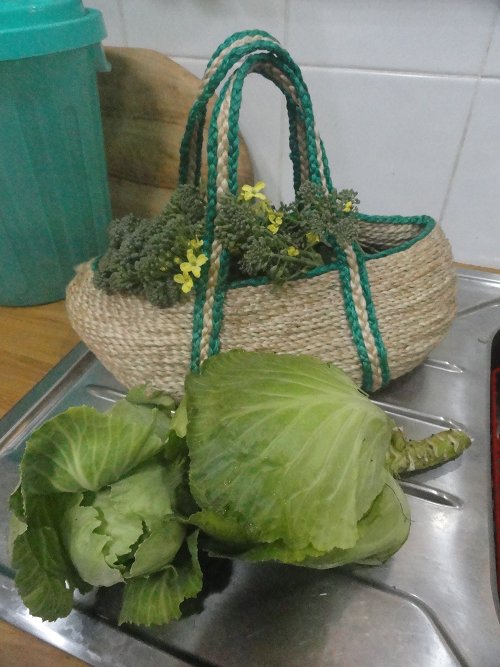


We all garden in different ways - and that difference is usually brought about by the climate we live in. Hanno and I live in a sub-tropical climate with excellent rainfall. One of the reasons we chose to live here is because we knew we could grow food most of the year. As a result of that we garden in a different way to people down south and in other lands where the coldness of winter means that nothing can be grown then. In those circumstances, the main effort is put in during the warmer months, there is a definite harvest time and, most of the time, the excess is frozen, or put up in jars and bottles in the form of sauces, jams, fruit and vegetables that are stored in a cupboard for use during the colder months.

As I said, we're lucky here in that we can grow food all year, although we choose not to grow much in summer. There are too many bugs then and the heat keeps us inside, or at least in the shade. We keep harvesting a few odds and ends over summer but we stop planting in November and start again in March - the start of Autumn. This way of growing food requires us to fill the spaces left after the harvest of a crop, or just pop in a plant or two when we remove a tomato bush or cabbage. We start off in March with neat and tidy rows of lettuces and cabbages all lined up, which Hanno likes, and as the seasons progress we are left with organised chaos, which I like. As there is a lot of fresh food throughout the year, we tend to freeze small amounts of excess vegetables, like spinach, chard, carrots and beans, and make sauces and jams when we have an over abundance of fruit.

We're at a sort of half mast stage at the moment. We were late in planting this year, and then the rains came, killing off the seedlings, and now we still have the peas, cabbages and lettuces of winter, while we're planting eggplant, tomatoes, chillies and herbs - all the plants that love the heat.

I am always aware that not everyone has the gift of fresh food - some can't garden due to ill health or time constraints and some don't have the land. I am aware also of the millions who struggle everyday to have even one meal. So when I walk inside with my harvest basket full, knowing what I've just picked will be in the salad bowl soon, or served, steaming, with some roast chicken, I remember how lucky we are.  Lucky because we live in a country that rewards hard work; lucky because we were able to work all those years to save enough to buy a block of land to live on; lucky we have enough to share, and grateful that we do not take the opportunities we have for granted.

On the weekend, we have the good folk from Permaculture Noosa coming over to look around our garden so tomorrow I'll be out there putting on some mulch, and watering. Hanno is still out of action for the next day or so but he'll be out there with me, so it will be a joint effort.  What's happening in your garden?
On Saturday, Hanno and I drove out west to the beautiful little town of Bell where we spent the day with a room full of people who live like we do, or are making their first steps towards it. We baked in the morning - yoghurt scones, buttermilk scones and five minute bread, and made cold processed soap after lunch. The organisers, Karen, Annette and Kate, who run Pips n Cherries, the cafe and hall where we met, gave us a very pretty and spacious place to work and put on a delicious morning tea and lunch. It was our second workshop in Bell and this one was just as rewarding as the first one. Hanno and I have a soft spot in our hearts for Bell and her people.

I love presenting these workshops because it helps others gain the skill set they need to simply their lives, it connects all of us so we're reminded that even though we're all working in our own individual homes, that we're linked by our values and hopes. When you're working against what is seen as "normal" it helps to know you're not alone.  I also think it is the responsibility of all of us to share what we know and to spread the word about this enriching and self-affirming way of life.

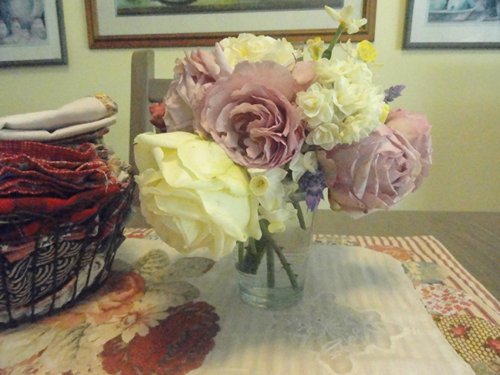
There were little posies of flowers on the tables at Bell. Karen gave me this little bunch to bring home - they're roses, jonquils and lavender.

I'm not sure if simple living people are, by nature, generous, or if generous people are attracted towards simple life, but I do know that wherever we go we are given gifts to bring home. Bell was no exception. Margaret, who I first met in Toowoomba, came along with a yoghurt maker to be given away. Last time we went to Bell, we took along books, magazines, organic knitting cotton and soap to give away. It was for no particular reason other than I had enough of these things at home, so why not share it. Margaret's generosity carried that on. Along with the yoghurt maker, she had made me a little tea cup mat and the materials to make one for Hanno, and some vintage and lacy materials for Sarndra for her baby sewing. Thanks Margaret, it was lovely to catch up with you again and to meet your daughter.


Also at the workshop were a group of ladies from Toowoomba who are forming a group called Simple Living Toowoomba. They'll be doing a series of life skills workshops that I'm sure many in Toowoomba will benefit from. I'll pass on the details of those workshops when they happen.

Yesterday afternoon, the gardener and his assistant have a rest under the elderberry tree.

It's really wonderful that all these ripples are going out from one person to the next. It is vital we tell our family and friends what we're doing because it shows there is an common sense alternative to consumerism that many people are very comfortable living with. I know from talking to many people over the past few months, particularly the younger folk, that what we are doing is seen as a kind of gentle revolution. And it can be that for many, but for me, and probably for many other older folk, it is just common sense and a beautiful and meaningful way to live that we forgot about for a while.

Do you tell your friends and family about your changes? If you don't, think about doing it because it can be a way to open up new possibilities for others and for you to talk about your life changes in a way that may make a real difference to others.

PS: Hanno will be having surgery again tomorrow so I'll be back later in the week when he's back on his feet again.

How to make perfect lemonade.
Tomato recipes
Buying fewer clothes, washing them less and at colder temperatures. 
A new, to me, way of making marmalade

Udder
Green Been

FROM OUR MOB - from the comments in the past week
Balance and Bliss
Zucchini Island
I like to make things

The weather is starting to change here - going from cold to cool; soon it will be warm again. I hope you're enjoying your season and that whatever you do this weekend, you do it with those you love. Have a lovely weekend. I'll see you next week. ♥
We're making the most of the end of winter here. Our first day of spring is 1 September, already the days are warming up but the nights are still cold. Soon they'll even out and we'll be looking for cool drinks and throwing open the windows. Tonight I wanted to make a nourishing soup, that didn't cost too much, and would serve us well for a few nights. We're going out to Bell again on Saturday so this soup will be sitting in the fridge awaiting our return. A soup like this is the perfect warming meal to quickly heat up after a full day's work.


It's a beef and vegetable soup with herb meatballs. It probably cost about ten dollars to make but it will feed the two of us until at least Saturday, with a two litre container in the freezer for a couple of meals next week. It's certainly economical, I hope it tastes as good as it looks. I will have tasted it before I post this blog so I'll give you my honest appraisal. UPDATE: Hanno said: "this is a very good soup", I loved it - it's got a good herb and vegetable taste and is not overpowered by the meat.

Start with a good beef stock that you can make with beef bones. I had some good marrow bones in the freezer so I used them. As they slowly simmer in their broth, the marrow oozes out and dissolves into the broth. It's one of the reasons it tastes so good and is so nourishing. I added the bones to a large stockpot of water with salt and pepper, half a teaspoon of paprika, onions, bay leaf and one cup of washed barley. That needs to come up to the boil and then to slowly simmer for about two hours.  Discard the bay leaf and bones and if you have chooks, give them to the chooks. They'll strip them bare and get a good boost of protein in the process. Make sure there are no pieces of fat or gristle floating in your soup.

Now choose your vegetables. If you're growing your own, pick them fresh and either slice, dice or grate whatever you have on hand. If you are cleaning out your fridge, slice, dice or grate whatever you want to use up. If you're buying vegetables especially for this soup, buy root vegetables - these are the traditional vegetables for winter soups. 

In our soup I've included onions, celery, swede (rutabaga), turnip, parsley, carrots and a small amount of garlic. I usually would have included parsnips but they're too expensive at the moment so they missed the boat. All the vegetables are prepared and sliced, then added to the soup. Cook the vegetables while you prepare the meatballs.


Next I add some meatballs. The inclusion of the meatballs gives the meat eaters their hit of protein while being a part of a meal that is mainly vegetables, barley and stock. If you have a family who don't like vegetable soup, or who say "where's the meat?" this version of an old favourite might get them interested.  To make the meatballs, finely chop one onion and some parsley, blitz two slices of stale bread to make breadcrumbs, add two eggs, salt and pepper and 500grams/ one pound of minced beef. With clean hands, mix all this together well and form into balls the size of a walnut.  They will cook in about ten minutes so when the vegetables are almost cooked, turn down the heat, add the meatballs and let the soup slowly cook for about 15 - 20 minutes.  When it's all cooked, taste for seasoning, you'll probably have to add more salt and pepper.

It certainly is nutritious and it will blend into your meal rotation as one of those cheaper meals that you can stretch out for days, or use for lunch the following day. I hope you enjoy it.

..................

Just a little heads up for people living on the Sunshine Coast. We have our car serviced at the local Landsborough Mechanical. Hanno, who is a former mechanic himself, highly recommends this fellow who used to work in one of the big dealerships on the coast but bought his own smaller workshop here several years ago. His prices are excellent, he's honest and reliable an his customer service is better than most. He's definitely worth a try.  The phone number is 5494 1092.

BTW, he doesn't know I'm writing this and has not asked for any favours. I doubt he even knows I have a blog.
....................

Hanno and I will be out at Bell for a workshop this Saturday from 9.30am till 3.00 pm. There are a couple of spots left if you want to come out for a great day in the country and see how to make buttermilk scones, yoghurt scones, five minute bread and olive oil soap. We'd love to meet you. The cost is $50 which includes the workshop, a delicious homemade morning tea and lunch.  Phone 07 4663 1184 to book a place.

I have been reminded of a beautiful part of simple life that over the past few months I hadn't thought about much. I've been mentoring a young woman who left work two years ago, she gave up a career in law, and settled down, very happily, at home with her partner and young children. I met her when she came to the neighbourhood centre for one of my workshops and have seen her on and off whenever she came in for a chat. Early on I showed her how to make soap and bread, I encouraged her to knit and sew and I challenged her to find as much satisfaction in her home life as she did in her career. Yesterday she came to tell me she is there. She found satisfaction and enrichment and for her, there is no going back.

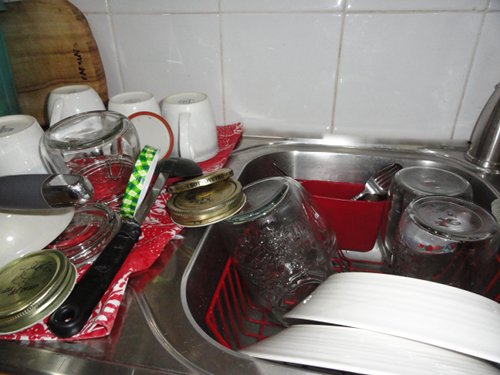
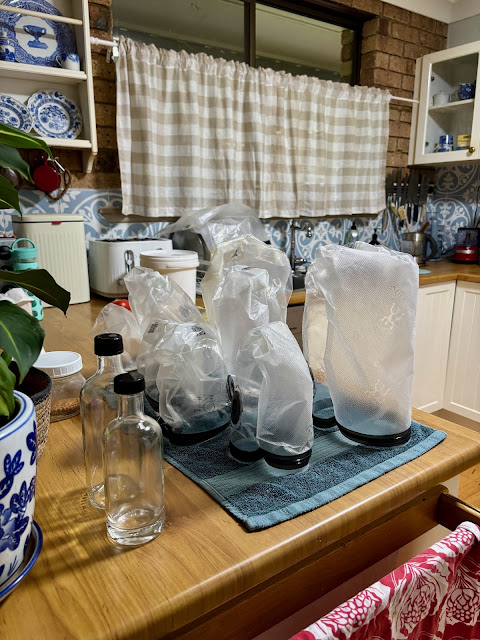
Our washing up doesn't look much like anyone else's, there are usually a lot of jars and strainers.

I don't understand why working at home is seen as dull compared to working in a job or developing a career. Homemakers stay at home for a variety of reasons that sometimes revolve around children and sometimes don't. They know that by reducing the desire for excess acquisition, by shopping wisely and being productive at home, the cost of living is reduced - and then you can pay off debt faster or you don't have to earn as much. Job satisfaction for stay at home mums, mums running a business at home, traditional and radical homemakers, retirees and young couples who have a less conventional work-life balance - is rarely written about, yet many of us experienced it every day and it keeps us going.


I know that when I spend a day tidying my home, getting tasks done, creating comfortable spaces, knitting, sewing, or getting a casserole or soup ready for the evening meal, nothing beats the feeling of enrichment I get from just being there and doing it. I just know that this is right for me. I feel I'm increasing my self reliance and that on the day when I choose these activities, even if they're repetitive and might have to be done again tomorrow, I am giving a gift to myself and my family just by doing it.

Jamie exploring the garden and having a snack.


Making things we need, like soap, cleaners, bread, jam, sauce and jumpers, quilts and baby clothes make me feel I'm worth something, that what I know is valuable and that I haven't sacrificed my life skills for the sake of convenience. When I do these things, and much more, I know that I can do for myself and my family, that I don't have to rely on buying these goods from a shop, and if I continue to do that, we will not only get by, but thrive. Any work that you find meaningful - either paid or in your own home, done with love and appreciation for the opportunity, settles on your heart and nourishes your soul. My days are filled with days like that and the satisfaction it brings threads its way through my weeks and turns into constant contentment. Of course, not every day is wonderful. There are days when I spill, burn and forget but those days just remind me that nothing is perfect and highlight the good days even more.

Alex watching Chico.

I think the key to finding satisfaction at home and in housework is to dive right into it. Think about what you're trying to accomplish, work out long term and short term goals and then make a plan to carry out your wishes. Work to a routine, take it seriously and know that if you do it well, the rewards will be there for the taking. Think about the skills you have to learn, and learn them. Set yourself challenges - such as "reduce the grocery bill this week by $25" or "make laundry liquid and do a one month trial of it". If you don't know where to start, start with what you need to know first. So if you want to have the family sit down together to a good home cooked meal every night, but you don't know how to cook, teach yourself and get better every week. If you've left work to have a baby, start with preparing homemade baby requirements - teach yourself from books or the web, or ask other modern cloth and natural living mothers - they will share and, I hope, encourage you. None of us is born ready to cook or sew - these are learned skills. You will challenge yourself to learn these things, to keep at it until you become competent, but even the challenge of the tasks will improve you, make you more resilient and tougher.

Sugar snap peas.

There will be things you can't do well or you don't enjoy, accept that and move on. There will be so many other things you will be good at - concentrate on them and when you've worked well on general housework, go back to the difficult things. You might find that your skill level and confidence have risen enough for you to take on your former difficult tasks successfully.

But never give up. Never, ever give up.


You do have to try, put in the time and effort - nothing good comes easily. We all need to work for what we want and instead of thinking that it's all too difficult, start at the beginning and move slowly ahead. That is how I started, it's how most of us do it. Forget instant gratification - nothing worthwhile is instant. Satisfaction builds gradually, along with your skill level and what you'll develop that into is a life worth living. You have it in your power to make your family life wonderful. I love listening to people talk about their childhood in reverent tones. It may not have been easy but those who can say they love their family and have fond memories of home have those memories because someone knew it was important enough to work for. And always in the background there would have been that life satisfaction and constant contentment. It is there waiting for you too, although it is one of the many things not available at any shop or mall. These precious commodities are home-made and hand-produced and available to all of us who put in the work and then slow down enough to appreciate them.

I'm having a few problems getting myself back to posting. I'll be back properly tomorrow, in the mean time, let's work on this software list. I think it will help many of us.

I've been designing a few things here lately and although I have used Photoshop in the past, now I rely on open source software or freeware. I was thinking about this today and wondered what other great open source software is out there. Most of us know of Linux and Firefox but have you heard of Gimp? Gimp is a package similar to Photoshop and I use it to resize and adjust photos. It also has a wide range of other functions. I also use Inkscape, which is like CorelDraw, to make my blog banners. Both Gimp and Inkscape are available for Mac and Windows and they both Open Source.  Here are some more. 

What free software do you use? Let's form a list here of programs that will help us with our work and organising. Please state whether the programs are used on Windows or Mac.
Hello! I'm back with a relaxed frame of mind and feeling refreshed and ready for the next few months. You all know that I love writing my blog so it took a lot of self control to not be here. The computer is capable of stealing my time, and my time is my life, so I need to step back from it occasionally and connect only with the outernet. The outernet for me is my family, home, backyard and a community full of people. Those four elements are reflected heavily in my blog and without them there would be nothing for me to write about.

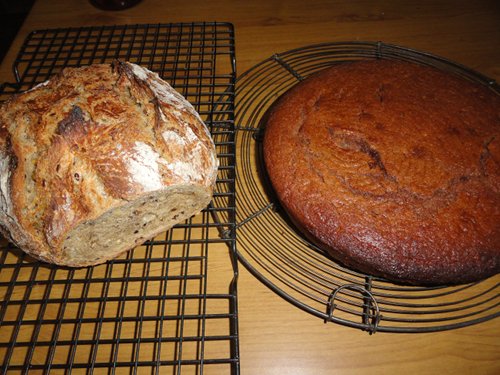
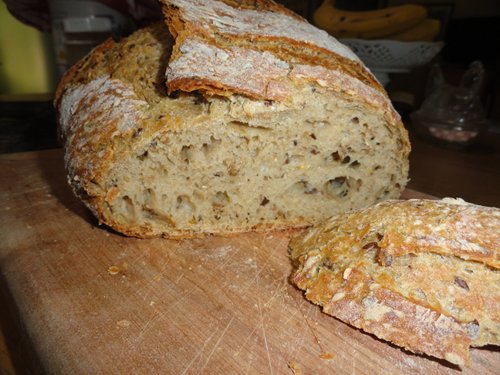
Grain bread from last week.

 Making a brussel sprout coleslaw.

For the next six weeks or so I'll be posting when I can. I'm withdrawing from the Neighbourhood Centre and that requires a fair bit of my time because I'll be training the new manager and stepping down from the committee. I'm also doing the last of my book publicity engagements and then I'll be back, heart and soul, to my simple life. I have to tell you I've enjoyed this past year. We did things I never expected to do, we met some fine people, we travelled around. It gave me a brief look at a faster and busier pace of life and I'm grateful to have had it. But I'm also happy to be returning to quietness, solitude and a slower pace. Getting up in the morning, knowing that all I have to do is tend my home, is how I want my days to be. I'll be pleased to give up living according to my diary and calendar. I gave away all my watches when I left work, now I can retire the diary as well.  I want my days to be directed by sunlight and the seasons, not by a timepiece, computer alarms and reminders. Ahh, the serenity. ;- )  Sorry, only the Australians will know what that means.

The winter vegetable garden. All the oranges have been picked now.

Old fashioned steamed pudding. The bright yellow colour is from the eggs.

Meeting Chico, the blue ring necked parrot.

We're having a great weekend so far.  Sarndra and Alex stayed here on Friday night and Kerry, Sunny and Jamie will be here shortly. We love having the family visit. We get to spend time with those we love the most without the hassle of driving through traffic, which is annoying and tiring for us. Watching Alex and Jamie discover so many things in our back yard is such a joy. They both love watching the chickens and the blue parrot we're looking after for friends. I have no doubt there are many things to discover out in the world for them right now but here they see "old Australia". We can all sit in the sunshine, enjoy afternoon tea and look forward to a roast pork dinner. Nothing much changes here now and while some would not see that as a plus, here bread is eaten hot from the oven, I still serve food like steamed puddings with homemade jam on top and instead of looking for the new, we take pleasure in the old and familiar. This, by far, is my favourite life season and I love sharing it with my grandsons.

And here are some links to check out.

  • Becci's Domestic Bliss
  • Little Home in the Country
  • Tillie and Coco


Hanno and I are going over to Bell for another workshop on Saturday, 18 August. We're looking forward to seeing Karen and the women at Pips 'n' Cherries again; we had such a great day with them last time. This workshop we'll be showing how to make five minute bread, yoghurt scones, buttermilk scones and cold processed soap. 

The workshop will run from 9.30am till about 3pm so there'll be plenty of time for questions and talking. If I remember correctly, last time there were a lot of both.  It was a typical country get-together with lots of good will, plenty of tea, good food and sharing, not just by me, but by everyone. I have no doubt this will be the same. The cost is $50, which includes a delicious home-cooked morning tea and lunch. For catering purposes, bookings are essential on 4663 1184.

We hope to see you there.
I've found that I benefit from taking short breaks from the blog so that is what I'm doing now. I have a some things I need to do, I want to write a few pages for myself, and Hanno is hobbling around with gout so I'll be looking after him and doing some of his chores. I'm also going to take the opportunity to change the blog template again. The distorted photos on the home page are annoying me. Take care of yourself. I'll be back soon.

Here is a little reading material that I had ready for Friday's weekend reading.

I love this idea - Fred's modern rite of passage

Attainable Sustainable.

Leaf Root Flower Fruit - vegan cooking and photography

Looking after dad.

The Fraker Farm

The seed industry structure in USA

FROM OUR MOB

This is a beautiful Italian blog written by a beautiful Italian woman.

Chris writes at Gully Grove blog. Chooks, swales, landscapes, cooking - it's all here. Chris lives fairly close to us and where my father's family lived for many years.
Last year we welcomed two babies into our family – Jamie is now 16 months old and Alex is 12 months. Hanno and I have already looked after both our little boys to help their parents have some free time together and I have no doubt there will be many more opportunities to look after them in the future.


A lot has changed since I had my own little boys to look after. Ideas about diets have changed a lot and I’m wondering how this reflects on how babies and toddlers are fed now. Jamie and Alex were breastfed exclusively for six months, then they had breast milk and solids. I think they’re still having a nightly feed before bedtime, although Sunny told me she wants to wean Jamie soon. Both boys have good appetites and eat a variety of foods.

Back in the old days, babies and toddlers were commonly given salted and sweet food. I didn’t know anyone who was gluten or dairy intolerant, or who had an allergy to nuts. I knew of one baby who was allergic to eggs and my son Kerry didn't like eggs. He still doesn't. I think good free range eggs are excellent food for toddlers. When did you introduce eggs?  What egg recipes do your children like?


When I fed my children, I wanted them to eat what we ate. I have always cooked from scratch so it was no problem to first puree things like mixed vegetables and fruits and later on, process meals like roast chicken and vegetables, vegetable soup or lamb and rice in the blender so they were a good consistency for my babies. It wasn’t long before we had a good system going and we were all eating the same food, although in different consistencies. When my children were weaned they drank water, cow’s milk, Milo and a variety of fresh and processed fruit juices.


If you have a baby or small children now, what do you feed them, and when? If you have time, would you set out a day’s menu for me, including drinks and snacks. I have a feeling things haven’t changed much, except for the food allergies, but who know, I might be completely off here. It has happened before. ;- )

Last Friday I spend the morning with a group of the most wonderful women. I was invited to be the guest speaker at my local Country Women's Association (CWA) annual general meeting which was held at the new Botanical Gardens in Maleny. It's very rare for me to feel like I'm one of the youngest in the group, but in my mid-60s, I think I may have been. There we sat, about thirty of us - members and visitors, in a rotunda, set into the side of a mountain looking out over the beautiful Glasshouse Mountains.  Morning tea was served - scones with jam and cream and tea or coffee. Perfect. After all, this is the CWA.

Last Friday, with the vice presidents of the Maleny CWA, Cynthia Daniels and Judy Stubbs.

The Maleny branch of the CWA started in 1928, just a few years after the first Queensland and New South Wales branches opened in 1922. On 11 August, the Queensland CWA celebrate their 90th anniversary.

The CWA is a big part of my Australia and I'm sure it means a lot to many other Australian women who read here. Whether it's tea and scones at an agricultural show, being the recipient of drought relief, which the NSW CWA administers, support for baby health clinics or rural fire brigade, if you live in rural Australia, the CWA has influenced your life in some way. How many of us have driven through country towns to see those cute cottages proudly wearing the CWA badge? Those little houses may be called Rest Rooms, the CWA House, or the CWA building but whatever it is called you know that the good works of many women have happened inside for many a long year.

Over the years, during the wars Australian soldiers have fought in, CWA ladies from all over the nation worked to provide care parcels for the troops. That work still carries on today and the ladies in my branch at Maleny sent a much appreciated Christmas care package to an Australian solider serving in East Timor. They are also supplying birth kits for women in East Timor. During the Vietnam War the American government asked the CWA to help provide hospitality to American troops on R&R leave in Australia. As a result, over a four year period, over 280,000 American troops spent time with Australian families. And they do all this work with no fanfare, just quietly working away on cake stalls, selling raffle tickets, providing friendship, and being ready to step in when needed.

Just before the meeting got underway. The two men there were from the Rural Fire Brigade.

Nowadays, older people are often seen as being out of touch. Well, maybe some are but from what I could see of my local CWA ladies and those who visited from other branches, these are people of family and community. They help carry on the old Australian values of equal opportunity for all, resilience, friendship, compassion, and the rock solid propensity to stand up for family and neighbours in good times and in bad. 

I think CWA numbers are falling. My local branch has only 10 members, soon to be 11. I am joining my Maleny branch as a supporter member. I don't have the time to join as a branch member, if I could, I would, but maybe that is for a time in the future. But I do want to help maintain this strong and significant part of Australia and I can do that by becoming a member. You can too. If you live in the city or the bush and you'd like to support the CWA, go to their website and see what you can do.  This is from the CWA page: The CWA owns a range of properties built and maintained by members. In recent years there has been some controversy concerning the sale of the organisation's bush community halls. Some individual branches did not have enough members to continue paying for their upkeep, including council rates, insurance, electricity, water and maintenance. Nine halls were sold in New South Wales between 2003 and 2005 ... 

While I was reading through the QCWA website, I found the link to this story about what Germaine Greer thinks of the CWA. Read it, it's really interesting.

The way I see it is that the CWA has stood by us, working for the women and families of Australia for the past 90 years. Now it's our turn to help support them by increasing membership if we can, and by working with them, showing that we share those Australian values we all talk about. What's that saying about putting your money where you mouth is?
All foods that are grown have a particular season when they're naturally at their best. The seasons in the southern hemisphere are the opposite to those in the northern. The closer you live to the equator, the less the seasons play a role in what can be grown. Food grown in season will be fresher and cheaper, and it will probably have been grown in more natural conditions - not in a glasshouse or hydroponically. The problem we have today is that unless you grow your own, you don't know what is in season. We've forgotten our seasons, and in general, all thoughts of how the seasons work to produce food has been lost to many of us.


This is one of the areas we need to reskill ourselves. Homemakers in the past would have commonly known this information, we should all learn it as part of our move towards being more self-reliant and aware.

Seasonal food chart UK  and here
Seasonal food guides Australia
Seasonal food chart USA - fruit and vegetables

I think the question most often asked while Hanno and I were on our book tour was "Is this only for retired people? Surely you couldn't do what you do if you worked for a living." I'm sure all of you living a more simple life will know that organisation is a big part of making it work. With menu planning, stockpiling, routines, lists and working with the seasons, you can do most of what you want to do, even if you're working outside the home as well.


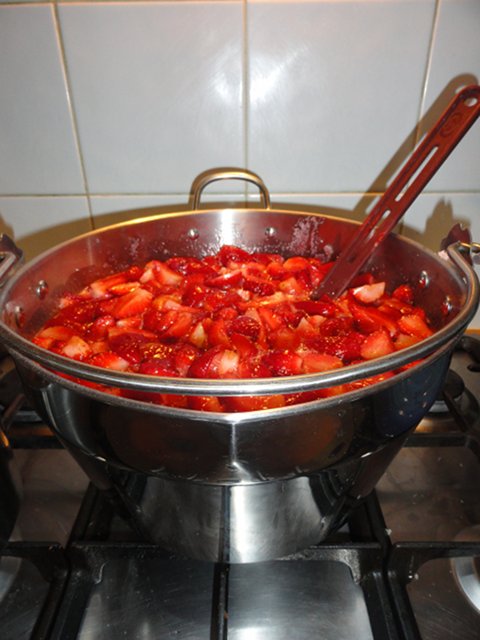
Part of my yearly organisation is to make jam. We have jam on toast and scones andI use it in cooking sometimes. If I want good quality jam, made with no artificial additives, I have to make it myself. I know I can make enough jam for almost a year in half a day but because we like two jams - peach and strawberry, and both those fruits are available in abundance and cheaply in different seasons, I have to organise myself to make two separate batches, usually six months apart. Those two half day jam sessions give us good quality jam for the entire year, with enough to give as gifts as well.


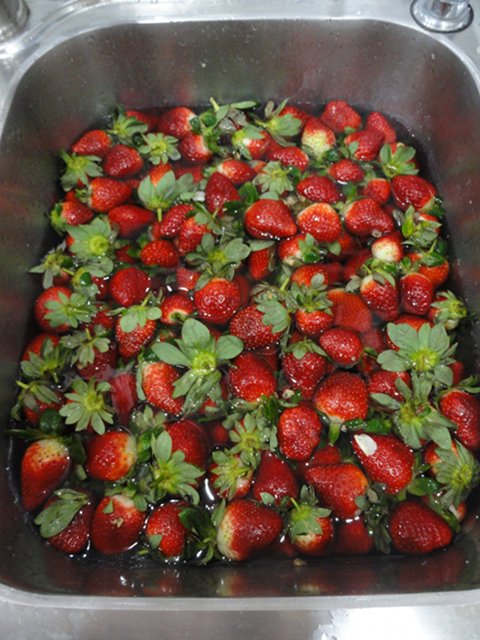
In Australia and New Zealand too probably, it's now strawberry season. It's time to make jam! Strawberry jam is one of the easiest jams to make and the taste is much more intense than any commercial jam you will buy.  There is a recipe here. I would add pectin to it. Here is an American recipe for strawberry jam.


You need to understand the role of pectin in jam making too. There is a good explanation here. Pectin is the natural fibre that helps jams set and become spreadable but not too runny. Often jams made without added pectin will be too runny to stay on your toast. You can buy pectin to add to jam, and there is no reason why you shouldn't use it. Fowlers Vacola have a pectin pouch you can buy at the supermarket in Australia. I have no doubt powdered pectin available in other countries too. Jam sugar is available too, this is sugar with pectin added to it. I prefer not to use jam sugar because I like to regulate the amount of pectin I use. I like jam that isn't solid but isn't runny either. When you buy pectin, check that it doesn't contain dextrose or any other additive you don't want.

A guide to pectin in fruit.

In Australia we use the English method of jam making and preserving. Those of you in the USA and probably Canada too, use a different method. Please be guided by what you think it the correct way. 


Here, we use recycled jars and most of us don't process our jams in a water bath. We believe that hot jam going into sterilised jars that are sealed immediately and properly, is enough to keep the jam well in the cupboard. It has been done this way for hundreds of years. Jam has a high sugar content - sugar is a preservative. If you follow the guidelines and sterilise your jars and lids properly,  that delicious jam you make can be stored in the cupboard for months.

If you've never made jam before, try it. Start with a simple jam like strawberry, and I'm sure you'll be convinced by the taste alone, that it's something you should do in strawberry season every year.


Newer Posts Older Posts Home

MY BOOKS

MY BOOKS


My books were all published by Pengiun, and are available at Amazon US, Amazon UK and Amazon Au

Search here

Total Pageviews

Translate


I'm Rhonda Hetzel and I've been writing my Down to Earth blog since 2007. Although I write the occasional philosophical post, my main topics include home cooking, happiness and gardening as well as budgeting, baking, ageing, generosity, mending and handmade crafts. I hope you enjoy your time here.

MY FAVOURITE PLACES

  • Grandma Donna's Place
  • Grandma Donna's YouTube
  • Grandma Donna's Instagram
  • This Simple Day
  • Nicole's Instagram

Give More

Give More

Popular posts last year

Making ginger beer from scratch

We had a nice supply of ginger beer going over Christmas. It's a delicious soft drink for young and old, although there is an alcoholic version that can be made with a slight variation on the recipe. Ginger beer is a naturally fermented drink that is easy to make - with ginger beer you make a starter called a ginger beer plant and after it has fermented, you add that to sweet water and lemon juice. Like sourdough, it must ferment to give it that sharp fizz. To make a ginger beer plant you'll need ginger - either the powdered dry variety or fresh ginger, sugar, rainwater or tap water that has stood for 24 hours to allow the chlorine to evaporate off. You'll also need clean plastic bottles that have been scrubbed with soap, hot water and a bottle brush and then rinsed with hot water. I never sterilise my bottles and I haven't had any problems. If you intend to keep the ginger beer for a long time, I'd suggest you sterilise your bottles. MAKING THE STARTER In a...
Image

NOT the last post

This will be my last post here.  I've been writing my blog for 18 years and now is the time to step back. I’ve stopped writing the blog and come back a couple of times because so many people wanted it, but that won’t happen again, I won’t be back.  I’ll continue on instagram to remain connected but I don’t know how frequent that will be. I know some of you will be interested to know the blog's statistics. 
Image

How to make cold process soap

I'm sure many of you are wondering: "Why make soap when I can buy it cheaply at the supermarket?" My cold process soap is made with vegetable oils and when it is made and cured, it contains no harsh chemicals or dyes. Often commercial soap is made with tallow (animal fat) and contains synthetic fragrance and dye and retains almost no glycerin. Glycerin is a natural emollient that helps with the lather and moisturises the skin. The makers of commercial soaps extract the glycerin and sell it as a separate product as it's more valuable than the soap. Then they add chemicals to make the soap lather. Crazy. Making your own soap allows you to add whatever you want to add. If you want a plain and pure soap, as I do, you can have that, or you can start with the plain soap and add colour, herbs and fragrance. The choice is yours. I want to add a little about animal and bird fat. I know Kirsty makes her soap with duck fat and I think that's great. I think t...
Image

Preserving food in a traditional way - pickling beetroot

I've had a number of emails from readers who want to start preserving food in jars but don't know where to start or what equipment to buy.  Leading on from yesterday's post, let's just say up front - don't buy any equipment. Once you know what you're doing and that you enjoy preserving, then you can decide whether or not to buy extra equipment. Food is preserved effectively without refrigeration by a variety of different methods. A few of the traditional methods are drying, fermentation, smoking, salting or by adding vinegar and sugar to the food - pickling. This last method is what we're talking about today. Vinegar and sugar are natural preservatives and adding one or both to food sets up an environment that bacteria and yeasts can't grow in. If you make the vinegar and sugar mix palatable, you can put up jars of vegetables or fruit that enhance the flavour of the food and can be stored in a cupboard or fridge for months. Other traditional w...
Image

Cleaning mould from walls and fabrics

With all this rain around we've developed a mould problem in our home. Usually we have the front and back doors open and that good ventilation stops most moulds from establishing. However, with the house locked up for the past week, the high humidity and the rain, mould is now growing on the wooden walls near our front door and on the lower parts of cupboards in the kitchen. Most of us will find mould growing in our homes at some point. Either in the bathroom or, in humid climates, on the walls, like we have now. You'll need a safe and effective remedy at some point, so I hope one of these methods works well for you. Mould is not only ugly to look at, it can cause health problems so if you see mould growing, do something about it straight away. The longer you leave the problem, the harder it will be to get rid of it effectively. If you have asthma or any allergies, you should do this type of cleaning with a face mask on so you don't breathe in any spores. Many peopl...
Image

Five minute bread

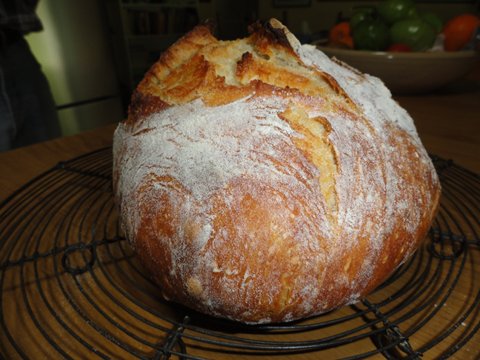
Bread is one of those foods that, when made with your own hands, gives a great deal of satisfaction and delight. It's only flour and water but it symbolises so much. I bake bread most days and use a variety of flours that I buy in bulk. Often I make a sandwich loaf because we use most of our bread for lunchtime sandwiches and for toast. Every so often I branch out to make a different type of loaf. I have tried sour dough in the past but I've not been happy with any of them. I'll continue to experiment with sour dough because I like the idea of using wild yeasts and saving the starter over a number of years to develop the flavour and become a part of the family. However, the loaf I've been branching out to most often is just a plain old five minute bread. By five minutes I mean it takes about five minutes actual work to prepare but it's the easiest of all bread to make and to get consistently good loaves from. If you're having people around for lunch or...
Image

This is my last post.

I have known for a while that this post was coming, but I didn't know when. This is my last post. I'm closing my blog, for good, and I'm not coming back like I have in the past.  I've been writing here for 16 years and my blog has been many things to me. It helped me change my life, it introduced me to so many good people, it became a wonderful record of my family life, it helped me get a book contract with Penguin, and monthly columns with The Australian Women's Weekly and Burke's Backyard . But in the past few months, it's become a burden. In April, I'll be 75 years old and I hope I've got another ten years ahead. However, each year I'll probably get weaker and although I'm fairly healthy, I do have a benign brain tumour and that could start growing. There are so many things I want to do and with time running out, leaving the blog behind gives me time to do the things that give me pleasure. On the day the blog started I felt a wonderful, h...
Image

What is the role of the homemaker in later years?

An email came from a US reader, Abby, who asked about being a homemaker in later years. This is part of what she wrote: "I am a stay-at-home mum to 4 children, ages 9-16. I do have a variety of "odd jobs" that I enjoy - I run a small "before-school" morning drop-off daycare from my home, I am a writing tutor, and I work a few hours a week at a local children's bookstore. But mostly, I cherish my blissful days at home - cooking, cleaning (with homemade cleaners), taking care of our children and chickens and goats, baking, meal-planning, etc. This "career" at home is not at all what I imagined during my ambitious years at university, but it is far more enriching. I notice, though, that my day is often planned around the needs of my family members. Of course, with 4 active kids and a husband, this is natural. I do the shopping, plan my meals, cook dinner - generally in anticipation of my family reconnecting in the evening.  I can't h...
Image

Every morning at home

Every morning when I walk into my kitchen it looks tidy and ready for a day's work. Not so on this morning (above), I saw this when I walked in. Late the previous afternoon when I was looking for something, I came across my rolled up Zwilling vacuum bags and decided they had to be washed and dried. So I did that and although I usually put them outside on the verandah to dry it was dark by then. I turned the just-washed bags inside out and left them like this on a towel. It worked well and now the bags are ready to use when I bring home root vegetables, cabbages or whatever I buy that I want to last four or five weeks.
Image

You’ll save money by going back to basics

When I was doing the workshops and solo sessions, I had a couple of people whose main focus was on creating the fastest way to set up a simple life. You can't create a simple life fast, it's the opposite of that It's not one single thing either - it's a number of smaller, simpler activities that combine to create a life that reflects your values; and that takes a long to come together. When I first started living simply I took an entire year to work out our food - buying it, storing it, cooking it, preserving, baking, freezing, and growing it in the backyard. This is change that will transform how you live and it can't be rushed.  
Image

All previous blog posts

  • 2026 3
    • February 3
      • Workshops starting 1 March
      • Planting vegetable seeds and new workshops
      • Back where we belong
  • 2025 7
    • July 1
    • June 2
    • May 1
    • April 2
    • February 1
  • 2024 25
    • December 2
    • November 1
    • October 2
    • September 3
    • August 1
    • July 3
    • June 1
    • May 3
    • April 2
    • March 3
    • February 2
    • January 2
  • 2023 13
    • December 1
    • November 2
    • October 1
    • September 3
    • August 2
    • February 2
    • January 2
  • 2022 17
    • November 3
    • October 4
    • September 3
    • August 2
    • July 3
    • June 2
  • 2021 50
    • December 1
    • November 6
    • October 7
    • September 5
    • August 4
    • July 5
    • June 2
    • May 2
    • April 6
    • March 4
    • February 4
    • January 4
  • 2020 68
    • December 3
    • November 5
    • October 4
    • September 4
    • August 4
    • July 4
    • June 4
    • May 8
    • April 7
    • March 8
    • February 8
    • January 9
  • 2019 66
    • December 2
    • November 4
    • October 5
    • August 3
    • July 4
    • June 6
    • May 8
    • April 8
    • March 8
    • February 11
    • January 7
  • 2018 82
    • December 1
    • September 2
    • August 10
    • July 4
    • June 11
    • May 9
    • April 12
    • March 10
    • February 10
    • January 13
  • 2017 129
    • December 7
    • November 10
    • October 6
    • September 13
    • August 11
    • July 13
    • June 12
    • May 9
    • April 9
    • March 14
    • February 11
    • January 14
  • 2016 125
    • December 7
    • November 13
    • October 10
    • September 11
    • August 11
    • July 8
    • June 9
    • May 9
    • April 12
    • March 10
    • February 13
    • January 12
  • 2015 184
    • December 7
    • November 15
    • October 20
    • September 18
    • August 19
    • July 18
    • June 12
    • May 15
    • April 12
    • March 21
    • February 13
    • January 14
  • 2014 203
    • December 11
    • November 8
    • October 17
    • September 20
    • August 17
    • July 19
    • June 17
    • May 17
    • April 23
    • March 15
    • February 18
    • January 21
  • 2013 225
    • December 13
    • November 17
    • October 17
    • September 17
    • August 21
    • July 24
    • June 20
    • May 19
    • April 17
    • March 22
    • February 17
    • January 21
  • 2012 245
    • December 17
    • November 20
    • October 20
    • September 18
    • August 15
    • July 24
    • June 21
    • May 26
    • April 23
    • March 23
    • February 19
    • January 19
  • 2011 257
    • December 18
    • November 24
    • October 27
    • September 23
    • August 24
    • July 21
    • June 24
    • May 24
    • April 16
    • March 22
    • February 14
    • January 20
  • 2010 283
    • December 20
    • November 18
    • October 18
    • September 19
    • August 25
    • July 24
    • June 25
    • May 26
    • April 25
    • March 22
    • February 29
    • January 32
  • 2009 293
    • December 29
    • November 18
    • October 23
    • September 25
    • August 22
    • July 28
    • June 22
    • May 21
    • April 27
    • March 26
    • February 24
    • January 28
  • 2008 387
    • December 24
    • November 23
    • October 25
    • September 26
    • August 27
    • July 27
    • June 37
    • May 34
    • April 44
    • March 53
    • February 32
    • January 35
  • 2007 372
    • December 37
    • November 40
    • October 55
    • September 51
    • August 49
    • July 63
    • June 49
    • May 28


Trending Articles

NOT the last post

This will be my last post here.  I've been writing my blog for 18 years and now is the time to step back. I’ve stopped writing the blog and come back a couple of times because so many people wanted it, but that won’t happen again, I won’t be back.  I’ll continue on instagram to remain connected but I don’t know how frequent that will be. I know some of you will be interested to know the blog's statistics. 
Image

Every morning at home

Every morning when I walk into my kitchen it looks tidy and ready for a day's work. Not so on this morning (above), I saw this when I walked in. Late the previous afternoon when I was looking for something, I came across my rolled up Zwilling vacuum bags and decided they had to be washed and dried. So I did that and although I usually put them outside on the verandah to dry it was dark by then. I turned the just-washed bags inside out and left them like this on a towel. It worked well and now the bags are ready to use when I bring home root vegetables, cabbages or whatever I buy that I want to last four or five weeks.
Image

You’ll save money by going back to basics

When I was doing the workshops and solo sessions, I had a couple of people whose main focus was on creating the fastest way to set up a simple life. You can't create a simple life fast, it's the opposite of that It's not one single thing either - it's a number of smaller, simpler activities that combine to create a life that reflects your values; and that takes a long to come together. When I first started living simply I took an entire year to work out our food - buying it, storing it, cooking it, preserving, baking, freezing, and growing it in the backyard. This is change that will transform how you live and it can't be rushed.  
Image

Creating a home you'll love forever

Living simply is the answer to just about everything. It reduces the cost of living; it keeps you focused on being careful with resources such as water and electricity; it reminds you to not waste food; it encourages you to store food so you don't waste it and doing all those things brings routine and rhythm to your daily life. Consciously connecting every day with the activities and tasks that create simple life reminds you to look for the meaning and beauty that normal daily life holds.  It's all there in your home if you look for it. Seemingly mundane tasks like cleaning and cooking help you with that connection for without those tasks, the home you want to live in won't exist in the way you want it to.  Creating a home you love will make you happy and satisfied.
Image

Time changes everything

I've been spending time in the backyard lately creating a contained herb and vegetable garden. My aim is to develop a comfortable place to spend time, relax, increase biodiversity and encourage more animals, birds and insects to live here or visit. Of course I'd prefer my old garden which was put together by Hanno with ease and German precision. Together, we created a space bursting at the seams with herbs, vegetables and fruity goodness ready to eat and share throughout the year. But time changes everything. What I'm planning on doing now, is a brilliant opportunity for an almost 80 year old with balance issues. In my new garden I'll be able to do a wide range of challenging or easy work, depending on how I feel each day. It’s a daily opportunity to push myself or sit back, watch what's happening around me and be captivated by memories or the scope of what's yet to come.
Image

It's the old ways I love the most

I'm a practical woman who lives in a 1980’s brick slab house. There are verandahs front and back so I have places to sit outside when it's hot or cold. Those verandahs tend to make the house darker than it would be but they're been a great investment over time because they made the house more liveable. My home is not a romantic cottage, nor a minimalist modern home, it's a 1980’s brick slab house. And yet when people visit me here they tell me how warm and cosy my home is and that they feel comforted by being here. I've thought about that over the years and I'm convinced now that the style of a home isn't what appeals to people. What they love is the feeling within that home and whether it's nurturing the people who live there.
Image

Back where we belong

Surprise! I'm back ... for good this time. Instagram became an impossible place for me. They kept sending me messages asking if I'd make my page available for advertisers! Of course, I said no but that didn't stop them. It's such a change from what Instagram started as. But enough of that, the important part of this post is to explain why I returned here instead of taking my writing offline for good. For a few years Grandma Donna and I have talked online face-to-face and it's been such a pleasure for me to get to know her. We have a lot in common. We both feel a responsibility to share what we know with others. With the cost of living crisis, learning how to cook from scratch, appreciate the work we do in our homes, shop to a budget and pay off debt will help people grow stronger. The best place to do that is our blogs because we have no advertising police harassing us, the space is unlimited, we can put up tons of photos when we want to and, well, it just feels li...
Image

Making ginger beer from scratch

We had a nice supply of ginger beer going over Christmas. It's a delicious soft drink for young and old, although there is an alcoholic version that can be made with a slight variation on the recipe. Ginger beer is a naturally fermented drink that is easy to make - with ginger beer you make a starter called a ginger beer plant and after it has fermented, you add that to sweet water and lemon juice. Like sourdough, it must ferment to give it that sharp fizz. To make a ginger beer plant you'll need ginger - either the powdered dry variety or fresh ginger, sugar, rainwater or tap water that has stood for 24 hours to allow the chlorine to evaporate off. You'll also need clean plastic bottles that have been scrubbed with soap, hot water and a bottle brush and then rinsed with hot water. I never sterilise my bottles and I haven't had any problems. If you intend to keep the ginger beer for a long time, I'd suggest you sterilise your bottles. MAKING THE STARTER In a...
Image