down to earth

  • Home
  • About Us
  • Down To Earth Book
  • Privacy Policy
Over the years I've been asked many times what is the key to a simple life. I've thought long and hard about it and I reckon there are three main keys and a thousand smaller ones. Of the three main keys, the first one is to think about your life and what you want get out of it - your life is unique and it doesn't have to be like anyone else's. If you define your own path, and have realistic and satisfying goals, you're less likely to  listen to people telling you you HAVE to have certain things. You'll be less likely to be swayed by advertising. If you really KNOW yourself and where you're heading, you're more likely to stay focused. 

The second key is the ability to be content with what you have. Many people don't have that ability and never will. Sad but true. I think there is a way to develop contentment - you consciously think of what you're grateful for. All of us - the folk who have computers, cars and homes to live in are extremely lucky. Most of the people in the world do not have what we have. Don't take anything for granted. Work hard to get what you want out of life and be thankful for it when you have it. Share. Develop a kind and generous attitude. Don't buy things to show off, buy with purpose and function in mind. Buy good quality and instead of frequent upgrading, keep everything going for as long as you can. And at the end of the day, be grateful that you're in a warm and comfortable home with those you love around you. Hopefully, that will bring contentment to you.


The third is to pay off all your debt. If you do that, the rest of it is relatively easy, with a bit of on going hard work of course. The thousand smaller keys are different for all of us, depending on age, income level, ability, ambition and goals.

Mindful living, being content, paying off debt.


When you don't have to pay either a mortgage or high rent you free yourself up enormously - you can choose how many hours you want to work, or if you want to work at all. But how do you get to that position as quickly as possible? You need to have a plan and a budget and if you're married or partnered you need to both work together towards your agreed goals. The real trick here is to keep enjoying life while you're paying off debt because most large debts, such as a mortgage, will take years to pay back. If I were paying off a mortgage right now, I'd want my mortgage to be 25 percent of my disposable income, not 33 percent that many people go for now. I think 25 percent gives you a good pay back plan while not applying too much pressure. I'd pay that mortgage fortnightly instead of monthly. Also, I would work hard to save a little on the side to pay extra payments when I had the spare money. These extra payments make a big difference. When you set up your mortgage payments, make sure you have the option to make extra payments.


Go to the Down to Earth forum to get a lot of ideas about how to save money consistently. You can also ask questions there about saving money and a lot of other simple life topics. You have to make a plan to pay off your debt. If you think about it, just about every product at the supermarket has several brands that range in price from low to high. Consciously choose the lowest price, regardless of brand, that fits your values.  I won't buy any food that comes from China and very little food from Asia in general. I try to buy Australian and I try to buy as close to where I live as possible. That means I shop at farmers markets if I have to buy fruit and vegetables, I buy meat from a local butcher - I do not buy those things from the supermarket. I am rethinking my stance on generics at the moment. I used to buy them but now that most are from China, I buy Australian brands. I never buy the very cheap milk from the supermarket because I believe the way they're marketing milk is going to break the dairy industry. But apart from all that, everything else I buy, is from Aldi or IGA, mostly Australian, and it's the cheapest I can find. If you can stockpile your groceries, it will probably make even more savings, in time and money. So think about your likes and dislikes, your food values and devise a shopping strategy that gives you what you want at the lowest price. Grocery shopping isn't as straight forward as it once was. It's a  jungle out there.


Get involved in your life. Really involved. Stop working on automatic pilot, stop multi-tasking, focus on your work and do it to the best of your abilities - either in your paid job or at home, or both. Both are equally important and you want to give your best to both. Know how much money you're spending, and on what; know what's in the food you're eating - either by growing it yourself or finding a market selling produce you know a bit about; know your family - if they're young or old, never lose touch with them, stay involved in their lives and keep loving them.


There comes a time when there is a sort of automatic switch from being interested in simple life, and carrying out a few simple projects, to feeling like you're actually living the life. I think that switch generally happens when you're really focused on what you're doing - in both your debt reduction and your daily activities. We all do it differently, we all select different combinations of the thousand keys,  but when that swtich happens it's easier to stay on track and you don't have to push yourself to keep at it. It becomes natural and it's just how things are. Simple.
This post was written over the space of a few days ...
Hanno went out this morning and I took the time to work and sit in the garden. It was cold and windy, overhead a black cockatoo screeched for its mate. As the pine trees moved with the wind, acorns dropped into our yard. Luckily, the fence and rain forest protect our vegetable garden and yard from the worst of the winds but when you look up, the trees and birds show how strong the wind gusts are here mid-winter.

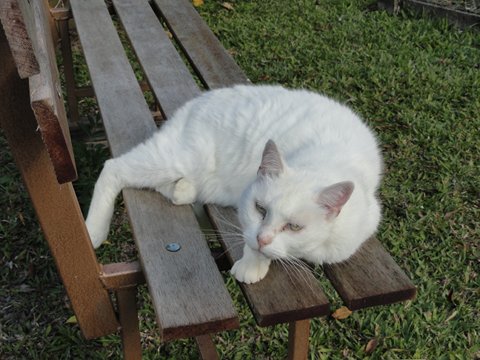
Hettie was sitting on the bench and every so often I took a break from my work and sat next to her. She didn't make a sound, or move, but she knew I was there. At 15, she sleeps all day in the sun on that little bench. My main work that day was to water the vegetables and when the soil was moist, to apply homemade comfrey tea to all the green leafy plants. Comfrey tea is packed full of nitrogen and minerals and it's a very useful fertiliser that is easily made in a bucket in the backyard. Easy, economical and nourishing, that's a great trio of benefits. I was going to prune the orange tree too but I looked at it and wanted to see the fruit on the tree for a while longer. It looks so pretty and it's a once a year event, so I'll take it slow with them.


There is something to be said for this kind of gentle work. The type of work that can be done anytime, not to any particular timetable or for any special need. A cup of tea taken outside to sip with legs stretched out, is enjoyed while I look around at the chickens and vegetables and up at the tall trees again to see what the wind is blowing around. Often it's just the acorns, but then a bird will squark and there will be a flurry of feathers or leaves, then it settles down again.

And now it's a few days later and I've done some light pruning and harvested more oranges. There will be fresh orange juice on the dinner table tonight. When the main pruning is complete, I'll have to treat the tree with some eco-oil because there is a lot of sooty mould on the leaves and if I leave it, it will weaken the tree.

I took this photo from behind the fence near the creek, looking back into our yard towards the shed and house. You can see Hanno putting up the new chicken fence. I'll write about it later in the week.

All sorts of plans are made out there in our backyard. Plans to prune, move, fertilise, sow, enlarge, cut back and grow. But this is also where we have many of our family celebrations - this is a special place. There is a lot happening here now, we are growing vegetables, fruit and eggs; there will be a lot happening in the years to come. We have two little boys who, I hope, will spend a lot of time visiting us here running, exploring and learning. We have to keep it safe and healthy for them as well as ourselves. We want them to love it here as much as we do. There are plans for a sand pit soon, something that will encourage creative play for Jamie and Alex while they're toddlers. When they're a little older, we'll show them how to sow seeds, plant seedlings, collect eggs, identify vegetables and to see the beauty out there. You don't have to go too far to find beauty if you have a garden. It's right there, in front of your eyes, all you have to do is slow down enough to recognise that even the ordinary and mundane things in life have a reason and often a certain kind of beauty. When you "get" that, the appreciation of it transforms you.

I look around here and know that we are safe and protected. That we can make use of the soil to grow food, that we can harvest water from the roof top and store it, that we can hang our laundry out to dry in the clear sunlight, and that whatever effort we put in here supports our lifestyle and makes us the people we are. This backyard supports our decision to live as we do and I can't think of anywhere I would rather be on a cold and windy winter's day. Where else would I feel so comfortable and at home.


Over the weekend Hanno and I have been talking a lot about our garden. He often watches German TV on the computer and last week he saw a segment about German pensioners on the lowest pension. These people were making ends meet by buying and selling at markets and Hanno said one lady sat in the cold for seven hours to make forty euros. We talked about how lucky and grateful we are to live in a prosperous country with such a good climate. Our land and the climate we live in help us provide for ourselves. Not only do we harvest our own food, this food is organic and fresher than any we could buy anywhere. Yes, we both know that our garden is a great asset and it has enabled us live on our meagre budget, to eat healthy food, and to share a lot of it.

We bought seedlings from the local farmers market yesterday morning and now the bare patches in the garden beds are full again, new potatoes have been planted, more manure dug in, the gardens have been tidied up and the chooks have had a bonanza of food  flung over their fence. Everyone is satisfied.

There is much to be thankful for at the Hetzel house.
In the Year of Reading, the first thing our new premier did was scrap the Queensland Premier's Literary Awards. I don't want to get into the politics of this, let me just say I think it was a sad and ill advised decision.  Luckily though a committee of people working in the arts and literature have banded together to keep the awards going. They need help with fundrising and have created a fundraising page, which is here: www.pozible.com/qla

I am proud to tell you that Penguin has entered my book in the non-fiction category of these awards this year. It won't win; previous non-fiction winners are much more formal and literary books than mine. Nevertheless, I believe these awards are important for all of us. It says we place importance on the written word and ideas that define who we are, and not just on the commercial systems that make us prosperous.

Please donate if you can.

Two friends of mine sent me the link to this NY Times article during the week - The Busy Trap. It's a great read.

I really relate to this - what all successful parents do before breakfast.  I started doing it when I realised I could get a few extra hours into my day when I was studying. Now, well, I still do it.

Backyard farmers by necessity. - You Tube. What a great couple!

This is a lovely blog - Allotment Adventures with Jean. Have a look at the rolling compost maker down the page.

These people are living off the grid. It's interesting seeing how different, yet similar, it is.

FROM HERE ...

This blog, Little Home in the Country, is written by one of the wonderful moderators at the forum. I direct you there not because I'm mentioned in this post but because it's a beautiful lesson in following your heart.

Prairie Harmony is a member of the forum and is such a sweetie. She'll be surprised by her inclusion here but I watch and I learn.

Kev is a new to me reader of my blog. I like his blog - An English Homestead. It's great to see more men getting into this way of living and now we can encourage him along with our comments.
I'm lucky that I'm really healthy and rarely get sick. I like to have a few tonics handy during winter though, just in case. I thought some of you may like to try some of these little pick-me-ups if you come down with a cold or just feel a bit under the weather. I think these drinks work because they're hot, so they warm you up, and they often contain citrus, herbs and honey which can counteract cold-like symptoms with their antiseptic properties. I also believe they work partly because of the careful and slow ritual of making them and because you know you're taking time out to look after yourself. The mind plays its own tricks on us at times.

And for all of my northern hemisphere friends, who may we fanning themselves under elder or pecan trees, here are some of my recipes for cold summer drinks and elder flower cordial.


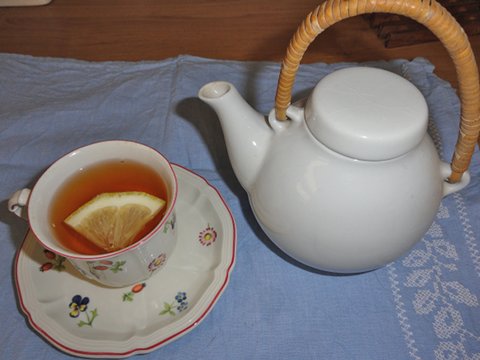
My favourite pick-me-up drink in winter is plain black tea with lemon and honey. You just brew the tea as you like it and add as much or as little lemon and honey as you like.

The immune activating tea and winter virus drink were sent to me by my good friend Susan.

IMMUNE ACTIVATING TEA
  • Brew 500mls of strong black tea in a plunger
  • Add 1 lemon finely sliced (plus peel)
  • 1/2 orange finely sliced (plus peel)
  • 1 to 2 tablespoon grated fresh ginger
  • You can add honey to taste
Allow to steep and drink hot to raise the core temperature of the body. Keep warm in a thermos or reheat by adding a small amount of hot water. 

FOR WINTER VIRUS
Take a lemon and slice an indentation all the way around it, so it can expand in the oven. Put it in the oven in a baking dish and bake until the liquid starts to come out. Take it out and let the lemon cool a little. Put the whole thing in a blender and then add the same amount of water to it, so that what you end up with is half lemon, half water. Add honey to taste and take by the teaspoon 3 times a day or more if required.

Warm apple cider with mint leaves and pineapple sage flowers.


APPLE CIDER DRINK

1 cup of non-alcholic cider or good apple juice for every person, zest of one lemon. Put in saucepan and gently warm for five minutes. Serve straight away.


WINTER LEMON TEA - makes 2 cups
  • Juice and rind of 2 lemons
  • 1 tablespoon honey
  • 1½ cups water
  • Lemon verbena or mint leaves for garnish - optional


LEMON VERBENA TEA
  • 6 fresh lemon verbena leaves
  • Water
  • Honey, if you want to sweeten the tea
Place lemon verbena leaves in a cup and pour over boiling water. Allow to sit for five minutes, remove the leaves, sweeten with honey, if desired.

LEMON MYRTLE TEA AND CORDIAL

Recipes are from Dale's wonderful Dilly Bag site. Dale is a local Sunshine Coast indigenous chef, a good friend of Bev, who has catered for a couple of Neighbourhood Centre events. She's a great cook. Look for her lemon myrtle recipes down the page. Bev tells me that lemon myrtle has more antiseptic properties than tea tree.

 If you have a good winter drink recipe, please share it with us.

I have no use for celebrity. The word makes me a bit light-headed and I think of vacuous TV and film actors who gain fame more for what they look like rather than any talent they may have. I look for value rather than sparkles. I know there are many "celebrity chefs" sashaying their way around authentic and fake kitchens but I don't like labels, so I ignore most of them and just see the ones I admire. I love Nigella Lawson not only for her recipes but for her indulgent, and very familiar to me, attitude to food. I love Hugh Fernly-Whittingstall because he talks the talk and then, in a very practical and accessible way, walks the walk. Of course, I love Margaret Fulton, and her daughters seem to be very creditable cooks as well, and Maggie Beer, who could not love her. And yes, I know the later women are cooks not chefs, but it's the label thing again; they're irrelevant.


All these cooks have been my favourites for years. Year in, year out, I watch them if they're on TV and I buy their books sometimes. So I surprised myself when I had to make a place in this small group for another cook. I have been reading Nigel Slater's column in The Guardian for many years and then, all of a sudden, he was on TV. I watched, hoping he would be what I wanted him to be, and there he was - calm, precise and intelligent, cooking simple food in a gorgeous kitchen surrounded by a lovely garden. He won my heart.

If you haven't discovered Nigel yet, go here to view last week's show (I'm sorry, it might not work for readers outside Australia) and discover him for yourself. Watch out for the insanely delicious-looking rice pudding with spice and glaced fruits. It has reminded me that glacing fruit is on my to do list.

Do you have any favourite cooks or chefs?


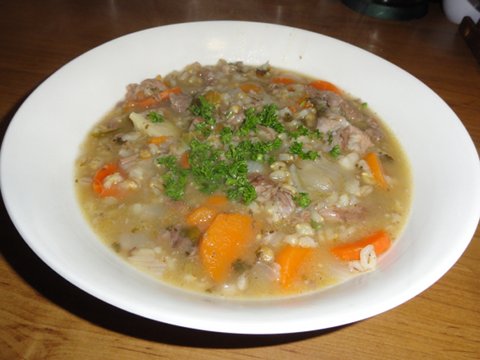
And for the soup fans, here is the Lamb Hotpot recipe I made last week. The inspiration for it came from the new Women's Weekly Country Table cook book. I had it here for a couple of days before I gave it to Sarndra. If you're a new cook and looking for a good Australian cook book, you will be well served by this book. It has all the classic Australian meals such as roast pork, apple pie, pikelets, corned beef and all those good old dishes your grandma or mum used to make. The photos are gorgeous, the recipes are easy to understand and the meals are delicious. I had this book because a lovely Dymocks bookshop owner, Ted, in Toowoomba, asked me to select a book from his shop as a gift. The Country Table was my choice. Thank you Ted.

I don't have the book here now but here is my usual recipe:

LAMB HOTPOT
INGREDIENTS
  • 2 tablespoons olive oil
  • 1 kg/2.2lbs lamb neck or shoulder chops 
  • 2 medium onions, chopped
  • 2 sticks celery stalks, sliced
  • 2 carrots, sliced
  • 1 bay leaf
  • 1 tablespoon parsley, finely chopped
  • ½  cup washed pearl barley - this will add flavour and nutrition as well as thicken the soup
  • ½ tablespoon paprika
  • 2½  cups water or stock
  • salt and pepper
  • chopped parsley to add just before serving
METHOD
  1. Heat half the oil in an over-proof pot or frying pan. If you're using a frying pan, you'll have to transfer it to a pyrex or oven-proof container, with lid, later.
  2. Brown the lamb chops in batches, 2-3 minutes each side. Transfer chops to a plate and continue until all of them have been browned.
  3. Remove all the chops to the plate and in same pan on high,  sauté onion, carrot and celery for about 3-4 minutes.
  4. Sprinkle on paprika and stir in, if the pan is dry, add a little more oil. 
  5. Add the barley and stir in. Cook on lower heat for two minutes. Don't leave this bit out because this is what develops the flavour.
  6. Put the chops back in the pot.
  7. Pour in water/stock and bring to the boil, stirring constantly. Reduce heat to low and simmer for 5 minutes. Season to taste.
  8. Transfer to an oven-proof dish and place in a hot oven 180C/350F and cook slowly for two hours.
  9. Remove bones, bay leaf and add chopped parsley just before serving. Test taste again and add salt or pepper again if needed.
Just a word about the lamb chops. This is a traditional dish of the working class, it is made with cheap cuts of meat like neck chops or shoulder chops. Give them a try, even if you've never eaten these cuts before. You won't be disappointed. There will be fat and gristle on the chops. Cut off the fat but leave the rest because over the long cooking time, the gristle will melt down and produce the most delicious and healthy natural gelatine that is good for you, especially if you have arthritis.  You can cut up the chops if you like, but putting them in whole, on the bone, will provide you with a nice stock while you cook the meal. Bone broth is very nutritious. If they go in whole, the chops will fall off the bone when they're cooked. Before serving, remove the bones. 

This is delicious served with herb dumplings. The recipe for them is here.

Change is constant in our lives. We're always reacting to the good and the bad in our backyard and while the good results in smiles and a feeling of achievement, the bad makes us think about change and modifications, but never giving up. And such is the case now. We've had to have a good look at our backyard because it's not working as well as it could.  The main problem is that since we increased the number of chooks we have, they're impacting more on the backyard and most notably, the grass.

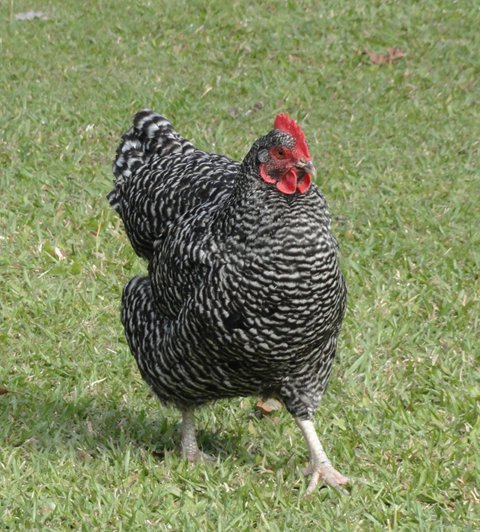
Looking very important, here is Lulubelle.

Many of you will remember that I'm a complete fan of grass. Some people aren't, they think it's a waste of resources, but grass can be grown sustainably. We never water or fertilise our lawn, the sky and the chooks do all the necessary work and we leave it to grow and provide a cool and soft area for grandchildren to play on. It helps remove carbon dioxide in the air and releases oxygen, just like trees do. We also use it as one of the main components of our compost. So as well as providing free feed and omega 3 oils for our chooks, which gives us omega 3 enriched eggs, it helps provide valuable organic matter and soil conditioner for the garden in the form of compost. It also helps filter water runoff before it reaches local waterways and on a hot day, it helps cool the air around the house in a way concrete never can. I would never live in a house that didn't have a lawn.


This is the area the chooks are sitting in all day and you can see in the photo that the grass has died off. When it rains, it's very slushy walking through here to go to the chook house. In the background, you can see where Hanno has placed the posts for the chook run extension.

But! Those chickens of ours love sitting close to the back wall of our house, right near the gate that stops them coming closer to the house and onto the back verandah. That area just outside the gate is now stripped of lawn - mainly due to their droppings burning it off, but also because of their scratching and all the rain we've had this year. We need to move the chooks away from that area without cutting off their access to grass.


The last of our Barnevelders was killed by a fox last week. It was such a sad loss. She was a beautiful girl, she'd just started laying and she held so much potential. I emailed Julie, where we get all our chooks now, and she'll have some little Barnevelders, Welsummers and an Araucana ready for us in early Spring.

This is the area we're extending the chook run out to. That first fence will go and the run will extend out to the second row of posts. The fence in the background is the start of our little orchard and the dense growth on the right is the rainforest that lines the creek just a few metres beyond.

So we've decided to enlarge the chook run so it goes right out under the fig and pecan trees, providing shade and sun, as well as the all important grass. But they'll be behind a fence so they won't be able to wander around like they can now. There will be a large square space between the end of the chook run and the orchard, so Hanno's decided to put in an extra vegetable garden there. It's virgin soil there, so it will need a lot of enrichment before it amounts to anything but we'll start on it soon and expect it to be producing decent crops within two or three years. The key to virgin soil, especially in Australia, is to add a lot of compost, all sorts of manures, lime, rock minerals and worm castings. It will also need some cultivating and watering and although that sounds like a lot of work, it's good work and worth the effort we put in. We don't like the no dig method - we are soil people, we like the opportunity for the plants to send down their roots into the soil to mine the minerals and to bring them up into the leaves, vegetables and fruit.


The last piece in this equation is mulch. Lots of mulch on the garden that will break down over the months, to be replaced by new mulch. It all adds to the organic matter in the soil. As soon as the soil is moist and the organic matter is there, earth worms will come to live there and a healthy cycle in the new garden will begin.

This is the interior of our chook house. We're thinking of painting the exterior walls lilac. :- )

I've included some photos of the chooks and our chook house here. I'd love to see where your chickens live. I'll set up a thread at the forum and I invite you all to post photos of your chicken palaces there. Let's collect a lot of photos to show the incredible diversity of chook accommodation all over the world. Click here for the forum thread.


Thanks to everyone who inquired about Hanno's health. He's fine now, his eye has healed well and apart from eye drops every two hours during the day for the next three weeks, it's business as usual. I was really pleased that it rained while he was out of action with his eye. Had it not been so wet, I know I would have had Buckley's chance of keeping him out of the backyard. When the eye healed and the rained stopped, he was raring to go. We'd been discussing changes to the backyard to better contain the chickens and that has evolved into an extra vegetable garden and so now it's full steam ahead. I'll write a post about the changes in the backyard later in the week.


We went to the Landcare Conference at the Brisbane Exhibition Centre on Saturday. What a day! There were a lot of very interesting speakers and I met up with a few friends I hadn't seen for a while. Along with us, we had our good friend Beverly Hand, who also gave a very interesting talk on Cultural awareness for engaging Indigenous people. I sat in on Beverly's talk, and she on mine, and I was treated not only to her courageously spirited talk but also to some photos of her family. I also sat in on a talk by Dr Graeme Sait who spoke about healthy soil, the narrow focus of NPK fertilising, soil minerals, microbes and compost. I feel the reason I went to that conference was to meet Graeme. We spoke briefly after my talk which he listened to, and he told me how interested he was in what I was talking about. I was really impressed by this man's knowledge and understanding - even in the short time I was there listening to him. He reminded me of the links between soil health and human health and convinced me I needed to know more about him and his topic. Yesterday I downloaded a copy of his book when I signed up for his newsletter and I've started reading it. It's very interesting and has reminded me that we've got some Biodynamic preparation 500 here and this week, we'll be applying it. When we finish that, I want to try some of Graeme's Life Force fertilisers. If you have time to check out his site, read the article about Blueberries.  What a treasure. He and his wife live here on the Sunshine Coast so I hope I have the good fortune to meet with him again.


Today I'm returning to the Maleny Neighbourhood Centre as volunteer coordinator, with help from Beverly who will come in on Fridays. Ali, who has been our paid coordinator since I left to write my book, left last week. She'll be doing her Masters at the local university and I wish her well. It will take up more of my time that I expected to give right now but the Centre is close to my heart and I can't walk away until it's on firm ground again.


And here at home, I'm still working away quietly with Hanno on those things that keep us fed, clothed and happy. The garden is starting to produce quite nicely, the chooks are laying well, I'm still knitting up a storm for various babies we'll meet for the first time later in the year, and I've just made a new batch of soap and laundry liquid that will keep us going for a few months. Tomorrow, we'll happily welcome home Sunny and Jamie after a six week holiday in Korea. I've missed them so much. They're coming up to see us as soon as they get off the plane. Yay!

Ernie and I are still working on our Blogging Workshop materials and have one booking so far for those in Brisbane. If you're a new blogger and are hoping to attend a workshop, please tell me where you are so we can look into venues in that area. I think the workshops will start next month.

So with all the changes life continues to throw our way, it's still business as usual. I hope you enjoyed your weekend and have an interesting week planned. After my short break, I'm really pleased to be back here with you.

I want to share a link with you today. I've been developing the Maleny Community Newsletter for the Neighbourhood Centre which will cover general club and group news in Maleny. Instead of using clipart for the masthead, I wanted to give a more human touch that showed where we were from and what we're about. There was a slight problem though, I had no money. 

A friend told me about a friend of his and I phoned Peter Hollard.

Peter is a local artist and teacher. I expected to have to convince him what a great idea this is but as soon as I mentioned the Neighbourhood Centre, he said "yes"! He's such a talented and generous man, I thought you'd like to see his blog. When the first edition of the Newsletter is out, I'll show it here, in the meantime, here is Peter's blog.  Please note, there are Life Drawings on the blog.
Carrying on from yesterday's post I thought it would be a good opportunity to explore the feelings connected with being at home and knowing that you make your own home what it becomes - be that good or not so good.


I've written before that housekeeping and homemaking were very low on my list of priorities when I first came home for good. I say 'came home' because up until that point, my home wasn't what it is now - it was just a place to sleep and invite people around to if we didn't go out. Pathetic. I'm wiser now, my home has taught me many things, including that if I didn't take the time to be at home, if I didn't fluff my nest and make it the warm and secure place I wanted it to be, no one else would and I would continue to search shopping malls for junk to make me feel better.


That split second when you suddenly realise that home is not the enemy and that looking after it is an act of love for all your family and a gift to yourself, is a powerful moment of absolute clarity and insight. You're aware that you make your home what it will be, no one else will do that but you, and whatever work you put into your home will be a reflection of you. It is an opportunity and a challenge. It will show what is important in your life, it will highlight those things you treasure, and, in turn, will reflect your tastes and interests to all who visit you.


When you realise that your home is your work in progress you are given the opportunity to make it the comfortable and protected place that all families need to relax, renew their energy, and grow closer to each other. The real challenge here is when you don't have a lot of money to spend but want a cosy, interesting and welcoming home. Most young couples fall into this area and the trick is not to fall for all the advertising hype and rush to charge up your credit card with the latest fashionable furniture. Smart couples search op shops, thrift stores and road side throw outs for bits and pieces that will suit their purpose. They build their homes on older furniture that is either free or very inexpensive and then modify it to suit themselves. The end result is a home unlike a million others who fell for the advertising. They have the satisfaction of working together to find what they need, and no credit card debt. My own son and his new wife are doing this right now. They have our old lounge suite and picked up a dining suite from a road side throw out. Their home is a delight to visit, it's comfortable, inviting and interesting. We are going there for lunch on Thursday and I'm looking forward to it very much. Working together through hard times is one of those things that draws couples together, it bonds them like nothing else.

But the furniture and bits and pieces you put in a home are not the full story. This story is completed by the work done by the homemaker and the feeling of contentment that comes from it. And whether you're a homemaker who does most of the work in the family home or if you're the delegator of chores and director of operations, the result is the same. A functional and secure home will nurture all who live there.


When I worked for a living and shopping was part of my recreation I used to be bored if I stayed at home. I wondered what on earth homemakers did all day. Now I know. I was lucky enough to wake up to myself, ditch the shopping and return to my home wholeheartedly. And anyone can do that - those who work outside the home and those who work in it. Accepting the power you have to make your home what is can be, to provide nutritious food, to shop according to your budget, to keep a clean home, to teach young children that everyone contributes to the welfare of the family by doing chores and helping, to look after what you own, to mend, recycle and reuse what you can, to live in an environmentally sound way and to express the love you feel for your family within the confines of a safe and peaceful home is the true gift of a homemaker.

You make your home what it becomes - it is your work in progress.
This post is from March 2011

Can you remember back to when you had babies to care for and how careful you were with their bedding? You'd make sure the sheets were clean and straight, you'd make the little bed several times a day and as soon as there was a wet sheet, into the washing machine it would go. You did those things, and more, because you knew how important that bed was to your baby. Well, I might be reverting to babyhood because I tend my bed as carefully as I would a cot or crib and I do it because sleep is important. Now let me declare my bias here up front. I LOVE my bed, always have, always will. I am a good sleeper. I'm rarely in bed more than ten minutes before I'm sound asleep. But I also do a lot of my thinking in bed in the cool dark hours of the morning and being in an uncomfortable bed would not be conducive to my sleeping or thinking. If I want to get the most out of every day, I need to sleep well.


Yesterday - our bed in the late afternoon sun.

I can almost hear the sighs from readers who just want to leave their bed untouched until they get into it again at night, but having a clean wrinkle-free place to sleep is one of the things that will make a difference to your day and how well you get through your work. You are mindful of your diet and exercise, you shower every day - or most days, you clean your teeth, make sure you store your food properly so it remains safe and healthy; your bed, my friends, is in that category. It matters. If you're just going to pull up the sheets during the day, why not give yourself another two minutes and make the bed. 

You don't need expensive sheets, blankets or doonas/duvets. It doesn't matter if nothing matches, what matters is that your sheets are clean and fresh, are tucked in properly and that nothing in your bed makes you uncomfortable or causes you to wake up. Of course, the best bed is the one you sleep in the first night after your change the bedding. The smell of sunshine on those newly laundered sheets remind me every single time that a simple bed, well made every day, has a power beyond what you think is possible.


My sister Tricia made these red worked pouches. They are for holding a nightie or PJs during the day and sit on the bed like little pillows.

I change our bedding every week, wash the sheets in cold water using home made laundry liquid. Everything is hung in the sun to dry and brought in that evening. Nothing fancy, just very simple. That first night the sheets are pulled tight and tucked in and, depending on the season, covered with a doona/duvet and a quilt, or what we have now that we're moving to Autumn, cool cotton sheets, a blanket and a quilt. Soon we move further towards our winter bed - an electric blanket on Hanno's side, fluffy flannel sheets and a few thick and cosy layers to cover us.

Every morning after that first night, I strip the bed down to the bottom sheet, smooth out that sheet with my hands, then make the bed by tightening the bottom sheet, making sure the corners are anchored and the sheet won't slip during the night. The top sheet, pillows and blankets are removed and shaken, then replaced. The same applies to each top layer. During the day the windows are left open to allow fresh air to circulate. The windows are closed when it's very cold, late in the afternoon. Every so often I leave the pillows outside in the sun for the day, and hang the quilts and blankets on the line. It's also a good idea to use a mattress protector and to vacuum the bed every couple of months.


Never matching or fancy, but clean and simple. That's all you need.

Simple clean cotton sheets and a homemade quilt can nurture the soul as well as aching bones and a stressed mind. Allow your bed to do what it's there for - to keep you warm, safe and secure until you wake. When you think about it, sleep is a strange concept. We go about our every day activities and once a day, we get tired, lay down flat and lose consciousness. Weird! No one knows why we do that, but all animals, birds and reptiles do. 

It is easy to believe it's too simple to be an important part of the day but those two or three minutes you spend smoothing, tucking and folding back, care for you during the eight hours you sleep. The time-expended-to-benefits-created ratio is in your favour. If you've never thought about this, or don't think it's worth while, make your bed every morning for a week and I think you'll quickly slip into the made bed camp. Beds are more important than we think. We're usually born in one and we will probably die in one. All that time in between that you spend in bed sets you up for your active life by allowing you to relax into sleep, to dream and to wake refreshed and ready for the busy day. Those three minutes are a sound investment.
Hanno's surgery went very well yesterday. We're going back for a checkup this morning but it all looks good and he's feeling fine. Thank you so much for the kind messages and prayers for him. He asked me to thank you all for him. He read everyone of them.

This post is from 2009.


Some of the lemons ready for juicing next week. Leaving them sit for a week makes them juicier.

I've had a few emails recently asking about how it's best to start living simply. I've written about this before but it's always an area of interest and often the first step is the most difficult.


This is a swarm of bees that settled in our orange tree.

Simple living is not about grand gestures - it's not moving to the country and it's not giving up work to become self sufficient. It's more about little things - small steps that make the way we live mirror our values. I believe that simple living is about being an individual - stepping away from the mainstream and living the life you want, even when that life is very different to those of your family and friends. Now I'd be the last one to tell you what sort of values you should live by. One of the best things about living in a free and open country is that we make those choices ourselves. So it would be wise to take some time out, sit by yourself, or with your partner, and write down the values that are important to you. For example, for me, it's important that:
  1. I live in an environmentally sound way;
  2. I want to limit the amount of chemicals in my home;
  3. I want to reduce waste;
  4. and make as much as I can for myself.
I have other values that I live by but these four will serve as a good illustration of what I'm getting at here. Now that I have those four things, I would then make each of them a category to work on. In a note book, give each category a page to itself - write the value at the top of the page and then, over the course of a week or so, bullet points ways you can change your life to reflect your values. Some of the ideas you come up with might be easily achieved, some will be difficult but the point is to identify what you want in your life and what you need to do to make that life.

Above all else, don't copy me or anyone else whose life looks good. This way of living means you evaluate your life and make the changes you want. If you copy someone else's life, you'll be faking it. Now having said that, let me also say that if you evaluate your life and it ends up being similar to my life or your best friend's, then that is fine, as long as you went through the process and identified that is is what you want.

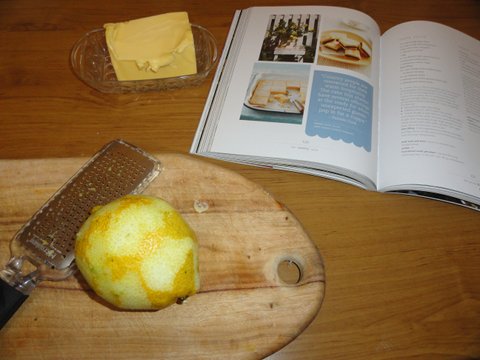
Lemon and coconut cake - recipe below.

When I first started living this way, I was in contact with many other women on a forum who kept telling me that simple living was about slowing down, being mindful and taking time for oneself. They told me the practical things I did everyday - the bread baking, keeping a simple home, green cleaning, preserving/canning etc, were homesteading, not simple living. I never believed that - I think that a simple life is the whole kit and caboodle. It's the way I feel about myself, my home, and the way I live, it's slowing down and being mindful and it is the practical expression of all those things in the daily tasks I do each day. The philosophy of it and the expression of it are part of the whole. The values you live your life by are expressed by the practical tasks you do each day.

The last mandarin.

Another helpful way of thinking about a simple life is to just think about the things you do now, and try to make them more simple - focusing on less rather than more. Draw a line in the sand today and say to yourself: from now on I will stick to my budget; I will reduce waste and never have my rubbish bin more than half full; I'm going to stop buying so many disposable products; I'm going to cook 50 percent of our meals from scratch - then add another 10 per cent in a month, then another; I will shop for groceries only once a fortnight (month/ two months); I will teach myself to knit. Your list may not look anything like that because it will suit your life and family, but it will give you a focus to work on and bit by bit, you'll be simplifying.

In my simplified life today I'll be tidying up the bush house, starting off some vinegar with wine left over from the wedding, taking photos of the garden, having my eyes checked by the optometrist, and cleaning the front verandah, as well as a few other things. Thank you for all the wonderful comments and emails you've sent my way this part week. I don't always have the time to respond, but I read every word and appreciate you taking the time to make contact with me. Often I'm quite overwhelmed by your comments and every day I'm thankful that my blog makes it possible for me to connect with so many of you. I hope you have a beautiful week.

LEMON CAKE RECIPE

Ingredients
  • ¾ cup caster sugar
  • 125 grams butter (¼ lb), room temp
  • 3 teaspoons finely grated lemon rind
  • 3 eggs, room temp
  • 1 ½ cups self-raising flour, sifted OR 1 ½ cups plain (all purpose) flour with 3 teaspoons of baking powder added
  • 1 ½ cups desiccated (shredded unsweetened) coconut
  • 4 tablespoons freshly squeezed lemon juice
  • 1 ¼ cups milk
Method
  1. Place the coconut, lemon juice and milk in a bowl and let it sit for an hour. This will sour the milk.
  2. Preheat oven to 175°C (350F).
  3. Place sugar, butter and lemon rind in a large bowl, and beat until light and creamy, this will take about 4 or 5 minutes.
  4. Add eggs one at a time, beating well between each one.
  5. Fold flour and coconut mixture into the butter mix. When it's combined, place it in a round greased and lined cake pan.
  6. Cook for 50 minutes or until , when tested with a skewer, it comes out clean.
Newer Posts Older Posts Home

MY BOOKS

MY BOOKS


My books were all published by Pengiun, and are available at Amazon US, Amazon UK and Amazon Au

Search here

Total Pageviews

Translate


I'm Rhonda Hetzel and I've been writing my Down to Earth blog since 2007. Although I write the occasional philosophical post, my main topics include home cooking, happiness and gardening as well as budgeting, baking, ageing, generosity, mending and handmade crafts. I hope you enjoy your time here.

MY FAVOURITE PLACES

  • Grandma Donna's Place
  • Grandma Donna's YouTube
  • Grandma Donna's Instagram
  • This Simple Day
  • Nicole's Instagram

Give More

Give More

Popular posts last year

Making ginger beer from scratch

We had a nice supply of ginger beer going over Christmas. It's a delicious soft drink for young and old, although there is an alcoholic version that can be made with a slight variation on the recipe. Ginger beer is a naturally fermented drink that is easy to make - with ginger beer you make a starter called a ginger beer plant and after it has fermented, you add that to sweet water and lemon juice. Like sourdough, it must ferment to give it that sharp fizz. To make a ginger beer plant you'll need ginger - either the powdered dry variety or fresh ginger, sugar, rainwater or tap water that has stood for 24 hours to allow the chlorine to evaporate off. You'll also need clean plastic bottles that have been scrubbed with soap, hot water and a bottle brush and then rinsed with hot water. I never sterilise my bottles and I haven't had any problems. If you intend to keep the ginger beer for a long time, I'd suggest you sterilise your bottles. MAKING THE STARTER In a...
Image

NOT the last post

This will be my last post here.  I've been writing my blog for 18 years and now is the time to step back. I’ve stopped writing the blog and come back a couple of times because so many people wanted it, but that won’t happen again, I won’t be back.  I’ll continue on instagram to remain connected but I don’t know how frequent that will be. I know some of you will be interested to know the blog's statistics. 
Image

How to make cold process soap

I'm sure many of you are wondering: "Why make soap when I can buy it cheaply at the supermarket?" My cold process soap is made with vegetable oils and when it is made and cured, it contains no harsh chemicals or dyes. Often commercial soap is made with tallow (animal fat) and contains synthetic fragrance and dye and retains almost no glycerin. Glycerin is a natural emollient that helps with the lather and moisturises the skin. The makers of commercial soaps extract the glycerin and sell it as a separate product as it's more valuable than the soap. Then they add chemicals to make the soap lather. Crazy. Making your own soap allows you to add whatever you want to add. If you want a plain and pure soap, as I do, you can have that, or you can start with the plain soap and add colour, herbs and fragrance. The choice is yours. I want to add a little about animal and bird fat. I know Kirsty makes her soap with duck fat and I think that's great. I think t...
Image

Preserving food in a traditional way - pickling beetroot

I've had a number of emails from readers who want to start preserving food in jars but don't know where to start or what equipment to buy.  Leading on from yesterday's post, let's just say up front - don't buy any equipment. Once you know what you're doing and that you enjoy preserving, then you can decide whether or not to buy extra equipment. Food is preserved effectively without refrigeration by a variety of different methods. A few of the traditional methods are drying, fermentation, smoking, salting or by adding vinegar and sugar to the food - pickling. This last method is what we're talking about today. Vinegar and sugar are natural preservatives and adding one or both to food sets up an environment that bacteria and yeasts can't grow in. If you make the vinegar and sugar mix palatable, you can put up jars of vegetables or fruit that enhance the flavour of the food and can be stored in a cupboard or fridge for months. Other traditional w...
Image

Cleaning mould from walls and fabrics

With all this rain around we've developed a mould problem in our home. Usually we have the front and back doors open and that good ventilation stops most moulds from establishing. However, with the house locked up for the past week, the high humidity and the rain, mould is now growing on the wooden walls near our front door and on the lower parts of cupboards in the kitchen. Most of us will find mould growing in our homes at some point. Either in the bathroom or, in humid climates, on the walls, like we have now. You'll need a safe and effective remedy at some point, so I hope one of these methods works well for you. Mould is not only ugly to look at, it can cause health problems so if you see mould growing, do something about it straight away. The longer you leave the problem, the harder it will be to get rid of it effectively. If you have asthma or any allergies, you should do this type of cleaning with a face mask on so you don't breathe in any spores. Many peopl...
Image

Five minute bread

Bread is one of those foods that, when made with your own hands, gives a great deal of satisfaction and delight. It's only flour and water but it symbolises so much. I bake bread most days and use a variety of flours that I buy in bulk. Often I make a sandwich loaf because we use most of our bread for lunchtime sandwiches and for toast. Every so often I branch out to make a different type of loaf. I have tried sour dough in the past but I've not been happy with any of them. I'll continue to experiment with sour dough because I like the idea of using wild yeasts and saving the starter over a number of years to develop the flavour and become a part of the family. However, the loaf I've been branching out to most often is just a plain old five minute bread. By five minutes I mean it takes about five minutes actual work to prepare but it's the easiest of all bread to make and to get consistently good loaves from. If you're having people around for lunch or...
Image

This is my last post.

I have known for a while that this post was coming, but I didn't know when. This is my last post. I'm closing my blog, for good, and I'm not coming back like I have in the past.  I've been writing here for 16 years and my blog has been many things to me. It helped me change my life, it introduced me to so many good people, it became a wonderful record of my family life, it helped me get a book contract with Penguin, and monthly columns with The Australian Women's Weekly and Burke's Backyard . But in the past few months, it's become a burden. In April, I'll be 75 years old and I hope I've got another ten years ahead. However, each year I'll probably get weaker and although I'm fairly healthy, I do have a benign brain tumour and that could start growing. There are so many things I want to do and with time running out, leaving the blog behind gives me time to do the things that give me pleasure. On the day the blog started I felt a wonderful, h...
Image

What is the role of the homemaker in later years?

An email came from a US reader, Abby, who asked about being a homemaker in later years. This is part of what she wrote: "I am a stay-at-home mum to 4 children, ages 9-16. I do have a variety of "odd jobs" that I enjoy - I run a small "before-school" morning drop-off daycare from my home, I am a writing tutor, and I work a few hours a week at a local children's bookstore. But mostly, I cherish my blissful days at home - cooking, cleaning (with homemade cleaners), taking care of our children and chickens and goats, baking, meal-planning, etc. This "career" at home is not at all what I imagined during my ambitious years at university, but it is far more enriching. I notice, though, that my day is often planned around the needs of my family members. Of course, with 4 active kids and a husband, this is natural. I do the shopping, plan my meals, cook dinner - generally in anticipation of my family reconnecting in the evening.  I can't h...
Image

Every morning at home

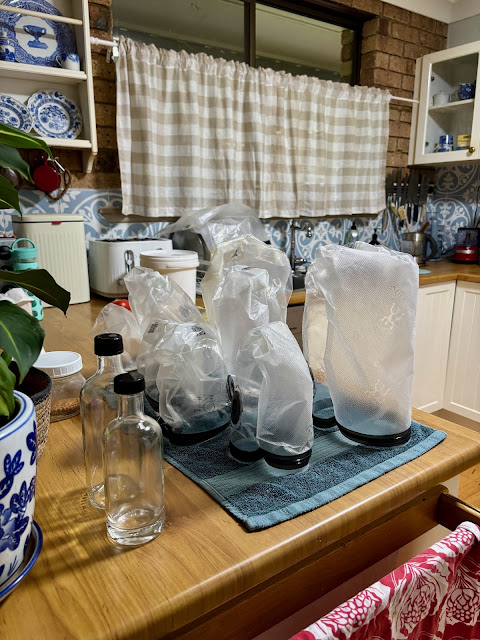
Every morning when I walk into my kitchen it looks tidy and ready for a day's work. Not so on this morning (above), I saw this when I walked in. Late the previous afternoon when I was looking for something, I came across my rolled up Zwilling vacuum bags and decided they had to be washed and dried. So I did that and although I usually put them outside on the verandah to dry it was dark by then. I turned the just-washed bags inside out and left them like this on a towel. It worked well and now the bags are ready to use when I bring home root vegetables, cabbages or whatever I buy that I want to last four or five weeks.
Image

You’ll save money by going back to basics

When I was doing the workshops and solo sessions, I had a couple of people whose main focus was on creating the fastest way to set up a simple life. You can't create a simple life fast, it's the opposite of that It's not one single thing either - it's a number of smaller, simpler activities that combine to create a life that reflects your values; and that takes a long to come together. When I first started living simply I took an entire year to work out our food - buying it, storing it, cooking it, preserving, baking, freezing, and growing it in the backyard. This is change that will transform how you live and it can't be rushed.  
Image

All previous blog posts

  • 2026 3
    • February 3
      • Workshops starting 1 March
      • Planting vegetable seeds and new workshops
      • Back where we belong
  • 2025 7
    • July 1
    • June 2
    • May 1
    • April 2
    • February 1
  • 2024 25
    • December 2
    • November 1
    • October 2
    • September 3
    • August 1
    • July 3
    • June 1
    • May 3
    • April 2
    • March 3
    • February 2
    • January 2
  • 2023 13
    • December 1
    • November 2
    • October 1
    • September 3
    • August 2
    • February 2
    • January 2
  • 2022 17
    • November 3
    • October 4
    • September 3
    • August 2
    • July 3
    • June 2
  • 2021 50
    • December 1
    • November 6
    • October 7
    • September 5
    • August 4
    • July 5
    • June 2
    • May 2
    • April 6
    • March 4
    • February 4
    • January 4
  • 2020 68
    • December 3
    • November 5
    • October 4
    • September 4
    • August 4
    • July 4
    • June 4
    • May 8
    • April 7
    • March 8
    • February 8
    • January 9
  • 2019 66
    • December 2
    • November 4
    • October 5
    • August 3
    • July 4
    • June 6
    • May 8
    • April 8
    • March 8
    • February 11
    • January 7
  • 2018 82
    • December 1
    • September 2
    • August 10
    • July 4
    • June 11
    • May 9
    • April 12
    • March 10
    • February 10
    • January 13
  • 2017 129
    • December 7
    • November 10
    • October 6
    • September 13
    • August 11
    • July 13
    • June 12
    • May 9
    • April 9
    • March 14
    • February 11
    • January 14
  • 2016 125
    • December 7
    • November 13
    • October 10
    • September 11
    • August 11
    • July 8
    • June 9
    • May 9
    • April 12
    • March 10
    • February 13
    • January 12
  • 2015 184
    • December 7
    • November 15
    • October 20
    • September 18
    • August 19
    • July 18
    • June 12
    • May 15
    • April 12
    • March 21
    • February 13
    • January 14
  • 2014 203
    • December 11
    • November 8
    • October 17
    • September 20
    • August 17
    • July 19
    • June 17
    • May 17
    • April 23
    • March 15
    • February 18
    • January 21
  • 2013 225
    • December 13
    • November 17
    • October 17
    • September 17
    • August 21
    • July 24
    • June 20
    • May 19
    • April 17
    • March 22
    • February 17
    • January 21
  • 2012 245
    • December 17
    • November 20
    • October 20
    • September 18
    • August 15
    • July 24
    • June 21
    • May 26
    • April 23
    • March 23
    • February 19
    • January 19
  • 2011 257
    • December 18
    • November 24
    • October 27
    • September 23
    • August 24
    • July 21
    • June 24
    • May 24
    • April 16
    • March 22
    • February 14
    • January 20
  • 2010 283
    • December 20
    • November 18
    • October 18
    • September 19
    • August 25
    • July 24
    • June 25
    • May 26
    • April 25
    • March 22
    • February 29
    • January 32
  • 2009 293
    • December 29
    • November 18
    • October 23
    • September 25
    • August 22
    • July 28
    • June 22
    • May 21
    • April 27
    • March 26
    • February 24
    • January 28
  • 2008 387
    • December 24
    • November 23
    • October 25
    • September 26
    • August 27
    • July 27
    • June 37
    • May 34
    • April 44
    • March 53
    • February 32
    • January 35
  • 2007 372
    • December 37
    • November 40
    • October 55
    • September 51
    • August 49
    • July 63
    • June 49
    • May 28


Trending Articles

NOT the last post

This will be my last post here.  I've been writing my blog for 18 years and now is the time to step back. I’ve stopped writing the blog and come back a couple of times because so many people wanted it, but that won’t happen again, I won’t be back.  I’ll continue on instagram to remain connected but I don’t know how frequent that will be. I know some of you will be interested to know the blog's statistics. 
Image

Every morning at home

Every morning when I walk into my kitchen it looks tidy and ready for a day's work. Not so on this morning (above), I saw this when I walked in. Late the previous afternoon when I was looking for something, I came across my rolled up Zwilling vacuum bags and decided they had to be washed and dried. So I did that and although I usually put them outside on the verandah to dry it was dark by then. I turned the just-washed bags inside out and left them like this on a towel. It worked well and now the bags are ready to use when I bring home root vegetables, cabbages or whatever I buy that I want to last four or five weeks.
Image

You’ll save money by going back to basics

When I was doing the workshops and solo sessions, I had a couple of people whose main focus was on creating the fastest way to set up a simple life. You can't create a simple life fast, it's the opposite of that It's not one single thing either - it's a number of smaller, simpler activities that combine to create a life that reflects your values; and that takes a long to come together. When I first started living simply I took an entire year to work out our food - buying it, storing it, cooking it, preserving, baking, freezing, and growing it in the backyard. This is change that will transform how you live and it can't be rushed.  
Image

Creating a home you'll love forever

Living simply is the answer to just about everything. It reduces the cost of living; it keeps you focused on being careful with resources such as water and electricity; it reminds you to not waste food; it encourages you to store food so you don't waste it and doing all those things brings routine and rhythm to your daily life. Consciously connecting every day with the activities and tasks that create simple life reminds you to look for the meaning and beauty that normal daily life holds.  It's all there in your home if you look for it. Seemingly mundane tasks like cleaning and cooking help you with that connection for without those tasks, the home you want to live in won't exist in the way you want it to.  Creating a home you love will make you happy and satisfied.
Image

Time changes everything

I've been spending time in the backyard lately creating a contained herb and vegetable garden. My aim is to develop a comfortable place to spend time, relax, increase biodiversity and encourage more animals, birds and insects to live here or visit. Of course I'd prefer my old garden which was put together by Hanno with ease and German precision. Together, we created a space bursting at the seams with herbs, vegetables and fruity goodness ready to eat and share throughout the year. But time changes everything. What I'm planning on doing now, is a brilliant opportunity for an almost 80 year old with balance issues. In my new garden I'll be able to do a wide range of challenging or easy work, depending on how I feel each day. It’s a daily opportunity to push myself or sit back, watch what's happening around me and be captivated by memories or the scope of what's yet to come.
Image

It's the old ways I love the most

I'm a practical woman who lives in a 1980’s brick slab house. There are verandahs front and back so I have places to sit outside when it's hot or cold. Those verandahs tend to make the house darker than it would be but they're been a great investment over time because they made the house more liveable. My home is not a romantic cottage, nor a minimalist modern home, it's a 1980’s brick slab house. And yet when people visit me here they tell me how warm and cosy my home is and that they feel comforted by being here. I've thought about that over the years and I'm convinced now that the style of a home isn't what appeals to people. What they love is the feeling within that home and whether it's nurturing the people who live there.
Image

Back where we belong

Surprise! I'm back ... for good this time. Instagram became an impossible place for me. They kept sending me messages asking if I'd make my page available for advertisers! Of course, I said no but that didn't stop them. It's such a change from what Instagram started as. But enough of that, the important part of this post is to explain why I returned here instead of taking my writing offline for good. For a few years Grandma Donna and I have talked online face-to-face and it's been such a pleasure for me to get to know her. We have a lot in common. We both feel a responsibility to share what we know with others. With the cost of living crisis, learning how to cook from scratch, appreciate the work we do in our homes, shop to a budget and pay off debt will help people grow stronger. The best place to do that is our blogs because we have no advertising police harassing us, the space is unlimited, we can put up tons of photos when we want to and, well, it just feels li...
Image

Making ginger beer from scratch

We had a nice supply of ginger beer going over Christmas. It's a delicious soft drink for young and old, although there is an alcoholic version that can be made with a slight variation on the recipe. Ginger beer is a naturally fermented drink that is easy to make - with ginger beer you make a starter called a ginger beer plant and after it has fermented, you add that to sweet water and lemon juice. Like sourdough, it must ferment to give it that sharp fizz. To make a ginger beer plant you'll need ginger - either the powdered dry variety or fresh ginger, sugar, rainwater or tap water that has stood for 24 hours to allow the chlorine to evaporate off. You'll also need clean plastic bottles that have been scrubbed with soap, hot water and a bottle brush and then rinsed with hot water. I never sterilise my bottles and I haven't had any problems. If you intend to keep the ginger beer for a long time, I'd suggest you sterilise your bottles. MAKING THE STARTER In a...
Image