down to earth

  • Home
  • About Us
  • Down To Earth Book
  • Privacy Policy
If you have had problems slowing down, I encourage you to take up the delightfully heart-warming and productive craft of knitting. Clicking away with two sticks, using long threads of cotton or wool that you can pick up and put down, take with you when you go out, and continue working on while you're talking to people and being very sociable, slows not only your heart rate but your mind too, and if you let it, your life as well.

While Tricia was here with us, I had an insight in what the old knitting circles and women's social mornings used to be like in past times. Often women used to take their knitting with them when they went out. Why not! It's portable, easy to carry and a good way to connect with others. Whenever you knit in public, often people come over to you and want to feel the texture of the yarn or the garment. Knitting breaks down the barriers, there is something about it that brings people together, and calms you when you do it alone.


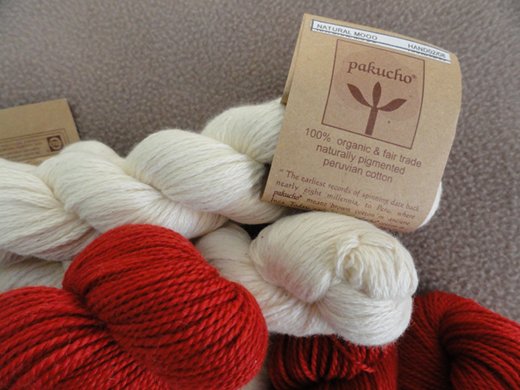
Knitting can take a long time, depending on what you're working on, because it is a one stitch at a time craft - like gardening, there is no way to hurry it along. It takes it's own time, or you don't do it at all. And because it does take time and it's something you put time and effort into, it makes sense to me to use the best quality yarns you can afford. I'm lucky to have a new order of Ecoyarns here now. It arrived while Tricia was here. So I invited her to take her pick, I had plenty of knitting needles here, so she started making a simple hat and socks (above) for her first grandchild, Danny and Laura's baby, due at the end of the year. True to her nature and her fine style, she finished them off with tiny rabbits. They're very sweet, one of a kind, and can be safely worn by the newborn because the yarn used is organic.


The photo above is her second project - a newborn cardigan from a Debbie Bliss book. She's using two different types of  organic cotton and again, it's unique, soft and very special.

If you've been hoping to take up the needles and learn how to knit, or if you're going from the beginner stage to a slightly more advanced level, I encourage you to choose good quality yarns for your knitting. Buy the best you can afford but check out my sponsor, Vivian at Ecoyarns because she is expanding her business and has plenty of specials at the moment. If you're in a cold climate, there is nothing better than the natural yarns like wool and alpaca to keep keep the cold out. They're natural insulators and are more efficient than fleece or acrylic yarns. In a warm climate, your can't beat knitted cotton, especially on a baby. A little cotton jacket or vest will keep a baby protected and comfortable without over-heating them.

I hope you get hooked on knitting, just like I am. It's soft, gentle and so productive - from these needles and yarn, beautiful garments and helpful household items are made. It's a craft that you get better at simply by doing it. There are plenty of excellent How to Knit videos on You Tube, so get your needles, select your yarns and dive in. It's a world that opens up an abundance of richness, satisfaction and handmade garments. Check out Ravelry for some inspiration. There, knitters from all over the world, show their work, share patterns and develop friendships through this wonderful craft.

Tomorrow I'll show you what I've been working on, as well as some of the new yarn and my very old wool winder. In the meantime, if you need me, I'll be knitting. ♥


I'm still a bit busy today. I'm dropping Tricia off at the airport soon and will then spend the day at the Neighbourhood Centre. However, I thought you'd like to see these two bunnies Tricia made for me. The smaller one was sent as a birthday gift, made with a small piece of recycled pure wool blanket, very much the same as the blankets she and I grew up using. When she came here, I told her how much I loved the rabbit and how it reminded me so much of our childhood, so she made me a mother bunny while she was here.

It's all done by hand, the pattern drawn freehand on a piece of paper, then the fabric cut and all work done by hand. I love them so much!

I have no time to post today, Tricia is still here and we're busy. Hopefully I'll see you tomorrow.

♥
Kathy sent me the link to this during the week. It's an excellent online magazine called Seeing the Every day. Thanks Kathy!

This plain cardigan is another fine Pickles baby pattern. I'm knitting it at the moment for one of our new end of year babies.

For anyone interested in working with wood of any kind, check this out.

I met Cath a couple of weeks ago when I was invited to talk at the Permaculture Noosa meeting. Her website, Soil to Supper has a lot of valuable information about food gardening.

If you love jam doughnuts - the ones we call Berliners - go no further. Here is your recipe.

Another excellent fact sheet about commercial insect sprays by Annette McFarlane.

OUR PEOPLE
This is Brenda's blog, Nest Bliss. Brenda shares her life along with patterns, recipes and some lovely photos of real life being lived.

This blog will charm you. It's Christina Lowry's A Little Bird Told Me. And I love Christina's Ten Things I've Learnt About Knitting. It's spot on.

Now that the weather is turning from warmish to cool, I'm taking the time to knit. It's always a wonderful time of year, my favourite. Thank you for your visits during the week. I hope you enjoy the weekend.

IN ADDITION:
I wrote today and recently that I'm knitting for new babies at the end of the year. My sister Tricia is visiting at the moment and she and I are like two chattering old birds clicking away on our needles here. It's really lovely to be knitting with my sister. Anyhow, I've had a few comments and emails asking if these babies are new grandchildren. Well, I think you know me well enough by now to know that if it were, I'd be shouting it out. But this babies are very close to me nonetheless. My much loved nephew, Daniel, and his partner Laura, are expecting their first child later in the year. And that means that Tricia is becoming a grandmother for the first time. The other baby will be the first child of my Penguin editor, Jo and her husband Eli, due in August. Luckily, I just received a large and beautiful order from Vivian at EcoYarns. I'll show you next week but it's all organic cottons and wools that will knit up nicely for these two young families and their babies. Just thinking about it makes me smile. :- )
What a wonderful collection of comments we had yesterday. If you haven't read them yet, make yourself a cuppa, sit down for an hour and read through them. Those comment clearly demonstrates what a wide and diverse group we are. I was fascinated by the variety of work we do, and how an ordinary day can be so different for all of us and yet we're still connected by our work and our lives. I loved reading about your day and I appreciate so many many of you taking the time to comment - I know from my own personal experience that taking that time sometimes seems too much but it really does give us time to slow ourselves down, to connect with others and to understand that none of us is alone.

``````````````

I love leftovers. When I can, I always add more vegetables to a meat meal so we have leftovers that can be eaten the following day or frozen for another day in the future. One recent leftover delight was this lamb curry.  Originally a baked lamb shoulder, it was enjoyed with baked potatoes, pumpkin, onions and sweet potato. Way too much for one meal, we had the meat for sandwiches the next day for lunch and that night I finished off the shoulder and the roasted vegetables by making up this lamb curry.  The recipe could be used for any pre-cooked meat or vegetables and you could replace the curry for chilli, or leave out the spice altogether and make a lamb stew.


One of the reasons this works so well as a leftover meal is that most of the cooking has already been done, the flavour has already developed and the meat and vegetables have areas of caramelisation on them. It really is just a matter of chopping up the leftovers, adding fresh vegetables and spices if you need to, and making a sauce.

In the photo above, I chopped up the leftover roasted vegetables and added a carrot and capsicum (pepper), onion and tomato left over from the lunch sandwiches. These were added to a pan to heat up and start cooking.


While that was happening, I cut all the meat off the bones.


See that brown colouring on the end of the bone, that is pure flavouring. It's caramelisation - it happens when the sugars in the meat (or vegetables) start cooking slowly and the water evaporates, turning the meat brown and changing the flavour.


When the vegetables have cooked, add the meat and the bones to take advantage of those caramelised bits, then add enough water to partially cover the meat and vegetables. Season with salt and pepper. You don't have to add any stock or flavourings from a tin or pouch, you'll get the flavour from the bones and pre-cooked meat.


When everything is cooked, you can either thicken the sauce by letting it evaporate, or if you're cooking for a few people and need to bulk the meal out with sauce and rice, thicken it with cornflour or arrowroot. Simply mix a tablespoon (or two in a larger meal) of cornflour with half a cup of water and mix until no lumps remain. Add that to the meat and vegetables and stir in well. Cook it for a further minute to cook out the flour taste, and your meal is ready. Serve with rice or mashed potato. It's fast, very tasty and economical.

I think we'd all agree that written words play a very important role in our lives. I blog almost every day and write every day. As well as the computer writing there is handwriting, and I still love to write by hand, and many of you, but not me, are texting. I have texted once (even the words relating to texting sound wrong to me). When I did, I felt like a monkey trying to write a Shakespearean play. One was enough, I quit and won't text again. Nevertheless, words and their meanings play a big part in my life - some sentences stay with me long after their reading. I particularly enjoy words about productive work.


The other day, Gail wrote this as part of her comment: "Today after i have finished my basic housework, I'll be sitting at my sewing machine making an apron and edging some old towels that I will cut up for cleaning cloths. I think of you and the other ladies who comment often as I go about my day and wonder what you are all doing."

I felt all warm and smily when I read those words; Gail reached out and connected to me in a real sense. Later in the day, when I was in a really boring meeting, my mind wandered back to Gail and I pictured her, cutting up old towels and working away on her sewing machine. I wondered what other regulars and newbies were doing too and decided that today, I'd write a post to find out what an average day looks like in your home or work place. I find it quite fascinating that while I'm sleeping, others are ironing or taking children to school and when I'm baking or washing up in the morning, others are piecing together a quilt in the fading light of day. Over on the forum, Rose sometimes starts a thread asking what members are doing over a 24 hour period. That is what this is about today.

Please join in if you have time, even if you don't usually comment. Let's build up a written package of our days from Norway to New Zealand, and every place in between. Add the time you're writing and what the weather is like and, of course, anything else you can - be it what you think is dull or what anyone would think is exciting. I will love all the "dull" and ordinary things. :- )

Wednesday - 5am. It's 17C and raining lightly.

Today I'll make breakfast, feed the cat and chickens, let the chooks out to roam. Then wash up and clean the kitchen, tidy up the lounge room, put some washing on, get some bread on the go and make our bed and the one in the guest room.

At 9.45am I'll drive over to the coast to pick up my sister from the airport and bringing her back home. No doubt we'll talk a leg off an iron bed, we'll drink tea and talk some more. We'll have lunch with Hanno when the bread is ready, I'll wash up and put on a pot of pea and ham soup for our tea. Later, we'll um, talk, and I'll do some knitting. She usually brings some hand work with her, often it's sewing, so I guess she'll work on that while I knit. I'm knitting baby woollies again.

Late in the afternoon, I'll start on tomorrow's blog and work out what I'll talk about at a function we're going to on the weekend. It's The Planting - part of the Woodford Folk Festival and we three have been invited along to be part of it.

So what are you doing today?
......................

I'll be signing books at the Collins bookshop at Sunshine Plaza, Maroochydore this Saturday from 10am - 12 md. Come along and say hello if you're close by.
I received a followup email from Joannie that said: "I have a girlfriend only 18months younger than myself (I’m 36) who has two gorgeous boys aged nearly three and 14months. She has been making the difficult decision as to whether to return to paid work after her second round of maternity leave. She was telling me she feels so torn about wanting to raise her boys herself rather than grandparents or child care but she’s struggling to deal with her feelings of “not contributing to the home financially”. We have been discussing this in great detail and I’ve been left feeling how sad that Mothers or Fathers that don’t re-enter paid work force are left feeling guilty and unworthy. As if what they do each day is not important or valued anymore.

Not contributing to the home financially! That makes my blood boil. When you leave the workforce to work at home, it is your job to manage the home with the money available to you. What is careful shopping for bargains, meal planning, stockpiling, making green cleaners, baking bread, making soap, cooking from scratch, recycling, mending, buying in bulk, caring for children? What are all these things if not contributing to the financial viability of the home? There is more than one way to contribute. Homemakers work as part of a team - there is a homemaker and a breadwinner. Both equally important. They can be a male homemaker and female breadwinner, or the other way around, they can be the same sex. One makes the money, the other uses it wisely to care for the family and pay the bills. If we don't value these partnerships of one breadwinner and one homemaker or two breadwinners who are part-time homemakers, then we lose out as a society.  Our countries are populated by families with children who raise those children to take on the role of breadwinners and homemakers when it comes to be their time. We are not a solely a commercial enterprise. We are not working primarily to keep the country going, although that is a valuable side benefit, we're working to provide a good life for our families. We have a human component that is vital and without it we fail - morally and commercially.

Never forget that a dollar saved is better than a dollar earned - you do not pay tax on a saved dollar.

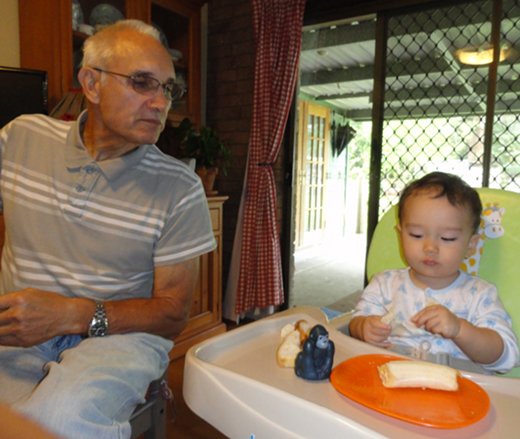
 Opa and Jamie having breakfast on the weekend. Jamie was happy, he had his banana and his favourite gorilla toy.

I challenge all the homemakers here to record the savings they make over the course of a month. There will be savings, I have no doubt. Work out also how much it would cost to return to the work force - in work clothes, transport, lunches, haircuts, everything. When you add child care costs into that equation, often it doesn't make financial sense to go back to work. When it does, the benefits of parents rearing their own children should be considered along with whether both parents want to work. In some families, both parents want to work, in some both parents need to work. In other families, a decision is made that one will go out to work and one will stay home to work. All decisions are valid for their own reasons and no one has the right to say that the decision someone else makes to work at home or in the workforce is not right, or not enough. We can all help this along. Stop judging others on the choices they make. I support homemakers, I support women who have to work and who choose to work. I support all women. I hope you can too. If you're in work at home or in the workforce, respect the choices other women make, even if you don't agree or understand it. Everyone has their own story, and you never know how destructive your words might be. Either offer your encouragement, or say nothing.

Enough chocolate chip biscuits were baked to do us through the week and to package up a few for visitors to take home.

So, let's get back to the subject at hand. If you do decide to stay at home, make the conscious decision that your career is working in your home. Homemaking is your new job. Learn as much as you can about what you need and want to do - there is no one size fits all in this, each one of us is different. Manage your family like a little business, you'll need to have short term plans, long term plans, work to a budget and look after your assets. This is real work and often you'll develop self reliance along with all the other skills you develop at home. And that, my friends, is a wonderful thing that will help you all through your life.

When you decide to work in your home full time, often you may have to spend sometime moving things around to better suit how you will work. Modern homes and renovated home are usually set up more for entertaining than for home production and family life. At the very least you should set up your kitchen to suit how you work but if that works well, maybe you can move and rejig how the rest of the house works for you too. Forget about what others are thinking - live as you wish, develop your skills and your self confidence and become more self reliant. There is no greater gift you can give to a child than to be there, to express love and support and to show them that the life you've built makes you happy. If you can do that, you'll be a fine role model along with being a fine parent.


One of our Barnevelders perching on top of the tap!

Never let anyone demean the work you do at home. If you have small children, what better work could you have than to guide them, teach them, protect them and to show them, by example, how wonderful life can be? The home is the best place to learn life skills and to pass what you learn on to your children. As children grow, they still need you as their guiding light. Teenagers will benefit from knowing you're there when they come home from school. Giving them your time, in addition to your never ending love, is the best investment in their future.

Own your life.  What you do everyday is so important. Every one of those days make up your life. Your daily work will help define the person you become so whether you're the manager of a dozen employees or the homemaking mother/father of two or ten, put your best into every day so that you get its full value. If you can find a good balance between work and the time to enjoy what you work for, you'll be in the best position.

ADDITION: My thanks to Madge who sent this newspaper clipping relating to this post. Thanks Madge.

Last week I received an email from Joannie who said: "After listening to you on the radio and checking out your blog I then bought your book and as a result my family has named me the domestic godess!. Why? I have created a stockpile of groceries, made my own soap, baked my own sourdough bread, made muffins and slices instead of buying pre-packaged snacks, I have made my own cleaners and as of this afternoon I preserved my first ever jar of capsicums in fact that was my first preserved anything! ...  Another amazing positive has come out of this…..we have cut our grocery bill in half!!!!!! WOW truly something I never thought possible as I didn’t think I wasted money and always tried to buy things on sale, this demonstes the benefits of buying in bulk.

"The feeling this has given me is indescribable, I have always struggled with not being in the paid work force but being able to provide for my family and learning to live simply has given me empowerment, I can finally say, I am now so proud of what I do. My children are learning to make cleaners and preserve goods, bake from scratch and have a simple eye and ask themselves can we live without that? My daughter took it upon herself to make a lemon slice from scratch and take it to elderly neighbors and friends, my 12 year old son made his own bread and I overheard him reciting recipes to his 26 year old aunt who can’t yet cook. These small things make me proud of my job as I have two gorgeous offspring who are learning skills for life."

That is the kind of empowerment I hoped to relay through the pages of my book and I'm so pleased it reached out to at least one family.We've all heard the stories of friends and neighbours being unkind when they know a former paid worker has decided to stay at home to manage the home. That negativity can transfer to the new homemaker and be a small seed of self-doubt that can build into something destructive.


When I first started working in my home as a homemaker, after many years of being in the workforce, I felt no shame or that I was doing less than I should be doing. I'm intelligent, I have a degree, I've been successful in several areas and I knew when I came home, I'd made the right choice for me. None of my friends questioned my decision - they either understood I had decided to change for my own reasons or they realised that criticism would flow off me like water off a duck's back. For whatever reason, I heard nothing. However, I couldn't find any other women who were doing what I was doing and being satisfied by it.

During those first weeks, I wasn't sure what to expect. Either from myself, my home or from my own emotions. I knew this was where I wanted to be and I hoped I would enjoy being here. What I didn't expect was to feel powerful and more alive than I'd felt in years. To know that I could structure my day however I wanted it to be after years of fitting into a commercial environment and working to deadlines, well, that alone made me believe I could fly. I didn't have to do anything, and yet I wanted to do everything. There were so many possibilities in front of me! I felt like I'd really found my home. Over the months that followed, I taught myself as much as I could. I read about cleaning, brushes, microfibre, chemicals, preserving, nourishment, making cheese and bread, home maintenance, productive organic gardens and many other things. The more I read, the more I remembered from my upbringing when my grandma washed her dishes at a stone sink and my mother boiled sheets in a copper boiler. We are not so far from that past time; it happened in my lifetime in Sydney. Life has changed so fast.


It made me realise I had a rich heritage, not in money and possessions, but in how to build a strong family and how to look after them well. I came from a family of hard workers, prime homemaking stock, and that made me really proud. When my friends asked what I was doing, I proudly told them I'd made a new kind of bread or sewn some baby clothes or bought more chickens. I was doing important work and I wanted everyone to know it. This was not anything to feel ashamed of and I was not going to keep quiet about it. I searched for an Australian book on the subject and couldn't find any, so I wrote my own book. I felt that if others didn't know about the beauty that is lurking in every home, they should be made aware of it. I kept hearing that women who chose homemaking as a career were downtrodden and miserable but I had lived on both sides of the working track and I knew that working in my home opened up possibilities for me, it was my liberator. I wasn't disadvantaged and powerless at home, I was thriving.


What I had found was a way to bypass going to work to earn money by using the money we had available in a more sensible way. If I made my own products, not only did I have better quality, they were healthier, cheaper and more environmentally friendly. By working in my home I had the time to shop for bargains and to use everything I had to it's full value. By working at home as if it were my career, I'd opened up a different kind of future for myself - one where I felt valued and creative and where anything was possible.

When I looked around to assess after my first year at home I realised I was doing meaningful work, I was making a difference and the home where I used to rush in and out of had become a comfortable oasis in a sea of outside craziness. I read about women criticising other women for staying at home - bored housewives sitting in front of the computer or TV all day with nothing to do - none of that came close to what was actually happening in my home. I'm not sure why women criticise other women. Working life can be difficult for all of us and it's not right to attack others to make yourself feel better. That kind of behaviour is new to me. We didn't do that to each other when I was much younger. Back then, at least where I lived, other women were seen as friends, not competitors. We respected each other and the decisions we made.


This post is getting to be a long one and I still have a lot on my mind, so I'll continue this tomorrow when I talk about making that transition from work to home and self reliance. I know there are a lot of women and men out there that struggle with this. I successfully made that transition and I'm glad I did. I am happier now than I've ever been. Find out why tomorrow.


Coming back to knitting - "To think of ourselves as makers, rather than just consumers, is the first part of refusing to accept everything in our culture as obvious and inevitable."


Great leadership -  TED on You Tube

Make your own bicycle saddlebags.

Fresh ricotta in five minutes.

I found this blog, Lovely Greens, recently and have been charmed by it. This lady is a bee keeper and gardener.

The fabulous Annette McFarlane's DIY Insect control page.

OUR PEOPLE

Outback Tania has been very busy.  Check out what she's up to.

Jenni at A Cheerful Living Adventure has some delightful Topics, including one called Tea and Cake. I found Herman there. :- )
Hello all, I just wanted to remind everyone that the swap is now over and everyone should be busy getting those apron parcels in the mail. I know that some of you have had life's little mishaps and adventures slow you down a bit, but hopefully you have kept your swap buddy informed and she knows you will be a bit late.(like finishing this weekend lol) but try to get your apron in the mail by early next week. As you all know we often show case the photos of the work you have done on the blog, but this swap we are moving the photos to a thread on the down to earh forum. If you are not a memberyet, do stop by and sign up as it has the most friendly and wonderful people on it! To sign up just click on the button at the top of this blog and join in the fun-it is free and has an incredible amount of info for you on so many different facets of living more mindfully and slowly. You will be able to post your photos there easily and look at everyone else's too- which is ever so much fun. 

 Would Pauline paulinexyz(at)hotmail(dot)co(dot)uk please e mail me- cdetroyes(at)yahoo(dot)com or your swap buddy as she has your apron ready but no address to send it to. Hugs Sharon
The very talented Renata Kirkpatrick will be at the Maleny Neighbourhood Centre next Tuesday, 12.30 - 2.30 pm,  for Crafternoon. Renate will be showing us how to make the incredible creations she is well known for. Here is Renata's blog and her great tutorial on the granny square.

If you're a crochet beginner or if you've been crocheting for years, Renate will have something for you. Our Crafternoon is free and we serve homemade cake with our cuppas. You're all welcome to come along. Please let me know in the comments if you can make it. 
The last part of my home review this week is the vegetable garden. The garden is one of four elements that we deal with to put food on the table every day. Those four elements are the vegetable garden, food shopping, food storage and food preparation. They work together, equally important and supportive of the end goal - feeding the family. We start planting our garden in March, it grows slowly at first, always dependent on the weather and what insects are around, and reaches full production around the end of May. As we harvest, Hanno plants more in those empty spaces. What we don't eat fresh is frozen or bottled for our use later in the year, or given away - either to our family or friends.

I took all these photos yesterday afternoon.

It all starts with the seeds. We collect seeds when we can, otherwise we buy open pollinated seeds from Green Harvest.   These are loofa seeds above and Easter Egg radish seeds below.


This tray of seedlings will be planted out soon. They are brussel sprouts, lettuce, mini kale and tomatoes.

Not everything we grow is in the ground. Here we have an orange tree waiting to be planted (to replace a pink grapefruit we lost in the recent rains), sweet peas, a bay tree, parsley, lemon myrtle, strawberries and nasturtiums.

And this large green leaf vine is my vanilla orchid. It's snaking its way through the bush house.

The garlic has just pushed through.

 Here we have petunias, parsley, beetroot, Chinese cabbage, pineapple sage, tomatoes, chillies and garlic.

Hiding in there is the first tomato.

There must be almost a hundred cucumber flowers on these vines.

We started harvesting the cucumbers this week.

The chooks are the constant companions of the garden. They don't get into the garden, they patrol the grassed area just outside it, waiting for insects and leaves to fall near them.


This bare patch is waiting for the potatoes. We bought some potatoes in Dorrigo on the way back from the book tour and they haven't sprouted yet. They're fresh, straight from the organic farm they were grown on. It's reminds me every time I see them how old the potatoes we buy must be when they often sprout within a week of us bringing them home.
 And finally, a second planting of bok choy and lettuce, just near, but out of sight, of the strawberries.

Further over, in another garden, Hanno has planted beans, peas, more beetroot, silverbeet, and green onions. There is one more garden to prepare and plant out and then the majority of the hard work is done. Then it's just harvesting and planting in empty spaces.

If you're starting your first garden this year, start small and only grow what you'll eat. Vegetable gardening is a wonderful supplement to the food you have in your kitchen but in those first years, take it slow while you learn what you need to produce vegetables without commercial fertilisers and insecticides. Vegetable gardening is one of the slow elements of simple life - it takes its own time, nothing will hasten a tomato or lettuce to maturity. You have to wait and watch, and while you do, that gentle pace slows you too.

Never expect perfection in the vegetable garden. This is nature working right in front of you. You will have perfect tomatoes and some with grubs, you'll have crisp lettuces then one full of slugs, there will be times when you do your best and it doesn't work, and other times when you don't even plant a seed but up will pop the best cucumbers. It's all part of it, all there for you to learn from. So take notes and record what you plant and harvest, so you can build on what you do this year and take it into the next season.

Gail asked for the Celery and Potato Soup recipe, it's a very simple soup and this method of making soup can be used with almost any vegetable or group of vegetables. The soup makes its own stock while it's cooking. The recipe will feed four people.
  • 2 large potatoes - peeled and chopped
  • 6 stalks celery - washed and chopped
  • 1 large onion - peeled and chopped
  • water
  • salt and pepper
  • a splash of cream

Place the above in a one litre/quart of water, add salt and pepper to taste and cook until soft - about 30 minutes. Blend in a blender or with a stick blender, taste for seasoning, adjust if necessary. Some celery is very stringy, if yours is, strain the soup through a sieve at this point. Then add cream and a sprinkling of parsley and serve. Simple!


Newer Posts Older Posts Home

MY BOOKS

MY BOOKS


My books were all published by Pengiun, and are available at Amazon US, Amazon UK and Amazon Au

Search here

Total Pageviews

Translate


I'm Rhonda Hetzel and I've been writing my Down to Earth blog since 2007. Although I write the occasional philosophical post, my main topics include home cooking, happiness and gardening as well as budgeting, baking, ageing, generosity, mending and handmade crafts. I hope you enjoy your time here.

MY FAVOURITE PLACES

  • Grandma Donna's Place
  • Grandma Donna's YouTube
  • Grandma Donna's Instagram
  • This Simple Day
  • Nicole's Instagram

Give More

Give More

Popular posts last year

Making ginger beer from scratch

We had a nice supply of ginger beer going over Christmas. It's a delicious soft drink for young and old, although there is an alcoholic version that can be made with a slight variation on the recipe. Ginger beer is a naturally fermented drink that is easy to make - with ginger beer you make a starter called a ginger beer plant and after it has fermented, you add that to sweet water and lemon juice. Like sourdough, it must ferment to give it that sharp fizz. To make a ginger beer plant you'll need ginger - either the powdered dry variety or fresh ginger, sugar, rainwater or tap water that has stood for 24 hours to allow the chlorine to evaporate off. You'll also need clean plastic bottles that have been scrubbed with soap, hot water and a bottle brush and then rinsed with hot water. I never sterilise my bottles and I haven't had any problems. If you intend to keep the ginger beer for a long time, I'd suggest you sterilise your bottles. MAKING THE STARTER In a...
Image

NOT the last post

This will be my last post here.  I've been writing my blog for 18 years and now is the time to step back. I’ve stopped writing the blog and come back a couple of times because so many people wanted it, but that won’t happen again, I won’t be back.  I’ll continue on instagram to remain connected but I don’t know how frequent that will be. I know some of you will be interested to know the blog's statistics. 
Image

How to make cold process soap

I'm sure many of you are wondering: "Why make soap when I can buy it cheaply at the supermarket?" My cold process soap is made with vegetable oils and when it is made and cured, it contains no harsh chemicals or dyes. Often commercial soap is made with tallow (animal fat) and contains synthetic fragrance and dye and retains almost no glycerin. Glycerin is a natural emollient that helps with the lather and moisturises the skin. The makers of commercial soaps extract the glycerin and sell it as a separate product as it's more valuable than the soap. Then they add chemicals to make the soap lather. Crazy. Making your own soap allows you to add whatever you want to add. If you want a plain and pure soap, as I do, you can have that, or you can start with the plain soap and add colour, herbs and fragrance. The choice is yours. I want to add a little about animal and bird fat. I know Kirsty makes her soap with duck fat and I think that's great. I think t...
Image

Preserving food in a traditional way - pickling beetroot

I've had a number of emails from readers who want to start preserving food in jars but don't know where to start or what equipment to buy.  Leading on from yesterday's post, let's just say up front - don't buy any equipment. Once you know what you're doing and that you enjoy preserving, then you can decide whether or not to buy extra equipment. Food is preserved effectively without refrigeration by a variety of different methods. A few of the traditional methods are drying, fermentation, smoking, salting or by adding vinegar and sugar to the food - pickling. This last method is what we're talking about today. Vinegar and sugar are natural preservatives and adding one or both to food sets up an environment that bacteria and yeasts can't grow in. If you make the vinegar and sugar mix palatable, you can put up jars of vegetables or fruit that enhance the flavour of the food and can be stored in a cupboard or fridge for months. Other traditional w...
Image

Cleaning mould from walls and fabrics

With all this rain around we've developed a mould problem in our home. Usually we have the front and back doors open and that good ventilation stops most moulds from establishing. However, with the house locked up for the past week, the high humidity and the rain, mould is now growing on the wooden walls near our front door and on the lower parts of cupboards in the kitchen. Most of us will find mould growing in our homes at some point. Either in the bathroom or, in humid climates, on the walls, like we have now. You'll need a safe and effective remedy at some point, so I hope one of these methods works well for you. Mould is not only ugly to look at, it can cause health problems so if you see mould growing, do something about it straight away. The longer you leave the problem, the harder it will be to get rid of it effectively. If you have asthma or any allergies, you should do this type of cleaning with a face mask on so you don't breathe in any spores. Many peopl...
Image

Five minute bread

Bread is one of those foods that, when made with your own hands, gives a great deal of satisfaction and delight. It's only flour and water but it symbolises so much. I bake bread most days and use a variety of flours that I buy in bulk. Often I make a sandwich loaf because we use most of our bread for lunchtime sandwiches and for toast. Every so often I branch out to make a different type of loaf. I have tried sour dough in the past but I've not been happy with any of them. I'll continue to experiment with sour dough because I like the idea of using wild yeasts and saving the starter over a number of years to develop the flavour and become a part of the family. However, the loaf I've been branching out to most often is just a plain old five minute bread. By five minutes I mean it takes about five minutes actual work to prepare but it's the easiest of all bread to make and to get consistently good loaves from. If you're having people around for lunch or...
Image

This is my last post.

I have known for a while that this post was coming, but I didn't know when. This is my last post. I'm closing my blog, for good, and I'm not coming back like I have in the past.  I've been writing here for 16 years and my blog has been many things to me. It helped me change my life, it introduced me to so many good people, it became a wonderful record of my family life, it helped me get a book contract with Penguin, and monthly columns with The Australian Women's Weekly and Burke's Backyard . But in the past few months, it's become a burden. In April, I'll be 75 years old and I hope I've got another ten years ahead. However, each year I'll probably get weaker and although I'm fairly healthy, I do have a benign brain tumour and that could start growing. There are so many things I want to do and with time running out, leaving the blog behind gives me time to do the things that give me pleasure. On the day the blog started I felt a wonderful, h...
Image

What is the role of the homemaker in later years?

An email came from a US reader, Abby, who asked about being a homemaker in later years. This is part of what she wrote: "I am a stay-at-home mum to 4 children, ages 9-16. I do have a variety of "odd jobs" that I enjoy - I run a small "before-school" morning drop-off daycare from my home, I am a writing tutor, and I work a few hours a week at a local children's bookstore. But mostly, I cherish my blissful days at home - cooking, cleaning (with homemade cleaners), taking care of our children and chickens and goats, baking, meal-planning, etc. This "career" at home is not at all what I imagined during my ambitious years at university, but it is far more enriching. I notice, though, that my day is often planned around the needs of my family members. Of course, with 4 active kids and a husband, this is natural. I do the shopping, plan my meals, cook dinner - generally in anticipation of my family reconnecting in the evening.  I can't h...
Image

Every morning at home

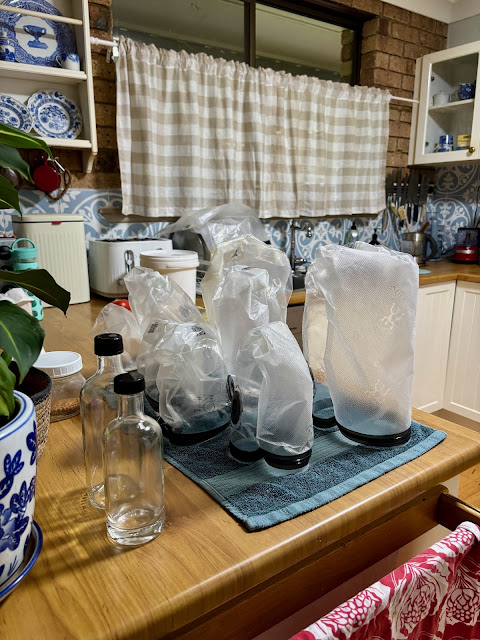
Every morning when I walk into my kitchen it looks tidy and ready for a day's work. Not so on this morning (above), I saw this when I walked in. Late the previous afternoon when I was looking for something, I came across my rolled up Zwilling vacuum bags and decided they had to be washed and dried. So I did that and although I usually put them outside on the verandah to dry it was dark by then. I turned the just-washed bags inside out and left them like this on a towel. It worked well and now the bags are ready to use when I bring home root vegetables, cabbages or whatever I buy that I want to last four or five weeks.
Image

You’ll save money by going back to basics

When I was doing the workshops and solo sessions, I had a couple of people whose main focus was on creating the fastest way to set up a simple life. You can't create a simple life fast, it's the opposite of that It's not one single thing either - it's a number of smaller, simpler activities that combine to create a life that reflects your values; and that takes a long to come together. When I first started living simply I took an entire year to work out our food - buying it, storing it, cooking it, preserving, baking, freezing, and growing it in the backyard. This is change that will transform how you live and it can't be rushed.  
Image

All previous blog posts

  • 2026 3
    • February 3
      • Workshops starting 1 March
      • Planting vegetable seeds and new workshops
      • Back where we belong
  • 2025 7
    • July 1
    • June 2
    • May 1
    • April 2
    • February 1
  • 2024 25
    • December 2
    • November 1
    • October 2
    • September 3
    • August 1
    • July 3
    • June 1
    • May 3
    • April 2
    • March 3
    • February 2
    • January 2
  • 2023 13
    • December 1
    • November 2
    • October 1
    • September 3
    • August 2
    • February 2
    • January 2
  • 2022 17
    • November 3
    • October 4
    • September 3
    • August 2
    • July 3
    • June 2
  • 2021 50
    • December 1
    • November 6
    • October 7
    • September 5
    • August 4
    • July 5
    • June 2
    • May 2
    • April 6
    • March 4
    • February 4
    • January 4
  • 2020 68
    • December 3
    • November 5
    • October 4
    • September 4
    • August 4
    • July 4
    • June 4
    • May 8
    • April 7
    • March 8
    • February 8
    • January 9
  • 2019 66
    • December 2
    • November 4
    • October 5
    • August 3
    • July 4
    • June 6
    • May 8
    • April 8
    • March 8
    • February 11
    • January 7
  • 2018 82
    • December 1
    • September 2
    • August 10
    • July 4
    • June 11
    • May 9
    • April 12
    • March 10
    • February 10
    • January 13
  • 2017 129
    • December 7
    • November 10
    • October 6
    • September 13
    • August 11
    • July 13
    • June 12
    • May 9
    • April 9
    • March 14
    • February 11
    • January 14
  • 2016 125
    • December 7
    • November 13
    • October 10
    • September 11
    • August 11
    • July 8
    • June 9
    • May 9
    • April 12
    • March 10
    • February 13
    • January 12
  • 2015 184
    • December 7
    • November 15
    • October 20
    • September 18
    • August 19
    • July 18
    • June 12
    • May 15
    • April 12
    • March 21
    • February 13
    • January 14
  • 2014 203
    • December 11
    • November 8
    • October 17
    • September 20
    • August 17
    • July 19
    • June 17
    • May 17
    • April 23
    • March 15
    • February 18
    • January 21
  • 2013 225
    • December 13
    • November 17
    • October 17
    • September 17
    • August 21
    • July 24
    • June 20
    • May 19
    • April 17
    • March 22
    • February 17
    • January 21
  • 2012 245
    • December 17
    • November 20
    • October 20
    • September 18
    • August 15
    • July 24
    • June 21
    • May 26
    • April 23
    • March 23
    • February 19
    • January 19
  • 2011 257
    • December 18
    • November 24
    • October 27
    • September 23
    • August 24
    • July 21
    • June 24
    • May 24
    • April 16
    • March 22
    • February 14
    • January 20
  • 2010 283
    • December 20
    • November 18
    • October 18
    • September 19
    • August 25
    • July 24
    • June 25
    • May 26
    • April 25
    • March 22
    • February 29
    • January 32
  • 2009 293
    • December 29
    • November 18
    • October 23
    • September 25
    • August 22
    • July 28
    • June 22
    • May 21
    • April 27
    • March 26
    • February 24
    • January 28
  • 2008 387
    • December 24
    • November 23
    • October 25
    • September 26
    • August 27
    • July 27
    • June 37
    • May 34
    • April 44
    • March 53
    • February 32
    • January 35
  • 2007 372
    • December 37
    • November 40
    • October 55
    • September 51
    • August 49
    • July 63
    • June 49
    • May 28


Trending Articles

NOT the last post

This will be my last post here.  I've been writing my blog for 18 years and now is the time to step back. I’ve stopped writing the blog and come back a couple of times because so many people wanted it, but that won’t happen again, I won’t be back.  I’ll continue on instagram to remain connected but I don’t know how frequent that will be. I know some of you will be interested to know the blog's statistics. 
Image

Every morning at home

Every morning when I walk into my kitchen it looks tidy and ready for a day's work. Not so on this morning (above), I saw this when I walked in. Late the previous afternoon when I was looking for something, I came across my rolled up Zwilling vacuum bags and decided they had to be washed and dried. So I did that and although I usually put them outside on the verandah to dry it was dark by then. I turned the just-washed bags inside out and left them like this on a towel. It worked well and now the bags are ready to use when I bring home root vegetables, cabbages or whatever I buy that I want to last four or five weeks.
Image

You’ll save money by going back to basics

When I was doing the workshops and solo sessions, I had a couple of people whose main focus was on creating the fastest way to set up a simple life. You can't create a simple life fast, it's the opposite of that It's not one single thing either - it's a number of smaller, simpler activities that combine to create a life that reflects your values; and that takes a long to come together. When I first started living simply I took an entire year to work out our food - buying it, storing it, cooking it, preserving, baking, freezing, and growing it in the backyard. This is change that will transform how you live and it can't be rushed.  
Image

Creating a home you'll love forever

Living simply is the answer to just about everything. It reduces the cost of living; it keeps you focused on being careful with resources such as water and electricity; it reminds you to not waste food; it encourages you to store food so you don't waste it and doing all those things brings routine and rhythm to your daily life. Consciously connecting every day with the activities and tasks that create simple life reminds you to look for the meaning and beauty that normal daily life holds.  It's all there in your home if you look for it. Seemingly mundane tasks like cleaning and cooking help you with that connection for without those tasks, the home you want to live in won't exist in the way you want it to.  Creating a home you love will make you happy and satisfied.
Image

Time changes everything

I've been spending time in the backyard lately creating a contained herb and vegetable garden. My aim is to develop a comfortable place to spend time, relax, increase biodiversity and encourage more animals, birds and insects to live here or visit. Of course I'd prefer my old garden which was put together by Hanno with ease and German precision. Together, we created a space bursting at the seams with herbs, vegetables and fruity goodness ready to eat and share throughout the year. But time changes everything. What I'm planning on doing now, is a brilliant opportunity for an almost 80 year old with balance issues. In my new garden I'll be able to do a wide range of challenging or easy work, depending on how I feel each day. It’s a daily opportunity to push myself or sit back, watch what's happening around me and be captivated by memories or the scope of what's yet to come.
Image

It's the old ways I love the most

I'm a practical woman who lives in a 1980’s brick slab house. There are verandahs front and back so I have places to sit outside when it's hot or cold. Those verandahs tend to make the house darker than it would be but they're been a great investment over time because they made the house more liveable. My home is not a romantic cottage, nor a minimalist modern home, it's a 1980’s brick slab house. And yet when people visit me here they tell me how warm and cosy my home is and that they feel comforted by being here. I've thought about that over the years and I'm convinced now that the style of a home isn't what appeals to people. What they love is the feeling within that home and whether it's nurturing the people who live there.
Image

Back where we belong

Surprise! I'm back ... for good this time. Instagram became an impossible place for me. They kept sending me messages asking if I'd make my page available for advertisers! Of course, I said no but that didn't stop them. It's such a change from what Instagram started as. But enough of that, the important part of this post is to explain why I returned here instead of taking my writing offline for good. For a few years Grandma Donna and I have talked online face-to-face and it's been such a pleasure for me to get to know her. We have a lot in common. We both feel a responsibility to share what we know with others. With the cost of living crisis, learning how to cook from scratch, appreciate the work we do in our homes, shop to a budget and pay off debt will help people grow stronger. The best place to do that is our blogs because we have no advertising police harassing us, the space is unlimited, we can put up tons of photos when we want to and, well, it just feels li...
Image

Making ginger beer from scratch

We had a nice supply of ginger beer going over Christmas. It's a delicious soft drink for young and old, although there is an alcoholic version that can be made with a slight variation on the recipe. Ginger beer is a naturally fermented drink that is easy to make - with ginger beer you make a starter called a ginger beer plant and after it has fermented, you add that to sweet water and lemon juice. Like sourdough, it must ferment to give it that sharp fizz. To make a ginger beer plant you'll need ginger - either the powdered dry variety or fresh ginger, sugar, rainwater or tap water that has stood for 24 hours to allow the chlorine to evaporate off. You'll also need clean plastic bottles that have been scrubbed with soap, hot water and a bottle brush and then rinsed with hot water. I never sterilise my bottles and I haven't had any problems. If you intend to keep the ginger beer for a long time, I'd suggest you sterilise your bottles. MAKING THE STARTER In a...
Image