down to earth

  • Home
  • About Us
  • Down To Earth Book
  • Privacy Policy
I loved all the birthday messages you sent yesterday. Thank you all so much. The comments you send me, even after all this time, really make my day. They remind me that you are out there and the numbers of us living as we do are increasing. Happy birthday to all the other April babies.  I hope you have a joyous birthday too.

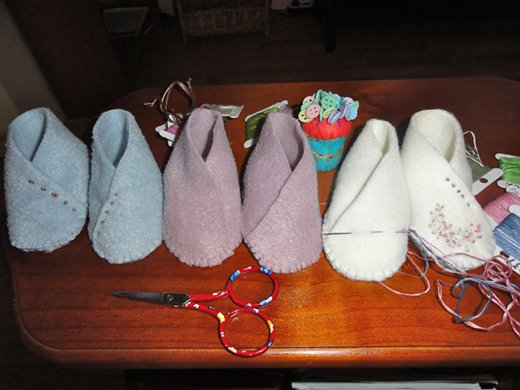
I found the most charming and cuddly pattern for baby slippers at The Purl Bee the other day. The link is here. The Purl Bee suggested making them using woollen felt and when I was at our Crafternoon, I made a couple of pairs of felt slippers but then started wondering about the practicalities - keeping them clean. You could wash the felt shoes but they'd take a long time to dry. So I went on to version 2 - fleece slippers. 

They're easy to make, look really cozy and three pairs of slippers can be made from a 35cm/14 inch square of thick fleece. I bought a half a metre of different colours of fleece recently and each half metre cost me less than four dollars. Making three pairs of slippers cost me about 50 cents. Best of all, they can be thrown in with the normal wash and be dry in a couple of hours. I guess they'd be fine in the dryer as well, if you use one.

These are an easy to make, simple baby gift for the little loves in your life. If you have a few different fleece colours you could make a selection of different colours slippers for a newborn, or make different colours for different ages. They make a delightful and very useful little gift.

To make the slippers you'll need thick fleece, a sewing needle, embroidery thread, a few pins and a pair of scissors.

The slippers are cut out according to the template here  and then sewn together using a simple blanket stitch. If you don't know how to do that, look at this  You Tube blanket stitch video. Try it, it's very easy, even for beginners. Fleece is very forgiving. It's easy to cut and the cut edges seal themselves and don't need any hemming of edging.


I'm going to make a thread at the forum later today so we can share photos of our fleece slippers. So even if you're new to sewing, dive into this great beginners project and see how well they come up. If you're really keen you do make up matching mittens and warm hats. I'll be doing them as soon as I have a bit of share time. Don't forget to show and tell on the forum thread. I'd love to see what you do.


I'll be at the Permaculture Noosa meeting this Thursday, 19 April. They have a small market, speakers and supper from 7pm till 9pm. If you're nearby, come along and introduce yourself. I'd love to meet you. If you've bought a book, bring it along and I'll sign it for you. The following day, on Friday, 20 April, I'll be at Dymocks in Brisbane to sign books. If you've been reading here for a while, come in and say hello, I'd love to meet you.  Some readers have asked when I'll be signing books near them but the only places I'll be in the near future will be close to my home - Sunshine Coast, Toowoomba (in June) and Brisbane. ♥

In 1967, when I was 19, I bought the Beatles LP Sgt Pepper's Lonely Hearts Club Band. I listened to that record for hours at a time, my favourites songs were A Day in the Life and She's leaving Home. Also on that record was When I'm 64. I didn't like it much and for the life of me I couldn't imagine ever being that old. Well, look at me now, a few minutes have passed by and yesterday was my 64th birthday.


When I was much younger I used to look forward to particular ages. When I was 18, I met a young man who was 24. Back then, to my teenaged sensibilities, 24 was so sophisticated and mature! I wanted to be 24 then, straight away. Imagine, wishing away six years! I'm not sure when I stopped looking forward to particular birthdays but I don't do it anymore. I look back instead. But not in melancholic way; I don't yearn for my youth nor wish I was younger. I look back to remember, the view from here is wonderful. I can see back about 60 years.

There is a lot to be thankful for at this age. The main one being that I haven't died early, because the only way you won't age, is to die. Growing older with no health problems is a very interesting exercise. There are so many things to learn about and have an interest in. We have a close and beautiful family around us, we have many friends. In fact, in these past few years, we've made many new friends. I am not a very social person, I prefer to spend time alone and at home with Hanno but friendships and an interest in our community have brought us out of our home much more than in the past. I guess we have the luxury of time now too. We've had our babies, lived through not only our teenage years but those of our children too, stood proudly by when those teenagers became men who found their partners and had their own beautiful babies. I smile to myself when I think of all those times in my younger years when I read books to them, cooked for them, became engrossed in conversations with them, showed them how to hold a chicken and carry eggs, encouraged them, was proud of them and disappointed, when I wanted them to do more ... or less, and when I just stood by and watched. Life is full of tiny increments. I didn't know that when I was younger. I thought life was supposed to be about grand gestures. But teaching those small things to children, seeing a little finger poke a seed into moist soil, being taken to those first emerging shoots with an entire hand wrapped around my finger, helping with homework and projects one night and then the next, cooking all those dinners, making sandwiches by the hundreds - all . one. at . a . time, knitting one stitch by one stitch, making batches of soap, celebrating all those birthdays - not only my own 64 but also those of my parents, my sister, my husband, my sons, and now their wives and their babies. It all happened one thing at a time and then added up to so much.

In an email I received a couple of months ago, I woman wrote to ask me how could she get to where I am - at accepting my age, the passage of time and the loss of youth. I told her, I do accept the passage of time, and I am grateful that I can because to do otherwise would mean I was dead. I also accept my age, how can I not, it is part of me. But I am much more than a number. And loss of youth? I don't see that as a loss. I see youth as a stage of life that prepares you for a more profound season. It's not the main prize, it's just part of the package. If there is a prize, I think it's being able to grow older, to have the time to enjoy life without the busyness of the younger years when marriage, family and careers are being built. We put in all the work when we were young, now we are reaping the rewards.  I'm more content now, more accepting of what is. I see beauty now where I didn't before, small things make me happy, I am grateful to be healthy enough to work in my community, it's made me better than I was. Youth? Yes, it has some wonderful benefits and I look back on my youth full of interesting and crazy people but there comes a time when growing up is the only thing left. Now is better. Time marches on, unstopped by face creams, cosmetic surgery and irrational wishes for passed youth.


Hanno and I went out yesterday to lunch to celebrate my birthday. We dined at the gorgeous Daisy's Place, just a short drive from here, which is owned by an incredible woman, Sue Joseph. I've spoken with Sue both times we've been to Daisy's, I'm very impressed by her and hope to get to know her better. Sue has turned the old Rustic Cabin into the best restaurant I've been to in many years. There is a feeling of calmness and warmth there, the staff are very obliging and the menu is superb - with fresh, organic, locally sourced food.


Hanno and I enjoyed our lunch, we had a lot to talk about, we loved the food, we took in the atmosphere in the dining room and the view into the rain forest outside. The restaurant was packed with people with whom we might have a lot in common but although we looked like everyone else, my feeling was that we were different to most of the others there. Because we hold a secret, we are living radical lives here. We've stepped away from the expected and prescribed and given ourselves the best chance of wonderful third age. We're trail blazers at 64 and 71. We have dared to live beyond 50, 60 and even 70 and we're standing up with arms wide open to welcome in all that is still ahead for us. I'm looking forward to another year full of tiny dot points along the way and I'm happy that we're walking this path you and an increasing number of others.


Final moments.

The Crafty Crow A craft collective for kids. Lots of kids' projects here.

Dads yearn for more home time.

Simple steps to cut your electricity. We've seen it all before but this one gives prices and savings (in Australia).

Our Handmade Home - a blog about home renovation and a handmade life


Curlew Country - a very pretty UK blog

I love French Knots - it's a beautiful and creative blog. I used to follow French Knots a couple of years ago but somehow I lost it. It's been a lovely reunion.

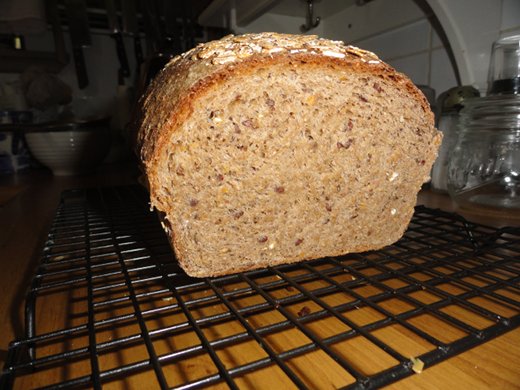
Easy, no knead crusty bread  - from Mother Earth News


BLOGS FOUND VIA MY COMMENTS DURING THE WEEK
Living in a not so simple neighbourhood and making the best of it, denimflyz

Deb's Diary of a "Try Hard" Frugalista will get you thinking about expanding your skill base.
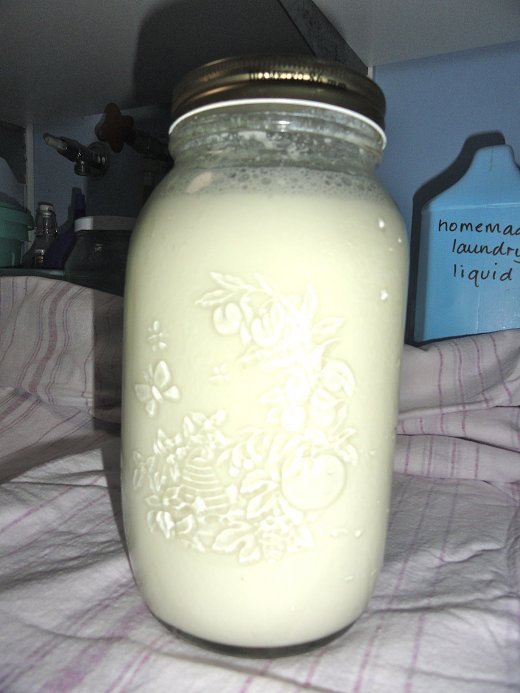
Now that the hot weather is over for another year, I'll have to bring my maturing yoghurt inside again. I've had great success over summer making yoghurt and leaving it outside on the warm verandah. I really dislike buying new equipment to make something we use here at home. I don't want any new appliances or gadgets here. I prefer to find a way of doing what I have to do without bringing in the specialist piece of equipment. Most of the time, it's easy to find a way.

When you make yoghurt, the milk needs to be held at a warm temperature for a few hours - or overnight. That temperature is easy to reach when you're warming the milk, so if you can keep the temperature constant for a few hours, you'll have yoghurt. Leaving it outside in the warmth works well. A warm day will give you the temperature you need, and often you don't need to leave the jar in the sun, it just needs to be sitting on the verandah in the warm air.


This is what I do. When the yoghurt is made in the usual way - there is a post here about it - I pour the warm yoghurty-milk into a warm sterilised jar. It's vital the jar is warm. Then I wrap the jar in a flannel sheet and place it outside in a warm area. It doesn't matter if it gets some sun on it occasionally, but it doesn't have to have the sun beating down on it. At the end of the day, I bring it inside and check the yoghurt is made. It's then stored in the fridge.


But now that the cooler weather is here, I have to find that warm space inside. Instead of flannel, in winter I wrap the yoghurt jar in a woollen blanket, then leave it on my laundry bench top all day. If the day is particularly cold, I might place the wrapped jar in a warm oven in the afternoon, but usually, just the woollen blanket is enough.

So if you've been thinking about buying a yoghurt maker, try this method first. You'll save yourself some money and increase your self-reliance at the same time.


If you've been following my cheese making ventures, you might be interested in this photo, taken yesterday, of the two camemberts made a couple of weeks ago. This is the white mould growing on the cheese. They smell divine and I can hardly wait to try them. It will be a couple of weeks more before we will taste them.

Hello to Sarah and Tim, thanks for sending the photos. Good luck in your new home.
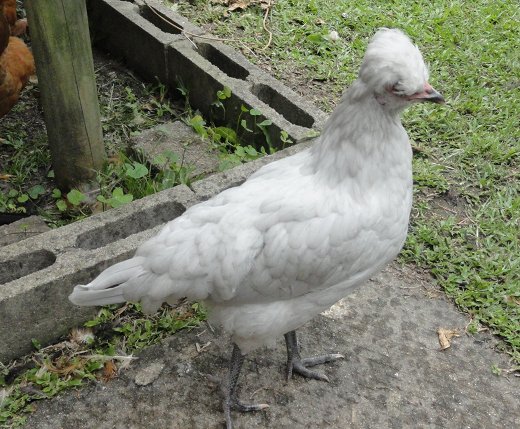
My name is Fiona and I lay blue eggs.


Our Araucana, Fiona, starting laying her delicate pale blue eggs two days ago. She's been such a crazy and interesting chicken so far. When she first came to us from Julie Thompson's wonderful chicken hatchery in Brisbane, she was with her sister, Margaret. Margaret was killed a couple of weeks ago. :- (  We found her in the middle of the day, under a palm tree with all the feathers on her neck stripped off, she was as dead as a door nail. Before that, Fiona was always a very shy and flighty chook, now she's moved up in the pecking order and always makes sure she gets her fair share of any extra food treats thrown her way. 


Fiona is  a lavender Araucana, she has a small comb hidden under her feathers and no wattles, she lays blue eggs and from what I've seen with ours, Araucanas like to fly. We have found Fiona in our vegetable patch quite a few times, but it's not a great problem, when we chase her, she flies out again. As you can see in the photo above, Fiona's eggs are small at the moment, but soon they get bigger. When cracked open, the eggs look the same as any other hen's egg.

If you're looking for some unusual chickens, I recommend the Aracanas to you. If you're looking for somewhere to buy them, check out Julie's ad on my side bar. Her chickens are the healthiest we've even bought, they'll be vaccinated and guaranteed females.

STORING AND USING CELERY TOPS
One of the ladies at the forum asked about using the tops of celery yesterday. I had taken these photos a few days ago and told her I'd write this today. Celery tops have as much nutritional value as the stalks but unless you have a consistent strategy, you might not use them. I always buy a full head of celery. Buying half a head increases the price and I refuse to buy anything that has already been cut up and washed, so a bag of celery pieces is completely out of the question. But how can you keep a full head of celery fresh and crisp for a long time when you only use about two stalks a week? This is what I do.

Wash the celery under the tap and shake off the water. Then cut off the top and lay it on top of the stalks. 

Wrap the celery head and tops in aluminium foil so that it is completely covered and sealed in. If you don't want your food touching aluminium, cover it first with a sheet of baking or greaseproof paper.

Store it in the fridge until you need it and wrap it up again when you've finished. Storing celery like this will keep it fresh and crisp for six to eight weeks. Even at the end of the eight weeks, the celery will be as crisp as the first day you bought it. No more limp celery.


You can see some of those celery tops above in my leftovers curry we had the other night. I use the leaves more like a herb than a vegetable. You can use them instead of parsley or chives in almost any recipe. They will also make up a delicious pesto, replacing basil leaves with celery leaves. Any stew or soup will be improved with the addition of celery, including the leaves. So don't cut them off and throw them away, if you keep the cut tops in the aluminium parcel with the celery stalks, they be ready to use whenever you need them.

 What do you do with your celery leaves?
There was a common misconception when we were on the book tour that the way Hanno and I live works best for older people who have the time for it. I've written here before about how that's not right, that this way of living would suit anyone living in the country, suburbs or city, whether single or married, straight or gay, young or older. It's here for all of us, there is no doubt about that. I have thought a lot about this and I know that you can change the way you live no matter what age you are; all you need is the will to do it. My regret is that I didn't start sooner.

I wish I hadn't waited so long to change.

My right time came when I was burnt out and miserable and I doubt I could have done anything else. We made a complete change and luckily for us, it turned out well. I can't help but think about Hanno and I living as we do now but at a much younger age. There would have been different choices made, no doubt, maybe we would have ended up in a different area, but we would have spent much more time outside the mainstream celebrating life and being who we really are. So when is the right time? From experience, I doubt there is one right time. The sooner you can simplify your life, the better you'll be for it.


I was talking to young man the other day, his first child will be born later this year. He is ready to settle down and start a family but where he sees difficulty, job uncertainty and not enough money, I see opportunity and independence. When I was his age I thought that a baby must be born into a family using newly bought clothes and equipment. I know now it makes no difference whether what you have is new or old, what matters is that baby is loved and the family it's born into is stable.  Stability, love and calmness will see every baby through. All a baby really needs is to be fed, to be warm and secure and held in loving arms. Everything they need can be gratefully accepted secondhand from friends and family, or made for a fraction of the shop price. Babies, as well as older children, are not deprived by this way of life, they thrive in it. Looking on Freecycle or in op shops, and telling your family and friends you're looking for certain items, will open up a new world, and show you that when security and love are provided in full measure, happy healthy babies thrive, even when there is very little money.

I wish I hadn't wasted so much.


I have always know that work is the key to a good life. When I was younger, I watched as my parents worked their whole lives. As I matured, I took on their work ethic but I left out an important part of the equation - working in my own home. The older I got, the further I moved away from the notion that being at home is the major part of everyday renewal and that home is where we rest and regain the strength to deal with the stresses of the outside world. Our homes must be far more than just the place we store our clothes and sleep in every night. Turning the shell of a house into something much more and doing the house work that every home requires, may very well be the making of you too. I know now that making a warm and comfortable nest for my family and me was as beneficial and important as any of the paid work I ever did.

I wish I'd worked that out sooner.


A home has the power to nurture and strengthen you and your family. Not only can you be your true self in your home - you can do anything you like there. If you want to work all day or read all day, if you want to make your backyard into a mini farm, if you want to set up a small business, if you want to teach your children about the night sky or how to plant a seed, if you want to enjoy time with visiting family and friends, if you want to reinvent yourself, there should be no one there to tell you not to. And when you really understand that your home is your safe haven, when you change your home to suit you and your family, this place you've chosen will be the making of you. Your home can have more influence over you than any other place. And the beauty of all this is that all homes have this potential power - tiny homes furnished with hand-me-downs and scrubbed-up op shop finds, rented flats and apartments with bricks holding up the shelves and smart homes with modern everything. Because it's what goes on in the home, the love given and shared, that makes the difference, not the newness of the building or the price and age of the furnishings.

I wish I'd know that when I was young. 

I had an email from a reader last week asking two questions:

  1. If you were to start over again, what activities would you start with first? and ...
  2. If you had limited time what activities would you do first to achieve the biggest savings?  

When I read the email, I thought the questions were the same, but when I thought about it, they're completely different. I hope I have a grasp on what she is really asking because I think the difference is important. Changing your life to live in a more simple fashion is not just about activities, it's about how you think and what you value as being essential, authentic and significant in your life, and then changing what you do every day to reflect those values.

If you were to start over again, what activities would you start with first?
The first thing I'd do would be to think carefully about my life to identify what my priorities are. Some of the questions I'd ask myself would be:
  1. Am I getting the best value for the dollars I work for?
  2. Am I happy at home?
  3. Do I spend my time wisely?
If I answered those questions truthfully, I'd have three areas that I could start with. But maybe I could add one more question and that would get me started right now: What can I do today that will improve my life? Maybe the answer to that last question is to make a list. Those of you who read my book would probably remember I made such a list at the very beginning of my journey. I kept that list and over the years and it has helped refocus me when things got tough, so making a list of what you want your life to become can be your master plan or your map into unchartered territory. It is your start.

If you had limited time what activities would you do first to achieve the biggest savings?
We're all at different stages and have differing family commitments, nevertheless, I think focusing on how I shop, making what I can at home and cutting back where I can would probably serve all of us well. That is where I'd start to achieve the biggest savings. So let's see what difference these changes can make to the bottom line.

One litre/quart laundry liquid from the supermarket costs about $9. This will do 20 washes. So 10 litres of commercial laundry liquid would cost $90 and you'd get 200 loads of washing done. That would cost you 45 cents per wash, you'd have the convenience of not having to make it at home but you'd be bringing unknown chemicals into your home as well as the packaging. Not to mention having to carry it all home from the shop.

Ten litres/quarts of laundry liquid made at home using soap, borax, washing soda would cost you (less than) $2 and you could make it in less than 15 minutes. You'd have enough laundry liquid for 160 loads of washing and each wash would cost you just over a cent.

Laundry liquid savings:
For a young family doing seven washes a week, that homemade laundry liquid will last 22.8 weeks and cost about $5 a year. A pensioner or senior couple doing three washes a week, that laundry liquid will last 53 weeks, so $2 a year.

That same young family using commercial laundry liquid will spend $163.80 a year on their washing product.
The pensioner doing 3 washes a week will spend $70.20 on commercial laundry liquid a year.

By switching to homemade the family will save $158.80 a year and the pensioner will save $68.20.

Green cleaners savings:
I won't go into the cost comparisons of making, instead of buying, soap, shampoo, conditioner, Chux/dish cloths, floor and wall cleaners, spray and wipe type cleaners and creamy cleaners for the bath and shower, but if you buy white vinegar, caustic soda/lye, soap making oils, borax, washing soda, you'd be able to make all your cleaners and it would cost you about $30 for a year's supply and you'd have more than enough to do several batches. Compare that to the cost of each individual cleaner you might buy at the supermarket: toilet cleaner, floor cleaner, anti-bacterial wipes, Jif, Spray and Wipe, Chux  I didn't include the 6 pages of air fresheners the start off Woolworths online cleaning products because I'm unsure who would buy Air Wick Freshmatic Diffuser Refill Vanilla and Soft Cashmere 2x174g for $12.89! Jif $3.16, Ajax multi purpose spray $2.97, Ajax floor cleaner with BAKING SODA (ahem) $4.07, Harpic toilet cleaner 700ml $4.07, White King antibacterial wipes 100 pack - $10.73, chux - $6 for 20.

So for a pack of products that would last about three months (I'm being generous) $31, buy them four times a year and that is $124.

By switching to homemade instead of store bought, a saving of approximately $94 on cleaning products. Yes you'd have to make them yourself but they're easy to make and the laundry liquid would take the longest amount of time - 15 minutes for 160 washes.

General savings:
If you shop at Aldi, you'll save about 30 percent so if you're spending $200 a week at the supermarket you'd pay $140 a week at Aldi. If you spend $200 a week at Woolworths or Coles you're spending $10,400 a year on groceries.  If you spend that same amount at Aldi, you'd spend $7280 a year. That is a saving of $3120 a year on a $200 a week shop or $60 a week saved. Add to that the savings made if you make your own cleaners and laundry liquid and you're looking at an excellent weekly saving.

Imagine paying off an extra $3000 a year off your mortgage, simply by changing how you shop and making a few things at home. You would still have similar food and products, your homemade cleaning products would do just as good a job, but you'd be using fewer chemicals, and would probably be healthier for it. I know your environment would be.

There are other ways to save in the home - being conservative with the use of electricity and water can save quite large amounts. Hanno and I have just received our second electricity bill since we installed the solar panels and we're still in credit. I'm really pleased about that because this bill was for summer which is the season we have our highest use. But all of us can save on electricity just by turning off switches when we're not using the appliance, baking a few things at once, installing power-saving light bulbs and turning off at the wall instead of using stand-by power.

Further savings can be made by stopping pay TV and mobile phone accounts and phoning around to see if you can get better deals on your phone, internet and insurance. Even if the savings are small, it's better than an increase.

I would start with these things and save money. I'd start cleaning with safer products and the money saved could go towards debt repayment or what the family needs. When I had myself set up with green cleaning and more mindful grocery shopping, I'd teach myself how to cook from scratch and start a stockpile.

It all seems so simple now but when I was starting out, it wasn't. If you're still just reading here but haven't taken your first step, I encourage you to dive in right now. Get your pen and paper out and start thinking about your list. Be bold. You don't have to live like everyone else. I'll hold the light up for you while you walk through that first tunnel. The first one is always the most difficult but we both know you can do it.


OUT AND ABOUT IN THE COMMUNITY
Later this month, on 19 April, I'll be a guest speaker at the monthly meeting of Permaculture Noosa; Hanno will be with me. I'll have a few books there to sell and will gladly sign one if you want me to. If you've already bought a book, bring it along if you want me to sign it. I'm happy to do that.

The next day, 20 April at 12.30pm, I'll be meeting people and signing books at Dymocks in Brisbane. Please come along if you can. I'd love to meet you, especially if you've been reading or commenting here.

On 17 May at 6.30pm, I'll be at Avid Reader in West End signing books and meeting whoever comes along.

And on 25 May at 10am I'll be giving a talk at the Maroochydore Library and again, I'm happy to sign your book if you bring it along. All these events are free and open to everyone.

Earthships, what are they?  on You tube

If you like clog dancing or buck dancing, you'll love this. It all seems so familiar to me but I guess it's a look back in time for many of you.  Bluegrass music and clog dancing.

Are you living true to your environmental values, or trying to, and renting accommodation? Look at this great website: Green Renters Lots of tips and encouragement here.

A knitted Waldorf-style doll.

The five regrets of dying. I've linked to this before but I think it's a good article to refer back to occasionally. It certainly refocuses me.

After reading Lusi's comment on yesterday's post about this post, I re-read it and decided to add it here. Thanks Lusi, happy Easter to you and your family. xx

Blogs found via my comments during the week

Melissa - Melissa has a beautiful garden and blog. Do yourself a favour and check it out, it's more than gardening.

Africanaussie has been transplanted from the heat in Africa to the heat in tropical Queensland, Australia. There is so much to read here - permaculture, food production and crazy tropical plants.

If you celebrate the religious holidays, I wish you a happy Easter or Passover. Whatever you do over the coming days, I hope you're with people you love and you enjoy yourself. Thanks for your visits during the week, I look forward to seeing you again on Monday.
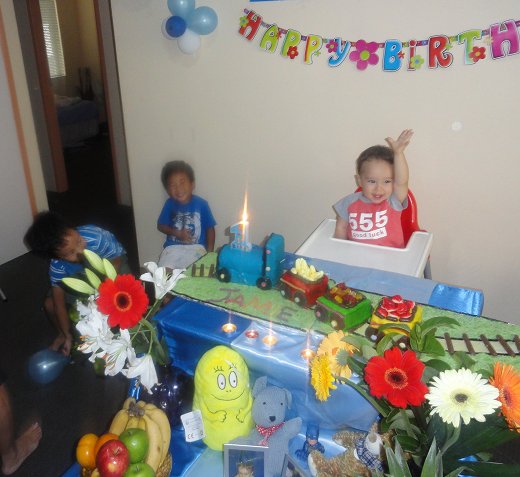
I love my family. We aren't perfect but we support each other, we show affection and love and there is a warm and comfortable thread that ties us to each other. We celebrated Jamie's first birthday last weekend and of course, there was a get-together of family and friends to mark this wonderful occasion.

(Sorry for the poor quality of the photos today. I just cleaned the lens. ahem. :- O)

Jamie with two of his cousins. They came over from Korea for a holiday and to be here for Jamie's big day.

Sunny and Jamie above. Below Sunny, her sister, Sarndra and Alexander watch while Jamie is dressed in his traditional Korean first birthday costume.

The jacket and hat didn't stay on long.

The first birthday in Korea is a big celebration with traditional costume, gold jewellery, flowers, gifts and a banquet, so that was coupled with our more casual Australian way. It was a good mix and a delightful party. Sunny, along with her mother and sister, cooked a delicious Korean meal that we all enjoyed. Shane and Sarndra made the most brilliant birthday cake in the form of a train and Sunny gave us all traditional Korean rice cakes to take home with us.

 Shane proudly holds his son, Alexander.
 And here are Opa and Grandma with Alexander. He's such a gorgeous baby.


Here is the cake made by Shane and Sarndra and the lunch banquet below.


Jamie wasn't quite sure of the decorations and costumes and he often had a puzzled look on his face but there were also lots of smiles and the chance to spend time with his cousins, surrounded by balloons and birthday cake and lollies. He is such a happy boy. I'm not sure how many birthdays I'll be around for. I hope to see him turn 21 and even 30, but if I don't, he can look back, maybe to this blog, and see how much he was loved by all of us and how his family came together to celebrate his first birthday. 
Yesterday I wrote about making camembert cheese in the home kitchen. We got to the point where the milk had turned from liquid to curds and whey.

Cutting the curds:
Your cheese mix still needs to be at 32C/89.6F. If the temperature has dropped, turn the stove on again for about a minute.
  1. Take the long sharp knife and prepare to cut the curd. This is done by gently slicing through the curd at 2cm/i inch strips from top to bottom.
  2. When you have strips, cut the strips into cubes but slicing through from left to right.
  3. When you have cubes, then slice through the curds diagonally - both ways, left ot right, then right to left.
  4. Stir the curds with the slotted spoon for 15 minutes and check to make sure all the curds are in small 2cm/1inch cubes. If you see any larger ones, cut them with your knife.
  5. Let the curds rest for 15 minutes. This will allow the whey to ooze out of the curd.
Cutting the curds - from top to bottom.
And diagonally to make small cubes.
Stir the curds gently for 15 minutes and look for curds that haven't been cut small enough.

Putting the curds into the moulds
  1. After the curds have rested for 15 minutes, the whey will have risen to the top and the curds will have sunk down.
  2. Pour off the whey into a container. I found the container too heavy to easily pick up and pour so I used a soup ladle to scoop off the whey.
  3. When most of the whey is in another container - my batch yielded about 4 litres of whey - you have start filling the moulds.
  4. Place the moulds on a sterile draining rack that will allow the whey to drain off. I used the draining rack from the botton of a plastic container and placed it over a bowl. I supported the rack on both sides of the bowl and with a small upturned bowl in the middle. The four liitres/quarts of milk I used filled two moulds.
  5. Fill them right to the top and wait a short while for the whey to drain off. Pour this whey into your containers. Don't waste it. Keep filling the moulds until they reach the top of the moulds and you've used all the curds.
  6. Let the moulds drain for an hour.

Pour or scoop off the whey from the curds and store it in a jar.
When most of the whey is in the jars, start forming the cheese.
This cheese yielded about 1½ litres/quarts of whey. I'll use this for making ricotta.

Turning the moulds:
  1. When the moulds have drained for an hour, you need to turn them over to make sure they drain evenly. Making sure you have very clean hands, gently slide the curds from the mould onto your hand. It should slide out easily. Then turn the curd over and slide it back into the mould.
  2. Now you'll have the curds in the mould again but what was the top is not on the bottom.
  3. Do this every hour for the rest of the day, or about 5 or 6 times.
  4. Allow the moulds to sit on the rack and drain overnight. I put mine in the microwave and closed the door.
Load the moulds to the top and let them drain into a bowl. Save the whey.
I took the cheese out of the moulds too soon. Let them stay in the moulds overnight and remove them in the morning.

Salting the cheese:
  1. The next morning you can remove the cheese from the moulds and salt it.
  2. Use good salt - kosher or pure sea salt - sprinkle it all over the cheese and rub it in slightly.
Maturing the cheese:
  1. Place the cheese on a rack in a sterile box that will fit in your fridge or cheese cave. You need a humid coolish environment for the moulds to develop. The cheese needs air for the bacteria and moulds to develop - so don't keep the lid on the container.
  2. Set the temperature at between 8 - 10C and place an open container of water in the fridge to increase humidity. If you think the humidity level isn't high enough, place moist cheesecloth or cotton cloth in the fridge. You could also use a spray bottle of boiled water that has cooled down and spray the inside of the fridge.
  3. It will take about 14 days for the cheese to be fully covered with white mould but you'll probably notice it growing at the end of the first week.
  4. When you see the first signs of white mould, turn the cheese over.
  5. When the white mould is completely covering the cheese, wrap them in cheese wrap and continue to mature the cheese at 8 - 10C for another 3 - 4 weeks.


White mould not growing?
If, after a week, the white mould doesn't grow, you'll need to provide more humidity. Place the cheese inside a plastic box that has a drainage rack. Place a small amount of boiled cool water in the base, place the rack in, put the cheese on the rack and close the lid. This is important: every 2 days, open the lid to allow fresh air in, then close the lid again.

What sort of milk?
Almost all fresh milk can be used - whole milk, skim milk, goat or cow's milk. I used raw milk but if you can't get that, look for unhomogenised milk at the shop. If you can't get that, use plain pasturised milk.

It's best to start your cheesemaking in the morning. It will take all day to make camembert but most of that time is waiting for the next step; the actual hands-on work takes about an hour.

The amount of milk I used will give you about 1½ litres/quarts of whey. Don't throw it out, it's a valuable food full of beneficial bacteria. Store your whey in a preserving/canning jar. It will keep well in the fridge for at least three months. I'm going to make ricotta with this whey and it will sit happily in the fridge until I have time to do it.

I hope I've encouraged you towards cheesemaking. If you have the right equipment and cultures and a supply of good milk, you can make some very good cheese. It's not too difficult and although some of the processes can be time consuming, most of that time is waiting for the whey to drain or for the curds to set. It's another great skill that will add to the delicious and simple foods you can place on the table for your family and friends.

ADDITIONAL READING
This is my favourite cheese site - Fankhauser's Cheese Page
The last time I made camembert cheese was on 19 May 2007. This is what I said after doing it:

The entire process took all day and half way through it I realised that cheese making is not "my thing". I'm too impatient for it. But I persevered and produced a decent enough Camembert. I've told everyone who would listen to me that I won't make cheese again but I doubt that's true. I just have to put space between myself and the event and just like childbirth, I'll be back for seconds.

And true to my word, I came back for seconds, albeit five years later - that must have been the space I was talking about. :- ) It seems I have changed a bit over those years because this time I was much more organised and calm and mixing up a batch of raw milk cheese didn't seem like such a palaver this time. In fact, I enjoyed it although it wasn't without its dramas.

I bought a Mad Millie camembert kit from the local stockist at Maroochydore. The kit contained two hoops to help form the cheeses as well as the cultures and rennet needed to make it, or so I thought. I made the first batch up on Friday, I came to the second addition of culture and it looked like I had two cultures the same. I rang the shop. I was assured it was right, she remembered me, and encouraged me to add both cultures. The cheese didn't set. I sat down to read a cheese troubleshooting page on the web. There I read the cheese would not set because the bacterial count was too high - adding that second batch of the same culture ruined the cheese. I rang back and told her, she said the rep was there and he'd bring the right culture over to me. I appreciate that he did that, but that doesn't excuse her bad advice, the fact that she didn't apologise and that I had to throw out four litres/quarts of fresh milk. The high bacterial count made it unfit for the chooks. I won't be using Mad Millie or that stockist again - for cheese or brewing supplies. 

I'm going to try Australian Home Cheese Making for my next batch of cultures. They run courses so I'm guessing they know their cheese. It looks to be the most reasonably priced Flora Danica at $17.50, enough for 250 litres/quarts of milk. These cultures are stored in the freezer so it's fine to buy a larger amount. If you're interested in cheese making, stay tuned because I'll continue to try different suppliers and let you know which ones offer the best service and value for money.

I had four litres of milk left so early Saturday morning I started up again. Four litres will make up two fairly large camemberts. To make camembert you will need:
  1. A large saucepan - like an 8 litre soup or stockpot
  2. A slightly smaller saucepan that will fit inside the larger pot to act as a double boiler OR a double boiler capable of holding four litres of milk
  3. A slotted spoon for stirring
  4. A milk thermometer - I am using the candy thermometer I use when making soap
  5. Two hoops - you can buy these or make them using food grade plastic plumbing pipe that you drill many drainage holes in
  6. A long knife
  7. A syringe to measure out very small amounts of liquid
  8. A wine fridge or an old fridge modified to a set temperature with a thermostat. Narelle has a post on making these modifications on her blog Just like my nan made. We bought a wine fridge at Aldi for $79. Don't pay any more than that because you need to keep your costs down to make it good value for money. I'm pretty sure I'll include cheesemaking in my monthly kitchen tasks from now on, so we should recoup the cost of our fridge in the next 12 months.

This is my double boiler - a soup pot with a 4 litre capacity saucepan resting in it. The soup pot contains water that heats up and allows the milk in the top saucepan to warm gently and stay warm during the process.

You'll need a slotted spoon with a long handle. This will help you gently stir the milk without incorporating too much air into the mix.

To make the cheese:
Everything you use must be scrupulously clean and the milk containers and utensils must be sterile. The kit contained some sterilising liquid to add to water and I used that this time but in the future, I'll use something else.


  1. Put the milk in the pot on the stove and bring the milk to 32C/89.6F
  2. Stir in the starter bacteria Flora Danica according to the instructions on the pack. Don't stir too vigorously, this bacteria doesn't like too much air.
  3. Turn off the heat.
  4. Let the milk sit for 90 minutes with the lid on the saucepan.
  5. After 90 minutes stir in the mould spores - Penicillium Camemberti
  6. Add the diluted rennet. I used 0.5ml vegetarian rennet and diluted it in 2ml water.
  7. Stir for a minute using the slotted spoon.
  8. Cover again and let sit for 60 minutes. Check that the temperature is still at 32C/86.9F. If it's gone down a little, turn on the stove for about 45 seconds to bring it back up to the correct temperature.
When 60 minutes is up, the milk should have set and if you touch the top of the milk, it will be soft, but not liquid anymore. Your milk is now more like cheese and now you'll cut the curd and take off the whey. I'll write about forming the cheese in the hoops, turning it out and maturing tomorrow. Unlike my earlier attempt at camembert I found making this cheese was easy and well within my skill level. I enjoyed the entire process and I know that I'll make much more cheese after this. So come back tomorrow and see what this milk turned into. Hopefully you'll be inspired to make your own cheese too.

There is no doubt that living as we do and trying to stay on budget presents us with many decisions. Do we buy organic? Do we buy local? Do we grow our own? What are the pros and cons of those options? One thing is for sure, if you want to stay healthy while saving money, there will probably not be one single answer to this. Prices and circumstances will keep changing and we have to be flexible enough to change what we do.

Many of you know what we do here. We try to grow as much as we can right here in our backyard. We keep chickens - we have 12 rare breed chooks at the moment and we keep them for eggs, not meat. But what do we do for the rest of our food? How do we continue to buy healthy food while staying within our budget?


Aldi is our main grocery shop, the things we can't buy at Aldi we usually buy at IGA at Maleny. We have an Aldi shop just five minutes away from our home. If you've never shopped at Aldi and you have one close buy, I encourage you to try them out. You'll save about 30% on what you'd spend at Woolworths or Coles. If you're spending $100 a week at the supermarket on groceries every week and you change to Aldi, that's a saving of $30 a week or $1560 a year. Just say you spend that $560 on items you can't get at Aldi, you're still way ahead. It would be wonderful to be able to pay off an extra $1000 off your mortgage each year just by changing where you shop.

There is a bit of a learning period when you first shop at Aldi, it's not set out like your average supermarket but it only takes one or two visits to get the general idea. Also, they have specials that run for a week or so, then you won't see them again in the shop for another year. It's a German-owned company selling 97% Australian fruit and vegetables, 94% Australian dairy and 100% Australian meat; the rest of the groceries, like other supermarkets, come from all over the world - often from Germany. They won best supermarket in Australia last year and that was voted for on customer satisfaction.

Aldi have a range of organic goods and we buy them but here is where the dilemma presents itself. Their tomato paste is organic but made in Italy. Do we go for an organic product we can afford or an Australia product that is not organic? I hope you check where all your food comes from and if you do, you'll see that a lot of the tomato products being sold in Australia now are either from Italy or China. When I find Australian tomatoes or tomato paste in cans I buy it, if not, I buy Aldi's Italian organic range. I think we should all support our local famers and industries. If you're in the US, Canada, UK, France, Holland or Sweden - you should buy the products grown and packaged in your own country. We have no right to complain that our jobs are being sent overseas if we don't buy goods from our own countries. Check the country of origin and help your own country keep its jobs by buying locally produced goods. It may cost a little more but we have to get used to the idea that not all food is cheap and buying local is a wise investment.


We're fortunate in having a local butcher that we trust. We buy our meat in bulk from him so we get good meat at a good price. Most of his meat is killed and processed locally, by him and his sons. The rest of it  - the lamb and pork, is brought in from farmers he trusts. That's fine by me. If I didn't have such a butcher, if I was buying supermarket meat, if my butcher wouldn't tell me where the meat was coming from, I'd start looking for a reliable source of good meat and chicken. If I couldn't find a reliable source, I'd buy very little meat and move more towards a vegetarian diet with additions of sustainable fish. If I had a large backyard, I would also consider keeping chickens for meat and eggs. This is what I mean by flexibility and changing what you do as times and circumstances change.

When we're not growing our own vegetables and we buy from the farmers market or Aldi, we buy organic if we can afford it but for me, fresh food grown close to where we live always beats organic. If I have a choice, I prefer fresh vegetables over older organic vegetables. You will have to think about this and decide for yourself what your preference is.

We buy bread flour in bulk bags of 12.5kg/30lbs from a shop that also sells loose dried fruit, nuts, spices, tea, coffee, pasta, rice and grains. They're Simply Good in Morayfield and Alderley. If you make bread at home it is worthwhile looking for one of these shops. They generally have a very good range and are cheaper than the supermarkets. There are plenty of online shops we can buy organic dried foods from but generally we support our local co-op in Maleny. They have a good range of organic foods of every description and the profits go back into the town.

We all support, or choose not to support, with the dollars we spend every week on food and groceries. This is long-term spending. If you can save money here, they will be continued savings that will add up over time. You'll go through stages too. You start off as a single, often turn into a couple, add children, then have ravenous teenagers, and go back to a single or a couple somewhere along the way. All these stages require different shopping strategies and hopefully the way you shop through every stage will result in savings in your pocket every week. With careful and thoughtful shopping and putting in an extra effort at home, it is possible to save in every stage. You have control over this. It is worth some thought.

What is your shopping strategy at the moment and how has it changed over time?

Country of origin labelling in Australia
How are Australian spending their money?


Newer Posts Older Posts Home

MY BOOKS

MY BOOKS


My books were all published by Pengiun, and are available at Amazon US, Amazon UK and Amazon Au

Search here

Total Pageviews

Translate


I'm Rhonda Hetzel and I've been writing my Down to Earth blog since 2007. Although I write the occasional philosophical post, my main topics include home cooking, happiness and gardening as well as budgeting, baking, ageing, generosity, mending and handmade crafts. I hope you enjoy your time here.

MY FAVOURITE PLACES

  • Grandma Donna's Place
  • Grandma Donna's YouTube
  • Grandma Donna's Instagram
  • This Simple Day
  • Nicole's Instagram

Give More

Give More

Popular posts last year

Making ginger beer from scratch

We had a nice supply of ginger beer going over Christmas. It's a delicious soft drink for young and old, although there is an alcoholic version that can be made with a slight variation on the recipe. Ginger beer is a naturally fermented drink that is easy to make - with ginger beer you make a starter called a ginger beer plant and after it has fermented, you add that to sweet water and lemon juice. Like sourdough, it must ferment to give it that sharp fizz. To make a ginger beer plant you'll need ginger - either the powdered dry variety or fresh ginger, sugar, rainwater or tap water that has stood for 24 hours to allow the chlorine to evaporate off. You'll also need clean plastic bottles that have been scrubbed with soap, hot water and a bottle brush and then rinsed with hot water. I never sterilise my bottles and I haven't had any problems. If you intend to keep the ginger beer for a long time, I'd suggest you sterilise your bottles. MAKING THE STARTER In a...
Image

NOT the last post

This will be my last post here.  I've been writing my blog for 18 years and now is the time to step back. I’ve stopped writing the blog and come back a couple of times because so many people wanted it, but that won’t happen again, I won’t be back.  I’ll continue on instagram to remain connected but I don’t know how frequent that will be. I know some of you will be interested to know the blog's statistics. 
Image

How to make cold process soap

I'm sure many of you are wondering: "Why make soap when I can buy it cheaply at the supermarket?" My cold process soap is made with vegetable oils and when it is made and cured, it contains no harsh chemicals or dyes. Often commercial soap is made with tallow (animal fat) and contains synthetic fragrance and dye and retains almost no glycerin. Glycerin is a natural emollient that helps with the lather and moisturises the skin. The makers of commercial soaps extract the glycerin and sell it as a separate product as it's more valuable than the soap. Then they add chemicals to make the soap lather. Crazy. Making your own soap allows you to add whatever you want to add. If you want a plain and pure soap, as I do, you can have that, or you can start with the plain soap and add colour, herbs and fragrance. The choice is yours. I want to add a little about animal and bird fat. I know Kirsty makes her soap with duck fat and I think that's great. I think t...
Image

Preserving food in a traditional way - pickling beetroot

I've had a number of emails from readers who want to start preserving food in jars but don't know where to start or what equipment to buy.  Leading on from yesterday's post, let's just say up front - don't buy any equipment. Once you know what you're doing and that you enjoy preserving, then you can decide whether or not to buy extra equipment. Food is preserved effectively without refrigeration by a variety of different methods. A few of the traditional methods are drying, fermentation, smoking, salting or by adding vinegar and sugar to the food - pickling. This last method is what we're talking about today. Vinegar and sugar are natural preservatives and adding one or both to food sets up an environment that bacteria and yeasts can't grow in. If you make the vinegar and sugar mix palatable, you can put up jars of vegetables or fruit that enhance the flavour of the food and can be stored in a cupboard or fridge for months. Other traditional w...
Image

Cleaning mould from walls and fabrics

With all this rain around we've developed a mould problem in our home. Usually we have the front and back doors open and that good ventilation stops most moulds from establishing. However, with the house locked up for the past week, the high humidity and the rain, mould is now growing on the wooden walls near our front door and on the lower parts of cupboards in the kitchen. Most of us will find mould growing in our homes at some point. Either in the bathroom or, in humid climates, on the walls, like we have now. You'll need a safe and effective remedy at some point, so I hope one of these methods works well for you. Mould is not only ugly to look at, it can cause health problems so if you see mould growing, do something about it straight away. The longer you leave the problem, the harder it will be to get rid of it effectively. If you have asthma or any allergies, you should do this type of cleaning with a face mask on so you don't breathe in any spores. Many peopl...
Image

Five minute bread

Bread is one of those foods that, when made with your own hands, gives a great deal of satisfaction and delight. It's only flour and water but it symbolises so much. I bake bread most days and use a variety of flours that I buy in bulk. Often I make a sandwich loaf because we use most of our bread for lunchtime sandwiches and for toast. Every so often I branch out to make a different type of loaf. I have tried sour dough in the past but I've not been happy with any of them. I'll continue to experiment with sour dough because I like the idea of using wild yeasts and saving the starter over a number of years to develop the flavour and become a part of the family. However, the loaf I've been branching out to most often is just a plain old five minute bread. By five minutes I mean it takes about five minutes actual work to prepare but it's the easiest of all bread to make and to get consistently good loaves from. If you're having people around for lunch or...
Image

This is my last post.

I have known for a while that this post was coming, but I didn't know when. This is my last post. I'm closing my blog, for good, and I'm not coming back like I have in the past.  I've been writing here for 16 years and my blog has been many things to me. It helped me change my life, it introduced me to so many good people, it became a wonderful record of my family life, it helped me get a book contract with Penguin, and monthly columns with The Australian Women's Weekly and Burke's Backyard . But in the past few months, it's become a burden. In April, I'll be 75 years old and I hope I've got another ten years ahead. However, each year I'll probably get weaker and although I'm fairly healthy, I do have a benign brain tumour and that could start growing. There are so many things I want to do and with time running out, leaving the blog behind gives me time to do the things that give me pleasure. On the day the blog started I felt a wonderful, h...
Image

What is the role of the homemaker in later years?

An email came from a US reader, Abby, who asked about being a homemaker in later years. This is part of what she wrote: "I am a stay-at-home mum to 4 children, ages 9-16. I do have a variety of "odd jobs" that I enjoy - I run a small "before-school" morning drop-off daycare from my home, I am a writing tutor, and I work a few hours a week at a local children's bookstore. But mostly, I cherish my blissful days at home - cooking, cleaning (with homemade cleaners), taking care of our children and chickens and goats, baking, meal-planning, etc. This "career" at home is not at all what I imagined during my ambitious years at university, but it is far more enriching. I notice, though, that my day is often planned around the needs of my family members. Of course, with 4 active kids and a husband, this is natural. I do the shopping, plan my meals, cook dinner - generally in anticipation of my family reconnecting in the evening.  I can't h...
Image

Every morning at home

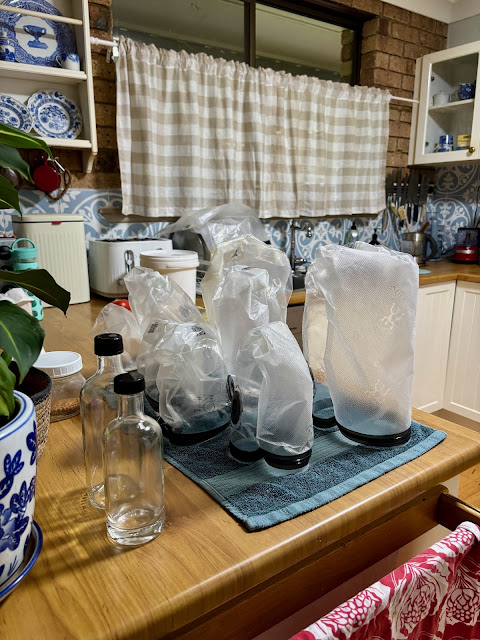
Every morning when I walk into my kitchen it looks tidy and ready for a day's work. Not so on this morning (above), I saw this when I walked in. Late the previous afternoon when I was looking for something, I came across my rolled up Zwilling vacuum bags and decided they had to be washed and dried. So I did that and although I usually put them outside on the verandah to dry it was dark by then. I turned the just-washed bags inside out and left them like this on a towel. It worked well and now the bags are ready to use when I bring home root vegetables, cabbages or whatever I buy that I want to last four or five weeks.
Image

You’ll save money by going back to basics

When I was doing the workshops and solo sessions, I had a couple of people whose main focus was on creating the fastest way to set up a simple life. You can't create a simple life fast, it's the opposite of that It's not one single thing either - it's a number of smaller, simpler activities that combine to create a life that reflects your values; and that takes a long to come together. When I first started living simply I took an entire year to work out our food - buying it, storing it, cooking it, preserving, baking, freezing, and growing it in the backyard. This is change that will transform how you live and it can't be rushed.  
Image

All previous blog posts

  • 2026 3
    • February 3
      • Workshops starting 1 March
      • Planting vegetable seeds and new workshops
      • Back where we belong
  • 2025 7
    • July 1
    • June 2
    • May 1
    • April 2
    • February 1
  • 2024 25
    • December 2
    • November 1
    • October 2
    • September 3
    • August 1
    • July 3
    • June 1
    • May 3
    • April 2
    • March 3
    • February 2
    • January 2
  • 2023 13
    • December 1
    • November 2
    • October 1
    • September 3
    • August 2
    • February 2
    • January 2
  • 2022 17
    • November 3
    • October 4
    • September 3
    • August 2
    • July 3
    • June 2
  • 2021 50
    • December 1
    • November 6
    • October 7
    • September 5
    • August 4
    • July 5
    • June 2
    • May 2
    • April 6
    • March 4
    • February 4
    • January 4
  • 2020 68
    • December 3
    • November 5
    • October 4
    • September 4
    • August 4
    • July 4
    • June 4
    • May 8
    • April 7
    • March 8
    • February 8
    • January 9
  • 2019 66
    • December 2
    • November 4
    • October 5
    • August 3
    • July 4
    • June 6
    • May 8
    • April 8
    • March 8
    • February 11
    • January 7
  • 2018 82
    • December 1
    • September 2
    • August 10
    • July 4
    • June 11
    • May 9
    • April 12
    • March 10
    • February 10
    • January 13
  • 2017 129
    • December 7
    • November 10
    • October 6
    • September 13
    • August 11
    • July 13
    • June 12
    • May 9
    • April 9
    • March 14
    • February 11
    • January 14
  • 2016 125
    • December 7
    • November 13
    • October 10
    • September 11
    • August 11
    • July 8
    • June 9
    • May 9
    • April 12
    • March 10
    • February 13
    • January 12
  • 2015 184
    • December 7
    • November 15
    • October 20
    • September 18
    • August 19
    • July 18
    • June 12
    • May 15
    • April 12
    • March 21
    • February 13
    • January 14
  • 2014 203
    • December 11
    • November 8
    • October 17
    • September 20
    • August 17
    • July 19
    • June 17
    • May 17
    • April 23
    • March 15
    • February 18
    • January 21
  • 2013 225
    • December 13
    • November 17
    • October 17
    • September 17
    • August 21
    • July 24
    • June 20
    • May 19
    • April 17
    • March 22
    • February 17
    • January 21
  • 2012 245
    • December 17
    • November 20
    • October 20
    • September 18
    • August 15
    • July 24
    • June 21
    • May 26
    • April 23
    • March 23
    • February 19
    • January 19
  • 2011 257
    • December 18
    • November 24
    • October 27
    • September 23
    • August 24
    • July 21
    • June 24
    • May 24
    • April 16
    • March 22
    • February 14
    • January 20
  • 2010 283
    • December 20
    • November 18
    • October 18
    • September 19
    • August 25
    • July 24
    • June 25
    • May 26
    • April 25
    • March 22
    • February 29
    • January 32
  • 2009 293
    • December 29
    • November 18
    • October 23
    • September 25
    • August 22
    • July 28
    • June 22
    • May 21
    • April 27
    • March 26
    • February 24
    • January 28
  • 2008 387
    • December 24
    • November 23
    • October 25
    • September 26
    • August 27
    • July 27
    • June 37
    • May 34
    • April 44
    • March 53
    • February 32
    • January 35
  • 2007 372
    • December 37
    • November 40
    • October 55
    • September 51
    • August 49
    • July 63
    • June 49
    • May 28


Trending Articles

NOT the last post

This will be my last post here.  I've been writing my blog for 18 years and now is the time to step back. I’ve stopped writing the blog and come back a couple of times because so many people wanted it, but that won’t happen again, I won’t be back.  I’ll continue on instagram to remain connected but I don’t know how frequent that will be. I know some of you will be interested to know the blog's statistics. 
Image

Every morning at home

Every morning when I walk into my kitchen it looks tidy and ready for a day's work. Not so on this morning (above), I saw this when I walked in. Late the previous afternoon when I was looking for something, I came across my rolled up Zwilling vacuum bags and decided they had to be washed and dried. So I did that and although I usually put them outside on the verandah to dry it was dark by then. I turned the just-washed bags inside out and left them like this on a towel. It worked well and now the bags are ready to use when I bring home root vegetables, cabbages or whatever I buy that I want to last four or five weeks.
Image

You’ll save money by going back to basics

When I was doing the workshops and solo sessions, I had a couple of people whose main focus was on creating the fastest way to set up a simple life. You can't create a simple life fast, it's the opposite of that It's not one single thing either - it's a number of smaller, simpler activities that combine to create a life that reflects your values; and that takes a long to come together. When I first started living simply I took an entire year to work out our food - buying it, storing it, cooking it, preserving, baking, freezing, and growing it in the backyard. This is change that will transform how you live and it can't be rushed.  
Image

Creating a home you'll love forever

Living simply is the answer to just about everything. It reduces the cost of living; it keeps you focused on being careful with resources such as water and electricity; it reminds you to not waste food; it encourages you to store food so you don't waste it and doing all those things brings routine and rhythm to your daily life. Consciously connecting every day with the activities and tasks that create simple life reminds you to look for the meaning and beauty that normal daily life holds.  It's all there in your home if you look for it. Seemingly mundane tasks like cleaning and cooking help you with that connection for without those tasks, the home you want to live in won't exist in the way you want it to.  Creating a home you love will make you happy and satisfied.
Image

Time changes everything

I've been spending time in the backyard lately creating a contained herb and vegetable garden. My aim is to develop a comfortable place to spend time, relax, increase biodiversity and encourage more animals, birds and insects to live here or visit. Of course I'd prefer my old garden which was put together by Hanno with ease and German precision. Together, we created a space bursting at the seams with herbs, vegetables and fruity goodness ready to eat and share throughout the year. But time changes everything. What I'm planning on doing now, is a brilliant opportunity for an almost 80 year old with balance issues. In my new garden I'll be able to do a wide range of challenging or easy work, depending on how I feel each day. It’s a daily opportunity to push myself or sit back, watch what's happening around me and be captivated by memories or the scope of what's yet to come.
Image

It's the old ways I love the most

I'm a practical woman who lives in a 1980’s brick slab house. There are verandahs front and back so I have places to sit outside when it's hot or cold. Those verandahs tend to make the house darker than it would be but they're been a great investment over time because they made the house more liveable. My home is not a romantic cottage, nor a minimalist modern home, it's a 1980’s brick slab house. And yet when people visit me here they tell me how warm and cosy my home is and that they feel comforted by being here. I've thought about that over the years and I'm convinced now that the style of a home isn't what appeals to people. What they love is the feeling within that home and whether it's nurturing the people who live there.
Image

Back where we belong

Surprise! I'm back ... for good this time. Instagram became an impossible place for me. They kept sending me messages asking if I'd make my page available for advertisers! Of course, I said no but that didn't stop them. It's such a change from what Instagram started as. But enough of that, the important part of this post is to explain why I returned here instead of taking my writing offline for good. For a few years Grandma Donna and I have talked online face-to-face and it's been such a pleasure for me to get to know her. We have a lot in common. We both feel a responsibility to share what we know with others. With the cost of living crisis, learning how to cook from scratch, appreciate the work we do in our homes, shop to a budget and pay off debt will help people grow stronger. The best place to do that is our blogs because we have no advertising police harassing us, the space is unlimited, we can put up tons of photos when we want to and, well, it just feels li...
Image

Making ginger beer from scratch

We had a nice supply of ginger beer going over Christmas. It's a delicious soft drink for young and old, although there is an alcoholic version that can be made with a slight variation on the recipe. Ginger beer is a naturally fermented drink that is easy to make - with ginger beer you make a starter called a ginger beer plant and after it has fermented, you add that to sweet water and lemon juice. Like sourdough, it must ferment to give it that sharp fizz. To make a ginger beer plant you'll need ginger - either the powdered dry variety or fresh ginger, sugar, rainwater or tap water that has stood for 24 hours to allow the chlorine to evaporate off. You'll also need clean plastic bottles that have been scrubbed with soap, hot water and a bottle brush and then rinsed with hot water. I never sterilise my bottles and I haven't had any problems. If you intend to keep the ginger beer for a long time, I'd suggest you sterilise your bottles. MAKING THE STARTER In a...
Image