down to earth

  • Home
  • About Us
  • Down To Earth Book
  • Privacy Policy
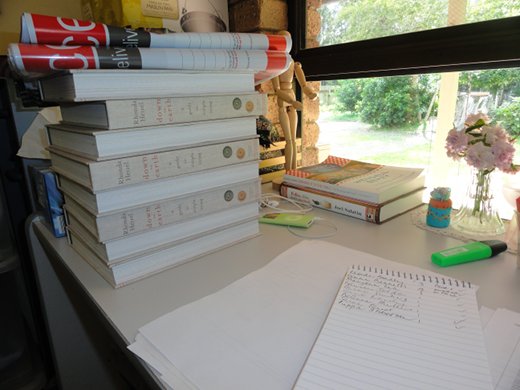
If you're wondering if I'm out gardening or baking or knitting. The answer to all is "no". This is what I'm doing and I think I'll be doing it until I pack it all up to go to a meeting this afternoon.  Signing books is not hard work, but it's repetitive.


Don't get me wrong, I am really grateful to have the opportunity to sign books, but at the moment there are a lot of books to be signed, packed and posted. If you have ordered and paid for a book, I'll probably be in touch sometime today. We hope to do the mail out tomorrow.


We'll be hitting the road on Saturday morning and driving to Byron Bay to have breakfast with Megan  who will do an interview for her local newspaper, The Northern Star. From there we'll head to Tricia's in the Blue Mountains where we'll rest for a couple of days after a very hectic week. I don't have the itinerary yet but this is where we'll probably be: Sydney, Melbourne, Ballarat, Castlemaine, Bendigo, Albury-Wodonga, Canberra, Wollongong, Springwood, Blackheath and Bathurst. The Queensland launch will be at Rosetta's in Maleny when we come home again - their link is on my side bar. I'll have more details for you when I have them here.

Hanno and I hope you come to see us if you're close by. We are driving and not flying, as is the custom, so we can meet you, not just because of the book but because we feel connected to so many of you. Let me know if you can meet with us. And if you're in between those towns on the main route and there are a couple of you, maybe we could stop to meet you in the library or the local park.

Luckily we have friends who are housesitting, so I have a bit of organising to do yet so they'll be comfortable while we're away. Think of us on Saturday morning as we choof off down south. It's going to be a memorable few weeks.
Backyard chickens will remain in good health if you give them a variety of good food but it's also worthwhile to see if you can reduce the cost of chicken feed while providing healthy food for your flock. To get a good supply of eggs, chickens need to eat high protein food. Most people feed commercial poultry food, either pellets or mash, but if you can add green leaves, table scraps, grains, stale bread or toast, and give them access to insects and worms you'll keep them happy and healthy while reducing the cost of keeping them fed. A good way to provide insects is to leave a couple of logs or tree branches around - untreated and unpainted. Keep them moist just by spraying them with the hose and over the months, as they start to decompose, they'll attract all sorts of bugs. Turn the logs over for the chooks every so often and watch them search for tasty morsels.


One of the easiest things to do is to have your chickens free ranging on grass that has not been sprayed or fertilised. The chicken droppings over the course of the day, and rain fall, will add to the fertility of the soil and the richness of the grass. Grass contains Omega 3 oils and if your chickens eat grass, there will be Omega 3 in the eggs you eat. Omega enriched eggs are very expensive at the supermarket so creating them in this natural way will save you money and give you healthier food. It will also reduce your feed bill.

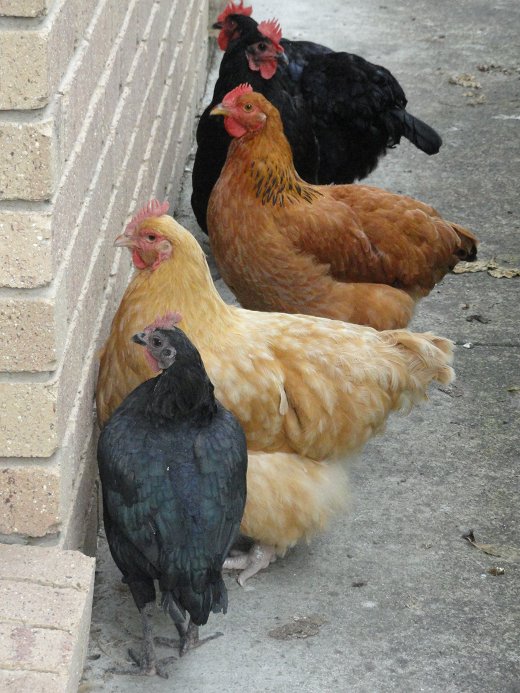
As a general guide, fully grown chickens need about 120 - 150 grams of food a day. Larger breeds need 150 grams, smaller hens eat less. There will be instructions and guidelines on the side of the feed bag so be guided by that. I find that some chickens are hungry eaters and some are not. Our newly acquired New Hampshire and Barnevelders fight for food, even though they have the same access to food all day. If we give meat scraps to our girls, those four chickens run in and out of the others, scanning the ground for food and will peck it out of another chooks' beaks if they can.

Hanno asked for the bread crusts and ends when we were at the Bunya Festival the other day. He brought them home and mixed them up with a bit of milk. The chickens love this kind of food, it adds more protein to their diet and it keeps feed costs down.

Small chicks need starter mash, they don't eat the same food as the laying hens. If you're buying chicks, ask the breeder what to feed them and if they need "starter crumbs" that is found at the local produce store. Small chicks can eat any of the supplementary leaves and porridge I've mentioned.

If you have a vegie garden, pop in a few more plants that will suit the chooks. They love green leafy vegetables like silverbeet/chard, lettuce, cabbage, kale, spinach and all the Chinese greens like bok choy, wombok and tatsoi.  They also love radish tops and turnip greens. If you have a large parcel of land, grain and seed crops include corn, amaranth, sorghum, millet, wheat, oats and sunflowers. If you're in a warm area, pigeon pea is good too and best to pick it when it's green. They will eat the peas and the foliage.


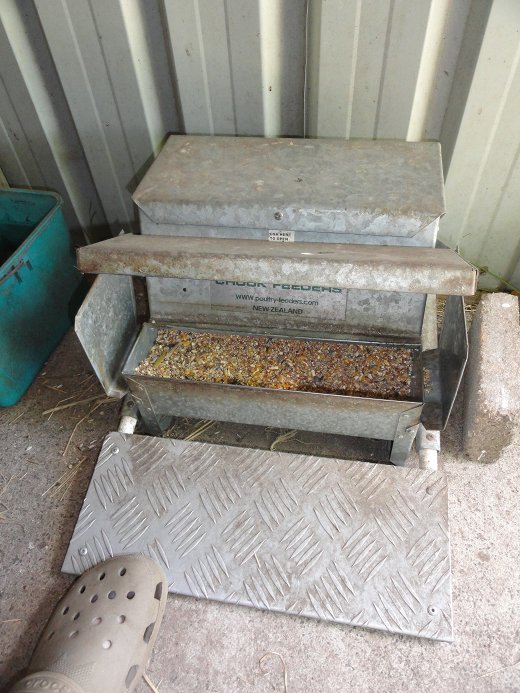
This is the feeder we have for our chickens. When they stand on the step, it lowers and at the same time, opens the lid revealing the food. The chickens soon learn how to use it and although it's supposed to keep rats away from the food, the rats learn how to use it too.
Don't feed your chooks raw eggs because it may give them a taste for those lovely eggs sitting in the nest. But they can have boiled or poached eggs and they will love you for giving them milk, whey, yoghurt or cheese - you can mix all these in with bread, toast, oats, rice etc. Make sure the cheese is not mouldy but stale or dry cheese is fine. In winter, we feed our chickens warm porridge with milk. They love this, it warms them up on a cold winter's morning and it will help keep their protein levels up to keep you in eggs during the colder months.

Chickens always need fresh water. They will die without it. Give them fresh water every day and make sure they can access the water whenever they need it. Chickens graze and drink all through the day, they don't have set meal times like dogs and cats, so make sure their food is freely available to them and they'll return to it when they need a top up.


If your chooks are a bit sick or have diarrhoea, separate them from the flock and give them some real raspberry cordial, made according to the directions on the bottle. This will provide a good pick-me-up. Red cordial will not do; it must be cordial with real raspberry juice. If you can't find genuine raspberry cordial, here is a recipe for homemade: 

Raspberry Cordial recipe
2 cups crushed fresh or frozen raspberries
Juice of one lemon
1½ cups sugar syrup
8 cups of water
Bring to the boil and simmer for five minutes. Cool, then decant to clean bottles. Store in the fridge for up to two months or freeze in a plastic bottle.

To a bucket of water, add about two tablespoons.

The chickens we got from Julie in December are growing very well and are still in excellent health. I expect one of the New Hampshires to start laying in the next week or so, her sister should follow soon after that. I know that because their combs and wattles have grown in the past few weeks and they're now red - a sure sign of fertility. We've had to buy eggs recently because the old girls haven't laid much during the hotter months and the new girls are not ready yet. When they start up again, we'll have more eggs than we can eat and we can give some away. Feast or famine. If you keep chickens, I'm sure you know what I'm talking about.

I've had several emails from people saying that Fishpond have told them the book will be released later in the year. Some say April, some say July. I spoke with Penguin this afternoon and I want to assure you that the book will be published on Wednesday 22 February. Nothing has changed.

I would advise everyone who has received an email like this from Fishpond to email back asking what the problem is. And please let me know the outcome. Thanks.
Hanno and I have been unusually social these past couple of days. Last Thursday we went out to lunch at a newly renovated and reopened local restaurant, Daisy's Place. Not very frugal, but Jens and Cathy gave us a gift voucher for lunch there for looking after Koda while they were away. The restaurant has an interesting history behind it and is now a beautiful place to dine while being surrounded by rainforest. Both Hanno and I were really impressed by the service and the food. The wait staff were very friendly and they knew their menu - that's aways a good sign. And the food! We both had fish and salad and it was fresh, delicious and beautifully presented. We went over to the dessert cabinet and while we were making our selection I heard: "Hello Rhonda". I turned around to find Vanessa Rumble - it turned out that she is the manager there. I introduced you to her blog a while back. Vanessa's husband Nathan was best man at Shane and Sarndra's wedding. Vanessa and Nathan are such lovely people. Vanessa told us that Nathan will be head chef there starting next week, so we'll have to go back at some point. We also met the owner, Sue Joseph. It turned out that she had a reservation to dine at Shane's restaurant, Absynthe, on Saturday night! What's that thing about six degrees of separation? It's been such a long time since I've been to a restaurant where everything was good, but that was the case at Daisy's Place. If you live here or visit the Sunshine Coast, you have to go there.

Baroon Pocket Dam 8am Saturday.

This year's message stick contained an invitation as well as a reproduction of the protection order from the Governor in 1842. The order recognised that Aboriginal people gathered to eat the Bunya nuts and stated that the land the Bunya pines grow on must not be settled on nor the trees cut down.

On this past Saturday we had the pleasure of being at the Bunya Festival. If you've been reading here for a while, you'll probably remember my good friend Aunty Beverly Hand. Aunty Bev is an elder of the Kabi Kabi people; the Sunshine Coast is their traditional land.  For thousands of years, Aboriginal people have met when the bunya nuts are abundant to feast on them, for sporting competitions, to talk about justice and politics and to socialise. Aunty Bev started the Bunya Festival in 2007 and the Maleny Neighbourhood Centre, funded by the festival, prepares and serves the food. It's simple fare - roasted bunya nuts, sausages on bread, scones and jam, fruit, tea, coffee and water and it's all provided freely to everyone who comes along. It's an invitation only event - and invitations for family groups arrive by message stick. Hundreds of people come along and enjoy a wonderful alcohol-free family day in the sunshine, on the banks of the Baroon Pocket Dam.

Large pieces of art work were scattered around the picnic ground. This one is a wicker koala.


This was one of my jobs - I coordinated the food workers and prepared the scones for morning tea. I also walked around the crowd and told people to go and help themselves to whatever they wanted to eat. It was all free, which surprised some folk. It is the custom of the local Aboriginal people to share whatever food they have with everyone who comes along. Non-indigenous Australians are surprised by this and I really enjoyed inviting them to accept the hospitality offered by Aunty Bev and the festival organisers.

Local Maleny High School principal, Brian King with our new community development worker Chris, cooking sausages and roasting bunya nuts for lunch.

Fruit was laid out so everyone could help themselves.


Kangaroo and emu being erected beside a screen and stage.

Hanno with some of the workers at the festival who enthusiastically took up the offer of cold watermelon for morning tea on a hot day.

Aunty Beverly Hand.

Aunty Beverly is one of the most interesting people I've ever met and I feel honoured to call her my friend. She is a kind and generous soul and when it comes to native flora and fauna, and the sensible management of our land, she's like a walking encyclopaedia. The festival started with Aunty Bev talking about the history of the Kabi Kabi people, the land and her own family history. Sadly, last year, Aunty Bev's mother died. She was a shining light for everyone who knew her. Like Aunty Bev, she was a gentle activist, a teacher and a good family woman. There was a tribute to her at this year's festival and that gave everyone there a chance to honour and remember a great woman who made an enduring mark on her people, her family and her land.

It was a delightful day full of art, competitions, challenges, feasting and socialising. I have never been to another event that warmly accepts and embraces people in such a wonderful way. It was a pleasure for Hanno and I to be there.

FYI: It is a mark of respect in Aboriginal culture for an elder to be called either Aunty or Uncle. It is a title given to those who work with their people to help strengthen families and communities. It is also a sign of respect for the name of a person who has died not to be spoken or written. It is out of respect and love for my friend Aunty Bev and her family that I uphold and honour these customs.

Over 600 delicious looking vegan and vegetarian recipes.  Well worth a visit.

Owlet - a charming blog about family, life and food.

It's Pickles again - this time, the Cool Kid Hooded Hat. It's perfect for those babies and toddlers who keep pulling their hats off. This free pattern is available in all sizes.

The Many Australian Photographers Group - a series of photos of the drought.

Inspectapedia - a free encyclopaedia of building and environmental inspection, testing, diagnosis and repair.  A must see for the home handyperson and whoever does the maintenance in your home. Includes winterizing your home, how to determine the age of a building, water pipes, stain diagnosis, roofing inspection and diagnosis, insulation inspection and improvement, common indoor air pollutants, and much more.

How tourists are helping to save the Tasmanian devil.

I am currently reading Wendell Berry's wonderful book Bringing It To The Table. This is the first Wendell Berry book I've read and wanted to see more and know more about this intelligent and inspiring man. I found this - Wendell Berry discusses life.

It's Friday ... again. Time to sit back and enjoy the end of summer, or if you're in colder parts of the world, the end of winter. Soon you'll see the beginnings of spring. Have a lovely weekend.
Thank you for your generous and beautiful comments yesterday. We both loved them. I'll be posting our itinerary as soon as it's ready. I know for sure we'll be in Melbourne for The Circle, Ballarat, Canberra, Wollongong and the Blue Mountains. The rest of it is not quite ready yet but when I have it, I'll post it.


~~~~~**~~~~~
I have written quite a bit about change in the past six months but those changes have been more about a move towards simplicity and sustainability by many people, right here in Australia, and all around the world. I think that's a wonderful change, and when I was slogging away on my blog in 2007 and 2008, I never believed that we would be at this point just a few years later. All of it was pushed along by the GFC and while that was a disaster for many, and continues to be now, it is also the pendulum swinging back towards thrift and prudence after years of rampant consumerism.


Today my topic is change, but it's about a change of attitude. When we were starting out, I found that adjusting my attitude made the difficult changes that were to follow, much easier. We all change in different ways, but many of us have to come to terms with our debt and to become more frugal in our habits. That often means giving up things you're used to having and sometimes doing that is painful. We gave up pay TV, our second car, buying books, magazines and newspapers, eating out and other things along the way. When I look back on that time I remember wondering if we were doing the right thing or if it was pointless. Now I know that for us, those first small steps not only gave us the strength to dive into bigger changes but they also made money available for things we needed, not wanted.

Okay everyone. Stand up, face the wall and don't move.

I was over-ripe. I was ready for change and nothing could have stopped me. But I think our changes seemed (now) to be easy because I was absolutely convinced that sacrifices were necessary. I had thought about how I wanted my life to be and when I visualised the future with nothing changing, I was saddened to see much of the same - waste and joyless shopping. I was disappointed in myself. For me, a change of attitude was vital and it helped all the difficult adjustments that followed. 

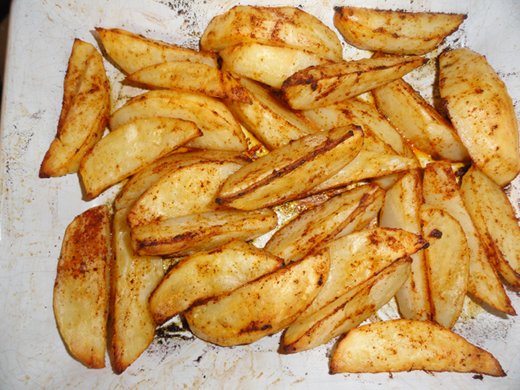
Homemade oven fries.

If you haven't had that change of attitude yet and you're occasionally slipping back into old habits, take some time to think carefully about why you want to live sustainably and simply. You want to move from "I deserve/want this." to "It would be great to have it but maybe I shouldn't." to "No, I want a better life. Let's get on with it." When you identify what you and your family will gain from the changes, something will click, you'll see different possibilities and you'll be in a different frame of mind. There is no doubt that being at peace with your reasons for change will make it easier for you. If you're not quite there yet, do some more reading, stop going to the shops and watching advertising, think about what your life could be and go ahead again. There is no one way to do this. We're all different, we want different things and we all come from different circumstances. A change of attitude is common to us all though, so if you can get there, it will be easier.

There will be passionfruit soon!

I know now, with certainty, that our simple way of life will never come unstuck. This is us now and forever. We grow vegetables, bake bread, work hard, connect with our community, live easily with thrift and do as much for ourselves as we can. It's not a burden. We do it with open and generous hearts and all these things, have become our normal. It can be your normal too. It can all start with a change of attitude.


I spent the last couple of days at Maleny working at the Neighbourhood Centre. Yesterday was very busy with a simple living workshop in the morning, craft from 12.30pm and a radio interview straight after that at 2.30. The next two hours were spent talking to various people who came in and taking phone calls. When I headed for home, I was ready for it. Walking towards the house, I could smell our tea cooking - Hanno's favourite, rissoles (big meatballs). Soon, we were sitting at the table eating those rissoles and salad, and with ice clinking in our water glasses, we told each other what had happened during the day.

Hanno told me about a delivery of books and that reminded me that next week we'll be off driving around the country hopefully meeting many of you. I'm in two minds about this trip. I am an introvert by nature, an optimistic introvert, so wandering around the country meeting people I don't know is not something I'd generally look forward to, or even contemplate. But this seems right to me, even though it will involve many nights sleeping in unfamiliar beds and eating food made by others, I think it will be okay. Luckily we have friends staying here to look after the house, cat and chickens, so home will be safe even if we're not as securely tucked away as we usually are.


Today I'll be tidying up and doing a few things to prepare for the trip. I'll also be replying to emails about book orders and making up a book plate to sign for those who want one. We have about 50 or 60 orders for books in Australia, so they have to be signed too. We'll start on that today so Hanno can have them packaged up and ready to post on the given day. 

I think I'll start a list too - a list of what we want to take away with us. That's the beauty of travelling by car and not by plane, you can load up the car with bits and pieces and have a little version of home travelling around with you. I find that very comforting because I am a homebody, I belong here. Out in the wider world, prices are rising, wars are continuing and change is a constant. When I hear about Madonna prancing around on a stage far far away, or a monarch's 60 year reign or drive by shootings or that grey is the new black, it feels like some other world; something unfamiliar. The domestic world of kitchens, ripe tomatoes, fresh eggs and clucking hens is my world. Being out there will be more difficult and more stressful but it also has the potential to be something I'll remember forever. I think it will live up to that potential. 

I wonder if I'm being too optimistic.

Our solar panels at front and the solar hot water system further back.

We have had a solar hot water unit for about 30 years. We had one on our old house and installed a new one when we moved to our home here. Solar hot water units still attract a government rebate in Australia and as hot water is one of the highest components of the electricity most of us use, it's a worthwhile exercise to save up and install one. Information about solar hot water for Australians is here. I would love you to add comments about rebates in other countries. Half way through last year we went a step further; we had some money, and with the assistance of the government rebate, we had a small solar unit - 1.5 kW, installed. We got excited about it and had visions of working our way towards saving money on our electricity bills. Here in Australia, and probably all around the world, the cost of electricity, gas and water have been rising a lot. We thought that with prudent use of our appliances and by keeping a careful eye on what we were producing with the solar panels, we'd slowly work our way towards a credit balance on our electricity bills.

That didn't happen. We were in credit on the first bill. Yes, $55 credit! I can still see it now. Hanno and I don't use a lot of electricity but we were not always like that. We slowly learned how to conserve this precious resource and we cut our electricity bill back to about $130- $150 per quarter, before our solar panels. In Australia most of our electricity comes from coal-fired plants so not only were we saving money if we cut back, we were saving carbon emissions too.

Some of our strategies might help you and if you contribute to this conversation in the comments, we might come up with a pool of great ideas that will help people all around the world. I am aware that many of these things are common place, but it's worthwhile repeating them because a lot of this about about developing habits - and that comes from repetition.

1. Get into the habit of turning off appliances at the wall. Standby power drains about 10 percent of your power over the course of a year. See if you can rig up your TV, DVD etc, to one power board and turn that one board off every night. Yesterday I read that these are the yearly stand by costs for:
  • Printer/ Broadband Modem / Telephone all on standby but not used - $61.
  • Home computer with printer on standby - $20.
  • LCD TV, with DVD and PVR in average use and always left on standby - $45.
You can read that article about electricity costs for the average Australian home here.

2. Read the manuals that come with your electrical appliances, especially those with cooling or heating elements, and use them according to the recommendations. For instance, the best temperature for cost effective cooling a room with an air conditioner is 24C / 75F.

3. During extreme heat, and depending on security in your neighbourhood, keep some doors and windows open at night to let the cooler air in and close them during the day. This works really well if you're home is insulated.

4.  If you live in a country with a cold climate, make some window quilts to help keep the cold out and the warmth of the fire in.

5.  Hang clothes outside in the open air instead of using the dryer.

6.  Use the washing machine with full loads and in off peak times.  Here is a general idea of peak and off-peak times. For more accurate times, google you home state's household electricity peak times.

7.  When we have to replace an appliance, we look for the energy star system. We recently had to replace our fridge and after a lot of research we bought an Electrolux two door - fridge above, freezer below. We've been very happy with it and I have no doubt it helped us with that $55 credit.  Info about energy stars her for USA, UK, Australia and NZ, Canada  I tried to find European Union information but all I found were regulations (very frustrating). If you have a European site to share, please do so.

8.  When you're baking, bake several things at once, or one after the other. That allows you to use the heat you've generated without letting the oven heat up and cool down for once batch.

9.  I live in Queensland, and here we have a government program called Climate Smart. It is probably in every Australian state so google the name with your state's name to get the full details. At the moment, the service will provide the following for just $50, it's a wise investment:
  • 4 standby eliminators and remote control
  • Household power assessment by qualified electrician
  • A wireless power monitor - you set this up in your home and it will show you how much electricity you're using at any time. This alone will help you save energy - you can see how much your washing machine is costing you and how much it goes up when you dry clothes in the dryer.
  • 5 power saving light globes
  • A hot water system adjustment, if yours needs it.
  • Water and power saving shower head.
  • A customised power and water-saving plan.
Hopefully a similar service is provided in other countries as well. Please let me know what government incentives are available in your country.

10.  Replace your old light globes with compact fluros. These can be expensive but well worth the investment. If you're on a tight budget, buy one a month until you have all your lights covered.

Concentrate on your big energy appliances first - dryers, heating, cooling etc. Moves towards reducing your electricity consumption are usually slow and it's one of those things that takes time to see improvements. But if you can make a plan to cut your usage, it will pay off because it looks like these charges will continue to rise in the future. Yesterday many of you shared your wonderful ideas by commenting. Please do so again and see if we can help others save both money and carbon emissions.

If you were to cook your own meals from scratch, I doubt you'd add sulphites, nitrates, artificial colourings or flavours, gums or MSG, and yet they're common ingredients in foods on supermarket shelves. Some preservatives, like calcium propionate (282) in bread have been removed recently because of their effects on health, but there are many other additives remaining in the food we eat. These things are added to keep food fresh, to add colour, flavour and to replace certain food properties that are removed during processing. Some additives are harmless, some cause problems, some haven't been tested. If you buy processed foods or pre-prepared meals, it's a good habit to get into to read the labels and have some understanding of what you're reading.


One of the ways we can get around this is to buy unprocessed ingredients instead of food that has be modified in some way, or already prepared and cooked. If you can make meals using ingredients you know, such as vegetables, fruits, meat, chicken, fish, dairy products, pulses and legumes, you'll be as close as you can get to eating and serving food you can be sure of. Instead of relying on packets of powdered spice mixes and cans of soup to add flavour to your food, get to know the herbs and spices you have available and use them instead.
  1. Chop, slice, shred your food yourself.
  2. Caramelise meat, chicken, onions and vegetables - that alone will add a lot to the flavour of your food.
  3. Make your own seasoning mixes. Find recipes here.
  4. Be careful with fruit juice as well. It's much better to grow your own or buy oranges and squeeze your own juice, but if that is not possible, read the label carefully and buy cautiously. There have been news reports last week about insecticides in orange juice imported into the USA from Brazil another country and processed in America.
  5. Buy in season; fruit and vegetables in season are usually cheaper and fresher.
  6. Buy cheaper cuts of meat, like shoulder of lamb or pork instead of the leg, and chuck steak, skirt steak, gravy beef, shin beef. All these cuts contain cartilage that break down with long slow cooking to give you natural gelatine in your food. That is very good for you. There's more to be read about this is the excellent book Nourishing Traditions. Use your slow cooker or a casserole dish in the oven to slow cook a double batch. Freeze the second portion. We buy our meat in bulk from a local family butcher.  We usually buy a hind quarter of beef which will see us through several months. It costs $7.95 a kilo (2.2lbs) and is local meat from the butcher's own farm. Obviously that is the ideal and not everyone has that luxury but you can ask about the meat you buy. If you ask questions you'll learn more and will be less likely to buy inferior meat.
  7. Stockpile - this will support you cooking from scratch. A cupboard full of ingredients will see you through not only your daily meals and snacks, it will be an insurance policy for those times when you don't have the time or energy to shop, when you have increased expenses one week and run short of cash or if there is a community emergency such as a storm, flood or fire.
  8. Use your leftovers. Learning how to deal with leftover food can stretch one meal into two or at the very least will provide a lunch the following day.
  9. Take your lunch and drinks to work or school.
  10. “Don't eat anything your great grandmother wouldn't recognize as food. "When you pick up that box of portable yogurt tubes, or eat something with 15 ingredients you can't pronounce, ask yourself, "What are those things doing there?" Michael Pollan says. So if you eat grains for breakfast, forget the Corn Flakes, Coco Pops and Cherrios and go for oatmeal or semolina instead. Don't buy instant oats (or instant anything), buy rolled or cut oats or barley, soak them in water overnight and cook them in the morning.
Cooking food isn't one simple task. It's a series of steps that will see you buying, possibly growing, cleaning, preparing and cooking the food you eat. How do you go about it?  Can we turn this list of ten into 100 essential tips?

The top five regrets of dying - a must-read

A Green Journey to inspiration  - here you'll find news, videos, info about courses and many inspiring stories about people who are living sustainably.

Irish corned beef recipes

Woollen soaker longies pattern

For Australian jar lovers and cooks - check out the solar powered light jars

Podcast of the radio interview I did yesterday

Thank you for your visits this week and for taking the time to comment and add your ideas to the mix. I hope you have a beautiful weekend.


I received an email from Madeline last week asking me to write about replacing household linens, crockery and odds and ends like umbrellas, as well as how to plan in the costs of maintaining a home. She wrote:

I've just had to replace my hot water system and computer printer. I also noticed the exterior of my house is suddenly looking really shabby,with exposed lining boards in places.I'm considering painting some of it myself to save money, but aware that I'm just one person trying to manage home, garden, major renovations, a business, and two kids!

And then there are all of the little replacements that add up - the umbrellas for school, crockery that's broken, towels ready for the rag bag etc….


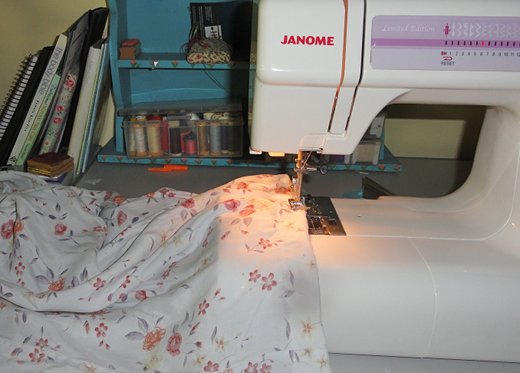
When my very old sewing machine gave up a few years ago, I replaced it with a Janome Quilters Companion I bought on eBay for a fraction of the new price. It's still going strong and has worked perfectly since I bought it.

I've written in the past about the common sense option of building an emergency fund for unusual and unexpected expenses. Everyone has these expenses as some point - the dog will have to go to the vet, someone is sick and needs special treatment, the fridge breaks down or some other appliance you need has to be replaced in a hurry. Those expenses are best covered with an emergency fund. The fund is kept in a bank - we use the ING online bank because their interest rates are better than the local banks. You may not need to dip into this for a couple of years and when it reaches a certain level - say $1000 - $2000 - you stop paying into it. It can sit there earning interest until you need it. Don't be tempted to keep your emergency fund at home in cash. You'll be tempted to dip into it and many of us would give in to that temptation.

 Hanno doing repairs to the drains in the backyard during the recent flooding rains.

Moving, replacing and repairing fences is a fairly frequent task here.

We put aside a certain amount every month for home maintenace. That covers house painting - we have a brick house so it's only interior painting, guttering, roof repairs, fencing etc. We are lucky in that Hanno can do most of our maintenance and repairs and when he does he often uses recycled materials. Hanno never throws away nails, screws, washers, paint, timber, wire, roofing iron, steel reinforcement or anything that he thinks will be useful in the future. Luckily we have a large shed to store these thing in and having that stash of recyclables saves us a lot of money. One of the many things that impresses me about Hanno is that he is always checking things to see if they're working and in a good state of repair. If he finds anything broken or damaged, he will fix it immediately. He never lets it get worse. Get into the habit of checking around your home and do your maintenance promptly so it doesn't turn into a repair job. If you need to replace or repair anything, look at buying from renovation yards and compare prices between buying new materials from the hardware store and recycled pieces from the dump shop or renovator's store. Make sure you not only compare price, compare quality too so you get the best value for money. Madeline, if you have to pay to have your repairs done, if you source the materials, that will save on those repairs.

We put money aside every month for car registration, maintenance and repairs too.

Check your sheets and towels when you fold them after washing. Replacing household linens is best done at the post Christmas sales.

Inside the house, we only replace things like sheets and towels when they're absolutely beyond repair. I keep a lookout for frayed or ripped sheets, and repair them to keep them going another season, generally I get another two seasons from them and then the sheet or towel will be used for cleaning rags or patchwork, it won't be "thrown away". I only ever buy sheets and towels when I see them at a good price, usually at the post Christmas sales. If I don't see the quality I want at the price I'm prepared to pay, I don't buy it and we make do until I see something I'm prepared to replace it with. I don't want to waste money and I don't want inferior quality. If I can buy best quality as a reduced sale price, I know that it will last many years, it will be a pleasure to use and I haven't spent too much on the replacement. I am prepared to wait for that. If I were to replace crockery, glasses, pyrex or cutlery, I'd do it at a good sale too, and make sure I got the best quality I could afford. Second hand shops are also a great place to look for kitchen replacements. Naturally everything will be pre-used but they'll be clean and in good repair and usually the older items haven't been made in China or India and will be good quality. Taking a regular stroll through your local second hand shop is a good habit to get into because you never know what you'll find there.

Hanno with his son Jens in his workshop/shed. In there he keeps all the bits and pieces he saves that he thinks might be needed for future repairs.

For odds and ends like umbrellas, sports equipment, camping gear and bags, the obvious place to look is the closest lost property sale. Here is a link with a catalogue showing what is available here in Australia but I'm sure most countries would have similar lost property sales. These auctions happen all over the country, you may find one near you. Go well before the auction starts because you should inspect what you intend to buy. You won't get your money back if you're not satisfied. Goods bought at an auction are generally bought "as is".

When you're doing this kind of shopping, don't go overboard and load yourself up with too much. Keep your simple life values in mind and remember what your level of "enough" is. All you're looking for is good value and good quality and if you can get that you've done a good job.


So to recap, if you can, and I know not everyone can do this, save an amount for emergencies. Put aside a certain amount each month for ongoing house repairs and maintenance and car repairs and maintenance. To work out what that amount is, go back and look at what you've paid in previous years and if you think that is a typical yearly amount, divide it by 12 to get a monthly amount, or by 52 to get a weekly amount, and that is what you'll have to put aside. If you get to the end of the year and you haven't spent the money you set aside, use it on building up a stockpile of a small number of sheets, towels, glasses, crockery, underwear, socks, work clothes, children's clothes in sizes they'll grow in to. Once you have enough of these things in your stockpile, any excess money can go to your emergency fund or straight to savings. Take advantage of sales, second hand and auctions - either local or online and be prepared to step back and wait if what you need is not at the right price or is an inferior quality. It's okay to wait for exactly what you want. That is wise economy.

Please add your thoughts here so this pool of ideas can help Madeline and others who are changing how they live.

ADDITION: I forgot to tell you that I'll be interviewed live on Radio National's Life Matters today at 8.45 am Queensland time and 9.45 am AEDT. The program will be available later in the day as a podcast.


I've noticed quite a few new soap makers at the forum lately, and have had emails from some of you with soap questions, so I thought it would be timely to give a few thoughts, not so much about how to make soap but about those things that are associated with it. Please remember I'm not an expert soaper. I make my own soap - one that is plain, unscented and not coloured. So I don't know much about essential oils or colourings but I know about what I do and am happy to share what works for me.

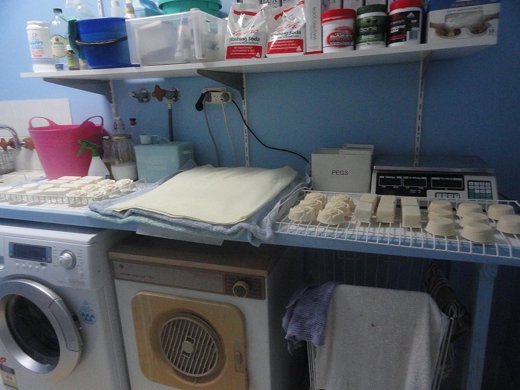
Some soap drying in the open air, and a new batch under covers in the middle.

You don't need the best oil for soap making, in fact courser oils are better.

If you can't find coconut oil and you live in Australia, use copha instead. You'll find it in the dairy aisle at the supermarket. It's solidified coconut oil.

You have to be careful with palm oil. That's often found in the dairy aisle too but many palm trees are being cut down to supply palm oil and that is not sustainable. Palm oil itself is not a problem but it becomes a problem depending on where it is harvested and how it is processed. Go here to download a very good file (and click on the Panda) that shows what various countries and companies are doing. If you don't know the source of your palm oil, buy a different oil, like coconut or sunflower.

Don't make too much soap. The oils can go rancid and additives like oatmeal can go mouldy, so if you make about three months supply at a time, you'll be able to get through your batch and have a new one waiting while only making soap once every 10 weeks or so.


When you finish making a batch of soap, store it on an open shelf on a rack that allows air circulation all around. Turn the soaps every day or so to facilitate the drying. You could keep the soap on this rack for six weeks if you wanted too but if you need to use the shelf, you could put the soap in a box for long term storage. Don't store your soap in plastic because it will make it sweat. Find an old shoe box, or a few of them, or a larger cardboard box and punch some air holes in the side walls for air circulation. Line the box with some brown paper and place a layer of brown paper or paper towel in between the layer of soaps. Don't add too much soap to the box, you need to have air circulating around it, maybe two layers would do nicely. If you're in a humid climate store the box in a cool space in your home.

If saponification takes place correctly, your soap could be used a couple of days after it's made. Generally though, we store our soap on wire racks to dry out for 4- 6 weeks. This allows the water in the soap to dry out. The drier the soap is when you start using it, the longer it will last.

If you want to test that your soap is okay to use, buy litmus paper from the chemist to test it. A reading of pH 7 is neutral but your soap will be slightly alkaline. You're looking for a reading somewhere between 7 and 9 and you'll be on the right track. Don't use any soap over pH 10. To test with litmus, wet the soap and lather it in your hands. Then wet the litmus paper with the lather and compare the strip of litmus paper with the little chart that comes with it. If your soap is too alkaline, let it sit for another week and re-test it. If your soap stays over 10 over the course of a few weeks, you could re-batch it or use it as laundry soap.

This is my tray in the bathroom. The soaps at the front at those kindly sent to me by readers of the blog.

I usually make about 20 bars in one batch. I let them dry out for a month or so and then I usually store them soap in an open tray in the bathroom. If this humidity goes on too much longer, I will store these in a paper lined box.

I hope you're having fun with your soap making. When you "get it" soap making could take you on to many wonderful types of soap or even a little business you could run from home.

~~~~~**~~~~~~
I forgot to tell you but yesterday I was on NSW ABC radio on the afternoon program. Apparently it aired state-wide except Sydney and Newcastle. I'll be on next week too. Tomorrow I'll be interviewed on Radio National's Life Matters - 8.45am Queensland time and 9.45am AEDT. That should be available on podcast later in the day too.


Newer Posts Older Posts Home

MY BOOKS

MY BOOKS


My books were all published by Pengiun, and are available at Amazon US, Amazon UK and Amazon Au

Search here

Total Pageviews

Translate


I'm Rhonda Hetzel and I've been writing my Down to Earth blog since 2007. Although I write the occasional philosophical post, my main topics include home cooking, happiness and gardening as well as budgeting, baking, ageing, generosity, mending and handmade crafts. I hope you enjoy your time here.

MY FAVOURITE PLACES

  • Grandma Donna's Place
  • Grandma Donna's YouTube
  • Grandma Donna's Instagram
  • This Simple Day
  • Nicole's Instagram

Give More

Give More

Popular posts last year

Making ginger beer from scratch

We had a nice supply of ginger beer going over Christmas. It's a delicious soft drink for young and old, although there is an alcoholic version that can be made with a slight variation on the recipe. Ginger beer is a naturally fermented drink that is easy to make - with ginger beer you make a starter called a ginger beer plant and after it has fermented, you add that to sweet water and lemon juice. Like sourdough, it must ferment to give it that sharp fizz. To make a ginger beer plant you'll need ginger - either the powdered dry variety or fresh ginger, sugar, rainwater or tap water that has stood for 24 hours to allow the chlorine to evaporate off. You'll also need clean plastic bottles that have been scrubbed with soap, hot water and a bottle brush and then rinsed with hot water. I never sterilise my bottles and I haven't had any problems. If you intend to keep the ginger beer for a long time, I'd suggest you sterilise your bottles. MAKING THE STARTER In a...
Image

NOT the last post

This will be my last post here.  I've been writing my blog for 18 years and now is the time to step back. I’ve stopped writing the blog and come back a couple of times because so many people wanted it, but that won’t happen again, I won’t be back.  I’ll continue on instagram to remain connected but I don’t know how frequent that will be. I know some of you will be interested to know the blog's statistics. 
Image

How to make cold process soap

I'm sure many of you are wondering: "Why make soap when I can buy it cheaply at the supermarket?" My cold process soap is made with vegetable oils and when it is made and cured, it contains no harsh chemicals or dyes. Often commercial soap is made with tallow (animal fat) and contains synthetic fragrance and dye and retains almost no glycerin. Glycerin is a natural emollient that helps with the lather and moisturises the skin. The makers of commercial soaps extract the glycerin and sell it as a separate product as it's more valuable than the soap. Then they add chemicals to make the soap lather. Crazy. Making your own soap allows you to add whatever you want to add. If you want a plain and pure soap, as I do, you can have that, or you can start with the plain soap and add colour, herbs and fragrance. The choice is yours. I want to add a little about animal and bird fat. I know Kirsty makes her soap with duck fat and I think that's great. I think t...
Image

Preserving food in a traditional way - pickling beetroot

I've had a number of emails from readers who want to start preserving food in jars but don't know where to start or what equipment to buy.  Leading on from yesterday's post, let's just say up front - don't buy any equipment. Once you know what you're doing and that you enjoy preserving, then you can decide whether or not to buy extra equipment. Food is preserved effectively without refrigeration by a variety of different methods. A few of the traditional methods are drying, fermentation, smoking, salting or by adding vinegar and sugar to the food - pickling. This last method is what we're talking about today. Vinegar and sugar are natural preservatives and adding one or both to food sets up an environment that bacteria and yeasts can't grow in. If you make the vinegar and sugar mix palatable, you can put up jars of vegetables or fruit that enhance the flavour of the food and can be stored in a cupboard or fridge for months. Other traditional w...
Image

Cleaning mould from walls and fabrics

With all this rain around we've developed a mould problem in our home. Usually we have the front and back doors open and that good ventilation stops most moulds from establishing. However, with the house locked up for the past week, the high humidity and the rain, mould is now growing on the wooden walls near our front door and on the lower parts of cupboards in the kitchen. Most of us will find mould growing in our homes at some point. Either in the bathroom or, in humid climates, on the walls, like we have now. You'll need a safe and effective remedy at some point, so I hope one of these methods works well for you. Mould is not only ugly to look at, it can cause health problems so if you see mould growing, do something about it straight away. The longer you leave the problem, the harder it will be to get rid of it effectively. If you have asthma or any allergies, you should do this type of cleaning with a face mask on so you don't breathe in any spores. Many peopl...
Image

Five minute bread

Bread is one of those foods that, when made with your own hands, gives a great deal of satisfaction and delight. It's only flour and water but it symbolises so much. I bake bread most days and use a variety of flours that I buy in bulk. Often I make a sandwich loaf because we use most of our bread for lunchtime sandwiches and for toast. Every so often I branch out to make a different type of loaf. I have tried sour dough in the past but I've not been happy with any of them. I'll continue to experiment with sour dough because I like the idea of using wild yeasts and saving the starter over a number of years to develop the flavour and become a part of the family. However, the loaf I've been branching out to most often is just a plain old five minute bread. By five minutes I mean it takes about five minutes actual work to prepare but it's the easiest of all bread to make and to get consistently good loaves from. If you're having people around for lunch or...
Image

This is my last post.

I have known for a while that this post was coming, but I didn't know when. This is my last post. I'm closing my blog, for good, and I'm not coming back like I have in the past.  I've been writing here for 16 years and my blog has been many things to me. It helped me change my life, it introduced me to so many good people, it became a wonderful record of my family life, it helped me get a book contract with Penguin, and monthly columns with The Australian Women's Weekly and Burke's Backyard . But in the past few months, it's become a burden. In April, I'll be 75 years old and I hope I've got another ten years ahead. However, each year I'll probably get weaker and although I'm fairly healthy, I do have a benign brain tumour and that could start growing. There are so many things I want to do and with time running out, leaving the blog behind gives me time to do the things that give me pleasure. On the day the blog started I felt a wonderful, h...
Image

What is the role of the homemaker in later years?

An email came from a US reader, Abby, who asked about being a homemaker in later years. This is part of what she wrote: "I am a stay-at-home mum to 4 children, ages 9-16. I do have a variety of "odd jobs" that I enjoy - I run a small "before-school" morning drop-off daycare from my home, I am a writing tutor, and I work a few hours a week at a local children's bookstore. But mostly, I cherish my blissful days at home - cooking, cleaning (with homemade cleaners), taking care of our children and chickens and goats, baking, meal-planning, etc. This "career" at home is not at all what I imagined during my ambitious years at university, but it is far more enriching. I notice, though, that my day is often planned around the needs of my family members. Of course, with 4 active kids and a husband, this is natural. I do the shopping, plan my meals, cook dinner - generally in anticipation of my family reconnecting in the evening.  I can't h...
Image

Every morning at home

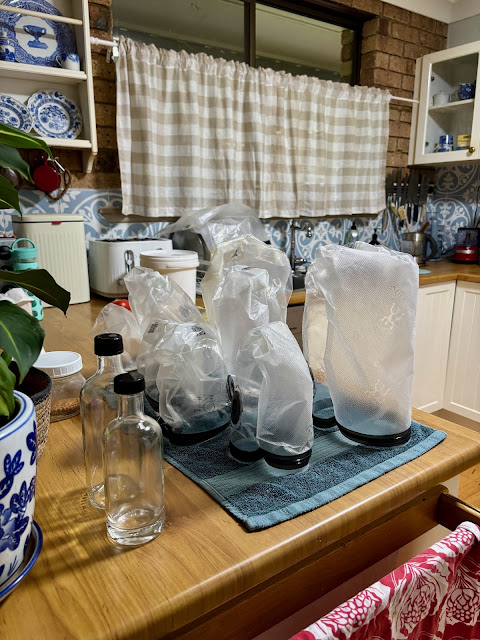
Every morning when I walk into my kitchen it looks tidy and ready for a day's work. Not so on this morning (above), I saw this when I walked in. Late the previous afternoon when I was looking for something, I came across my rolled up Zwilling vacuum bags and decided they had to be washed and dried. So I did that and although I usually put them outside on the verandah to dry it was dark by then. I turned the just-washed bags inside out and left them like this on a towel. It worked well and now the bags are ready to use when I bring home root vegetables, cabbages or whatever I buy that I want to last four or five weeks.
Image

You’ll save money by going back to basics

When I was doing the workshops and solo sessions, I had a couple of people whose main focus was on creating the fastest way to set up a simple life. You can't create a simple life fast, it's the opposite of that It's not one single thing either - it's a number of smaller, simpler activities that combine to create a life that reflects your values; and that takes a long to come together. When I first started living simply I took an entire year to work out our food - buying it, storing it, cooking it, preserving, baking, freezing, and growing it in the backyard. This is change that will transform how you live and it can't be rushed.  
Image

All previous blog posts

  • 2026 3
    • February 3
      • Workshops starting 1 March
      • Planting vegetable seeds and new workshops
      • Back where we belong
  • 2025 7
    • July 1
    • June 2
    • May 1
    • April 2
    • February 1
  • 2024 25
    • December 2
    • November 1
    • October 2
    • September 3
    • August 1
    • July 3
    • June 1
    • May 3
    • April 2
    • March 3
    • February 2
    • January 2
  • 2023 13
    • December 1
    • November 2
    • October 1
    • September 3
    • August 2
    • February 2
    • January 2
  • 2022 17
    • November 3
    • October 4
    • September 3
    • August 2
    • July 3
    • June 2
  • 2021 50
    • December 1
    • November 6
    • October 7
    • September 5
    • August 4
    • July 5
    • June 2
    • May 2
    • April 6
    • March 4
    • February 4
    • January 4
  • 2020 68
    • December 3
    • November 5
    • October 4
    • September 4
    • August 4
    • July 4
    • June 4
    • May 8
    • April 7
    • March 8
    • February 8
    • January 9
  • 2019 66
    • December 2
    • November 4
    • October 5
    • August 3
    • July 4
    • June 6
    • May 8
    • April 8
    • March 8
    • February 11
    • January 7
  • 2018 82
    • December 1
    • September 2
    • August 10
    • July 4
    • June 11
    • May 9
    • April 12
    • March 10
    • February 10
    • January 13
  • 2017 129
    • December 7
    • November 10
    • October 6
    • September 13
    • August 11
    • July 13
    • June 12
    • May 9
    • April 9
    • March 14
    • February 11
    • January 14
  • 2016 125
    • December 7
    • November 13
    • October 10
    • September 11
    • August 11
    • July 8
    • June 9
    • May 9
    • April 12
    • March 10
    • February 13
    • January 12
  • 2015 184
    • December 7
    • November 15
    • October 20
    • September 18
    • August 19
    • July 18
    • June 12
    • May 15
    • April 12
    • March 21
    • February 13
    • January 14
  • 2014 203
    • December 11
    • November 8
    • October 17
    • September 20
    • August 17
    • July 19
    • June 17
    • May 17
    • April 23
    • March 15
    • February 18
    • January 21
  • 2013 225
    • December 13
    • November 17
    • October 17
    • September 17
    • August 21
    • July 24
    • June 20
    • May 19
    • April 17
    • March 22
    • February 17
    • January 21
  • 2012 245
    • December 17
    • November 20
    • October 20
    • September 18
    • August 15
    • July 24
    • June 21
    • May 26
    • April 23
    • March 23
    • February 19
    • January 19
  • 2011 257
    • December 18
    • November 24
    • October 27
    • September 23
    • August 24
    • July 21
    • June 24
    • May 24
    • April 16
    • March 22
    • February 14
    • January 20
  • 2010 283
    • December 20
    • November 18
    • October 18
    • September 19
    • August 25
    • July 24
    • June 25
    • May 26
    • April 25
    • March 22
    • February 29
    • January 32
  • 2009 293
    • December 29
    • November 18
    • October 23
    • September 25
    • August 22
    • July 28
    • June 22
    • May 21
    • April 27
    • March 26
    • February 24
    • January 28
  • 2008 387
    • December 24
    • November 23
    • October 25
    • September 26
    • August 27
    • July 27
    • June 37
    • May 34
    • April 44
    • March 53
    • February 32
    • January 35
  • 2007 372
    • December 37
    • November 40
    • October 55
    • September 51
    • August 49
    • July 63
    • June 49
    • May 28


Trending Articles

NOT the last post

This will be my last post here.  I've been writing my blog for 18 years and now is the time to step back. I’ve stopped writing the blog and come back a couple of times because so many people wanted it, but that won’t happen again, I won’t be back.  I’ll continue on instagram to remain connected but I don’t know how frequent that will be. I know some of you will be interested to know the blog's statistics. 
Image

Every morning at home

Every morning when I walk into my kitchen it looks tidy and ready for a day's work. Not so on this morning (above), I saw this when I walked in. Late the previous afternoon when I was looking for something, I came across my rolled up Zwilling vacuum bags and decided they had to be washed and dried. So I did that and although I usually put them outside on the verandah to dry it was dark by then. I turned the just-washed bags inside out and left them like this on a towel. It worked well and now the bags are ready to use when I bring home root vegetables, cabbages or whatever I buy that I want to last four or five weeks.
Image

You’ll save money by going back to basics

When I was doing the workshops and solo sessions, I had a couple of people whose main focus was on creating the fastest way to set up a simple life. You can't create a simple life fast, it's the opposite of that It's not one single thing either - it's a number of smaller, simpler activities that combine to create a life that reflects your values; and that takes a long to come together. When I first started living simply I took an entire year to work out our food - buying it, storing it, cooking it, preserving, baking, freezing, and growing it in the backyard. This is change that will transform how you live and it can't be rushed.  
Image

Creating a home you'll love forever

Living simply is the answer to just about everything. It reduces the cost of living; it keeps you focused on being careful with resources such as water and electricity; it reminds you to not waste food; it encourages you to store food so you don't waste it and doing all those things brings routine and rhythm to your daily life. Consciously connecting every day with the activities and tasks that create simple life reminds you to look for the meaning and beauty that normal daily life holds.  It's all there in your home if you look for it. Seemingly mundane tasks like cleaning and cooking help you with that connection for without those tasks, the home you want to live in won't exist in the way you want it to.  Creating a home you love will make you happy and satisfied.
Image

Time changes everything

I've been spending time in the backyard lately creating a contained herb and vegetable garden. My aim is to develop a comfortable place to spend time, relax, increase biodiversity and encourage more animals, birds and insects to live here or visit. Of course I'd prefer my old garden which was put together by Hanno with ease and German precision. Together, we created a space bursting at the seams with herbs, vegetables and fruity goodness ready to eat and share throughout the year. But time changes everything. What I'm planning on doing now, is a brilliant opportunity for an almost 80 year old with balance issues. In my new garden I'll be able to do a wide range of challenging or easy work, depending on how I feel each day. It’s a daily opportunity to push myself or sit back, watch what's happening around me and be captivated by memories or the scope of what's yet to come.
Image

It's the old ways I love the most

I'm a practical woman who lives in a 1980’s brick slab house. There are verandahs front and back so I have places to sit outside when it's hot or cold. Those verandahs tend to make the house darker than it would be but they're been a great investment over time because they made the house more liveable. My home is not a romantic cottage, nor a minimalist modern home, it's a 1980’s brick slab house. And yet when people visit me here they tell me how warm and cosy my home is and that they feel comforted by being here. I've thought about that over the years and I'm convinced now that the style of a home isn't what appeals to people. What they love is the feeling within that home and whether it's nurturing the people who live there.
Image

Back where we belong

Surprise! I'm back ... for good this time. Instagram became an impossible place for me. They kept sending me messages asking if I'd make my page available for advertisers! Of course, I said no but that didn't stop them. It's such a change from what Instagram started as. But enough of that, the important part of this post is to explain why I returned here instead of taking my writing offline for good. For a few years Grandma Donna and I have talked online face-to-face and it's been such a pleasure for me to get to know her. We have a lot in common. We both feel a responsibility to share what we know with others. With the cost of living crisis, learning how to cook from scratch, appreciate the work we do in our homes, shop to a budget and pay off debt will help people grow stronger. The best place to do that is our blogs because we have no advertising police harassing us, the space is unlimited, we can put up tons of photos when we want to and, well, it just feels li...
Image

Making ginger beer from scratch

We had a nice supply of ginger beer going over Christmas. It's a delicious soft drink for young and old, although there is an alcoholic version that can be made with a slight variation on the recipe. Ginger beer is a naturally fermented drink that is easy to make - with ginger beer you make a starter called a ginger beer plant and after it has fermented, you add that to sweet water and lemon juice. Like sourdough, it must ferment to give it that sharp fizz. To make a ginger beer plant you'll need ginger - either the powdered dry variety or fresh ginger, sugar, rainwater or tap water that has stood for 24 hours to allow the chlorine to evaporate off. You'll also need clean plastic bottles that have been scrubbed with soap, hot water and a bottle brush and then rinsed with hot water. I never sterilise my bottles and I haven't had any problems. If you intend to keep the ginger beer for a long time, I'd suggest you sterilise your bottles. MAKING THE STARTER In a...
Image