down to earth

  • Home
  • About Us
  • Down To Earth Book
  • Privacy Policy
This is a Friday photo feature that anyone with a blog can join. To take part, post a photo on your own blog, write a short caption explaining it, and link it back to here from your blog by saying you're part of "On my mind". Please write a new post, don't link to an older one. When you've done that, come back here and add a comment below, with a link to your blog.


I'm thinking of the calendulas I picked yesterday. Like everything else in our garden, they're organic, so I'm making calendula salve with them. It's a helpful little home remedy to have on hand for rashes and infections. I'll tell you more about it next week.

Thank you for your visits and comments this week. If you've just discovered my blog, welcome. I hope you find encouragement and interesting information here. Have a wonderful weekend, everyone.
I'm looking forward to a peaceful day today. A walk around the garden, looking in on Mary and her eggs, a few emails and two summer hats for the babies and that will be it for me. I even slept in!  That was a good start to a quiet day and what made me think I should relax instead of work today.  It's the ideal time of year to start taking it easy.  The weather is hot again and everything is starting to wind down towards the summer holidays.

Our vegetable garden is starting to slow down too. There comes a time every year when Hanno and I ask each other: Will we keep planting? The answer now, is no. We'll keep harvesting and watering but own main growing year is almost over now and by late January most of the vegies will be gone, we'll rely on our freezer more and start planting again in March. There is still a lot of food there waiting to be harvested and much more that will keep producing like pumpkins and watermelons, but the planting is over for the year.

Let me introduce Lulubelle and Martha, our buff Orpington and Plymouth Rock chooks. Soon they'll be joined by some more of their type. The eggs under Mary are buff Orpingtons and Plymouth Rocks.

There are still a few gardening chores to carry out. This flower spike is just starting and when it flowers and turns into seeds, we'll collect them for our next planting. 

The beans have grow like wild fire this year. There are still a lot of the climbing green beans to eat fresh and to freeze and the butter beans below, a bush variety, still have another couple of weeks left in them.


The tomatoes have done well this year too. These are the French heirloom St Pierre that I grew in a pot at the garden entrance. We'll be collecting seeds from these so we can continue with them next year.

Over near the bok choy, we planted more mixed heirloom tomatoes about two weeks ago. I don't know what they'll be yet because they were mixed seeds given to me but this one above is a potato leaf variety so if might be a Brandywine or a Prudens Purple, or any number of delicious old fashioned tomatoes. Hopefully the weather won't be too hot for them to produce. Tomatoes stop setting flowers to fruit when the temperature is too high.

 This orange tree is full of small fruit that will be juicy and ripe next winter.

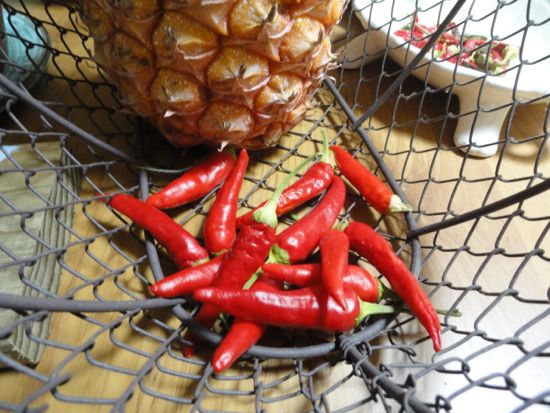
We have a few chilli bushes left from last year that have produced very well. These above are Firecracker - you can see them ripe red, and in the kitchen, below. The capsicums (peppers) and chillis aren't bothered at all by the hot weather. If we keep the water up to them, they'll keep growing happily all through summer. Then we'll cut them back and they'll come on again next year.


These are jalapeno chillis, a great one for spicy cooking or for making chilli jam.

 
 We always grow a lot of cucumbers. This is one of two Lebanese cucumber vines. They're picked small and crisp and are excellent in salads or for bread and butter pickles. Now that the hot humid weather is here, these vines will soon get powdery mildew and we'll pull them out.


And of course we always have flowers and herbs too. Here are some calendulas inviting the bees into the garden and parsley.

And what do we have here? The quiet gardener working on his compost. Shhhh, he doesn't know we're here. Let's walk away quietly.

Happy Thanksgiving to all my American friends. I hope you all have a wonderful day.


Many of the skills we need when living simply don't exist in isolation, if you want to get the full measure of these things we do, you have to learn a number of skills to make it happen successfully. For instance, growing vegetables isn't only about gardening, when you learn how to sow seeds, tend and harvest vegetables, you also have to learn about how to enrich the soil, fertilise and provide water as well as food storage and cooking to make it work. Most skills are part of a process, often with several distinct skills supporting and making up the whole. 


When I did my post on freezing silverbeet (chard) and beans recently, I received a couple of emails asking if I would do a post on blanching. Blanching is one skill that is part of the process of vegetable production and food storage. It's another kitchen skill that used to be commonly taught but with the rise of purchased frozen and convenience foods, has been forgotten by many.  If you're growing your own vegetables or buying in bulk when you see a great special, you should take the time to learn about blanching, and then do it. Blanching takes only a small amount of time but it will help retain the quality of the vegetables you freeze. All vegetables have enzymes in them that help them grow. Blanching in boiling water or steam stops or slows down the action of these enzymes helping to keep optimum flavour, texture and vitamins. You can freeze food without blanching but you may not be retaining vitamins and you increase the risk of the vegetables spoiling in the freezer.

PREPARATION
Start by cleaning your sink. You want a clean work area and your sink will give you a good place to clean the vegetables and if you have a double sink, you'll also have a place to cool the vegetables after blanching them. If you don't have a double sink, use a large bowl or pot filled with cold water. The only other requirements are a colander, a large stockpot with a lid (depending on how much and what you're blanching), a slotted spoon to lift the vegetables out, or basket that fits inside the pot.


The general rule is to use about 4 litres (1 gallon) water per half kilo (pound). For the amount of silverbeet I blanched in these photos, I filled my pot with water to about three-quarters capacity.

Set the pot on the stove to boil with the lid on. Keeping the lid on will help bring the water to the boil faster.

While that is happening, trim or peel your vegetables if they need it, and cut vegetables like beans or carrots into serving size. Whatever you would normally do to prepare your vegetables for cooking, do before blanching. For vegetables like silverbeet, leeks or spinach, make sure you wash them thoroughly to remove all the grit or sand. Make sure you do all your prep properly because when you cook the vegetables after you freeze them there will not be another opportunity to clean, prepare or trim the vegetables.

Green vegetables will turn bright green when they've been blanched.

Make sure you drain the vegetables well. Excess water will turn to ice in the freezer.


BLANCHING TIMES
Make sure you know your blanching times because if you under-blanch it can stimulate the activity of the enzymes and can be worse than not blanching at all, and over-blanching will cause your vegetables to lose vitamins, minerals, colour and flavour.

Click here for blanching times.

Click here for blanching times.

HOW TO BLANCH

  1. Divide the vegetables up into portions that will easily fit into your pot.
  2. When the water is at a rolling boil, put in the first portion and put the lid on the pot.
  3. Check the blanching guides below to find out how long to leave the vegetables in the boiling water. When the time it up, quickly get the vegetables out of the water using your spoon, or lift the basket out, and plunge them into very cold water - add ice if necessary. You want to cool them down fast to stop the cooking process.
  4. If you have several portions to blanche, carry on doing the above in the same water, making sure it's on a rolling boil before you add the vegetables.
  5. When you've finished blanching and cooling the vegetables, place them all into colanders to drain thoroughly. Let them stand for an hour or so to drain off as much water as possible.
  6. When you're happy that has happened, bag your vegetables into portions sizes suitable for your family.
  7. Mark with a permanent marker with the vegetable name and date.
  8. Place in the freezer. If you have a lot of home frozen bags, try to keep all the same types together or use ice cream containers or plastic baskets (depending on the size of your freezer) to organise the vegetables. Remember, you can't rely on coloured packets with photos on them like commercial frozen food so whatever you can do to organise your food will help you recognise what you have and assist your food storage program.


  • A rolling boil is water boiling strongly with large bubbles - and when you stir it, the boiling continues.
  • When you finish blanching you'll have some coloured water in the pot. Let it cool down and use it on the vegetable garden, there will be some nutrients in the water.

Age is starting to make its mark on me. When I was younger, I didn't think about age and I didn't feel a particular age. There has never been a time when I thought okay, I'm 18/30/45/50, I should do ...whatever. Now I'm in my mid-60s, I feel it and I know it. I wonder why that recognition of age is with me now.


No doubt, part of the reason is that both my parents have died and I'm a grandmother. I have moved into the front line, so to speak, if things go according to plan, Hanno and I will be the next to die. My friends have started dying too. It's a sad time but it's also full of good memories of times past and a strong feeling I am glad to be alive and that I have to make every day count.


Age has slowed me down a bit. I've also lost some strength and sometimes I forget things. When those things happen it makes an impact on me.  I wonder if it's the start of something sinister, something that we don't talk about. But it's not all bad news, in fact, most of it is good because I love being over 60 much more than being under 40. I feel as if I've grown into the person I want to be. My hope is that now the baby boomers have started retiring, we'll somehow reverse the idea that ageing is a bad thing and restore it to being just a natural process - a part of life. When you think about it, ageing is a success - if you live long enough to be old, you've survived. If you enjoy your old age, you've not only survived, you've thrived and maybe even triumphed.


I feel that this time of life is the payoff for the industriousness and busyness and of younger years - all those years of child raising, working hard for a living, buying a home and building a strong family. I have many good memories of those times, it was enriching and fulfilling but it was hard work. When I look back to when I was young I see all the hard work yet to come, all the teenage years, the struggle to pay off our home as fast as we could and saying the last goodbye to my parents and some friends - it was all ahead of us then.

We survived it all.

We are still industrious but it's gentle now; it's more a slow and steady working towards sustainability rather than working flat out. We see rewards for that industriousness in the form of our own independence and the genuine feelings of self reliance we both feel.

Busyness is different when you get older - it's multi-layered and on your own terms. My terms are not dictated to me anymore by my job or my children; now I do the productive work of my home, and I choose activities that challenge me and make me think. The self-imposed pressure to succeed has gone and been replaced by acceptance of whatever comes my way, trust in the future and confidence in my ability to cope, no matter what.


I am firmly convinced that, for me, now is not a time for plastic surgery or dyed hair. I wear my wrinkles, thinning skin and grey hair with pride; a kind of badge that says I've been here for a long time, I know what I'm doing, I'm a grandma, I have visited the past and I have a little wisdom to share if you care to listen.

It saddens me when I see women and men who are scared of ageing. This is not something to be frightened of - growing older is the golden prize. It is the time in your life when you can choose what you want to do - and if, like us you choose to take control of your own life and simplify, make your home productive and enjoy the day to day process of that, then you'll have something new to get up for every morning. I reckon I have another 20 years to live, if I'm lucky, I might have 30 or 35. Beyond that, forget it, I don't want to be here forever. I think my job has been to raise my children and to see them raise theirs. I have fulfilled my duty to my species and now is a time for freedom,  happiness and maybe a bit of craziness. Now is the time to really live like there is no tomorrow, but maybe that is how we should live all the time.

There are a few changes going on in our chicken coop. We’re preparing a nursery. As I wrote on Friday, Nicky kindly sent us six fertile eggs – a mix of buff Orpingtons and barred Plymouth Rocks. The eggs came by mail, carefully wrapped in tissues, sitting in an egg carton to keep them stable and packed into the middle of a medium sized box full of shredded paper. The packing was perfect and should really have kept the eggs safe but who know what happens in the postal system. Hopefully they'll all hatch.

For any readers living in the Glen Innes, Inverell or Armidale area, Nicky has large buff Orpingtons, large light barred Plymouth Rocks and large silver laced Wyandottes. You can contact her here.

Nicky advised us to sit the eggs in a safe place to settle for a while and to place them under the broody just on night fall. So after a settling down period, we were going to set them under Lucy, our experienced mother hen.

Lucy had other plans.

About three weeks ago Lucy built a nest in the front garden for herself and eight of her own eggs. She sat, appropriately enough, in the dwarf Madonna lilies, well hidden from view but when we looked well enough, we could see her long black tail poking out.


When it was getting dark and all the chooks had already put themselves to bed, Hanno lifted Lucy off her own nest and brought her back to the coop to a newly prepared nest holding the six fertile eggs. We thought we were giving Lucy a treasured gift but she made some yodelling noises and started grooming herself. We left her to settle in, an hour later Hanno went back to check on her and she was asleep on the roost with the other girls. Grrrrr.

Hanno transferred all the eggs over to Mary, Lucy's daughter, who has been steadfastly sitting on her own imaginary eggs, on and off, for the past two years. Mary deserves these chicks. 

(left) Lulubelle, our barred Plymouth Rock girl, with Mary in the adjoining suite.

Hanno is making a wire wall that will keep Mary and eggs/chicks away from the other girls but they’ll all be able to see each other. He’s made up a box nest for her so she can sit on the eggs away from the other chooks and when the eggs hatch, there is a little chook run right next door where they can all stay safe and together away from the older chooks and predators.

This is the second time we’ve put fertile eggs under a broody hen. The first time, a couple of years ago, the mother hen, a big Rhode Island Red girl, squashed the Wyandotte chicks after they hatched. I had thought that Lucy, being an experienced mother would hatch and raise the chicks. Obviously Lucy's broodiness was at an end and it was not to be. Hanno said her eggs were black when he disposed of them.


Hanno made a cute little ladder for mother and chicks to use.

So now we count the days until 8 December when the chicks should hatch. Just 21 days seems like such a short time for life to form and being viable, but that's all it takes. I'm really looking forward to having chicks here. If it all goes to plan, they'll start laying in early May. We can't keep roosters here, we have tried, but given them all away. I'd love for our hens to lay fertile eggs but that will never happen without a rooster. This is the next best thing and it feels right to me. I guess when it comes down to it, it doesn't really matter how you get good free range eggs on your plate - you might have a local supplier, a neighbour you barter with or you have your own chicks.

Having those chicks grow up here and wander around our backyard all their lives makes me happy just thinking about it. We'll have an unspoken agreement with them that we provide a safe environment, shelter and food and they provide eggs, manure and their fine insect eating skills.  They'll help us provide a balance - putting into the soil instead of just taking.  It's a fine arrangement, I'm sure you'll agree.


I've just discovered Green Journey and what a find! It's full of interesting and helpful information and inspiring stories written by people who are living true to their simple values.  It's well worth a visit.

http://www.greenjourney.com.au/
This is a Friday photo feature that anyone with a blog can join. To take part, post a photo on your own blog, write a short caption explaining it, and link it back to here from your blog by saying you're part of "On my mind". Please write a new post, don't link to an older one. When you've done that, come back here and add a comment below, with a link to your blog.


Every so often I receive an email asking if a reader can send me something as a gesture of thanks for this blog. Nicky wrote just after my post on chooks to see if we'd like some fertile eggs to put under one of our broodies. We jumped at the chance. We said "yes please!" to six - three buff Orpingtons and three barred Plymouth Rocks. They arrived yesterday. So, this is a little teaser about what my Monday post will be. It's what is on my mind today and what I've been thinking about all week. Thank you Nicky! It is a beautiful gift.


Dear Down to Earth blog

I've been writing you for a few years now and although you feel like a very close friend, you also keep me on my toes. You make me accountable to myself, you provide a space for me to express my thoughts and the record you provide of the life I'm living with Hanno has been very helpful.

Flowers from Jens and Cathy's garden bought over when they had morning tea with us last weekend.

Having been born in the 1940s, I'm pretty much old school but writing you has given me continuing opportunities to seek out the new, remember the old, and blend it all into our daily lives. You push me on to better things. I doubt I'd have looked into so many cleaners if it weren't for you. And bread, instead of just making it, you made me think about it and keep tweaking until I got it right. I make a really good orange cake now because of you. My old version was okay, but you pushed me to make it better; now my orange cake is a moist and delicious piece of homemade loveliness. So thank you, you should come round for tea one afternoon and try a slice. 

Blog, you really have been life changing for me. If it weren't for you I wouldn't have a book about to be published, I wouldn't be writing for the Women's Weekly and I wouldn't have a New York agent. Even writing that for you now makes me stop and think if it's really true. If I were following my life's pattern, I would be slowing down now, doing less and becoming invisible. You made me do the opposite. I'm busier than ever, becoming involved in a lot of interesting projects, and people I don't know say hello to me now. I'm not sure I like the recognition but I enjoy the new  opportunities to express myself creatively and to share information through you.

More beans picked for freezing. Photo by Hanno.

You've brought a lot of great people my way too and I want to thank you for that. I doubt I'd have met such an intertesting bunch otherwise. When I think about your readers and all the people who comment on you, the wonderful women who help run your forum and the 6000 members there, the writers and readers at the Simple, Green, Frugal Co-op, the staff at Penguin and the Women's Weekly, and all the people who come to the neighbourhood centre for workshops they hear about through you, well, it makes me grateful you whispered in my ear to start you all those years ago.

It makes me humble too.

Thank you for not requiring too much of me - just a few words tapped away on our mutual friend, the computer, most days keeps you happy and functioning. I appreciate that because even though I've grown to love you, the short time I spend with you allows me to do so many other things you've made possible. We make a great team. Keep up the good work.

Sincerely yours,
Rhonda x


PS: Thanks to everyone who left a comment yesterday. I'm fine now; I was not sick, just tired. There is a lot going on here, I had some extra writing work I had to do in a hurry, and I spent the past two days at the neighbourhood centre. Both days were busy and hot. It takes me a while to get used to the hot weather again every year, so on that first very hot day on Tuesday, it really knocked me over. A couple of good long sleeps has put me right and now I'm ready for anything. Thank you for your concern and kind words.

I'm worn out and too tired to write today. I'll be back tomorrow.
Here in Australia, summer is the time for floods, bush fires, severe storms and cyclones. I'm sure everyone remembers the devastating floods we had last year in Queensland and Victoria. Recently we received a free booklet from our state government (Queensland) about preparing for disasters. It's called "Get Ready" and it's given us a lot to think about. It contains four steps of preparation that can be carried out well before, and leading into, an emergency situation:
  1. Prepare your emergency plan
  2. Prepare your emergency kit
  3. Prepare your home
  4. Tune into warnings
It also gives safety tips on how to survive severe storms, tsunamis, floods and cyclones. There is a pdf file of the brochure here.


When we were younger, we probably wouldn't have taken much notice of these types of booklets but now that we can't move as fast as we used to, we read them, store the information away in our brains, and keep the booklet handy. But for younger folk, I guess the recent floods and cyclones and seeing the overseas hurricanes and tsunamis has taught us to never be complacent. There is a role for disaster preparation in every home.

We are lucky here. If there was an emergency that affected food distribution, electricity or water, we'd be able to stay safe in our home for a few weeks. There is enough food and water here to keep us going and although we'd have to build a fire outside to cook, that's easily done and it wouldn't phase us. We would make a quick trip to the shop to pick up fresh batteries for the radio but everything else is taken care of. We keep our mobile phone charged and have a battery charger for the phone in the car so if we needed to, we'd run the car for a while to charge the phone. We have spare fuel here.

However, if there was a bush fire, flood or cyclone close to us  we would leave and drive to a predetermined safer location. In that case we'd need a grab bag - a bag containing those things we wouldn't want to leave behind to potentially be destroyed, as well as all the things we'd have to take to survive some time away. Generally a grab bag would be packed at the beginning of each storm/bushfire season, or left partially packed and added to when needed, and would contain:

Grab bag
  • Important documents in a waterproof container
  • Address book or phone containing addresses, phone charger and spare battery
  • Treasured photos in a waterproof container
  • Laptop computer, a flash drive or portable hard drive containing the files you don't want to lose
  • Medication and tissues
  • Water
  • First aid kit
  • Torch - one for each person, and spare batteries
  • Candles, matches or a lighter
  • Can opener and cutlery
  • Battery-operated radio with spare batteries
  • Cash (if there is no electricity the ATMs won't operate) credit and debit cards, just in case.
In a separate box:
  • Enough food and water for 48 hours. Make sure the food doesn't have to be cooked or refrigerated - sandwiches, cans of beans, fruit, popcorn, chocolate, biscuits, processed cheese, muesli bars etc.
  • If you have babies, the elderly or people with special needs with you, you'll need whatever special food and drinks they require.
  • Nappies, wipes,  baby bottles, sippy cups for the babies. A bucket with lid for waste items.
  • Eye glasses, walking sticks, asthma puffers and any special needs for your family.
  • Clothing and shoes for everyone.
  • Books, games and toys for the children. Books and cards for the adults.
  • Depending on the weather, either sun hats or blankets.
  • Sleeping gear.
Evacuating:
  • If you have to evacuate for any reason, do it early.  
  • Always go directly to the place you specified in your family emergency plan.
  • If you have to evacuate when flood waters are rising, if there is time, firmly plug up all your sink drains to stop water backing up into the house. 
  • If you evacuate due to a bush fire and there is time, close all interior doors as well as the outside doors. Remove the mats from the front and back doors. Cinders may land on them and ignite them creating a fire source at your wooden doors.
Well before anything happens, the whole family should talk about what would happen in an emergency and practise your evacuation plan. If you have teenagers, add the phone number of a trusted friend or relative that they can phone if they're out and can't contact you. Add the same emergency phone number to all phones in the family and ask that person to be your contact point in an emergency. Decide what you'll do with pets, if you want to take them with you, you'll need leads or pet boxes.

In Australia, the State Emergency Service will respond to all large emergencies. Each state has it's own branches and you can find their websites by Googling SES in your state. The SES have a lot of valuable information on their sites so it's worthwhile having a look. This is the Queensland SES site.

I think we often think that disasters only happen to other people but the floods last year proved that anything can happen. Do you have an emergency plan in your home? Do you have any information that I've forgotten, if so, please add your comment.


When our garden is in full production, we have too much food to eat all of it fresh. Often we give some to family and friends but when there is too much beetroot or enough silverbeet or beans to sink a ship, the excess is picked and processed in the kitchen. Recently we had a patch of beetroot that needed to be harvested so it was all pulled out and I made pickled beetroot. This is such a common thing in Australia and there are always tins of it in every supermarket so many people have forgotten that home made pickled beetroot far outweighs the poor tinned cousin for taste and value.

I tried the Women's Weekly Preserves cookbook recipe for these beetroot and they're really delicious. It's one of the easiest pickled vegetables you can make. Wash the beets thoroughly, then cut the leaves off without cutting into the beetroot, boil until tender (about 45 minutes), drain and allow to cool. Reserve ½ cup of the cooking water to mix with the vinegar (recipe below). When they're cool enough to handle, it's very easy to just skip the skins off with your fingers. Cut them up however you prefer, then place in sterilised jars and fill the jars with hot spiced vinegar. The three large jars I made will be stored in the fridge and eaten over summer but could also be stored in the cupboard for six months as long as you're confident with your sterilising and sealing. The high vinegar and sugar content act as a preservative, preventing the growth of bacteria in the sterile jar.

RECIPE FOR 1 KG (2.2 LB)
1 litre/quart cider vinegar (I used malt vinegar)
220g (7.7 oz) sugar
½ cup of cooking water
1 small cinnamon stick (I didn't use that)
8 black peppercorns
4 small dried chillies
1 teaspoon mustard seeds

Put all the ingredients in a saucepan, bring to the boil, and pour it hot over the beetroot in the jars.

It's a very easy job to just slip the skins off with your fingers.  Don't worry, the red stain washes off.
Here are the beets I did last week, some sliced, some quartered, packed in sterile jars and ready for the hot spicy vinegar.
Four bags of blanched fresh beans, out of the garden and in the freezer within the hour. These will be very handy when the beans have finished for the season.

Other vegetables, like beans, silverbeet, spinach, peas and carrots, only need blanching to be stored in the freezer for eating later when the garden isn't producing as much. Always blanch; it slows the action of enzymes on the vegetables which can cause loss of flavour, colour and vitamins.

How to blanch vegetables.

There is no doubt about it, when you have a backyard patch, you need to learn about preserving food too, otherwise you'll end up wasting some of it. But if you do that, if you learn these few basic skills, you'll have a good supply of fresh and frozen food to keep you going. I know my north American friends would generally can beans, carrots and many other vegetables. Here we do it differently, here we have a longer growing period and we generally use fresh most of the year, supplemented by the frozen stores.

Don't forget that you can also use these skills on cheaply bought vegetables that you might find at the market or supermarket. If you have too much of any vegetable, think about the best way to store it for later. If you pickle or freeze it before it loses its freshness and you'll get the full value of your money. I think that once you get a taste for home pickling and you see how easy blanching and freezing are, there will be no going back.
This is a Friday photo feature that anyone with a blog can join. To take part, post a photo on your own blog, write a short caption explaining it, and link it back to here from your blog by saying you're part of "On my mind". Please write a new post, don't link to an older one. When you've done that, come back here and add a comment below, with a link to your blog.


Julie asked to see the yellow apron I made a few years ago so I've been trying to remember to show it. Of course, it's still being used frequently, still serving a purpose. Good luck with your sewing, Julie.

Hanno and I want to thank you for all the kind and wonderful comments and emails sent this week about the book. We're really excited about it and glad you are too. When I have anymore information about it I'll let you know. I hope you take time out over the weekend to relax and connect with your family and friends. Be kind to yourself. See you all next week.
Newer Posts Older Posts Home

MY BOOKS

MY BOOKS


My books were all published by Pengiun, and are available at Amazon US, Amazon UK and Amazon Au

Search here

Total Pageviews

Translate


I'm Rhonda Hetzel and I've been writing my Down to Earth blog since 2007. Although I write the occasional philosophical post, my main topics include home cooking, happiness and gardening as well as budgeting, baking, ageing, generosity, mending and handmade crafts. I hope you enjoy your time here.

MY FAVOURITE PLACES

  • Grandma Donna's Place
  • Grandma Donna's YouTube
  • Grandma Donna's Instagram
  • This Simple Day
  • Nicole's Instagram

Give More

Give More

Popular posts last year

Making ginger beer from scratch

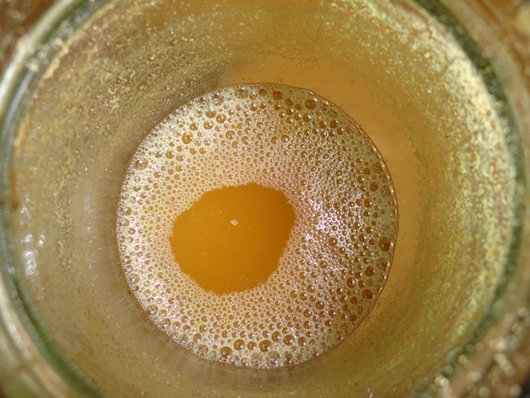
We had a nice supply of ginger beer going over Christmas. It's a delicious soft drink for young and old, although there is an alcoholic version that can be made with a slight variation on the recipe. Ginger beer is a naturally fermented drink that is easy to make - with ginger beer you make a starter called a ginger beer plant and after it has fermented, you add that to sweet water and lemon juice. Like sourdough, it must ferment to give it that sharp fizz. To make a ginger beer plant you'll need ginger - either the powdered dry variety or fresh ginger, sugar, rainwater or tap water that has stood for 24 hours to allow the chlorine to evaporate off. You'll also need clean plastic bottles that have been scrubbed with soap, hot water and a bottle brush and then rinsed with hot water. I never sterilise my bottles and I haven't had any problems. If you intend to keep the ginger beer for a long time, I'd suggest you sterilise your bottles. MAKING THE STARTER In a...
Image

NOT the last post

This will be my last post here.  I've been writing my blog for 18 years and now is the time to step back. I’ve stopped writing the blog and come back a couple of times because so many people wanted it, but that won’t happen again, I won’t be back.  I’ll continue on instagram to remain connected but I don’t know how frequent that will be. I know some of you will be interested to know the blog's statistics. 
Image

How to make cold process soap

I'm sure many of you are wondering: "Why make soap when I can buy it cheaply at the supermarket?" My cold process soap is made with vegetable oils and when it is made and cured, it contains no harsh chemicals or dyes. Often commercial soap is made with tallow (animal fat) and contains synthetic fragrance and dye and retains almost no glycerin. Glycerin is a natural emollient that helps with the lather and moisturises the skin. The makers of commercial soaps extract the glycerin and sell it as a separate product as it's more valuable than the soap. Then they add chemicals to make the soap lather. Crazy. Making your own soap allows you to add whatever you want to add. If you want a plain and pure soap, as I do, you can have that, or you can start with the plain soap and add colour, herbs and fragrance. The choice is yours. I want to add a little about animal and bird fat. I know Kirsty makes her soap with duck fat and I think that's great. I think t...
Image

Preserving food in a traditional way - pickling beetroot

I've had a number of emails from readers who want to start preserving food in jars but don't know where to start or what equipment to buy.  Leading on from yesterday's post, let's just say up front - don't buy any equipment. Once you know what you're doing and that you enjoy preserving, then you can decide whether or not to buy extra equipment. Food is preserved effectively without refrigeration by a variety of different methods. A few of the traditional methods are drying, fermentation, smoking, salting or by adding vinegar and sugar to the food - pickling. This last method is what we're talking about today. Vinegar and sugar are natural preservatives and adding one or both to food sets up an environment that bacteria and yeasts can't grow in. If you make the vinegar and sugar mix palatable, you can put up jars of vegetables or fruit that enhance the flavour of the food and can be stored in a cupboard or fridge for months. Other traditional w...
Image

Cleaning mould from walls and fabrics

With all this rain around we've developed a mould problem in our home. Usually we have the front and back doors open and that good ventilation stops most moulds from establishing. However, with the house locked up for the past week, the high humidity and the rain, mould is now growing on the wooden walls near our front door and on the lower parts of cupboards in the kitchen. Most of us will find mould growing in our homes at some point. Either in the bathroom or, in humid climates, on the walls, like we have now. You'll need a safe and effective remedy at some point, so I hope one of these methods works well for you. Mould is not only ugly to look at, it can cause health problems so if you see mould growing, do something about it straight away. The longer you leave the problem, the harder it will be to get rid of it effectively. If you have asthma or any allergies, you should do this type of cleaning with a face mask on so you don't breathe in any spores. Many peopl...
Image

Five minute bread

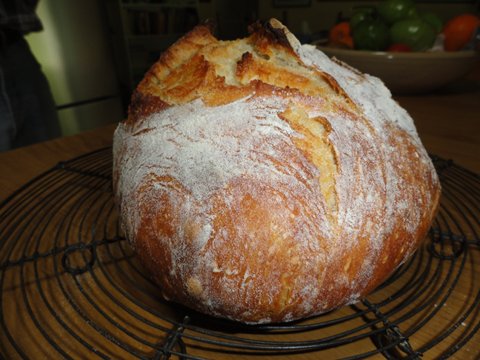
Bread is one of those foods that, when made with your own hands, gives a great deal of satisfaction and delight. It's only flour and water but it symbolises so much. I bake bread most days and use a variety of flours that I buy in bulk. Often I make a sandwich loaf because we use most of our bread for lunchtime sandwiches and for toast. Every so often I branch out to make a different type of loaf. I have tried sour dough in the past but I've not been happy with any of them. I'll continue to experiment with sour dough because I like the idea of using wild yeasts and saving the starter over a number of years to develop the flavour and become a part of the family. However, the loaf I've been branching out to most often is just a plain old five minute bread. By five minutes I mean it takes about five minutes actual work to prepare but it's the easiest of all bread to make and to get consistently good loaves from. If you're having people around for lunch or...
Image

This is my last post.

I have known for a while that this post was coming, but I didn't know when. This is my last post. I'm closing my blog, for good, and I'm not coming back like I have in the past.  I've been writing here for 16 years and my blog has been many things to me. It helped me change my life, it introduced me to so many good people, it became a wonderful record of my family life, it helped me get a book contract with Penguin, and monthly columns with The Australian Women's Weekly and Burke's Backyard . But in the past few months, it's become a burden. In April, I'll be 75 years old and I hope I've got another ten years ahead. However, each year I'll probably get weaker and although I'm fairly healthy, I do have a benign brain tumour and that could start growing. There are so many things I want to do and with time running out, leaving the blog behind gives me time to do the things that give me pleasure. On the day the blog started I felt a wonderful, h...
Image

What is the role of the homemaker in later years?

An email came from a US reader, Abby, who asked about being a homemaker in later years. This is part of what she wrote: "I am a stay-at-home mum to 4 children, ages 9-16. I do have a variety of "odd jobs" that I enjoy - I run a small "before-school" morning drop-off daycare from my home, I am a writing tutor, and I work a few hours a week at a local children's bookstore. But mostly, I cherish my blissful days at home - cooking, cleaning (with homemade cleaners), taking care of our children and chickens and goats, baking, meal-planning, etc. This "career" at home is not at all what I imagined during my ambitious years at university, but it is far more enriching. I notice, though, that my day is often planned around the needs of my family members. Of course, with 4 active kids and a husband, this is natural. I do the shopping, plan my meals, cook dinner - generally in anticipation of my family reconnecting in the evening.  I can't h...
Image

Every morning at home

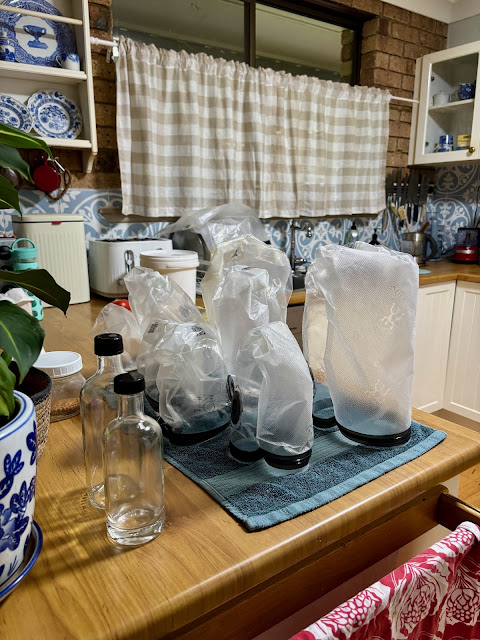
Every morning when I walk into my kitchen it looks tidy and ready for a day's work. Not so on this morning (above), I saw this when I walked in. Late the previous afternoon when I was looking for something, I came across my rolled up Zwilling vacuum bags and decided they had to be washed and dried. So I did that and although I usually put them outside on the verandah to dry it was dark by then. I turned the just-washed bags inside out and left them like this on a towel. It worked well and now the bags are ready to use when I bring home root vegetables, cabbages or whatever I buy that I want to last four or five weeks.
Image

You’ll save money by going back to basics

When I was doing the workshops and solo sessions, I had a couple of people whose main focus was on creating the fastest way to set up a simple life. You can't create a simple life fast, it's the opposite of that It's not one single thing either - it's a number of smaller, simpler activities that combine to create a life that reflects your values; and that takes a long to come together. When I first started living simply I took an entire year to work out our food - buying it, storing it, cooking it, preserving, baking, freezing, and growing it in the backyard. This is change that will transform how you live and it can't be rushed.  
Image

All previous blog posts

  • 2026 3
    • February 3
      • Workshops starting 1 March
      • Planting vegetable seeds and new workshops
      • Back where we belong
  • 2025 7
    • July 1
    • June 2
    • May 1
    • April 2
    • February 1
  • 2024 25
    • December 2
    • November 1
    • October 2
    • September 3
    • August 1
    • July 3
    • June 1
    • May 3
    • April 2
    • March 3
    • February 2
    • January 2
  • 2023 13
    • December 1
    • November 2
    • October 1
    • September 3
    • August 2
    • February 2
    • January 2
  • 2022 17
    • November 3
    • October 4
    • September 3
    • August 2
    • July 3
    • June 2
  • 2021 50
    • December 1
    • November 6
    • October 7
    • September 5
    • August 4
    • July 5
    • June 2
    • May 2
    • April 6
    • March 4
    • February 4
    • January 4
  • 2020 68
    • December 3
    • November 5
    • October 4
    • September 4
    • August 4
    • July 4
    • June 4
    • May 8
    • April 7
    • March 8
    • February 8
    • January 9
  • 2019 66
    • December 2
    • November 4
    • October 5
    • August 3
    • July 4
    • June 6
    • May 8
    • April 8
    • March 8
    • February 11
    • January 7
  • 2018 82
    • December 1
    • September 2
    • August 10
    • July 4
    • June 11
    • May 9
    • April 12
    • March 10
    • February 10
    • January 13
  • 2017 129
    • December 7
    • November 10
    • October 6
    • September 13
    • August 11
    • July 13
    • June 12
    • May 9
    • April 9
    • March 14
    • February 11
    • January 14
  • 2016 125
    • December 7
    • November 13
    • October 10
    • September 11
    • August 11
    • July 8
    • June 9
    • May 9
    • April 12
    • March 10
    • February 13
    • January 12
  • 2015 184
    • December 7
    • November 15
    • October 20
    • September 18
    • August 19
    • July 18
    • June 12
    • May 15
    • April 12
    • March 21
    • February 13
    • January 14
  • 2014 203
    • December 11
    • November 8
    • October 17
    • September 20
    • August 17
    • July 19
    • June 17
    • May 17
    • April 23
    • March 15
    • February 18
    • January 21
  • 2013 225
    • December 13
    • November 17
    • October 17
    • September 17
    • August 21
    • July 24
    • June 20
    • May 19
    • April 17
    • March 22
    • February 17
    • January 21
  • 2012 245
    • December 17
    • November 20
    • October 20
    • September 18
    • August 15
    • July 24
    • June 21
    • May 26
    • April 23
    • March 23
    • February 19
    • January 19
  • 2011 257
    • December 18
    • November 24
    • October 27
    • September 23
    • August 24
    • July 21
    • June 24
    • May 24
    • April 16
    • March 22
    • February 14
    • January 20
  • 2010 283
    • December 20
    • November 18
    • October 18
    • September 19
    • August 25
    • July 24
    • June 25
    • May 26
    • April 25
    • March 22
    • February 29
    • January 32
  • 2009 293
    • December 29
    • November 18
    • October 23
    • September 25
    • August 22
    • July 28
    • June 22
    • May 21
    • April 27
    • March 26
    • February 24
    • January 28
  • 2008 387
    • December 24
    • November 23
    • October 25
    • September 26
    • August 27
    • July 27
    • June 37
    • May 34
    • April 44
    • March 53
    • February 32
    • January 35
  • 2007 372
    • December 37
    • November 40
    • October 55
    • September 51
    • August 49
    • July 63
    • June 49
    • May 28


Trending Articles

NOT the last post

This will be my last post here.  I've been writing my blog for 18 years and now is the time to step back. I’ve stopped writing the blog and come back a couple of times because so many people wanted it, but that won’t happen again, I won’t be back.  I’ll continue on instagram to remain connected but I don’t know how frequent that will be. I know some of you will be interested to know the blog's statistics. 
Image

Every morning at home

Every morning when I walk into my kitchen it looks tidy and ready for a day's work. Not so on this morning (above), I saw this when I walked in. Late the previous afternoon when I was looking for something, I came across my rolled up Zwilling vacuum bags and decided they had to be washed and dried. So I did that and although I usually put them outside on the verandah to dry it was dark by then. I turned the just-washed bags inside out and left them like this on a towel. It worked well and now the bags are ready to use when I bring home root vegetables, cabbages or whatever I buy that I want to last four or five weeks.
Image

You’ll save money by going back to basics

When I was doing the workshops and solo sessions, I had a couple of people whose main focus was on creating the fastest way to set up a simple life. You can't create a simple life fast, it's the opposite of that It's not one single thing either - it's a number of smaller, simpler activities that combine to create a life that reflects your values; and that takes a long to come together. When I first started living simply I took an entire year to work out our food - buying it, storing it, cooking it, preserving, baking, freezing, and growing it in the backyard. This is change that will transform how you live and it can't be rushed.  
Image

Creating a home you'll love forever

Living simply is the answer to just about everything. It reduces the cost of living; it keeps you focused on being careful with resources such as water and electricity; it reminds you to not waste food; it encourages you to store food so you don't waste it and doing all those things brings routine and rhythm to your daily life. Consciously connecting every day with the activities and tasks that create simple life reminds you to look for the meaning and beauty that normal daily life holds.  It's all there in your home if you look for it. Seemingly mundane tasks like cleaning and cooking help you with that connection for without those tasks, the home you want to live in won't exist in the way you want it to.  Creating a home you love will make you happy and satisfied.
Image

Time changes everything

I've been spending time in the backyard lately creating a contained herb and vegetable garden. My aim is to develop a comfortable place to spend time, relax, increase biodiversity and encourage more animals, birds and insects to live here or visit. Of course I'd prefer my old garden which was put together by Hanno with ease and German precision. Together, we created a space bursting at the seams with herbs, vegetables and fruity goodness ready to eat and share throughout the year. But time changes everything. What I'm planning on doing now, is a brilliant opportunity for an almost 80 year old with balance issues. In my new garden I'll be able to do a wide range of challenging or easy work, depending on how I feel each day. It’s a daily opportunity to push myself or sit back, watch what's happening around me and be captivated by memories or the scope of what's yet to come.
Image

It's the old ways I love the most

I'm a practical woman who lives in a 1980’s brick slab house. There are verandahs front and back so I have places to sit outside when it's hot or cold. Those verandahs tend to make the house darker than it would be but they're been a great investment over time because they made the house more liveable. My home is not a romantic cottage, nor a minimalist modern home, it's a 1980’s brick slab house. And yet when people visit me here they tell me how warm and cosy my home is and that they feel comforted by being here. I've thought about that over the years and I'm convinced now that the style of a home isn't what appeals to people. What they love is the feeling within that home and whether it's nurturing the people who live there.
Image

Back where we belong

Surprise! I'm back ... for good this time. Instagram became an impossible place for me. They kept sending me messages asking if I'd make my page available for advertisers! Of course, I said no but that didn't stop them. It's such a change from what Instagram started as. But enough of that, the important part of this post is to explain why I returned here instead of taking my writing offline for good. For a few years Grandma Donna and I have talked online face-to-face and it's been such a pleasure for me to get to know her. We have a lot in common. We both feel a responsibility to share what we know with others. With the cost of living crisis, learning how to cook from scratch, appreciate the work we do in our homes, shop to a budget and pay off debt will help people grow stronger. The best place to do that is our blogs because we have no advertising police harassing us, the space is unlimited, we can put up tons of photos when we want to and, well, it just feels li...
Image

Making ginger beer from scratch

We had a nice supply of ginger beer going over Christmas. It's a delicious soft drink for young and old, although there is an alcoholic version that can be made with a slight variation on the recipe. Ginger beer is a naturally fermented drink that is easy to make - with ginger beer you make a starter called a ginger beer plant and after it has fermented, you add that to sweet water and lemon juice. Like sourdough, it must ferment to give it that sharp fizz. To make a ginger beer plant you'll need ginger - either the powdered dry variety or fresh ginger, sugar, rainwater or tap water that has stood for 24 hours to allow the chlorine to evaporate off. You'll also need clean plastic bottles that have been scrubbed with soap, hot water and a bottle brush and then rinsed with hot water. I never sterilise my bottles and I haven't had any problems. If you intend to keep the ginger beer for a long time, I'd suggest you sterilise your bottles. MAKING THE STARTER In a...
Image