down to earth

  • Home
  • About Us
  • Down To Earth Book
  • Privacy Policy
I received an email from a young married woman in her late 20s the other day. She is trying to decide whether to give up a career in teaching to have children and be a stay at home wife. She said her main problem is that she has doubts about being at home, thinks she'll become bored and she won't be as fulfilled as she is now. I told her to stay in her job until she's sure she wants to have children; being a stay-at-home mum is sometimes a difficult and challenging job but if approached with the right mindset, can be enriching and would probably change her in many significant ways. I also told her to read today's post.


I think the traditional view of homemaking is that it is a fairly menial job, one that doesn't take much thought and comes with no power and few opportunities. From where I stand now, I think that view is rather dated, if it ever was true to begin with; from where I stand now, homemaking is a power career. As the homemaker, you are responsible for the health and well being of your family. It's the homemaker's job to look after the family assets, to set up a household budget and use the family income to pay for everything they need. If that is done well, the savings can be used for the betterment of the family - in paying off debt, or for education, travel or hobbies.

If I were coming to homemaking at this moment for the first time, I would see it as a great opportunity to create a decent, warm, comfortable home for myself and my family. I'd take advantage of every spare moment to skill myself in the areas in which I was lacking and I'd welcome the opportunity to organise my home in a way that would help me work and facilitate the home production of many of the products I used to buy.


If I were moving into a new home, I'd want a larder or pantry, a separate laundry room, a sewing and craft room that also held the ironing station as well as plenty of outdoor space for a vegetable garden, fruit orchard, chickens and maybe some bees. Mind you, I pretty much just described what I have here in my own home, so I'm on a pretty good thing and I'm happy to say I'm making the most of it. Men have their sheds where they store their tools, fix the lawn mower and the kids bikes; it's where they can work with their tools close by, have suitable work benches that help them carry out the jobs they tackle. Women's sheds are their homes - we have to see our homes as not only a place to relax and nurture our families, but also our work place, where we use the time we have to produce the needs of the family. I make bread, soap, laundry liquid, snacks like crackers, cakes and biscuits, wholesome food, jams and marmalades, I make cordial in summer from the fruits we grow in the backyard, I freeze and bottle excess vegetables and fruits. For all those tasks, I need various spaces that help me do my best work and where I can set up for some jobs that may take longer than a day. I sew, mend, knit and write and for those activities, I need a working space; a place where I can think, work creatively and where I can piece together bits of fabric that become larger and useful items, or words and phrases that become blog posts, articles and books. My workspace is in one of the old bedrooms. Our house was not set up like this when we moved in, we changed it to suit how we live and work. And it's changed more than once, it changes to suit our interests and the work being done.


One of the first important tasks for any new homemaker is to organise their working space. Take control of your home and your time, don't be afraid to change things that don't suit the way you work or the type of work you do. If you're living in a newly built home, you might find their won't be enough storage space, so you might need to find some old cupboards for your stockpile and your cleaning ingredients. If you're living in an older home, you may need to open up spaces and let in more light. If there is nothing stopping you modifying your home to better suit your family and your work, get to it, make the spaces inside your home the places where you work to your potential.

Most of us do a large portion of our work in the kitchen - so organising that space to best suit the type of cooking we do will make working in the kitchen easier. We also do laundry, so clear the decks and organise the laundry with your homemade laundry liquids and the ingredients for making it, your soaps and ingredients, a rag bag to hold your recycled cleaning rags as well as an area where you can soak stained clothing and store the ironing board.

Many of the older readers here would know that I don't consider craft to be a hobby. For me it's part of my housework. I sew, mend and knit so we have good quality and long wearing scarves, cardigans, jumpers, hats, dishcloths, tablecloths and napkins. I see that as part of my homemaker's work, not a hobby. Back in my great grandmothers' day, making clothing and woollens for the family was part of almost every women's home tasks. Somehow those tasks where either moved to become separate hobbies or were not done at all. They still hold an important place here, I still do all of them, still enjoy them, and they're a part of my work.  


I see homemaking as a dynamic, vital, engaging, interesting, powerful and creative career. It's a career that offers you the freedom to organise your own hours and do your tasks at your own rate. Of course there is no pay, but if you do it well, you'll be paid back in satisfaction and the knowledge that your family thrives because of the work and effort you put into them and home.  Never be afraid of work. Yes, it's wonderful to be able to take time out to sit and relax, but rest is appreciated so much more when it's balanced by tasks completed. Sitting around all day is overrated. Work is where we find ourselves and the reward for that hard work is a strong character, a wonderful family and a comfortable home.


If you're a full-time homemaker by choice or circumstance, never let anyone tell you that working in your home, cooking for your family, sewing and knitting, cleaning your nest and organising the lives of your family is not important work. Sure it can be tiring at times, all jobs are, but from where I stand, in my grandmothering years, I know that I have done my best work here at home. I'm just an ordinary woman and I don't know much, but this I know, with certainty, when you actively take control of your life and your home, when you plan and make decisions and don't leave things to chance, you will be paid back in ways you never expected. Take control, plan your work spaces, organise your family and your work and then sit back to enjoy the fruits of all that with the people you love. But don't expect it to be perfect, learn from your mistakes and celebrate your successes.  It's that simple.

This is a big topic and I've already taken up too much of your time today, so I'll continue tomorrow to talk about the financial side of homemaking. I hope you have a lovely day - enjoy your work whether it be in the home or somewhere else.

There is no doubt about it, when you start living a more simple life and decide to get rid of as many harsh chemicals as you can, you have to turn into a bit of a detective. Some of the information we seek to live simply is not openly available, we have to search for it; luckily we all have our computers to make that easier.  All the decisions you make about what you include in your life now should be examined. Don't make soap or bread because I do it, or your best friend does, if has to make sense to you in your circumstances. So, if you're trying to decide whether you should put some time aside to make your own soap, bread, cleaners, pasta, jam etc., you might want to compare it with what you're already using. You might need to read information such as the following before you can make up your mind.

Soap and detergent - how they work
Various UK chemical databases

Household Products Database USA 
Household Ingredients Database - USA
Tox Town - chemicals database USA

Food Intolerance Network - Sue Dengate
TGA Product Recalls
Material Safety Data Sheets for Australian Colgate products
Material Safety Data Sheets for Australian soaps, including Lux Flakes
Guidelines for School Canteens in Australia

People often say to me that simple living is far from simple but this is a good case in point. Have a look at the additives in many of the cleaning products and soap listed in the links above, or what you have in your cupboards right now. Then compare that with what you could be using on your skin. I know which is simple. These are the ingredients I use when making soap:
  1. Olive Oil
  2. Coconut Oil
  3. Caustic Soda
  4. Rainwater
There are decisions to be made regarding food additives and preservatives too. Are you trying to decide between buying certain foods and making or preserving your own? Make your decision according to what you know to be true and make sure it suits the unique family you're part of. There is no one size fits all.

Australian information about food additives (left side column)
UK food additives
USA food additives

Look at the additives on any label of jam or marmalade you currently have in your pantry or fridge and compare that with my recipe, or anyone's homemade recipe for raspberry jam:
  1. Raspberries
  2. Sugar
  3. Lemon
Want to compare breads? Check the label of your plastic sliced bread or even some of the more expensive speciality breads and compare that with my recipes for the bread we eat here:
  1. Baker's flour
  2. Yeast
  3. Salt
  4. Water
There are no preservatives in what we use, we make it fresh and eat it the same day. It doesn't need to sit on a shelf for a day or a week; it doesn't need to have preservatives added.

What is in the salad dressing you use? How many gums and numbers does the ingredients list contain? Compare that with:
  1. Extra virgin olive oil
  2. Vinegar
  3. Pepper
  4. Garlic
I could go on and on but I'm sure you understand what I'm talking about. I think it's as plain as the nose on your face - homemade from scratch will be less likely to contain preservatives, colourings and artificial flavourings, in fact whatever you make will contain only what you add. You can't be more sure of your food or personal cleaners than that. So I guess the choice is between paying someone else to make what you need and not having control over what is added, and making it yourself, which takes time and effort. Convenience versus time, effort and cost.

I cannot make everything we use here but I made the choice of what I make and what I buy after doing my research and all my detective work. We all have to make our own decisions according to the time, energy and money we have available, and if you have to buy certain products and food, I encourage you to base your decisions on what you know about the product, not habit, convenience or advertising.

There is a very good book called The Chemical Maze that contains lists and the dangers of additives in food and cosmetics. It's small enough to go into my bag when I'm shopping so I can check things I don't know before buying them. If there is an ingredient on a label I'm not familiar with, I can check it. I've had this book for many years and was just checking to see if it's still available, and yes, it is, but it also comes as a variety of apps as well. You can find the information about it here. I'm not affiliated with this book or the author at all.

There is no right or wrong way of doing this. Each of us will prefer to buy certain things already made and make others at home. Don't be pressured into making soap, or anything, at home because your friends are doing it, that's as crazy as buying a certain brand of soap because you like the advertising for it. Do your research, read labels, ask questions, know what is in what you use and eat, then make your decisions according to your knowledge, the money and time you have available and your common sense.  And if you have another way to check these things, I'd love to hear about it, please share what you know in the comments.
You often see loofahs being sold in shops; in Australia they're sold at the Chemist. People see them and know they're sponges but often they're mistaken for sea sponges. Of course there are beautiful sea sponges but loofahs are plant sponges and we grow them in our backyard.

I discovered something new about loofahs this year and last. If you don't pull out the vines when you harvest your summer crop, they'll rest over winter, then start producing flowers and loofahs again the following year. At least they do that here in the subtropics. We planted the loofahs late last year - they went in during November, flowered soon after, produced loofahs in March/April, were harvested in August and we left the vines in.  They're flowering again now on very healthy lush vines.

This was taken yesterday. There are about six loofahs growing now.

Loofahs are a member of the vine family of cucurbits, such as pumpkins, squash and zucchini. If you want to grow them, you'll need a warm climate, a large study trellis and about 110 days of warm-hot growing days. They grow well from seeds harvested the previous year so when you pick your loofahs, choose your best ones to collect seeds from.

Loofahs are pollinated by bees but you often see ants on the flowers and vines. They're attracted to the plants and don't usually cause any harm. Plant into rich soil, water in with seaweed tea but don't over-fertilise with nitrogen. A sprinkling of sulphate of potash when planting and another sprinkling when the first flowers appear will keep them producing flowers and fruit. They need to be kept fairly well watered but once the loofahs have grown, you don't want a lot of rain because that will start mould growing in them. The young shoots are suitable for stir frying and the young fruit can be cooked like zucchini but they become hard and fibrous quickly and are then unsuitable for eating but great for washing yourself.


When the flowers turn into fruit and grow, wait until they go brown and start drying out. They can dry out completely on the vine but if you have a prolonged period of rain forecast it's best to pick them brown and not completely dry and leave them in a sheltered position to dry out completely.  When the skin is dry and brittle, you can crack them open, shake the seeds out, remove all the outer skin and soak them in a bucket of water to which you've added about quarter a cup of peroxide or a tablespoon of bleach. That will clean them up nicely and kill of any mould spores they might be hiding.

So these are the loofahs we picked in August. They'd been on the vine far too long so some of them were full of mould and had to be thrown on the compost.  The rest are fine and will keep us in loofahs for the year.


And these are the vines: above is the vine when I picked the loofahs in August, below is the same vine yesterday afternoon.

If you live in a warm climate, loofahs make a great addition to a sustainable and productive backyard. They're multi-purpose, so would make a good choice for a permaculture garden, and they're easy to grow. One crop will keep you in loofahs for the year and they also make a lovely gift with a cake of homemade soap.


A few blogs I came across this week that I think are worth passing on to you.

Find out what real men do here on Small Things.

Seasoning cast iron cooking pans and muffin trays on Little Home in the Country.

Simple Sue's Simple Diary has Sue organising her volunteers.

On Living the Sustainable Life they blogged about Elderberry Wine and Making Apple Cider.

Steel Kitchen is always doing something interesting. Here she is making Pear Cider.

Sadge is washing the bed linen over at Fireside Farm.

Have a lovely weekend, everyone!


This is a Friday photo feature that anyone with a blog can join. To take part, post a photo on your own blog, write a short caption explaining it, and link it back to here from your blog by saying you're part of "On my mind". Please write a new post, don't link to an older one. When you've done that, come back here and add a comment below, with a link to your blog.


Today I'll be thinking about finding some cheap fresh fruit that I can use in my preserving class next week. I used those above earlier this year to make nectarine jam. Later today I'll do a blanket reply to everyone who wrote about my gmail account, and write to Google complaining that my account was hacked. If someone can get into my gmail, they could potentially gain access to my blog as well!  Tomorrow I hope to reply to a few of the hundred emails I owe. I get so many emails, I never have the time to answer all of them. If you're waiting for one and don't get it by tomorrow, I apologise for not replying.

And an update on my last week's On my mind, the little blue Sacred Kingfisher that slammed into my window last week survived. I've seen him again this week swooping through the garden looking for lizards. He's as good as gold.

Thank you for visiting this week and for the wonderful comments many of you left. I hope you have a beautiful weekend.


My gmail account was hacked today. I have about 100 emails and messages so far from people who received a bogus email supposedly from my email address. In fact the email comes from Turkey. Please be assured I have no virus on my computer - I have a Mac, they rarely pick up viruses. I've changed my password but I would imagine that the hacker has my address book. There are over a 1000 email addresses in there.  

I apologise if you're received one of these emails.  Don't reply to the email, just delete it. 
I have written quite a bit in the past about how homemaking and housework are looked down on by some and sometimes seen as a less than acceptable way to spend time. We have gone from valuing the homemaker and children being raised by a mother working at home while the father was bringing in a wage, to several decades of working couples and children in day care. Let me add that I'm not judging here, I value all people who work to give their family and themselves a good life. I believe the work we do helps makes us who we are but it isn't only paid work that forms character and builds self confidence, working in your home does that too. There is no right or wrong way to work - the vast majority of us are just doing what we have to do to reach our goals, whatever they may be.


I think this has been coming quietly for a while, but now there seems to be a distinct change in the air with people going back to basics, eating local and organic when they can and trying to cut out the chemicals, additives, preservatives and colourings in their lives. Thrift has made a come back and it looks like homemaking and housework are the next in line. Finally it's okay again to be a stay at home parent, or to enjoy spending weekends as a homemaker when the rest of the week has been spent in the corporate world. And both men and women are enjoying this freedom to be homebodies. Home is cool again.


For the past five years I have worked in my community at the Maleny Neighbourhood Centre. I was co-ordinator there until I left to write my book, and have returned there now to teach the skills of bread and soap making, fermenting, preserving, cooking from scratch, making laundry liquid and green cleaners and frugal living. Yesterday we had a wonderful bread making workshop where we made bread from scratch, then ate it with a cup of tea. We've also established a sewing circle and Crafternoon as well as a kitchen garden where we will soon teach how to grow organic vegetables, keep chickens and worms and to make compost. There is a lot of enthusiasm for the classes and it's made the Centre come alive with people connecting with us, their neighbours, and their own ambitions of working in their homes. There is a real interest in basic homemaking skills again. This is fundamental community development work and it's giving our people a feeling of empowerment, a sense of well being and confidence knowing that come what may, they are capable of looking themselves. It's such a priviledge for me to be part of it.

I hear stories all the time now about biscuits, cakes and bread being baked at home, mending being done, dress making and knitting. When we have our Crafternoons, some of the ladies bring along a cake to share for afternoon tea; this week's was made with black flour and wild raspberries. Many of these people are shopping at second hand shops, they're recycling and thinking about the consequences of their shopping and the packaging that comes with it. Cooking from scratch is popular again; the benefits of knowing what's in the food we eat is now more important than the convenience we used to buy. And all these actions are taking place at home; it seems to be okay again to be a homemaker and proud of it.


The good part about all this is that you don't need any special equipment, there is no must-have colour that is made exactly to your requirements. This is a change of mindset more than anything. To put it into action you just start buying ingredients instead of pre-cooked and processed foods, shop for, or grow, fresh vegetables and cook the way your grandma did. Stop buying cleaners and laundry products that look like they've been put together in a science lab. Buy ingredients - washing soda, bicarb, borax, soap and vinegar and make your own. They're effective and inexpensive. What you save can be paid off your mortgage or car loan or credit cards. Living like this will save you money, and it's not just for low income groups, it's for everyone.

Once you get yourself back into your home, whether that be on a full time basis, on the weekends or fitted around your paid work, there will be opportunities for you to express yourself, find satisfaction in the ordinary things and to build a simpler way of living. When you find your rhythm at home, you can slow down and relax more. This is a wonderful environment in which to raise children and develop yourself. Learning the skills you need to make your home the one place in the world where you feel comfortable and relaxed will also make you a different person; it did that for me. There is a lot to be said for looking after your own needs and doing it consistently with your own hands. Independence and confidence comes from that and if you have children, they will benefit from your sense of certainty and self assurance as well.

Our homes can be many things for each of us. They are where we retreat when we need to rest and recover and they're where we teach ourselves and our children the skills of living. But they're also our launching pads. Home is where we prepare ourselves to be in the outside world. So when you go to work or the kids go to school, if you're launched off on that journey having spent time in a nurturing home, you'll be the best you can be. And it all starts at home. Home, and the work done there, can be the making of us.


For those blog readers who live in other countries, the Australian Women's Weekly featured me in this month's edition. If you'd like to read the article, it's online now here.
It's strange, isn't it, how we drift through stages in our lives; how we enjoy doing something, then we go off it, and occasionally back to it again. I am drifting slowly back to ironing. Yes, it's a surprise to me too. It used to be one of the household tasks that I really didn't like and rarely did. I reorganised how we washed, hung and dried our clothes to avoid ironing. I  told myself I wasn't ironing because it saved electricity, but the truth of it was that I didn't like standing over a hot iron pressing clothes. 


I'm not a methodical ironer. I make sure the creases are out and that's about it. When I see advice to ironers about rolling up a towel to insert inside sleeves to iron them correctly, I wonder if anyone would fall for that.  Or use paper clips when ironing pleats! Life's too short. I do tend to take the washing from the line when it's still damp, or spray the clothes and roll them before I iron. That's what my mother and grandma did, so that's what I do.


Monday is Washing Day
Tuesday is Ironing Day
Wednesday is Mending Day
Thursday is  Market Day
Friday is Cleaning Day
Saturday is  Baking Day
Sunday is a Day of Rest

I doubt I'll ever have a regular ironing day but as most of our clothes are natural fibres like cotton, denim and linen, I guess I have quite a few ironing hours ahead of me. So I'm pleased to be drifting back to the pleasure of it. The last few times I've ironed, it's not been such a chore. I have to admit, it's a great way of checking on clothes that might need a repair and to find it early, generally saves time and effort later.


Right now there is a big stack of ironing in our spare room waiting for me to tend to it. If my sister Tricia is reading this she will be nodding her head about now. But I intend to get through it by doing a little every week and hopefully by Christmas, the room will be clear again.


Are there others out there who dislike ironing, or is there another household task you detest and put off? Surely I'm not the lone ranger. What's your house work nemesis? Do you just ignore it like I have, or have you discovered a way around it so it gets done every week? Tell me your secret, I told you mine.


I hate wasting time. Let me make it clear though, my time wasting doesn't include sitting on the front verandah staring into space, reading obscure books and websites, walking around aimlessly, drinking tea, casting 80 stitches on my needles, knitting a few rows, then unwinding it all, and re-starting. No, those activities are part of a normal week for me, they soothe my mind and remind me that I have the delicious luxury of time to do whatever I want and if my knitting is not as good as I want it to be, I can take more time with it. But sowing vegetable seeds that I leave too long before planting out or we have no use for, that, my friends, is a waste of time. 

Although we've been producing food in our backyard for the 14 years we've lived here, and in our old home before that, it's only in the last five or six years that I felt compelled to do it. I do it for a reason now, before it was a hobby and a way to eat fresh organic food without having to spend an arm and a leg to buy it. Now I believe we should use the land we live on, make it productive, remove ourselves from the passive food experience provided by  supermarkets and actively play a part in producing food for the table. That keeps us skilled and independent. We want to look after ourselves and do it for as long as possible.

So, we have a set group of vegetables we eat here and now that our family is growing, when they visit us or we visit them, we share the produce with them. Who knows, we may add a few new vegetables or new varieties in the coming seasons, but right now, we set and happy with what we grow. 

This is the potting box Hanno made for me last year. It comes in very handy when I'm potting a large number of seedlings - I don't waste potting mix and I have plenty of space to work in. You can see the long thin pots used to plant the tomato seedlings.  Below is the container of heirlooms planted up and set out in the morning sun.


One of our main crops is tomatoes. We have well and truly weaned ourselves off hybrid seeds and seedlings and grow only heirlooms or open pollinated seeds. My tomato of choice is the Brandywine. I love all the beefsteak tomatoes, but Brandywines are my favourite. We have a very heathy crop of tomatoes already producing in the garden and about 3 weeks ago I sowed a sprinkling of mixed heirloom tomatoes in a recycled plastic strawberry punnet, as our followup crop. They germinated and started growing well, and were ready for transplanting. I've found we get the best successes if we plant on the seedlings a couple of times - each time into a bigger container, before planting them in the garden. So yesterday, I did just that. To leave them any longer would have stressed them and the entire exercise would have been a waste of time.


These three photos are all of the same garden bed. The photo above was taken on 20 September, the photo below was taken yesterday, 13 days later, on 3 October.


This is our current crop of tomatoes. They are unknown beefsteaks, Siberians and Kotlas.

I like to choose long pots so the roots can travel deep down. I use good quality potting mix that drains well and water in with seaweed tea and a weak worm tea. The seedlings will take a couple of days to recover from the transplant, then they'll grow strongly, with just a bit of water every second day.  In about three weeks, I'll pot them on again, this time giving them a drink of sulphate of pot ash and another weak worm tea. When the plants start forming flowers, they'll be planted in the garden.  When they're planted out, I bury the stem up to the first set of leaves - doing this will allows tomatoes to develop more roots and will therefore be stronger and produce more fruit.

I've put all the pots in a container so they don't fall over. The container is a recycled plastic vegetable crisper bin from an old fridge that Hanno drilled plenty of holes in it to let any excess water drain away. All the teas I add, and the sulphate of potash, are organic. I don't see the point of putting harsh chemicals and manufactured fertilisers on home grown plants. You might as well buy your produce at the shop. Try to grow organically. It will give you beautiful food that is healthy, you will know what you're eating and you'll keep your land alive and productive. If you use mulches like straw, lucerne, old grass clippings, shredded paper and compost, you'll be enriching the soil as you go - and that is the best way to produce food.

There are 23 mixed heirloom tomatoes growing out there now. I have no idea what they'll turn out to be but there are three potato leaf varieties so one of them may be a brandywine. We could also have yellow, orange, green or black tomatoes, as well as reds and pinks.  It's a real surprise packet.  Hanno will choose those he wants to plant out and I'll take the rest of them up to the Centre to be part of the kitchen garden we're starting there.


The photo above is the St Pierre tomato on the day it was planted in the pot - 23 September. Below is the same tomato ten days later, 3 October. 

Tomatoes are one of the plants we can all grow. They'll even grow in a large pot, hessian bag or a bag of potting soil that has drainage holes in it.  I have potted a French heirloom called St Pierre in a large terracotta pot and it's doubled in size in two weeks. The St Pierre is a medium sized beefsteak variety with "superior flavour".  I'm looking forward to trying it. If you're in a flat or apartment and want to grow something, try one tomato. If you live alone, or are a couple, one good tomato plant will keep you in tomatoes for a couple of months.

If you've never eaten homegrown tomatoes, or heirlooms, be prepared for a delightful surprise. They're unlike anything you'll get at the supermarket and they may just lure you further into the wonderful world of home produced food.  There is nothing better for lunch than a sandwich made with your own baked bread, home grown tomatoes, a bit of vinegar, salt and pepper and maybe a soft boiled egg on the side. Add to that a cup of black tea or a fresh fruit juice and you have a lunch before you fit for the Queen.


Every year at this time I bring in some of my orchids. Most of the year they sit on a shelf in our bush house being supported to new growth by humidity and frequent waterings. They love it there but I am the only person who sees them. So it will come as no surprise to you to know that when they burst into flower, the terracotta container is cleaned, a suitable saucer found and they come inside and sit on the kitchen bench. Visitors say how beautiful they are and they are talked about and admired. They last about four weeks, then, as the flowers start dropping, I take them back to the bush house where they sit for another year to wait for the next orchid season.


I used to think it would be wonderful to have orchids in the kitchen all year long but I know now that I would get used to seeing them there very day and after a while wouldn't take much notice of them. They would be part of the ordinary, not a special part of the year; there would be no orchid season. Living to the seasons gives us the chance to experience differences in plants and foods and also in ourselves. It gives us the opportunity to see things with new eyes and to be captivated for a brief second, or day, or month, then to put that thing away for awhile to concentrate on something new. Seasons keep our lives feeling new.


Seasons also give us different tastes at certain times of the year. Yesterday morning I was outside watering the fruit trees and noticed the grape and passionfruit vines starting to put on new leaves. Soon there will be grapes and passionfruit, along with bananas and salad and Mediterranean vegetables like eggplant, capsicums/peppers, cucumbers, chillies and corn - all fruit and vegetables that only grow here in their season. Eating according to the  season is wise; most produce is cheaper and fresher in season, and the taste is at its finest.


We have seasons in our lives too. As we grow and mature, there are times when we're really busy, when we're ambitious and work hard for every success, when we have children to raise, when we are the important role models for our children and when we can rest a bit more and enjoy what we've achieved.

Don't rush your seasons. Enjoy what they offer, really take in each smell and taste, watch the changing world around you and enjoy the falling leaves and the rain as much as the sunshine. While your children are growing, make the most of it. This is when you get to build strong bonds with them, to spend time with them, to show your love as much as talking about it, and to guide them towards being the kind of person you hope they'll become. Build for now and for the future. Don't rush it. Complexity takes its own time.


You may be in one of the busy seasons, or in a difficult one, but be assured it will not last forever. We all have seasons that have use-by dates on them, the trick is to make the most of every one of them. Whatever you do now, however tough it is, it will build your life and be part of your future. Because even though you rarely think of these things when you're young, what you do today, is an investment in what will come later. And that can be full and enriched or empty and lonely, or any measure of those in between. You will reap what you sow.

But don't forget to enjoy the raspberries and orchids and asparagus and two year olds and 16 year olds, in their season, along the way. They don't last long.

There are so many inspirational and motivating posts around - all these innovative ideas and new ways of doing old things. It really helps keep me on track and to remain focused on our values and common goals. I don't always have the time to look around the blog world but when I do, from now on, I'll take a note of those posts that I think are particularly outstanding and share them with you on the weekends; either Saturday or Sunday, depending on when I can do it.

I expect Nita @ Throwback at Trapper Creek will make a regular appearance in these lists because she regularly writes strong valuable posts. This week's post and video on growing potatoes is a good example of her intelligent down-to-earth principles.

pigeon pair is teaching a lesson in perseverance and fishbone knitting. I've never seen this stitch before but I think it will be perfect for a cowl.

One flew over is my favourite new (to me) blog. Looking at her knitting, crochet and sewing reinforces for me the value of using good quality materials in our home crafts. Kate's Douceur just took my breath away. I am definitely making that for myself soon.

Amanda Brooke's blog has been mentioned many times here as I think she is an amazing woman, mother and business owner. Amanda has written a wonderful post on making a simple prefold nappy/diaper using a flannel pillowcase. Amanda's pillowcases came from the thrift shop for 75 cents. I am teaching a Frugal Parenting workshop a the Centre soon and this tutorial will be in my list of online sites that new and expectant parents should visit.

And just so the fellas don't feel left out, at The Year of Mud, they're installing terracotta floor tiles (with pictures). If you've ever had dreams of building your own earth-friendly home from scratch, read through the back posts because I'm sure you'll be amazed and inspired.
This is a Friday photo feature that anyone with a blog can join. To take part, post a photo on your own blog, write a short caption explaining it, and link it back to here from your blog by saying you're part of "On my mind". Please write a new post, don't link to an older one. When you've done that, come back here and add a comment below, with a link to your blog.


Today I'm thinking about this little fellow. He's a sacred kingfisher and this little one lives here, darting in and out and making the mad screech they have. I've seen him catch lizards and lots of insects as he usually sits on our front fence to eat them. I took the photo above a few weeks ago as he sat on the fronds of our tree fern. Yesterday, as I was talking to Sarndra on the phone, he flew into the glass window I was sitting behind. He fell and looked to be unconscious but when I went outside to find him, he was gone. I'll look around the garden this morning to see if he's injured and hiding.
~*~*~

Thank you all for your wonderful comments and good wishes this week. I've been overwhelmed by the number of you who have sent encouragement and support via email too, there must be over a hundred there. I have no hope of answering all of them, so please accept this as my thanks. I really do appreciate your kindness.

ADDITION: I went to look in the garden at first light and didn't find him. Hanno has been working in the front yard this morning and he hasn't mentioned him so I'm guessing he was well enough to fly back to his nest. If he can do that, he might be okay.

Newer Posts Older Posts Home

MY BOOKS

MY BOOKS


My books were all published by Pengiun, and are available at Amazon US, Amazon UK and Amazon Au

Search here

Total Pageviews

Translate


I'm Rhonda Hetzel and I've been writing my Down to Earth blog since 2007. Although I write the occasional philosophical post, my main topics include home cooking, happiness and gardening as well as budgeting, baking, ageing, generosity, mending and handmade crafts. I hope you enjoy your time here.

MY FAVOURITE PLACES

  • Grandma Donna's Place
  • Grandma Donna's YouTube
  • Grandma Donna's Instagram
  • This Simple Day
  • Nicole's Instagram

Give More

Give More

Popular posts last year

Making ginger beer from scratch

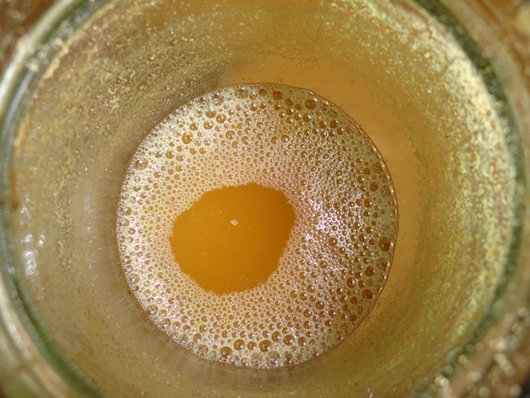
We had a nice supply of ginger beer going over Christmas. It's a delicious soft drink for young and old, although there is an alcoholic version that can be made with a slight variation on the recipe. Ginger beer is a naturally fermented drink that is easy to make - with ginger beer you make a starter called a ginger beer plant and after it has fermented, you add that to sweet water and lemon juice. Like sourdough, it must ferment to give it that sharp fizz. To make a ginger beer plant you'll need ginger - either the powdered dry variety or fresh ginger, sugar, rainwater or tap water that has stood for 24 hours to allow the chlorine to evaporate off. You'll also need clean plastic bottles that have been scrubbed with soap, hot water and a bottle brush and then rinsed with hot water. I never sterilise my bottles and I haven't had any problems. If you intend to keep the ginger beer for a long time, I'd suggest you sterilise your bottles. MAKING THE STARTER In a...
Image

NOT the last post

This will be my last post here.  I've been writing my blog for 18 years and now is the time to step back. I’ve stopped writing the blog and come back a couple of times because so many people wanted it, but that won’t happen again, I won’t be back.  I’ll continue on instagram to remain connected but I don’t know how frequent that will be. I know some of you will be interested to know the blog's statistics. 
Image

How to make cold process soap

I'm sure many of you are wondering: "Why make soap when I can buy it cheaply at the supermarket?" My cold process soap is made with vegetable oils and when it is made and cured, it contains no harsh chemicals or dyes. Often commercial soap is made with tallow (animal fat) and contains synthetic fragrance and dye and retains almost no glycerin. Glycerin is a natural emollient that helps with the lather and moisturises the skin. The makers of commercial soaps extract the glycerin and sell it as a separate product as it's more valuable than the soap. Then they add chemicals to make the soap lather. Crazy. Making your own soap allows you to add whatever you want to add. If you want a plain and pure soap, as I do, you can have that, or you can start with the plain soap and add colour, herbs and fragrance. The choice is yours. I want to add a little about animal and bird fat. I know Kirsty makes her soap with duck fat and I think that's great. I think t...
Image

Preserving food in a traditional way - pickling beetroot

I've had a number of emails from readers who want to start preserving food in jars but don't know where to start or what equipment to buy.  Leading on from yesterday's post, let's just say up front - don't buy any equipment. Once you know what you're doing and that you enjoy preserving, then you can decide whether or not to buy extra equipment. Food is preserved effectively without refrigeration by a variety of different methods. A few of the traditional methods are drying, fermentation, smoking, salting or by adding vinegar and sugar to the food - pickling. This last method is what we're talking about today. Vinegar and sugar are natural preservatives and adding one or both to food sets up an environment that bacteria and yeasts can't grow in. If you make the vinegar and sugar mix palatable, you can put up jars of vegetables or fruit that enhance the flavour of the food and can be stored in a cupboard or fridge for months. Other traditional w...
Image

Cleaning mould from walls and fabrics

With all this rain around we've developed a mould problem in our home. Usually we have the front and back doors open and that good ventilation stops most moulds from establishing. However, with the house locked up for the past week, the high humidity and the rain, mould is now growing on the wooden walls near our front door and on the lower parts of cupboards in the kitchen. Most of us will find mould growing in our homes at some point. Either in the bathroom or, in humid climates, on the walls, like we have now. You'll need a safe and effective remedy at some point, so I hope one of these methods works well for you. Mould is not only ugly to look at, it can cause health problems so if you see mould growing, do something about it straight away. The longer you leave the problem, the harder it will be to get rid of it effectively. If you have asthma or any allergies, you should do this type of cleaning with a face mask on so you don't breathe in any spores. Many peopl...
Image

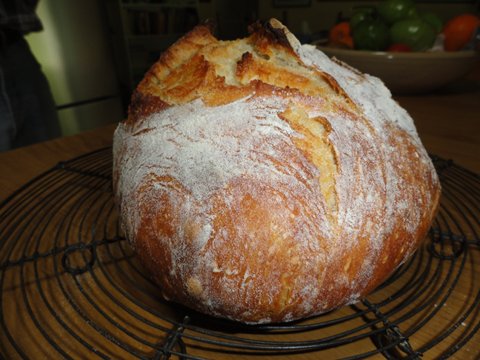
Five minute bread

Bread is one of those foods that, when made with your own hands, gives a great deal of satisfaction and delight. It's only flour and water but it symbolises so much. I bake bread most days and use a variety of flours that I buy in bulk. Often I make a sandwich loaf because we use most of our bread for lunchtime sandwiches and for toast. Every so often I branch out to make a different type of loaf. I have tried sour dough in the past but I've not been happy with any of them. I'll continue to experiment with sour dough because I like the idea of using wild yeasts and saving the starter over a number of years to develop the flavour and become a part of the family. However, the loaf I've been branching out to most often is just a plain old five minute bread. By five minutes I mean it takes about five minutes actual work to prepare but it's the easiest of all bread to make and to get consistently good loaves from. If you're having people around for lunch or...
Image

This is my last post.

I have known for a while that this post was coming, but I didn't know when. This is my last post. I'm closing my blog, for good, and I'm not coming back like I have in the past.  I've been writing here for 16 years and my blog has been many things to me. It helped me change my life, it introduced me to so many good people, it became a wonderful record of my family life, it helped me get a book contract with Penguin, and monthly columns with The Australian Women's Weekly and Burke's Backyard . But in the past few months, it's become a burden. In April, I'll be 75 years old and I hope I've got another ten years ahead. However, each year I'll probably get weaker and although I'm fairly healthy, I do have a benign brain tumour and that could start growing. There are so many things I want to do and with time running out, leaving the blog behind gives me time to do the things that give me pleasure. On the day the blog started I felt a wonderful, h...
Image

What is the role of the homemaker in later years?

An email came from a US reader, Abby, who asked about being a homemaker in later years. This is part of what she wrote: "I am a stay-at-home mum to 4 children, ages 9-16. I do have a variety of "odd jobs" that I enjoy - I run a small "before-school" morning drop-off daycare from my home, I am a writing tutor, and I work a few hours a week at a local children's bookstore. But mostly, I cherish my blissful days at home - cooking, cleaning (with homemade cleaners), taking care of our children and chickens and goats, baking, meal-planning, etc. This "career" at home is not at all what I imagined during my ambitious years at university, but it is far more enriching. I notice, though, that my day is often planned around the needs of my family members. Of course, with 4 active kids and a husband, this is natural. I do the shopping, plan my meals, cook dinner - generally in anticipation of my family reconnecting in the evening.  I can't h...
Image

Every morning at home

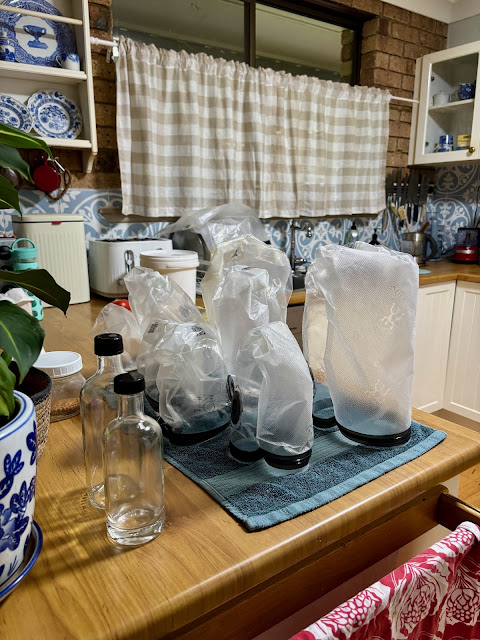
Every morning when I walk into my kitchen it looks tidy and ready for a day's work. Not so on this morning (above), I saw this when I walked in. Late the previous afternoon when I was looking for something, I came across my rolled up Zwilling vacuum bags and decided they had to be washed and dried. So I did that and although I usually put them outside on the verandah to dry it was dark by then. I turned the just-washed bags inside out and left them like this on a towel. It worked well and now the bags are ready to use when I bring home root vegetables, cabbages or whatever I buy that I want to last four or five weeks.
Image

You’ll save money by going back to basics

When I was doing the workshops and solo sessions, I had a couple of people whose main focus was on creating the fastest way to set up a simple life. You can't create a simple life fast, it's the opposite of that It's not one single thing either - it's a number of smaller, simpler activities that combine to create a life that reflects your values; and that takes a long to come together. When I first started living simply I took an entire year to work out our food - buying it, storing it, cooking it, preserving, baking, freezing, and growing it in the backyard. This is change that will transform how you live and it can't be rushed.  
Image

All previous blog posts

  • 2026 3
    • February 3
      • Workshops starting 1 March
      • Planting vegetable seeds and new workshops
      • Back where we belong
  • 2025 7
    • July 1
    • June 2
    • May 1
    • April 2
    • February 1
  • 2024 25
    • December 2
    • November 1
    • October 2
    • September 3
    • August 1
    • July 3
    • June 1
    • May 3
    • April 2
    • March 3
    • February 2
    • January 2
  • 2023 13
    • December 1
    • November 2
    • October 1
    • September 3
    • August 2
    • February 2
    • January 2
  • 2022 17
    • November 3
    • October 4
    • September 3
    • August 2
    • July 3
    • June 2
  • 2021 50
    • December 1
    • November 6
    • October 7
    • September 5
    • August 4
    • July 5
    • June 2
    • May 2
    • April 6
    • March 4
    • February 4
    • January 4
  • 2020 68
    • December 3
    • November 5
    • October 4
    • September 4
    • August 4
    • July 4
    • June 4
    • May 8
    • April 7
    • March 8
    • February 8
    • January 9
  • 2019 66
    • December 2
    • November 4
    • October 5
    • August 3
    • July 4
    • June 6
    • May 8
    • April 8
    • March 8
    • February 11
    • January 7
  • 2018 82
    • December 1
    • September 2
    • August 10
    • July 4
    • June 11
    • May 9
    • April 12
    • March 10
    • February 10
    • January 13
  • 2017 129
    • December 7
    • November 10
    • October 6
    • September 13
    • August 11
    • July 13
    • June 12
    • May 9
    • April 9
    • March 14
    • February 11
    • January 14
  • 2016 125
    • December 7
    • November 13
    • October 10
    • September 11
    • August 11
    • July 8
    • June 9
    • May 9
    • April 12
    • March 10
    • February 13
    • January 12
  • 2015 184
    • December 7
    • November 15
    • October 20
    • September 18
    • August 19
    • July 18
    • June 12
    • May 15
    • April 12
    • March 21
    • February 13
    • January 14
  • 2014 203
    • December 11
    • November 8
    • October 17
    • September 20
    • August 17
    • July 19
    • June 17
    • May 17
    • April 23
    • March 15
    • February 18
    • January 21
  • 2013 225
    • December 13
    • November 17
    • October 17
    • September 17
    • August 21
    • July 24
    • June 20
    • May 19
    • April 17
    • March 22
    • February 17
    • January 21
  • 2012 245
    • December 17
    • November 20
    • October 20
    • September 18
    • August 15
    • July 24
    • June 21
    • May 26
    • April 23
    • March 23
    • February 19
    • January 19
  • 2011 257
    • December 18
    • November 24
    • October 27
    • September 23
    • August 24
    • July 21
    • June 24
    • May 24
    • April 16
    • March 22
    • February 14
    • January 20
  • 2010 283
    • December 20
    • November 18
    • October 18
    • September 19
    • August 25
    • July 24
    • June 25
    • May 26
    • April 25
    • March 22
    • February 29
    • January 32
  • 2009 293
    • December 29
    • November 18
    • October 23
    • September 25
    • August 22
    • July 28
    • June 22
    • May 21
    • April 27
    • March 26
    • February 24
    • January 28
  • 2008 387
    • December 24
    • November 23
    • October 25
    • September 26
    • August 27
    • July 27
    • June 37
    • May 34
    • April 44
    • March 53
    • February 32
    • January 35
  • 2007 372
    • December 37
    • November 40
    • October 55
    • September 51
    • August 49
    • July 63
    • June 49
    • May 28


Trending Articles

NOT the last post

This will be my last post here.  I've been writing my blog for 18 years and now is the time to step back. I’ve stopped writing the blog and come back a couple of times because so many people wanted it, but that won’t happen again, I won’t be back.  I’ll continue on instagram to remain connected but I don’t know how frequent that will be. I know some of you will be interested to know the blog's statistics. 
Image

Every morning at home

Every morning when I walk into my kitchen it looks tidy and ready for a day's work. Not so on this morning (above), I saw this when I walked in. Late the previous afternoon when I was looking for something, I came across my rolled up Zwilling vacuum bags and decided they had to be washed and dried. So I did that and although I usually put them outside on the verandah to dry it was dark by then. I turned the just-washed bags inside out and left them like this on a towel. It worked well and now the bags are ready to use when I bring home root vegetables, cabbages or whatever I buy that I want to last four or five weeks.
Image

You’ll save money by going back to basics

When I was doing the workshops and solo sessions, I had a couple of people whose main focus was on creating the fastest way to set up a simple life. You can't create a simple life fast, it's the opposite of that It's not one single thing either - it's a number of smaller, simpler activities that combine to create a life that reflects your values; and that takes a long to come together. When I first started living simply I took an entire year to work out our food - buying it, storing it, cooking it, preserving, baking, freezing, and growing it in the backyard. This is change that will transform how you live and it can't be rushed.  
Image

Creating a home you'll love forever

Living simply is the answer to just about everything. It reduces the cost of living; it keeps you focused on being careful with resources such as water and electricity; it reminds you to not waste food; it encourages you to store food so you don't waste it and doing all those things brings routine and rhythm to your daily life. Consciously connecting every day with the activities and tasks that create simple life reminds you to look for the meaning and beauty that normal daily life holds.  It's all there in your home if you look for it. Seemingly mundane tasks like cleaning and cooking help you with that connection for without those tasks, the home you want to live in won't exist in the way you want it to.  Creating a home you love will make you happy and satisfied.
Image

Time changes everything

I've been spending time in the backyard lately creating a contained herb and vegetable garden. My aim is to develop a comfortable place to spend time, relax, increase biodiversity and encourage more animals, birds and insects to live here or visit. Of course I'd prefer my old garden which was put together by Hanno with ease and German precision. Together, we created a space bursting at the seams with herbs, vegetables and fruity goodness ready to eat and share throughout the year. But time changes everything. What I'm planning on doing now, is a brilliant opportunity for an almost 80 year old with balance issues. In my new garden I'll be able to do a wide range of challenging or easy work, depending on how I feel each day. It’s a daily opportunity to push myself or sit back, watch what's happening around me and be captivated by memories or the scope of what's yet to come.
Image

It's the old ways I love the most

I'm a practical woman who lives in a 1980’s brick slab house. There are verandahs front and back so I have places to sit outside when it's hot or cold. Those verandahs tend to make the house darker than it would be but they're been a great investment over time because they made the house more liveable. My home is not a romantic cottage, nor a minimalist modern home, it's a 1980’s brick slab house. And yet when people visit me here they tell me how warm and cosy my home is and that they feel comforted by being here. I've thought about that over the years and I'm convinced now that the style of a home isn't what appeals to people. What they love is the feeling within that home and whether it's nurturing the people who live there.
Image

Back where we belong

Surprise! I'm back ... for good this time. Instagram became an impossible place for me. They kept sending me messages asking if I'd make my page available for advertisers! Of course, I said no but that didn't stop them. It's such a change from what Instagram started as. But enough of that, the important part of this post is to explain why I returned here instead of taking my writing offline for good. For a few years Grandma Donna and I have talked online face-to-face and it's been such a pleasure for me to get to know her. We have a lot in common. We both feel a responsibility to share what we know with others. With the cost of living crisis, learning how to cook from scratch, appreciate the work we do in our homes, shop to a budget and pay off debt will help people grow stronger. The best place to do that is our blogs because we have no advertising police harassing us, the space is unlimited, we can put up tons of photos when we want to and, well, it just feels li...
Image

Making ginger beer from scratch

We had a nice supply of ginger beer going over Christmas. It's a delicious soft drink for young and old, although there is an alcoholic version that can be made with a slight variation on the recipe. Ginger beer is a naturally fermented drink that is easy to make - with ginger beer you make a starter called a ginger beer plant and after it has fermented, you add that to sweet water and lemon juice. Like sourdough, it must ferment to give it that sharp fizz. To make a ginger beer plant you'll need ginger - either the powdered dry variety or fresh ginger, sugar, rainwater or tap water that has stood for 24 hours to allow the chlorine to evaporate off. You'll also need clean plastic bottles that have been scrubbed with soap, hot water and a bottle brush and then rinsed with hot water. I never sterilise my bottles and I haven't had any problems. If you intend to keep the ginger beer for a long time, I'd suggest you sterilise your bottles. MAKING THE STARTER In a...
Image