down to earth

  • Home
  • About Us
  • Down To Earth Book
  • Privacy Policy
Well, here I am back again and I have to tell you, I missed being here. Writing my blog early in the morning sets me up for the day and I felt a bit disjointed without it. I've done most of what I needed to do and although I didn't have a break in work, I feel energised and raring to go.

Our little garlic patch.

I finished the two soap making workshops and everyone really loved them. That gives me hope that the others will be as popular. There is another soap workshop planned for October and one in January and they're both booked out. The next workshop I do will be Cooking from Scratch. I'm looking forward to that and I hope to get a lot of the younger women started, and some of the older women and men back on track, with the preservative, artificial colourings and flavourings-free home cooking. Meals just like my grandma used to make.

The last of the kale that will be frozen.

Back here at home, I feel like today is the first real day I can relax in a long while, although tonight I am guest speaker at the local Rotary Club. I'll be talking about the Centre I volunteer at. Apart from that, I'm as free as a bird but I will tidy the house for a visit from a good friend tomorrow and make a spinach pie and lemon curd ice cream for our lunch. Then I'll relax and do a bit of knitting. It always comes back to knitting when I have to slow down, unwind and refocus.

Ah HA! Caught in the act.

Who! me?

Since the rain the garden has taken off and we have more zucchinis than I care to know about. I have to pick kale today, and freeze it, and if I get time I'll be putting down some straw mulch, particularly around the tomatoes. Tomatoes love to be well mulched and if you do it properly, you can increase your harvest by mulching and deep planting. Alice loves the tiny sweet tomatoes that grow here like weeds. We never plant then but up they come as sure as eggs and whenever she goes into the garden, she strips the lower branches.

Hanno and Tricia inspecting the garden.

Thank you all who entered the Fiskar giveaway and congratulations to Tina for winning them.


I used a random number generator to select the winner. Congratulations to Tina #13

♥ Tina said...

My hubby would be thrilled to win these pruners! (he does most of the outside work and I cook the harvest!)

Great giveaway Rhonda, and thank you for including everyone! :)

September 23, 2010 5:54 PM

Tina would you kindly send me your postal address and I'll get the prize in the mail for you. Thanks.

I'll be back later with a post.

A couple of months ago, when Tricia was visiting, I had an email from Fiskars asking if I wanted to try some of their products. I rarely take up these offers, although they come fairly frequently from various companies, but when I told Tricia about it, she told me that she had been using her Fiskers pruners for four years and they were wonderful. She is a florist, and knows her pruners. On that recommendation, I took them up on their offer and had some long handed pruners sent.

I was impressed by this information they sent:
FISKARS Easy Reach Pruning Wands have won a number of international awards including:
  • “iF” Industrial Design Award (Germany)
  • “Good Design” Award (US)
  • “Reddot” Design Award (Germany), Best of the Best
  • “Trophee de la Nouveaute” (France)
  • “Popular Mechanics Award” (US)
However, as we all know, the proof is in the pudding. Hanno set out to test them the following day. He trimmed off the top of our lemon tree, something he'd been wanting to do for some time, pruned off along the edge of the rain forest, and tamed the passionfruit. His verdict: EXCELLENT! The best pruners he's ever used. He loves them.

Hanno using the long handled pruners for the first time.

They weigh 900 grams and can reach to a height of 3.5 metres. With these we can prune while standing on the ground and not up a ladder with sharp tools. It's much safer. And the easy to use pull cord makes pruning a breeze.

So, on the strength of that, I contacted them again and asked for some hand pruners to be sent, along with a pair for a giveaway. We figured they had to be good. They arrived, and yes, both Hanno and I have used them, and they're wonderful. They fit well in my hand as well as Hanno's and are very good for people with arthritis. One of the handles has a rolling type action that makes clipping even thick branches, as easy as pie. And there is a 25 year warranty! I am so glad we have them and equally glad I can share Fiskars generosity with you.


If you'd like to be in the draw to win the second pair of Fiskars hand pruners, as seen in the above photo, please leave a comment. I'd like to know what you'd prune with the pruners or how you'd use them. We are so happy with these pruners, we'd like to share them with all of you, but that's not possible, there will be only one winner. But Hanno and I are happy to pay postage to wherever you are in the world, so everyone, make your comment and enter for this fabulous prize. The giveaway will go until next Wednesday when I think I'll be returning to my blog.

PLEASE NOTE: The giveaway is for the hand pruners, not the long pruners in the photo with Hanno pruning the lemon tree.

ADDITION: Ann asked if I know the price of these tools. Yes, I do know the price in Australia. The info that came tells me the pruning wand is $119 - that is the one that does those high jobs. They didn't send the price of the pruners we're giving away but I know from personal experience they are $40. After using them here, I bought a pair for our neighbourhood centre from our local hardware store. :- )

Just a short note to update you on the past couple of days of birthday celebrations. Tricia arrived on Thursday and while Hanno and I were out on Friday morning buying the meat for lunch, Tricia stayed at home to tidy up. When we came back she'd removed all the rags from my rag bag and told me that quilters in Sydney would give their eye teeth for the soft cotton squares in there. She took them all out and, true to form, started sewing. She made me an absolutely beautiful table cloth using the rags and fabric scraps. The rest of the squares are in my sewing room and I now have an empty rag bag.

On Saturday we had family and friends over for a barbeque lunch. We started off with homemade guacamole and corn chips, followed by fillet steak cooked on the BBQ by Shane, accompanied by salads and bread. Dessert was a hazelnut torte and a chocolate torte - both bought from the German bakery. For drinks we had beer, juice, champagne, Irish pear cider and an apple cider Scrumpy called Old Rosie.

Hanno, me, Tricia and our friend Diane.

DIL Cathy, step son Jens, DIL Sarndra and son Shane.

Hanno and I.

A simple table with the table cloth Tricia made in the foreground.

Hanno and his son, Jens.
Our son Kerry.

God daughter Casey.

It was lovely seeing Hanno surrounded by his family, enjoying the talking and laughter. Tricia and Hanno helped me with the setting up and decorating and although we dined in very humble surroundings, on the back verandah surrounded by an old washing machine and fridge, it was beautiful and memorable and made all the better because we spent so little on the party. Family age milestones such as decade birthdays are always great celebrations and I'll remember this one because of the warmth and love, kisses and hugs that were so abundant.

Our nephew Daniel.

The photo above is my nephew Daniel, one of Tricia's sons. He owns the Springwood Florist in NSW and gave Tricia this beautiful pink waratah to bring up for me. Isn't it stunning. Thanks Danny!


First things first. It's Hanno's 70th birthday on Sunday! The whole family is coming, my sister arrives tomorrow, and all the kids will be here for a party we're having on Saturday. It promises to be a beautiful day, one we'll remember for a long time. Hanno does a lot for us as a family and we're all looking forward to being able to show and tell him how much he is loved and appreciated. I'm at my voluntary work today so from tomorrow it's full steam ahead with the preparations and cooking.


Another exciting thing happening here is that Penguin is interested in my book. I've been talking to a delightful woman named Jo and if she is anything to go by, I will enjoy my association with Penguin very much. But that also brings me to the not-so-good news. I need to take a break from my blog for a little while. I have to work on some material I need to send to Penguin, we have the party to prepare for, and enjoy, and with some other things happening behind the scenes that I can't tell you about yet, I'll have my hands too full to write here every day. I hope you'll read through my archives.


I haven't had a chance to work out the costing on the bar soap yet. I'll do it when I come back. The point with making soap, is not to follow my recipes, although I'm more than happy that you do that, but to see what oils are available to you locally at a good price. When you have your oils, run some amounts through a soap calculator to see how much lye and water you need. Then you'll have your recipe. For instance, if you want a mainly olive oil soap and you want to make about one litre/quart of it, you might put in your olive oil amount as 500mls/17 oz, then maybe 250mls/8.5 oz of coconut oil and 250mls/8.5 oz of macadamia oil or cocobutter. The choice is yours, dependent on what you can source easily and what is in your price range. Don't go overboard with expensive oils, lower grade oils make excellent soap. Make up small batches of new recipes to start with to make sure it's going to be something you like using. BTW, in reference to my precious post, lye is caustic soda which you can usually find at the supermarket or hardware store. And if you have no rain water, use distilled water, or, even cheaper, tap water that you allow to sit in an open container for 24 hours. That will allow the chlorine to evaporate off. I hope you enjoy your soap making. I want to hear many of your stories about making your first batch.

Whole lemon cake, made using the whole orange cake recipe.

I won't be gone too long and when I can post a photo, or write, I'll be here with bells on. I still have so much to share with you, I feel ready to burst some mornings typing away, connecting with you. So bear with me, enjoy the archives, and I'll be back as soon as I can be.


Next Tuesday I'll be starting the first of two workshops on soap making at my local Neighbourhood Centre. The classes are booked out, twice. Last weekend, I decided to make a batch of soap so that those participants on the first day will have a bar of soap to take home with them. I also wanted to go through the procedure and focus on the important parts of the process. I decided to change my recipe. I have found that coconut oil has been harder to come by recently, and it's expensive, so I made this batch using 250 grams/one cup of Copha, which is the solidified coconut oil you can usually buy quite easily at the supermarket. To make up for the reduced amount coconut oil, I added more olive oil, so I got more of a castile-type soap that should be very good for the skin.


Another change was new moulds. I asked Hanno to keep his eyes open for some soap moulds, I rarely go to the shops now, and he came home with some excellent choices. I made four roses, 4 long bars, and 12 small rounds. I stamped all of the bars the following day before they became too hard to impress and I'm very happy with all of them. BTW, these moulds are silicon cake moulds.


I use ordinary rubber stamps to impress my soap.

Making soap and other general cleaners, will stop you buying all those expensive, harsh chemical cleaners you find in that long stinky aisle in the supermarket. Add that to the bread you bake at home which is cheaper than the expensive bakery-style breads, the yoghurts, ginger beer, jams, sauces, fresh cheese and all those meals cooked from scratch and you're beginning to see real savings at the supermarket whenever you shop. There is no doubt about it, putting the time in a home to make much of what you use will save you money, make you more self reliant, will reduce the number of harsh chemicals, preservatives and colourings you have to deal with, and will enrich your life in the learning and supporting of those old skills.

This is the new recipe I used. Please note, ALL the ingredients were weighed accurately:
  • Lye 204 grams
  • Rain water 540 mls
  • Olive oil 750 mls
  • Rice Bran Oil 500 mls
  • Copha 250 mls Copha comes in a block that is melted when you heat the oils.
Here is a liquid conversion calculator to convert those metric amounts to fluid oz.

Here is my soap making tutorial. I used the same method to make my soap.

The various oils used in soap making are chosen for their specific qualities. For instance, olive oil and rice bran oil are used for the creamy soap they make as well as being very good on the skin. Coconut oil hardens the bars of soap as well as giving a good lather. I choose to make a simple soap. I don't like adding colours or fragrance, I like plain, plain, plain. I want soap that is good for my skin and cleans well, if it looks like the good French bars of soap, that's a bonus. However, it is certainly possible to add colour and fragrance to this soap, and you can find out how, here.

I'm looking forward to my soap making classes. They will bring more people closer to self reliance, they will help maintain and add to the knowledge base of traditional soap making and they will help build my community. I already know that some of those people who attend won't have met each other, but through these workshops, they may forge friendships that last a lifetime. Bringing like-minded souls together is a powerful thing. I hope you're making soap and your home supplies of bread, jams, sauces, laundry powder and all those other things that are easily done at home. If not, maybe this soap is a good way of starting.

ADDITION: Annie Jones in the US has sent in the information that is very helpful. Thanks Annie:
"Copha is not readily available here, but I have found a fairly inexpensive coconut oil at many Wal-Mart stores. It's LouAna brand, located in the cooking oil section, in a white plastic cannister with either a brown or a green lid.

It's not organic, but it only costs about $5 or $6 dollars for 31.5 ounces. It's about half the price of what I had been paying for coconut oil at the health food store. I use it for both soap making and for cooking."

Every time I cook I try to produce something delicious, with no nasty additives, that gives me value for the money and time I put into it. Chicken is one of those things that can be cooked in a number of ways, it is excellent as a leftover, can be used on sandwiches and the bones can be boiled to make chicken stock - the basis of many a good soup. The chicken I had last week was a 2kg/4.5lb local bird. It cost $10 and made 4 meals for the two of us, plus 2 litres of chicken stock.


We love roast chicken, but last week I boiled the full chicken in a large stockpot, with the addition of an onion, bay leaves, peppercorns and thyme. When it was cooked, I had a very moist cooked chicken and two litres of good chicken stock; the kind that turns to jelly when it's cold. Delicious! I used a small amount of the stock for the sauce I made, the rest went in the freezer.


So, what did I do with the cooked chicken? I made a very nice tomato, pasta and chicken dish, enough for 2 meals for the two of us. The remaining chicken was wrapped tightly, and kept in the fridge. Two nights later we had chicken spring rolls, the night after that, chicken soup, using the final pieces of chicken, vegetables from the garden and the chicken stock.

TOMATO PASTA AND CHICKEN
  • Make a sauce using a chopped onion, garlic, celery, capsicums/peppers. Fry the vegetables together until they become transparent.
  • Add salt and pepper and whatever herbs you have on hand - either fresh or dried. Basil, parsley, chives, thyme, oregano or marjoram would all suit extremely well.
  • Add a tablespoon of tomato paste and stir in, cook it for a minute of so, making sure it doesn't burn.
  • Add a can of tomatoes, one ladle of chicken stock and stir in.
  • Cook pasta and add this to the sauce.
  • Finally, add chopped cooked chicken.
Boiling a chicken like this usually produces a moist chicken suitable for any number of dishes - including curry. The stock that results can also be used in a number of ways. The only limit is your imagination.


How do you cook chicken to get the maximum value from it?


This is the lemon butter ice cream I made last week. It's just a cup of lemon butter mixed with a cup of cream, then frozen. You can also use buttermilk or milk for a delicious treat. The ice cream is not too sweet and has a delicious tang.

Thank you for the wonderful and thought provoking comments you leave. I can't tell you how interested I am in your views. I don't have a lot of time during the day to respond to the comments but I read every one and am thankful you take the time to connect with me. I hope you have a wonderful week ahead.

I am continuing on from yesterday's post. There were many comments about how we are sometimes treated when we live the way we do, some comments about government assistance and some questioning how to help. Let's discuss all of those things.

BTW, my Frugal Home workshops are simply a continuation of what we discuss here. We talk about budgeting, how to lower the cost of living by shopping for bargains, stockpiling and reading meters etc., and green cleaning. What I try to do is to tell people how I live, without preaching. If this works for me then it might work for others too. If it doesn't, that's fine, I'm not trying to form a cult. What I hope to do is to show others that there are alternatives and that we don't have to work till we drop, wear fashions we don't like and that getting off the consumer merry-go-round is enriching and has the potential to improve life. One of my most favourite people to attend one of my workshops was a young girl around 28 years of age with a couple of young children. I noticed her paying very close attention to everything I said, she asked various questions, and then close to the end of the workshop, she asked: "You mean we don't have to live like this?". And I say to it everyone here and to everyone who will listen, NO WE DON'T! (If she is still reading here, hi Natalie!)


So, why should we even bother to get this message out? It will help others and it will facilitate change. When more people understand why we live as we do, when more people join us, when it is seen as a valid lifestyle choice, we won't be having discussions like this anymore. It will make it easier for us when other GET it. The world will be better for it and we won't be made feel like second-class citizens. Mind you, I never do. When I first started telling my friends about my changes, they thought it was odd but they have always enjoyed the home baked bread and the comforts of my home. And now many of them see the point and have joined me. When I come across someone who wonders why, I never feel inferior or second class, I just feel different, and that makes me feel good. I know I am doing the right thing for me and my family. If others don't see that, I don't care.


And how do we get this message out. Start by telling your family and friends what you're doing, and by showing them, by example, that it works. Don't preach, just show them small things and tell them that these changes have made you happy and move on. If they ask more questions, answer them, but don't try to convince them. Just be a guide for them, if you're convincing, they'll pick it up. You could also offer to show someone how to do something if they show any interest. Share your green cleaning recipes. Make up some soap and dishcloths and give them as gifts. Offer to teach gardening, knitting or crochet at your local school. If you have a neighbourhood or community centre, offer to present some life skills worskshops - subjects like soap making, bread making, preserving/canning, sewing and mending will be very popular. Don't expect to be paid. Your reward will be that you're helping people live well and you'll help create a better perception of simple living in our communities.

If you're too shy to stand in front of a group, teach your own children and offer to teach their friends in your own kitchen. A couple of quick cooking classes on how to make scones or pancakes, with the kids eating what they cook, could help spark a flame that leads to bigger things.

Don't expect to win everyone over. And be okay with that before you start. You'll save yourself some grief.

Rosellas (a type of hibiscus) being dried for tea making.

Email your favourite magazines and TV stations and ask for articles and programs about cleaning, sewing, home maintenance, grocery shopping on a budget and green cleaning. Tell them you want to see more about successful homemakers - not the ones whose homes look like showpieces but those who are fulfilled by being at home.

Now back to the government help. I don't want governments to support this with money, and I think governments have too much say in what we do already. But I want them to bring compulsory life skills lessons back to schools, starting in primary school. There are a lot of schools in Australia now with vegetable gardens and chooks that primary students look after. They also compost rubbish from the school canteens. This is a safe and steady start to a program that could teach older students a wide range of skills like budgeting, cooking, cleaning, mending, child care, meal planning and car maintenance. The same program could incorporate subjects like understanding advertising, credit cards and mortgages.

I am sure the more we show teenagers how to look after themselves responsibly, the less we'll have to teach them about the dangers of drug taking, alcohol and cigarettes. We need to fill them up with positives so there is little room for negatives to find a way in.

Spinach and ricotta pie - recipe here.

I guess the point is to talk about this and to make it more normal. The more we all take on this role, the faster it will change. Don't expect everyone to be won over and don't be disheartened when someone dismisses you and your ideas. They don't know any better. If someone had told me at the beginning of the economic crisis that two years down the track, many people would see the worth of a simple life and be questioning whether to go back to their former lives, even when they could, I doubt I would have believed them. But that is happening. Economic circumstances have been extremely harsh but they've shown many people that rampant consumerism, high debt and having it all does not make us happy. Change is happening. ... slowly. I encourage you all to share what you know, be generous and open up to those around you and let's see what a difference that will make. Remember, we have to give the information AND inspire people to use it. The alternative is to do nothing, and for me, that's not an option.

We all use different clocks. Ours at home is more a seasonal time-frame, or one that revolves around meals and sleep patterns, whereas the business clock is run to the financial year and revolves around nine-to-five and the weekend - that great payoff for putting in time during the week. We have different holidays too. In the business world, time is set aside for employees to have annual leave/vacation. There is a complete break away from the normal day to day tasks of the work place. Time is spent recovering from the past year and getting ready for the year ahead. At home, it's a different story. There are no weekends, no after hours, no over time, no vacation or annual leave. Oh, and did I mention, no pay either.


I used to be a nurse, then I got a degree in journalism, literature and communication and became a writer. I worked as a journalist and technical writer during the 20 years before I 'retired'. I firmly believe that training is required for all work, particularly those vocations that require judicious decision making, consistently good outcomes and high standards. We would never expect a doctor to perform surgery without training and practice, and we don't want accountants without training advising banks and businesses. Yet we seem to be fine expecting our younger generations to be raised by people who aren't trained. That training was once done on the job by mothers and older women, now, on the larger scale, that has disappeared. We expect consistently good outcomes and high standards from each successive generation, but we are failing now, more than ever, to support the work of those young mothers and fathers who stay at home to raise our future citizens. Oh, and did I mention, we don't pay them either.


I don't expect to be paid to stay at home and I think it's a silly notion to believe that a country can support such community welfare payments for SAHM and Ds. It would send most countries broke. But I do expect a certain amount of training to be available to those women and men who decide against a paid career and seek instead to stay at home, teach their children, shop for bargains, mend and sew, and generally do anything to scrape the money together to do it. There used to be a subject at taught at schools called 'home economics'. It was a training in cooking and home management with a little child care thrown in. That was offered in the times when mothers still passed on that information to their daughters. Now, when the motherly teaching of the art of homemaking has all but vanished completely, and when it's needed more than ever, home economics is no where to be seen. A prime example of if we don't talk about it, it doesn't exist.


Well, there is an elephant in this room, ladies and gentlemen. It's the generations of children being raised without knowing how to cook or clean, let alone make a budget or bake a loaf of bread. When they leave school and have their own money, instead of saving money for a home, they have to spend most of it buying already made food to eat and chemical cleaners that poison the air all of us breathe. They don't know that soap or vinegar or bicarb could clean almost everything. They think they have to spend money to buy everything they need to live. It is not their fault, but all of us, ALL of us, suffer because of it.


Where are the responsible governments who even though they insist on training for all manner of jobs, turn their backs on this as if it doesn't mean anything. Many local governments now are teaching water harvesting, organic gardening and how to raise chickens. Why don't they see the need for cooking from scratch classes, mending and sewing, and how to raise children? And where are all the older generations who should have been passing on their knowledge? Those older women and men who would, in the past, mentor, guide and teach? Where are our role models? All we have now are vacuous celebrities who seem to be even more useless than the rest of us. I couldn't care less if THE wedding is on or off or if that was really cocaine in her bag, I want real life, I want my grandchildren and their grandchildren to know how to live well and I want home economics back in the classrooms.

I want people to care.

At my Frugal Home workshop the other day, the ladies thanked me for sharing my knowledge. I appreciated the thanks but I asked them to step up themselves and talk about what they're doing and teach what they know about. We all have that responsibility, especially those of us who wish for a better world. We are the ones who have to start sharing what we know and being part of a world wide solution. If we want a world full of thriving sustainable communities, we need to help create them. Governments rarely lead, they follow and they do what we demand of them. Demand this.

I have no doubt that learning the skills of simple living can help heal those parts of our world that suffered through the economic crisis. Slowing down, living within our means, being genuine people, living deliberately and sharing whatever it is we can teach is a significant and radical first move for all of us. If you want mothers to pass on knowledge again, if you want fathers to be the kind of role model that children respect and want to emulate, then you need to lead them to it. All of us, not just me or you, but all of us, share this responsibility. We need to share our skills and knowledge with our younger generations and by doing so, hopefully we'll get back to caring, safe, supportive and happy neighbourhoods again.

Do you know of schools that still teach life skills, particularly home economics? I'm very keen to get a conversation going about how we pass on what we know to others. Are you doing it? if so, how? Please share your thoughts on this important subject.


I've had a few emails recently asking about aquaponics so I thought I might do an aquaponics post, even though we sold our system three years ago.

Aquaponics is an organic way of growing vegetables and fish in the backyard. It's like hydroponics, with fish attached, and unlike hydroponics, it's organic. I think it will be much more popular in the future as people start producing more food in their backyards and try to maximise the space they have available. An aquaponics system such as the one we had, take up a small amount of space, we had ours on the back verandah, and even if you have no garden to plant up, you'd be able to produce a good amount of vegetables in a small space with no soil. It seems to me to be ideal for those people who want small livestock, like rabbits, chickens and pigeons.

Basically, an aquaponics system is made up of growing beds containing gravel and water, where you plant your vegetables. Those grow beds are attached by a series of pipes to a larger fish tank. The water from the fish tank is pumped up to the grow beds, the vegetables take up the fish waste and are fertilised by it, then the cleaned water falls back into the fish tank. That is a very simplistic explanation, there is beneficial bacteria involved too, much like a living culture in yoghurt, that helps with the purification of the water. So even though the system does use a lot of water - our fish tank held 3000 litres/quarts, the water is recycled constantly and apart from the occasional topping up due to evaporation, it conserves water rather than wasting it. Over the course of a year, you'd use less water on an aquaponics system than on a regular garden.

We had our system custom made by a local firm but you could just as easily make up a system using recycled barrels and containers. I've seen many systems made up of old bath tubs, rain barrels and large plastic containers. The cost of the electricity to run the pump was minimal. You need to feed the fish and there is organic fish food you can buy, which differs according to the type of fish you grow, but you can also feed them table scraps. I imagine someone has worked out by now a good way of feeding the fish without buying food all the time. That was something we were working on when we sold our system.


We liked keeping the fish, they were wonderful to watch and the sound of the water falling was delightful, but our fish died, and when it happened a second time, we gave up. We didn't know enough about it to stop what was happening. Now we know that we should have shaded our water to stop extra algae building up, which robbed the water of oxygen, which killed the fish.

We kept silver perch, a native Australian fish, but you can keep barramundi and redclaw, and other types of perch. I believe the popular fish in America is Tilapia. If you love to eat fish this is a great way of having fresh fish on hand when ocean stocks seem to be in trouble. This is definitely sustainable fish at its best. Aquaponics is suitable to most climates, if you're in a cold climate, you can keep the system indoors. You use your usual seeds or seedlings, you just need to wash the soil from the roots of anything you plant. The gravel in the grow beds takes the place of soil and the roots snake their way through the gravel to make them stable.


We got a few good crops from our system but never ate any fish. It takes about 18 months for fingerlings to reach plate size. Any green leaf crop, as well as tomatoes, capsicum/peppers, celery, beans, cucumbers etc are ideal for an aquaponics system. Had we not had a thriving soil vegetable garden and had we been younger, we would have persisted with the aquaponics. But when we had our second fish catastrophe, we decided to sell up.


There is a very good aquaponics forum here. If you're interested in aquaponics, it would be a good idea to join a forum and learn all you can before you buy. Any good system will give you vegetables and protein, and therefore move you further towards food sustainability. Like anything, there is a lot to learn, but the rewards are there if you put in the work.

ADDITION: I just received an email from Caroline who came to my Frugal Home workshop yesterday. She does volunteer work at the Yandina Community Gardens and said there are three working aquaponics systems up and running at Yandina that you can inspect on Tuesday and Saturday mornings. If you live close by, it would be worth a visit.
Newer Posts Older Posts Home

MY BOOKS

MY BOOKS


My books were all published by Pengiun, and are available at Amazon US, Amazon UK and Amazon Au

Search here

Total Pageviews

Translate


I'm Rhonda Hetzel and I've been writing my Down to Earth blog since 2007. Although I write the occasional philosophical post, my main topics include home cooking, happiness and gardening as well as budgeting, baking, ageing, generosity, mending and handmade crafts. I hope you enjoy your time here.

MY FAVOURITE PLACES

  • Grandma Donna's Place
  • Grandma Donna's YouTube
  • Grandma Donna's Instagram
  • This Simple Day
  • Nicole's Instagram

Give More

Give More

Popular posts last year

Making ginger beer from scratch

We had a nice supply of ginger beer going over Christmas. It's a delicious soft drink for young and old, although there is an alcoholic version that can be made with a slight variation on the recipe. Ginger beer is a naturally fermented drink that is easy to make - with ginger beer you make a starter called a ginger beer plant and after it has fermented, you add that to sweet water and lemon juice. Like sourdough, it must ferment to give it that sharp fizz. To make a ginger beer plant you'll need ginger - either the powdered dry variety or fresh ginger, sugar, rainwater or tap water that has stood for 24 hours to allow the chlorine to evaporate off. You'll also need clean plastic bottles that have been scrubbed with soap, hot water and a bottle brush and then rinsed with hot water. I never sterilise my bottles and I haven't had any problems. If you intend to keep the ginger beer for a long time, I'd suggest you sterilise your bottles. MAKING THE STARTER In a...
Image

NOT the last post

This will be my last post here.  I've been writing my blog for 18 years and now is the time to step back. I’ve stopped writing the blog and come back a couple of times because so many people wanted it, but that won’t happen again, I won’t be back.  I’ll continue on instagram to remain connected but I don’t know how frequent that will be. I know some of you will be interested to know the blog's statistics. 
Image

How to make cold process soap

I'm sure many of you are wondering: "Why make soap when I can buy it cheaply at the supermarket?" My cold process soap is made with vegetable oils and when it is made and cured, it contains no harsh chemicals or dyes. Often commercial soap is made with tallow (animal fat) and contains synthetic fragrance and dye and retains almost no glycerin. Glycerin is a natural emollient that helps with the lather and moisturises the skin. The makers of commercial soaps extract the glycerin and sell it as a separate product as it's more valuable than the soap. Then they add chemicals to make the soap lather. Crazy. Making your own soap allows you to add whatever you want to add. If you want a plain and pure soap, as I do, you can have that, or you can start with the plain soap and add colour, herbs and fragrance. The choice is yours. I want to add a little about animal and bird fat. I know Kirsty makes her soap with duck fat and I think that's great. I think t...
Image

Preserving food in a traditional way - pickling beetroot

I've had a number of emails from readers who want to start preserving food in jars but don't know where to start or what equipment to buy.  Leading on from yesterday's post, let's just say up front - don't buy any equipment. Once you know what you're doing and that you enjoy preserving, then you can decide whether or not to buy extra equipment. Food is preserved effectively without refrigeration by a variety of different methods. A few of the traditional methods are drying, fermentation, smoking, salting or by adding vinegar and sugar to the food - pickling. This last method is what we're talking about today. Vinegar and sugar are natural preservatives and adding one or both to food sets up an environment that bacteria and yeasts can't grow in. If you make the vinegar and sugar mix palatable, you can put up jars of vegetables or fruit that enhance the flavour of the food and can be stored in a cupboard or fridge for months. Other traditional w...
Image

Cleaning mould from walls and fabrics

With all this rain around we've developed a mould problem in our home. Usually we have the front and back doors open and that good ventilation stops most moulds from establishing. However, with the house locked up for the past week, the high humidity and the rain, mould is now growing on the wooden walls near our front door and on the lower parts of cupboards in the kitchen. Most of us will find mould growing in our homes at some point. Either in the bathroom or, in humid climates, on the walls, like we have now. You'll need a safe and effective remedy at some point, so I hope one of these methods works well for you. Mould is not only ugly to look at, it can cause health problems so if you see mould growing, do something about it straight away. The longer you leave the problem, the harder it will be to get rid of it effectively. If you have asthma or any allergies, you should do this type of cleaning with a face mask on so you don't breathe in any spores. Many peopl...
Image

Five minute bread

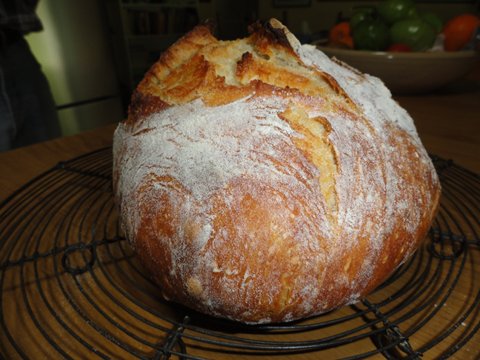
Bread is one of those foods that, when made with your own hands, gives a great deal of satisfaction and delight. It's only flour and water but it symbolises so much. I bake bread most days and use a variety of flours that I buy in bulk. Often I make a sandwich loaf because we use most of our bread for lunchtime sandwiches and for toast. Every so often I branch out to make a different type of loaf. I have tried sour dough in the past but I've not been happy with any of them. I'll continue to experiment with sour dough because I like the idea of using wild yeasts and saving the starter over a number of years to develop the flavour and become a part of the family. However, the loaf I've been branching out to most often is just a plain old five minute bread. By five minutes I mean it takes about five minutes actual work to prepare but it's the easiest of all bread to make and to get consistently good loaves from. If you're having people around for lunch or...
Image

This is my last post.

I have known for a while that this post was coming, but I didn't know when. This is my last post. I'm closing my blog, for good, and I'm not coming back like I have in the past.  I've been writing here for 16 years and my blog has been many things to me. It helped me change my life, it introduced me to so many good people, it became a wonderful record of my family life, it helped me get a book contract with Penguin, and monthly columns with The Australian Women's Weekly and Burke's Backyard . But in the past few months, it's become a burden. In April, I'll be 75 years old and I hope I've got another ten years ahead. However, each year I'll probably get weaker and although I'm fairly healthy, I do have a benign brain tumour and that could start growing. There are so many things I want to do and with time running out, leaving the blog behind gives me time to do the things that give me pleasure. On the day the blog started I felt a wonderful, h...
Image

What is the role of the homemaker in later years?

An email came from a US reader, Abby, who asked about being a homemaker in later years. This is part of what she wrote: "I am a stay-at-home mum to 4 children, ages 9-16. I do have a variety of "odd jobs" that I enjoy - I run a small "before-school" morning drop-off daycare from my home, I am a writing tutor, and I work a few hours a week at a local children's bookstore. But mostly, I cherish my blissful days at home - cooking, cleaning (with homemade cleaners), taking care of our children and chickens and goats, baking, meal-planning, etc. This "career" at home is not at all what I imagined during my ambitious years at university, but it is far more enriching. I notice, though, that my day is often planned around the needs of my family members. Of course, with 4 active kids and a husband, this is natural. I do the shopping, plan my meals, cook dinner - generally in anticipation of my family reconnecting in the evening.  I can't h...
Image

Every morning at home

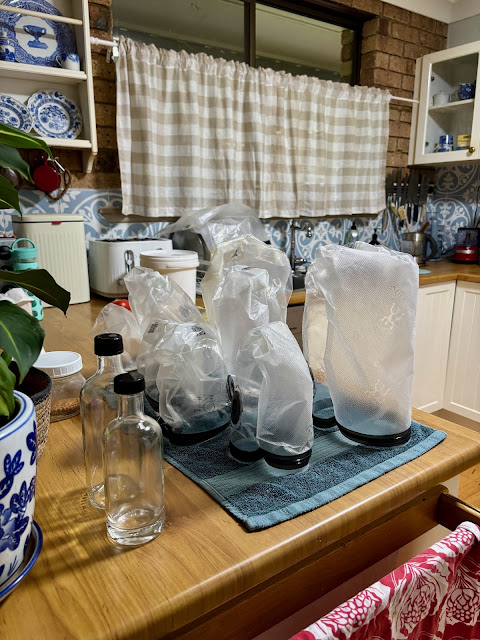
Every morning when I walk into my kitchen it looks tidy and ready for a day's work. Not so on this morning (above), I saw this when I walked in. Late the previous afternoon when I was looking for something, I came across my rolled up Zwilling vacuum bags and decided they had to be washed and dried. So I did that and although I usually put them outside on the verandah to dry it was dark by then. I turned the just-washed bags inside out and left them like this on a towel. It worked well and now the bags are ready to use when I bring home root vegetables, cabbages or whatever I buy that I want to last four or five weeks.
Image

You’ll save money by going back to basics

When I was doing the workshops and solo sessions, I had a couple of people whose main focus was on creating the fastest way to set up a simple life. You can't create a simple life fast, it's the opposite of that It's not one single thing either - it's a number of smaller, simpler activities that combine to create a life that reflects your values; and that takes a long to come together. When I first started living simply I took an entire year to work out our food - buying it, storing it, cooking it, preserving, baking, freezing, and growing it in the backyard. This is change that will transform how you live and it can't be rushed.  
Image

All previous blog posts

  • 2026 3
    • February 3
      • Workshops starting 1 March
      • Planting vegetable seeds and new workshops
      • Back where we belong
  • 2025 7
    • July 1
    • June 2
    • May 1
    • April 2
    • February 1
  • 2024 25
    • December 2
    • November 1
    • October 2
    • September 3
    • August 1
    • July 3
    • June 1
    • May 3
    • April 2
    • March 3
    • February 2
    • January 2
  • 2023 13
    • December 1
    • November 2
    • October 1
    • September 3
    • August 2
    • February 2
    • January 2
  • 2022 17
    • November 3
    • October 4
    • September 3
    • August 2
    • July 3
    • June 2
  • 2021 50
    • December 1
    • November 6
    • October 7
    • September 5
    • August 4
    • July 5
    • June 2
    • May 2
    • April 6
    • March 4
    • February 4
    • January 4
  • 2020 68
    • December 3
    • November 5
    • October 4
    • September 4
    • August 4
    • July 4
    • June 4
    • May 8
    • April 7
    • March 8
    • February 8
    • January 9
  • 2019 66
    • December 2
    • November 4
    • October 5
    • August 3
    • July 4
    • June 6
    • May 8
    • April 8
    • March 8
    • February 11
    • January 7
  • 2018 82
    • December 1
    • September 2
    • August 10
    • July 4
    • June 11
    • May 9
    • April 12
    • March 10
    • February 10
    • January 13
  • 2017 129
    • December 7
    • November 10
    • October 6
    • September 13
    • August 11
    • July 13
    • June 12
    • May 9
    • April 9
    • March 14
    • February 11
    • January 14
  • 2016 125
    • December 7
    • November 13
    • October 10
    • September 11
    • August 11
    • July 8
    • June 9
    • May 9
    • April 12
    • March 10
    • February 13
    • January 12
  • 2015 184
    • December 7
    • November 15
    • October 20
    • September 18
    • August 19
    • July 18
    • June 12
    • May 15
    • April 12
    • March 21
    • February 13
    • January 14
  • 2014 203
    • December 11
    • November 8
    • October 17
    • September 20
    • August 17
    • July 19
    • June 17
    • May 17
    • April 23
    • March 15
    • February 18
    • January 21
  • 2013 225
    • December 13
    • November 17
    • October 17
    • September 17
    • August 21
    • July 24
    • June 20
    • May 19
    • April 17
    • March 22
    • February 17
    • January 21
  • 2012 245
    • December 17
    • November 20
    • October 20
    • September 18
    • August 15
    • July 24
    • June 21
    • May 26
    • April 23
    • March 23
    • February 19
    • January 19
  • 2011 257
    • December 18
    • November 24
    • October 27
    • September 23
    • August 24
    • July 21
    • June 24
    • May 24
    • April 16
    • March 22
    • February 14
    • January 20
  • 2010 283
    • December 20
    • November 18
    • October 18
    • September 19
    • August 25
    • July 24
    • June 25
    • May 26
    • April 25
    • March 22
    • February 29
    • January 32
  • 2009 293
    • December 29
    • November 18
    • October 23
    • September 25
    • August 22
    • July 28
    • June 22
    • May 21
    • April 27
    • March 26
    • February 24
    • January 28
  • 2008 387
    • December 24
    • November 23
    • October 25
    • September 26
    • August 27
    • July 27
    • June 37
    • May 34
    • April 44
    • March 53
    • February 32
    • January 35
  • 2007 372
    • December 37
    • November 40
    • October 55
    • September 51
    • August 49
    • July 63
    • June 49
    • May 28


Trending Articles

NOT the last post

This will be my last post here.  I've been writing my blog for 18 years and now is the time to step back. I’ve stopped writing the blog and come back a couple of times because so many people wanted it, but that won’t happen again, I won’t be back.  I’ll continue on instagram to remain connected but I don’t know how frequent that will be. I know some of you will be interested to know the blog's statistics. 
Image

Every morning at home

Every morning when I walk into my kitchen it looks tidy and ready for a day's work. Not so on this morning (above), I saw this when I walked in. Late the previous afternoon when I was looking for something, I came across my rolled up Zwilling vacuum bags and decided they had to be washed and dried. So I did that and although I usually put them outside on the verandah to dry it was dark by then. I turned the just-washed bags inside out and left them like this on a towel. It worked well and now the bags are ready to use when I bring home root vegetables, cabbages or whatever I buy that I want to last four or five weeks.
Image

You’ll save money by going back to basics

When I was doing the workshops and solo sessions, I had a couple of people whose main focus was on creating the fastest way to set up a simple life. You can't create a simple life fast, it's the opposite of that It's not one single thing either - it's a number of smaller, simpler activities that combine to create a life that reflects your values; and that takes a long to come together. When I first started living simply I took an entire year to work out our food - buying it, storing it, cooking it, preserving, baking, freezing, and growing it in the backyard. This is change that will transform how you live and it can't be rushed.  
Image

Creating a home you'll love forever

Living simply is the answer to just about everything. It reduces the cost of living; it keeps you focused on being careful with resources such as water and electricity; it reminds you to not waste food; it encourages you to store food so you don't waste it and doing all those things brings routine and rhythm to your daily life. Consciously connecting every day with the activities and tasks that create simple life reminds you to look for the meaning and beauty that normal daily life holds.  It's all there in your home if you look for it. Seemingly mundane tasks like cleaning and cooking help you with that connection for without those tasks, the home you want to live in won't exist in the way you want it to.  Creating a home you love will make you happy and satisfied.
Image

Time changes everything

I've been spending time in the backyard lately creating a contained herb and vegetable garden. My aim is to develop a comfortable place to spend time, relax, increase biodiversity and encourage more animals, birds and insects to live here or visit. Of course I'd prefer my old garden which was put together by Hanno with ease and German precision. Together, we created a space bursting at the seams with herbs, vegetables and fruity goodness ready to eat and share throughout the year. But time changes everything. What I'm planning on doing now, is a brilliant opportunity for an almost 80 year old with balance issues. In my new garden I'll be able to do a wide range of challenging or easy work, depending on how I feel each day. It’s a daily opportunity to push myself or sit back, watch what's happening around me and be captivated by memories or the scope of what's yet to come.
Image

It's the old ways I love the most

I'm a practical woman who lives in a 1980’s brick slab house. There are verandahs front and back so I have places to sit outside when it's hot or cold. Those verandahs tend to make the house darker than it would be but they're been a great investment over time because they made the house more liveable. My home is not a romantic cottage, nor a minimalist modern home, it's a 1980’s brick slab house. And yet when people visit me here they tell me how warm and cosy my home is and that they feel comforted by being here. I've thought about that over the years and I'm convinced now that the style of a home isn't what appeals to people. What they love is the feeling within that home and whether it's nurturing the people who live there.
Image

Back where we belong

Surprise! I'm back ... for good this time. Instagram became an impossible place for me. They kept sending me messages asking if I'd make my page available for advertisers! Of course, I said no but that didn't stop them. It's such a change from what Instagram started as. But enough of that, the important part of this post is to explain why I returned here instead of taking my writing offline for good. For a few years Grandma Donna and I have talked online face-to-face and it's been such a pleasure for me to get to know her. We have a lot in common. We both feel a responsibility to share what we know with others. With the cost of living crisis, learning how to cook from scratch, appreciate the work we do in our homes, shop to a budget and pay off debt will help people grow stronger. The best place to do that is our blogs because we have no advertising police harassing us, the space is unlimited, we can put up tons of photos when we want to and, well, it just feels li...
Image

Making ginger beer from scratch

We had a nice supply of ginger beer going over Christmas. It's a delicious soft drink for young and old, although there is an alcoholic version that can be made with a slight variation on the recipe. Ginger beer is a naturally fermented drink that is easy to make - with ginger beer you make a starter called a ginger beer plant and after it has fermented, you add that to sweet water and lemon juice. Like sourdough, it must ferment to give it that sharp fizz. To make a ginger beer plant you'll need ginger - either the powdered dry variety or fresh ginger, sugar, rainwater or tap water that has stood for 24 hours to allow the chlorine to evaporate off. You'll also need clean plastic bottles that have been scrubbed with soap, hot water and a bottle brush and then rinsed with hot water. I never sterilise my bottles and I haven't had any problems. If you intend to keep the ginger beer for a long time, I'd suggest you sterilise your bottles. MAKING THE STARTER In a...
Image