down to earth

  • Home
  • About Us
  • Down To Earth Book
  • Privacy Policy

It's been quite a while since I posted about making fairy cakes. I promised to give you the recipe, so better late than never, here it is.
  • 1 1/2 cups sifted self raising flour+ 1 teaspoon baking powder for extra lift
  • 1 cup sifted plain flour
  • 1 cup white sugar
  • 150g (5½ oz) soft butter
  • 3 eggs
  • 2/3 cup milk
  • Finely grated zest one lemon
  • 1 teaspoon vanilla extract

I made mine in a gem scone pan and didn't use paper cases.
  1. Preheat the oven to 180C (350F). Line a pan with paper cases.
  2. Place the flours, sugar, butter, eggs, milk, lemon and vanilla in a large bowl.
  3. Using an electric beater, beat until combined and fluffy - about 2 minutes.
  4. Spoon the mixture into the paper cases.
  5. Bake for 20-25 minutes until golden. Leave to cool in the pan for 5 minutes, then turn out onto a rack to cool.


Fairy cakes can be made with the addition of vanilla, chocolate, orange or any other natural flavouring you have on hand. When the cakes come out of the oven, let them cool, cut the top off, add a teaspoon of cream or butter cream, then cut the top in two to make the wings and stick them side by side into the cream to stand up like little wings. I noticed there are a lot of recipes online for iced/frosted cup cakes that are called fairy cakes. True fairy cakes have wings and in Australia we used to eat fairy cakes, not cup cakes. Cup cake is an American term.


Another lovely thing I wanted to share with you is this sweet tea towel (above) my sister made me when she was here for the wedding. It's appliqué and stitchery and it's got an authentic old fashioned look that really appeals to me. I'm not sure I'll use it as a tea towel, it will probably serve me well as a little tray cloth. Don't you just love homemade things. These little household items, made with love, really make me feel warm and comfortable when I use them. The making process isn't long or involved but they stamp the home they're in with an authentic feeling that sits well apart from mainstream mass production. Thank you Tricia!

Hanno and I are going to visit Shane and Sarndra today and will have lunch with them. Everything has settled down since the wedding, they've returned to work and it will be nice to be together to celebrate Shane's birthday, which was yesterday. I am really enjoying getting to know my new daughter-in-law. I'm taking her a little gift of dishcloths, vintage knitting needles, a needle gauge and some knitting cotton and bamboo. Sarndra loves craft so I think she'll enjoy this little starter kit.

Thank you for your lovely comments in the past few weeks. I am often overwhelmed by the words you write both in comments and emails. I don't know what I've done to have such a wonderful group of readers, but here you are! Amazing. Enjoy your day and take time to enjoy something you love doing too.

When we first moved into our current home, we made quite a few changes. The house had been lived in by an older couple and some of the things that suited them didn't suit us. We pulled up the carpet and laid a wood floor, we changed the kitchen, added verandahs front and back and put in gardens and the chook house. We, although we didn't know it at the time, were getting ready to live more simply.

It's very easy to look at a new home and see spaces you don't really like, or know they won't work for your family and just ignore them. I want to encourage you to change what doesn't suit you. If you don't, you're changing yourself to suit the house.


We all have different circumstances and expectations but all of us can benefit from changing our living space to suit how we live. For instance, if you do a lot of sewing, you should have a space to store your equipment and fabrics; if you write or paint, you should have a quiet space to do it; if you bake a lot, have all your needs close to where you work. Outside, your mower and garden tools will serve you well if they're stored in a space out of the weather and close to a work bench were you can carry out your maintenance.


I guess the obvious and easy change is to create garden beds where there are none and to build a chook house or tractor. That change alone, while not costing the earth will equip you to provide a measure of fresh food right from your home. But there are other less obvious changes to be made, you just have to look at the space around you in a creative way with a focus on your sustainability.


Out in the back yard, along with the gardens and chickens, you could think about water tanks or barrels. If you don't have the finances for that now, it might we something worth saving for if your climate is fairly dry, if you get all your annual rain in a few months, or if you have a vegetable garden. And even if you don't have the money for big tanks right now, see if you can set up a system whereby you collect some water when it rains. We have a couple of 200 litre tubs here that, when full, can keep our garden going for a week. We just fill the watering cans or buckets from the tubs and transfer the water to the garden. It's more work than hosing, but we don't mind carting our harvested water the short distance. Make sure you set up your collector tanks close to where it will be used. Btw, mosquitoes take about 10 - 14 days, depending on the type, to go from egg to mosquito. Harvesting the water within a ten day period will kill the larvae before they fully develop. Or, you could just scoop the larvae out with a fine fish net.

Inside the home you might look for a cupboard to store your stockpile. I think one of the downsides of many modern homes is the lack of cupboard space. Think creatively about your cupboards, if you have a big cupboard near your kitchen, or in the laundry or garage, that may suit your stockpile better than what is currently in it.


Move pots and pans, baking supplies, tea and coffee making supplies close to where they're used. Organising your kitchen well will save you a lot of time and effort. It just takes an hour or so to think about how you work in your kitchen and then moving things closer to where they're needed.

Make a space to sit with your tea and coffee. This space might also serve well as the place you talk quietly with your partner, read to the children, write letters, knit or stitch. You need a space like this just as you need a place to store your linens or groceries. Make a space for yourself - make the house suit you, not the other way around.


I could go right through the house but I'm sure you get what I mean. Making small changes to your home will make your life easier. Modify the house to suit the type of family you are. Make the spaces work for you and if they don't, change them. Your home is one of the key tools you have in your life, making a few adjustments to make it work as it should and have it accommodate the activities of your family, will make living there easier. There will be some changes that cost money, just do them as the money becomes available, but many changes will cost only the effort you put in to make them happen.

I hope you identified some changes you want to make when we did our simple audit last week. So if you have some plans, I encourage you to dive right in and enjoy the process of change. You'll be making your home fit your family instead of living with the feeling that the house isn't quite right. This is another one of those things where we take the bull by the horns and give it a good shake, instead of sitting back wishing things were different.

Do it thoughtfully, take it slow and enjoy the change.
I mentioned a few days ago that I was working on a little oil lamp. Well, I fiddled with it for a few days, tested wicks and oil levels, I now have a perfectly serviceable oil lamp that burns clean for hours, with no smell. I was looking for a replacement for paraffin candles and saw a photo of a small oil lamp on a website somewhere but when I made my own version of it, it burned for a minute and went out. I never give up on these things so it was a battle between me and the lamp for a day or two. Let me tell you we both won. I won because the lamp burns as I want it to, the lamp wins because it looks good and gives a lovely mellow yellow glow, just like a candle.


All you'll need to make one of these lamps is a small glass jar with a lid that fits properly, a short strip of pure cotton or pure linen, a small amount of oil and water, and a plate to sit it on.
  • I used a small canning/preserving jar - the one above is about 350 ml (12oz) but when I make another, I'll use a smaller jar of 250 mls (8½ oz). The lid needs to attach firmly. You could use recycled jars as long as it's sturdy thick glass.
  • Poke a hole in the lid with a can opener or a hole punch.
  • Half fill the jar with water and then carefully pour oil onto the top of the water to fill the jar almost to the rim.
  • Push the pre-soaked wick through the hole and have it sitting about ½ inch above the lid.
  • If the wick goes out soon after you light it, add more oil so the oil level is almost at the top of the jar. Having the oil close to the lid seems to give the greatest chance of success.

A short pure cotton wick, with pinked edges.

Wicks: natural wicks work best. A polyester or poly/cotton blend will smell. Find an old piece of loose weave pure cotton or linen fabric and with pinking shears or scissors, cut a strip 1.25cm (½ inch) wide and 10cm (four inches) long. Soak the wick in oil before using it then poke the wick through the hole in the lid. Have it sticking up slightly above the lid top. I also tried plain kitchen string/twine, Lions knitting cotton - one strand and three strands plaited/braided together, and cotton dress fabric - all worked quite well. Don't forget to pull the wick up every so often as it will eventually burn down too low to work properly. Do this with a pin and while the lamp is not lit.


Using half water half oil means you have less oil sitting in a jar for long periods. The oil will warm up a little when the lamp is in use and this might mean it would go rancid over a period of time. The amount of oil in the lamp above burned for many hours.

Oil: I used olive oil because it burns clean with no smell and it has a high flash point. That means is won't catch fire easily, it just burns the wick slowly. You could also use rice bran oil, another clean burning oil with no smell. You could use old cooking oil but it will smell of whatever you cooked in it.

This is a nice little lamp that could be used for emergency lighting or could replace paraffin candles, which, if you burn them every night, cost a lot over the course of a year. Paraffin is made with petrochemicals, so you probably want to replace your paraffin candles with something that better suits your simple life.


Mother Earth News did an article here a couple of weeks ago about oil lamps that is worth a read. They did a different version of the lamp, which I tried and it worked well. I put mine in a recycled aluminium candle holder (above), they put theirs in a canning jar which I think would work better over a long period. I just wanted to test the idea of it.

This is nothing major, it's just another small step towards a better life and serves to remind us that we don't have to buy every thing we need. Many things can be made at home and used for their purpose without it costing too much at all.

I perform well under pressure, always have done. When I have to work to a deadline or have a lot of things to do I get more done than when I can take my time and finish when it feels right. I prefer not to work like that now because I find that focusing on my tasks and taking my time with them is more enjoyable and makes me calmer, but when there's a lot of complex work to be done, if I'm under pressure, I will get more done. All through the year we've been working to deadlines for events and outings, and there has been work, lots of work, every week. The last of the big things happened yesterday. Kerry, my younger son, stayed here over the weekend and will travel to New York today. He stays there for a few days and then goes to Toronto where he'll work for a few months. Later in the year, he'll take a road trip with some friends to Las Vegas and then go to Brazil. It was good for me having him here. He relaxed, talked, organised and packed and I realised how matured and prepared he is for this trip. When he drove out the driveway with Hanno yesterday afternoon on his way to his brother's, I felt as if the last of the big events was over. I breathed a sigh of relief.


But, there is always something lurking in the wings. On Friday, the book proposal came back from my agent. Now it's full steam ahead to finish the proposal, and then complete the book. It's becoming a bit of a saga but now I feel I have a clear space, both in reality and in my head, so I can give it all the time it needs. I want to make it the best it can be, I want it to help those who buy it and I want to be proud of what I put into it.


I finished my first Burke's Backyard article on the weekend and sent that off. I feel really good about writing for that magazine and I hope to add something to their mix. That article will be in their Spring/September edition.


Hanno and I took our god daughter, Casey, out for lunch on Friday. Casey was hit by a drunk driver a couple of years ago and she's now in a wheelchair. She is 25 years old. The place we went for lunch was having a Christmas in July celebration when we got there and it reminded me to blog about a home made Christmas. I wrote about this last year and think it would be a good idea if we all thought about our Christmas lists now so we can get ourselves organised and start making our gifts. I will be doing some knitting and sewing and there may be a couple of plants in nice pots. I'll work out a list during the next week so I know exactly what I have to do and will, hopefully, be on target and not rushing at the last minute. This can be such an enjoyable task but it can be spoiled by having to rush, or worst still, not getting the gifts made and having to buy at the last minute. I love receiving home made gifts. I love giving them even more. I know that thought, time and loving effort have gone into those gifts and feel a close bond to those I give and receive home made gifts from. I may be wrong but I think home made gifts will be big this year.

So although this will be a busy week for me, it will be busy in a different way. I am looking forward to the next few months. I am usually fulfilled by my work and I hope the time and mental energy I put into my writing over the coming months results in something special.

I have had a few emails recently asking me to write about various things and I wondered if might be a good idea to throw that open to you to compile a list of what you'd like me to write about. We'll set aside a week for readers requests when I'll write about the top five subjects. So if you have any ideas, let me know and if it's a popular idea, it might be in the top five.

I hope you have a wonderful week full of rewarding work and quiet time when you can relax and enjoy your family and home.

Some links for:

  • making jams and jellies
  • no knead bread
  • very good knitting glossary - some instructions with video link
  • quick knitting project
  • old fashioned baby
  • building a sustainable life
  • some nice Sunday reading - click on the other links as well
I received this comment the other day that I want to throw out to all of you for your suggestions.

I was wondering if you (or anyone else) had some good ideas for simple activities/entertainment for children? My nephew is staying with us for the summer (his dad is in Iraq) and we're a little lost about what to do with a 5yo boy who's far away from home and has no idea about our lifestyle. We're planning to teach him to ride a bike (I got him one for his birthday) and swim but other than that we can't think of many things that don't involve a television.

Thank you for any advice!

Lauren

Lauren, when my boys were 5 I taught them simple cooking - scrambled eggs, toast, making breakfast cereal, sandwiches etc. You could also give him a strong flashlight for spotlighting in the backyard at night. If you're out of the city, he'll see all sorts of interesting things in the trees and bushes when it's dark.

But my main suggeston is if you have a digital camera, teach him to use it on the automatic setting. Get a small note book and let him document his summer, in photos, for his Dad. Maybe one day he could take a photo of his surroundings or his family and write a short caption; the next day you could take a photo of him playing, reading, eating, sleeping or smiling. I'm sure his Dad would love that and he would probably get a kick out of it knowing it was a gift for Dad far away in Iraq.

So now it's over to you, dear readers, what are your suggestions for Lauren and this little boy?


Our no spending mission ends today. I know a few of you had to make small purchases but you got back on the horse and trotted to the finish line, congratulations. No spending helps us think about why we spend and it shows that we can stay at home and that our lives don't have to revolve around shopping. I'd love to hear a few of your stories. Did you find it difficult? Were the family on board too?

This is the last of our current series of kitchen table talks. I thoroughly enjoy it and hope you did too. I am often thanked for what I put into this blog, but the truth is that you give me inspiration, and good ideas with your comments, so I think it's a two way street; all good conversations are. Thank you all for taking the time to comment. It lets me know you're out there and that others are walking this path along with us.


So how do we round off a series that has talked about disposables, green cleaning, money, home production and a few other topics? I think the perfect way to end is to examine our feelings about our homes. Home is the central point for me. It is where I feel the most comfortable, and where I live each day according to my values. We are our true selves here, this is where we reveal who we really are and it's where I share common ground with Hanno and my family. And it is where we celebrated one of the most important events in our lives just a couple of weeks ago - the marriage of our son Shane to his beloved, Sarndra. So just in those few sentences I've revealed a few of the reasons my home is important to me.

I have lived in many houses over my many years and I know that it takes work to make a dwelling a real home. In the first couple of years we lived here, when I was still working outside the home, I saw my home as just a place to sleep. I thought excitement and fulfilment waited for me in other places. It was only when I started doing my own housework and shopping, that my view of home changed - an along with that I changed too. I finally realised that my home was a reflection of who I am and making it comfortable, secure and warm, made me that way too.
Our home is not fancy by any stretch of the imagination, it is what it is because of our gardens, the homemade goodies inside, the smell of home cooking, welcome mat at the door and the unwavering certainty that in this home we work to produce as much as we can for ourselves. That work gives us independence, makes us self reliant, and rewards us with a self made home that fits us like a glove.


Your home should reflect you and your family. It should be the one place where you can kick off your shoes, sing at the top of your lungs, sit quietly with your thoughts and a cup of coffee, raise your children in safety, make things you can and can't buy at the shops, welcome your family and friends with cool home made fruit cordial in summer and hot and hearty soup in winter. Your home is the place where it's okay to put up red curtains against a purple wall, or live surrounded by stark, white minimalism, if that's what you want. Your home should be a safe haven where you can close the door on everything that is outside and feel secure and comfortable. And if you make your home everything you want it to be, and if it nurtures you and your family, when your children, your partner and yourself set off into the world from a home that is loved, you're setting everyone up for their best chance of success.

I hope this series has helped you think about your home in a positive way, enabled you to make the changes you need or given you the confidence to not change what is loved. There are many important and significant things we will do in our lives, making a good home is one of them. It won't happen overnight but if you put the work in and if you march to the beat of your own drummer, you will be rewarded with the best possible place in which to live your simple life.

Take care, everyone and have a lovely weekend.


One of the things I really enjoy about my simple life is that I've taught myself to make many things I used to buy. I'm pleased that most of what I make is really good and that inspires me to keep up the home production of as many things as I can. So today's kitchen table discussion is about just that, the home production of goods - there is no category for these things, it's just making whatever we can at home.

There seems to be a certain mindset that goes with this. Sometimes we start off awkwardly , not sure if our skill level is sufficient, but with one or two projects under your belt, you realise it's just a matter of trial and error and the more you do it, the less error there is.

Some of the things I've taught myself, or improved upon the skills I had, are bread making, soap making, sewing - aprons, napkins, tote bags, skirts, knitting - scarves, mittens, bags; seed saving, composting, worm farming, aquaponics, preserving/canning, stockpiling, budgeting, slowing down, quilting, embroidery, mending, reading electricity and water meters, and probably a lot of other things I can't remember now.

Learning or improving skills like these will support your simple life but also save you money, greenhouse gases and help you live to your true potential. There is nothing like a difficult task to teach you things like patience, persistence, observation and awareness. Life long learning keeps you on your toes and sharpens your mind - a thing I'm acutely aware of as I move further into my 60s. It also slows you down and makes you focus on the task at hand. That is always a good thing.

Look around your home to see what you need that you might be able to make yourself. It could be anything from a dishcloth to a home made wedding - I am here to tell you anything is possible. Believe in yourself, go slowly, plan, read as much as you can or find a mentor and then set to work. Don't believe you can do it? I think you might surprise yourself.

Our changes
  1. I am still working on my oil candle lamp.
  2. And making liquid soap.

Things to think about
  • Since the 1950s, we've been lured into buying convenience at the store. That is fine for many things but not for others. For instance, I saw an advert the other day for cheese pieces cut the right size for a cracker! Most of us don't need that sort of convenience. For most of us it's better to buy a block of cheese at a reasonable price and cut it, or shred it, ourselves. Why pay for someone else to do something we can do ourselves.
  • Buying that convenience, makes us more and more dependent on others for our needs. Take back your independence and do for yourself and teach your children to do the same.
  • Many things you do in your day to day life build character. Instead of working for the money to buy what you need, invest time in yourself and think about making some things at home. It will pay off in more ways than one.
  • Test yourself.

If money is your hope for independence you will never have it. The only real security that a man will have in this world is a reserve of knowledge, experience, and ability.
Henry Ford


How are you going on your no spending task? I know Pippa has bought more milk for her boys, it's incredible how much milk teenage boys drink. If you've had to buy something, just get back to no spending for the rest of the week. If you're haven't gone to the shops at all, well done! We'll see the week out together with our money in our pockets and not handed over to someone else.

I've loved reading the comments for our biggest kitchen table series. I haven't had much of a chance to comment myself because I've been at my voluntary job the past couple of days, but I read every one and I learn and smile along with the rest of you. We have built a community of supportive and intelligent people here and I always look forward to seeing what little gems are left in the comments section.


Today we'll focus on green cleaning - which is all that cleaning we do without the use of harsh chemicals that are in almost all the supermarket cleansers. We've been hoodwinked into believing that we need a different cleaner for each job and that what you use in the kitchen or to clean the bathroom floor can't be used for other cleaning jobs. That's hogwash. We're encouraged to buy a different product for all types of cleaning but most of us know that soap, vinegar or bicarb/baking soda will clean almost anything. If you go to this old post, you'll find recipes for making all sorts of cleaners using basic requirements like those just mentioned, and, as usual, if you have some ideas or recipes to share, we would love you to share them.


Additional reading from my archives:
Green cleaning - floors and furniture
Green cleaning - the bathroom
Green cleaning - the kitchen
Frugal cleaning
Cleaning with rags
Establishing household routines

Our changes
  1. I'm currently knitting a few lighter dishcloths. I'll post about these soon.
  2. I'm making liquid soap that I'll post about soon.
Things to think about
  • Make sure you label your bottles. This is especially necessary if you have small children living in the home or visiting you. Keep your recipe sheet in your home management journal so that if a child does swallow some of your cleaners, you'll know immediately what's in there and can take the sheet to the ER if you have to go there.
  • Never mix ammonia and bleach together - it's very dangerous.
  • Ridding your home of harsh chemicals will not only save you a lot of money, it's much healthier for you and your family.
  • Our grandmothers and their grandmothers used these types of cleaners. It's only in the past 50 years that we've used what is common now.
  • Make up cleaning kits to keep in the bathroom, kitchen and laundry. Each kit can be stored in a little bucket or old ice cream container that you can fill with warm water if you need it. Keep each kit in the room you use it in so it's always ready for its purpose.


Today we'll be thinking about how to use less electricity and water. This part of the audit is another one where if you can reduce your consumption, you'll save money and be kinder to your environment at the same time. Many things in this simple life have the dual capacity of being frugal and green. I see it as a reward - and it doesn't matter what side of the fence you usually sit on, if you're out to save money, your reward if knowing you're also being greener, and if your focus is on saving resources and raising your environmental awareness, then your reward is to save money too.

Please read this older post first, it explains how to do your electric and water audits.

Here in Australia, we're being told the price of electricity will increase a lot in the future. Even in the past year it's gone up and is set to rise again. But these price rises aren't only here, they're all over, including the USA and Europe. And sure as eggs, when the price of electricity rises, so do all of the products produced, stored and transported using it.

It's not good news, is it. But we can do something about it. Doing an audit is a simple exercise that will show you how much you can save by changing the way you use electricity and water in your home. Get the kids to help, it will be a useful exercise for them too because they use these utilities, just as you do. And remember, your savings will be small over a 24 hour period, however, all those small savings on all those days add up and make a big difference.

Read this page. It's an excellent website for learning about how to reduce your electricity usage. You'll find strategies for saving water here and my post on water harvesting is here.

I wish you luck in reducing your electricity and water usage. It's one of those things that both easy and difficult to do but if you have the will, it can be done.


My latest dishcloth, finished yesterday.

Please read this old post first.

Today we'll talk about getting rid of 'disposable' paper products, dishcloths, menstrual pads, baby nappies/diapers and plastic shopping bags. This is one area where you can make a big step forward in one quick swoop. Making a commitment to not buying a number of the products you may buy now, like paper towels and paper napkins, will help you on this path. When you start on this you'll realise it's easy and once you start, you might get rid of all your 'disposable' products. If you decide to replace menstrual products or nappies/diapers with homemade alternatives, I recommend my sponsors on the left side bar as a good place to buy from.


Our cotton napkins sit on the kitchen table so they're always in reach and available.

Apart from the obvious environmental problems these products cause, using your own homemade alternatives is cheaper and I think using knitted or crocheted dishcloths and cotton napkins makes the home more like a real home. You replace the mass production that is so common nowadays with something that you've thought about and want enough to put your time to making. If you do that with a lot of things that can be replaced around the home, piece by piece you'll build a beautiful home that is unlike any other. Looking around your home to replace disposables can be an exercise in homemaking as well.

The down side of disposables.
Free patterns for dishcloths.
Free patterns for shopping tote bags.


Use plates and bowls creatively to cover food in the fridge.

Doing my audit I realised we have been using the cloth napkins and homemade dish cloths and face cloths as if we've always used them. It's normal for us now, and always will be. We still buy toilet paper, paper tissues and plastic wrap and I doubt we'll stop using them, although we are careful with their usage. I'll revisit that statement whenever I do an audit such as this, but for now, they're staying.


Increase your chance of using rags, cotton napkins and tote bags by having them ready to use and easy to find. We keep our tote bags in the car so they're always with us when we go to the supermarket.

I'm still using rags to clean with and I think you increase your potential for success if you have all these things ready to be used. Don't expect to make up rags when you spill something, you'll just go back to the paper towels. Go through your linen cupboard and find an old terry towel. Cut it up into squares with pinking shears and put them in a rag bag near your cleaning kit. Mine hang in a rag bag in the laundry. Everyone knows where to get them and that they are washed after use for most things, but if it's wiped up cat pee or something similar, it's thrown out.


Little olive oil candle.

Of course, you could also replace your paraffin candles with little oil lamps. Replacing paraffin, which is a petrochemical, with a sustainable oil like olive oil or rice bran oil, will make your home a little bit greener and safer. Olive oil burns clean with no smoke or smell. I made this small test lamp, it is running on olive oil, and as soon as I test drive some new home made wicks, I'll do a tutorial on it.

I am making no changes in this part of my audit at this time.

Some things to think about:
  1. Are you ready to stop buying disposables?
  2. If you are, use up what you have at home, and start preparing rags and making napkins and dishcloths and whatever else you want to try.
  3. Remember, there is no guilt in the audit. If you can't let these things go now, promise yourself you'll think about it again later in the year. You might be ready then.
  4. These activities make a powerful statement - for the environment, for your purse and for the life you intend to live.

These are links to some blogs for backup reading on the pantry and stockpile. This is an important subject that will benefit most of us when we get it right. It's well worth any time you give it to read more.

The Mother Load
on stockpiling
Mrs Brenda at Coffee Tea and Me on pantry talk
Stockpile list at Frugal Living

Happy 4th of July to my American friends. I hope you enjoyed your special day.

Remember, those of you who are doing the no spend week, most of us have started now. If you're celebrating the 4th, it's fine to start tomorrow. Good luck, everyone.
Newer Posts Older Posts Home

MY BOOKS

MY BOOKS


My books were all published by Pengiun, and are available at Amazon US, Amazon UK and Amazon Au

Search here

Total Pageviews

Translate


I'm Rhonda Hetzel and I've been writing my Down to Earth blog since 2007. Although I write the occasional philosophical post, my main topics include home cooking, happiness and gardening as well as budgeting, baking, ageing, generosity, mending and handmade crafts. I hope you enjoy your time here.

MY FAVOURITE PLACES

  • Grandma Donna's Place
  • Grandma Donna's YouTube
  • Grandma Donna's Instagram
  • This Simple Day
  • Nicole's Instagram

Give More

Give More

Popular posts last year

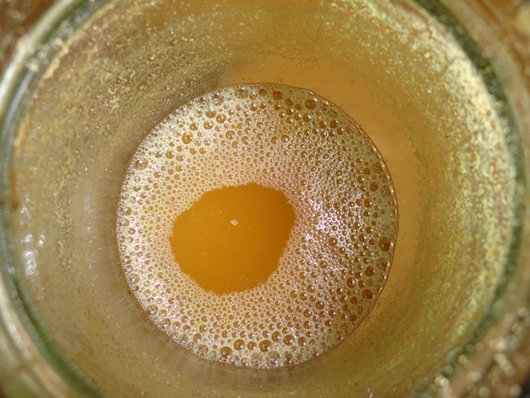
Making ginger beer from scratch

We had a nice supply of ginger beer going over Christmas. It's a delicious soft drink for young and old, although there is an alcoholic version that can be made with a slight variation on the recipe. Ginger beer is a naturally fermented drink that is easy to make - with ginger beer you make a starter called a ginger beer plant and after it has fermented, you add that to sweet water and lemon juice. Like sourdough, it must ferment to give it that sharp fizz. To make a ginger beer plant you'll need ginger - either the powdered dry variety or fresh ginger, sugar, rainwater or tap water that has stood for 24 hours to allow the chlorine to evaporate off. You'll also need clean plastic bottles that have been scrubbed with soap, hot water and a bottle brush and then rinsed with hot water. I never sterilise my bottles and I haven't had any problems. If you intend to keep the ginger beer for a long time, I'd suggest you sterilise your bottles. MAKING THE STARTER In a...
Image

NOT the last post

This will be my last post here.  I've been writing my blog for 18 years and now is the time to step back. I’ve stopped writing the blog and come back a couple of times because so many people wanted it, but that won’t happen again, I won’t be back.  I’ll continue on instagram to remain connected but I don’t know how frequent that will be. I know some of you will be interested to know the blog's statistics. 
Image

How to make cold process soap

I'm sure many of you are wondering: "Why make soap when I can buy it cheaply at the supermarket?" My cold process soap is made with vegetable oils and when it is made and cured, it contains no harsh chemicals or dyes. Often commercial soap is made with tallow (animal fat) and contains synthetic fragrance and dye and retains almost no glycerin. Glycerin is a natural emollient that helps with the lather and moisturises the skin. The makers of commercial soaps extract the glycerin and sell it as a separate product as it's more valuable than the soap. Then they add chemicals to make the soap lather. Crazy. Making your own soap allows you to add whatever you want to add. If you want a plain and pure soap, as I do, you can have that, or you can start with the plain soap and add colour, herbs and fragrance. The choice is yours. I want to add a little about animal and bird fat. I know Kirsty makes her soap with duck fat and I think that's great. I think t...
Image

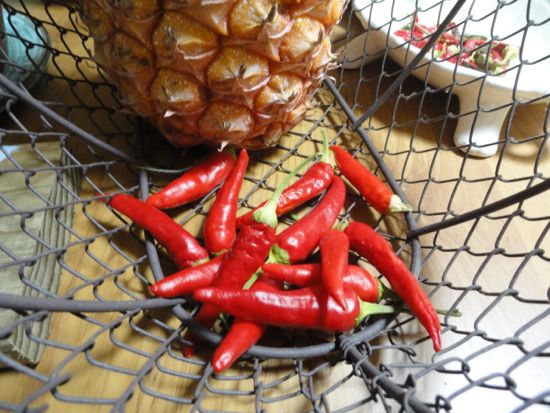
Preserving food in a traditional way - pickling beetroot

I've had a number of emails from readers who want to start preserving food in jars but don't know where to start or what equipment to buy.  Leading on from yesterday's post, let's just say up front - don't buy any equipment. Once you know what you're doing and that you enjoy preserving, then you can decide whether or not to buy extra equipment. Food is preserved effectively without refrigeration by a variety of different methods. A few of the traditional methods are drying, fermentation, smoking, salting or by adding vinegar and sugar to the food - pickling. This last method is what we're talking about today. Vinegar and sugar are natural preservatives and adding one or both to food sets up an environment that bacteria and yeasts can't grow in. If you make the vinegar and sugar mix palatable, you can put up jars of vegetables or fruit that enhance the flavour of the food and can be stored in a cupboard or fridge for months. Other traditional w...
Image

Cleaning mould from walls and fabrics

With all this rain around we've developed a mould problem in our home. Usually we have the front and back doors open and that good ventilation stops most moulds from establishing. However, with the house locked up for the past week, the high humidity and the rain, mould is now growing on the wooden walls near our front door and on the lower parts of cupboards in the kitchen. Most of us will find mould growing in our homes at some point. Either in the bathroom or, in humid climates, on the walls, like we have now. You'll need a safe and effective remedy at some point, so I hope one of these methods works well for you. Mould is not only ugly to look at, it can cause health problems so if you see mould growing, do something about it straight away. The longer you leave the problem, the harder it will be to get rid of it effectively. If you have asthma or any allergies, you should do this type of cleaning with a face mask on so you don't breathe in any spores. Many peopl...
Image

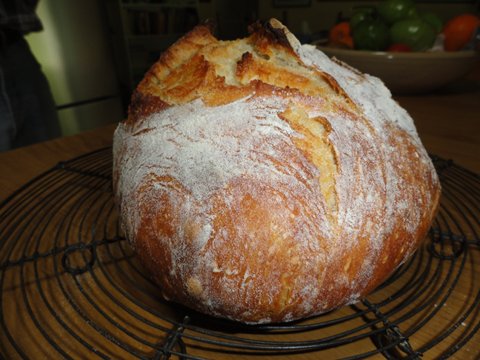
Five minute bread

Bread is one of those foods that, when made with your own hands, gives a great deal of satisfaction and delight. It's only flour and water but it symbolises so much. I bake bread most days and use a variety of flours that I buy in bulk. Often I make a sandwich loaf because we use most of our bread for lunchtime sandwiches and for toast. Every so often I branch out to make a different type of loaf. I have tried sour dough in the past but I've not been happy with any of them. I'll continue to experiment with sour dough because I like the idea of using wild yeasts and saving the starter over a number of years to develop the flavour and become a part of the family. However, the loaf I've been branching out to most often is just a plain old five minute bread. By five minutes I mean it takes about five minutes actual work to prepare but it's the easiest of all bread to make and to get consistently good loaves from. If you're having people around for lunch or...
Image

This is my last post.

I have known for a while that this post was coming, but I didn't know when. This is my last post. I'm closing my blog, for good, and I'm not coming back like I have in the past.  I've been writing here for 16 years and my blog has been many things to me. It helped me change my life, it introduced me to so many good people, it became a wonderful record of my family life, it helped me get a book contract with Penguin, and monthly columns with The Australian Women's Weekly and Burke's Backyard . But in the past few months, it's become a burden. In April, I'll be 75 years old and I hope I've got another ten years ahead. However, each year I'll probably get weaker and although I'm fairly healthy, I do have a benign brain tumour and that could start growing. There are so many things I want to do and with time running out, leaving the blog behind gives me time to do the things that give me pleasure. On the day the blog started I felt a wonderful, h...
Image

What is the role of the homemaker in later years?

An email came from a US reader, Abby, who asked about being a homemaker in later years. This is part of what she wrote: "I am a stay-at-home mum to 4 children, ages 9-16. I do have a variety of "odd jobs" that I enjoy - I run a small "before-school" morning drop-off daycare from my home, I am a writing tutor, and I work a few hours a week at a local children's bookstore. But mostly, I cherish my blissful days at home - cooking, cleaning (with homemade cleaners), taking care of our children and chickens and goats, baking, meal-planning, etc. This "career" at home is not at all what I imagined during my ambitious years at university, but it is far more enriching. I notice, though, that my day is often planned around the needs of my family members. Of course, with 4 active kids and a husband, this is natural. I do the shopping, plan my meals, cook dinner - generally in anticipation of my family reconnecting in the evening.  I can't h...
Image

Every morning at home

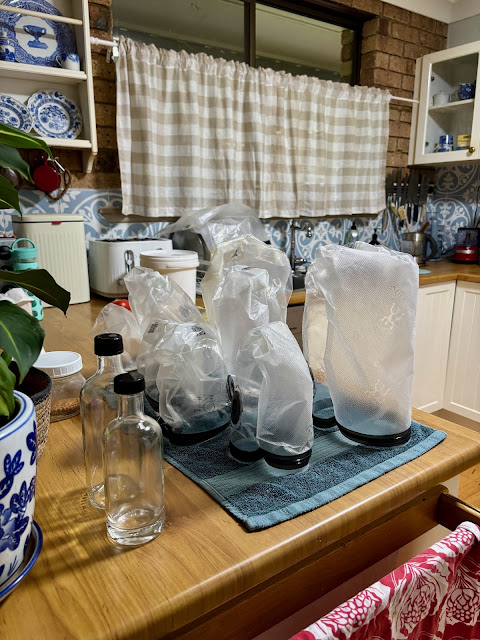
Every morning when I walk into my kitchen it looks tidy and ready for a day's work. Not so on this morning (above), I saw this when I walked in. Late the previous afternoon when I was looking for something, I came across my rolled up Zwilling vacuum bags and decided they had to be washed and dried. So I did that and although I usually put them outside on the verandah to dry it was dark by then. I turned the just-washed bags inside out and left them like this on a towel. It worked well and now the bags are ready to use when I bring home root vegetables, cabbages or whatever I buy that I want to last four or five weeks.
Image

You’ll save money by going back to basics

When I was doing the workshops and solo sessions, I had a couple of people whose main focus was on creating the fastest way to set up a simple life. You can't create a simple life fast, it's the opposite of that It's not one single thing either - it's a number of smaller, simpler activities that combine to create a life that reflects your values; and that takes a long to come together. When I first started living simply I took an entire year to work out our food - buying it, storing it, cooking it, preserving, baking, freezing, and growing it in the backyard. This is change that will transform how you live and it can't be rushed.  
Image

All previous blog posts

  • 2026 3
    • February 3
      • Workshops starting 1 March
      • Planting vegetable seeds and new workshops
      • Back where we belong
  • 2025 7
    • July 1
    • June 2
    • May 1
    • April 2
    • February 1
  • 2024 25
    • December 2
    • November 1
    • October 2
    • September 3
    • August 1
    • July 3
    • June 1
    • May 3
    • April 2
    • March 3
    • February 2
    • January 2
  • 2023 13
    • December 1
    • November 2
    • October 1
    • September 3
    • August 2
    • February 2
    • January 2
  • 2022 17
    • November 3
    • October 4
    • September 3
    • August 2
    • July 3
    • June 2
  • 2021 50
    • December 1
    • November 6
    • October 7
    • September 5
    • August 4
    • July 5
    • June 2
    • May 2
    • April 6
    • March 4
    • February 4
    • January 4
  • 2020 68
    • December 3
    • November 5
    • October 4
    • September 4
    • August 4
    • July 4
    • June 4
    • May 8
    • April 7
    • March 8
    • February 8
    • January 9
  • 2019 66
    • December 2
    • November 4
    • October 5
    • August 3
    • July 4
    • June 6
    • May 8
    • April 8
    • March 8
    • February 11
    • January 7
  • 2018 82
    • December 1
    • September 2
    • August 10
    • July 4
    • June 11
    • May 9
    • April 12
    • March 10
    • February 10
    • January 13
  • 2017 129
    • December 7
    • November 10
    • October 6
    • September 13
    • August 11
    • July 13
    • June 12
    • May 9
    • April 9
    • March 14
    • February 11
    • January 14
  • 2016 125
    • December 7
    • November 13
    • October 10
    • September 11
    • August 11
    • July 8
    • June 9
    • May 9
    • April 12
    • March 10
    • February 13
    • January 12
  • 2015 184
    • December 7
    • November 15
    • October 20
    • September 18
    • August 19
    • July 18
    • June 12
    • May 15
    • April 12
    • March 21
    • February 13
    • January 14
  • 2014 203
    • December 11
    • November 8
    • October 17
    • September 20
    • August 17
    • July 19
    • June 17
    • May 17
    • April 23
    • March 15
    • February 18
    • January 21
  • 2013 225
    • December 13
    • November 17
    • October 17
    • September 17
    • August 21
    • July 24
    • June 20
    • May 19
    • April 17
    • March 22
    • February 17
    • January 21
  • 2012 245
    • December 17
    • November 20
    • October 20
    • September 18
    • August 15
    • July 24
    • June 21
    • May 26
    • April 23
    • March 23
    • February 19
    • January 19
  • 2011 257
    • December 18
    • November 24
    • October 27
    • September 23
    • August 24
    • July 21
    • June 24
    • May 24
    • April 16
    • March 22
    • February 14
    • January 20
  • 2010 283
    • December 20
    • November 18
    • October 18
    • September 19
    • August 25
    • July 24
    • June 25
    • May 26
    • April 25
    • March 22
    • February 29
    • January 32
  • 2009 293
    • December 29
    • November 18
    • October 23
    • September 25
    • August 22
    • July 28
    • June 22
    • May 21
    • April 27
    • March 26
    • February 24
    • January 28
  • 2008 387
    • December 24
    • November 23
    • October 25
    • September 26
    • August 27
    • July 27
    • June 37
    • May 34
    • April 44
    • March 53
    • February 32
    • January 35
  • 2007 372
    • December 37
    • November 40
    • October 55
    • September 51
    • August 49
    • July 63
    • June 49
    • May 28


Trending Articles

NOT the last post

This will be my last post here.  I've been writing my blog for 18 years and now is the time to step back. I’ve stopped writing the blog and come back a couple of times because so many people wanted it, but that won’t happen again, I won’t be back.  I’ll continue on instagram to remain connected but I don’t know how frequent that will be. I know some of you will be interested to know the blog's statistics. 
Image

Every morning at home

Every morning when I walk into my kitchen it looks tidy and ready for a day's work. Not so on this morning (above), I saw this when I walked in. Late the previous afternoon when I was looking for something, I came across my rolled up Zwilling vacuum bags and decided they had to be washed and dried. So I did that and although I usually put them outside on the verandah to dry it was dark by then. I turned the just-washed bags inside out and left them like this on a towel. It worked well and now the bags are ready to use when I bring home root vegetables, cabbages or whatever I buy that I want to last four or five weeks.
Image

You’ll save money by going back to basics

When I was doing the workshops and solo sessions, I had a couple of people whose main focus was on creating the fastest way to set up a simple life. You can't create a simple life fast, it's the opposite of that It's not one single thing either - it's a number of smaller, simpler activities that combine to create a life that reflects your values; and that takes a long to come together. When I first started living simply I took an entire year to work out our food - buying it, storing it, cooking it, preserving, baking, freezing, and growing it in the backyard. This is change that will transform how you live and it can't be rushed.  
Image

Creating a home you'll love forever

Living simply is the answer to just about everything. It reduces the cost of living; it keeps you focused on being careful with resources such as water and electricity; it reminds you to not waste food; it encourages you to store food so you don't waste it and doing all those things brings routine and rhythm to your daily life. Consciously connecting every day with the activities and tasks that create simple life reminds you to look for the meaning and beauty that normal daily life holds.  It's all there in your home if you look for it. Seemingly mundane tasks like cleaning and cooking help you with that connection for without those tasks, the home you want to live in won't exist in the way you want it to.  Creating a home you love will make you happy and satisfied.
Image

Time changes everything

I've been spending time in the backyard lately creating a contained herb and vegetable garden. My aim is to develop a comfortable place to spend time, relax, increase biodiversity and encourage more animals, birds and insects to live here or visit. Of course I'd prefer my old garden which was put together by Hanno with ease and German precision. Together, we created a space bursting at the seams with herbs, vegetables and fruity goodness ready to eat and share throughout the year. But time changes everything. What I'm planning on doing now, is a brilliant opportunity for an almost 80 year old with balance issues. In my new garden I'll be able to do a wide range of challenging or easy work, depending on how I feel each day. It’s a daily opportunity to push myself or sit back, watch what's happening around me and be captivated by memories or the scope of what's yet to come.
Image

It's the old ways I love the most

I'm a practical woman who lives in a 1980’s brick slab house. There are verandahs front and back so I have places to sit outside when it's hot or cold. Those verandahs tend to make the house darker than it would be but they're been a great investment over time because they made the house more liveable. My home is not a romantic cottage, nor a minimalist modern home, it's a 1980’s brick slab house. And yet when people visit me here they tell me how warm and cosy my home is and that they feel comforted by being here. I've thought about that over the years and I'm convinced now that the style of a home isn't what appeals to people. What they love is the feeling within that home and whether it's nurturing the people who live there.
Image

Back where we belong

Surprise! I'm back ... for good this time. Instagram became an impossible place for me. They kept sending me messages asking if I'd make my page available for advertisers! Of course, I said no but that didn't stop them. It's such a change from what Instagram started as. But enough of that, the important part of this post is to explain why I returned here instead of taking my writing offline for good. For a few years Grandma Donna and I have talked online face-to-face and it's been such a pleasure for me to get to know her. We have a lot in common. We both feel a responsibility to share what we know with others. With the cost of living crisis, learning how to cook from scratch, appreciate the work we do in our homes, shop to a budget and pay off debt will help people grow stronger. The best place to do that is our blogs because we have no advertising police harassing us, the space is unlimited, we can put up tons of photos when we want to and, well, it just feels li...
Image

Making ginger beer from scratch

We had a nice supply of ginger beer going over Christmas. It's a delicious soft drink for young and old, although there is an alcoholic version that can be made with a slight variation on the recipe. Ginger beer is a naturally fermented drink that is easy to make - with ginger beer you make a starter called a ginger beer plant and after it has fermented, you add that to sweet water and lemon juice. Like sourdough, it must ferment to give it that sharp fizz. To make a ginger beer plant you'll need ginger - either the powdered dry variety or fresh ginger, sugar, rainwater or tap water that has stood for 24 hours to allow the chlorine to evaporate off. You'll also need clean plastic bottles that have been scrubbed with soap, hot water and a bottle brush and then rinsed with hot water. I never sterilise my bottles and I haven't had any problems. If you intend to keep the ginger beer for a long time, I'd suggest you sterilise your bottles. MAKING THE STARTER In a...
Image