down to earth

  • Home
  • About Us
  • Down To Earth Book
  • Privacy Policy
I have heard from a couple of ladies who are having trouble reaching their swap buddies. If you haven't e-mailed your swap buddy yet please do so as soon as you can so we can make sure everyone has talked to their buddy. If there is a problem please e-mail me (cdetroyes at yahoo dot com) Thank you so much, Sharon

I've been spending a lot of time in my community lately, and therefore spending a lot of time thinking about my place within it. I used to believe that I was an island and the life that Hanno and I made for ourselves was apart from everything else. Now I know that's a naive view and that what we do affects our community and what happens around us affects us.

I believe strongly in my own individual responsibility. This is paramount to me. I am responsible for my life, I make deliberate decisions to ensure I live the way I want to live and I don't leave much to chance. I know that if I want to eat fresh backyard vegetables and eggs, Hanno or I must make a plan, save seeds or have the money to buy them, do a lot of hard physical work, tend plants, water, fertilise and watch. It's pretty much the same with the eggs, although having responsibility for living creatures adds another dimension of stewardship that I take very seriously.

Having spent so much time working in my community and seeing its strengths and weakness, I now know that I have a responsibility to do what I can to work towards making our region a healthy, safe and caring place that nurtures its people and its natural environment. It sounds like a big task, and maybe it is but I will work on my small part of it so I can add what I believe is valuable, essential and appropriate. I know my ideas for the community are different to what is there now - I want to teach life skills, because I know they're in short supply, I want to show that it's possible to live well without buying convenience and fashion, I want to show that downsizing, decluttering and destressing is not only possible, it's life changing. Others will work on different projects they think are needed, we will all add our own piece to the puzzle. Each generation that lives in my community shapes it and adds to its history.

No one can be an island unto themselves. Living in a community will mean that you use the roads, shops, the library, medical facilities, schools, parks and whatever else there is. All those facilities are there because some one, or a group of people, made a past commitment to your community. I know that unless I make my own contribution, I will be poorer for it. I want to be a part of the process that makes my community sustainable - and I mean that in every sense of the word. If we turn our backs on our community we are letting others - like politicians, bureaucrats, town planners and local councils - make all the decisions about how our communities are shaped, and what is important to us.

I don't believe they will make the decisions that will help our region thrive. Oh sure, they'll put in the roads, dams and schools, but they won't add a soul to our community. That, my friends, is our responsibility.


This recipe is one of Hanno's favourites. He used to love the time of year when hot cross buns started appearing in the shops. When I started making fruit buns at home, he has never wanted to go back to the store bought variety.

HOT CROSS BUNS - made in the bread maker
(makes about 12)

1¼ cups milk
2 tablespoons soft butter
1/3 cup brown sugar
1 large egg, beaten
1 teaspoon salt
3½ cups white baker's flour
2 teaspoon cinnamon
1 teaspoon nutmeg
1 cup sultanas or raisins - soaked in orange juice or water for 1 hour before baking
3 teaspoons dry yeast

Measure ingredients into bread maker baking pan and set to the dough setting. Turn on.

When the dough is ready, remove from pan and divide into twelve pieces or leave in a large bun shape.

Knead the dough for each bun into a smooth round shape.

Place the buns about 2" apart on a greased or lined baking sheet. If you're baking one large bun, place it in the centre of the sheet.

Place in a warm spot and allow to rise for 30 minutes or until doubled in size.

Bake at 190C/375F for about 15 minutes or until golden brown.

Make a plain icing sugar and butter icing with a little vanilla added and when the buns are coolish, add crosses made with the icing. If you make one large bun, simply ice the top.
Top of the Morning and Happy St Patrick's Day to you all!

IRISH SODA BREAD (traditional recipe)
This is very much like a scone recipe without the butter.

2½ cups plain (all purpose) flour
1 teaspoon baking soda (bicarb)
1 teaspoon salt
1¼ cups buttermilk

Preheat oven to 350F and grease or line a baking sheet.

In a large bowl, combine the flour, soda and salt and mix together. Add buttermilk and mix first with a spoon and then your hand, until the dough comes together.

The dough should be moist, but not so sticky so adjust the buttermilk accordingly. All flours are different, and flour needs less fluid on a humid day, so watch your dough and adjust as
necessary.

Don't over mix as it will give you a tough bread. Stop mixing as soon as all the ingredents are mixed in.

Sprinkle plain flour on your bench and roll the dough to smooth it a little, then shape it into a round and place on the baking sheet. Cut an X into the top with a sharp knife and bake for about 45 minutes, until golden brown.

Cool on a wire rack for about 5 minutes before slicing. Bread is best served hot.
There has been a glitch in the feeds. Please check, you may need to update the feeds from my blog.
A new season of growing has begun. We're late with it, all the beds are not ready, but there are plants in the ground. This has been transformed ...


into this ....


Hanno puts a lot of thought into enriching the soil before planting. The dry, summer-depleted garden beds need help if they were to produce consistent high quality crops for us over the coming nine months. The beds have a healthy blend of composted cow manure, old chook poo, lots of compost, worm castings, blood and bone and sulphate of potash (all organic additives). After the first of the greens were planted - sugarloaf cabbage and kale - they were watered in with seaweed and comfrey tea, the tomatoes, cucumbers and squash were watered in with plain seaweed tea.

It's wise to give your plants some help just after planting out. Seaweed tea helps the little seedlings recover from transplant shock and gets them on the road to healthy growth. We give all our seedlings seaweed tea after planting out. Then we divide seedlings into two separate groups - greens and fruiting plants. Greens are obviously plants with lots of green leaves and no fruit - lettuce, cabbage, kale, spinach etc. Fruiting plants are tomatoes, capsicums (peppers), cucumbers, cauliflower, eggplant, squash, pumpkins etc. I put root vegetables under fruiting plants too, because although they don't produce an edible "fruit" they are grown to eat the root, not the leaves. (Although usually you can eat both.) Root vegies are potatoes, carrots, radishes, turnips, parsnips etc.

We divide these vegetables into two groups because they require different fertiliser. They all need to be planted into well draining soil that's been enriched with manures and organic matter - although with the root vegies, you must be sure the manures are old and well broken down or they will make the roots fork out. Then we give the greens frequent weak feeds of comfrey tea or some other organic nitrogen rich fertiliser; the fruiting plants don't get nitrogen fertiliser as this would encourage the growth of green leaves at the expense of the fruit. Feeding a tomatoes plant (or any fruiting plant) with lots of nitrogen fertiliser will give you a large, lush, green tomato bush with very few tomatoes. The fruiting plants will get enough nitrogen from the manures and organic matter already added to the soil. The additive they need is sulphate of potash. This is an organic compound that will help build up the cell walls in your plants, will encourage flowering and improve the taste.

The photo above is the result of a big pile of wet grass clippings that have decomposed for a year, along with occasional waterings with comfrey tea - to speed up decomposition. Half of this was added to the garden beds after being crumbled up and added to worm castings, the other half was dissolved in water for a few days then poured onto the gardens.

Enriching the soil is the most important thing you can do to give your plants the best chance of producing abundant crops. If you plant your seeds and seedlings into good organic soil, you'll be rewarded for the extra work you do. There is nothing more important you can do than enrich the soil before planting.

We always dig our beds because we get better results when we turn over the soil. It improves soil aeration and allows us to mix in the additives well. Some gardeners develop no dig gardens. If you're new to gardening, you should test both methods to see what works best for you.

The capsicum (pepper) above is one of three we planted last spring. All three are still producing well and all three will probably last another two seasons. They have been given our potash treatment and are planted ingood organically enriched soil.

There are still a couple of garden
beds that need weeding and digging over, and that will be done today and tomorrow. Then we'll put up some trellises and climbing frames and plant beans and peas. We're also waiting on seeds planted in the bush house to mature enough for planting out. There are lettuces, coloured silverbeet, parsley, bok choi and more tomatoes - Moneymaker. We still need to buy seed potatoes that I'll pick up from Green Harvest tomorrow.

Slowly but surely the vegetable garden comes together for another season. Growing vegetables is never a fast process - this is slow food in every way; slow, organic and local. There are many benefits in growing
your own food, it's not just the final product that is the prize. You will enrich your life by connecting with nature and getting your hands in soil, you'll be healthier for it because you'll get some exercise in the open air, you'll built your independence because you'll be able to feed yourself without going to the shops and you'll develop your life skills - skills that can be shared and passed on to your children. There is nothing better than the taste of your own backyard produce and when you finally get it on your plate, I bet you can't eat it without smiling like a Cheshire cat.

Hello swappers! We have another minor glitch with the e-mail addresses. Could Saraha from Dubai please e-mail me, Sharon (cdetroyes at yahoo dot com), so we can connect you to you swap buddy Bel. Thanks so much! Sharon
There was a milestone of sorts yesterday. The 200,000th visitor came and went, so who knows where we'll go from here. I don't always comment on the milestones because they are only figures indicating readership. I think the real success in my blog is the friendly and helpful community that has developed here. But I have to confess, when I saw that figure this morning, I did smile and reflect back to the morning I was wondering if I should blog, what name I would use and who on earth would read what I wrote. In the end I decided that a blog would create the perfect journal of what I'm doing here. A journal where I could look back and see photos of harvests, where I could record recipes and ways of doing and, if there ever were any readers, a way of sharing how we live.

Who knew.

A number
of you who have been reading for a long time will know that I started writing a book about simple living, then, when I couldn't find an interested publisher, I turned my attention to ebooks. That fizzled out too because, after the conversion rates in each country, I would have had to charge too much to make it worthwhile. I sometimes feel like sending the address of my blog to those publishers who sent rejections because they didn't think there was a market for this kind of information. Now, excess is out of fashion, financial awareness is growing everyday and simple, sustainable lifestyles are seen as a viable alternative to over-consumption. Maybe the tide has turned, maybe there is a place within modern Western culture for lives to be pared back to the bare essentials and where excess is embarrassing. Read about it here in USA Today.

It takes a certain kind of person to want to conserve rather than consume, and it takes thought, care and a particular mindset to stick with it. Simple living is not one big thing - it's many small ones. It's easy to start simplifying, there are many small choices that you can make that, when added up, make a difference. Changing your light globes, a few at a time, to compact fluros is an good small step. Stop buying bottled water, cups of designer coffee and magazines. None of these actions is earth shattering alone but, when done over a long period of time, make a huge difference - to your wallet, your attitude and your environment. Make shopping totes and refuse plastic bags and over packaging. Start monitoring your electricity and water usage. Cook from scratch. Budget. Start saying no to meaningless activities - spend your time on what you're passionate about. Think about your life, make deliberate decisions about how you want your life to be - then plan how you will make that happen.

I have been encouraged in my efforts by many of the comments made here, and I am often overwhelmed by the generous and kind thoughts sent to me in emails. This blog has become a validation of sorts, it helps me stay focused and aware, and it's become more than a record for me; it's also a map of where I'm going. I want to thank each and every one of you who read, who comment, who help - like Sharon and Lorraine, who write the occasional guest post - like Bella, as well as all those lurkers out there - thank you for visiting and leaving behind your visible and invisible impressions.

For those of you interested in the figures, here are the graphs as they stand this morning. They change frequently during the day, in the early morning, like now, my Australian numbers are very low, later in the day they overtake the UK and US figures. Clicking on the graphs below will enlarge them.


Hi everyone! I just wanted to thank everyone for getting in touch with me so quickly when we have had a bit of a problem with e-mail address. This swap is going very well and I hope everyone has heard from their swap buddies now. Please feel free to get in touch with me (cdetroyes at yahoo dot com) if there is a problem. Happy swapping!! Sharon
Amy asked yesterday if I'd give a run down of my typical day, so here it is - a day in the life of Rhonda:

4.00 am ish
Wake, get up and shower. Every light I turn on is a compact fluro, the water heated the previous day in our solar hot water system. Soap is homemade. I always wear a skirt and blouse, or a dress, and always wear my oldest clothes and shoes at home.
4.15 - 7.00 ish
Say hello to my dogs, Rosie and Alice, who are sleeping in the kitchen. Turn on the computer and make a list of tasks for the day while I waiting for the computer. Read and write emails. Check blog, read comments, write post for the day.
7.00ish
Take the dogs outside, feed them one shared scoop of Omega biscuits, feed the cat, feed the chickens, give them all fresh water. Wander around the garden, looking.
7.20
Make breakfast after Hanno wakes. We both usually have a hot breakfast - he will have eggs, baked beans and tomatoes on rye bread, and tea, I often have baked beans or eggs on toast and tea. If we're in a hurry we'll have organic Weetbix and milk, in winter we often have porridge. When I make porridge I make enough for everyone - including the dogs and chooks. We sometimes have homemade baked beans but mostly we eat the Aldi beans for 49 cents a tin. The bread is homemade, the eggs are from the backyard. Porridge is made from scratch, the local milk and Weetbix bought from local IGA. We drink King loose tea, we gave up tea bags last year. I did a taste test on all the loose tea available locally. There were about 15 of them. King tea won my test, hands down. Around 8, if it's a work day, I'll get dressed again in decent clothes, make lunch and drive to work. But this is about a day here so ...
8.00
Open up the curtains and windows in the bedroom. Make the bed - I take my time doing this, making sure the sheets and doona/duvet are fluffy, the pillows plumped up and everything is clean. I usually change the bed linen once a week for washing. If it's a wash day, the bed linen will go directly into the washing machine. Tidy the bedside tables, pick up any clothes and put them in the laundry or the dirty clothes bin.
Clean my teeth and brush hair again. My hairbrush is 27 years old, I bought it when Shane was a baby. It's still perfectly fine. I use bicarb or Aldi toothpaste to clean my teeth, the toothbrushes are from Aldi. Hanno always uses toothpaste.
Tidy or fully clean the bathroom, depending on what it needs. All cleaning is done with homemade green cleaners. Change the towels when needed or once a week. Sweep the floor and wash it when it needs it - usually once a week.
9.00
Let the chooks out to free range.
Make bread. I buy bread flour in bulk and store it in white plastic buckets I got (free) from the local baker. We have either white, rye or wholemeal bread. I usually bake bread every day when I'm at home, at other times we'll eat Aldi's farmhouse rye bread. Set the bread to rise, then start to clean the kitchen. I wipe all the benches, clean the stove if it needs it and sweep the floor. Every so often I clean out the pantry cupboard, or stockpile cupboard or fridge. Whatever needs it is done, I don't have a regular schedule to do these things. Sometimes something is spilt and I'll then clean a cupboard, if they stay clean and tidy, I leave them. Tidy the kitchen table.
10.00
Put the bread on the second rise.
Make morning tea. We usually sit out the front in the shade of the verandah - even in winter it's nice sitting there. We often have a piece of homemade cake, pikelets or biscuits with our tea. The dogs and cat will either have some homemade dog biscuits (Vegemite flavoured) or a small piece of cake or a pikelet. When they finish eating, they have a drink from a bucket of rainwater kept on the front verandah. Hanno and I talk over our tea but sometimes, on the weekend, he will buy the Weekend Australian and read that while I knit or stitch - and talk. ;- 0
10.45
Bake the bread. Clean up after morning tea.
Hanno does outside work - usually gardening.
I go into the garden and either plant seeds in the bushhouse, talk to Hanno while he does the heavy garden work, plant out seedlings, water plants, repot, make fertilizer or compost, tend the worms, fertilise plants or generally just potter around.
If I'm not outside at this time, I'll use it to do vacuuming or sweeping, tidying the linen cupboard, sorting seeds, at harvest time I'll be making jam and preserves for the cupboard, or making soap, laundry powder or any of the green cleansers.
12.30ish
Make lunch - usually hot bread sandwiches, tea, water or fruit cordial. Clean up kitchen. Think about what we'll have for dinner. If we'll be having something like a tuna loaf or salmon cakes or soup, I'll make it, otherwise it will be made later.
1.30 ish
Check emails and blog.
If I have spare time, I'll check out some other blogs. I love reading like-minded blogs but I often don't have the time to do it.
2.00 - 5.00
Hanno will work outside, either on general car or house maintenance - last week he cleaned the roof - mending things, mowing or gardening.
If I'm writing an article, I'll do some writing. If not, I'll knit or sew. It will be dishcloths, a scarf, cowl, or something bigger for winter. I'm currently making a patchwork quilt for Shane. If I have an idea for a gift, I might sew that and put it aside. If there is mending to do, it's done in the afternoon, or I might make a skirt, apron, tea towel, jug cover or table cloth. This weekend I'll be making a tote bag for Chas, my swap buddy. I'm also working on a "Live Simply" stitchery for Helen which is a barter for fertilised Wyandotte bantam eggs. They arrived yesterday! :- )
Sometimes, around mid-afternoon, we stop for a cup of tea. If we do, it will usually be on the back verandah and Hanno and I will talk about the garden - what we'll plant, what needs doing, pruning, any bug attacks, worm management, compost or the chooks.
5.00 - 6.00
Hanno feeds the animals then watches the TV news.
I make dinner. When the garden is producing, I'll pick our dinner just before we eat it. It could be anything from a salad with fresh boiled eggs, soups made with any number of vegetables, fresh potatoes, green beans, carrots and cabbage. Whatever it is, if it's fresh, I try to make it as fresh as possible, picking it at the last minute. Often we'll have a piece of bread left over from lunch and there might also be a fruit dessert. If I make custard, it's always with eggs from the backyard and local milk.
6.30ish
Finish dinner, clean up the kitchen, talk to the dogs, if our family and friends phone it will be at this time.
When all chores and and talking is over, Hanno either listens to German radio or reads the German newspapers on the internet, or he watches TV. I go to bed and read. I'm usually fast asleep by 8.00ish.

So there it is. There are days when we have to go out. Like today I have a work lunch with other budgeting workshop presenters at the local coffee shop, and yesterday Hanno drove into Brisbane's Foodbank to stock up on food for us at the Neighbourhood Centre. Although we meet a lot of people through our work at the Centre, we tend to keep to ourselves at home. There is really no fixed routine, we just do what we feel like doing. When we're at home we do the chores that support our simple way of living, while having time for breaks. We don't work fast, we have no real timetables, we just do what needs doing. We don't mix with people we don't know, rarely go shopping except to stock up on food and we don't encourage visitors, other than our family and close friends.

It is a wonderful way of life as there is always time for reflection, conversation and creativity. I'm pleased to tell you that after my work lunch today, things should settle back to their own slow pace once again. Our next big event is to host my sisters when they visit for my birthday next month. There is an old saying that says we need just three things in life: something to do, something to look forward to and someone to love. It seems to be proving true for us.


Addition:

I have just read Jenny's post and found she's started a special project that is related to my post today. I'm going to join in. It's an interesting read that can be found here. I like the idea of adding details to a list of this kind. It's often the details that people find meaning and understanding in, so it's a wise move to add them. Thanks Jenny!
I'm going to catch up on a few things that have been asked in past posts and in emails and I haven't come to yet.

Reader advice for staying cool in summer
I received an email from a read who saw the excellent advice about staying warm in winter and wanted some advice on how to stay cool in summer. Here is some of her email:
"I live in Alabama where we jokingly refer to our 9 months of summer. It is hot here, and the cost of cooling down any home here is very high. I was wondering if we could get the same type of tips for staying cool during the warmer months as we did with the post about the cooler months. This would be greatly appreciated. I'm already contemplating window quilts for next year for the cold months.
Any help in this area would be greatly appreciated! "
It's over to the readers again. Will you share your tips on keeping a house cool in summer? If there is a lot of information, I'll make it into another post. Thanks everyone!

To make lemon cordial:

Make up a simple sugar syrup. Generally, this is half sugar and half water, so if you use two cups of water, use two cups of sugar. Having said that though, when I make a syrup, I usually reduce the sugar, play around with it to see how you like it. Boil the water and sugar together, stir to dissolve the sugar and let it cool.

Add the lemon juice. Add 50% juice to 50% sugar syrup. Make this mixture up and store it in a bottle in the fridge.

To make up the drink: in a tall glass, add ¼ glass, or less, of cordial (according to your taste) and fill the glass with cold water. Add ice cubes and mint if you have it growing. The cordial will keep for about one month in the fridge.

To those people who asked about advertising on my blog, no thank you. I feel that, for the most part, advertising would be hypocritical. I do have an Amazon box up sometimes, when I remember it, but that's the only advertising I'll do here.

I said I'd post about growing tomatoes, and I will do that as soon as I can take some photos of what I'm doing. I haven't forgotten it. ;- )

I'm ashamed to admit that I've received two blog awards recently and now I can't find them. I know one was from Lightening. Lightening and the other reader, I'm sorry I've not acknowledged the awards. I do appreciate them. My only defense is that I've been unusually busy in my real life lately and I've not had a lot of time online. If you're kind enough to let me know about the awards again, I'll respond in my next post. Thank you.

As I just said, I have been very busy at work lately and catching up at home on my days off doesn't allow a lot of time to do many of the things that I want to do. I get up at 4am to do my post so it doesn't impact on my work later in the day. I know I've said this before, but simple living is not easy, the way we live it requires a lot of practical work, and getting behind creates more trouble than it's worth. When life just ambles along, the living is easy, joyous and wonderful, but there are times, I swear, when I start thinking about fast food, spray and wipe cleaning and sliced bread. Now is one of those times.

Hopefully this period of hardship is coming to an end and soon we'll be back in the gentle swing of living the kind of life we've planned for ourselves. I am grateful though - grateful for this time when things haven't been great, because I've discovered new energy and greater commitment for my life here with Hanno, and grateful too, for you. All those comments and questions I get about our lives makes me want to keep sharing what we do here which hopefully encourages others to work towards a simpler life. There is great strength to be gained when things go wrong - it's a reminder that nothing is easy all the time and that hard work and perseverance will always bring us home again.

Hi, sometimes there are problems with e-mail addresses and we have one today. Jodie in Australia, could you please e-mail me Sharon (cdetroyes at yahoo dot com) so we can connect you with your swap buddy. Thanks Updated: Thanks so much for getting back to me so quickly Jody!!
Newer Posts Older Posts Home

MY BOOKS

MY BOOKS


My books were all published by Pengiun, and are available at Amazon US, Amazon UK and Amazon Au

Search here

Total Pageviews

Translate


I'm Rhonda Hetzel and I've been writing my Down to Earth blog since 2007. Although I write the occasional philosophical post, my main topics include home cooking, happiness and gardening as well as budgeting, baking, ageing, generosity, mending and handmade crafts. I hope you enjoy your time here.

MY FAVOURITE PLACES

  • Grandma Donna's Place
  • Grandma Donna's YouTube
  • Grandma Donna's Instagram
  • This Simple Day
  • Nicole's Instagram

Give More

Give More

Popular posts last year

Making ginger beer from scratch

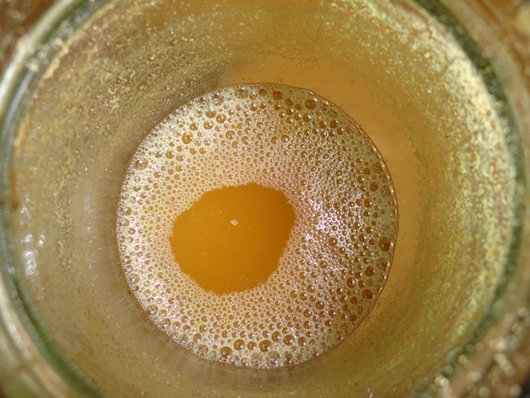
We had a nice supply of ginger beer going over Christmas. It's a delicious soft drink for young and old, although there is an alcoholic version that can be made with a slight variation on the recipe. Ginger beer is a naturally fermented drink that is easy to make - with ginger beer you make a starter called a ginger beer plant and after it has fermented, you add that to sweet water and lemon juice. Like sourdough, it must ferment to give it that sharp fizz. To make a ginger beer plant you'll need ginger - either the powdered dry variety or fresh ginger, sugar, rainwater or tap water that has stood for 24 hours to allow the chlorine to evaporate off. You'll also need clean plastic bottles that have been scrubbed with soap, hot water and a bottle brush and then rinsed with hot water. I never sterilise my bottles and I haven't had any problems. If you intend to keep the ginger beer for a long time, I'd suggest you sterilise your bottles. MAKING THE STARTER In a...
Image

NOT the last post

This will be my last post here.  I've been writing my blog for 18 years and now is the time to step back. I’ve stopped writing the blog and come back a couple of times because so many people wanted it, but that won’t happen again, I won’t be back.  I’ll continue on instagram to remain connected but I don’t know how frequent that will be. I know some of you will be interested to know the blog's statistics. 
Image

How to make cold process soap

I'm sure many of you are wondering: "Why make soap when I can buy it cheaply at the supermarket?" My cold process soap is made with vegetable oils and when it is made and cured, it contains no harsh chemicals or dyes. Often commercial soap is made with tallow (animal fat) and contains synthetic fragrance and dye and retains almost no glycerin. Glycerin is a natural emollient that helps with the lather and moisturises the skin. The makers of commercial soaps extract the glycerin and sell it as a separate product as it's more valuable than the soap. Then they add chemicals to make the soap lather. Crazy. Making your own soap allows you to add whatever you want to add. If you want a plain and pure soap, as I do, you can have that, or you can start with the plain soap and add colour, herbs and fragrance. The choice is yours. I want to add a little about animal and bird fat. I know Kirsty makes her soap with duck fat and I think that's great. I think t...
Image

Preserving food in a traditional way - pickling beetroot

I've had a number of emails from readers who want to start preserving food in jars but don't know where to start or what equipment to buy.  Leading on from yesterday's post, let's just say up front - don't buy any equipment. Once you know what you're doing and that you enjoy preserving, then you can decide whether or not to buy extra equipment. Food is preserved effectively without refrigeration by a variety of different methods. A few of the traditional methods are drying, fermentation, smoking, salting or by adding vinegar and sugar to the food - pickling. This last method is what we're talking about today. Vinegar and sugar are natural preservatives and adding one or both to food sets up an environment that bacteria and yeasts can't grow in. If you make the vinegar and sugar mix palatable, you can put up jars of vegetables or fruit that enhance the flavour of the food and can be stored in a cupboard or fridge for months. Other traditional w...
Image

Cleaning mould from walls and fabrics

With all this rain around we've developed a mould problem in our home. Usually we have the front and back doors open and that good ventilation stops most moulds from establishing. However, with the house locked up for the past week, the high humidity and the rain, mould is now growing on the wooden walls near our front door and on the lower parts of cupboards in the kitchen. Most of us will find mould growing in our homes at some point. Either in the bathroom or, in humid climates, on the walls, like we have now. You'll need a safe and effective remedy at some point, so I hope one of these methods works well for you. Mould is not only ugly to look at, it can cause health problems so if you see mould growing, do something about it straight away. The longer you leave the problem, the harder it will be to get rid of it effectively. If you have asthma or any allergies, you should do this type of cleaning with a face mask on so you don't breathe in any spores. Many peopl...
Image

Five minute bread

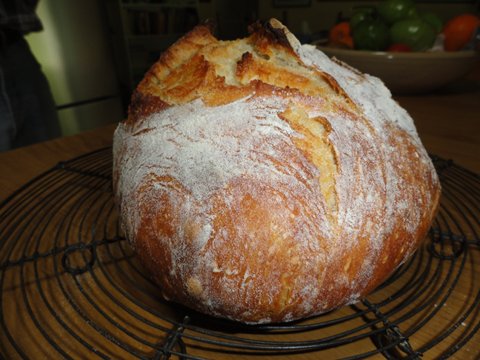
Bread is one of those foods that, when made with your own hands, gives a great deal of satisfaction and delight. It's only flour and water but it symbolises so much. I bake bread most days and use a variety of flours that I buy in bulk. Often I make a sandwich loaf because we use most of our bread for lunchtime sandwiches and for toast. Every so often I branch out to make a different type of loaf. I have tried sour dough in the past but I've not been happy with any of them. I'll continue to experiment with sour dough because I like the idea of using wild yeasts and saving the starter over a number of years to develop the flavour and become a part of the family. However, the loaf I've been branching out to most often is just a plain old five minute bread. By five minutes I mean it takes about five minutes actual work to prepare but it's the easiest of all bread to make and to get consistently good loaves from. If you're having people around for lunch or...
Image

This is my last post.

I have known for a while that this post was coming, but I didn't know when. This is my last post. I'm closing my blog, for good, and I'm not coming back like I have in the past.  I've been writing here for 16 years and my blog has been many things to me. It helped me change my life, it introduced me to so many good people, it became a wonderful record of my family life, it helped me get a book contract with Penguin, and monthly columns with The Australian Women's Weekly and Burke's Backyard . But in the past few months, it's become a burden. In April, I'll be 75 years old and I hope I've got another ten years ahead. However, each year I'll probably get weaker and although I'm fairly healthy, I do have a benign brain tumour and that could start growing. There are so many things I want to do and with time running out, leaving the blog behind gives me time to do the things that give me pleasure. On the day the blog started I felt a wonderful, h...
Image

What is the role of the homemaker in later years?

An email came from a US reader, Abby, who asked about being a homemaker in later years. This is part of what she wrote: "I am a stay-at-home mum to 4 children, ages 9-16. I do have a variety of "odd jobs" that I enjoy - I run a small "before-school" morning drop-off daycare from my home, I am a writing tutor, and I work a few hours a week at a local children's bookstore. But mostly, I cherish my blissful days at home - cooking, cleaning (with homemade cleaners), taking care of our children and chickens and goats, baking, meal-planning, etc. This "career" at home is not at all what I imagined during my ambitious years at university, but it is far more enriching. I notice, though, that my day is often planned around the needs of my family members. Of course, with 4 active kids and a husband, this is natural. I do the shopping, plan my meals, cook dinner - generally in anticipation of my family reconnecting in the evening.  I can't h...
Image

Every morning at home

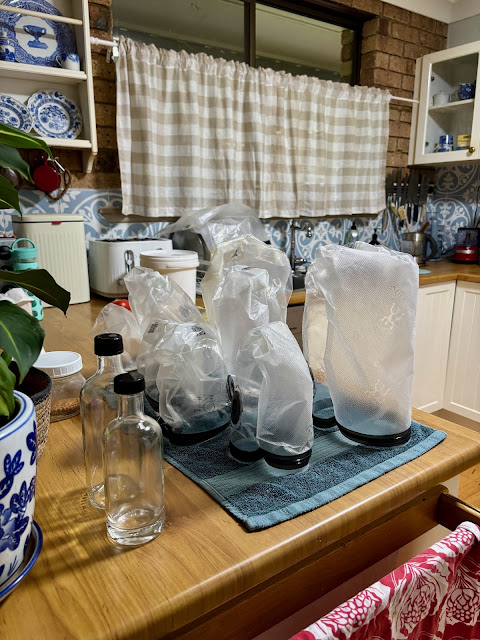
Every morning when I walk into my kitchen it looks tidy and ready for a day's work. Not so on this morning (above), I saw this when I walked in. Late the previous afternoon when I was looking for something, I came across my rolled up Zwilling vacuum bags and decided they had to be washed and dried. So I did that and although I usually put them outside on the verandah to dry it was dark by then. I turned the just-washed bags inside out and left them like this on a towel. It worked well and now the bags are ready to use when I bring home root vegetables, cabbages or whatever I buy that I want to last four or five weeks.
Image

You’ll save money by going back to basics

When I was doing the workshops and solo sessions, I had a couple of people whose main focus was on creating the fastest way to set up a simple life. You can't create a simple life fast, it's the opposite of that It's not one single thing either - it's a number of smaller, simpler activities that combine to create a life that reflects your values; and that takes a long to come together. When I first started living simply I took an entire year to work out our food - buying it, storing it, cooking it, preserving, baking, freezing, and growing it in the backyard. This is change that will transform how you live and it can't be rushed.  
Image

All previous blog posts

  • 2026 3
    • February 3
      • Workshops starting 1 March
      • Planting vegetable seeds and new workshops
      • Back where we belong
  • 2025 7
    • July 1
    • June 2
    • May 1
    • April 2
    • February 1
  • 2024 25
    • December 2
    • November 1
    • October 2
    • September 3
    • August 1
    • July 3
    • June 1
    • May 3
    • April 2
    • March 3
    • February 2
    • January 2
  • 2023 13
    • December 1
    • November 2
    • October 1
    • September 3
    • August 2
    • February 2
    • January 2
  • 2022 17
    • November 3
    • October 4
    • September 3
    • August 2
    • July 3
    • June 2
  • 2021 50
    • December 1
    • November 6
    • October 7
    • September 5
    • August 4
    • July 5
    • June 2
    • May 2
    • April 6
    • March 4
    • February 4
    • January 4
  • 2020 68
    • December 3
    • November 5
    • October 4
    • September 4
    • August 4
    • July 4
    • June 4
    • May 8
    • April 7
    • March 8
    • February 8
    • January 9
  • 2019 66
    • December 2
    • November 4
    • October 5
    • August 3
    • July 4
    • June 6
    • May 8
    • April 8
    • March 8
    • February 11
    • January 7
  • 2018 82
    • December 1
    • September 2
    • August 10
    • July 4
    • June 11
    • May 9
    • April 12
    • March 10
    • February 10
    • January 13
  • 2017 129
    • December 7
    • November 10
    • October 6
    • September 13
    • August 11
    • July 13
    • June 12
    • May 9
    • April 9
    • March 14
    • February 11
    • January 14
  • 2016 125
    • December 7
    • November 13
    • October 10
    • September 11
    • August 11
    • July 8
    • June 9
    • May 9
    • April 12
    • March 10
    • February 13
    • January 12
  • 2015 184
    • December 7
    • November 15
    • October 20
    • September 18
    • August 19
    • July 18
    • June 12
    • May 15
    • April 12
    • March 21
    • February 13
    • January 14
  • 2014 203
    • December 11
    • November 8
    • October 17
    • September 20
    • August 17
    • July 19
    • June 17
    • May 17
    • April 23
    • March 15
    • February 18
    • January 21
  • 2013 225
    • December 13
    • November 17
    • October 17
    • September 17
    • August 21
    • July 24
    • June 20
    • May 19
    • April 17
    • March 22
    • February 17
    • January 21
  • 2012 245
    • December 17
    • November 20
    • October 20
    • September 18
    • August 15
    • July 24
    • June 21
    • May 26
    • April 23
    • March 23
    • February 19
    • January 19
  • 2011 257
    • December 18
    • November 24
    • October 27
    • September 23
    • August 24
    • July 21
    • June 24
    • May 24
    • April 16
    • March 22
    • February 14
    • January 20
  • 2010 283
    • December 20
    • November 18
    • October 18
    • September 19
    • August 25
    • July 24
    • June 25
    • May 26
    • April 25
    • March 22
    • February 29
    • January 32
  • 2009 293
    • December 29
    • November 18
    • October 23
    • September 25
    • August 22
    • July 28
    • June 22
    • May 21
    • April 27
    • March 26
    • February 24
    • January 28
  • 2008 387
    • December 24
    • November 23
    • October 25
    • September 26
    • August 27
    • July 27
    • June 37
    • May 34
    • April 44
    • March 53
    • February 32
    • January 35
  • 2007 372
    • December 37
    • November 40
    • October 55
    • September 51
    • August 49
    • July 63
    • June 49
    • May 28


Trending Articles

NOT the last post

This will be my last post here.  I've been writing my blog for 18 years and now is the time to step back. I’ve stopped writing the blog and come back a couple of times because so many people wanted it, but that won’t happen again, I won’t be back.  I’ll continue on instagram to remain connected but I don’t know how frequent that will be. I know some of you will be interested to know the blog's statistics. 
Image

Every morning at home

Every morning when I walk into my kitchen it looks tidy and ready for a day's work. Not so on this morning (above), I saw this when I walked in. Late the previous afternoon when I was looking for something, I came across my rolled up Zwilling vacuum bags and decided they had to be washed and dried. So I did that and although I usually put them outside on the verandah to dry it was dark by then. I turned the just-washed bags inside out and left them like this on a towel. It worked well and now the bags are ready to use when I bring home root vegetables, cabbages or whatever I buy that I want to last four or five weeks.
Image

You’ll save money by going back to basics

When I was doing the workshops and solo sessions, I had a couple of people whose main focus was on creating the fastest way to set up a simple life. You can't create a simple life fast, it's the opposite of that It's not one single thing either - it's a number of smaller, simpler activities that combine to create a life that reflects your values; and that takes a long to come together. When I first started living simply I took an entire year to work out our food - buying it, storing it, cooking it, preserving, baking, freezing, and growing it in the backyard. This is change that will transform how you live and it can't be rushed.  
Image

Creating a home you'll love forever

Living simply is the answer to just about everything. It reduces the cost of living; it keeps you focused on being careful with resources such as water and electricity; it reminds you to not waste food; it encourages you to store food so you don't waste it and doing all those things brings routine and rhythm to your daily life. Consciously connecting every day with the activities and tasks that create simple life reminds you to look for the meaning and beauty that normal daily life holds.  It's all there in your home if you look for it. Seemingly mundane tasks like cleaning and cooking help you with that connection for without those tasks, the home you want to live in won't exist in the way you want it to.  Creating a home you love will make you happy and satisfied.
Image

Time changes everything

I've been spending time in the backyard lately creating a contained herb and vegetable garden. My aim is to develop a comfortable place to spend time, relax, increase biodiversity and encourage more animals, birds and insects to live here or visit. Of course I'd prefer my old garden which was put together by Hanno with ease and German precision. Together, we created a space bursting at the seams with herbs, vegetables and fruity goodness ready to eat and share throughout the year. But time changes everything. What I'm planning on doing now, is a brilliant opportunity for an almost 80 year old with balance issues. In my new garden I'll be able to do a wide range of challenging or easy work, depending on how I feel each day. It’s a daily opportunity to push myself or sit back, watch what's happening around me and be captivated by memories or the scope of what's yet to come.
Image

It's the old ways I love the most

I'm a practical woman who lives in a 1980’s brick slab house. There are verandahs front and back so I have places to sit outside when it's hot or cold. Those verandahs tend to make the house darker than it would be but they're been a great investment over time because they made the house more liveable. My home is not a romantic cottage, nor a minimalist modern home, it's a 1980’s brick slab house. And yet when people visit me here they tell me how warm and cosy my home is and that they feel comforted by being here. I've thought about that over the years and I'm convinced now that the style of a home isn't what appeals to people. What they love is the feeling within that home and whether it's nurturing the people who live there.
Image

Back where we belong

Surprise! I'm back ... for good this time. Instagram became an impossible place for me. They kept sending me messages asking if I'd make my page available for advertisers! Of course, I said no but that didn't stop them. It's such a change from what Instagram started as. But enough of that, the important part of this post is to explain why I returned here instead of taking my writing offline for good. For a few years Grandma Donna and I have talked online face-to-face and it's been such a pleasure for me to get to know her. We have a lot in common. We both feel a responsibility to share what we know with others. With the cost of living crisis, learning how to cook from scratch, appreciate the work we do in our homes, shop to a budget and pay off debt will help people grow stronger. The best place to do that is our blogs because we have no advertising police harassing us, the space is unlimited, we can put up tons of photos when we want to and, well, it just feels li...
Image

Making ginger beer from scratch

We had a nice supply of ginger beer going over Christmas. It's a delicious soft drink for young and old, although there is an alcoholic version that can be made with a slight variation on the recipe. Ginger beer is a naturally fermented drink that is easy to make - with ginger beer you make a starter called a ginger beer plant and after it has fermented, you add that to sweet water and lemon juice. Like sourdough, it must ferment to give it that sharp fizz. To make a ginger beer plant you'll need ginger - either the powdered dry variety or fresh ginger, sugar, rainwater or tap water that has stood for 24 hours to allow the chlorine to evaporate off. You'll also need clean plastic bottles that have been scrubbed with soap, hot water and a bottle brush and then rinsed with hot water. I never sterilise my bottles and I haven't had any problems. If you intend to keep the ginger beer for a long time, I'd suggest you sterilise your bottles. MAKING THE STARTER In a...
Image