down to earth

  • Home
  • About Us
  • Down To Earth Book
  • Privacy Policy
After the big upheaval of replacing two cupboards under the kitchen sink, but having to rip out the entire kitchen and floor to do it, we're finally back to normal. Yesterday felt like the first regular day I've had here for about a month. I knew that I could cook, preserve and move the final things back to their rightful places and when all that was done, all was well in my world.

I've written before about the work involved in living simply. There is a lot of it because you stop using money to buy convenience. That's okay when everything is going according to plan, but when your home is turned upside down, that, my friends, tests the patience of Job and makes even the simplest of living, complicated. But now all that is behind us and we can live as we choose again, taking each day with what it offers us while trying to stay true to our values.

So how did I spend my first return to normal day? I worked and enjoyed the familiarity and gentle rhythms of it. After finishing my post yesterday, I made breakfast for us both. Hanno had been sitting on the sofa talking to me and commenting on the news while I sat typing. By the time I'd made us tea and toast, he'd fallen asleep on the sofa, so I left him to regain his strength after a busy day on Friday. He took the community bus into Brisbane and collected a full load of food from the food bank for our emergency food relief program at the Centre I work at. That's a tough job. You go around a warehouse with a big steel trolley and collect food which is packed in the bus, driven back and packed onto shelves at the Centre.

So as Hanno snoozed on the sofa, I tidied the kitchen, made the bed, cleaned the bathroom and then made him another breakfast when he woke up. I tidied the kitchen again, made bread and cut up and salted cucumbers and eggplants for preserving later in the day. I visited Mary on her nest and discovered she's been eating eggs! Not the 12 precious Wyandotte eggs, but I think she's been laying an egg and then eating it. She had egg on her beak and I found her going back to sit on her eggs. It's almost impossible to stop chickens eating eggs when they get the taste for it, but I'm giving Mary the benefit of the doubt and thinking that she needs extra protein for her mothering duties. She's not eating properly, nor drinking, and I suppose her own eggs seem like a quick pick-me-up. I'll have to keep an eye on her and make sure she doesn't start pecking on the Wyandotte eggs or those the other chooks lay.

I did a bit of work in the garden, had a cool drink while I answered a couple of emails and checked in here, then vacuumed a floor rug I'd started cleaning the day before. The rug was then set in its place on the floor again, almost as fresh and clean as the day we bought it.

I cleaned the rug with bicarb soda and a splash of fragrant oil.

I buy bicarb in 5 kilo bulk bags and store it in this little trash can the kids used to store some of their Lego in. This rug takes two cups of bicarb - that would be about 500 grams, or a pound, a splash of any fragrant oil is optional. Our dogs sit on this rug so I like to add the oil to get rid of any doggy smells. The bicarb in itself is good at removing odour, so if you have no oil, or don't like adding extras, you could just as easily leave it out. Add the two cups of bicarb to a bowl and add the oil. With your hands, crush as many of the lumps as you can while rubbing the oil into the powder.

Take hand fulls of the bicarb and thrown it on the rug trying for an even spread.


With a stiff brush or broom, rub the bicarb into the rug pile.


Then leave it in the sun for the rest of the day. The sun helps with sanitising. Lucky I brought this in as we had a torrential downpour of rain overnight. Twenty-four hours later I thoroughly vacuumed up as much of the bicarb as possible. I had to shake the rug a few times, sometimes I put it on the clothes line and belt it with the broom to get rid of all the powdery bicarb.

When all the powder was gone, I replaced the rug so the dogs can make it dirty again. ; ) If you have light stains on a rug, they can be removed by making a paste of the bicarb and applying that to the stain. Rub it into the pile properly and allow to dry. Then vacuum off. This is a good way of cleaning a rug without using harsher chemicals.

After lunch of freshly baked bread with salad and lemon cordial, I washed off the salted vegetables and made bread and butter cucumbers
and eggplant relish. I had neither the time nor the desire to process them in a water bath after they were done, so that is a job I'll do this morning. The relish will take a few months in the stockpile cupboard to develop it's true flavours, most of the cucumbers will be given as Christmas gifts.

BTW, in the photo below, I also feature one of the lovely beeswax candles Niki made and sent in a box of goodies as a Christmas gift. I always have a candle sitting on the table with matches nearby, during our storm season. There is the possibility of a blackout with every storm so the candle is our first means of light when the power goes off. I will light both the Niki candles when we have an early Christmas dinner with our sons soon. Thank you for your thoughtfulness, Niki.


After my cooking session, Hanno and I watched another one of our free DVDs - Ocean's Eleven. Pfffffffft, it was really boring. I think Hanno enjoyed it but I was more intent on my knitting and then wandered off to do this and that. I'm knitting dishcloths for my Wyandotte friend, Helen. I hope to have a nice package to send off to her in January.

Hanno painted a cupboard for me last week. It's gone from greyish green to white. I like the idea of adding these painted layers and hope in some future time someone in my, as yet unborn, family will be tending these shelves, uncover the colours laying one under the other and wonder the who, when and why of their painting. Yesterday I replaced some of the things that usually sit on the top shelves; my cooking books and magazines will have to wait for another week as I want to make sure the paint is rock hard before replacing them.

It's very satisfying caring for my home and replacing these things. As I worked I went back and forth, outside and inside, and at day's end I was pleased with what I'd done. Our home looked right and that always makes me feel I've done my best and respected our choice to live as we do.

We had a light dinner of eggplant omelettes, green bean salad and tomatoes and when I went to bed I slept like an old log. This deep and sound sleep is the reward for the work of a simple life. As I drifted off, I felt content with my day and looked forward to getting up and doing it again. Today will be different, each day has its own gentle rhythms where one thing leads to the next and the work is punctuated with periods when we sit and relax, talk and make plans for what will come to us in the future.

Thank you for visiting me again. I hope you enjoy what you do today.

I love you people! I love the support you've given me and my blog, it truly astounds me that it's become so popular. A few weeks ago I added the Amazon book widget to my side column. I tried to make it inconspicious for those not interested but as interesting as possible for those who were. I've just checked my account for the first time since I added it, and my readers have bought over $270 worth of books and DVDs through my account. That gives me a commission of just under $20. Not much, but it means more to me than the dollars and cents.

I love the simple things this life presents, and generosity is one of the simple values I treasure most of all. How grateful I am to everyone who have bought their books and DVDs, silently and without fanfare. It is that quiet and tender grace that I appreciate so very much.

Thank you for taking the time to visit me today and to all those who have used my Amazon portal, I thank you sincerely for your generosity.


This is a continuation of the previous post.

Before
you rush off to stock your stockpile cupboard, do a bit of research and find out which is your closest and cheapest supermarket. This will be your base surpermarket. For me it's Aldi. There we buy as much as we can. There are no special prices at Aldi, their prices are consistently low and generally about 30% lower than either Woolworths or Coles, which are the main supermarkets here. My next supermaket is IGA and that is where I top up my fresh foods like milk, fruit and vegetables. The IGA is close to where I work, so when I go to my volly job on Monday and Tuesday, I buy whatever it is we need that week. I won't shop at Woolworths or Coles, but if you do, check out which has the best prices.


This is the little pantry I keep my spices and seasonings in. They're all sorted in different trays - peppers, chilli and hot spices, general dried herbs like rosemary and thyme, and sweet spices, like nutmeg and cinnamon.

You will find that most supermarkets will have a large stable of groceries and food they put on special regularly over a period of about three months. All those foods will be on special at various times during those three months and you should try to work out when your supermarket cycles their specials. Then when something you need comes on special, buy as much as you need to carry you through until it comes on special again, or as much as you can afford. When I started stockpiling, I put aside an amount of money to build up my stockpile while I was doing my regular shopping once a week. As the stockpile grew, I could shop less often, now we shop once a month but could go longer if we needed to.


Be aware that not everything you buy will go on special. Things like vanilla extract, baking goods and old fashioned products rarely do. These things you'll buy at your cheapest supermarket.


When you buy anything check the use by or best before dates, as well as the packaging. Never buy old food or anything with damaged packaging unless you plan on using it straight away. If you want to try anything new, buy only one until you're sure you like it and would buy it again.

When you have your stockpile working well, make sure you look after it. Make sure there are no rodents, bugs or water what could ruin your food. Add new food at the back and always take from the front, as that will rotate your stock. And every so often, go through your stockpile make sure everything is okay, there are no leaks and your home processed food is not mouldy.

If you use your stockpile wisely, and in conjunction with your own vegetable garden or the fresh fruit, vegetables and dairy food you buy, you'll be able to cook a wide variety of healthy food for your family. Adding other useful elements like meal plans, once a month cooking and price books will make the organisation and buying of your food much easier. I have posts on these things back in the archives.

Don't forget that you can add homemade food to your stockpile as well. We often blanch and freeze excess vegetables so we have them on hand most of the year in the freezer. I also use our home grown fruit and vegetables to make relish, various chutneys, sauces, jams, pickles and sweet fruit. All these are made to the recipes I've been using for years, processed in a water bath and stored for up to a year in the stockpile cupboard. Please make sure you know what you're doing when you process your own food as doing it without any knowledge is extremely dangerous. Check out my posts on food processing in the preserving archives.

So now I'm off to add more jars to my stockpile cupboard. Almost all our homemade preserves have been eaten and now it's summer, I'm back to preserving food for the stockpile again. Today I'm making eggplant relish and bread and butter cucumbers. If I don't we are in danger of drowning under them. This is a busy, but very satisfying, time of year for me as I get to add a lot of interesting food alongside the supermarket food we buy.

Good luck with your stockpiling and if you can, let me know
how you go with it.
It seems the price of food and fuel is creeping up every week. Now that many are buying Christmas food and gifts as well, it's a good time to remind you about stockpiling. If you already have a healthy stockpile, and I know many of you do, you could easily stop buying groceries over the Christmas period, live from your stockpile and use your grocery money to buy the special foods you like at Christmas. That's one of the advantages of stockpiling, it helps you through periods when money is a bit tight.

The other advantages are:
  • you'll save all that time you spend grocery shopping. When your stockpile is fully operational, you'll only need to top it up and buy the fresh foods like milk, meat, fruit and vegetables.
  • you'll save money because much of what is in your stockpile cupboard will be bought on sale.
  • if there's an unusual family situation - you are sick, your partner is out of work, your children need much more of your time for school projects, sports etc, you'll know you can still feed everyone with what's already in your home, sitting in the stockpile cupboard.
  • if there is a national emergency - floods, cyclones, terrorist attack, bush fires, you won't need to go out as you'll have all your provisions safely stored at home.
The main idea behind stockpiling is that you work out what it is you usually eat and use in your home, everything that can be stored safely in a cupboard or freezer, and over time, buy those things when they're on sale and store them in a special cupboard. It will be your own private supermarket, open 24/7, with all items on special.

Your first step is to work out what you need to store. The easy things to think of are soap, toilet paper, tissues, toothpaste, toothbrushes, cleaning products - or if you make your own, the makings for them, like bicarb, cheap white vinegar, borax, washing soda and laundry soap. If you don't make your own green cleaners, look here for my recipes. They will save many dollars or pounds off your grocery bill, they're much healthier for you, your family and the planet, and they store well.

Then work out your food list. The key to a successful stockpile is to include only what you know you'll eat and will use. There is absolutely no use in buying a great bargain, then stockpiling it, if you don't eat it. If you bake your own bread, include bread flour, seeds and yeast; if you bake your own cakes and biscuits, include things like sultanas, dates, brown sugar, cocoa, choc chips, nuts etc. But also make room for baked beans, tinned salmon and tuna, honey, milk powder, olive oil, malt vinegar, wine vinegar, seasonings, dried pasta, sugar, peanut butter, and for all us Australians, Vegemite.

This is my pantry. You'll notice there are few packages of food, it's all open and stored in jars. All this food is what we are currently eating.
This is my stockpile cupboard. All these things are unopened and waiting to be used sometime in the future. Read about the difference between these two cupboards below.

When you know what you need to buy, work out where you will store your food. If you're like me, you'll have a few different spaces. And let's talk here about the difference between a pantry and a stockpile cupboard. The pantry is where you keep everything you are currently using - the things that are open and being used every day. The stockpile cupboard contains unopened items that are being stored for future use. When you take something from the stockpile cupboard and open it, it is then stored in the pantry - preferably in a glass jar. So I store food being used now in the pantry; food stored for future use - tea, coffee, sugar, tinned fruit, honey, milk powder, peanut butter, jam etc., in the stockpile cupboard; spices and seasonings in a small cupboard in the kitchen; sauces used for cooking in a cupboard over the stove; dried goods in a large chest freezer in the second bathroom (I'll explain this soon); toiletries in the bathroom, cleaning products in the laundry and butter, frozen homegrown vegetables, dog meat and made up dog food in the fridge freezer. As you can see, stockpiling is an organic thing that tends to fit in where ever you have space. Don't be afraid to store your stockpiled goods in the bedroom or garage if you have no room near your kitchen. Your pantry needs to be in the kitchen because you're using those food everyday, the stockpile doesn't.

The sauce pantry - all these are being used.


Generally we don't eat meat - I never eat it and Hanno eats it occasionally. We buy meat when we have our sons over for dinner, or when Hanno craves it. That's maybe four or five times a year, but we also buy dog meat every couple of months and make up our own dog food - meat, rice, lentils or pasta and vegetables. Our dogs have eaten this all their lives, they are now 13 and almost 12 and they're very healthy. The recipe is here. Whatever meat we have is kept in the fridge freezer.

Our chest freezer is energy efficient, costs very little per year to run and is full of dried goods like bread flour, self raising flour, nuts, seeds, pasta, cornflour, lentils, rice and leftover bread. We live in a humid climate and this is the best way we've found to store dried food for a long time. If the power goes off, it doesn't matter as nothing in there will spoil.

When you buy dried goods like those listed above, it's a good idea to put them in your freezer for a few days to kill off any bug larvae that happen to be in there. It's a horrible thought that they are there, but they usually are. If you've ever wondered how weevils or pantry moths can hatch out in a sealed container, it's because the larvae were in the product when you bought it. Freezing will kill them. Yes you will end up eating them, but they won't do you any harm and you won't know anyway. LOL

This post is getting pretty long so I'll carry on in another post. So far we've talked about the advantages of stockpiling, the difference between a stockpile and a pantry, what types of products to stockpile and where to store your products. Next we'll talk about how to get the best value for your money and how to look after your stockpile. I'll be back soon with the conclusion to this stockpiling post.

I came across a new blog that you might be interested in. Belinda's Simple Life is fairly new but she has some good ideas and she is a clear and intelligent writer. I have added Belinda to my blog roll. Check it out and see what she is doing with orange bags, it's brilliant. : )
Many vegetables can be grown successfully in pots or containers. I am currently growing a couple of heirloom tomatoes in large pots and I also have a selection of potted herbs. The tomatoes don’t look wonderful but we’ll get a few kilos of tomatoes from them. If you're new to gardening, start off with a couple of potted herbs. They're be a great introduction to gardening for you and what you learn from them will help later if you grow vegetables.

There are a few factors you need to be mindful of
when growing vegetables and herbs in pots:
  • Generally the size and health of the root ball will determine the amount of vegetables harvested, so if you want to grow large vegetables look for large containers that will allow the roots to spread a little.
  • You’ll need a good quality potting mix, or an ordinary potting mix with compost and old manure added. Do NOT use garden soil. It doesn’t drain well and the roots will suffocate.
  • It is better to grow your vegetables in potting mix that’s been enriched with compost or old manure rather than planting in poor quality mix and then applying fertiliser.
    There is an old gardeners idiom: feed the soil, not the plant. This is wise advice.
  • Look for dwarf varieties of the large vegetables you wish to grow. You can get heirloom dwarf tomatoes, short carrots and golden nugget pumpkin is a bush rather than a vine. Do a bit of research about the smaller varieties you like to eat.
  • Think about growing up a trellis, it will maximise your space. One cucumber seedling in a pot with a trellis will give you more than enough cucumbers for two people.
  • Consistent watering is essential. When a plant is in the ground, its roots will go looking for moisture. This can’t happen in a pot so the plant will totally rely on you for water.
  • Make sure all your containers have a lot of drainage holes. If you’re planting in buckets or polystyrene boxes, drill drainage holes in the base. The long polystyrene boxes are good for planting a row of lettuce or short carrots.
  • Try to stand you container up on bricks off the soil. That will assist drainage and help reduce the number of worms in your pots. The worms will still get in, but not as many. While worms are a wonderful addition to your soil garden, you don’t want worms in your pots. They turn the mix into sludge and water tends to drain out too fast through their burrowing holes.
  • If you’re in a hot climate, locate your containers where they will get sun up till about 2pm, then shade.
  • When the plants have grown a bit, add mulch to help keep the moisture in.
  • Water every second day, depending on your location.
  • Apply seaweed tea when you plant.
  • If you have worm tea, add that every week but make sure it is a weak brew.
  • Apply weak liquid fertiliser to the green leafy vegetables every week.
  • Apply a spoon full of sulphate of potash when you plant to the flowering vegetables like tomatoes, pumpkins and cucumbers.
  • Don't over fertilise your fruiting vegetables, like tomatoes, peppers, cucumbers. It will cause your plants to produce lush green leaves at the expense of fruit.
  • Don’t sit your containers in drip trays. They must drain freely. If you have the containers indoors, stand them on bricks or pebbles over the tray so the pot is out of the collecting water.

You’ll be able to produce good vegetables in containers but you’ll have to look after your plants well. They’ll require more care than vegetables in the ground, as they’re reliant on you for all their needs. But if you can give them some time and effort they will reward you with fresh food. Good crops don’t just come from great gardens, they also can be produced in containers with a little extra care.


The kitchen is slowly coming to life again and I'm really enjoying working there. I'm still getting used to baking in an electric oven, I burnt my first loaf of bread in the new oven = : O , but it's just a matter of slowly working with the new and getting used to the settings.

I took advantage of the upheaval to scrutinise how I work in my kitchen and thought carefully about changes. For the past few years, every six months or so, I look at how I do my chores and how we use our indoor and outdoor spaces, and then, if they need it, modify them to improve what I do or how we use particular areas. By doing these mini audits I've slowly improved how I work and made changes that make working easier. It's a good habit to get into because I weed out what doesn't work and replace it with something more functional.

But I never did that in the kitchen because it always felt like too much of a task. I knew there were areas that needed changing and I could improve the flow of my work, but I didn't want to change it. I knew that doing one cupboard would lead to another and I'd have the entire kitchen upside-down. So I just ignored it.

Until now.

And now I wish I'd done it years ago because the changes are so good. I swapped the plates with the saucepans, so now the plates that we use all the time are in a slide out drawer and the pots that are used maybe once a day are in a lower cupboard. We also had the cat food tins in with the good glasses. Why! They've been moved to the stockpile cupboard and now when I need something in that cupboard I won't we moving a carton of cat food. Some things are so familiar they are only obvious in retrospect.

I modified the shelves in the pantry to make things more accessible and slightly tweaked other areas. I've tried to place things close to where they will be used. I don't care if they might look out of place because I want the kitchen to be easy to work in and I believe a functional kitchen is beautiful. So as you can see in the photo below, the dishcloths are in an old metal container on the window sill close to the sink.

The dishcloth on the top here was sent to me with some Christmas decorations and herbs by my good and kind friend, Niki. Thank you Niki. They will be lovely reminders of you to use in the coming year.

We still tweaking the windows. I haven't yet sewn the top valance for the curtains but the lower curtains are hanging. Hanno attached them too low at first, now they're too high but I'll live with them happily until he feels like lowering them again. LOL

And most of the things on the window sill won't stay there but haven't quite made it into a cupboard yet. We'll get there eventually.

I'm happy with what we and the workmen have done. I'm very happy with the quality of their workmanship and in some areas they've significantly improved what was there. We hope these improvements and modifications will serve us well in the coming years as we don't want to change it again anytime in the foreseeable future.

Hmmmm, I must get that kettle down from the top of the cupboards, it, like the cat food, has been sitting there for donkey's years (and I'm not really sure why). : )


Every gardener needs an assistant, and I have Alice. She follows us around the garden and loves to eat fresh tomatoes and carrots, just picked. In the photo above, she was told to "sit", but she kept a sharp eye on me while I took photos. LOL She is behind the potatoes and in front of the tomatoes.

The garden is suffering from the neglect of the past two weeks. There are no major problems there but the general day to day business of removing dead leaves, collecting vegetables every afternoon and tidying up has made way for a busy week at my voluntary job and the kitchen renovations. Today we will put in the work to bring the garden back to being the productive patch we need and want it to be.

These purple heirloom eggplant well illustrate the lack of time spent out there over the past week. They're too big, turning green and would be terrible in a vegetable lasagna. The taste would still be there but they'd be rubbery and tough. I'll be using these for eggplant relish that I hope to make this afternoon. In a relish, all mashed up and combined with spices and onions, like most vegetables, they'll make a great relish and can be stored in the cupboard for eating later in the year. Waste not, want not.
They'll be followed by these little sweet eggplant that will be perfect for eating next week.
New eggplant are forming every day.
There is a wall of tomatoes out there too. I forget what type these are but they're one of the large heirlooms, possible beefsteak or mortgage lifter. The flowers are forming and soon I'll be able to tell with more certainty. One of my jobs today will be to tie these back as they're falling over themselves and are starting to grow along the ground. That's not good here as we do have problems with wilt.
We are also growing tomatoes in the aquaponics garden - there we have an heirloom dwarf red fig tomato and a couple of other smaller types. I intend preserving at least a dozen jars of tomato relish this year, recipe here. We enjoy that with salad, as a pizza base and on cheese sandwiches. I also hope to make up 10 or so jars of tomato sauce. The sauce I did last year matured to perfection and was a real treat on plain fresh pasta with a green salad.
I love the following photo. This is a Lebanese cucumber that has fallen from its trellis and is dribbling along the ground. You can see that at every leaf junction there is a sweet juicy cucumber forming. That's great news in itself, but I have at least 30 cucumbers in the fridge, so when I make the eggplant relish I'll also use most of those cucumbers for bread and butter cucumbers. It's one of my regulars and you'll find a post about them, and the recipe, here.
This is a better photo of the cucumber vines. They're mixed in happily with celery, eggplant and tomatoes.
These yellow zucchinis are growing well now. These are the first fruit. We'll eat these as zucchini flower fritters, zucchini omelettes and souffles.
You can never have enough lemons. Thankfully the tree is full again and will produce well for the next nine months. I'll use the lemons for drinks, desserts and in general cooking - I often add a dash of lemon juice.
The green beans are almost finished and we've been enjoying their bounty in bean salad for the past few weeks. I've also blanched and frozen a few kilos in small batches. The photo below shows them tangled in with the choko vine - the little yellow flowers are choko flowers, which is producing its first fruit this season, and the pigeon peas which are flowering well after being cut back after harvest two months ago.
So now I'll have breakfast and get out in the garden before it gets too hot.
Thanks to everyone who comes here to read. I love getting your feedback in comments and emails. There has been a big jump in readers this week, so hello and welcome to all the new folk. I hope you enjoy your time here.
LATE ADDITION:
I've been asked for the eggplant relish recipe, so here it is:
  • 2 large eggplant cut into 1 inch pieces
  • 1 teaspoon salt
  • ¼ cup olive oil
  • 2 cloves crushed garlic
  • 2 onions, coarsely chopped
  • 2 red capsicum (pepper), chopped coarsley
  • 2 cups chopped celery
  • 2 cups chopped and skinned tomatoes
  • 2 tablespoons sugar
  • 2 tablespoons malt vinegar
  • salt and pepper to taste
Cut the eggplant into cubes, sprinkle about a teaspoon of salt over it and let it stand at least 30 minutes. After that time, rinse well under cold water to wash off the salt and allow to dry. This removes any bitterness from the older eggplants. Heat ¼ cup oil in a deep heavy skillet over medium-high heat. Add dry eggplant and cook until tender and golden. Remove and set aside. Add the garlic and onions and cook until softened. Add celery, tomatoes, peppers and eggplant and cook uncovered for about 15 minutes. Combine vinegar with sugar and add to vegetable mixture. Simmer uncovered for about 15 - 20 minutes or until mixture is thick and the flavors are well developed - add salt and pepper.
This will keep in the fridge, with no further processing, for about six weeks. To keep it longer, add the hot relish to warm clean jars, seal and place in a water bath. Bring to the boil and keep on 90 - 95C (194F) - 95C (203F) for 45 minutes. Remove jars from bath and allow to cool overnight before wiping and placing in the stockpile cupboard.

When the seasons change from cool to warm, I take the doonas (quilts/duvets) from our beds and take time out to organise our linen cupboard. I believe it's an important part of my homemaker's responsibilities to properly care for everything that is used in our home. Our hard earned money has been used to buy or make the sheets, doonas, towels, napkins and tablecloths we use and I want them to last as long as possible and to look fresh and lovely when we use them. So when the seasons call me to take the doonas from the beds, and when they are returned to the beds again, I organise the linen cupboard.

If possible, try to have a separate linen cupboard where you keep sheets, pillowslips, towels, face washers, tablecloths, napkins and any other household linens you may have. The shelves or drawers should be painted or lined as untreated wood may stain whatever is on it.

The shelves
at eye height and within easy reach should be used to store your most frequently used linens. Experiment with the folding of each item so that you use your shelves efficiently. How to fold a fitted sheet. Always put the folded side to the front so that the closet will look neat each time you use it.

Sheets and towels
I
keep sheets of the same size and shape together, but you could also sort your sheets into sets and keep them together. Try to keep three or four sets of sheets, wash them weekly or fortnightly after use, fold them to your requirements and store at the bottom of the sheet stack in the cupboard. Always take your clean sheets from the top of the stack. Rotating your three or four sheet sets like this will keep them looking new and fresh for years.

Sort your towels into colours and sizes and stack them on the shelf with the folded side to the front
. Take new towels from the top and put clean towels back into the stack at the bottom. Rotate them as you do with your sheets.


I have a strange habit of rolling my fitted sheets but it's much easier to lay them flat.

Wash your towels every week and hang them in the sun to dry. Before you hang them on the line, shake them to loosen the pile. Shake them again when you take them off the line and just before you fold them. This fluffs up the pile and softens the terry cloth.

I wash all our laundry, including towels and sheets, with homemade laundry powder and add a little white vinegar in the final rinse. This softens them and helps remove all traces of laundry powder. The towels will come out smelling slightly of vinegar but when they are dry the smell is completely gone.

Doonas, duvets, quilts and blankets
Depending on where you live you’ll either be using your doonas and blankets or you’ll have them stored in the cupboard. If they are to be put away for a period of time, try to find a fabric or plastic bag to store them in. The rectangle plastic zippered covers that doonas are often sold in are an ideal second use for the packaging that would otherwise be thrown away. If you don’t have one of these bags, you could make a large calico bag.

Make sure your blankets, quilts or doonas are clean
before you store them. Storing anything with a spill on it will attract silverfish and cockroaches. Check the care instructions on the blanket or doona and, if possible, wash it gently and dry outside. If the blankets are woollen, make sure you wash them in cool to warm water and dry them in the shade. Adding a splash of eucalyptus oil or washing in wool wash will protect the wool from moths.

Herb Bags
Small calico, cotton or linen bags containing herbs or leaves you like the smell of can be easily made and are very useful in a linen cupboard. Any herb with a strong aroma is suitable. I use bay leaves, lavender, mint, rose petals, rosemary and lemon myrtle leaves. You can either sew small bags containing the herbs or just use an old handkerchief and tie the herbs in with a small piece of ribbon.

Packing the shelves
Towels and sheets, tablecloths and napkins should be at eye level because you use them frequently. Use your top and bottom shelves for items like doonas and blankets that you don’t use often. Take some time to organise your linen cupboard and learn how to fold your linens correctly. It will make the cupboard easier to look after, it will look organised and functional each time you go to it and it will be a pleasure to use.

When you take the time to organise your cupboard, check your linens for wear and tear. There will be times when you'll need to remove a
towel or sheet because it will be too damaged to use. If the item is pure cotton or linen, cut it up for cleaning cloths instead of throwing it away. If it's a poly/cotton blend, you may be able to patch it together to make fabric storage bags for your quilts or blankets. Always try to reuse these things in some way instead of throwing them out.

Caring
for your linens is a small part of caring for your family and your home. It is a simple and ordinary task that can be an a silent and private expression of love for you family, the respect you have for your role of homemaker and the importance you place on caring for what you own.

There was a time when I would have been extremely bored waking up in the morning and knowing every single thing that would happen to me that day. Now, that is what I hope for. I love knowing every nook and cranny of my home. I love doing the same thing at the same time, I relish the familiarity of it all. I don’t have to think too much about what will crop up, there is no anxiety about not knowing, and the day rolls along with one thing following the other and minute by minute the hours become another day. A day spent at home.

The strangest part of this kind of familiarity is that it feels fresh every single day. I rise, shower, write, eat breakfast, bake bread, work in the garden, sew or knit, care for the animals and do my general chores every day, and each time it feels new and that this day is one of a kind. It never gets boring; it gets better.

One reason I have grown so comfortable with this kind of life is that my home is like my work of art. I hope it will become my masterpiece. I believe that I have done the best work of my life at home. I might not have been paid for it, but it paid off in many ways money never could have. Hanno and I have created a shelter here for ourselves, our family and friends. We have a home that is more than a place to sleep and store our possessions, it nourishes us, in both body and soul.

We have turned our very ordinary brick house on a one acre block into a home that we thrive in. It is our own mini world. We have organic vegetables growing in the backyard. There are fish swimming in aquaponics tanks. Rainwater has been harvested from the roof tops and on that same roof, the sun is heating our water. Fruit is growing to juicy maturity; plump chooks are laying eggs every day and soon they will hatch baby chickens. Thousands of worms devour our organic waste and they in turn sometimes become food for fish and fowl. A creek flows by providing the water for a rainforest that gives us protection from the wind, and within the confines of that rainforest embrace, regeneration and life goes on.

Inside bread is baked, sauces made, jams processed and stored. Gifts are made for friends far away, the house is cleaned, soap is hardening, books are read, ginger beer is brewing and afternoon naps are sometimes taken on the verandah. Dinner is made from backyard produce and what is stored in the stockpile cupboard and pantry. Slowly, and with only the sounds of our home, each day is pieced together.

If you haven’t yet discovered the true beauty and comfort of your own home, there is buried treasure waiting for you. All it will take is for you to decide what it is you want your home to be, and then work towards that. It won’t happen overnight – this is slow process and, like housework, it will never end, but making a real home is another one of those valuable things that will serve you as much in the journey as in the destination.

Melissa
at Elements in Time wrote about Finding Home yesterday and it is a similar idea to this. It is well worth a read.


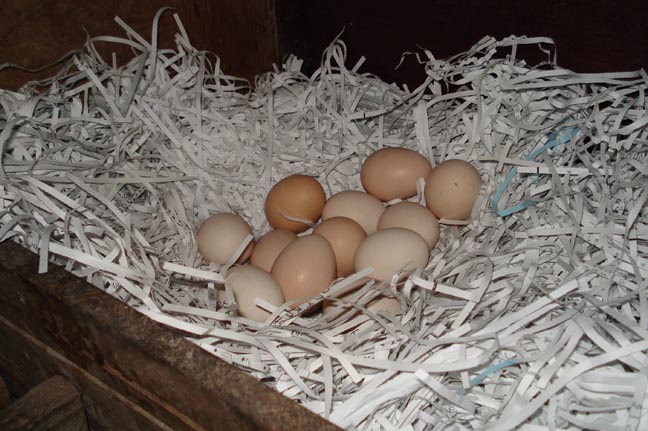
They arrived just as promised - twelve beautiful bantam eggs. Helen sent them from Perth on Friday, they travelled overnight and arrived in Brisbane on Saturday morning. Hanno drove in to pick them up and when he arrived home with the precious cargo, I found they were carefully wrapped in tissues, placed in a carton, wrapped in newspaper - Tuesday's Australian (which Hanno saved to read), and placed inside a plastic tub for the journey. Not one crack. How good is that!

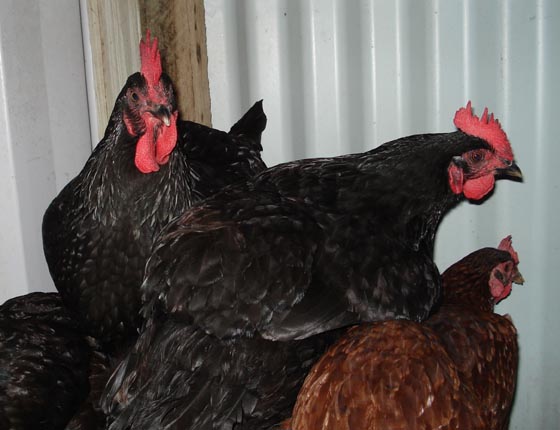
Helen told us to place the eggs under the mama hen (Mary) when it was dark, so they sat in their tub on the kitchen bench all day where the temperature remained a constant 28C (82F). When it was getting dark, Hanno and I took the eggs to the hen house, where the aunties had settled in for the night on the roost and mama hen was sitting on her nest where she has been constantly for the past three weeks. Hanno gently picked her up and I place all the eggs in her nest...

...while the aunties looked on.

And then Mary did what she's been waiting patiently for, she sat on her eggs.

You might be able to see that she fluffed up her feathers. I'm not sure if that was because she was upset that she'd been removed from the nest, or because she was proud of her eggs, but I have to tell you, she looked content as she sat there moving slightly underneath and settling in for the beginning of a 21 day pre-hatching period. December 23 is the day.

Thank you Helen. Hanno and I really appreciate your generosity and the effort and time you put into sending us the eggs.

We had a lovely day yesterday. We were both up early, me because I wanted to catch up on everything not done last week while I was at work, and Hanno because he had a few things to do and then drove the 90 kms into Brisbane. I did two loads of washing and hung them out to dry and then started packing the kitchen equipment back into the newly replaced cupboards. We actually only have two new cupboards, those under the sink, but there is a new benchtop, sink and appliances. I'll tell you more about them when everything is back, the curtains are hanging and I have taken photos.

I worked steadily all morning, taking my usual break at 10am to sit with a cool drink on the front verandah. It was lovely sitting there looking out onto our garden which, with the unusually mild weather we've been having, along with quite a bit of rain, looks beautiful. The agapanthus and star jasmine along the side fence, the sage, roses and daylilies are flowering beautifully and contrast nicely against the vivid green of the wisteria and camellia bushes. We are so fortunate to live in such a beautiful place and I am thankful everyday for it.

Hanno arrived home at lunchtime so I made sandwiches and tea for us both. A few months ago we changed our phone to another company and were given a free phone and a free DVD movie trial to Bigpond movies. We have 20 DVD movies free before they encourage us to sign up to a deal, which we won't do. : ) I couple of weeks ago we watched How to Make and American Quilt and my all-time favourite Australian movie, Hotel Sorrento. For all you Australians out there, if you haven't watched it, it's the best movie I've seen that defines the uniqueness of being Australian, and our relationship to America and the UK. Yesterday we watched The Horse Whisperer. You'll probably notice all these are old movies. It takes us a while to catch up with what's happening in the movie world. LOL

What a wonderful film The Horse Whisperer is! I had no expectations one way of the other about it but both Hanno and I loved it. It's essentially about a young girl and her horse, both badly injured in an accident, who seek the help of a horse whisperer, but it was also about simple living and finding your own personal happiness - either in the countryside or in the city, with those you love. It was beautifully filmed showing the richness of American country life and the vastness of the mountain country in Montana (although I don't know where it was shot). The scene of a happy rancher and his family around the dinner table and another where they socialise with neighbours at a country dance were perfect.

I thoroughly recommend this film if you haven't seen it, but be warned, the scenes at the very start of the film, where the accident happens are terrible and I had to look away. Apart from that I believe the film is suitable for the whole family.

It was around 5.30pm when the movie finished so I picked some salad from the garden, boiled some eggs and made dinner. After we ate, when the sun was going down, we crept into the hen house to give Mary her heart's desire. And after this special day, and 20 more just like it, we'll hopefully be watching the hatching of our little partridge wyandottes.

Hello all. I just wanted to post a request for all the apron swappers. We hope all of you have had a lot of fun with this swap and we want to make sure that each swapper receives her parcel. To this end, we would like everyone to check in with the leader of their swap, either me (Sharon) or Lorraine when they receive their parcel. Rhonda would also like an e-mail with a photo of the apron so she can post it on the blog, as it is always fun to look at everyone's handiwork and to see your handiwork pictured on the net!! With the napkin swap, we had a very few parcels lost somewhere in mail land so as everyone checks in we can more easily see if any of the aprons get swallowed by the lost mail monster!! Also, as this is a very busy time of year, what with graduations, end of term festivities, school award ceremonies, our American Thanksgiving, and the flu bugs that always seem to hit families this time of year, it can be very easy to get behind in getting parcels mailed out. If anyone is in this position please don't feel guilty, just let us know that your parcel will be a bit late in arriving! We hope everyone enjoyed this swap and looks forward to a new swap in the New Year. Thank you for keeping in touch, Sharon and Lorraine
Newer Posts Older Posts Home

MY BOOKS

MY BOOKS


My books were all published by Pengiun, and are available at Amazon US, Amazon UK and Amazon Au

Search here

Total Pageviews

Translate


I'm Rhonda Hetzel and I've been writing my Down to Earth blog since 2007. Although I write the occasional philosophical post, my main topics include home cooking, happiness and gardening as well as budgeting, baking, ageing, generosity, mending and handmade crafts. I hope you enjoy your time here.

MY FAVOURITE PLACES

  • Grandma Donna's Place
  • Grandma Donna's YouTube
  • Grandma Donna's Instagram
  • This Simple Day
  • Nicole's Instagram

Give More

Give More

Popular posts last year

Making ginger beer from scratch

We had a nice supply of ginger beer going over Christmas. It's a delicious soft drink for young and old, although there is an alcoholic version that can be made with a slight variation on the recipe. Ginger beer is a naturally fermented drink that is easy to make - with ginger beer you make a starter called a ginger beer plant and after it has fermented, you add that to sweet water and lemon juice. Like sourdough, it must ferment to give it that sharp fizz. To make a ginger beer plant you'll need ginger - either the powdered dry variety or fresh ginger, sugar, rainwater or tap water that has stood for 24 hours to allow the chlorine to evaporate off. You'll also need clean plastic bottles that have been scrubbed with soap, hot water and a bottle brush and then rinsed with hot water. I never sterilise my bottles and I haven't had any problems. If you intend to keep the ginger beer for a long time, I'd suggest you sterilise your bottles. MAKING THE STARTER In a...
Image

NOT the last post

This will be my last post here.  I've been writing my blog for 18 years and now is the time to step back. I’ve stopped writing the blog and come back a couple of times because so many people wanted it, but that won’t happen again, I won’t be back.  I’ll continue on instagram to remain connected but I don’t know how frequent that will be. I know some of you will be interested to know the blog's statistics. 
Image

How to make cold process soap

I'm sure many of you are wondering: "Why make soap when I can buy it cheaply at the supermarket?" My cold process soap is made with vegetable oils and when it is made and cured, it contains no harsh chemicals or dyes. Often commercial soap is made with tallow (animal fat) and contains synthetic fragrance and dye and retains almost no glycerin. Glycerin is a natural emollient that helps with the lather and moisturises the skin. The makers of commercial soaps extract the glycerin and sell it as a separate product as it's more valuable than the soap. Then they add chemicals to make the soap lather. Crazy. Making your own soap allows you to add whatever you want to add. If you want a plain and pure soap, as I do, you can have that, or you can start with the plain soap and add colour, herbs and fragrance. The choice is yours. I want to add a little about animal and bird fat. I know Kirsty makes her soap with duck fat and I think that's great. I think t...
Image

Preserving food in a traditional way - pickling beetroot

I've had a number of emails from readers who want to start preserving food in jars but don't know where to start or what equipment to buy.  Leading on from yesterday's post, let's just say up front - don't buy any equipment. Once you know what you're doing and that you enjoy preserving, then you can decide whether or not to buy extra equipment. Food is preserved effectively without refrigeration by a variety of different methods. A few of the traditional methods are drying, fermentation, smoking, salting or by adding vinegar and sugar to the food - pickling. This last method is what we're talking about today. Vinegar and sugar are natural preservatives and adding one or both to food sets up an environment that bacteria and yeasts can't grow in. If you make the vinegar and sugar mix palatable, you can put up jars of vegetables or fruit that enhance the flavour of the food and can be stored in a cupboard or fridge for months. Other traditional w...
Image

Cleaning mould from walls and fabrics

With all this rain around we've developed a mould problem in our home. Usually we have the front and back doors open and that good ventilation stops most moulds from establishing. However, with the house locked up for the past week, the high humidity and the rain, mould is now growing on the wooden walls near our front door and on the lower parts of cupboards in the kitchen. Most of us will find mould growing in our homes at some point. Either in the bathroom or, in humid climates, on the walls, like we have now. You'll need a safe and effective remedy at some point, so I hope one of these methods works well for you. Mould is not only ugly to look at, it can cause health problems so if you see mould growing, do something about it straight away. The longer you leave the problem, the harder it will be to get rid of it effectively. If you have asthma or any allergies, you should do this type of cleaning with a face mask on so you don't breathe in any spores. Many peopl...
Image

Five minute bread

Bread is one of those foods that, when made with your own hands, gives a great deal of satisfaction and delight. It's only flour and water but it symbolises so much. I bake bread most days and use a variety of flours that I buy in bulk. Often I make a sandwich loaf because we use most of our bread for lunchtime sandwiches and for toast. Every so often I branch out to make a different type of loaf. I have tried sour dough in the past but I've not been happy with any of them. I'll continue to experiment with sour dough because I like the idea of using wild yeasts and saving the starter over a number of years to develop the flavour and become a part of the family. However, the loaf I've been branching out to most often is just a plain old five minute bread. By five minutes I mean it takes about five minutes actual work to prepare but it's the easiest of all bread to make and to get consistently good loaves from. If you're having people around for lunch or...
Image

This is my last post.

I have known for a while that this post was coming, but I didn't know when. This is my last post. I'm closing my blog, for good, and I'm not coming back like I have in the past.  I've been writing here for 16 years and my blog has been many things to me. It helped me change my life, it introduced me to so many good people, it became a wonderful record of my family life, it helped me get a book contract with Penguin, and monthly columns with The Australian Women's Weekly and Burke's Backyard . But in the past few months, it's become a burden. In April, I'll be 75 years old and I hope I've got another ten years ahead. However, each year I'll probably get weaker and although I'm fairly healthy, I do have a benign brain tumour and that could start growing. There are so many things I want to do and with time running out, leaving the blog behind gives me time to do the things that give me pleasure. On the day the blog started I felt a wonderful, h...
Image

What is the role of the homemaker in later years?

An email came from a US reader, Abby, who asked about being a homemaker in later years. This is part of what she wrote: "I am a stay-at-home mum to 4 children, ages 9-16. I do have a variety of "odd jobs" that I enjoy - I run a small "before-school" morning drop-off daycare from my home, I am a writing tutor, and I work a few hours a week at a local children's bookstore. But mostly, I cherish my blissful days at home - cooking, cleaning (with homemade cleaners), taking care of our children and chickens and goats, baking, meal-planning, etc. This "career" at home is not at all what I imagined during my ambitious years at university, but it is far more enriching. I notice, though, that my day is often planned around the needs of my family members. Of course, with 4 active kids and a husband, this is natural. I do the shopping, plan my meals, cook dinner - generally in anticipation of my family reconnecting in the evening.  I can't h...
Image

Every morning at home

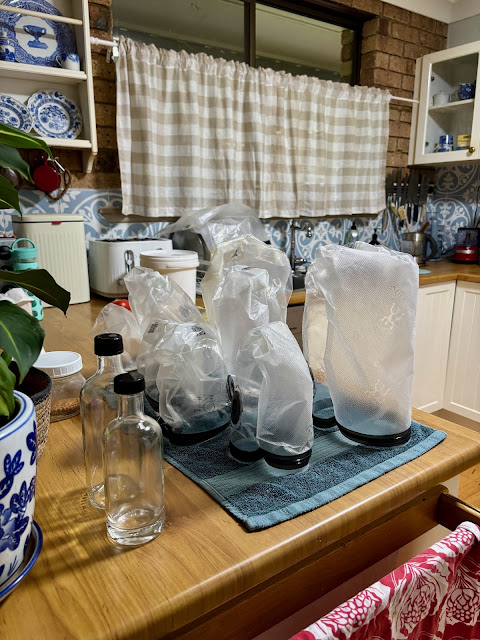
Every morning when I walk into my kitchen it looks tidy and ready for a day's work. Not so on this morning (above), I saw this when I walked in. Late the previous afternoon when I was looking for something, I came across my rolled up Zwilling vacuum bags and decided they had to be washed and dried. So I did that and although I usually put them outside on the verandah to dry it was dark by then. I turned the just-washed bags inside out and left them like this on a towel. It worked well and now the bags are ready to use when I bring home root vegetables, cabbages or whatever I buy that I want to last four or five weeks.
Image

You’ll save money by going back to basics

When I was doing the workshops and solo sessions, I had a couple of people whose main focus was on creating the fastest way to set up a simple life. You can't create a simple life fast, it's the opposite of that It's not one single thing either - it's a number of smaller, simpler activities that combine to create a life that reflects your values; and that takes a long to come together. When I first started living simply I took an entire year to work out our food - buying it, storing it, cooking it, preserving, baking, freezing, and growing it in the backyard. This is change that will transform how you live and it can't be rushed.  
Image

All previous blog posts

  • 2026 3
    • February 3
      • Workshops starting 1 March
      • Planting vegetable seeds and new workshops
      • Back where we belong
  • 2025 7
    • July 1
    • June 2
    • May 1
    • April 2
    • February 1
  • 2024 25
    • December 2
    • November 1
    • October 2
    • September 3
    • August 1
    • July 3
    • June 1
    • May 3
    • April 2
    • March 3
    • February 2
    • January 2
  • 2023 13
    • December 1
    • November 2
    • October 1
    • September 3
    • August 2
    • February 2
    • January 2
  • 2022 17
    • November 3
    • October 4
    • September 3
    • August 2
    • July 3
    • June 2
  • 2021 50
    • December 1
    • November 6
    • October 7
    • September 5
    • August 4
    • July 5
    • June 2
    • May 2
    • April 6
    • March 4
    • February 4
    • January 4
  • 2020 68
    • December 3
    • November 5
    • October 4
    • September 4
    • August 4
    • July 4
    • June 4
    • May 8
    • April 7
    • March 8
    • February 8
    • January 9
  • 2019 66
    • December 2
    • November 4
    • October 5
    • August 3
    • July 4
    • June 6
    • May 8
    • April 8
    • March 8
    • February 11
    • January 7
  • 2018 82
    • December 1
    • September 2
    • August 10
    • July 4
    • June 11
    • May 9
    • April 12
    • March 10
    • February 10
    • January 13
  • 2017 129
    • December 7
    • November 10
    • October 6
    • September 13
    • August 11
    • July 13
    • June 12
    • May 9
    • April 9
    • March 14
    • February 11
    • January 14
  • 2016 125
    • December 7
    • November 13
    • October 10
    • September 11
    • August 11
    • July 8
    • June 9
    • May 9
    • April 12
    • March 10
    • February 13
    • January 12
  • 2015 184
    • December 7
    • November 15
    • October 20
    • September 18
    • August 19
    • July 18
    • June 12
    • May 15
    • April 12
    • March 21
    • February 13
    • January 14
  • 2014 203
    • December 11
    • November 8
    • October 17
    • September 20
    • August 17
    • July 19
    • June 17
    • May 17
    • April 23
    • March 15
    • February 18
    • January 21
  • 2013 225
    • December 13
    • November 17
    • October 17
    • September 17
    • August 21
    • July 24
    • June 20
    • May 19
    • April 17
    • March 22
    • February 17
    • January 21
  • 2012 245
    • December 17
    • November 20
    • October 20
    • September 18
    • August 15
    • July 24
    • June 21
    • May 26
    • April 23
    • March 23
    • February 19
    • January 19
  • 2011 257
    • December 18
    • November 24
    • October 27
    • September 23
    • August 24
    • July 21
    • June 24
    • May 24
    • April 16
    • March 22
    • February 14
    • January 20
  • 2010 283
    • December 20
    • November 18
    • October 18
    • September 19
    • August 25
    • July 24
    • June 25
    • May 26
    • April 25
    • March 22
    • February 29
    • January 32
  • 2009 293
    • December 29
    • November 18
    • October 23
    • September 25
    • August 22
    • July 28
    • June 22
    • May 21
    • April 27
    • March 26
    • February 24
    • January 28
  • 2008 387
    • December 24
    • November 23
    • October 25
    • September 26
    • August 27
    • July 27
    • June 37
    • May 34
    • April 44
    • March 53
    • February 32
    • January 35
  • 2007 372
    • December 37
    • November 40
    • October 55
    • September 51
    • August 49
    • July 63
    • June 49
    • May 28


Trending Articles

NOT the last post

This will be my last post here.  I've been writing my blog for 18 years and now is the time to step back. I’ve stopped writing the blog and come back a couple of times because so many people wanted it, but that won’t happen again, I won’t be back.  I’ll continue on instagram to remain connected but I don’t know how frequent that will be. I know some of you will be interested to know the blog's statistics. 
Image

Every morning at home

Every morning when I walk into my kitchen it looks tidy and ready for a day's work. Not so on this morning (above), I saw this when I walked in. Late the previous afternoon when I was looking for something, I came across my rolled up Zwilling vacuum bags and decided they had to be washed and dried. So I did that and although I usually put them outside on the verandah to dry it was dark by then. I turned the just-washed bags inside out and left them like this on a towel. It worked well and now the bags are ready to use when I bring home root vegetables, cabbages or whatever I buy that I want to last four or five weeks.
Image

You’ll save money by going back to basics

When I was doing the workshops and solo sessions, I had a couple of people whose main focus was on creating the fastest way to set up a simple life. You can't create a simple life fast, it's the opposite of that It's not one single thing either - it's a number of smaller, simpler activities that combine to create a life that reflects your values; and that takes a long to come together. When I first started living simply I took an entire year to work out our food - buying it, storing it, cooking it, preserving, baking, freezing, and growing it in the backyard. This is change that will transform how you live and it can't be rushed.  
Image

Creating a home you'll love forever

Living simply is the answer to just about everything. It reduces the cost of living; it keeps you focused on being careful with resources such as water and electricity; it reminds you to not waste food; it encourages you to store food so you don't waste it and doing all those things brings routine and rhythm to your daily life. Consciously connecting every day with the activities and tasks that create simple life reminds you to look for the meaning and beauty that normal daily life holds.  It's all there in your home if you look for it. Seemingly mundane tasks like cleaning and cooking help you with that connection for without those tasks, the home you want to live in won't exist in the way you want it to.  Creating a home you love will make you happy and satisfied.
Image

Time changes everything

I've been spending time in the backyard lately creating a contained herb and vegetable garden. My aim is to develop a comfortable place to spend time, relax, increase biodiversity and encourage more animals, birds and insects to live here or visit. Of course I'd prefer my old garden which was put together by Hanno with ease and German precision. Together, we created a space bursting at the seams with herbs, vegetables and fruity goodness ready to eat and share throughout the year. But time changes everything. What I'm planning on doing now, is a brilliant opportunity for an almost 80 year old with balance issues. In my new garden I'll be able to do a wide range of challenging or easy work, depending on how I feel each day. It’s a daily opportunity to push myself or sit back, watch what's happening around me and be captivated by memories or the scope of what's yet to come.
Image

It's the old ways I love the most

I'm a practical woman who lives in a 1980’s brick slab house. There are verandahs front and back so I have places to sit outside when it's hot or cold. Those verandahs tend to make the house darker than it would be but they're been a great investment over time because they made the house more liveable. My home is not a romantic cottage, nor a minimalist modern home, it's a 1980’s brick slab house. And yet when people visit me here they tell me how warm and cosy my home is and that they feel comforted by being here. I've thought about that over the years and I'm convinced now that the style of a home isn't what appeals to people. What they love is the feeling within that home and whether it's nurturing the people who live there.
Image

Back where we belong

Surprise! I'm back ... for good this time. Instagram became an impossible place for me. They kept sending me messages asking if I'd make my page available for advertisers! Of course, I said no but that didn't stop them. It's such a change from what Instagram started as. But enough of that, the important part of this post is to explain why I returned here instead of taking my writing offline for good. For a few years Grandma Donna and I have talked online face-to-face and it's been such a pleasure for me to get to know her. We have a lot in common. We both feel a responsibility to share what we know with others. With the cost of living crisis, learning how to cook from scratch, appreciate the work we do in our homes, shop to a budget and pay off debt will help people grow stronger. The best place to do that is our blogs because we have no advertising police harassing us, the space is unlimited, we can put up tons of photos when we want to and, well, it just feels li...
Image

Making ginger beer from scratch

We had a nice supply of ginger beer going over Christmas. It's a delicious soft drink for young and old, although there is an alcoholic version that can be made with a slight variation on the recipe. Ginger beer is a naturally fermented drink that is easy to make - with ginger beer you make a starter called a ginger beer plant and after it has fermented, you add that to sweet water and lemon juice. Like sourdough, it must ferment to give it that sharp fizz. To make a ginger beer plant you'll need ginger - either the powdered dry variety or fresh ginger, sugar, rainwater or tap water that has stood for 24 hours to allow the chlorine to evaporate off. You'll also need clean plastic bottles that have been scrubbed with soap, hot water and a bottle brush and then rinsed with hot water. I never sterilise my bottles and I haven't had any problems. If you intend to keep the ginger beer for a long time, I'd suggest you sterilise your bottles. MAKING THE STARTER In a...
Image