down to earth

  • Home
  • About Us
  • Down To Earth Book
  • Privacy Policy


There is no doubt about it, running a home is complicated, and when you add in a partner, children, pets, homeschooling, work, gardens and working animals it can sometimes seem like you're out of control. I have no magic wand that will fix this for everyone - I get a lot of emails asking about routines - but the intention of this post is to show that we all have a full and busy lives, to give you a few resources to research for your particular lifestyle and to, hopefully, gain some inspiration by reading how we all construct our days.

I guess the thing that makes the biggest difference is babies or young children. When you have a baby crying for a feed or a cuddle, everything stops. Toddlers need a lot of supervision and play time with mum or dad. If you have babies, toddlers or young children under school age, you'll already know that you can have a routine, but it's often changed according to what the children are doing.

Many women also fit their lives around their partner. Meals are usually structured so that everyone eats when Dad comes home and often women get up early so they can have time alone with their husband before he goes off to work. Others make time during their day to talk on the phone. This often happens when the husband works away and there are frequent short phone calls to discuss various family and household matters, as well as that special time when the wife and husband have some alone time on the phone and dad talks to the kids and makes sure they're ok and they know he misses them.

Then come the pets and working animals - they all have to be fed and tended to. Cats need cuddles, dogs need walking, dairy cows and goats need milking - often twice a day, and there are eggs to collect and chook pens to clean. And they all need to be fed and watered.

Many of us have gardens that need watering and weeding and hopefully there are vegetables and fruit to be picked each day. But that only comes if the garden has been looked after and time spent planning, sowing, planting, digging, raking, staking, composting, fertilising and mulching.

Add to these common elements things like grocery shopping, cooking, baking, preserving, sewing, crafts and hobbies, reading, talking to your children and other members of the family, friends, exercise, work outside the home, volunteer work, homeschooling, cleaning, driving children around, and all the other things that fill our lives on a day to day basis, and you can see why we sometimes feel frazzled and burnt out.

Changing your attitude to housework may help you with your routine. Instead of it being something that must be done, that you don't want to do, and will have to be done again tomorrow, think of it as making your home comfortable for your family and yourself. Housework is just one of the many things we all do in our day, think of it as fluffing your nest and making your home the one place in the world where you feel comfortable and enjoy being. Be mindful of your tasks, take breaks and we proud of what you've achieved, even if you didn't finish all you set out to do. Think also of the alternative - if you did no housework, would you enjoy living in the environment that would create. Would you like to live in a dirty house, where you had no idea where anything was? You do housework for your family and yourself to help you all live to your full potential. If you can work out a general routine that suits you, adding the special jobs as they need doing each day, you'll probably find that the organisation of it will make it easier to get through.

My tip, the thing that works for me, is to have a loose routine that is almost always the same, but every morning I make a list for myself of what I'll do that day. Yesterday my list was this:

  • washing
  • clean laundry
  • spray seasol on aquaponics plants
  • start aquaponics article
  • start aprons

These things were done along with my regular chores. I find that now I have time to do as I wish, making a list each day allows me to think about my day before it starts properly, I can schedule chores according to my energy level that day and I can slot in things not done on the previous day or other bits and pieces that come up.

Be mindful of what you're doing, do one thing at a time and listen to the sounds of your home. This will help you concentrate on your tasks. If you have young children at home, you will be teaching them simply by carrying out your daily tasks, be a good role model and show the positive side of homemaking. And remember, everyone's routine will be different, things don't have to be perfect, they just have to work for you and your family.

There is some interesting reading here, here, here, I am not a Flylady but I know many people have been help by reading this website.

I didn't think I would get as many routines emailed as I did. I've thought about how to fit them all in, but I'm just going to add them. I am sure there will be one that speaks to you. They're all similar, but different, and they all make interesting reading. This might take two posts, so hold on to your hats. : )

This is what I did yesterday:
4am - woke up, showered, clean teeth.
4.20 - 7am - tended blog, answer emails.
7am - feed dogs, cat and fish, one load of washing, made breakfast for Hanno and I, ate breakfast and watched the news.
7.30am - make bread and wash up.
8am - make bed and lightly clean the bathroom.
8.15 - 9.00 - hang out washing, check garden, water plants, spray plants with Seasol, tie up tomatoes, pick and eat blueberries and talk to fish.
9am computer - writing and blog, bake bread.
10am morning tea with Hanno on front verandah.
10.30 - clean laundry.
11.00 start writing aquaponics article for magazine.
12.30 lunch
1.00 start work on my swap aprons and check blog throughout the afternoon.
3.00 sweep front verandah and organise pot plants, cup of tea.
4.00 garden and pick food for dinner.
5.00 make dinner - tuna cakes, potato salad, bean salad and corn on the cob.
6.00 eat dinner, clean kitchen, talk to dogs.
7.00 bed, read for an hour or two and go to sleep.

From Myra in Pittsburg
I get up aroung 7:15am
Get dressed
Feed my animal companions
Eat breakfast
Catch the bus/trolly to town for work
Work as a legal secretary from 8:30 to 5:00
Catch the bus/trolly home
Either prepare and eat dinner or eat if my son has it prepared
Catch up on blog/net reading
Do what needs to be done that day such as pay bills, laundry etc.
Shower
Go to bed and read about an hour
Go to sleep

From Sandra in the USA
get up with the alarm clock around 6a or so
start coffee read newspaper
feed cat
do a little housework - laundry, dishes, whatever
take shower
check out eyebrows
get dressed pick up around the house a little get packed lunch out of fridge drive to work while listening to NPR
look at the river as I walk across the bridge from the parking garage
punch in
speak to all my co workers
check my email throughout the day while doing my job as a nurse manager
punch out at the end of the workday
drive home start dinner unload dishwasher
take out trash and compost material
seat dinner with hubby
straighten up kitchen pack lunch for next day
check email, read blogs
write in blog
knit get ready for bed
read in bed a while
check clock sleep - maybe getting up once to go to bathroom
wake up and have another beautiful day

From Mary in Amarillo Texas
5:00 I wake up and have my quiet time and Bible study
6:00 shower and get dressed
6:45 make breakfast
7:00 my youngest three darlings wake up ready to eat (our 3 older children are grown and gone)
7:30 get children dressed, beds made, and bedrooms straightened
8:00 I clean the kitchen and we pick up, dust, clean bathrooms, etc.9:00 homeschool begins for our 2 kindergarteners
10:00 homeschool ends, the children are free to play while I read the newspaper and check emails
11:00 2-3 mornings a week we run any necessary errands
12:00 lunch
12:30 rest time and reading
1:30 - 3:30 Sewing time for me, outdoor play time for children
3:30 afternoon chores - sweeping patios, feeding the dog, fish, etc..
4:30 I begin preparing our evening meal
5:30 we eat a wonderful family meal together
6:00 game time, book time, riding bikes, etc.
7:00 bath time
8:00 bed time for the little ones
8:30 - 10:00 check emails, read, sew, etc.
10:30 bedtime!

From Polly in Oz
5.00 – Get up and make K’s lunch and our breakfast, wash the dishes and tidy the kitchen
6.00 – Internet to read ALS and blogs for an hour – I also boot up the computer every now and then during the day to check emails and forums.
7.00 – Wash and dress, quick clean of the bathroom and toilet, sort washing and do a load if there is a full load, make bed and tidy bedroom
8.00 – Empty collected water from kitchen sink, bathroom basin and shower onto pot plants or garden. Wash dogs’ bowls and play with the dogs for a short time. Hang washing on the line
9.00 – Sweep the floors and wash floor in kitchen area, talk to my sister on the telephone because she has a week off work and time to spare. She also has a phone plan that allows for a long conversation at a cheap price so we make the most of it while both having an early morning tea.
10.00 – Check the vegetable garden. Pick most of the lemons on my little Meyer lemon tree. Make up three jars of preserved lemons and freeze the juice from the rest of the lemons11.30 – Do some knitting
12.00 – Have some lunch and read for a while
1.00 – Get the bread maker started on the dough for a loaf. Make a kidney bean spread and a batch of biscuits for lunches
2.00 – Pay some bills on the computer, read emails and a couple of forums
3.00 – Do the ironing and some mending
4.30 – Have a cup of coffee and knit. Talk to my DIL on the telephone
5.30 – Feed the dogs. Pick some artichokes then prepare and cook them ready for pizza tomorrow night.
6-00 – Prepare ingredients for dinner while I watch some TV – interrupted by my sister again – she’s a great talker J
7-00 – Cook dinner while watching the news
7.30 – Eat dinner as soon as K is home, then do the dishes and clean the kitchen
8.30 – Get ready for bed, read for a little while, asleep by 9.00pm

From Niki in Ottawa Canada
Wake up 6:30 ishcoffee
computer time
laundry going
cooking and baking for the day
kitchen clean up
house cleaning, different areas on different days on good days a little walk
lunch
rest
check computer
by now it is mid to late afternoon
I usually read, or do some handwork
any last minute supper prep
supper with family
clean kitchen with family
TV books movies games computer time something like that for the evening
bed by 10 - 10:30

From Jessica Chapman in the USA
6am- Get up/Get dressed
6.30- Make coffee/and lunches/and breakfast
6.40- Get baby up, dressed and breakfast
6.45- Leave House
6.45-7.15- Drive to work
7.15-8.30- Office Hours In Classroom/Planning Time
8.30-9.30- First Class Period- Teach 6th Grade
9.30-10.30- Second Class Period- Teach 7th Grade
10.30-11.30- Third Class Period- Teach 8th Grade, First Rotation
11.30-12.00-Teach Fifth Period Reading Class, Round one.
12.00-12.30-Lunch Break
12.30-1.00-Teach Fifth Period Reading Class, Round two.
1.00-2.00-Sixth Class Period- Teach 8th Grade, Second Rotation
2.00-3.00- Meetings, Administrative work, Work in classroom.
3.00-3.30-Drive to son's daycare, pick him up
3.30-4.00-Errands, Drive home
4.00-4.15-Afternoon Snack and Tea
4.15-5.00-Hang out with Camden :)
5.00-6.00-Cook Dinner
6.00-6.30-Eat dinner
6.30-6.45 - Clean up from dinner, Give baby a bath (husband and I switch off one for the other).
6.45-7.00-Story time, Dancing time with baby
7.00-Baby goes to bed
7.00-8.00- Computer time, my bath time.
8.00-10.00- My "me" time-- TV, Crafts, Whatever I want to do!
10.00-Bedtime

There are many more to follow. I'll post them after breakfast, I can smell toast cooking. : )
I've been thinking about the post I'll do tomorrow. I need your help with it. I want to write a post about how we're all different, yet all similar. I need you to write out, in list form, your daily routine. If it changes each day, I just want one day's list of what you do in a normal day, from when you wake up, until you go to bed at night. If you don't mind, include your town/city or country.

Please send your list to my gmail - the link is over there --------->

Thanks everyone. And now I'm off to start on my apron swap aprons. Life's good. : )

This photo is completely off today's topic, it's a small view of our front garden. It's spring here so we have all sorts of flowers growing. Incorporating beauty into your life is an important part of living simply. But just so you know I've not gone completely flower crazy in the front garden, those leaves poking into the top right hand corner are avocado leaves and planted next to the avocado are rosellas (a type of hibiscus that we'll use the flowers of to make jam, tea and cordial) and radishes.


SELF DISCOVERY AND REINVENTION
As we mature we all have a certain view of ourselves and the life we live. Now that you’ve decided to change how you live, reassess your personal view of yourself. Look critically at your values and what you think is important to you and your family. Don’t be afraid to reinvent certain parts of your life. Your aspirations might have changed a lot over the last few years and things you’ve always known to be true about yourself and others may have changed.

If you’re in your twenties and don’t yet have a rigid idea of being a particular type of person, you’ll be starting with a clean slate. You are in the ideal position of having your entire adult life ahead and, therefore, would, theoretically, be in a position to gain the most from living simply. What you decide for yourself now could set you up for an interesting life that will not be burdened with credit card payments and the waste that many of us work through during our younger years. You are in the box seat, make the most of it.

But no matter what stage of life you're at, living simply will improve your life. There are many benefits to be discovered in living at a gentler pace and they are there no matter what age you are right now.

If you’ve thought in the past that your success meant living in a big house, driving an expensive car and living the high life, you should reassess that. Your new version of success may include learning about gardening, cooking or preserving. It may be to raise thoughtful children who love the simple life. Your new successes may be in paying off your mortgage years early and living debt-free, or learning how to live well on less.

You might start organising your time to better suit your new life so that you can include some volunteering or community work, you might enlarge your vegetable garden and grow a wider variety of fruit and vegetables to share with family and neighbours. You might learn a new language or teach your grandchildren to read. Whatever your interpretation of success is now, incorporate it into your life with enthusiasm and throw out old negative ideas.

And please be brave in your new life. If you now have different views to those close to you - your family and friends - tell them. Don't lock them out of your new life, try to bring them with you by explaining why you've changed and what you hope your life will become. They may not understand the need for change, they may even try to convince you not to change, but respect yourself and your new life enough to be proud of it.

CHANGING YOUR ATTITUDE
Although this might be one of the most difficult things to do, changing your attitude will help you adjust to your new life and in the long run, will give you real satisfaction. If you want to live simply because you’re not happy living the way you are now and you know things need to change, then a change of attitude will help you slide more easily into your new life. Attitude adjustment will facilitate many of the changes you’re about to make.

By now you probably realise that buying more and bigger things, upgrading to the latest version and being the first with the latest is like being on a never-ending treadmill. If you listen to those voices that tell you to consume, you’ll never be good enough or have enough; it will never end. It will take a conscious effort to get off that cycle of consumption and to be content with who you are and what you have. Change your idea of what success is and what will make you happy. What you see as success will always be just slightly out of reach if it is defined for you by magazines, TV, advertising or people you know.

Success isn’t being surrounded by expensive possessions; genuine achievement has a much more complex character. Success is feeling comfortable in your own skin, being satisfied by what you’ve accomplished, living according to your values and having the confidence to show the type of person you are. Real success is never defined by possessions, no matter how many times you hear that on TV, or from your relatives or friends.
I read back through some old comments this afternoon. Some days I don't have a chance to do that and it's something I must do everyday. I'm going to reorganise myself so that I can review my blog every afternoon.

Anyhow, the reason for this post is to thank you, all my readers, for the love and kindness you express in your comments. In particular, the comments in last month's "Me, in a nutshell" were so loving and sweet, it made me realise yet again why I so enjoy writing in this way. It does get a bit frantic fitting it all in some days, but even on those days, I have to tell you, my friends, you all make it worthwhile and a joy for me.

Thank you all for your grace and for extending the hand of friendship my way.

Carrying on with our theme of not wasting food, today I want to talk about auditing your stockpile. We did our monthly shopping yesterday so I did mine then. It's a good habit to get into if you're stockpiling. Remember that when you spend your hard earned money on anything, it should be looked after so it gives you value for your money. Your stockpile is included in that; it needs to be looked after properly.

You should rotate your stock, just like they do in the supermarkets. When you buy new food from the supermarket, always place it at the back of your current stock. Just move everything forward and place your new items at the back. And always take from the front when you use something. That way you should keep your stock rotating and good for eating.

When you audit your stockpile, also check all your produce in packets. Make sure you have no pantry moths or weevils crawling around. If you find anything like that, empty your stockpile cupboard, vacuum the shelves to pick up any tiny eggs, then wipe your shelves over with a terry cloth dipped in hot water and eucalyptus or tea tree oil. Don't make your solution too strong because you don't want the smell to get into your food. You just want to deter the bugs. If possible, keep all your dry goods in air tight containers. If you have an infestation of pantry moths or some other bugs, you'll lose a lot of what you're storing, so protect as much of it as you can. If you don't have storage jars, it's a good idea to buy one every time you do your shopping. If you have enough money buy a large one, if you don't have so much left over, buy a smaller one.

I store all my dried goods like rice, pasta, all my flours, seeds, nuts, couscous and lentils in their packets in a freezer that is full of my stockpiled dried goods. The temperature is turned down to the lowest setting. In my humid climate this keeps our food safe from any sort of bug. If the power goes off, it doesn't matter as there is no perishable food in the freezer. The cost of running it over a full year is very low.


When you're auditing your stockpile, check all your preserved goods too. Make sure there is no mould growing in the jars and that the lids are firmly attached. Line them up again so that you use the oldest first.

Stockpiling groceries is the best way I know of to lower your food bill. It will also help you survive an emergency
- both a national emergency and a personal emergency. But remember, it's worth a lot of money and must be looked after. If you do an audit every three months, as well as when you add new stock to your cupboard, you'll reap all the benefits of your stockpile.
Here are your partners, ladies. As with all swaps, there will be minor tweaking today and tomorrow. Brigit, do you want to be in the swap? I'm not sure if it's just your friend or you as well.
  • SHARON’S SWAPPERS Sharon's email is cdetroyes at yahoo dot com
  • Maria in NC and Paula
  • Jessica Chapman and Tracy (unlessthelord)
  • Donna and Allybea
  • Rhonda Jean and Sharon
  • Jenny (wren) and Ingvild
  • Elizabeth and Mrs MK
  • Daisy81 and Becky
  • Jackie @ Redcliffe and Sisiggy
  • Ann in Melb and Jennifer's daughter
  • Lisa J and Ingeborg
  • Kimberly and Jill
  • Dee and Donetta
  • Ruthie and Scooter Sissy (Christie) Christie, please email Ruthie with your details.
  • Tracy (sunnycorner) and Lis (flyinginoz04 at yahoo.com.au)
  • Aslaug and Niki
  • Coleen and Peggy
  • Bren and Han_ysic
  • Ann (UK) and Robbie

  • CHOOKASMUM’S SWAPPERS - Lorraine's email is: ma_pabarney at hotmail dot com
  • Sandra Tee and Dirkey
  • Heather1031 and Debbie
  • Aimee and Our Red House
  • Helen Thomas and Rebekka
  • Emily and Karen
  • Greeneyes and Tami
  • Chookasmum and Mama K
  • Christine and Leah
  • Mary and Rebecca
  • Polly and Billie
  • Rachel Read and Denise - rachel's email is happyharris at bigpond dot com dot au
  • Jodie and Margaret39
  • Solstiches and Maria
  • Jen and Cathy
  • Jennifer and Mrs H
  • Judy and Brigit's friend Jennie
  • Lucy (lucy.vandersluis at orange dot nl) and Rhonda Jean (rhondahetzel at gmail dot com)

Ladies, go to the sign up post to get your partner's email address so you can make contact and swap postal addresses. If you have any problems with the swap, please contact either Sharon or Chookasmum, depending on who is looking after you.

Remember, the swap deadline is Wednesday, November 28. All aprons must be posted on or before that date. I hope you all get to know your swap partner, develop your skills and have some fun.

I have my fingers crossed for this one. I hope I have everyone now. Please let me know if you're not on the list.

ADDITION: Some changes have been made. Please check that you still have the same swap partner.

Briget, are you in the swap or is it just Jennie?
Jennifer, can we have your daughters name or initials, or maybe an online name?
Mrs MK, I need your email address.
Suzen, are you in the swap?

I'm working on the list right now. You have about another hour or two to sign up.

The beautiful quilt pictured above is one my sister, Tricia, is working on. She usually gives her quilts away but this one will be kept and used in her new home when she moves next year. I love this quilt. It's called a scrappy quilt because scraps of fabric leftover from other projects, and old pieces of fabric that previously had other functions, have been used in the making of it. You might not be able to see it clearly (click on the photos to enlarge them) but it is constructed of a small table cloth, some old doilies, strips of fabric, blocks of embroidery, pillow cases, rick rack and old buttons. It's far from complete, but I love it.

Tricia has used the colour red to tie the whole quilt together but within that colour scheme, she has used what she loves and what appealed to her, and, importantly, her leftovers. We have very similar taste so I adore this quilt and when I suggested a few things when it was laid out on the bed here, she liked what I suggested and they will be included in the quilt.

I am showing you Tricia's quilt because it illustrates very nicely that the leftovers we all have - all those things like old clothes, buttons, pillow cases, doilies, rick rack from other projects, half completed embroidery squares and ribbons - all have a place in our lives if we think creatively about them. We can create beauty and function from what many would consider "waste".

So it's not just the food leftovers we have to be careful with. As Kim said in her comment, she doesn't waste much at all because she grows her own food and she sees first-hand how much time and work goes into the production of it. I think that's a really good way of looking at what we might once have thought of as waste products. If you think about the production of a pillow slip, for instance, from that cotton growing on the bush, the people who pick it and those who sell it, to the processing plant where it is cleaned and woven into fabric, the man who transports those rolls of fabric to the factory where it is cut and sewn by women, just like you and I, before it goes on to a wholesaler who sells it to a retailer where you buy it - that, my friends, is quite a story, even before the product is used for the first time.

Imagine that you use it for a year but it is ripped and you can't use it as a pillowslip anymore. In days gone by you might have thrown that pillow slip away to rot in landfill, now you stop to consider its future. Now you give it a new life, sure it can't be used as a pillow slip, but the fabric is still good so it can be made into something else. You might use it now as a cleaning cloth, to patch something else, as a baby doll blanket or for any number of things. Or, you might use it to create something of beauty that will be functional and help you carry out your rolls of homemaker, nurturer and family accountant, something like a scrappy quilt. My next project, after my kitchen curtains, will be exactly that.

I want to challenge you to think creatively about your damaged possessions. Think carefully before you throw anything "away". "Away" doesn't make it disappear, it moves your problem somewhere else. Take responsibility for what you buy and use everything until it can't be used any more. Even then, all natural products can be composted in your own backyard. So if that pure wool cardigan is going to be felted and made into a bag, or you're going to rewind the wool for another project, remove the buttons first and start your own button tin. If your old dress is going to be part of your scrappy quilt, remove the zipper or buttons, so they can be reused. Stop thinking that what you own only has one use - fabric is fabric, no matter what it's been made into and a button will continue to function whether it's used to fasten a blouse or as decoration on a hand bag.

Think creatively about everything in your home, get the full value of everything you own and that will help you get the full measure of every day you live.

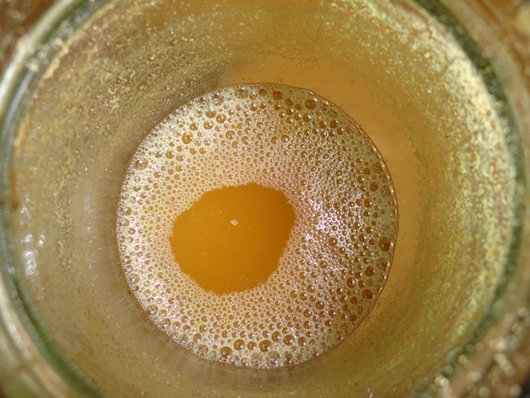
This is just a quick picture of my ginger beer plant that has started fermenting - it's the fourth day today. It smell delicious, even if it looks pretty ghastly right now. LOL If you've never made ginger beer before and the weather is starting to warm up where you live, this makes a lovely drink on a hot summer day.

Good morning everyone! It's Wednesday morning so this is a reminder that the swap will close in a few hours. If you want to join in, please comment in the swap thread within the next four hours.

Thanks to those who offered help. I think we may be ok, but I'll know more when I do up the lists.

I worked the past two days and I'm still in a bit of a haze this morning. I have no idea what I'll write about but I'm sure something will spark in my brain soon and I'll start tapping away on the keys. I'll be back soon with my post.


If you're wondering why I have a jug with a strainer and a jar on top, I'm making quark cheese.


It's a sad and cruel fact that in a world where 9 million people die of hunger or malnutrition each year, the amount of food being wasted in Western countries increases most years. In the UK 20 billion pounds worth of food is wasted each year, in the USA it's between 30 and 40%, and in Australia it's 25% wasted. We are increasingly disconnected for the source of our food and in many cases people don't even know where their food comes from. They don't connect milk and cheese with cows, or eggs with chickens.

I used to waste a lot of food. I'd go to the supermarket and stock up because I didn't want to go back to shop again before I had to. I bought food "just in case we needed it". When we didn't eat it, it was thrown out. That is a shameful confession and one I did not want to make. But I have created the food wastage problem just as much as many of you have.

But I stopped wasting food. Have you?

When I was growing up, my mother never wasted food. It was a homemaker's duty to have a nice collection of recipes for leftovers. Most home cooks took pride in what they could produce from little bits of this and that. I remember bubble and squeak being made from leftover vegetables and turned into what Americans call hash browns; I remember corned beef fritters being made from the corn beef cooked and served the day before; I remember shepherd's pie or lamb curry being made with the remains of a roast leg of lamb. We loved all these meals, they where all served, not as "leftovers" but as another meal produced from the large number of recipes my mother knew. Leftover cooking was common. It was just another skill of a busy housewife who worked hard to feed her family within the confines of a meagre budget. Nothing was thrown out, nothing was wasted.

When I stopped wasting food, I made sure I only bought what I knew we'd eat - no more food "just in case". I reorganised my fridge to make sure the foods that I had been wasting were at the front of the fridge and in full view. I regularly scheduled food made from leftovers into my menu plans. When my boys were living here, if we had roast meat, or something that wouldn't be eaten in one meal, I'd always make a curry or pie with the leftovers the next day. I scanned the fridge and my vegetable boxes every two or three days to see what had to be used that day. Now we organise our food differently because we grow a lot of it and there is little waste. If I have bread left at the end of the day, it's either frozen for toast, made into breadcrumbs and frozen or given to the chooks.

I always keep an eye on use by dates too. If milk is getting close to its date, I make a custard or rice pudding. Cheese almost on its date can be added to homemade pizza. Vegetables, even small amounts can be made into soup or stock and frozen, or made into a vegetable curry for that night's dinner. The key to this is monitoring your food to make sure it's used before it spoils.

We've become a lazy mob and this is reflected in the way we waste food. I know that if my grandma or my mother had seen some of the food I've thrown out, they would have told me to wake up to myself. I'm glad I did wake up to this big problem because it's easy to fix, it saves us money, saves the planet from being choked with landfill and methane and it's the right things for all of us to be doing.

Have you checked your fridge lately?
This is the call for swappers in the third Down to Earth swap. Our first swap was for knitted dishcloths, then we swapped napkins. I am aware that there are a small number of late arrivals but we’ll go on to our next swap while we keep an eye on the napkins to make sure they all arrive.

This swap is for an apron, which I believe is a fitting symbol for this simple life we are all trying our best to live. I have two volunteers to help me with this, Sharon in the USA and Lorraine (chookasmum) in Australia.

Aprons are quite easy to make, even for beginners. You can make a very fancy apron or a plain one – remember the function of an apron is to protect your clothes while you work, so function is the key here. If you have an apron at home, it’s quite an easy thing to make a pattern from it. You could also google for a pattern or look at the links below for inspiration.

If you would like to take part in this swap all you have to do is to make a comment here with this post. Make sure you’re free to work on your apron before you commit because late parcels will hold up the next swap. This swap will start on Wednesday, October 31, the completed aprons must be posted by Wednesday, November 28. Four weeks. If you truly believe you can do this project and have it posted in four weeks, go ahead and join the swap. If you’re busy with other things or have to go away, please join the next swap. Men are welcome to enter too. If you are partnered with a man, you might like to make a gardener’s apron, baker’s apron or a BBQ apron.

This is important: when you make your comment to join the swap, please include your email address in this format: rhondahetzel at gmail dot com. That will give your swap partner the ability to email you for your postal address and will make the swap MUCH easier for us to organise. If you do not wish to include your email address in the comments box, I’ll have to make other arrangements for you. You might also like to discuss colour preference. One of the good things about these swaps is that they're a surprise, so talk about colour but let your swap partner surprise you with what they make.

You have until Wednesday afternoon, my time, to sign up. I'll remind you on Wednesday morning that the swap is about to close. I'll make up the list and post it on Wednesday afternoon, so you will know who you are swapping with.

APRON PATTERNS AND INSPIRATION
Beginner’s apron tutorial
Vintage apron patterns
Scalloped apron
Types of aprons
Plain apron
Apron patterns
Vintage apron photos
Apron story
Crossover apron
The Alice apron
Old fashioned aprons, these are lovely
A variety of aprons

Swappers, sign up in the comments box.


It's going to be 31C (88F) here today so we've both been out early in the garden. It was just a bit of tweaking, watering and checking, a little bit of TLC that generally keeps the garden moving along nicely. The king parrots were there too, arguing and running at the brown doves. LOL

I'm feeling dangerously optimistic today but I've been thinking about this for a while. I'd like to expand my blog in some way but I'm not sure what the next step should be. Maybe a section for tutorials and how-to posts? I'm not even sure if it's possible in this blogger format. I'd be interested in hearing everyone's opinions. If there are any web designers or people with a bit more knowledge than I have, I'd like to know how I could expand what I'm doing without losing the small community feeling I'm trying to foster here.

Any suggestions?
Newer Posts Older Posts Home

MY BOOKS

MY BOOKS


My books were all published by Pengiun, and are available at Amazon US, Amazon UK and Amazon Au

Search here

Total Pageviews

Translate


I'm Rhonda Hetzel and I've been writing my Down to Earth blog since 2007. Although I write the occasional philosophical post, my main topics include home cooking, happiness and gardening as well as budgeting, baking, ageing, generosity, mending and handmade crafts. I hope you enjoy your time here.

MY FAVOURITE PLACES

  • Grandma Donna's Place
  • Grandma Donna's YouTube
  • Grandma Donna's Instagram
  • This Simple Day
  • Nicole's Instagram

Give More

Give More

Popular posts last year

Making ginger beer from scratch

We had a nice supply of ginger beer going over Christmas. It's a delicious soft drink for young and old, although there is an alcoholic version that can be made with a slight variation on the recipe. Ginger beer is a naturally fermented drink that is easy to make - with ginger beer you make a starter called a ginger beer plant and after it has fermented, you add that to sweet water and lemon juice. Like sourdough, it must ferment to give it that sharp fizz. To make a ginger beer plant you'll need ginger - either the powdered dry variety or fresh ginger, sugar, rainwater or tap water that has stood for 24 hours to allow the chlorine to evaporate off. You'll also need clean plastic bottles that have been scrubbed with soap, hot water and a bottle brush and then rinsed with hot water. I never sterilise my bottles and I haven't had any problems. If you intend to keep the ginger beer for a long time, I'd suggest you sterilise your bottles. MAKING THE STARTER In a...
Image

NOT the last post

This will be my last post here.  I've been writing my blog for 18 years and now is the time to step back. I’ve stopped writing the blog and come back a couple of times because so many people wanted it, but that won’t happen again, I won’t be back.  I’ll continue on instagram to remain connected but I don’t know how frequent that will be. I know some of you will be interested to know the blog's statistics. 
Image

How to make cold process soap

I'm sure many of you are wondering: "Why make soap when I can buy it cheaply at the supermarket?" My cold process soap is made with vegetable oils and when it is made and cured, it contains no harsh chemicals or dyes. Often commercial soap is made with tallow (animal fat) and contains synthetic fragrance and dye and retains almost no glycerin. Glycerin is a natural emollient that helps with the lather and moisturises the skin. The makers of commercial soaps extract the glycerin and sell it as a separate product as it's more valuable than the soap. Then they add chemicals to make the soap lather. Crazy. Making your own soap allows you to add whatever you want to add. If you want a plain and pure soap, as I do, you can have that, or you can start with the plain soap and add colour, herbs and fragrance. The choice is yours. I want to add a little about animal and bird fat. I know Kirsty makes her soap with duck fat and I think that's great. I think t...
Image

Preserving food in a traditional way - pickling beetroot

I've had a number of emails from readers who want to start preserving food in jars but don't know where to start or what equipment to buy.  Leading on from yesterday's post, let's just say up front - don't buy any equipment. Once you know what you're doing and that you enjoy preserving, then you can decide whether or not to buy extra equipment. Food is preserved effectively without refrigeration by a variety of different methods. A few of the traditional methods are drying, fermentation, smoking, salting or by adding vinegar and sugar to the food - pickling. This last method is what we're talking about today. Vinegar and sugar are natural preservatives and adding one or both to food sets up an environment that bacteria and yeasts can't grow in. If you make the vinegar and sugar mix palatable, you can put up jars of vegetables or fruit that enhance the flavour of the food and can be stored in a cupboard or fridge for months. Other traditional w...
Image

Cleaning mould from walls and fabrics

With all this rain around we've developed a mould problem in our home. Usually we have the front and back doors open and that good ventilation stops most moulds from establishing. However, with the house locked up for the past week, the high humidity and the rain, mould is now growing on the wooden walls near our front door and on the lower parts of cupboards in the kitchen. Most of us will find mould growing in our homes at some point. Either in the bathroom or, in humid climates, on the walls, like we have now. You'll need a safe and effective remedy at some point, so I hope one of these methods works well for you. Mould is not only ugly to look at, it can cause health problems so if you see mould growing, do something about it straight away. The longer you leave the problem, the harder it will be to get rid of it effectively. If you have asthma or any allergies, you should do this type of cleaning with a face mask on so you don't breathe in any spores. Many peopl...
Image

Five minute bread

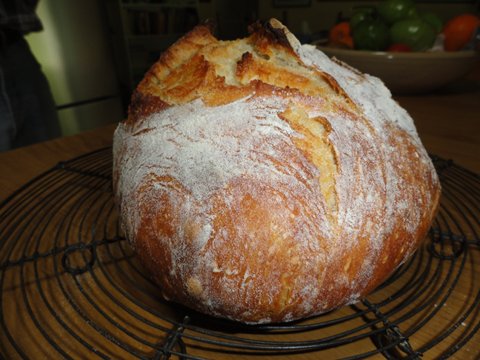
Bread is one of those foods that, when made with your own hands, gives a great deal of satisfaction and delight. It's only flour and water but it symbolises so much. I bake bread most days and use a variety of flours that I buy in bulk. Often I make a sandwich loaf because we use most of our bread for lunchtime sandwiches and for toast. Every so often I branch out to make a different type of loaf. I have tried sour dough in the past but I've not been happy with any of them. I'll continue to experiment with sour dough because I like the idea of using wild yeasts and saving the starter over a number of years to develop the flavour and become a part of the family. However, the loaf I've been branching out to most often is just a plain old five minute bread. By five minutes I mean it takes about five minutes actual work to prepare but it's the easiest of all bread to make and to get consistently good loaves from. If you're having people around for lunch or...
Image

This is my last post.

I have known for a while that this post was coming, but I didn't know when. This is my last post. I'm closing my blog, for good, and I'm not coming back like I have in the past.  I've been writing here for 16 years and my blog has been many things to me. It helped me change my life, it introduced me to so many good people, it became a wonderful record of my family life, it helped me get a book contract with Penguin, and monthly columns with The Australian Women's Weekly and Burke's Backyard . But in the past few months, it's become a burden. In April, I'll be 75 years old and I hope I've got another ten years ahead. However, each year I'll probably get weaker and although I'm fairly healthy, I do have a benign brain tumour and that could start growing. There are so many things I want to do and with time running out, leaving the blog behind gives me time to do the things that give me pleasure. On the day the blog started I felt a wonderful, h...
Image

What is the role of the homemaker in later years?

An email came from a US reader, Abby, who asked about being a homemaker in later years. This is part of what she wrote: "I am a stay-at-home mum to 4 children, ages 9-16. I do have a variety of "odd jobs" that I enjoy - I run a small "before-school" morning drop-off daycare from my home, I am a writing tutor, and I work a few hours a week at a local children's bookstore. But mostly, I cherish my blissful days at home - cooking, cleaning (with homemade cleaners), taking care of our children and chickens and goats, baking, meal-planning, etc. This "career" at home is not at all what I imagined during my ambitious years at university, but it is far more enriching. I notice, though, that my day is often planned around the needs of my family members. Of course, with 4 active kids and a husband, this is natural. I do the shopping, plan my meals, cook dinner - generally in anticipation of my family reconnecting in the evening.  I can't h...
Image

Every morning at home

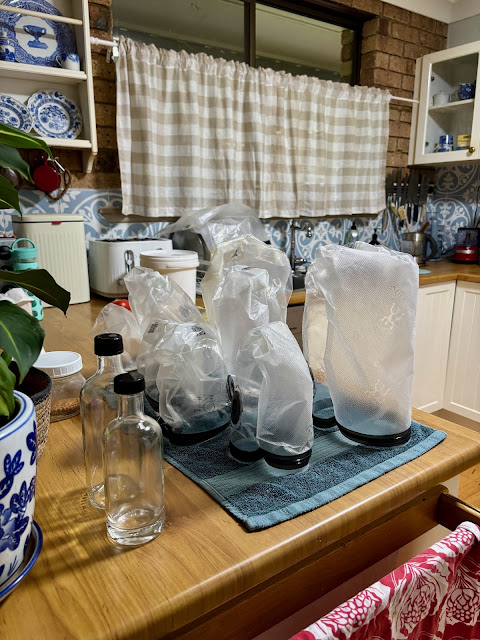
Every morning when I walk into my kitchen it looks tidy and ready for a day's work. Not so on this morning (above), I saw this when I walked in. Late the previous afternoon when I was looking for something, I came across my rolled up Zwilling vacuum bags and decided they had to be washed and dried. So I did that and although I usually put them outside on the verandah to dry it was dark by then. I turned the just-washed bags inside out and left them like this on a towel. It worked well and now the bags are ready to use when I bring home root vegetables, cabbages or whatever I buy that I want to last four or five weeks.
Image

You’ll save money by going back to basics

When I was doing the workshops and solo sessions, I had a couple of people whose main focus was on creating the fastest way to set up a simple life. You can't create a simple life fast, it's the opposite of that It's not one single thing either - it's a number of smaller, simpler activities that combine to create a life that reflects your values; and that takes a long to come together. When I first started living simply I took an entire year to work out our food - buying it, storing it, cooking it, preserving, baking, freezing, and growing it in the backyard. This is change that will transform how you live and it can't be rushed.  
Image

All previous blog posts

  • 2026 3
    • February 3
      • Workshops starting 1 March
      • Planting vegetable seeds and new workshops
      • Back where we belong
  • 2025 7
    • July 1
    • June 2
    • May 1
    • April 2
    • February 1
  • 2024 25
    • December 2
    • November 1
    • October 2
    • September 3
    • August 1
    • July 3
    • June 1
    • May 3
    • April 2
    • March 3
    • February 2
    • January 2
  • 2023 13
    • December 1
    • November 2
    • October 1
    • September 3
    • August 2
    • February 2
    • January 2
  • 2022 17
    • November 3
    • October 4
    • September 3
    • August 2
    • July 3
    • June 2
  • 2021 50
    • December 1
    • November 6
    • October 7
    • September 5
    • August 4
    • July 5
    • June 2
    • May 2
    • April 6
    • March 4
    • February 4
    • January 4
  • 2020 68
    • December 3
    • November 5
    • October 4
    • September 4
    • August 4
    • July 4
    • June 4
    • May 8
    • April 7
    • March 8
    • February 8
    • January 9
  • 2019 66
    • December 2
    • November 4
    • October 5
    • August 3
    • July 4
    • June 6
    • May 8
    • April 8
    • March 8
    • February 11
    • January 7
  • 2018 82
    • December 1
    • September 2
    • August 10
    • July 4
    • June 11
    • May 9
    • April 12
    • March 10
    • February 10
    • January 13
  • 2017 129
    • December 7
    • November 10
    • October 6
    • September 13
    • August 11
    • July 13
    • June 12
    • May 9
    • April 9
    • March 14
    • February 11
    • January 14
  • 2016 125
    • December 7
    • November 13
    • October 10
    • September 11
    • August 11
    • July 8
    • June 9
    • May 9
    • April 12
    • March 10
    • February 13
    • January 12
  • 2015 184
    • December 7
    • November 15
    • October 20
    • September 18
    • August 19
    • July 18
    • June 12
    • May 15
    • April 12
    • March 21
    • February 13
    • January 14
  • 2014 203
    • December 11
    • November 8
    • October 17
    • September 20
    • August 17
    • July 19
    • June 17
    • May 17
    • April 23
    • March 15
    • February 18
    • January 21
  • 2013 225
    • December 13
    • November 17
    • October 17
    • September 17
    • August 21
    • July 24
    • June 20
    • May 19
    • April 17
    • March 22
    • February 17
    • January 21
  • 2012 245
    • December 17
    • November 20
    • October 20
    • September 18
    • August 15
    • July 24
    • June 21
    • May 26
    • April 23
    • March 23
    • February 19
    • January 19
  • 2011 257
    • December 18
    • November 24
    • October 27
    • September 23
    • August 24
    • July 21
    • June 24
    • May 24
    • April 16
    • March 22
    • February 14
    • January 20
  • 2010 283
    • December 20
    • November 18
    • October 18
    • September 19
    • August 25
    • July 24
    • June 25
    • May 26
    • April 25
    • March 22
    • February 29
    • January 32
  • 2009 293
    • December 29
    • November 18
    • October 23
    • September 25
    • August 22
    • July 28
    • June 22
    • May 21
    • April 27
    • March 26
    • February 24
    • January 28
  • 2008 387
    • December 24
    • November 23
    • October 25
    • September 26
    • August 27
    • July 27
    • June 37
    • May 34
    • April 44
    • March 53
    • February 32
    • January 35
  • 2007 372
    • December 37
    • November 40
    • October 55
    • September 51
    • August 49
    • July 63
    • June 49
    • May 28


Trending Articles

NOT the last post

This will be my last post here.  I've been writing my blog for 18 years and now is the time to step back. I’ve stopped writing the blog and come back a couple of times because so many people wanted it, but that won’t happen again, I won’t be back.  I’ll continue on instagram to remain connected but I don’t know how frequent that will be. I know some of you will be interested to know the blog's statistics. 
Image

Every morning at home

Every morning when I walk into my kitchen it looks tidy and ready for a day's work. Not so on this morning (above), I saw this when I walked in. Late the previous afternoon when I was looking for something, I came across my rolled up Zwilling vacuum bags and decided they had to be washed and dried. So I did that and although I usually put them outside on the verandah to dry it was dark by then. I turned the just-washed bags inside out and left them like this on a towel. It worked well and now the bags are ready to use when I bring home root vegetables, cabbages or whatever I buy that I want to last four or five weeks.
Image

You’ll save money by going back to basics

When I was doing the workshops and solo sessions, I had a couple of people whose main focus was on creating the fastest way to set up a simple life. You can't create a simple life fast, it's the opposite of that It's not one single thing either - it's a number of smaller, simpler activities that combine to create a life that reflects your values; and that takes a long to come together. When I first started living simply I took an entire year to work out our food - buying it, storing it, cooking it, preserving, baking, freezing, and growing it in the backyard. This is change that will transform how you live and it can't be rushed.  
Image

Creating a home you'll love forever

Living simply is the answer to just about everything. It reduces the cost of living; it keeps you focused on being careful with resources such as water and electricity; it reminds you to not waste food; it encourages you to store food so you don't waste it and doing all those things brings routine and rhythm to your daily life. Consciously connecting every day with the activities and tasks that create simple life reminds you to look for the meaning and beauty that normal daily life holds.  It's all there in your home if you look for it. Seemingly mundane tasks like cleaning and cooking help you with that connection for without those tasks, the home you want to live in won't exist in the way you want it to.  Creating a home you love will make you happy and satisfied.
Image

Time changes everything

I've been spending time in the backyard lately creating a contained herb and vegetable garden. My aim is to develop a comfortable place to spend time, relax, increase biodiversity and encourage more animals, birds and insects to live here or visit. Of course I'd prefer my old garden which was put together by Hanno with ease and German precision. Together, we created a space bursting at the seams with herbs, vegetables and fruity goodness ready to eat and share throughout the year. But time changes everything. What I'm planning on doing now, is a brilliant opportunity for an almost 80 year old with balance issues. In my new garden I'll be able to do a wide range of challenging or easy work, depending on how I feel each day. It’s a daily opportunity to push myself or sit back, watch what's happening around me and be captivated by memories or the scope of what's yet to come.
Image

It's the old ways I love the most

I'm a practical woman who lives in a 1980’s brick slab house. There are verandahs front and back so I have places to sit outside when it's hot or cold. Those verandahs tend to make the house darker than it would be but they're been a great investment over time because they made the house more liveable. My home is not a romantic cottage, nor a minimalist modern home, it's a 1980’s brick slab house. And yet when people visit me here they tell me how warm and cosy my home is and that they feel comforted by being here. I've thought about that over the years and I'm convinced now that the style of a home isn't what appeals to people. What they love is the feeling within that home and whether it's nurturing the people who live there.
Image

Back where we belong

Surprise! I'm back ... for good this time. Instagram became an impossible place for me. They kept sending me messages asking if I'd make my page available for advertisers! Of course, I said no but that didn't stop them. It's such a change from what Instagram started as. But enough of that, the important part of this post is to explain why I returned here instead of taking my writing offline for good. For a few years Grandma Donna and I have talked online face-to-face and it's been such a pleasure for me to get to know her. We have a lot in common. We both feel a responsibility to share what we know with others. With the cost of living crisis, learning how to cook from scratch, appreciate the work we do in our homes, shop to a budget and pay off debt will help people grow stronger. The best place to do that is our blogs because we have no advertising police harassing us, the space is unlimited, we can put up tons of photos when we want to and, well, it just feels li...
Image

Making ginger beer from scratch

We had a nice supply of ginger beer going over Christmas. It's a delicious soft drink for young and old, although there is an alcoholic version that can be made with a slight variation on the recipe. Ginger beer is a naturally fermented drink that is easy to make - with ginger beer you make a starter called a ginger beer plant and after it has fermented, you add that to sweet water and lemon juice. Like sourdough, it must ferment to give it that sharp fizz. To make a ginger beer plant you'll need ginger - either the powdered dry variety or fresh ginger, sugar, rainwater or tap water that has stood for 24 hours to allow the chlorine to evaporate off. You'll also need clean plastic bottles that have been scrubbed with soap, hot water and a bottle brush and then rinsed with hot water. I never sterilise my bottles and I haven't had any problems. If you intend to keep the ginger beer for a long time, I'd suggest you sterilise your bottles. MAKING THE STARTER In a...
Image