down to earth

  • Home
  • About Us
  • Down To Earth Book
  • Privacy Policy
I hope you see this today. Everyone, Lenny is one of my adopted online daughters. I have several, some volunteered, some I claimed. : ) Nice gift you got, love. Hanno loves his bike, he's got a basket attached to the back bracket now.

I hope you have a lovely evening with your family and rest up so that cold goes. Take care. I send love and hugs.

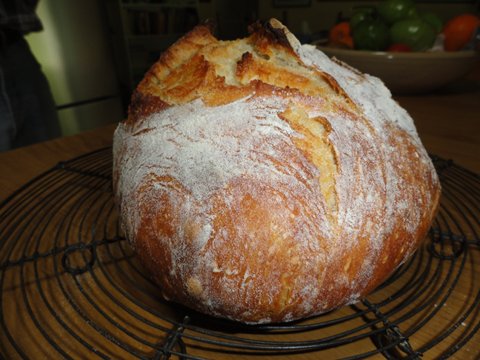
This bread is incredibly easy to make. Today, instead of a loaf, I've made bread rolls. I'm having one soon with some tomato and boiled egg. : )

I want to thank everyone who left a birthday message for H, who, incidentally, has asked to be called by his full name now - Hanno. So Hanno asked me to thank every one of you. He sat down and listened while I read out the comments and he was pleased and a bit surprised to receive good wishes from all around the world. So thank you. You helped contribute to a lovely day.

He went on his first jaunt on the bike this morning - to the shops to pick up the mail and some milk. We bought him a helmet yesterday - asked for a discount and got one, so he's all set up for some free wheeling around the neighbourhood. Maggie, yes, helmets are compulsory here too and have been for donkey's years.

Michelle posed an interesting question over at aussieslivingsimply this morning. She asked "Is it possible to live well on the age pension?" For our international readers, the age pension is paid to citizens of Australia after they reach the age of 65 - men and women. Michelle says the pension is $877 per couple per fortnight, or $438.50 a week. We live well on less than that. H is on an age pension (I'm only 59 so I have another five years before I can claim), we also have some share investments and money in the bank, but we made a conscious decision to give up a more lavish lifestyle and live on $400 a week.

It would be very difficult to live on this amount if you had debt or were paying rent, although I think there is a rent allowance if you do pay rent. But overall, I have to say it's possible to live on the pension, to live well, to enjoy yourself and to save.

Like just about everything else, you need to be organised and have a plan. If you go from week to week without one, you'd quickly fall on your face. We have a budget that we stick to - our budget is our spending guide which enables us to buy what we need, pay all our bills and save $150 a month. It's not a lot, but it pays for a holiday every year. In our former lives, $150 would have paid for a new pair of shoes, now it's much more valuable to us. We value our time more now so we'd never spend that amount on something so trivial. We're different people, we've changed our lives and the way we look at spending and possessions.

I've written before about how we break up our budget here, and in a few posts that follow that one, so I won't go into the details of it again, suffice to say that we couldn't do it without a budget or spending plan, and by being frugal. Thrift is the glue that holds our lifestyle together. We don't spend on things that don't give us true value. We gave away pay TV, flying, expensive clothes and shoes, magazines and most newspapers, brand name groceries, new cars every few years, eating out at restaurants, paying for someone to iron and clean, giving expensive gifts and pampering ourselves with what money buys. We are still pampered, but it's with healthier things like relaxing with a good (library) book on the front verandah and having the time to really enjoy our garden; we eat well, in fact we eat better now than we ever have with a lot of fresh, organic food rather than stale supermarket food; we don't miss 99% of pay TV and magazines. I'd still love to watch Martha and I'd still love to have my favourite magazine - British Country Living, but that's all I miss and it's not a big deal to miss something, it makes me stronger and I am better for it. And all the other things we gave up are nothing, we don't miss or think about them now. Our lives are better and we are happier than we've ever been.

We still pay for top cover private health insurance, we still have our dogs, we have a reliable car and whenever we have to buy something, we shop around and make sure we are getting the best value for our dollars. All those things are covered in that $400 a week.

So we are proof that living well on a pension is possible. We couldn't have done it without changing the way we see possessions and success. Success to us now is not a new car, it's whether the tomatoes have a bigger crop than they did last year. Our success now is seeing our sons mature and live their own lives well. We've taken the emphasis off money, we realise now that you don't read about true quality on a label but rather by the smile on someone's face or in the feeling of satisfaction after a hard days work. True happiness isn't about getting everything your heart desires, it's more about reaching your genuine potential and living a life that reflects that. And, ladies and gentlemen, I'm happy to say, you can do that on $400 a week, and probably less.

Monday is washing day
Tuesday is ironing day
Wednesday is mending day
Thursday is market day
Friday is cleaning day
Saturday is baking day
Sunday is a day of rest

Of course, most women didn't just do that chore on that day, they also did their general house work and often had time to visit with neighbours, join sewing circles and play with the children. It was a much more relaxed way of living that was centered around the family and home.

Things have changed. There are now more women working outside the home, often grandmothers look after grandchildren while the mums are at work, many couples work at different times so there is always someone with the children, stay at home mums sometimes have a hobby/job they work on at home during the day, others homeschool. Some SAHMs care for elderly parents, some volunteer their time to schools or other community organisations. Life is lived at a faster pace now and there is no one size fits all when it comes to housework routines.

How you organise your housework will depend on whether you work outside the home or not, how many people you're looking after and at what stage of life you're at. When I had two young babies just 12 months apart, I found not only was I washing on Monday, but also most other days of the week. Now I wash only on Wednesdays. Everyone is different and your routine will change at different stages of your life.

No matter what stage of life you're at it's a really good idea to develop a housework routine. That will take the huge and often overwhelming task of "housework" and break it down into smaller and manageable parts. You can either make up your routine to do your work room by room or you could do a specific chore on a certain day, much like the verse. If you're like me, and have only one other person, or just yourself to look after, maybe you could have a routine which is similar to mine. My routine is similar day by day with changes only for washing, ironing and shopping, which is done once a month.

This is my general routine - it's a loose kind of thing that can easily be changed if friends drop by or I realise I have to work on an unplanned project.

Rise and shower.
Work on the computer until H rises.
Feed dogs and cat.
Make breakfast and wash up.
Check chooks, feed and change water, collect eggs.
Make the bed, tidy the bedroom and bathroom.
Make bread and tidy the kitchen.
Sweep the floor, vacuum once a week.
Once a week I bake biscuits or a cake.
Morning tea.
Gardening, sewing or writing.
Make lunch and wash up.
Tidy one area of the house - like the lounge room, the laundry etc I spend no longer than 30 minutes on this.
Writing, sewing or computer.
Make dinner and wash up.
Relax.

Every Wednesday I do the washing, hang it outside and fold it when it's dry.
Every Sunday morning I do the ironing.
Once a month, on a Wednesday, I go grocery shopping with H.

There are also seasonal jobs to be done. Such as in summer, I do a bit of preserving. That's always done in the morning. In Winter and Spring there is more gardening to be done.

I find that if I break up my housework with ideas about when I'll do certain things, it stops me thinking of "housework" as one big uncontrollable monster; it turns into tasks that will be done at certain times.

If you haven't thought about your housework in an organised way yet, give it some thought and make up your own routine. Write down what needs to be done. You don't have to itemise every task, go for whole areas - like vacuum house, clean the bathrooms, or divide the tasks up so that, like the verse above, you're doing one major task on one day, with a few little tasks with it. Don't be afraid to modified your routine to suit how you work and who is there to help, if anyone. If you find something doesnt work as you planned, change it.

When you've worked on your routine for a week or so and it is working how you want it to, stick to it and hopefully it will help you do the work that is required to keep your home clean and well maintained. Don't forget to take time out to have morning tea and to look after yourself. Sitting down with a magazine for a 15 minute break will give you something to look forward to, renew your energy and will break up the tasks for you.

HAPPY BIRTHDAY H!

He turns 67 today. I picked up his gift on the way home from work yesterday and here he is just after I gave it to him. He was really pleased with the bicycle and rode around with Alice running behind. I love making him happy.

I usually use cold water in my washing machine, I will do a hot water wash only on whites. I use homemade laundry powder (recipe here) and I always treat stains before I put them into the washing machine. I have a front-loading, five star washing machine. I’ve washed this way for years. I’ve never had a problem with dirty clothes, colours that fade too quickly or hygiene problems with underwear, tea towels or tablecloths.

Always pre-treat stains
For small new stains use the homemade laundry powder mixed into a paste and apply the paste to the stain. Leave for 15 minutes, rub over the stain and then wash as normal in the washing machine. Most new stains, if treated just after the spill, will respond to this treatment. If you have a really dirty item, fill a nine litre bucket with hot water, place in a cap full of a non-chlorinated bleach powder or nappy soaker, dissolve the powder in the water and soak the dirty item in the bucket, preferably overnight, or at least until the water is cold. After this treatment you can wash the garment as normal in your washing machine. This treatment usually removes the worst stains.

Read the care labels
Be guided by the labels on your clothing but use your common sense when dealing with your laundry. If the label reads “dry clean only”, try a delicate hand wash on a small portion of the item to test for colourfastness and durability. If that small piece dries well, you can hand wash the entire piece. I’ve done this with clothes over the years with no ill effects. Always try to hand wash it as it will save you paying for dry cleaning and it will also save you from chemicals used in the dry cleaning process.

One ward of caution here. If you start hand washing, you should always hand wash it. If you dry clean, always dry clean. You can’t swap between processes.

Sorting the washing
I used to think this was a thorough waste of time. Now I do it routinely. It’s worth the effort. Remember when sorting before washing, also turn clothes out the correct way and empty the pockets. You can also check for stains at this point. If the stain is not removed by hand washing prior to machine washing, then it will have to be treated and soaked according to the instructions above.

Sort you clothes into piles before you start your washing. The basic sorting is to sort whites from everything else. If you have a pile of white clothes, it might contain things like white t-shirts, tablecloths, underwear or nighties. It’s fine to wash all these things together, although you might want to put your underwear into a mesh washing bag to keep them all together and to stop the bras and fine shoulder straps tangling with other clothing.

The next level of sorting will depend on the size of your family and the washing you have to do. If you have a big family, you can probably have a load for jeans, one for towels, one for cottons and so on. If you have little washing to do, you may just sort the whites from the darks or the heavy materials, like jeans, from the delicates.

Make sure you don’t wash new towels with dark clothes as you’ll get lint on the dark things and always be careful with red clothing. If you can, wash red with other bright colours or hand wash it if you know the colour will run. I have a red top that never runs but I have other red clothes that, no matter, how many times they are washed, they still shed some red pigment in every wash. If in doubt, test for colourfastness or hand wash.

When it's all washed, I hang the washing on the line to dry. I have a dryer, I never use it. Hanging washing outside allows the sun to give an extra bit of cleaning as UV radiation kills bacteria and prevents fungi from spreading. Don't leave the clothes on the line too long though as, over time, it will fade bright colours. There are two lovely side effects of line drying - seeing your clean clothes gently swaying in the breeze and smelling the sun in the clothes when you bring them inside. There is nothing better than sleeping on newly laundered sheets that have been dried in the sun.

FURTHER READING:
About drying

It will be a busy week this one. I'm off to my volunteer job today and tomorrow with, no doubt, a million things happening there. Tomorrow we host the Minister for Communities at morning tea when he visits our Centre. I am making tea and scones with homemade strawberry jam and local jersey cream. I hope that helps with future funding submissions. ; )

I'll be posting a few things at the post office while I'm out, including my napkins. Prepare for incoming, Deb. Would the lady who asked me about soap a long time ago please email again. I've lost your address. Thanks.

The photo above was taken yesterday from one of the bedrooms. It shows almost the entire length of our house. H is still painting - he's in my new sewing room now, so he had the vacuum cleaner out because he was sanding the doors down. The doors will be painted today, we are using Smoke Rings - a very light grey colour. That light brownish door just on the left of the green cupboard, is my stockpile cupboard. Those doors will be replaced to match the doors in the new kitchen.

It's H's 67th birthday on Wednesday. I'm taking him to the local tea house for lunch and I've ordered him a new bicycle, with basket. He wants to cycle to the shops to collect the mail each day and needs the basket for that and if he needs to pick up milk or a newspaper. I know he'll be really surprised. I hope he likes it. I will pick it up from the local bicycle shop on my way home from work tomorrow. The man said he'll have it assembled and attach the basket for me. I hope I can fit it in the car for the trip home.

I made tea cake muffins yesterday. They're a lovely light cake topped with cinnamon sugar and here you see one as part of my morning tea yesterday. It can be made as a tea cake or as I have done here, as muffins. It's a quick and simple recipe and well worth the making:

Tea Cake

  • 125 grams butter (¼ lb)
  • 2 eggs
  • tablespoon lemon zest
  • ¾ cup sugar
  • 1½ cups self raising flour OR 1½ cups plain/all purpose flour with 1½ teaspoons of baking powder sifted in
  • ½ cup milk
  • ½ tablespoon cinnamon + 1 tablespoon sugar for the topping
Place all ingredients, except the topping, in a bowl and beat for two minutes. Place in a small round cake tin, or a muffin try, and cook on 180C for about 15 minutes. When you take them from from the oven, brush the tops with melted butter and sprinkle on combined sugar and cinnamon.

Wednesday afternoon, after lunch at the tea house, we're going to the local kitchen showroom to look at new kitchens. Thursday and Friday will be spent on housework and the garden. I think my sister is coming to visit the following week. Hopefully along the way I can do some work on the ebook and of course, I'll be blogging each day. It's another week full of interesting and satisfying things to do. I hope your week is the same.

I've heard some disturbing reports in the last couple of days from farmers and meteorologists stating that unless we get good rain in Australia - particularly the inland of Victoria and New South Wales, then we could be in for "catastrophic crop losses". There are many reports from reputable government agencies that in coming months the price of food will skyrocket, especially if the drought continues. Other reports state that prices will rise because of the drought and oil prices. The increase in the production of biofuels has helped push up the price of grains.

Some of our primary food producers are on their last legs and one farmer on the ABC last night said that he has been farming for 50 years and has never seen the number of people on smaller farms leaving the land as they are now. If you only read one of the linked reports here, read this one from The Australian. This report in The Age newspaper states that food prices will rise by 50% in the next five years.

Unfortunately, it isn't just Australia facing this problem, it is world-wide. Wheat and oil prices effect world food prices, and I expect that if you did a google search about food prices in your own country, you'd find a similar story.

Simply put, if the drought continues and if oil prices continue to rise, we are in trouble. I don't want to scare anyone and, by nature, I am not a panic merchant, but I've never seen it like this in my lifetime. We all need to prepare for the worst but expect the best. Hopefully the rains will come and all this will fade off into our memories, like the Y2K Bug. But if it doesn't we must be prepared for it.

With the rises in prices we have to think also about the flow-on effect it has on other products. When wheat prices rise, that effects the price of bread, meat, chicken, pasta, eggs, milk and all the items made with these products. A rise in the price of milk and eggs will effect just about all processed food prices like cakes, desserts, processed tinned and frozen foods, ice cream, biscuits/cookies, etc.

We all need to be prepared for this. H and I have a healthy stockpile, laying chooks, water tanks, gardens full of organic fruit and vegetables, and our aquaponics system of vegetables and fish, but we will be auditing our stockpile in the coming week to see what we need to buy to supplement those fresh supplies. I know right now that we'll buy more flour, rice and vegetable seeds. I have secure places to store these things and I know they won't go off.

I want to revisit the subject of stockpiling groceries. I have written about it before here but I want to urge you all to start your stockpiles now, or top them up. Already the cost of wheat and milk has risen, so bread and eggs will rise soon too. Even if you can only stockpile things like flour, rice and other grains it will help. Stockpiling won't insulate you from the rising price of food and fuel, but it will help delay the impact and it will also lessen it.

If you haven't yet started a stockpile, now would be a good time to start. If you have one, check it and stock up on everything you eat that will keep in your cupboard or freezer. It's Spring in Australia, so if you are in Oz, now is the best time to start growing your own fruit and vegetables. I have a feeling that food prices won't be going down again in a hurry. Having a vegetable garden will help, so if you have water tanks or enough water from other sources, think about starting or enlarging the vegetable garden.

Another thing we can all do it to learn how to make more things from scratch. Bread, cakes, biscuits, drinks, jams, sauces and relishes are all easily made at home and will help provide healthy interesting food from your own garden and stockpile. If you're not already cooking from scratch, now is the time to start. Cooking from scratch doesn't mean cooking with tins of soup or other processed ingredients, it means cooking everything from basic unprocessed ingredients. Also think about making your own laundry detergent and soap. They're easy to make and you will save money doing it.

I am really interested in knowing what others think about this. What, if anything, are you doing to prepare? Do you have any suggestions you can share that will help lessen the impact of the drougth and rising prices?

Read through the links I've added here and if you all want to discuss this further, I could write some more about it in the coming week. We are still in a period where the prices haven't risen too much, so now is the time to do something.

FURTHER READING
ABC article on rising prices.
Courier Mail article on rising price of potatoes.

An american list for a healthy stockpile.
This is the nightie I'm taking the sleeves from.


The weekend is here again and I'm enjoying this fine Spring day. I have a load of washing on and soon I'll hang that to dry. While I'm out there, I'm going to check on the garden and give it some water. I love watering the garden with a hose. I can give the water lovers a bit extra, fill the bird baths with clean fresh water and make sure all the pot plants are moist and growing well. Watering is a good time for observation, and observation can make or break a garden.


I'll make some bread later, and some fresh pasta for our main meal. I would also like to make some tea cake muffins but I might not have time for them today. Now that the warmer weather is here I'm also thinking of ginger beer and more lemon cordial. I have about 8 litres of pure lemon juice frozen so I might defrost some of that or start a ginger beer plant this afternoon.

Most of my day will be inside, or at least on the front verandah, sewing. I finished off my napkins yesterday and started a bit of hand sewing on an extra frou frou I'll be sending with them. I'm also modifying a white cotton nightie by removing the long sleeves, which irritate me. There is some work to be done on Christmas gifts and a spot more knitting to do. I am fortunate to have so many lovely things to occupy my hours.

It's a real delight to sit out there with my sewing and knitting. The dogs amble past, the cat sits in the next chair, birds of all varieties fly around and in the silence of a still day, I hear our neighbour, the whip bird, send out his striking "whiiiiiiiiiiiiip" call. H wanders out to see what I'm doing, sometimes he brings a cool drink, sometimes he sits to rest and talk. I tell you, the living is easy on our front verandah.

Thank you for stopping by today. I hope you enjoy your weekend. : )
Updated at 2.45pm. All done. A cool nightie for the coming months.

A simple home can be many things. It could be a flat, house, caravan, shed, a room, a retirement village or a module in a sustainable community. Whatever form your home takes, it is an important part of your life and how you feel each day. Making it as sustainable, comfortable and productive as possible will make your life easier and more simple.

One of the most liberating and symbolic things you can do on your journey to simplified living is to declutter your home. It’s liberating because you don’t have to look after all that junk anymore and it is symbolic because it’s opening up your home and your mind and rejecting a more consumerist past life. It’s amazing how energised you feel after decluttering your home. We all have “stuff” in our lives, junk that we keep because we think it’s important, we haven’t thought to throw it out or we believe we might need it someday. Get tough with yourself and your possessions; they are holding you down under the weight of a hundred Saturday shopping trips to the mall and all those birthdays and Christmases. How many times have you “needed” something, tried looking for it and given up before you found it? How many times have you looked for something that you couldn’t find, bought a new replacement, then found the old one a week later? Those days are over.

You’ll be surprised when you’ve decluttered your home just how much junk you’ve paid money for and kept over the years. Keep only those things that you really need or those that give you pleasure. If something is kept in a cupboard and you don’t see it for months or years, get rid of it. When you finish your first decluttering session, look at what you have and enjoy it.

Decluttering is a major investment in your future well-being. Don’t try to declutter your entire house in one purging frenzy. Do it properly. It’s not a race. This is a readjustment to your life and it needs to be done with care and consideration. Concentrate on one room or one area at a time. Do one room a week until you’re finished, then revisit every room and make sure you got everything.
There are hundred of ways to declutter. This is how I do it:
  1. Get four large boxes or garbage bags and mark them “Put Away”, “Give Away”, “Sell” and “Rubbish”.
  2. Start at the door of the room and work in one direction around the room.
  3. If you’re not sure about any item you pick up, ask yourself these questions:
  • Is this important to me or my family?
  • Would I be sad if I didn’t have this?
  • Have I used this in the past year?

When you pick something up never put it down anywhere except in one of the bags or boxes. Never skip an area, even if it seems overwhelming. Starting some areas is the biggest step. Keep that in mind and if it looks like too big a job, time yourself. Tell yourself that you’ll work on it for 15 minutes. Set a timer and when 15 minutes is up, stop. Often you’ll find that 15 minutes will be enough to make a big dent in your problem area, you can go back and finish it later.

Keep the things that are important to you but be ruthless and get rid of everything that you haven’t used in the past year. When the boxes/bags are full, everything in the “Put Away” box should be put away in the appropriate place in your home, what’s in the “Give Away” box can be given to charity, neighbours or friends. Take your “Sell” box to the garage and keep it with all other things you want to sell on eBay or at a big garage sale you can have at the end of your decluttering. The “Rubbish” items can be further sorted into rubbish – for the rubbish bin, or recyclables for the recycle bin or station.

As you work through your rooms resist the temptation to clean while you go. Leave things tidy but save your cleaning and organising for another day. When all your decluttering is finished and you have removed all the boxes to their appropriate places, go back to each room and assess what needs to be done next. Now that you’ve removed all the excess items you can really clean and organise your rooms into fully functional areas that work for the purpose they are intended.

Look what I found yesterday! An old photo of my boys - H, Shane and Kerry. H would have been in his early 40s here.

Although I love working in my home and recognise that everything I do here makes life better for H and I, there are some chores I don't like doing. But as I work my way through each day, as I make our bed each morning, wash the dishes and sweep floors, I know that what I am doing contributes in a meaningful way to our lives.

When our sons were much younger and I was hoping that my methods of firm boundaries, loving guidelines and setting a good example, would produce the men they eventually became, through all those years of mothering, even in the tough times, I knew unreservedly it was an honourable task.

I look around today at a world that is faster and noisier, where you are held in high esteem if you live with secret debt in a fancy house, where people rush to judgement, where children take knives and guns to school and where people, especially women, wonder if their vocation to work at home or in the business world is the right one.

We need to look at work with fresh eyes, we need to respect the work we do, and the work of others. You will always feel undervalued and have a sense of not being recognised for your work - both in paid work or at home - if you do not try to work to your full potential, set quality standards for yourself and honour what you do.

If you want your work to be respected, you must first respect what you do. You have to give meaning to your own work - whatever it is. Work is its own reward, it brings self discipline, honour and gratification in a job well done. Set your own standards of quality, don't look at the next door neighbours or those you work with and wish for what they have. It's irrelevant. Care for and respect what you have. Respect what you do and others will too.

There is a sense of accomplishment in starting a job, setting your standard of quality, working through to the best of your ability, bit by bit, taking in every part of that work. It will give you a sense of achievement and pride in what you do. Being the best mum, writing an accurate and intelligent report, serving your customers well, baking a wonderful loaf of bread, tending your garden, collecting eggs, mentoring your work colleagues and being the best you can be will make your work honourable and make you better for it.

Focusing on how you work - be that at home or in the workplace - gives your day purpose, it helps you live deliberately and it will help you create a fuller life for yourself. If you can wake in the morning with a feeling of wanting to do your best, work through your day with a generous and happy heart and look back on what you've achieved with pride, then you've lived that day well, and to its full potential. And if that seems to be too much of a task for you to achieve, just start one step at a time. Concentrate on what you're doing, do small tasks well and take pride in them. Slowly you will start seeing all work as honourable and when you understand that, when you know that what you do contributes to the quality of your life, it will make it easier for you to totally embrace your work.
Could the following ladies please contact me at rhondahetzel at gmail dot com and let me know your email and your postal address. Thank you. mystele, aimee, kimmee mom of 6, mrs mk, morgan and leah.

We are taking most of our evening meal from the garden today. I've picked cabbage, carrots, capsicum, daikon radish and red onions for coleslaw, some rocket and a frilly lettuce, the last of the green beans and snow peas. I have tomatoes and cucumber, from the local market, ready to slice. Eggs have been collected and are now boiling and the bread is baking. Soon I'll cook some of our kipfler potatoes which I'll serve with butter and parsley. Our dessert will be mango yoghurt for H and one of our oranges for me. A simple but satisfying meal after a busy day's work; I'm getting hungry. : )

I want to say thank you to everyone who calls by to read my blog. Without you, there would be much less gratification for me in the writing. It is such a joy for me to read your comments and emails and to see the sisterly embrace of the swap. We have created a world wide sewing circle that I'm very proud to be part of, and I'm impatient to see lots of photos of the napkins. I started making mine this afternoon.

So that's another day winding down to its slow end. H will be in shortly and he'll say: What time is dinner? We always eat at the same time and he always asks it. The habits of a life time never seem trivial and hearing H ask that tells me that all is right in my world.

I'll see you again tomorrow, friends. : )
Newer Posts Older Posts Home

MY BOOKS

MY BOOKS


My books were all published by Pengiun, and are available at Amazon US, Amazon UK and Amazon Au

Search here

Total Pageviews

Translate


I'm Rhonda Hetzel and I've been writing my Down to Earth blog since 2007. Although I write the occasional philosophical post, my main topics include home cooking, happiness and gardening as well as budgeting, baking, ageing, generosity, mending and handmade crafts. I hope you enjoy your time here.

MY FAVOURITE PLACES

  • Grandma Donna's Place
  • Grandma Donna's YouTube
  • Grandma Donna's Instagram
  • This Simple Day
  • Nicole's Instagram

Give More

Give More

Popular posts last year

Making ginger beer from scratch

We had a nice supply of ginger beer going over Christmas. It's a delicious soft drink for young and old, although there is an alcoholic version that can be made with a slight variation on the recipe. Ginger beer is a naturally fermented drink that is easy to make - with ginger beer you make a starter called a ginger beer plant and after it has fermented, you add that to sweet water and lemon juice. Like sourdough, it must ferment to give it that sharp fizz. To make a ginger beer plant you'll need ginger - either the powdered dry variety or fresh ginger, sugar, rainwater or tap water that has stood for 24 hours to allow the chlorine to evaporate off. You'll also need clean plastic bottles that have been scrubbed with soap, hot water and a bottle brush and then rinsed with hot water. I never sterilise my bottles and I haven't had any problems. If you intend to keep the ginger beer for a long time, I'd suggest you sterilise your bottles. MAKING THE STARTER In a...
Image

NOT the last post

This will be my last post here.  I've been writing my blog for 18 years and now is the time to step back. I’ve stopped writing the blog and come back a couple of times because so many people wanted it, but that won’t happen again, I won’t be back.  I’ll continue on instagram to remain connected but I don’t know how frequent that will be. I know some of you will be interested to know the blog's statistics. 
Image

How to make cold process soap

I'm sure many of you are wondering: "Why make soap when I can buy it cheaply at the supermarket?" My cold process soap is made with vegetable oils and when it is made and cured, it contains no harsh chemicals or dyes. Often commercial soap is made with tallow (animal fat) and contains synthetic fragrance and dye and retains almost no glycerin. Glycerin is a natural emollient that helps with the lather and moisturises the skin. The makers of commercial soaps extract the glycerin and sell it as a separate product as it's more valuable than the soap. Then they add chemicals to make the soap lather. Crazy. Making your own soap allows you to add whatever you want to add. If you want a plain and pure soap, as I do, you can have that, or you can start with the plain soap and add colour, herbs and fragrance. The choice is yours. I want to add a little about animal and bird fat. I know Kirsty makes her soap with duck fat and I think that's great. I think t...
Image

Preserving food in a traditional way - pickling beetroot

I've had a number of emails from readers who want to start preserving food in jars but don't know where to start or what equipment to buy.  Leading on from yesterday's post, let's just say up front - don't buy any equipment. Once you know what you're doing and that you enjoy preserving, then you can decide whether or not to buy extra equipment. Food is preserved effectively without refrigeration by a variety of different methods. A few of the traditional methods are drying, fermentation, smoking, salting or by adding vinegar and sugar to the food - pickling. This last method is what we're talking about today. Vinegar and sugar are natural preservatives and adding one or both to food sets up an environment that bacteria and yeasts can't grow in. If you make the vinegar and sugar mix palatable, you can put up jars of vegetables or fruit that enhance the flavour of the food and can be stored in a cupboard or fridge for months. Other traditional w...
Image

Cleaning mould from walls and fabrics

With all this rain around we've developed a mould problem in our home. Usually we have the front and back doors open and that good ventilation stops most moulds from establishing. However, with the house locked up for the past week, the high humidity and the rain, mould is now growing on the wooden walls near our front door and on the lower parts of cupboards in the kitchen. Most of us will find mould growing in our homes at some point. Either in the bathroom or, in humid climates, on the walls, like we have now. You'll need a safe and effective remedy at some point, so I hope one of these methods works well for you. Mould is not only ugly to look at, it can cause health problems so if you see mould growing, do something about it straight away. The longer you leave the problem, the harder it will be to get rid of it effectively. If you have asthma or any allergies, you should do this type of cleaning with a face mask on so you don't breathe in any spores. Many peopl...
Image

Five minute bread

Bread is one of those foods that, when made with your own hands, gives a great deal of satisfaction and delight. It's only flour and water but it symbolises so much. I bake bread most days and use a variety of flours that I buy in bulk. Often I make a sandwich loaf because we use most of our bread for lunchtime sandwiches and for toast. Every so often I branch out to make a different type of loaf. I have tried sour dough in the past but I've not been happy with any of them. I'll continue to experiment with sour dough because I like the idea of using wild yeasts and saving the starter over a number of years to develop the flavour and become a part of the family. However, the loaf I've been branching out to most often is just a plain old five minute bread. By five minutes I mean it takes about five minutes actual work to prepare but it's the easiest of all bread to make and to get consistently good loaves from. If you're having people around for lunch or...
Image

This is my last post.

I have known for a while that this post was coming, but I didn't know when. This is my last post. I'm closing my blog, for good, and I'm not coming back like I have in the past.  I've been writing here for 16 years and my blog has been many things to me. It helped me change my life, it introduced me to so many good people, it became a wonderful record of my family life, it helped me get a book contract with Penguin, and monthly columns with The Australian Women's Weekly and Burke's Backyard . But in the past few months, it's become a burden. In April, I'll be 75 years old and I hope I've got another ten years ahead. However, each year I'll probably get weaker and although I'm fairly healthy, I do have a benign brain tumour and that could start growing. There are so many things I want to do and with time running out, leaving the blog behind gives me time to do the things that give me pleasure. On the day the blog started I felt a wonderful, h...
Image

What is the role of the homemaker in later years?

An email came from a US reader, Abby, who asked about being a homemaker in later years. This is part of what she wrote: "I am a stay-at-home mum to 4 children, ages 9-16. I do have a variety of "odd jobs" that I enjoy - I run a small "before-school" morning drop-off daycare from my home, I am a writing tutor, and I work a few hours a week at a local children's bookstore. But mostly, I cherish my blissful days at home - cooking, cleaning (with homemade cleaners), taking care of our children and chickens and goats, baking, meal-planning, etc. This "career" at home is not at all what I imagined during my ambitious years at university, but it is far more enriching. I notice, though, that my day is often planned around the needs of my family members. Of course, with 4 active kids and a husband, this is natural. I do the shopping, plan my meals, cook dinner - generally in anticipation of my family reconnecting in the evening.  I can't h...
Image

Every morning at home

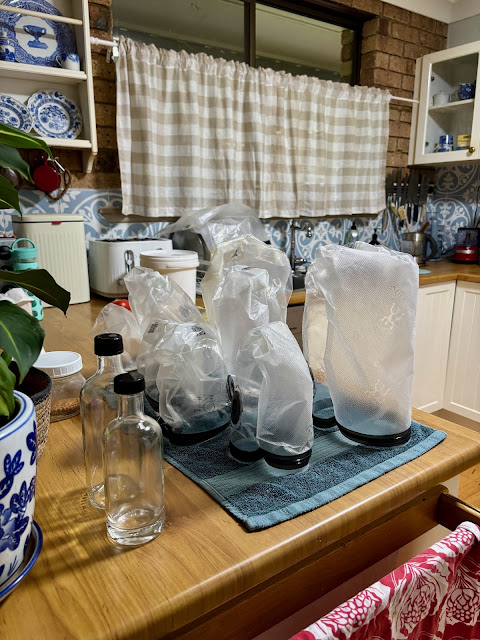
Every morning when I walk into my kitchen it looks tidy and ready for a day's work. Not so on this morning (above), I saw this when I walked in. Late the previous afternoon when I was looking for something, I came across my rolled up Zwilling vacuum bags and decided they had to be washed and dried. So I did that and although I usually put them outside on the verandah to dry it was dark by then. I turned the just-washed bags inside out and left them like this on a towel. It worked well and now the bags are ready to use when I bring home root vegetables, cabbages or whatever I buy that I want to last four or five weeks.
Image

You’ll save money by going back to basics

When I was doing the workshops and solo sessions, I had a couple of people whose main focus was on creating the fastest way to set up a simple life. You can't create a simple life fast, it's the opposite of that It's not one single thing either - it's a number of smaller, simpler activities that combine to create a life that reflects your values; and that takes a long to come together. When I first started living simply I took an entire year to work out our food - buying it, storing it, cooking it, preserving, baking, freezing, and growing it in the backyard. This is change that will transform how you live and it can't be rushed.  
Image

All previous blog posts

  • 2026 3
    • February 3
      • Workshops starting 1 March
      • Planting vegetable seeds and new workshops
      • Back where we belong
  • 2025 7
    • July 1
    • June 2
    • May 1
    • April 2
    • February 1
  • 2024 25
    • December 2
    • November 1
    • October 2
    • September 3
    • August 1
    • July 3
    • June 1
    • May 3
    • April 2
    • March 3
    • February 2
    • January 2
  • 2023 13
    • December 1
    • November 2
    • October 1
    • September 3
    • August 2
    • February 2
    • January 2
  • 2022 17
    • November 3
    • October 4
    • September 3
    • August 2
    • July 3
    • June 2
  • 2021 50
    • December 1
    • November 6
    • October 7
    • September 5
    • August 4
    • July 5
    • June 2
    • May 2
    • April 6
    • March 4
    • February 4
    • January 4
  • 2020 68
    • December 3
    • November 5
    • October 4
    • September 4
    • August 4
    • July 4
    • June 4
    • May 8
    • April 7
    • March 8
    • February 8
    • January 9
  • 2019 66
    • December 2
    • November 4
    • October 5
    • August 3
    • July 4
    • June 6
    • May 8
    • April 8
    • March 8
    • February 11
    • January 7
  • 2018 82
    • December 1
    • September 2
    • August 10
    • July 4
    • June 11
    • May 9
    • April 12
    • March 10
    • February 10
    • January 13
  • 2017 129
    • December 7
    • November 10
    • October 6
    • September 13
    • August 11
    • July 13
    • June 12
    • May 9
    • April 9
    • March 14
    • February 11
    • January 14
  • 2016 125
    • December 7
    • November 13
    • October 10
    • September 11
    • August 11
    • July 8
    • June 9
    • May 9
    • April 12
    • March 10
    • February 13
    • January 12
  • 2015 184
    • December 7
    • November 15
    • October 20
    • September 18
    • August 19
    • July 18
    • June 12
    • May 15
    • April 12
    • March 21
    • February 13
    • January 14
  • 2014 203
    • December 11
    • November 8
    • October 17
    • September 20
    • August 17
    • July 19
    • June 17
    • May 17
    • April 23
    • March 15
    • February 18
    • January 21
  • 2013 225
    • December 13
    • November 17
    • October 17
    • September 17
    • August 21
    • July 24
    • June 20
    • May 19
    • April 17
    • March 22
    • February 17
    • January 21
  • 2012 245
    • December 17
    • November 20
    • October 20
    • September 18
    • August 15
    • July 24
    • June 21
    • May 26
    • April 23
    • March 23
    • February 19
    • January 19
  • 2011 257
    • December 18
    • November 24
    • October 27
    • September 23
    • August 24
    • July 21
    • June 24
    • May 24
    • April 16
    • March 22
    • February 14
    • January 20
  • 2010 283
    • December 20
    • November 18
    • October 18
    • September 19
    • August 25
    • July 24
    • June 25
    • May 26
    • April 25
    • March 22
    • February 29
    • January 32
  • 2009 293
    • December 29
    • November 18
    • October 23
    • September 25
    • August 22
    • July 28
    • June 22
    • May 21
    • April 27
    • March 26
    • February 24
    • January 28
  • 2008 387
    • December 24
    • November 23
    • October 25
    • September 26
    • August 27
    • July 27
    • June 37
    • May 34
    • April 44
    • March 53
    • February 32
    • January 35
  • 2007 372
    • December 37
    • November 40
    • October 55
    • September 51
    • August 49
    • July 63
    • June 49
    • May 28


Trending Articles

NOT the last post

This will be my last post here.  I've been writing my blog for 18 years and now is the time to step back. I’ve stopped writing the blog and come back a couple of times because so many people wanted it, but that won’t happen again, I won’t be back.  I’ll continue on instagram to remain connected but I don’t know how frequent that will be. I know some of you will be interested to know the blog's statistics. 
Image

Every morning at home

Every morning when I walk into my kitchen it looks tidy and ready for a day's work. Not so on this morning (above), I saw this when I walked in. Late the previous afternoon when I was looking for something, I came across my rolled up Zwilling vacuum bags and decided they had to be washed and dried. So I did that and although I usually put them outside on the verandah to dry it was dark by then. I turned the just-washed bags inside out and left them like this on a towel. It worked well and now the bags are ready to use when I bring home root vegetables, cabbages or whatever I buy that I want to last four or five weeks.
Image

You’ll save money by going back to basics

When I was doing the workshops and solo sessions, I had a couple of people whose main focus was on creating the fastest way to set up a simple life. You can't create a simple life fast, it's the opposite of that It's not one single thing either - it's a number of smaller, simpler activities that combine to create a life that reflects your values; and that takes a long to come together. When I first started living simply I took an entire year to work out our food - buying it, storing it, cooking it, preserving, baking, freezing, and growing it in the backyard. This is change that will transform how you live and it can't be rushed.  
Image

Creating a home you'll love forever

Living simply is the answer to just about everything. It reduces the cost of living; it keeps you focused on being careful with resources such as water and electricity; it reminds you to not waste food; it encourages you to store food so you don't waste it and doing all those things brings routine and rhythm to your daily life. Consciously connecting every day with the activities and tasks that create simple life reminds you to look for the meaning and beauty that normal daily life holds.  It's all there in your home if you look for it. Seemingly mundane tasks like cleaning and cooking help you with that connection for without those tasks, the home you want to live in won't exist in the way you want it to.  Creating a home you love will make you happy and satisfied.
Image

Time changes everything

I've been spending time in the backyard lately creating a contained herb and vegetable garden. My aim is to develop a comfortable place to spend time, relax, increase biodiversity and encourage more animals, birds and insects to live here or visit. Of course I'd prefer my old garden which was put together by Hanno with ease and German precision. Together, we created a space bursting at the seams with herbs, vegetables and fruity goodness ready to eat and share throughout the year. But time changes everything. What I'm planning on doing now, is a brilliant opportunity for an almost 80 year old with balance issues. In my new garden I'll be able to do a wide range of challenging or easy work, depending on how I feel each day. It’s a daily opportunity to push myself or sit back, watch what's happening around me and be captivated by memories or the scope of what's yet to come.
Image

It's the old ways I love the most

I'm a practical woman who lives in a 1980’s brick slab house. There are verandahs front and back so I have places to sit outside when it's hot or cold. Those verandahs tend to make the house darker than it would be but they're been a great investment over time because they made the house more liveable. My home is not a romantic cottage, nor a minimalist modern home, it's a 1980’s brick slab house. And yet when people visit me here they tell me how warm and cosy my home is and that they feel comforted by being here. I've thought about that over the years and I'm convinced now that the style of a home isn't what appeals to people. What they love is the feeling within that home and whether it's nurturing the people who live there.
Image

Back where we belong

Surprise! I'm back ... for good this time. Instagram became an impossible place for me. They kept sending me messages asking if I'd make my page available for advertisers! Of course, I said no but that didn't stop them. It's such a change from what Instagram started as. But enough of that, the important part of this post is to explain why I returned here instead of taking my writing offline for good. For a few years Grandma Donna and I have talked online face-to-face and it's been such a pleasure for me to get to know her. We have a lot in common. We both feel a responsibility to share what we know with others. With the cost of living crisis, learning how to cook from scratch, appreciate the work we do in our homes, shop to a budget and pay off debt will help people grow stronger. The best place to do that is our blogs because we have no advertising police harassing us, the space is unlimited, we can put up tons of photos when we want to and, well, it just feels li...
Image

Making ginger beer from scratch

We had a nice supply of ginger beer going over Christmas. It's a delicious soft drink for young and old, although there is an alcoholic version that can be made with a slight variation on the recipe. Ginger beer is a naturally fermented drink that is easy to make - with ginger beer you make a starter called a ginger beer plant and after it has fermented, you add that to sweet water and lemon juice. Like sourdough, it must ferment to give it that sharp fizz. To make a ginger beer plant you'll need ginger - either the powdered dry variety or fresh ginger, sugar, rainwater or tap water that has stood for 24 hours to allow the chlorine to evaporate off. You'll also need clean plastic bottles that have been scrubbed with soap, hot water and a bottle brush and then rinsed with hot water. I never sterilise my bottles and I haven't had any problems. If you intend to keep the ginger beer for a long time, I'd suggest you sterilise your bottles. MAKING THE STARTER In a...
Image