down to earth

  • Home
  • About Us
  • Down To Earth Book
  • Privacy Policy
I've been out in the garden enjoying the mid-afternoon sunshine and pouring a little rainwater on the vegetables. We have some dutch cream potatoes, carrots and English spinach picked for dinner that we'll have with the last of the tuna bake. As usual, I had my camera with me in the SIDE pocket of my apron. : ) I took these photos in the long shadows of a cold winter afternoon.

Don't forget, you can enlarge the photos by clicking on them.


H is already talking about picking this kale next week to have with his smoked German sausages. I'll be having boiled eggs and pumpkin soup on those nights. He's been happy that it's growing so well as it's the first year we've planted it and it's really taken off.

I love terracotto pots in the garden, not on the ground but upsidedown, like this.

This is the garden right next to the chookery. You can see beyond the fence to the bananas, palms and loofahs.

Now
I'm going to prepare the vegetables for dinner and sit with some knitting. I've been hobbling around with a sore hip all day and I need to sit for a while.

Thank you for stopping by.

I spent a leisurely afternoon making my apron and although there are flaws - the bib is too wide, the ties too long and I had to patch fabric to make it fit, I'm quite happy with the outcome. I'll never win any prizes for sewing, that's for sure, but I do enjoy making this and that for my home. I'll wear my apron as I'm working today and when it is washed and ironed, I'll make some adjustments so it fits me better. Wearing an apron is essential when I'm doing housework. I can wipe my hands on it, carry things in the pocket and it covers my clothes so that if someone visits I can quickly take off the apron and look reasonably clean and tidy.

Aprons drew me into housework. When I was working for a living I didn't do much housework, and didn't like doing it. Then I gave up work, I bought myself an apron, then made a couple more because I felt more like doing housework when I wore an apron. It was like I was dressing for a role on stage. Now I love working in my home and cringe when I think of the lengths I used to go to avoid doing it. I'm really stupid sometimes. LOL

I know there are a lot of people who dislike housework but accepting it as part of every day is just a shift in mindset, similar to those adjustments made to stop shopping, be frugal and conserve resources.Now I see housework as simply making my home as comfortable and beautiful as I can for my family, friends and I. Making my bed each morning isn't just part of the morning routine, it's fluffy up the cosy nest so that it's inviting and comfortable for us that night. Sweeping the floor gets rid of food crumbs and the dust our dogs bring inside. It makes the house look better and that makes me feel good. Dusting gets rid of the dust that would cause my asthma to start if left sitting on furniture. I dust so I don't get sick. Washing clothes is a breeze - how could washing clothes be thought of as work when all you do is put them in a machine and take them out again? Hanging them to dry in the winter sun is a chore I like doing, and folding them when they're dry and fresh and putting them away in drawers gives me a sense of a job well done, a feeling that I've done what needed doing. Planting seeds and tending the chickens gives us good food and flowers that can be brought into the house. Simple flowers or herbs in an old preserving jar are one of the mindful joys of being at home in one's own place.

Cooking and baking have always been a joy so baking bread most days and having fresh biscuits and cakes for our morning teas gives me pleasure. I love sitting on the front verandah with H and sharing time and conversation with tea and something home baked. Since we gave up working for a living we have grown closer and part of that is due to those cosy morning chats. We have been together over 30 years and we've reconnected and reestablished our relationship on our front verandah. It's easy being there with him, we've made it a nice place to relax. It pleases me when friends drop by and I can serve them fresh chocolate chip biscuits or Anzacs, or buttermilk scones with homemade jam and local cream. Cooking from scratch after picking vegetables and herbs from the back garden, supplemented with staples from the pantry comforts me, knowing that I'm providing good wholesome food, without chemicals and preservatives, within the boundaries of my frugal budget.

Of course there are some chores I don't enjoy, but they don't bother me. Who likes cleaning a toilet for instance? I don't really enjoy ironing, but I put on the TV and watch something while I iron quickly. The payoff is fresh and tidy clothes for the following week. I like to look clean and fresh when I go to my voluntary job each week.If you are one of the many who dislike housework, try to look at it with kinder eyes. See it as something you do for yourself and your family, see it as making your home a comfortable and warm place that you're happy to spend time in and proud to invite your friends to share with you. See it as fluffing your nest.

There was a time when women used to work very hard in the home. We are lucky that we've got washing machines and vacuum cleaners now that make our tasks easier, although keeping house is still time consuming and difficult at times. When I had young children on the weekends we used to all do our chores in the mornings and we'd be rewarded by relaxing all afternoon or we'd go out or watch a movie together. They didn't mind working hard if they knew there was a payoff. That's how I see housework now - I work hard for what I get out of it. All it takes is a change in mindset to turn it around. And isn't reinvention part of our simple lives?

I'm not a particularly good sewer but I do my best to make a wide range of things for my home. Today I'm making another apron. I need side pockets, not a front one which most of my aprons have. The front pocket catches on the knobs on the kitchen cupboards and catch me when I try to walk away. So side pockets it will be! Here is the fabric I'm chosen from my stockpile.

While I was looking for fabric, I found this little thing that I made last year. I drew the pattern and stitched it while I was working at our shop. It's mainly stitching with a little applique.

If anyone wants me, I'll be in the sewing room.

These are are Rhode Island Red chooks.

How could you live without chooks in the backyard? Don't answer, I wasn't really asking. ; )

I've been keeping chooks in the backyard since my kids were little. When I wanted to teach my boys about
responsibility and looking after something other than themselves, chooks taught them all they needed to know. When I wanted to encourage gentleness as a contrast to the harshness of boy's games, the chooks took over and taught that it was ok to cuddle, speak softly and to defend the helpless. The chooks also showed my boys they were capable of justifiable anger and if they tried to take eggs from a broody hen, they paid for it with peck marks and a renewed respect for motherhood.

This rose comb Light Sussex hen was at the local poultry show a couple of months ago.

Chooks are excellent foragers. They can turn vegetable scraps, lawn clippings and green waste into compost faster than I can, simply by constantly turning over whatever is put in the pen. We have a compost heap and bin but when we need compost in a hurry we empty lawn clippings, vegie scraps and leaves straight into a small contained area in their pen. The chooks go in and out constantly throughout the day to scratch through it. We keep it moist with some tank water, they add their droppings to it and within two or three weeks we have lovely sweet smelling dark compost.

But overall we keep chooks for the delicious fresh golden eggs they give us. Nothing is better than a fresh egg, either softly boiled with toast soldiers, in a light fluffy sponge cake with homemade raspberry jam gently spilling over the side or in a quiche full of dark golden yolks, freshly picked green onions, red peppers and mushrooms.

This is a laced Wyandotte hen was also at the poultry show.
Having been explained the plight of pure bred chook by Pam, a member of ALS, I will keep only pure breeds from now on. Pure bred chooks are like open pollinated seeds. If we don't seek out pure breeds all that will be left in the future will be hybridised chooks bred for the poultry industry. Many of us who farm our backyards choose open pollinated seeds because choosing hybrid seeds is choosing corporatisation of seeds over the heirlooms that have been passed down over the generations. We do the same if we choose Isa Browns or Hyline chooks over pure breeds like Wyandottes, Plymouth Rocks or Barnevelders. Our last additions in the chook house were pure Rhode Island Reds. I'm looking to buy a couple of Welsummers next.

Hmmm, I
might have scrambled eggs with parsley and chives on toast for breakfast today because even in the middle of winter we are still getting six eggs a day. I'll put the kettle on.


I sometimes have people ask me how I fill my days. It's a bit of a patchwork really and each day is different to the ones on either side. For instance, today I rose at 4am and spent almost three hours writing on the computer. Then a break for breakfast of grilled cheese on toast and black tea. After washing the dishes and getting the bread on the rise, I swept the floor, cleaned the main bathroom with non-chemical cleaners, and made up a new batch of laundry detergent. Morning tea with H at 10.30, he made the tea and served it with some little afghan cakes I made the other day. I then had a look in the garden, planted up some tomatoes and zucchini seeds, talked to the chooks and thanked the new girls for starting to lay their sweet little brown eggs, checked the aquaponics gardens and watched the fish for a while. They're doing really well now and I hope they continue to live in good health. One mass fish kill is enough.

Lunch was brandywine tomatoes and rocket on hot bread and black tea.

A parcel of warm clothes arrived from a member of ALS (for the Neighbourhood Centre) so I wrote a quick PM and did some posting on the site while I was there. My sister, then my son phoned, so that made short work of the next hour. I made a start on dinner which is tuna bake made from scratch and is now in the oven. Dessert this evening will be an apricot cobbler I made last night, and warm egg custard, yet to be made. I've just finished cleaning up the kitchen again and took this photo so I could write another post while I had a cup of tea.

It's just after 3pm now, so I hope to do some knitting while the tuna browns in the oven. Basically my work is done for the day. It's been an easy one. Uh oh, I just looked outside to the lemons still sitting on the table. I need to juice them today so I guess I'm not quite finished.

I hope you all had a full and satisfying day.

Being the type of person I am I always read about things before I do them, or soon after. When I had my kids, I read everything I could while I was pregnant. Like most of everything else, that reading didn't really prepare me for it - it was more difficult, more tiring, more educational, more heart warming, more inspiring and more wonderful than I ever thought possible, but it did give me a few hints and it made me realise I wasn't alone. That's always a good thing to know.

So when it came to a major life change, I was true to form and went back to the books. That was in the days when I had a credit card just for internet spending and I ran it red hot. When I went looking in Australian book shops there was very little on offer about simple living, so I found myself browsing Amazon.

Before I give you my list of books, I must recommend, again, the Australian Readers Digest book - Back to Basics - ISBN 0 86449 028 3. (I've written about it previously in this blog.) There is an edition on sale on ebay at the moment. This book has information about building, crafts, preserving, growing food, cooking and baking and a lot more. As I have a lot of American readers, here is an American edition as well which is on sale here:
http://www.bestwebbuys.com/Back_to_Basics-ISBN_9780895770868.html?isrc=b-search

Another book along the same lines and also worth buying is The Encyclopedia of Country Living: An Old Fashioned Recipe Book by Carla Emery.
http://www.amazon.com/Encyclopedia-Country-Living-Fashioned-Recipe/dp/0912365951

Linda Woodrow's The Permaculture Home Garden ISBN: 0-670-86599-0
http://www.affordablebooks.com.au/details.php?bookid=0-670-86599-0
If you're looking to create a permaculture garden in your backyard, this is the book for you.

This is the best Australian organic gardening book I've read. This book actually taught me things I didn't know, Easy Organic Gardening and Moon Planting by Lyn Bagnall.
http://www.greenharvest.com.au/books/organic_gardening.html

Jackie French's Backyard Self-sufficiency, anther good book with down to earth practical advice. Also available from Green Harvest:
http://www.greenharvest.com.au/books/organic_gardening.html

The Simple Living Guide by Janet Luhrs, is not so much a practical guide but a guide to slowing down and reinvention.
http://www.amazon.com/Simple-Living-Guide-Janet-Luhrs/dp/0553067966

Your Money or Your Life by Joe Dominguez and Vicki Robin will transform the way you think about money. It's a must read!
http://www.amazon.com/Your-Money-Life-Transforming-

David Holmgren's Retrofitting the Suburbs for Sustainability, available here on pdf:
http://holmgren.eatthesuburbs.org/DLFiles/PDFs/Holmgren-Suburbs-Retrofit-Update49.pdf

Magazines: Warm Earth, Grass Roots and Earth Garden. All available at the newsagent and your local library, I hope.

Not must reads but also very good:
Joie de Vivre: Simple French Style for Everyday Living by Robert Arbor
http://www.amazon.com/Joie-Vivre-Simple-French-Everyday/dp/0743223535/ref=sr_1_10/104-7225276-4730333?ie=UTF8&s=books&qid=1182989803&sr=1-10

The Chemical Maze by Bill Stratham - your guide to food additives and cosmetic ingredients. ISBN 0 9578535 2 1 http://www.possibility.com.au/

The New Herb Bible by Carolyn Foley ISBN: 1 87 5169 92 x
This is a good Australian book on herbs - how to grow, making cosmetics and cooking with them. I can't find a seller in Australia but you might be able to order it at the library.

Not books but worth reading and a good reference guide:
http://www.foodscience.afisc.csiro.au/smallsca.htm
http://ohioline.osu.edu/hyg-fact/5000/5338.html
http://www.freshpreserving.com/

I'd probably
forgotten some but at least this is a start.

Generally one loofah harvest will keep you going all year.


I harvested most of the loofahs this morning. I have about 18 of them, both dry and green. I clipped off some of the green ones because we've had a lot of rain lately and some were starting to look like they'd go mouldy. They will dry out under the shelter of the back verandah. There are nine green loofahs still on the vine.

If you don't know about loofahs, they're used for washing yourself in the shower, or cut up smaller and used for washing dishes. They have excellent exfoliating properties, so they keep your skin looking and feeling good, they're 100% natural, biodegradable and renewable.

I'll keep a few of these I picked today for using through the year. Some of them I'll cut into small pieces
and pour hot homemade soap into them. When they dry and harden, they make an excellent gift. The smaller ones will be used in the kitchen.
This is a loofah with the skin partially pealed off.
Loofahs are a distant cousin of the cucumber and although they like warm weather, they will grow in cooler weather. Two vines will cover quite a large area and would be enough to produce about 40 or 50 loofahs. They like to climb, so you'd need a trellis or fence to grow them well.

You can pick loofahs
when they are green or brown. If they're still green they'll feel heavy and full, as they dry they lose their bulkiness and will weigh only a gram or two. They'll be ready to peel when they turn brown, are light in weight and you can peel the crisp skin off. When you have all your loofahs peeled and all the seeds out, soak all of them in a bucket of water with a tablespoon of liquid bleach added. This will kill off any mould spores that might be lurking. When they've soaked for a couple of hours, rinse them all, and dry in the sun. When they're dry they're ready to use or store.
These are the seeds from one loofah.
As you can see by this last photo, each loofah produces quite a few seeds. I'm happy to send out seeds to anyone who wants them, but I can't afford the postage. If you'd like some seeds, send me a stamped self-addressed envelope, I'll send some loofah seeds and maybe some madagascar bean seeds or rosella seeds. It's all free, you just have to pay your own postage. Send me an email and I'll send you my postal address.  PLEASE NOTE, I have no seeds left.

These are madagascar bean seeds. They're a traditional permaculture plant. Two seeds will grow a wall of beans that can be shelled and stored in the cupboard as dried beans.

I have few regrets when I look back on my old life but one thing I do regret is all the food and money I wasted. I’m very careful now to make sure that I buy only what I’ll use and when the food is in the house, I make sure I use it. “Forgetting” about it in the back of the fridge or the cupboard is no longer an option for me. I refuse to waste anything. Sadly, it’s not only the financial aspect of all that waste that is disturbing, it’s also that fact that most of it goes to our landfill sites and gives off greenhouse gases, including methane.

According to Wasteful Consumption in Australia: “Overall Australians threw away $2.9 billion of fresh food, $630 million of uneaten take-away food, $876 million of leftovers, $596 million of unfinished drinks and $241 million of frozen food, a total of $5.3 billion on all forms of food in 2004. This represents more than 13 times the $386 million donated by Australian households to overseas aid agencies in 2003.” 1

I wonder if others are shocked by those figures. I am.

The waste outlined in the report is broken down
into the following demographic characteristics: Younger people waste more than older people. In the 18 – 24 year old age bracket, there was an amazing 38 percent who said they wasted $30 worth of fresh food per fortnight. This sharply reduces in the 70-plus age bracket where only seven percent of householders admitted similar waste. 1

The key to stopping food waste is good organisation. When you shop, do it with a shopping list after you’ve planned your menus, or at least have a good idea of what you need to buy for meals. Don't impulse shop, thinking you'll buy something "just in case", or because it looks good. When you buy meat, fish and poultry, get it home quickly, divide it into meal-sized portions and label it clearly, with the date, and put it in the fridge or freezer as soon as you can. Keep all the different kinds of meat together in their own sections. This will help you know when you need to buy fresh supplies of that particular product. If you have a freezer with drawers, keep all your beef in one draw, the chicken in another, or divide the drawer in two and have beef one side and lamb in the other. If you have a box-type freezer, put your meats in baskets, plastic containers or old plastic shopping bags that are labeled with the contents.

Organising your freezer, and making a commitment to keeping it organised, will help because you’ll know what you have on hand, what you need to buy and what needs to be used before it is too old. Most freezers have a frozen food guide printed on the inside of the door, be guided by it and don’t store food longer than the suggested time period. Keeping a freezer log is also a good idea. Just get a small notebook and divide it up into sections. When putting new food in the freezer, enter it in the log, complete with portion size, food type, date. When you use something in the freezer, cross it off your log book. You’ll know at a glance exactly how much frozen food you have. Keep the log close to your freezer so you don’t waste time looking for it when storing new food or taking it out.

Be mindful of what is in the fridge that needs to be used. You might have vegetables that are a bit old - make vegetable soup and freeze it. There will be a night when you are grateful to have a pre-made homecooked meal ready to go. The apples going soft in the fridge? Stew them and have them that night with a little cinnamon sugar and warm custard.

I challenge all of you to go to your fridges now and see if there is anything that is on the verge of being wasted. If so, do something with it before it's too late.

1 Wasteful Consumption in Australia
Clive Hamilton, Richard Denniss, David Baker
Discussion Paper Number 77
March 2005
ISSN 1322-5421

I've always been a very keen reader. There was a time when I would read a book every couple of days but that was when I had time to lounge around and indulge in the effortless pleasure of good books. Now I've changed my reading habits and I usually have two or three books to read at one time. I have one in the house somewhere, one next to my bed and usually one in my bag - my travelling book. All these books are from the library because I rarely buy new books now. I gave up a lot of things to live more simply - pay TV, flying, imported food, new clothes and shoes every year; the last thing I gave up buying was books.

Here is a photo of one shelf in a bookcase that stands a few feet away. These are not library books. All these books are used fairly frequently, either as reference books, to lend to someone or just to reacquaint myself with the simple truth they contain or to again be inspired by the beauty of their composition.

We’ve had a vegetable garden for much of the past 25 years. Gardening is one of those things that I miss when I don’t do it for a few days. I can't see myself without some form of garden in the future, even if it’s just a few herbs and some tomatoes in pots.

But now I have five garden beds surrounded by a picket fence to keep dogs and chooks out. On the other side of the garden we grow fruit. Currently we have grapes, bananas, passionfruit, pink grapefruit, mandarins, loquat, raspberries, loofahs, blueberries and lemons. Contained within the vegetable garden there are oranges, peaches and nectarines.


We grow vegetables all year but now is our best growing season. During summer it’s very hot here and there are so many bugs around it doesn’t seem worth it to grow anything. But generally we soldier on with tomatoes, cucumber, eggplant, chilli, capsicums, potatoes, silverbeet and herbs.

We are now growing potatoes, cucumbers, cabbages, bok choy, radishes, lettuce, rocket, English spinach, silverbeet, turnips, carrots, capsicums, beans, peas, red and green onions, pumpkins, herbs, kale, mixed lettuces, loofahs. In the aquaponics garden we have celery, asparagus, silverbeet and lots of tomatoes.


Our garden has been organic since the start. We’ve lived here for 10 years and have tried to operate a closed system over that time, but invariably we’ve had to import straw for mulch and a bit of organic fertilizer, seaweed extract and potash. The soil has been built up of the years from red clay to the friable dark soil we now enjoy. There was a lot of hard work at first, mountains of compost, dolomite limestone and worm castings from our worm farm, but we’ve now got very good soil.

My garden is maintained so it will produce food all year, we eat from it almost every day. I also like to freeze and preserve excess for use later. Often we give eggs and vegetables to our son and occasionally to friends and neighbours. I grow loofahs to use in the shower, in the kitchen and to give as gifts with some of my home made soap.

There is nothing better than your own fresh organic food
ready for picking in the backyard. When you team that up with a stockpile cupboard of dried goods and staples, you can live like a queen without the huge expense normally associated with organic food.

When I decided that I would stop spending, along with that decision came the imperative of looking after what I own. We have always bought the best quality we could afford at the time and when you live simply that is a necessity. You aim to have good quality that will last a long time, and to look after everything you buy so you don't have to keep replacing it. In the coming weeks I'll write about looking after various items in your home, today it's the linen cupboard.

One of the things I do every six months or so is to clean out my linen cupboard. It gives me the opportunity to clean down the shelves and get rid of what I'm not using. I cleaned my cupboard out this morning and now have a small bag of sheets and duvet covers that I'll take to work with me next week to give to families who come in. I also have a nice bag of flannel rags that I cut up from old sheets.

 
sheets. sheetsW

When
When you clean out your linen cupboard, remove everything to give yourself a clean slate to start with. Your shelves should be painted or covered with plastic sheeting. Wooden shelves tend to stain linens over time. Fill a small bucket with soapy water and wipe down the shelves, dry each shelf well with an old towel. You can add essential oil to your soapy water to give the cupboard sweet smell. Look for any signs of cockroaches, silverfish or other pests. If you find any such signs, place some borax traps at the back of the linens to kill whatever has made their home in your cupboard.

Go through all your linens and refold all of them. Hopefully you won't have too much folding to do but it is worth it to make sure they're not harbouring pests or mould. Put back only those linens that you use. Don't be fooled into thinking the rose and primrose comforter your granny gave you will be used in the future. If you haven't use it in the past year, give it to someone who will use it. What use is a comforter, even if it is a cherish one, that is not used? When you've made the decisions on what will go back, place it all on your shelves in a way that makes sense to you.


We have a queen size bed so all my queen fitted and flat sheets are together on my main shelf. Under that shelf, I keep duvet covers and pillow slips. Over them I have sheets, duvet covers and odd sided pillow slips to other beds in the house that are only used when guests are here. Below the sheets are guest towels. The towels we use regularly are in our bathroom. Organising my cupboard like that makes sense to me so when I need new sheets, I don't have to sort through the lot of them to find what I need.

This is an easy task that should take you about 30 minutes to complete. I tell you, you'll feel wonderful when it's finished. So if you've yet to start organising your home, start with this small thing and we'll take it from there.
I have to apologise right now. There will be times when you come to this blog and just as you've become used to one set of colours and layout, I'll change it. I can't help it. The love of change is instilled deep within me. So for all of you who prefer to stay with the familiar, I apologise. I change the furniture around all the time too.
Newer Posts Older Posts Home

MY BOOKS

MY BOOKS


My books were all published by Pengiun, and are available at Amazon US, Amazon UK and Amazon Au

Search here

Total Pageviews

Translate


I'm Rhonda Hetzel and I've been writing my Down to Earth blog since 2007. Although I write the occasional philosophical post, my main topics include home cooking, happiness and gardening as well as budgeting, baking, ageing, generosity, mending and handmade crafts. I hope you enjoy your time here.

MY FAVOURITE PLACES

  • Grandma Donna's Place
  • Grandma Donna's YouTube
  • Grandma Donna's Instagram
  • This Simple Day
  • Nicole's Instagram

Give More

Give More

Popular posts last year

Making ginger beer from scratch

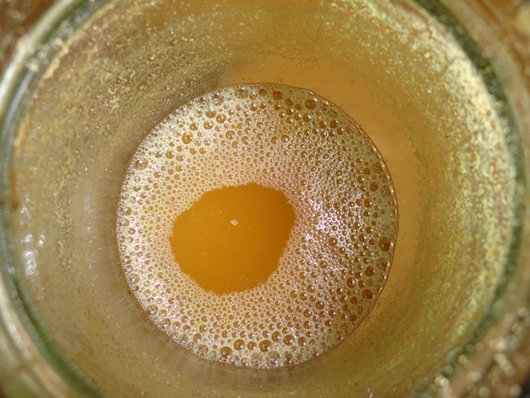
We had a nice supply of ginger beer going over Christmas. It's a delicious soft drink for young and old, although there is an alcoholic version that can be made with a slight variation on the recipe. Ginger beer is a naturally fermented drink that is easy to make - with ginger beer you make a starter called a ginger beer plant and after it has fermented, you add that to sweet water and lemon juice. Like sourdough, it must ferment to give it that sharp fizz. To make a ginger beer plant you'll need ginger - either the powdered dry variety or fresh ginger, sugar, rainwater or tap water that has stood for 24 hours to allow the chlorine to evaporate off. You'll also need clean plastic bottles that have been scrubbed with soap, hot water and a bottle brush and then rinsed with hot water. I never sterilise my bottles and I haven't had any problems. If you intend to keep the ginger beer for a long time, I'd suggest you sterilise your bottles. MAKING THE STARTER In a...
Image

NOT the last post

This will be my last post here.  I've been writing my blog for 18 years and now is the time to step back. I’ve stopped writing the blog and come back a couple of times because so many people wanted it, but that won’t happen again, I won’t be back.  I’ll continue on instagram to remain connected but I don’t know how frequent that will be. I know some of you will be interested to know the blog's statistics. 
Image

How to make cold process soap

I'm sure many of you are wondering: "Why make soap when I can buy it cheaply at the supermarket?" My cold process soap is made with vegetable oils and when it is made and cured, it contains no harsh chemicals or dyes. Often commercial soap is made with tallow (animal fat) and contains synthetic fragrance and dye and retains almost no glycerin. Glycerin is a natural emollient that helps with the lather and moisturises the skin. The makers of commercial soaps extract the glycerin and sell it as a separate product as it's more valuable than the soap. Then they add chemicals to make the soap lather. Crazy. Making your own soap allows you to add whatever you want to add. If you want a plain and pure soap, as I do, you can have that, or you can start with the plain soap and add colour, herbs and fragrance. The choice is yours. I want to add a little about animal and bird fat. I know Kirsty makes her soap with duck fat and I think that's great. I think t...
Image

Preserving food in a traditional way - pickling beetroot

I've had a number of emails from readers who want to start preserving food in jars but don't know where to start or what equipment to buy.  Leading on from yesterday's post, let's just say up front - don't buy any equipment. Once you know what you're doing and that you enjoy preserving, then you can decide whether or not to buy extra equipment. Food is preserved effectively without refrigeration by a variety of different methods. A few of the traditional methods are drying, fermentation, smoking, salting or by adding vinegar and sugar to the food - pickling. This last method is what we're talking about today. Vinegar and sugar are natural preservatives and adding one or both to food sets up an environment that bacteria and yeasts can't grow in. If you make the vinegar and sugar mix palatable, you can put up jars of vegetables or fruit that enhance the flavour of the food and can be stored in a cupboard or fridge for months. Other traditional w...
Image

Cleaning mould from walls and fabrics

With all this rain around we've developed a mould problem in our home. Usually we have the front and back doors open and that good ventilation stops most moulds from establishing. However, with the house locked up for the past week, the high humidity and the rain, mould is now growing on the wooden walls near our front door and on the lower parts of cupboards in the kitchen. Most of us will find mould growing in our homes at some point. Either in the bathroom or, in humid climates, on the walls, like we have now. You'll need a safe and effective remedy at some point, so I hope one of these methods works well for you. Mould is not only ugly to look at, it can cause health problems so if you see mould growing, do something about it straight away. The longer you leave the problem, the harder it will be to get rid of it effectively. If you have asthma or any allergies, you should do this type of cleaning with a face mask on so you don't breathe in any spores. Many peopl...
Image

Five minute bread

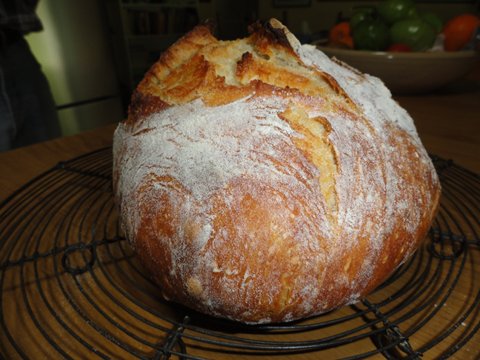
Bread is one of those foods that, when made with your own hands, gives a great deal of satisfaction and delight. It's only flour and water but it symbolises so much. I bake bread most days and use a variety of flours that I buy in bulk. Often I make a sandwich loaf because we use most of our bread for lunchtime sandwiches and for toast. Every so often I branch out to make a different type of loaf. I have tried sour dough in the past but I've not been happy with any of them. I'll continue to experiment with sour dough because I like the idea of using wild yeasts and saving the starter over a number of years to develop the flavour and become a part of the family. However, the loaf I've been branching out to most often is just a plain old five minute bread. By five minutes I mean it takes about five minutes actual work to prepare but it's the easiest of all bread to make and to get consistently good loaves from. If you're having people around for lunch or...
Image

This is my last post.

I have known for a while that this post was coming, but I didn't know when. This is my last post. I'm closing my blog, for good, and I'm not coming back like I have in the past.  I've been writing here for 16 years and my blog has been many things to me. It helped me change my life, it introduced me to so many good people, it became a wonderful record of my family life, it helped me get a book contract with Penguin, and monthly columns with The Australian Women's Weekly and Burke's Backyard . But in the past few months, it's become a burden. In April, I'll be 75 years old and I hope I've got another ten years ahead. However, each year I'll probably get weaker and although I'm fairly healthy, I do have a benign brain tumour and that could start growing. There are so many things I want to do and with time running out, leaving the blog behind gives me time to do the things that give me pleasure. On the day the blog started I felt a wonderful, h...
Image

What is the role of the homemaker in later years?

An email came from a US reader, Abby, who asked about being a homemaker in later years. This is part of what she wrote: "I am a stay-at-home mum to 4 children, ages 9-16. I do have a variety of "odd jobs" that I enjoy - I run a small "before-school" morning drop-off daycare from my home, I am a writing tutor, and I work a few hours a week at a local children's bookstore. But mostly, I cherish my blissful days at home - cooking, cleaning (with homemade cleaners), taking care of our children and chickens and goats, baking, meal-planning, etc. This "career" at home is not at all what I imagined during my ambitious years at university, but it is far more enriching. I notice, though, that my day is often planned around the needs of my family members. Of course, with 4 active kids and a husband, this is natural. I do the shopping, plan my meals, cook dinner - generally in anticipation of my family reconnecting in the evening.  I can't h...
Image

Every morning at home

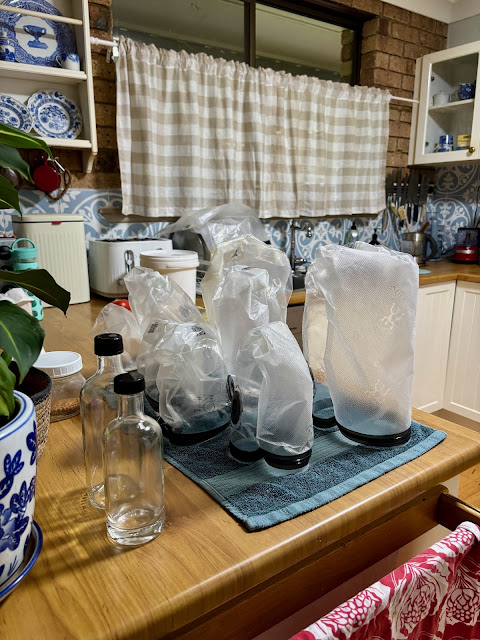
Every morning when I walk into my kitchen it looks tidy and ready for a day's work. Not so on this morning (above), I saw this when I walked in. Late the previous afternoon when I was looking for something, I came across my rolled up Zwilling vacuum bags and decided they had to be washed and dried. So I did that and although I usually put them outside on the verandah to dry it was dark by then. I turned the just-washed bags inside out and left them like this on a towel. It worked well and now the bags are ready to use when I bring home root vegetables, cabbages or whatever I buy that I want to last four or five weeks.
Image

You’ll save money by going back to basics

When I was doing the workshops and solo sessions, I had a couple of people whose main focus was on creating the fastest way to set up a simple life. You can't create a simple life fast, it's the opposite of that It's not one single thing either - it's a number of smaller, simpler activities that combine to create a life that reflects your values; and that takes a long to come together. When I first started living simply I took an entire year to work out our food - buying it, storing it, cooking it, preserving, baking, freezing, and growing it in the backyard. This is change that will transform how you live and it can't be rushed.  
Image

All previous blog posts

  • 2026 3
    • February 3
      • Workshops starting 1 March
      • Planting vegetable seeds and new workshops
      • Back where we belong
  • 2025 7
    • July 1
    • June 2
    • May 1
    • April 2
    • February 1
  • 2024 25
    • December 2
    • November 1
    • October 2
    • September 3
    • August 1
    • July 3
    • June 1
    • May 3
    • April 2
    • March 3
    • February 2
    • January 2
  • 2023 13
    • December 1
    • November 2
    • October 1
    • September 3
    • August 2
    • February 2
    • January 2
  • 2022 17
    • November 3
    • October 4
    • September 3
    • August 2
    • July 3
    • June 2
  • 2021 50
    • December 1
    • November 6
    • October 7
    • September 5
    • August 4
    • July 5
    • June 2
    • May 2
    • April 6
    • March 4
    • February 4
    • January 4
  • 2020 68
    • December 3
    • November 5
    • October 4
    • September 4
    • August 4
    • July 4
    • June 4
    • May 8
    • April 7
    • March 8
    • February 8
    • January 9
  • 2019 66
    • December 2
    • November 4
    • October 5
    • August 3
    • July 4
    • June 6
    • May 8
    • April 8
    • March 8
    • February 11
    • January 7
  • 2018 82
    • December 1
    • September 2
    • August 10
    • July 4
    • June 11
    • May 9
    • April 12
    • March 10
    • February 10
    • January 13
  • 2017 129
    • December 7
    • November 10
    • October 6
    • September 13
    • August 11
    • July 13
    • June 12
    • May 9
    • April 9
    • March 14
    • February 11
    • January 14
  • 2016 125
    • December 7
    • November 13
    • October 10
    • September 11
    • August 11
    • July 8
    • June 9
    • May 9
    • April 12
    • March 10
    • February 13
    • January 12
  • 2015 184
    • December 7
    • November 15
    • October 20
    • September 18
    • August 19
    • July 18
    • June 12
    • May 15
    • April 12
    • March 21
    • February 13
    • January 14
  • 2014 203
    • December 11
    • November 8
    • October 17
    • September 20
    • August 17
    • July 19
    • June 17
    • May 17
    • April 23
    • March 15
    • February 18
    • January 21
  • 2013 225
    • December 13
    • November 17
    • October 17
    • September 17
    • August 21
    • July 24
    • June 20
    • May 19
    • April 17
    • March 22
    • February 17
    • January 21
  • 2012 245
    • December 17
    • November 20
    • October 20
    • September 18
    • August 15
    • July 24
    • June 21
    • May 26
    • April 23
    • March 23
    • February 19
    • January 19
  • 2011 257
    • December 18
    • November 24
    • October 27
    • September 23
    • August 24
    • July 21
    • June 24
    • May 24
    • April 16
    • March 22
    • February 14
    • January 20
  • 2010 283
    • December 20
    • November 18
    • October 18
    • September 19
    • August 25
    • July 24
    • June 25
    • May 26
    • April 25
    • March 22
    • February 29
    • January 32
  • 2009 293
    • December 29
    • November 18
    • October 23
    • September 25
    • August 22
    • July 28
    • June 22
    • May 21
    • April 27
    • March 26
    • February 24
    • January 28
  • 2008 387
    • December 24
    • November 23
    • October 25
    • September 26
    • August 27
    • July 27
    • June 37
    • May 34
    • April 44
    • March 53
    • February 32
    • January 35
  • 2007 372
    • December 37
    • November 40
    • October 55
    • September 51
    • August 49
    • July 63
    • June 49
    • May 28


Trending Articles

NOT the last post

This will be my last post here.  I've been writing my blog for 18 years and now is the time to step back. I’ve stopped writing the blog and come back a couple of times because so many people wanted it, but that won’t happen again, I won’t be back.  I’ll continue on instagram to remain connected but I don’t know how frequent that will be. I know some of you will be interested to know the blog's statistics. 
Image

Every morning at home

Every morning when I walk into my kitchen it looks tidy and ready for a day's work. Not so on this morning (above), I saw this when I walked in. Late the previous afternoon when I was looking for something, I came across my rolled up Zwilling vacuum bags and decided they had to be washed and dried. So I did that and although I usually put them outside on the verandah to dry it was dark by then. I turned the just-washed bags inside out and left them like this on a towel. It worked well and now the bags are ready to use when I bring home root vegetables, cabbages or whatever I buy that I want to last four or five weeks.
Image

You’ll save money by going back to basics

When I was doing the workshops and solo sessions, I had a couple of people whose main focus was on creating the fastest way to set up a simple life. You can't create a simple life fast, it's the opposite of that It's not one single thing either - it's a number of smaller, simpler activities that combine to create a life that reflects your values; and that takes a long to come together. When I first started living simply I took an entire year to work out our food - buying it, storing it, cooking it, preserving, baking, freezing, and growing it in the backyard. This is change that will transform how you live and it can't be rushed.  
Image

Creating a home you'll love forever

Living simply is the answer to just about everything. It reduces the cost of living; it keeps you focused on being careful with resources such as water and electricity; it reminds you to not waste food; it encourages you to store food so you don't waste it and doing all those things brings routine and rhythm to your daily life. Consciously connecting every day with the activities and tasks that create simple life reminds you to look for the meaning and beauty that normal daily life holds.  It's all there in your home if you look for it. Seemingly mundane tasks like cleaning and cooking help you with that connection for without those tasks, the home you want to live in won't exist in the way you want it to.  Creating a home you love will make you happy and satisfied.
Image

Time changes everything

I've been spending time in the backyard lately creating a contained herb and vegetable garden. My aim is to develop a comfortable place to spend time, relax, increase biodiversity and encourage more animals, birds and insects to live here or visit. Of course I'd prefer my old garden which was put together by Hanno with ease and German precision. Together, we created a space bursting at the seams with herbs, vegetables and fruity goodness ready to eat and share throughout the year. But time changes everything. What I'm planning on doing now, is a brilliant opportunity for an almost 80 year old with balance issues. In my new garden I'll be able to do a wide range of challenging or easy work, depending on how I feel each day. It’s a daily opportunity to push myself or sit back, watch what's happening around me and be captivated by memories or the scope of what's yet to come.
Image

It's the old ways I love the most

I'm a practical woman who lives in a 1980’s brick slab house. There are verandahs front and back so I have places to sit outside when it's hot or cold. Those verandahs tend to make the house darker than it would be but they're been a great investment over time because they made the house more liveable. My home is not a romantic cottage, nor a minimalist modern home, it's a 1980’s brick slab house. And yet when people visit me here they tell me how warm and cosy my home is and that they feel comforted by being here. I've thought about that over the years and I'm convinced now that the style of a home isn't what appeals to people. What they love is the feeling within that home and whether it's nurturing the people who live there.
Image

Back where we belong

Surprise! I'm back ... for good this time. Instagram became an impossible place for me. They kept sending me messages asking if I'd make my page available for advertisers! Of course, I said no but that didn't stop them. It's such a change from what Instagram started as. But enough of that, the important part of this post is to explain why I returned here instead of taking my writing offline for good. For a few years Grandma Donna and I have talked online face-to-face and it's been such a pleasure for me to get to know her. We have a lot in common. We both feel a responsibility to share what we know with others. With the cost of living crisis, learning how to cook from scratch, appreciate the work we do in our homes, shop to a budget and pay off debt will help people grow stronger. The best place to do that is our blogs because we have no advertising police harassing us, the space is unlimited, we can put up tons of photos when we want to and, well, it just feels li...
Image

Making ginger beer from scratch

We had a nice supply of ginger beer going over Christmas. It's a delicious soft drink for young and old, although there is an alcoholic version that can be made with a slight variation on the recipe. Ginger beer is a naturally fermented drink that is easy to make - with ginger beer you make a starter called a ginger beer plant and after it has fermented, you add that to sweet water and lemon juice. Like sourdough, it must ferment to give it that sharp fizz. To make a ginger beer plant you'll need ginger - either the powdered dry variety or fresh ginger, sugar, rainwater or tap water that has stood for 24 hours to allow the chlorine to evaporate off. You'll also need clean plastic bottles that have been scrubbed with soap, hot water and a bottle brush and then rinsed with hot water. I never sterilise my bottles and I haven't had any problems. If you intend to keep the ginger beer for a long time, I'd suggest you sterilise your bottles. MAKING THE STARTER In a...
Image