down to earth
  • Home
  • About Us
  • Down To Earth Book
  • Privacy Policy
We had to leave very early for the hospital yesterday so I didn't have time to finish my blog. But I have good news! Hanno's angiogram showed a couple of small problems but nothing to be too concerned about. He has some "wall damage", a complete blockage in one tiny vessel that goes no where and a 30% blockage in a larger blood vessel. It can all be treated with medication. Hanno started back on his warfarin last night along with the new pill which he takes once a day. He goes back for a checkup in March. So, angiogram tick, let's move on with renewed hope and confidence. 

Thank you all for you good wishes, prayers, comments and emails. I am sure I have the loveliest and most caring readers on the internet. 

---♥---♥---♥---

I received this email recently, thought it was a great topic to discuss, replied to the sender to watch for an answer on the blog, copied the email here, deleted the email, and forgot to ask her if it is okay to use her real name. So, as I'm not sure, let's say this email is from "Mary".

I enjoyed your recent post about homemaking in later life, but I have a question about homemaking for younger people. You speak a lot about being a mother and grandmother, and about how that fits into being a homemaker. My question for you is what do you consider the role of a homemaker who does not want children? My husband has a construction company, and I take care of the paperwork. We have recently sold our company to a larger company, and he will be going to work for them in the new year. His work frequently takes him out of town during the week, and brings him home on the weekends. People are asking me what am I going to do now that I don't have the business to take care of. Many people know that I don't wish to have children, and seem to feel that there's no need for me to stay at home if I'm not a) going to have kids or b) do the paperwork for the company, especially since my husband works out of town. I am feeling frustrated because people don't seem to understand and I'm not sure how to get my point across to them, that working in my home is giving me joy and fulfillment. The people questioning me are people I care about and respect, who care about me as well, so I don't feel comfortable ignoring their questions. I'd like to be able to have a productive conversation but am finding that I can't come up with something better than "because I want to and I like it." Do you have any advice about how I can explain my role as a homemaker, without kids, with an out of town husband and no "real job" to do at home?

Let me start by stating I am proudly working class. I love my work and I think work makes us the people we are. However, I don't believe that paid work is more valuable than other types of work - house work, voluntary work, education and study, being a parent or a carer, or any other type of work. Paid work is necessary for most of us, but the work that really contributes to our well being and mental health is the work done at home, by men and women, to make a comfortable and welcoming home, keep costs down and to increase self-reliance. That is hands-on work where you see a result for your efforts every day. Paid work is necessary to buy or rent a home to live in, to buy food and clothing but apart from the minority of people who love their jobs and couldn't think of doing anything else, most people work because they have to. 

There is a large group of us who have recognised that paid work is not the reason for being; it is what enables us to live how we choose. When we have worked enough to acquire what we need, we can cut back on the amount of paid work we do and just live - doing those things that make us happy. There is no point in working just to accumulate money. When you have what you need - a roof over your head, clothing, food, and the things you enjoy around you, what is the point of working more. Our society seems to celebrate young entrepreneurs who make a lot of money and retire early to enjoy life. They ignore people who work in a way that allows them to do that without making a lot of money. Why is that? If you don't want to buy into the conspicuous consumption model we have lived with in the past 30 years, why wouldn't you recognise your own level of "enough" and then stop paid work to enjoy what you've worked for? 


I have no doubt there will be people who read this post today and know they will never have the opportunity to leave work - they're providing for small children, disabled or sick relatives or have been left with debt. There will be others who don't want to leave paid work. That is their interest. It engages and satisfies them and they enjoy meeting their colleagues every working day. 

And we have many people like Mary. 


Mary, it sounds to me like you've reached your level of "enough". Your husband is bringing in a wage and that is sufficient for both of you to enjoy what you have and to be confident that your savings and investments will see you through. It's irrelevant that you have no children, if you decide to be a homemaker, if you have enough work to keep you active both mentally and physically (and most of us do), if you enjoy time spend on domestic and creative activities, then you're in the right place and you're doing what enriches you. 


I think your job as a homemaker should be whatever you choose to include in your life. Even though you're much younger than I am, your role could be very similar to mine, which is to care for the home, to shop mindfully, to cook healthy food, to clean clothes and linens, to tend the garden, to mend, recycle and repair. To me, that's work; enjoyable work. You'll have your own routine and you'll be baking most days, cooking from scratch, making green cleaners, soap, laundry products, knitting dishcloths, mending clothes, storing food and you'll be doing it all in your own time. You're totally in charge of how you spend your hours and when you look back at the end of the day, you'll feel satisfied that you've done what you needed to do and you'll look forward to doing similar tasks tomorrow. 


I don't know when we moved from working because we had to, to working because we're expected to, but it happened along the way. If you don't do your work at home, who does it? You pay others to cook for you in the form of convenience food, frozen and packaged foods and takeaways, you buy products are are inferior to those you can make yourself, you buy new clothes because you can't make minor repairs, your home suffers if it's not maintained. I think it makes more sense, if there is enough money coming in, for someone to be at home, whether they're looking after children or not. I don't understand the mentality that says we all have to work so we have enough money to buy everything we need and then have no personal input into our own lives at all. It makes more sense to me to have someone at home who can customise the home to suit those living there. And that is not menial work - it is blessing to everyone who lives there, including the person who does the work. 


Mary, I love your explanation: because I want to and I like it. That should be all you need say. You're living the life you want to live. You don't have to conform to anyone else's standards or ideals, and you don't have to be having babies and looking after children to justify your home work. But I understand you want to explain to those you love so why don't you start by saying: "I don't have to work because we have enough. I stay at home because I want to and I like it." And then go on to tell them what it is you do at home, how you save money in a variety of ways, how you have the time to create and tend a vegetable garden and how you're enriched by what you do. Maybe those who are questioning you really have forgotten that this is how we all used to live before paid work became such a dominant force. 


Letters of Note - Fiona Apple and her best friend

Early winter on the farm

Some good recipes and a lovely blog - Eighth of an Acre Bounty

Research into the awareness of time passing

A great online magazine about sustainable living and growing

I'd love to visit this town - Asheville

The aunties army


FROM COMMENTS MADE HERE DURING THE PAST WEEK

Paulines is blogging in Canberra, our capital

The chooks have just started laying at Winter Tells

A delightful creative blog Handmade Romance. Scroll down the page to see Evie's fabulous boy dolls.

The year has begun in earnest and my daily patterns are starting to feel familiar again. I hope yours are too. It's good to be back with you; I'm looking forward to our year together.  See you next week.
We've had two days to think about cutting costs and getting into the right frame of mind to start saving money. By know you should have a budget up and running or at least have started tracking your spending. If you've never made up a budget before, it's a good idea to track what you spend for a month so you know exactly where your money is going and your not just guessing. There are two old posts about tracking your spending and budgeting to help you if you're still at this stage, but if you get into a tangle with it, go over to the forum and ask for help.  Here is a free App for your iPhone to track your spending.

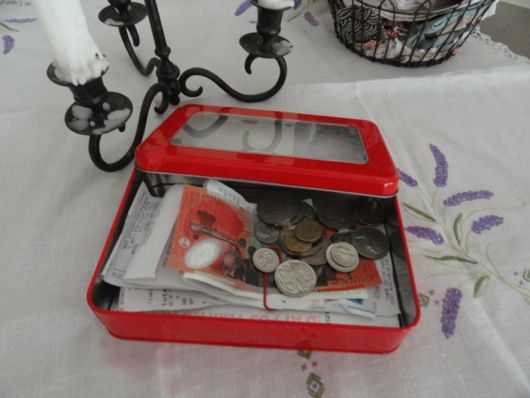
This is my food money box, with receipts.

There is no doubt about it, if you cook from scratch, not only will you save money, you'll ingest fewer preservatives and additives. You will also be skilled enough to turn leftovers into a new meal and to substitute ingredients when you run short. Basic cooking is a wonderful life skill to have and to pass on to your children.

When you first start out on this frugal pathway, collect about 12 recipes that you can cook well, that use cheap and easy to find ingredients, that use grains or legumes as well as meat, fish or chicken and that your family enjoy. Once you get these 12 meals to a point where you know you can't make them any better, start collecting a few more, and take your time perfecting those too and customising them to suit your family. When you have a good collection of main meal recipes, start on baking, then drinks, then soups, then school and work lunches, then snacks. When you have all these categories covered, I bet you'll be seen in your family as a really good cook. You will certainly be putting food on the table that you can be proud of and you'll be providing all that nutrition at a low cost.

I've been cherry picking from old posts to cover as much of this as I can without rewriting it all.

A few quick tips
  • Stop spending on non-essentials. Ask yourself if it's a want or a need.
  • Use cash only - it feels like real spending as you have less and less cash in your purse as you continue through the week.
  • Make your own cleaning products. It's cheaper, you'll get better products and it's much healthier.
  • Make your own laundry liquid. It works! 
  • Stop buying food and buy ingredients instead. Cooking from scratch will save money and help you reduce the amount of artificial additives you eat.
  • Draw up a budget so you know how much you have to spend on food, rent/mortgage, transport, health, entertainment, grooming, clothing etc., then stick to your budget.   
  • Stop using disposables unless you absolutely have to.  This is not just nappies, it's also cleaning cloths, paper plates, knives and forks, cups, etc.
  • Shop at secondhand shops and garage sales.
  • Check if you can lower the cost of your phone, internet, insurance and any other recurring costs. Do a review of these now and repeat it every 12 months.
  • Make a conscious effort to cut down your usage of electricity and water.
In the kitchen
  • Keep a square container in your sink. Fill it with all the water that you use for washing vegetables, hands and general kitchen duties. Each time it’s full, take it outside to water your plants. You can also use your sink container for small amounts of washing up.
  • When washing vegetables like potatoes, pour water into a small bowl and wash the potatoes in the bowl. If you stand at the sink peeling potatoes under running water, you’ll use about 10 litres of water per minute …and it will all run down the drain.
  • Use dishcloths that can be reused many times. I use cotton dishcloths that I knit myself. They last for a few years. I use them for a day or two and then hang them over the side of the laundry hamper until I do the washing. You can knit different colours for different rooms so you never use your bathroom cloths in the kitchen.
  • Only use the dishwasher when it’s full.
Cooking
  • You can save a lot of power by being mindful of how you cook. When something comes to the boil, turn the power down so it keeps simmering and cooking without the high heat.
  • When boiling vegetables in a saucepan, keep the lid on. It will retain more heat and cost less to cook.
  • Make two meals at once - things like soups, casseroles are the easiest, and freeze the second meal for later in the week.
  • When you bake, do a few things at a time. Bake a few loaves of bread and freeze a couple, or bake bread and cake or biscuits at the same time.
  • Invest in a steamer – either steel or bamboo. You can boil pumpkin, potatoes, and any hard vegetables in the saucepan, while steaming tender vegetables on top. Doing this will save you the extra cost of a second pot on another part of the stove.
  • Keep a small container in the fridge for vegetable off cuts that can be used to make stock or soup. Things like celery and radish tops, the top bit you cut off carrots, turnips and parsnips. The feathery tops of fennel. If you haven’t made use of these vegetables after a couple of days, freeze then or use them in your worm farm, for the chooks or compost.
  • Use the carcass of roast chicken to make stock, then freeze it.
  • If you buy bulk meat, ask the butcher to include all the bones, and if they're large to cut them in two. Use those bones for soups and for making stock.
  • Buy meat in bulk. You may even be able to halve a bulk purchase with your extended family or friends. Don't rule it out because you think it will be too much for you. Ask around to see if anyone you know is interested in sharing the order.
  • Invest in a slow cooker or crockpot. It costs less to cook in and will give you fabulous soups, casseroles and a whole lot of other goodies with little effort.
  • Plan your menus. This will save you time and money.
  • Stockpile groceries. This will also save time and money. 
  • Rotate the stock in your pantry and stockpile cupboards. Put new things at the back and use from the front.
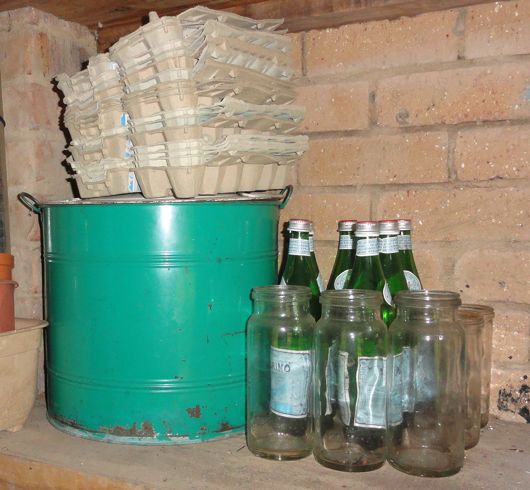
  • Save glass jars that can be given a second life storing food in your kitchen.
  • If you find you have a lot of vegetables in the fridge that are past their prime, make vegetable soup and freeze it. It’s always reassuring to know you have food ready to go in the freezer.
Fridge
  • Keep the seals on your fridge clean. Check them occasionally to see that they’re sealing properly. You can do this by holding a piece of paper over the seal while you close the door. If the door doesn’t hold the paper and you can slide it out, you need new seals.
  • Keep your fridge organised and clean. 
  • Use your fridge wisely. Don’t push things to the back. Know what needs to be used and never waste food. 
  • Clean out your fridge today and start with a clean slate.
  • Use your leftovers.
Laundry liquid savings
One litre/quart laundry liquid from an Australian supermarket costs about $9. This will do 20 washes. So 10 litres of commercial laundry liquid would cost $90 and you'd get 200 loads of washing done. That would cost you 45 cents per wash, you'd have the convenience of not having to make it at home but you'd be bringing unknown chemicals into your home as well as the packaging. Not to mention having to carry it all home from the shop.

Ten litres/quarts of laundry liquid made at home using soap, borax, washing soda would cost you (less than) $2 and you could make it in less than 15 minutes. You'd have enough laundry liquid for 160 loads of washing and each wash would cost you just over a cent.

For a young family doing seven washes a week, that homemade laundry liquid will last 22.8 weeks and cost about $5 a year. A pensioner or single person doing three washes a week, that laundry liquid will last 53 weeks, so $2 a year.

That same young family using commercial laundry liquid will spend $163.80 a year on their washing liquid. The pensioner/single person doing three washes a week will spend $70.20 on commercial laundry liquid a year.

By switching to homemade the family will save $158.80 a year and the pensioner will save $68.20.

Green cleaners savings
I won't go into the cost comparisons of making, instead of buying, soap, shampoo, conditioner, Chux/dish cloths, floor and wall cleaners, spray and wipe type cleaners and creamy cleaners for the bath and shower, but if you buy white vinegar, caustic soda/lye, soap making oils, borax, washing soda, you'd be able to make all your cleaners and it would cost you about $30 for a year's supply and you'd have more than enough to do several batches. Compare that to the cost of each individual cleaner you might buy at the supermarket: toilet cleaner, floor cleaner, anti-bacterial wipes, Jif, Spray and Wipe, Chux I didn't include the six pages of air fresheners that start off Woolworths online cleaning products because I'm unsure who would buy Air Wick Freshmatic Diffuser Refill Vanilla and Soft Cashmere 2x174g for $12.89! Jif $3.16, Ajax multi purpose spray $2.97, Ajax floor cleaner with BAKING SODA (ahem) $4.07, Harpic toilet cleaner 700ml $4.07, White King antibacterial wipes 100 pack - $10.73, chux - $6 for 20.

So for a pack of products that would last about three months (I'm being generous) $31, buy them four times a year and that is $124.

By switching to homemade instead of store bought, a saving of approximately $94 on cleaning products. Yes you'd have to make them yourself but they're easy to make and the laundry liquid would take the longest amount of time - 15 minutes for 160 washes. 

General savings
If you shop at Aldi rather than Coles or Woolworths, you'll save about 30 percent. If you're spending $200 a week at the supermarket you'd expect to pay $140 a week at Aldi. If you spend $200 a week at Woolworths or Coles you're spending $10,400 a year on groceries. If you spend that same amount at Aldi, you'd spend $7280 a year. That is a saving of $3120 a year on a $200 a week shop or $60 a week saved. Add to that the savings made if you make your own cleaners and laundry liquid and you're looking at an excellent weekly saving just from changing where you shop and making a few products at home.

In my home, I find that it's easier to organise my grocery money if I have cash. I withdraw this every Wednesday and keep it in a tin. Some weeks I spend all of it, some weeks I don't. In the weeks when I don't spend much I stock up on meat or items for the stockpile. I keep the money in the tin and take some out when I have to buy milk or fruit and put the change back in, with the receipt, when I come home. At the end of the month, I add up the receipts and enter the amounts on a sheet of paper with the month along side. I keep the receipts until the end of the year in case I want to check a price or decide to monitor the rising cost of a particular product. It works well for me. How do you handle your money?

As you can see there are a lot of ways to save money at home. You don't have to do all of them, please pick those that you know you'll be able to do and when you do those, maybe add a few of the others. Most of the things I've written about above are how we used to do our house work and shopping when I was growing up - before the advent of advertising that told us it wasn't good enough and there was a new product that you should try. Well, we all know where that lead and it left behind time-honoured sensible ways of running a frugal home that are still relevant today. 

Please add your tips for saving money in the home. This is an area were we can all learn from each other. I look forward to reading your tips.

There are many bush fires around Australia at the moment. Currently there are a few fires starting up in south east Queendsland where we live but they aren't near us at the moment. One of the mods on the forum had a daughter evacuated in Victoria this afternoon. Luckily, she and her baby daughter could safely drive to her grandparents place.  Hanno suggested I give you this link for a fire safety plan. It's the NSW plan but it's got a lot of useful safety tips for all of us.

I hope everyone in the fire zones stays safe and I hope our friends in the northern hemisphere aren't suffering too much in the cold while we swelter down here.


We went to see the cardiologist yesterday.  He has booked Hanno in to the local hospital next Monday for an Angiogram. We have no more news until the doctor sees the results of the Angiogram.


><♥><♥><♥><

If you need to be convinced about the merits of paying off your mortgage early, find a mortgage calculator and enter in the details of your loan, play around with it and see how much interest you will save by paying that money back sooner. I took the liberty of entering a $300,000 loan into the ING calculator. I used the interest rate of 7.5% which is about right for Australia now. Your country will be different. On that $300,000 loan, if you take the loan out for a term of 25 years, you'll end up paying back $365,091 in interest, or $665,091 dollars in total. If you can pay that loan off earlier - say 15 years instead of 25 years, you'll pay back $200,587 in interest, or $500,587 in total. That is a difference of $164,504 that you would save if you could do it. That is $164,504 in your pocket instead of in the bank's accounts. It's worth doing it if you can. Not everyone can, but those who can do it, should. Even if you pay it off five years early, you'll save $80,064.


Some of our commenters yesterday suggested paying fortnightly instead of monthly, increasing your payments $10 a week each January and making extra payments when you have spare cash. All that has the potential of working but you have to make sure you can do those things on YOUR loan. Each bank has different rules. Check your loan details and make a plan when you know what you can do. And if you're looking for a house now, don't ask for a media room, separate bedrooms for all the kids, a pool and large entertaining area. Look instead for enough cupboard space, a kitchen that is easy to work in, insulation, water tanks, room for a vegetable garden and chooks and maybe solar panels. Or the right house to suit you at your current stage of life.

Budgeting and working to lower the cost of living is as much a psychological exercise as it is a physical one. I'm taking my time talking about the whole concept of paying off debt both yesterday and today because it's important to have the right mindset. It will help a lot if you can change your idea of what success is. When I was spending like a drunken sailor my idea of success was to have the money to buy whatever I wanted. Now it is more simple and refined - to have my family safe, happy and close, to be healthy so I can remain independent and active, to work hard and to be content with what my work brings me. It takes a while to get your head around it and to convince yourself that whatever sacrifices you have to make, are worth it. So think about your own circumstances, work out a plan that will work long-term and then put that plan into action.


I have found that having a routine helps me do my house work and having a structured plan helps reduce our cost of living. You need structure. If you take a slapdash approach you be all over the place with no real path forward and you'll give up quickly. If you haven't already done a budget, do one now. A budget was one of the things I dreaded doing in the beginning because I saw it as a restriction. Instead, it turned out to be a wonderful map for me to use. I knew how much money we had, how much we had to pay in bills, how much I'd put aside for groceries and when we had money left over, I knew we could save it and that all the bills were paid. A budget will give you a clear picture of your financial situation. If you have to guess that, you're not in the best position.

So, make up your first budget, or upgrade your existing one to make sure it's still covering all bases.  Think about what you'll get out of this new commitment to lowering your cost of living and before you get any comments or criticism from family or friends, decide this is right for you and no matter what, you're sticking with it. You have to be confident that is the right thing for you. 

Look at what you have right now that you're paying for - your phone plans, your internet plan, insurance for house, contents, car and health and look to see if you can get a better deal on your current plans. Even $5 a month is a win. Go over everything. If you have two cars, work out if you can do without one. If you can, sell the car, if you can't, try to cut the costs on your car insurance and fuel as much as you can. Look after your car/s, check the tyre pressure, don't let it run out of fuel, have it serviced on time. Check around to see if you can get a better price on the servicing. We used to go to a dealership for our services and then found an excellent local mechanic who did a first rate job for much less. Do you have pay TV? Do you need it? If not, make the call to cancel it.


If you're earning a minimal wage, work out if it's worth it for you to be working. It might make better financial sense for you to be at home, shopping for grocery bargains, cooking from scratch, making your own cleaners, growing vegetables and keeping chickens. You'll also be able to do many of the things we'll talk about in the post tomorrow.

Lower your expectations. Yes, lower them. Don't expect to live in the best house in the best street. Buy what you can afford. This obsession with looks and being better than your friends is crazy. It wasn't like that in the past and it doesn't have to be like that now. Don't listen to the advertising hype or the real estate agent. Listen to your head, work out what you can afford and stick to that amount. Living in a home you can afford is much better for your mental and physical health than worrying about paying off a show piece.


When you've taken the time to fully understand your situation and make a genuine commitment to pay down your debt, then you can start working on all the small steps you can take to save money. It will be small steps that add up, rarely do you find big savings along the way. So realise early that it will be frequent small amounts that you save and commit to doing that now and in the future. Soon it will become second nature to you.

Tomorrow we'll focus on the savings to be made in the kitchen and laundry. Let's do as much as we can to get to a good standard of living while spending as little as possible. As usual, please share your thoughts with us in the comments.  See you tomorrow.  :- )


We were really moved by your kind and thoughtful comments yesterday. Hanno thanks you, I do too and though it might sound strange to people outside the blogging world, knowing there are thoughts and prayers being sent to us, makes a real difference.

><♥><♥><♥><

Sometimes I wish we were born with a rewind button. You sail along building debt with a home loan, credit card debt and a car loan that you thought you'd easily pay. Then on top of that there is your phone and your partner's phone, broadband, pay TV, gym memberships, insurance, your holiday, the kid's camps, entertainment, your new iPad, laptops for the kids, clothes and shoes for everyone, education costs and toys to make the kids happy. Oh, and don't forget food and fuel, both must be bought every week. If only you could press rewind, go back a few years and make more prudent choices. Life would be easier if you didn't spend like this. 

I'm sure there are people reading here who do live according to that first paragraph. There are probably some who see no problem with it, as well as some who wonder why they fell for it but see no way out. If you are that person, or you're about to become her or him, stop and consider this: debt with weigh you down, it will take you away from your family, it will suck the strength out of you because your hours will always belong to someone else. It doesn't have to be like that.

Don't get caught up in the ridiculous notion that the more you have, the better your life will be. Everything has a price attached. Most of the time, that cost is both financial and environmental. Very early on in my own change, when I went from spending a lot to becoming very frugal, I realised that the less I spent, the more I did for the environment, the more self-reliant I became and the more I was in control of my own future.


If you buy a house worth close to a million dollars (it will be two million when you calculate in the interest), and for overseas readers, many houses in Australian cities cost that much now, you will be working to pay that off for the rest of your life. Before you dive into that level of debt, consider what would happen if you get sick and can't work. Or if you just get sick of paying off the debt and can't do anything about it. You don't have to live in a big city. Life happens in other places too. You can get a very good home for $300,000 in most places outside the large city precincts. If you work hard, you could pay that off in 15 years instead of 30 years. Imagine the freedom you'd feel if you paid off your home 15 years early. It's possible.  We paid off our mortgage in eight years. 

We all live in a home of some sort so that requires either a mortgage payment, rent or the ongoing local council rates we all pay. We all eat, most of us have cars and need to fuel them, we have phones, we have to insure our possessions, many of us have health insurance. We all have financial commitments to cover the cost of our needs and to keep us sheltered and fed. Once you have those expenses covered, the less you spend on everything else, the less you'll have to work to pay for. That's the trick - keep those costs down and you'll be ahead all your life.


Over the next couple of days we'll talk about a more modest life, living within your means and taking the small steps needed to live well on less. If you step off the merry-go-round and follow a more frugal and prudent path, you will get your life back, you'll have more time with your family and you'll have time to do what you want to do.

But the first thing you need to do to make the whole thing fall into place is to change your attitude about what success means to you and to fully understand that money and possessions don't make you happy. There has been research done that found once our basic needs of shelter, food and clothing are met, we are not made happier or more fulfilled by having more. If you're not convinced of that, that is where you should start because if you change your attitude to accept a simpler life, all this will be easier for you.  And what a good place to end. Tomorrow we'll start talking about keeping day to day expenses low. If you have some financial tips to share on paying off a mortgage or how to keep the cost of housing low, please share them with us in the comments.

Here we are again at the beginning of another blogging year and as usual I'm looking back and looking forward. I was pleased to see the end of 2012. It was a momentous year for us, with the publication of my book and all the publicity and activity that went along with that, but there were also some very dark moments. In late August, Hanno nearly cut off his hand in a chain saw accident. That meant surgery and many trips to the hospital and occupational therapist. He'd just recovered when he was laid low again with cellulitis and gout and spent some time in a wheelchair. In December he had an ech-cardiogram that showed he has heart disease with his heart only pumping at 50% capacity. It's made him tired, dizzy and weak. That still hasn't been resolved but we have an appointment with the cardiologist tomorrow and we're hopeful it's not too serious.

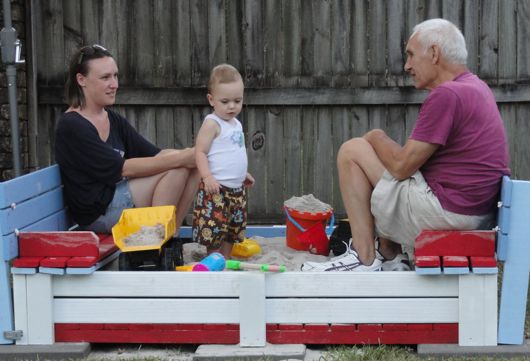
Sarndra, Alex and Opa socialising in the sandpit.
Jamie and Opa discussing the merits of sand bridges.

I wrote late last year about Jamie having a febrile convulsion. Well, he had another two on Christmas eve. It turned out that he had a viral infection that was causing his temperature to rise suddenly but I'm very pleased to say he's a healthy little boy again now.

In the week before Christmas, Sarndra and Shane happily told us they were expecting another baby. We were all overjoyed at that news. But Sarndra sensed something was wrong and on Christmas eve she had a scan that revealed no heartbeat. They lost the baby on Christmas day. We all mourned the loss of that precious life and tried to support Sarndra an Shane as much as we could during the saddest Christmas we've ever had. They named the baby Patrick and had a little memorial service for him. They're a very strong and loving family and I know they'll work their way through this sadness.

Jamie and Opa watching Gaspard and Lisa.

So that is what we've leaving behind us and as I think about the coming months I feel a slight trepidation about Hanno's health but overall there is much to be grateful for and so much look forward to. I feel that optimism and excitement that you feel when you're about to make a change to something better. I love that feeling. It gives me energy. I also feel gratitude for the many opportunities I've had and continue to have. I'm blessed with a beautiful, caring family and I've been able to meet so many new people this past year who I now look on as friends. There is a lot to be thankful for.


I'm pleased to say that I'm still full of enthusiasm for this blog. It continues to provide me with an invaluable record of our ordinary days here at home and a way of reaching out around the world. I know there will come a time when my grandchildren will read it and know how we welcomed their mothers into our lives, how excited we all were on the days they were born, how they helped build our family and how our lives were better just because they were here with us.

One of my main areas of focus this year will be to review what I'm doing, change what I need to change and to improve what I'm left with. I want to operate outside my comfort zone, I want to push myself towards a better life; I'm not going to settle for second best. I want my life to be home and community based, I want to remain active and to work for what I get - both financially and in my daily tasks. I think hard work makes us better people and I know without doubt that sitting back and playing around on the computer or watching TV will not help the tomatoes grow, put fresh bread on the table or get the next ten pages of my book written. Only work does that. Work gives me a feeling of achievement and satisfaction, and when it's time to stop work, the sublime contrast of peace and tranquility. It's that balance between work and rest. I always aim for that.


During the year, I'm going to review the various subjects we talk about here. We're all changing, Hanno and I are getting older and that itself has brought change. I'll be thinking out loud about those changes and how they're modifying what we do now and in the future. Over the break I kept my notepad handy and I've got a list of subjects I want to write about.  Most of them will be about simple life, homemaking, growing strong families and work. There will be a sprinkling of posts about the thing we all face - ageing. I am very interested in ageing and daily work and not many others write about them in a positive way, so who knows how what will develop. As we go through the year I hope to see you here, I hope to read your comments, and, as usual, together, we'll try to live to our potential. We won't aim for perfection, we'll just try to do our best in 2013.  Okay, roll up your sleeves and let's get this thing started.
I was going to resurrect some old posts while I was away but I forgot all about it until now. I hope you enjoy this old boy - it's from last December. I'll be back tomorrow with my first new post of the year.   :- )

<><><><><><><><><>

I received this email from a reader last week and I have to admit I'd not really given the topic much thought until then.

"I was recently introduced to your blog by my husband and his mate, who has been a big fan for a while (they made your laundry detergent on the weekend!). I was wondering if you could do a blog about husbands being the homemaker instead of the wife? My husband is about to leave his stressful job in the new year and is so excited about being at home with the chooks and veggies, but I am wondering how different it will be having a male do the job.

I doubt there are big differences in how house work is done by women and men. The homemaker is the one who makes most of the decisions about how tasks are carried out, what products are bought, what food is eaten, how the cleaning is done, what kind of garden is grown, how to deal with household waste, and how much daily work can be done. The person who will do the work must make those important decisions. I think the differences are less about gender and more about values and the willingness and ability to do the work. Choosing what elements will take you to another level, like whether to add livestock, whether solar panels and water harvesting play a part, how much is enough for the both of you, and taking daily steps towards prudent spending and careful saving and how quickly debt will be paid off - they are usually joint decisions. 

If you're aiming to live as we do, there will be a period of adjustment as he transitions from a stressful job to more relaxed, but never-ending, work at home. He will have to learn the skills he doesn't have now but as long as the motivation to live this way is there, generally that makes you spring out of bed each morning because every day is part of a plan that will make your life better. You have control of your life.

I have no idea how skilled your husband is in the tasks he'll need to carry out, or whether he can cook, clean or grow food. I would suggest if he's just starting out that he does a skills audit. You could help him with it. If he can't cook he needs some good books - I suggest the Common Sense Cookbook for the very basics and The Thrifty Kitchen and The Real Food Guide for interesting recipes with an eye on creativity and frugality. Easy Organic Gardening and Moon Planting by Lyn Bagnall is an excellent vegetable gardening book, and for a good chook book - I recommend Backyard Poultry - Naturally by Alanna Moore, you can get that at Green Harvest (on my side bar). Once he gets the basics under his belt, he can explore food storage, cob ovens, fermenting, preserving, dehydrating and many other old skills. For that he'll need The Complete Book of Self Sufficiency by John Seymour, which is his original book you might be able to buy second-hand, or if you can't find that The New Complete Book of Self Sufficiency, which is still on sale.


Your husband will have to consciously focus on jobs he doesn't like doing. Cleaning the toilets and mending clothes are as much a part of homemaking as the wonderful and enriching jobs like growing food and caring for chooks. There is an element of mental strength needed to be a full time homemaker. He will have the obvious questions from friends and family and he has to do most of the work, whether he wants to or not. From January on, his job is to shop for bargains, clean the home, cook, grow, preserve and whatever else you both decide you want in your lives. He will be in charge of driving your home life to where you both want it to be. That might be a simplified and mindful eco-home in the inner city or it could be a suburban home with a a little farm in the backyard, just like our place. Both are possible, many other types of homes are too. You will have to decide what you'll do in the home. Just like men who work full time away from the home need to take up a fair share of the work when they're home, you will have to do the same. You'll be the breadwinner, he'll be the homemaker. Both those jobs need to be done well but it doesn't mean he does all the work, it means you work together on your shared goals. You'll have to sort that out. Decide what you can do and are willing to do in the evenings and weekends and then do it consistently and in the knowledge that in addition to the money you bring in, you are making practical contributions to the life you're building together.


Deciding to live a more simple life is a big decision. It is for any couple. But it can work well and it's the best way to get some balance in your lives. Life should not mean accruing debt and then working till you drop to pay it off. If you work at it, it can be a beautiful balance of work, enjoyment and real living. It's not always easy, there are days when you wonder why you're shelling the fifth kilo of peas. There will also be days when you may want to be the homemaker or he wants to go back to work. That's normal - just work through those difficult days and the shared joy of a simple life will return.

I admire you both. There is a common view now that there must be a double income to support today's way of living. But there is a more unusual and enriching way to live. It involves hard work and the ability to step away from convenience and having many of the things that your friends might have. But if you can do it the rewards are significant and life changing. The daily work you do shapes the people you will become; you've already started that process simply by making the decision to start. So hang on to your hats, you are in for the ride of your lives.

And while I'm on the subject of men, I know there are many of you who read here. I get emails from some of you. I would love you to start commenting more. This is not a women's topic, it's a human topic - it's life. I am sure the women would love to read your point of view and it would help you connect with the other men here. We are all just sharing our own experiences, share yours too.

                                                          <><><><><><><><><>

See you all tomorrow!

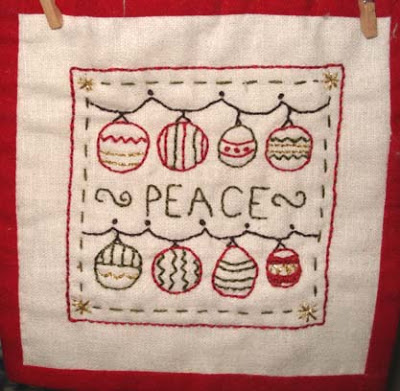
PEACE and LOVE

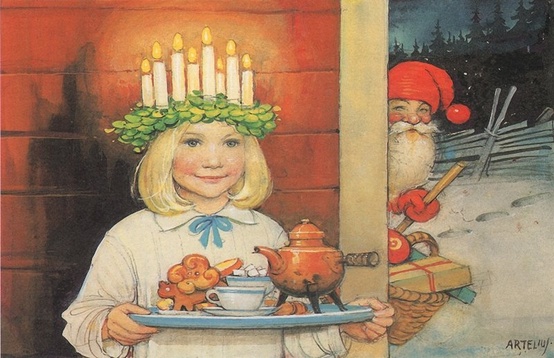
  This painting is attributed here to Carl Larsson. I'm not sure it is his work but I like it anyway.

Well, finally it is Christmas Eve. For some of us, tonight will be the start of Christmas - my sister Tricia and her family celebrate in the German tradition, on Christmas Eve. For others, we wait until tomorrow. Some attend church, some sleep in, some get up early to prepare the turkey so it will be ready for a midday feast. We'll be having a cold lunch here with our family on Boxing Day. Shane, Sarndra and Alex won't be here this year so we'll call them tomorrow and say hello.

I hope you have a lovely time with your family and friends and store up those memories of good times, Christmas pudding and laughter.

This year has been a really big one for us. We've had many highs during the year and too many lows with Hanno's health, which still isn't quite right. We have an appointment with a heart specialist in early January which should tell us more than we know now. He'll take it slow over the holidays and rest when he needs to. I'm going to have a short break from the blog to rest, write and think about the new year. 

I want to take this opportunity to thank you for visiting me throughout the year. If you've left comments, thank you for taking the time to connect. Hello to the followers and to everyone who has signed up as a member of the Down to Earth forum. There are over 10,000 of you now and it's become a wonderful place where people of like mind can meet, make friends, share their knowledge, be inspired and learn what they need to know about a wide range of simple living skills.

Wander on over to the forum during the holidays to download the free 2013 Home Journal, it will be downloadable at the end of the week. It features menu planning, basic recipes, decluttering, organisation, to do lists, a garden journal and a whole lot more.

A huge thanks to all the forum admins and moderators - Sue, Rose, Lisa, Lynn, Sherri, Becci, Corinne, Robyn, Amy, Alison, Meghan, Deanne, Sandy, Tania and Tessa. All these incredible women work as forum volunteers to keep everything operating smoothly, coming up with ideas to get members involved and generally supporting and encouraging those who are trying to change their lives for the better. They were the driving force behind the free D2E Journal. Thank you ladies. You all are a gift to me and to the forum. Thank you for all the hours you've put in and for the laughs we've had behind the scenes.

And to all my sponsors, Merry Christmas and thanks for the support during the year. Everything I feature on my blog is something I use or would use if I needed it. Often these small businesses have no other way to advertise so I am pleased to offer them space here. I hope you've been clicking on their buttons and buying from them if you need those products. I am still happily knitting away on the yarns I get from Eco Yarns, they're second to none.

Next year we will continue to work towards sustainable outcomes here in our home. I thought it would be a good idea, in addition to documenting our daily lives, to go over all the basic aspects of simple life again because I am ever changing, I'm sure you are too and it will be useful to talk about how we do what we do, and why.  If you have any questions you want answered, write an email and I'll slot them in as we progress through the months.

While I'm away from here, please browse through the archives. There is a lot of information there that may help you move towards a life change. When I have time, I'll repost some posts from the archives that I think might help you.  In the meantime, enjoy yourself over the holidays and appreciate the time you spend at home with family and friends. Relax, de-stress and make a plan for the coming year

If you've been a lurker during the year, please leave a comment now. When I have time over the holidays, I'll tour around your blogs and say hello.

Merry Christmas and Happy Holidays everyone!


The wonderful Maggie Beer

Paper cup garland lights

Homemade Christmas

Ted Trainer's transition

Australian heroes

This is a very cute tutorial - March of the Penguins at Craft Berry Bush

Computer freebies and fonts via Pinterest

Treats for chickens chart from Backyard Chickens

Wise Craft


FROM OUR COMMENTS DURING THE WEEK

Check out the Musings of MissFifi, there's a larder full of good food over there.

A wonderfully interesting blog at iliska dreams 

It's holiday time over at kleinemottresfotos

Thank you for visiting me during the week and a special thank you to everyone who took the time to comment. See you all on Monday - Christmas Eve!


Just dropping in quickly to share this photo of Alex, the first visitor to the sandpit. Sarndra and Alex arrived yesterday afternoon for a quick visit and will be off home this morning. If I have time, I'll be back later, if not, I'll see you all tomorrow. I hope you have a lovely day.

An email came from a US reader, Abby, who asked about being a homemaker in later years. This is part of what she wrote:

"I am a stay-at-home mum to 4 children, ages 9-16. I do have a variety of "odd jobs" that I enjoy - I run a small "before-school" morning drop-off daycare from my home, I am a writing tutor, and I work a few hours a week at a local children's bookstore. But mostly, I cherish my blissful days at home - cooking, cleaning (with homemade cleaners), taking care of our children and chickens and goats, baking, meal-planning, etc. This "career" at home is not at all what I imagined during my ambitious years at university, but it is far more enriching. I notice, though, that my day is often planned around the needs of my family members. Of course, with 4 active kids and a husband, this is natural. I do the shopping, plan my meals, cook dinner - generally in anticipation of my family reconnecting in the evening. 

I can't help but wonder, though, whether this feeling of purposefulness and satisfaction might ebb after the children leave the nest. When I don't have hungry teenagers bursting through the door in the afternoon, or when I don't have to feed 6 people on a modest grocery budget - will I still feel the same sense of gratification? My own mum is 67, and she continues to work 3 days a week as an educational consultant. ...  My father is quite a bit older than she is, and he is starting to slow down a bit now ... 

I sometimes put myself in her place, and wonder about what life will be like for me when I reach that stage of life. Will I regret not having built more of a world for myself outside of the home? Will it seem too solitary, once the hustle and bustle of child-rearing is over? Though it is not pleasant to think of, what would it be like to live this life as a widow? You are such an inspiration to me, because you have clearly made this transition and it has been a very satisfying one for you. I would be so curious to see this topic discussed further, though. What is the role of the homemaker in the later years?"

Dear Abby,

We would not be human if we didn't have those "what if ..." days. Doubts make us think, and that is a good thing. Those feelings of purposefulness and satisfaction aren't felt only because you're looking after your children and pouring your heart and soul into it, they're there because of the life you're living and knowing what you're doing is worthwhile. You and your husband have formed a team so that you can all live a life full of purpose. That doesn't stop because the children grow up and leave home.


Homemakers have more than one stage of life. You've already gone through the baby and toddler stage as well as the small child stage, now you're moving into the stage where they are more independent and start to make their own decisions. Life goes on after they leave home and the satisfaction then comes developing your own interests, in seeing your children succeed in their work and maybe going on to form meaningful relationships and having their own children. You will not lose your purpose when the children leave. Your role changes, you move into the next stage.

While I was sad to see my boys go, it also gave me an enormous sense of satisfaction to see them out there functioning well on their own.  They remembered most of what we taught them, they transitioned from young men to adults and when they met their "girls", we were there to welcome them into our hearts and family. All the things you're teaching your children now is preparing them to leave you. And while that can be bitter-sweet it can also be liberating and enriching.


It will be at least ten years into the future when your last child might leave home. No one can tell what their life will be like next week, let alone in ten years. But I want you to know that your life isn't just about your children, your husband or your home. It also involves your community, your interests, your extended family and your friends. You are more than a parent, you're more than a wife, you're more than a daughter, you're more than all the single things you think you are. You're a complex mix of all of those parts and who knows what you're capable of. If someone had told me ten years ago that I'd be doing what I'm doing now, I would have thought them crazy. Life has a way of winding and twisting and no one can tell where it will go.


So what is the role of the homemaker in the later years? I think it is the time when you relax a bit. You sit back and see that what you've been doing in those first 20 or 25 years has been worthwhile and produced people who have moved into the wider community to be good citizens, to work hard and to play their part in the world, whatever that may be. You work on developing a new relationship with your husband that is more about the two of you. Maybe you travel a bit. Maybe you become a gardener or a mentor or a grandma. Who knows.

Just keep doing your best and enjoying what you do. Explore your interests, develop yourself, evolve, thrive, enjoy your friends and don't start dreading what might come later. I can only encourage you to become the best, most authentic you, you can be and hopefully, with that, you'll enjoy and appreciate whatever happens later in life.

I am married to a wonderful man and I don't say it enough. I think it often but it's not the same. We make a very sound team and between the two of us, we can do just about anything we need to.  It's easy living with someone who knows what is right, and does it. It gives me strength to see him work doing daily chores and extra projects. It makes me feel secure when he gathers up the climbing frames from all over the garden, the ones that have held tomatoes, cucumbers and beans, then cleans them up to hang along the back garden fence, waiting until they're needed next year. Seeing that happen every year shows me that the garden will go on as ever, that there will be another season and we need to slowly prepare for it.


All along the fence, reinforcing steel from the climbing frames, recycled year after year, and now ready for next season.

But it's not only the practical and necessary he takes care of, he is the maker of gifts too. A few weeks ago I showed him a segment of the Better Homes and Gardens TV program, where there was a sandpit being made. He watched it a few times, going back and forward over particular bits, then he downloaded the plans and set to work on one for Jamie and Alex.

For the first week he worked steadily every day when he had time for it. Slowly it came together and then we planned the colours and where it would sit.


And then it was finished and just had to be moved to its place in the garden. The sandpit has two bench seats that the boys can sit on and when it's not in use, the seats fold over and cover the sandpit entirely. No cats! Just clean sand all the time. A market umbrella provides shade. The black weed mat keeps the sand in while allowing rain to drain away. It's such a good idea.

Moving it was definitely a two man job. We had to wait a few days for Jens to come over to help move it into the garden.


And then it was in place. Now to attach the top and fill the pit with sand from the landscaper.


Jens took over and filled the sand pit. It's a fine thing to have strong sons who have a work ethic that matches their father's.

So now we just have to wait for two little boys called Alex and Jamie to come along and have fun in there. I love how sandpits help stimulate creative play. There are no directions, no packaging, no right way, just some buckets, little spades and time. That's all that's needed. Thanks Opa!

The pattern and directions for making the sandpit are here.


Next Monday is Christmas Eve so this is the final week to organise ourselves enough so that we enjoy the festivities as much as the rest of the family. We're having our family lunch on Boxing Day and we'll have eight adults and two toddlers here. The menu is:

SNACKS PRE-LUNCH
  • Homemade guacamole with corn chips
  • Yoghurt cheese with homemade chilli jam and crackers
LUNCH
  • Leg of ham
  • Cold roast chicken
  • Potato salad
  • Garden salad
  • Homemade beetroot and kimchee
DESSERT
  • Tropical fruit pavlova - homemade pav using six egg whites, local fruit
  • Homemade vanilla ice cream using the six egg yolks
DRINKS
  • Homemade ginger beer
  • Beer
  • Wine
SNACKS AFTER LUNCH WHILE WATCHING THE CRICKET
  • Chocolate truffles
  • After dinner mints
  • Home roasted cashews and macadamias
I've just made the yoghurt for the cheese, the chilli jam is in the fridge.
Ginger beer is on the go.
Will make the dip after breakfast on the day.
Roast the chickens the day before so the house stays cool.

I have my eye on IGA's KR leg ham which starts a week-long sale tomorrow. I'll go shopping on Wednesday, when I get a 5% seniors' discount and 5% discount for using my swipe card, and pick up the ham, a pork leg roast, free range chickens and some fresh salad.

I'll start making ice in the chest freezer tomorrow so we'll have plenty of ice. On Thursday I'll prepare the guest rooms and do a big cleanup, then I'll be right until I cook the chickens on Christmas day.

What's on your list this week? I hope you've been able to get yourself organised and on track for the festivities.

Don't forget to check the threads on the forum today. There are a lot of Christmas threads over there now so if you're looking for ideas and motivation, that is the place to go.

Newer Posts Older Posts Home

ABOUT ME

Down to Earth is a blog by Rhonda Hetzel, dedicated to simple, intentional living — from home cooking and gardening to frugal budgeting and handmade crafts. It’s a space for gentle inspiration and everyday wisdom on creating a life that feels real, balanced, and deeply fulfilling.

Down To Earth Book

Down To Earth Book
My books are all published by Penguin. Down to Earth, The Simple Life and The Simple Home have been in book shops since they were published in 2012, 2014 and 2016, respectively. On 20 October 2020, Down to Earth was published as a paperback.

MY FAVOURITE PLACES

  • Grandma Donna's Place
  • Grandma Donna's YouTube
  • Grandma Donna's Instagram
  • This Simple Day
  • Nicole's Instagram

Popular Post of All Times

Making ginger beer from scratch

We had a nice supply of ginger beer going over Christmas. It's a delicious soft drink for young and old, although there is an alcoholic version that can be made with a slight variation on the recipe. Ginger beer is a naturally fermented drink that is easy to make - with ginger beer you make a starter called a ginger beer plant and after it has fermented, you add that to sweet water and lemon juice. Like sourdough, it must ferment to give it that sharp fizz. To make a ginger beer plant you'll need ginger - either the powdered dry variety or fresh ginger, sugar, rainwater or tap water that has stood for 24 hours to allow the chlorine to evaporate off. You'll also need clean plastic bottles that have been scrubbed with soap, hot water and a bottle brush and then rinsed with hot water. I never sterilise my bottles and I haven't had any problems. If you intend to keep the ginger beer for a long time, I'd suggest you sterilise your bottles. MAKING THE STARTER In a...
Image

The last post

This will be my last post here.  I've been writing my blog for 18 years and now is the time to step back. I’ve stopped writing the blog and come back a couple of times because so many people wanted it, but that won’t happen again, I won’t be back.  I’ll continue on instagram to remain connected but I don’t know how frequent that will be. I know some of you will be interested to know the blog's statistics. 
Image

How to make cold process soap

I'm sure many of you are wondering: "Why make soap when I can buy it cheaply at the supermarket?" My cold process soap is made with vegetable oils and when it is made and cured, it contains no harsh chemicals or dyes. Often commercial soap is made with tallow (animal fat) and contains synthetic fragrance and dye and retains almost no glycerin. Glycerin is a natural emollient that helps with the lather and moisturises the skin. The makers of commercial soaps extract the glycerin and sell it as a separate product as it's more valuable than the soap. Then they add chemicals to make the soap lather. Crazy. Making your own soap allows you to add whatever you want to add. If you want a plain and pure soap, as I do, you can have that, or you can start with the plain soap and add colour, herbs and fragrance. The choice is yours. I want to add a little about animal and bird fat. I know Kirsty makes her soap with duck fat and I think that's great. I think t...
Image

Preserving food in a traditional way - pickling beetroot

I've had a number of emails from readers who want to start preserving food in jars but don't know where to start or what equipment to buy.  Leading on from yesterday's post, let's just say up front - don't buy any equipment. Once you know what you're doing and that you enjoy preserving, then you can decide whether or not to buy extra equipment. Food is preserved effectively without refrigeration by a variety of different methods. A few of the traditional methods are drying, fermentation, smoking, salting or by adding vinegar and sugar to the food - pickling. This last method is what we're talking about today. Vinegar and sugar are natural preservatives and adding one or both to food sets up an environment that bacteria and yeasts can't grow in. If you make the vinegar and sugar mix palatable, you can put up jars of vegetables or fruit that enhance the flavour of the food and can be stored in a cupboard or fridge for months. Other traditional w...
Image

Cleaning mould from walls and fabrics

With all this rain around we've developed a mould problem in our home. Usually we have the front and back doors open and that good ventilation stops most moulds from establishing. However, with the house locked up for the past week, the high humidity and the rain, mould is now growing on the wooden walls near our front door and on the lower parts of cupboards in the kitchen. Most of us will find mould growing in our homes at some point. Either in the bathroom or, in humid climates, on the walls, like we have now. You'll need a safe and effective remedy at some point, so I hope one of these methods works well for you. Mould is not only ugly to look at, it can cause health problems so if you see mould growing, do something about it straight away. The longer you leave the problem, the harder it will be to get rid of it effectively. If you have asthma or any allergies, you should do this type of cleaning with a face mask on so you don't breathe in any spores. Many peopl...
Image

Five minute bread

Bread is one of those foods that, when made with your own hands, gives a great deal of satisfaction and delight. It's only flour and water but it symbolises so much. I bake bread most days and use a variety of flours that I buy in bulk. Often I make a sandwich loaf because we use most of our bread for lunchtime sandwiches and for toast. Every so often I branch out to make a different type of loaf. I have tried sour dough in the past but I've not been happy with any of them. I'll continue to experiment with sour dough because I like the idea of using wild yeasts and saving the starter over a number of years to develop the flavour and become a part of the family. However, the loaf I've been branching out to most often is just a plain old five minute bread. By five minutes I mean it takes about five minutes actual work to prepare but it's the easiest of all bread to make and to get consistently good loaves from. If you're having people around for lunch or...
Image

This is my last post.

I have known for a while that this post was coming, but I didn't know when. This is my last post. I'm closing my blog, for good, and I'm not coming back like I have in the past.  I've been writing here for 16 years and my blog has been many things to me. It helped me change my life, it introduced me to so many good people, it became a wonderful record of my family life, it helped me get a book contract with Penguin, and monthly columns with The Australian Women's Weekly and Burke's Backyard . But in the past few months, it's become a burden. In April, I'll be 75 years old and I hope I've got another ten years ahead. However, each year I'll probably get weaker and although I'm fairly healthy, I do have a benign brain tumour and that could start growing. There are so many things I want to do and with time running out, leaving the blog behind gives me time to do the things that give me pleasure. On the day the blog started I felt a wonderful, h...
Image

What is the role of the homemaker in later years?

An email came from a US reader, Abby, who asked about being a homemaker in later years. This is part of what she wrote: "I am a stay-at-home mum to 4 children, ages 9-16. I do have a variety of "odd jobs" that I enjoy - I run a small "before-school" morning drop-off daycare from my home, I am a writing tutor, and I work a few hours a week at a local children's bookstore. But mostly, I cherish my blissful days at home - cooking, cleaning (with homemade cleaners), taking care of our children and chickens and goats, baking, meal-planning, etc. This "career" at home is not at all what I imagined during my ambitious years at university, but it is far more enriching. I notice, though, that my day is often planned around the needs of my family members. Of course, with 4 active kids and a husband, this is natural. I do the shopping, plan my meals, cook dinner - generally in anticipation of my family reconnecting in the evening.  I can't h...
Image

Every morning at home

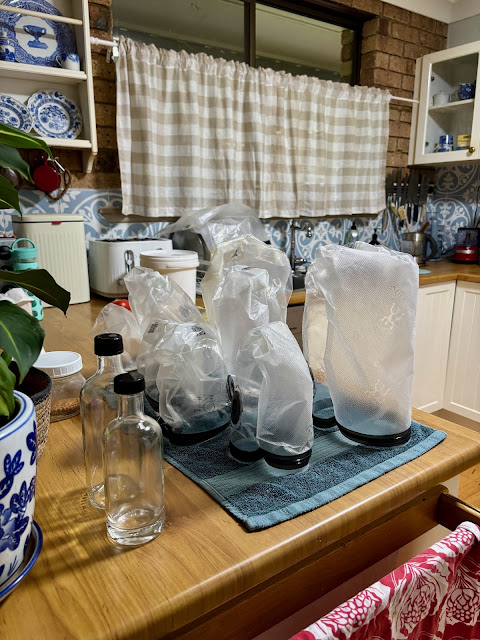
Every morning when I walk into my kitchen it looks tidy and ready for a day's work. Not so on this morning (above), I saw this when I walked in. Late the previous afternoon when I was looking for something, I came across my rolled up Zwilling vacuum bags and decided they had to be washed and dried. So I did that and although I usually put them outside on the verandah to dry it was dark by then. I turned the just-washed bags inside out and left them like this on a towel. It worked well and now the bags are ready to use when I bring home root vegetables, cabbages or whatever I buy that I want to last four or five weeks.
Image

You’ll save money by going back to basics

When I was doing the workshops and solo sessions, I had a couple of people whose main focus was on creating the fastest way to set up a simple life. You can't create a simple life fast, it's the opposite of that It's not one single thing either - it's a number of smaller, simpler activities that combine to create a life that reflects your values; and that takes a long to come together. When I first started living simply I took an entire year to work out our food - buying it, storing it, cooking it, preserving, baking, freezing, and growing it in the backyard. This is change that will transform how you live and it can't be rushed.  
Image

Categories

  • Backyard 244
  • Being Organised 257
  • Books 9
  • Budgeting 142
  • Chickens 42
  • Community life 289
  • Family 269
  • From Scratch 63
  • Grandmothering 69
  • Home 296
  • Individuality 185
  • Mentoring 55
  • My books 49
  • Organic Gardening 348
  • Preserving 97
  • Recycling 22
  • Retirement 22
  • Self Reliance 160
  • Simple Living 777
  • Sustainability 308
  • This blog 107
  • Weekend reading 362
  • Writing 4

Followers

Trending Articles

The last post

This will be my last post here.  I've been writing my blog for 18 years and now is the time to step back. I’ve stopped writing the blog and come back a couple of times because so many people wanted it, but that won’t happen again, I won’t be back.  I’ll continue on instagram to remain connected but I don’t know how frequent that will be. I know some of you will be interested to know the blog's statistics. 
Image

Making ginger beer from scratch

We had a nice supply of ginger beer going over Christmas. It's a delicious soft drink for young and old, although there is an alcoholic version that can be made with a slight variation on the recipe. Ginger beer is a naturally fermented drink that is easy to make - with ginger beer you make a starter called a ginger beer plant and after it has fermented, you add that to sweet water and lemon juice. Like sourdough, it must ferment to give it that sharp fizz. To make a ginger beer plant you'll need ginger - either the powdered dry variety or fresh ginger, sugar, rainwater or tap water that has stood for 24 hours to allow the chlorine to evaporate off. You'll also need clean plastic bottles that have been scrubbed with soap, hot water and a bottle brush and then rinsed with hot water. I never sterilise my bottles and I haven't had any problems. If you intend to keep the ginger beer for a long time, I'd suggest you sterilise your bottles. MAKING THE STARTER In a...
Image

Time changes everything

I've been spending time in the backyard lately creating a contained herb and vegetable garden. My aim is to develop a comfortable place to spend time, relax, increase biodiversity and encourage more animals, birds and insects to live here or visit. Of course I'd prefer my old garden which was put together by Hanno with ease and German precision. Together, we created a space bursting at the seams with herbs, vegetables and fruity goodness ready to eat and share throughout the year. But time changes everything. What I'm planning on doing now, is a brilliant opportunity for an almost 80 year old with balance issues. In my new garden I'll be able to do a wide range of challenging or easy work, depending on how I feel each day. It’s a daily opportunity to push myself or sit back, watch what's happening around me and be captivated by memories or the scope of what's yet to come.
Image

The most wonderful news

This post will give me more joy to write than anything else I could think of today.  I told you  there are a few exciting things happening here at the moment, well, I am now able to tell you the most exciting one of them.  Our son Kerry and his beautiful partner Sunny are having a baby!  Hanno and I will be grandparents in late March.  I can barely believe my eyes when I read what I have just written.  This is one of my original stitchery patterns. This wasn't planned but it's welcomed wholeheartedly by all of us.  Both Kerry and Sunny are hard workers and now that they have a baby to love and care for, they've decided it's time to buy an apartment together.  Sunny is going home to Korea to tell her family and when she comes back again, the search will start to find their first home together.  We are all so excited!  My knitting has taken on a life of its own and when I think of all the projects I could start, my head spins.  Thi...
Image

About Blog


Down to Earth is a blog by Rhonda Hetzel, dedicated to simple, intentional living — from home cooking and gardening to frugal budgeting and handmade crafts. It’s a space for gentle inspiration and everyday wisdom on creating a life that feels real, balanced, and deeply fulfilling.

Last Year's Popular Posts

The last post

This will be my last post here.  I've been writing my blog for 18 years and now is the time to step back. I’ve stopped writing the blog and come back a couple of times because so many people wanted it, but that won’t happen again, I won’t be back.  I’ll continue on instagram to remain connected but I don’t know how frequent that will be. I know some of you will be interested to know the blog's statistics. 
Image

Every morning at home

Every morning when I walk into my kitchen it looks tidy and ready for a day's work. Not so on this morning (above), I saw this when I walked in. Late the previous afternoon when I was looking for something, I came across my rolled up Zwilling vacuum bags and decided they had to be washed and dried. So I did that and although I usually put them outside on the verandah to dry it was dark by then. I turned the just-washed bags inside out and left them like this on a towel. It worked well and now the bags are ready to use when I bring home root vegetables, cabbages or whatever I buy that I want to last four or five weeks.
Image

You’ll save money by going back to basics

When I was doing the workshops and solo sessions, I had a couple of people whose main focus was on creating the fastest way to set up a simple life. You can't create a simple life fast, it's the opposite of that It's not one single thing either - it's a number of smaller, simpler activities that combine to create a life that reflects your values; and that takes a long to come together. When I first started living simply I took an entire year to work out our food - buying it, storing it, cooking it, preserving, baking, freezing, and growing it in the backyard. This is change that will transform how you live and it can't be rushed.  
Image

Workshops update

  This photo shows what the weather's been like here.  That's steam coming off my neighbours shed roof after a brief downpour of rain.  I hope we’re getting closer to organising these workshops. I didn’t explain this clearly enough: Group 1 is four workshops, Group 2 is four workshops. Out of those eight workshops I thought we probably end up doing three or four.
Image

Creating a home you'll love forever

Living simply is the answer to just about everything. It reduces the cost of living; it keeps you focused on being careful with resources such as water and electricity; it reminds you to not waste food; it encourages you to store food so you don't waste it and doing all those things brings routine and rhythm to your daily life. Consciously connecting every day with the activities and tasks that create simple life reminds you to look for the meaning and beauty that normal daily life holds.  It's all there in your home if you look for it. Seemingly mundane tasks like cleaning and cooking help you with that connection for without those tasks, the home you want to live in won't exist in the way you want it to.  Creating a home you love will make you happy and satisfied.
Image

Time changes everything

I've been spending time in the backyard lately creating a contained herb and vegetable garden. My aim is to develop a comfortable place to spend time, relax, increase biodiversity and encourage more animals, birds and insects to live here or visit. Of course I'd prefer my old garden which was put together by Hanno with ease and German precision. Together, we created a space bursting at the seams with herbs, vegetables and fruity goodness ready to eat and share throughout the year. But time changes everything. What I'm planning on doing now, is a brilliant opportunity for an almost 80 year old with balance issues. In my new garden I'll be able to do a wide range of challenging or easy work, depending on how I feel each day. It’s a daily opportunity to push myself or sit back, watch what's happening around me and be captivated by memories or the scope of what's yet to come.
Image

Simple life workshops on Zoom UPDATED

I've added more topics to the list. This post is for those readers who expressed interest in doing online Zoom workshops or who want to register now. The topics haven't been chosen yet but potential topics are:  vegetable gardening and composting; starting a vegetable garden and choosing vegetables suitable for a beginner;  cutting costs in the home, housework and routines; homemade laundry liquid and powder, soaking, stain removal and washing clothes and household linens; cooking from scratch and building your pantry to help you do it; homemade bread - white, rye, wholemeal and ancient grains. I'm not doing sourdough; living on less than you earn and developing a frugal mindset.
Image

Labels

  • Bartering
  • Chickens
  • Community life
  • Food security
  • From Scratch
  • Home Maintenance
  • Homemaking
  • Mentoring
  • My favourite place
  • Recipes - savoury
  • Reminders of what is important to us
  • Simple Living
  • The Simple Home - June
  • The Simple Home - May
  • Utilities
  • Wise Economy

Copyright © Down To Earth. Designed by OddThemes