down to earth
  • Home
  • About Us
  • Down To Earth Book
  • Privacy Policy
It's a fine line we walk sometimes - that line between having enough and having too much. One of the things that confuses many of us when we come to this way of life is this question: what can I use that will help me with my work and what it too much?  You would have to look back a long way to find women who commonly did the work many of us do now. I guess it would have to be pre-1950 because from then on, new appliances made a big impact on our society. So when you think about it, pre-1940s women usually worked full-time in the home, and generally they had large families. Large families = a few helpers.

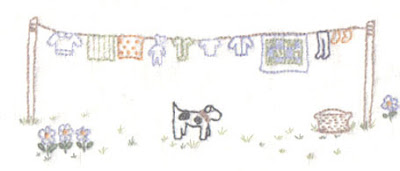
But what if you're a single person, a couple, a small family or a larger family with children who are busy studying or working, or refuse to help in the home? How can you still carry out the work many of us do? You buy the equipment and appliances to help to do what you need to do. Now let me get this out quickly before there's a riot here: I hate having to buy new equipment when I already have something that can be modified or will do a good-enough job.  But I also see the wise economy and the good sense of buying quality appliances and equipment that will help you live the life you want to live doing the increased amount of work many of us do.  For example, I don't think you need a dish washer, but I think you need a washing machine. You don't need a dryer if you're living in a good climate but you might have to buy a clothes line and clothes racks for good and bad weather. We have an outdoor clothes line as well as one under cover that Hanno made using recycled materials.


So what do you need? These are my choices, my guess is that there will be different opinions about what is useful and what isn't based on family size and whether the homemaker also works outside the home. With everything you buy, buy the best quality you can afford. It is not a bargain if you have to replace it every second year.

Solar panels - we have the smallest size - 1.6kW and since they were installed in April last year, we have not paid a single electricity bill. We are very thrifty with the power switches here but if you're on the grid and you use electricity, I think it's a good investment to have solar panels, even if it's only the smallest size.

Washing machine - we have a front loader and have had a front loader for the past 25 years. They're easy, economical and very efficient with water, electricity and soap/detergent usage.

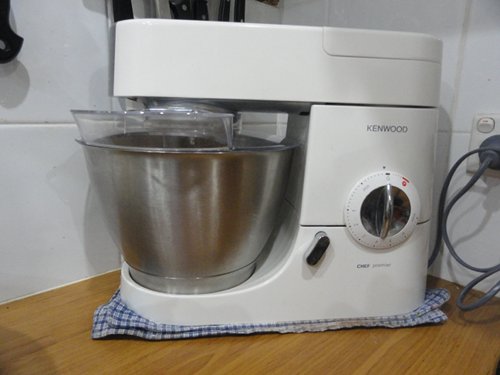
Electric mixer - Hanno bought me a Kenwood Chef last Christmas and I've used it every week since. It has a meat mincer attachment and several different beaters, whisks and paddles.

Stick blender - I use mine for making soap and, after a good wash, for various jobs in the kitchen.

Bread maker - I use mine to knead the dough but not for baking. Those of you who make bread by hand every day will know that the kneading takes only ten minutes, but when I was busy, having to put aside ten minutes every day for fresh bread just sent me to the bakery instead of making my own. I want to make my own bread because I want to know what's in the food I eat. It's also a cost saver. A nutritious loaf of bread at the bakery costs around five dollars. My loaves are a fraction of that, I know what's in them and I can modify the size of them according to who is here. The bread maker is the one thing many people have a problem with, I've heard it so many times. Some homemakers seem to think it is "cheating", that the bread is somehow not quite right if it's made in a bread maker. It's just an appliance like the others. Is it cheating to use a washing machine to clean your clothes?

Electric kettle - If you're a tea or coffee drinker, you might like to invest in a kettle that will quickly heat water for your hot drinks. An electric kettle is more efficient and faster than a stove top kettle. I prefer the old-fashioned appeal of the stove top but for energy efficiency, nothing beats a good quality electric kettle.

Chest freezer - I save a lot of money buying in bulk. Here dry foods like flour and rice, or meat, fish and chicken is stored in the freezer. The meat, fish and chicken is stored until it's used, the dry goods are placed in the freezer for a couple of days when they're brought into the home to kill off any bugs or bug eggs that may be in the packs. I also use the freezer to store excess vegetables that I blanche and seal for later use.

Refrigerator - If you can afford it, a good quality fridge is a good investment. The newer fridges are more efficient users of electricity so they'll save money in the long run.

Slow cooker - I think these are essential, particularly if you live in a cold climate or if you work for a living.

Heavy based sauce pans, and stockpot. If you're a jam and sauce maker, maybe a Maslin pan for the jam, relish and chutneys. 

Cast iron or ceramic frying pans and Dutch oven. I try not to use Teflon coated pans.

Water bath processor/canner or pressure canner - if you've got a garden and intend to preserve a lot of your excess, one of these would be handy. However, if you only do small amounts, a large stock pot would make a good stand-in water bath processor.

Dehydrator - if you intend to dry a lot of your food, go ahead, for small amounts it's better to do them outside in the sun or in a warm oven or microwave, if you have one. A microwave doesn't make my list. I have one that is now 12 years old. When it dies I won't replace it.

Water filter fitted to the sink - if you can afford it, these are a good investment. We drink a lot of water here and without the filter I can sometimes smell the chemicals they use to purify our water. Having a good supply of sweet tasting water is a big encouragement to drink water rather than milk, soft drinks or juice.

Sewing machine - I have a Janome Quilters Companion that I bought second-hand on eBay for less than half the new price. I've had it for about eight years now and never had a moment's problem with it. If you're a sewer, mender or have a small family, a sewing machine would probably serve you well. You don't have to buy the top of the range, just a good quality second hand one that is in good condition should do.

And that's it. I know there are yoghurt makers, pie makers, cup cake makers and a hundred other appliances but I think if you have the essentials, it helps you get through the heavier work load of simple living without stepping over the line of too much. But we're all different, we all work according to our circumstances and I have no doubt some of you would see the list as too meagre and others too extravagant. Whatever you decide, buy the best quality and don't feel guilty for your choices. Guilt should play no part in this. If you're anything like me, you'll need some appliances to help you get through the sheer volume of work this way of living brings.

But this is only my opinion - it's what works for me at this stage of life when I'm trying to cut back on power usage and purchases. What is essential in your home that isn't on my list?
I am filled with unmitigated optimism at the moment because I have made some decisions lately, based solely on what I want to do. Selfish I know, but sometimes you just have to put yourself first. Behind me are a few months of exciting and memorable book promotions and years of enriching, life changing and sometimes demanding volunteer work at the neighbourhood centre. I have given up all my paid writing work. I have enjoyed all I'm leaving behind but home is where my heart is, I have grandchildren who need their grandma and opa at home and I want to develop different interests, write some more for you and be a homemaker again.  

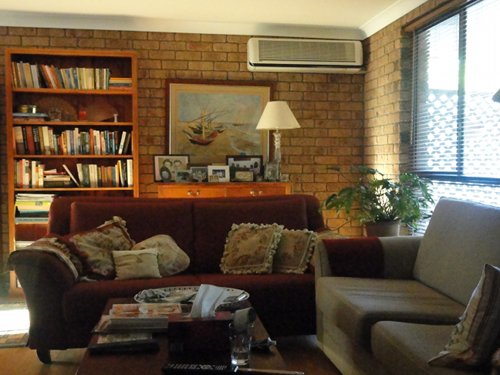
Late afternoon in the lounge room.

To tell you the truth, I feel like I did when I first closed down my business and discovered the joys of domestic life. Then my friends queried my shift towards homemaking but I had discovered something precious they didn't know - it was an empowering and creative way to spend my time. What better project to work on than my life, in my own home? And that is where I am again but now it's not so much a major project, rather I'm modifying for older age and tweaking our home to better suit visits from grandchildren, family and friends. 

It's all ahead of me and I'm so ready to dive in. I want most of what I do now to come from my home and or be for my home. So what are my plans? Let's start with some good news. My book, Down to Earth, has gone into its second printing. I'm very proud of that because there were 12,000 copies printed in the first run and as my editor said, "that seemed so ambitious at the time", but they sold, in eight months. Penguin told me recently that an ebook version of Down to Earth will be out before Christmas. The ebook will not look the same as the paper book, otherwise the file would be too big to download but they're testing different formats at the moment and I'm hoping to have an update about it soon. By the way, the ebook is for sale only in Australia and New Zealand as Penguin doesn't own the copyright for any international sales. My New York agent, Abby, is currently at the bookfair in Germany and she has my book with her as part of their portfolio to promote this year. It's very exciting!  But here at home, one of my projects will be to write some ebooks on particular topics to sell from the blog. They'll be well priced so anyone can buy then and they'll be sold both here in Australia and internationally. And I'm still going ahead with the blogging workshops with Ernie - the first one is scheduled next week, in Maleny. Later we'll do some more on the Sunshine Coast, Brisbane, the Gold Coast and possibly Toowoomba.


But even though all this will be going on, my main focus will be to remain grounded here at home - the writing will be woven into my days around the baking, cleaning, cooking, gardening, sewing, mending and knitting. This where I am at my best, nothing will change that. So if I nurture myself with home time, coupled with housework done to my old routines, I know I'll write well and do well when we go out for a workshop. The workshops will be fairly infrequent so most of my time will be here, at home, with Hanno, Hettie and the chooks, and occasional visits from family and friends.

Some of Hanno's family are visiting from Germany next month and they'll be staying with us. There will be a long road trip while they're here but I'll stay at home to keep everything going and will really enjoy the solitude. Before they arrive, we have an ironing room to turn back into a bedroom and about three weeks ironing to do. Maybe that's an exaggeration, it's probably more like four hours.

Winding a shank of cotton into a ball. I have to get Hanno to look at this winder, it's not extending out as it should.

Ahead of me right now - today - I have housework to do. In the coming weeks, we have to declutter again, I have the major task of reorganising my work room and there is sewing and knitting waiting. I want to make a couple of nightgowns for myself and a quilt for the bedroom we're bringing back to life. I have a cardigan for Jo's baby waiting to be finished and some vests and cardigans for Daniel and Laura's baby to start.

Before and after of the cutlery drawer.

There is so much to do! Domestic life is opening up its warm and loving arms to me again and now I have the time to make the most of that. I am even going to clean out my gadget junk drawer in the kitchen. :- ) I might make a challenge out of that task because I know you have a drawer just like mine lurking in your home too. We'll do that together next week sometime. Today I'll be making bread, ironing, writing content for our blogging workshop website and finishing off our logo. What will you be doing today?

Writing a book and gaining an amount of public exposure because of it has been rewarding but also had a down side. The down side is that I don't enjoy the public recognition but one of the rewards is that I meet people I otherwise would never meet. A while back my editor and friend Jo Rosenberg told me about a couple she and her husband Eli know. They were about to set off on a trip to cycle up the east coast of Australia and proposed writing a book about the journey - a journey where they spoke to people who were living simple lives.  She wanted to know if she could give them my contact details and eventually meet them. The trip was far off into the future. "Sure," I said, thinking it was so far off I didn't have to think about it.

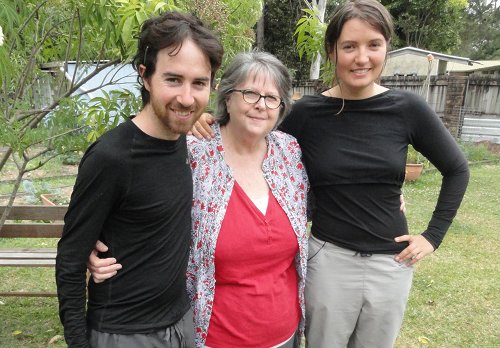
They arrived Sunday evening.


Greg and Soph are the kind of young people that make me feel optimistic about the future. They're articulate and engaging and have a hint of uncertainty that smart young people usually have that I always find endearing.  They told me they're on their journey to talk to people who are living simple lives but like all of us they're on a self-discovery journey as well. Many of us say that we have no like-minded friends or community to tap into, too few mentors and real life role models. Greg and Soph are bypassing that problem by travelling around, in a very low impact way, to meet people they can talk to and see first hand, how distinct and effective all these simple lives are.

It is a pleasure to meet young people who are respectful but also treat you as a contemporary. They asked a lot of questions but also shared some of their own views and dreams. They have so much ahead of them that it makes me a bit nervous to think of it. When I look back and see all that has happened in my lifetime I wonder what they'll face, along with my own children and grandchildren, and how they'll deal with it all. One thing is for sure, having more books and blogs about how we all live will help enable others to see this as an achievable sustainable life choice. The combination of more information, combined knowledge and guidance is always a good thing.


We invited them to stay the night so we had time to talk over dinner and again in the morning. And then they were off - cycling to Cairns, another 2000kms, dodging cars and trucks, looking for the good life. It is out there, we all know it is, so if you see them in your town north of here, offer them a drink, a meal or let them put their tent up in your backyard. Like all of us, they're working to a budget.

If you can suggest people they should meet or places you think they should visit, drop them an email here simplelivessuggestions@gmail.com. To read about them and find out more about the trip, you'll find them here at their blog -  http://simplelives.com.au
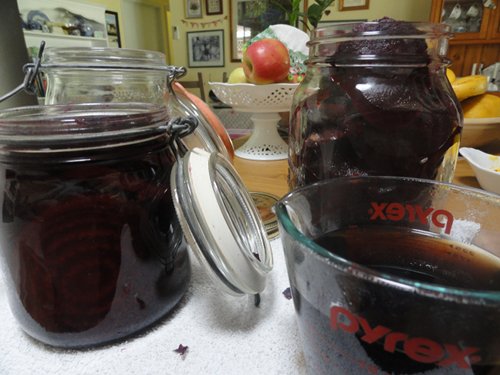
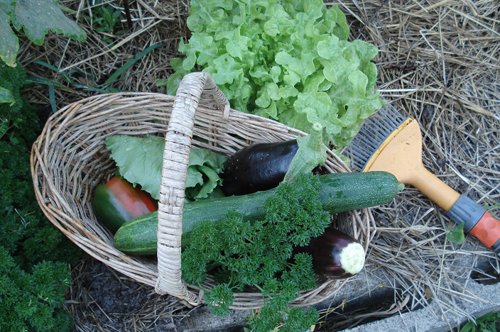
I've been harvesting a lot from the garden lately and the excess, as usual, is either frozen or pickled. I did up a nice batch of beetroot last week and still have another batch in the ground to process later this week. Beetroot is delicious juiced, grated and eaten raw, or roasted and served with other root vegetables - either hot or in a warm salad. These beetroot were boiled, then sliced and pickled in a spicy vinegar. I have two large jars and they'll do us for our salads for the next few months. My recipe for beetroot in spiced vinegar is here.


I also did up a delicious sweet mustard pickle made using a variety of vegetables I harvested or had in the fridge. The cauliflowers were picked too late and the florets had gone all over the place so I decided to use them in a pickle instead of as a hot or cold vegetable for the table. Mustard pickles were the obvious choice to make. I grew up in a family that loved relish, chutney and pickles and sweet mustard pickles was my father's favourite. This is very similar to the recipe he loved.


These two pickles involve cooking vegetables, then adding either a spiced vinegar or a spiced sauce. The sauce I added to the pickles is hot and very spicy with mustard powder, turmeric, pepper, chilli and curry powder.

SWEET MUSTARD PICKLES
  • Mix 1½ litres of water with ¼ cup of salt and stir until the salt is dissolved.
  • Cut up about 1 kg/2lbs vegetables such as cauliflower, cucumbers, capsicums/peppers, celery, zucchini and onions into small chunks and place the vegetables in the salted water.
  • Cover and leave overnight.

  • The next day, pour off the salt water, add a fresh litre/quart of water with a ½ teaspoon salt to the vegetables in the saucepan, bring to the boil and simmer until tender - about 20 minutes.
  • When the vegetables are cooked, drain then through a strainer and make the sauce.
  • Pour 750 mls/1½ pints cider vinegar into the saucepan and add 1½ cups sugar.
  • Place it on the stove and bring to the boil.
  • When it's boiling, add 1 tablespoon mustard powder, 1 tablespoon curry powder, ½ tablespoon turmeric, as much chilli as you like, salt and pepper and stir.  
  • Mix two tablespoons cornflour/cornstarch in a cup with a small amount of water to make a thin paste. Add that to the hot vinegar and stir immediately. This will thicken the sauce. Turn the heat down and let it simmer for one minute, then turn it off.
  • Add the vegetables to the sauce and stir thoroughly. Add the hot pickles to a hot sterilised jar.

These mustard pickles may be eaten immediately but they improve as they age.

All the jars I use for storing these pickles in are washed and sterilised by placing them in an oven on 150C for 15 minutes. Boil the lids for 10 minutes.  If you use sterilised jars, boil the pickles and add hot pickles to the warm jars, the vinegar and sugar will help preserve the pickles and they do not need a water bath. I make one or two jars of these and store them in the fridge but they can be stored in a cupboard for up to six months. I know my American and Canadian friends water bath preserves like these but here in Australia and in England we don't, and we're all still here to tell the tale.

Do you have a favourite preserving recipe, using excess vegetables, that you make every year?

Living with the Amish - this link will probably only work for Australian readers due to the copyright laws. If you have a spare hour, watch this very powerful and inspiring program. For me it was as much about acceptance and love as it was about the practical side of Amish life. Link expires at the end of the month. The series continues each week on SBS.

Appreciating hard work at a Two Frog Home

Some great sewing and refashioning tutorials at Made by Me

Buying local food

Steiner resources for teachers and homeschoolers

DIY food

Make you own liquid fertiliser

FROM COMMENTS HERE THIS WEEK ...

Becky at Life for Us

Living simply in Montana

Sami's Colourful world

It's been another busy week here and now we're looking forward to a quiet weekend. I hope you will enjoy the same.  See you next week.  ♥


Laura and Daniel's baby boy was born yesterday, another tiny baby for our family to love and nurture. Congratulations Laura and Dan, and grandma Tricia, my beautiful sister, who will be a wonderful grandmother.
♥♥♥

We have two long seasons where we live - summer and winter - and two much shorter seasons - spring and autumn. Officially summer starts here on 1 December but really, about half way through November, the humidity sets in and we all feel like taking to the hills. I usually start preparing for summer in October because sometimes the hot weather arrives early and then all hope is lost of doing the heavy work.


I guess the major part of the heavy work is done outside but as I've been helping Hanno with the outside work since he cut his hand, this year, that is on my list too. We generally let the garden go without any new plantings after November. We planted new greens a few days ago, I still have to plant up those tomato plants in pots I told you about, we have sugar cane mulch to go down on the beds, some pruning, I have to attach a steel frame to the fence to let the berry canes grow along them and a quick mow of the lawn and the backyard will be done.


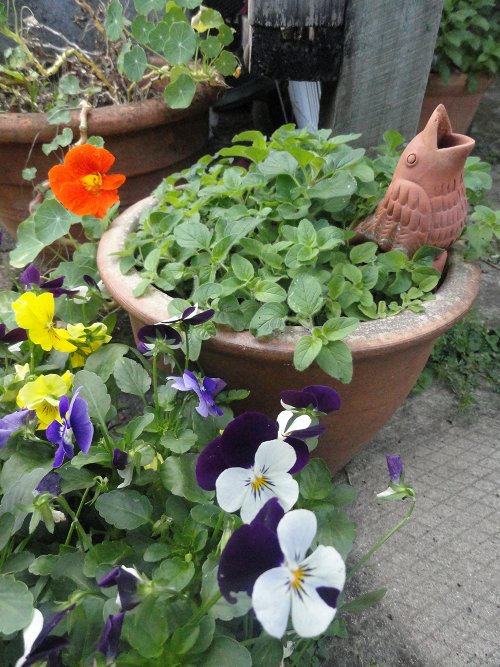
The bush house is tidy. Soon the pink cactus and orchids in there, and the violas in pots, will fade for another year. I need to repot a couple of hanging baskets for the front verandah and set aside some ferns for the wooden basket my nephew Daniel made for me. The front verandah needs to be de-spidered, the furniture spruced up, cushion covers washed and replaced, the ceramic fish pond cleaned out, scrubbed, refilled with rain water and moved back, out of the summer sun.


There are a few late strawberries, cauliflowers and red cabbages to be picked and already radishes are red and ready, tomatoes are ripening and cucumbers starting to climb their trellises. Beetroot is ready for pickling. I have calendula petals to collect for drying as well as mint and oregano to dry as a precaution, just in case a stray grasshopper wipes out the fresh leaves. There are many seasonal tasks here but they're enriching and pleasant and they remind me that I'm part of the natural world where nothing stays the same. 

Inside, the summer sheets will be going on the beds and light quilts will replace winter doonas/duvets. It's usually such a beautiful time of year when I do that, right now the air is still coolish with the slightest touch of warmth. It gives me hope that this summer won't be as harsh as all those memories I have stored away. Soon the bedroom windows will stay open all night, soon a ceiling fan will slowly twirl over our bed.


We'll stop buying barley and lentils, making do with our stockpiled reserves over summer and replace them with the summer sisters - broccoli and radish sprouting seeds. In the freezer, I'll have to go in search of any stray soup bones lurking in the depths. A late soup will be on the menu if I find any but that's not such a bad thing; it will be months before hearty soups and stews grace our table again. Hidden bones mean an extra goodbye, and with people and with soup, that's not such a bad thing. And that reminds me, Hanno has been stockpiling smoked pork knuckles, sausages and kassler for his annual kale and pork fest. It's one of the last winter meals he has and the kale is ready to be picked for that now. Soon cordials will be mixed up, ice cubes will be clinking and salads being prepared for the evening meal will tell everyone within sniffing distance that summer is here again. 

So while many others put away their knitting, I, and Sue in Perth, will be clicking away with our knitting needles when the first test cricket match starts in early November. That is the first real sign. The cricket and the ice cubes and summer sheets with a slowly twirling fan, they are summer to me. It will start soon. I'd better get a wriggle on.

Times marches on.
Madge asked if I'd show a photo of the baby quilt that Tricia's currently making by hand for her first grandchild. She worked on it while she was visiting with us and is happy for me to share it with you. I have to tell you that I am so pleased Daniel and Laura are having a baby and that Tricia will have a grandchild. It is such a fine and precious gift to be a grandmother or grandfather and Tricia has sat by graciously while Shane and Kerry had their babies, celebrating their births with the rest of us. Now it's her turn to look into her grand baby's face and see our family's history and its future.

It's all done by hand with the finest of stitching.

Having such a fine piece of hand made loveliness made me think of other beautiful handmade pieces and why we make these pieces. Usually they're made to beautify our own homes or as gifts for those we love. Now, more and more, people are giving handmade gifts at Christmas. I love that. It shows me the continued move away from everything commercial towards softer and more creative gifts. I've had a few comments about handmade Christmas gifts lately so I thought I would share these links with you. I've been looking around for gift ideas that I can start on soon so I invite you to look at these and maybe we can get started on our projects together so there is no pre-Christmas rush.  I encourage you to go through the lists and work out what you have the skill, patience and time for. Make a list. Then try to do one gift a week, or two if they're really simple and easy. If you're a member of the forum, we'll make up a thread and post photos of what we're making.
  • Here are some great ideas from Australia
  • Many great links to Christmas projects
  • Here is a Pinterest page full of suggestions and links
  • More at Pinterest
  • 25 handmade gifts for boys
  • Handmade girls for girls
  • Martha Stewart's handmade gifts 
  • Frugal and fast handmade gifts 
If you have a wool, cotton or fabric stash, making these projects is a frugal way of making your gifts. They can be as simple and quick as a pin cushion or as beautiful and time consuming as Tricia's quilt, but there is a wide range in between too suitable for all skill levels. I love receiving hand made gifts. They're unique and I know that person has thought about me while they've made their gift.

There are two things that are always true in the lead up to Christmas: money will be tight and you'll have a lot of things to do preparing for the holidays. So think about making your gifts now. Just an hour or two a day, maybe after dinner, or on the bus going to work. Often these gifts are small enough to pick up and take with you. And if you'll have portable gift making sessions, make up a little kit in a bag that will keep everything together and clean. I'll check our collective progress in the coming months and hope you'll have some photos you can share with us. If you're not really a sewer or a knitter you can make up food or garden gifts with handmade cards. It is these small projects that help you increase your craft skill level. We were all beginners at one point and most of us improve by making small things one stitch at a time.
I'm trying to re-establish my routines - the main one that got me through every day before I modified much of it to write my book, but also other smaller planning exercises that remind me to plant tomatoes in a pot so we'd have home grown tomatoes at Christmas, and make soap and cleaning products so we don't run out.


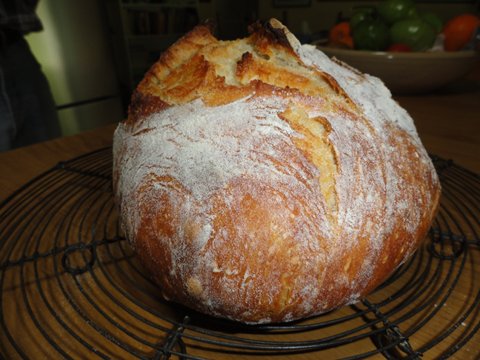
I keep forgetting the bread. I changed to an overnight dough and often forgot to mixed it before going to bed. Now I've decided to change back because we were wasting bread. Unless you eat that bread straight away, just baked, or toasted, it doesn't taste so good. So were going back to the normal sandwich loaf and I hope that will bring structure to my day. It had always been part of my daily routine. I would make bed, wash up, make bread dough, then clean up the kitchen and that would set me up for the day. Once I got the dough underway, the rest fell into place. I have to get back to making the bed after breakfast, then going to the kitchen to wash up, clean up and make the bread. When I do that, when I get the morning organised and underway, the rest of the day seems so clear to me. One thing just follows the other when I start out right. Daily rhythm.


But there are many other things to plan along the way, especially if you wish to make your own cleaning products or produce vegetables in the backyard.  We'll be scaling back on our garden fairly soon. We've just planted lettuces, pakchoy and calendulas that will keep us going another month and I have one cherry tomato to transplant and another to plant in pots. These pots can be moved around and while we'd have little hope here of having any of the larger heirloom tomatoes on the table for Christmas, we have a good success rate with the cherry tomatoes. We have one three-quarters grown and in flower cherry tomato in a pot now, so if I plant the other two, we'll have cherry tomatoes right through until January. But if I don't do something about that now, like everyone else, we'll be buying overpriced tomatoes for our Christmas salads. The planning is essential.


And speaking of Christmas, that's another planning exercise because we tend to make what we give and those things need to be planned now. I know I'll give a few soap and face cloth sets so I might have to make another batch of soap soon so it's dry and cured before I wrap it. Face cloth yarn will be added to my knitting basket so it reminds me there is work to be done.


Daily house work and all sorts of daily, weekly and seasonal tasks have to be done in a life such as ours. The work is there if we're full-time homemakers or if we have two jobs - working outside the home and when we come back again. If we want homemade jams, sauces and soaps we have to make them. If we want fresh vegetables, we have to plant them. If we decide that our gifts will be mainly hand-made, we must schedule times to make those items into our daily activities. 

Creating efficient routines is one of the most important organisational skills we develop in this way of life - there are so many small things to do, so many things to remember. Having a routine the allows you to work to the rhythm of your own home, with one thing flowing from the other, will help you get through your work. I have always relied on memory before but it's not as reliaable as it once was. I think I'll make up a daily calendar on my computer and slot in reminders for bread every morning, soap and laundry liquid every three months, gift making sessions before birthdays and Christmas, planting sessions during our growing season - March to November, and reminders to preserve summer and winter jams, relish and sauces. 

How do you organise yourself for daily, monthly and seasonal chores?

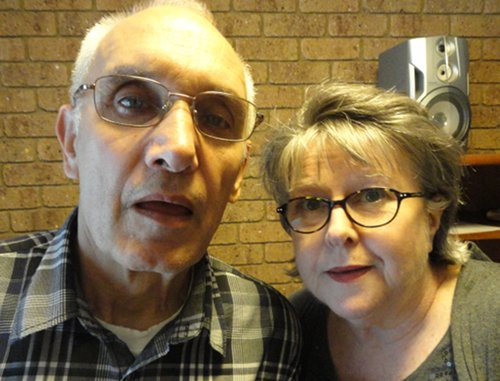
Thirty-three years ago today, these two youngsters got married in Hamburg, Germany. We still look as goofy as we did then. I used this photo, taken yesterday, because it looks like we have no idea what we're doing with this new fangled technology. Most of the time, we don't.  :- )


Weekend reading

Nigel Slater's baked chicken, tomatoes and olives.

Just how dangerous is knitting? Jaime at NGO Family Farm tell us in this blog.

Extracting woad at lovelygreens.

Take a walk in the woods at Beauty that Moves

Chicken feed recipes

From comments this week:

Ree at Nallerang Creek Farm

Buttons thoughts at Ravenhush 

Dayla at Badger Farm

Thanks for your visits and comments during the week. As usual, you all teach me a lot.  I hope you have a beautiful weekend.  ♥


Before the global financial crisis (GFC) started in 2008, there was rarely anything in the press or on TV about budgeting, going back to basics, frugal living, simplifying, living within your means or anything much outside the consumerist norm. Well, times have changed us, and not only do I think significant change has happened, I think for many of us, this way of living makes so much sense, it is here to stay.


Now I often see magazine and newspaper articles as well as TV news and current affairs segments on thrift, budgeting, saving money by shopping wiser and where to get the best grocery prices. I have to say, I wonder why it's taken a world-wide financial collapse to bring us to this point. I think these topics would be useful all the time, but still, I'm grateful for the information we get now. I think these snippets of info are really helpful to all of us but especially the younger readers who have grown up believing that it's fine to spend on whatever you want, regardless of whether you have the cash to do it. Paying by credit card is so easy and often it's only when people are deep in debt that they realise how much damage has been done and how much work will go into getting out of debt. Often it takes years.


Not going along that debt pathway in the first place is the wisest option. By moderating your desires and practicing frugality a wonderful life can be built that gives many of the good things you work for but also the free time to enjoy it all.

The downturn in the economy caused a lot of unemployment and unpaid mortgages but significant gains were made from it too. It revealed to us that we can live well on less, and often having more reduces our enjoyment of life because we have to work more to pay for it. It taught us that genuine satisfaction comes not from comparing ourselves ourselves to others and gauging our worth by having more, it comes from creating an authentic life that is lived according to the values we cherish. 


But there are choices to be made - and those choices are critical. You can choose a new house with a high mortgage or a modest home with a more realistic mortgage. You can choose to buy furniture you can afford, not what your friends have or what you see in a glossy magazine. You can choose to stockpile, make your own cleaners, cook from scratch and hand-make your life or to buy all your wants and well as your needs. Each of these choices will determine how much money you need to live the life you have chosen.


The choice is yours but if you choose the frugal option, you will have more time to enjoy what you have. I think that is one of the best things to come out of the GFC. It has shown us that there is an alternative to what modern life had become. It has encouraged us to examine life and make changes, and it has moved many of us towards a more sustainable and simple way of living. The financial downturn has been effecting life world-wide for a few years now and it's given us time to settle into new patterns and routines. For many, it has forced change that may not have happen otherwise and for others it has brought more people in line with how we're living.

How have you been effected by the GFC? Have you seen some good in it?


Even though I haven't written about our stockpile for a long time, it is still sustaining us. During our busy period with the book and Hanno's accident, we couldn't have done without it. No matter what stage or age you're at, whether single or married, having a stockpile will save you money and time. Of course the size of the stockpile will vary according to how many people live in your home. A friend of mine lives alone but she has a small stockpile of those things she can't do without - tea, coffee, baked beans, tinned salmon, sugar, honey, oats, flour, rice, toilet paper, toothpaste and soap. She buys milk, meat, fish, fruit and vegetables on a daily basis on the way home from work, but if she gets caught out through overwork and tiredness, or she's sick, she can leave the daily shop alone and still keep going on what she has in her home cupboard.

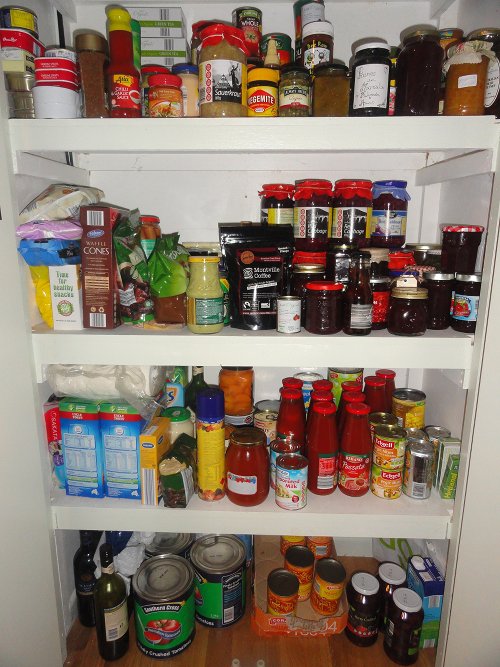
Our stockpile is in a cupboard in the kitchen, it's not the same cupboard we use as a pantry. The pantry contains the food we are using now and is usually stored in containers, the stockpile is all unopened.


We shop at Aldi for most things and the IGA and markets for the rest. I've just taken these photos of our current stockpile and it's looking healthy. This is because we ran it down a bit in the past few months and have just built it up again. It can sit nicely in our cupboard and although we don't have things like biscuits, crackers, cakes, muffins, sauces, mayonnaise, salad dressings, pasta and soft drinks in the cupboard, we have the ingredients to make a wide variety of those things.

Some of the soap and laundry products I made up last week. Below is my stockpile of laundry liquid and soap ingredients.

Of course, it's not only food we stockpile. We have ingredients to make laundry liquid, soap and a variety of vinegar and bicarb cleaners. You can buy these ingredients when you think of them and have enough to keep you going for almost a year. They won't go off and they don't take up much room, unlike the commercial liquids you buy.

We also have a stockpile of meat, chicken and fish in the freezer. I guesstimate that in the case of illness, being low on cash or wanting to use the cash for other purposes, we could live here using the stockpile for about six months. That stockpile would keep us going and we could supplement the stockpile using the eggs, vegetables and a small amount of fruit in the backyard.

Everyone sets up their own stockpile in the way that suits their own family circumstances. Whether you're part of a large family and use your stockpile and bulk buys to assist your frugal lifestyle or if you're a single fellow, with not much time to spare, stockpiling will serve you well. Along with budgeting, it's the first thing I recommend to people when they ask me what they can do to start living a sustainable, simple life. It's also a wise move if you know, or suspect you or your partner might lose a job. If that happens, get right back to basics. Find your tried and true recipes for things like salmon patties, meatloaf, pasta bake, fried rice, boiled egg salad and vegetable omelette, as well as a wide variety of soups and stews. They and your stockpile will keep you going through tough times and when you come out the other side, you can keep these strategies going to help save money to pay off debt and the mortgage.

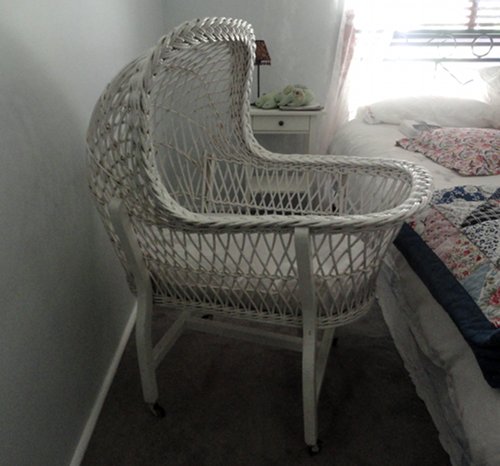
My sister Tricia is visiting from the Blue Mountains so we took the opportunity to invite our cousin Susie and her husband, Nick, over for lunch. They live nearby and we don't often see them but when Tricia is here it always seems right to invite them over for a meal.  Tricia came up to collect a very precious piece of our family's hertitage - the bassinet that our mother bought for Tricia and I to sleep in when we were babies. The bassinet has moved around the family since then. Our mum lent it to her sister, Joy, so Susie and her brother Stephen slept in it as newborns, and Susie's three children and her grandson all slept in that cradle.

Nearly 70 years old now, this basinette is ready to go back to work again.

Now it's going back into service again. Tricia's son Daniel and his girlfriend Laura are expecting their first baby in November. Tricia is set to be a grandma for the first time! It didn't take much thought for her to drive all the way up here to collect it. We've been talking about it for a while now and wondered if it had been repaired or if it needed to be. When Nick lifted it out of the car, it was just as beautiful as when our mother bought it - an old wicker bassinet, still white, still sturdy and sweet, and ready for our family's newest baby. I am really excited to meet Daniel and Laura's baby and to know s/he will sleep in the same tiny bed that Tricia and I slept in reminds me, yet again, of the value of a strong and loving family.


We sat around the table yesterday, looking at old photos Susie brought along and it dawned on me that these small and large pieces of our family memorabilia are part of what holds us together. The passing on ritual helps bring new members into our family while showing the younger members that they too are keepers of our family traditions and precious heirlooms. It reminds us that what we believe is important, is not always financially valuable, but always emotionally valuable and loved.

Yesterday, I looked around our kitchen table and all of us who were girls together are now in our 60s and grandmothers, or soon-to-be. Back then I thought I would always be young, probably just like you do. But here we are, talking about our children and their children and it feels good and right to be this age and passing on the important parts of our family's story, giving the material pieces of our family to those who come after us, and making sure our family remains strong and always supportive. Our babies will never be born into wealth or privilege but they are born into a loving family, and that, I believe, is far better than riches.

What important pieces have you passed along to your younger family members?
Imports of fruits and vegetables into Australia have increased 60 percent in seven years.

Cappers - traditional American grit.

Interesting and helpful - UK Handmade.

The hive habits of bees.

A delightful blog at joy and comfort. 

This is Ale's blog and it's written in Spanish. Just click the Google translate button at the top of the blog and it will translate it instantly for you.

Check out the crafts here on twiggynest. She has only been going for a few months but this is building into a very good nest of ideas.

EcoStore, one of my sponsors,  let me know the Australian Lifestyle Awards were announced this week. Congratulations to EcoStore on winning the Home category. I'm doing a review of their new unscented range at the moment and will blog about it when I've finished testing the products. I was really pleased to see another of my sponsors among the winners - Biome. Congratulations to Tracey and her staff. Also, a shout out to Milkwood Permaculture who not only won the garden category, they have an excellent blog you should visit (link below). 

I've lost the links on the list below and don't have the time to reinstate them. Please cut and paste to visit them.


WINNERS OF THE GREEN LIFESTYLE AWARDS 2012 
FOOD: 
Company 
Winner – Food Connect, www.foodconnect.com.au 
Highly Commended – CERES Community Environment Park, www.ceres.org.au 
Product 
Winner – Bills organic bread, www.billsorganic.com.au 
Highly Commended – Honest to Goodness, www.goodness.com.au 
Restaurant 
Winner – Silo by Joost, www.byjoost.com/silo 
Highly Commended – Bliss Organic Café, www.blissorganiccafe.com.au 
Winery/Brewery 
Winner – Temple Bruer, www.templebruer.com.au 
Highly Commended – Mountain Goat Brewery, www.goatbeer.com.au and Burragumbilli Beer, www.burragumbilli.com.au 
HOME: 
Company 
Winner – Ecostore, www.ecostoreaustralia.com.au 
Highly Commended – Australian Living, www.australianliving.com.au 
Product 
Winner – Bio Paint, www.bioproducts.com.au 
Highly Commended – Sindhiya Soapnuts, www.soapnutssindhiya.com.au 
Energy Saving 
Winner – Ecoswitch, www.ecoswitch.com.au 
Highly Commended – Panasonic Econavi, www.panasonic.com.au 
Water Saving 
Winner – Every Drop Shower Saver, www.showersaver.com.au 
Highly Commended – Caroma, www.caroma.com.au 
GARDEN: 
Company 
Winner – Milkwood Permaculture, www.milkwoodpermaculture.com.au 
Highly Commended – Landshare Australia, www.landshareaustralia.com.au 
Product 
Winner – Charlie Carp, www.charliecarp.com 
Highly Commended – Bokashi buckets, www.bokashi.com.au 
Community Group 
Winner – Grow It Local, www.growitlocal.com.au 
Highly Commended – Smart Garden Program, www.mysmartgarden.org.au 
BEAUTY/FASHION: 
Beauty Company 
Winner – Miessence, www.mionegroup.com 
Highly Commended – Pure and Green, www.pureandgreenorganics.com.au 
Beauty Product 
Winner – Ere Perez almond oil mascara, www.ereperez.com 
Highly Commended – Trilogy organic rosehip oil, www.trilogyproducts.com 
Fashion Company 
Winner – Kowtow Clothing, www.kowtowclothing.com 
Highly Commended – Bird Textiles, www.birdtextile.com.au 
WELLBEING: 
Company 
Winner – Weleda, www.weleda.com.au 
Highly Commended – Healthy Interiors, www.healthyinteriors.com.au 
Product 
Winner – TOM Organic, www.tomorganic.com.au 
Highly Commended – The Environmental Toothbrush, www.environmentaltoothbrush.com.auFor further details and information please contact Liz ben-Arieh at ecostore Australia 03 9015 6873 
TRAVEL: 
Company 
Winner – Intrepid Travel, www.intrepidtravel.com.au 
Highly Commended – Earthwatch Institute, www.earthwatch.org 
Hotel/Resort 
Winner – Bombah Point Eco Cottages, www.bombah.com.au 
Highly Commended – Emirates Wolgan Valley Resort & Spa, www.wolganvalley.com.au 
KIDS: 
Company 
Winner – Gardening 4 Kids, www.gardening4 kids.com.au 
Highly Commended – Whole Kids, www.wholekids.com.au 
Product 
Winner – Wishbone bike, www.wishbonedesign.com 
Highly Commended – Jinta sports balls, www.jintasport.com.au 
ONLINE: 
Eco Info Site 
Winner – Local Harvest, www.localharvest.org.au 
Highly Commended – Sustainable Seafood Guide, www.sustainableseafood.org.au 
Eco Shopping Site 
Winner – Biome, www.biome.com.au 
Highly Commended – Naturally Gifted, www.naturallygifted.com.au 
CARS: 
Company 
Winner – Go Get, www.goget.com.au 
Highly Commended – Green Tomato Cars, www.greentomatocars.com.au 
New Car 
Winner – Mitsubishi i-Miev, www.mitsubishi-motors.com.au 
Highly Commended – Nissan Leaf, www.nissan.com.au, and Toyota Prius Hybrid, www.toyota.com.au 
BUSINESS: 
Large 
Winner – Macquarie Universite, www.mq.edu.au/sustainability 
Highly Commended – Bosch, www.bosch.com.au 
Small 
Winner – Open Shed, www.openshed.com.au 
Highly Commended – Green Moves, www.greenmoves.com.au 
Not-for-profit 
Winner – Conservation volunteers Australia, www.conservationvolunteers.com.au 
Highly Commended – Beyond Zero Emissions, www.beyondzeroemissions.org 
Recycling 
Winner – The Clothing Exchange, www.clothingexchange.com.au 
Highly Commended – Buy Nothing New Month, www.buynothingnew.com.au 
READER’S CHOICE: 
Winner – Orange Power, www.orangepower.com.au 
PEOPLE: 
Hall of Fame 
Winner – Bob Brown, www.bobbrown.org.au 
Local Green Hero 
Winner – Belinda Bean 
Highly Commended – Krista Bernard (posthumous), www.ridehimalaya.com 
Junior Green Hero 
Winner – Thomas King, www.saynotopalmoil.com 
Highly Commended – Parrys Raines, www.climategirl.com.au 
It's been a busy week here. I've been making soap and cheese, we had all the therapy and doctor's visits and then yesterday, Hanno's birthday. He asked me to thank you all for the warm wishes. We celebrated last evening, just the two of us, with pork cutlets, red cabbage and new potatoes freshly dug in the backyard. It was followed by a custard dessert and washed down by non-alcholic wheat beer from Germany, with a toast to the old country, the year ahead and to us.

Just a note on the blogging workshops I'm doing with Ernie. These are part of a business I'm setting up with him and are not related to my blog at all. It will be a separate website.

Oat milk

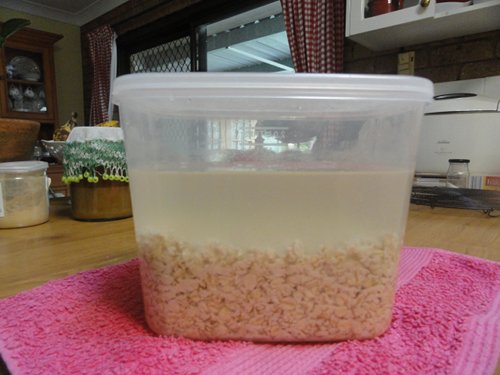
I had an email from a reader at Byron Bay recently telling me about her recipe for oat milk. I made it up yesterday and Hanno and I both tried it. It won't replace cow's milk for us but we'll drink and enjoy it. 


It's very easy to make.
  • 2 cups of oats
  • 8 cups water
  • 2 tablespoons sugar (or honey or maple syrup)
Mix all the ingredients together in a container with a lid, and place in the fridge for 24 - 36 hours. Remove from the fridge and blitz with a stick blender until the oats are finely ground. Strain the mixture through a fine sieve into a bottle or two. Store in the fridge and use as you would use dairy milk. It may suit you if you're lactose intolerant.

The oaty sludge left over can be given to the chickens, added to porridge oats, or used in bread, scones, muffins or pancakes.

Fermenting ginger for ginger beer

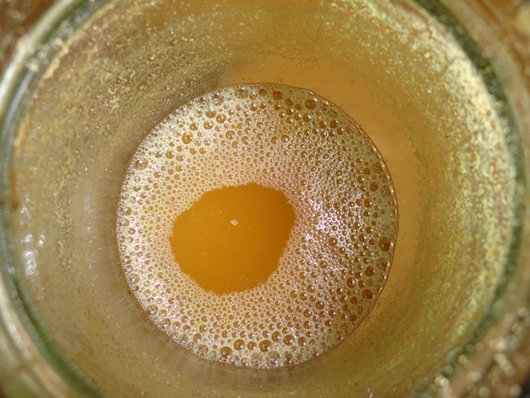
This is my first Blogger video. I have to apologise for having parts of this sideways but I didn't think about the orientation until after I watched it. Still, it shows what I wanted to show you and I'll remember this next time and do a better job for you. If you would like to make ginger beer, here is a link to my recipe and photos.


I guess this means that summer has started here. It's going to be 30Cish today and with ginger beer in the fridge, we'll be ready for anything.  And that's good because my sister, Tricia, will be here today so who knows what we'll get up to.

It's Hanno's birthday today. He's 72!  Happy birthday Hanno. :- )

I've been thinking a lot about blogging lately. I'm not thinking of subject matter, it's rather the ins and outs of blogging, what makes a successful blog, choosing the platform on which to blog, how long it takes each day and what I get out of it. These musings will be part of a series of blogging workshops for beginners that my friend Ernie and I will present in our area soon. We'll also develop a website and possibly have online workshops as well.

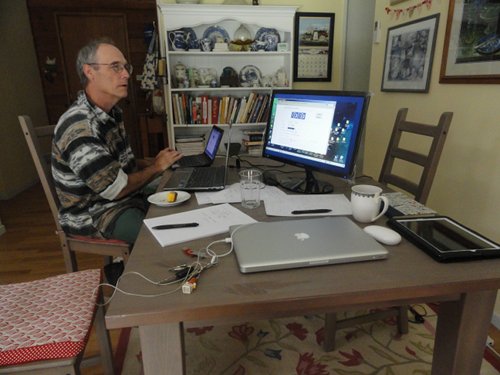
Above, here is Ernie during our blogging workshops work session last weekend.  And Jenni and Hanno below sitting in the warm sunshine outside, drinking tea.


Blogs are written and read for a wide variety of reasons. As a learning tool - to find new recipes and ways of doing housework, to learn more about people in other countries, for entertainment and inspiration, to connect with others, to influence others, promote ideas, sell things, improve writing skills, to create a record of family life, and many other reasons.

When I stated my blog it was mainly in frustration because I'd written the beginnings of a book and had that rejected by the publishers. I turned that beginning into a blog, and have never looked back. I eventually got a book contract with Penguin and had my book published earlier this year, but my blog has become an enjoyable part of life for me now and I continue to write as much as I can.

The blog world was unknown to me when I started writing here and as I uncovered more and more blogs and looked into the family life of so many other people, I became hooked. I was lucky to develop a group of faithful readers right from the start and once I connected with them and started to get to know them, either through comments or their own blogs, I realised blogging was much more than its common definition - "an online journal". It's much more than that.

I have made friends through my blog that I'm sure I will have for the rest of my life. I have learned so much through blogging and I have been able to express myself in a very personal way. Some days I wonder if I've gone too far and others, if I've held back too much. I guess I always knew that people would interpret my words in their own way and that is reinforced each day. As a writer you attach your own meaning to your sentences but the writer is not the reader and each sentence is open to the experience and understanding of every reader. My recent post about breakfast in the cafe was a prime example of this. Some read what they thought I was saying, some just read the words.

Overall, my experience of blogging has been one that I would have been poorer without. Of course, there are the occasional anonymous comments that are filled with hate and envy and luckily now my blog picks up most of them and puts them in the spam folder without me even seeing them. The rest I read and wonder why anyone would value their own time so little by writing in such a way. But the overwhelming response I get is from a warm and loving community of friends and like-minded souls who write about their own experiences, value being part of this blog and who feel they are part of Hanno and I. 

There are two things that I love my blog for. One is the community of people who share our values and who regularly comment here. They show me over and over again that we are not alone. Even though we don't have neighbours who live as we do, we have you. The other reason is that I have created the most wonderful record of our family life here. More and more I am seeing this blog as a gift to my family - particularly our grandchildren who might not see life as we live it now when they're older. I would have loved to have a day-by-day account of my own parents or grandparents' life. It would have taught me so much and I think I would have been able to understand and know them better. If you're looking for a reason to blog, or you're unsure about what to blog about, use a blog to record a year of your life - with photos. It will be a valuable and unique gift to your children and grandchildren.

But that's enough about us and why I write. Why do you write a blog? What do you get out of it? If you've had a blog that you've given up, why did you stop? What is the most difficult part of it for you? Tell me the pros and cons of blogging as you see them.

Newer Posts Older Posts Home

ABOUT ME

Down to Earth is a blog by Rhonda Hetzel, dedicated to simple, intentional living — from home cooking and gardening to frugal budgeting and handmade crafts. It’s a space for gentle inspiration and everyday wisdom on creating a life that feels real, balanced, and deeply fulfilling.

Down To Earth Book

Down To Earth Book
My books are all published by Penguin. Down to Earth, The Simple Life and The Simple Home have been in book shops since they were published in 2012, 2014 and 2016, respectively. On 20 October 2020, Down to Earth was published as a paperback.

MY FAVOURITE PLACES

  • Grandma Donna's Place
  • Grandma Donna's YouTube
  • Grandma Donna's Instagram
  • This Simple Day
  • Nicole's Instagram

Popular Post of All Times

Making ginger beer from scratch

We had a nice supply of ginger beer going over Christmas. It's a delicious soft drink for young and old, although there is an alcoholic version that can be made with a slight variation on the recipe. Ginger beer is a naturally fermented drink that is easy to make - with ginger beer you make a starter called a ginger beer plant and after it has fermented, you add that to sweet water and lemon juice. Like sourdough, it must ferment to give it that sharp fizz. To make a ginger beer plant you'll need ginger - either the powdered dry variety or fresh ginger, sugar, rainwater or tap water that has stood for 24 hours to allow the chlorine to evaporate off. You'll also need clean plastic bottles that have been scrubbed with soap, hot water and a bottle brush and then rinsed with hot water. I never sterilise my bottles and I haven't had any problems. If you intend to keep the ginger beer for a long time, I'd suggest you sterilise your bottles. MAKING THE STARTER In a...
Image

The last post

This will be my last post here.  I've been writing my blog for 18 years and now is the time to step back. I’ve stopped writing the blog and come back a couple of times because so many people wanted it, but that won’t happen again, I won’t be back.  I’ll continue on instagram to remain connected but I don’t know how frequent that will be. I know some of you will be interested to know the blog's statistics. 
Image

How to make cold process soap

I'm sure many of you are wondering: "Why make soap when I can buy it cheaply at the supermarket?" My cold process soap is made with vegetable oils and when it is made and cured, it contains no harsh chemicals or dyes. Often commercial soap is made with tallow (animal fat) and contains synthetic fragrance and dye and retains almost no glycerin. Glycerin is a natural emollient that helps with the lather and moisturises the skin. The makers of commercial soaps extract the glycerin and sell it as a separate product as it's more valuable than the soap. Then they add chemicals to make the soap lather. Crazy. Making your own soap allows you to add whatever you want to add. If you want a plain and pure soap, as I do, you can have that, or you can start with the plain soap and add colour, herbs and fragrance. The choice is yours. I want to add a little about animal and bird fat. I know Kirsty makes her soap with duck fat and I think that's great. I think t...
Image

Preserving food in a traditional way - pickling beetroot

I've had a number of emails from readers who want to start preserving food in jars but don't know where to start or what equipment to buy.  Leading on from yesterday's post, let's just say up front - don't buy any equipment. Once you know what you're doing and that you enjoy preserving, then you can decide whether or not to buy extra equipment. Food is preserved effectively without refrigeration by a variety of different methods. A few of the traditional methods are drying, fermentation, smoking, salting or by adding vinegar and sugar to the food - pickling. This last method is what we're talking about today. Vinegar and sugar are natural preservatives and adding one or both to food sets up an environment that bacteria and yeasts can't grow in. If you make the vinegar and sugar mix palatable, you can put up jars of vegetables or fruit that enhance the flavour of the food and can be stored in a cupboard or fridge for months. Other traditional w...
Image

Cleaning mould from walls and fabrics

With all this rain around we've developed a mould problem in our home. Usually we have the front and back doors open and that good ventilation stops most moulds from establishing. However, with the house locked up for the past week, the high humidity and the rain, mould is now growing on the wooden walls near our front door and on the lower parts of cupboards in the kitchen. Most of us will find mould growing in our homes at some point. Either in the bathroom or, in humid climates, on the walls, like we have now. You'll need a safe and effective remedy at some point, so I hope one of these methods works well for you. Mould is not only ugly to look at, it can cause health problems so if you see mould growing, do something about it straight away. The longer you leave the problem, the harder it will be to get rid of it effectively. If you have asthma or any allergies, you should do this type of cleaning with a face mask on so you don't breathe in any spores. Many peopl...
Image

Five minute bread

Bread is one of those foods that, when made with your own hands, gives a great deal of satisfaction and delight. It's only flour and water but it symbolises so much. I bake bread most days and use a variety of flours that I buy in bulk. Often I make a sandwich loaf because we use most of our bread for lunchtime sandwiches and for toast. Every so often I branch out to make a different type of loaf. I have tried sour dough in the past but I've not been happy with any of them. I'll continue to experiment with sour dough because I like the idea of using wild yeasts and saving the starter over a number of years to develop the flavour and become a part of the family. However, the loaf I've been branching out to most often is just a plain old five minute bread. By five minutes I mean it takes about five minutes actual work to prepare but it's the easiest of all bread to make and to get consistently good loaves from. If you're having people around for lunch or...
Image

This is my last post.

I have known for a while that this post was coming, but I didn't know when. This is my last post. I'm closing my blog, for good, and I'm not coming back like I have in the past.  I've been writing here for 16 years and my blog has been many things to me. It helped me change my life, it introduced me to so many good people, it became a wonderful record of my family life, it helped me get a book contract with Penguin, and monthly columns with The Australian Women's Weekly and Burke's Backyard . But in the past few months, it's become a burden. In April, I'll be 75 years old and I hope I've got another ten years ahead. However, each year I'll probably get weaker and although I'm fairly healthy, I do have a benign brain tumour and that could start growing. There are so many things I want to do and with time running out, leaving the blog behind gives me time to do the things that give me pleasure. On the day the blog started I felt a wonderful, h...
Image

What is the role of the homemaker in later years?

An email came from a US reader, Abby, who asked about being a homemaker in later years. This is part of what she wrote: "I am a stay-at-home mum to 4 children, ages 9-16. I do have a variety of "odd jobs" that I enjoy - I run a small "before-school" morning drop-off daycare from my home, I am a writing tutor, and I work a few hours a week at a local children's bookstore. But mostly, I cherish my blissful days at home - cooking, cleaning (with homemade cleaners), taking care of our children and chickens and goats, baking, meal-planning, etc. This "career" at home is not at all what I imagined during my ambitious years at university, but it is far more enriching. I notice, though, that my day is often planned around the needs of my family members. Of course, with 4 active kids and a husband, this is natural. I do the shopping, plan my meals, cook dinner - generally in anticipation of my family reconnecting in the evening.  I can't h...
Image

Every morning at home

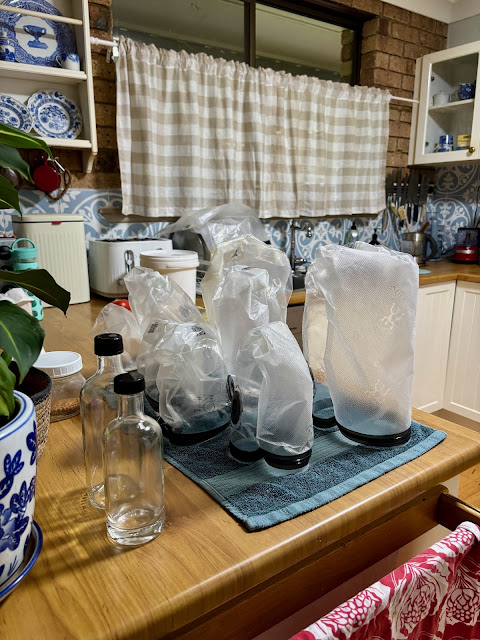
Every morning when I walk into my kitchen it looks tidy and ready for a day's work. Not so on this morning (above), I saw this when I walked in. Late the previous afternoon when I was looking for something, I came across my rolled up Zwilling vacuum bags and decided they had to be washed and dried. So I did that and although I usually put them outside on the verandah to dry it was dark by then. I turned the just-washed bags inside out and left them like this on a towel. It worked well and now the bags are ready to use when I bring home root vegetables, cabbages or whatever I buy that I want to last four or five weeks.
Image

You’ll save money by going back to basics

When I was doing the workshops and solo sessions, I had a couple of people whose main focus was on creating the fastest way to set up a simple life. You can't create a simple life fast, it's the opposite of that It's not one single thing either - it's a number of smaller, simpler activities that combine to create a life that reflects your values; and that takes a long to come together. When I first started living simply I took an entire year to work out our food - buying it, storing it, cooking it, preserving, baking, freezing, and growing it in the backyard. This is change that will transform how you live and it can't be rushed.  
Image

Categories

  • Backyard 244
  • Being Organised 257
  • Books 9
  • Budgeting 142
  • Chickens 42
  • Community life 289
  • Family 269
  • From Scratch 63
  • Grandmothering 69
  • Home 296
  • Individuality 185
  • Mentoring 55
  • My books 49
  • Organic Gardening 348
  • Preserving 97
  • Recycling 22
  • Retirement 22
  • Self Reliance 160
  • Simple Living 777
  • Sustainability 308
  • This blog 107
  • Weekend reading 362
  • Writing 4

Followers

Trending Articles

The last post

This will be my last post here.  I've been writing my blog for 18 years and now is the time to step back. I’ve stopped writing the blog and come back a couple of times because so many people wanted it, but that won’t happen again, I won’t be back.  I’ll continue on instagram to remain connected but I don’t know how frequent that will be. I know some of you will be interested to know the blog's statistics. 
Image

Making ginger beer from scratch

We had a nice supply of ginger beer going over Christmas. It's a delicious soft drink for young and old, although there is an alcoholic version that can be made with a slight variation on the recipe. Ginger beer is a naturally fermented drink that is easy to make - with ginger beer you make a starter called a ginger beer plant and after it has fermented, you add that to sweet water and lemon juice. Like sourdough, it must ferment to give it that sharp fizz. To make a ginger beer plant you'll need ginger - either the powdered dry variety or fresh ginger, sugar, rainwater or tap water that has stood for 24 hours to allow the chlorine to evaporate off. You'll also need clean plastic bottles that have been scrubbed with soap, hot water and a bottle brush and then rinsed with hot water. I never sterilise my bottles and I haven't had any problems. If you intend to keep the ginger beer for a long time, I'd suggest you sterilise your bottles. MAKING THE STARTER In a...
Image

Time changes everything

I've been spending time in the backyard lately creating a contained herb and vegetable garden. My aim is to develop a comfortable place to spend time, relax, increase biodiversity and encourage more animals, birds and insects to live here or visit. Of course I'd prefer my old garden which was put together by Hanno with ease and German precision. Together, we created a space bursting at the seams with herbs, vegetables and fruity goodness ready to eat and share throughout the year. But time changes everything. What I'm planning on doing now, is a brilliant opportunity for an almost 80 year old with balance issues. In my new garden I'll be able to do a wide range of challenging or easy work, depending on how I feel each day. It’s a daily opportunity to push myself or sit back, watch what's happening around me and be captivated by memories or the scope of what's yet to come.
Image

The most wonderful news

This post will give me more joy to write than anything else I could think of today.  I told you  there are a few exciting things happening here at the moment, well, I am now able to tell you the most exciting one of them.  Our son Kerry and his beautiful partner Sunny are having a baby!  Hanno and I will be grandparents in late March.  I can barely believe my eyes when I read what I have just written.  This is one of my original stitchery patterns. This wasn't planned but it's welcomed wholeheartedly by all of us.  Both Kerry and Sunny are hard workers and now that they have a baby to love and care for, they've decided it's time to buy an apartment together.  Sunny is going home to Korea to tell her family and when she comes back again, the search will start to find their first home together.  We are all so excited!  My knitting has taken on a life of its own and when I think of all the projects I could start, my head spins.  Thi...
Image

About Blog


Down to Earth is a blog by Rhonda Hetzel, dedicated to simple, intentional living — from home cooking and gardening to frugal budgeting and handmade crafts. It’s a space for gentle inspiration and everyday wisdom on creating a life that feels real, balanced, and deeply fulfilling.

Last Year's Popular Posts

The last post

This will be my last post here.  I've been writing my blog for 18 years and now is the time to step back. I’ve stopped writing the blog and come back a couple of times because so many people wanted it, but that won’t happen again, I won’t be back.  I’ll continue on instagram to remain connected but I don’t know how frequent that will be. I know some of you will be interested to know the blog's statistics. 
Image

Every morning at home

Every morning when I walk into my kitchen it looks tidy and ready for a day's work. Not so on this morning (above), I saw this when I walked in. Late the previous afternoon when I was looking for something, I came across my rolled up Zwilling vacuum bags and decided they had to be washed and dried. So I did that and although I usually put them outside on the verandah to dry it was dark by then. I turned the just-washed bags inside out and left them like this on a towel. It worked well and now the bags are ready to use when I bring home root vegetables, cabbages or whatever I buy that I want to last four or five weeks.
Image

You’ll save money by going back to basics

When I was doing the workshops and solo sessions, I had a couple of people whose main focus was on creating the fastest way to set up a simple life. You can't create a simple life fast, it's the opposite of that It's not one single thing either - it's a number of smaller, simpler activities that combine to create a life that reflects your values; and that takes a long to come together. When I first started living simply I took an entire year to work out our food - buying it, storing it, cooking it, preserving, baking, freezing, and growing it in the backyard. This is change that will transform how you live and it can't be rushed.  
Image

Workshops update

  This photo shows what the weather's been like here.  That's steam coming off my neighbours shed roof after a brief downpour of rain.  I hope we’re getting closer to organising these workshops. I didn’t explain this clearly enough: Group 1 is four workshops, Group 2 is four workshops. Out of those eight workshops I thought we probably end up doing three or four.
Image

Creating a home you'll love forever

Living simply is the answer to just about everything. It reduces the cost of living; it keeps you focused on being careful with resources such as water and electricity; it reminds you to not waste food; it encourages you to store food so you don't waste it and doing all those things brings routine and rhythm to your daily life. Consciously connecting every day with the activities and tasks that create simple life reminds you to look for the meaning and beauty that normal daily life holds.  It's all there in your home if you look for it. Seemingly mundane tasks like cleaning and cooking help you with that connection for without those tasks, the home you want to live in won't exist in the way you want it to.  Creating a home you love will make you happy and satisfied.
Image

Time changes everything

I've been spending time in the backyard lately creating a contained herb and vegetable garden. My aim is to develop a comfortable place to spend time, relax, increase biodiversity and encourage more animals, birds and insects to live here or visit. Of course I'd prefer my old garden which was put together by Hanno with ease and German precision. Together, we created a space bursting at the seams with herbs, vegetables and fruity goodness ready to eat and share throughout the year. But time changes everything. What I'm planning on doing now, is a brilliant opportunity for an almost 80 year old with balance issues. In my new garden I'll be able to do a wide range of challenging or easy work, depending on how I feel each day. It’s a daily opportunity to push myself or sit back, watch what's happening around me and be captivated by memories or the scope of what's yet to come.
Image

Simple life workshops on Zoom UPDATED

I've added more topics to the list. This post is for those readers who expressed interest in doing online Zoom workshops or who want to register now. The topics haven't been chosen yet but potential topics are:  vegetable gardening and composting; starting a vegetable garden and choosing vegetables suitable for a beginner;  cutting costs in the home, housework and routines; homemade laundry liquid and powder, soaking, stain removal and washing clothes and household linens; cooking from scratch and building your pantry to help you do it; homemade bread - white, rye, wholemeal and ancient grains. I'm not doing sourdough; living on less than you earn and developing a frugal mindset.
Image

Labels

  • Bartering
  • Chickens
  • Community life
  • Food security
  • From Scratch
  • Home Maintenance
  • Homemaking
  • Mentoring
  • My favourite place
  • Recipes - savoury
  • Reminders of what is important to us
  • Simple Living
  • The Simple Home - June
  • The Simple Home - May
  • Utilities
  • Wise Economy

Copyright © Down To Earth. Designed by OddThemes