down to earth
  • Home
  • About Us
  • Down To Earth Book
  • Privacy Policy
I am going on a holiday soon.  I am REALLY looking forward to it.  My sister Tricia is coming up next week to see Jamie and the day after my birthday, we will drive down to her little cottage in the Blue Mountains.  It's on the snow line there and although it's not snowing yet, it is cold and we'll have the stove going and wear jumpers, cardigans and gloves to stay warm.  I'm almost hysterical with excitement when I think about it.  Mind you, you would never believe it to see me, I am about the least likely person to be hysterical you'll ever meet.  But my interior conversations tell another story.  Remember the jungle monkeys.


We have everything planned.  We'll drive the back roads, stop and browse around antique shops, rest when we feel like it and get there in our own sweet time.  When we're there, I'll see my nephews, and Tricia wants to take me to a couple of places, but the rest of the time we'll just potter around her place, two "old" ladies knitting by the fire, taking walks in the cold mornings, drinking cups of tea and reading.   It will be bliss.  I'll take my computer with me because I'm still working on the book but even if I work a portion of each day, I foresee a wonderful time ahead and I'm looking forward to it so much.


My last holiday was a train trip Hanno and I took to Townsville in 2007, the one before that was Melbourne, by car, in 2004.  But that was a buying trip for our shop, not a real holiday.  The rest of the time, my "holidays" are spent here.  I haven't been on a plane trip for at least ten years.  I cannot justify the environmental cost to myself.  When I travel back from Tricia's, I'll be on the train, even though it's more expensive than a cheap plane ticket.


I wonder if others feel the way I do.  If it is for my own enjoyment, I will not fly.  However, if I have to fly for business reasons, for instance, to promote my book, which I've already been asked about, I will.  If I ever travel overseas again it will only be to promote the book if I get a sale in the US or the UK, then I'll go to America and to Sweden on the way home and pay a carbon tax.  Otherwise I'll stay in Australia and drive or take the train to far off places.


I was offered a trip to Singapore in 2009 when I was a finalist in a blogging thing, I refused that because it involved flying over there.  Tricia has offered to buy me a ticket to Ireland in August.  She and our cousin Susie, are going, and Tricia thought I'd like to go too.  Well I would, but I won't. 


There is not a lot written about the environmental costs of flying now but the problem hasn't gone away. I'd also like to know a lot more about carbon offsets and how the money paid in carbon taxes is used.  If you pay $50 on top of your flight fare and that money goes towards planting trees - that seems a bit weak to me. Who monitors that?  Who plants the trees and where are they planted?  It all seems a bit secretive. Is anyone else concerned about this aspect of travel?  Do your work and travel plans play a part in your simple life?

It's moving slowly towards Winter here and soon the weather will call for hot soups and casseroles.  Hanno does a lot of our grocery shopping now but I was in the IGA supermarket the other day and nearly fell over when I saw a large leg of lamb priced at $40.  I thought it was a mistake, but looking at the other legs close by, I realised it wasn't - the smaller legs were $30 - $38.  I just checked online at Woolworths, they have a large leg of lamb, cut in two, for $13.00 a kilo or $36 for the leg. Lamb cutlets, that I grew up on, are now $36 a kilo!  That is just incredible to me.


This is how the meat arrived - in two large boxes, wrapped and labelled according to what cut it was.

After I was shocked by that IGA leg of lamb, I talked to Hanno about buying our next meat order in bulk.  We usually use a local family butcher, who is also a grazier with his farm in the mountains near us, so we know his meat is local, grass fed, excellent value, and he kills it himself.  Instead of buying our usual mix of beef, lamb, dry cured bacon and chicken (which usually averages out at about $12/kilo), we ordered a hind quarter of beef.  The girl on the phone, the butcher's daughter, told us the cattle would be slaughtered on a certain day, that dad would hang the meat for a week and it would be ready for pick up on Tuesday, yesterday.  It was two large boxes full and it cost us $308, or $7.80 a kilo.

When Hanno brought it home, we both washed our hands and started packing it away.  Hanno cleaned out the freezer and defrosted it yesterday, so it was ready to be filled.  I wasn't sure how much our freezer would hold so I got the small hind quarter, but when we packed the meat away, the freezer is only one third full. I was talking to Sarndra on the phone yesterday and told her about this and she was interested in sharing the next order. So the next time we do this, I'll order the entire side and share it with Sarndra and Sunny.  The meat will then be $6.80 a kilo.  We might also get a side of lamb then so we have a choice of meat.  I'll buy a few chickens to have on hand in the freezer too.  Sarndra recommended Aldi's free range chicken to me and when we had some at her place for lunch one day, I have to agree, it was very tasty.  And the next time we're down on the coast, we'll get some fish from the fish co-op.  That should give us a good selection of excellent quality meat to choose from, as well as the vegetarian meals we still eat.


It is much better to double wrap meat that will be frozen. With this mince (ground beef)  I divided the bag in two and instead of throwing the original plastic bag away, I use that for extra protection.  


The meat is rolled up in the original bag, then put in a clean bag.


The air is expelled and the bag is twisted, then doubled up on itself, to provide two layers of covering.


Then I expelled all the air, twist the bag again, and tie a knot.  It you don't have much space in your freezer, squash the meat down flat, so each bag can sit neatly on the others, taking up less space.

If you have a freezer and a good butcher nearby, I recommend this to you.  You have to be sure of the quality of the meat though, before you buy it.  Don't buy cheap meat just because it's cheap.  If it is good quality it is wise economy, if it is poor quality, it's a waste. If a new butcher is recommended to you, talk to him about the meat he sells, where it comes from, where it is slaughtered, how fresh it is and if it is grass fed or grain fed.  Grain fed beef is advertised as something special but grass fed beef is better.  Grass fed means the animal lived in a pasture and had natural feed.  Click here for more information on what that means.  Try a small selection of the new butcher's meat before you place your bulk order, just to make sure it's to your taste and is the quality you expect.

Any good butcher will ask you how you want the meat portioned and cut when you place your order.  We got rump - in thick slices and thiner slices, round - thinly sliced (I will stuff and roll it), eye fillet in one piece, three corned beefs, many T bone steaks - some large, some small, lots of minced steak (ground beef), many kilos of sausages, many kilos of diced beef and the bones.  The diced beef is the gravy beef and is one I'm particularly interested in.  When you see that gristle line through it, if you slow cook that, the gristle dissolves and releases natural gelatine - it's very good for you and the meat is delicious.  I'll use the bones for soup and stock, and Alice will also have a few. Make sure the butcher gives you the option of the bones.  Please take them and use them.


As soon as you get the meat home it must be frozen.  We use freezer bags and I use the large ones so I can put the meat in the botton of the bag, twist it around, and double the bag up on itself again - giving us a double wrapped package.  This protects the meat from freezer burn.  This giant order of meat is an investment for Hanno and I and it is my responsibility to look after it and not waste one ounce of it.  Make sure you label every bag.  We used halved stickers because the marker pen usually rubs off.

When you place your order, make sure you can eat the meat in the time recommended in these guidelines.  Frozen meat will deteriorate if left too long, so it's better to share the order with a friend or neighbour if it's too much for you to eat in that time period.  If you can find a good butcher with local, good quality meat, buying meat in bulk like this will help you put good food on the table for less.  It might take a while to find a butcher you trust, but when you do, there will be no going back.

ADDITION: I've had a couple of emails asking where our butcher is - here is his website.

Thank you so much for all your good wishes for Jamie, Kerry and Sunny. They read through the comments yesterday and were really pleased to know that so many people had wished them well.

Things are starting to settle down again here and with the weather turning cooler, the first thing I think of is to make the bed with warm flannel sheets. There is something that stirs inside me when I make a bed with flannel sheets.  It might be a nesting instinct or some remnant of long ago when staying warm at night could mean life or death.  All I know is that when those cool winds start blowing through the bedroom windows in April, the flannels come out and are laid on our bed. We're not quite into a full winter bed yet.  So far it's just flannel sheets with a fleece blanket and patchwork quilt over the top.  With that amount of covering, we'll be warm and able to sleep with the windows open for a while longer.  I wonder if others do this staged approach to bedding.

Our bed yesterday morning after the new sheets were added.

There's not a lot to report on inside our home, I'm still working with Jo editing the book, but outside, Hanno has been busy building up a fruit and vegetable treasure trove to keep us going in the coming months. The prices we're paying at the green grocer now are way too high for my liking but even if the prices were lower we'd still grow our own so we know for sure what has been added to the soil and that no harmful sprays have been used.  The major benefit though is the freshness of back yard produce.  It is THE freshest possible and often during our growing season, I pick in the late afternoon and those vegetables are on our plates within a couple of hours. There is no way of knowing how long a potato or onion has been kept in storage before it's offered for sale at the supermarket.  Cabbage and apples can be kept in cold storage for weeks and sometimes months.  I often wonder about the carrots, swedes, parsnips and garlic. No one can convince me that eating long-term, cold-stored fruit and vegetables is nutritious.  The vitamins and minerals must have diminished or even disappeared during that time in storage.


This is our first greens bed.  It's made up of lettuce, red cabbage, sugarloaf cabbage and bok choi, with those wonderful large cherry tomatoes at the end.  I'm sure some of you will remember the tomato that came up on its own  near the verandah.  We saved some seeds, and that is what is growing in this bed.  They're a very good large cherry tomato, easy to grow, with great flavour.  I'll be selling the seeds later in the season.

As I wandered slowly around the backyard taking the photos here today, the chooks followed behind, gently clucking in their secret language.  Our fruits are growing well, oranges and lemons are ripening fast, there are pawpaws|papayas ready for picking, along with loofahs and pecan nuts.  The solo pink grapefruit is nearly ready for eating and there are passionfruit galore!  All the vines are full and we have about 20 passions sitting in the kitchen. I'll make something with them soon, I made a passionfruit and custard cake the other day, which was delicious but maybe this time it will be passionfruit syrup for later in the year and a lemon cake with passionfruit icing.

This is the red variety of passionfruit.  We're also growing the black Ned Kelly and the yellow variety.

No bananas at the moment, but there are a few navel oranges ripening.


We planted the loofahs late this year so we only have a half a dozen but we'll have plenty of seeds to sell when they ripen.

Red pawpaw|papaya.

Cooking according to the seasons and what is available just outside your own back door is one of the many pleasure of living this life. The trees and vines prompt us towards cooking certain foods; lemons remind us to pick them by falling at our feet when we walk by. The clucking following me reminds me to collect eggs and  soon my apron is bulging with produce headed for the kitchen.  There are few more simple tasks than collecting eggs and vegetables in one's apron, but doing it allows us to eat like kings.

Sprouting sweet potato ready for planting.

Seedlings for Brussel sprouts, red silverbeet and more bok choi have been brought out of the bush house and are hardening up in the filtered sun before being planted out.

The garden is no where near fully planted yet.  We have brussel sprouts, bok choi and silverbeet seedlings almost ready to plant out and an orange sweet potato sprouting and ready to go into the ground.  There is still room for lettuce, beans, more cabbages, radishes, more tomatoes, potatoes and turnips.  But that's the nature of vegetable gardening and the constant rotation of backyard crops.  There is always something to go in and usually something to harvest.

I have so many emails at the moment, there is no way I can answer them all.  I'm sorry.  I have read them all but there are not enough hours in each day now for me to do anything about them.


For the past week, every time the phone rang, both Hanno and I jumped and grabbed it, thinking it was THE call.  Eventually, when it came, it was 5am and Sunny and Kerry were on their way to the hospital.  But after an examination they said Sunny was in very early labour and they were given the option of waiting at home with a set of instructions about what to check and when to come back. They went back that night at 10pm. Jamie Kim Hetzel was born the next morning, 31 March at 8.40am. Kim is Sunny's family name. 

Sunny, Kerry and Jamie.

I've been thinking about becoming a grandmother for a long time and to tell you the truth, I couldn't get my head around it and didn't know what to expect. I knew what was expected of me, I was well aware of the responsibilities of a grandmother, but I couldn't work out how I felt about it or what my own expectations were.  I knew my identity would change and I didn't have a problem with that. I see ageing as a very positive thing, being a grandma would be another step along my long and well traversed road.  Bring it on!


I suppose my main concern was making a connection with my grandson as heartfelt and strong as the connection I have with my sons.  Anything less would be a disappointment, but could I hope for something similar, or more?  I also want to have a strong relationship with Sunny, with no feelings of intimidation or awkwardness. I want it to be easy - for both of us. I want her to love me and I want her to feel she is loved and part of our family.  I don't want to intrude on Sunny's space; I remember how protective I was of my babies as a young mother. I am a complex bundle of madness when I put my mind to it and sometimes what is perceived on the outside as a stable and dependable older woman is, in fact, the equivalent of a box full of monkeys being let loose in the jungle.  This was a huge change, who knew what would happen. Would I love him enough, would he love me?  Until I knew that I just had to walk around acting like a normal person and let nature take its course.

Sunny was resting in her hospital bed when we walked in.  She was delighted to see us and quickly showed us little Jamie all bundled up in a cot.  I asked could I hold him and she said: "of course, mum."  I picked him up; he was wearing a little blue bamboo hat I'd knitted and was wrapped like a white cotton cocoon. As I held him, his little eyes flickered for a second and then he looked up at me. I looked into those eyes wanting to see something familiar, and it was there, that easy and inescapable recognition that has connected families for thousands of years.  I still don't know what happened when our eyes met for the first time but as he snuggled in closer to me, whatever it was was permanent, powerful and undeniable.


The happy grandparents.

I know that as a grandmother I am Jamie's link backwards - to the nine generations of my family who have made their homes in Australia since the 1790s, and to the others from Ireland, Sweden and England long before that.  Hanno is his link to his German family, Sunny's mother is his link to his Korean roots. I believe that being part of a family is important.  It will support and guide Jamie as he grows older and help form the person he becomes.  I know now that I changed last week and maybe that first look between us had a significance beyond that of a grandma and a grandson meeting for the first time.  It was the beginning of love and I think it melted my feelings of uncertainly and placed me well and truly deep within the heart of this family.  The grandmother who keeps it together even when the monkeys are running loose in the jungle.


Jamie was born at 8.40am - 2.8kgs.  Sunny is fine, Kerry is ecstatic and we are very proud grandparents.

:-  ))))
Kerry took Sunny back to hospital last night about 10pm.  Our beautiful Sunny has laboured all through the night and has received some pain relief in the form of an epi-dural.   Kerry rang at 4am, an hour ago, to tell us the midwife is happy with her progress and expects the baby to be born in the next few hours.  :- )

-----------------------------

Yesterday I wrote: There are many ways to go through life but I believe one of the best ways is for one partner to earn money while the other partner manages that money....  And this: If I were a young newly married woman now, I would dive into my new career of being a homemaker.  But what happens when you are a single parent or if your circumstances require you both work?  I have been on both sides of this.  I worked as a nurse and a writer almost all my life, although when my children were young I was in the fortunate position of being able to work from home. I wanted to be there for them, especially when they were younger.  They needed guidance and a helping hand, whether they knew that or not.  I wanted to shape the people my children became and I was not going to leave it up to their friends or their friends' parents. Hanno and I were the main people in their lives and I believe they benefited from that.  I look at them now and feel intense pride for the men they became.


I know what it feels like to work outside the home and in it.  I have been in the position of having to pick up a pizza on the way home for dinner that night, I've cut corners, left beds unmade, fed my family packet macaroni and cheese and a whole lot of other things that I remember well and I'm not particularly proud of.  However, I'm not hard on myself.   I accept that I did what I could each day and I know that when I could do better, I did.  I feel regret for some decisions I made but I don't feel guilt.  I know I'm far from perfect and if I made mistakes in the past, I hope that I can make up for some of it by talking candidly about our lives now and guiding others, relying on my past experience. I know a lot of you think I'm the bee's knees but I'm just an ordinary woman who has learned from my mistakes and now have the opportunity to put things right, and to write about it.

Okay, now we know where we stand. I have been on both sides of the working debate and  I am not a saint.  One thing I can say though is that I have never criticised any women for the life choices they made.  I know, without doubt, that now I am living the way I am meant to live and I encourage everyone who can make similar changes to do so.  But not everyone can. Most of us just do what we think is right and what we have to do to get by and when we see an opportunity to change, we do.

Nothing excuses any woman who stands in judgement on another's choices.  If any of your friends criticise you for  working in your home, I hope you tell them you enjoy your life, you are doing what is right for you and your family and that you expect support from a friend, not disapproval and criticism.  If one for your friends told you she had a new job as a nurse, journalist or sales person, you would not criticise that choice, you would congratulate her.  Expect the same for yourself, and if you don't get it, that person is not a true friend.  


It seems to me that some women have this slinging match over who has the higher ground.  Don't go there, you're better than that.  Support other women, and expect support back from them.  It is not acceptable to criticise anyone for not going out to work, or for going out to work and neglecting their house work.  It's stupid and mean.  Be the friend you hope to find.  Be the woman/man you want your daughter/son to be.  I don't understand where the guilt comes from.  Some women have to work and feel guilty for not being at home with their children and not keeping their home as they would like it.  Other women feel guilty for staying at home and not helping with the family finances.  And some women are made to feel guilt when they're criticised for the choice they made - either to work outside the home, or at home.

A couple of ladies have asked how to answer the "what do you do?"- type questions. We should all start from a position of grace and respect.  When I'm asked, I always presume they want to know the truth, so I tell them about making pure soap or the most delicious bread in the world or that we just dug our latest crop of organic potatoes or that I just put up the summer tomatoes or some peaches - and how doing those things makes me feel.  I usually tell them I have a very good recipe for laundry liquid/orange cake/slow cooked italian beef casserole and ask if they would they like me to write it down for them.  Even if the "what do you do" question was not asked with the best of intentions, sharing helps break down those barriers and shows an open heart.

I know there are many readers here who are homemakers, many who work outside the home, and some who combine both.  I have respect for everyone who, like me, is doing their best and working towards a better future, no matter where their workplace is.  Mutual respect and acceptance will go a long way  towards creating caring communities for us all to live in, so when you are asked about what you do, be ready to smile and write out a recipe.  Generosity is sometimes contagious.

Another email has me writing today about homemaking. It's popular topic here, mainly because it is valued, but also, I believe, because there are too few mentors around who will guide and encourage young people towards a domestic apprenticeship.  Those young people, and some who are older, are looking for guidance. The skills of homemaking are seen as menial and not worth much, and often women who work at home, raising children, baking, sewing and cooking are ridiculed as being old fashioned, lazy or "just a housewife".  That is a narrow view of what housekeeping is because if you let it, your home will transform you and is capable of giving you the power and confidence to do anything.


The email comes from a reader in the UK, I'll call her Kate, who says in part:

"Of course, I have plenty of things to do around here and gardening is one of my passions. But I didn't want to be "just a housewife" or "spend my days cleaning". The only role models I have are a couple of other mothers, one of whom employs a cleaner and the other whose chief occupation seems to be acquiring status symbols.

Now, of course, I have discovered you! You seem like a heaven-sent mentor and I love your views on being a homemaker and how it is a viable, creative, fulfilling occupation. Young women, I think, find it harder to embrace this role as their peers can sneer. However, I now feel this is a way I can contribute as much as my husband to the home and I'm very excited!

I appreciate you receive many emails and are very busy (hopefully cuddling a newborn!) but if you do have time to reply I'd like to know if you would still live this life if you had a large family? One loaf of homemade bread lasts ten minutes so I feel a bit daunted at how I would be able to keep up with all these young appetites/soap making etc. Or do you think it's doable, no matter the size of family?"  (
Kate also says in the email she is the mother of five children and the youngest has just started school.)

Yes, she gets it!  Housewifing, homemaking, SAHM, WAHM, or whatever you care to call it can be a rewarding career that will help you to contribute as much to your home as your partner does.  Of course, it's not a competition but everyone wants to feel their time is being spent in a worthwhile way and that what they do is indispensable, appreciated, important and meaningful.  Women want to make a significant contribution to their families and when they do, they feel valued and confident.  There are many ways to go through life but I believe one of the best ways is for one partner to earn money while the other partner manages that money to enable the family to spend less than they earn.  No matter what the income is, spending less than you earn is the key.

So how do you get to that place of feeling like your work in your home is important and that it makes a difference?  You have to take charge of it, you need to identify what it is you need to do, and then carry out those tasks to the best of your ability.  When people feel they're in control and are making a contribution, they do their best work.  And when you're raising children, it is in everyone's interests - yours, mine, the community's, that you do your best work.  Children raised well will make our future brighter.  We need to raise givers and doers, not takers and layabouts, our countries depend on it.


I guess you could go two ways. You could see housework as dull and dreary, do as little of it as possible, complain that you're bored, watch TV or play on the computer all day, then open a packet of something for dinner and wonder why life has let you down.  Or you could do what I would do.  If I were a young newly married woman now, I would dive into my new career of being a homemaker.  I would establish a budget and take over every financial transaction relating to the home.  I would challenge myself to get the best value for every one of my dollars/pounds spent.  I would talk to my partner about future children, a future home and work out, with him, how we would work towards what we both wanted.  We would have many deep and meaningful conversations, we would write down our goals, and then we would both work towards them; him by going out and earning a a wage and me by using that money wisely and by creating the best home possible within the boundaries of my budget.


I would buy the best quality we could afford, I'd learn how to cook from scratch as well as how to make and preserve jams, sauces, relish and fruit, I'd learn how to make a good loaf of bread and try to keep out as many preservatives and artificial colours and flavours out of our food.  I would do that because I would have identified that keeping the family in good health can often come down to the simple things like preparing wholesome, unprocessed food.


If you take on any job and believe when you're told that it will be boring, tedious and difficult, you can either believe that, or you can question the motivation behind such statements and find out for yourself.  I prefer to believe that anything I spend my time on, particularly when it involves my family, has the potential to be enriching and meaningful.  If you're just starting out, or coming to this way of life a bit later, I encourage you to dive right into your job as if it's a struggling small business that will evolve into a great success if you understand what you're doing, put time in to skill yourself and work hard.  Once you take that challenge it will give you many wonderful reasons to get up every morning and the more things you want to do, the more you teach yourself, the better you'll feel about homemaking and yourself.  You'll realise then that women make most of the buying decisions in the home and that gives you the power of the dollar/pound.  Use it.  If you don't like the service you receive, if the goods you buy are faulty or inferior, complain.  When we're assertive, shopkeepers listen.  They're not stocking an ingredient you need?  Ask for it.  Shopping is best done with a happy mindset, it's not an exercise of walking behind a trolley picking up products and dropping them  in.  It's much more involved and active than that.  Read labels, know what you're buying, ask, know your products and where to get the best deals.  Shopping is our battlefield.  We want good quality and the best value for our money, the shopkeepers want you to take what is in the shop at the advertised price.  Sometimes getting what you want  takes time and it might involve changing the way you shop.


And in answer to Kate's question, yes, if I had a large family, I would live like this.  I think my children would be happier and I believe it to be the best way to live.  Not just as a retired couple, but from the time you walk through the door of your first home as a committed couple.  If you're making bread for a large family, you'd make 5 - 10 loaves at a time, then freeze some.  On the days you don't bake bread, you might bake biscuits/cookies, muffins, cakes or scones for snacks to supplement the large bowl of fruit on the bench.  Soap making takes less than an hour and the soap lasts for a couple of months.  Making your own cleaning products doesn't take any time at all, the cleaning takes the same amount of time but with a large family you'll do it more frequently.  You'll be doing your laundry in the same way to everyone else, but you'd make your own laundry liquid (it takes less than 30 minutes to make enough for several months), and you'd be hanging the washing on a line instead of using a dryer.  It's much cheaper and healthier, to cook from scratch for a large family because there are so many crock pot/roast/casserole/soup recipes out there and you aren't relying on packets of soup or convenience foods to feed them.   I'm sure there are many readers with a large family, please chip in here and help Kate understand how a large family works.  


And don't forget to model the behaviour you want to see in your children.  Not just today or tomorrow afternoon, but all the time.  As you go about your everyday work, your children are watching and learning how to be when they're older.  If you want them to cook and bake, show them that you do it and teach them how to.  Let them help you while they're young.  Show them how to make their beds, put their toys away, take their dirty clothes to the laundry, feed the dog, put away dishes, sew on a button, how to repair a ripped shirt, mow the lawn, plant seeds, water the garden, clean the car, clean their shoes, watch over their siblings and to be a good citizen.  Everyone of those things will enable them grow in confidence, help them as they grow and help you in your daily work.


Don't listen to anyone who wants to put you down, no matter what you're doing. If you have friends who demean you, tell them it hurts you and you would like them to respect your lifestyle choice.  If they don't, walk away, they're not friends. Believe in yourself, know that homemaking is a valuable way to spend your time, and do your best. What you do in your home will improve your quality of life, even in the most humble home.  It's a great investment in your family's future and one you can be proud of.  Those "friends" who say housework is dull don't understand its potential. It not a series of mind numbing chores, it's active and enriching work that helps a family be their best.  Sure, you'll have days when you wished you could leave it all behind but from my experience, those days are far outnumbered by beautiful days that make you realise there is no better way to live.

ADDITION:  7.30 am, Sunny and Kerry have just gone to hospital for the birth.  :- )

10.00 am, Sunny is in very early labour.  They were given the opportunity to wait at home so they've gone back home in the hope that Sunny can rest.  She's been awake since 3am.  They have hourly checks to do and instructions on when to return to the hospital, which is only 10 minutes away.

Thank you all for your good wishes for them.

I've had a couple of emails lately asking about washing up.  I've written about this in the past but its over a year now since we got rid of our dishwasher so I thought it would be interesting to write about going back to washing up by hand.

In November 2009, I decided I no longer needed, nor wanted, a dishwasher and asked Hanno to remove it from the kitchen.  Today, I wanted to give an evaluation of the water and electricity saved by not having a dishwasher but we've changed both our electric and water companies in the past year and with price fluctuations and different pricing structures, it was too difficult to calculate.  Suffice to say we're saving electricity but probably use about the same amount of water. I know there is a common belief now that hand washing uses more water than machine washing.  I have seen figures of 63 litres mentioned for washing up by hand.  That is a lot of water! My washing up sink holds about 15 litres, my rinsing sink holds about 10 litres.  Even if I filled them both to their capacity I'd use 25 litres. As it happens, I use  less than 10 litres, twice a day.  I explain how below.


But water and electricity aren't as much of a concern to me as the chemicals used in dishwashers are.  Not only are they very expensive, they're highly toxic and corrosive.  Before I gave up my dishwasher, I tried a couple of homemade versions of dishwasher detergent but was never happy with the result.  I realised I could not continue using them and still say I cared for the environment.  And please, I am not accusing anyone of anything here, I'm just relaying my feelings.  The last day I used those chemicals in my home was a happy one. When we sold our machine, we gave the lady all our dishwasher detergent too. I was really glad to see it go.

Another cost that's often overlooked in the hand versus machine washing debate is the cost of the machine's manufacture, freight from the place of manufacture to where you buy it, and then to home.  Add to that the waste they become when they break down or wear out. All these costs have to be weighed up and considered.  If you have a large family, work outside the home and have little home time, you'll probably decide you're willing to pay the various costs.  If, like me, you're in a small family with occasional large family groups, you might think the cost is too high and hand wash.  Either way though, it's a private decision for all of us.  As always I don't expect you to follow what we do here; I expect you to do what suits you and the way you work and be proud of that.


For me, there is nothing like hand washing dishes.  It is a homemaker's task that hasn't changed in many a long year.  What I do is what my grandma did, and her grandma before her.  It's so simple and gentle on the dishes, it's relaxing, quiet and satisfying.  Just me and a sink of hot water with either liquid soap or dish detergent, a dishcloth, dish mop, stainless steel scourer and brushes, and a sink of warm water for rinsing.  I don't dry, I set the plates and cups on the drainer and let them air dry.  Hanno wanders along later and puts everything neatly back in its place.  

There is a line of thought that says the dishwasher washes cleaner, and I believe that is true.  Dishwasher water is so hot and the detergent so corrosive, you'd not be able to put your hands into it.  I have found that hot water you can put your hands into, cleans effectively, and easily, and we've never had an instance of food poisoning in our home.  I've written about over-cleaning before.  Cutlery and crockery you use every day needs to be clean,  it doesn't need to be sterile.  


This is how I wash up.  After breakfast the plates are scraped, but not rinsed, unless we've had eggs.  Eggs stick and will need scrubbing later if you don't pre-rinse it.  The plates and cups are stacked in the sink.  The morning tea cups and a plate are added and I wash up after we've had lunch - usually another couple of plates and glasses or cups.  If I do any cooking or preserving/canning, this is an extra and will be washed up as soon as I'm finished.  As I prepare dinner, I wash up as I go, so I add hot water to the sink, wash graters, paring knives, measuring jugs, strainers etc as I use them and leave the water in the sink ready for the dinner plates.  After dinner, all I have to do is finish off our two plates, cutlery, water jug and glasses and I'm finished.  Everything sits in the drainer to dry.  I fill my sink with about seven litres/quarts of hot water, and in a second smaller sink, about two litres to rinse, twice a day.  The soap, brushes, scourers, dishcloths, are mostly handmade and used repeatedly, with time out for cleaning or soaking in oxybleach or peroxide.

There is one small part of the dishwasher that I do miss - the ability to stack the dishes out of sight until they're washed.  But it's not enough of a reason for me to put up with the downsides. In the space the dishwasher once stood, I now have extra storage for recycled jars and bottles and my spare dish drainers.  I don't have a door there, it's a red and white check curtain.  I'm very happy with this arrangement, it suits my kitchen and the way I work and I'm pleased the dishwasher has gone.  It's nothing fancy, but neither am I.  All I need is an effective method that suits the way I work, and after shuffling around I finally have it.

It was a quiet and run of the mill weekend.  We rose each day, showered, had breakfast, made beds and cleaned.  Lunch was eaten, dinner cooked, there were several knitting sessions and outside, a garden was weeded and tiny seedlings attended to.  We looked like we were going about our business with not a care in the world, but in our minds, we were preparing for excitement and celebration, but also for remaining quiet and continuing to wait.


I spoke to Kerry, so did Hanno.  We asked about Sunny and was told she was fine and, for the most part, impatient and resting.  I searched through my fabrics looking for something soft and warm to be worn by a baby boy but decided against sewing and returned to my "Cute Baby Knits" pattern book.  It was familiar to me and I looked into the faces wondering: "do you look like our baby?"

No one knows what triggers the birthing process to begin. I like that.  I like the unknown aspect, the guessing, the wondering and all the unanswered questions that come with it.  I like being tentative and unsure and that in almost everything we do now, we wonder: "should I? what if the baby comes now." In these days of instant everything, I love that we have to wait this long for something so wonderful.  In a way it teaches us, all over again, that we have no power over the natural world and that a baby will be born when he is ready, not when we are.


On the weekend, Kerry said: "We have everything. We have a bed, pram, bath, clothes, nappies, all we need now is a baby."  He is there, waiting for the right moment.  Curled up in his watery bubble, listening and getting ready.  I can't tell you when he'll be here but I'll say this, the anticipation of waiting is wonderful.  Here we all are - waiting on the edge of change.  Soon, as well as a baby, a mother and father will be born, and grandparents, uncles, aunties and cousins. We are all ready, "all we need now is a baby".
This is a Friday photo feature that anyone with a blog can join. It opens the door to us sharing our lives through these photos and gives us all a new way to discover each other, and maybe form new friendships. Your photo should show something at home that you're thinking about TODAY. If you're in another country you should join in when you read this, even if it's still Thursday.

To take part, all you have to do is post a photo, write a short caption explaining it, and link it back to here. Please write a new post, don't link to an older one. When your photo is published, come back and add a comment below, with a link to your blog photo. Please visit all the blogs that appeal to you and leave a comment. If you are wondering why no one has commented on your On my mind post, maybe it's because you haven't commented on anyone else's. Slow down, take the time to cruise around and enjoy your cyber visits.


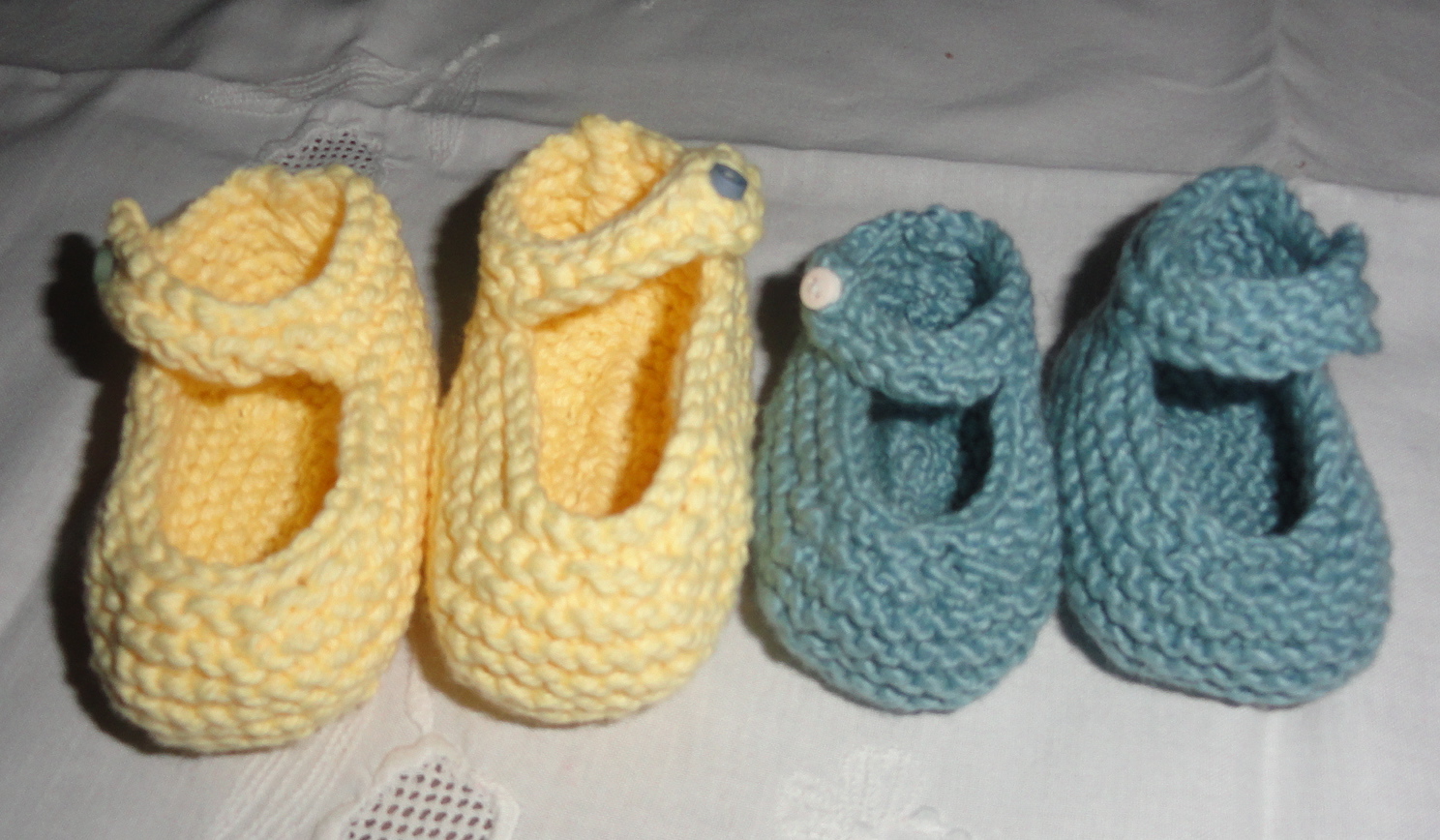
The yarn is plant dyed, organic and fair trade cotton from Peru.  It is, without doubt, the softest cotton I've ever used and just perfect for our first grandson, who is due to arrive this weekend.  I got it from Eco Yarns and will have more information about it next week.

I hope you have a wonderful weekend.  Thank you for visiting me this week.
Congratulations to Monique on the birth of a beautiful daughter.  There is no news yet about Sunny and Kerry's baby but we expect him very soon.  I thought he might be born on the 22 March but the actual due date is this Sunday.  I'll let you all know when we get the phone call.  It's so exciting waiting for a new baby!
~~~~~~~~~~~~~~~~~~~~

Hanno bought some of his favourite sugar plums quite cheaply the other day and I thought if we could get some more at that price I'd put up a couple of jars for him. Summer fruits are fading fast now but sometimes you can get a nice bargain with them at this time of year.  They're are such a treat later when grey skies and cold winds come calling.  If we can find more cheap plums now it will only be a small amount and not worth getting the preserving unit out for such an amount.  I'll do them in the oven instead.


I have been reading through my book, The Thrifty Kitchen, and in there is a very good guide for oven processing small amounts of fruit - page 153.  All I need now are some recycled jars, sugar syrup and a bit of time, oh, and the plums.


The Thrifty Kitchen recipe calls for 2kg|4.4lbs of any stone fruit - peaches, nectarines, apricots or plums to make one litre|quart of fruit. Preheat the oven to 120C|250F, wash your jars thoroughly in hot soapy water, rinse in warm water and place them in the oven, opening upwards, for 20 minutes.  Then,
  1. Wash the fruit well, cut in half and remove the stone.  Then place the fruit carefully into a clean jar. Pack it in well, and, with the handle of a wooden spoon, push the fruit into the jar with out damaging it.  The fruit will reduce in size as it's being processed.
  2. Place the jars on an oven tray without them touching each other.  Put the lids on the jars but don't screw them on. 
  3. Put the tray of jars on the low shelf in the oven on 120C|250F and leave them for 45 minutes.


  1. Ten minutes before the end of the cooking time, make the sugar syrup - 3 cups of water mixed with 2 cups of white sugar and heated until the sugar dissolves completely.
  2. Remove the tray of jars from the oven and carefully pour the syrup into the jars, filling them to the top with about 5 mm headspace.  
  3. Replace the lids and seal the jars.  You can turn the jars over to rest on their lids.  I do that sometimes, sometimes I don't.
  4. Place all the jars on a tea towel to cool and leave overnight.
The next day test that the jars are airtight by unscrewing the jar slightly and holding the jar by the lid.  If it doesn't pop open and stays closed, it's airtight and can be stored in your cupboard for a few months.  If it's not airtight, store it in the fridge.  When you open the fruit to eat it, store it in the fridge if you don't finish the whole jar straight away.

The Thrifty Kitchen is published by Lantern ISBN 13579108642.
We were vegetarian for quite a few years, maybe seven or eight, and went back to meat after reading Nourishing Traditions.  When I started buying meat again I was shocked at how expensive it was so I've tended to stay with the cheaper cuts or we eat fish or chicken, along with our favourite vegetarian dishes.


Purple sweet potato and onions.

I really like meat with the bone still in it.  Either as a roast, chops or in a casserole.  The meat seems sweeter and more tender, and the bone gives an added depth of taste.  One of my favourite pieces of meat is a pork shoulder.  When it's cooked well, the meat is tender and delicious, and it's cheaper than a leg or anything from the middle section.  


Sunday's roast pork shoulder.

I encourage you to buy meat from your local butcher, not the supermarket; it's usually cheaper. The butcher will know where the meat comes from, so ask him about each cut while he's wrapping it for you. When the butcher knows you're interested in your food and want to know about it, he'll probably be more careful about giving you good quality meat. You can ask the butcher to trim the fat off, to slice thin or thicker slices, or to dice up or mince a slice for you.  It's all in the service they offer you - service you'll never get from a supermarket. There was a time when every housewife knew the various cuts of meat, now it seems very few do.  I encourage you to know as much about your food as possible.  Learning which part of the animal the various cuts come from is a good start to learning about meat.  I've found some good guides to meat cuts.  Some cuts are the same in all countries, some are different.  The lists are below:

AUSTRALIAN MEAT CUTS
  • PORK
  • BEEF and LAMB
  • CHICKEN
USA/AUSTRALIAN
  • BEEF, LAMB, PORK and GOAT
UNITED KINGDOM
  • BEEF, LAMB and PORK

We had this shoulder of pork as a hot roast with baked purple sweet potato, onions and green peas on Sunday.  On Monday we made sandwiches with the shoulder, last night's dinner finished it off.  I stripped the bones of the good meat and the scrap meat - that with too much fat on it - and gave that to the chooks as an added treat.  Chickens are carnivores and love meat.  The good meat and some of the roasted bones went into a pot for a very nice pork and vegetable casserole. The bones gave a lot of added flavour to the dish.  The shoulder fed us well for three days.


Stripping the shoulder - one plate with good meat, the other with scrap meat for the chickens.

When you buy a shoulder - you can also buy lamb shoulders instead of legs for a delicious roast lamb meal - you can ask the butcher for it to be boned, if that is how you want it.  A boned shoulder is easier to cut and you can lay it flat and fill it with stuffing before rolling it back up again and securing it with cooking string.  If you do have the butcher bone the shoulder for you, ask him for the bones, because when you roast the meat you can roast the bones at the same time, then make stock with them - and freeze it.  But as I said, I like meat with the bone still in so that is how I buy it.  There is quite a bit of fat in pork and lamb but if you cook it slowly for a long time, much of the fat will render out, and if you eat it cold the next day, it's very easy to cut the fat out.


The dark brown pieces on these bones are where the flavour is.  Use that in your casserole for extra flavour and discard the bones before you serve up.

You can either buy the expensive cuts like T-bone steak, rump, legs of lamb, pork chops or fillet, or stay with the cheaper things like sausages, neck chops or minced steak|ground beef.  But there is a middle ground.  In between those two extremes there are the cheaper cuts that tend to take longer to cook, but have excellent flavour and give you delicious nutritious food, for much less money.  With rising costs, this is one way to keep meat on the table while staying within your budget.

Newer Posts Older Posts Home

ABOUT ME

Down to Earth is a blog by Rhonda Hetzel, dedicated to simple, intentional living — from home cooking and gardening to frugal budgeting and handmade crafts. It’s a space for gentle inspiration and everyday wisdom on creating a life that feels real, balanced, and deeply fulfilling.

Down To Earth Book

Down To Earth Book
My books are all published by Penguin. Down to Earth, The Simple Life and The Simple Home have been in book shops since they were published in 2012, 2014 and 2016, respectively. On 20 October 2020, Down to Earth was published as a paperback.

MY FAVOURITE PLACES

  • Grandma Donna's Place
  • Grandma Donna's YouTube
  • Grandma Donna's Instagram
  • This Simple Day
  • Nicole's Instagram

Popular Post of All Times

Making ginger beer from scratch

We had a nice supply of ginger beer going over Christmas. It's a delicious soft drink for young and old, although there is an alcoholic version that can be made with a slight variation on the recipe. Ginger beer is a naturally fermented drink that is easy to make - with ginger beer you make a starter called a ginger beer plant and after it has fermented, you add that to sweet water and lemon juice. Like sourdough, it must ferment to give it that sharp fizz. To make a ginger beer plant you'll need ginger - either the powdered dry variety or fresh ginger, sugar, rainwater or tap water that has stood for 24 hours to allow the chlorine to evaporate off. You'll also need clean plastic bottles that have been scrubbed with soap, hot water and a bottle brush and then rinsed with hot water. I never sterilise my bottles and I haven't had any problems. If you intend to keep the ginger beer for a long time, I'd suggest you sterilise your bottles. MAKING THE STARTER In a...
Image

The last post

This will be my last post here.  I've been writing my blog for 18 years and now is the time to step back. I’ve stopped writing the blog and come back a couple of times because so many people wanted it, but that won’t happen again, I won’t be back.  I’ll continue on instagram to remain connected but I don’t know how frequent that will be. I know some of you will be interested to know the blog's statistics. 
Image

How to make cold process soap

I'm sure many of you are wondering: "Why make soap when I can buy it cheaply at the supermarket?" My cold process soap is made with vegetable oils and when it is made and cured, it contains no harsh chemicals or dyes. Often commercial soap is made with tallow (animal fat) and contains synthetic fragrance and dye and retains almost no glycerin. Glycerin is a natural emollient that helps with the lather and moisturises the skin. The makers of commercial soaps extract the glycerin and sell it as a separate product as it's more valuable than the soap. Then they add chemicals to make the soap lather. Crazy. Making your own soap allows you to add whatever you want to add. If you want a plain and pure soap, as I do, you can have that, or you can start with the plain soap and add colour, herbs and fragrance. The choice is yours. I want to add a little about animal and bird fat. I know Kirsty makes her soap with duck fat and I think that's great. I think t...
Image

Preserving food in a traditional way - pickling beetroot

I've had a number of emails from readers who want to start preserving food in jars but don't know where to start or what equipment to buy.  Leading on from yesterday's post, let's just say up front - don't buy any equipment. Once you know what you're doing and that you enjoy preserving, then you can decide whether or not to buy extra equipment. Food is preserved effectively without refrigeration by a variety of different methods. A few of the traditional methods are drying, fermentation, smoking, salting or by adding vinegar and sugar to the food - pickling. This last method is what we're talking about today. Vinegar and sugar are natural preservatives and adding one or both to food sets up an environment that bacteria and yeasts can't grow in. If you make the vinegar and sugar mix palatable, you can put up jars of vegetables or fruit that enhance the flavour of the food and can be stored in a cupboard or fridge for months. Other traditional w...
Image

Cleaning mould from walls and fabrics

With all this rain around we've developed a mould problem in our home. Usually we have the front and back doors open and that good ventilation stops most moulds from establishing. However, with the house locked up for the past week, the high humidity and the rain, mould is now growing on the wooden walls near our front door and on the lower parts of cupboards in the kitchen. Most of us will find mould growing in our homes at some point. Either in the bathroom or, in humid climates, on the walls, like we have now. You'll need a safe and effective remedy at some point, so I hope one of these methods works well for you. Mould is not only ugly to look at, it can cause health problems so if you see mould growing, do something about it straight away. The longer you leave the problem, the harder it will be to get rid of it effectively. If you have asthma or any allergies, you should do this type of cleaning with a face mask on so you don't breathe in any spores. Many peopl...
Image

Five minute bread

Bread is one of those foods that, when made with your own hands, gives a great deal of satisfaction and delight. It's only flour and water but it symbolises so much. I bake bread most days and use a variety of flours that I buy in bulk. Often I make a sandwich loaf because we use most of our bread for lunchtime sandwiches and for toast. Every so often I branch out to make a different type of loaf. I have tried sour dough in the past but I've not been happy with any of them. I'll continue to experiment with sour dough because I like the idea of using wild yeasts and saving the starter over a number of years to develop the flavour and become a part of the family. However, the loaf I've been branching out to most often is just a plain old five minute bread. By five minutes I mean it takes about five minutes actual work to prepare but it's the easiest of all bread to make and to get consistently good loaves from. If you're having people around for lunch or...
Image

This is my last post.

I have known for a while that this post was coming, but I didn't know when. This is my last post. I'm closing my blog, for good, and I'm not coming back like I have in the past.  I've been writing here for 16 years and my blog has been many things to me. It helped me change my life, it introduced me to so many good people, it became a wonderful record of my family life, it helped me get a book contract with Penguin, and monthly columns with The Australian Women's Weekly and Burke's Backyard . But in the past few months, it's become a burden. In April, I'll be 75 years old and I hope I've got another ten years ahead. However, each year I'll probably get weaker and although I'm fairly healthy, I do have a benign brain tumour and that could start growing. There are so many things I want to do and with time running out, leaving the blog behind gives me time to do the things that give me pleasure. On the day the blog started I felt a wonderful, h...
Image

What is the role of the homemaker in later years?

An email came from a US reader, Abby, who asked about being a homemaker in later years. This is part of what she wrote: "I am a stay-at-home mum to 4 children, ages 9-16. I do have a variety of "odd jobs" that I enjoy - I run a small "before-school" morning drop-off daycare from my home, I am a writing tutor, and I work a few hours a week at a local children's bookstore. But mostly, I cherish my blissful days at home - cooking, cleaning (with homemade cleaners), taking care of our children and chickens and goats, baking, meal-planning, etc. This "career" at home is not at all what I imagined during my ambitious years at university, but it is far more enriching. I notice, though, that my day is often planned around the needs of my family members. Of course, with 4 active kids and a husband, this is natural. I do the shopping, plan my meals, cook dinner - generally in anticipation of my family reconnecting in the evening.  I can't h...
Image

Every morning at home

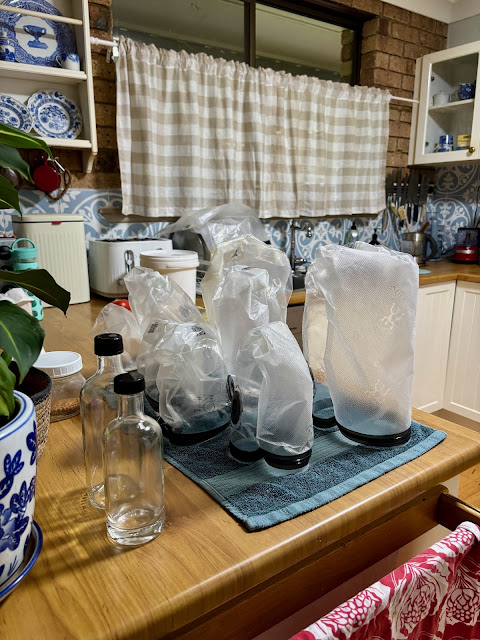
Every morning when I walk into my kitchen it looks tidy and ready for a day's work. Not so on this morning (above), I saw this when I walked in. Late the previous afternoon when I was looking for something, I came across my rolled up Zwilling vacuum bags and decided they had to be washed and dried. So I did that and although I usually put them outside on the verandah to dry it was dark by then. I turned the just-washed bags inside out and left them like this on a towel. It worked well and now the bags are ready to use when I bring home root vegetables, cabbages or whatever I buy that I want to last four or five weeks.
Image

You’ll save money by going back to basics

When I was doing the workshops and solo sessions, I had a couple of people whose main focus was on creating the fastest way to set up a simple life. You can't create a simple life fast, it's the opposite of that It's not one single thing either - it's a number of smaller, simpler activities that combine to create a life that reflects your values; and that takes a long to come together. When I first started living simply I took an entire year to work out our food - buying it, storing it, cooking it, preserving, baking, freezing, and growing it in the backyard. This is change that will transform how you live and it can't be rushed.  
Image

Categories

  • Backyard 244
  • Being Organised 257
  • Books 9
  • Budgeting 142
  • Chickens 42
  • Community life 289
  • Family 269
  • From Scratch 63
  • Grandmothering 69
  • Home 296
  • Individuality 185
  • Mentoring 55
  • My books 49
  • Organic Gardening 348
  • Preserving 97
  • Recycling 22
  • Retirement 22
  • Self Reliance 160
  • Simple Living 777
  • Sustainability 308
  • This blog 107
  • Weekend reading 362
  • Writing 4

Followers

Trending Articles

The last post

This will be my last post here.  I've been writing my blog for 18 years and now is the time to step back. I’ve stopped writing the blog and come back a couple of times because so many people wanted it, but that won’t happen again, I won’t be back.  I’ll continue on instagram to remain connected but I don’t know how frequent that will be. I know some of you will be interested to know the blog's statistics. 
Image

Making ginger beer from scratch

We had a nice supply of ginger beer going over Christmas. It's a delicious soft drink for young and old, although there is an alcoholic version that can be made with a slight variation on the recipe. Ginger beer is a naturally fermented drink that is easy to make - with ginger beer you make a starter called a ginger beer plant and after it has fermented, you add that to sweet water and lemon juice. Like sourdough, it must ferment to give it that sharp fizz. To make a ginger beer plant you'll need ginger - either the powdered dry variety or fresh ginger, sugar, rainwater or tap water that has stood for 24 hours to allow the chlorine to evaporate off. You'll also need clean plastic bottles that have been scrubbed with soap, hot water and a bottle brush and then rinsed with hot water. I never sterilise my bottles and I haven't had any problems. If you intend to keep the ginger beer for a long time, I'd suggest you sterilise your bottles. MAKING THE STARTER In a...
Image

Time changes everything

I've been spending time in the backyard lately creating a contained herb and vegetable garden. My aim is to develop a comfortable place to spend time, relax, increase biodiversity and encourage more animals, birds and insects to live here or visit. Of course I'd prefer my old garden which was put together by Hanno with ease and German precision. Together, we created a space bursting at the seams with herbs, vegetables and fruity goodness ready to eat and share throughout the year. But time changes everything. What I'm planning on doing now, is a brilliant opportunity for an almost 80 year old with balance issues. In my new garden I'll be able to do a wide range of challenging or easy work, depending on how I feel each day. It’s a daily opportunity to push myself or sit back, watch what's happening around me and be captivated by memories or the scope of what's yet to come.
Image

The most wonderful news

This post will give me more joy to write than anything else I could think of today.  I told you  there are a few exciting things happening here at the moment, well, I am now able to tell you the most exciting one of them.  Our son Kerry and his beautiful partner Sunny are having a baby!  Hanno and I will be grandparents in late March.  I can barely believe my eyes when I read what I have just written.  This is one of my original stitchery patterns. This wasn't planned but it's welcomed wholeheartedly by all of us.  Both Kerry and Sunny are hard workers and now that they have a baby to love and care for, they've decided it's time to buy an apartment together.  Sunny is going home to Korea to tell her family and when she comes back again, the search will start to find their first home together.  We are all so excited!  My knitting has taken on a life of its own and when I think of all the projects I could start, my head spins.  Thi...
Image

About Blog


Down to Earth is a blog by Rhonda Hetzel, dedicated to simple, intentional living — from home cooking and gardening to frugal budgeting and handmade crafts. It’s a space for gentle inspiration and everyday wisdom on creating a life that feels real, balanced, and deeply fulfilling.

Last Year's Popular Posts

The last post

This will be my last post here.  I've been writing my blog for 18 years and now is the time to step back. I’ve stopped writing the blog and come back a couple of times because so many people wanted it, but that won’t happen again, I won’t be back.  I’ll continue on instagram to remain connected but I don’t know how frequent that will be. I know some of you will be interested to know the blog's statistics. 
Image

Every morning at home

Every morning when I walk into my kitchen it looks tidy and ready for a day's work. Not so on this morning (above), I saw this when I walked in. Late the previous afternoon when I was looking for something, I came across my rolled up Zwilling vacuum bags and decided they had to be washed and dried. So I did that and although I usually put them outside on the verandah to dry it was dark by then. I turned the just-washed bags inside out and left them like this on a towel. It worked well and now the bags are ready to use when I bring home root vegetables, cabbages or whatever I buy that I want to last four or five weeks.
Image

You’ll save money by going back to basics

When I was doing the workshops and solo sessions, I had a couple of people whose main focus was on creating the fastest way to set up a simple life. You can't create a simple life fast, it's the opposite of that It's not one single thing either - it's a number of smaller, simpler activities that combine to create a life that reflects your values; and that takes a long to come together. When I first started living simply I took an entire year to work out our food - buying it, storing it, cooking it, preserving, baking, freezing, and growing it in the backyard. This is change that will transform how you live and it can't be rushed.  
Image

Workshops update

  This photo shows what the weather's been like here.  That's steam coming off my neighbours shed roof after a brief downpour of rain.  I hope we’re getting closer to organising these workshops. I didn’t explain this clearly enough: Group 1 is four workshops, Group 2 is four workshops. Out of those eight workshops I thought we probably end up doing three or four.
Image

Creating a home you'll love forever

Living simply is the answer to just about everything. It reduces the cost of living; it keeps you focused on being careful with resources such as water and electricity; it reminds you to not waste food; it encourages you to store food so you don't waste it and doing all those things brings routine and rhythm to your daily life. Consciously connecting every day with the activities and tasks that create simple life reminds you to look for the meaning and beauty that normal daily life holds.  It's all there in your home if you look for it. Seemingly mundane tasks like cleaning and cooking help you with that connection for without those tasks, the home you want to live in won't exist in the way you want it to.  Creating a home you love will make you happy and satisfied.
Image

Time changes everything

I've been spending time in the backyard lately creating a contained herb and vegetable garden. My aim is to develop a comfortable place to spend time, relax, increase biodiversity and encourage more animals, birds and insects to live here or visit. Of course I'd prefer my old garden which was put together by Hanno with ease and German precision. Together, we created a space bursting at the seams with herbs, vegetables and fruity goodness ready to eat and share throughout the year. But time changes everything. What I'm planning on doing now, is a brilliant opportunity for an almost 80 year old with balance issues. In my new garden I'll be able to do a wide range of challenging or easy work, depending on how I feel each day. It’s a daily opportunity to push myself or sit back, watch what's happening around me and be captivated by memories or the scope of what's yet to come.
Image

Simple life workshops on Zoom UPDATED

I've added more topics to the list. This post is for those readers who expressed interest in doing online Zoom workshops or who want to register now. The topics haven't been chosen yet but potential topics are:  vegetable gardening and composting; starting a vegetable garden and choosing vegetables suitable for a beginner;  cutting costs in the home, housework and routines; homemade laundry liquid and powder, soaking, stain removal and washing clothes and household linens; cooking from scratch and building your pantry to help you do it; homemade bread - white, rye, wholemeal and ancient grains. I'm not doing sourdough; living on less than you earn and developing a frugal mindset.
Image

Labels

  • Bartering
  • Chickens
  • Community life
  • Food security
  • From Scratch
  • Home Maintenance
  • Homemaking
  • Mentoring
  • My favourite place
  • Recipes - savoury
  • Reminders of what is important to us
  • Simple Living
  • The Simple Home - June
  • The Simple Home - May
  • Utilities
  • Wise Economy

Copyright © Down To Earth. Designed by OddThemes