down to earth
  • Home
  • About Us
  • Down To Earth Book
  • Privacy Policy
(Sorry, there seems to be a problem with Blogger's paragraph spacing today.)


There is no doubt about it, household electricity prices have risen a lot and are set to rise even more. Click on this link for a report about it in The Australian. When the cost of electricity rises, so does almost everything we buy - because most of the things we buy are made using electricity. We can't do much about the increased cost of products in the shops, except not buy them, but we can do something about electricity costs at home. Saving electricity at home is all about small steps - you have many opportunities to save small amounts - and it all adds up. The good news is that the more you put into this, the more active you are, the more you'll save. We all have to use electicity but the amount of wasted electricity through stand-by power, leaving lights and chargers on, well, that, my friends, is all up to you.


We have just installed solar panels so we expect our electricity bill to go down but until we use nothing from the grid and are self sufficient in electricity by using only what our panels make, I'll keep on looking for ways to save. I believe the best way to manage electricity usage in the home is to do your own electricity audit. If you can start knowing what your meter reads, then modify your electricity usage and start switching off, you'll be able to accurately judge how much you're saving. If you've never done an electricity audit in your own home, do one now. It's a real eye opener. Here is an old post of mine about how to do it. If you're in Australia, and have had a Climate Smart Audit, you could also check your usage by watching your electricity meter inside the house. It's a good idea to record your meter reading, then use everything as normal for the first day to get an accurate idea of your usage. The following day, start on your program of saving electricity by using whatever you can from the following list. Check your meter again every day - always at the same time - and see how what you do effects your meter readings. 


Find your latest electricity bill and read it again, understand what you're using and how much you're being charged for it. Phone your local supplier and ask them when your off peak electricity rate cuts in and what's the best way to use it. That information may even be on their website. There is some general info here about off peak rates:
  • In the UK
  • In Australia   and here
  • In the USA  and here  
    and here
I have been writing about saving electricity
for as long as I've been blogging and the following is a list of all the things we've discussed, as well as readers tips, over that time. If you have anything to add that works well for you, please add it in the comments.


  • Turn off appliances at the wall. Reorganise your appliances to make this as easy as possible. Plug your TV, DVD, stereo etc into the one power board and turn the power board off when you go to bed at night. See if you can do a similar thing in the kitchen. 
  • Turn off all chargers with a black box on them at the wall, every time you finish charging. Those things really suck up the power, even when they're not charging but still "on". 
  • When buying new appliances, always buy the best energy rating you can afford. 
  • Sweep the floor instead of vacuuming. 
  • Wash up by hand instead of using the dishwasher. 
  • Use a programmable thermostat for your furnace. Set the thermostat five degrees lower/higher (depending on the season) at night. 
  • Turn the monitor off when you leave the computer. 
  • Replace old light bulbs with compact fluoros. 
  • Keep light usage to a minimum. 
  • Only do full loads of washing. 
  • Don't let rice cooker sit on warm after rice is cooked. 
  • Go to bed earlier – this saves on a lot of things like lights, computer, TV, stereo, extra cups of tea. 
  • Use your mobile phone alarm rather than an electric alarm clock. 
  • Ring your local electricity supply company and get all the information you can on your usage, tariffs and how you can save for your particular situation. 
  • If you have a 3 in 1 light fitting in the bathroom that contains a light, exhaust fan and heater, take the heat globe out. 
  • Watch less TV. 
  • Use a solar camping lamp in the evenings when you don't need strong light. 
  • Try to do without your small appliances like coffee maker, sandwich maker etc. 
  • Never leave small appliances, TV or DVD on stand by. 
  • Do less ironing. Shake clothes when hanging them on the line, hang shirts and dresses on a hanger to dry, give up the idea that you have to be absolutely creaseless. 
  • Use a wall clock instead of relying on your oven or microwave clock. Turn these ovens off when not in use. 
  • “Snuggle up" instead of turning on the heater, get a rug and snuggle with your loved ones on the lounge. 
  • Dress warmer in winter instead of turning on the heat. 
  • In winter, keep lap quilts and rugs on the sofa to encourage the family to use them instead of the heater. 
  • Turn on hot water heater for 1 hour a day. 
  • Change to solar hot water. 
  • Install skylights in dark rooms. 
  • Close the door when you’re heating or cooling a room. 
  • In very cold climates, install double glazed windows and insulated blinds. 
  • If it’s cold outside, hang window quilts. Read about them here: http://www.manytracks.com/Homesteading/winquilt.htm 
  • If you’re using a dishwasher, shut the dishwasher off and open the door after it's finished washing and let the items air dry. 
Following tips are from here:

Refrigerator/Freezer


A typical home uses 600-1200 kiloWatt-hours per year for refrigeration and freezing. 
  • Keep your refrigerator at 37°- 40° F (2° - 4° C) and your freezer at 5°F (-15° C).
  • Keep your refrigerator filled to capacity, but don't overcrowd to the point where doors cannot be closed or air cannot circulate.
  • Vacuum the condenser coils (underneath or behind the unit) every three months or so.
  • Check the condition of door gaskets by placing a paper sheet against the frame and closing the door. If the sheet can be pulled out with a very gentle tug, the door should be adjusted or the gasket replaced.
  • Do not put uncovered liquids in the refrigerator. The liquids give off vapors that add to the compressor workload.
  • Allow hot food to cool off before putting it in the refrigerator.
  • Plan ahead and remove all ingredients for each meal at one time.
Range/Oven
A typical home uses 200-700 kiloWatt-hours per year with its range/oven. 

  • Only use pots and pans with flat bottoms on the stove.
  • Include more stews, stir-frys, and other single-dish meals in your menus.
  • Develop the habit of "lids-on" cooking to permit lower temperature settings.
  • Keep reflector pans beneath stovetop heating elements bright and clean.
  • Carefully measure water used for cooking to avoid having to heat more than is needed.
  • Begin cooking on highest heat until liquid begins to boil. Then lower the heat control settings and allow food to simmer until fully cooked.
  • Cook as much of the meal in the oven at one time as possible. Variations of 25°F still produce good results and save energy.
  • Rearrange oven shelves before turning your oven on - and don't peek at food in the oven! Every time you open the oven door, 25°-50°F (-3° - 10° C) is lost.
  • There is no need to preheat the oven for broiling or roasting.
  • When preheating an oven for baking, time the preheat period carefully. Five to eight minutes should be sufficient.
  • Use your microwave oven whenever possible, as it draws less than half the power of its conventional oven counterpart and cooks for a much shorter amount of time.
  • Pressure cookers and electric frying pans use less electricity than the stove.
  • Use the self-cleaning cycle only for major cleaning jobs. Start the cycle right after cooking while the oven is still hot, or wait until late in the evening when electricity usage is low.
Dishwasher
  • Wash only full loads of dishes - but do not overload dishwasher.
  • Scrape food off dishes before placing them in the dishwasher.
  • Soak burned-on or dried-on foods before adding to the dishwasher.
  • Turn off the dishwasher when the drying cycle starts and let the contents dry naturally with the door partially open.

Washing Machines
  • Follow detergent instructions carefully. Adding too much detergent actually hampers effective washing action and may require more energy in the form of extra rinses. It's better to use less rather than too much laundry detergent.
  • Set the washing machine temperature to cold or warm and the rinse temperature to cold as often as possible.
  • Wash only full loads of clothing- but do not overload machine.
Sort laundry and schedule washes so that a complete job can be done with a few cycles of the machine carrying its full capacity, rather than a greater number of cycles with light loads.

Clothes Dryers
  • Hang your clothes outside and only use the dryer when it's absolutely necessary.
  • A typical home uses 360-1400 kiloWatt-hours per year with the clothes dryer. To become more energy efficient with your laundry, follow these tips:
  • Clean the lint filter thoroughly after each use.
  • Dry towels and heavy cottons in a separate load from lighter-weight fabrics.
  • Avoid over-drying. This not only wastes energy, but harms the fabric as well.
Hot Water
One of the biggest energy users in your home, next to heating and cooling systems, is your hot water system. A typical home uses 1000-4000 kiloWatt-hours per year with its water heater, including dishwashing and laundry water. To become more energy efficient with your water heater, follow these tips:
  • Reduce your water heating bill by 10 percent by lowering the water heater temperature from 140°F to 120F° (60° - 40° C). (Keep the temperature at 140°F (60°C) if you use a dishwasher without a temperature booster.)
  • Once a year, drain a bucket of water of the bottom of the water heater tank. This gets rid of sediment, which can waste energy by "blocking" the water in the tank from the heating element.
  • Locate water heaters as close to the points of hot water usage as possible. The longer the supply pipe, the more heat is lost.
  • Turn off the water heater when you go away on holidays.
  • Insulate your hot water supply pipes to reduce heat loss. Hardware stores sell pipe insulation kits.
  • Consider buying a water heater insulation kit, which reduces the amount of heat lost through the walls of the tank.
  • Repair any leaky taps/faucets promptly.
  • Use sink stoppers instead of letting water run while shaving and washing dishes.
  • Take showers instead of baths.
  • Set the washing machine temperature to cold or warm and the rinse temperature to cold as often as possible.
  • Wash only full loads of clothing and dishes - but do not overload machines.
  • Scrape food off dishes before placing them in the dishwasher.
Lighting

A typical home uses 400-1000 kiloWatt-hours per year in lighting. To become more energy efficient with lights throughout your home, follow these tips:
  • Clean your light fixtures regularly.
  • Turn off lights when leaving a room.
  • Provide task lighting over desks, tool benches, etc., so that activities can be carried on without illuminating entire rooms.
  • If possible, put lamps in corners of rooms, where they can reflect light from two wall surfaces instead of one.
  • Use compact fluorescent bulbs in fixtures that are on for more than two hours a day. Compact fluorescent bulbs will given an incandescent bulb's warm, soft light, while using up to 75 percent less electricity. They also last about 10 times longer. Typically, a 23-watt compact fluorescent bulb can replace a 90- or 100-watt incandescent bulb.
  • Use dimmable bulbs when possible.
  • Install photoelectric controls or timers to make sure that outdoor lighting is turned off during the day.
Heating

  • In the heating season, water vapors from bathing and cooking are beneficial because they help humidify the home. Use kitchen and bath exhaust fans sparingly in the winter to keep as much heat as possible inside your house.
  • In the winter, the air is normally dry inside your house, which is a disadvantage because people typically require a higher temperature to be comfortable than they would in a humid environment. Therefore, efficient humidifiers are a good investment for energy conservation.
  • Locate the heating thermostat on an inside wall and away from windows and doors. Cold drafts will cause the thermostat to keep the system running even when the rest of the house is warm enough.
  • Lubricate pump and blower bearings regularly in accordance with manufacturers' recommendations to limit the amount of energy lost to friction and to extend equipment life as well.
  • Close heating vents and radiator valves in unused rooms. Make sure that drapes, plants, or furniture do not block registers for supply or return air.rmostat as low as comfort permits. Each degree over 68°F (20° C) can add 3 percent to the amount of energy need.

Air-Conditioning
A typical home uses 250-1000 kiloWatt-hours per year for air conditioning in one room. To become more energy efficient with air conditioning throughout your home, follow these tips:
  • Set your thermostat to 78° F (24° C), or as high as comfort permits. When the weather is mild, turn off the AC and open the windows.
  • Close your blinds and curtains during the hottest part of the day.
  • Close cooling vents in unused rooms and keep doors to unused rooms closed.
  • Check and clean or replace air filters every month.
  • Clean the outside condenser coil once a year.
  • Reduce your usage by 10-20 percent by caulking and weather-stripping your doors and windows.
  • Insulate your house.
Fact sheet on CF lights:
http://en.wikipedia.org/wiki/Compact_fluorescent_lamp
Info on mercury in CF lights:http://www.treehugger.com/files/2005/06/what_about_merc.php

REMINDER:When recycling your compact fluoro globes, to take them to the recycle station, just like you would your old batteries, mercury thermometer and old style fluoro tubes.

How to make a door snake
Global electricity price comparison


Electricity is usually not one of those expenses you have no control over. If you put in some work you can save electricity and money. It's in your hands.
I have been enjoying Spitalfields Life for some time now. It's about life, now and in the past, in London's East End. It's an interesting and enlightening read. There is a list on the right side of the page with an index of subjects. I think "Culinery Life" is my favourite.

I wish the West ladies at Homestead Blessings would post more often, but it is what it is and what is there is wonderful. It is good reading and there are beautiful people and beautiful photos.

This is the good life in Tasmania - Killiecrankie Farm. There is lots of craft, outings and ideas floating around here. Definately worth a visit or two.

Thank you for your visits this week and for opening the doors to your lives. I will be wandering around visiting as many as I can. I hope you have a beautiful weekend.
This is a Friday photo feature that anyone with a blog can join. It opens the door to us sharing our lives through these photos and gives us all a new way to discover each other, and maybe form new friendships. Your photo should show something at home that you're thinking about TODAY. If you're in another country you should join in when you read this, even if it's still Thursday.

To take part, all you have to do is post a photo on your own blog, write a short caption explaining it, and link it back to here. Please write a new post, don't link to an older one. When your photo is published, come back and add a comment below, with a link to your blog photo so we can all find you. Please visit all the blogs that appeal to you and leave a comment. Slow down, take the time to cruise around and enjoy your cyber visits.


Here he is again - Jamie! He is almost three months old now and when he visited yesterday, he was really alert, smiling and looking at everything around him. I had my first solo babysitting gig when Hanno, Kerry and Sunny all went to Maleny for morning tea and a stroll along the main street. Jamie slept for a little while, then woke and had a bottle while I talked to him about knitting and the difference between cotton and wool. We visited the chickens and he watched Hettie as she slept under the elder tree. Later we sat and watch a recorded Time Team and I introduced him to Phil, old Mick and Tony. It was a lovely visit that I'm still thinking about today.

Thank you all for the avalanche of comments yesterday - when I wrote about the lurkers I never expected THAT. I want to write to every one of you but time doesn't allow that, so please know that I really loved reading every single comment and I thank you for taking the time to respond. 

I was going to write about lasagne today but this is more important so that can wait. I commented yesterday, at 10.30am, that I was at my voluntary job and would be back at lunchtime to reply to the ex-"lurkers", but then we got really busy, I worked through lunch and thought I'd reply at home. When I came home, Kerry, Sunny and beautiful Jamie were waiting for me, so that was that. Luckily Hanno had taken a frozen chicken from the freezer and instead of having the last of the lasagne, I made curried chicken and rice. They're still here and I'm pretty sure I only heard Jamie cry once overnight and now, they're all still warmly tucked up in bed on this cold 5〫morning.

This is a painting by Swedish artist, Carl Larsson from here.

Let me tell you, I feel the love. I never expected so many of you to comment after so long not doing it. I expected three or four, maybe five or six, so it was lovely for me to "meet" so many of you after so long. I explained in the comments at one point that between three and four thousand people come here most days to read and I've always thought it odd to get the usual 20 or 30 comments. Not that I'm complaining about that, I'm grateful for all the comments I get. I realise so many of us lead busy lives and it takes time. One of the reasons I write my blog is that it motivates me when I see others doing what we're doing - it keeps me writing, it's my way of saying everyday that "yes, we're still here doing this, are you still there too?" When you leave a comment for me, you open the door to your life, you let me know you're there. Knowing there are fellow travellers on this simple living path makes it easier for me,  and I think it might make it easier for all of us to know we're not alone. Actually, the catalyst for writing about lurking was seeing a comment on Sarndra's blog from a reader who said she came from my blog, yet I didn't know her and had never seen her name before. It doesn't take much to tip me over the edge, that did it, I said something.

Had anyone told me 30 years ago about the crazy idea of blogging, I would never have believed it. How could it be that we would sit alone in rooms, tapping away at a keyboard on a tiny slip of a machine, and that would connect us to people all over the world, that real relationships would be created, that we would genuinely care for people we have never met and that lives would be changed and inspiration found just by looking at a screen, believing, taking notice and making a decision to change. How can we know people we don't know? It's amazing to me. The blog world is a wonderful and powerful place.

I love knowing there are young women in their 20s who have started their adult lives, often with a husband or partner, on a simple, sustainable path that will help build strong families and serve them well their entire lives. Hearing about your families and how you live reminds me every day that Hanno and I are not alone in this, we are part of a group. To know women and men are learning to cook my recipes just amazes me; maybe there's a cook book waiting to spring out. Knowing that what I write is inspiring others towards a simpler way, leads me to this place every morning to continue it - like neighbours at the kitchen table, having a cup of tea every morning and discussing this and that and how we can do better and be better. So to all of you who took the time yesterday, thank you. It made my day. 

I wanted also to tell you that my blog being archived in perpetuity by the National Library of Australia. Here is the link: http://nla.gov.au/nla.arc-127061
This is part of the information they sent: 

The National Library of Australia aims to build a comprehensive collection of Australian publications to ensure that Australians have access to their documentary heritage now and in the future.

PANDORA, Australia’s Web Archive, was set up by the Library in 1996 to enable the archiving and provision of long-term access to online Australian publications. Since then we have been identifying and archiving online publications that meet our collecting scope and priorities. Additional information aboutPANDORA and access to archived titles can be found on the Library's server at: http://pandora.nla.gov.au/index.html

I feel really honoured to be part of Pandora and to be part of your day. Thanks to all of you for including me.
After 13 years with our old fridge, two repairs to the thermostat and it starting to freeze the food in the fridge again, we bit the bullet and bought a new fridge. We want to reduce our already low electricity bill with the help of our solar panels and hot water system, as well as the prudent use and choice of appliances. We did some research to buy a fridge that was eco friendly and settled on the Electrolux two door bottom freezer from their Eco Range. One of the reasons we chose this fridge is that is doesn't use hydrofluorocarbons and it is made in Australia.


You can find out how much electricity your Australian fridge will use here at energyrating.gov.au. General research on all Australian appliances electricity consumption here.  


We've had the fridge for a week now and I'm really happy with it. It has excellent inside configuration, and even though the space inside is slightly less than our old fridge, it uses the space better and we can fit things in very easily. I love the two small drawers just above the vegetable crispers. They're just the right size for holding nuts, seeds, coconut and small bits and pieces. The middle glass shelf can be pushed back so that anything tall could be stored on the lower shelf, extending up to the top shelf. 


The freezer is at the bottom, all in drawers. There is a twist ice dispenser with an ice holder and scoop just under it. I'll use that a lot in summer. You can even take the seals out and wash them.

I'm usually not an appliance junkie but I really like this fridge. If you're looking for a new fridge, I encourage you to look at Electrolux. We bought ours online through Price Pirate.  After phoning around the local shops, Price Pirate sold us the fridge for $500 less than our local store's price. It really pays to shop around.

I have noticed quite a few long-term readers have commented for the first time recently. It always makes me smile when that happens and I make a mental note of what has caused that comment after a long time reading without commenting. If you've ever blogged and written about your own life, you'll know that it can feel a bit like people lurking in the dark out there. When they show their friendly face to say hello, it does make a difference. Thank you for coming out of the shadows and making contact.

I read a report the other day that said the babies born for 15 years after 2010 (our grand babies!) will be known as Gen A, the Alpha Generation. Pffffft, as if we need more labels.  According to the report, these Alpha babies will start school earlier, get more formal training than ever before and then they're expected to work until they're 70 or 80. I can't imagine anything worse than knowing when you start work in your late teens or early 20s, that you'll still be at it 60 years later.


I don't want to spend almost my entire adult life in paid work. I want free time to do what I love without having to clock in somewhere or meet deadlines. Luckily Hanno and I are doing that, but I want our grandchildren to be able to do it, and I want you to be able to do it too. We are not here to keep big business in the black. According to the Dali Lama, the purpose of life is to find happiness (you have to think about that, it's not as one dimensional or simple as it sounds). How can you do that if your government relies on you and your contemporaries to work and keep the economy bubbling along until shortly before you die.  It's not fair.


Surely there are others out there who believe that the reward for working hard all through life, paying taxes, upholding the law, voting, raising decent families and building strong communities is that for a decade or two before death, when ambition and strength fade, we leave work behind and spend time doing exactly what we want to do. I am not saying that everyone will want to give up work, I'm sure there will be people who thrive on going to work and really enjoy it, but we need to have the option. It needs to be our choice whether we do that or not. Some of us want free time to get to know our grandchildren, learn a new language or how to play the piano, make the perfect loaf of sourdough,  travel, walk, swim, read or just sit under a tree and think.


There was a time in my past when I was quite happy to work hard and spend much of my money on buying whatever caught my eye. But no more. I woke up, I slowed down and I realised there is much more to life than work, spending and acquisition. When I realised that, I found more than I ever expected that made me happy. I found that not spending and being more aware satisfied me, and by making a lot of what I used, I replaced paid work with home-based skill building and production.


Many of your know Hanno and I are hard workers, and have been all our lives. We're working class, proudly so, and we understand the need to work. We also understand why it's healthy for our countries to have a sound and active working population. Work is good for us but we shouldn't work for pay until we drop dead. At the end of a long and productive life, we should be able to look forward to a gentle and free retirement of about 20 years. If we have worked all our lives, paid taxes to help support our economies, have paid off our debt and saved for our retirement, there is nothing wrong with leaving work when we choose to. I would like to see a government that encourages everyone to live within their means, to live simply and if they can support themselves, choose whether they remain at work or not. I'd vote for a government who encouraged us to live frugally, recycle, mend and sew and to work part time so we could have a better work-life balance.  I'd like a few leaders to realise there is no such thing as unlimited economic growth. 

I know a couple of Generation Alpha babies who will know there is an alternative to life-long paid work. There are a few gems of wisdom I hope to talk to my grandchildren about. Being self-reliant, confident and skilled enough to move life away from the mainstream is just one of them.

News.com.au report on Alpha babies
The Age - a report on Generation Alpha 


What a weekend! I feel like I'm back in my rhythm, ready again for whatever each new day brings. I had to go to the shop on Saturday morning to buy a soap thermometer because when I came to make soap, mine was missing. I took all my equipment to the neighbourhood centre recently and it didn't return. But a trip to the shop is always a sharp reminder for me to continue along our slow path. I bought the thermometer, had a look in the book shop, then came home; in and out in 20 minutes. The hard core shoppers were just starting to arrive. I feel sad for them. If they knew my story they might well feel sorry for me too and think of me as deprived. I guess history will be our judge, if one is needed.

Saturday morning was cold, with whistling wind, so I was pleased to drive through my gate again and close the door. It was warm inside, morning tea made for Hanno and I and we sat for a while on the front verandah. He'd been working at cutting down a very old and large camphor laurel tree. They're considered a weed around here so it has to go. I held on to it for 13 years because it provided shade and shelter for other delicate plants and ferns. But now, as we're getting older, we have other considerations - soon we won't be able to do this heavier work. A tree just near this one, a tallow wood, cost us $900 to have removed a few years ago and we can't afford that again. 


This tall tree is the one he's cutting down. You can see where two branches have been cut, there are three left. He'll need help with those last three so we're waiting for a friend to help with those.


The camphor laurel, as well as being a weed, is too close to the house and a danger during storms. Hanno loves doing this kind of work, so before that ability goes completely and we have to rely on others, he's been cutting pieces off it. Luckily it has five main branches quite close to the ground, so he's cutting one off at a time. Then it's the laborious job of cutting that branch into a size that can be picked up and moved to the trailer. Each branch takes almost a day to cut up, then he packs the greenery into the trailer and it goes to the local dump to be chipped for their compost. We are hoping to give the logs to the local wood carvers.

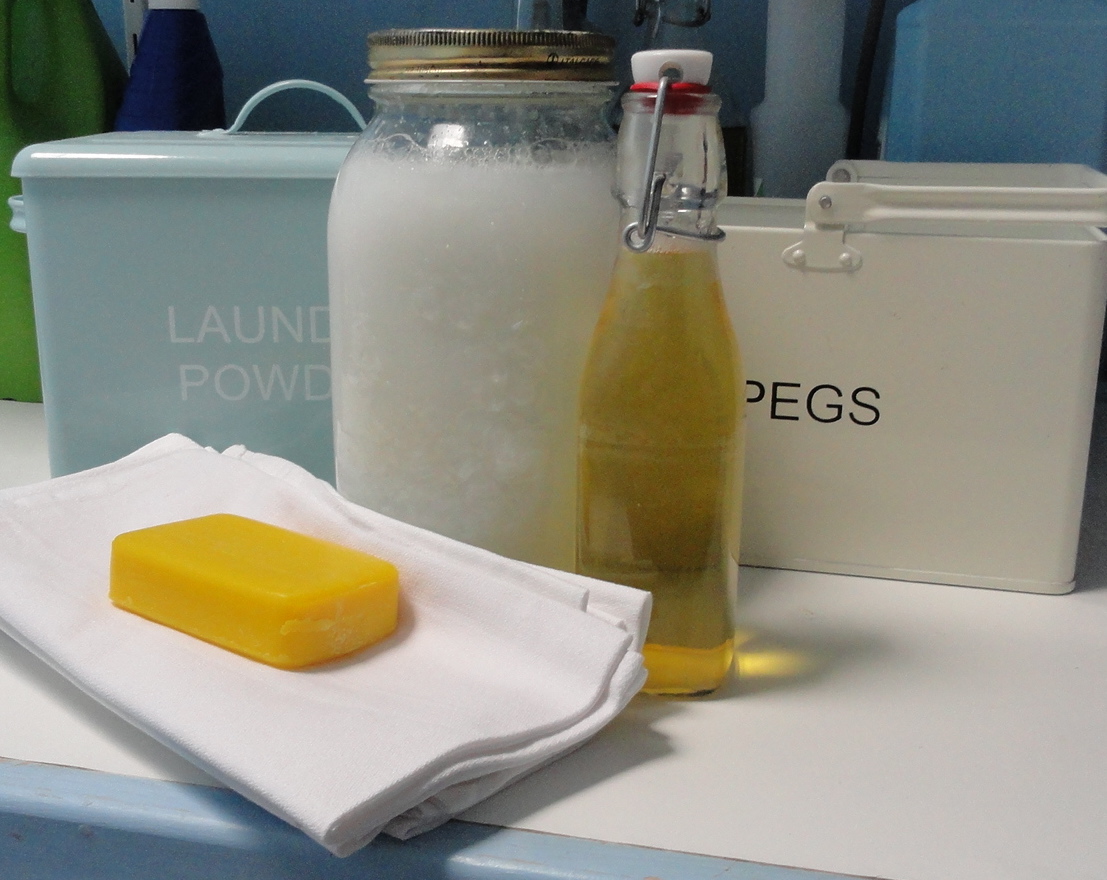
This is my soap and laundry detergent stockpile.

So while he was outside, with a hot tea and cake in is belly, I started on my soap. I wanted to do a few batches but I only have one set of moulds, so I do one batch a day. I've made two batches so far and want to do one more and a batch of liquid soap. Some of this will be going into my shop that I'll be starting in a couple of weeks, the rest we'll use in the family. This is the best soap for baby's skin so I'm pleased to be able to supply good soap for Jamie and our soon to be born Peanut. 


There are two batches of soap here in my tidied laundry. One is drying on a rack, the other batch is still in the moulds and hardening slowly under some blue towels.

Soap only takes a short while to make so while I waited - first for the separate mixtures to get to the same temperature, then for the mixing to be done, I washed up. It felt good plunging my hands into that warm soapy water while I could hear the wind whistling outside. I started thinking about knitting and doing some lovely organic pink washcloths as soon as I finish a scarf. All fine thoughts while I washed up, and then the soap was made and packed warmly in the laundry, I moved on to the next task.


Scones for lunch with tea, washed up again, then I knitted and sewed the afternoon away. We had eye fillet roast for dinner; that was a real treat, part of the hind-quarter bulk meat order from a couple of months back. It was roasted alongside sweet potatoes, pumpkin, onions and carrots. The second half will be had tonight with herb mashed potatoes and kale cooked with bacon and onion. I made a mental note to make walnut biscuits during the week.


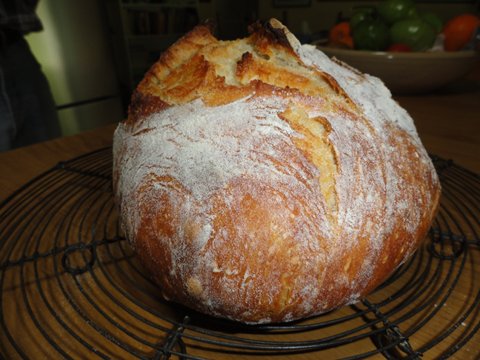
Over the weekend, one task blended into the next - when I got sick of doing something I'd go on to something new.  I'm not sure in what order I did it now but I also did some gardening, finished the tablecloth cupboard, tidied the laundry, made the bed a few times, swept the floor, cleaned the kitchen window sill, sorted through my stash to find fabric suitable for aprons to sell, made bread and a few pots of tea, organised my diary, researched my cheese making kit and replied to some emails.


I feel like I've returned to my home again and it feels right. Chores can be done or kept waiting, there is plenty of thinking and creating along with more practical tasks like bed making, cleaning and sweeping. There's no routine on weekends like this, just a list of things to be done and one by one they're mentally crossed off. There's no rush to get through it, no guilt if anything goes undone. My aim is to get through my work but to enjoy it too, even the seemingly dull bits. For every large, vital job and every small or dull task we do here is part of it - all part of the ever-changing mosaic that makes up two simple lives being lived next to a rainforest, with a creek running by, at the end of a one lane road.

This is a Friday photo feature that anyone with a blog can join. It opens the door to us sharing our lives through these photos and gives us all a new way to discover each other, and maybe form new friendships. Your photo should show something at home that you're thinking about TODAY. If you're in another country you should join in when you read this, even if it's still Thursday.

To take part, all you have to do is post a photo on your own blog, write a short caption explaining it, and link it back to here. Please write a new post, don't link to an older one. When your photo is published, come back and add a comment below, with a link to your blog photo so we can all find you. Please visit all the blogs that appeal to you and leave a comment. Slow down, take the time to cruise around and enjoy your cyber visits.


I will be making soap today. I hope to do a couple of batches of bar soap and start a batch of liquid soap. If all goes to plan, I may just clean the laundry up while I'm in there.  Fingers crossed.

Last week I challenged myself to clean out the bottom of the dresser where I keep my tablecloths. I also decided at that time to clean out my tea towel, pot holder, tea cosy drawer. Well, life got in the way and I've only done one of those jobs - the tea towel drawer. So today I'll show you what I've done and also, hopefully, complete the task by cleaning out the bottom of the dresser.  If you've tidied your cupboards alongside me, please post a link to your before and after photos to inspire me further.

This was the drawer before I took it apart.

I sorted everything into groups and separated the old tea towels too thin or holey for further service. They were cut up for the rag bag.

I had more tea towels than anything else but I also had pot holders, net and cotton jug covers and cloth napkins.

 Why do I have all these tea towels?

Here is the finished drawer - cotton tea towels and terry towels at the front and jug covers, pot holders, napkins and tea cosies at the back.  It's much better. I can see at a glance everything in there and I'm not pulling this way and that trying to find a pot holder when a saucepan is about to boil over on the stove.

I have a free run now - I sent my book related work back on Tuesday, I worked at the Centre yesterday and today is all mine.  I'll be making soap, cleaning out the bottom of that dresser and sorting out some sewing I want to do. I'm going to enjoy this day. I hope you do too.

I read a very interesting article the other day that confirmed what I think about Italian and Greek migrants in Australia. That their various abilities to grow, cook and preserve food and drinks made them not only wonderful Australian citizens but helped them live frugally and happily in their new chosen land. According to the article, compared to our UK migrants, Mediterranean migrants paid off their houses faster, even though they all worked equally hard to build their new lives. The difference was that the Italians and Greeks knew how to grow food in their backyards, and many of them did that as well as keep chickens and sometimes goats and pigs. They had preserving days with other families when they would put up sauce, salami, cheese and wine.  And all this meant they spent less on food while eating the diet they were used to - it helped them retain a part of their culture.


We can learn a lot from those immigrants.

In the article it stated that "A family growing a few vegetables could save the equivalent of, in today's terms, $25 to $50 dollars a week. Over the course of a 25 year mortgage this works out to between $32,500 and $60 000." I believe that is true, and it's serious money. So how would you save that kind of cash by growing food in your backyard.  Well, first you have to know what you're doing, but it's not rocket science, it's something most people can do. It involves work, developing whatever land or space you have available, getting your hands dirty and being consistent. Sometimes you'll have good harvests, sometimes you won't but over the course of that 25 years, you'll get better, particularly when you know the wide variety of food you can produce and the kind of savings that are there for the taking.

There is more than one way to make money. One is to get a job, the other is to save what you've already earned and to keep that money in the bank. If you spend less on food, clothes, utilities etc., while remaining healthy, happy and nourished, you can use your saved money to help pay off your mortgage or to save for a house deposit. When you've paid off your mortgage, it will be your choice to work or to cut back on work and pursue other interests.


If we can save that kind of money out in the backyard or in containers on the porch, what can we save inside over the course of a 25 year mortgage?  Well, there is laundry detergent. If you're currently in Australia and you're buying a litre of Dynamo a month, you'll spend $102 a year or, if we stay with today's price, $2550 over 25 years just for laundry detergent. By changing to homemade laundry liquid you'll keep $2500 of that in your pocket. If you start stockpiling, more savings, monitoring your electricity, gas, fuel, phone and internet usage, more savings again. If you bake at home instead of buying inferior bread, cook from scratch, recycle, make your own jams, sauces, pasta etc., it's not only going to save you money but you'll be eating healthier food too.  Looking after what you already own, turning your back on fashion, learning to knit and sew, mending clothes and household goods to keep them going longer - all these things will save you reasonable money in the short term and will make a real difference to your life over the course of 25 years.


To make these savings you need to switch from a convenience mode to a productive mode. If you have spare time now and are spending time on the computer or watching TV, or if you need to reorganise yourself to make time available, use that time to build a new kind of life. Instead of buying the convenience of someone else's skill and time, you'll do those things yourself and keep the money that you would have spent. We're not talking about a big time commitment for many of these things - it more a way of fitting them into your life and doing things differently.  For instance, if you want to stockpile, you'll have to find a space and then just shop in a different way - when it's all set up it will save you not only money, but also time. Cooking from scratch and baking will be easier once you've got your stockpile set up because you'll have your ingredients on hand - your part will be to remember to load the slow cooker in the morning, to find recipes for quick and easy mid week-from scratch meals, or to cook twice as much and freeze it when you have the time. Making laundry liquid will take no more than 30 minutes about once every two months, if you stop buying shampoo and use bicarb instead, it takes no more time at all if you already have the bicarb in the cupboard. You can do your knitting and mending while you watch TV in the evening. Much of this is working in a different way and with different materials - it's changing your attitude and making your mind up to do it, then doing it. It's not a huge life change.


The good thing is all these things are easy to do and you can start right now - today. Everything I've mentioned above has been written about in detail on my blog, many other blogs and in books available at your local library. I know not everyone will be capable of doing this,  but most will be. The only thing that will hold you back is you.

Newer Posts Older Posts Home

ABOUT ME

Down to Earth is a blog by Rhonda Hetzel, dedicated to simple, intentional living — from home cooking and gardening to frugal budgeting and handmade crafts. It’s a space for gentle inspiration and everyday wisdom on creating a life that feels real, balanced, and deeply fulfilling.

Down To Earth Book

Down To Earth Book
My books are all published by Penguin. Down to Earth, The Simple Life and The Simple Home have been in book shops since they were published in 2012, 2014 and 2016, respectively. On 20 October 2020, Down to Earth was published as a paperback.

MY FAVOURITE PLACES

  • Grandma Donna's Place
  • Grandma Donna's YouTube
  • Grandma Donna's Instagram
  • This Simple Day
  • Nicole's Instagram

Popular Post of All Times

Making ginger beer from scratch

We had a nice supply of ginger beer going over Christmas. It's a delicious soft drink for young and old, although there is an alcoholic version that can be made with a slight variation on the recipe. Ginger beer is a naturally fermented drink that is easy to make - with ginger beer you make a starter called a ginger beer plant and after it has fermented, you add that to sweet water and lemon juice. Like sourdough, it must ferment to give it that sharp fizz. To make a ginger beer plant you'll need ginger - either the powdered dry variety or fresh ginger, sugar, rainwater or tap water that has stood for 24 hours to allow the chlorine to evaporate off. You'll also need clean plastic bottles that have been scrubbed with soap, hot water and a bottle brush and then rinsed with hot water. I never sterilise my bottles and I haven't had any problems. If you intend to keep the ginger beer for a long time, I'd suggest you sterilise your bottles. MAKING THE STARTER In a...
Image

The last post

This will be my last post here.  I've been writing my blog for 18 years and now is the time to step back. I’ve stopped writing the blog and come back a couple of times because so many people wanted it, but that won’t happen again, I won’t be back.  I’ll continue on instagram to remain connected but I don’t know how frequent that will be. I know some of you will be interested to know the blog's statistics. 
Image

How to make cold process soap

I'm sure many of you are wondering: "Why make soap when I can buy it cheaply at the supermarket?" My cold process soap is made with vegetable oils and when it is made and cured, it contains no harsh chemicals or dyes. Often commercial soap is made with tallow (animal fat) and contains synthetic fragrance and dye and retains almost no glycerin. Glycerin is a natural emollient that helps with the lather and moisturises the skin. The makers of commercial soaps extract the glycerin and sell it as a separate product as it's more valuable than the soap. Then they add chemicals to make the soap lather. Crazy. Making your own soap allows you to add whatever you want to add. If you want a plain and pure soap, as I do, you can have that, or you can start with the plain soap and add colour, herbs and fragrance. The choice is yours. I want to add a little about animal and bird fat. I know Kirsty makes her soap with duck fat and I think that's great. I think t...
Image

Preserving food in a traditional way - pickling beetroot

I've had a number of emails from readers who want to start preserving food in jars but don't know where to start or what equipment to buy.  Leading on from yesterday's post, let's just say up front - don't buy any equipment. Once you know what you're doing and that you enjoy preserving, then you can decide whether or not to buy extra equipment. Food is preserved effectively without refrigeration by a variety of different methods. A few of the traditional methods are drying, fermentation, smoking, salting or by adding vinegar and sugar to the food - pickling. This last method is what we're talking about today. Vinegar and sugar are natural preservatives and adding one or both to food sets up an environment that bacteria and yeasts can't grow in. If you make the vinegar and sugar mix palatable, you can put up jars of vegetables or fruit that enhance the flavour of the food and can be stored in a cupboard or fridge for months. Other traditional w...
Image

Cleaning mould from walls and fabrics

With all this rain around we've developed a mould problem in our home. Usually we have the front and back doors open and that good ventilation stops most moulds from establishing. However, with the house locked up for the past week, the high humidity and the rain, mould is now growing on the wooden walls near our front door and on the lower parts of cupboards in the kitchen. Most of us will find mould growing in our homes at some point. Either in the bathroom or, in humid climates, on the walls, like we have now. You'll need a safe and effective remedy at some point, so I hope one of these methods works well for you. Mould is not only ugly to look at, it can cause health problems so if you see mould growing, do something about it straight away. The longer you leave the problem, the harder it will be to get rid of it effectively. If you have asthma or any allergies, you should do this type of cleaning with a face mask on so you don't breathe in any spores. Many peopl...
Image

Five minute bread

Bread is one of those foods that, when made with your own hands, gives a great deal of satisfaction and delight. It's only flour and water but it symbolises so much. I bake bread most days and use a variety of flours that I buy in bulk. Often I make a sandwich loaf because we use most of our bread for lunchtime sandwiches and for toast. Every so often I branch out to make a different type of loaf. I have tried sour dough in the past but I've not been happy with any of them. I'll continue to experiment with sour dough because I like the idea of using wild yeasts and saving the starter over a number of years to develop the flavour and become a part of the family. However, the loaf I've been branching out to most often is just a plain old five minute bread. By five minutes I mean it takes about five minutes actual work to prepare but it's the easiest of all bread to make and to get consistently good loaves from. If you're having people around for lunch or...
Image

This is my last post.

I have known for a while that this post was coming, but I didn't know when. This is my last post. I'm closing my blog, for good, and I'm not coming back like I have in the past.  I've been writing here for 16 years and my blog has been many things to me. It helped me change my life, it introduced me to so many good people, it became a wonderful record of my family life, it helped me get a book contract with Penguin, and monthly columns with The Australian Women's Weekly and Burke's Backyard . But in the past few months, it's become a burden. In April, I'll be 75 years old and I hope I've got another ten years ahead. However, each year I'll probably get weaker and although I'm fairly healthy, I do have a benign brain tumour and that could start growing. There are so many things I want to do and with time running out, leaving the blog behind gives me time to do the things that give me pleasure. On the day the blog started I felt a wonderful, h...
Image

What is the role of the homemaker in later years?

An email came from a US reader, Abby, who asked about being a homemaker in later years. This is part of what she wrote: "I am a stay-at-home mum to 4 children, ages 9-16. I do have a variety of "odd jobs" that I enjoy - I run a small "before-school" morning drop-off daycare from my home, I am a writing tutor, and I work a few hours a week at a local children's bookstore. But mostly, I cherish my blissful days at home - cooking, cleaning (with homemade cleaners), taking care of our children and chickens and goats, baking, meal-planning, etc. This "career" at home is not at all what I imagined during my ambitious years at university, but it is far more enriching. I notice, though, that my day is often planned around the needs of my family members. Of course, with 4 active kids and a husband, this is natural. I do the shopping, plan my meals, cook dinner - generally in anticipation of my family reconnecting in the evening.  I can't h...
Image

Every morning at home

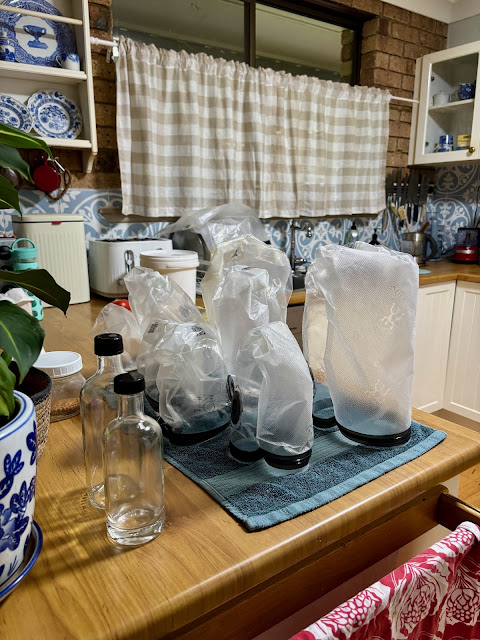
Every morning when I walk into my kitchen it looks tidy and ready for a day's work. Not so on this morning (above), I saw this when I walked in. Late the previous afternoon when I was looking for something, I came across my rolled up Zwilling vacuum bags and decided they had to be washed and dried. So I did that and although I usually put them outside on the verandah to dry it was dark by then. I turned the just-washed bags inside out and left them like this on a towel. It worked well and now the bags are ready to use when I bring home root vegetables, cabbages or whatever I buy that I want to last four or five weeks.
Image

You’ll save money by going back to basics

When I was doing the workshops and solo sessions, I had a couple of people whose main focus was on creating the fastest way to set up a simple life. You can't create a simple life fast, it's the opposite of that It's not one single thing either - it's a number of smaller, simpler activities that combine to create a life that reflects your values; and that takes a long to come together. When I first started living simply I took an entire year to work out our food - buying it, storing it, cooking it, preserving, baking, freezing, and growing it in the backyard. This is change that will transform how you live and it can't be rushed.  
Image

Categories

  • Backyard 244
  • Being Organised 257
  • Books 9
  • Budgeting 142
  • Chickens 42
  • Community life 289
  • Family 269
  • From Scratch 63
  • Grandmothering 69
  • Home 296
  • Individuality 185
  • Mentoring 55
  • My books 49
  • Organic Gardening 348
  • Preserving 97
  • Recycling 22
  • Retirement 22
  • Self Reliance 160
  • Simple Living 777
  • Sustainability 308
  • This blog 107
  • Weekend reading 362
  • Writing 4

Followers

Trending Articles

The last post

This will be my last post here.  I've been writing my blog for 18 years and now is the time to step back. I’ve stopped writing the blog and come back a couple of times because so many people wanted it, but that won’t happen again, I won’t be back.  I’ll continue on instagram to remain connected but I don’t know how frequent that will be. I know some of you will be interested to know the blog's statistics. 
Image

Making ginger beer from scratch

We had a nice supply of ginger beer going over Christmas. It's a delicious soft drink for young and old, although there is an alcoholic version that can be made with a slight variation on the recipe. Ginger beer is a naturally fermented drink that is easy to make - with ginger beer you make a starter called a ginger beer plant and after it has fermented, you add that to sweet water and lemon juice. Like sourdough, it must ferment to give it that sharp fizz. To make a ginger beer plant you'll need ginger - either the powdered dry variety or fresh ginger, sugar, rainwater or tap water that has stood for 24 hours to allow the chlorine to evaporate off. You'll also need clean plastic bottles that have been scrubbed with soap, hot water and a bottle brush and then rinsed with hot water. I never sterilise my bottles and I haven't had any problems. If you intend to keep the ginger beer for a long time, I'd suggest you sterilise your bottles. MAKING THE STARTER In a...
Image

Time changes everything

I've been spending time in the backyard lately creating a contained herb and vegetable garden. My aim is to develop a comfortable place to spend time, relax, increase biodiversity and encourage more animals, birds and insects to live here or visit. Of course I'd prefer my old garden which was put together by Hanno with ease and German precision. Together, we created a space bursting at the seams with herbs, vegetables and fruity goodness ready to eat and share throughout the year. But time changes everything. What I'm planning on doing now, is a brilliant opportunity for an almost 80 year old with balance issues. In my new garden I'll be able to do a wide range of challenging or easy work, depending on how I feel each day. It’s a daily opportunity to push myself or sit back, watch what's happening around me and be captivated by memories or the scope of what's yet to come.
Image

The most wonderful news

This post will give me more joy to write than anything else I could think of today.  I told you  there are a few exciting things happening here at the moment, well, I am now able to tell you the most exciting one of them.  Our son Kerry and his beautiful partner Sunny are having a baby!  Hanno and I will be grandparents in late March.  I can barely believe my eyes when I read what I have just written.  This is one of my original stitchery patterns. This wasn't planned but it's welcomed wholeheartedly by all of us.  Both Kerry and Sunny are hard workers and now that they have a baby to love and care for, they've decided it's time to buy an apartment together.  Sunny is going home to Korea to tell her family and when she comes back again, the search will start to find their first home together.  We are all so excited!  My knitting has taken on a life of its own and when I think of all the projects I could start, my head spins.  Thi...
Image

About Blog


Down to Earth is a blog by Rhonda Hetzel, dedicated to simple, intentional living — from home cooking and gardening to frugal budgeting and handmade crafts. It’s a space for gentle inspiration and everyday wisdom on creating a life that feels real, balanced, and deeply fulfilling.

Last Year's Popular Posts

The last post

This will be my last post here.  I've been writing my blog for 18 years and now is the time to step back. I’ve stopped writing the blog and come back a couple of times because so many people wanted it, but that won’t happen again, I won’t be back.  I’ll continue on instagram to remain connected but I don’t know how frequent that will be. I know some of you will be interested to know the blog's statistics. 
Image

Every morning at home

Every morning when I walk into my kitchen it looks tidy and ready for a day's work. Not so on this morning (above), I saw this when I walked in. Late the previous afternoon when I was looking for something, I came across my rolled up Zwilling vacuum bags and decided they had to be washed and dried. So I did that and although I usually put them outside on the verandah to dry it was dark by then. I turned the just-washed bags inside out and left them like this on a towel. It worked well and now the bags are ready to use when I bring home root vegetables, cabbages or whatever I buy that I want to last four or five weeks.
Image

You’ll save money by going back to basics

When I was doing the workshops and solo sessions, I had a couple of people whose main focus was on creating the fastest way to set up a simple life. You can't create a simple life fast, it's the opposite of that It's not one single thing either - it's a number of smaller, simpler activities that combine to create a life that reflects your values; and that takes a long to come together. When I first started living simply I took an entire year to work out our food - buying it, storing it, cooking it, preserving, baking, freezing, and growing it in the backyard. This is change that will transform how you live and it can't be rushed.  
Image

Workshops update

  This photo shows what the weather's been like here.  That's steam coming off my neighbours shed roof after a brief downpour of rain.  I hope we’re getting closer to organising these workshops. I didn’t explain this clearly enough: Group 1 is four workshops, Group 2 is four workshops. Out of those eight workshops I thought we probably end up doing three or four.
Image

Creating a home you'll love forever

Living simply is the answer to just about everything. It reduces the cost of living; it keeps you focused on being careful with resources such as water and electricity; it reminds you to not waste food; it encourages you to store food so you don't waste it and doing all those things brings routine and rhythm to your daily life. Consciously connecting every day with the activities and tasks that create simple life reminds you to look for the meaning and beauty that normal daily life holds.  It's all there in your home if you look for it. Seemingly mundane tasks like cleaning and cooking help you with that connection for without those tasks, the home you want to live in won't exist in the way you want it to.  Creating a home you love will make you happy and satisfied.
Image

Time changes everything

I've been spending time in the backyard lately creating a contained herb and vegetable garden. My aim is to develop a comfortable place to spend time, relax, increase biodiversity and encourage more animals, birds and insects to live here or visit. Of course I'd prefer my old garden which was put together by Hanno with ease and German precision. Together, we created a space bursting at the seams with herbs, vegetables and fruity goodness ready to eat and share throughout the year. But time changes everything. What I'm planning on doing now, is a brilliant opportunity for an almost 80 year old with balance issues. In my new garden I'll be able to do a wide range of challenging or easy work, depending on how I feel each day. It’s a daily opportunity to push myself or sit back, watch what's happening around me and be captivated by memories or the scope of what's yet to come.
Image

Simple life workshops on Zoom UPDATED

I've added more topics to the list. This post is for those readers who expressed interest in doing online Zoom workshops or who want to register now. The topics haven't been chosen yet but potential topics are:  vegetable gardening and composting; starting a vegetable garden and choosing vegetables suitable for a beginner;  cutting costs in the home, housework and routines; homemade laundry liquid and powder, soaking, stain removal and washing clothes and household linens; cooking from scratch and building your pantry to help you do it; homemade bread - white, rye, wholemeal and ancient grains. I'm not doing sourdough; living on less than you earn and developing a frugal mindset.
Image

Labels

  • Bartering
  • Chickens
  • Community life
  • Food security
  • From Scratch
  • Home Maintenance
  • Homemaking
  • Mentoring
  • My favourite place
  • Recipes - savoury
  • Reminders of what is important to us
  • Simple Living
  • The Simple Home - June
  • The Simple Home - May
  • Utilities
  • Wise Economy

Copyright © Down To Earth. Designed by OddThemes