down to earth
  • Home
  • About Us
  • Down To Earth Book
  • Privacy Policy
Making gifts - homemade soap with organic cotton face cloths.

Recent research by the American organisation Campaign for Safe Cosmetics has shown that women in the US use an average of nine personal care products every day. In those products are over 100 different chemcials.  I'm sure it would be a similar figure for women in the UK, Ireland, Australia, New Zealand and Europe. Click here to see more information about that study. 

In another piece of interesting news, Johnson and Johnson have started removing cancer-causing hormones from some of their products and other companies, namely Avon, Estee Lauder, L’Oreal, Procter and Gamble and Unilever have been asked to do the same.

The FDA in America require an assurance from cosmetic companies before they go on sale that the product is safe to use but they aren't allowed to pre-test to confirm that assurance. They rely on the integrity of these companies to sell safe products.  Fragrance is another cause for concern. Fragrance used in room fresheners, cleaning products and cosmetics has been linked to breast cancer. The US Food, Drug and Cosmetics Act allows fragrance ingredients to remain a trade secret and because of that, no one really knows what's in these products.

Making laundry liquid in the kitchen.

 Set up with about six months supply of homemade soap and laundry liquid.

One of the things I wanted to do when I gave up work and started working in my home was to make this place as safe as it could be. I want my entire family, and yours, to be safe and now that we have grandchildren, that decision is even more urgent. I want to live a long and healthy life and I will not jeopardise that by using any of these products now. Skin is the largest organ in our bodies, what you put on it, what touches it and what it absorbs has the potential to harm you. Please be careful. I don't want any of you to become sick or die; I want you to live a long and healthy life too.


I encourage you to check the products you're using. Many companies put their ingredients lists online now. For example, here is the ingredients list for Cold Power with Cuddly, made by Colgate:

Cold Power with Cuddly - Front Loader

Ingredients (INCI Name)Purpose
Sodium carbonateAlkalinity agent and cleaning aid
Sodium sulfateProcessing aid
Sodium tridecyl benzene sulfonateCleaning agent
Pentasodium triphosphateWater softener and anti-redeposition agent
Sodium aluminosilicateAnti-redeposition agent
Bentonite clayNatural softening agent
Sodium silicateAgglomerating agent
C12-15 Alcohol 8 EOCleaning agent
Sodium anionic terpolymerProcessing aid
Lauryl dimethyl benzyl ammonium chlorideCleaning agent
Antifoam compoundFoam regulating agent
CI Flourescent brightenerWhitening agent
EnzymesCleaning agent for enzymatic stains
FragrancePleasant scent

Notice the last on the list? Fragrance. Phhhhht. 

If you're doing your washing with that product, or any of the others that are similar, you're sleeping on sheets and then wearing clothes that have been washed in all those chemicals. The laundry liquid I use has got four ingredients: water, soap, washing soda and borax. It works as well, if not better than the commercial brands and it's much much cheaper. Here is my laundry liquid recipe and soap recipe. Laundry liquid will take you about 15 mintues to make up and will last a couple of months. Soap will take about 45 minutes of work, spread out over a few hours - it's a weekend job. My recipe for sun infused calendula salve is here.

Calendula salve made with organic calendula petals grown in the backyard.


I tried to find ingredients lists for various bar soap and shower gels but they're not showing them. Hmmmm, I wonder why. Here is one I did find, however, it's Imperial Leather bar soap. My soap recipe has four ingredients, one of them is rain water.

Ingredient
Function
Sodium palmate

Surfactant
Emulsifier
Sodium palm kernelate

Surfactant
Aqua

Solvent
Parfum

Fragrance
Sodium chloride


Glycerin

Solvent
Moisturizer
Palm kernel acid

Emollient
Tetrasodium EDTA


Tetrasodium etidronate


Benzyl Benzoate

Solvent
Fragrance
Eugenol

Fragrance
Coumarin

Fragrance
Linalool

Fragrance
Citronellol

Fragrance
Alpha-isomethyl ionone

Fragrance
Geraniol

Fragrance
CI 77220

Pigment
CI 11680

Pigment
CI 71105

Pigment
CI 74260

Pigment
CI 77891


Pigment
Sunscreen


This is important. Even if you think you're bullet-proof, this is worth some of your time to check the soap, shower gel, washing powder or liquid, sun screen, insect repellant and cosmetics you're using. Do some research online into those products. If you can't find anything, email the company and ask.

I would love to leave you with good news but instead I'll leave you with this to read - it's an article about the FDA's rejection of the cosmetic industry's draft legislation. It is dated 6 March 2014.

Part of it: Writing that "the draft industry bill could put Americans at greater risk from cosmetic-related illness and injury than they are today," Taylor expressed he no longer saw common ground with the industry in a 14-page memo that detailed how industry’s proposed changes would weaken the FDA’s already very limited regulatory authority over the safety of cosmetics and personal care products.

Do you think that profits are more important than customers?

♥::♥::♥::♥

Rose is leading a very interesting set of organising challenges over at the forum this month. The current one is: Today is Stop Driving Ourselves Crazy Day. Today we face up to one thing we are doing which is driving us mad and we do something about it. If you have trouble organising yourself or doing what you want to do, have a look at the challenge. It may help get you on track. Just click on the link to go there, if you're not a  member, you can join up free here.
When I was growing up, my mother, like most other women, did her grocery shopping at what was often called the corner shop. This was a little shop that sold goods such as flour, sugar, tea, biscuits as well as butter and cheese. She also shopped at the butcher shop, green grocer, and delicatessen, then known as the ham and beef shop. They were all close together along the main road near our home. My first memory of a local "supermarket" was a converted grocery shop that had long narrow aisles where people served themselves and put goods into a basket, and then went to a checkout. The car-friendly, enclosed, all-in-one supermarket/mall came in the mid-1950s but we didn't go to the one a dozen miles from our home because we, like most other Australians then, didn't have a car. But we still thought it was all very exciting.


When supermarkets started opening, it was generally understood they made grocery shopping cheaper. These shops could order stock in much larger quantities, so they sold it on cheaper than the old corner shop could. The idea that supermarkets are cheaper is still with us but I have found that often they aren't. Now they win their market share because of convenience.

There was a time when you could go to your grocer and ask for something in particular and they'd get it in for you, and stock it after that if it was popular. You used to be able to do that to a certain extent in the big supermarkets too, but now it seems we don't tell them what we want to buy, they tell us. Now they trade for the benefit of shareholders; customers come second or maybe third, after the employees. They have more product lines now than you can poke a stick at, far too many in my opinion. Like many other things, you pay for the convenience and if you have the butcher, green grocer, baker and groceries all in the one place, you'll pay extra for it. Step away from that convenience and you'll reap the rewards.

I decided to look at the Woolworths online shop just to get a general idea of what they're selling now. I was shocked.  They have 32 pages of baby products, 43 pages of beauty products, 100 pages of beer, wine and spirits (I didn't know you could buy alcohol at the supermarket), 47 pages of biscuits and snacks, 87 pages of canned or packet foods, 23 pages of condiments, 97 pages of drinks, 87 pages of confectionary. There is a lot more but it's too depressing to go on.

These rolled oats are the best quality for the lowest price we can find in our area.

In the beauty aisle they had a bath cleansing puff, exfoliating towel, loofah pad, toothbrush bath (I don't even know what that is), the ready to wear cosmetic lashes, face wipes, cosmetics and sunscreen. In biscuits and snacks they have the obvious, including breakfast fruit and fibre (whatever that is), popcorn, nuts, "health" bars and crackers. Breakfast foods is particularly depressing. We buy the homebrand traditional rolled oats for 17 cents/100grams, even though we could buy the Uncle Toby's Gourmet Selection Sachet for $1.81/100grams - over priced because you pay for all that extra packaging and the advertising. There are also a lot of different flavoured "liquid breakfasts". What happened to a cup of Milo or a banana smoothie?

In canned and packaged food, there are almost 100 different varieties of tuna (why?), there is canned chicken! canned beef! canned frankfurts! canned soup! something called finishing sauces (whatever that is) long life custard, jelly, cones, waffles, pavlova mix and creamed rice in a tin (oh no!) and get this - one cup of wild hibiscus flowers in syrup for $10.39 - they are rosellas! One cup of rosellas and sugar for $10.39. If anyone here buys them I will personally track you down and show you that if you made this at home it would cost you less than a dollar. Be warned.

Some of the ingredients I use to make soap, laundry liquid and cleaners - borax, washing soda, bees wax and soap flakes.

All these convenience foods cost much more than what you make at home from scratch. Your home made goodies taste better too, there are no preservatives in them and you know exactly what's in the foods you eat. I can clearly see how dependent we are on supermarkets because I wasn't brought up with them, I have seen a different way of shopping. We can all choose to do our shopping in a way that doesn't make us dependent on brands and shopping centres. If you can find a good green grocer or fresh food market, a local butcher, a bulk food store for all your dry goods like flour, sugar, rice etc, if you make your own cleaning products, bread and snacks, then you won't have this reliance on supermarkets. You'll have more money in your purse/wallet too. Women do about 85 percent of the shopping for families. If we all thought more about the power of those shopping dollars I think we'd have a better system.

I have no doubt that like us, you'll still do some shopping in your local supermarket. It's crazy not to stock up on items at a good price when you see them,. There are also things that only a supermarket will stock - like Lux Flakes, butter, Vegemite and the like. But doing all your shopping in a supermarket will cost you more. There is usually a balance in these things which you'll only find if you look carefully at what you're doing and then do some research in your neighbourhood.

If you've already started moving in the direction of local shopping, I applaud you and encourage you to continue. You're not only doing something fine for yourself, you're helping your local business community and you're cutting down on your carbon foot print. If you're still at square one, I hope you'll think about this and deconstruct your shopping. Work out what you buy, list them in categories such as dried goods, cleaners, dairy, meat, fruit and veg etc., then look around your local community and see what the shopping alternatives are. There might not be any, but if there are, I hope you'll try them out and see the difference it makes. And don't feel guilty if you still shop for some of your products at your local supermarket, or even all of them. The main thing is to be mindful of your shopping and change it for the better if you can.


Thanks to everyone who sent suggestions for accommodation in Tasmania. We have been there before, Tricia hasn't, but we're all looking forward to the trip very much. Hanno didn't recover quite as quickly as we thought and only yesterday was able to walk around freely without the walking stick. So we're almost back to normal now. I'm looking forward to doing some gardneing on the weekend, and to the reader who asked about the bush house, I'm cleaning it up on the weekend, so I'll take photos and write about it next week.  

Have a lovely weekend everyone and remember to look after yourself. 

♥:::♥:::♥


Why bother? - if you only have time to read one thing here, let it be this one by Michael Pollan.
Frenchfoodbaby via Small Wonders (on my side bar) both are excellent resources if you're feeding babies and young children
25 things you might not know about the web on its 25th birthday
What do you do?
Cheap eats in Adelaide
Meat straight from the farm - grass to grill
Keyboard shortcuts for Mac
List of companion plants
Survivorman - Off the Grid - You Tube
Beekeeping for Beginners - You Tube
A parrot gets a job in Legoland
Roman and Jana are having another free sustainable living workshop on Sunday 6 April @ 2pm in New Farm, bookings essential. Email spurtopia@gmail.com to book.

FROM THE COMMENTS HERE
Becci's Domestic Bliss
Eight acres - the blog
Tassie to Karatha

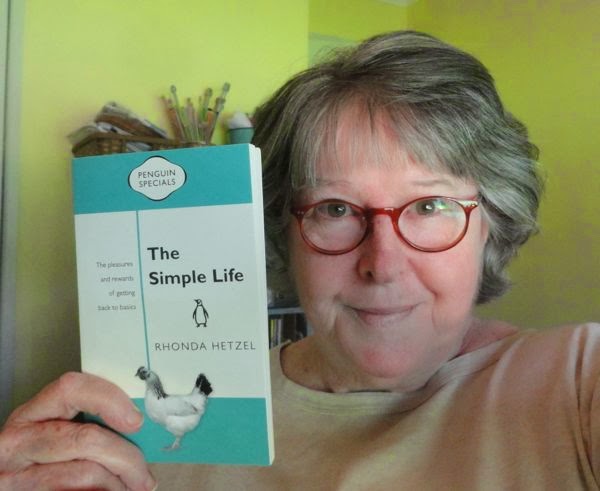
Here it is! I have two advance copies of The Simple Life. It will be published on 25 March. They arrived yesterday so I quickly took a photo, no makeup, just as I was, old T-shirt and all. I'm sure you won't mind. When I have more details about the new books, I'll let you know. This print book is also in ebook format and after this, there are six other ebooks on Down to Earth subjects. All these books can be sold internationally but I don't know the exact details yet of where you can get them. I'll have it for you soon. :- )
♥:::♥:::♥

I get a lot of emails from readers about various topics and also a lot from people who thank me for motivating them towards the changes they've made. In with all those emails are  quite a few that are full of uncertainty and indecision, so today I'd like to talk about confidence and trust. Let's be clear right up front - if you're living like we are, you're living outside the mainstream. What we do is seen as unusual and sometimes, odd.

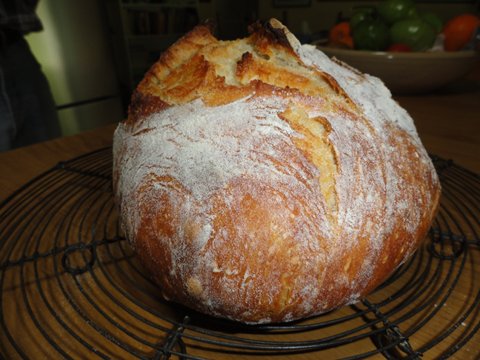
The light rye I baked a few days ago.

There is nothing wrong with anything unusual or odd but when people who live in a more conventional way start to criticise or question the way you live, you have to be strong enough to ignore them or to stand up for your choices. Confidence often comes when you do something often enough for it to be easy, but when you're new to this lifestyle and you're trying to convince your family and friends, and maybe yourself, that what you're doing is good for you, sometimes that confidence takes a back seat. Of course, you don't have to explain anything to anyone if you don't want to but if it's going to be easier for you, explain it in a way most people will understand. They probably won't understand the need to pull back from spending but they will understand paying off debt, so tell them that - you're not doing the things you used to do so you can pay off your debt. If you want to add anything to it, say you're trying to get healthy and cutting back on the chemicals in your food and your home. Most people understand success when they see it, so if you've got a great vegetable garden, or you're making soap or bread or knitting, show what you're doing.

My new girls learning to eat real food - watermelon and grapes.

This life isn't easy. Often you'll be making what you need, be it clothing or food, and while that ends up being beneficial, choosing convenience is easier in the short term. Look at it this way. Picking up bread, soap, cleaners and prepackaged or pre-cooked meals at the supermarket is easy, but whatever you make yourself will be better for you and will usually fit well in your budget too. Convenience comes at a price because you're paying for someone else to make it for you.

Making fresh cheese from yoghurt, homemade chilli jam and Welsh onions from the backyard.

Given time, your confidence will increase. Trust yourself to know what's good for you and your family. Others don't know that. You do. And when you're sure that living a more simple life will make you happier, when you know that you'll be able to reduce your cost of living and start paying off debt, when you feel that ever-present feeling of satisfaction in knowing you can look after yourself and your family, you will stand rock solid and you won't care that you're not the same as everyone else. In fact you might just be proud of that difference.

There is a very interesting conversation about this topic over at the forum, click here to go there.


I'm a strong advocate for slow and simple living but if you had seen me this past week, you would have wondered how slow and simple my life actually is. I'm going through a busy patch at the moment. There are lots of little things going on, I'm writing and test baking and then Hanno got gout and couldn't do any of his work. I'm sure you've all done it too. When the person you work beside is ill, you step in and do your chores and theirs. Of course I didn't do all he does but I did the tasks that couldn't be put off. That's why I didn't blog yesterday. I couldn't manage it at my normal time and then I was too tired.


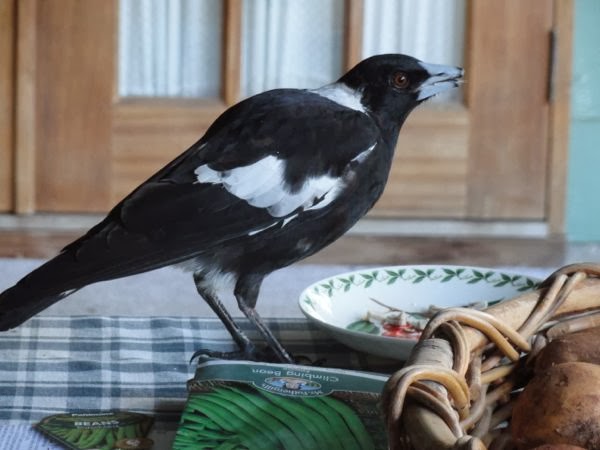
Poor old Hanno has really bad gout in both ankles, one being worse than the other. For the past five days, he's hobbled out of bed using a walking stick and then has to sit down all day. I moved him from the loungeroom to the front verandah to give him a bit of variety but it's tough walking around with swollen, painful ankles. Yesterday started at 4am as usual, but I was book writing not blog writing. At six, I went out, fed the cat and let the chickens out. I checked their food and water, then picked up Lucy, our blind old girl, and brought her out to the back verandah where she spends her days with our old cat Hettie and very young wild magpie that seems to have adopted Hanno. Someone cruelly cut the end off the magpie's beak so we're feeding it. I doubt it could kill and pick up grubs and other insects. It turns up everyday and Hanno has been spoiling it with roast pork and topside mince. I went back inside to make up food for Lucy and the magpie and when all of the outside creatures were fed, I had my breakfast, and when Hanno was awake, I made his.

I tried a Vienna loaf.
Persisted with the hightop so I could break it apart when it was baked to see what the crumb was like.

But of all the week's baking, this was my favourite - a light rye.
The concoction above turned into the pineapple and passionfruit cobbler below. I used the last of our frozen passionfruit.

Then I made the bed, got bread on the rise, made sure I had everything I needed to cook lunch, did a general tidy up and washed up before doing more book writing. Break at 10 for morning tea, break at 11.30 to make lunch. During the day I also watered the plants on the front verandah, continued knitting Johnathan's cardigan, finished off a set of dish clothes, took the garbage bins out for the collection, did the washing and some ironing and whatever else came up. After a light tea and toast in the evening, I feed Hettie, put Lucy back to sleep in her favourite nest, collected the eggs and locked the chook house up for the night - all the girls safe and sound out of the rain and away from visiting night creatures. It's very interesting seeing the chickens on the roosts at night, the pecking order so neatly displayed before me. Fiona, our Araucana, who thinks she's in charge, couldn't find a place on the top roost so she slept on the tiny bit of wood that attaches the roost to the wall - above the other chickens. And Martha, the new Plymouth Rock, was still walking around because she couldn't fit on the top roost with the others and didn't want to sit on the lower roost with Tricia and Kathleen. She gets taller and more rooster-like each day. I'm keeping an eye on her.

This unappetising pot of soon to be boiled vegetables soon turned into the delicious potato and bacon soup below - our main meal yesterday.


I'm hoping to get the books fiinshed before the middle of April because I'm doing workshops for a few months then and after that, we're going on a holiday! Our first holiday in a long, long time. Three of us, Tricia, Hanno and me, all on a road trip to Tasmania. So in between the above, I've been searching for places to stay and things to see while we're there. We hope to visit lots of small markets, the Heronswood and St Erth gardens, and look at the beautiful beaches and forests along the way. On the way back, we're driving through Victoria, along the Great Ocean Road, up through the goldfields and along the Murray River. If you know of some great places to visit, or places to stay, let me know. We're looking for self-catering cottages. I am so looking forward to it.

And good news to finish off. Hanno's ankles are improving. Late yesterday afternoon he started walking without the walking stick. I hope that instead of doing his jobs and looking after him today, I'll have time to sow more seeds and do more holiday research.

What happens in your home when someone is ill and can't do their normal chores? Do you have a plan of action or do you just take it as it comes?

Here is my big boy Jamie on his way to kindy on the train in Korea. And later having lunch with mum, Sunny, in a cafe. He'll be three years old on 31 March. We sure do miss them both.

This week seems to have flown by. I've been writing and test baking, Hanno has been gardening but was slowed down a bit by gout. I'll be out in the garden later today sowing seeds and reorganising the bush house. I'm looking forward to spending time away from the computer and in the fresh air. The weather is beautiful at the moment. I hope you enjoy your time today and on the weekend. See you all next week. :- )

Transition Farm
Interest in craft declining in British schools
Very cute home decorated fish bowls
Spurtopia's sustainable living on a rental property workshop. Watch Roman and Lada on Gardening Australia again on 19 April.
Recipes for Pancake Day
Stocking up on goodness
Use your loaf to prevent food waste

Happiness. stuff and nonsense
The desert echo
A simple track


As you know, we like giving our chickens apple cider vinegar in their water. It boosts their immunity and has a mild antibiotic effect and therefore the ability to clear up minor infections. The dosage is 25 mls per litre or 2 - 3 tablespoons per quart. They don't need it all the time. If you clean out their drinking water every couple of days, put it in every second time. About half the month they should have it in their water and half the month, just plain water.


The type of vinegar you use should be an unpasteurised  and unfiltered vinegar. These are most likely going to be apple cider vinegars and usually they contain mother of vinegar. Mother of vinegar is a jelly-like susbstance made up of yeasts and bacteria called Acetobacter. The vinegar most often used is Braggs but here in Australia, in addition to Braggs, you can use Melrose. Both are expensive because it is fermented the traditional way and not mass produced like salad or cleaning vinegar. Melrose unpasteurised vinegar is currently $6.37 for 500ml at my local IGA.

So how do we frugal folk get around that high cost? We make our own. In the unpasteurised bottles of vinegar you often find mother of vinegar and if you have a piece of it, you're on your way to making your own raw vinegar. If you don't have mother of vinegar, I did a post about making pineapple vinegar years ago, it's here, and you can use those instructions to make fruit vinegar. You don't need the mother for that process but your success will depend on the floating yeasts in your home, and maybe a passing vinegar fly - the ones most people call fruit fly that colonise rotting fruit. Vinegar flies carry tiny bits of mother on their feet.  Doesn't that sound lovely. ;- )

Yesterday I started making raw vinegar to use in our chicken water. To lessen the risk of the wrong yeast invading the liquid, you must use sterilised one litre or quart jars or crocks. Take the lids off the washed and clean jars, put your jars or crock into the oven on 150C/300F for about 15 - 20 minutes.

 This gelatinous mass is the mother I got out of the Melrose vinegar bottle. 


To make fruit vinegar using mother:
  1. Decide on the fruit you'll use, wash it thoroughly and place it all in the sterilised jar.  If you have organic fruit or fruit from the backyard, a quick rinse will do just to remove any dust. Most soft skin fruit is okay - pear, apple, plums, grapes, or take the skin and core from a pineapple and use that.
  2. Add one litre/quart of filtered or distilled water, or tap water that has stood in a bowl for 24 hours to allow the chlorine to evaporate off. 
  3. Add ¼ cup of sugar or slightly less than ¼ cup of honey. Stir.
  4. Add the mother, to the jar, cover with a clean cloth and leave it in a dark cupboard. 
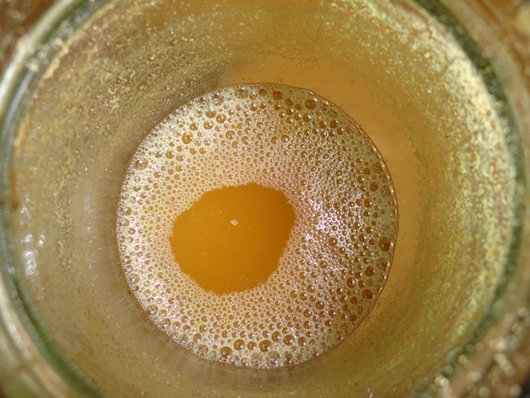
I started two different type of vinegar yesterday. My second darker liquid is old white wine that I've added mother to in the hope of making white wine vinegar.

Above: the mother added to the pear liquid. 
Below: the mother added to white wine. 

Please note that fermenting is an aerobic process - it must have air to thrive. Never put an air tight lid on the jar. Stir the liquid at least once a day to incorporate air into the liquid.


Fermenting works best in darkness so either store the jar in a dark cupboard, use a stoneware crock, or tape brown paper around the outside of the jar if it's to sit on the kitchen bench.

The ideal temperature for this process is between 15C - 25C/60F - 80F degrees. It may take two weeks, it may take six months. You'll have better vinegar if it takes a few weeks rather than a few months. The liquid may turn brownish and become clear again, it may develop yeasts on the top. If it's simple grey yeast, simply remove it with a clean spoon. If it's pink mould, throw the vinegar out and start again. Cleanliness is important in this process - start with sterilised jars, wash your hands before and after touching the vinegar, and always use clean utensils and cloths.

After a couple of weeks, taste the vinegar and if it tastes like weak vinegar, you've been successful. Remove the fruit from the liquid and put it in the compost. Keep the jar of liquid going in darkness with the cloth cover until the flavours develop more. If the liquid doesn't taste like vinegar, keep stirring every day, keep it in the dark with the cover over the top and taste it again in a week or so.

I can't tell you how long it will take to make vinegar. I can't even say you'll be successful, it will depend on the yeasts and bacteria in your home. I can tell you that if you use anti-bacterial wipes or clean with bleach, you've got little chance of the beneficial yeast and bacteria being there.  But if it does work for you, you'll have a cheap but very good raw vinegar to give your chickens.

Good luck my friends.

Food security ✔︎
Self-reliance  ✔︎

FURTHER READING
Vinegar information
Pink mould


Rain falling on the roof is always a welcome sound here and when you're inside, busy with everyday tasks, it gives a cozy feeling to the day. Mondays are usually busy in my home and yesterday was no different. The weather is cooling at night now and is still cool when I let the chickens out at 6am. I stand and watch the girls running around to get the overnight bugs that haven't managed to fly or jump away before the chance of snapping beaks present themselves.  I stood at the fence and admired the rich soil in our gardens - the product of 16 years of one family's care and devotion, and the pride of one particular gardener. Before coming back inside, I walked around the green house looking at the seedlings and cuttings, making sure they were all well hydrated and healthy. Crumpets and tea for breakfast, then I hurried through the bed making and tidying up so I could do some writing and baking before lunch. During the morning, showers of rain fell on the roof and trickled into our water tanks. Water catchment and storage without lifting a finger.


I'm working on my baking ebook and wanted to do a couple of test bakes for the book. Later in the morning, I made up a new recipe for a small sandwich loaf. Since we changed our main meal to lunch time, we're eating less bread. We now need a smaller loaf for sandwiches and the toast we often have in the evenings with tea. Whatever's leftover I gladly share with the chickens. It's generously soaked in milk and they love it. The bread still needs a slight adjustment before I'll be happy with it. My other baking experiment was vegan biscuits/cookies - oats and coconut, and even if I do say so myself, they're delicious. The recipes will be in the new books.


When the rain stopped, Hanno worked in the garden and mowed the lawn, and then went out to fill the car up with fuel and get a couple of bags of groceries. I took the opportunity to finish off some dishcloths I've knitted for my sister and to examine Johnathan's cardigan. It's at the stage where I have to piece it all together and I'm not looking forward to doing it. But do it I will because Tricia is coming to visit us soon and I want her to take it back to Johnathan when she goes back home again. I'm thankful I lay the cardigan out for the photo above because although I thought it was almost finished, I still have one front to knit!

I'm knitting with the most wonderful bamboo knitting needles at the moment. I bought them when I was in Blackheath last year; when we did the workshops there. I forgot about them for a while but now I use them every chance I get. They're smooth and warm and picking them up to begin work always makes me smile a little. I've grown to believe that the materials I use when making and knitting should be the best quality I can afford. It allows me to thoroughly enjoy the process of hand making clothing and household linens, as well as the end result. I guess it's another interpretation of the journey being as important as the destination. :- )

Kerry stayed with us overnight so he could be up and ready to go back to work early this morning. Hanno will drive him to the transit bus that takes him to the airport. So I made up a bed for him mid-afternoon and put aside a plate of the chicken and vegetables we had for lunch. Now that I'm used to eating and washing up at midday, I prefer to have everything prepared so I don't have to start work again late in the day. It's one of the benefits of having a grown family. We can plan our days suit our needs again.


Yesterday I received the notice the Sunshine Coast libraries are using to promote my talks later in the year. I'll remind you about these again in a few weeks and put it on my side bar but here is the notice if you want to book in for the talks.

I love that we're right at the beginning of autumn and have all those months of cooler weather ahead. I always feel more energised in the cold weather. The heat and humidity sap the will to live right out of me sometimes. But now there is much to look forward to, lots of productive work ahead and a garden out the back that holds so much promise. I hope you've got things to look forward to as well.


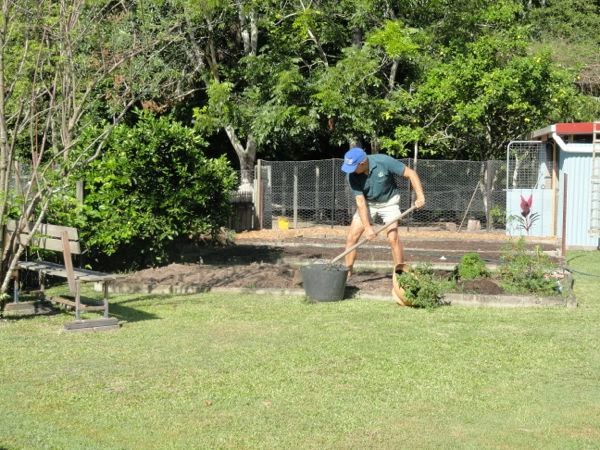
Hanno digging the garden over yesterday.

We're back in our garden again so we can grow fresh food. For the past couple of weeks, I've been sowing seeds and tending them in the gentle protection of our bush house. While I was doing that, Hanno was digging the beds over, adding manure, compost, lime, blood and bone and worm castings. Adding all those nutrients to the soil before we start and aerating it by turning it over to spade depth is what gives us a healthy garden every year. Gardening is a mixture of a little bit of hard work and a fair bit of easy work, you have to put the effort in to get the rewards. This ritual that starts our growing season, is the hard bit, after the plants are in and growing, it's just observation, tying the plants to stakes, fertilising, watering and the all important pay-off - harvesting. Then replanting our succession crops.


Along with all of that there is a mix of tasks that increase the likelihood of success and keep the soil alive and healthy. New comers to gardening often read about the planting and harvesting but there's not a lot said about the side tasks; the work that increases your chance of success. So I thought it would be a good idea to tell you what we do here. Hopefully it will help you get good crops every year while maintaining healthy soil - which is truly sustainable gardening.

Last year's garlic.
Growing garlic
Now is the time for planting garlic in many parts of Australia (and other parts of the world). If you've been growing garlic for a while, you'll have a healthy collection of good quality bulbs that you separated out from last year's crop. These should have been the biggest, most healthy looking specimens you could find. If you want to cultivate good garlic, you have to start off with good genes. Work out how many garlic heads you want to grow, you'll need one clove per head, and put that number of cloves into a brown paper bag. Fold it over and put the bag of garlic into the crisper of the fridge. Leave for a couple of weeks and then plant out. This will fool the cloves into sprouting when they come out into your warm earth. They need at least a couple of weeks, so work your timing out and refrigerate your garlic accordingly.

Potatoes will be planted when they start sending out shoots. I'll probably cut some of these larger spuds.

Growing potatoes
It's also potato planting time!  We have a couple of kilos of organic potatoes sitting on the back verandah table waiting for shoots to form.  When they do, we'll plant them in trenches and cover them. If you want to plant potatoes in a month or so, buy them now so they can develop shoots before they are planted. Potatoes are quite an easy crop if the weather is kind but watch out if there is a lot of rain. The tubers can rot in the ground. Make sure you plant into rich soil to which a lot of organic matter and manure has been added, water well and wait for the green tops to appear. You can hill soil up around the green tops to increase your yield. Give an extra feed of comfrey tea when the flowers appear. When the green tops die down, they're ready for picking, although you can steal into the side of the plant after flowering and take out the small new potatoes. Cook them straight away and serve with butter, fresh parsley, salt and pepper and you'll know then why potatoes are usually on the list for most home gardeners.

Watch out for night time pests
These will be different in various areas. We don't have a lot of wandering marsupials here but I think we currently have a bandicoot that is digging in the newly dug garden, searching for worms and seeds. I remember my sister had possums that used to eat her French roses as well as raid the vegetable patch. The solution to the problem will depend on what pest is visiting your garden at night. Here, we're decided to put in a set of solar light in the garden. We hope that by providing a small amount of light, that will keep the wandering night creatures down on the creek where I want them to stay. Whatever pest you have, think carefully about how you can deter it without harming it.


The Barnevelder sisters.

Don't be afraid to move plants - organise your garden to suit each season
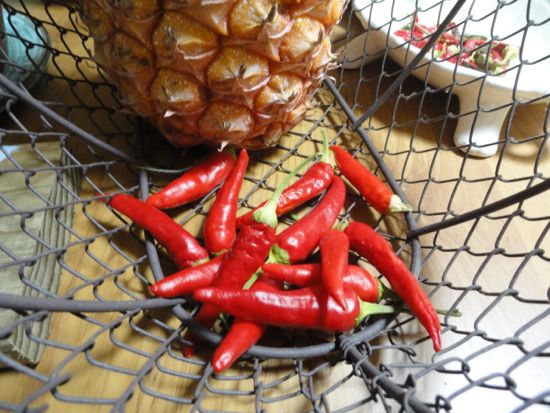
We've just removed a big clump of pineapple sage. Some will go into the garden a bit further over where it suits our planting this year, other pieces of the clump will be potted up and stored in the bush house and probably replanted out the front as flowering plants. I'm also going to strip all the chillis off the bush, cut it back and plant it in a pot to sit in the bush house for a few months. In spring, we'll replant it in the garden. Capsicums and chillis keep growing here over winter but they never produce fruit, so as long as we can keep the plant healthy over the colder months, it will serve us again in spring. I'll probably do the same thing with the capsicums/peppers. The last of our garden plants on the move are the strawberries. I dug them up yesterday afternoon and will wrap them in moist hessian until they can be planted out again for winter berries.
Warning: some plants cannot be moved. Parsley, for instance, generally dies when its roots are disturbed. Make sure you check out the requirements for any plant you want to move.

Plant comfrey
Comfrey is such a useful herb. It's used as a compost activator, fertiliser tea, mulch for tomatoes and potatoes and if you grow enough comfrey, you'll never have to buy fertiliser from the nursery. Yarrow is another good herb for fertilising and it gives you a beautiful flower as well.

Sprouting broccoli and brown onion seedlings, to be planted out next week.

Making fertiliser
Get into the habit of doing this because it will save you a few dollars each year and will allow you to made weeds, chook poo, comfrey, yarrow or worm castings into nutrient-rich fertiliser.  Basically, any kind of fertiliser tea is made by adding the main ingredient - be that manure, plants, weeds and adding water to it. You allow it to steep for a few days, then dilute the resulting tea down with more water and pour it on. Fertiliser tea is excellent as a spray over the entire plant because the leaves will take the nutrients in, but you can water it in around the plant roots too. My favourite fertiliser is comfrey tea. Plant a couple of comfrey plants near your compost heap and use it frequently to make tea. It's great for green leaves as well as flowering plants because it's high in nitrogen, phosphorus and potassium and many trace elements. How to make comfrey fertiliser here.

Staking plants
It's always better to stake taller plants. Fruiting plants such as tomatoes, will bend and snap under the weight of their fruit if they're not staked. Make use of old stockings or cotton rags cut in strips for your ties, don't use string because it will cut into the tomato stalks. I know it seems like a pain to go around each tomato plant to tie it, but you'll be rewarded for your work.

Three of the eight blueberry cuttings I took.
Propagating
Don't forget to propagate as you go through the growing season.  I've taken eight cuttings from the blueberry bushes and I have them in the bush house, in moist potting mix. I'll keep them moist and hopefully, be rewarded with a few new blueberry bushes, free. Gardening can be a costly exercise so if you can cut down on your expenses by propagating from what you already have, you should do it. This can include saving seeds at the end of the season. Of course, if you do want to save seeds for next year, you'll need to start off with open pollinated/heirloom seeds.

Watering
If you've got a vegetable garden going, I hope you've thought about harvesting rainwater from your roof to water your plants. The cost of water is increasing and you should include the cost of water in your garden expenses calculations. If you want to garden sustainably, think about collecting water for the garden.

Harvesting at the right time
This sounds so obvious, it seems like an insult to put it in, but harvesting at the right time is a skill to be developed just like all the others. You'll find every garden book will tell you to ripen your tomatoes on the vine. However, if we do that here, we get tomato grub and no tomatoes. Observe your garden, trust your instincts and go with what you think you should do. Learn from your mistakes and over the years, you'll build up the skills that will help you garden well in your climate. Tomatoes don't need sunlight to ripen. They need warmth and they will ripen very nicely in your kitchen. So learn about when to harvest according to the conditions in your garden. Peas and beans are best harvested younger rather than older, as are a lot of things. Lemons can be harvested when they're ripe and can sit around in a bucket for a couple of weeks - you'll increase the amount of juice you get if you do that.


Soaking your seedlings in a weak seaweed liquid for a few hours before planting will help a lot with transplant shock.

Succession planting
Have the next crop ready to go in when the preceding crop is harvested.  Often you can just take a few leaves off a plants and let the plant keep growing but when you pick the entire plant, soon you'll be left with a bare patch. Look on your seed packets, or online, to see how long your plants take from seed to germination to harvest and using that information, plant more seeds to follow up when that first crop is due to be harvested.

If I could only give you two pieces of information about gardening they'd be these two: 
  1. Always prepare your soil well and plant into rich soil.
  2. Look at your garden and work out what's happening - with the watering, insects, pollination, fertilising, pruning, spacing. Be actively involved in learning about the plants you've chosen to grow and trust yourself if you think you should change what you're doing.
I wish you all a very successful growing season. I know how important it is for many people, it is for us too because we can't afford to buy a lot of organic food. If we can grow our own, it gives us the freshest possible vegetables and fruit, we know how it's been grown, there are no food miles attached and it makes us feel like we're doing something worthwhile.  Happy gardening everyone. ♥

Further reading
The surprising healing qualities of dirt

Everyone must have been busy this week, they've not been many comments here.  Whatever you're doing, I hope it's progressing well. Take care.

♥:♥:♥

Of cloth and hand
A new way with French seams
Nest box curtains, more than a fashion statement
Veggies at the Liquor Store—and 5 Other Ways to Bring Food to Your Community
Tiny Houses for the Homeless: An Affordable Solution Catches On
Geoff Lawnton's Permaculture Farm Tour
The Science of Gardening with Carol Klein - this is very good, particularly the part about seeds saving. You tube.
The farm for the future - You Tube


Little Welsh House
Country living by the sea
The simple life of us
Newer Posts Older Posts Home

ABOUT ME

Down to Earth is a blog by Rhonda Hetzel, dedicated to simple, intentional living — from home cooking and gardening to frugal budgeting and handmade crafts. It’s a space for gentle inspiration and everyday wisdom on creating a life that feels real, balanced, and deeply fulfilling.

Down To Earth Book

Down To Earth Book
My books are all published by Penguin. Down to Earth, The Simple Life and The Simple Home have been in book shops since they were published in 2012, 2014 and 2016, respectively. On 20 October 2020, Down to Earth was published as a paperback.

MY FAVOURITE PLACES

  • Grandma Donna's Place
  • Grandma Donna's YouTube
  • Grandma Donna's Instagram
  • This Simple Day
  • Nicole's Instagram

Popular Post of All Times

Making ginger beer from scratch

We had a nice supply of ginger beer going over Christmas. It's a delicious soft drink for young and old, although there is an alcoholic version that can be made with a slight variation on the recipe. Ginger beer is a naturally fermented drink that is easy to make - with ginger beer you make a starter called a ginger beer plant and after it has fermented, you add that to sweet water and lemon juice. Like sourdough, it must ferment to give it that sharp fizz. To make a ginger beer plant you'll need ginger - either the powdered dry variety or fresh ginger, sugar, rainwater or tap water that has stood for 24 hours to allow the chlorine to evaporate off. You'll also need clean plastic bottles that have been scrubbed with soap, hot water and a bottle brush and then rinsed with hot water. I never sterilise my bottles and I haven't had any problems. If you intend to keep the ginger beer for a long time, I'd suggest you sterilise your bottles. MAKING THE STARTER In a...
Image

The last post

This will be my last post here.  I've been writing my blog for 18 years and now is the time to step back. I’ve stopped writing the blog and come back a couple of times because so many people wanted it, but that won’t happen again, I won’t be back.  I’ll continue on instagram to remain connected but I don’t know how frequent that will be. I know some of you will be interested to know the blog's statistics. 
Image

How to make cold process soap

I'm sure many of you are wondering: "Why make soap when I can buy it cheaply at the supermarket?" My cold process soap is made with vegetable oils and when it is made and cured, it contains no harsh chemicals or dyes. Often commercial soap is made with tallow (animal fat) and contains synthetic fragrance and dye and retains almost no glycerin. Glycerin is a natural emollient that helps with the lather and moisturises the skin. The makers of commercial soaps extract the glycerin and sell it as a separate product as it's more valuable than the soap. Then they add chemicals to make the soap lather. Crazy. Making your own soap allows you to add whatever you want to add. If you want a plain and pure soap, as I do, you can have that, or you can start with the plain soap and add colour, herbs and fragrance. The choice is yours. I want to add a little about animal and bird fat. I know Kirsty makes her soap with duck fat and I think that's great. I think t...
Image

Preserving food in a traditional way - pickling beetroot

I've had a number of emails from readers who want to start preserving food in jars but don't know where to start or what equipment to buy.  Leading on from yesterday's post, let's just say up front - don't buy any equipment. Once you know what you're doing and that you enjoy preserving, then you can decide whether or not to buy extra equipment. Food is preserved effectively without refrigeration by a variety of different methods. A few of the traditional methods are drying, fermentation, smoking, salting or by adding vinegar and sugar to the food - pickling. This last method is what we're talking about today. Vinegar and sugar are natural preservatives and adding one or both to food sets up an environment that bacteria and yeasts can't grow in. If you make the vinegar and sugar mix palatable, you can put up jars of vegetables or fruit that enhance the flavour of the food and can be stored in a cupboard or fridge for months. Other traditional w...
Image

Cleaning mould from walls and fabrics

With all this rain around we've developed a mould problem in our home. Usually we have the front and back doors open and that good ventilation stops most moulds from establishing. However, with the house locked up for the past week, the high humidity and the rain, mould is now growing on the wooden walls near our front door and on the lower parts of cupboards in the kitchen. Most of us will find mould growing in our homes at some point. Either in the bathroom or, in humid climates, on the walls, like we have now. You'll need a safe and effective remedy at some point, so I hope one of these methods works well for you. Mould is not only ugly to look at, it can cause health problems so if you see mould growing, do something about it straight away. The longer you leave the problem, the harder it will be to get rid of it effectively. If you have asthma or any allergies, you should do this type of cleaning with a face mask on so you don't breathe in any spores. Many peopl...
Image

Five minute bread

Bread is one of those foods that, when made with your own hands, gives a great deal of satisfaction and delight. It's only flour and water but it symbolises so much. I bake bread most days and use a variety of flours that I buy in bulk. Often I make a sandwich loaf because we use most of our bread for lunchtime sandwiches and for toast. Every so often I branch out to make a different type of loaf. I have tried sour dough in the past but I've not been happy with any of them. I'll continue to experiment with sour dough because I like the idea of using wild yeasts and saving the starter over a number of years to develop the flavour and become a part of the family. However, the loaf I've been branching out to most often is just a plain old five minute bread. By five minutes I mean it takes about five minutes actual work to prepare but it's the easiest of all bread to make and to get consistently good loaves from. If you're having people around for lunch or...
Image

This is my last post.

I have known for a while that this post was coming, but I didn't know when. This is my last post. I'm closing my blog, for good, and I'm not coming back like I have in the past.  I've been writing here for 16 years and my blog has been many things to me. It helped me change my life, it introduced me to so many good people, it became a wonderful record of my family life, it helped me get a book contract with Penguin, and monthly columns with The Australian Women's Weekly and Burke's Backyard . But in the past few months, it's become a burden. In April, I'll be 75 years old and I hope I've got another ten years ahead. However, each year I'll probably get weaker and although I'm fairly healthy, I do have a benign brain tumour and that could start growing. There are so many things I want to do and with time running out, leaving the blog behind gives me time to do the things that give me pleasure. On the day the blog started I felt a wonderful, h...
Image

What is the role of the homemaker in later years?

An email came from a US reader, Abby, who asked about being a homemaker in later years. This is part of what she wrote: "I am a stay-at-home mum to 4 children, ages 9-16. I do have a variety of "odd jobs" that I enjoy - I run a small "before-school" morning drop-off daycare from my home, I am a writing tutor, and I work a few hours a week at a local children's bookstore. But mostly, I cherish my blissful days at home - cooking, cleaning (with homemade cleaners), taking care of our children and chickens and goats, baking, meal-planning, etc. This "career" at home is not at all what I imagined during my ambitious years at university, but it is far more enriching. I notice, though, that my day is often planned around the needs of my family members. Of course, with 4 active kids and a husband, this is natural. I do the shopping, plan my meals, cook dinner - generally in anticipation of my family reconnecting in the evening.  I can't h...
Image

Every morning at home

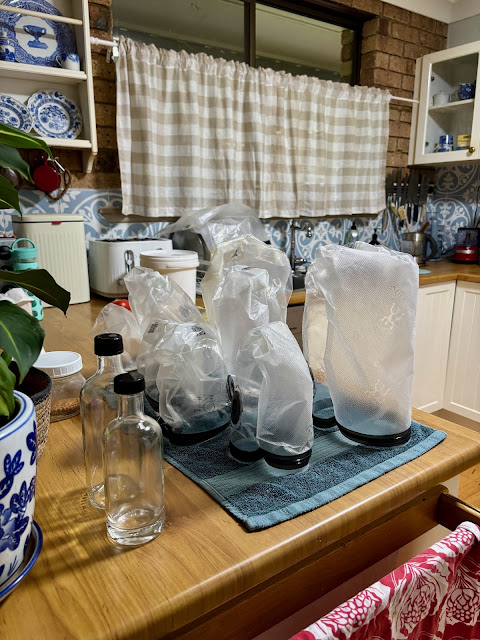
Every morning when I walk into my kitchen it looks tidy and ready for a day's work. Not so on this morning (above), I saw this when I walked in. Late the previous afternoon when I was looking for something, I came across my rolled up Zwilling vacuum bags and decided they had to be washed and dried. So I did that and although I usually put them outside on the verandah to dry it was dark by then. I turned the just-washed bags inside out and left them like this on a towel. It worked well and now the bags are ready to use when I bring home root vegetables, cabbages or whatever I buy that I want to last four or five weeks.
Image

You’ll save money by going back to basics

When I was doing the workshops and solo sessions, I had a couple of people whose main focus was on creating the fastest way to set up a simple life. You can't create a simple life fast, it's the opposite of that It's not one single thing either - it's a number of smaller, simpler activities that combine to create a life that reflects your values; and that takes a long to come together. When I first started living simply I took an entire year to work out our food - buying it, storing it, cooking it, preserving, baking, freezing, and growing it in the backyard. This is change that will transform how you live and it can't be rushed.  
Image

Categories

  • Backyard 244
  • Being Organised 257
  • Books 9
  • Budgeting 142
  • Chickens 42
  • Community life 289
  • Family 269
  • From Scratch 63
  • Grandmothering 69
  • Home 296
  • Individuality 185
  • Mentoring 55
  • My books 49
  • Organic Gardening 348
  • Preserving 97
  • Recycling 22
  • Retirement 22
  • Self Reliance 160
  • Simple Living 777
  • Sustainability 308
  • This blog 107
  • Weekend reading 362
  • Writing 4

Followers

Trending Articles

The last post

This will be my last post here.  I've been writing my blog for 18 years and now is the time to step back. I’ve stopped writing the blog and come back a couple of times because so many people wanted it, but that won’t happen again, I won’t be back.  I’ll continue on instagram to remain connected but I don’t know how frequent that will be. I know some of you will be interested to know the blog's statistics. 
Image

Making ginger beer from scratch

We had a nice supply of ginger beer going over Christmas. It's a delicious soft drink for young and old, although there is an alcoholic version that can be made with a slight variation on the recipe. Ginger beer is a naturally fermented drink that is easy to make - with ginger beer you make a starter called a ginger beer plant and after it has fermented, you add that to sweet water and lemon juice. Like sourdough, it must ferment to give it that sharp fizz. To make a ginger beer plant you'll need ginger - either the powdered dry variety or fresh ginger, sugar, rainwater or tap water that has stood for 24 hours to allow the chlorine to evaporate off. You'll also need clean plastic bottles that have been scrubbed with soap, hot water and a bottle brush and then rinsed with hot water. I never sterilise my bottles and I haven't had any problems. If you intend to keep the ginger beer for a long time, I'd suggest you sterilise your bottles. MAKING THE STARTER In a...
Image

Time changes everything

I've been spending time in the backyard lately creating a contained herb and vegetable garden. My aim is to develop a comfortable place to spend time, relax, increase biodiversity and encourage more animals, birds and insects to live here or visit. Of course I'd prefer my old garden which was put together by Hanno with ease and German precision. Together, we created a space bursting at the seams with herbs, vegetables and fruity goodness ready to eat and share throughout the year. But time changes everything. What I'm planning on doing now, is a brilliant opportunity for an almost 80 year old with balance issues. In my new garden I'll be able to do a wide range of challenging or easy work, depending on how I feel each day. It’s a daily opportunity to push myself or sit back, watch what's happening around me and be captivated by memories or the scope of what's yet to come.
Image

The most wonderful news

This post will give me more joy to write than anything else I could think of today.  I told you  there are a few exciting things happening here at the moment, well, I am now able to tell you the most exciting one of them.  Our son Kerry and his beautiful partner Sunny are having a baby!  Hanno and I will be grandparents in late March.  I can barely believe my eyes when I read what I have just written.  This is one of my original stitchery patterns. This wasn't planned but it's welcomed wholeheartedly by all of us.  Both Kerry and Sunny are hard workers and now that they have a baby to love and care for, they've decided it's time to buy an apartment together.  Sunny is going home to Korea to tell her family and when she comes back again, the search will start to find their first home together.  We are all so excited!  My knitting has taken on a life of its own and when I think of all the projects I could start, my head spins.  Thi...
Image

About Blog


Down to Earth is a blog by Rhonda Hetzel, dedicated to simple, intentional living — from home cooking and gardening to frugal budgeting and handmade crafts. It’s a space for gentle inspiration and everyday wisdom on creating a life that feels real, balanced, and deeply fulfilling.

Last Year's Popular Posts

The last post

This will be my last post here.  I've been writing my blog for 18 years and now is the time to step back. I’ve stopped writing the blog and come back a couple of times because so many people wanted it, but that won’t happen again, I won’t be back.  I’ll continue on instagram to remain connected but I don’t know how frequent that will be. I know some of you will be interested to know the blog's statistics. 
Image

Every morning at home

Every morning when I walk into my kitchen it looks tidy and ready for a day's work. Not so on this morning (above), I saw this when I walked in. Late the previous afternoon when I was looking for something, I came across my rolled up Zwilling vacuum bags and decided they had to be washed and dried. So I did that and although I usually put them outside on the verandah to dry it was dark by then. I turned the just-washed bags inside out and left them like this on a towel. It worked well and now the bags are ready to use when I bring home root vegetables, cabbages or whatever I buy that I want to last four or five weeks.
Image

You’ll save money by going back to basics

When I was doing the workshops and solo sessions, I had a couple of people whose main focus was on creating the fastest way to set up a simple life. You can't create a simple life fast, it's the opposite of that It's not one single thing either - it's a number of smaller, simpler activities that combine to create a life that reflects your values; and that takes a long to come together. When I first started living simply I took an entire year to work out our food - buying it, storing it, cooking it, preserving, baking, freezing, and growing it in the backyard. This is change that will transform how you live and it can't be rushed.  
Image

Workshops update

  This photo shows what the weather's been like here.  That's steam coming off my neighbours shed roof after a brief downpour of rain.  I hope we’re getting closer to organising these workshops. I didn’t explain this clearly enough: Group 1 is four workshops, Group 2 is four workshops. Out of those eight workshops I thought we probably end up doing three or four.
Image

Creating a home you'll love forever

Living simply is the answer to just about everything. It reduces the cost of living; it keeps you focused on being careful with resources such as water and electricity; it reminds you to not waste food; it encourages you to store food so you don't waste it and doing all those things brings routine and rhythm to your daily life. Consciously connecting every day with the activities and tasks that create simple life reminds you to look for the meaning and beauty that normal daily life holds.  It's all there in your home if you look for it. Seemingly mundane tasks like cleaning and cooking help you with that connection for without those tasks, the home you want to live in won't exist in the way you want it to.  Creating a home you love will make you happy and satisfied.
Image

Time changes everything

I've been spending time in the backyard lately creating a contained herb and vegetable garden. My aim is to develop a comfortable place to spend time, relax, increase biodiversity and encourage more animals, birds and insects to live here or visit. Of course I'd prefer my old garden which was put together by Hanno with ease and German precision. Together, we created a space bursting at the seams with herbs, vegetables and fruity goodness ready to eat and share throughout the year. But time changes everything. What I'm planning on doing now, is a brilliant opportunity for an almost 80 year old with balance issues. In my new garden I'll be able to do a wide range of challenging or easy work, depending on how I feel each day. It’s a daily opportunity to push myself or sit back, watch what's happening around me and be captivated by memories or the scope of what's yet to come.
Image

Simple life workshops on Zoom UPDATED

I've added more topics to the list. This post is for those readers who expressed interest in doing online Zoom workshops or who want to register now. The topics haven't been chosen yet but potential topics are:  vegetable gardening and composting; starting a vegetable garden and choosing vegetables suitable for a beginner;  cutting costs in the home, housework and routines; homemade laundry liquid and powder, soaking, stain removal and washing clothes and household linens; cooking from scratch and building your pantry to help you do it; homemade bread - white, rye, wholemeal and ancient grains. I'm not doing sourdough; living on less than you earn and developing a frugal mindset.
Image

Labels

  • Bartering
  • Chickens
  • Community life
  • Food security
  • From Scratch
  • Home Maintenance
  • Homemaking
  • Mentoring
  • My favourite place
  • Recipes - savoury
  • Reminders of what is important to us
  • Simple Living
  • The Simple Home - June
  • The Simple Home - May
  • Utilities
  • Wise Economy

Copyright © Down To Earth. Designed by OddThemes