down to earth
  • Home
  • About Us
  • Down To Earth Book
  • Privacy Policy
I have been slowly getting back into my rhythm and routines and doing a lot more in the house. It's more like the first six or seven years of this simple life, before things got busy again. Most of us feel fulfilled by good choices and have to live with the consequences of the bad ones. I can't say that my writing and what came from it was a bad choice, but it took me to places unexpected and away from some newly discovered values.  One thing I have learnt by living as we do is that there are not too many things that can't be stopped or modified to remain on our chosen path. I think I did a lot of modifying in the past few years so that I could do everything I had to do, but I stopped doing some of the things I wanted to do. It's easier now. I've stepped back, made new choices and I'm feeling happy about where we're heading.


My plan now is to get back to that easy, benign routine I had back then. One thing lead into another, we got bread baked, beds made, laundry done, floors cleaned, gardening organised and still had time to sew, knit, preserve, visit, read or just sit watching the chickens in the garden. I have just started my ritual of opening and closing the bedroom window again. It used to be part of my routine to make the bed and open the window every morning. We have three windows in the bedroom and this is the one on the shady side of the house. The window can be open most of the year but I loved to open it in the morning to let in the fresh air and close it in the late afternoons of winter when the temperature dropped. That one simple act of opening and closing the window made me feel I was taking care of my home and us - especially in winter when closing it kept the warm afternoon air in and shut out the cold air of night. It was a silent confirmation of sorts that we could make things better and more comfortable here by carrying out these small daily acts of home life.

I'm not sure why I stopped opening and closing the bedroom window. It was probably busyness or being focused on writing but I'm glad I found my way back to it, particularly at this time of year when the temperatures are about to get colder. My life is made up of a lot of small activities that give me pleasure - taking hot bread form the oven, letting the chickens out at first light, sitting and thinking on the front verandah, sleeping in a bed with just-washed sheets that have dried in the sunlight. I have a lot to be thankful for. I'm pleased I remembered this, this small and unimportant bedroom window, and that opening and closing it still feels as good as it used to.

What are your small pleasures? Are they part of your routine?
We have seven chickens left. The last of our old girls died late last year and now, even though we miss those old characters, we've started building up our flock again so we'll have plenty of eggs. Kate at Beautiful Chickens has some girls ready for us and as soon as the chicken house renovations are complete, we'll pick them up. I can hardly wait.

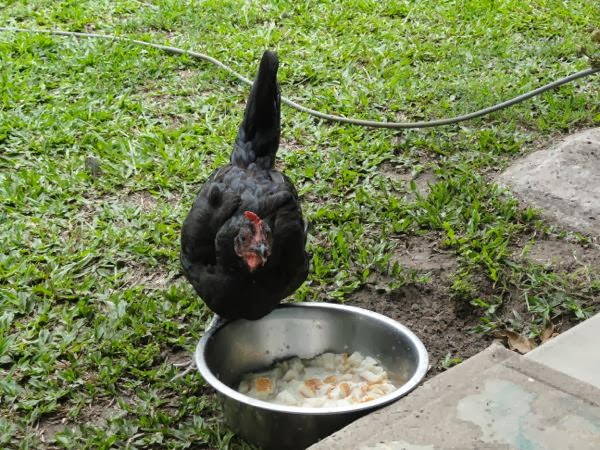
At the moment we have Lucy, an Old English game hen, she is our oldest chicken. She came to us when Shane and Sarndra moved from the country to the city and couldn't take their chooks with them. Lucy arrived with a flock of older chicks she'd hatched, many of them roosters, and now she's the only one left. Lucy is blind now so we've been hand-feeding her and moving her around the yard so she stays in the shade. Hanno puts her in a nest at night and gets her out every morning. He feeds her bread and milk with chicken pellets and greens thrown in for good measure. When Jamie is here, he hits the side of Lucy's metal bowl with a spoon so she knows where her food is.


This is Lucy.

Her Royal Chookness, Lulubelle.

Sitting on the recycled timbers going into their new home, Annie, Fiona, Blue Bell and Nora.

Blue Bell.

The others are Lulubelle, the Plymouth Rock chicken I was holding in my Women's Weekly article a couple of years ago. Lulubelle is still laying and keeps the other chooks in hand (or wing). We have Fiona, our crazy Araucana who lays the most beautiful light blue eggs and Annie, a New Hampshire. Today, we discovered that Annie and Fiona have been hiding a nest of six eggs and taking it in turns to sit on them. Hanno had a tree felled a couple of weeks ago and the top of the tree was still in the chicken run. It was in the cool darkness of all those leaves where they made their nest and we only discovered their secret when I saw Annie go in and Fiona shoot out of the branches. Late summer is often the time when chickens go broody and want to sit on eggs instead of have you take them. Fiona is quite aggressive when she's protecting her eggs and if you have a hen like this, it might serve you well to wear gardening gloves when you take the eggs from the nest.

There isn't much you can do if your chickens go broody. It's part of the natural behaviour of pure breed chooks. Even Lomans and Isa Browns occasionally go broody although most of them don't, the tendency to reproduce has been bred out of them over the years.  If you do have a broody the only thing you can do is to get them out of the nest whenever you see them in there, or lock them out of the nest area. We tend to let out girls sit on the nest for a short time and hope they snap out of it. Most of the time, they do.

Cora, blue laced Barnevelder.
The crazy princess Fiona.

Cora again.

The other chickens are two blue lace Barnevelders - Cora and Nora and a blue Australorp - Blue Bell. Nora has been laying for a couple of weeks but Cora has only just started laying and her eggs are still small. This is quite normal for a newly laying chicken - small eggs, sometimes they don't have a shell and sometimes they are double yolkers. All that sorts itself out when their hormones settle, then we look forward to about five eggs a week from each girl. The only non-layer is Lucy but she's raised chicks in the past so she's done her duty. 

We're getting to the end of summer now. We helped our chooks get through the very hot weather by having an extra water container on hand. Chickens will die without fresh water. They also like to stand in water  during hot weather so if you have a wide open bowl or a bin lid, upside-down, fill it with water so they can go there to cool down. It's also a good idea to have blocks of ice in the freezer for the very hot days. Just throw one into their bucket when the day starts getting hot and it will encourage the chickens to stay hydrated because they love drinking cool water.


This is the view looking from the front of the chicken coop over towards the back of our yard. The trees provide shade during the summer, then the pecan loses its leaves in winter giving the chooks much needed sunlight during the colder weather.

In the next couple of weeks we'll have to start looking for signs of mites and fleas. These often present in autumn. We use Diatomaceous Earth (DE) here. If we see the chooks pecking at their feathers or preening a lot, it generally means they have mites. We cover them in DE, especially under wings, around their comb and wattles and under the tail. This generally fixes things in a few days.  When the girls moult, which they usually do in autumn, it's a good idea to have a good clean out of the chicken house and nests - sweep up everything that's been laying around and put it on the compost heap. If you have one, use a pressure hose to clean the coop, if not, a hose will do. Don't forget the nests and roosts. When it's all completely dry, add straw or hay to the nests and floor, then throw a few cups of DE around the coop and in the straw and nests. That should keep things in check and the chickens comfortable for a few months.

Just one more tip. A few people have asked about worming chickens. It's not recommended to worm chooks any more - it's another chemical they can do without. A crushed garlic clove once a month in all the water containers - leave it there for three days then give plain fresh water again.  If you notice foamy diarrhoea and your chickens look thin and sick, they might have worms and you should treat them. You'll also have to clean out the coop again and replace all the straw.

This young chap is a native bush turkey. They roam freely in and out of the rainforest and often irritate gardeners by scratching through gardens. This fellow visits a couple of times a day, has a feed of pellets, wanders around with the girls for a while, then leaves again.

We couldn't do without our hens. In the past couple of weeks during the summer heat, and with two of our girls broody, we've only been getting about three or four eggs a week. When we have times like that it shows me how much we rely on our little ladies and their eggs.  Hanno went to the organic farmers market on Saturday and even though we could have bought eggs there, they're never as good as ours. I bet you find the same with your girls too. Nothing is as good as fresh eggs from your own back yard.  How many chickens do you have now?


The kids have gone back to school, the weather is cooling a little and time is marching on. 

I finished the final reading of my book yesterday so that's been sent back to Penguin; hopefully it will be published in late March.

I took the opportunity last week to make more lemon cordial and gave these two bottles to Cathy and Sunny. Hope you have a  wonderful weekend. Thank you for visiting over the past few days.


Table manners for children
Chinese tinned peached - lead
Growing food can help you meet the neighbours
Is it possible to make a living on a small farm?
Regrow your herbs and vegetables
Cleaner hall of shame
Live to work or work to live? Nickie asks this important question at Meadow Orchard
Crafts calculator - work out how to price your hand-made goodies
Nest curtains - more than just curtains
Wooden dolls a visitor from the woods @ Fairie Moon
Just when you start to worry about where we are headed, this comes along.

Miranda at Her Resolution
Meredith at Simple Living in the Loo
Jenny @ Half Grown Somethings
Frugal vegetable gardening starts with seeds. If they're seeds you've collected yourself from last year's crop, that's even better. If you want to save seeds after every season to plant the following year, you'll need to start with heirloom or open pollinated seeds. F1 seeds will not reproduce true to type. Seed saving is an easy skill to learn and it's vegetable production at its most authentic.


Some vegetable seeds are planted directly into the ground, some are best grown to seedlings stage first, then planted in the ground. Be guided by the planting guidelines on the seed package. I am going to plant seeds in tubes soon that really should be sown straight into the ground. I'm doing that because I want to be ready with a seedling as soon as the time is right for planting out here. If I can get a month's worth of growth on a seed before planting time, I'll be gaining growing time because when the time is right, I'm not planting a seed, I'm planting a seedling. The time is not right here because it's still too hot but there will be a lot of places around the world where you plant seeds in trays or tubes because there is a chance of frost, there is still snow on the ground or the soil is still too cold. For whatever reason, if you can plant your seeds and nurture them to seedling level before planting out in the garden you'll have vegetables before someone who waits, then plants a seed instead of a seedling.

I use a drawer from a very old fridge to hold the seed raising mix. I can fill up my pots without wasting any mix.


If you find any large pieces of bark, like those above, just throw them away. Most seeds would struggle to grow with something like that on the top of them.


If you're using recycled trays like I am, they must be clean. Wipe the trays out thoroughly, or scrub with soap and water if that's what they need, then rinse them in a bucket of water to which a cup full of vinegar has been added. Dry in the sun.

When planting seeds in trays, use good quality seed raising mix, not potting mix or garden soil. You need a mix that is open and drains perfectly, with no lumps of bark or charcoal that will stop a tiny seedling from emerging. It's quite easy to make your own seed raising mix, but I prefer to buy mine already made. Fill the trays, poke your finger into each cell to flatten the soil slightly, then top up the cell with the mix again. If you find any large pieces of bark or stones, throw them out.  If you want to make your own seed raising mix, this is how to do it.

Plant the seeds according to the instructions on the packet. Generally, the rule of thumb is the larger the seed the deeper it's planted. So for a seed that is tiny, you'd only have to place them on the top of the soil and scatter seed raising mix, washed sand or vermiculite over the top to cover them, and pat down. For a larger seed, plant it at twice its size - so a seed that is ½ mm would be planted 1 mm deep and a 1 mm seed would be planted 2mm deep. Gently pat the soil down over the top so the seed stays where it is planted. Before you go on to the next seeds, label each set of seeds with its name and the date you planted. This is important. If you're a new gardener and don't know what the seeds look like as seedlings, label them so you can learn from day one.

When everything is labelled, gently water in. Water is what causes the seed to germinate so you'll have to soak the soil mix and be left with a nicely moist six. Don't let the seedlings dry out.

Adding one teaspoon of Epsom salt to a watering can of water, poured over the seedling tray, will stimulate the seeds to germinate.

You can water in one of two ways:
  1. Place the planted seed trays into a shallow tray of water, with one teasoon of Epsom salt added and mixed in. The water should come about half way up the side of the seed tray. Let the water slowly filter in to moisten the dry seed raising mix.  After a couple of hours, remove the trays and let them drain. 
  2. OR ... get yourself a plastic spray bottle and use that.  Add a good pinch of Epsom salt to the water and shake the bottle to mix it. It will take a while to completely wet the soil, but that's what it takes - gardening will help you slow down. The seed and all the soil in the seed tray needs to be saturated, and then the water should freely drain away, leaving a moist seed and soil. 
Then place them in a sheltered area away from wind, cold and animals.  Seed need warmth and water to germinate; as soon as the seed shoots, the seedling needs bright sunlight to survive. They don't need full sunshine in sub-tropical and tropical areas, they should be protected as they'll dry out too fast, but in cold climates, they need that intense light. If you have a cold frame, that would be ideal. Keeping seedlings in low light will result in tall, lanky plants that will be weaker than they should be. If you want to keep them in the house, you'll need a brow lamp or something similar. I keep my seed trays in the bush house with a shade cloth roof. When they grow a bit, I put them outside in the morning sun.

Damping off is a plant disease caused by various fungi. It the seeds almost emerge, but don't, if they emerge and then collapse, that might be damping off. These seedlings have been attacked and won't grow. It's caused by over crowding seedlings, by them being too wet or by contamination from a pre-used tray that hasn't been prepared properly.  If you have problems, go to this thread at the forum to discuss any problems you may have.

Seeds are a fully self contained capsule of life. They only need warmth and water to start growing. When the seeds germinate and have put of some leaves, you can start watering with a weak seaweed concentrate - half the strength they recommend on the bottle. At this stage, they'll need even more light so move them to a suitable location.  When my seedlings are ready to plant out in the garden, I'll do post on that.

These are three excellent gardening sites in Australia:
  • Annette McFarlane Organic Gardening
  • Green Harvest here is some seed raising info written by Frances at Green Harvest
  • Aussie Organic Gardening
General odds and ends
  • If you want to plant by the moon, here is a planting guide.
  • Toilet roll inner tubes are good for planting large seeds such as beans, peas, pumpkin, beetroot, melons etc. When they're planted up, keep them together with a piece of string or together in a small pot. Peas and beans don't like having their roots disturbed so a tube is ideal for them. When it's time to plant, you plant the entire tube with the seedling in it and the cardboard simple rots away in the ground in the first weeks.
  • You can also recycle your old one cup yoghurt containers. Poke holes in the bottom and plant you seeds. When it comes time to plant, if the seedling doesn't just slide out, it's best to cut the side open.
  • Water small seeds more frequently. They are sown close to the surface of the soil mix and dry out faster.
  • Soak pea and bean seeds for 12 hours before planting, then don't water them until the germinate.
Good luck and happy gardening!


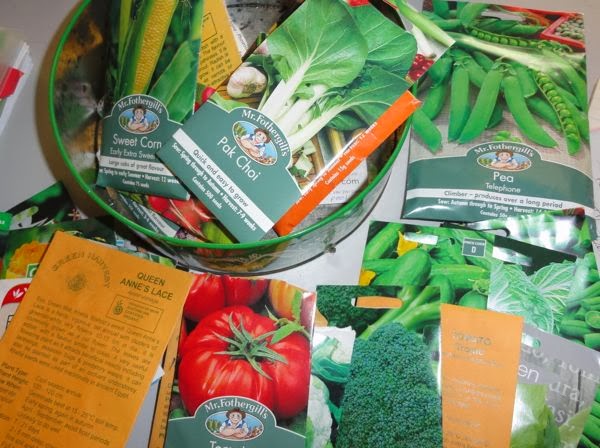
Food production in the backyard is a simple activity that takes in a few elements of the simple life philosophy. It helps with debt reduction and saving, it encourages sustainability, self-reliance, organisation and preparedness, it helps with food security and waste (compost) and it is one of the things that will help slow you down. I'm really excited about our new season kitchen garden. A couple of days ago I went through my seed box, identified what new seeds I needed and bought them on Saturday. With the price of fresh food going up all the time I want to make sure we produce as much as we can to eat fresh, and to preserve for later in the year. Apart from rising prices, I'm determined to serve local food on our table as much as I can and if that food comes from our backyard, that's even better. I'm planning to be as thrifty as I can be in the garden this year so I will plant seeds instead of seedlings.  We often buy seedlings from the markets and even though they're a good price, they aren't as thrifty as planting seeds. We resort to seedling because we're rarely ready to plant when we should be, but this year I'm primed up and ready. This year I want to do it right the entire season.


If you have a lot of seeds from previous years and you're unsure about the viability of some of them, you can test to see if they're okay. It will save you sowing the seeds and hoping the'll pop up. Simply take about 10 seeds from the pack you want to test, take three sheets of kitchen paper towel, wet it slightly and pour the seeds onto the wet towel. Wrap both ends in and then roll the towel into a cigar shape. Fold it in two, then put it inside a plastic bag. You don't want the seeds or the towel to dry out. If the seeds are still viable, they will shoot in a few days. Give them about 10 days before you throw them out but if you see little shoots coming out of the end of the seeds, you know the rest of the pack will produce vegetables and are fine to use.


Above are Portuguese cabbage seeds during their test for viability. Unfortunately, after growing the seeds for a few years, they're no longer fertile - they didn't sprout, despite the moist and warm conditions. I received the seeds from a gardener in Melbourne, Andrew (I think) and liked the cabbage a lot. If you're still out there, Andrew, I'd love some more seeds if you have any to spare.


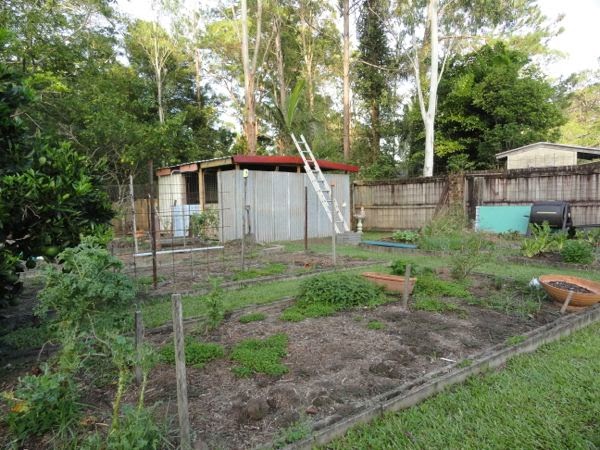
This is our vegetable garden last Sunday morning. It's survived a hot summer, hungry pecking chickens and no attention for two months. It's time to get her ready for the season ahead.


Our precious elder tree has borers and the dry summer has made it drop most of its leaves on the sunny side.  Luckily, new shoots are appearing after the rain and a bit or organic fertiliser. This place is our favoured place to sit in the garden.


Sunday morning I sowed the seeds for our first Sugarloaf cabbage, cauliflower, daikon, curly kale and tomatoes. I also have a cutting from our elder tree in a pot because the elder has borers and we'll have to replace it in the next year or two. I plan on growing all the above as well as peas, beans, onion, lettuce, Japanese spinach, turnips, carrots, swedes, garlic, cucumbers, radish, zucchinis, chillies, strawberries, Welsh onions, potatoes, sweet potatoes, pumpkins, herbs and flowers to bring in the bees. I hope to only buy fruit at the market, although we are growing oranges, mandarins (tiny ones in their second year), lemons, youngberries, blueberries, strawberries, loquats, bananas, passionfruit and grapes. I want to buy some thornless raspberries to plant along the front of the new section of the chook house. If we can grow all that consistently, I'll be a very happy woman and we shouldn't have to rely on buying vegetables for a long time.


One of our blueberry bushes is producing well. The others are a different type and I hope they'll give us a good crop later in the year. I know now to cut the blueberries back so I hope that will increase yields in years to come.


The navel orange is full of fruit growing fat and juicy. It's started putting on a lot of new growth too.


The youngberries haven't had enough water over summer but are still producing a small amount of fruit. I'll have to fertilise them soon and provide a good covering of mulch.


Our loquat tree is full of flowers this year. It's the best year it's had for a long time.


This is a crazy mix of grape and passionfruit vines. The passionfruit is already putting on very big fruit this year.

I realised when I was watching Carol Klein's Grow your own Veg on You Tube recently that our growing season here - which is out of kilter with southern Australia's, that we're more in line here with UK and European gardeners. We start planting in March and continue right through until November, when we stop planting but keep harvesting until January or so. We leave the gardens for a couple of months to rest over the hottest months and then get ready to do it all over again. I wonder if there are some gardeners out there who will be starting their gardens up again in March. Would you like to garden along with us?  If so, send two photos in every month and if I can work out how to do it, I'll set up a Pinterest page to show all our gardens together. Are you interested in doing this? Don't send the photos yet. I'll set up the page first and let you know.

Above is our little orchard looking back towards the front of our house. This is Hanno's work shed and our second water tank.
Below: looking towards the chicken run, the picket fence is the side of the garden. Those large trees in the run are a native fig, a pecan and a lemon tree. We've planted a second lemon in the corner of the fence line.

Sowing seeds is the most cost effective forum of vegetable gardening. You'll also have a much bigger range of seeds to choose from.  You have to be more organised and have your seedlings ready to plant at certain times during the year but if you can do that, it's a worthy exercise. In my next post, I'll write about planting seeds and caring for them until they reach the stage when they're planted out in the garden.

We have been delighting in that wonderful, relaxed time before the real business of the year starts in ernest. We had enough food to keep us going, there were no deadlines looming - well, I had one, but it was under control, and our days have been our own to do what we please. I've been making lists of ideas and projects for the year, I think Hanno did the same, although his big project is still the chook house which he's making bigger. More on that when it's finished.


Time has been elastic - expanding and contracting to suit our purpose, some days it was completely irrelevant. But this week, school returns and the summer holidays are over. Real life is back. I have made a promise to myself to enjoy as much as I can this year and to make the most of every day. Overall, I'm optimistic and excited about the year ahead. I hope you are too because at this early stage it could be anything - I'm choosing for my year to be a good one. Of course that requires a lot of hard work but I'm used to that and if it gives me the life I want, I'm happy to do whatever it takes.


I would've loved to live on a small farm producing just enough for our own needs and those of our family. I've never had the opportunity to own a farm and I don't like yearning for what I can't have. I deal with what I've got - bloom where you are planted. I am happy here and I make the most of it. Maybe I can't have a farm but I can create the world I want here within the confines of these fences. We own our house and have no debt. It's very easy to write that but it took years of hard work to do it. Over those hard years we raised our sons, did our civic duty, helped build our communities and our nation, worked, voted and paid taxes. Now I'm happy to be at home, to work for what we need and to enjoy our days here. We know that both the house and the land will be here long after we're gone and we care-take so that whoever lives here after us can improve on what we've done and not start from scratch like we did.


When we came here there were no fences, no verandahs, no gardens, no water tanks, no solar panels, no shed, no chook house. It was a small slab house on a big block of land with a creek running behind it. We chose to live here because we could see the potential of this land. We chose to live in this area because we wanted to continue to grow food and keep chooks. This climate allows year-long gardening and apart from a few hot days in the middle of summer, the weather is good for chickens. The first things we installed here were a water tank and solar hot water system. The first things we worked on were the garden and the chook house. We must have know back then in 1997 what kind of life we wanted, even if it wasn't part of our conscious thoughts. When I left paid work behind and came to my senses, we changed a lot inside our home too. All our changes were made when we had the money to do them; it was slow and steady progress. We made our home the kind of place that welcomed family and friends, where we felt safe and relaxed and where we could live the unusual life we'd chosen.  Our home may not suit everyone's tastes and needs but it's ideal for us.


What we have here now is here because we chose to add it and were prepared to do the work to make the modifications we wanted. We thought about how we wanted to live and made a set of choices. You can do the same; you don't have to live like everyone else. You can step back from the excesses you see around you. You don't have to make the same choices we made but you can create the kind of world you want to live in inside your home and in your yard. Of course you'll be limited by the space, time and ability but if you identify your goals and work towards them using small steps, you' will create the life you want.


There will be many changes taking place here over the coming 12 months but most of them will be planned changes that we've had a conscious role in choosing. If you don't plan, you leave your life open to chance, and then you just take what you get.  I'd rather do some planning and move my life in the direction I want it to go. What about you? Do you choose what you'll live with in your home? Are you a planner or do you just accept what comes along?
The long summer school holiday in Australia ends next week and everything will be back to "normal" again. It's been a hot summer here, especially in the west and down south and I think most of us are looking forward to autumn. I hope all my friends in colder climates are staying warm and safe. Enjoy your weekend, and to all my Australian readers - Happy Australia Day for Sunday. We'll be having a BBQ at Jens and Cathy's with the family. They're cooking roast lamb on the barby. Good times!

My book is on sale at Bookworld with free delivery in Australia. Click here.


Lazy Daisy's mum - will you help?

What are we afraid to be alone?
Lunchbox sandwich tips
Raising backyard chickens - YouTube
The private life of chickens - You Tube
Collecting a wild honey bee swarm - You Tube
Outsourcing our carbon emissions to China
Time travel kitchen blog - great photos of old kitchens and plenty of old recipes
Off grid Oregon farm - You Tube
Hugh Fernly Whittingstall's TED talk about sustainable food

FROM OUR COMMENTS:
little green village
Shelley's House 
Loupalou
I'm late to my blog today, but I thought it was better late than not at all. I've been doing the final reading of my next book and ebook, making bread and cleaning. I hope you enjoy your day.

♥♥♥

I have been watching Kevin's Hand-made Home on TV and enjoying it a lot. It's like a bloke's over the top version of what we're doing here, and what a lot of you do. He is seeing what he can make himself, from the cabin that he lives in, to soap, flint razors, a BBQ made from a WW2 mine and many other "comforts of home" to see if he is made happy by doing it.  It's a happiness and contentment experiment. Good news, he is happier.

Just like the Amish, he asked many friends to help him erect his "barn" Using recycled and hand-made, rather than bought, he built a cabin, then moved it to the seaside and is now adding to it. His project is to explore happiness. And when he says "By doing, making, sharing and collaborating you can be made happier." he is talking about the value of work and the many rewards that come from it.

He makes a patchwork roof with copper tiles made from old copper cylinders that are cut to shape. It is the same process that many of us use in our quilts. Kevin stands back and admires his handicraft - just like we do with ours. What we all make and do creates beauty and it is worthwhile looking at it and thinking about it. "I think happiness is a lot of things. There is a great feeling of well-being here," he says.


The paraphernalia of life is important too so he tries to make toothpaste, soap and other small things. Many of us do this but in a more ordered way in our homes. I'm glad I'm not making my toothpaste with urine and ground cuttlefish bone, like he did. But it's the work and self-reliance - the making and doing that gives him, and us, that feeling of contentment. 


While he is making what seems to be a practical seaside cabin with accoutrement, he really is demonstrating an over the top version of a simple life. I think he's doing many outrageous things to make people stop, look and wonder. If it were an ordinary run of the mill program about recycling and reclaiming, and how that makes you feel, how many of us would watch? But we watch this because it's outrageous and so crazy. I guess that's what some people feel when they see how Hanno and I live. Anything outside the mainstream seems crazy to many people.

Right at the end, he talks about sharing, how doing and making is made better when you share the results of your labour. How many of us can relate to that when we knit a cardigan and give it to someone, when we gift some home made soap and knitted washcloths, when we sit down to a shared meal that we've work on during the day? It's all made better in the sharing because sharing brings the remarkable rewards of acceptance, joy, affection, generosity, kindness and the feeling of abundance. And all this is within the reach of all of us. Working for what you have, making what you need, doing what you must, that, my friends, will enrich your soul and make you happier in the process.

ABC's iView last night's episode 
I have been getting a few emails over the past couple of months asking about slowing down and taking time out in the day to relax. It seems to be a mystery to some people. I have written back saying to just do it - leave your work behind and put your feet up, knit, sew, walk, paint, garden - do what your life allows you to do. I'm aware many of you have young children and I'd never tell you to walk away from them, but you could take them outside and walk or garden. When we look after Jamie, who will be three years old at the end of March, he loves to be outside in the garden with us. He likes helping, so we create small tasks for him so he feels a part of us and our garden. We both feel relaxed in the garden and we show him how to work slowly, sit and talk and generally to be part of that natural setting without impacting on it too much with noise and busyness. If you're snow bound inside you could knit or sew while your child plays. If these measures won't work for you, ask your partner, best friend, mother or sister to look after your child for an hour and do what you want to do. And do it regularly, giving something back in return.

But if you can't get away outside or have someone help, make tea in a pot. Tea will slow you down. You can do this alone or with a child. When Jamie is here, he drinks "special tea" which is just our tea from the pot, with a lot of milk and a small amount of honey. He loves it.


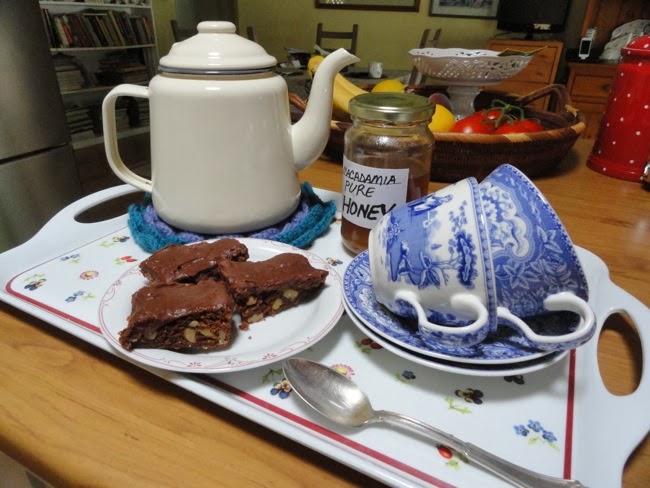
Above and below are photos of my favourite tea pot of all time. I got it from my sponsor's shop Odgers and McClellend just before Christmas.  It's had a workout since then. :- ) It's got an excellent no-drip spout and it's just the right size for Hanno and me, plus Jamie when he's here. It's enamel so I'll have to make a tea cosy for it in winter, but I'm looking forward to doing that. I've got a few tea pots and it's possibly the cheapest of all of them, but it will be my daily pot for many a long year to come. I feel very comfortable with it on my tea tray.


The challenge here is to make a pot of tea. Don't use tea bags, or if you're making coffee, make a pot of coffee, not instant coffee. Anyone can make a cup of tea with a tea bag and even though I've had my fair share of them, it's not the same as drinking good loose leaf tea, made in a pot. I stopped using tea bags a few years ago and I've never regretted it. My tea is better now, I love the ritual of it, it slows me in a gentle and practical way, and then I get to sit and drink it. Fast and instant may be good in certain circumstances but if you want to relax, they won't come close to helping you do that.

When you make tea, you have to wait. Waiting is good for us. It means we're doing nothing and in that nothing time you can stand there thinking, or look out the window, or slowly set a tray with the pot, tea strainer, spoons, tea pot, cups and whatever else you're serving. You can breathe deeply.

So, you've waited for the kettle to boil. Pour a small amount of boiling water into the clean pot, swish it around to make the pot hot, then pour the water into the sink. Add your tea leaves - one for each person and if, like us, you like strong tea, one of the pot as well. Pour the boiling water over the tea leaves, give it a quick stir with tea spoon, and put the lid on the pot. And now? Now you have to wait for it to brew. While you're waiting, take the tray to where you'll sit. After a couple of minutes, pour the tea.


Now you can do whatever you want to do - just sit there with your cup in hand, talk, watch the birds coming and going, if you're alone and you're not used to that, listen to the radio (very quietly and not music), or you can knit, embroider, hand stitch, write or do nothing but relax. Think about what you're doing - you're consciously taking a break because you need it and deserve it. Breathe deeply and take it all in.


While you're there thinking, think about your own happiness or contentment. You are responsible for that - no one else will walk up to you at any point in your life and serve you happiness and contentment on a silver platter. You're in charge of it. I'm not saying you selfishly squander your days giving yourself rest breaks and gifts and think that everyone else should care for you. We're adults, we're self-reliant, we do as much for ourselves as we can, including cultivating happiness and contentment.

Tea making in a pot is a small and gentle way of giving yourself time to relax. It's the tea ceremony as much as the tea that does it. This ritual that will have you waiting when no one waits nowadays. It will help slow you - first when you wait for the water to boil, then when you wait for the tea to brew, and then in the drinking of it and the feelings of relaxation that come from that. When you finish, feel thankful that you had time to look after yourself and promise that you'll do it again tomorrow. Soon it will become a habit and who knows what could happen if you're relaxed and happy!

Will you try?

Ditch the tea bags and make a pot.
Tea bags aren't fully biodegradable.
Tea bags vs whole leaf tea
Newer Posts Older Posts Home

ABOUT ME

Down to Earth is a blog by Rhonda Hetzel, dedicated to simple, intentional living — from home cooking and gardening to frugal budgeting and handmade crafts. It’s a space for gentle inspiration and everyday wisdom on creating a life that feels real, balanced, and deeply fulfilling.

Down To Earth Book

Down To Earth Book
My books are all published by Penguin. Down to Earth, The Simple Life and The Simple Home have been in book shops since they were published in 2012, 2014 and 2016, respectively. On 20 October 2020, Down to Earth was published as a paperback.

MY FAVOURITE PLACES

  • Grandma Donna's Place
  • Grandma Donna's YouTube
  • Grandma Donna's Instagram
  • This Simple Day
  • Nicole's Instagram

Popular Post of All Times

Making ginger beer from scratch

We had a nice supply of ginger beer going over Christmas. It's a delicious soft drink for young and old, although there is an alcoholic version that can be made with a slight variation on the recipe. Ginger beer is a naturally fermented drink that is easy to make - with ginger beer you make a starter called a ginger beer plant and after it has fermented, you add that to sweet water and lemon juice. Like sourdough, it must ferment to give it that sharp fizz. To make a ginger beer plant you'll need ginger - either the powdered dry variety or fresh ginger, sugar, rainwater or tap water that has stood for 24 hours to allow the chlorine to evaporate off. You'll also need clean plastic bottles that have been scrubbed with soap, hot water and a bottle brush and then rinsed with hot water. I never sterilise my bottles and I haven't had any problems. If you intend to keep the ginger beer for a long time, I'd suggest you sterilise your bottles. MAKING THE STARTER In a...
Image

The last post

This will be my last post here.  I've been writing my blog for 18 years and now is the time to step back. I’ve stopped writing the blog and come back a couple of times because so many people wanted it, but that won’t happen again, I won’t be back.  I’ll continue on instagram to remain connected but I don’t know how frequent that will be. I know some of you will be interested to know the blog's statistics. 
Image

How to make cold process soap

I'm sure many of you are wondering: "Why make soap when I can buy it cheaply at the supermarket?" My cold process soap is made with vegetable oils and when it is made and cured, it contains no harsh chemicals or dyes. Often commercial soap is made with tallow (animal fat) and contains synthetic fragrance and dye and retains almost no glycerin. Glycerin is a natural emollient that helps with the lather and moisturises the skin. The makers of commercial soaps extract the glycerin and sell it as a separate product as it's more valuable than the soap. Then they add chemicals to make the soap lather. Crazy. Making your own soap allows you to add whatever you want to add. If you want a plain and pure soap, as I do, you can have that, or you can start with the plain soap and add colour, herbs and fragrance. The choice is yours. I want to add a little about animal and bird fat. I know Kirsty makes her soap with duck fat and I think that's great. I think t...
Image

Preserving food in a traditional way - pickling beetroot

I've had a number of emails from readers who want to start preserving food in jars but don't know where to start or what equipment to buy.  Leading on from yesterday's post, let's just say up front - don't buy any equipment. Once you know what you're doing and that you enjoy preserving, then you can decide whether or not to buy extra equipment. Food is preserved effectively without refrigeration by a variety of different methods. A few of the traditional methods are drying, fermentation, smoking, salting or by adding vinegar and sugar to the food - pickling. This last method is what we're talking about today. Vinegar and sugar are natural preservatives and adding one or both to food sets up an environment that bacteria and yeasts can't grow in. If you make the vinegar and sugar mix palatable, you can put up jars of vegetables or fruit that enhance the flavour of the food and can be stored in a cupboard or fridge for months. Other traditional w...
Image

Cleaning mould from walls and fabrics

With all this rain around we've developed a mould problem in our home. Usually we have the front and back doors open and that good ventilation stops most moulds from establishing. However, with the house locked up for the past week, the high humidity and the rain, mould is now growing on the wooden walls near our front door and on the lower parts of cupboards in the kitchen. Most of us will find mould growing in our homes at some point. Either in the bathroom or, in humid climates, on the walls, like we have now. You'll need a safe and effective remedy at some point, so I hope one of these methods works well for you. Mould is not only ugly to look at, it can cause health problems so if you see mould growing, do something about it straight away. The longer you leave the problem, the harder it will be to get rid of it effectively. If you have asthma or any allergies, you should do this type of cleaning with a face mask on so you don't breathe in any spores. Many peopl...
Image

Five minute bread

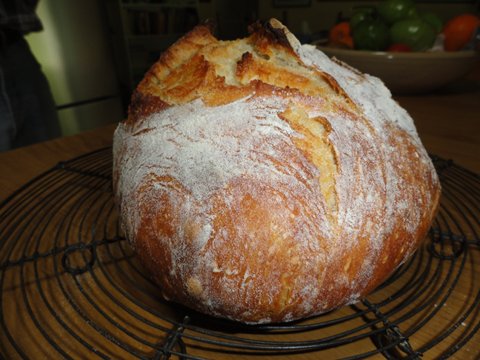
Bread is one of those foods that, when made with your own hands, gives a great deal of satisfaction and delight. It's only flour and water but it symbolises so much. I bake bread most days and use a variety of flours that I buy in bulk. Often I make a sandwich loaf because we use most of our bread for lunchtime sandwiches and for toast. Every so often I branch out to make a different type of loaf. I have tried sour dough in the past but I've not been happy with any of them. I'll continue to experiment with sour dough because I like the idea of using wild yeasts and saving the starter over a number of years to develop the flavour and become a part of the family. However, the loaf I've been branching out to most often is just a plain old five minute bread. By five minutes I mean it takes about five minutes actual work to prepare but it's the easiest of all bread to make and to get consistently good loaves from. If you're having people around for lunch or...
Image

This is my last post.

I have known for a while that this post was coming, but I didn't know when. This is my last post. I'm closing my blog, for good, and I'm not coming back like I have in the past.  I've been writing here for 16 years and my blog has been many things to me. It helped me change my life, it introduced me to so many good people, it became a wonderful record of my family life, it helped me get a book contract with Penguin, and monthly columns with The Australian Women's Weekly and Burke's Backyard . But in the past few months, it's become a burden. In April, I'll be 75 years old and I hope I've got another ten years ahead. However, each year I'll probably get weaker and although I'm fairly healthy, I do have a benign brain tumour and that could start growing. There are so many things I want to do and with time running out, leaving the blog behind gives me time to do the things that give me pleasure. On the day the blog started I felt a wonderful, h...
Image

What is the role of the homemaker in later years?

An email came from a US reader, Abby, who asked about being a homemaker in later years. This is part of what she wrote: "I am a stay-at-home mum to 4 children, ages 9-16. I do have a variety of "odd jobs" that I enjoy - I run a small "before-school" morning drop-off daycare from my home, I am a writing tutor, and I work a few hours a week at a local children's bookstore. But mostly, I cherish my blissful days at home - cooking, cleaning (with homemade cleaners), taking care of our children and chickens and goats, baking, meal-planning, etc. This "career" at home is not at all what I imagined during my ambitious years at university, but it is far more enriching. I notice, though, that my day is often planned around the needs of my family members. Of course, with 4 active kids and a husband, this is natural. I do the shopping, plan my meals, cook dinner - generally in anticipation of my family reconnecting in the evening.  I can't h...
Image

Every morning at home

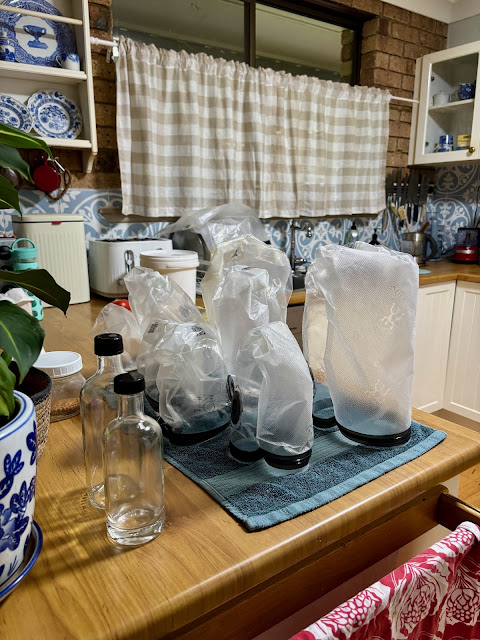
Every morning when I walk into my kitchen it looks tidy and ready for a day's work. Not so on this morning (above), I saw this when I walked in. Late the previous afternoon when I was looking for something, I came across my rolled up Zwilling vacuum bags and decided they had to be washed and dried. So I did that and although I usually put them outside on the verandah to dry it was dark by then. I turned the just-washed bags inside out and left them like this on a towel. It worked well and now the bags are ready to use when I bring home root vegetables, cabbages or whatever I buy that I want to last four or five weeks.
Image

You’ll save money by going back to basics

When I was doing the workshops and solo sessions, I had a couple of people whose main focus was on creating the fastest way to set up a simple life. You can't create a simple life fast, it's the opposite of that It's not one single thing either - it's a number of smaller, simpler activities that combine to create a life that reflects your values; and that takes a long to come together. When I first started living simply I took an entire year to work out our food - buying it, storing it, cooking it, preserving, baking, freezing, and growing it in the backyard. This is change that will transform how you live and it can't be rushed.  
Image

Categories

  • Backyard 244
  • Being Organised 257
  • Books 9
  • Budgeting 142
  • Chickens 42
  • Community life 289
  • Family 269
  • From Scratch 63
  • Grandmothering 69
  • Home 296
  • Individuality 185
  • Mentoring 55
  • My books 49
  • Organic Gardening 348
  • Preserving 97
  • Recycling 22
  • Retirement 22
  • Self Reliance 160
  • Simple Living 777
  • Sustainability 308
  • This blog 107
  • Weekend reading 362
  • Writing 4

Followers

Trending Articles

The last post

This will be my last post here.  I've been writing my blog for 18 years and now is the time to step back. I’ve stopped writing the blog and come back a couple of times because so many people wanted it, but that won’t happen again, I won’t be back.  I’ll continue on instagram to remain connected but I don’t know how frequent that will be. I know some of you will be interested to know the blog's statistics. 
Image

Making ginger beer from scratch

We had a nice supply of ginger beer going over Christmas. It's a delicious soft drink for young and old, although there is an alcoholic version that can be made with a slight variation on the recipe. Ginger beer is a naturally fermented drink that is easy to make - with ginger beer you make a starter called a ginger beer plant and after it has fermented, you add that to sweet water and lemon juice. Like sourdough, it must ferment to give it that sharp fizz. To make a ginger beer plant you'll need ginger - either the powdered dry variety or fresh ginger, sugar, rainwater or tap water that has stood for 24 hours to allow the chlorine to evaporate off. You'll also need clean plastic bottles that have been scrubbed with soap, hot water and a bottle brush and then rinsed with hot water. I never sterilise my bottles and I haven't had any problems. If you intend to keep the ginger beer for a long time, I'd suggest you sterilise your bottles. MAKING THE STARTER In a...
Image

Time changes everything

I've been spending time in the backyard lately creating a contained herb and vegetable garden. My aim is to develop a comfortable place to spend time, relax, increase biodiversity and encourage more animals, birds and insects to live here or visit. Of course I'd prefer my old garden which was put together by Hanno with ease and German precision. Together, we created a space bursting at the seams with herbs, vegetables and fruity goodness ready to eat and share throughout the year. But time changes everything. What I'm planning on doing now, is a brilliant opportunity for an almost 80 year old with balance issues. In my new garden I'll be able to do a wide range of challenging or easy work, depending on how I feel each day. It’s a daily opportunity to push myself or sit back, watch what's happening around me and be captivated by memories or the scope of what's yet to come.
Image

The most wonderful news

This post will give me more joy to write than anything else I could think of today.  I told you  there are a few exciting things happening here at the moment, well, I am now able to tell you the most exciting one of them.  Our son Kerry and his beautiful partner Sunny are having a baby!  Hanno and I will be grandparents in late March.  I can barely believe my eyes when I read what I have just written.  This is one of my original stitchery patterns. This wasn't planned but it's welcomed wholeheartedly by all of us.  Both Kerry and Sunny are hard workers and now that they have a baby to love and care for, they've decided it's time to buy an apartment together.  Sunny is going home to Korea to tell her family and when she comes back again, the search will start to find their first home together.  We are all so excited!  My knitting has taken on a life of its own and when I think of all the projects I could start, my head spins.  Thi...
Image

About Blog


Down to Earth is a blog by Rhonda Hetzel, dedicated to simple, intentional living — from home cooking and gardening to frugal budgeting and handmade crafts. It’s a space for gentle inspiration and everyday wisdom on creating a life that feels real, balanced, and deeply fulfilling.

Last Year's Popular Posts

The last post

This will be my last post here.  I've been writing my blog for 18 years and now is the time to step back. I’ve stopped writing the blog and come back a couple of times because so many people wanted it, but that won’t happen again, I won’t be back.  I’ll continue on instagram to remain connected but I don’t know how frequent that will be. I know some of you will be interested to know the blog's statistics. 
Image

Every morning at home

Every morning when I walk into my kitchen it looks tidy and ready for a day's work. Not so on this morning (above), I saw this when I walked in. Late the previous afternoon when I was looking for something, I came across my rolled up Zwilling vacuum bags and decided they had to be washed and dried. So I did that and although I usually put them outside on the verandah to dry it was dark by then. I turned the just-washed bags inside out and left them like this on a towel. It worked well and now the bags are ready to use when I bring home root vegetables, cabbages or whatever I buy that I want to last four or five weeks.
Image

You’ll save money by going back to basics

When I was doing the workshops and solo sessions, I had a couple of people whose main focus was on creating the fastest way to set up a simple life. You can't create a simple life fast, it's the opposite of that It's not one single thing either - it's a number of smaller, simpler activities that combine to create a life that reflects your values; and that takes a long to come together. When I first started living simply I took an entire year to work out our food - buying it, storing it, cooking it, preserving, baking, freezing, and growing it in the backyard. This is change that will transform how you live and it can't be rushed.  
Image

Workshops update

  This photo shows what the weather's been like here.  That's steam coming off my neighbours shed roof after a brief downpour of rain.  I hope we’re getting closer to organising these workshops. I didn’t explain this clearly enough: Group 1 is four workshops, Group 2 is four workshops. Out of those eight workshops I thought we probably end up doing three or four.
Image

Creating a home you'll love forever

Living simply is the answer to just about everything. It reduces the cost of living; it keeps you focused on being careful with resources such as water and electricity; it reminds you to not waste food; it encourages you to store food so you don't waste it and doing all those things brings routine and rhythm to your daily life. Consciously connecting every day with the activities and tasks that create simple life reminds you to look for the meaning and beauty that normal daily life holds.  It's all there in your home if you look for it. Seemingly mundane tasks like cleaning and cooking help you with that connection for without those tasks, the home you want to live in won't exist in the way you want it to.  Creating a home you love will make you happy and satisfied.
Image

Time changes everything

I've been spending time in the backyard lately creating a contained herb and vegetable garden. My aim is to develop a comfortable place to spend time, relax, increase biodiversity and encourage more animals, birds and insects to live here or visit. Of course I'd prefer my old garden which was put together by Hanno with ease and German precision. Together, we created a space bursting at the seams with herbs, vegetables and fruity goodness ready to eat and share throughout the year. But time changes everything. What I'm planning on doing now, is a brilliant opportunity for an almost 80 year old with balance issues. In my new garden I'll be able to do a wide range of challenging or easy work, depending on how I feel each day. It’s a daily opportunity to push myself or sit back, watch what's happening around me and be captivated by memories or the scope of what's yet to come.
Image

Simple life workshops on Zoom UPDATED

I've added more topics to the list. This post is for those readers who expressed interest in doing online Zoom workshops or who want to register now. The topics haven't been chosen yet but potential topics are:  vegetable gardening and composting; starting a vegetable garden and choosing vegetables suitable for a beginner;  cutting costs in the home, housework and routines; homemade laundry liquid and powder, soaking, stain removal and washing clothes and household linens; cooking from scratch and building your pantry to help you do it; homemade bread - white, rye, wholemeal and ancient grains. I'm not doing sourdough; living on less than you earn and developing a frugal mindset.
Image

Labels

  • Bartering
  • Chickens
  • Community life
  • Food security
  • From Scratch
  • Home Maintenance
  • Homemaking
  • Mentoring
  • My favourite place
  • Recipes - savoury
  • Reminders of what is important to us
  • Simple Living
  • The Simple Home - June
  • The Simple Home - May
  • Utilities
  • Wise Economy

Copyright © Down To Earth. Designed by OddThemes