down to earth
  • Home
  • About Us
  • Down To Earth Book
  • Privacy Policy

Melinda over at Elements in Time has a great gardening challenge going at the moment. Check it out here.
Kate at Our Red House tagged me for the seven things meme. I'm not really good at these things but here goes.

Hmmmm

I have two wedding rings. One I received the day I married Hanno and another he gave me on our 25th wedding anniversary. I will give one ring to both my sons when I die.

I woke Hanno up at 2am this morning to tell him there was noise coming from the chicken coop. He mumbled all the way outside, got dressed, got the torch and found nothing. I now think I was dreaming. Shhhhh, don't tell.

I'm becoming more of a hermit. I'm now doing voluntary work three days a week and I see and speak with a lot of people there, but when I'm home I don't go out and I rarely invite anyone over.

I really REALLY like blue grass music. I don't have any CDs but I sometimes search for it online.

When I was young I went to an all girls convent school. My grade 6 teacher was Sister Clothilde, who I secretly called "clotty". When she died of a stroke, I thought I'd killed her by calling her that.

I would like to grow enough raspberries to make 6 jars of jam every year. We have no raspberries growing at the moment.

When I worked as a nurse in outback Australia, we used to fly in a little plane to treat the people living on remote islands. One day as we approached an island, it was surrounded by what looked like heavy seaweed. When we talked to the people there we discovered it was a huge mass of tiger sharks.
: - )
Now I'm going to tag my 7 random people. They are:
suzen
anastasiajane
quinne
the mysterious wildside
cathy
robin in Perth
cherry
Here are the rules:
*Link to the person that tagged you
*Post the rules on your blog.
*Share 7 random and/or weird facts about yourself on your blog.
*Tag 7 random people at the end of your post and include links to their blogs.
*Let each person know that they have been tagged by leaving a comment on their blogs.

This is the little tote in a pouch I've put in my bag to take whenever I go out now. The little blue pouch unzips to reveal a full sized shopping tote. With this in my bag all the time, I can easily pick up milk or cheese from the local area and not have to bring it home in a plastic bag.

In the past couple of years we been able to decrease the amount of rubbish we dispose of to a fraction of what we threw out before. It really hit me one day that when we “disposed” of something, even though it was considered rubbish, that wasn’t the end of it. Whatever we threw out still had a life and in many cases would outlive Hanno and I by hundreds of years. We now make sure we dispose of most of our rubbish in an eco-friendly way and, more importantly, we try not to bring home excessive packaging. I am hoping our three gifts challenge will further reduce the load we place on our local landfill tip.

We don’t throw out any wet garbage. There is a hierarchy of contenders for our kitchen scraps. At the top of our pecking order are the chooks. They get the choice scraps because they turn it into food. They get most table scraps, old milk, crushed egg shells, old bits of cake, old fruit or vegetables. They also get the outside leaves from lettuce, tomatoes with spots on them, cabbage and the celery tops. Any old bread is divided up between the chooks, the dogs and the fish – they all love home-baked bread. The worms get fruit and vegetables peelings, tea leaves, crushed egg shells, anything that had been too long in the fridge and eggs we find in the back yard that are not in a nest. The worms also get ripped up envelopes and old letters, cleaning cloths that have seen out their days.

I try to buy my dried foods like beans, flours, nuts etc in bulk. That gives me the option of taking my own containers and bags. Generally I use old flour bags – they’re strong and can be washed and reused many times. If I buy bulk bread flour, I sometimes get a 12.5 kilo bag and the worms take care of the bag and string closure for me.

Paper products like old telephone books, paper, newspaper etc can be composted. I stopped buying paper napkins and paper towels and use home made cotton squares. Most of our clothes are cotton, linen or wool, so when they finally wear out, they spend some time in the rag bag, and are then given to the worms.

Worms, chooks and compost don’t cope well with too many citrus peelings or onion skins, so I have a closed compost bin for them. It’s open on the bottom, closed at the top, so even though they take a long time to break down, they’re unseen and eventually do return themselves to the earth. Every so often I throw a handful of lime on them to hasten their decomposition.

At home we recycle glass jars for preserving, soft drink bottles (they’re as rare as hen’s teeth), newspapers – both the bought ones and the free ones. We put tin cans, beer and wine bottles and large pieces of cardboard in the municipal recycling bin that is collected every two weeks along with the regular garbage. We also have the option of have a green waste bin but we recycle all that at home.

I would love to be able to tell you that we have given up using cling wrap but I still have a roll in the draw. I do however, use it sparingly and only when I can’t find another method. I often cover food (like cheese) in the fridge with a clean moist cloth and cover other food with an upturned bowl.

I don’t wrap my lunch for work anymore and it’s worked very well over the past six months I’ve been taking small containers inside a larger one. If I fit all the boxes together, nothing moves and the food stays together. Here is an old photo of my lunch box. We often share food at work so it’s great to have the various containers to pass around.

If you’re just starting out on recycling and rethinking how you dispose of your rubbish in an environmentally sound way, take it one step at a time by concentrating on one area first – maybe the kitchen. Slowly work out ways of reusing and recycling that suit your circumstances and incorporate those ways into your regular routines. If you’re like me, you’ll have need to rethink at the supermarket too and try to bring home products that aren’t over-wrapped.

I hope you’ll all share your reusing and recycling ideas in the comments box so we can all benefit from the collective experience we have here, which I have to say I’ve been very impressed with and appreciate very much.
Hello swappers! The following are the swap pairings. You will notice that there are no e-mail addresses by the names (except for Sarah). All you have to do is return to the tea cosy swap announcement and find your partner and her e-mail address. This helps us keep the spammers away! There are 20 pairs so Lorraine and I are splitting the list in half. If you are among the first 10 pairs (numbered 1 to 10) you are on Sharon's list and if you have any problems or questions, please e-mail me at cdetroyes at yahoo dot com (please do not contact Rhonda). If you are among the last 10 swappers (numbered 11 to 20) you are on Lorraine's list so if you have a problem or questions just e-mail her at ma_pabarney at hotmail dot com . This should be a fun swap so e-mail your partner and enjoy making the tea cosies! At the end of the swap we will have a "Tea Cosy Parade" and also put up the last of the apron photos! Remember the deadline for the swap is Feb. 8, 2008! You can sew, quilt, crochet, knit, felt, or any combination you want, so get creative and enjoy!!

Lorraine and Sharon

1. Donna-USA and Amy USA
2. Christine and Jennie
3. Mary Strickland and Sandra
4. Renee and Jean Maples
5. Karen G and Maria in NC
6. Robbie and Sharon
7. Jacket and Liz allen
8. Mama K and Christie Rivera
9. Sharon and Rebecca
10. Ann and Lorraine
11. Maggie and Aimee
12. Kate and Leanne
13. Cynthia and Lisabob
14. Lightening and Cate
15. Billie and Ingeborg
16. Margaret and Lilymarlene
17. Judy and Liane Bastien
18. Ann UK and Sarah (her e mail is sfouilla at nmsu dot edu)
19. Leah and Denise
20. Sandratee and Pura

I've been kindly given the Daily Dose award by two of the lovely ladies who read here. Lib at Lib's Private Paradise and Tracy at Seaside Enchantement. Thanks gals! Both these ladies have great blogs so if you haven't visited them yet, do yourself a favour and click on the links.

This is from Xandra the creator of The Daily Dose Award.:
"This little award is called The Daily Dose - and here is all the important info to tell you what it is about and where it came from. This is a tribute to all the blogs that you've discovered that you can't possibly live without. They make you laugh, cry, think and feel connected every time you read a post. They give you a thrill as you see them loading into your browser and you get an equally satisfying thrill when you see that they have commented on your blog."

The swap partners list will be posted later this morning.
I caught up with my chores yesterday and had a free and easy day just going back and forth through the house tidying up as I went. I cherish the time I have to work at home, so as I do this and that I am thankful for the ability to work as I do.

It was a rainy day here yesterday so I hung washing under the cover of the back verandah. It took all day to dry, whereas if it's on the clothes line it's generally dry in a couple of hours. It's always a joy to see cotton sheets and aprons blowing gently in the breeze. I swept and washed the floors, baked bread, checked the vinegar, wrote some letters and sorted the vegetable seeds. It was a morning spent at a gentle pace with the sound of the rain falling on the roof. Bliss.

A few days ago I came across an old towel that was past its time, so after lunch I cut it up for rags. I keep moving my rag collection and it never seems to be in the right place so I decided to make a rag bag to hang in the laundry. I just made a large version of a peg bag with a flap at the front. The terry cloths are now hanging in the bag and I'm quite pleased with the result.

Late in the day Hanno went to pick up the mail and I was delighted to find a parcel from Dot waiting there. She sent me "Choosing Eden" to read and has kindly suggested I give the book away on my blog. So when I finish reading, I'll carry out Dot's wishes and give it to one of the regular readers here. Thank you for your generosity, Dot.

After a dinner of leftovers and fruit, I tidied up my sewing room, talked to Hanno for a while then retired to bed with Dot's book. Rain was still falling on the roof so another easygoing day at home ended perfectly - reading and falling quietly into sleep.
The tea cosy swap looks like being a lot of fun but I realised today I won't have the time to join in. : ( I'll be interested to see the photos as they come in.

Sharon and Loraine (chookasmum) will be organising the swap and assigning partners on Saturday. You can still join today and tomorrow.

I found a few more links to inspire some wonderful creations - here, here and here. Your tea cosy can be sewn, knitted, felted, patchwork, embroiderd, red work, crocheted, or whatever you want to make it. It needs to fit an average sized tea pot - 6/8 cups, or whatever you work out with your partner.

If you've never been in a swap before, take the plunge and have some fun. I'm sure you'll enjoy it.
One of the things that will make your work easier in the kitchen is to have a good set of knives. I use a variety of knives from good quality German chef's knives to cheap Chinese choppers. They are all used for their own purpose. Generally knives are expensive but they will last a long time if they're cared for properly.

Store your knives so the blade doesn't hit or rub against anything. I use a magnetic strip, but you could also use a knife block or a non-slip tray in a drawer that keeps knives apart.

All knives will eventually lose their edge and need to be sharpened. You can do that with a whetstone. While a whetstone will sharpen a knife, a steel will maintain the edge of your knife. Generally you'd sharpen a frequently used knife about once a month and use the steel when you use the knife. I'm a bit slack doing that. I do sharpen my knives each month but I usually forget to use the steel before I use the knife. There are instructions below for using a whetstone.

The heat and corrosive chemicals in the dishwasher will eventually damage the edge of most knives. You should hand wash your sharp knives. Wash in warm soapy water and dry thoroughly as soon as you wash the knife.

Don't let your knives soak in the sink or sit on a wet sink. Wash and dry them as soon as you can.

Don't use the knife edge to scrape food from your chopping board. It will damage and dull the edge. If you want to use the knife, turn it over and use the other side of the blade.

Use wood or poly cutting boards as marble, glass or ceramic boards will dull the knife edge.

If you have wooden handled knives, apply some oil to the handle every so often. Make sure you don't allow these knives to soak in the sink or remain wet for long periods.

When you buy your knives, try to get good quality for your main work. As you can see from my knife strip above, I have some good knives and some very cheap ones. I use the cheap ones for chopping vegetables as I find a chopper easier to use. I need to sharpen these choppers more frequently as they tend to lose their edge quickly but they're a good knife for general work. If you can't afford to buy better quality right now, try the Asian choppers and knives. You buy them in Asian grocery stores and supermarkets for around $5 - $10. On the other hand, a good quality German or Japanese knife will cost around the $100 mark.

Whatever knives you work with, you will ensure their life and their usability if you look after them and keep them sharp.

Knife skills video.
How to use a whetstone.

One of the many things you can do on your journey towards simplicity is to learn how to store things in a way that will stop them spoiling before you use them. It’s an important part of our philosophy to look after what we own.

When I lived in Europe I noticed it was commonplace for houses to have cellars. These were used to store potatoes, onions, garlic, jams, chutneys, sauces, beer, wine, seeds, flour and other perishables. If you have a cellar, make the most of it. It will provide an ideal place, with a consistent temperature, to store all manner of goods. In Australia, cellars are almost unknown and many houses do not have a large amount of cupboard space. The understanding being that goods will not be stored in the home, but bought continually from the shop.


Our home is a modest slab brick construction with an open plan kitchen and dining area. In the kitchen we have adequate cupboards and a pantry and just off the kitchen, in the dining area, we have a stockpile cupboard. There is a linen cupboard in the hallway and a freestanding cupboard in the main bathroom. Apart from wardrobes and dressers, they are my main storage areas inside the house. Outside we have a brick garden shed and a large storage shed and workshop.

If you don’t have a lot of storage space in your home you might have to look for unusual places to store goods. Under the bed is the obvious one and here is an article here about making an under bed storage unit. Look around your home and see if there are other places you could use - maybe under the stairs or under a table. I have a friend who made a fitted cover for her dining room table, which she rarely uses, and under it she stores toilet paper, tissues and rice.

While there are some exceptions like cheese and wine, most food will not improve in quality or flavour when stored for a period of time. You should store food when it still looks, feels and smells good. Most fresh food will be eaten straight away or stored in the fridge. If it's not eaten fresh the best form of storage over the long term are glass containers. Glass allows you to see what’s inside, it seals well, doesn’t taint the food and it’s a durable product, lasting many years. I have several sizes of glass containers with rubber seals. The seals have to be replaced every few years but overall they are a very reliable container.

Plastic containers are also often used for kitchen food storage. In my experience, plastic doesn’t seal as well as glass and you may sometimes get insect contamination using plastic. Plastic may also take on the smell of the food being stored, which may effect what you can store in it from then on. If you’re using plastic containers make sure you always seal them properly, ensuring a neat seal around the entire perimeter of the lid.
If you’re new to the home storage of food, work with the containers you have but as you buy more, try to get the large glass ones. You can also recycle old jars, I have several of these and they’re excellent, and you can buy glass jars from supermarkets, department stores and op shops.

Food in Australia must be marked with one of three date codes: “best before” date, “use by” date and “baked on” date.
Best before
When food is stamped with a best before date, it means that the food, if still in the intact package, is at its premium on or before the date marked. If the date has passed, the food may still be edible, but may not be at its best. Sometimes you will see best before food that has passed its date reduced for sale in the shop.
Use-by
This indicates the end of the acceptable storage life of the food. All food that should be eaten within a certain period of time for health and safety reasons, will be marked with a use-by date. It is illegal to sell food after the date marked as “use –by”.
Baked on
This is used on bread that has a shelf life of less than seven days.

When buying food that will be stored for a while, always make sure the can or package is not damaged. When adding new items to your stockpile, always add to the back and take from the front. You need to rotate your stock so nothing spoils.

I put all the dry food I buy, like rice, flour, pasta, lentils, dried chick peas and beans, in the freezer when they are brought from the store. All my dried goods are stored in the freezer until I need to use them, then they are placed in a glass jar and put in the pantry.

I learnt the hard way that food needs to be stored correctly. A pantry moth invasion made me give a lot of grains
and legumes to the chooks. Never again. All you need to do is to work out what you have to store over a long period and find the right storage method for it. We're all different and your solutions may be different to mine but if you ensure your food and dry goods survive for long periods, you'll save money and reduce the amount you waste.

UPDATE
I didn't have the time yesterday to take new photos so I've just done that now. The photo below
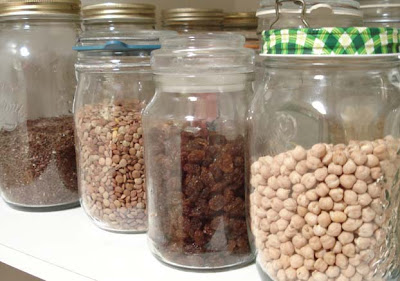
shows the large jars I use. The two on the left and right are canning jars with rubber ring seals that are replaced every year or so. The jar in the middle was given to me by my son. I have several of these and they were originally used to hold olives. They easily hold a kilo (2lb 2oz) of sugar, flour, beans etc.

The bucket below is similar to what Niki is talking about in the comments. This is a 5 kilo recycled plastic bucket I use to store my bread flour. You can buy these, but I got mine free from the local baker who buys icing in them. They have a good seal and are great for storing large amounts of dry food.

If you find some of these food quality plastic buckets that have been used to store food, wash them out with soapy water, fill with water and add two cups of white vinegar. Allow it to stand for a day, then wash out again and rinse. That should get rid of any residual smells in the plastic.

My life has been far from simple this past month as I've had so little time to relax and think about my world. Life continued at its fast pace when I started back at the Centre yesterday after a break of two weeks. Truth is I only had a few days off as I was up there cleaning and organising while the place was closed. I'm now going to work three days a week as we don't have enough volunteers to cover the days we are open. I'm interviewing a potential volunteer this morning so hopefully she'll be suitable and will want to join our small and friendly group. I am trying to keep the blog going but I might have to post at a different time. I'll see how I go.

So who would like to do another swap? I thought it would be a good idea if we did something that would suit knitters, sewers, felters and crocheters. Enter .... the tea cosy. Your cosy should be for an average size tea pot - 4 - 6 cups, unless you make arrangements with your swap partner to make a smaller or larger one.

We will gather names until Friday, and post the list of swap partners on Saturday. The deadline for the swap is Friday February 8. Please make sure you’re free to work on your tea cosy before you commit because late parcels will hold up the next swap. Everyone is welcome to join in as long as you can post on or before February 8.

This is important: To join in just add your name and email to the comments box. Please type your email address in this format: rhondahetzel at gmail dot com. That will give your swap partner the ability to email you for your postal address and will make the swap MUCH easier for us to organise. If you do not wish to include your email address in the comments box, please email it to me.

This is our
fourth swap and they're always a lot of fun. If you've not been involved before now, it is a good way to develop your skills and get to know your swap partner. : - )

Some
links to give you ideas:
Felted tea cosy.
Fabric tea cosy pattern and instructions here and here
Knitted tea cosy here and here.
Crocheted tea cosy here.
Vintage knitted tea cosy here.
Newer Posts Older Posts Home

ABOUT ME

Down to Earth is a blog by Rhonda Hetzel, dedicated to simple, intentional living — from home cooking and gardening to frugal budgeting and handmade crafts. It’s a space for gentle inspiration and everyday wisdom on creating a life that feels real, balanced, and deeply fulfilling.

Down To Earth Book

Down To Earth Book
My books are all published by Penguin. Down to Earth, The Simple Life and The Simple Home have been in book shops since they were published in 2012, 2014 and 2016, respectively. On 20 October 2020, Down to Earth was published as a paperback.

MY FAVOURITE PLACES

  • Grandma Donna's Place
  • Grandma Donna's YouTube
  • Grandma Donna's Instagram
  • This Simple Day
  • Nicole's Instagram

Popular Post of All Times

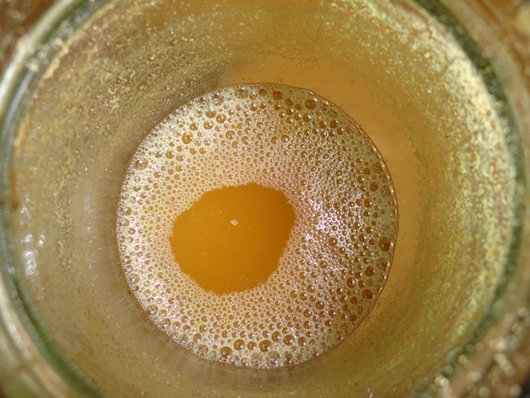
Making ginger beer from scratch

We had a nice supply of ginger beer going over Christmas. It's a delicious soft drink for young and old, although there is an alcoholic version that can be made with a slight variation on the recipe. Ginger beer is a naturally fermented drink that is easy to make - with ginger beer you make a starter called a ginger beer plant and after it has fermented, you add that to sweet water and lemon juice. Like sourdough, it must ferment to give it that sharp fizz. To make a ginger beer plant you'll need ginger - either the powdered dry variety or fresh ginger, sugar, rainwater or tap water that has stood for 24 hours to allow the chlorine to evaporate off. You'll also need clean plastic bottles that have been scrubbed with soap, hot water and a bottle brush and then rinsed with hot water. I never sterilise my bottles and I haven't had any problems. If you intend to keep the ginger beer for a long time, I'd suggest you sterilise your bottles. MAKING THE STARTER In a...
Image

The last post

This will be my last post here.  I've been writing my blog for 18 years and now is the time to step back. I’ve stopped writing the blog and come back a couple of times because so many people wanted it, but that won’t happen again, I won’t be back.  I’ll continue on instagram to remain connected but I don’t know how frequent that will be. I know some of you will be interested to know the blog's statistics. 
Image

How to make cold process soap

I'm sure many of you are wondering: "Why make soap when I can buy it cheaply at the supermarket?" My cold process soap is made with vegetable oils and when it is made and cured, it contains no harsh chemicals or dyes. Often commercial soap is made with tallow (animal fat) and contains synthetic fragrance and dye and retains almost no glycerin. Glycerin is a natural emollient that helps with the lather and moisturises the skin. The makers of commercial soaps extract the glycerin and sell it as a separate product as it's more valuable than the soap. Then they add chemicals to make the soap lather. Crazy. Making your own soap allows you to add whatever you want to add. If you want a plain and pure soap, as I do, you can have that, or you can start with the plain soap and add colour, herbs and fragrance. The choice is yours. I want to add a little about animal and bird fat. I know Kirsty makes her soap with duck fat and I think that's great. I think t...
Image

Preserving food in a traditional way - pickling beetroot

I've had a number of emails from readers who want to start preserving food in jars but don't know where to start or what equipment to buy.  Leading on from yesterday's post, let's just say up front - don't buy any equipment. Once you know what you're doing and that you enjoy preserving, then you can decide whether or not to buy extra equipment. Food is preserved effectively without refrigeration by a variety of different methods. A few of the traditional methods are drying, fermentation, smoking, salting or by adding vinegar and sugar to the food - pickling. This last method is what we're talking about today. Vinegar and sugar are natural preservatives and adding one or both to food sets up an environment that bacteria and yeasts can't grow in. If you make the vinegar and sugar mix palatable, you can put up jars of vegetables or fruit that enhance the flavour of the food and can be stored in a cupboard or fridge for months. Other traditional w...
Image

Cleaning mould from walls and fabrics

With all this rain around we've developed a mould problem in our home. Usually we have the front and back doors open and that good ventilation stops most moulds from establishing. However, with the house locked up for the past week, the high humidity and the rain, mould is now growing on the wooden walls near our front door and on the lower parts of cupboards in the kitchen. Most of us will find mould growing in our homes at some point. Either in the bathroom or, in humid climates, on the walls, like we have now. You'll need a safe and effective remedy at some point, so I hope one of these methods works well for you. Mould is not only ugly to look at, it can cause health problems so if you see mould growing, do something about it straight away. The longer you leave the problem, the harder it will be to get rid of it effectively. If you have asthma or any allergies, you should do this type of cleaning with a face mask on so you don't breathe in any spores. Many peopl...
Image

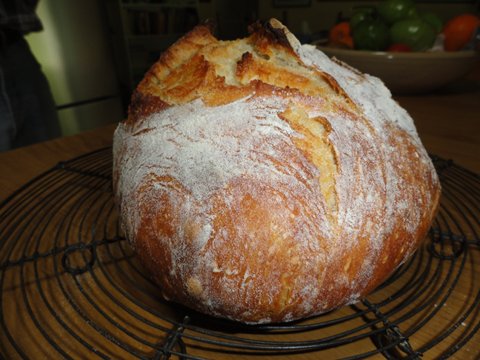
Five minute bread

Bread is one of those foods that, when made with your own hands, gives a great deal of satisfaction and delight. It's only flour and water but it symbolises so much. I bake bread most days and use a variety of flours that I buy in bulk. Often I make a sandwich loaf because we use most of our bread for lunchtime sandwiches and for toast. Every so often I branch out to make a different type of loaf. I have tried sour dough in the past but I've not been happy with any of them. I'll continue to experiment with sour dough because I like the idea of using wild yeasts and saving the starter over a number of years to develop the flavour and become a part of the family. However, the loaf I've been branching out to most often is just a plain old five minute bread. By five minutes I mean it takes about five minutes actual work to prepare but it's the easiest of all bread to make and to get consistently good loaves from. If you're having people around for lunch or...
Image

This is my last post.

I have known for a while that this post was coming, but I didn't know when. This is my last post. I'm closing my blog, for good, and I'm not coming back like I have in the past.  I've been writing here for 16 years and my blog has been many things to me. It helped me change my life, it introduced me to so many good people, it became a wonderful record of my family life, it helped me get a book contract with Penguin, and monthly columns with The Australian Women's Weekly and Burke's Backyard . But in the past few months, it's become a burden. In April, I'll be 75 years old and I hope I've got another ten years ahead. However, each year I'll probably get weaker and although I'm fairly healthy, I do have a benign brain tumour and that could start growing. There are so many things I want to do and with time running out, leaving the blog behind gives me time to do the things that give me pleasure. On the day the blog started I felt a wonderful, h...
Image

What is the role of the homemaker in later years?

An email came from a US reader, Abby, who asked about being a homemaker in later years. This is part of what she wrote: "I am a stay-at-home mum to 4 children, ages 9-16. I do have a variety of "odd jobs" that I enjoy - I run a small "before-school" morning drop-off daycare from my home, I am a writing tutor, and I work a few hours a week at a local children's bookstore. But mostly, I cherish my blissful days at home - cooking, cleaning (with homemade cleaners), taking care of our children and chickens and goats, baking, meal-planning, etc. This "career" at home is not at all what I imagined during my ambitious years at university, but it is far more enriching. I notice, though, that my day is often planned around the needs of my family members. Of course, with 4 active kids and a husband, this is natural. I do the shopping, plan my meals, cook dinner - generally in anticipation of my family reconnecting in the evening.  I can't h...
Image

Every morning at home

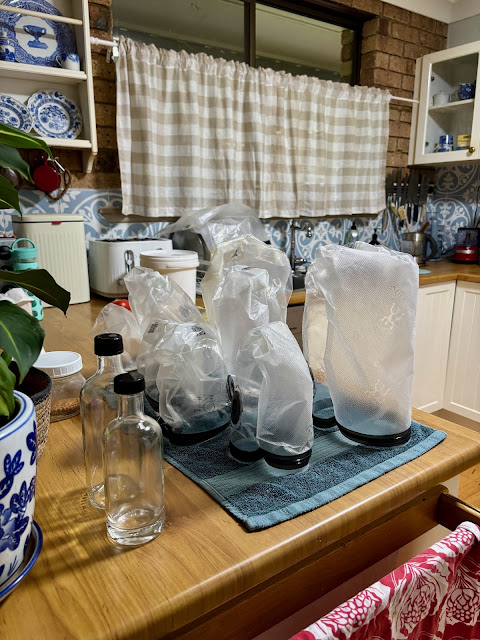
Every morning when I walk into my kitchen it looks tidy and ready for a day's work. Not so on this morning (above), I saw this when I walked in. Late the previous afternoon when I was looking for something, I came across my rolled up Zwilling vacuum bags and decided they had to be washed and dried. So I did that and although I usually put them outside on the verandah to dry it was dark by then. I turned the just-washed bags inside out and left them like this on a towel. It worked well and now the bags are ready to use when I bring home root vegetables, cabbages or whatever I buy that I want to last four or five weeks.
Image

You’ll save money by going back to basics

When I was doing the workshops and solo sessions, I had a couple of people whose main focus was on creating the fastest way to set up a simple life. You can't create a simple life fast, it's the opposite of that It's not one single thing either - it's a number of smaller, simpler activities that combine to create a life that reflects your values; and that takes a long to come together. When I first started living simply I took an entire year to work out our food - buying it, storing it, cooking it, preserving, baking, freezing, and growing it in the backyard. This is change that will transform how you live and it can't be rushed.  
Image

Categories

  • Backyard 244
  • Being Organised 257
  • Books 9
  • Budgeting 142
  • Chickens 42
  • Community life 289
  • Family 269
  • From Scratch 63
  • Grandmothering 69
  • Home 296
  • Individuality 185
  • Mentoring 55
  • My books 49
  • Organic Gardening 348
  • Preserving 97
  • Recycling 22
  • Retirement 22
  • Self Reliance 160
  • Simple Living 777
  • Sustainability 308
  • This blog 107
  • Weekend reading 362
  • Writing 4

Followers

Trending Articles

The last post

This will be my last post here.  I've been writing my blog for 18 years and now is the time to step back. I’ve stopped writing the blog and come back a couple of times because so many people wanted it, but that won’t happen again, I won’t be back.  I’ll continue on instagram to remain connected but I don’t know how frequent that will be. I know some of you will be interested to know the blog's statistics. 
Image

Making ginger beer from scratch

We had a nice supply of ginger beer going over Christmas. It's a delicious soft drink for young and old, although there is an alcoholic version that can be made with a slight variation on the recipe. Ginger beer is a naturally fermented drink that is easy to make - with ginger beer you make a starter called a ginger beer plant and after it has fermented, you add that to sweet water and lemon juice. Like sourdough, it must ferment to give it that sharp fizz. To make a ginger beer plant you'll need ginger - either the powdered dry variety or fresh ginger, sugar, rainwater or tap water that has stood for 24 hours to allow the chlorine to evaporate off. You'll also need clean plastic bottles that have been scrubbed with soap, hot water and a bottle brush and then rinsed with hot water. I never sterilise my bottles and I haven't had any problems. If you intend to keep the ginger beer for a long time, I'd suggest you sterilise your bottles. MAKING THE STARTER In a...
Image

Time changes everything

I've been spending time in the backyard lately creating a contained herb and vegetable garden. My aim is to develop a comfortable place to spend time, relax, increase biodiversity and encourage more animals, birds and insects to live here or visit. Of course I'd prefer my old garden which was put together by Hanno with ease and German precision. Together, we created a space bursting at the seams with herbs, vegetables and fruity goodness ready to eat and share throughout the year. But time changes everything. What I'm planning on doing now, is a brilliant opportunity for an almost 80 year old with balance issues. In my new garden I'll be able to do a wide range of challenging or easy work, depending on how I feel each day. It’s a daily opportunity to push myself or sit back, watch what's happening around me and be captivated by memories or the scope of what's yet to come.
Image

The most wonderful news

This post will give me more joy to write than anything else I could think of today.  I told you  there are a few exciting things happening here at the moment, well, I am now able to tell you the most exciting one of them.  Our son Kerry and his beautiful partner Sunny are having a baby!  Hanno and I will be grandparents in late March.  I can barely believe my eyes when I read what I have just written.  This is one of my original stitchery patterns. This wasn't planned but it's welcomed wholeheartedly by all of us.  Both Kerry and Sunny are hard workers and now that they have a baby to love and care for, they've decided it's time to buy an apartment together.  Sunny is going home to Korea to tell her family and when she comes back again, the search will start to find their first home together.  We are all so excited!  My knitting has taken on a life of its own and when I think of all the projects I could start, my head spins.  Thi...
Image

About Blog


Down to Earth is a blog by Rhonda Hetzel, dedicated to simple, intentional living — from home cooking and gardening to frugal budgeting and handmade crafts. It’s a space for gentle inspiration and everyday wisdom on creating a life that feels real, balanced, and deeply fulfilling.

Last Year's Popular Posts

The last post

This will be my last post here.  I've been writing my blog for 18 years and now is the time to step back. I’ve stopped writing the blog and come back a couple of times because so many people wanted it, but that won’t happen again, I won’t be back.  I’ll continue on instagram to remain connected but I don’t know how frequent that will be. I know some of you will be interested to know the blog's statistics. 
Image

Every morning at home

Every morning when I walk into my kitchen it looks tidy and ready for a day's work. Not so on this morning (above), I saw this when I walked in. Late the previous afternoon when I was looking for something, I came across my rolled up Zwilling vacuum bags and decided they had to be washed and dried. So I did that and although I usually put them outside on the verandah to dry it was dark by then. I turned the just-washed bags inside out and left them like this on a towel. It worked well and now the bags are ready to use when I bring home root vegetables, cabbages or whatever I buy that I want to last four or five weeks.
Image

You’ll save money by going back to basics

When I was doing the workshops and solo sessions, I had a couple of people whose main focus was on creating the fastest way to set up a simple life. You can't create a simple life fast, it's the opposite of that It's not one single thing either - it's a number of smaller, simpler activities that combine to create a life that reflects your values; and that takes a long to come together. When I first started living simply I took an entire year to work out our food - buying it, storing it, cooking it, preserving, baking, freezing, and growing it in the backyard. This is change that will transform how you live and it can't be rushed.  
Image

Workshops update

  This photo shows what the weather's been like here.  That's steam coming off my neighbours shed roof after a brief downpour of rain.  I hope we’re getting closer to organising these workshops. I didn’t explain this clearly enough: Group 1 is four workshops, Group 2 is four workshops. Out of those eight workshops I thought we probably end up doing three or four.
Image

Creating a home you'll love forever

Living simply is the answer to just about everything. It reduces the cost of living; it keeps you focused on being careful with resources such as water and electricity; it reminds you to not waste food; it encourages you to store food so you don't waste it and doing all those things brings routine and rhythm to your daily life. Consciously connecting every day with the activities and tasks that create simple life reminds you to look for the meaning and beauty that normal daily life holds.  It's all there in your home if you look for it. Seemingly mundane tasks like cleaning and cooking help you with that connection for without those tasks, the home you want to live in won't exist in the way you want it to.  Creating a home you love will make you happy and satisfied.
Image

Time changes everything

I've been spending time in the backyard lately creating a contained herb and vegetable garden. My aim is to develop a comfortable place to spend time, relax, increase biodiversity and encourage more animals, birds and insects to live here or visit. Of course I'd prefer my old garden which was put together by Hanno with ease and German precision. Together, we created a space bursting at the seams with herbs, vegetables and fruity goodness ready to eat and share throughout the year. But time changes everything. What I'm planning on doing now, is a brilliant opportunity for an almost 80 year old with balance issues. In my new garden I'll be able to do a wide range of challenging or easy work, depending on how I feel each day. It’s a daily opportunity to push myself or sit back, watch what's happening around me and be captivated by memories or the scope of what's yet to come.
Image

Simple life workshops on Zoom UPDATED

I've added more topics to the list. This post is for those readers who expressed interest in doing online Zoom workshops or who want to register now. The topics haven't been chosen yet but potential topics are:  vegetable gardening and composting; starting a vegetable garden and choosing vegetables suitable for a beginner;  cutting costs in the home, housework and routines; homemade laundry liquid and powder, soaking, stain removal and washing clothes and household linens; cooking from scratch and building your pantry to help you do it; homemade bread - white, rye, wholemeal and ancient grains. I'm not doing sourdough; living on less than you earn and developing a frugal mindset.
Image

Labels

  • Bartering
  • Chickens
  • Community life
  • Food security
  • From Scratch
  • Home Maintenance
  • Homemaking
  • Mentoring
  • My favourite place
  • Recipes - savoury
  • Reminders of what is important to us
  • Simple Living
  • The Simple Home - June
  • The Simple Home - May
  • Utilities
  • Wise Economy

Copyright © Down To Earth. Designed by OddThemes