down to earth
  • Home
  • About Us
  • Down To Earth Book
  • Privacy Policy

This is part of last year's rosella harvest.

Bush tucker is the aboriginal term for edible plants and animals. There are a few bush tucker foods in our area, we have lilly pilly, macadamia nuts, lemon myrtle and rosellas (Hibiscus heterophyllus). I'm sure there are more but I've never had the time to identify what grows near us.

This photo, taken this morning, shows an opening rosella flower with a couple of small red rosellas growing near it. These rosellas are only about a quarter of the size they will eventually grow.

Rosellas thrive here and we grow them every year for jam. I believe you can also eat the leaves as a kind of spinach but I've never tried it. This year we have planted a lot of rosella bushes as I want to make jam, tea and cordial using the rosella flowers. Hanno has had high blood pressure for many years and recent research at the Universiry of Queensland indicates rosellas may help reduce hypertension. My plan is to produce enough rosellas for the entire year so that Hanno may have rosella tea, cordial or jam every day.


Rosella jam boiling on the stove.


We've just had two weeks of rain and the half grown bushes were knocked around quite severely with the rain and wind. Side branches snapped off, as the bushes aren't very strong, and several of them have wilted. I hope we can save them.

I took this photo this morning. These bushes are still only small but are already producing edible fruit.

Rosellas grow in hot weather, so we plant our seeds in late September and plant the seedlings out in November. They like full sun and a fair bit of water. The fruits form after the pretty flowers fade. We grow the pink flower variety but there is also a yellow form.

If you live in a hot area, you should try growing rosellas. The jams and teas made from this bush are delicious. Do you eat any of your native foods? I'd love to know who is eating what and how easy your native foods are to find.

Recipes for rosella jam, cordial and tea. Rosella jam.

Sometimes I think people are scared to live simple lives. They look and see a life lived with none of the props of modern living like recreational shopping, one upmanship of the Joneses, no designer labels, new appliances, or dining out, going to the library instead of buying books, no pay TV, gossip magazines or convenience foods. The starkness of that scares them. They say they don't want to live like that but the reality is they don't want to give up the props, they fear they'd fall over.

As well as creating insatiable desire in us, magazines and TV are great time wasters. If you give them up you'll have much more time to devote to really living your own life. Instead of watching others live their lives, you can concentrate on yours. I guess blogs fall into this category too. If you're reading a lot of blogs trying to get motivation, but instead find you're wasting a lot of time, then you should limit yourself.

The truth of simple living is that you learn to be independent. It's the kind of mindset that sees strength, reliability and dedication to a purpose as an important part of life, and the props of modern living as an irrelevance that gets in the way. When you reach that stage you're truly independent. You live without constraint, you don't have to be any one thing, you don't have to dress according to fashion; you do what you do because you see a reason for it, not because everyone else is doing it. You are a non-conformist.

I look like the average Autralian woman of my age but my exterior deceives. I am not like my contempories at all. I do not believe the lie that buying more of what I want will make me happy. I believe I will find my happiness in the true and good things that I create for myself. I believe my happiness is in my family and friends, having a genuine purpose to my day, in being creative and productive. I wonder why my contempories want to retire and do nothing. I want to work - I know that work is good for me, but I want my work to be fulfilling, innovative and productive. I want my work to give me what I need to live, not the money to always buy what someone else produces for me.

Over the past few days I've written about green cleaning. I hope those posts show that you don't have to go to a supermarket to buy the latest detergent or the super duper toilet cleaner. You can cross those things off your list forever. You can buy generic products and make your own cleansers that work well, don't cost a lot and will move you further away from the consumer nightmare of modern life. Green cleaning is a good entry point to simple living. We all have to clean our homes, but this is a point where we can step up and make a stand. When you are happy that you can still keep a clean house, you can move on to other things - like stockpiling, buying generic brands, cooking from scratch and all the other activites that will spring from them.

Slowly you will start to live more simply. Inch by inch you'll see that rejecting modern views of life work well and that providing for yourself builds satisfaction and confidence. It seems to me that satisfaction and confidence are in short supply these days. Luckily we can all grow our own at home.
I found this webpage today. It the bloggies! It's calling for you to vote for your favourite blogs. There are categories for all over the world as well as various categories. Voting closes next week.

All things return to the kitchen. ; - ) Put your apron on and let's tackle it. It will probably take a few hours to deep clean a kitchen, so put aside a morning or an afternoon to get it done.

The night before you do your kitchen, you can start cleaning your oven using the following:

Oven Cleaner
¼ cup ammonia
2 cups of warm water

Be careful of the ammonia fumes. Turn on the oven and leave to heat up for 10 minutes, then turn it off. Pour ammonia and warm water in a baking dish and leave in the warmed oven overnight.

The emphasis in the kitchen is being clean without being obsessed with it. As well as the build up of dust and dirt, there is usually the grease issue in our kitchens, so that adds another element to our cleaning.

I think the best way to deal with a kitchen is to work on getting it clean, then do a little maintenance each day to keep it clean. Even so, you'll need to do a deep clean and reorganise every six months or so.

The first thing to do is sweep the floor. Scoop up the dust and crumbs and dispose of it in the compost or bin. Then get out your kitchen cleaning kit.

If you've never given your kitchen much thought, now is the time. If you love cooking, a well organised kitchen will make it a pleasure to work in; if you don't like cooking, a well organised kitchen will make it easier for you.

Go into your kitchen and look at your work areas. Do you do a lot of baking/canning/preserving? Where are you baking/preserving ingredients and materials? Are they near where you work? Where do you keep your glasses, are they close to the tap? Are the tea cups and coffee mugs close to where you make tea and coffee? Is it easy to unpack your dishwasher or put away clean plates and cutlery? I'm sure you get the general idea - move things close to where they are used. Change your kitchen to suit how you work.

As you move things around, wipe the shelves and drawers with a terry cloth, hot water and soap. Wipe dry with your dry cloth.

When everything is in the place it will stay, fill the sink with hot water and clean the oven. Remove the racks and wash them in the sink with all purpose cleaner #2 or soap and water. The ammonia in the oven overnight should have loosened the grime, which you can then clean with all purpose cleaner #2 or soap and water and a stiff brush. You can also scour baked on areas with a paste of bicarb soda and water. When you're happy with the result, replace the racks, wipe the oven with a clean moist terry cloth and wipe dry.

Now check your fridge. If it needs cleaning, empty it completely, wipe the shelves, and replace the food and drinks. Any food past its prime should be given to the chooks, worms or compost. Don't forget the seals on the door. You can clean them with a toothbrush dipped in all purpose cleaner #2. Use a new toothbrush and keep it in your kit for future cleaning. Check that the seal is actually sealing too. Put a piece of paper over the seal and close the fridge door. Try to pull the paper out. If it comes out easily, you need to replace the seal. Clean the outer fridge with creamy soft scrubber and wipe dry with a clean cloth.

All-Purpose Cleaner #2
  • ¼ cup baking soda (bicarb)
  • 1 cup ammonia
  • 2 litres warm water


Mix all the ingredients together and store in a sealed plastic container that is marked with the name. Dry with a clean dry cotton cloth.
This cleaner can also be used as a floor cleaner – tiles, laminate or vinyl or for general cleaning of walls, counter tops or sinks.


Creamy soft scrubber

  • Simply pour about ½ cup of baking soda into a bowl, and add enough liquid soap to make a texture like very thick cream.

This is the perfect recipe for cleaning appliances and cupboard surfaces because it rinses easily and doesn’t leave grit. It is also good for the bath and shower. Note: To keep it moist, add 1 teaspoon of glycerin to the mixture and store in a sealed glass jar. Otherwise just make as much as you need at a time.

If you have time, you could also clean out your pantry. If you don't have the time, leave that task for another day.

So, the oven and fridge are clean and the cupboards and drawers are organised the way you want them; now clean the stove. Remove the bits you can, including the knobs, and wash them in hot soapy water in the sink. Depending on what type of stove you have, use either the creamy soft scrubber or the all purpose cleaner #2 to clean the surfaces. I used to use the creamy scrubber on my old enamel stove, now I have a stainless steel stove, I use the all purpose cleaner #2, dry with a terry cloth, then wipe over with a clean moist cloth with a bit of eucalyptus oil. The eucalyptus oil removes the streaks. If you have stainless steel appliances, you could also use this on them. When the stove is clean, replace the parts you cleaned in the sink.

Now empty your benches. Thoroughly wipe everything with All Purpose Cleaner #2 or creamy soft scrubber, wipe the benches, cupboard doors and handles and the splash-back or tiles area behind your benches and sink. Wipe dry with a terry cloth and replace everything.

Now that most things have been cleaned, you can clean the sink.

Sink Cleaner

To clean a dirty sink, or to make one shine, wet the sink, combine equal parts of bicarb soda and course salt and sprinkle it on. Scrub the sink with a hard brush to remove dirt and grease. Make sure you get in all the areas around the taps and drain. About once a month, finish off with a litre of water in the sink, add a tablespoon of liquid bleach and remove the plug. You’ll sanitise and clean the pipes at the same time. Wipe with a dry terry cloth.

You're almost finished. The only thing left is the floor. Depending on the type of floor you have, use the following:

Floor cleaner – floating wood, tiles, vinyl or laminate

  • ½ cup white vinegar plus 4 litres hot water in a bucket and a clean mop will clean up all but the worst floor.
  • If you have a really dirty floor to deal with, add ¼ cup grated homemade soap to this mix.


Wooden floor cleaner

  • 2 tablespoons homemade vegetable soap - grated
  • ½ cup vinegar
  • 500 mls strong black tea (about a pint)
  • bucket warm water

Combine all the ingredients in a bucket. A clean mop is necessity when cleaning floors. If you start with a dirty mop you’ll just loosen the dirt on the mop by making it wet again and then spread that on the floor. When you finished your cleaning jobs, rinse the mop out to get rid of the loose dirt then let it soak in the bucket half filled with water and a ¼ cup of bleach. Let the mop soak for 30 minutes, rinse the bleach out and dry the mop in the sun.

Simple green cleaning requires more effort than spray and wipe chemical cleaning, but your home will be safer and CLEANER using these methods. When you have every thing clean, keep it that way by doing a little touch up each day. It only takes 10 minutes or so to wipe down the fridge or clean up spills on the stove, but it will make a big difference to your overall work load because you won't have to do a big clean like this every couple of months. Just a bit each day will keep you on top of your work.

If you've followed all the cleaning days you deserve a day off, so make plans to spend all tomorrow with your family or friends doing what you enjoy.

Thank you for stopping by today. : - )

ADDITION: I had an email from Killi today warning of the danger of using bleach of you have a septic tank. I agree that you should never use bleach in your house if you have a septic system. The ble

ach will kill the bacteria in the tank.

You have probably spent a lot of money on the floors and furniture in your home so it makes sense toprotect your investment by caring for them properly. You could easily go to the store and buy specialist cleaners for wood, leather, glass, fabric and carpet but if you want to be sure you don't add harmful chemicals to your own environment, use cleaners that you know are safe.

Buying a carpet cleaner or general spray that contains ingredients you don't know and can't even pronounce, could introduce harmful chemicals to your home. You and your family will sit on the furniture you clean, your children will play on the floor, so they must be safe. It is your responsibility as the homemaker to provide a safe and clean environment for the entire family. If you do this the green way, not only are you providing that safety, you'll also save money by using simple cleaners.

Our theoretical room today is the lounge room, or family room. First check the room and remove everything that shouldn't be there - like toys, clothes, cups etc. I'm guessing you don't live solo in your home, so make sure the children help you with this. It's an easy thing, even for a small child, to carry toys back to their own room. They can also carry clothes to the laundry and whatever needs to go to the kitchen. If you need heavy things moved - for instance, if you're going to vacuum behind the sofa, ask your husband or older children to help you.

When the room is clear of extras, you can start cleaning. Make sure you have your general cleaning kit with you so you don't keep running back to get cloths. When you decide which of the cleaners below work well in your home, add them, in a clearly marked bottle, to your general cleaning kit for future use.

There is a general debate over whether it's prudent to vacuum or sweep before you dust, or after. I vacuum/sweep first, because I believe that sweeping and vacuuming can create its own dust. So if you have a carpeted floor, vacuum it, making sure you use the crevice tool to get right into the join between the wall and carpet. While you have that tool on the vac, check for cobwebs and quickly suck them up if you find some. Also with the crevice tool, go along the windows and remove all the dust on the window sill and the recess the window fits into.

If you have wooden floors, you'll need to vacuum/sweep before you mop, but the mopping is the last thing you'll do. So for now, just vacuum or sweep, then go on to your furniture.

If the furniture is dusty, wipe the dust off with a slightly moist terry or cotton cloth. Then clean it with one of the two cleaners below:

All-Purpose Cleaner #1
½ teaspoon washing soda
2 teaspoons borax
½ teaspoon grated soap or homemade laundry detergent
2 cups hot water
Combine the washing soda, borax, and soap in a spray bottle. Pour in hot water, screw on the spray bottle top and shake until the minerals are completely dissolved. This cleaner can be stored in this spray bottle indefinitely, so mark it “HOMEMADE ALL PURPOSE CLEANER” with a permanent marker.

Spray the cleaner on surfaces you wish to clean. Use your terry cloth to rub on as you go. For hard to move dirt, leave the cleanser on for a few minutes before wiping it off. Shake the bottle each time before you use it. Dry with a clean dry cotton cloth.

All-Purpose Cleaner #2
¼ cup baking soda (bicarb)
1 cup ammonia
2 litres warm water
Mix all the ingredients together and store in a sealed plastic container that is marked with the name. Dry with a clean dry cotton cloth.

This cleaner can also be used as a floor cleaner – tiles, laminate or vinyl or for general cleaning of walls, counter tops or sinks.

Wooden furniture polish
½ teaspoon oil, such as olive oil
¼ cup vinegar or fresh lemon juice
Mix the ingredients in a glass jar. Dab a soft rag into the solution and wipe onto wooden surfaces. Polish with a dry cotton cloth. Seal in the glass jar and store indefinitely.

TV and appliances
Wipe the TV screen, as well as the glass on any picture frames you have, with plain vinegar on a clean cloth . Wipe the other appliances such as DVD player, stereo, remote controls etc with a barely moist cloth. Dry everything with a clean dry cotton cloth.

When all your furniture is clean, fluff up your cushions, take rugs or blankets outside and shake them, before folding and placing on the sofa again. Stack magazines, books and newspapers neatly.

If you've already vacuumed your carpeted floor, you've finished.

If you have floors that are not carpeted, now is the time to mop the floors. Choose the cleaners below suitable for the type of floor you have. Make sure your mop isn't too wet as you don't want the moisture to seep into the floor at any of the joins.
Please note: If you have wooden floors, you don't have to wash them every time you sweep or vacuum, just wash when you see the floor is dirty.

Floor cleaner – floating wood, tiles, vinyl or laminate
½ cup white vinegar plus 4 litres hot water in a bucket and a clean mop will clean up all but the worst floor. If you have a really dirty floor to deal with, add ¼ cup grated homemade soap to this mix.

Wooden floor cleaner
2 tablespoons homemade vegetable soap - grated
½ cup vinegar
500 mls strong black tea (about a pint)
bucket warm water
Combine all the ingredients in a bucket.

A clean mop is a necessity when cleaning floors. If you start with a dirty mop you’ll just loosen the dirt on the mop by making it wet again and then spread that on the floor. When you finished your cleaning jobs, rinse the mop out to get rid of the loose dirt then let it soak in the bucket half filled with water and a ¼ cup of bleach. Let the mop soak for 30 minutes, rinse the bleach out and dry the mop in the sun.

Tell everyone in the house not to step on the floor until it's completely dry.

Now that is done, it's time for a cuppa. : )


Today we're cleaning the bathroom using green cleaners, plus a little bit of bleach if you have a mould problem. Before we proceed though I want you to understand that every single compound you use - including green ones - can cause environmental damage if used in high concentrations. When you start green cleaning don't expect vinegar and bicarb to be as fast and effective as your commercial cleaners. They are gentle cleaners, and they're much safer in our waterways than any spray and wipe concoction you can buy. They are also much cheaper. But even so, they need to be used sparingly.

NEVER EVER mix ammonia and bleach together. It creates a dangerous gas.
Never mix ammonia with vinegar - they neutralise each other.

In my cleaning kit today I have one small bucket (2-4 litres), bicarb in a large salt or flour shaker, cheap white vinegar, ¼ cup grated home made soap - you could also use pure laundry soap, a bar of soap, at least four terry or cotton cloths, a bristle brush, a broom and dustpan, mop and bucket. Essential oil for fragrance is optional. If there are areas of mould, you'll also need a spray bottle containing a cup of water and a tablespoon of liquid bleach.

If possible, open doors and windows to allow a free flow of air through the room. Put on your apron and gloves.

Assemble your cleaning kit, go to the bathroom and check your shower grout. If it's got any mould growing on it, spray it with the diluted bleach mix and then go on to your sweeping.

Sweep the floor. Scoop up your sweepings in the dustpan and dispose of in the compost heap or bin. You will mop your floor later but you need to have all the stands of hair, dust, talcum powder etc. off the floor first.

Remove all the items you have stored in the shower, around your bathroom sink and bath.

Remove all towels and floor mats. Put them in the laundry for washing.

Check the mould on the grout. If it needs another spray, spray again and leave it. Please note: if you've allowed mould to grow on the grout for a while, the mould might have eaten right into the grout. You'll only be able to remove it if it sitting on the surface. There is little you can do for deeply embedded mould. You generally have to remove the grout and re-grout the tiles.

Pour a cup of bicarb into the toilet and add a cup of white vinegar and let it sit. It will fizz, that's okay.

Wipe the mirror over with a clean cloth with a splash of white vinegar.

Then go to your shower. If it's dirty, you'll need your bar of soap and brush. Pour about 1 litre (quart) of hot water in your small bucket, rub soap and sprinkle bicarb on the brush and scrub the dirty areas. Keep the brush wet with the hot water and apply the soap and bicarb when needed. Make sure you scrub around the taps, pipes and shower head. If the shower is not really dirty, just sprinkle bicarb onto your damp (not wet) terry cloth and wipe all the non-glass surfaces. When you're satisfied it's clean, add about 1 litre (quart) cold water to your bucket, and with a clean wet cloth, wipe all traces of soap and bicarb off all surfaces. To clean the glass, get the vinegar cloth you cleaned the mirror with, and add a little more vinegar. Wipe the glass shower screen with the vinegar cloth, making sure you remove all the soap scum. If you have a soap scum buildup, you may have to use your brush and some bicarb to remove it, wipe down with a wet cloth, then wipe with your vinegar cloth. When you've finished cleaning, wipe all surfaces with a dry terry cloth. Pay particular attention to the glass and stainless steel surfaces as they will show water spots if you allow the water to dry on them.

You've now cleaned your shower. You could also clean the floor of the shower at this time if you wanted to but I always leave that until I clean all the floors right at the end.

You have now used three of your cloths - one for soap and bicarb, one for vinegar and one as a dry wiper. Keep these cloths as they are, you'll use them again soon. Depending on the state and size of your bathroom, you might need more dry wipers.

Now go to your bath. We have a spa bath which we never use now. If you don't use your bath it probably won't need cleaning. I tend to wipe our bath over about once a month. If you do use your bath, repeat the same treatments as your used in the shower - if it's dirty use a brush, hot water, soap and bicarb; if it's not especially dirty, use bicarb on a damp cloth. Don't wipe this with vinegar, but wipe off all traces of bicarb and soap with a wet cloth and use your dry cloth to dry off the taps and the top of the bath.

Remember, bacteria generally needs moisture to grow. It's a good habit to get into with all your cleaning to dry off all your surfaces and not leave moisture around.

Go to the bathroom sink and repeat the cleaning as stated above. Use either the dirty or the not so dirty method. Make sure you clean the taps, around the taps and the areas where the taps join into the sink - this is where bacteria can build up so make sure you scrub those areas well with your brush. When it's all clean, wipe over with your dry wiper.

Check the toilet. You've already poured in the vinegar and bicarb, now it will need to be scrubbed with the toilet brush. Make sure you get into every area. If there are stains in the toilet, you might have to repeat this treatment - scrub it and leave it for a couple of hours. Then come back and scrub it with the toilet brush and flush the toilet.

If you used bleach for your grout and have some left over, pour it down the sink.

Take off your gloves, wash and dry your hands.

Now you can put your toiletries back on the bathroom sink. Put out fresh towels.

Your last task is to clean the floor and the floor of the shower recess. Half fill a normal size bucket (10 litres/quarts) with hot water and add the ¼ cup of soap. With a clean broom, yes broom, swish the soap around so it dissolves, drain the broom a little and then start scrubbing the floor. Clean the floor of the shower with this method too. Make sure you get into the corners. If you have tiled floors, make sure you get into the grooves of the grout too. When you're satisfied that the floor is clean, empty your bucket and fill with clean cold water. Wipe the floor over with a mop and the clean water. Make sure you remove all the soap and lather and right at the end, wring the mop out well so that you leave the floor moist, not wet.

When the floor is completely dry, lay down your fresh floor mats.

Now clean up your bathroom kit so it's ready for the next job. You want everything to dry out between uses. If they don't, they will smell and bacteria will build up in your equipment. Rinse the mop and broom off in clean cold water and wring out as much as possible. Stand them either in the sun or somewhere where they can dry completely. Put all your cleaning cloths in to be washed with your laundry. Wipe out your bucket and put in your cleaning kit of bicarb, vinegar, soap, fresh cloths etc and return it to the bathroom, under the sink, if possible.

This routine should take about 15 minutes for the average bathroom. If it's dirtier, add another 15 minutes.

Recycle old towels, cotton tshirts, sheets etc, by cutting them into squares and using them as cleaning cloths. You should never buy Chux or other cleaning cloths. I do like the Enjo products but I think they're too expensive.

This is the way I clean my bathroom. I do it once a week and wipe the vanity and taps over during the week when ever I feel like doing it. Sometimes that's once a day, sometimes it's only once a week. I don't stress over it, I just do it as it suits my mood. I expect you to use this as a guide, I EXPECT you to modify it to suit your ways of cleaning and your bathroom. It's like a recipe, it's just a guide, you change it to suit your circumstances. I hope you see that the emphasis is on elbow grease rather than chemicals. The products recommended here will thoroughly clean your bathroom, if you start out with a dirty bathroom, they might need two or three applications, but they will work. When you get your bathroom clean, you can keep it clean by using these methods once a week.

Whatever you do, make sure you use less and not more of everything - soap, vinegar, water, bleach etc. We are conservers, not consumers, and we try to keep everything to a minimum.

ADDITION: I had an email from Killi today warning of the danger of using bleach of you have a septic tank. I agree that you should never use bleach in your house if you have a septic system. The bleach will kill the bacteria in the tank.

The way I do my housework has changed considerably since I started living more simply. In days gone by I would sometimes just quickly do what I absolutely had to do and sometimes I would ‘not see’ what was around me. When my boys were young, I felt so tired I didn’t want to do anything, and when I did do what had to be done, I felt resentful because I was working, looking after the boys and their activities AND the housework.

When we moved here, I got help in the house but when I closed down my business, I started doing my own house work again. However, by then my attitude had changed. I liked being at home, I felt good being in my own space and I wanted to make our home a warm and comfortable haven for my family, myself and our friends. I think that made the attitude change happen – I could see a reason for the work. It wasn’t just tidying up after three others, cooking their meals and washing their clothes, I felt I was caring for them, and myself, through this work. I had changed from seeing housework as a demeaning activity that no one wanted to do, to a dignified and generous way of caring for my loved ones. Once that shift in attitude happened, it was a breeze.

I'm well aware that you may not have experienced that change in attitude towards cleaning yet, but you're reading this post so I know there is an interest in simplifying your life, and that is a good start. If you have the interest you might gain some motivation by reading and taking part in the activity I suggest later in the post. So don't dismiss this after you finish reading, join in and it might make a difference - it might be the start of your attitude change.

In the old days, I wanted to do the least amount of work in the smallest amount of time. I didn’t think about the work, it was just unwanted work that I had to do. When I started thinking about the nature of housework, when I understood why I was doing it, and when I realised it was an expression of love for my family and myself, I didn’t want to do it quickly, I slowed right down and did my work mindfully. Instead of grabbing the most expensive all purpose cleaner I could find, I made my own cleaners and I organised myself for the task at hand. It made a difference to how I worked and it reduced the amount of mass produced chemicals I used – this was a good thing for both our health and the health of the planet. It also saved money because I wasn’t buying expensive cleaners – one for the floor, one for the surfaces, one for the plastics, one for the glass, well, you get the message.

I’ve had a couple of emails lately asking how to start simplifying a home so I thought it would be a good idea to write about green cleaning and how to cut costs in each room of the house as we go through it. Below are most of the ingredients we’ll use as we go from room to room, but as all our homes are different, we might need to add others as we go.

YOUR HOME CLEANING KIT
The laundry is a convenient place to make up your cleansers and to store your big bottles of cleaning ingredients. Make up three small kits – one for the kitchen, one for the bathroom and one for general cleaning. Keep your cleaning equipment close to the area you will clean. For example, keep rubber gloves and a small bucket full of your homemade cleaners under the kitchen sink, keep another kit in your bathroom cupboard and your general kit in the laundry. Make sure you don’t mix up your kits or use the bathroom kit in the kitchen or the bathroom kit in the living room. Maintain your general hygiene procedures and make sure you keep each kit in its own area. You may like to colour code them or mark them in some way.

Your home cleaning kit will include a small four litre bucket or old ice cream container, rubber gloves (if you use them), terry or cotton cloths for cleaning or polishing and whichever of the homemade cleansers you choose for that area. Of course, you may decide to knit cleaning cloths of a specific colour for each area. That can be a good ongoing project for you when you sit and relax after dinner at night.

INGREDIENTS FOR HOMEMADE CLEANERS
Bicarb aka baking soda
Washing soda
Borax
Pure laundry soap or homemade soap
White vinegar
Tea tree oil
Eucalyptus oil
Ammonia
Liquid bleach

Please note: Ammonia and bleach must be used sparingly but they do have a place in the simple home. If you’ve never used ammonia before, NEVER open the bottle and sniff it, it will blow your head off. =:-O

All these products will cost you about $30 to buy at the supermarket and you’ll have enough for your various cleaning jobs for many weeks.

Tomorrow we’ll start cleaning our bathrooms using the list above. Get your aprons ready. : - )

I have a feeling this will be a very good year. I went to bed at the normal time last night and when I woke at midnight, to the sound of fireworks someone was letting off in their yard, I also heard rain. It's been raining for a few days now so the ground is saturated, the tanks full and the washing is drying under cover on the back verandah.

Yesterday we met this little visitor. He's a common house gecko. We often hear geckos calling with their distinctive clicking sounds but we rarely see them. This fellow is a baby and will no doubt learn to hide in daylight hours but it was lovely to see him out walking upside-down on our lounge room ceiling.

I got quite a bit done yesterday. I wanted to go into the new year with everything squared away so that nothing would hold me back this year. It's symbolic more than anything, I suppose, but it does make me feel like I'm organised if I can do what I say I'm going to do. I didn't quite finish off the bedroom, I just have to take a few things to my sewing room today. When I do that, I'll dust and vacuum the carpet and it will be done.

Feeding time

We took advantage of the rainfall yesterday and cleaned out the aquaponics tank. Hanno let a lot of the water run out, cleaned the pump and we filled the tank again with harvested rainwater. The fish - silver perch - are growing really well now and we have several that are around 10 inches long. If you click on the photos above they will enlarge.

And here is one of the grow tanks. We have parsley, tomatoes and silverbeet in it.

I also worked on the ebook yesterday and hope to have that finished next week. It is bigger than I expected it to be so I've had to divide it in two so it will be easy to email. I've included a bread making and soap tutorial, with photos, as well as information about budgeting, green cleaning recipes, recipes for drinks and a lot of posts on simple living. Much of what's in it is in the blog but this format is more like a book that you can either read on your computer or print out and read at your leasure.

Today I'll be ironing, knitting, baking bread, tidying my sewing room and, hopefully, working on the ebook. I want to get everything in order before I go back to work next week so I can look forward to a year full of challenges knowing that my home is as I want it to be. My home is not a show house, it gets messy at times, but it's organised and clean most of the time. I guess it's like most homes in that it reflects our lives - sometimes spick and span, sometimes a bit of a mess, butalways welcoming and comfortable for us, our family and friends.

I wish you all the best for 2008. May it be a good one for all of us.

Here is something to look at when you have a spare 20 minutes. The story of stuff. a reader sent it to me a couple of days ago and I've just watched it now. It's very interesting. Thanks Cindy!
I wish I could step into your homes and help you work out a way to start your simple life. It seems to me that starting is one of the most difficult parts of the process. Oh, it does become difficult in places along the way too, but the starting of it, that's hard.

We all have different circumstances and different ways we want our lives to be. For some, the main goal might be to completely scale down spending, driving, watching TV and to turn an otherwise normal suburban home into a little farm. Others might want to get out of debt while keeping their life pretty much as it is right now. There will be some families struggling with two parents working to provide enough for a growing family. Their idea of a simple life might be that one of them stays home with the kids and concentrates on saving money while the other continues to work. You might be about to retire or become an empty nester and see now as the right time to simplify. There are many scenarios, many ways to live more simply and many ways to start.

All of them take time.

It's a wonderful thing to have plans to work to and goals to fulfil but listing 20 difficult things to achieve in a short space of time will just set you up for failure. So instead of doing that, when you first start moving towards a more simple way of living, decide on one thing and start with that. You'll find that one thing will naturally expand into other areas that will lead you along. For instance, you may decide to reduce your debt. The first thing you do is gather all the information you have about what you owe, what you earn and what you need to live on. That, I hope, will lead you to make a budget for yourself. Your budget will allot your money to whatever it is you need it go to, and as one of those things will be to continue eating, you might see the need to shop in a way that will save more money. That might lead you to stockpiling. So as well as reducing debt, budgeting and stockpiling you might then decide to make more of your own produce. You learn to bake a good loaf of bread, you teach yourself how to make sauces and jams. Six months later you look back and here you are doing four important activities - debt reduction, budgeting, stockpiling and cooking from scratch - that are generally part of most simple lives.

You've made your start. That one activity lead you by the hand to others and your simple life is beginning to open up before you.

Once you've been consciously working towards your new life for a while, you might like to start working on yourself as well. Simply living is more than the practical aspects of cooking, cleaning, decluttering and gardening, it's also an attitude. It will help you a lot if you get rid of the nagging need for more, better and new. This need has been created in all of us by advertising and seeing what new things our friends and neighbours have. If you can convince yourself that you really will live well and be happier living a simpler life, then also convince yourself that having more, better and new will highjack any attempt to make your life simpler. You have to redefine for yourself what success is for you. In the past it might have been an overseas holiday every year or good clothes, now it might having no debt or baking bread your friends and family say is the best they've ever eaten. You can replace energy sapping activities with life affirming ones. It just takes work and time.

Above all else, I want you to stop thinking that you can't live as you wish to live. If you want to be happy, content, loving, successful, debt-free and healthy, then a simple life will help you gain every one of those wishes. It will be hard work to re-program your wants and desires, you'll work harder in your home because you'll stop paying for the conveniences you're used to and you'll have to explain your unusual lifestyle to your family and friends, but as you peel back the layers of your life and see how wonderful living can be without all the crap we have been urged to buy and how life affirming and significant you can make your every day existence, you'll wonder why you were ever sucked into the mess of more, better and new in the first place.

I am happy to answer any questions you may have if you're stuck in your move towards simplicity. I don't have all the answers, not by a long shot, but I might be able to offer a something you may not have thought of yet. Just ask away in the comments box or send an email if you'd like a more private answer.

The countdown is on here. I have two busy days before the new year begins. When it does, it's full steam ahead into what looks like being a fairly active and significant year for me. The busy days will hopefully see some things done that I've been putting off, and can then be part of last year and not taken into the new year. I'm still on holiday next week but I'll go in on Wednesday to see if there are any people who need emergency food, and tidy the Centre while I'm there waiting. If I can get these things done today and tomorrow, I'll be free to relax with sewing, knitting and the cricket next week.

So what's on the agenda today? Well, we have Jens and Cathy coming over for lunch. I'm serving tuna bake, made with our home grown potatoes, local cheese and home made pasta, plus tuna from the stockpile cupboard. I made it yesterday because it always tastes better the following day. We'll also have a salad picked fresh from the garden and lemon surprise pudding, made with our lemons and eggs, with local cream. There is German beer or ginger beer for the drinking, whatever takes their fancy.

But before lunch I have to do some washing. That low pressure system is still hovering off the coast and rain is predicted for the next week. I think it would be prudent to get all the washing done before that sets in. I'll also bake bread for lunch, wash the floors and tidy the front verandah. When our visitors leave, I'll make a start on tidying our bedroom. It's not a good sight in there. We have a large bedroom and it tends to collect things. I still haven't removed everything we put in there when we had the kitchen and floors fixed. I've decided to clean out our cupboards and drawers while I'm at it so I think it will take about a day to do well.

Some of the things I'll be moving out of the bedroom will go to my sewing room so that will probably need some work too. I would dearly love to clean out my greenhouse too, and move the worm farm, but I know I won't get to that before the new year. Oh well, maybe I will do that on new year's day, go to work the next day, then start my new year with the cricket on Thursday. There's nothing like moving the year around to suit one's self. I'll only do it this once, I promise. LOL I really like the idea of beginning the new year with everything finalised and in order, even if I have to change the first day of the new year to do it. ; - )

It pleased me a lot to read your plans for next year. There is certainly a lot to be done and it looks like many of us have decided to use the time we have to simplify and live well. It will be good to see the plans develop over the coming year and to settle into our lives with the knowledge we're living deliberately and taking small steps towards gentler and more home centred ways.

ADDITION:
I'll be sending the Warm Earths to Ali and Lib. Ladies, would you please send me your postal addresses. Ty.

Update on the chicks. None have successfully hatched. One started hatching but died in the shell and there
are two eggs left. They feel heavy so I think there are chicks in them. Mary was walking around this morning but when I checked the eggs they were still warm. She's still happy to sit on them so we'll just wait and see what happens.
Newer Posts Older Posts Home

ABOUT ME

Down to Earth is a blog by Rhonda Hetzel, dedicated to simple, intentional living — from home cooking and gardening to frugal budgeting and handmade crafts. It’s a space for gentle inspiration and everyday wisdom on creating a life that feels real, balanced, and deeply fulfilling.

Down To Earth Book

Down To Earth Book
My books are all published by Penguin. Down to Earth, The Simple Life and The Simple Home have been in book shops since they were published in 2012, 2014 and 2016, respectively. On 20 October 2020, Down to Earth was published as a paperback.

MY FAVOURITE PLACES

  • Grandma Donna's Place
  • Grandma Donna's YouTube
  • Grandma Donna's Instagram
  • This Simple Day
  • Nicole's Instagram

Popular Post of All Times

Making ginger beer from scratch

We had a nice supply of ginger beer going over Christmas. It's a delicious soft drink for young and old, although there is an alcoholic version that can be made with a slight variation on the recipe. Ginger beer is a naturally fermented drink that is easy to make - with ginger beer you make a starter called a ginger beer plant and after it has fermented, you add that to sweet water and lemon juice. Like sourdough, it must ferment to give it that sharp fizz. To make a ginger beer plant you'll need ginger - either the powdered dry variety or fresh ginger, sugar, rainwater or tap water that has stood for 24 hours to allow the chlorine to evaporate off. You'll also need clean plastic bottles that have been scrubbed with soap, hot water and a bottle brush and then rinsed with hot water. I never sterilise my bottles and I haven't had any problems. If you intend to keep the ginger beer for a long time, I'd suggest you sterilise your bottles. MAKING THE STARTER In a...
Image

The last post

This will be my last post here.  I've been writing my blog for 18 years and now is the time to step back. I’ve stopped writing the blog and come back a couple of times because so many people wanted it, but that won’t happen again, I won’t be back.  I’ll continue on instagram to remain connected but I don’t know how frequent that will be. I know some of you will be interested to know the blog's statistics. 
Image

How to make cold process soap

I'm sure many of you are wondering: "Why make soap when I can buy it cheaply at the supermarket?" My cold process soap is made with vegetable oils and when it is made and cured, it contains no harsh chemicals or dyes. Often commercial soap is made with tallow (animal fat) and contains synthetic fragrance and dye and retains almost no glycerin. Glycerin is a natural emollient that helps with the lather and moisturises the skin. The makers of commercial soaps extract the glycerin and sell it as a separate product as it's more valuable than the soap. Then they add chemicals to make the soap lather. Crazy. Making your own soap allows you to add whatever you want to add. If you want a plain and pure soap, as I do, you can have that, or you can start with the plain soap and add colour, herbs and fragrance. The choice is yours. I want to add a little about animal and bird fat. I know Kirsty makes her soap with duck fat and I think that's great. I think t...
Image

Preserving food in a traditional way - pickling beetroot

I've had a number of emails from readers who want to start preserving food in jars but don't know where to start or what equipment to buy.  Leading on from yesterday's post, let's just say up front - don't buy any equipment. Once you know what you're doing and that you enjoy preserving, then you can decide whether or not to buy extra equipment. Food is preserved effectively without refrigeration by a variety of different methods. A few of the traditional methods are drying, fermentation, smoking, salting or by adding vinegar and sugar to the food - pickling. This last method is what we're talking about today. Vinegar and sugar are natural preservatives and adding one or both to food sets up an environment that bacteria and yeasts can't grow in. If you make the vinegar and sugar mix palatable, you can put up jars of vegetables or fruit that enhance the flavour of the food and can be stored in a cupboard or fridge for months. Other traditional w...
Image

Cleaning mould from walls and fabrics

With all this rain around we've developed a mould problem in our home. Usually we have the front and back doors open and that good ventilation stops most moulds from establishing. However, with the house locked up for the past week, the high humidity and the rain, mould is now growing on the wooden walls near our front door and on the lower parts of cupboards in the kitchen. Most of us will find mould growing in our homes at some point. Either in the bathroom or, in humid climates, on the walls, like we have now. You'll need a safe and effective remedy at some point, so I hope one of these methods works well for you. Mould is not only ugly to look at, it can cause health problems so if you see mould growing, do something about it straight away. The longer you leave the problem, the harder it will be to get rid of it effectively. If you have asthma or any allergies, you should do this type of cleaning with a face mask on so you don't breathe in any spores. Many peopl...
Image

Five minute bread

Bread is one of those foods that, when made with your own hands, gives a great deal of satisfaction and delight. It's only flour and water but it symbolises so much. I bake bread most days and use a variety of flours that I buy in bulk. Often I make a sandwich loaf because we use most of our bread for lunchtime sandwiches and for toast. Every so often I branch out to make a different type of loaf. I have tried sour dough in the past but I've not been happy with any of them. I'll continue to experiment with sour dough because I like the idea of using wild yeasts and saving the starter over a number of years to develop the flavour and become a part of the family. However, the loaf I've been branching out to most often is just a plain old five minute bread. By five minutes I mean it takes about five minutes actual work to prepare but it's the easiest of all bread to make and to get consistently good loaves from. If you're having people around for lunch or...
Image

This is my last post.

I have known for a while that this post was coming, but I didn't know when. This is my last post. I'm closing my blog, for good, and I'm not coming back like I have in the past.  I've been writing here for 16 years and my blog has been many things to me. It helped me change my life, it introduced me to so many good people, it became a wonderful record of my family life, it helped me get a book contract with Penguin, and monthly columns with The Australian Women's Weekly and Burke's Backyard . But in the past few months, it's become a burden. In April, I'll be 75 years old and I hope I've got another ten years ahead. However, each year I'll probably get weaker and although I'm fairly healthy, I do have a benign brain tumour and that could start growing. There are so many things I want to do and with time running out, leaving the blog behind gives me time to do the things that give me pleasure. On the day the blog started I felt a wonderful, h...
Image

What is the role of the homemaker in later years?

An email came from a US reader, Abby, who asked about being a homemaker in later years. This is part of what she wrote: "I am a stay-at-home mum to 4 children, ages 9-16. I do have a variety of "odd jobs" that I enjoy - I run a small "before-school" morning drop-off daycare from my home, I am a writing tutor, and I work a few hours a week at a local children's bookstore. But mostly, I cherish my blissful days at home - cooking, cleaning (with homemade cleaners), taking care of our children and chickens and goats, baking, meal-planning, etc. This "career" at home is not at all what I imagined during my ambitious years at university, but it is far more enriching. I notice, though, that my day is often planned around the needs of my family members. Of course, with 4 active kids and a husband, this is natural. I do the shopping, plan my meals, cook dinner - generally in anticipation of my family reconnecting in the evening.  I can't h...
Image

Every morning at home

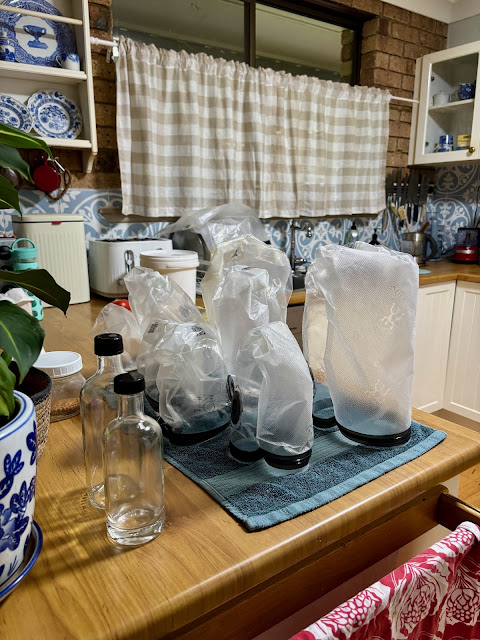
Every morning when I walk into my kitchen it looks tidy and ready for a day's work. Not so on this morning (above), I saw this when I walked in. Late the previous afternoon when I was looking for something, I came across my rolled up Zwilling vacuum bags and decided they had to be washed and dried. So I did that and although I usually put them outside on the verandah to dry it was dark by then. I turned the just-washed bags inside out and left them like this on a towel. It worked well and now the bags are ready to use when I bring home root vegetables, cabbages or whatever I buy that I want to last four or five weeks.
Image

You’ll save money by going back to basics

When I was doing the workshops and solo sessions, I had a couple of people whose main focus was on creating the fastest way to set up a simple life. You can't create a simple life fast, it's the opposite of that It's not one single thing either - it's a number of smaller, simpler activities that combine to create a life that reflects your values; and that takes a long to come together. When I first started living simply I took an entire year to work out our food - buying it, storing it, cooking it, preserving, baking, freezing, and growing it in the backyard. This is change that will transform how you live and it can't be rushed.  
Image

Categories

  • Backyard 244
  • Being Organised 257
  • Books 9
  • Budgeting 142
  • Chickens 42
  • Community life 289
  • Family 269
  • From Scratch 63
  • Grandmothering 69
  • Home 296
  • Individuality 185
  • Mentoring 55
  • My books 49
  • Organic Gardening 348
  • Preserving 97
  • Recycling 22
  • Retirement 22
  • Self Reliance 160
  • Simple Living 777
  • Sustainability 308
  • This blog 107
  • Weekend reading 362
  • Writing 4

Followers

Trending Articles

The last post

This will be my last post here.  I've been writing my blog for 18 years and now is the time to step back. I’ve stopped writing the blog and come back a couple of times because so many people wanted it, but that won’t happen again, I won’t be back.  I’ll continue on instagram to remain connected but I don’t know how frequent that will be. I know some of you will be interested to know the blog's statistics. 
Image

Making ginger beer from scratch

We had a nice supply of ginger beer going over Christmas. It's a delicious soft drink for young and old, although there is an alcoholic version that can be made with a slight variation on the recipe. Ginger beer is a naturally fermented drink that is easy to make - with ginger beer you make a starter called a ginger beer plant and after it has fermented, you add that to sweet water and lemon juice. Like sourdough, it must ferment to give it that sharp fizz. To make a ginger beer plant you'll need ginger - either the powdered dry variety or fresh ginger, sugar, rainwater or tap water that has stood for 24 hours to allow the chlorine to evaporate off. You'll also need clean plastic bottles that have been scrubbed with soap, hot water and a bottle brush and then rinsed with hot water. I never sterilise my bottles and I haven't had any problems. If you intend to keep the ginger beer for a long time, I'd suggest you sterilise your bottles. MAKING THE STARTER In a...
Image

Time changes everything

I've been spending time in the backyard lately creating a contained herb and vegetable garden. My aim is to develop a comfortable place to spend time, relax, increase biodiversity and encourage more animals, birds and insects to live here or visit. Of course I'd prefer my old garden which was put together by Hanno with ease and German precision. Together, we created a space bursting at the seams with herbs, vegetables and fruity goodness ready to eat and share throughout the year. But time changes everything. What I'm planning on doing now, is a brilliant opportunity for an almost 80 year old with balance issues. In my new garden I'll be able to do a wide range of challenging or easy work, depending on how I feel each day. It’s a daily opportunity to push myself or sit back, watch what's happening around me and be captivated by memories or the scope of what's yet to come.
Image

The most wonderful news

This post will give me more joy to write than anything else I could think of today.  I told you  there are a few exciting things happening here at the moment, well, I am now able to tell you the most exciting one of them.  Our son Kerry and his beautiful partner Sunny are having a baby!  Hanno and I will be grandparents in late March.  I can barely believe my eyes when I read what I have just written.  This is one of my original stitchery patterns. This wasn't planned but it's welcomed wholeheartedly by all of us.  Both Kerry and Sunny are hard workers and now that they have a baby to love and care for, they've decided it's time to buy an apartment together.  Sunny is going home to Korea to tell her family and when she comes back again, the search will start to find their first home together.  We are all so excited!  My knitting has taken on a life of its own and when I think of all the projects I could start, my head spins.  Thi...
Image

About Blog


Down to Earth is a blog by Rhonda Hetzel, dedicated to simple, intentional living — from home cooking and gardening to frugal budgeting and handmade crafts. It’s a space for gentle inspiration and everyday wisdom on creating a life that feels real, balanced, and deeply fulfilling.

Last Year's Popular Posts

The last post

This will be my last post here.  I've been writing my blog for 18 years and now is the time to step back. I’ve stopped writing the blog and come back a couple of times because so many people wanted it, but that won’t happen again, I won’t be back.  I’ll continue on instagram to remain connected but I don’t know how frequent that will be. I know some of you will be interested to know the blog's statistics. 
Image

Every morning at home

Every morning when I walk into my kitchen it looks tidy and ready for a day's work. Not so on this morning (above), I saw this when I walked in. Late the previous afternoon when I was looking for something, I came across my rolled up Zwilling vacuum bags and decided they had to be washed and dried. So I did that and although I usually put them outside on the verandah to dry it was dark by then. I turned the just-washed bags inside out and left them like this on a towel. It worked well and now the bags are ready to use when I bring home root vegetables, cabbages or whatever I buy that I want to last four or five weeks.
Image

You’ll save money by going back to basics

When I was doing the workshops and solo sessions, I had a couple of people whose main focus was on creating the fastest way to set up a simple life. You can't create a simple life fast, it's the opposite of that It's not one single thing either - it's a number of smaller, simpler activities that combine to create a life that reflects your values; and that takes a long to come together. When I first started living simply I took an entire year to work out our food - buying it, storing it, cooking it, preserving, baking, freezing, and growing it in the backyard. This is change that will transform how you live and it can't be rushed.  
Image

Workshops update

  This photo shows what the weather's been like here.  That's steam coming off my neighbours shed roof after a brief downpour of rain.  I hope we’re getting closer to organising these workshops. I didn’t explain this clearly enough: Group 1 is four workshops, Group 2 is four workshops. Out of those eight workshops I thought we probably end up doing three or four.
Image

Creating a home you'll love forever

Living simply is the answer to just about everything. It reduces the cost of living; it keeps you focused on being careful with resources such as water and electricity; it reminds you to not waste food; it encourages you to store food so you don't waste it and doing all those things brings routine and rhythm to your daily life. Consciously connecting every day with the activities and tasks that create simple life reminds you to look for the meaning and beauty that normal daily life holds.  It's all there in your home if you look for it. Seemingly mundane tasks like cleaning and cooking help you with that connection for without those tasks, the home you want to live in won't exist in the way you want it to.  Creating a home you love will make you happy and satisfied.
Image

Time changes everything

I've been spending time in the backyard lately creating a contained herb and vegetable garden. My aim is to develop a comfortable place to spend time, relax, increase biodiversity and encourage more animals, birds and insects to live here or visit. Of course I'd prefer my old garden which was put together by Hanno with ease and German precision. Together, we created a space bursting at the seams with herbs, vegetables and fruity goodness ready to eat and share throughout the year. But time changes everything. What I'm planning on doing now, is a brilliant opportunity for an almost 80 year old with balance issues. In my new garden I'll be able to do a wide range of challenging or easy work, depending on how I feel each day. It’s a daily opportunity to push myself or sit back, watch what's happening around me and be captivated by memories or the scope of what's yet to come.
Image

Simple life workshops on Zoom UPDATED

I've added more topics to the list. This post is for those readers who expressed interest in doing online Zoom workshops or who want to register now. The topics haven't been chosen yet but potential topics are:  vegetable gardening and composting; starting a vegetable garden and choosing vegetables suitable for a beginner;  cutting costs in the home, housework and routines; homemade laundry liquid and powder, soaking, stain removal and washing clothes and household linens; cooking from scratch and building your pantry to help you do it; homemade bread - white, rye, wholemeal and ancient grains. I'm not doing sourdough; living on less than you earn and developing a frugal mindset.
Image

Labels

  • Bartering
  • Chickens
  • Community life
  • Food security
  • From Scratch
  • Home Maintenance
  • Homemaking
  • Mentoring
  • My favourite place
  • Recipes - savoury
  • Reminders of what is important to us
  • Simple Living
  • The Simple Home - June
  • The Simple Home - May
  • Utilities
  • Wise Economy

Copyright © Down To Earth. Designed by OddThemes