down to earth
  • Home
  • About Us
  • Down To Earth Book
  • Privacy Policy
There is no kitchen here, no floor either. These vital parts of our home should have been installed last Monday and Tuesday but the kitchen is still echoing when sound bounces off bare walls and the cement slab. Nothing has been done.

The workers arrived last Monday, ripped up the old floor and discovered water under it. Work stopped while we had a dehumidifier dry out the slab. The slab dried and the workers returned on Thursday to lay the
floor. Worked stopped immediately when they discovered the new floor boards were too big to fit into the ones still on our lounge room floor. They contacted the insurance assessor and were told to wait until the insurance company gave approval to have the entire floor done. We got that approval late yesterday. Now we have to try to fit into the schedules of both the floor and kitchen people. We also have to move everything out of the lounge room, which includes moving my computer. Sigh.


It's been an interesting week. Hanno has set up a makeshift kitchen for me where we have a pottery crock full of filtered water, a camp stove, electric frypan, toaster, electric kettle and a bucket. The microwave and fridge are in the lounge room, I'm washing my hands and washing up in the laundry, all the non-refrigerated food is in one of the bedrooms. We've been eating bread from the baker but I've made our other meals here, apart from a cheap vegetarian pizza last Tuesday.

Above is a potato pancake (Kartoffelpuffer) that we had the other night.

Kartoffelpuffer - enough for three people, or one person and a Hanno ; )

Grate (on a cheese grater) six med - large potatoes and finely chop two medium onions. Mix these together in a large bowl and add two eggs, salt and pepper and four tablespoons self raising flour (or plain or all purpose flour with a teaspoon of baking powder) .

Cook in a fairly hot frying pan in olive oil until golden brown. You can make several small circle ones or fill the whole pan then cut wedges to serve. It's delicious served with a salad.

This has shown me how much we rely on the modern conveniences we all have in our homes. I used to think we'd gone back to basics, but we haven't. We're just playing at it. I've been working on my quilt during the past week and that's been a gift. It's allowed me to stay calm and relaxed, except at those times we were told of each delay. Then I let Hanno and the insurance man have it. LOL But overall it's just been a process of working through each day and not focusing on the negative. There are positives here too. I've been able to reorganise my kitchen to how I work now and when it goes back in, although it will look similar, it will be a better place in which to work.

There is no doubt that this has been a big upheaval, but every day, bit by bit, I've been working in my home as I usually do. Tea is still
being taken on the front verandah most mornings, we eat well every night, we are still happy and smiling, and I know that I have little to complain about.

Glass jars can be reused many times for your jams. New lids can be purchased when the seal goes.

Choose your packaging carefully when you are buying groceries. It’s great to recycle and reuse plastics but it’s much better to reduce the amount of plastic you buy in the first place.

If you buy those plastic sauce dispensers, buy one, then buy a bulk pack of sauce and keep refilling the dispenser, ditto with mustard. The same goes for those plastic bottles of water. When the bottle is empty, refill it instead of buying a new one. Naturally you’ll need to wash it every day. Cleaning chemicals often come packaged in plastic. There are more natural ways of cleaning your home, look here to find some I use. Even when a product looks like it’s in a plain cardboard box, the box is often coated in wax or a thin plastic to make it watertight. Just scrape the box with your fingernail and if you have anything come off under your nail, it’s probably been waxed. Milk and juice cartons are made from a product called Liquidpaperboard, which is a mix of paper, aluminium foil and plastic. When you recycle these cartons they are made into office paper.

Make your own laundry powder and refill the same container.

Speaking of paper, that is one of the materials that must be recycled, either in your own garden, compost or worm farm, or at the recycle depot. If you add paper to your household waste bin, it will go to land fill and as it breaks down it will add significantly to the methane gas that’s emitted from your local tip. Methane is one of the most harmful greenhouse gases. Paper is easily recycled and uses 90% less water and 50% less energy than paper made from trees.


Shredded paper makes excellent hens' nests.

Australians use over five billion plastic shopping bags a year. That is shameful. In Australia, plastic shopping bags should not be added to your normal rubbish bin, nor to the recycling bin. Despite this over 200,000 plastic bags are loaded into landfill every hour. They should be taken to a store or major supermarket (Coles, Woolworths, Franklins, Safeway) that accepts them back. These bags are then sent en masse to a special recycling station where the bags are processed and recycled. Plastic bags are generally only used for the time it takes to carry your groceries to your home. Then it takes between 15 and 100 years to break down. I can’t stay on blogs or sites that have those plastic bag counters on them. It is the one thing that will move me off that site immediately. I can’t bear knowing how many of those bags are being accepted into people’s lives every day. There is no reason to accept a plastic bag when you go shopping. We have been living with green shopping bags for years now and if you haven’t bought some or made your own shopping bags, why haven’t you? Be prepared, take your bags with you when you are grocery shopping.


Instead of using plastic wrap to pack your lunch each day, buy a lunch box with small containers that fit inside a larger box that firmly hold your food down. You'll have a lovely homemade lunch, that survives the trip to work or school, without the plastic wrap.

There are patterns for crocheted shopping totes here or here or a fabric one here. The bags below are the net bags I use when buying vegetables, nuts and fruit. They are just a piece of tulle or netting, sewn along three sides and hemmed at the top. Simple! One of my readers has just alerted me to her home business that makes a similar fruit and vegie bag, here is the link for online sales. Thanks Rebecca.

Net bags will allow you to bring home your produce without plastic. They also allow the shop keeper to see what you have in the bag.

Buying butter in paper wrappers instead of a plastic tub is the way to go. If you buy bread, buy it from a local baker and ask that they wrap the bread in tissue or a brown paper bag. Or take your basket with you with a clean tea towel and wrap that around your bread. Better still, make your own bread. You'll be able to buy your flour in bulk heavy paper bags with a string closure.

These bags can be composted or given to the worms after being cut up.

If you’re serious about the amount of packaging and waste you throw out, it would be a good idea to sit for a while and work out a waste reduction and recycling program for yourself. I did this a few years ago and now our bin generally contains only a very small amount of waste. Give your food scraps and peelings to your compost, chooks or worms, and you’ll be cutting back on a lot of waste. Newspapers, cardboard, old telephone books etc can all be composted or shredded and used for the chooks or in compost. If you cut back on the amount of plastic you buy, you’ll be on the road to making a valuable contribution to your planet. It really is easy to do this, it only requires a bit of thought and determination to carry it through.
Yes, it's the second post today but I wanted to write about a few additional things.

There are a few blogs I want to recommend you read. The first is Julie's. Julie has
been going back to basics and writing about it every day for the past month. It's very interesting and definitely worth reading.
Julie's blog - Towards Sustainability

Kim is following the rigorous Riot for Austerity 90% reduction and doing well. Read about her efforts here, and the very interesting recounting of her day on her home page.
Kim's bog - Hedge's Happenings

Melinda at Elements in Time is grappling with the difficulties of her extended family's continuing consumerist lifestyle. She writes an insightful post about it on her blog and there are photos of a Thanksgiving dinner there which, to an Australian, were very interesting.
Debt, what a rotten word. Yet it’s what most of us have to sign up to, live with and work through if we are to own our own home. Let me say first that I know there are many ways to pay off debt. I’m writing about what worked well for Hanno and I. This is what I have experience in. Other methods may work equally as well but as I have no experience of other ways, I can't write about them.

As I said in the previous post, we paid off our mortgage in eight years. It was not easy, few things that are really worthwhile are ever easy, but we decided on our plan and we stuck to it. Yes we fell of the wagon a couple of times, but when we did, we got right back on and knuckled down again. We also had a healthy deposit when we bought our house.

If you’re thinking of buying a house, don’t wait until you buy it to start putting money aside. Work out how much you can realistically and consistently pay off a mortgage, and from that moment on, start putting that amount aside. While you’re looking around for your home, this money will be building up and when it comes time to pay your deposit, your nest egg is there. Add it to your deposit. Once you’re locked into the mortgage, pay as much as you can each month. Make extra payments if you’re able to.

If you have credit card debt, and have debt on a few cards, I like the snowball method of paying them off. First you make a list of your credit card debt, from the smallest to the largest debt. Then, before you pay anything from the debts, you save an emergency fund of between $500 - $1000 to provide a safety net in case something happens that you need money for. This will allow you to use your emergency fund instead of your credit cards in an emergency.

When you snowball debt, you pay off the smallest debt first, while continuing to pay the minimum payment on your other cards. When the lowest debt is paid off, you go to the second lowest debt and do the same thing. When you pay off the second card, you'll have more money for your payment because you'll have paid off one card, so you use that money to increase your payment on the second card, and so on, until you've paid them all off. Always pay the minimum payment on your other cards.

Be careful of temptation while you're in your period of debt reduction. The bank will write to you offering to increase your credit limit - they say this is your reward for being an excellent customer and for paying off your debts so well, but in reality it's to trap you in ever increasing debt that they reap huge rewards from. It is not in the bank's interest for you to be debt-free. So when they write you that letter telling you that your limit is increased, write back and say you want to decrease your credit limit. Decrease it so you don't face temptation.

Read more about snowballing debt here.

When you have your cards paid off you should keep ONE of them. That one card should have zero balance and a limit of about $500. This is what Hanno and I have now, we have had this card for many years, we rarely use it, but it's there, just in case. We find that paying for things with cash, feels like we are really spending money, whereas buying with a credit card doesn't. There is nothing like the feeling of handing over a couple of $50 notes to let you know you're really spending, and to be careful.

Now, this is the bit that I really wanted to share with you.

When you pay off your debt you have to be strong. It will be very easy to go the other way, say it doesn't matter, or your best friend has a new dress and you should have one too, or the car needs new tyres NOW. Don't betray yourself. Stay true to what you want to do. Stay on the path you've planned out and don't keep spending. If you do need a new dress or new tyres, then they should be saved up for, not whacked on the credit card. Please don't betray yourself. That is what you'll be doing if you keep spending.

I firmly believe that Hanno and I have such a strong marriage because together we decided what our shared values were and we worked as a team for what we wanted. Debt reduction was part of that. We decided that our days of being screwed by the bank were over, we wanted to be free of debt and the weight of carrying that debt around with us every day. Together we listed our debts, together we planned our escape from debt and together we worked towards it. It helped build our marriage because we were working towards a common goal and when we saw each other making the sacrifices necessary for our success that built into our marriage a feeling of pride, security and strength.

I can't tell you what it will take for you to pay off your debt, but if it's giving up your Saturday shopping sprees, selling your decluttered household items on ebay or cutting back on your spiralling grocery bill, do it; do whatever it takes. You and I both know it won't be easy but whatever pain, inconvenience or anxiety it causes will be forgotten when you come out the other end and live debt-free. Having no debt will give you freedom to live the way you want to live. So what's stopping you? Be brave, take a deep breath and dive in.
I had a lovely email from a reader today, an ex-New Yorker who has moved to PA. She's a writer and a contributor to the book Get Satisfied: How Twenty People Like You Found the Satisfaction of Enough. Apparently it's been very popular and is going to be made into a documentary. I checked it out on Amazon and it looks like a very interesting read. I've added it to my Amazon favourites.

Don't forget your aprons ladies. The swap deadline is next week, November 28. All aprons must be posted on or before that day.

I haven't been able to post about my kitchen yet. Let me just say that work has stopped and we have no kitchen. I'll update you when I can write about it without sounding like a mad woman.

Our six monthly water bill arrived yesterday. It was $44.85, with our discount we have to pay $40.36. We've worked hard to reduce our water consumption and as the price of water has been rising - from 78 cents/kilolitre in 2002 when our bill was $248.20; 78 cents in 2004 when our bill was $148.20; 95 cents/kl in 2006 when our bill was $101.65 to 115 cents/kl now when our bill is $44.85, we have been using less and getting the most out of every drop. We've done a similar thing with our electricity bill.

There are choices to be made when you decide to live simply and reduce your impact on the world. One of the choices we made was that reducing our use of water and electricity was something we could achieve that would make a different to our greenhouse gas emissions and to the amount we paid for our utilities. We worked on one thing but got two rewards for the work we put in. In many ways being frugal is being green.

We did a similar thing when we decided to get rid of our debt. We paid off our house in eight years. We did that by first making the conscious decision to do it, we made a plan on how we'd do it, then we did it. That last part was the most difficult. ; ) It's easy looking at something and knowing you need to work on it; making a plan is pretty easy too, but the doing of it. Well, that takes effort, perseverance and determination.

One of the things we planned for when we started on this path of debt reduction was to not worry about what our family, friends and neighbours thought. We had to have enough confidence to know, really know right down to our bones, that what we were doing was right for us. It might not have been right for our neighbours, or our friends, but for us, it was right - it would make our lives better. I'm not going to tell you it was easy, because sometimes it wasn't, but as we got into it and we saw our debt reducing every week, instead of going up or stagnating, it replaced the feelings of deprivation we sometimes felt when we decided against buying tickets for a concert, going out to dinner or going on holiday, with something better - we felt the taste of freedom.

Being in debt restricts you. It makes you play by someone else's rules. You have to work enough so you have the money to pay up every month. And the really horrible thing about having a mortgage or credit card debt is that often when you make a payment, you don't reduce the debt - or you only reduce it by a small fraction - often you're just paying interest to a bank.

But the purpose of this post is not to remind you of your mortgage or credit card bills, but to show you, by example, that reducing debt isn't just about your large bills. You can reduce your debt by cutting back on your consumption of water, electricity, gas, petrol and your phone. When you pay less for all these things, not only will you reduce your footprint on the earth, you'll also have more money to pay off your mortgage and credit cards. And, ladies and gentlemen, I guarantee that the day you pay off your mortgage will be a day you'll remember for a long time. There is such a feeling of relief and freedom that you'll be smiling all the way to the bank to finalise your account.

Tomorrow I'll write about ways to pay off debt.

Graphic from allposters.com
It's Thanksgiving Day in America today so I'd like to wish my American friends happy Thanksgiving. I hope you all have a wonderful day with family and friends.


Some of my tea making paraphernalia. I know I have too much of this but tea makes me happy, I enjoy making good tea for friends and family and I love having morning and afternoon tea. So for those reasons, I'm keeping all my tea gear, none of it will be removed in a decluttering frenzy in the foreseeable future. I think I have nine teapots. I can't check now because most of them are packed away somewhere. The little white teapot here I bought in the 60s when I first left home - it's a Finlandia. The blue and white tea/coffee pot is from the 1970s, it's an English Adams, not expensive, but my first blue and white set of crockery. The pot with "tea" on it is a 1930s set Made in Japan. I also have a set of canisters that match it which I bought off ebay about six or seven years ago. The little blue cup and saucer and milk jug are similar to ones my Mum had when I was growing up. They were also bought on ebay several years ago. Kettle at the back, tea balls and strainer at the front.


I was asked in comments and emails how to brew a good pot of tea, and thought it was an excellent idea for a post.

Tea is the second most popular drink in the world. Water is the most popular. Like most people, I've been drinking tea made with tea bags - I found a well priced organic black tea bag at Aldi and have been using that. But over the past couple of months I've gone back to real tea, and I say 'real tea' because tea bags are made with the fannings (the worst grade of tea) and tea dust. There is such a difference in the taste that I know if you've only used tea bags, tea made with loose leaves will convert you to making tea in a pot.

You'll need fresh water, a kettle, a china, glass or pottery tea pot, tea leaves, a tea cosy (if you're in a cold climate), tea strainer or tea ball (to stop the leaves going into your cup), and ...

Time. After your water is boiled, it will take about five minutes to make a pot of tea.

You must have fresh water from the tap to make good tea. Tea needs dissolved oxygen in the water and if you use water that's been sitting in the kettle for a while, that's not good enough.

While I'm sure
there are many ways to make a good pot of tea, this is how I make it:
  1. Fill your kettle and boil the water.
  2. While the kettle is boiling, prepare your pot and the tea cups. If you're putting the tea in a tea ball, do that, making sure the tea ball is suitable for the size of the pot. Don't put the tea in the pot yet.
  3. When the water is boiled, pour a small amount into the pot and swish it around the pot to warm it. Tip that water out.
  4. Add the tea leaves to the pot. The usual measure is one teaspoon for each person and one for the pot. So if you're making two cups, you'd add three teaspoons of tea leaves and enough water for almost three cups.
  5. Pour the boiling tea over the tea leaves and place the lid on the tea pot. The water must be boiling.
  6. If you're in a cold climate, place a tea cosy over your teapot. The tea will stand now for a few minutes and it must be kept hot. I use a tea cosy here in winter but not in summer.
  7. Allow the tea to steep for between three to five minutes. I drink mine after about three minutes.
  8. If you take your tea with milk, it is added after the tea is poured, and although this is firmly adhered to in certain parts, (ahem England : ) ), it really doesn't matter when you add the milk. Some say you scald the tea when you add it first, I doubt very much that it matters.
  9. Sugar or honey is generally used to sweeten tea and some add a squeeze of fresh lemon. But don't add milk if you add lemon as it will curdle the milk.
I have my tea black with one spoon of honey. MMmmmmmm. Please don't flavour your tea too much, it masks the true flavour of good tea. All those vanilla, apple, apricot and strawberry teas, aren't the types of tea I'm talking about here. They are tea bags made with fannings and with (usually) artificial flavourings added. If you want to drink good tea for flavour and health, you'll choose a good quality loose tea, have it black or with milk and with sweetener or without. That's it.

TYPES OF TEA
All tea comes from the plant Camellia sinensis. After the tea is picked, it is processed in various ways to
produce the different teas we drink. Tea is generally named for the region it originates from.

Green tea: Tea that is dried immediately after harvesting.

Black tea: Tea that is dried and fermented, it's stronger than green tea. Black tea comes in various strengths
and flavours. There is Darjeeling (my favourite), Orange Pekoe (which not orange flavoured), Earl Grey (black tea with bergamot oil added), Ceylon tea (for my fellow Australians, this is the tea that is sold as Billy Tea, Lan Choo, Bushells, King Tea etc.) Ceylon tea is my everyday cuppa.

TEA COSIES
You'll need a tea cosy if you live in a cold climate.
Tea cosy
patterns here and here, Australian 1930s crocheted tea cosy and a vintage tea cosy. I wanted to show you my favourite tea cosy that Tricia made for me, a patchwork one, but I can't find it with everything packed away for the renovations. I'll try to remember it when everything is back to normal.

More information about tea.
The health benefits of tea.

I hope you all have the chance to make a pot of tea soon, and to sit and relax with the warming flavour of it.


This is the beginnings last night's dinner, prepared in the guest bathroom. There are cooked potatoes in the colander at the back, radishes, just picked, and pickled cucumbers. I'll write about this meal in a future post.

We are making progress. It might not look like it, but there has been movement in the right direction. Yesterday the dehumidifier was removed after draining something like 200 litres of water! Absolutely incredible. Today the floor goes down and tomorrow the kitchen is put back. But enough of my kitchen, if you're not bored with it by now, I am, and I want to talk about progress.

I think many of us, myself included, have been conditioned to believe that we should always have our desires met instantly. We are told not to save for what we want to buy but to have what we want instantly by using a credit card. Have it now! This happens in the home too. We have instant porridge, two minute noodles, instant soup, tea bags, precooked rice, we even have instant messaging. Why can't we wait for these things? I believe there are few nicer ways to start the day, and to think about what I'll be doing during the day, than to stand at the stove stirring porridge - real oats. I love brewing tea in a pot with tea leaves too. Tea needs time to develop flavour. Tea bags just don't cut it. Yes, I know tea bags take a fraction of the time a pot of tea takes. You will save about 2 minutes using a tea bag. But what do you do with those two minutes? Do you get what a pot of tea will give you - a sense of slowing down and the anticipation of good tea.

Sometimes you have to wait for progress to happen too. It's not instant, precooked, predigested or fast. Like your tea in a pot or good porridge, progress needs work invested in it, and occasionally it needs to be stirred before you realise something is happening. You might be focused on your simple life and doing some of the things we talk about here, but feel you're not getting anywhere. Progress is a strange phenomenon. It might happen quickly right before your eyes, yet sometimes you ache for it and you feel abandoned. If that is how you feel, don't give up, don't ever give up, progress is brewing in the background.

If you're feeling frustrated by a lack of progress towards the life you want to live, start stirring your porridge, so to speak, by learning more simple things you will need in your life. That might include reading more about budgeting, redoing your budget, talking to a friend or neighbour about keeping chickens or growing vegetables, decluttering a small area of your home or taking time for yourself each day to sit, relax and think. This small step will often stimulate progress to show itself in some way.

Sometimes you just need to wait because behind the scenes progress is bubbling away happily without you knowing it. When the time is right, you'll wake up to a brighter view of your life and you'll see you're closer to your ideal than you realised. Simplicity is not a tea bag, it's a pot of tea and it needs time to develop it's full flavour. And remember that you won't always see your progress, it sometimes creeps along too silent and transparent to be noticed.
Is this every man's dream? The fridge next to the armchair, facing the TV.
We survived another day without a kitchen, and with cupboards and appliances sitting on the back verandah. Actually it hasn't been too bad and the only thing I'm really missing is my filtered water tap. There is water in the tap but I never drink our unfiltered tap water. I thought we were preparing for two days without the filter, and filled the pottery crock Tricia gave me before the taps were removed. It's now less than half full. I thought we were pretty good with our water but let me tell you we are being even more thrifty with it now. We are pouring the remains in the water bottles into the electric jug and drinking full glasses of water; no drinking water is being thrown on the garden, into pot plants or down the drain. It has shown me that no matter how much you monitor your usage in a normal day, there is always room for improvement. I don't have to work today so later in the morning I'm going to boil some rainwater from the tank and add that to the crock.
Tea and toast bar.
When you think about it, you can cut back on the length of showers, turn off the tap when you brush your teeth, do less washing in an energy and water efficient washing machine, but you can't cut back on the amount of water you drink. We always try for two litres each a day, plus what we drink in our tea. So I guess we need about six litres of drinking water a day. While I was at work, I drank the spring water that's at the Centre. I also filled up my water bottle before I came home, but that's all gone now and soon we'll be relying on our rainwater to keep us healthy and hydrated.

Here is Rosie checking out the old oven which has been plopped next to the cupboards on the back verandah.
This is another instance where something unexpected happened and what we have stored here has seen us through. I think it was Lisa who asked recently about stockpiling water. Here is your answer, Lisa. It's essential.
The new stove on the left, next to the old stove, both sitting on the back verandah.
I prepared enough food for two days without the kitchen. Today is day three. I'll have to come up with something for us to eat today and tomorrow and although I have no doubt we'll eat well, I know I'll have trouble finding everything I need. That is another lesson learned - pack a box of easy to prepare foods, no matter now quickly you think everything will return to normal. Oh well, I'm sure we'll survive. At least we have food in the house, which is more than millions of people throughout the world can say. Lis and Christine suggested a post about what we're eating this week so when the kitchen is back and everything is back to normal, I'll write about it.

Thank you for stopping by today and welcome all the new people who are reading my blog.


I love it when the unexpected happens. It reminds me that no matter how much we plan things out, no matter how many people work on a job, no matter how much we want it to go smoothly, some things just take their own sweet time. Whatever will be, will be.

Work has stopped on the kitchen.

Yesterday I was dressed and had eaten breakfast before the workers arrived at 7am. My plan was to have everything done and my basket packed for work, and to write my blog after they arrived. My computer is away from the work area, no problems, I thought. HA! I said hello to all of them, organised my basket, and came in here to write. Then they turned off the electricity. : ) Plan B - I drove to work. I thought I'd do my post from there before everyone else arrived but I got busy straight away and stayed that way all day.

So, what happened in the kitchen? They removed the lower cupboards, then the floor, and found water laying under the floor boards on the concrete slab. A lot of water. The floor will dry out until Thursday, when the workers will return. Apparently the entire kitchen will be back in by Friday afternoon. It's now Tuesday morning. : )

I have to tell you how much I loved reading about the changes you've been making in your lives. The comments made on the previous post, and the emails I received, turned yesterday's ordinary day into a diamond. It's strange what motivates us to change. Behavioural change is supposed to be the most difficult and yet it's been achieved by reading words on a screen, and knowing there was the need. Of course that is too simple for what has happened here. Those changes made were the result of a number of things. I think my blog shows a life being lived. I try not to talk too much of why Hanno and I live as we do, I want to just show and tell the ordinary day-to-day doing of it, with sprinklings of what we get for our efforts. We all know we've used too much of our planets limited resources, and polluted our water, air and soils because of it. What we need to do is to peel back the layers of our lives, look at what we've got, and replace the layers with only what is absolutely necessary. (A bit like my kitchen.) We are all changing from being users to conservers, and when our layers are back in place, it will reveal a simpler life.

I hope my blog shows that we are all part of a profound and significant group. We aren't alone and we aren't weird to want to live this way. Simple living will help restore the planet to a more stable place and we are leading this revolution. We got into this mess by believing the lie that we can all have whatever our money can buy. It didn't happen overnight, it was a fifty year process to get to this point. It won't be reversed fast either but every mile we don't drive, every piece of plastic we don't use, every vegetable we grow or buy locally, every person we talk to about our lives, will help repair the damage. I am thankful for everyone who reads and everyone who comments because it shows that we are part of that simple revolution. The rest of the neighbourhood just doesn't know it yet.
Newer Posts Older Posts Home

ABOUT ME

Down to Earth is a blog by Rhonda Hetzel, dedicated to simple, intentional living — from home cooking and gardening to frugal budgeting and handmade crafts. It’s a space for gentle inspiration and everyday wisdom on creating a life that feels real, balanced, and deeply fulfilling.

Down To Earth Book

Down To Earth Book
My books are all published by Penguin. Down to Earth, The Simple Life and The Simple Home have been in book shops since they were published in 2012, 2014 and 2016, respectively. On 20 October 2020, Down to Earth was published as a paperback.

MY FAVOURITE PLACES

  • Grandma Donna's Place
  • Grandma Donna's YouTube
  • Grandma Donna's Instagram
  • This Simple Day
  • Nicole's Instagram

Popular Post of All Times

Making ginger beer from scratch

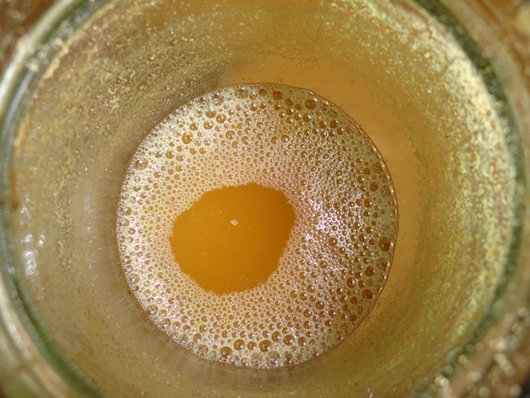
We had a nice supply of ginger beer going over Christmas. It's a delicious soft drink for young and old, although there is an alcoholic version that can be made with a slight variation on the recipe. Ginger beer is a naturally fermented drink that is easy to make - with ginger beer you make a starter called a ginger beer plant and after it has fermented, you add that to sweet water and lemon juice. Like sourdough, it must ferment to give it that sharp fizz. To make a ginger beer plant you'll need ginger - either the powdered dry variety or fresh ginger, sugar, rainwater or tap water that has stood for 24 hours to allow the chlorine to evaporate off. You'll also need clean plastic bottles that have been scrubbed with soap, hot water and a bottle brush and then rinsed with hot water. I never sterilise my bottles and I haven't had any problems. If you intend to keep the ginger beer for a long time, I'd suggest you sterilise your bottles. MAKING THE STARTER In a...
Image

The last post

This will be my last post here.  I've been writing my blog for 18 years and now is the time to step back. I’ve stopped writing the blog and come back a couple of times because so many people wanted it, but that won’t happen again, I won’t be back.  I’ll continue on instagram to remain connected but I don’t know how frequent that will be. I know some of you will be interested to know the blog's statistics. 
Image

How to make cold process soap

I'm sure many of you are wondering: "Why make soap when I can buy it cheaply at the supermarket?" My cold process soap is made with vegetable oils and when it is made and cured, it contains no harsh chemicals or dyes. Often commercial soap is made with tallow (animal fat) and contains synthetic fragrance and dye and retains almost no glycerin. Glycerin is a natural emollient that helps with the lather and moisturises the skin. The makers of commercial soaps extract the glycerin and sell it as a separate product as it's more valuable than the soap. Then they add chemicals to make the soap lather. Crazy. Making your own soap allows you to add whatever you want to add. If you want a plain and pure soap, as I do, you can have that, or you can start with the plain soap and add colour, herbs and fragrance. The choice is yours. I want to add a little about animal and bird fat. I know Kirsty makes her soap with duck fat and I think that's great. I think t...
Image

Preserving food in a traditional way - pickling beetroot

I've had a number of emails from readers who want to start preserving food in jars but don't know where to start or what equipment to buy.  Leading on from yesterday's post, let's just say up front - don't buy any equipment. Once you know what you're doing and that you enjoy preserving, then you can decide whether or not to buy extra equipment. Food is preserved effectively without refrigeration by a variety of different methods. A few of the traditional methods are drying, fermentation, smoking, salting or by adding vinegar and sugar to the food - pickling. This last method is what we're talking about today. Vinegar and sugar are natural preservatives and adding one or both to food sets up an environment that bacteria and yeasts can't grow in. If you make the vinegar and sugar mix palatable, you can put up jars of vegetables or fruit that enhance the flavour of the food and can be stored in a cupboard or fridge for months. Other traditional w...
Image

Cleaning mould from walls and fabrics

With all this rain around we've developed a mould problem in our home. Usually we have the front and back doors open and that good ventilation stops most moulds from establishing. However, with the house locked up for the past week, the high humidity and the rain, mould is now growing on the wooden walls near our front door and on the lower parts of cupboards in the kitchen. Most of us will find mould growing in our homes at some point. Either in the bathroom or, in humid climates, on the walls, like we have now. You'll need a safe and effective remedy at some point, so I hope one of these methods works well for you. Mould is not only ugly to look at, it can cause health problems so if you see mould growing, do something about it straight away. The longer you leave the problem, the harder it will be to get rid of it effectively. If you have asthma or any allergies, you should do this type of cleaning with a face mask on so you don't breathe in any spores. Many peopl...
Image

Five minute bread

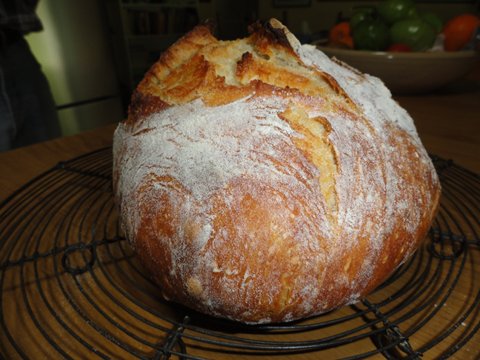
Bread is one of those foods that, when made with your own hands, gives a great deal of satisfaction and delight. It's only flour and water but it symbolises so much. I bake bread most days and use a variety of flours that I buy in bulk. Often I make a sandwich loaf because we use most of our bread for lunchtime sandwiches and for toast. Every so often I branch out to make a different type of loaf. I have tried sour dough in the past but I've not been happy with any of them. I'll continue to experiment with sour dough because I like the idea of using wild yeasts and saving the starter over a number of years to develop the flavour and become a part of the family. However, the loaf I've been branching out to most often is just a plain old five minute bread. By five minutes I mean it takes about five minutes actual work to prepare but it's the easiest of all bread to make and to get consistently good loaves from. If you're having people around for lunch or...
Image

This is my last post.

I have known for a while that this post was coming, but I didn't know when. This is my last post. I'm closing my blog, for good, and I'm not coming back like I have in the past.  I've been writing here for 16 years and my blog has been many things to me. It helped me change my life, it introduced me to so many good people, it became a wonderful record of my family life, it helped me get a book contract with Penguin, and monthly columns with The Australian Women's Weekly and Burke's Backyard . But in the past few months, it's become a burden. In April, I'll be 75 years old and I hope I've got another ten years ahead. However, each year I'll probably get weaker and although I'm fairly healthy, I do have a benign brain tumour and that could start growing. There are so many things I want to do and with time running out, leaving the blog behind gives me time to do the things that give me pleasure. On the day the blog started I felt a wonderful, h...
Image

What is the role of the homemaker in later years?

An email came from a US reader, Abby, who asked about being a homemaker in later years. This is part of what she wrote: "I am a stay-at-home mum to 4 children, ages 9-16. I do have a variety of "odd jobs" that I enjoy - I run a small "before-school" morning drop-off daycare from my home, I am a writing tutor, and I work a few hours a week at a local children's bookstore. But mostly, I cherish my blissful days at home - cooking, cleaning (with homemade cleaners), taking care of our children and chickens and goats, baking, meal-planning, etc. This "career" at home is not at all what I imagined during my ambitious years at university, but it is far more enriching. I notice, though, that my day is often planned around the needs of my family members. Of course, with 4 active kids and a husband, this is natural. I do the shopping, plan my meals, cook dinner - generally in anticipation of my family reconnecting in the evening.  I can't h...
Image

Every morning at home

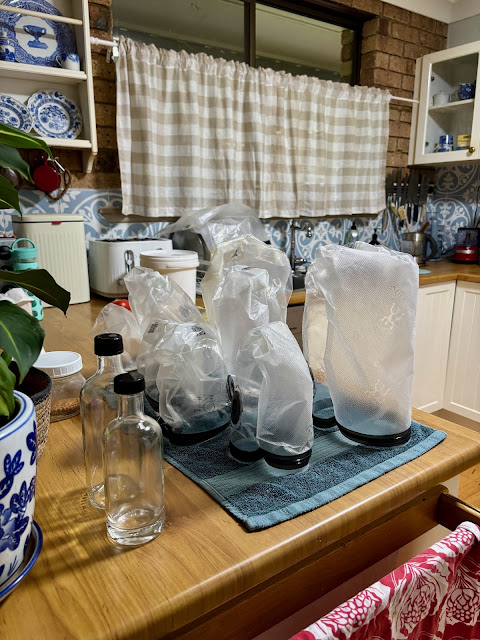
Every morning when I walk into my kitchen it looks tidy and ready for a day's work. Not so on this morning (above), I saw this when I walked in. Late the previous afternoon when I was looking for something, I came across my rolled up Zwilling vacuum bags and decided they had to be washed and dried. So I did that and although I usually put them outside on the verandah to dry it was dark by then. I turned the just-washed bags inside out and left them like this on a towel. It worked well and now the bags are ready to use when I bring home root vegetables, cabbages or whatever I buy that I want to last four or five weeks.
Image

You’ll save money by going back to basics

When I was doing the workshops and solo sessions, I had a couple of people whose main focus was on creating the fastest way to set up a simple life. You can't create a simple life fast, it's the opposite of that It's not one single thing either - it's a number of smaller, simpler activities that combine to create a life that reflects your values; and that takes a long to come together. When I first started living simply I took an entire year to work out our food - buying it, storing it, cooking it, preserving, baking, freezing, and growing it in the backyard. This is change that will transform how you live and it can't be rushed.  
Image

Categories

  • Backyard 244
  • Being Organised 257
  • Books 9
  • Budgeting 142
  • Chickens 42
  • Community life 289
  • Family 269
  • From Scratch 63
  • Grandmothering 69
  • Home 296
  • Individuality 185
  • Mentoring 55
  • My books 49
  • Organic Gardening 348
  • Preserving 97
  • Recycling 22
  • Retirement 22
  • Self Reliance 160
  • Simple Living 777
  • Sustainability 308
  • This blog 107
  • Weekend reading 362
  • Writing 4

Followers

Trending Articles

The last post

This will be my last post here.  I've been writing my blog for 18 years and now is the time to step back. I’ve stopped writing the blog and come back a couple of times because so many people wanted it, but that won’t happen again, I won’t be back.  I’ll continue on instagram to remain connected but I don’t know how frequent that will be. I know some of you will be interested to know the blog's statistics. 
Image

Making ginger beer from scratch

We had a nice supply of ginger beer going over Christmas. It's a delicious soft drink for young and old, although there is an alcoholic version that can be made with a slight variation on the recipe. Ginger beer is a naturally fermented drink that is easy to make - with ginger beer you make a starter called a ginger beer plant and after it has fermented, you add that to sweet water and lemon juice. Like sourdough, it must ferment to give it that sharp fizz. To make a ginger beer plant you'll need ginger - either the powdered dry variety or fresh ginger, sugar, rainwater or tap water that has stood for 24 hours to allow the chlorine to evaporate off. You'll also need clean plastic bottles that have been scrubbed with soap, hot water and a bottle brush and then rinsed with hot water. I never sterilise my bottles and I haven't had any problems. If you intend to keep the ginger beer for a long time, I'd suggest you sterilise your bottles. MAKING THE STARTER In a...
Image

Time changes everything

I've been spending time in the backyard lately creating a contained herb and vegetable garden. My aim is to develop a comfortable place to spend time, relax, increase biodiversity and encourage more animals, birds and insects to live here or visit. Of course I'd prefer my old garden which was put together by Hanno with ease and German precision. Together, we created a space bursting at the seams with herbs, vegetables and fruity goodness ready to eat and share throughout the year. But time changes everything. What I'm planning on doing now, is a brilliant opportunity for an almost 80 year old with balance issues. In my new garden I'll be able to do a wide range of challenging or easy work, depending on how I feel each day. It’s a daily opportunity to push myself or sit back, watch what's happening around me and be captivated by memories or the scope of what's yet to come.
Image

The most wonderful news

This post will give me more joy to write than anything else I could think of today.  I told you  there are a few exciting things happening here at the moment, well, I am now able to tell you the most exciting one of them.  Our son Kerry and his beautiful partner Sunny are having a baby!  Hanno and I will be grandparents in late March.  I can barely believe my eyes when I read what I have just written.  This is one of my original stitchery patterns. This wasn't planned but it's welcomed wholeheartedly by all of us.  Both Kerry and Sunny are hard workers and now that they have a baby to love and care for, they've decided it's time to buy an apartment together.  Sunny is going home to Korea to tell her family and when she comes back again, the search will start to find their first home together.  We are all so excited!  My knitting has taken on a life of its own and when I think of all the projects I could start, my head spins.  Thi...
Image

About Blog


Down to Earth is a blog by Rhonda Hetzel, dedicated to simple, intentional living — from home cooking and gardening to frugal budgeting and handmade crafts. It’s a space for gentle inspiration and everyday wisdom on creating a life that feels real, balanced, and deeply fulfilling.

Last Year's Popular Posts

The last post

This will be my last post here.  I've been writing my blog for 18 years and now is the time to step back. I’ve stopped writing the blog and come back a couple of times because so many people wanted it, but that won’t happen again, I won’t be back.  I’ll continue on instagram to remain connected but I don’t know how frequent that will be. I know some of you will be interested to know the blog's statistics. 
Image

Every morning at home

Every morning when I walk into my kitchen it looks tidy and ready for a day's work. Not so on this morning (above), I saw this when I walked in. Late the previous afternoon when I was looking for something, I came across my rolled up Zwilling vacuum bags and decided they had to be washed and dried. So I did that and although I usually put them outside on the verandah to dry it was dark by then. I turned the just-washed bags inside out and left them like this on a towel. It worked well and now the bags are ready to use when I bring home root vegetables, cabbages or whatever I buy that I want to last four or five weeks.
Image

You’ll save money by going back to basics

When I was doing the workshops and solo sessions, I had a couple of people whose main focus was on creating the fastest way to set up a simple life. You can't create a simple life fast, it's the opposite of that It's not one single thing either - it's a number of smaller, simpler activities that combine to create a life that reflects your values; and that takes a long to come together. When I first started living simply I took an entire year to work out our food - buying it, storing it, cooking it, preserving, baking, freezing, and growing it in the backyard. This is change that will transform how you live and it can't be rushed.  
Image

Workshops update

  This photo shows what the weather's been like here.  That's steam coming off my neighbours shed roof after a brief downpour of rain.  I hope we’re getting closer to organising these workshops. I didn’t explain this clearly enough: Group 1 is four workshops, Group 2 is four workshops. Out of those eight workshops I thought we probably end up doing three or four.
Image

Creating a home you'll love forever

Living simply is the answer to just about everything. It reduces the cost of living; it keeps you focused on being careful with resources such as water and electricity; it reminds you to not waste food; it encourages you to store food so you don't waste it and doing all those things brings routine and rhythm to your daily life. Consciously connecting every day with the activities and tasks that create simple life reminds you to look for the meaning and beauty that normal daily life holds.  It's all there in your home if you look for it. Seemingly mundane tasks like cleaning and cooking help you with that connection for without those tasks, the home you want to live in won't exist in the way you want it to.  Creating a home you love will make you happy and satisfied.
Image

Time changes everything

I've been spending time in the backyard lately creating a contained herb and vegetable garden. My aim is to develop a comfortable place to spend time, relax, increase biodiversity and encourage more animals, birds and insects to live here or visit. Of course I'd prefer my old garden which was put together by Hanno with ease and German precision. Together, we created a space bursting at the seams with herbs, vegetables and fruity goodness ready to eat and share throughout the year. But time changes everything. What I'm planning on doing now, is a brilliant opportunity for an almost 80 year old with balance issues. In my new garden I'll be able to do a wide range of challenging or easy work, depending on how I feel each day. It’s a daily opportunity to push myself or sit back, watch what's happening around me and be captivated by memories or the scope of what's yet to come.
Image

Simple life workshops on Zoom UPDATED

I've added more topics to the list. This post is for those readers who expressed interest in doing online Zoom workshops or who want to register now. The topics haven't been chosen yet but potential topics are:  vegetable gardening and composting; starting a vegetable garden and choosing vegetables suitable for a beginner;  cutting costs in the home, housework and routines; homemade laundry liquid and powder, soaking, stain removal and washing clothes and household linens; cooking from scratch and building your pantry to help you do it; homemade bread - white, rye, wholemeal and ancient grains. I'm not doing sourdough; living on less than you earn and developing a frugal mindset.
Image

Labels

  • Bartering
  • Chickens
  • Community life
  • Food security
  • From Scratch
  • Home Maintenance
  • Homemaking
  • Mentoring
  • My favourite place
  • Recipes - savoury
  • Reminders of what is important to us
  • Simple Living
  • The Simple Home - June
  • The Simple Home - May
  • Utilities
  • Wise Economy

Copyright © Down To Earth. Designed by OddThemes