down to earth

  • Home
  • About Us
  • Down To Earth Book
  • Privacy Policy
I am taking the lead from Soulemama here and doing a Friday photo feature. I hope she doesn't mind. This will allow us all to connect via a simple photo of the week, featured on our blogs, for all to see. Our previously unpublished photos will show something at home that we're thinking about. It can be something already done but still on your mind, something you're about to do and you're working out how to do it, or a place at home where you've spent a lot of time during the past week. It opens the door to us sharing our lives with these photos and, after my post yesterday, gives us all a new way to discover each other, and maybe form new friendships.

To take part in this, all you have to do is post a photo of something on your mind that reflects the guidelines above. Please write a short caption to explain your photo. When your post is published, come back here and add a comment, with a link to your blog photo. We will all be able to follow the breadcrumbs in the woods that lead to each new photo. Who know where these trails will lead us. You should add "This is on my mind. ..." then tell us about the photo, to identify you're part of this.

This is on my mind...

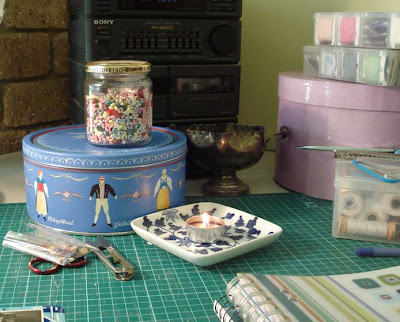
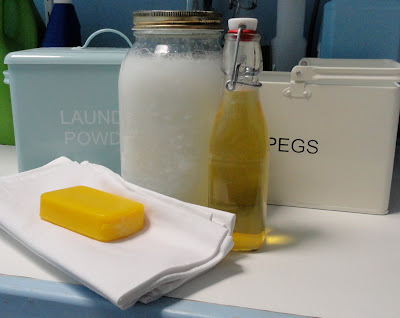
I'm taking photos for my book and need a photo of a cleaning goods gift basket. I have the basket and the homemade cleaning goods but I need to add some pretty little additions to make the basket really special. I need ribbons and cellophane! And maybe more dishcloths. :- )

I had a phone conversation with Little Jenny Wren earlier this week. She contacted me via email about a fabric I'd commented on, she included her phone number in the email, so I took the opportunity to call her. There was no hesitation, no shyness or wondering about whether I should, I just did. I felt I already knew her.

Blogs are like that. When you read someone's blog over a period of time you feel you know them. We both agreed it was weird to be talking, but the conversation was relaxed, friendly and wonderful. We talked about the fabric, and our families. We didn't have to explain who, what and why, we already knew those details because we've been reading about each others lives for years. We've seen each other's kitchens, I know Jenny dries her washing in front of her wood stove in the winter, I know how old her children are. I know all those details because she's shared her interesting life on her blog.


I read the other day that sociologists have yet to agree on the meaning of the word "community". So far there are 94 definitions of the word, and "since the advent of the Internet, the concept of community no longer has geographical limitations, as people can now virtually gather in an online community and share common interests regardless of physical location."


I try to read as many blogs as I can and although I don't have much time and don't read every day, there are some women out there who I feel I know well, even though we've never spoken in person. For instance, I've been following Amanda's move to a new home and silently sharing their joy and excitement. I've just read how Farmama and her husband were lead to their own farm, and like me, how she picks up on the treasures left in her comments box. She's just tied her fabric stash in bundles, but I'll let you find out why. And I've been slowly reading through the archive at A Joyful Chaos - a blog about growing up Amish, and I'm keeping up to date with all sorts of delicious food at Food in Jars. If her food is half as satisfying as her photos, she would be setting the finest table each night. And speaking of good food, Almost Bourdain captures me with thoughts of Anthony Bourdain as well as her thoughtful and innovative approach to food. Who could forget her Tiramisu with laminations and Anzacs and her Balinese spicy fried chicken. Mmmmm.


I learn so much from my blog community. I learn from those I read and from the wonderful comments made here every day. These computers of ours are powerful things. They stretch us across our own countries and into international lands. They take us by the hand and help us wander through kitchens and barnyards, we see tomatoes growing and being put into jars, we watch and learn as cardigans are being knitted and skirts stitched; we see how others live. Blogs, unlike magazines, are written without filters, they're showing real life, not a set stage. Blogs, especially the good blogs, come straight from the heart and they record everyday, ordinary living. And best of all, blogs, while telling their daily stories, teach us what we didn't even know we wanted to learn.


We say a lot about respect when we use the full measure of what we grow or buy. In the old days it was common practice to use every part of a slain animal; and many people who slaughter their own livestock still do it today. From the horns being broken down and used as a fertiliser, or filled with cow dung and buried to produce the magical biodynamic Formula 500, to using bones for stocks and gelatine, and the meat, including the offal, for nutrition and the hide for warmth. Crafters do a similar thing with patchwork. They don't waste any scraps and by taking the time to piece the fabrics together, either randomly or in time honoured patterns, they produce beautiful quilts, bags and clothing that are sometimes featured on the walls of galleries, but always yield their true qualities of warmth and comfort.

Respect is expressed in those actions of honouring the life of the animal or the work involved to grow the cotton and produce the fabric, by using every part for a worthwhile purpose and by making sure there is no waste to pollute or be part of a landfill dump.

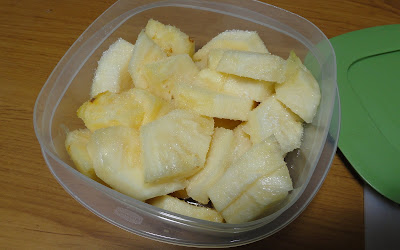
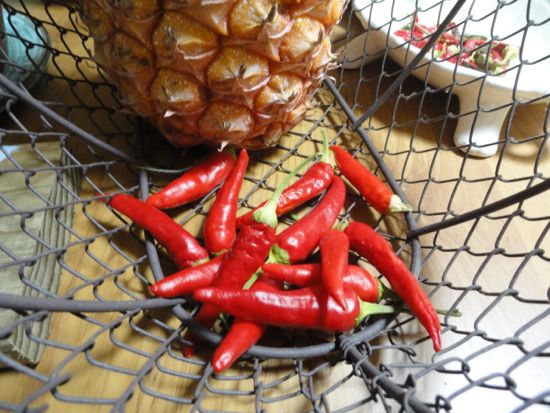
We can carry those principles on very easily when we use our fruit and vegetables too. Again, they can be either grown at home or purchased, the respect for the work and resources involved in producing what you have before you is clear and unambiguous if you use every part of what you have. Take our pineapple, for instance. That pineapple was grown from the top of a local pineapple we bought a few years ago and it will continue on because I will plant this top to grow two more pineapples.


Growing pineapples is simple, it takes a long time, but you will be rewarded for you patience when you taste that sweet juicy organic fruit. I sliced ours down the middle and cut it into chunks. We've feasted on it twice now after our tea and we will finish it off tonight. It is so sweet! When I tasted it I forgot about those years of growing and thought only that we grew it, it was organic and we used every part of it - no waste, everything was used. So how do we get to that point?


Take the top from your pineapple - if you have a choice, use the best pineapple - the juiciest and the sweetest. You will be passing on those genes to your next fruit. Remove all flesh from the base of the top, then peel off several layers of leaves. You want a cutting that is clean and undamaged at the base. Allow it to dry out for a few days, then plant it in the garden in a sunny spot where it can grow for at least two years. Don't put it where you plan on planting tomatoes next season. If you live in a colder climate, I believe you can plant pineapple tops in large pots, at least the size of a bucket, filled with good quality potting mix. Keep the top in the sun for as long as possible, then move inside to a sunny window during the cold weather. Pineapples don't need a lot of water but you'll need to water it in well and water every couple of days for about two or three weeks until the roots start reaching out into the soil.


We didn't fertilise our pineapple much. It got some liquid fertiliser occasionally and natural rainfall, otherwise it was sat quietly doing its own thing. They do take up a fair bit of space when the top has fully developed so if you're planting a number of tops, make sure you give them a metre / three feet space in which to develop. When it's been in a year or so, you'll notice a tiny pineapple emerge from the centre. That slowly develops for about six to nine months and ripens to a perfect fruit. It is ready to pick when, instead of standing upright, it falls over while still attached to the centre. Cut the pineapple stalk off the main plant and leave the plant in the ground. Fertilise with liquid fertiliser and continue as before - this same plant will produce a second pineapple and will take the same amount of time doing it.

When you harvest your pineapple, cut the top off and replant. Eat the fruit and make the skin and the off cuts into pineapple vinegar. I've written about that here. Wonderful! No waste at all. You've used the entire fruit and that one top will continue producing pineapples for as long as you continue to plant the tops.

Respectful. Economical. Productive.

I'm often intrigued by the questions asked in emails, particularly when they're about the most simple things. It always reinforces for me the need to learn new skills correctly and for that reason I never tire of explaining the most simple of tasks. The other day, Matthew asked how to hang washing on the line and if there are any tricks or ways of doing it well.

With many simple household tasks, knowing the right way to do something, and consistently doing it that way, results in jobs being carried out efficiently and before you know it, it becomes second nature to you. I remember when I first decided that making the bed every day was important to me. It seemed like a big thing to give that time every day to just making the bed. Now, after years of making sure the bed was just right every day, it seems like a tiny commitment to a very small task. Now it's just part of what I do.

One of the other small things we do here is to hang washing on the line to dry and as I often think about what I'm doing while I'm doing it, I have formed a few opinions about this simple task. It is common practice in Australia to line dry. It's been done that way since we Europeans arrived here and it's still the most frugal and effective way. Generally we have good weather, ideal for drying and a line of clothes set out early in the morning will be ready to bring in after lunch. Luckily, Hanno built me an all weather line too, so in addition to our Hill's hoist, that umbrella shaped Australian icon, I can quickly line dry clothes on our back verandah, even when it's raining.

When the washing machine finishes the cycle, take the clothes out immediately and head out to the line. If you leave the washing in the machine, or in your washing basket, for a period of time, you'll have more creases than is necessary. The thing that makes the most difference when hanging washing is to shake and snap. I mean by that to shake the item and give it a sharp hard whip snap before you peg it up. You'll remove some of the wrinkles in cotton and linen, and with terry towels, it will help fluff up the pile. When you remove towels from the line, shake them again to fluff up the pile. When you peg the item to the line, smooth it out with your hand and make sure the edges are straight. You don't want the hem of a skirt or a shirt sleeve to be crumpled up. Straighten and smooth collars, sleeves, facings, pockets and hems before going on to the next item.

Peg towels, tea towels, pillowcases and napkins by two opposite corners, shirts and blouses upside-down on the side seam, jeans (with the zipper undone) and skirts by the waist, and dresses on the shoulder seam. Hang sheets, tablecloths and doona|duvet covers by the two top corners in one layer, then make a U shape and peg the bottom corners to the line behind it. This will create better drying conditions for these large items and sometimes, the wind takes up the sheet like a sail and if you're using a circular line, it will spin the line around. If you have enough room and sturdy coat hangers, you could hang dresses, shirts and anything permanent press on a coathanger and peg it to stop it slipping along the line. Traditionally, socks and underwear are hung near the centre of the line and hidden by the larger items. I have to confess I still do this. If you're using a straight line, hang the heavy items first at the ends of the line, where there is more support, and fill in the middle with the smaller items.

If you have brightly coloured or black clothing, turn them inside out to help prevent fading but all your whites will benefit from drying in the sun because it will have a slightly bleaching effect.

Never hang woollens or any natural fibres like alpaca in the sun. They should be laid out flat on a large towel and dried in the shade.

I use plastic pegs but I like wooden pegs better. Here in our climate, the wooden pegs go mouldy and often end up marking the clothes. Plastic pegs will serve you better in humid or moist climates. And don't do what we do here and keep the pegs on the line. It's best to store plastic pegs out of sunlight, they'll last much longer if you take care of them.

If you intend to iron anything you have hanging on the line as soon as it's dry, remove it when it's still slightly damp. That will make ironing easier. For the rest of it, fold each item before it goes in the basket, or if you don't want to stand in the sun too long, as soon as you go inside the house.
The end of November. This year has gone so fast, and soon we'll be faced with the new year and all it will bring. It doesn't feel like November because this year, although the temperature has risen, we haven't had much humidity. In the tropics and sub tropics, where we live, it's not the heat that affects you, it's the humidity. But we're still sleeping with a quilt and a blanket on our bed and usually, during November, we have just a sheet and the fan on. I wonder when it will change.

We had a wonderful weekend. It showered on and off but the first match of the test cricket started so I had to watch some of that. In years gone by it used to mark that last part of the school year just before Shane and Kerry had six to eight weeks off school, and sometimes we'd go away to visit family or friends. In those days I would use the end of November to relax and prepare for Christmas and the summer holidays, with one eye on the cricket, and I always sat down and watched the first few overs, if not the entire day's play. I couldn't do that this year because I've been concentrating on the book, but I did sit and watch the first few overs while I did a bit of knitting.

Some days it seems like all I do is write but I'm not complaining, I am very grateful for the opportunity I have to work with Penguin. Besides, who would complain when every time I look up, I see what is in the photo above. That is the view from the window where I sit most of the day typing my words. The greenery here envelopes and protects us from the hot sun and the little single vehicle lane way that leads to our door carries only our neighbours coming home or an occasional car that is lost. Our back boundary is an ever flowing creek so most days here are quiet and slow with bird song rather than traffic noise surrounding us. No, I have nothing to complain about.

I did do some baking on the weekend. Bread and biscuits|cookies were made and now we have two jars of biscuits to have with our tea that should last a couple of weeks. The biscuits were made using the cheap and easy biscuit recipe on the forum. One lot I turned into jam drops, the others have almonds.

Apart from some knitting, cooking and making the bed, the only other thing I did on the weekend was talk on the phone to my sister Tricia, my DIL Sandra and my friends Diane and Susan. Tricia sold her house and is in the process of buying a much smaller cute cottage higher up in the Blue Mountains. I can already see what she will do with her cottage and I'm really excited for her. It's a little two bedroom home, built a long time ago with many of the original features still there. I particularly love the old wood stove in the kitchen that looks like a little Aga and she even found the original wooden wire screen doors under the house. It will be a labour of love to do the small amount of renovating she'll be doing and I'm looking forward to many visits there sitting in the kitchen with that fire burning and the snow falling.

But far away from thoughts of snow is my last tale to tell you. I picked THE pineapple yesterday. Those of you who've been reading here for a while will know that we planted a pineapple top a couple of years ago. We harvested the first pineapple a year after we planted it, then had to transplant it to the front garden. Well, it grew another healthy looking pineapple - pineapples usually set fruit for two years - and tonight I'll be cutting it open so we can eat a couple of juicy chunks for dessert.

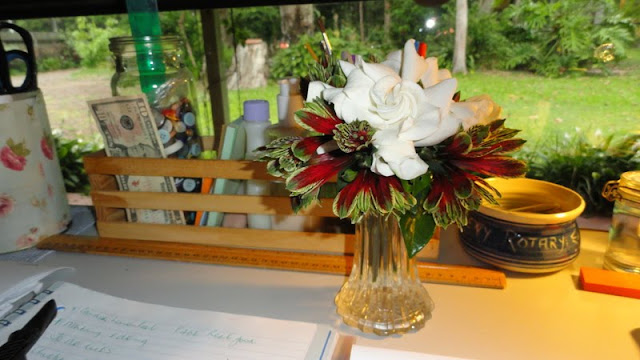
While I was out in the garden, I also picked some red and orange lilies and gardenias for the table. Our garden is full of flowers right now so how could I resist bringing the fragrance of gardenias into the house.

I hope your weekend was what you wanted it to be. I wish you well as we go into that busiest of seasons in the run up to Christmas. Enjoy your days.

This is a tough one. How do you decide who will do what in the home. If you're a retired couple like we are, the division tends to take care of itself. Here we do what we enjoy doing - I work in the house and generally Hanno works outside. We are having a slight variation on this right now though because I'm writing most of the day and we don't have much of a garden to tend, so Hanno does various things like washing clothes and vacuuming. I am still baking bread and cooking the meals, making the bed and those sorts of things, but Hanno is helping out a lot by doing what he can during the day while I'm tapping away on the keyboard.

But what happens when you're a working couple, or one person works outside the home and the other works at home with the children? How do you then divide up the housework, house maintenance and yard work? I have no magic solution to this, but I know it's a problem for many people, so I'm hoping you will contribute to the discussion so we might all be a bit wiser about it.

It's complicated when time is an issue. If your time is consumed by paid work, children, the garden, pets or family, AND house and yard work, when do you get a break? If you tell your partner to take a break while you're still working, do you feel outright resentment, or feel it building up? It's great if this issue takes care of itself by you liking to do certain tasks and your partner liking the opposite tasks, but that is rarely the case; usually no one wants to change the cat litter or clean the toilet.

So what can you do when that happens? I think you need to sit down calmly and talk about it when you're both fresh and not tired after a day of work, or on the verge of an argument. And first thing on the list should be to agree not to argue about work. It's not worth it. You both want a clean and ordered home, you both want to relax in a place you feel comfortable in, so you both need to come up with the solution that will work for both of you.

One way that would work for some would be to list the various chores that need to be done during the coming week. Then, with each of you having your own coloured pen, take it in turns to tick one task at a time. Change who starts each week. When you get to the end, that's your work list for the week. Make sure you do the important tasks like laundry, cooking, shopping and cleaning first, the lesser tasks don't matter so much. And please, make sure you have time to be together as well and make sure you've got a mutual goal you're both working for and talk about. That can make the hard times easier to cope with. You don't want your life to be a drudgery but if you want to pay off your debt or are working towards building a life with your partner, there will be no way around it, you'll be working hard. But remember, this stage will not last forever. There will come a time when you sit back and enjoy the rewards this hard work will bring.

I have found the periods of difficulty and working hard the most challenging and the most rewarding. I look back now and realise those times of working through challenges have strengthened my relationship with Hanno. Tough times can make or break marriages. If you're one of the lucky ones, some day you'll look back on a long marriage and recognise that you grew together as a couple, not just because you loved each other, but because of the tough times you shared.

So tell me, how do you divide the work load? I, and I'm sure a lot of others, are hoping for some innovative and workable ideas.

Happy Thanksgiving to all my American friends. I hope you have a wonderful day full of family, friends and feasting.


I made baked beans and pork last week. It was delicious and very filling. Recipes for baked beans are similar but you can change the recipe to suit your own tastes. If you like hot beans, add fresh chilli, or chilli flakes; if you like a mustard taste, increase the mustard. This is a great frugal family recipe that can be frozen or served again the following day and it will taste even better than the first day's serving. Do it from scratch, don't substitute canned beans because you'll be robbing yourself of the real experience. Everyone should taste real baked beans at some time during their life.


You'll need navy|haricot beans because they'll take on the flavours you add while keeping their shape, more or less, over the long cooking period. Wash the beans and discard the water, then soak the beans in water overnight. Don't add salt to the water because you'll harden the beans; you'll be adding all your delicious flavourings and seasonings later.

RECIPE
2 cups uncooked navy beans that have been soaked overnight
2 litres|quarts water
1 large onion, quartered
2 bay leaves
1 tablespoon mustard powder
2 tablespoons tomato paste
2 tablespoons brown sugar
2 tablespoons molasses or treacle
3 tablespoons Worcestershire sauce
1 teaspoon salt
½ teaspoon pepper
pork of some kind - this can be leftover from another meal, or bacon, ribs, pork chops or shoulder. Use whatever is a cheap cut that week at the butchers or whatever you have as leftovers. If the pork is uncooked, cook it in a frying pan first, then put to one side.

After the beans have been soaked, discard the water, add the beans to a large pot and add the water, bay leaves and the quartered onion. No seasonings at this point. Bring the beans to the boil, then simmer for about an hour. If you cooked the pork in a frying pan, use that in the next step. Add the diced onion and saute for a couple of minutes, add the mustard and stir it in, cook for one minute. Add the tomato paste and cook for two minutes, while stirring. This will increase the flavour and get rid of that sharp tomato taste. Then add the rest of the flavourings - the brown sugar, molasses, sauce, salt and pepper, stir it all until well combined and add one cup of water to bring it all together.

Now you have to transfer everything to either a slow cooker, cast iron pot or casserole dish with a lid. Drain the beans and place them in the pot, mix in the flavourings, then cut the pork and add it. Mix well to combine. Have a test taste to make sure you have your seasonings exactly right. Adjust to suit, then either turn on the slow cooker (low setting) or put the pot in the oven on a low setting. Cook very slowly for at least six hours. It is the slow cooking of this dish that makes the difference. It allows all the flavours to fully develop. During the cooking process, stir the beans occasionally.


This very homely meal can be served with salad but we like it with crusty homemade bread. Perfect! It's one of the best winter meals, but it's also a winner at other times, so don't only serve it when you're cold.

The beginning of summer always means the start of that most mundane of garden chores - mowing the lawn, or as we think of it, harvesting the grass. We have quite a bit of open grass to harvest here and it does take time but despite what many others think of lawn or grass or turf or whatever you call it, we would not get rid of it. Here it's a vital resource that gives more than it takes.

Now let me say first that we never water our grass. We have more than enough natural rainfall to keep it growing. However, in times of drought here, our grass, even in the middle of summer, has stopped growing, and turned brown and crunchy. Grass is such a hardy plant, even when it looks dead and it hasn't been watered for months, it will come back to life when it receives water. We never fertilise it either, even with organic fertilisers. It gets enough nourishment from the pecked or cut remnants of grass that fall and decompose within the blades.


So what do we use our lawn for?
  • It gives our chooks a wonderful place to graze and therefore gives the eggs we eat a much appreciated boost of Omega three and six oils. If were to eat our chooks, their meat would also be rich in these oils. Grass is rich in Omega 3 and 6 and chickens will consume up to 30 percent of their daily food as grass if given a good area to range over.
  • When harvested by the lawn mower, grass gives us most of the green component in our compost heap. If we didn't have grass, we'd struggle to find enough bulk to keep the compost going.
  • It provides cooler air around the house than we would have with hard landscaping. All those pavers, bricks and cement that surround some houses make them hot in summer.
  • It reduces noise and dust around the house.
  • It absorbs carbon dioxide and produces oxygen, just the same as trees do.
  • It filters water runoff before it reaches waterways.
Grass is not the enemy. Over zealous care of grass and wanting grass to look like perfect lawn is not sustainable. But if you have small children, pets or chickens I'm sure you'll already be aware of the benefits of having grassed areas around the home. It doesn't have to be manicured perfection to be beneficial. Just let it grow with natural rainfall and I'm sure you'll be surprised how hardy it it. Then change your attitude towards grass. Even though it needs to be mown (or harvested) it is a productive crop that you can use for chook feed or as a soft place to fall.


It always surprises me just how much you can generate with something simple and a bit of work and know how. Hanno called me outside the other day and proudly handed me a large baker's basket full of potatoes he'd just dug from the garden. We think there are over 10 kg/22 lbs. All those potatoes from just a few sprouting supermarket potatoes planted in two square metres, or about one third of one of our garden beds, incredible.

Of all the vegetables we grow here, fresh potatoes and tomatoes are my favourites and just so different to what you buy in the shops. Nothing I have ever bought at a market or a supermarket comes close to the absolute gorgeousness of freshly dug potatoes, boiled and served with the addition of butter, parsley, salt and pepper. I used to wonder why there was such a difference because they are all grown in a similar manner, but now I'm sure it's the freshness that makes the difference. You never know how long anything you buy has been sitting in a cold room or warehouse and even in those shops that advertise fresh produce, often it's far from it.

Yet another reason to grow your own. You know.

We're at the beginning of our slow period in the garden. As gardeners down south are tending their main crops for the year, here it's slim pickings as summer brings bugs, torrential rain and temperatures too high for things like tomatoes to set fruit properly. We'll be growing a small salad garden and some wild and rambling pumpkins to shade the soil, and, of course, more potatoes, but that will be it until early March when we'll start gearing up for our main annual plantings. To tell you the truth, I'm pleased we cut back a bit in summer because it gives Hanno a rest from the garden and it keeps him out of that blazing sun. During this period of less home grown, we'll buy what we need from our fairly local market that's open over Sunday.


We had a quiet weekend here. Many of you will remember that Hanno came home from his holiday with a bad cold, which, of course, I got too. Well, my cold is well and truly over and done with, but Hanno now has a bacterial infection and is coughing like there is no tomorrow. He needs to go to the doctor for some antibiotics because it's been hanging on for too long.

I'm back at the Centre today where our new co-ordinator will start her job. She doesn't know yet that we'll have a morning tea to welcome her. She doesn't know yet how all embracing this job will be for her. And she doesn't know yet that it will be the best job she'll ever have. I am excited for her because she is such a wonderful person and I know that she will be enriched by this work, the people she meets and works with and the amazing capacity she will have to make the work she does significant and life changing. I made my sour cream carrot cake yesterday - a big one for the welcome party, and a small one for Hanno. He just loves cake. So now I'm off to add some cream cheese frosting to the cakes and to get ready for this day of transition.

I hope you have a great week. Thank you for taking the time to visit here.

What is it they say about hindsight? I thought we'd be perfectly happy with our sink when we had it redone a couple of years ago. We had a flood in the kitchen, when the dishwasher sprung a leak, and the insurance company paid for the replacement of the floor and the cupboard bottoms. Taking the cupboards out meant they had to remove the bench tops and therefore we had new bench tops fitted as well. We took advantage of this and replaced the old sink. Unfortunately we replaced the sink and drain with just two sinks, and no drainage area. When we got rid of the dishwasher, we had nowhere on which to drain the dishes. I've tried the dish rack sitting on a draining board but it leaks everywhere. Now I have the rack sitting in a tray on top of a tea towel that I keep replacing. The situation need to change. We need a sink with a drainage area.

Who would think the simple act of washing dishes would be so complicated. First there was the hand versus machine washing that was resolved quickly. Once I started to think about it I realised I couldn't continue to pour all that caustic detergent out into the drains and waterways. Then the problem of what washing aid to replace it with. Instead of using a detergent I wanted to use soap, and I wanted it to be castile soap. I chose to go against detergents because they're made using a variety of chemicals like Sodium Laurel Sulphate and Sodium Laureth Sulphate. Even the Australian Earth detergent contains this chemical which is why I don't use it now. I find when I use anything that contains SLS, my skin is red and itchy.

This is what is working for me. I have worked my way through a few "biodegradable", "eco", "safe" detergents. I've discarded Earth because of the SLS and I'm now working my way through Eco Store's Dishwash Liquid and Ecologic's Lemon and Lime Dishwashing Liquid. I am happy with both of them but especially like and admire Ecologic's openess in revealing their ingredient list - it's mostly organic botanicals and organic olive oil and it's made in Australia. Eco Store's Dishwash Liquid lists what it does NOT have in it but apart from listing "plant based non-ionic and anionic surfactants, mineral hydroxide and natural citrus oil" I don't know what IS in it. And it's a New Zealand product which I think is fine for New Zealanders but is not for me. BTW, for anyone looking for an biodegradable and relatively safe dishwashing liquid for a machine, Ecologic's Lemon and Lime can be safely used in a dishwasher - one teaspoon per wash.

I no longer use this dish rank on a daily basis. A couple of readers have pointed out that it should be turned towards the sink for the water to drain off. I did try that but the water always dripped under the drainer and pooled. I turned it this way after all the water had drained away, then put the towel there. Now I use a larger rack that sits on a tray but it's not much better.

So I've decided to continue on with my homemade liquid soap and will have to make another batch soon before these two bottles run out. I will make a thicker version of the liquid soap and use it with a foam dispenser that I found in my cupboard. Originally it held organic hair mousse and what looks like clear liquid in the bottle, comes out as a foam. It's working really well, so thanks to those readers who suggested I try the foam dispenser. Here is my post, and a recipe, on liquid soap.

Liquid soap in the making - this is at the paste stage.

My other requirements for safe and hygienic washing up are hot water - as hot as I can stand it, a little dish mop so I can use the hottest water (I make sure I sanitise this every week and fluff it up after every use so it dries out), rinse water, cotton dishcloths, scrubbing brushes, and a stainless steel scrubber. Pre-soaking, even for a few minutes, makes washing the dishes much easier and rinsing milk glasses as soon as they're used is a great help. I've found that egg and milk are the hardest to remove if they're allow to sit and dry on a plate or cup. Rinsing or soaking helps with those problems.

I don't have neighbours who live as we do so I can't sit down with a cuppa and discuss this mundane but relevant subject with anyone but you. So what are you doing, what have you tried and what is working for you?

Yesterday ended a very important chapter in my life. It was my last day as co-ordinator of our neighbourhood centre. True to form, it was a busy day with a frugal home workshop in the morning, a combined BBQ lunch with us at the neighbouhood centre and the staff and students of our Flexischool to mark their end of year, talking to a homeless man new to us and telling him we will help him hang on even though he wants to give up, and a final flurry of paper work and emails. I will go in for a short time to help the new co-ordinator familiarise herself and then I'll concentrate more on the book.

Four and a half years ago I wandered in there and asked if I could help in some way. I did not know then that being there, spending my time with people I otherwise would never have met, giving of myself with an open heart, when it made me feel enriched and optimistic and when it made me sad and defeated, through all those high points, and the lows, and the many days of sheer hard work, that just being there would make me a different person. Whatever I gave to that place, I got back much more. I will miss it.


When I came home and removed my centre coordinator badge for the last time there was no time to be sad or reflective because Kerry and Sunny arrived. It was the first time we'd seen Sunny since she had her holiday back home in Korea visiting her family. She is now 22 weeks pregnant, she is looking absolutely splendid and it was wonderful to see them both very happy and excited about becoming parents for the first time. Sunny gave me some Korean cook books that she bought while she was home, happily they're all in English. I'm absolutely thrilled to have them and I'm looking forward to learning more about her culture. My first dish, naturally, will be kimchee which is spicy fermented cabbage eaten daily by most Koreans. Thanks Sunny, I love the books! Next time you come here, we'll have kimchee together.


I'll be revisiting the topic of washing dishes by hand tomorrow. I was surprised at how many of you are washing by hand so I thought you might be interested if we delved more deeply into the soap versus detergent debate.

And finally, I'd like to welcome my good friend Sharon back to the blog and to the Down to Earth forum. She had us worried there on a few occasions but she is one tough cookie and she managed to pull through no matter what was thrown her way. Welcome back, Sharon, and my thanks to your lovely husband Claude who stood in your stead and helped me behind the scenes while you were so ill.

Hello all, this is Sharon, finally back in the fold and recovering from the illness that just about kicked me down this summer. I would like to thank you all and hug you all for the thoughts and prayers offered up for me, for I believe that is what helped me beat the infections that nearly killed me (on more than one occasion). I also feel a swap coming on after the holidays are over. My dear friend Rhonda's post about aprons reminded me of the fun and joy of swaps so our next swap will be an apron and a recipe. I will begin taking names just after the Christmas holidays are over and then we will all be having fun in our kitchens and at our sewing machines!! I thank you all again for thinking of me and praying for me.

LOVE and HUGS, Sharon
Newer Posts Older Posts Home
View mobile version

MY BOOKS

MY BOOKS


My books were all published by Pengiun, and are available at Amazon US, Amazon UK and Amazon Au

Search here

Total Pageviews

Translate


I'm Rhonda Hetzel and I've been writing my Down to Earth blog since 2007. Although I write the occasional philosophical post, my main topics include home cooking, happiness and gardening as well as budgeting, baking, ageing, generosity, mending and handmade crafts. I hope you enjoy your time here.

MY FAVOURITE PLACES

  • Grandma Donna's Place
  • Grandma Donna's YouTube
  • Grandma Donna's Instagram
  • This Simple Day
  • Nicole's Instagram

Give More

Give More

Popular posts last year

Making ginger beer from scratch

We had a nice supply of ginger beer going over Christmas. It's a delicious soft drink for young and old, although there is an alcoholic version that can be made with a slight variation on the recipe. Ginger beer is a naturally fermented drink that is easy to make - with ginger beer you make a starter called a ginger beer plant and after it has fermented, you add that to sweet water and lemon juice. Like sourdough, it must ferment to give it that sharp fizz. To make a ginger beer plant you'll need ginger - either the powdered dry variety or fresh ginger, sugar, rainwater or tap water that has stood for 24 hours to allow the chlorine to evaporate off. You'll also need clean plastic bottles that have been scrubbed with soap, hot water and a bottle brush and then rinsed with hot water. I never sterilise my bottles and I haven't had any problems. If you intend to keep the ginger beer for a long time, I'd suggest you sterilise your bottles. MAKING THE STARTER In a...
Image

NOT the last post

This will be my last post here.  I've been writing my blog for 18 years and now is the time to step back. I’ve stopped writing the blog and come back a couple of times because so many people wanted it, but that won’t happen again, I won’t be back.  I’ll continue on instagram to remain connected but I don’t know how frequent that will be. I know some of you will be interested to know the blog's statistics. 
Image

How to make cold process soap

I'm sure many of you are wondering: "Why make soap when I can buy it cheaply at the supermarket?" My cold process soap is made with vegetable oils and when it is made and cured, it contains no harsh chemicals or dyes. Often commercial soap is made with tallow (animal fat) and contains synthetic fragrance and dye and retains almost no glycerin. Glycerin is a natural emollient that helps with the lather and moisturises the skin. The makers of commercial soaps extract the glycerin and sell it as a separate product as it's more valuable than the soap. Then they add chemicals to make the soap lather. Crazy. Making your own soap allows you to add whatever you want to add. If you want a plain and pure soap, as I do, you can have that, or you can start with the plain soap and add colour, herbs and fragrance. The choice is yours. I want to add a little about animal and bird fat. I know Kirsty makes her soap with duck fat and I think that's great. I think t...
Image

Preserving food in a traditional way - pickling beetroot

I've had a number of emails from readers who want to start preserving food in jars but don't know where to start or what equipment to buy.  Leading on from yesterday's post, let's just say up front - don't buy any equipment. Once you know what you're doing and that you enjoy preserving, then you can decide whether or not to buy extra equipment. Food is preserved effectively without refrigeration by a variety of different methods. A few of the traditional methods are drying, fermentation, smoking, salting or by adding vinegar and sugar to the food - pickling. This last method is what we're talking about today. Vinegar and sugar are natural preservatives and adding one or both to food sets up an environment that bacteria and yeasts can't grow in. If you make the vinegar and sugar mix palatable, you can put up jars of vegetables or fruit that enhance the flavour of the food and can be stored in a cupboard or fridge for months. Other traditional w...
Image

Cleaning mould from walls and fabrics

With all this rain around we've developed a mould problem in our home. Usually we have the front and back doors open and that good ventilation stops most moulds from establishing. However, with the house locked up for the past week, the high humidity and the rain, mould is now growing on the wooden walls near our front door and on the lower parts of cupboards in the kitchen. Most of us will find mould growing in our homes at some point. Either in the bathroom or, in humid climates, on the walls, like we have now. You'll need a safe and effective remedy at some point, so I hope one of these methods works well for you. Mould is not only ugly to look at, it can cause health problems so if you see mould growing, do something about it straight away. The longer you leave the problem, the harder it will be to get rid of it effectively. If you have asthma or any allergies, you should do this type of cleaning with a face mask on so you don't breathe in any spores. Many peopl...
Image

Five minute bread

Bread is one of those foods that, when made with your own hands, gives a great deal of satisfaction and delight. It's only flour and water but it symbolises so much. I bake bread most days and use a variety of flours that I buy in bulk. Often I make a sandwich loaf because we use most of our bread for lunchtime sandwiches and for toast. Every so often I branch out to make a different type of loaf. I have tried sour dough in the past but I've not been happy with any of them. I'll continue to experiment with sour dough because I like the idea of using wild yeasts and saving the starter over a number of years to develop the flavour and become a part of the family. However, the loaf I've been branching out to most often is just a plain old five minute bread. By five minutes I mean it takes about five minutes actual work to prepare but it's the easiest of all bread to make and to get consistently good loaves from. If you're having people around for lunch or...
Image

This is my last post.

I have known for a while that this post was coming, but I didn't know when. This is my last post. I'm closing my blog, for good, and I'm not coming back like I have in the past.  I've been writing here for 16 years and my blog has been many things to me. It helped me change my life, it introduced me to so many good people, it became a wonderful record of my family life, it helped me get a book contract with Penguin, and monthly columns with The Australian Women's Weekly and Burke's Backyard . But in the past few months, it's become a burden. In April, I'll be 75 years old and I hope I've got another ten years ahead. However, each year I'll probably get weaker and although I'm fairly healthy, I do have a benign brain tumour and that could start growing. There are so many things I want to do and with time running out, leaving the blog behind gives me time to do the things that give me pleasure. On the day the blog started I felt a wonderful, h...
Image

What is the role of the homemaker in later years?

An email came from a US reader, Abby, who asked about being a homemaker in later years. This is part of what she wrote: "I am a stay-at-home mum to 4 children, ages 9-16. I do have a variety of "odd jobs" that I enjoy - I run a small "before-school" morning drop-off daycare from my home, I am a writing tutor, and I work a few hours a week at a local children's bookstore. But mostly, I cherish my blissful days at home - cooking, cleaning (with homemade cleaners), taking care of our children and chickens and goats, baking, meal-planning, etc. This "career" at home is not at all what I imagined during my ambitious years at university, but it is far more enriching. I notice, though, that my day is often planned around the needs of my family members. Of course, with 4 active kids and a husband, this is natural. I do the shopping, plan my meals, cook dinner - generally in anticipation of my family reconnecting in the evening.  I can't h...
Image

Every morning at home

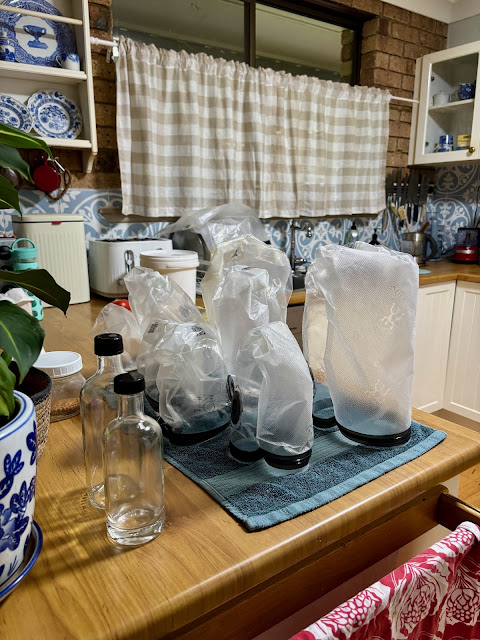
Every morning when I walk into my kitchen it looks tidy and ready for a day's work. Not so on this morning (above), I saw this when I walked in. Late the previous afternoon when I was looking for something, I came across my rolled up Zwilling vacuum bags and decided they had to be washed and dried. So I did that and although I usually put them outside on the verandah to dry it was dark by then. I turned the just-washed bags inside out and left them like this on a towel. It worked well and now the bags are ready to use when I bring home root vegetables, cabbages or whatever I buy that I want to last four or five weeks.
Image

You’ll save money by going back to basics

When I was doing the workshops and solo sessions, I had a couple of people whose main focus was on creating the fastest way to set up a simple life. You can't create a simple life fast, it's the opposite of that It's not one single thing either - it's a number of smaller, simpler activities that combine to create a life that reflects your values; and that takes a long to come together. When I first started living simply I took an entire year to work out our food - buying it, storing it, cooking it, preserving, baking, freezing, and growing it in the backyard. This is change that will transform how you live and it can't be rushed.  
Image

All previous blog posts

  • 2026 3
    • February 3
      • Workshops starting 1 March
      • Planting vegetable seeds and new workshops
      • Back where we belong
  • 2025 7
    • July 1
    • June 2
    • May 1
    • April 2
    • February 1
  • 2024 25
    • December 2
    • November 1
    • October 2
    • September 3
    • August 1
    • July 3
    • June 1
    • May 3
    • April 2
    • March 3
    • February 2
    • January 2
  • 2023 13
    • December 1
    • November 2
    • October 1
    • September 3
    • August 2
    • February 2
    • January 2
  • 2022 17
    • November 3
    • October 4
    • September 3
    • August 2
    • July 3
    • June 2
  • 2021 50
    • December 1
    • November 6
    • October 7
    • September 5
    • August 4
    • July 5
    • June 2
    • May 2
    • April 6
    • March 4
    • February 4
    • January 4
  • 2020 68
    • December 3
    • November 5
    • October 4
    • September 4
    • August 4
    • July 4
    • June 4
    • May 8
    • April 7
    • March 8
    • February 8
    • January 9
  • 2019 66
    • December 2
    • November 4
    • October 5
    • August 3
    • July 4
    • June 6
    • May 8
    • April 8
    • March 8
    • February 11
    • January 7
  • 2018 82
    • December 1
    • September 2
    • August 10
    • July 4
    • June 11
    • May 9
    • April 12
    • March 10
    • February 10
    • January 13
  • 2017 129
    • December 7
    • November 10
    • October 6
    • September 13
    • August 11
    • July 13
    • June 12
    • May 9
    • April 9
    • March 14
    • February 11
    • January 14
  • 2016 125
    • December 7
    • November 13
    • October 10
    • September 11
    • August 11
    • July 8
    • June 9
    • May 9
    • April 12
    • March 10
    • February 13
    • January 12
  • 2015 184
    • December 7
    • November 15
    • October 20
    • September 18
    • August 19
    • July 18
    • June 12
    • May 15
    • April 12
    • March 21
    • February 13
    • January 14
  • 2014 203
    • December 11
    • November 8
    • October 17
    • September 20
    • August 17
    • July 19
    • June 17
    • May 17
    • April 23
    • March 15
    • February 18
    • January 21
  • 2013 225
    • December 13
    • November 17
    • October 17
    • September 17
    • August 21
    • July 24
    • June 20
    • May 19
    • April 17
    • March 22
    • February 17
    • January 21
  • 2012 245
    • December 17
    • November 20
    • October 20
    • September 18
    • August 15
    • July 24
    • June 21
    • May 26
    • April 23
    • March 23
    • February 19
    • January 19
  • 2011 257
    • December 18
    • November 24
    • October 27
    • September 23
    • August 24
    • July 21
    • June 24
    • May 24
    • April 16
    • March 22
    • February 14
    • January 20
  • 2010 283
    • December 20
    • November 18
    • October 18
    • September 19
    • August 25
    • July 24
    • June 25
    • May 26
    • April 25
    • March 22
    • February 29
    • January 32
  • 2009 293
    • December 29
    • November 18
    • October 23
    • September 25
    • August 22
    • July 28
    • June 22
    • May 21
    • April 27
    • March 26
    • February 24
    • January 28
  • 2008 387
    • December 24
    • November 23
    • October 25
    • September 26
    • August 27
    • July 27
    • June 37
    • May 34
    • April 44
    • March 53
    • February 32
    • January 35
  • 2007 372
    • December 37
    • November 40
    • October 55
    • September 51
    • August 49
    • July 63
    • June 49
    • May 28


Trending Articles

NOT the last post

This will be my last post here.  I've been writing my blog for 18 years and now is the time to step back. I’ve stopped writing the blog and come back a couple of times because so many people wanted it, but that won’t happen again, I won’t be back.  I’ll continue on instagram to remain connected but I don’t know how frequent that will be. I know some of you will be interested to know the blog's statistics. 
Image

Every morning at home

Every morning when I walk into my kitchen it looks tidy and ready for a day's work. Not so on this morning (above), I saw this when I walked in. Late the previous afternoon when I was looking for something, I came across my rolled up Zwilling vacuum bags and decided they had to be washed and dried. So I did that and although I usually put them outside on the verandah to dry it was dark by then. I turned the just-washed bags inside out and left them like this on a towel. It worked well and now the bags are ready to use when I bring home root vegetables, cabbages or whatever I buy that I want to last four or five weeks.
Image

You’ll save money by going back to basics

When I was doing the workshops and solo sessions, I had a couple of people whose main focus was on creating the fastest way to set up a simple life. You can't create a simple life fast, it's the opposite of that It's not one single thing either - it's a number of smaller, simpler activities that combine to create a life that reflects your values; and that takes a long to come together. When I first started living simply I took an entire year to work out our food - buying it, storing it, cooking it, preserving, baking, freezing, and growing it in the backyard. This is change that will transform how you live and it can't be rushed.  
Image

Creating a home you'll love forever

Living simply is the answer to just about everything. It reduces the cost of living; it keeps you focused on being careful with resources such as water and electricity; it reminds you to not waste food; it encourages you to store food so you don't waste it and doing all those things brings routine and rhythm to your daily life. Consciously connecting every day with the activities and tasks that create simple life reminds you to look for the meaning and beauty that normal daily life holds.  It's all there in your home if you look for it. Seemingly mundane tasks like cleaning and cooking help you with that connection for without those tasks, the home you want to live in won't exist in the way you want it to.  Creating a home you love will make you happy and satisfied.
Image

Time changes everything

I've been spending time in the backyard lately creating a contained herb and vegetable garden. My aim is to develop a comfortable place to spend time, relax, increase biodiversity and encourage more animals, birds and insects to live here or visit. Of course I'd prefer my old garden which was put together by Hanno with ease and German precision. Together, we created a space bursting at the seams with herbs, vegetables and fruity goodness ready to eat and share throughout the year. But time changes everything. What I'm planning on doing now, is a brilliant opportunity for an almost 80 year old with balance issues. In my new garden I'll be able to do a wide range of challenging or easy work, depending on how I feel each day. It’s a daily opportunity to push myself or sit back, watch what's happening around me and be captivated by memories or the scope of what's yet to come.
Image

It's the old ways I love the most

I'm a practical woman who lives in a 1980’s brick slab house. There are verandahs front and back so I have places to sit outside when it's hot or cold. Those verandahs tend to make the house darker than it would be but they're been a great investment over time because they made the house more liveable. My home is not a romantic cottage, nor a minimalist modern home, it's a 1980’s brick slab house. And yet when people visit me here they tell me how warm and cosy my home is and that they feel comforted by being here. I've thought about that over the years and I'm convinced now that the style of a home isn't what appeals to people. What they love is the feeling within that home and whether it's nurturing the people who live there.
Image

Back where we belong

Surprise! I'm back ... for good this time. Instagram became an impossible place for me. They kept sending me messages asking if I'd make my page available for advertisers! Of course, I said no but that didn't stop them. It's such a change from what Instagram started as. But enough of that, the important part of this post is to explain why I returned here instead of taking my writing offline for good. For a few years Grandma Donna and I have talked online face-to-face and it's been such a pleasure for me to get to know her. We have a lot in common. We both feel a responsibility to share what we know with others. With the cost of living crisis, learning how to cook from scratch, appreciate the work we do in our homes, shop to a budget and pay off debt will help people grow stronger. The best place to do that is our blogs because we have no advertising police harassing us, the space is unlimited, we can put up tons of photos when we want to and, well, it just feels li...
Image

Making ginger beer from scratch

We had a nice supply of ginger beer going over Christmas. It's a delicious soft drink for young and old, although there is an alcoholic version that can be made with a slight variation on the recipe. Ginger beer is a naturally fermented drink that is easy to make - with ginger beer you make a starter called a ginger beer plant and after it has fermented, you add that to sweet water and lemon juice. Like sourdough, it must ferment to give it that sharp fizz. To make a ginger beer plant you'll need ginger - either the powdered dry variety or fresh ginger, sugar, rainwater or tap water that has stood for 24 hours to allow the chlorine to evaporate off. You'll also need clean plastic bottles that have been scrubbed with soap, hot water and a bottle brush and then rinsed with hot water. I never sterilise my bottles and I haven't had any problems. If you intend to keep the ginger beer for a long time, I'd suggest you sterilise your bottles. MAKING THE STARTER In a...
Image