down to earth

  • Home
  • About Us
  • Down To Earth Book
  • Privacy Policy
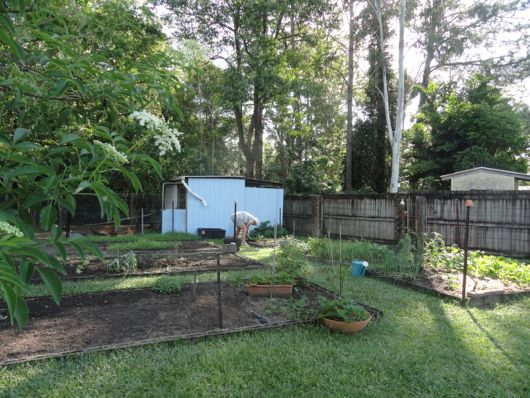
Here is Hanno bent over planting seeds and seedlings in the late afternoon sun.

Not only is March the best time of year for me with the weather, it's also when we see the re-emergence of our beautiful vegetable and herb garden. We're both looking forward to a good growing season this year and hope to have an abundance of fresh organic food to eat and share. We are committed soil gardeners, we don't like no-dig gardening. We look after our soil, dig it over and it produces vegetables that contain minerals from the earth as well as all the vitamins we need. The heavy work of weeding, turning over and soil enrichment happens here at the beginning of every growing season, and Hanno breaks that hard work up into smaller chunks that he can manage. Many of the vegetables are thriving already and some are big enough to pick.

Hanno planted 36 Glen Large garlic cloves yesterday - they're suited to warmer climates, so hopefully they'll do well here. Last year's garlic crop rotted away in the rain. He's also planted bok choi, sugarloaf cabbage, cauliflower, beans, tomatoes, lots of curly kale, pickling onions, shallots, leaks, beetroot. lettuce, silverbeet (chard) and zucchinis.  There's still a lot to go in but this is a very good start. Next step - root vegetable seeds. We have carrots, turnips, radishes and daikon to be sown.

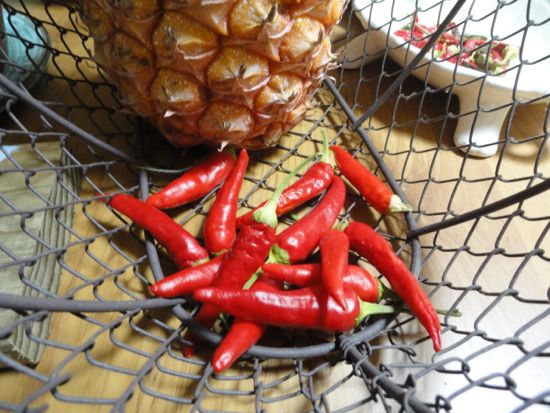
I have a selection of flowers too. I've planted sweet peas in a big pot and have Queen Anne's Lace to attract bees and other beneficial insects to the garden and at some point through the season, I'll probably add calendulas, alyssum and maybe some borage, if I can find some seeds. We already have a number of culinary herbs growing - parsley, sage, basil, thyme and lemon basil and of course, the ever present chilli bush is still producing more than enough medium-hot chillies. We have three ginger sprouts to plant too.

In the foreground, on the left, is the bench we sit on under our elder tree. Finally, after those five weeks of rain, the ground has dried out a bit and the elder is flowering.

This patch of lettuce, bok choi, silverbeet and cucumbers was planted on 14 February. You can read that post here.   Almost six weeks later, most of it is ready for the table.


This is Giuseppe, the guardian of the garden when no one is around. He is the recycled top of a Villaroy and Boch jar. My friend Kathleen was going to throw him out because he had a chip in his hat. As we all know, I have no requirement for perfection and therefore Giuseppe sits in our garden, with his hands full of carrots, watching when we can't.

This year we decided to let strawberries grow as under-storey plants around the vegetables. Hanno put the container next to the garden, the runners are self-rooting in the garden and when they do, he snips them off.

 The dark, bare area in this first garden is our garlic patch.


Hanno will be making comfrey fertiliser soon so we won't have to buy nitrogen fertiliser for the green leafy vegies. We'll probably put some on the compost too as comfrey will accelerate the decomposition there. It's a very helpful and versatile herb. If you can get some root cuttings, grab them and plant them close to your compost heap. A lot of people think comfrey runs like bamboo. It doesn't, but you have to be sure of where you plant it. If you dig it out, even the slightest piece of root will allow it to regrow in that spot.

There is no doubt about it. Having a garden to spend time in and being able to grow food and keep chickens helps me find balance in my life, especially when I'm busy writing and out working. It's even more important then. Walking out there into the fresh cool air makes me relax and I know that right here, right now is all I care about.  Life here is simple and apart from our clothes, the scene in our backyard on almost any day resembles scenes from hundreds of years past. We are just two people providing for ourselves. And sitting there under the elder tree - and I think everyone over 60 should have an elder tree - I'm calm, thoughtful and slow. There isn't much I want in life but I would like to put in a request to stay here, tending vegies and collecting eggs until I drop. I know I'll go out with a smile on my face. This is the outernet at its best.

One of the pleasures of having a break away from the blog is coming back full of enthusiasm. I miss all of you when I'm not here writing and imagining, in my mind's eye, you, drinking hot tea, breastfeeding the baby, planting seeds, milking cows, collecting eggs, folding laundry, sitting in the sun, walking around in the fresh air, coming home from work to the comfortable seclusion of your home, knitting on the verandah, watching birds and insects, tending your balcony garden, rigging up the downpipes from the roof, baking or returning home from the farmers' market with a packed basket. Yes, it's better when we're all here together.

I went to Maleny Dairies during the week to pick up milk for the family. It was late afternoon, I looked over beside me and this is what I saw. The rolling hills and the brown and white Guernsey cows, on the track, making their way up to be milked.


My foot is on the mend. It's not quite back to normal yet but the zinc certainly has done a wonderful job in repairing all that damaged skin. I'm still sure I have eczema and when my doctor comes back from his own sick leave, I'm going to ask for a referral to a dermatologist. In the meantime, I'll continue with the zinc, put my foot up when I sit down and generally look after myself. Thanks for sending all your healing thoughts and prayers as well as all your favourite home remedies. They certainly were interesting reading. I believe that certain treatments work on different people. Not everything works on everyone. If you have something that works for you, hold it tight and keep using it. For me, although I've tried Manuka honey and various herbal ointments, my go-tos are emu oil and calendula salve. This time though, they didn't work. This time my saviour was zinc cream. When the nurse applied the zinc impregnated bandage for the first time, I felt it soothe my foot within the first minute. It's wonderful stuff.

Jamie showing the chooks his big hands.

One of our free writing workshops, this one at the Cooroy Library. 

So what's been happening here? A lot. I'm about to be catapulted into a very busy season again, full of writing and all my home and family activities, as well as workshops with Ernie and some work with the Sunshine Coast Council promoting simple life. I must apologise for not having the milk recipe book out by now. It's finished and I'm trying to find time to get it made up into an ebook and then it will be on sale. If you've signed up for my newsletter, and you can do that on the sidebar near the book photo, you'll be the first to receive the news when it's published. When that's out, I'll work on a new print book proposal, some simple living modules to be presented at the Sunshine Coast libraries in July and August and then I'm starting work on a Down to Earth ebook for North America, Europe and Asia. The 16 free workshops we're doing at the libraries have been successful beyond our dreams. All were booked out, and just meeting all the writers here on the Coast has given me a few ideas about how to support and encourage them through the libraries. But that's another meeting for another time.

Sunny and Jamie have been over to visit us quite a lot and we're really enjoying that. Jamie follows Hanno around like a little shadow. So not only do I get to see my gorgeous grandson run around the backyard, I've been having many quiet conversations with Sunny and along with that, the chance to get closer to her. I really do see her as a daughter now. She is such a blessing to us. And it's Jamie's second birthday next Sunday. How did that time go so fast?

As usual, Hanno has been working with me to get us through this period of me being out of action. He's done everything in the home, including the cooking for the past couple of weeks. I've either been out workshopping or at home with my foot elevated - either with my laptop on my lap or knitting. Now that I'm back in action, Hanno can get back into the garden and finished his plantings. But more about that tomorrow. 


I think I'll be back writing new posts on Monday. My foot is on the mend.  :- )

The following was written in March 2010.
....♥....

I think most of us become more selective as we age. When I was younger I wanted to experience everything I could so I would know rather than surmise. I'm happy enough now to leave things I'm not interested in. The ability and the sense to do that came to me with age, although I think many people are like that all through life. Now, at this point in life I know that it would have been prudent to choose a husband who possessed skills that would compliment, and not duplicate, mine. If I were looking for a husband now, the colour of his eyes wouldn't matter, I would want to know if he could successfully raise an organic vegetable garden. Hindsight is a wonderful thing but the truth is I was rarely prudent in my younger years and when Hanno wandered into my life I never once thought of any of those practical considerations, I just loved him. I was more concerned with what was in his heart rather than in his bank account.


When I hang clothes or towels, the frame sits on its own legs. When I have sheets on the line, we use a little steel support to hold the line up a bit.

Now it's a bonus to me that he is multiskilled. Not only does he possess the skills of his former trade - mechanics, he can turn his hand to most things in the home. He can make furniture, repair the roof, rewire a lamp, unblock the plumbing, fix the car and cook delicious potato pancakes. I think I hit the jackpot.
It just pulls down from the roof where it sits when not in use.

A while ago, I asked Hanno to make me an all weather washing line. I wanted something better than the rope line we had strung up on the back verandah. I wanted a line that I could use when it was raining, that was ready to go all the time but would be out of the way. I needed a line that I could reach without stretching and one that would hold a full load of washing. That was the brief - it's been delivered.

When the washing is dry, the frame is lifted up to the roof again, out of the way.

Even though it was some time ago that I asked for this washing line, Hanno did start working on it almost immediately. We settled on a steel frame that would be able to hold a full wash and last a long time but we had no way of welding the pieces together. Luckily for us, our neighbour John just bought a new welder. Hanno and John put the line together on the weekend and the ideal testing weather promptly arrived soon after. Five inches of rain fell yesterday, much less that what was predicted - 12 inches, but a real soaking nonetheless. I pulled the line down from where it is safely tucked away, pegged on the laundry and stood back to admire the scene. There are a few things that really improve with age, a capable husband is one of them. Thank you Hanno (and John).

The Down to Earth forum is still down for maintenance and repair. I have a technician working on it and I'm hoping it will be back online in the next day or so. I apologise for the inconvenience this may be causing you.

16 AUGUST 2010

I have just finished reading Radical Homemakers by Shannon Hayes, which was kindly lent to me by my friend and fellow radical homemaker, Sonya, from Permaculture Pathways. I enjoyed the book, and although I was radicalised many years ago and am already doing much of what the book is about, I did get a strong message from it - we need to stand up, be proud of our lives and talk to others about how we live and why we live this way. We need to develop small communities of like minded souls so that what we are doing becomes a common way of being. If we all do that, hopefully those small communities become bigger and young people will learn that having one partner stay at home to keep house, raise children, shop wisely and manage the income, is a valid, significant and acceptable way of living. And not to leave anyone out of this revolutionary equation, those single people, the divorced, widowed and never married out there who work a paid job and who live as simply as they can while they do it, they need to spread their message too. We all need to be role models and show that living a simpler life brings much more than a clean home, connected children, nutritious food and no debt; it brings contentment and enrichment with it, and it is a career.


I have had three careers - I was a nurse, a writer and now I'm a homemaker/housewife. Writing that sentence has highlighted to me just one of the hurdles we face - that of language. When I was a nurse and a writer, everyone knew what those terms meant; with homemaker or housewife they don't. Homemaker is more an American term than an Australian one, and housewife is old fashioned and implies that everyone is married. We need to coin a term that accurately describes this work we do and we need to realise that even though work at home is unpaid work, it has value and it contributes to our countries wealth. I really dislike those terms that make light of our work - domestic goddess, home engineer etc, we need something substantial that describes, in general terms, what we actually do. I do like the term homemaker because it could mean just about anything that is done at home, but I also like home worker.

We all need to help change the perception that happiness is gained by buying it, that economies should grow at the expense of their people and that stepping back from the mainstream idea of buying more than we need, with money we don't have, is a hippy fantasy. And on the more positive side, we need to show our younger people that living this way is empowering, engaging and revolutionary. At the moment young people see staying at home as a drudgery. They have to clean and cook, look after children, and sometimes frail parents, and when the only knowledge you have of those tasks is what is seen on TV or advertising, you start to understand what a negative perception there is in the community about working at home.

We have to show that working at home gives us freedoms that paid work rarely offers. Imagine your first day at a paid job. You're given a range of tasks to do, a time limit in which to do them and standards to meet. All the time someone is watching you, making sure you do everything according to their plan. Now imagine your first day in your new home. You have already talked about your values and needs with your partner, so you set about setting up routines and learning new skills that will support your visions. The sky is the limit. You may do your work to your own rhythm and to whatever standard you set yourself.


You start taking control of your home - this is not a place where you just spend time waiting for your partner to return home. This, my friends, is a work in progress, a place that you want to spend time in, you want to make beautiful, safe and comfortable. You want to create a home that will nurture those who live there and that provides a warm and welcoming feeling to those who visit. You decide on a plan that will see you use your home and the land it sits on to help you live. You decide to grow organic vegetables and fruit in the backyard, get a few chickens, make a worm farm, or keep bees. You want to live an environmentally sound life, to eat organic food, or at the very least, the freshest food you can. You decide to learn as much as possible to cut the cost of living in this healthier and organic way so you set about learning how to make soap, laundry powder, bread, jams, relishes, sauces, and pasta. You start mending torn clothes and household linens, then progress to making gifts and simple clothes for the children, you start knitting and crocheting with natural fibres. In short, you take your new life as the positive empowering career it is and run with it. You make the most of what you have and you reduce your impact on your environment while doing it.

Sure, I agree, no one wants to clean toilets or dirty nappies/diapers, but look at the alternative. Do you want to use a dirty toilet or have your baby unhappy and uncomfortable? Every job has parts that we don't like doing, life is not always about what we want to do. We need to step up to all our tasks - enjoyable and not so enjoyable, just do them and then get back to the rest of it.

I have already seen changes happening. More people are cooking and gardening now than in the past. There has been a revival in home crafts, sewing and knitting. More people are understanding that debt is a life sapping burden and working actively to paid of their debts. Many beneficial things are happening, but we need to drive this along and we need to talk about our lives in a positive way to show others that working in our homes helps build good lives. That might be evident to us but to the general population, it isn't. Let's start talking about the happiness that lies waiting when we live this way and let's show, by example, that housework rewards us with homes we want to spend time in. Stop talking about housework as if it's the last thing you'd want to spend your time on, discover the good in what you do and highlight it. Let's start supporting other women and men in the work they do, no matter what it is, unpaid or paid. We can change things if we start with our own front door and work our way out. Gentle reminders about our way of life, speaking up when we heard someone complaining about housework, writing about this on our blogs, all these things will help make a difference. All it takes is that a lot of us start doing it.


I am doing a soap making class at my neighbourhood centre next month and I'm continuing with my frugal home workshops but I'm also going to think about how I can engage with the young people at our Flexischool and talk with them about this. What will you do? Do you have any great ideas that we could all use to help show that housework is not only radical, empowering and enjoyable, it is also a career? If so, please share.

This was first posted June 2012.

I've had a lot of emails lately thanking me for various things so I want to remind you all that I am a normal woman and despite what some of you think, I am not perfect by any stretch of the imagination. I think that some of you think I'm better than I am. I would like to do more than I do, I would like to be better than I am, but I'm just me and I have to settle for that. I think my saving grace is that I'm easy on myself now. I don't expect perfection in myself or anything else, or anything close to it.


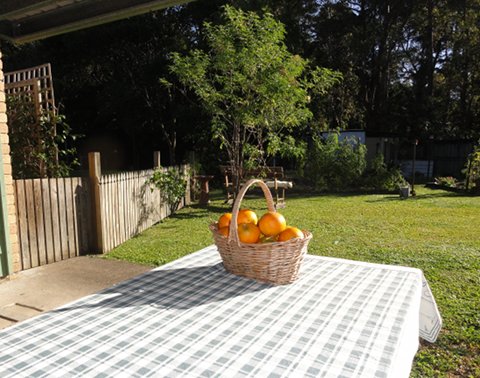
I think I'm like an organic backyard orange. I look old and motley on the outside, if you had to pay for me you'd offer five cents at a stretch, but when you open me up, the inside is sweet, juicy and healthy. It's a surprise. I think most of us are like that. Very few of us are like supermarket oranges that look perfect, cost a lot, but rarely live up to their promise. Most of us do our best but we are all flawed. We all think we should do more and be more, but now that I've got a few more years on me, I know that being flawed is not a crime, it's just a part of life. If I had not made all the mistakes I have made in my life, I wouldn't be the person I am now. When I fail, I learn from it. Not much happens when life goes smoothly and you succeed all the time. I'd much rather push myself and fail than to sit back and never try because I was too scared. Life is made interesting by uncertainty and the need to improve. 


If you look closely at the photo above you'll see what looks like a little black V shape - it's right in the middle at the top. That is a little male willy wagtail bird that lives here in the trees. He always joins the chooks and wanders around with them pecking at the grass and the crumbs they leave behind. I've noticed he's in nearly every photo I take of the chooks now.

It has been a beautiful winter day here today. I've got three layers on (one cotton and two woollen), the sky is bright blue, the air is crisp and the wind blows right through you. I've done some weeding, I've researched recipes, written, read and knitted. I sat for a while on the back garden bench and took it all in. I could live my whole life right here and not feel I'd missed one thing. So much is happening now that autumn has turned into winter - the pecan tree is still full of leaves that will soon turn brown and drop, the wisteria is golden and almost bare but the orange tree is growing and putting on new leaves already.


The tomatoes are going gangbusters, there are plenty of crisp young peas for afternoon snacking in the garden, the lettuces are crisp and delicious, the potatoes are up and we have all sorts of cabbages, brocolli and kale growing slowly and delevoping their unique flavours. The lemon tree is full of ripe fruit and it makes me think of one of the CWA recipes I saw today for Lemon Delicious pudding. As I breathe in the cold air and watch the chooks, and a willywag tail who thinks he's a chook, I know that this is close to as good as it gets. There is a small leg of pork and vegetables in the oven roasting for dinner, and I can smell that the red cabbage is almost ready. I should go inside but I'll linger here a little longer. I want to get colder. I want to see more.


We have some great outings coming up where I'm hoping to meet many of you. Toowoomba Library next Wednesday for two sessions: 10.30am and 5.30pm. We'll stay in Toowoomba overnight, thanks to the hospitality of the lovely staff and friends of the Toowoomba Library. The following week we have the big day out at Bell where the old hall will be chockers with all us girls and a few men; then in the last week of June, I'm speaking at the Landcare conference in Brisbane. But that last week is also the week Hanno goes into hospital to have cataracts removed, so, as usual, it's the good with the bad. The more things change, the more they stay the same. But I know that while I'm at home with interesting and productive work each day and with a few outings thrown in for interest, I'm happy and fulfilled. Life's good. I hope that when you weigh it all up, yours is too.


I went to the doctor again yesterday. It was a different doctor. The swab of my foot grew nothing, it's not infected. This doctor thinks it's a spider bite. I think it's eczema. But whether it's a spider bite or eczema, I have to rest with my foot up and not walk around unless absolutely necessary. She's given me more antibiotics, a different kind. I have a zinc dressing on it and have to go back next Thursday and Monday. My family wonder why I hesitate going to the doctor. This is a prime example of why I don't - there are few answers, it's guessing. I am resting when I can but life goes on and I have workshops to do. There is one today at Cooroy and eight more after that.

Thank you all for your continued good wishes. I appreciate it very much.

This was originally posted back in December 2008, the first year of the GFC.


I didn't think I'd be frightened by our economic crisis. Initially I saw it as a way of slowing everything down, putting the brakes on indiscriminate spending, and forcing many people to rethink the way they live their lives. Now it has gone beyond a simple lesson and is hitting hard. At the Centre I volunteer at, many more people are needing help and some of them are losing hope in the future. The crisis has a long way to go yet, some say life will be very difficult for at least another 18 months. My fear is that our governments have no idea how to handle what is happening and if they continue to throw money at the problem, the chance to grow through this, and eventually prosper, will be lost.

Simple living is the answer but politicians and those in power refuse to acknowledge that reducing what we spend on 'stuff' will help us and our planet. They are choosing to support 'the economy', and here in Australia, sections of our community - pensioners, carers, some people on a low income and families with children are being given one-off payments of over a thousand dollars ($1000 per child) and being encouraged to go out and spend it. It's a great pre-Christmas boost for those people but it's not a long term solution and it totally fails to address the problems associated with always having an economy reliant on non-stop spending, shoddy products and debt.

Simplifying our lives is not just a decision for tough times, although it makes the most sense then. I am not naive enough to believe that moving to a more simple way of life would be easy. I know it would be tough. But would it be tougher than what we are faced with now? Continuing to spend like drunken sailors is not sustainable, there must be a point at which the economy can't "grow" any more. Is climate change telling us we have reached that point?

I think our political agenda needs to change. If we had a Minister for Simplicity, she would be overseeing the development of factories to produce good quality, repairable, electrical appliances and cars that run on hydrogen; she would be encouraging us to attend the sewing or gardening classes in our neighbourhood; she would support the use of renewable energy, give rebates for solar panels and make water tanks compulsory on all homes. Schools would teach life skills. Community gardens would flourish. The general population would re-discover self-reliance.

Isn't that alternative an enticing idea. It would be wonderful if we had governments that really meant it when they said "it's time for change". Imagine if our factories reopened to produce sustainable, good quality products we all needed. Imagine if children grew up learning about vegetable gardening instead of sitting in front of an Xbox for hour upon hour. Imagine if credit cards were banned and we went back to thinking carefully about what we need, and then saving for it. The reduction in our landfill dumps alone would be astounding!

I don't believe that is going to happen, at least not in my lifetime. I am an optimist but I'm not stupid. I know handing out money is far more popular than being the instrument of change. I know band-aid measures are popular.

But in the meantime, we can all work towards further reductions in our lives. We can teach ourselves lost skills and be energised by producing some of our own food. We can slow down our spending and pay off debt. Big business hates that - it takes away their control of us. We can sew and knit, keep chooks; teach our children; talk to our neighbours; make do with what we have; be aware of our local natural environment and care for it; cook from scratch and become healthier because of it; and live smaller instead of bigger.

And while you're doing that, show your friends and neighbours what you're doing; they might be interested. Talk to your children about your family's changes and show them ways they might change too. Explain what you're doing to your extended family and work mates. If we can help others find a way of living that will help them survive this financial crisis, that helps us all. Be open with what you're doing and show others the benefits of your changes. And if you get the chance to talk to your local politicians, tell them how you've changed, what you've done and what you've planned for your future. Then ask them when we will have our first Minister for Simplicity.

I want to sincerely thank everyone who has sent prayers and good wishes for my foot to heel. I tried all the natural remedies before I went to the doctor. Unfortunately, in this instance, they didn't work; I'd left it too long.  I'm going back to the doctor today and I think he'll start me on stronger antibiotics. The first two packs didn't work as expected. I haven't taken antibiotics for about 15 years so I don't really know what the common ones are now. Anyhow, I'll go back and talk to the doctor and hopefully I'll be on the mend soon. 

Thank you for your patience. I'll be posting old blogs again this week. This one is from 19 March 2009.


We've all wanted her to return. That icon of the fifties, the housewife in the Audrey Hepburn dress and frilly apron who had perfect lipstick and a hot meal waiting for her man. Well, it looks like she's back, but she's changed a lot. Now our homemaker is dressed in jeans and a T shirt, a long linen skirt, or pretty dress. The apron is still there, it might even be "vintage", purchased on eBay for a price we would have laughed at back then, but apart from the apron and the kids, our modern homemaker is nothing like her 1950s counterpart. In the 1950s, housewives were looking for convenience and Laminex, and were embracing plastic. Now we are getting back to basics, going green and reskilling ourselves. Convenience has been replaced by authenticity.

Today's homemaker lives with increasing prices in an international economic crisis. She lives in a world of sharp contrasts - on the one hand she has the internet to connect with others, learn her craft and reskill herself, but that same technology also brings danger into her home in the form of scammers, paedophiles and conmen. She lives with the convenience of mobile phones, but also their cost and proliferation into the lives of our young children. She lives in a world of man-made antibiotics, chemicals and preservatives that are added to our foods and drinks, but some of those antibiotics and chemicals have reduced common illnesses and virtually eliminated some diseases. She also lives in a world that gives little respect to the role of the homemaker, while courting her to spend her money in this store or that.

Nowadays, women are returning to their homes for a number of reasons. They may have decided to raise their family and not return to work, they may have lost their job and realised they can add to their family's health and well being by working in a more frugal home. There are also all those women who I include in this huge shift in thinking - working women who must go out to work but who know the true value of the home and dive into it head first in the evenings and on the weekends. Altogther, we are the women who will change the face of homemaking in the coming years.

I am proud of the work I do in my community, I am equally proud of the work I do here at home. Working side by side with Hanno, we have created a life that enriches us and allows us to live with independence and freedom. We are independent in that we know how to look after ourselves, to grow food and make a comfortable home, and we are free in that we owe no debt. And there are many people who look at us and say how much they admire what we do and wish to do the same, but if truth be told, we are just enacting the role of the homemaker where we make do, repair, cook, bake and clean, using what some might see as old-fashioned techniques, but within a modern context.

Big deal, we are doing what our grandmas used to do. There is nothing new in this. But maybe the pride in doing it is new. I want to encourage all of you, whether you are just starting on this path or have been on it longer than I have, to take pride in your work and to support other women who are homemakers. The work we do in our homes is significant and vital, not only for our selves and our families but for the nation.

I hope you all know how important you are in your own homes. Take back your power to look after yourself and your home. Use the power of your hard earned dollars to support your family and the local businesses you believe give you the best value for money. Complain when you don't get good service and prices and tell that store manager you will take your business elsewhere. They might pretend to ignore you, but a business who doesn't take their customers seriously doesn't last too long. If things don't change, shop somewhere else, then tell your friends. The power of the dollar is an incredible force and we homemakers do most of the buying for our homes, let's use the power we have. Now, more than ever, it is vital that we get value for our money. We need to help our families through this crisis by cutting back as much as we can. We have to learn new skills to do that and we have to learn how to shop for food in innovative ways that stretch our dollars. You are your family's role model right now, it is up to you to show your family that personal growth is possible at such a time and the days of buying whatever you want are behind you. Thrift is back.

Let us welcome the happy homemaker. The move is on to make our homes a haven from the stresses of the world, take control of your life, change how you look at housework and look to the future with knowledge that whatever effort and energy you put into your home will be returned to you, plus some. Sure, nothing is good all the time, you will have bad days, I know I do, but the good days should far out number the bad.

As modern homemakers we have the power of our shopping dollars, we have the power of our technology, and we can choose to see the work of our homes are challenging, satisfying and enriching. You can make your home a place of contentment and comfort. You can change the way you think of housework and see it as an investment in your family's well being. You will be very influential in seeing your entire family through this economic crisis. What you learn now and what you already know could very well mean make or break for your family.

There is a significant job of work to be done here in our homes. We need to plan what we're doing, learn the skills we need to get us through this and work for the good of our families. Let's put our aprons on and begin.


My sincere thanks to everyone who sent a comment or email. I'm doing fairly well with my foot but it's so slow to heal. I'm going back to the doctor tomorrow and I'm pretty sure I need another course of antibiotics.

This post was written on 9 August 2007.
. . . . . . ♥ . . . . . . 

I live a life of contentment in a beautiful part of Australia. I grow some of my own vegetables, keep a few hens in the backyard, I bake bread and preserve food. I live well with no debt on a low income. My goal is to continue living this way and if I can convince a few others to walk this path less travelled, I’ll be a happy woman.

There was a time when I worked as a technical writer, paid a mortgage and shopped at mainstream supermarkets and department stores. There was no method to my madness and I didn’t know where I was headed. Yet from the time I was around 25 years old I had a buried yearning to live the type of simple life my contemporaries viewed with contempt. In those quiet hours of 4.00 am contemplation, I knew that my future held a new direction where less was more and contentment would fill the sweet air I breathed; but I didn’t know almost 30 years would pass before I started to live that dream. I wish I’d been serious about simplicity long before I turned 50, because this way of life holds appeal for all age groups, and will change the way you view the world.

The most common question I hear regarding simple living is: “How do I start?” Well the answer to that seemingly simple question is not so straight forward. It depends on why you want to change. The end result will be the similar but your focus will be slightly different. Hopefully this blog will show you the steps needed to start living simply, whatever your reason.

I also want this blog to encourage people, young and older, to take charge of their lives by not buying into the materialism trap. I think there has been a major shift in thinking in Australia in the last ten years or so. As a society we are moving closer to a kind of moral and material bankruptcy because we trust self-indulgent, unsustainable promises that tell us living a good life requires the latest product in this year’s “must have” colour. We have to have the biggest and the best and it is fine to go into debt to get it. Those promises are problematic. They require that you mortgage your life, enclose yourself with debt obligations and work non-stop to pay for stress-filled fake living that doesn’t allow you enough time to enjoy what you have. Those promises don’t allow for enjoyment of the natural world, they encourage a consumerist approach to life when what is needed for long-term gratification is a prudent and simple one.

Your life should be about you, your family and the people you choose to include in your daily activities. What you see portrayed in today’s advertising is a false representation of modern Australian life. It is a glamorised lie to encourage you to spend money on products you don’t need.

Reinvent your life. Think about what is really important to you and develop a set of values that reflect your true beliefs. Respect and nurture your values. Discover what it is you really want your life to be and then make plans to live that life. Define for yourself what are needs and what are wants. Be courageous and change your attitude about what success means to you. Free yourself of the conventional idea of what you should own and want, strip yourself of pretension and in the process you’ll discover your true self.

I want this blog to take you on a journey inside yourself to discover your passions, uncover your true potential and to help you be the authentic you. Mindless consumerism masks us all. It surrounds us with junk that turns us into curators of merchandise. Free yourself of all that ties you down, be that debt, clutter, stress, envy, or wanting too much. In a world filled with overindulgence, simplicity will liberate you.

If you’re wondering why you work from dawn till dark just to pay the mortgage and put food on the table, this blog is for you. If you just bought more clothes and yet more things to put in your home and still feel a sense of emptiness, this blog is for you. If you don’t have enough money to live on, or if you have too much, this blog is for you. If you feel trapped by modern living, welcome home.

Many of us may voluntarily choose to live simply but even if it chooses you, the result is similar. You live a life that is marked by less rather than more, you organise your home to nurture and support you and your family members, you help develop a caring and supportive community, you make from scratch much of what you consume, you aim to live debt-free, you respect your environment, minimise waste and you are content with your life choices and the kind of person you are.

Living a simple life is about beating the system and not following the same road everyone else is on. Stop following what your friends and neighbours are doing. They’re probably up to their ears in debt too. Reinvent your life. Be bold, live a life you care about, simplicity can make you soar.

I hope this blog will help you discover the essence of simple living and how to apply it to your own circumstances. Please remember that we are diverse nation and have different aspirations. What is right for some is wrong for others. So cherry pick the information here and apply as much as you can to your own life while keeping an open mind about developing new strategies and ways of living that suit you. There is no one size fits all formula when simplifying your life.

To help you simplify I have included information about the practical aspects of day-to-day living. Some readers will already be familiar with some of the activities contained within these pages, others will be novices. There was a time when much of this was common knowledge but our consumer culture has conned us into relying on products to sustain and support us. We’ve forgotten old ways and instead work our entire lives to pay for merchandise that others create for us. The more we have, the more we want, and so the never-ending cycle continues. It wasn’t like that in the past and it doesn’t have to be like that now. We can relearn our collective heritage of basic skills and apply them to our modern lives.

So, what do you really want out of life? If you want more of everything, if you know that you’ll never have enough or be enough, then stop reading this blog now and go back to work. But if you want to live an authentic life, if you want to enjoy time with your family, if you want to help save dwindling resources, if you want to become more self-reliant and build your skills, if you want to discover the real you and live the kind of life you dream for yourself, then read on, the simple life is for you. When you know that buying more of everything will not make you happier and that saving resources is better than spending them, then you will really know that less is more. Welcome to your new life.

Hello friends.

I've added the subscribe to the newsletter sign in on the sidebar. It's just near the book cover. Add your email there if you'd like to be on my email list for extra news about ebooks, workshops or general news from the Hetzel family. Your email will never be shared or given to anyone else.

I hope to be sending the first newsletter out next week with news of the dairy ebook and some workshops.   :- )  If you sent me your email address to me yesterday, please add it again to this list so I can keep it all together and organised. Thanks!

ADDITION: I just subscribed myself to the service to see what the process is all about and because Chele just emailed to tell me there is nowhere to add her name. So, when you get your confirmation email, mine went to the junk mail folder, if you click on "add us to your address book" that will stop the next newsletter from me going to your junk mail.  Also, if you find the "update your preferences button" or "update profile" button in the conformation email, click that because that is where you can add your name, in addition to your email address. Having looked through the list this afternoon, most people haven't given me their name, so their newsletters will just be addressed to their email address. It will still get to you but it's not as personal as I'd like it to be.
This post is from 2008

We say a lot about respect when we use the full measure of what we grow or buy. In the old days it was common practice to use every part of a slain animal; and many people who slaughter their own livestock still do it today. From cow horns being broken down and used as a fertiliser, or filled with cow dung and buried to produce the magical biodynamic Formula 500, to using bones for stocks and gelatine, and the meat, including the offal, for nutrition and the hide for warmth or furniture. Crafters do a similar thing with patchwork. They don't waste any scraps and by taking the time to piece the fabrics together, either randomly or in time honoured patterns, they produce beautiful quilts, bags and clothing that are sometimes featured on the walls of galleries, but always yield their true qualities of warmth and comfort.

Respect is expressed in those actions of honouring the life of the animal or the work involved to grow the cotton and produce the fabric, by using every part for a worthwhile purpose and by making sure there is no waste to pollute or be part of a landfill dump.

We can carry those principles on very easily when we use our fruit and vegetables too. Again, they can be either grown at home or purchased, the respect for the work and resources involved in producing what you have before you is clear and unambiguous if you use every part of what you have. Take our pineapple, for instance. That pineapple was grown from the top of a local pineapple we bought a few years ago and it will continue on because I will plant this top to grow two more pineapples.


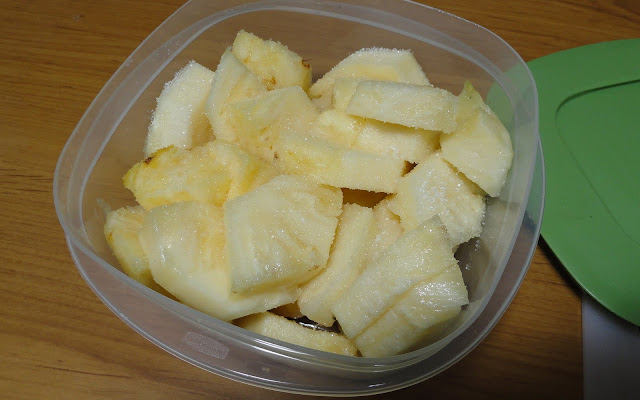
Growing pineapples in a warm climate is simple, it takes a long time, but you will be rewarded for you patience when you taste that sweet juicy organic fruit. I sliced ours down the middle and cut it into chunks. We've feasted on it twice now after our tea and we will finish it off tonight. It is so sweet! When I tasted it I forgot about those years of growing and thought only that we grew it, it was organic and we used every part of it - no waste, everything was used. So how do we get to that point?


Take the top from your pineapple - if you have a choice, use the best pineapple - the juiciest and the sweetest. You will be passing on those genes to your next fruit. Remove all flesh from the base of the top, then peel off several layers of leaves. You want a cutting that is clean and undamaged at the base. Allow it to dry out for a few days, then plant it in the garden in a sunny spot where it can grow for at least two years. Don't put it where you plan on planting tomatoes next season. If you live in a colder climate, I believe you can plant pineapple tops in large pots, at least the size of a bucket, filled with good quality potting mix. Keep the top in the sun for as long as possible, then move inside to a sunny window during the cold weather. Pineapples don't need a lot of water but you'll need to water it in well and water every couple of days for about two or three weeks until the roots start reaching out into the soil.


We didn't fertilise our pineapple much. It got some liquid fertiliser occasionally and natural rainfall, otherwise it sat quietly doing its own thing. They do take up a fair bit of space when the top has fully developed so if you're planting a number of tops, make sure you give them a metre / three feet space in which to develop. When it's been in a year or so, you'll notice a tiny pineapple emerge from the centre. That slowly develops for about six to nine months and ripens to a perfect fruit. It is ready to pick when, instead of standing upright, it falls over while still attached to the centre. Cut the pineapple stalk off the main plant and leave the plant in the ground. Fertilise with liquid fertiliser and continue as before - this same plant will produce a second pineapple and will take the same amount of time doing it.

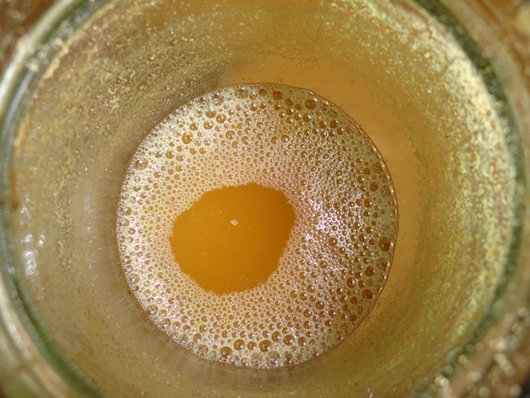
When you harvest your pineapple, cut the top off and replant. Eat the fruit and make the skin and the off cuts into pineapple vinegar. I've written about that here. Wonderful! No waste at all. You've used the entire fruit and that one top will continue producing pineapples for as long as you continue to plant the tops.

Respectful. Economical. Productive.
Hello everyone.

SEE UPDATE BELOW

While I'm resting with my feet up I thought I'd create a private list of your email addresses so I can send out the occasional newsletter. It's been something I've been thinking about for a while. If you'd like to receive emails from me every so often, when I'm releasing a new ebook or doing something new, I'll need your address.

If I have your email I can tell you about what's happening, when a book will be released, where you can buy it and how much it will be. I will also send information about my workshops; I'm thinking of doing one in the Blue Mountains in June. Of course, I won't give your email address to anyone else. It's for my personal use, just so I can keep in touch with you.

UPDATE: Don't send me your address right now. I've decided to download a program that I can install on my side bar and you can enter your own email addresses into the box provided. It will save me cutting and pasting hundreds of addresses over manually. To everyone who has already sent their address, I'll get you to enter in the new program when it is up. It will be there in the next day or so and I'll remind you all when it's ready for use.

Thanks everyone.

This is from 31.3.2010. Little did I know that 12 months after that day our first grandson, Jamie, would be born. :- )

 The beginnings of our new season garden.

From the outside, our simple house belies the fact that such rich lives are being lived here. You can see and feel it in the backyard with the abundance of life evident there, but at the front, well, our small home looks like many others dotted endlessly throughout the urban and rural areas of Australia. But Hanno and I have found the secret of living well and we are developing the art of it every day. It took that break away from blogging for me to step back and look at what we've got here. Our lives are not just skin deep, there is real depth here.

 Tomatoes, capsicums and green onions.

Taking a break from this blog, even though it is a familiar friend to me now, helped me step back and take in how our lives here have evolved and shaped us. During my break I made sure I slowed down. It's one aspect of this simple life that I always need to readjust. Swiftness and efficiency often take over from slow and mindful, especially on work days and when I'm away from home. I need to slow myself back down again, put the brakes on and remind myself that work done slowly and mindfully easily gets through the chores and there is no stress at the end of the day.

Here is my main gardener, Mr Hetzel.

So while I've been away, Hanno has been working on the garden and I have to tell you that the soil this year is the best it's ever been. From almost empty beds just a few short weeks ago, we now have cucumbers nearly ready to eat, capsicums (peppers), lettuces, tomatoes, bok choy, beetroot, radishes, sugarloaf cabbages and green beans. In the bushhouse, we planted seeds for leeks, tomatoes, more sugarloaf cabbages, silverbeet and those wildly mad zinnias that bring bright colour to the garden. The zinnias are ready for planting now, the vegetables need another week or two.

Bok choy growing fast in front of grass clippings waiting to be made into compost.

Inside our home I've been knitting Hanno a jumper (sweater) and am just finishing the back. I hope to have him in it by June. I've also been reading new books and re-reading older ones, especially the wonderful Simple Living by Frank Levering and Wanda Urbanska. I read it several years ago but I'm enjoying it more now because I understand, from experience, what it is they hoped to do and how they fashioned their lives to suit themselves. I also have The New Compete Book of Self Sufficiency by the late John Seymour, sent to me as a blog giveaway by Steel Kitten, that I'm enjoying a lot. She actually sent two copies because the first one took months to arrive and she immediately ordered another copy when I told her it hadn't arrived. Naturally, when one turned up, so did the other. Thank you, Sarah. And thanks to everyone who sent a comment about my return. It gives me a wonderful feeling knowing that I'm welcomed back and have been missed.

Yes, it came back again.  It was hiding behind the nesting boxes.

The chooks are healthy and happy, even though they had another visit from that snake. Alice is doing well, despite her old age and ill health. Things are starting to settle down at my voluntary job and I imagine that in a month or so the slow rhythm of my days will return there as well. I've rearranged and stopped a few things I was doing so that now I feel quietly confident that I can keep up my home duties, work in my community and at a couple of little jobs and get everything done that needs doing. It's a good feeling knowing those tasks I've set myself will be carried out as planned. I do not need every day to be a good one, but I do need to know that I have done my best everyday.


Cucumber tendrils have grown higher than they ought. In the background is a lemon tree with about one hundred lemons growing fat and juicy.

I remember when I first stopped working for a living, one of the things I hoped the days ahead would hold was richness. I was not seeking richness in a monetary sense but more a life that was multi-layered, that built on its foundations and add layer upon layer the kind of work that would result in an unusual life by today's standards, as well as a rich and rewarding one. Tick.

Some of the seeds we planted.  The zinnias will be planted out today.

There is nothing better than waking to a new day that you know will be full of productive and interesting work around the home.  Pottering with this and that, putting things right, cooking, gardening, baking, sewing, sitting and thinking - all the things that went into old fashioned lives and not so much into those that are modern. Those things, to me, make a perfect day.  And the truth is these days are so easy to home make.   All they require is a commitment to one's self - a promise to stay true to our values and to live as we wish, not part of an homogeneous crowd, but as individuals who think about how we live.  I do not need many of those perfect days to keep me going, just the promise of one tomorrow or next week is enough.  And enough is all I'm after.

Newer Posts Older Posts Home


My books were all published by Pengiun, and are available at Amazon US, Amazon UK and Amazon Au

Search here

Total Pageviews

Translate


I'm Rhonda Hetzel and I've been writing my Down to Earth blog since 2007. Although I write the occasional philosophical post, my main topics include home cooking, happiness and gardening as well as budgeting, baking, ageing, generosity, mending and handmade crafts. I hope you enjoy your time here.

MY FAVOURITE PLACES

  • Grandma Donna's Place
  • Grandma Donna's YouTube
  • Grandma Donna's Instagram
  • This Simple Day
  • Nicole's Instagram

Give More

Give More

Popular posts last year

Making ginger beer from scratch

We had a nice supply of ginger beer going over Christmas. It's a delicious soft drink for young and old, although there is an alcoholic version that can be made with a slight variation on the recipe. Ginger beer is a naturally fermented drink that is easy to make - with ginger beer you make a starter called a ginger beer plant and after it has fermented, you add that to sweet water and lemon juice. Like sourdough, it must ferment to give it that sharp fizz. To make a ginger beer plant you'll need ginger - either the powdered dry variety or fresh ginger, sugar, rainwater or tap water that has stood for 24 hours to allow the chlorine to evaporate off. You'll also need clean plastic bottles that have been scrubbed with soap, hot water and a bottle brush and then rinsed with hot water. I never sterilise my bottles and I haven't had any problems. If you intend to keep the ginger beer for a long time, I'd suggest you sterilise your bottles. MAKING THE STARTER In a...
Image

NOT the last post

This will be my last post here.  I've been writing my blog for 18 years and now is the time to step back. I’ve stopped writing the blog and come back a couple of times because so many people wanted it, but that won’t happen again, I won’t be back.  I’ll continue on instagram to remain connected but I don’t know how frequent that will be. I know some of you will be interested to know the blog's statistics. 
Image

How to make cold process soap

I'm sure many of you are wondering: "Why make soap when I can buy it cheaply at the supermarket?" My cold process soap is made with vegetable oils and when it is made and cured, it contains no harsh chemicals or dyes. Often commercial soap is made with tallow (animal fat) and contains synthetic fragrance and dye and retains almost no glycerin. Glycerin is a natural emollient that helps with the lather and moisturises the skin. The makers of commercial soaps extract the glycerin and sell it as a separate product as it's more valuable than the soap. Then they add chemicals to make the soap lather. Crazy. Making your own soap allows you to add whatever you want to add. If you want a plain and pure soap, as I do, you can have that, or you can start with the plain soap and add colour, herbs and fragrance. The choice is yours. I want to add a little about animal and bird fat. I know Kirsty makes her soap with duck fat and I think that's great. I think t...
Image

Preserving food in a traditional way - pickling beetroot

I've had a number of emails from readers who want to start preserving food in jars but don't know where to start or what equipment to buy.  Leading on from yesterday's post, let's just say up front - don't buy any equipment. Once you know what you're doing and that you enjoy preserving, then you can decide whether or not to buy extra equipment. Food is preserved effectively without refrigeration by a variety of different methods. A few of the traditional methods are drying, fermentation, smoking, salting or by adding vinegar and sugar to the food - pickling. This last method is what we're talking about today. Vinegar and sugar are natural preservatives and adding one or both to food sets up an environment that bacteria and yeasts can't grow in. If you make the vinegar and sugar mix palatable, you can put up jars of vegetables or fruit that enhance the flavour of the food and can be stored in a cupboard or fridge for months. Other traditional w...
Image

Cleaning mould from walls and fabrics

With all this rain around we've developed a mould problem in our home. Usually we have the front and back doors open and that good ventilation stops most moulds from establishing. However, with the house locked up for the past week, the high humidity and the rain, mould is now growing on the wooden walls near our front door and on the lower parts of cupboards in the kitchen. Most of us will find mould growing in our homes at some point. Either in the bathroom or, in humid climates, on the walls, like we have now. You'll need a safe and effective remedy at some point, so I hope one of these methods works well for you. Mould is not only ugly to look at, it can cause health problems so if you see mould growing, do something about it straight away. The longer you leave the problem, the harder it will be to get rid of it effectively. If you have asthma or any allergies, you should do this type of cleaning with a face mask on so you don't breathe in any spores. Many peopl...
Image

Five minute bread

Bread is one of those foods that, when made with your own hands, gives a great deal of satisfaction and delight. It's only flour and water but it symbolises so much. I bake bread most days and use a variety of flours that I buy in bulk. Often I make a sandwich loaf because we use most of our bread for lunchtime sandwiches and for toast. Every so often I branch out to make a different type of loaf. I have tried sour dough in the past but I've not been happy with any of them. I'll continue to experiment with sour dough because I like the idea of using wild yeasts and saving the starter over a number of years to develop the flavour and become a part of the family. However, the loaf I've been branching out to most often is just a plain old five minute bread. By five minutes I mean it takes about five minutes actual work to prepare but it's the easiest of all bread to make and to get consistently good loaves from. If you're having people around for lunch or...
Image

This is my last post.

I have known for a while that this post was coming, but I didn't know when. This is my last post. I'm closing my blog, for good, and I'm not coming back like I have in the past.  I've been writing here for 16 years and my blog has been many things to me. It helped me change my life, it introduced me to so many good people, it became a wonderful record of my family life, it helped me get a book contract with Penguin, and monthly columns with The Australian Women's Weekly and Burke's Backyard . But in the past few months, it's become a burden. In April, I'll be 75 years old and I hope I've got another ten years ahead. However, each year I'll probably get weaker and although I'm fairly healthy, I do have a benign brain tumour and that could start growing. There are so many things I want to do and with time running out, leaving the blog behind gives me time to do the things that give me pleasure. On the day the blog started I felt a wonderful, h...
Image

What is the role of the homemaker in later years?

An email came from a US reader, Abby, who asked about being a homemaker in later years. This is part of what she wrote: "I am a stay-at-home mum to 4 children, ages 9-16. I do have a variety of "odd jobs" that I enjoy - I run a small "before-school" morning drop-off daycare from my home, I am a writing tutor, and I work a few hours a week at a local children's bookstore. But mostly, I cherish my blissful days at home - cooking, cleaning (with homemade cleaners), taking care of our children and chickens and goats, baking, meal-planning, etc. This "career" at home is not at all what I imagined during my ambitious years at university, but it is far more enriching. I notice, though, that my day is often planned around the needs of my family members. Of course, with 4 active kids and a husband, this is natural. I do the shopping, plan my meals, cook dinner - generally in anticipation of my family reconnecting in the evening.  I can't h...
Image

Every morning at home

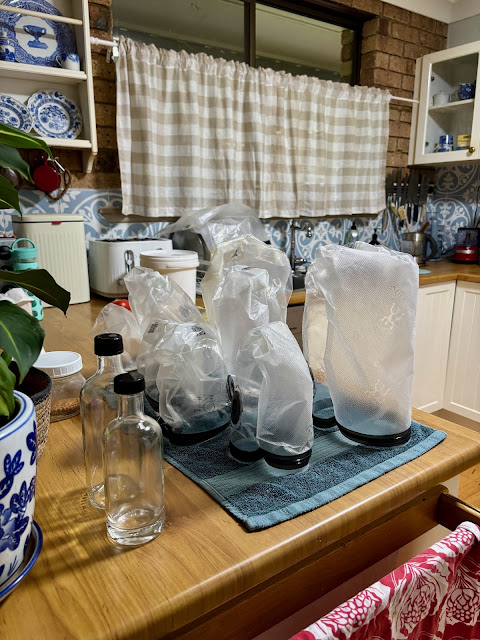
Every morning when I walk into my kitchen it looks tidy and ready for a day's work. Not so on this morning (above), I saw this when I walked in. Late the previous afternoon when I was looking for something, I came across my rolled up Zwilling vacuum bags and decided they had to be washed and dried. So I did that and although I usually put them outside on the verandah to dry it was dark by then. I turned the just-washed bags inside out and left them like this on a towel. It worked well and now the bags are ready to use when I bring home root vegetables, cabbages or whatever I buy that I want to last four or five weeks.
Image

You’ll save money by going back to basics

When I was doing the workshops and solo sessions, I had a couple of people whose main focus was on creating the fastest way to set up a simple life. You can't create a simple life fast, it's the opposite of that It's not one single thing either - it's a number of smaller, simpler activities that combine to create a life that reflects your values; and that takes a long to come together. When I first started living simply I took an entire year to work out our food - buying it, storing it, cooking it, preserving, baking, freezing, and growing it in the backyard. This is change that will transform how you live and it can't be rushed.  
Image


Trending Articles

NOT the last post

This will be my last post here.  I've been writing my blog for 18 years and now is the time to step back. I’ve stopped writing the blog and come back a couple of times because so many people wanted it, but that won’t happen again, I won’t be back.  I’ll continue on instagram to remain connected but I don’t know how frequent that will be. I know some of you will be interested to know the blog's statistics. 
Image

Every morning at home

Every morning when I walk into my kitchen it looks tidy and ready for a day's work. Not so on this morning (above), I saw this when I walked in. Late the previous afternoon when I was looking for something, I came across my rolled up Zwilling vacuum bags and decided they had to be washed and dried. So I did that and although I usually put them outside on the verandah to dry it was dark by then. I turned the just-washed bags inside out and left them like this on a towel. It worked well and now the bags are ready to use when I bring home root vegetables, cabbages or whatever I buy that I want to last four or five weeks.
Image

You’ll save money by going back to basics

When I was doing the workshops and solo sessions, I had a couple of people whose main focus was on creating the fastest way to set up a simple life. You can't create a simple life fast, it's the opposite of that It's not one single thing either - it's a number of smaller, simpler activities that combine to create a life that reflects your values; and that takes a long to come together. When I first started living simply I took an entire year to work out our food - buying it, storing it, cooking it, preserving, baking, freezing, and growing it in the backyard. This is change that will transform how you live and it can't be rushed.  
Image

Creating a home you'll love forever

Living simply is the answer to just about everything. It reduces the cost of living; it keeps you focused on being careful with resources such as water and electricity; it reminds you to not waste food; it encourages you to store food so you don't waste it and doing all those things brings routine and rhythm to your daily life. Consciously connecting every day with the activities and tasks that create simple life reminds you to look for the meaning and beauty that normal daily life holds.  It's all there in your home if you look for it. Seemingly mundane tasks like cleaning and cooking help you with that connection for without those tasks, the home you want to live in won't exist in the way you want it to.  Creating a home you love will make you happy and satisfied.
Image

Time changes everything

I've been spending time in the backyard lately creating a contained herb and vegetable garden. My aim is to develop a comfortable place to spend time, relax, increase biodiversity and encourage more animals, birds and insects to live here or visit. Of course I'd prefer my old garden which was put together by Hanno with ease and German precision. Together, we created a space bursting at the seams with herbs, vegetables and fruity goodness ready to eat and share throughout the year. But time changes everything. What I'm planning on doing now, is a brilliant opportunity for an almost 80 year old with balance issues. In my new garden I'll be able to do a wide range of challenging or easy work, depending on how I feel each day. It’s a daily opportunity to push myself or sit back, watch what's happening around me and be captivated by memories or the scope of what's yet to come.
Image

It's the old ways I love the most

I'm a practical woman who lives in a 1980’s brick slab house. There are verandahs front and back so I have places to sit outside when it's hot or cold. Those verandahs tend to make the house darker than it would be but they're been a great investment over time because they made the house more liveable. My home is not a romantic cottage, nor a minimalist modern home, it's a 1980’s brick slab house. And yet when people visit me here they tell me how warm and cosy my home is and that they feel comforted by being here. I've thought about that over the years and I'm convinced now that the style of a home isn't what appeals to people. What they love is the feeling within that home and whether it's nurturing the people who live there.
Image

Making ginger beer from scratch

We had a nice supply of ginger beer going over Christmas. It's a delicious soft drink for young and old, although there is an alcoholic version that can be made with a slight variation on the recipe. Ginger beer is a naturally fermented drink that is easy to make - with ginger beer you make a starter called a ginger beer plant and after it has fermented, you add that to sweet water and lemon juice. Like sourdough, it must ferment to give it that sharp fizz. To make a ginger beer plant you'll need ginger - either the powdered dry variety or fresh ginger, sugar, rainwater or tap water that has stood for 24 hours to allow the chlorine to evaporate off. You'll also need clean plastic bottles that have been scrubbed with soap, hot water and a bottle brush and then rinsed with hot water. I never sterilise my bottles and I haven't had any problems. If you intend to keep the ginger beer for a long time, I'd suggest you sterilise your bottles. MAKING THE STARTER In a...
Image

An authentic look at daily life here — unstaged and real

Most days Hanno was outside happily working in the fresh air. It may surprise you to know that I started reading my book,  Down to Earth , yesterday - the first time since I wrote it 13 years ago.  I had lent it to my neighbor, and when she returned it, I started reading, expecting to find surprises. Instead, I realised the words were still familiar—as if they were etched into my memory. As I flipped through the pages, I was reminded of how important it was for me to share that knowledge with others. The principles in Down to Earth changed my life, and I truly believed they could do the same for others. After just 30 minutes of reading, I put the book down, reassured that its message still holds true: we can slow down and reshape our lives, one step at a time.
Image