down to earth

  • Home
  • About Us
  • Down To Earth Book
  • Privacy Policy
Reading our meters gives us a real chance to cut back on our use of precious resources. It's like tracking your money when you start budgeting - you need to know how much you're spending, and on what.

On my first day of meter reading my electricity meter was on 22437, my water meter was 369233.

Electricity
When I did the second reading after using normally for two days, the meter read 22469 which is pretty dismal for us. It just shows me that we have to watch this all the time and not think it's okay to leave appliances plugged in or lights turned on. The second reading was 22488. Much better but it's not our best. We can get it much lower than that and I'll talk to Hanno later in the week about getting back to our old levels. According to our latest bill, which went up yet again!, that reduction over two days would have saved us about $90 over the course of a normal billing period. That's incredible, but it shows just how powerful a saving tool it is to read the meter.

The reduction in greenhouse gas emission is incredible too. If we can stay on that lower level we would be saving tonnes of gas emissions every billing period.

Water
That was much the same over the four days: we used between 102 and 107 litres each (28.8 gallons) per day.

The thing that really get me about this exercise is that is is SO easy to do. Turning off, unplugging, hanging out, cutting back - it's simple and easy and everyone can do it. We just have to have the will to do it.

I'm pretty sure the cost of utilities is rising world wide. Our electricity cost has risen twice in the past year. Let's do something about it. Let's stop being sitting ducks for the utility companies to rake in profits by taking control of ourselves and our usage of these precious products. Now is the time, my friends. We can all do it.

So how did you go? I hope you saved a lot - both in gasses and money but my wish for all of us is that we will be amazed at how easy it is to cut back and shocked enough by our reductions that we keep them low. Now I'm looking forward to reading all the comments about your reductions.

OLD POSTS RELATING TO THIS SUBJECT:
Hanging laundry

Saving electricity

PS: To all those who asked about the storms here, Hanno and I are fine. We had, and are still having, a lot of rain, but there was little wind here and no damage. Just 50km south, entire streets were wiped out, houses flattened and trees down. It's incredible, as on the same news broadcast we saw those terrible fires in LA. I hope everyone here from that area is safe and sound. Thanks for asking about H and I.


Above is the garden leading to our closed gate. The star jasmine and agapanthus are really putting on a fine show after all the rain we've had lately.

The gate was closed early Friday afternoon and is still closed now. We were shut off from the outside world, both physically and emotionally, all weekend and had all that delicious time to do our chores, relax and appreciate this life we live. Oh, there was one little visitor, L from next door, our 13 year old neighbour, came over to buy a dozen eggs and chat a while. He's a quiet and gentle soul so it's always a pleasure to have him in my kitchen talking about school and life at the end of our lane way.

Aside from that brief visit, Hanno and I ambled through one chore after another, which were generously peppered with periods of knitting, reading, talking, tea drinking and planning. We are always planning! Will we take the tomatoes out this weekend? Where will we plant the next potatoes?

I had planned on making soap on the weekend and was all ready with the new soap mould Hanno made for me, but when it came to it, I had no coconut oil or copha, so I decided to do it next week. I always like to have extra soap on hand over Christmas so I have spare gifts for people forgotten about or who pop up out of no where. I have found that a gift of homemade vegetable oil soap and dishcloth is always appreciated. Most people see it as a quaint novelty from days gone by and it's only when they use them they realise how practical and lovely homemade items are.

I had promised lemon butter (curd) to my friend Bernadette, as she did some knitting for me, so out came the lemons, butter and eggs and 30 minutes later I had four small jars of lemon butter. Homemade lemon butter is one of the true joys of home cooking. The bright yellow colour you see in those jars below is from fresh eggs and butter, not from the colourings and preservatives they put in the commercial lemon butters. If you're new to jam making, try your hand at lemon butter. It's easier than jam and although there is 20 minutes of stirring, I know you'll be planning your second batch as soon as you taste it.


LEMON BUTTER RECIPE
Makes 4 small cups

8 eggs
1½ cups white sugar
1 cup lemon juice
2 teaspoons grated lemon rind
250 grams (½ pound) butter

Hint: you'll get more juice from lemons that have been picked the week before you want to use them.

Put the eggs and sugar in a heat proof bowl over a saucepan of simmering water and stir till the sugar is dissolved.


Add the lemon juice and rind, then the butter and whisk for about 20 minutes until the mixture is smooth and thick.

Do not allow the mixture to boil as that will spoil it. You want the mix to thicken well and for all the ingredients to be thoroughly mixed together.


When the lemon butter coats the back of a spoon without running off, it's ready.


Pour the butter into warm, sterilised jars and seal straight away.

Store in the refrigerator.

Theoretically, it will last for two or three months but in our home that never happens. Hanno and I have already polished off the small, not-quite-filled jar in the photo. :- ) It's delicious on toast, pikelets, pancakes, as a cake topping, in tart cases, or on muffins or fresh bread.

Hanno cut his own hair on the weekend and I tidied up the ends and back for him. He also did some gardening and laundry and cleaned out the chicken coop. I did some more work on the book, answered some emails (but I'm still behind), cleaned and took the time to visit some blogs. Our meals on both days were simple and quick. Leeks were harvested from the garden so we had leek and mushroom omelettes on Saturday and pea soup from the freezer on Sunday.

I started knitting a dishcloth using a 40% linen and 60% cotton yarn that is new to me. It knits well but is made up of fine strands of thread that tend to fall apart when it's been handled. I doubt I'll buy more of it because I had to watch every stitch. I also finished off another pair of fingerless gloves, this time with ribbed wrists. I'll blog about them later in the week and show a photo. I'm really pleased with them and have decided to do a few more pairs as gifts and to use up odds and ends of wool. They only take about three quarters of a ball and look really cute.

I was going to blog about the meter readings today but thought it was a better idea to do it tomorrow. By then all my northern hemisphere friends will have their readings and we'll we able to compare both the readings and solutions for reducing them. So don't forget to have your readings ready for tomorrow.

I hope your weekend was restful and productive and the week ahead is a good one for all of us.

I've been busy over the past week but I'm feeling relaxed and rested nevertheless. My main task has been my book which I haven't talked about much lately but have had quite a few people ask me about, so here is an update. I'm working now on the book proposal, which I have to have finished by late December. The proposal is an explanation of what I an writing, how I see the book when it's finished, and what my subject matter is with a list and explanation of the chapters, and a couple of sample chapters. Basically I'm selling the book proposal, so it has to be the best it can be. Yesterday I spoke to a professor at the local university about book illustrators. He set me on the right path to find one - I would like to work with someone just starting out - and next week, I hope, I'll be sorting through examples of their work.

So that takes up most of my days. When I have a break, I usually knit, walk around the garden, or do some housework. Hanno, as usual, is a great help to me. He hangs out the laundry, packs the dishwasher and does the grocery shopping. We make a good team because neither of us asks for help but it's always offered and the work gets done. I guess that comes from living together all this time - each of us know what the other needs and we step in to provide it.


This is the latest addition to the gift cupboard. An organic cotton scarf that is silky soft and an absolute pleasure to feel on my neck. I'll have to make one for myself before winter comes around again.

I'm really pleased that so many of you are interested in reducing your usage of electricity, water and gas and have joined the challenge to help your conservation measures. Like any other thing, having a firm starting point and knowing, really knowing, what our figures are gives us a way forward that is realistic and not based on a guess. If you want to join the challenge, read this post and add a comment. Then it's just a matter of reading your meters and working on reducing your usage. We are winning in a number of ways doing this - we are doing a little bit for our environment, we will save money and we are taking part in a community project, and it is always a good thing to join with others to work for change.

So now I'm off to read my meters again. Over the weekend we'll work hard on reducing our usage of water and electricity and on Monday I'll report in again with my meter readings. We'll then have the chance to workshop what we all did and how we did it, so make sure you get your readings and report your findings and your measures. I wish everyone in the challenge good luck with all the measure you'll take and I hope your families chip in and help too.

Welcome to all the new readers who have come here over the past week or so. I hope everyone has a lovely weekend.


It's been raining here all night. I sleep like a baby when I hear rain falling on our roof. When I got up this morning and went outside, the small tank at the front was overflowing. I grabbed some buckets and watered all the plants on the front verandah. Then filled the buckets again for the plants to be watered again in a few days time. It's another 30 litres of water saved. and the tank is already full again. Every drop helps.

I hope many more of you sign up for the meter reading challenge. Knowing what you're using, either in water, electricity and gas, or only one of them, will help you reduce your usage. It's a small step but a very helpful one.

There have been some wonderful comments so far about conserving precious water and electricity. I love reading how people get over the barriers placed in their way and work towards conservation. It helps our environment and it will save you money. So be part of the challenge and let others know what you're doing in the hope they'll join us.

We are being told nearly every day that many Western countries will go into recession soon, or at least experience an economic downturn and tough times. Now is the time to start your cost cutting measures and save that money for what might happen in the near future. If you're lucky enough to bypass the troubles predicted, you could use the money saved to pay off debt.

We're all in this together, so let's read our meters so we have a realistic measure to start with and then we'll work together to cut our usage. And remember, every drop you save, every light you turn off, every towel you hang outside to dry, helps our environment.


One of the wonderful things about living simply is that when you simplify your life, you become more frugal and green. You put the days of excess and mindless consumption behind you and you focus on conservation. This leads to your home using less water, electricity and gas, you use less fuel in your car and, in turn, not only save money, you do your fair share in saving greenhouse gases. I find it absolutely incredible that even though we know the climate is changing, few governments around the world have done enough to make the changes needed to reduce greenhouse gas emissions. There are some very interesting graphics relating to the USA here, but let me tell you that my own country (Australia) falls far short of where it should be, even though we are told repeatedly that our Great Barrier Reef is dying and will be dead by 2050!

It's up to us, folks. We are the ones stepping away from the mainstream to live in a way that our neighbours don't always understand. As well as not spending like drunken sailors and living as frugally as we can, it's up to us to cut our own usage of fuels that will contribute to greenhouse gas emissions. Doing so will put us in a win-win situation: we lessen our own burden on our planet and we save money in the process.

There are any number of footprint site on the internet that will tell you what your current footprint is, but I think it's better to do something more practical - measure your own usage and take steps to reduce.

This is my challenge to you: I want you to read your water and electricity meters first thing tomorrow morning. Write down what your meters read and write down the time you do your reading. Then, that day and the following day do your normal routines without thinking about your meter reading - this is to get an accurate measure of your normal usage or electricity and water over two days. Next to your meter reading, write down what you do that uses your electricity and water so you know what contributed to your usage. So if you do laundry, write down how many loads, if you have a bath or a shower, write it down, etc.


When you've monitored yourself for two full days, and at the same time you read your meter on the first day, read the meter again - and write it down. Then, for two whole days, I want your to reduce your electricity and water usage as much as you can. Turn off lights when you leave a room, turn off your computer when it's not being used, reduce your heating or cooling by a few degrees, do as much baking as you can at the one time, cut back on laundry, take shorter showers, turn off the tap when brushing your teeth. It's difficult to suggest ways for you to save as we are all so different, but you will know. And please know that all those tiny savings definitely add up - nothing is too small to do.

I hope that a lot of you will do this with me. If there is enough interest we may do a week long audit - it will be more accurate. When we do the longer audit, we'll include our cars as well and monitor our use of fuel. But this will give us a good idea of areas in the home where we can cut back. It's important that we all do our fair share. Your home contributes to this global mess, just as mine does, so make sure everyone in your home knows what you're doing and ask them to help. This is a job for everyone - even small children, for it is their future world we're all effecting.

Here is an old post about reading water meters. Reading electricity meters is here. If your system is different, go the the website of your supplier and they should have details on how to read your meters.

Don't forget to do your first readings early in the morning of your next new day. Work two days doing your normal routines. On the following morning at the same time, do another reading - this will tell you what you used the two previous days. Then work two days cutting back as best you can on both water and electricity. On the next morning at the same time, do another reading of both meters - this will tell you what you used when you cut back. When you have your figures for your normal days and your followup readings for your two days of conservation, post them in the comments section of the post I'll do on the weekend. By Monday we should have all our figures in and we'll talk about it on Monday.

My hope is that we see some changes that will show us all how we can cut down on our usage on a permanent basis. You will save money doing it, and in these times of rising prices, that is a great goal. But remember too that you'll be doing something practical from your own home to reduce your own greenhouse gas emissions and that is something we should all be striving for.

In an attempt to spread the word, post about this on your own blogs and get as many people as you can to join us - every person who joins will add to a greater reduction.

Please let me know if you're joining in. I'll be here to help you as much as I can.


I want to write a bit more about time management. It's an important part of living simply and if you get this right, you'll make your life easier.

If you've been reading here for a while you'll know I often write about finding a balance. For me, time management is the tool I use to find the balance between work and play. It's important to know that if you give yourself too much play time, you won't have the time to do the work you need to do and, of course, the reverse is true too - working through the day with no rest or time for yourself isn't healthy. You need to find the balance that suits you.


This is me at work yesterday. I had to take a photo for the local paper and this was one of the rejects.

My life is pretty easy and relaxed now that my boys have grown and moved away. Now it's just Hanno and I, and our chooks, dog and cat. But there was a time when I felt like I worked from sun up to sun down, plus some. Luckily I realised early on that I needed to look after myself too and I made sure that I always gave myself time each day to sit and relax or do something that enriched me. I made time available to myself, I didn't give it all to my family or my home. I gave the gift of time to myself because when mama ain't happy, ain't nobody happy. And when I write mama, I mean papa too.

If you work day after day doing only for others, no matter how noble and useful that makes you feel, it will eventually weigh you down and you'll begin to resent it. It is very important for you to nurture your family, but it's also very important to nurture yourself as well. You have to find something to renew and enrich your spirit every day - that may be sewing, having a cuppa with a good book, prayers or meditation, having a nap, writing or painting, soaking in a hot bath with cucumber slices on your eyes, doing your nails, writing letters, taking the dog for a walk or knitting. Whatever it is must give you joy so you go to bed each night feeling you've done your best in your chosen work - be that at home or outside the home, and that you've given time to yourself to be you.

It doesn't have to take a lot of time, but if you use your time management skills, you'll be able to juggle your time to make available what you need. And this is something I found worked well for me - I told myself that I appreciated the time I had for myself. I actually said, sometimes aloud and sometimes silently, "this is good, you'll enjoy this", or "ahhh, I really need this time today, I'll make the most of it." Whatever it is that you say to yourself, say it so you mark your time as being separate. Acknowledge your enjoyment - it makes it more real.

While time management is a big subject, the steps towards managing your time are all small. Start off with your list of "to dos" for your day, make sure you have your time in there too and refer to the list in the previous time management post. Always remember we aren't managing our time so we are slaves to our work - we do it to work efficiently, to get our necessary work done and to give ourselves time to relax and do what we love. I can't tell you what it is you'll spend your free time on, only you know that, but I will tell you that if you give yourself that time to do something you love, it will make a significant difference in your life.


I spent quite a bit of time over the weekend staring out at the scene above. It's what I look out on when I sit in my workroom. "Workroom" is the inappropriate name I've given my sewing and writing room, but I have to admit, I don't feel like I'm working when I'm in there. Nevertheless, I did a few hour's work on my book, pottered around and talked to Hanno through the window while he painted posts on the front verandah.

It was a lazy weekend. There was rain, a few visitors, knitting and a bit of cooking. All in all a very pleasant time. I hope yours was too.


I found an old pure wool jumper that was washed in hot water a few months ago and cut a pair of mittens from it for next winter. There is still more than enough for a bag that I'll make up next weekend.


I finished off the fingerless gloves I started a little while ago from the pattern Heather posted on the Simple Green frugal Co-op. Heather's blog is Beauty that Moves, it's one of my favourites and I recommend it to you if you haven't yet wandered over her way.


I finished off the weekend with the knitted red cotton bag that I started a month ago. I'm making up the pattern as I go but I'm not sure yet if I like what I did yesterday. I'll look at it again with fresh eyes this morning and see if I'll be undoing a few rows or leaving it. I often undo knitting, although I do it less now than I used to. I learn my life lessons as much by mistakes as I do by my successes.

And my little simple living bag is there. I'm using it now as my pencil case for work. It contains pens and pencils, a calculator, eraser and post-its and it's easy to pop into my basket on work days and hang on a hook right beside my desk.

I really enjoy having unique things to use in my home and at work. It exercises my mind to make them and reminds me when I use them, that remaining productive and creative pays off in meaningful ways and that beauty is often created at home.


It's been a gruelling couple of days here. Tuesday afternoon my DIL Cathy was rushed to hospital with high blood pressure. My step son works three hours away, so I called him to come home, then Hanno and I went to the hospital. Cathy had a series of small strokes. She only in her mid-40s. She is okay and is home again now, and when I visited yesterday she looked good and said she felt okay.

Hanno and I went to the doctor yesterday, I got the all clear but Hanno has something suspicious in his blood test and needs a scan and more tests. He says he feels fine so we'll just have to wait and see what the scan shows. My sister Tricia phoned last night to tell me our cousin Stephen is dying in a Sydney hospital. For a family that has never had much in the way of illness, we sure are making up for it.


Next season's Washington Navel oranges - small now but they'll grow into globes of juicy sunshine by next winter.

My garden is providing much needed solace for me right now. I go out there and I swear it transforms me. It's a particularly abundant garden at the moment with a lot of fruit growing, and although it's very slow, the promise of it is there.


The pineapple top I planted two years ago is slowly - very slowly, maturing and is now presenting me with this small, but perfect, little pineapple. I cannot wait to taste this fruit. I'm hoping it will be ready for Christmas day. Hopefully, some red papaya will be ready for a fruit salad then too. We have two trees and both are setting fruit now.


Further over in the yard, on the eastern fence line, luffas are growing. I planted them all along this trellis so they'll get full sun all day with a little shade late in the afternoon. Now that all the seeds have germinated, this garden bed needs the edges cut with a spade and lots of mulch applied. That will probably be a weekend job.


The corn is healthy and producing fat, juicy cobs, and we are still drowning under a ton of zucchinis.


And while all this growing is carrying on, my lovely ladies keep producing about nine eggs every day. Mary is pictured above, making her contribution to her keep.


In the front garden, Hanno dug up the remaining potatoes. There was a small basket full which would be about 3kg (7lb). We haven't bought potatoes for months now and still have enough to see us well into next year.


We have planted some golden nugget pumpkins out where the bulk of the potatoes were and they're growing really well. There are only four plants but that will produce enough for us plus a few to give away. I must remember to grab a few small potatoes for seeds and leave them out to sprout before we plant the new crop.


Right next to the pumpkins, Hanno planted these little beauties for me - ginger and turmeric. In the photo above, the ginger is the larger one. I use ginger for my ginger beer and both ginger and turmeric in curries so it's good to have them growing in the garden.

I am moderating comments again. I was really disappointed in what happened yesterday and don't wish to discuss it further. I hope you all have a wonderful weekend and look towards next week with love in your heart and hope for the future.


We had 45 mm of rain (just under 2 inches) yesterday. Here are some of our chooks drinking the rain caught on their wire fence.

You are more likely to build the life you want for yourself if you use everything you have at hand. One of the things we don't always think of as an asset is the time we have available to us every day. Time is intangible, sometimes we forget it's one of our treasures. One of the many things I had to learn to give me the full measure of each day was time management. I have to know that the time available to me each day is used productively.

It's too easy to sit down with a good book or my knitting, it's too easy to read blogs for hours and it's too difficult to recover from it. My simple life is about a mindful rhythm of work that bubbles along at an easy pace, it's about consistency of purpose and it's about focus and getting my jobs done. In a nutshell, it's about time management and if I keep to my plan I know that everything I have to do, as well as those things I want to do, will be done.

I work harder in my home now than at any other time in my life. There are chores to be done here that in past times would have been done by others – I, like many others, bought convenience and freed my time to work for money to pay for it. I've seen the light now – I know that I can still have all I need and want in my home if I do the work for it – and to fit it all in the time each day affords, I need to manage my time effectively.


The vegetable garden, next to the chook house, from the other side of the backyard.

Here are a few things that I do that might work for you too:

LISTS
I have goals. Every morning when I rise, I know what I want to do that day. I used to write it all down but now, with the experience of so many days and the rhythm of my work built into my days, I know what and when I will do my work. But this is one of the things you can do to organise yourself - write a list of what we need to do tomorrow. Write your list in the order you will do your tasks, or the most important tasks first, but we flexible enough to change it if it doesn't all go to plan.

GET UP EARLY
This is a difficult one to develop. I started doing this when I was much younger and my boys were in primary school. Then, I was working full time and studying for a degree, as well as being a mother and a wife. I discovered that if I rose early I had a few hours of time when I was alone to study or write. I still do this but now it's the time I write my blog - so what I want to do doesn't impact on what I have to do.

PLAN YOUR MENU
Having your meals organised will help you relax enough for your other tasks. You'll know what you'll be preparing for dinner that night and have all the ingredients waiting for you. No last minute panic, no rushing to the store to buy something that is missing.

DELEGATE
I believe children benefit a lot if they grow up knowing they contribute in a practical way to the welfare of their home. From an early age, give them tasks, within the limits of their age and ability, that help with the overall running of the house and teach them how to look after themselves in the process. They can start off putting their dirty clothes in the laundry hamper, picking up toys and feeding the cat, and progress to more involved tasks as they mature.

DO A BIT OF HOUSEWORK EVERYDAY
My days are made up of housework but for those of you who work outside the home as well, get into the habit of doing a few tasks each day. You might clean the bathroom, wash a load of laundry every morning, or vacuum the family room. Whatever it is you can manage during the week, it will keep your home in order and give you more time on the weekend to spend with the family.

SAY NO TO TIME WASTERS
Turn off the TV, walk away from the computer, say no to the neighbour who always pops in for morning coffee. Say no to whatever temps you away from today's list.

GIVE YOURSELF TIME
Saying no to time wasters will free up time for yourself. It will give you time with your family or to spend on sewing, or a spare 30 minutes to sit alone with your thoughts and a cuppa.

STOCKPILE
Stockpiling groceries has turned my weekly trip to the supermarket into one that I do maybe once a month. Shopping once a month instead of weekly will free up quite a few hours for other things you need or want to do.

SAVING MORNING TIME
Doing a few extra things at night will free up time the following morning. Most families are in a rush in the morning - if you can do a quick tidy up, make tomorrow's lunches, put on a load of laundry or pick out clothes to be worn the next day before you go to bed, you'll free up time the following morning.


The chook house from the other side of the yard.

We all have different demands on our time but one thing is common to us all, if you can manage your time effectively, delegate and make the deliberate choices that your own life requires of you, you will live well and have enough time for your family and for those things you want to do. I have no doubt that many of you have developed ways of managing your time to suit the life you live. I'd love to know what you're doing so please share if you can.

On the subject of time management, I received an email this morning from a reader who was very upset that I hadn't yet replied to her email sent a week ago. I haven't yet replied to emails sent three weeks ago, however most of you know that I try to reply to a few each day. I've been ill and then trying to catch up with my work, not to mention my book, and some things remain undone. I am sorry you all have to wait but I can only do what I can do. I'm taking the email address down again and hope that things settle down soon. And to that reader, I will reply to your email but there are others ahead of you.

I had goose bumps yesterday listening to the wonderful speech given by President-elect Obama. I believe he will return hope to American and show the way to a much brighter future. The American election received extensive coverage in Australia, and I'm sure in most Western countries, because no matter how much we all complain about the influence of America on our individual cultures, our future as allies is bound together and we either sink or swim together. So congratulations to all my American friends for having the courage to vote for your first African American president, and for the record number of voters who turned out to make history.

I particularly liked this part of Senator Obama's speech:

"And to all those watching tonight from beyond our shores, from parliaments and palaces to those who are huddled around radios in the forgotten corners of our world - our stories are singular, but our destiny is shared, and a new dawn of American leadership is at hand. To those who would tear this world down - we will defeat you. To those who seek peace and security - we support you. And to all those who have wondered if America's beacon still burns as bright - tonight we proved once more that the true strength of our nation comes not from our the might of our arms or the scale of our wealth, but from the enduring power of our ideals: democracy, liberty, opportunity, and unyielding hope. "

There are hard times ahead for all of us but I have more hope today than I had yesterday that with good leadership – both here in Australia and in the international community, we will move together towards a better future.

COMMENTS ON THIS POST ARE CLOSED


I picked a swag of tomatoes the other day. They're still green, a few are starting to turn red, but basically they're green tomatoes. That is how I always pick my tomatoes and I believe it makes no difference to ripen them on the vine. Over the years, those that have ripened in the garden have had the same taste as those ripened in the kitchen.

I pick them green to encourage new flowers to form, and therefore increase the yield. We also have a variety of insect pests here and picking green takes the temptation of a juicy ripe tomato away. Picking green gives us more tomatoes. In a perfect world tomatoes would ripen on the vine but my world is far from perfect, so green tomatoes it is. I have to say that I love seeing ripening tomatoes in the kitchen. It gives me the sense that things are growing well, even if they're not.

But lets get back to the beginning and talk about planting tomatoes. While there are many different ways to get the best from those seeds you have, this is how I grow tomatoes.

Prepare a clean and sterilised single cell tray or single small pots. They can be sterilised for this purpose by soaking clean pots or trays in a bucket of water to which a tablespoon of liquid bleach has been added. Allow to soak overnight or for a couple of hours. Rinse under clean water and allow to drain. Fill the trays or pots with a good potting mix, place one seed in each cell or pot and cover with fine seed raising mix. Water gently with a spray bottle or very fine hose spray. Don't let the water be too forceful or it will dislodge the seeds. Set in a protected area out of the sun and water every day.

When the seedlings are about 8 to 10 cm or 3 or 4 inches tall, transfer to a slightly larger pot. Transplant each plant to a new pot but instead of planting up to the level it grew in the previous pot, bury it deeper. Remove the lower leaves and plant a bit deeper than that level. New roots will come from the node you removed the leaves from and you'll have a stronger plant. Place these plants in a sheltered but sunny spot and continue to water them. Being in the sun will allow them to toughen up a bit before being planted in the garden. When you see signs of new growth, it's time to plant them in the garden.

Don't plant your tomatoes where tomatoes, chillies, eggplants or potatoes have been growing in the previous couple of years. This will encourage wilt disease. Prepare your garden bed about two weeks before you plant. Tomatoes like a rich soil so add lots of compost, a little blood and bone or other organic fertiliser and a sprinkle of potash in each plant hole. Be careful not to add to much nitrogen to your bed as that will make the tomato form a lot of green leaves at the expense of the tomatoes. Water this bed well and keep it slightly moist until you plant.


Most tomatoes need some form of growing support so before you plant your tomatoes, select enough stakes for every plant you have and hammer them into the garden - spaced far enough apart so each plant can grow well without touching the next plant. If you live in a humid climate, this is particularly important. You want good air flow around your plants. Once you have your stakes in, plant out your seedlings, again removing the lower leaves and placing them lower than they were growing in the pot. Water in well using a weak solution of seaweed extract, making sure you don't water the foliage. Your aim here is to increase the amount of root on each plant. The more roots you have the better your tomato will grow. Most plants will not have to be tied up at this point. Let them settle in for a week or so and then tie them to their stake.

If you have any soil diseases, you will increase the likelihood of your tomatoes being infected if you water in a way that splashes soil onto the lower leaves. If you have to cut off the lower leaves to avoid this, do it. Consistent watering is essential if you are to avoid Blossom End Rot. This is a calcium deficiency brought on by inconsistent watering that stops the plant drawing necessary calcium from the soil.


Once your tomatoes are planted and watered, mulch heavily with straw and mound the mulch up around the stem of the plant. It is fine to do this and it will encourage more roots to grow from the stem into the mulch. Then it's just a matter of time. If you've added potash to the planting holes, it will encourage flowers to form. Keep watering according to your climate, making sure the plants are well hydrated. For example, we water here every second day. It is better to water deeply to encourage the roots to go deep rather than watering every day which will keep the roots closer to the surface. Once every two weeks, apply a weak solution of seaweed. If you notice the plants aren't growing well, apply a weak solution of an organic nitrogen fertiliser. But if you've planted in a well prepared bed, this probably won't be necessary.

When you tomatoes start growing, look at them every day. You'll probably be watching for the heliothis grub - photo here and birds. If you notice a few grubs it's best to just pick those fruit off and kill the grub. If you know you will have a lot of grubs, you can spray with a bio spray called Dipel. I rarely spray for anything, preferring instead to closely observe what is happening in the garden and removing the offenders early by hand.

As I stated earlier, it's okay to pick green tomatoes, they will riped on your kitchen bench or in a bowl on the kitchen table.

If you want to save seeds for your next crop. Choose the best tomato from lower down on the bush. You want to choose the best fruit because they will be the qualities you will pass on to the next crop. Pick the tomato and let it sit in the shade until it is overripe. Cut the tomato in two and scoop out the seeds with a clean spoon. Place the seeds in a clean glass with three tablespoons of water added. You need the seeds to ferment, so place the glass in a warm window sill and let them sit for a week. You'll notice scum forming when the seeds ferment. That is good. When you're sure the seeds have fermented, pour them into a strainer and wash them thoroughly but gently, removing the flesh surrounding the seeds. Then place on a paper towel or newspaper and allow to dry thoroughly. When they're completely dry - after a day or so, store them in a sealed and labelled container.

And that is how I grow tomatoes - a very important crop here in my home. If you eat a lot of tomatoes and you only have room for one or two plants, let those plants be tomatoes because home grown tomatoes are entirely different to store bought ones.

ADDITIONAL READING
It’s been a funny old weekend. I think the haze of pain and painkillers is finally leaving me, I’ve done some work on my book and tried to catch up a little on housework not done over the past few weeks. Not doing my work here disconnects me from my purpose so getting back to it feels comfortable and reaffirming.

Hanno is sick now. I don’t know what’s going on! We have been pretty healthy all our lives then all of a sudden we’ve fallen in a hole. I took Hanno to the doctor on Saturday morning as his blood pressure was fluctuating and just before we drove up the mountain, it registered at 85/60! Two days ago it was 150/95. At the medical centre it was 90/65. He was also tired and had problems with his waterworks. The deadbeat doctor didn’t bother doing a urinalysis! He just gave him a referral to a pathologist to have a urinalysis and a blood test on Monday. Hopeless! Anyhow, we came home and spent a quiet day with him sleeping on and off. He feels a little better now but will go back to his regular doctor during the week for a proper checkup.

It’s been two weeks since I slept a full night in our bed but the past two nights I’ve slept like a baby. Sunday morning woke at 4am – which is my usual routine – checked the blogs, emails and did some work on the book. I had breakfast, Hanno woke at 7am and then talked to his nephew in Germany for an hour or so on Skype while I talked to my sister, Tricia, on the phone. Hello Tricia! She reads my blog every day now.

I fed Alice and Hettie and let the chooks out for a while. Walked through the garden checking out the vegetables and deciding what we’d eat that day. I watered various plants, checked seedlings, picked about 5 kilos (11 pounds) of tomatoes and fed a selection of green leaves to the chooks.


Bread was made, washing up done and one load of washing was hung in the sun to dry. Then I spent an hour or so listening to the radio while I sorted through a pile of laundry that needed folding and some of it, ironing. That allowed me to sort out my clothes for work today too. When I took the folded and ironed clothes into the bedroom, I made the bed and cleaned the bathroom.


I have set up a workstation in the sewing room because I can go there and close the door to work undisturbed on the book for as long as I like. I made some notes about new ideas, mapped a loose timetable for myself to catch up on the missed time over the past three weeks, and went through some notes and clippings. It’s really lovely in my sewing room. I have a view of the front garden, a radio, fan and all manner of yarns, cottons, scissors and needles. Where ever I look there is either fabric or yarn, and jars full of buttons and pieces of ribbon. I am at home there, I’m in my natural habitat.


After lunch I checked on what oils I have on hand, as I’ll be making soap during the week, and then made up a batch of laundry powder. I sat down to read some more Nourishing Traditions and ended up napping for an hour. Bliss. It's a real joy to be able to nap whenever you need to. Slowly, over the course of the next two hours, dinner was made, the garden checked, worms fed, pot plants watered and shoes polished.

It was gloomy outside all day with the threat of rain. Hanno took down the washing in the late afternoon while I did more work on the book, we ate dinner, I tidied up and did a few rows of knitting. A fairly busy day drew to a close.

I am grateful to be back caring for my home. Sitting in a chair all day bores the living daylights out of me - even if that time is sprinkled with knitting and reading. The real work of a home involves physical effort and nothing is as life affirming or satisfying as spending a day putting things to rights when they've been left undone. I'm not quite done with my catching up but I'll get there soon. I have work today and tomorrow but I'm thankful that I am well enough to go.

I hope you are all well and able to do whatever your work requires of you. Thank you for all the prayers and good wishes I've received over the past couple of weeks. I appreciate them and you.
Newer Posts Older Posts Home

MY BOOKS

MY BOOKS


My books were all published by Pengiun, and are available at Amazon US, Amazon UK and Amazon Au

Search here

Total Pageviews

Translate


I'm Rhonda Hetzel and I've been writing my Down to Earth blog since 2007. Although I write the occasional philosophical post, my main topics include home cooking, happiness and gardening as well as budgeting, baking, ageing, generosity, mending and handmade crafts. I hope you enjoy your time here.

MY FAVOURITE PLACES

  • Grandma Donna's Place
  • Grandma Donna's YouTube
  • Grandma Donna's Instagram
  • This Simple Day
  • Nicole's Instagram

Give More

Give More

Popular posts last year

Making ginger beer from scratch

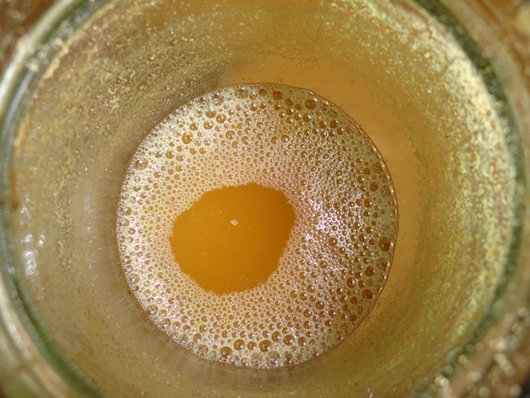
We had a nice supply of ginger beer going over Christmas. It's a delicious soft drink for young and old, although there is an alcoholic version that can be made with a slight variation on the recipe. Ginger beer is a naturally fermented drink that is easy to make - with ginger beer you make a starter called a ginger beer plant and after it has fermented, you add that to sweet water and lemon juice. Like sourdough, it must ferment to give it that sharp fizz. To make a ginger beer plant you'll need ginger - either the powdered dry variety or fresh ginger, sugar, rainwater or tap water that has stood for 24 hours to allow the chlorine to evaporate off. You'll also need clean plastic bottles that have been scrubbed with soap, hot water and a bottle brush and then rinsed with hot water. I never sterilise my bottles and I haven't had any problems. If you intend to keep the ginger beer for a long time, I'd suggest you sterilise your bottles. MAKING THE STARTER In a...
Image

NOT the last post

This will be my last post here.  I've been writing my blog for 18 years and now is the time to step back. I’ve stopped writing the blog and come back a couple of times because so many people wanted it, but that won’t happen again, I won’t be back.  I’ll continue on instagram to remain connected but I don’t know how frequent that will be. I know some of you will be interested to know the blog's statistics. 
Image

How to make cold process soap

I'm sure many of you are wondering: "Why make soap when I can buy it cheaply at the supermarket?" My cold process soap is made with vegetable oils and when it is made and cured, it contains no harsh chemicals or dyes. Often commercial soap is made with tallow (animal fat) and contains synthetic fragrance and dye and retains almost no glycerin. Glycerin is a natural emollient that helps with the lather and moisturises the skin. The makers of commercial soaps extract the glycerin and sell it as a separate product as it's more valuable than the soap. Then they add chemicals to make the soap lather. Crazy. Making your own soap allows you to add whatever you want to add. If you want a plain and pure soap, as I do, you can have that, or you can start with the plain soap and add colour, herbs and fragrance. The choice is yours. I want to add a little about animal and bird fat. I know Kirsty makes her soap with duck fat and I think that's great. I think t...
Image

Preserving food in a traditional way - pickling beetroot

I've had a number of emails from readers who want to start preserving food in jars but don't know where to start or what equipment to buy.  Leading on from yesterday's post, let's just say up front - don't buy any equipment. Once you know what you're doing and that you enjoy preserving, then you can decide whether or not to buy extra equipment. Food is preserved effectively without refrigeration by a variety of different methods. A few of the traditional methods are drying, fermentation, smoking, salting or by adding vinegar and sugar to the food - pickling. This last method is what we're talking about today. Vinegar and sugar are natural preservatives and adding one or both to food sets up an environment that bacteria and yeasts can't grow in. If you make the vinegar and sugar mix palatable, you can put up jars of vegetables or fruit that enhance the flavour of the food and can be stored in a cupboard or fridge for months. Other traditional w...
Image

Cleaning mould from walls and fabrics

With all this rain around we've developed a mould problem in our home. Usually we have the front and back doors open and that good ventilation stops most moulds from establishing. However, with the house locked up for the past week, the high humidity and the rain, mould is now growing on the wooden walls near our front door and on the lower parts of cupboards in the kitchen. Most of us will find mould growing in our homes at some point. Either in the bathroom or, in humid climates, on the walls, like we have now. You'll need a safe and effective remedy at some point, so I hope one of these methods works well for you. Mould is not only ugly to look at, it can cause health problems so if you see mould growing, do something about it straight away. The longer you leave the problem, the harder it will be to get rid of it effectively. If you have asthma or any allergies, you should do this type of cleaning with a face mask on so you don't breathe in any spores. Many peopl...
Image

Five minute bread

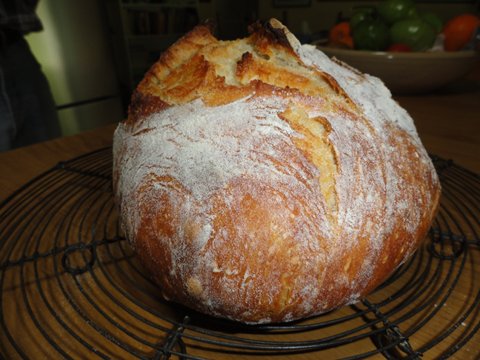
Bread is one of those foods that, when made with your own hands, gives a great deal of satisfaction and delight. It's only flour and water but it symbolises so much. I bake bread most days and use a variety of flours that I buy in bulk. Often I make a sandwich loaf because we use most of our bread for lunchtime sandwiches and for toast. Every so often I branch out to make a different type of loaf. I have tried sour dough in the past but I've not been happy with any of them. I'll continue to experiment with sour dough because I like the idea of using wild yeasts and saving the starter over a number of years to develop the flavour and become a part of the family. However, the loaf I've been branching out to most often is just a plain old five minute bread. By five minutes I mean it takes about five minutes actual work to prepare but it's the easiest of all bread to make and to get consistently good loaves from. If you're having people around for lunch or...
Image

This is my last post.

I have known for a while that this post was coming, but I didn't know when. This is my last post. I'm closing my blog, for good, and I'm not coming back like I have in the past.  I've been writing here for 16 years and my blog has been many things to me. It helped me change my life, it introduced me to so many good people, it became a wonderful record of my family life, it helped me get a book contract with Penguin, and monthly columns with The Australian Women's Weekly and Burke's Backyard . But in the past few months, it's become a burden. In April, I'll be 75 years old and I hope I've got another ten years ahead. However, each year I'll probably get weaker and although I'm fairly healthy, I do have a benign brain tumour and that could start growing. There are so many things I want to do and with time running out, leaving the blog behind gives me time to do the things that give me pleasure. On the day the blog started I felt a wonderful, h...
Image

What is the role of the homemaker in later years?

An email came from a US reader, Abby, who asked about being a homemaker in later years. This is part of what she wrote: "I am a stay-at-home mum to 4 children, ages 9-16. I do have a variety of "odd jobs" that I enjoy - I run a small "before-school" morning drop-off daycare from my home, I am a writing tutor, and I work a few hours a week at a local children's bookstore. But mostly, I cherish my blissful days at home - cooking, cleaning (with homemade cleaners), taking care of our children and chickens and goats, baking, meal-planning, etc. This "career" at home is not at all what I imagined during my ambitious years at university, but it is far more enriching. I notice, though, that my day is often planned around the needs of my family members. Of course, with 4 active kids and a husband, this is natural. I do the shopping, plan my meals, cook dinner - generally in anticipation of my family reconnecting in the evening.  I can't h...
Image

Every morning at home

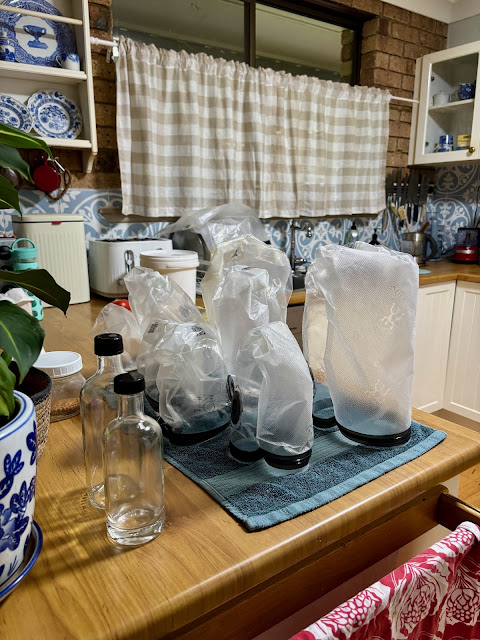
Every morning when I walk into my kitchen it looks tidy and ready for a day's work. Not so on this morning (above), I saw this when I walked in. Late the previous afternoon when I was looking for something, I came across my rolled up Zwilling vacuum bags and decided they had to be washed and dried. So I did that and although I usually put them outside on the verandah to dry it was dark by then. I turned the just-washed bags inside out and left them like this on a towel. It worked well and now the bags are ready to use when I bring home root vegetables, cabbages or whatever I buy that I want to last four or five weeks.
Image

You’ll save money by going back to basics

When I was doing the workshops and solo sessions, I had a couple of people whose main focus was on creating the fastest way to set up a simple life. You can't create a simple life fast, it's the opposite of that It's not one single thing either - it's a number of smaller, simpler activities that combine to create a life that reflects your values; and that takes a long to come together. When I first started living simply I took an entire year to work out our food - buying it, storing it, cooking it, preserving, baking, freezing, and growing it in the backyard. This is change that will transform how you live and it can't be rushed.  
Image


Trending Articles

NOT the last post

This will be my last post here.  I've been writing my blog for 18 years and now is the time to step back. I’ve stopped writing the blog and come back a couple of times because so many people wanted it, but that won’t happen again, I won’t be back.  I’ll continue on instagram to remain connected but I don’t know how frequent that will be. I know some of you will be interested to know the blog's statistics. 
Image

Every morning at home

Every morning when I walk into my kitchen it looks tidy and ready for a day's work. Not so on this morning (above), I saw this when I walked in. Late the previous afternoon when I was looking for something, I came across my rolled up Zwilling vacuum bags and decided they had to be washed and dried. So I did that and although I usually put them outside on the verandah to dry it was dark by then. I turned the just-washed bags inside out and left them like this on a towel. It worked well and now the bags are ready to use when I bring home root vegetables, cabbages or whatever I buy that I want to last four or five weeks.
Image

You’ll save money by going back to basics

When I was doing the workshops and solo sessions, I had a couple of people whose main focus was on creating the fastest way to set up a simple life. You can't create a simple life fast, it's the opposite of that It's not one single thing either - it's a number of smaller, simpler activities that combine to create a life that reflects your values; and that takes a long to come together. When I first started living simply I took an entire year to work out our food - buying it, storing it, cooking it, preserving, baking, freezing, and growing it in the backyard. This is change that will transform how you live and it can't be rushed.  
Image

Creating a home you'll love forever

Living simply is the answer to just about everything. It reduces the cost of living; it keeps you focused on being careful with resources such as water and electricity; it reminds you to not waste food; it encourages you to store food so you don't waste it and doing all those things brings routine and rhythm to your daily life. Consciously connecting every day with the activities and tasks that create simple life reminds you to look for the meaning and beauty that normal daily life holds.  It's all there in your home if you look for it. Seemingly mundane tasks like cleaning and cooking help you with that connection for without those tasks, the home you want to live in won't exist in the way you want it to.  Creating a home you love will make you happy and satisfied.
Image

Time changes everything

I've been spending time in the backyard lately creating a contained herb and vegetable garden. My aim is to develop a comfortable place to spend time, relax, increase biodiversity and encourage more animals, birds and insects to live here or visit. Of course I'd prefer my old garden which was put together by Hanno with ease and German precision. Together, we created a space bursting at the seams with herbs, vegetables and fruity goodness ready to eat and share throughout the year. But time changes everything. What I'm planning on doing now, is a brilliant opportunity for an almost 80 year old with balance issues. In my new garden I'll be able to do a wide range of challenging or easy work, depending on how I feel each day. It’s a daily opportunity to push myself or sit back, watch what's happening around me and be captivated by memories or the scope of what's yet to come.
Image

It's the old ways I love the most

I'm a practical woman who lives in a 1980’s brick slab house. There are verandahs front and back so I have places to sit outside when it's hot or cold. Those verandahs tend to make the house darker than it would be but they're been a great investment over time because they made the house more liveable. My home is not a romantic cottage, nor a minimalist modern home, it's a 1980’s brick slab house. And yet when people visit me here they tell me how warm and cosy my home is and that they feel comforted by being here. I've thought about that over the years and I'm convinced now that the style of a home isn't what appeals to people. What they love is the feeling within that home and whether it's nurturing the people who live there.
Image

Making ginger beer from scratch

We had a nice supply of ginger beer going over Christmas. It's a delicious soft drink for young and old, although there is an alcoholic version that can be made with a slight variation on the recipe. Ginger beer is a naturally fermented drink that is easy to make - with ginger beer you make a starter called a ginger beer plant and after it has fermented, you add that to sweet water and lemon juice. Like sourdough, it must ferment to give it that sharp fizz. To make a ginger beer plant you'll need ginger - either the powdered dry variety or fresh ginger, sugar, rainwater or tap water that has stood for 24 hours to allow the chlorine to evaporate off. You'll also need clean plastic bottles that have been scrubbed with soap, hot water and a bottle brush and then rinsed with hot water. I never sterilise my bottles and I haven't had any problems. If you intend to keep the ginger beer for a long time, I'd suggest you sterilise your bottles. MAKING THE STARTER In a...
Image

An authentic look at daily life here — unstaged and real

Most days Hanno was outside happily working in the fresh air. It may surprise you to know that I started reading my book,  Down to Earth , yesterday - the first time since I wrote it 13 years ago.  I had lent it to my neighbor, and when she returned it, I started reading, expecting to find surprises. Instead, I realised the words were still familiar—as if they were etched into my memory. As I flipped through the pages, I was reminded of how important it was for me to share that knowledge with others. The principles in Down to Earth changed my life, and I truly believed they could do the same for others. After just 30 minutes of reading, I put the book down, reassured that its message still holds true: we can slow down and reshape our lives, one step at a time.
Image