down to earth

  • Home
  • About Us
  • Down To Earth Book
  • Privacy Policy
Just a quick note to wish everyone relaxing week-end with their families (especially those of us preparing for the cooler weather) and to let you know I have posted the more swap photos on our flickr photostream. There will be one more posting of photos so if you haven't sent yours in, please get them to me soon!! I hope to wrap up this swap in the next week. Hugs Sharon
One of the many things I love about the way I live is that I never feel helpless. I feel I'm in control of what I'm doing and where my life is headed. Gone are the days when I got swept along with recessions, credit squeezes or fashion trends. However, we do live in troubled times and I know a lot of people are losing their jobs, their investments and their money because of the current circumstances. It's not just the problems facing our international financial institutions that is worrying, it's also rising prices for food, rent, petrol/gas, and most of the consumer items we buy.

While there is a part of me that realises we need to slow down our rate of spending, I don't like to see what is happening now, because along with the many banks and businesses that are failing, many ordinary folk are too. I wonder what you're all doing to weather this storm. I have a feeling that we are in for a tough time and it will be protracted. The boost of Christmas sales won't be there this year, that will flow on to job losses and more small businesses going broke.

So what can we do to make sure our own boats don't sink?

It's really just continuing on the road many of us are already on - being prudent with our purchases, continuing to pay off debt and doing all those day to day things in our homes that conserve the resources we do have. We are all in different parts of the world, some have large families, some are couples, some singles but we all have things in common - we all have to have a roof over our heads, food in our bellies and money in our pockets. We are not helpless! We can plan for what is coming so we're better able to cope with it. So let's go over those home-based activities that will help us get through this.
  1. Spend only on needs, not wants.
  2. Stockpile food and groceries - this is the single best thing you can do to prepare for tough times.
  3. Track your money - make sure you know what you're spending money on.
  4. Redo your budget to stop money leaks.
  5. Pay off debt. Make a plan today to do it.
  6. Do all your tasks in one outing - plan what you have to do so you get everything done in one day - shopping, doctors visits, post office etc.
  7. Try to stay home a few times a week.
  8. Try to cut out unnecessary expenses - cut down on your internet, phone, cable TV etc.
  9. Plan your menu for a week.
  10. Cook from scratch.
  11. Eat your leftovers, never waste food.
  12. Have a couple of meatless meals every week.
  13. Stop eating out, stop buying takeaway food.
  14. Take lunch to work and school.
  15. Stop buying magazines, newspapers, coffees and drinks when you're out.
  16. Make your Christmas gifts this year.
  17. Stop listening to advertising. Now is not the time to spend.
  18. Explain to your children about the current tough times and ask them how they can work with the family to cut back.
  19. Learn to read your electricity and water meters so you can cut down on your consumption of both those resources.
  20. Get involved in your life - this is the perfect time to step up and become more independent by doing more things for yourself at home.
I bet many of you have some excellent ideas for cutting back and for surviving this crisis. Tell me what your plans are to get through these tough times.


Of all the household tasks I do every week, ironing is the one I struggled with the most. I have tried it every which way, and nothing seemed to help me squeeze any joy from it. In the end, I defied my own advice and did it quickly while watching TV. pffffffffffft

However, progress has been made. I hate giving up or giving in to anything. I have pushed and prodded ironing, I've moved from room to room looking for the perfect place and finally, my friends, I can tell you I've hit pay dirt. I have been ironing these past few days and I have enjoyed it! Persistence and the radio were the keys!

I used to have the ironing board set up in the spare bedroom (where there is a TV) but when we had a few visitors one after the other a month or so ago, I moved the ironing board into the small single bedroom left it set up there. I was doing some quick ironing in there a couple of weeks ago and realised I actually liked ironing better without the TV blathering away in the corner. I looked around the room and decided to set up an ironing station as there was a narrow table in there that was perfect for the task.

A few days ago, I moved everything around to suit the ironing. I faced the table to the window, found an old woollen blanket and cotton sheet and covered the table with them. The jewel in the crown though was a radio. I found our little radio that we use when there is a blackout and I put that on the shelf near the table. It actually tuned to Radio National, my favourite station, and that made me realise I would love ironing in that room. All our other radios don't pick up Radio National so I used to download podcasts to listen to on my little iPod. Now I just have to find the electric cable so I can plug it in and not play it with batteries.


So for the past few days I've been testing myself with the ironing and each day I have loved it. There is a radio guide online so I check it in the morning and if there is something interesting I set myself up to iron while I listen. I've been getting through a lot of ironing and I finally feel like I've found my true ironing home. Long live good radio and ironing stations with a view!

This is my ideal ironing room, it's Deb's from Homespun Living. Isn't it gorgeous. Mind you, I think only people who are living simply would describe a laundry room as gorgeous. :- ) Another ironing post, this time from Posy.

It just goes to show me, yet again, that most simple ordinary things hold their own joy and beauty, if only you look enough to find it.


I spent a small amount of time sowing seeds yesterday. In the past, I used to have trays and trays of seeds but now that we have a continuous garden, I get by with a large planting in March and then just sowing small numbers of seeds to fill in spots that arise during the year. Yesterday I planted up four golden nugget pumpkin seeds, four lemon cucumber seeds and six Moneymaker tomato seeds. The pumpkins will be planted where the kipfler potatoes are now, in the front garden, the cucumber and tomatoes will go into the vegetable garden when the snow peas are removed. That should have happened by now but we're behind with some work because of the fence building and my writing. No matter, everything happens in its own time.

I thought it might help some of the new gardeners if I wrote a little about sowing seeds. It seems to be a mystery to some and I remember when I first started gardening, I was never sure of the right depth to place the seeds or if I was doing the right things when I sowed my seeds.

The best seeds to sow are open pollinated or heirloom seeds. If you plant them. not only will you get vegetables far superior to those you buy in the supermarkets, you get the old varieties that have better taste. And the bonus is you can save the seeds from one of your plants at the end of the season and use them for your next planting. Using seeds from your own garden will give you plants that are better suited to your own conditions and if you keep planting your own seeds, they will improve each year. In Australia you buy heirloom seeds at Green Harvest, Eden Seeds, Diggers, Phoenix and a number of other small places. For gardeners in other countries, do a Google search for "open pollinated seeds" or "heirloom seeds" and you should find something close to you. There are many heirloom seed companies and they have their entire seed catalogue online, so it's just a matter of selecting what you want, paying for it and waiting for the post to arrive.

The general rule for seed planting is to plant the seed twice as deep as its size. So if you have a seed that is 1mm, you plant it 2mm into the soil. If your seed measures ¼ inch, you plant it ½ inch deep. Some seeds (beans, peas,) benefit from soaking in warm water for 24 hours - this breaks the hard seed casing and speeds up germination. After you soak the seeds, plant them into moist soil or seed raising mix and then don't water until they germinate. Please note: it is only pea and bean seeds you have soaked that don't require watering - all other seeds you sow must be kept moist, not wet. Parsley seeds can be soaked in hot water for 24 hours, then sowed just like other seeds - into moist, not wet, soil.

Seed raising mix in a bag is quite expensive to buy. The potting soil you use doesn't need a lot of nutrients in it, so don't use your best mix. All the nutrients the seeds need are inside the seeds, you just need to supply moisture and a growing medium that will allow the tiny new shoots to emerge easily. I often use compost in the trays and just cover the seeds with seed raising mix or potting soil mixed with sharp sand. Whatever you cover the seeds with needs to be light to allow those little shoots through.


Above and below are Lazy Housewife Beans drying in the shade of the back verandah. We eat these beans green, they're as good as Blue Lake, but I also dry some of them to keep in the pantry. When they're dry, they're similar to haricot beans and can be used in soups and casseroles as well as a variety of Mexican and French dishes. I will save some of these seeds to be planted in the garden.


Once the seeds are in and covered, put a tag on them with the name and date then water them gently with a spray bottle. I use a mix of water with a little Epsom salts added to water in. The Epsom salts is magnesium and it helps germination. The ratio is one teaspoon to one litre (quart) of water. If you have any left over, water your vegetables or citrus trees with it.

So that's it! Then you just wait for the first little bits of green to poke through and plant them when they're ready to plant. Tomato seedlings need extra care before they're planted in the garden though and I've written about that here.

Before I go today I have a couple of extras I'd like to add. Yesterday when I was working on my book, I spent quite a bit of time going through the archives. I was really touched by so very many of the comments you've made over the months. I read every comment that's made each day but reading them in one block made me realise, yet again, how much you all add to this blog. A little green community has built up here that is knowledgeable, supportive and generous. I sincerely thank all of you who regularly comment.

I also want to thank Sharon who is a constant help to me both on the blog and behind the scenes in emails. Sharon organises all the swaps and also posts on weekends to give you wonderful links for projects and gifts. I have added Sharon's email to the side bar so if you have any questions about swaps or links, you can email her direct.

Now, some responses to yesterday's post. Thanks to simple quilter who gave me the information to identify those tiny blue flowers we have in our lawn as lobelia. :- )

Rose, what a wonderful man Paul Newman was. RIP Paul.

Cassie, good luck with your garden. Lucky you have such a great helper there.

Lindsay, it sounds like you're starting off on an incredible journey. I'm pleased I could help you on your way. Please stay in touch and let me know how it goes for you.

Amanda, congratulations on the new baby. I hope things have settled down for you now. (hugs)

Donna, our haystack sits there for a while so the seeds die off. You can definitely use your hay for mulch. Just take a handful of hay and put it in your garden, water it and see what happens. If it does grow weeds, often you can just pick them out when they're at the green shoot stage. Usually it will just be the seeds of the plant, be it lucerne, wheat, rye etc. In that case, again, you just weed it out. But if your little test of mulch doesn't grow anything after sitting in the garden for three weeks, you'll know there are no seeds in it.

Hi Quinne, I hope that little baby of yours is chubby and giggling. :- )

ADDITION: Many of you know that I'm a great fan of Path to Freedom, it is the one site I've continued to visit for many years. Here is a video of theirs, it's well worth the time it will take you to view it. Make sure you visit the blog Anais writes. It's really good.


We had quite a full weekend with Hanno finishing the new chook fence and me flitting between writing and household chores. Of course there were lots of breaks and tea on the verandah so it was a productive and relaxing time for us. I watched the neighbours go in and out all weekend, mostly for short trips and I wondered if they were picking up forgotten groceries or DVDs to watch. I was just happy to sit and watch their comings and goings while I knitted and thought about what to write.

It's a lovely time of year now, the spring flowers are blooming, birds are visiting from far off places and it's bare arms weather - ideal for sitting with a lemon cordial and letting the world pass by. I am happy here, I feel as much a part of this place as all the trees deeply rooted in dry soil. We all get our nourishment from being here and I can't imagine being anywhere else.

Hanno did a great job on the fence using mostly recycled materials. We did have to buy the fence posts though. Almost all of yesterday was taken up with him making a patchwork of wire for the bottom of the fence. The top of it is all one roll of wire but the bottom is many different pieces. Even though it took a longer time to complete, he's happy to have used the scrap wire that was already here.


The fence is too high for any of them to fly over now so hopefully they'll be safe and secure. The wire all along the bottom is a small gauge so when we raise chicks, they won't be able to sneak through the fence without the mother hen.


And here in the late afternoon, is the finished fence. You can see Hanno in the distance just putting the finishing touches to it. Seth and his ladies have been inspecting the new work and I think they all approve.


Further over, on the other side of the yard, the bananas have put on their first flower of the season. I hope to see many more of those as the weeks go by but, for now, I'm happy that there is one bunch of bananas forming.


And here inside the shed is our haystack. This should be enough to do us all through summer for the hens' nests, the worm farm and the garden. I always feel good about having a haystack. For some reason, I feel I've got it together if we have enough hay for the full season.


BUMS UP! I took this photo while I was standing talking to Hanno. All I could see were chook bottoms and tail feathers pointing upward. They must have found some choice food over there because none of them moved away for quite some time.


Does anyone know what plant this is. These blue flowers have just come up in our grass. You can see a round leaf of the plant at the bottom of the photo in between the two blades of grass. The leaves look a little like violet leaves, but they're runners, not single leaves. I'd appreciate any suggestions you might have.


It will be another busy week here and I'm ready for it. I still have another week to go on my break from work and I have a fully planned week. There will be a lot of writing, a phone call with my agent halfway through the week, more knitting, some sewing and another step towards my embrace of ironing. Many of you would know I hate ironing but I've made a new ironing space for myself and it's made all the difference. I'm not saying yet that I enjoy ironing, but I've got myself to the stage where I don't mind it. But more on that another day, now I'm off to feed the chooks and dogs and to get on with my day. How was your weekend?

BTW, I spent some time on the weekend browsing though some blogs and found this little link to the Rose Garden on Jenny Wren's blog. It's an utterly charming and delightful blog and I couldn't leave after reading the first page. I had to go back through the archives. It's a real gem.


Hello ladies. I will be posting more of our swap photos tomorrow. Today I would like to give you links for more ideas for making holiday gifts for our friends and families. Making gifts is about putting a little of yourself into something that you give to your friends and family; it is one of the best things you can do for the holidays. You save money, maybe recycle fabrics or remake things, but still give great gifts all the while giving a piece of your heart to the recipient. I have a few more links with great ideas for gifts for everyone in the family. One site I love is Burda Style. You can download free patterns (over 128) for all ages and sexes, and they also have great how-to's- photo tutorials to walk you through step-by-step sewing techniques that can be difficult or confusing; http://www.burdastyle.com/patterns look through the patterns and click on the how tos for help. Recycling old doilies into useful bags is another idea that is fun with great results: http://scrumdillydilly.blogspot.com/2008/09/dilly-doily-bag-tutorial.html
Pink Penguin shows us how to make a pretty patchwork bag: http://ayumills.blogspot.com/2008/09/tutorial-reversible-patchwork-bag.html
Ricrac gives us a how to on recycling an old sweater into a softie for a child (not too young unless you are careful with the eyes!) http://vintagericrac.blogspot.com/2008/09/racing-snail-tutorial.html For the crocheters out there My Picot has free patterns to make all sorts of pretty things: http://www.mypicot.com/index.html including tutorials explaining techniques.
Oliver and S gives us a tutorial for simple skirts for the little ones: http://www.oliverands.com/patterns/Oliver+SLazyDaysSkirt.pdf and finally I will leave you with an embroidery post that shows you how you can change a design by stitching it in different ways: http://www.craftstylish.com/item/9811/how-to-use-one-pattern-three-ways
I will be posting photos on our flickr site tomorrow and will be back again with ideas for the holidays and the changing seasons next week-end.

ADDITION: Lots and lots of handmade toys.


Shane and Sarndra just before they went home yesterday.

I was interested to read in the Why are you simplifying? post that several readers said they wanted to look after the planet, especially their own piece of it. While I believe we never really own the land we purchase, I do firmly agree with the idea of looking after the land we live on. The concept of looking after your land is firmly rooted in our psyche. When our ancestors went from the hunter gatherer phase into the domestication of animals and agriculture, their ability to produce food on the land they lived on meant the difference between life and death for them.

Maybe it's coming back to that.


Think of the difference it would make to our planet if we all cared for the piece of land we live on. I'm not just talking about producing food on that land, but I do include gardening. I mean instead that we get rid of weeds and chemicals from the land, we provide habitat and water for wildlife and instead of stripping our land for the house we build, we leave space for indigenous trees and plants and save some of the natural vegetation. We need to be encouraging reptiles, mammals and birds to our land and hope that they make it their home too. In my own country, our beautiful Koala is in trouble because the trees they favour as food are being cleared to make way for more housing. You can still see Koalas in the wild if you care to look for them, but they're becoming a rare sight these days. Imagine a world without Koalas! I hope I never see that day.

So what can we do? We should start where we are and work our way out.

Have a look in your back and front yards and see what's already there. Do some research, this is a great project for the children, to find out what used to live where you live. If those animals and birds aren't already extinct, find out how to make your land a place they would like to live and do that. Make sure your pets can't stalk the wildlife and keep your cat inside at night. Slowly, you may be able to attract your local wildlife back.

In Australia you can do surveys to find out what birds live locally, or migrate through your area. Hanno and I are currently taking part in a nation-wide bird bath survey. We are counting the number of birds that visit our bird baths, noting the amount of time they spend here and what birds they interact with. There are similar surveys you can sign up for at the Birds in Backyards site. Here is some information about making homes for Australian lizards. If you know of any wildlife surveys in your own country, please let me know about them and I'll add the links to this post.

We can also help by buying pure breed poultry instead of the common brown chooks bred for the caged poultry industry, or if you're on a farm, keeping the pure breeds of sheep, goats and cattle.

Once your own patch is as good as you can make it, move to the street you live in and maybe nearby parks. Pick up any rubbish you see and make sure you never add to the problems in your neighbourhood.
Never let anyone tell you there is nothing you can do. Start with your own home and work out from there. Be proactive and find out what you could do to help your own community. Even if it's picking up rubbish on the street, educating your children about local wildlife or making your own backyard a refuge for birds and smaller critters, it is significant and worthwhile work. No one else will come along and offer to do that work on the land you live on. It is up to you, my friend.


Karen has asked me to write about the Australian tea tradition. I'm not sure that tradition continues today but this is my version of what it was like in the old days.

Tea used to be a part of most people's days. In Australia, we had a cup of tea with breakfast, often with toast, another cup was had between 10 and 11am for morning tea. Then another cup at lunchtime with a sandwich, another around 3pm, when the children came home from school. And there would always be a pot of tea sitting on the table to be enjoyed with dinner at night.

When I started drinking tea, and I suspect this was a similar scenario around the country, my mum made a little cup of tea for me that was about 20 percent tea and 80 percent milk. I grew up in a family that took their tea without milk so, of course, eventually I drank black tea with no milk. I still do today - I have my tea black with a teaspoon of honey.

Real tea is made from the plant of the camellia sinensis bush. It produces black, white, green and oolong tea. Herbal teas are not teas at all - they're herbal infusions and don't contain the amount of antioxidants that tea does. I make rosella tea from our rosella bushes, and that is more like a herbal tea than real tea.

I prefer loose leaf tea to teabags. Teabags are generally made with inferior tea and don't taste as good as a freshly brewed pot of tea. Tea bags are over packaged too. They are a one cup unit of a paper bag, string, a cardboard tag and, usually, a staple or glue. The box of tea bags is usually a cardboard box wrapped in plastic or cellophane. Loose tea is just a cardboard box with an internal paper bag. I have written about making tea in a previous post which is here.

One of the reasons I like tea is that there is a ritual that goes with it. Instead of just filling a glass and drinking it, you have to slow down, prepare your cups and pot, and wait. Waiting is part of tea making so it suits a simple life well. Hanno and I have incorporated tea drinking into our lives and we almost always stop whatever we are doing at around 10am and I make a pot of tea. When it's poured we take our tea to the front verandah where we sit and talk, while I knit. It's a lovely part of the day that I look forward to. Hanno does too, because if I'm late making morning tea, he comes in and says: "do you want me to make the tea?" :- ) It's like nothing can continue until tea is taken. Neither of us had the luxury of a regular morning tea when we worked so it's become a ritual that we look forward to, and through it, and our talking on the verandah, we have reconnected and grown together towards our older years.


I have a catch-up day today. Although Hanno has told me to concentrate on my writing and he will do the laundry and most of the indoor work, there are some things I need to do and they will be looked after today. We also have two special visitors today - Shane and Sarndra will arrive late this morning. They aren't staying long but just seeing them is a joy that I'm looking forward to. I'll make a batch of walnut and cranberry biscuits soon so we have something for our morning tea. We also have two other visitors expected - Koda and Tessa - Jens and Cathy's Airedales. Jens and Cathy are in Europe at the moment and although Cathy's father has been staying at their place to look after the dogs, he has to leave for a week to go to a family wedding, so we will keep the dogs here for that time. There's is never a dull moment here.

There are always things happening outside. At the moment, Hanno's project is to fix the fence on the chook run and to add a taller gate. The chooks have been flying out to free range whenever they feel like it. Normally that wouldn't be a problem but as we have tomatoes and lettuce growing in that area now, if we don't keep an eye on them, they pick the lettuce back to their cores before we even know they're out of their run.


In the photo above you can see the newly installed gate, and my small additions of two wooden chooks. They will stand guard at the fence posts. ;- ) The fence itself, only made of chicken wire, will be higher as well. When Hanno and Jens took down that dead tree about six weeks ago, it landed on the fence and it's been wobbly and unstable ever since. Adding an extra height layer will make the enclosure much more secure. While he's at it, Hanno will also patch up any small holes that would allow little chicks to wander out. Now we have Seth, we have thoughts of his offspring wandering around, and they will need to be safe within the fence and not outside it. There are a lot of chick and egg eating snakes around, and right now is the time of year they're active. I saw my first snake of the season yesterday - a ribbon thin long green tree snake. It was crossing from the bush across the road into the house next door. It's always a thrill to see snakes moving around, and those tree snakes are elegant and beautiful. No one could be scared of a longstrip of green ribbon. ;- )

And speaking of Seth, he's started his teenage attempts at crowing. It's not loud yet but he keeps at it. We'll have to make a rooster box for him soon. That is a box that he will sleep in. Roosters need to stand and extend their heads to crow and if you put your rooster into a box that gives him space to move but not to entend his head, you get a silent rooster. When you let him about in the morning again, he will crow, but everyone is awake then so it's not a problem. Well, that's the theory. We all know things don't always go according the a theory, so we'll wait and watch.


More seedlings have been planted - you can see corn and one squash above. The beans have been pulled out, snow peas will be next and Hanno is preparing the old kale bed for another potato planting. Continuous planting - it just keeps rolling on. Let me see if I can remember what vegetables we have growing at the moment: three types of tomatoes (tropic, beefsteak and tommy toe), lettuce, silverbeet, Welsh onions, beetroot, leeks, bok choi, corn, squash, zuchinni, capsicums (peppers) chilli, kipfler potatoes, cucumbers, celery, pigeon peas and we are planting carrots, more potatoes, luffas and golden nugget pumpkin. Herbs - parsley, chives, thyme, yarrow, comfrey, rosemary, oregano, marjorum, bay and flowers - nastursiums and daisies. We also have a bit of fruit: lemons, oranges, pink grapefruit, mandarins, bananas, red pawpaw (papaya), rhubarb, blueberries, strawberries, passionfruit, pineapple, peaches, nectarines, avocado, grapes and loquats. So much is such a small space. It's wonderful be be able to supply such variety from our own backyard.

I was overwhelmed at the response to yesterday's post. How generous of you all to share your lives with the rest of us. It made me smile to read so many of them and to know that we are all striving to live authenticity, having rejected the madness of this consumerist age. Reading how others have changed can be quite a powerful message to those who are still wondering about their own lives. Thank you for taking the time to add your story, it might be the one that helps convince someone else that a simple change is possible.


These are just a few photos I've taken in the backyard in the past week that really don't relate to my post. I know many of you like looking at our vegetable garden, so I hope these photos will encourage you to comment today.


Many of you know that I'm writing a book proposal at the moment and I need your help with it. I am trying to formulate some thoughts on simple living and it would help me enormously if you would answer the following questions. I want everyone who reads this to not go away without answering, yes, even those who never comment. :- )


QUESTIONS:
  1. Why are you simplifying?
  2. What convinced you that you should change how you live?
  3. What was the first thing major thing you changed?
  4. How do you see yourself changing in the future?


I am interested in everyone's answers, even those who are still thinking about change but haven't done much about it yet. Thanks for taking the time to help me. I really appreciate it.


Well, here he is - Hanno admiring the view when I took him out to lunch on his birthday. We met up with Bernadette at an "English pub" in a town up in the mountains. The food was good and the view from the top of the mountains down to the ocean was superb, but the price of the lunch and drinks was what we would normally pay for a week's food. We both wondered later if it was worth it. My guess is it wasn't. Maybe next year we'll do something different.

Hanno asked me to pass on his thanks for all the thoughtful birthday wishes. It is still amazing to us both that there are unseen friends all over the world who know what we do most days. Ahhh, the wonders of the internet.

One of the many pleasures I have found in simplicity is a rediscovery of the seasons. I no longer try to block out or ignore seasonal weather, trying to make everyday the same with air conditioning, I embrace the seasons now and work according to them. Yesterday I spent the day writing but had short breaks to do the seasonal chores that couldn't wait. Our storm season started early and the past two nights we've had wild and loud thunder that sounded like bowling balls rumbling along then crashing into a wall of light. On those nights the heat builds up and then breaks with rain falling and cooler air. On that first stormy night, still warming wrapped in my winter bed, I knew the next day would bring a transition to a summer bed.

Sure enough, the next morning, I opened up the windows wide and stripped the bed completely. I removed Hanno's electric blanket and rolled it up around a pillow for safe storage during the summer, then took the bed protector off and washed it with the sheets. This is the season for cool pure cotton sheets. My flannel cotton sheets are now washed, line dried and folded in the linen cupboard until the seasons change again.


I also removed our wool doona (duvet) and replaced it with a fluffy lighter one that will do us over summer.


I went back to writing for a while until Hanno brought in a small basket of windfall lemons. The storms have started to pick the lemon tree for us, and when we have a lot of lemons, I make summer cordial.


About six or seven lemons gave enough juice for a flagon of cordial. It's a simple recipe of juice and a sugar syrup. The syrup is made with equal parts sugar and water, boiled till the sugar dissolves. Allow that to cool while you juice the lemons. I fill half the flagon with juice and fill it up with syrup. When you make the drink up, you pour enough cordial for your taste into a glass (about one part cordial to five parts water), and fill it up with icy water, and ice cubes if you have them. I didn't, so that was another seasonal chore - I got two ice cube trays, filled them with filtered water and have them now sitting in the freezer. In the next day or so I'll add a plastic container that will hold the ice cubes in the freezer while the trays make more cubes.


In the afternoon, I had another break from writing as Hanno was mowing the lawn in the front garden. I made up a lemon cordial for myself and a rosella cordial for Hanno and we sat in the cool shade of the front verandah to cool down and relax.


I am back to writing again today. I have taken two weeks off work to get my book proposal done, or at least almost done. So I'll be busy tapping away on the keys again but I have no doubt more seasonal tasks will pop up during the day and no doubt they'll be done - slowly and with the pleasure of the task.

Welcome to all the new readers who arrived over the past week or so. I hope this week is a good one for all of us. I hope you appreciate each day for what it gives you and you slow yourself enough to truly live your days.


I have posted more swap photos-don't worry if yours is not up yet I post them in batches so I will be posting more all this next week. If you haven't sent me your photo, please do try to send it soon! my e-mail is :cdetroyes at yahoo dot com I have also found some fun links for ideas for our hand-made holiday. For knitters, here is a fun edging to try: http://www.instructables.com/id/How_to_knit_a_quotPicotquot_Edge/
For ideas to give the little ones I have two links: http://blueyonder.typepad.com/photos/bandana_pants/ and http://paperdollygirl.wordpress.com/2008/09/17/baby-gift-burp-cloths/
For the cook here is a fun apron tutorial that you can use to make matching chef's apron: http://www.instructables.com/id/How_to_sew_an_adjustable_chefs_apron/
For those who like to read in bed here is an easy tutorial on an organizer: http://sewmamasew.com/blog2/?p=574 Sew Mama Sew http://sewmamasew.com/blog2/ is showing us a lot of ideas on making things for the home so be sure to check out the blog for ideas and tutorials.
Here is a lunch tote idea for those who ride bicycles to work or school: http://www.evilmadscientist.com/article.php/lunchbag
I will be back later in the week with more ideas for han made holiday gifts and to let you know when I have posted more photos. Hugs Sharon
Newer Posts Older Posts Home

MY BOOKS

MY BOOKS


My books were all published by Pengiun, and are available at Amazon US, Amazon UK and Amazon Au

Search here

Total Pageviews

Translate


I'm Rhonda Hetzel and I've been writing my Down to Earth blog since 2007. Although I write the occasional philosophical post, my main topics include home cooking, happiness and gardening as well as budgeting, baking, ageing, generosity, mending and handmade crafts. I hope you enjoy your time here.

MY FAVOURITE PLACES

  • Grandma Donna's Place
  • Grandma Donna's YouTube
  • Grandma Donna's Instagram
  • This Simple Day
  • Nicole's Instagram

Give More

Give More

Popular posts last year

Making ginger beer from scratch

We had a nice supply of ginger beer going over Christmas. It's a delicious soft drink for young and old, although there is an alcoholic version that can be made with a slight variation on the recipe. Ginger beer is a naturally fermented drink that is easy to make - with ginger beer you make a starter called a ginger beer plant and after it has fermented, you add that to sweet water and lemon juice. Like sourdough, it must ferment to give it that sharp fizz. To make a ginger beer plant you'll need ginger - either the powdered dry variety or fresh ginger, sugar, rainwater or tap water that has stood for 24 hours to allow the chlorine to evaporate off. You'll also need clean plastic bottles that have been scrubbed with soap, hot water and a bottle brush and then rinsed with hot water. I never sterilise my bottles and I haven't had any problems. If you intend to keep the ginger beer for a long time, I'd suggest you sterilise your bottles. MAKING THE STARTER In a...
Image

NOT the last post

This will be my last post here.  I've been writing my blog for 18 years and now is the time to step back. I’ve stopped writing the blog and come back a couple of times because so many people wanted it, but that won’t happen again, I won’t be back.  I’ll continue on instagram to remain connected but I don’t know how frequent that will be. I know some of you will be interested to know the blog's statistics. 
Image

How to make cold process soap

I'm sure many of you are wondering: "Why make soap when I can buy it cheaply at the supermarket?" My cold process soap is made with vegetable oils and when it is made and cured, it contains no harsh chemicals or dyes. Often commercial soap is made with tallow (animal fat) and contains synthetic fragrance and dye and retains almost no glycerin. Glycerin is a natural emollient that helps with the lather and moisturises the skin. The makers of commercial soaps extract the glycerin and sell it as a separate product as it's more valuable than the soap. Then they add chemicals to make the soap lather. Crazy. Making your own soap allows you to add whatever you want to add. If you want a plain and pure soap, as I do, you can have that, or you can start with the plain soap and add colour, herbs and fragrance. The choice is yours. I want to add a little about animal and bird fat. I know Kirsty makes her soap with duck fat and I think that's great. I think t...
Image

Preserving food in a traditional way - pickling beetroot

I've had a number of emails from readers who want to start preserving food in jars but don't know where to start or what equipment to buy.  Leading on from yesterday's post, let's just say up front - don't buy any equipment. Once you know what you're doing and that you enjoy preserving, then you can decide whether or not to buy extra equipment. Food is preserved effectively without refrigeration by a variety of different methods. A few of the traditional methods are drying, fermentation, smoking, salting or by adding vinegar and sugar to the food - pickling. This last method is what we're talking about today. Vinegar and sugar are natural preservatives and adding one or both to food sets up an environment that bacteria and yeasts can't grow in. If you make the vinegar and sugar mix palatable, you can put up jars of vegetables or fruit that enhance the flavour of the food and can be stored in a cupboard or fridge for months. Other traditional w...
Image

Cleaning mould from walls and fabrics

With all this rain around we've developed a mould problem in our home. Usually we have the front and back doors open and that good ventilation stops most moulds from establishing. However, with the house locked up for the past week, the high humidity and the rain, mould is now growing on the wooden walls near our front door and on the lower parts of cupboards in the kitchen. Most of us will find mould growing in our homes at some point. Either in the bathroom or, in humid climates, on the walls, like we have now. You'll need a safe and effective remedy at some point, so I hope one of these methods works well for you. Mould is not only ugly to look at, it can cause health problems so if you see mould growing, do something about it straight away. The longer you leave the problem, the harder it will be to get rid of it effectively. If you have asthma or any allergies, you should do this type of cleaning with a face mask on so you don't breathe in any spores. Many peopl...
Image

Five minute bread

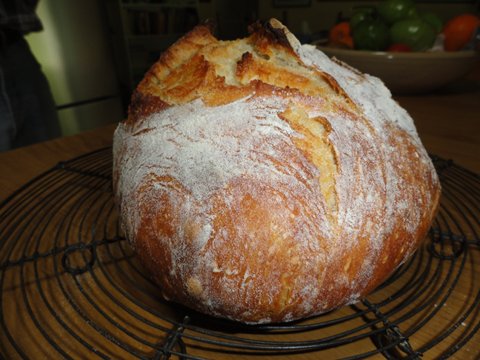
Bread is one of those foods that, when made with your own hands, gives a great deal of satisfaction and delight. It's only flour and water but it symbolises so much. I bake bread most days and use a variety of flours that I buy in bulk. Often I make a sandwich loaf because we use most of our bread for lunchtime sandwiches and for toast. Every so often I branch out to make a different type of loaf. I have tried sour dough in the past but I've not been happy with any of them. I'll continue to experiment with sour dough because I like the idea of using wild yeasts and saving the starter over a number of years to develop the flavour and become a part of the family. However, the loaf I've been branching out to most often is just a plain old five minute bread. By five minutes I mean it takes about five minutes actual work to prepare but it's the easiest of all bread to make and to get consistently good loaves from. If you're having people around for lunch or...
Image

This is my last post.

I have known for a while that this post was coming, but I didn't know when. This is my last post. I'm closing my blog, for good, and I'm not coming back like I have in the past.  I've been writing here for 16 years and my blog has been many things to me. It helped me change my life, it introduced me to so many good people, it became a wonderful record of my family life, it helped me get a book contract with Penguin, and monthly columns with The Australian Women's Weekly and Burke's Backyard . But in the past few months, it's become a burden. In April, I'll be 75 years old and I hope I've got another ten years ahead. However, each year I'll probably get weaker and although I'm fairly healthy, I do have a benign brain tumour and that could start growing. There are so many things I want to do and with time running out, leaving the blog behind gives me time to do the things that give me pleasure. On the day the blog started I felt a wonderful, h...
Image

What is the role of the homemaker in later years?

An email came from a US reader, Abby, who asked about being a homemaker in later years. This is part of what she wrote: "I am a stay-at-home mum to 4 children, ages 9-16. I do have a variety of "odd jobs" that I enjoy - I run a small "before-school" morning drop-off daycare from my home, I am a writing tutor, and I work a few hours a week at a local children's bookstore. But mostly, I cherish my blissful days at home - cooking, cleaning (with homemade cleaners), taking care of our children and chickens and goats, baking, meal-planning, etc. This "career" at home is not at all what I imagined during my ambitious years at university, but it is far more enriching. I notice, though, that my day is often planned around the needs of my family members. Of course, with 4 active kids and a husband, this is natural. I do the shopping, plan my meals, cook dinner - generally in anticipation of my family reconnecting in the evening.  I can't h...
Image

Every morning at home

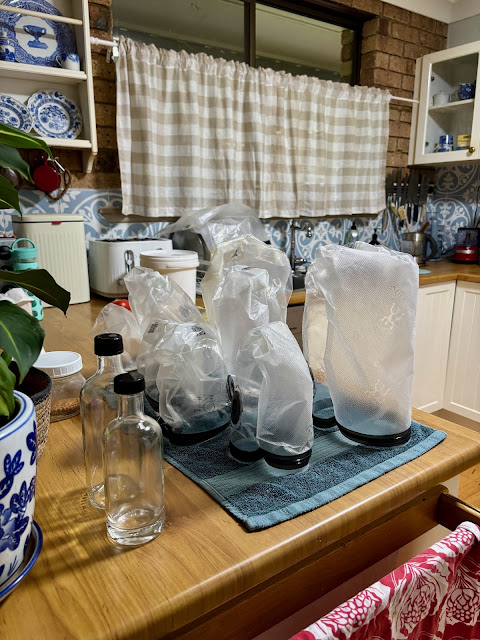
Every morning when I walk into my kitchen it looks tidy and ready for a day's work. Not so on this morning (above), I saw this when I walked in. Late the previous afternoon when I was looking for something, I came across my rolled up Zwilling vacuum bags and decided they had to be washed and dried. So I did that and although I usually put them outside on the verandah to dry it was dark by then. I turned the just-washed bags inside out and left them like this on a towel. It worked well and now the bags are ready to use when I bring home root vegetables, cabbages or whatever I buy that I want to last four or five weeks.
Image

You’ll save money by going back to basics

When I was doing the workshops and solo sessions, I had a couple of people whose main focus was on creating the fastest way to set up a simple life. You can't create a simple life fast, it's the opposite of that It's not one single thing either - it's a number of smaller, simpler activities that combine to create a life that reflects your values; and that takes a long to come together. When I first started living simply I took an entire year to work out our food - buying it, storing it, cooking it, preserving, baking, freezing, and growing it in the backyard. This is change that will transform how you live and it can't be rushed.  
Image


Trending Articles

NOT the last post

This will be my last post here.  I've been writing my blog for 18 years and now is the time to step back. I’ve stopped writing the blog and come back a couple of times because so many people wanted it, but that won’t happen again, I won’t be back.  I’ll continue on instagram to remain connected but I don’t know how frequent that will be. I know some of you will be interested to know the blog's statistics. 
Image

Every morning at home

Every morning when I walk into my kitchen it looks tidy and ready for a day's work. Not so on this morning (above), I saw this when I walked in. Late the previous afternoon when I was looking for something, I came across my rolled up Zwilling vacuum bags and decided they had to be washed and dried. So I did that and although I usually put them outside on the verandah to dry it was dark by then. I turned the just-washed bags inside out and left them like this on a towel. It worked well and now the bags are ready to use when I bring home root vegetables, cabbages or whatever I buy that I want to last four or five weeks.
Image

You’ll save money by going back to basics

When I was doing the workshops and solo sessions, I had a couple of people whose main focus was on creating the fastest way to set up a simple life. You can't create a simple life fast, it's the opposite of that It's not one single thing either - it's a number of smaller, simpler activities that combine to create a life that reflects your values; and that takes a long to come together. When I first started living simply I took an entire year to work out our food - buying it, storing it, cooking it, preserving, baking, freezing, and growing it in the backyard. This is change that will transform how you live and it can't be rushed.  
Image

Creating a home you'll love forever

Living simply is the answer to just about everything. It reduces the cost of living; it keeps you focused on being careful with resources such as water and electricity; it reminds you to not waste food; it encourages you to store food so you don't waste it and doing all those things brings routine and rhythm to your daily life. Consciously connecting every day with the activities and tasks that create simple life reminds you to look for the meaning and beauty that normal daily life holds.  It's all there in your home if you look for it. Seemingly mundane tasks like cleaning and cooking help you with that connection for without those tasks, the home you want to live in won't exist in the way you want it to.  Creating a home you love will make you happy and satisfied.
Image

Time changes everything

I've been spending time in the backyard lately creating a contained herb and vegetable garden. My aim is to develop a comfortable place to spend time, relax, increase biodiversity and encourage more animals, birds and insects to live here or visit. Of course I'd prefer my old garden which was put together by Hanno with ease and German precision. Together, we created a space bursting at the seams with herbs, vegetables and fruity goodness ready to eat and share throughout the year. But time changes everything. What I'm planning on doing now, is a brilliant opportunity for an almost 80 year old with balance issues. In my new garden I'll be able to do a wide range of challenging or easy work, depending on how I feel each day. It’s a daily opportunity to push myself or sit back, watch what's happening around me and be captivated by memories or the scope of what's yet to come.
Image

It's the old ways I love the most

I'm a practical woman who lives in a 1980’s brick slab house. There are verandahs front and back so I have places to sit outside when it's hot or cold. Those verandahs tend to make the house darker than it would be but they're been a great investment over time because they made the house more liveable. My home is not a romantic cottage, nor a minimalist modern home, it's a 1980’s brick slab house. And yet when people visit me here they tell me how warm and cosy my home is and that they feel comforted by being here. I've thought about that over the years and I'm convinced now that the style of a home isn't what appeals to people. What they love is the feeling within that home and whether it's nurturing the people who live there.
Image

Making ginger beer from scratch

We had a nice supply of ginger beer going over Christmas. It's a delicious soft drink for young and old, although there is an alcoholic version that can be made with a slight variation on the recipe. Ginger beer is a naturally fermented drink that is easy to make - with ginger beer you make a starter called a ginger beer plant and after it has fermented, you add that to sweet water and lemon juice. Like sourdough, it must ferment to give it that sharp fizz. To make a ginger beer plant you'll need ginger - either the powdered dry variety or fresh ginger, sugar, rainwater or tap water that has stood for 24 hours to allow the chlorine to evaporate off. You'll also need clean plastic bottles that have been scrubbed with soap, hot water and a bottle brush and then rinsed with hot water. I never sterilise my bottles and I haven't had any problems. If you intend to keep the ginger beer for a long time, I'd suggest you sterilise your bottles. MAKING THE STARTER In a...
Image

An authentic look at daily life here — unstaged and real

Most days Hanno was outside happily working in the fresh air. It may surprise you to know that I started reading my book,  Down to Earth , yesterday - the first time since I wrote it 13 years ago.  I had lent it to my neighbor, and when she returned it, I started reading, expecting to find surprises. Instead, I realised the words were still familiar—as if they were etched into my memory. As I flipped through the pages, I was reminded of how important it was for me to share that knowledge with others. The principles in Down to Earth changed my life, and I truly believed they could do the same for others. After just 30 minutes of reading, I put the book down, reassured that its message still holds true: we can slow down and reshape our lives, one step at a time.
Image