down to earth

  • Home
  • About Us
  • Down To Earth Book
  • Privacy Policy
Are you wanting to simplify and don't know where to start? Here is s small step everyone can do. It's easy, won't cost any money and will make a big difference to how you spend many hours every night, and the following daylight hours. Simplify your bed. Those of you who have been reading for a while know I've written about my bed before but as it's one of my favourite subjects, it gives me great pleasure to write about it again.
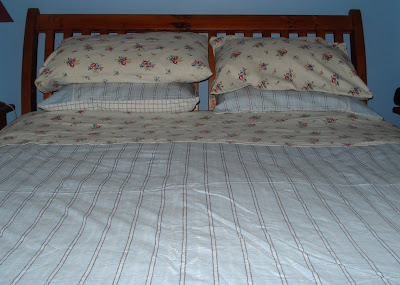


Beds are important parts of our lives. The bed is one of the few pieces of furniture that changes with us as we go through life. We start out in a tiny cradle or cot (crib) and as we grow, we move up to the 'big' bed. Beds mark that stage of life for us, children feel "grown up" when they make that progression from cot to bed. We have our teenage beds - we bought king size singles for our two tall sons, and we have our marital beds - the quiet and private symbol of a new life with our beloved. And so it goes until we die, and many of us do that in a bed too, completely the cycle from the bed we were born in. Beds, we live and die in them.

My bed is an important part of my life. I spend hours every night sleeping in it, so I have to make it as comfortable and secure as I can. I need to know that when we fall asleep each night, we'll be warm and cosy, capable of deep, uninterrupted sleep that will take away the fatigue of one day and replace it will the vitality to face another.

And this is where the focus on your bed in your daily life comes in. If you make sure your bed is clean and comfortable, it will reward you by helping you get the sleep you need to perform at your best. Take time every day to fluff up your nest. Your bed should be made every day - not just by pulling the cover up over the sheets, but by giving it the energy it needs. Whatever effort and time you give your bed, you'll get back many times over.

I make sure I have sheets that reflect the season - flannel in winter and cool cotton in summer. We have been sleeping between our flannel sheets for a couple of weeks now but yesterday I changed our summer doona/duvet to a heavier woollen winter one. The cover is a flannel one now.

So every morning after hours of rest, I make sure I prepare the bed for another night of sleep and dreams. I take care making up the bed. The top sheet and doona/duvet are taken off and the bottom sheet is smoothed out firm on the bed; I don't want any creases or wrinkles to cause discomfort during the night. The top sheet is placed on the the bed again, even on both sides, and the doona/duvet replaced after a shake. Pillows are fluffed up and replaced at the top of the bed. All is ready, there the bed will sit until nightfall. Clean sheets are a necessity. I put clean sheets on the bed once a week, or more frequently in hot weather. There is nothing better than sleeping that first night on sheets that have dried in the sun. Make sure you have the things you need on the bedside table - I have a box of tissues, a spare pair of glasses and a book. Hanno has a glass of water and a radio on his side. He likes to listen to the news and a favourite radio program before he gets up in the morning. Make sure you vacuum and clean the bedroom frequently, you don't want to be spending all that time in a dusty room.

We are used to sleeping in a quiet and dark room. We have block out curtains and the only noise we hear during the night is an occasional train in the distance. There is no noise from neighbours, traffic or animals. My son, who lives in the midst of a busy city, Surfers Paradise, asked me last time he slept here: "It's SO quiet here at night. How can you stand it?" He spent many hours in deep sleep here before he left home, but now he is used to the noise of the city around him and wonders how we can sleep without it.

We all have our varying preferences for what we are used to while we sleep, but our beds still need to comfort us and make us feel safe and warm during those hours of unconsciousness. Hanno and I do more physical work now than when we were working for a living. The daily chores of our home and garden make us tired at the end of the day and if we are to continue living this way we need to sleep well every night. I am sure most of you feel the same way. So think of your bed as more than a soft platform with sheets. It is the place that cares for you while you sleep and prepares you for tomorrow.

Being mindful of where you sleep and the attention you give your bedroom is an important part of your daily routine. If, like me, you've just woken up, we will soon be fluffing our nests again. And if you're about to go to sleep, good night and sweet dreams. Take care, enjoy your weekend, I'll see you again next week.


Alice says hello. ;- )

Good morning! We've had some wild weather these past couple of days with about 250 mm (nearly 10 inches) falling in our area in 24 hours. We have a permanent creek in our backyard that drains water from the surrounding mountains and takes it to the sea. Sometimes I think it will flood into our backyard but in all the time we've lived here, that has never happened. We are fine.

I haven't had a chance to answer questions from the last two days so I'll do that now. If you ever want an answer to a question, you should add it to the latest post because even on a good day I never have the time to go searching back through the archives to answer questions on old posts.

Joanne, in addition to book shops, the book will be sold from this blog, so yes, it will be available anywhere I can post it. I'll sign it for you too if you would like. : - )

Hi Kathryn, thanks for your comment.

Steelkitten, are they real hedgehogs?

Chance and Rois, Hanno loves collecting what I call ' junk' and he calls 'I can fix that'. LOL! Luckily he's a very tidy man so we never have junk on display, it's all in his shed waiting for its time.

Betty, thanks for wishing me joy as I write. I really appreciate that.

Tansy, yes it's a template. The details at at the very bottom of the page.

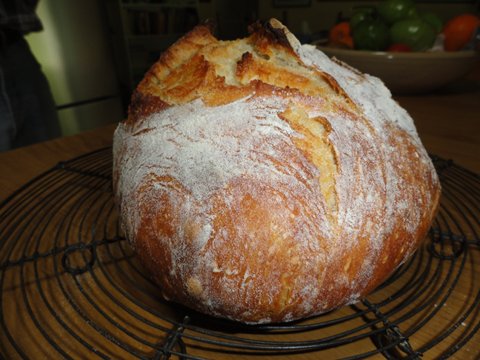
Bunny, that's nice looking bread. Well done!

LOL Allison. I'm glad you found that dehydrator.

I do remember your Welshie, Maggie. We are really looking forward to welcoming a new family member. I think she will make Alice's future years joyful ones.

Sheila, I think Alice will be renewed too. I can't wait to see them together on that first day.

Brenda, thank you for your thoughts. I write with a sense of inclusion and warmly welcome everyone who takes the time to read here. I'm pleased to know your Christian ladies feel comfortable here.

ithinkican, I don't know of anyone else who had problems posting a comment yesterday. Hanno has written up some notes on garden tool maintenance for me to post soon. It's a good idea to have a few posts from him. He doesn't want to write posts but is happy for me to write up his notes.

Sharon, our cat Hettie likes fish FULL STOP. We've tried her on other foods but she refuses them. It is very difficult to retrain cats to eat different foods but if we ever got another kitten, we'd feed it on homemade cat food. Here is some info on feeding cats written by a vet.

Becky, hello to you and Padfoot! Airedales are great clowns. Rosie and Alice used to chase each other around the yard every afternoon at 4pm. I'm still not sure how they knew what time it was. They have many distinctive traits and are wonderful family dogs.

Gail, I am one very plain and simple gal and I never put anything extra into my soap so I can't really advise you. I am sure one of the soapmakers here will know. My feeling would be that you'd dry the leaves and crumble them up before adding them and you would do that at the trace stage. Can anyone help Gail?

Margaret, it's good to know you've gained encouragement here. I hope for that every day. Good luck with the chooks and the soap.

Cyn, I think Carla's book will go on for a ling time to come. My son Shane has read my book and would like one for himself. I think her message is timeless.

Annie, we are a two person family and that amount of soap would last us about four-five months. I usually give some to my sons, both their girlfriends love it; I use it for hair washing, general cleaning and in the kitchen. Each bar lasts a long time but they can be used for many things.

Toria, thank you so much for that link! I will order some today and make some liquid dish soap.

Carolyn, working with lye is just another skill to learn. You can do it, love. Take it slow and work alone.

Shirley, Hanno made my favourite wooden mould. They're very good, aren't they. You have an excellent site. I discovered it fairly recently and visit you with my other list of current favourites when I have time.

Rose, it's your next step. You'll be fine. Anyone who can make cakes can make soap.

Laura, we bought our scale secondhand from ebay. That was about five or six years ago now but I'm sure they still have them. Ours is a postal scale which gives you great accuracy.

Renae, never throw it out. I think soap can always be rescued. You did the right thing. Let your rebatched soap cure and test it with hand washing but I'm pretty sure it will be okay to use. The thin film may be caused by not mixing it enough. If you're sure of your measurements and have used a reliable recipe, try mixing over a longer period of time. Are you using a stick blender? That is the best method of mixing soap.

Debbie, rebatch it by melting your soap in a saucepan. When it's melted and about 50C, mix it again. Hopefully that will work. If you want to add fragrance, never add it until you've reached trace.

Diana, it does become gel-like and gluggy. It might also separate. That's okay. I just mash mine up with a potato masher and when I use it, make sure I add the gel and water combined. Like masterpiecemom below, I now use the powder. It's much easier to make and dissolves well in my frontloader.


Tansy, I just weighed a few bars from that last batch - they're around 130 - 135 grams each (about 4.5 - 4.7 ozs). My blue resin mould above is 20 x 26cm (8 x 10 inches) and the wooden one is 10 x 30 cm ( 4 x 12 inches).

Hi Jenny, I hope you grow many loofas. I cut mine up and pour soap into them. I have a photo of it somewhere in the archives.

Mrs Mac, thank you so much for sharing how to make your scrubbing soap. It's fabulous.

Donetta, I use this soap to wash up in the sink. You can dissolve it but it will turn to gel. It still works but it's a pain to get out of the bottle. I just rub the bar onto my dishmop. I'm going to be making some liquid dish soap soon. It uses a different type of lye and now that Toria has given me the link to a local supplier, I'll be able to make it regularly. I have made laundry detergent using this soap but I usually use bought soap flakes.

Hi Babs! Can you share how you add the honey and oatmeal? I'm very interested and I'm sure some of the others will be too. Thank you.

D, I don't think you reached 'real' trace. Was it cold the day you made your soap? Your mix might have looked like trace but it had lost its heat and thickened.

Pam, I have read that too but I don't believe it. I always wash my utensils in the sink, using hot water and a scrubbing brush. My mixer is an old one and used mainly for soap but I do occasionally use it for cakes.

Diane, sorry, I don't have time to make soap for sale. Maybe one day I will. There may be other readers here who sell their homemade soap. Who is selling homemade soap? Does anyone have it in their Etsy shop?

Lori, you're using the wrong mould. You need one that will allow the soap to slip out easily. Any of the resin cake forms are very good. I bought mine for $2 at a dollar shop.

Monique dear, this is the question I am asked more than any other. I should put it permanently on the home page. The pots are traditionally used so a gardener will not poke their eye out on the stake while bending over. I just like the look of them and have been gardening with them for many. many years. Good luck with your garden changes.

seanymph, maybe one of the soapmakers here would supply your store when you open. I wonder who is making soap for sale. Anyone?

Jody, the measurements are above.

Elaine, thanks for sharing.

I am really delighted that so many of you are making soap. Slowly, step by step, changes are happening around the world. It feels good to be part of this significant change, doesn't it.

I made a batch of soap last weekend. For me, soap making is one of those defining tasks of a simple life. Like bread making, it is a powerful reminder that the products needed in the home can be made better, and often more economically, than those bought at the supermarket. Those two tasks, more than any others, also connect me to my past. Making soap and bread would have been a normal part of our ancestors' lives. Now let me qualify what I just wrote. You can buy soap cheaper than you can make it, but that soap will contain almost no glycerin - the moisturising and nourishing part of soap, and it will contain a lot of chemicals to make it smell good, and to make it lather. When you make your own soap you need only three ingredients - fat, caustic soda/lye and water. So homemade soap is not cheaper than commercially produced soap like Palmolive, but it is cheaper than the "natural" soaps you buy in the organic shops. All soap, no matter what the label says, even the "natural" ones, have been made with caustic soda/lye. The process of soap making neutralises it and after having the soap sit on your shelf for a few weeks, you will have the finest soap money can buy. Caustic soda/lye is Sodium Hydroxide (NaOH).

I have written about this in the past and there seems to be a reluctance by some to take up soap making, mainly because of the safety issues. And you are well advised to be cautious of this process - you need to work with caustic soda / lye and that will burn your skin, your benches or floor if it falls from your container. It is wise to be cautious, particularly if you have children or pets around. So I thought that it might be helpful if I focused on the process rather than the recipe. Seeing it being done in steps, might help some of you work out a way you can make soap that you feel safe and confident with.

My soap is made with olive oil, rice bran oil, copha (solid coconut oil), water and caustic soda/lye. Here is my soap making tutorial. There is a soap calculator here. Basically, you find what you have in the cupboard, or buy your preferred oils, enter them in the calculator and it will estimate the amount of water and caustic soda/lye to add. Soap making safety, read this.

So now let's focus on some of the issues you might encounter when making soap.


Before you start, make sure there are no children or pets around. Put on your safety gear. Work in a well ventilated space. When you add water to the caustic soda/lye, it will emit fumes. Traditionally, soap making ingredients are measured as solids, not liquids. Get yourself a good scale and weigh your ingredients according to the recipe. Remember that as soon as moisture is added to the caustic soda/lye, and that might just be a bit of moisture on your hand, it will start to burn.


I use a Pyrex jug to mix my caustic soda/lye and water. As soon as you add water, it will start to heat up. You do not have to add heat, it heats up itself. I place my pyrex jug on a board so it doesn't damage the bench top. I use rain water from my tank. If you only have tap water, measure out a bit more that you need and let it sit in a bowl for 24 hours. That will allow the chlorine to evaporate off.


As soon as you add water, the reaction will start. You can see small bubbles in the water here as soon as the caustic soda/lye was added.


And less than a minute later, the solution has reached 90 C (180F).


This photo shows the combined oils before the caustic soda/lye was added. The mixture is clear. Basically, soap is made by mixing the caustic soda/lye with water and letting it cool down. While this is happening, you heat up the oils on the stove. The aim is to get both solutions at the same temperature. When that happens, you mix them together, then start mixing. It's really a simple process, made more difficult by the danger of burning.


When the caustic soda/lye is added, the mixture is opaque.


My bowl was very full, so I placed some tea towels around the mixer to prevent splash damage on the bench.


After mixing for about six or seven minutes, I reached trace. Trace is the stage of the process when ripples made on the surface of the mix, stay there. You can clearly see this in the photo above. When you reach trace, you stop mixing. If you want to add an essential oil, you add it when you reach trace. I then poured it into the moulds, covered them with a few towels and left them over night. You don't want it to cool too fast.


The next day the mix was solid, so I took it out and cut it.


I like to cut my soap into long bars instead of square or thin bars. I like a solid piece of soap that will last a while. You can cut the soap any way you like or you can use various moulds to shape the soap. Leave the soap on a rack to cure for a few weeks. This also hardens the soap so that it will last much longer.

So I have made 20 good bars of soap at a cost of about A$17.40 or 87 cent a bar.

When the soap is cured, wrap it in greaseproof paper and store in the cupboard until it's used.

For those of you who kill your own animals or poultry for food, Carla Emery has some fine recipes for soap making using tallow - page 615 (updated edition 9). Her soap making section contains a lot of good information, including info on water and fats and how to make your own lye. It starts on page 610.

If you are new to soap making and are still apprehensive about it, I encourage you to go to your library and get Carla's book. The ability to make your own soap is a fine skill to have. When you get over the first soap making session you'll realise it's quite a simple process that, when combined with prudent safety precautions, produces soap that is much better than what you buy at the supermarket.
I'm at a mini crossroad today. I started preparing for this change on the weekend and tomorrow I dive right in. From tomorrow, five days a week until early next year, I'll be writing my book. The two days I don't write I'll be at my voluntary job. There may be days ahead when I can't manage five days blog writing. My blog will continue, I have no doubt about that, but some days I might be missing. I hope you understand and bear with me. I am very fortunate to have Hanno here to help, we will be working through this change together, and our lives will continue here as normal, just with a bit more tapping away on the keyboard.


Julia asked yesterday about dogs in the garden. Most of you know we have Alice, a beautiful Airedale Terrier. Her aunt Rosie died last August. We have been sharing our home with Rosie and Alice for over 12 years now and I can tell you they've never dug in the garden, never jumped over any fence, never chased the chooks, and for the most part, except that time they ran into the bush and came back covered in black ticks, they've been a joy to have here. I think a lot of behavioural problems come from certain breeds of dog being kept in inappropriate conditions. Some dogs have to run, some have to herd and round up, some have to sit on a lap to watch TV ; - ). When they can't do those things they develop bad habits that are difficult to change. Airedales don't jump fences, they hate jumping, so putting up a little picket fence around our garden was enough to keep them out, we fed them our own homemade dog food and treats which kept them in good health for many years and we spent time with them. I think toys will depend on the type of dog you have, Julia. Some dogs love to catch a ball, some dogs want to go for a walk every day, some like following you around like a shadow.

The beautiful Alice is 12 years old now, she's deaf but still very healthy. She is lost without Rosie and needs to be with us all the time. She follows Hanno around in the yard and sleeps on a soft bed near the kitchen now. She is such a joy, I can't imagine life without her. We have just started to look around for another dog. We've decided to get a Welsh Terrier this time. They look like Airedales but are smaller. Alice is sitting beside me as I type this and every time I turn my head to look at her, she wags her tail. :- )


Some of you may remember that I started knitting a bag sometime last year. Well, that bag turned into something else. I needed the needles for another project so I cast off and looked at what I had for a couple of hours. Then I added a lining and now I have a very serviceable holder for my candles. Please don't ask me for the pattern, it is just something I made up as I went.


I wonder if this has happened to you in the past. The other day, Hanno and I were talking about preparing the garden for the wedding. I said we needed some seating so that the older folk could sit and rest during the ceremony. We talked about bringing a garden bench from the back yard to the front and to provide chairs on the front verandah, but still, we needed more benches right in the garden.


The next day Hanno said he had seen some garden benches out on the road for the hard rubbish pickup. He hooked up the trailer and half an hour later we had two old benches, aching for a repair job. They're sturdy, but need the wooden planks replaced and a paint job. Hanno started that job yesterday. How often have we said we need something, and there it is! Does that happen to you as well?

I want to thank you for the wonderful interaction with my blog, especially over these past few weeks. The warm and tender comments on the blog anniversary, supporting my advertisers, the dish towel and hot pad swap just finished, and your visits here all contribute to the wonderful feeling of friendship and community that has developed. Tomorrow I'll be writing about the batch of soap I made last weekend. If you have any questions, I'll try to answer them. So until then, take care, everyone.


A wonderful balance is reached in Autumn and Spring when the weather is neither hot nor cold, the harsh bright light of summer takes on a more gentle glow and being outside is not only a joy, it's essential. Autumn is my favourite season. It is that one time of year when my optimism is at its peak, the grass is greener, flowers bloom, vegetables are set to grow and I see the colder months ahead and smile at the thought of it.


I often take photographs in our garden to show what kind a place we have here. Much of the outside work is done by Hanno and it's a credit to him that it's productive and breathtakingly beautiful. But the beauty recorded in those photos is nothing like the feeling of the place. Seeing it in a photo and experiencing it first hand cannot be compared. A photo will not show the myriad of birds that fly in and out, it will not allow you to experience the gentle breeze or to soak up the feeling of being right here, right now. There is a family of kookaburras living here and they dart in and out constantly. I hear, but never see, whip birds calling from the rainforest. The scent of honeysuckle and roses entice me to walk further into the garden, there are spots of bright coloured New Guinea impatiens next to the sober magnolias, and next to the drive way, red hot pokers stand tall in the sun like guardians.


In the back garden, where food production is our main concern, worms, hidden away in their bathtub farm, devour all manner of kitchen scraps and paper, seedlings slowly grow for planting in the garden, water drips into catchment tanks, vegetables vines curl around trellises, carrots and turnips peak out from the soil, bees buzz, sedge frogs jump inside cabbage heads and fruit ripens. It is certainly a grand sight, but the feeling of it, well, that is something else.


Walking around our garden reminds me, with certainty, that I am part of the natural world. I am not above it, I cannot remove myself from it, I am part of it and it is part of me. There is so much out there that I don't understand - the wind blowing the trees in just one part of the garden, the never-ending cycles of life, lichen growing on rotting tree stumps, and what did come first, the chicken or the egg? But I'm not worried about my ignorance, I still enjoy what I am privileged to see, feel and do here.


Our garden is being readied for a family wedding next month. Hopefully grandbabies will be toddling around this garden one day, there will be kids playing with dogs in the backyard again, Christmas lunches will spill over into the backyard for a game of cricket, and new life will bring new meaning to this garden. I hope the cycles of life of my family will be connected with this land for many years to come so that a woman who I don't know now will remember back to this time when our family first settled here. It is a wonderful thought that my family will live here for many years to come, but this land and the feeling of the gardens, makes me think the best of everything.

I wish I had 330 parcels to send out to you all but there can be only two winners. Congratulations to Kendra @ A Sonoma Garden and LashyLashla. Please send me an email with your postal address. Thank you, and thanks to all of you for your wonderful comments.


Hello all- just dropped in to remind everyone about finishing up the swap. We seem to have two missing swap buddies: Sandra Tolley and Janet Anderson. Hopefully this will jog their memories and they will contact their swap buddies. I have also been a bit late in sending mine out due to illness in my family- sigh and bah humbug :( . I have just received the lovely parcels from my swap buddies, both of whom I will be contacting today. I have set up a group flickr account for this swap. Each of you may post and tag your own photos on the site since I seem to have one of those love/ hate relationships with flickr (it regularly eats my photos and makes them disapear into lost internet land). Everyone will be able to click on this hyperlink and then to post and tag their own photos , and I will post the few photos that I have received (if anyone has problems just contact me at cdetroyes at yahoo dot com) here
The Brandywines are growing fast. That sentence was the first one I wrote in my blog and it was on 14 May, 2007. And now, after 901 posts, thousands of comments, 1,165, 753 visitors and almost 2 million page views, today is my blog's second birthday! I never expected Down to Earth to become as popular as it is, even though I'd been a writer for many years before I started blogging and was used to writing for an audience, I just didn't think the life we live here on our little patch of earth would interest so many people. But by mid-October 2007 over 50,000 people had visited and it's continued growing from there.

It's been a fine ride for me, I've enjoyed the writing and made many friends. My thanks to Sharon (in New Mexico) who has been helping behind the scenes almost from the start and who has been a tower of strength for me along the way. Thanks also to Rose and Lorraine for helping with the swaps. Without these sweet ladies, the swaps would have stopped long ago.


I didn't tell Hanno I was blogging at first. It was about two or three weeks before he knew about it and I guess another month or so before he read the blog for the first time. Now he reads every day. At first he was cautious and said to be careful but over the months, after reading your wonderful comments, he's relaxed about it now. Of course, as many of the other bloggers here know, there are nasty comments and emails too but since I started moderating the comments, these have been greatly reduced. I think the thrill for those people is to see their comment on the screen, when there is no hope of that happening, they're less likely to write. And whatever bad has come our way, it has been overwhelmingly smothered by the vast number of positive, sweet and intelligent comments and emails, and letters and gifts sent by post. For those I thank you all. Your comments keep me writing. Not only do they add a lot of information and a variety of ideas to this blog, but for me, it's like the other part of the conversation. Without comments there would be no point. Words written to travel out into the blog world with no sign of validation would have stopped me short long ago.

I've had a few comments and emails recently asking me about blogging so I thought now would be a good time to address those questions. Although I have to remind you that I'm not an expert blogger, I am just an ordinary woman with a message that life is improved by living simply. But along the way I've discovered a few things that may help others who want to start a blog, so let's start with that.

First of all, decide why you want to blog. Is it to create a record for your family, do you want to write for a wider audience or do you want to make money blogging? If you're a family blogger, there are no rules for you except those of safety and common sense. Do what you want to do, let your family know where to find your blog and just write.

If you want a wider audience or want to make money I'll bullet point all this because they're just a set of 'things' I've noticed, I don't have much to say about them, they are what they are.
  • You need to write well. Develop your own style and your own voice. Don't copy, don't plagiarise, be yourself and offer what is unique about you to your readers.
  • You need to write almost every day.
  • Don't expect your readers to be interested in non-stop stories and photos of your pets and family. Unless you're the calibre of Soulemama, pets and baby photos will only interest your own family in the long term.
  • When you start blogging, write short posts. When your audience builds and you know they are coming for what you write, write longer ones.
  • Keep the blog simple. Making your page pink and purple because you like those colours will alienate all those who don't. Flashing ads put people off and so do long lists of links at the end of posts.
  • Give. If you look at the popular bloggers, like Meredith at Like Merchant Ships or Benita at Chez Larsson, they are generous and give their readers new ideas, recipes or patterns, and encourage them towards self development.
  • I love the way Jenny at Little Jenny Wren combines her blog with selling her wonderful dolls. The gentle way Jenny does that is a good lesson for many of us.
  • Comment on other blogs so you leave a link to yours out there for readers to find you. Make sure your comments are well thought out and interesting so readers will want to click on your link.
  • I doubt you'll make any money for the first couple of years and even then it's a struggle unless you have a high visitor rate. Exceptions to that may be niche marketing if your blog falls into that category.
  • It's harder than it looks. Coming up with something new to write about is tough. There are some days you won't want to write anything but if you want to build your blog, you'll have to.
So that's my short version of how to write a blog. I hope it's helped those who asked the questions and those thinking about blogging in the future. If you have a specific question, or want to add to what I've written, please add your comment.

And last of all, I want to celebrate this milestone with a give away to thank you for your visits. I have two prizes: my homemade soap, two hand knitted dishcloths and two loofas in each pack for two people who comment on this post. If you comment as 'anonymous' please add your name. Good luck to everyone. I'll announce the two winners on Monday.

Part of my routine every week is to make something sweet for morning teas or desserts. This is a simple thing for me to whip up, I rarely use recipes because I have a stable of favourite recipes that are used in a kind of loose rotation and even though we have the same things repeatedly, their appearance on the table is far enough apart not to bother anyone.


Both my sons are fine dining chefs. These are Shane's cook books that are currently being stored in our guest bedroom. Click on the photos to enlarge them.

Someone in my real life commented the other day that people don't commonly bake now like they did in the old days and that cake stalls are always popular with everyone from small children to older folk. (We were discussing fundraising.) That got me thinking about those of you who are new to baking and cooking from scratch so I thought it would be a good idea to write about a few basic recipes and the ins and outs of home baking as part of your routine.

Soon after I stopped buying ready made desserts, cakes and biscuits (cookies), Hanno and I started our morning ritual of morning tea on the front verandah. Anyone who knows the European way of socialising, would know that often coffee and cake are part of the mix, so for Hanno, tea or coffee without something sweet to eat was not an option. So I bake a cake or biscuits at some point during the week, usually when I'm also baking our daily bread. If I don't get the chance to bake a cake I whip up scones or pikelets. They're easy, I always have the ingredients in the fridge and pantry, and they'll be ready in half an hour. So if you're starting out and want to incorporate this into your routine, the first thing I suggest is to have a group of recipes that are firm family favourites and you put some time aside each week to bake. But you'll also need another group of easier and quicker recipes that you use when there is nothing made and you want something quick. You'll need these recipes when someone phones to say they'll be dropping in to visit in the next hour. It used to be the sign of a good country cook that you could have a plate of scones, hot from the oven and ready to eat, in 30 minutes.


My fast recipes are:
Scones - plain, date and sultana (golden raisin). For scones you'll need flour, butter, a pinch of salt and sugar and some milk. Most of you will have those supplies always on hand. You can go from zero to hot scones on a plate in about 30 minutes. Scone recipe. You can make any plain scone into date or fruit scones by adding a bit more sugar to the mix as well as a cup of chopped dates or sultanas (golden raisins).

Pikelets. Pikelets are little pancakes and like scones you'll probably have the ingredients on hand. They too are made and on the plate in half and hour. Pikelet recipe.

So those are your two standby recipes, the ones you quickly whip up when there is nothing else to eat or when unexpected visitors arrive. They are simple fare but don't be fooled, serving a plate of fresh, warm scones or pikelets topped with jam and cream are one of life's great luxuries. High tea always includes scones, it's a classic. Practise making scones and pikelets quickly for your family on a few occasions so you know the recipe and can make a fast plate when you need to.


Your other standard recipes can be part of your normal baking routine for the week. If you're working outside the home, bake on the weekend and freeze part of what you bake. Most cakes, scones, pikelets and biscuits can be frozen. As you go through the week, just take out what you need for that day from your freezer. If you're working at home, like me, you'll probably have a time set aside for your weekly baking, although those of you with a family larger than mine (just the two of us) will obviously bake more often, maybe twice or three times a week.

My rotation of cakes includes orange and coconut cake, lemon cake, apple cake, banana and walnut cake and tea cake. The ingredients for all these cakes are very similar, the flavouring is different and is usually dependent on what I have growing in the backyard or in the kitchen at that time. Try to use what you have on hand, don't make a special trip to the supermarket to get your ingredients. If you don't have a list of favourite recipes, try perfecting a pound cake and add different flavourings - pound cake recipe. To this recipe you could easily add choc chips, dates, orange or lemon zest and juice, blueberries, sultanas, bananas, nuts, coffee or ginger and other spices. Once you've perfected your pound cake recipe, experiment with it.

Another baking tip is to use all the special ingredients when you buy them. For instance, if you buy a bag of choc chips or nuts for a recipe and don't use all of them in your cake or biscuits (cookies), the next time you bake, bake something that will use it up. If you're going to get serious about your baking, you don't want little bits and pieces in the pantry. Buy a pack, use it all, then buy something else. Try not to waste anything.

I hope I've given you a couple of ideas to get you started on regular baking. If you can replace store bought cakes and cookies with those you make at home, you'll cut down on a lot of preservatives and artificial flavourings that are present in store bought baked goods. They have to make their products to sit on a shelf until someone buys them, you don't. When I make a cake for just Hanno and I, I usually cut it in half and freeze half of it so it lasts longer. If you have a larger family you wont have to do that. But don't be put off thinking it's only you, or you and your partner, because almost everything can be frozen and defrosted in portions to suit you.

There are millions of recipes online. My particular favourite place is taste.com.au. Their recipes and photos are clear, and generally it is good wholesome food. joyofbaking.com is also good, it's an American site, and Delia Online is a good starting point for my UK friends. And you can't go past baking911.com for recipes, ideas and troubleshooting. This is a superb site for all new and experienced bakers because they explain why things work, and don't, for all forms of baking, including bread. So there you have it. I hope you have enough information here and the motivation within to start working on a regular baking routine. It's a fine thing to offer hospitality to visitors and good food to your family that you have made yourself. Think back to your childhood, I bet their is a favourite memory there of cakes or pies or biscuits. You can help create those memories for your family too. Home baking is one of those enriching and feel good parts of a simple life that almost everyone can do.

And finally, this is the other recipe for crumpets I promised one of the ladies recently. This one is baked crumpets. I haven't tried this recipe, it's from my old CWA (Country Women's Association) cook book and is typed exactly as it appears in the book:

CRUMPETS
Break two eggs in to a basin, beat slightly, add 2 teaspoons sugar. Sift ½lb SR flour in another basin, pour in eggs to make a light dough - a little milk may be needed. Work quickly. Roll to ½ inch thick. Cut into rounds. Prick with a fork. Bake in hot oven for ten minutes. Tear open and butter while hot.
Happy baking everyone.

ADDITION: Bec's comment made me realise I should add this. If you want to freeze your cakes, do it without the icing or filling. You can add icing or frosting if you want it when the cake is defrosted. Also, you can freeze a cake whole or in slices. If you slice it, put little pieces of baking paper or freezer sheet between each slice and reshape the cake back to its original form. Then place in a plastic bag to freeze. This will stop the cake slices drying out.

You can also freeze biscuits, slices (without icing), scones, muffins and cookies. Just place them in a plastic bag when they're completely cold, remove as much air from the bag as possible, and freeze for up to three months.


I have been thinking about last Friday's Home made post and want to add to it because as it stands, it's not sitting well with me.

I wrote last week that I find meaning in much of what I do at home and that being at home and doing all the small things of the every day make me the person I am today. All that is true, but as I'm writing this post for the world to see, I want to add this: I believe that if I had the same mindset that I have today and was practising my simple philosophy while doing my main work away from home, if I was mindful and worked to my potential, it would strengthen my character and make me better for it, just like it does at home.

Becoming a quieter, gentler and simpler person while being at home is a wonderful and significant thing, but I know that many of you work away from the home and that many of the men who read here spend a lot of time at their place of work, and often that is far from home. So let me clarify: I believe progress towards a simpler mindset is possible at most places of work, not just at home. You will be remade by whatever you spend the majority of your hours on. Home is my main workplace, but if I was spending most of my working hours outside the home, I would endeavour to make the actions of my day meaningful, I would do my best for my employer (or myself I were self employed), I would treat people with respect, I would be mindful of my actions and how they impact on others.


If you are working away from home most days you can take your simple mindset with you. Don't get weighed down by the culture you work in, try to reverse the trend and show, by example, there is another way. Oscar Wilde wrote in De Profundis: I forgot that every little action of the common day makes or unmakes character ... I have found that when I'm away from home, if I show kindness and respect, most of the time, it is returned to me. But this is more than that. This is respecting the way you want your life to be as well. No matter what work you carry out every day, be it for yourself at home, for yourself in your own business, on contract or for a wage or salary, do your best work because your best work will make you too.

A simple life can be built anywhere and I'm not naive enough to believe that we all live in cocoons. I go out to my voluntary work, I see the good and bad in people I meet, I understand that life is not black or white but many shades of grey in between. Just yesterday while I was at work, I sat with two other volunteers at our kitchen table having lunch. One of the other ladies was older than I, the other the same age. They had a mutual friend whose husband died a month before and they were discussing how they could support that grieving lady by getting her back into normal everyday activities, inviting her to their groups and just talking to her. As I sat there listening to what they said, I was struck by how generous these two women were and how they were a shining example to me of that famous quote of Mahatma Gandhi: Be the change you want to see in the world. They were making the everyday actions of their day mean something.

So now I feel better because I don't believe home is the only place good things happen. If we take the time, if we are true to ourselves no matter where we are, if we live to reflect our values, our work, whether it is at home or not, will be an important part of who we are. And whether you share your philosophy with your colleagues or not, doing your best and being mindful of your actions will make you stronger and proud that your work day produced not only dollars for the time and effort spent, but also the knowledge that you become what you do.


l
Shane and Sarndra.

I hope all the mums had a wonderful day yesterday (or today) surrounded by family. I'm not sure of the origins of Mother's Day, it's probably commercial, but I like how a day is set aside for mother's and father's day. Those roles should be honoured and, quite frankly, I'm surprised they still are. I'd like to send out a special mother's day greeting to all those who became mothers for the first time this year, and are therefore having their first mother's day, and also to all the grandmothers (and grandfathers) who are raising their grandchildren. That must be a tough, but very rewarding, job. Hello Anna and Karyn!


All packed up and ready to hit the road.

I spent my mother's day here with Hanno. My boys both called me in the afternoon as both of them were working. They called within 10 minutes of each other on the break they get between lunch and dinner service. So what did Hanno and I do? We washed curtains, and then puzzled over how to get the clips back in so we could put them up again. Happy days! LOL

On Saturday I had some wonderful alone at home time. Hanno helped Shane and Sarndra move into their new home, I packed them a basket lunch to take and was then left to my own devices. I wandered around talking to the chooks after I fed them a big bowl of warm porridge and bread mixed together with milk. Margaret Olley (my favourite chook) died last week after being sick for about three or four weeks. We thought she was recovering a few times but eventually she started bleeding from the mouth, so Hanno had the horrible job of putting her down. Poor Margaret, we'll miss her.


And I was left with the chooks - Martha, Heather and Cocobelle.

I did some chores, a load of washing and then wandered through the front garden for a while. It's very peaceful out there, just the place for a wedding. We still have some plants to go in and I want to take some cuttings off a few of the flowering bushes, but most of it is done. We did a lot of talking about the wedding while Shane and Sarndra were here and now we know what they want, it's just a matter of putting that plan into action. Sarndra told me there will be five babies/toddlers attending so we're making our bedroom into a parents' lounge for the night. It is all those little bits and pieces that will make it a warm and family-friendly event so I hope we don't forget anything.


I packed a picnic lunch for the workers - sandwiches, homemade biscuits, water, tea and coffee.

It will be a family wedding in many ways, not only will the ceremony and reception be here but brothers, sisters, aunties, uncles, cousins, and a big group of close friends are all working to make the day one to remember. A homemade wedding, what could be better. I think it will be a lovely day for our family and the memory of it will stay with me forever.


Our car was packed to the roof too.

A few people asked for the crumpet recipe and I'm happy to share it.

CRUMPETS
1 ½ teaspoons dried yeast
1 cup plain (all purpose) flour
1 cup corn flour
1 ½ tablespoons baking powder
1 teaspoon bicarb (baking soda)
1 teaspoon sugar
½ teaspoon salt

2 cups warm water

METHOD

Place all the dry ingredients in a bowl and slowly add the water to a make a smooth batter. When it's completely mixed, put it aside for half hour to rise.

You will need some egg rings or a metal form to contain the crumpets in the frying pan. I used heart shaped cookie cutters. Grease the rings with oil.

When the batter has risen, heat your frying pan over a low heat and place the rings in the pan. Spoon out the batter so it's almost at the top of the form. Slowing cook the crumpets on one side. As it's cooking you will notice holes forming from bubbles in the batter. That is good. Make sure the bottom doesn't burn, have your heat low. When the batter has set and the bottom is cooked, turn the crumpet over, take off the form and let the crumpet cook on the top for a short amount of time to make sure it's cooked. Then place it on a cooling rack.

To serve, toast the crumpet in the same way you'd toast bread. When it's golden brown, serve hot with butter and honey, and a cup of tea. I freeze the crumpets when they're cold so I can have them for breakfast on and off over the following couple of weeks.

If you have favourite recipe for crumpets, I'd love to know about it. I have another recipe in my CWA cookbook (Barossa version) that uses self-raising flour to make a stiff dough. You cut the crumpet shapes out and bake in the oven. Whatever way you make them, crumpets make a truly delicious breakfast. I am going to make crumpets and tea for my breakfast this morning.

And then? Then I'm off to work. I hope you all enjoy the week ahead.

Newer Posts Older Posts Home


My books were all published by Pengiun, and are available at Amazon US, Amazon UK and Amazon Au

Search here

Total Pageviews

Translate


I'm Rhonda Hetzel and I've been writing my Down to Earth blog since 2007. Although I write the occasional philosophical post, my main topics include home cooking, happiness and gardening as well as budgeting, baking, ageing, generosity, mending and handmade crafts. I hope you enjoy your time here.

MY FAVOURITE PLACES

  • Grandma Donna's Place
  • Grandma Donna's YouTube
  • Grandma Donna's Instagram
  • This Simple Day
  • Nicole's Instagram

Give More

Give More

Popular posts last year

Making ginger beer from scratch

We had a nice supply of ginger beer going over Christmas. It's a delicious soft drink for young and old, although there is an alcoholic version that can be made with a slight variation on the recipe. Ginger beer is a naturally fermented drink that is easy to make - with ginger beer you make a starter called a ginger beer plant and after it has fermented, you add that to sweet water and lemon juice. Like sourdough, it must ferment to give it that sharp fizz. To make a ginger beer plant you'll need ginger - either the powdered dry variety or fresh ginger, sugar, rainwater or tap water that has stood for 24 hours to allow the chlorine to evaporate off. You'll also need clean plastic bottles that have been scrubbed with soap, hot water and a bottle brush and then rinsed with hot water. I never sterilise my bottles and I haven't had any problems. If you intend to keep the ginger beer for a long time, I'd suggest you sterilise your bottles. MAKING THE STARTER In a...
Image

NOT the last post

This will be my last post here.  I've been writing my blog for 18 years and now is the time to step back. I’ve stopped writing the blog and come back a couple of times because so many people wanted it, but that won’t happen again, I won’t be back.  I’ll continue on instagram to remain connected but I don’t know how frequent that will be. I know some of you will be interested to know the blog's statistics. 
Image

How to make cold process soap

I'm sure many of you are wondering: "Why make soap when I can buy it cheaply at the supermarket?" My cold process soap is made with vegetable oils and when it is made and cured, it contains no harsh chemicals or dyes. Often commercial soap is made with tallow (animal fat) and contains synthetic fragrance and dye and retains almost no glycerin. Glycerin is a natural emollient that helps with the lather and moisturises the skin. The makers of commercial soaps extract the glycerin and sell it as a separate product as it's more valuable than the soap. Then they add chemicals to make the soap lather. Crazy. Making your own soap allows you to add whatever you want to add. If you want a plain and pure soap, as I do, you can have that, or you can start with the plain soap and add colour, herbs and fragrance. The choice is yours. I want to add a little about animal and bird fat. I know Kirsty makes her soap with duck fat and I think that's great. I think t...
Image

Preserving food in a traditional way - pickling beetroot

I've had a number of emails from readers who want to start preserving food in jars but don't know where to start or what equipment to buy.  Leading on from yesterday's post, let's just say up front - don't buy any equipment. Once you know what you're doing and that you enjoy preserving, then you can decide whether or not to buy extra equipment. Food is preserved effectively without refrigeration by a variety of different methods. A few of the traditional methods are drying, fermentation, smoking, salting or by adding vinegar and sugar to the food - pickling. This last method is what we're talking about today. Vinegar and sugar are natural preservatives and adding one or both to food sets up an environment that bacteria and yeasts can't grow in. If you make the vinegar and sugar mix palatable, you can put up jars of vegetables or fruit that enhance the flavour of the food and can be stored in a cupboard or fridge for months. Other traditional w...
Image

Cleaning mould from walls and fabrics

With all this rain around we've developed a mould problem in our home. Usually we have the front and back doors open and that good ventilation stops most moulds from establishing. However, with the house locked up for the past week, the high humidity and the rain, mould is now growing on the wooden walls near our front door and on the lower parts of cupboards in the kitchen. Most of us will find mould growing in our homes at some point. Either in the bathroom or, in humid climates, on the walls, like we have now. You'll need a safe and effective remedy at some point, so I hope one of these methods works well for you. Mould is not only ugly to look at, it can cause health problems so if you see mould growing, do something about it straight away. The longer you leave the problem, the harder it will be to get rid of it effectively. If you have asthma or any allergies, you should do this type of cleaning with a face mask on so you don't breathe in any spores. Many peopl...
Image

Five minute bread

Bread is one of those foods that, when made with your own hands, gives a great deal of satisfaction and delight. It's only flour and water but it symbolises so much. I bake bread most days and use a variety of flours that I buy in bulk. Often I make a sandwich loaf because we use most of our bread for lunchtime sandwiches and for toast. Every so often I branch out to make a different type of loaf. I have tried sour dough in the past but I've not been happy with any of them. I'll continue to experiment with sour dough because I like the idea of using wild yeasts and saving the starter over a number of years to develop the flavour and become a part of the family. However, the loaf I've been branching out to most often is just a plain old five minute bread. By five minutes I mean it takes about five minutes actual work to prepare but it's the easiest of all bread to make and to get consistently good loaves from. If you're having people around for lunch or...
Image

This is my last post.

I have known for a while that this post was coming, but I didn't know when. This is my last post. I'm closing my blog, for good, and I'm not coming back like I have in the past.  I've been writing here for 16 years and my blog has been many things to me. It helped me change my life, it introduced me to so many good people, it became a wonderful record of my family life, it helped me get a book contract with Penguin, and monthly columns with The Australian Women's Weekly and Burke's Backyard . But in the past few months, it's become a burden. In April, I'll be 75 years old and I hope I've got another ten years ahead. However, each year I'll probably get weaker and although I'm fairly healthy, I do have a benign brain tumour and that could start growing. There are so many things I want to do and with time running out, leaving the blog behind gives me time to do the things that give me pleasure. On the day the blog started I felt a wonderful, h...
Image

What is the role of the homemaker in later years?

An email came from a US reader, Abby, who asked about being a homemaker in later years. This is part of what she wrote: "I am a stay-at-home mum to 4 children, ages 9-16. I do have a variety of "odd jobs" that I enjoy - I run a small "before-school" morning drop-off daycare from my home, I am a writing tutor, and I work a few hours a week at a local children's bookstore. But mostly, I cherish my blissful days at home - cooking, cleaning (with homemade cleaners), taking care of our children and chickens and goats, baking, meal-planning, etc. This "career" at home is not at all what I imagined during my ambitious years at university, but it is far more enriching. I notice, though, that my day is often planned around the needs of my family members. Of course, with 4 active kids and a husband, this is natural. I do the shopping, plan my meals, cook dinner - generally in anticipation of my family reconnecting in the evening.  I can't h...
Image

Every morning at home

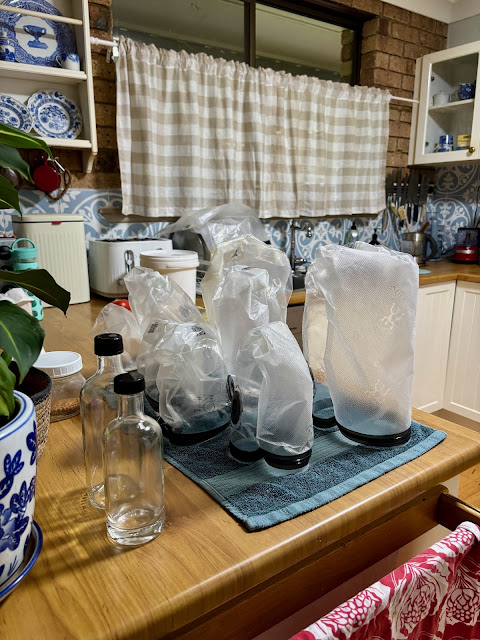
Every morning when I walk into my kitchen it looks tidy and ready for a day's work. Not so on this morning (above), I saw this when I walked in. Late the previous afternoon when I was looking for something, I came across my rolled up Zwilling vacuum bags and decided they had to be washed and dried. So I did that and although I usually put them outside on the verandah to dry it was dark by then. I turned the just-washed bags inside out and left them like this on a towel. It worked well and now the bags are ready to use when I bring home root vegetables, cabbages or whatever I buy that I want to last four or five weeks.
Image

You’ll save money by going back to basics

When I was doing the workshops and solo sessions, I had a couple of people whose main focus was on creating the fastest way to set up a simple life. You can't create a simple life fast, it's the opposite of that It's not one single thing either - it's a number of smaller, simpler activities that combine to create a life that reflects your values; and that takes a long to come together. When I first started living simply I took an entire year to work out our food - buying it, storing it, cooking it, preserving, baking, freezing, and growing it in the backyard. This is change that will transform how you live and it can't be rushed.  
Image


Trending Articles

NOT the last post

This will be my last post here.  I've been writing my blog for 18 years and now is the time to step back. I’ve stopped writing the blog and come back a couple of times because so many people wanted it, but that won’t happen again, I won’t be back.  I’ll continue on instagram to remain connected but I don’t know how frequent that will be. I know some of you will be interested to know the blog's statistics. 
Image

Every morning at home

Every morning when I walk into my kitchen it looks tidy and ready for a day's work. Not so on this morning (above), I saw this when I walked in. Late the previous afternoon when I was looking for something, I came across my rolled up Zwilling vacuum bags and decided they had to be washed and dried. So I did that and although I usually put them outside on the verandah to dry it was dark by then. I turned the just-washed bags inside out and left them like this on a towel. It worked well and now the bags are ready to use when I bring home root vegetables, cabbages or whatever I buy that I want to last four or five weeks.
Image

You’ll save money by going back to basics

When I was doing the workshops and solo sessions, I had a couple of people whose main focus was on creating the fastest way to set up a simple life. You can't create a simple life fast, it's the opposite of that It's not one single thing either - it's a number of smaller, simpler activities that combine to create a life that reflects your values; and that takes a long to come together. When I first started living simply I took an entire year to work out our food - buying it, storing it, cooking it, preserving, baking, freezing, and growing it in the backyard. This is change that will transform how you live and it can't be rushed.  
Image

Creating a home you'll love forever

Living simply is the answer to just about everything. It reduces the cost of living; it keeps you focused on being careful with resources such as water and electricity; it reminds you to not waste food; it encourages you to store food so you don't waste it and doing all those things brings routine and rhythm to your daily life. Consciously connecting every day with the activities and tasks that create simple life reminds you to look for the meaning and beauty that normal daily life holds.  It's all there in your home if you look for it. Seemingly mundane tasks like cleaning and cooking help you with that connection for without those tasks, the home you want to live in won't exist in the way you want it to.  Creating a home you love will make you happy and satisfied.
Image

Time changes everything

I've been spending time in the backyard lately creating a contained herb and vegetable garden. My aim is to develop a comfortable place to spend time, relax, increase biodiversity and encourage more animals, birds and insects to live here or visit. Of course I'd prefer my old garden which was put together by Hanno with ease and German precision. Together, we created a space bursting at the seams with herbs, vegetables and fruity goodness ready to eat and share throughout the year. But time changes everything. What I'm planning on doing now, is a brilliant opportunity for an almost 80 year old with balance issues. In my new garden I'll be able to do a wide range of challenging or easy work, depending on how I feel each day. It’s a daily opportunity to push myself or sit back, watch what's happening around me and be captivated by memories or the scope of what's yet to come.
Image

It's the old ways I love the most

I'm a practical woman who lives in a 1980’s brick slab house. There are verandahs front and back so I have places to sit outside when it's hot or cold. Those verandahs tend to make the house darker than it would be but they're been a great investment over time because they made the house more liveable. My home is not a romantic cottage, nor a minimalist modern home, it's a 1980’s brick slab house. And yet when people visit me here they tell me how warm and cosy my home is and that they feel comforted by being here. I've thought about that over the years and I'm convinced now that the style of a home isn't what appeals to people. What they love is the feeling within that home and whether it's nurturing the people who live there.
Image

Making ginger beer from scratch

We had a nice supply of ginger beer going over Christmas. It's a delicious soft drink for young and old, although there is an alcoholic version that can be made with a slight variation on the recipe. Ginger beer is a naturally fermented drink that is easy to make - with ginger beer you make a starter called a ginger beer plant and after it has fermented, you add that to sweet water and lemon juice. Like sourdough, it must ferment to give it that sharp fizz. To make a ginger beer plant you'll need ginger - either the powdered dry variety or fresh ginger, sugar, rainwater or tap water that has stood for 24 hours to allow the chlorine to evaporate off. You'll also need clean plastic bottles that have been scrubbed with soap, hot water and a bottle brush and then rinsed with hot water. I never sterilise my bottles and I haven't had any problems. If you intend to keep the ginger beer for a long time, I'd suggest you sterilise your bottles. MAKING THE STARTER In a...
Image

An authentic look at daily life here — unstaged and real

Most days Hanno was outside happily working in the fresh air. It may surprise you to know that I started reading my book,  Down to Earth , yesterday - the first time since I wrote it 13 years ago.  I had lent it to my neighbor, and when she returned it, I started reading, expecting to find surprises. Instead, I realised the words were still familiar—as if they were etched into my memory. As I flipped through the pages, I was reminded of how important it was for me to share that knowledge with others. The principles in Down to Earth changed my life, and I truly believed they could do the same for others. After just 30 minutes of reading, I put the book down, reassured that its message still holds true: we can slow down and reshape our lives, one step at a time.
Image