down to earth

  • Home
  • About Us
  • Down To Earth Book
  • Privacy Policy

Hanno and I quietly celebrated our 37th wedding anniversary this week. :- ) I can't say we've always been in sync, but in our older years we walk to the beat of the same drum.

I'm looking forward to another weekend sleepover with Jamie and Alex. They'll have a campfire in the backyard with their favourite sausage on bread dinner, followed by hot chocolates and marshmallows. It will be the last time they'll both here when there is no little Scottie dog in the backyard.  Gracie arrives next Wednesday and we're all very excited.

Thanks for your visits and comments this week. I hope you have a wonderful weekend at your place too.
  • Australians waste $10bn of food a year
  • Planes need to stop existing in a parallel universe when it comes to the climate fight This was a topic of discussion on the forum this week.  I believe it will be one of the big issues in years to come. It should be a big issue now but no one seems to want to tackle it.
  • Farming mega-mergers threaten food security, say campaigners
  • Single clothes wash may release 700,000 microplastic fibres, study finds
  • Gardeners' World special on allotments - You Tube
  • Internal 'clock' makes some people age faster and die younger – regardless of lifestyle
  • Noll's Home Canning and Freezing Recipes
  • The New Better Off
  • Top Down Raglan Baby cardigan pattern
  • How to make freezer dinner packets
  • Fish in crazy water
  • 15 lazy meals that still make you feel accomplished
I think Hanno and I have been pretty succesful in changing our lives from one of stress, expense and disorder, to a life of relaxed contentment, getting value for money, routines and organisation. It wasn't easy at the start, mainly because I didn't know then what I was looking for, but now it's just how we are. A lot of people ask me about how we settled into this way of life, how we paid off our debt and how we maintain a lifestyle that gives us so much. The hardest thing is changing how you think about success and what you believe you're entitled to. If you continue to believe you should have everything your friends have, if you always reward yourself for doing the hard yards or if you can't get your spending under control, you'll struggle to live simply. On a more general level it's got a bit to do with self-control, moderation, prudence and cutting back where you can. You work to use less of everything - less electricity and water, fewer products, less waste and packaging. I'd also add less travelling and only essential flying, although very few people seem to agree with me on that. For me, it's in my top ten.

Recycle furniture
 If you have the time, grow some of your own food.
If you can't grow a lot of food, grow herbs and fruit. They don't take a lot of time and they'll save you money.

Giving up buying everything you want is difficult because not only do you give it up today, you're giving it up over and over again for years. You're always cutting back and looking for ways to use less. You will get used to that but it's tough when you start. We've lived this way for many years and now cutting back is more about getting value for money instead of buying the cheapest of everything. I look at my budget as a whole instead of individual prices and if I can buy everything I need with my budget, I'm happy. That might mean a bit of juggling some weeks - I might not buy something so I can afford fish or a better cut of meat, or it could mean living off the stockpile for a couple of weeks so we have the food money for something else. We know what we can afford and stick to our budget, but when it's needed, a bit of juggling helps us to always stay within budget while having all we need.  And that is a choice for us.

Here are a few reminders of what we can do to help simplify and live within our means:
  • Spend less than you earn. Not just today and this week, but all the time.
  • Look for value for money instead of penny pinching.
  • Make up a workable and realistic budget and stick to it.
  • Start a food stockpile.
  • If you don't have enough to pay your monthly bills, cut out unnecessary expenses like mobile phone, cable TV, magazines, coffee at the cafe, bottled water and drinks etc.
  • Cook from scratch.
  • Never waste food, eat your leftovers and have a couple of meatless meals every week.
  • Take lunch and a drink to work and school.
  • Recycle, reuse and repair.
  • Monitor your electricity, water and gas use. Learn how to read your meters.
  • Turn off lights and TV when you leave the room. 
  • Turn off stand-by appliances when you're not using them and when you go to bed.
  • Stop buying cleaning products and make your own using soap, bicarb, vinegar, washing soda and borax.
  • If you haven't already done it, think about putting in a vegetable garden. If you've already got one, think about adding fruit and herbs.
  • If you have no space to grow vegetables, buy your fruit, vegetables, eggs and honey at a local market. The prices will probably be cheaper than the supermarket.
  • Check out your local butcher shop. The prices will probably be lower than the supermarkets and the quality of meat better. 
  • Try bulk buying with a friend to see if it works for you.
  • Teach yourself to knit and sew. There are many sites on the internet with very good instructions, tutorials and sometimes, videos. 
  • Make your home the kind of place you want to spend time in. Invite friends around instead of going out for coffee or drinks.
  • Be content with what you have. If you're tempted to buy something you can't afford, think about how you'll worry when you can't pay your bills and how that stress will affect you.
If you've already got a garden, think about adding a few chickens.
Plant fruit trees.
Make do with what you've already got. Repurpose and recycle.

Focusing on budgets, buying and growing food, cooking, baking, cleaning, all contribute to how you feel each day. Setting targets for yourself and reaching those targets gives you a feeling of control and achievement. It may not be how other people live, it may require juggling, but you'll slow down, live how you want to live and regain some balance in your life. At the beginning, not every day will be good but the certainty of your chosen path will keep you going until things improve. Take small steps towards your new life, be proud of each achievement and you'll slowly create a different sort of life. It won't be the same as the way I live, it will be your unique work in progress, a life that you've pieced together knowing what you need to thrive so you can live the way you choose.

Well, here she is again, our Grace. The lady who bred her is sending photos so we stay connected and up-to-date with her progress. How can you not love that face?  And her paws! I love her paws. Okay, I'll stop now.  :- )  

I've been fairly busy this past week with Jamie, Hanno's birthday and getting ready for Gracie. The weather here is great at the moment. It's neither hot nor cold and the afternoons are the best they've been all year. This perfect time will be over in a flash though because after the equinox, the days will get longer, the mildness of the weather will change to constant warmth and, once again, the seasons will change.

Have a wonderful weekend, friends.  I'll see you next week.

23 food hacks - good ones
Banana and Blueberry “Ice Cream”
"Men in Sheds" - The Luthier, You Tube
Simple steps by consumers can curb food waste
Swarm of bees follows car for 2 days to rescue queen trapped in back
Milanese pupil made to eat homemade lunch alone sparks ideological battle
Sweet simple old place
How to make a lovely little film for your blog
12 things to know about the 2016 autumnal equinox
5 essential tips for being more frugal with your time
How-to Geek for Mac and Windows
Digital Radio Plus - Australian digital radio hub
How to banish plastic straws from your life forever
I have a bit of a chuckle now and then about the food police and how they try to shame or scare parents into serving this or that.  Usually they insist you try "new" food that has been around for donkey's years but is "new" to the person writing the article. I've been through parenthood when I gave my sons what I believed was a good selection of balanced meals. They were the foods my family have eaten for generations. During that time I discovered that like us, children have genuine likes and dislikes and forcing them to eat something they don't like is usually counter-productive.  That doesn't mean I let them choose their own food. They ate what we ate as a family. If they didn't like it, they had fruit or they went without. I never made different meals for certain members of my family and I am grateful we didn't have food allergies or illness that made some foods a problem.

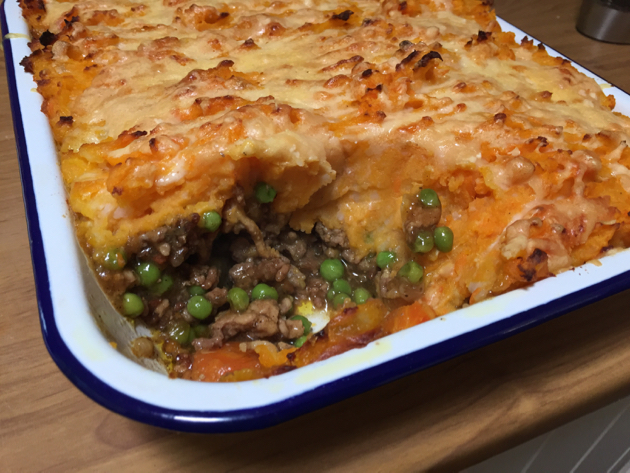
Homemade meat pie with eight vegetables.

Now I'm a grandma and have the responsibility of feeding my grandchildren when they're with us. I feel that responsibility because I want to blend in with what I know they're being fed at home, but I also want to give them the foods we eat and a small treat every now and then. I hope I get it right more than I get it wrong.

Jamie is here with us during the school holidays and while he eats what we eat with very few complaints, I like to give him food that I know he enjoys as well. Yesterday I made a meat pie with  vegetables - even sweet potato that I know he doesn't like. He loved it. He had a dollop of tomato sauce and he consumed almost twice as many vegetables as the recommended daily amount. I could easily have included 10 vegetables but decided to stop at eight.


The meat pie was made using beef and pork mince, cooked till brown and with the addition of a tablespoon of curry powder, salt and pepper. That amount of curry powder adds a mild spicy taste without adding heat. I added sliced carrot, celery in small pieces, diced onion and capsicum/bell pepper and some parsley (I could easily have added more fresh herbs too). That was cooked until the vegetables started to brown and then I added a litre of chicken stock. I let that simmer for about 20 minutes, the stock reduced and right at the end of the cooking, I added a cup of frozen peas. A small amount of cornflour thickened the stock. In a separate pot I boiled three large potatoes, one sweet potato and half a small butternut pumpkin/squash. When cooked, the boiled vegetables were mashed with a little butter and added to the top of the meat in a pie dish. I added sharp cheddar and a small amount of parmesan because it adds flavour and makes the top crispy and golden. Omit the cheese if you're dairy-free.

The vegetables you add to your pie depend entirely on what you have in the fridge however, the trio of onions, carrots and celery is the starting point for most European-style food. Start with those three, then add whatever you have. That might be one extra vegetables such as zucchini, or many extras such as garlic, turnip, silverbeet/chard, spinach, beans, kale, cabbage, corn, eggplant, or whatever. Try to stick with the topping of potatoes, sweet potato and pumpkin because it's colourful, sweetish and it goes well with the flavour of the meat and vegetable filling. If your children struggle to eat a variety to vegetables, still use all those you wish to use but instead of chopping, slicing and dicing, put the vegetables into your food processor and blitz them. That will turn them into a bit of mush but they'll still retain their nutrition and they'll be unrecognisable. They'll melt into the sauce as you cook.

Jamie loved this pie, so did Hanno and I. We still have more than half a pie to eat for today's lunch. It would make a great leftovers lunch for any workers who can take a container and heat it up at lunchtime. This pie is easy to make, fairly cheap, enjoyed by everyone and delivers on nutrition and flavour.  You won't find this recipe in any superfoods cook book but it's good wholesome food that most kids will love.  Just make sure the tomato sauce bottle is close by.  ;- )


I spent some time this week bear watching at Katmai Nation Park in Alaska. I wish I could tell you I was there in person, but having those webcams is almost as good for this arm chair traveller. This year has seen record numbers of sockeye and silver salmon travel up the Brooks River, which attracted more bears who use the resource to help them survive a long winter. The water level was higher this year too. There were new adult bears seen, quite a few mothers with spring cubs and the remains one of the older bears were found near the river which had everyone speculating about what happened to him. But now it's coming to a close and instead of seeing most of the bears catching fish at the falls, we're seeing them at the mouth of the river too. They scavenge around floating through the water casually catching dead and dying fish. It's natures way of cleaning up after the fish return to the place of their birth to die, completing their life cycle. I never tire of watching the unscripted, day-to-day activities of the bears play out in front of the cameras. In the next month, as the weather gets colder and the bears reach their maximum weight, they'll start leaving the falls and move up to higher ground where they'll dig a new den and settle in for the winter. We'll see them again in June 2017.

Thanks for your visits and comments this week. I love seeing new readers here as well as older readers who return every day (for years). Have a good weekend, friends. I'll see you next week.
  • Capital letters out, swearwords in: one journalist's legacy
  • Why shelves work better than a toy box
  • Donna's been experimenting with washing cubes for the dishwasher
  • Seven ways to prepare for death that will instantly improve your life
  • Leaving heart and home: when your house of memories becomes someone else's
  • Fasten your seat belt – turbulence is on the rise
  • Brisbane local food
  • How to make your own flavour-infused sea salt
  • Why I choose to have less choice
  • How Charles Darwin used rest to be more productive — and how you can, too
  • Heather at Beauty that Moves is having a Whole Foods Freezer Workshop starting early October. It looks like such a helpful way for new cooks, and those who need help organising food, to gain the valuable skill of freezing wholesome food. There's even a virtual classroom on Facebook but then Heather is a seasoned workshop presenter so I'm sure all avenues are covered.
  • Pip Magazine, Australia's permaculture magazine, has a Down to Earth flavoured subscription offer. Look here for the offer, then check out the rest of the magazine.
SaveSave
Luckily I don't compare my performance to what others are doing. When I look at the forum and see the amount of work some of our members do every day, I think back to when that was my day too and breathe a sigh of relief that my seasons have changed and there is less work to do. I come from a working class family who took pride in the paid and unpaid work they did. In our world, most of what we had we got through hard work. Daily work, and the importance of it, is etched into my soul. Very few of us are wealthy enough to go through life without work and to tell you the truth, if I were in that category, I'd work anyway because of the many non-financial benefits work brings with it. Work helps shape the person you become.


When I closed down my business many years ago, I didn't know what I would do but knew I wasn't about to be spending time on a beach soaking up the rays. I had to realise my worker's ethos in a more creative way because I knew that daily work would always be part of what I do and who I am. As I walked away from commercial work, I wasn't sure to what extent, but I had a strong feeling that domestic work would help save me. I didn't know it at the time but the day I picked up my broom and put on my apron was the day my life changed for the better.  I'm still here all these years later, working for the life I want and appreciating the power of our home while I look forward to the years ahead.

So what am I doing? Many people ask me about my days and what I do so here's what I did yesterday. Got up around 3.30am, dressed and checked emails, the blog comments and the forum. Then I watched a TV program about a Russian museum that I recorded the other day. I was covered with a thick fleece and had my slippers on so I was warm, the room was fairly dark and I eventually drifted off to sleep. When the program finished, the TV and recorder turned themselves off and I slept soundly in my armchair until Hanno came out at 7am. After waking up a second time, I let the chickens out for the day, put food in their hopper and lingered in the garden watching the early bees moving from flower to flower. Hanno unpacked the dishwasher while I made breakfast then I cleaned the kitchen and made up a care parcel for a friend so Hanno could post it when he went out. Tricia rang. We talked for 20 minutes or so, I made the bed, cleaned my teeth, brushed my hair and opened the windows in the bedroom and bathroom. Then I went outside again for 15 minutes to water the seedlings and the new plantings of lettuce and silver beet/chard. 


Hanno went for his blood test and to pick up a few things at Aldi and I baked a cake from the CWA Classics book - Mum's Orange Tea Cake.  I've made it a few times before and it's delicious. We have it over a few days for morning tea. 

  MUM'S ORANGE TEA CAKE  
2 rounded tablespoons soft butter
½ cup sugar
1 egg
zest and juice of 1 orange
1 cup self-raising flour
1 dessertspoon cornflour
milk, if needed
1 tablespoon extra sugar to sprinkle on the top before baking

Preheat oven to 180C. Grease a round 20 cm cake tin and line the base with baking paper.

Cream butter and sugar, add the egg and beat well. Add zest and juice of orange (don't worry when it curdles). Sift in the dry ingredients and mix well. It's a thick batter but if it's too thick add a little milk.

Pour into prepared tin and sprinkle with extra sugar. Bake until it smells cooked and is golden on top, about 30 minutes. 

After cleaning up my baking equipment, I started on lunch. We have our main meal at lunchtime now and have tea and a snack in the late afternoon. Yesterday's lunch was beef ribs with silver beet and turnips from the garden. The beef is very easy to make. I wrap it tightly in two sheets of alfoil and place it in a hot oven at 190C for about 60 minutes. That steams the ribs and when I peel back the foil the meat is starting to fall off the bone.  For the remaining cooking time, leave the foil open. I make up a marinade (below) and brush it on the top and sides of the ribs and keep cooking it in the oven at 180C for another 30 minutes. A second brushing of the marinade and then let it cook for 15 minutes before removing it from the oven. Delicious!  BTW, we use entree plates instead of dinner plates now so if you think the plates look crowded, it's because they're smaller.


  BEEF RIBS MARINADE  
2 teaspoons honey
1 tablespoon chilli jam, chilli sauce or a sprinkling of chilli flakes
pepper
¼ cup olive oil
¼ cup soy sauce


After lunch I cleaned up, checked the forum and emails and hemmed Gracie's fleece. I emptied the freezer drawers at the bottom of our fridge, washed the drawers, organised the frozen food in there, and added the ice cube container for the ice I'll make soon for the warmer months. Around 3pm we pulled down the shade screens on the back verandah and had afternoon tea. Tricia phoned again and we talked and giggled about a letter she found that I wrote to her in 1962 when she was away staying with our Aunty. I wrote about Bobby Darin (the singer) and Father Knows Best (the TV show). LOL I was 14 years old. 


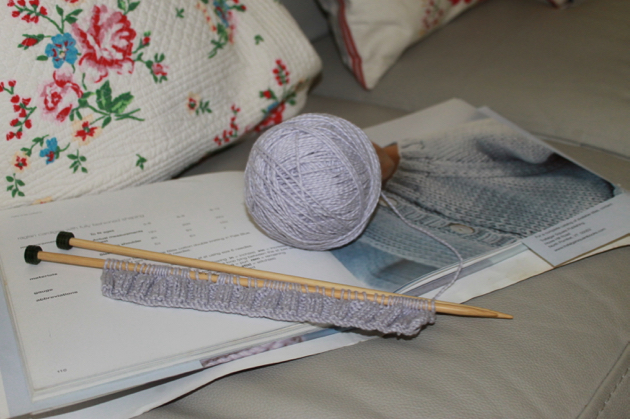
Then back outside again to water the vegetable garden which gave me the opportunity to sit and watch the birds and listen to the teenager next door express his angst with a sad song about losing his girl.  Ah, teenage love.  Back inside, I started writing this post and then made tea and toast which I enjoyed while watching TV for an hour with Hanno. A bit of knitting was done, the kitchen cleaned up, a few notes made in my notebook and some messages and emails sent.  And that was it for the day. It's only a fraction of what I once did but with older age comes less energy, calmness, contentment and the desire for self-reflection. So while I happily acknowledge that I do less work, I know there is less to do because we have pared back our wants and needs. And at the end of the day, I go to bed satisfied and while I don't catapult myself out of bed every morning like I once did, there is still a burning desire to live well and enjoy every day.

Yes, there's a new baby coming into our lives, she's a Scottish Terrier puppy called Gracie. Those of you who have been reading here for a long time will know that in the past we lived with Airedale Terriers. We lost Rosie, aged 12, eight years ago and Alice, aged 13, five years ago. When Hettie, our 18 year old cat, died last year we were both heart-broken and we swore she would be our last pet. Those final days were just too painful.

Well, a bit of water has flowed under the bridge since then and life seems to have helped us forget some of that pain. All the pressure of paid work is in the past for us and now that we're up to date with our home maintenance, we're looking for new challenges.  Enter Gracie, stage left.


She arrives on 5 October and we're really looking forward to welcoming her into our family.  We'll go back to making dog food and biscuits and having chewed shoes. Gracie will be a house dog, with occasional forays, when she's older, into the chook house to help us keep down the rat and mouse population out there. Traditionally Scottie dogs were bred to hunt rodents.

We're both keen to train Gracie when she settles in. We're looking forward to many hours with her running in the back yard, chasing a ball, and trips out and about to show her the wide world - or the small part of it that we inhabit. And in the meantime, we're preparing the house, making blankets and bedding and looking for toys, a seat belt harness and collar.  It's like getting ready for a baby all over again and that's always a good thing.  ♥︎ ♥︎ ♥︎

Another week has been and gone, another weekend approaches.  To tell you the truth, almost every day is like a weekend to me now, and every work day a holiday. Life's good.  Thanks for all the wonderful comments this week and for your continued interest in my blog.  I hope you have a great weekend. I'll see you again next week.   ♥︎

Quit Your Job and Farm
Bowl cover tutorial
Quick and easy leftovers recipes
27 podcasts
Learn to knit a dishcloth
How to make ketchup in the slow cooker
10 tips for being a better parent
Jack Lemmon helped us to build a room divider
US beekeepers fear for livelihoods as anti-Zika toxin kills 2.5m bees
Our life in three stages – school, work, retirement
Tuna salad
24 profoundly beautiful words that describe nature and landscapes

There are many things we can all do to save money in our homes. Some of them are so easy and commonplace we rarely think of them, or think they'll save us money. One of these is the humble cleaning cloth - those cloths that are used in the kitchen to wash up, wipe down benches and clean up spills, as well as dusting and cleaning cloths for general household cleaning. Click here to go to a 2011 post about cloths. As you can see in that post I was cutting up an old flannel nightie to use as cleaning rags. Well, I'm still at it, last week I was cutting up old tea towels and hemming them to be used as drying cloths. Cleaning is much more effective is everything is dried after it is cleaned.

Here you can see that I've cut the elastic bands from the edges of an old fitted sheet and then used the fabric as super absorbent, soft cleaning cloths.

In Australia the most popular brand of cleaning and washing up cloth is Chux. Way back when I gave no thought to grocery shopping or wasting money, I used to buy a packet every week. I'd use them for all the normal tasks and throw them in the bin after they'd been used a few times, or if I'd cleaned up something disgusting. Chux cost from 30 - 60 cents each now and they're used a few times and then thrown away. You could wash them in the washing machine but most people don't do that. They're marketed as "disposable" and are usually thrown out. If you were to buy one large pack a month for six dollars, you'd be spending 72 dollars a year that you don't have to spend. When I think back to those days it astounds me that I was so thoughtless. Not only about the money I used to spend but also for all the landfill I was responsible for.  I'll never go back to that. Using old sheets, towels, t-shirts etc is a much wiser way to go. As long as the fabric is cotton, linen or bamboo, it will clean and dry well.  When the cloths are dirty, just put them in the washing machine on a normal cycle and dry in the sun if that's possible. When they're past their useful life in the house they can go on the compost heap.

My basic cleaning cloths are knitted organic cotton dish cloths, microfibre cloths, and rags I make up from old fabric here at home. I use organic cotton yarn for the dishcloths which I get from my sponsor EcoYarns. I have six microfibre cloths that I use in the bathroom for cleaning and drying and the rest of my cleaning cloths are old fabric that's been recycled.

If you build up a stockpile of dishcloths, you'll have enough on hand for all the cleaning you need to do.


When you've made up a few dishcloths, if you've used a good quality cotton they can be used as face cloths as well. By teaming a few cloths with a bar of home made soap, it makes a lovely gift for a birthday or at Christmas.
The cloth I knitted above is using Debbie's fabulous waffle weave pattern. You can find the original pattern here on her blog.


When you have a good supply of knitted dishcloths, store them in a little basket or a kitchen drawer so you can just grab one whenever it's needed.

It's so easy to recycle your old sheets and towels. Simply cut them to the size you need - I tend to prefer larger rags of about 40 x 40cm (15 x 15 inches). If they're for general cleaning you don't need to hem them unless they're dropping a lot of threads. I used to use pinking shears to cut the edges but now I just rip them, it's faster.  And the easiest place to store them is in a rag bag.  I made one for myself and have it having in the laundry. I throw out rags if I've wiped up something really nasty, if I've just done regular cleaning with them, I rinse them out then wash them in the washing machine along with my normal washing. They're hung on the line to dry, folded and stored in the rag bag.

Above is the rag bag I made years ago to store my rags in.

It doesn't take much to start making your own cleaning cloths and dish cloths. Just make the decision to do it and when you have a ripped sheet that can't be repaired, old towels or tea towels, put them aside instead of discarding them. When you have time, work out the cloth size you prefer and then start cutting or ripping. I think I included a rag bag pattern in The Simple Home.  If you're making dishcloths, I added the waffle weave pattern in the Down to Earth book, there is another pattern here in an older post, and here is a collection of numerous dishcloth patterns. It's so easy to do, you'll be doing something positive and a practical expression of your sustainable values.

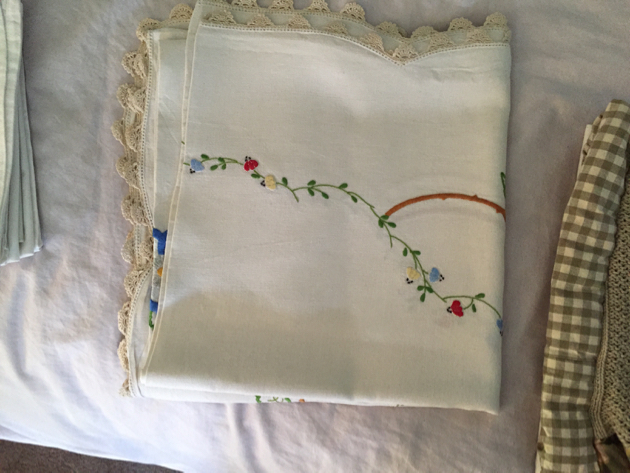
But that's just the start of what you can do to lighten your footprint and cut your costs while still having a wide variety of good quality household linens in your home.  You can make table cloths from scraps of cotton, if you have no sink drainer, make a terry towelling mat to place under your dish rack. Aprons help protect your clothing when you're working at home and also make a great gift. There are table runners, napkins, tea towels, jug covers and cloths to cover your fermenting jars and bowls. The list is long, my friends, and most of these items are things that were one common in every home and now are difficult to buy in a shop because people don't use them as much.

A patchwork tablecloth made from old tea towels, doilies, sheets and pieces of fabric.
This dish mat will help catch the drops under a dish rack. It's cotton on top and terry towelling underneath. 
The bowl covers above are shop-bought and given to me as a gift but you could easily make your own and start cutting down on plastic wrap.

Aprons, table runners and napkins are all easy to make and will also serve as useful gifts.

The cushion cover above used to be a Mambo shirt. I made it into a cover and gave it to my son. He loves it.

Making your own table napkins will allow you to stop buying "disposable" napkins and have a selection of lovely cloth napkins on the kitchen table. They just need to be cut to the required size and then hemmed.

Above and below are my latest recycling efforts. I have too many old tea towels so I took out the red and white ones, cut them in two, hemmed them. Now they are used to dry the kitchen sink, benches, windows and appliances after they've been cleaned.

This is all simple sewing and knitting that anyone can do. Let's stop wasting resources and money buying the convenience of Chux and get back to being productive in our homes. It's easy to do, it often helps you recycle instead of discard, it costs less and it means more. A lot more.

My thanks to everyone who shared their thoughts on topics to write about. It was quite overwhelming reading such heartfelt comments. I also received over 50 emails from readers who explained what they get from the blog, how it's helped them over the years and what they'd like to read in the future. I cannot reply to all of those emails but I am grateful that so many of you took the time to explain what the blog means to you. Having all those opinions and suggestions allowed me to focus on what I want to write now. I started the blog because I'd written the beginnings of a book that no one wanted to publish, so I used those chapters as posts. The blog has been a platform from which to share ideas, a way to encourage change, a continuing record of my home life and sometimes, a confessional and a way to test my own thoughts. It's been a rollercoaster, that's for sure. This blog made me a Penguin author, gave me a lot of self satisfaction and helped me earn a small amount of money while tapping away on a key board in my sewing room. I loved that as an older woman I was given a platform and that so many people listened, believed and saw a reason to change.


I'm still not really sure what I want the blog to be in the future but I know what I don't want. I don't want to write to a pre-determined formula, I want to surprise you. I want to surprise myself! 

I'm nearing 70 and in May next year this blog will be 10 years old with close to 3000 posts.  I imagine I'll keep writing on a semi-regular basis for a few years, explaining what I do at home, especially those things that have changed over the years. I'll also write about ageing. That's something we should all be interested in because we're all doing it. If we only listen to the voices in magazines and on social media, we'll all feel like failures. There needs to be a balanced view. I feel quite privileged to be growing older because that means I haven't died before my time and I get to examine and digest what growing old feels like. I can't say I enjoy every part of ageing but I'm sure that it's much better than the alternative - death.


I hope to have a post ready tomorrow. It will be about that most domestic of topics - rags and cleaning cloths. So if you want an antidote to mainstream life and want to read about the basics, come back tomorrow and we'll continue the story.

 The garden on Thursday.

My sincere thanks to everyone who commented or emailed about topics I could cover in future posts. It really clarified things for me and I've been giving it a lot of thought as I go about my work. I'll explain it all in Monday's post so tune in then.

I hope you have a wonderful weekend and get the chance to either relax or do something you really love.  See you next week, friends.

Doctors should prescribe gardening for patients more often, says report
Nasa: Earth is warming at a pace 'unprecedented in 1,000 years'
Seasonal eating: does it matter?
The sad slippery slope of bar soap
Chocolate chip mint Greek yogurt pops
Something to learn from the “last of a dying breed”
The weird route to real community
How to knit
Round Yoke Toddler Sweater
Your Embarrassing Cleaning Questions, Answered

We've had quite a history of fruit trees in our backyard. When we bought this place, there was a 30 year old avocado living quite happily where our vegetable garden now is. We've loved eating avocados for many years so way back then that tree was a true gift in an otherwise unremarkable backyard. It didn't last long. A few months after we moved in, the Council finally brought us into the (then) 20th century and installed sewerage in our little town. We were the first to get it and therefore we had some of the infrastructure installed out there. At one point, circa 1998, our backyard looked like the trenches of World War 1. Consequently, the avocado died. But by then we'd planted our first lemon tree, a Eureka, and when we put in the vegetable garden, we planted a Washington Navel orange and we've never looked back. Over the years there have also been mandarins and cumquats as well as many berry fruits and passionfruit. We also planted a macadamia, which is native to this area, but we soon discovered it brought rats in to eat the nuts when they fell. That was removed. We have a lovely pecan that was here when we arrived and that is still going strong. There is a mango down on the creek that we leave for the bats, a native fig and a second Eureka.

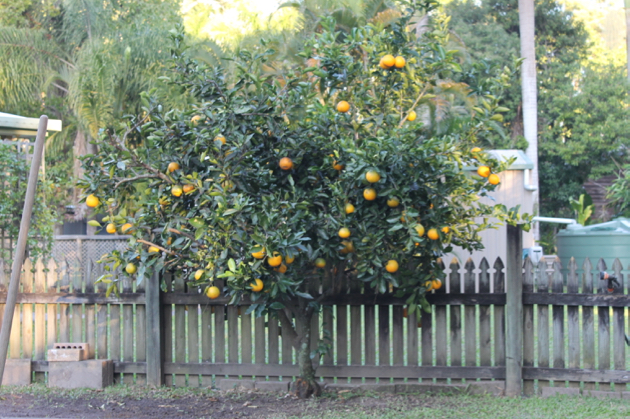
Above is the Washington Navel in the vegetable garden. It has finished its yearly crop and is putting on a lot of flowers which will be next year's fruit.
Below is one of the orange trees we moved over to the vegetable garden. It's already putting on new growth and flowers.

We also had two other navel oranges on the other side of the yard that we rarely watered. Oranges need a lot of water, so they survived but didn't thrive, unlike the one in the vegetable patch. When my nephew Danny was here a couple of months ago, I asked him to move those two orange trees over to be closer to the watering. Unfortunately, it looks like the larger tree won't make it but the smaller one is very healthy and putting on flowers.

Here is our new girl - Lane's Late Navel. She's sitting with another Eureka lemon we bought for Shane and Sarndra as a house warming gift.

One of the true joys of our garden is the fresh orange juice it gives us every year. For about three months very year - early May to late July, sweet oranges are picked to eat and juice. We were talking about it the other day and decided we'd look for another type of orange that will extend the juice season.  Enter Lane's Late Navel. An Australian variety of orange very similar to the Washington Navel, which finishes cropping in early July. Lane's Late starts in July and produces through winter and sometimes into October.  If all these trees grow well, we'll increase our orange season to six months and have enough oranges for marmalade, juice, eating fresh and for sharing with the rest of the family.

If you're already growing the Washington Navel, Lane's Late is an excellent sister tree. You need to be in a frost-free area and have the ability to give the trees a lot of water, so having your own water tanks would be ideal. Deep weekly watering is essential for a good crop. Don't worry about soil type. We're on clay here, but even if you have sandy soil, as long as you dig a hole at least twice as big as the root ball, then fill it with compost, good soil and manure, you'll be able to grow an orange tree.


If you have some usable land at your home but not much spare time for gardening, a fruit tree or two will give you good quality produce with very little effort and time. Fruit trees are a great investment. If you can prepare the planting hole well, locate the tree in full sun in a fairly wind-free area, for the expenditure of about $30 - $40 and a couple of hours work, you'll be rewarded with years of fresh organic citrus fruit. Make sure you give the tree plenty of water, fertilise every season with organic fertilisers - comfrey tea/mulch, chicken manure, blood and bone, sulphate of potash, and check for insects. Shape the tree to suit your land and circumstances - for instance, we lifted the skirt on our tree (see photo above) so the branches didn't touch the ground when full of fruit. When the tree isn't producing, it looks like a lovely, dark green moderate sized tree that makes the garden look beautiful. Citrus respond well to pruning so you can adjust the height or width if you need to. Prune after all the oranges have been picked and before the flowers start for the next season's crop.

This is the second Eureka lemon (being guarded by our hen Patrick). Planted two years ago, this is the ideal time to shape and prune the tree if it needed it. We'll let it grow naturally and see what it does. We only allowed a few lemons to grow this year but now the tree is full of flowers and it looks like there'll be a bumper crop early next year.
Last year we severely pruned our lemon tree when it was attacked by borers. We removed half the tree and hoped the other half would survive. This is part of this year's crop, they hung down like grapes. We're hoping for new shoots on the pruned side and while there are none there yet, I doubt it will be too long before the tree recovers and starts growing well again.

I'm looking forward to the years ahead when we might have five or six months of the year with fresh oranges coming into the kitchen every day. Think of all the whole orange cakes I can make! I might have to look around for a few more orange recipes.  I encourage you to grow fruit trees, especially if you'd like to garden but don't have much time. A productive fruit tree will put your land to good use and give you fresh produce with little effort.

 - - - ♥︎|♥︎|♥︎ - - -

I need your help, friends. I'm quite happy to keep writing my blog, I enjoy the discipline of it, but now that I'm not writing as much here, when I do sit down for it, I wonder what to write. I've told you about what I do and although I suppose I could write on these topics again with the benefit of a few years more experience, but unless I change what I do or think of something new, I'm not sure I want to repeat it all.

UPDATE: Comments are closed.

Thanks everyone. I'm closing the comments here because I have a lot of feedback. Thanks to all who contributed.


Newer Posts Older Posts Home
View mobile version

MY BOOKS

MY BOOKS


My books were all published by Pengiun, and are available at Amazon US, Amazon UK and Amazon Au

Search here

Total Pageviews

Translate


I'm Rhonda Hetzel and I've been writing my Down to Earth blog since 2007. Although I write the occasional philosophical post, my main topics include home cooking, happiness and gardening as well as budgeting, baking, ageing, generosity, mending and handmade crafts. I hope you enjoy your time here.

MY FAVOURITE PLACES

  • Grandma Donna's Place
  • Grandma Donna's YouTube
  • Grandma Donna's Instagram
  • This Simple Day
  • Nicole's Instagram

Give More

Give More

Popular posts last year

Making ginger beer from scratch

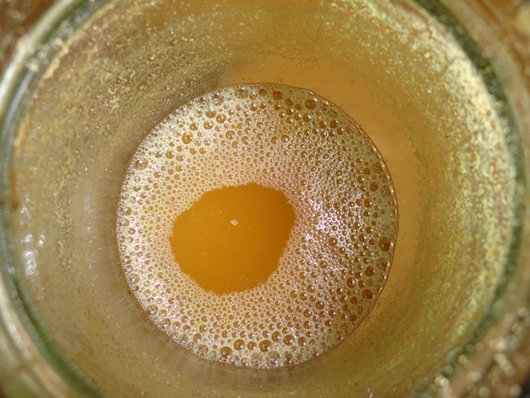
We had a nice supply of ginger beer going over Christmas. It's a delicious soft drink for young and old, although there is an alcoholic version that can be made with a slight variation on the recipe. Ginger beer is a naturally fermented drink that is easy to make - with ginger beer you make a starter called a ginger beer plant and after it has fermented, you add that to sweet water and lemon juice. Like sourdough, it must ferment to give it that sharp fizz. To make a ginger beer plant you'll need ginger - either the powdered dry variety or fresh ginger, sugar, rainwater or tap water that has stood for 24 hours to allow the chlorine to evaporate off. You'll also need clean plastic bottles that have been scrubbed with soap, hot water and a bottle brush and then rinsed with hot water. I never sterilise my bottles and I haven't had any problems. If you intend to keep the ginger beer for a long time, I'd suggest you sterilise your bottles. MAKING THE STARTER In a...
Image

NOT the last post

This will be my last post here.  I've been writing my blog for 18 years and now is the time to step back. I’ve stopped writing the blog and come back a couple of times because so many people wanted it, but that won’t happen again, I won’t be back.  I’ll continue on instagram to remain connected but I don’t know how frequent that will be. I know some of you will be interested to know the blog's statistics. 
Image

How to make cold process soap

I'm sure many of you are wondering: "Why make soap when I can buy it cheaply at the supermarket?" My cold process soap is made with vegetable oils and when it is made and cured, it contains no harsh chemicals or dyes. Often commercial soap is made with tallow (animal fat) and contains synthetic fragrance and dye and retains almost no glycerin. Glycerin is a natural emollient that helps with the lather and moisturises the skin. The makers of commercial soaps extract the glycerin and sell it as a separate product as it's more valuable than the soap. Then they add chemicals to make the soap lather. Crazy. Making your own soap allows you to add whatever you want to add. If you want a plain and pure soap, as I do, you can have that, or you can start with the plain soap and add colour, herbs and fragrance. The choice is yours. I want to add a little about animal and bird fat. I know Kirsty makes her soap with duck fat and I think that's great. I think t...
Image

Preserving food in a traditional way - pickling beetroot

I've had a number of emails from readers who want to start preserving food in jars but don't know where to start or what equipment to buy.  Leading on from yesterday's post, let's just say up front - don't buy any equipment. Once you know what you're doing and that you enjoy preserving, then you can decide whether or not to buy extra equipment. Food is preserved effectively without refrigeration by a variety of different methods. A few of the traditional methods are drying, fermentation, smoking, salting or by adding vinegar and sugar to the food - pickling. This last method is what we're talking about today. Vinegar and sugar are natural preservatives and adding one or both to food sets up an environment that bacteria and yeasts can't grow in. If you make the vinegar and sugar mix palatable, you can put up jars of vegetables or fruit that enhance the flavour of the food and can be stored in a cupboard or fridge for months. Other traditional w...
Image

Cleaning mould from walls and fabrics

With all this rain around we've developed a mould problem in our home. Usually we have the front and back doors open and that good ventilation stops most moulds from establishing. However, with the house locked up for the past week, the high humidity and the rain, mould is now growing on the wooden walls near our front door and on the lower parts of cupboards in the kitchen. Most of us will find mould growing in our homes at some point. Either in the bathroom or, in humid climates, on the walls, like we have now. You'll need a safe and effective remedy at some point, so I hope one of these methods works well for you. Mould is not only ugly to look at, it can cause health problems so if you see mould growing, do something about it straight away. The longer you leave the problem, the harder it will be to get rid of it effectively. If you have asthma or any allergies, you should do this type of cleaning with a face mask on so you don't breathe in any spores. Many peopl...
Image

Five minute bread

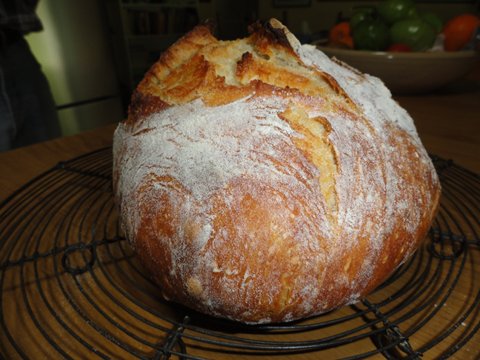
Bread is one of those foods that, when made with your own hands, gives a great deal of satisfaction and delight. It's only flour and water but it symbolises so much. I bake bread most days and use a variety of flours that I buy in bulk. Often I make a sandwich loaf because we use most of our bread for lunchtime sandwiches and for toast. Every so often I branch out to make a different type of loaf. I have tried sour dough in the past but I've not been happy with any of them. I'll continue to experiment with sour dough because I like the idea of using wild yeasts and saving the starter over a number of years to develop the flavour and become a part of the family. However, the loaf I've been branching out to most often is just a plain old five minute bread. By five minutes I mean it takes about five minutes actual work to prepare but it's the easiest of all bread to make and to get consistently good loaves from. If you're having people around for lunch or...
Image

This is my last post.

I have known for a while that this post was coming, but I didn't know when. This is my last post. I'm closing my blog, for good, and I'm not coming back like I have in the past.  I've been writing here for 16 years and my blog has been many things to me. It helped me change my life, it introduced me to so many good people, it became a wonderful record of my family life, it helped me get a book contract with Penguin, and monthly columns with The Australian Women's Weekly and Burke's Backyard . But in the past few months, it's become a burden. In April, I'll be 75 years old and I hope I've got another ten years ahead. However, each year I'll probably get weaker and although I'm fairly healthy, I do have a benign brain tumour and that could start growing. There are so many things I want to do and with time running out, leaving the blog behind gives me time to do the things that give me pleasure. On the day the blog started I felt a wonderful, h...
Image

What is the role of the homemaker in later years?

An email came from a US reader, Abby, who asked about being a homemaker in later years. This is part of what she wrote: "I am a stay-at-home mum to 4 children, ages 9-16. I do have a variety of "odd jobs" that I enjoy - I run a small "before-school" morning drop-off daycare from my home, I am a writing tutor, and I work a few hours a week at a local children's bookstore. But mostly, I cherish my blissful days at home - cooking, cleaning (with homemade cleaners), taking care of our children and chickens and goats, baking, meal-planning, etc. This "career" at home is not at all what I imagined during my ambitious years at university, but it is far more enriching. I notice, though, that my day is often planned around the needs of my family members. Of course, with 4 active kids and a husband, this is natural. I do the shopping, plan my meals, cook dinner - generally in anticipation of my family reconnecting in the evening.  I can't h...
Image

Every morning at home

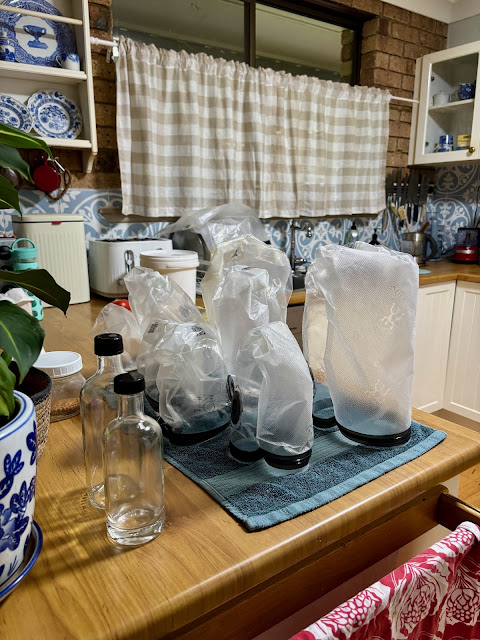
Every morning when I walk into my kitchen it looks tidy and ready for a day's work. Not so on this morning (above), I saw this when I walked in. Late the previous afternoon when I was looking for something, I came across my rolled up Zwilling vacuum bags and decided they had to be washed and dried. So I did that and although I usually put them outside on the verandah to dry it was dark by then. I turned the just-washed bags inside out and left them like this on a towel. It worked well and now the bags are ready to use when I bring home root vegetables, cabbages or whatever I buy that I want to last four or five weeks.
Image

You’ll save money by going back to basics

When I was doing the workshops and solo sessions, I had a couple of people whose main focus was on creating the fastest way to set up a simple life. You can't create a simple life fast, it's the opposite of that It's not one single thing either - it's a number of smaller, simpler activities that combine to create a life that reflects your values; and that takes a long to come together. When I first started living simply I took an entire year to work out our food - buying it, storing it, cooking it, preserving, baking, freezing, and growing it in the backyard. This is change that will transform how you live and it can't be rushed.  
Image

All previous blog posts

  • 2026 3
    • February 3
      • Workshops starting 1 March
      • Planting vegetable seeds and new workshops
      • Back where we belong
  • 2025 7
    • July 1
    • June 2
    • May 1
    • April 2
    • February 1
  • 2024 25
    • December 2
    • November 1
    • October 2
    • September 3
    • August 1
    • July 3
    • June 1
    • May 3
    • April 2
    • March 3
    • February 2
    • January 2
  • 2023 13
    • December 1
    • November 2
    • October 1
    • September 3
    • August 2
    • February 2
    • January 2
  • 2022 17
    • November 3
    • October 4
    • September 3
    • August 2
    • July 3
    • June 2
  • 2021 50
    • December 1
    • November 6
    • October 7
    • September 5
    • August 4
    • July 5
    • June 2
    • May 2
    • April 6
    • March 4
    • February 4
    • January 4
  • 2020 68
    • December 3
    • November 5
    • October 4
    • September 4
    • August 4
    • July 4
    • June 4
    • May 8
    • April 7
    • March 8
    • February 8
    • January 9
  • 2019 66
    • December 2
    • November 4
    • October 5
    • August 3
    • July 4
    • June 6
    • May 8
    • April 8
    • March 8
    • February 11
    • January 7
  • 2018 82
    • December 1
    • September 2
    • August 10
    • July 4
    • June 11
    • May 9
    • April 12
    • March 10
    • February 10
    • January 13
  • 2017 129
    • December 7
    • November 10
    • October 6
    • September 13
    • August 11
    • July 13
    • June 12
    • May 9
    • April 9
    • March 14
    • February 11
    • January 14
  • 2016 125
    • December 7
    • November 13
    • October 10
    • September 11
    • August 11
    • July 8
    • June 9
    • May 9
    • April 12
    • March 10
    • February 13
    • January 12
  • 2015 184
    • December 7
    • November 15
    • October 20
    • September 18
    • August 19
    • July 18
    • June 12
    • May 15
    • April 12
    • March 21
    • February 13
    • January 14
  • 2014 203
    • December 11
    • November 8
    • October 17
    • September 20
    • August 17
    • July 19
    • June 17
    • May 17
    • April 23
    • March 15
    • February 18
    • January 21
  • 2013 225
    • December 13
    • November 17
    • October 17
    • September 17
    • August 21
    • July 24
    • June 20
    • May 19
    • April 17
    • March 22
    • February 17
    • January 21
  • 2012 245
    • December 17
    • November 20
    • October 20
    • September 18
    • August 15
    • July 24
    • June 21
    • May 26
    • April 23
    • March 23
    • February 19
    • January 19
  • 2011 257
    • December 18
    • November 24
    • October 27
    • September 23
    • August 24
    • July 21
    • June 24
    • May 24
    • April 16
    • March 22
    • February 14
    • January 20
  • 2010 283
    • December 20
    • November 18
    • October 18
    • September 19
    • August 25
    • July 24
    • June 25
    • May 26
    • April 25
    • March 22
    • February 29
    • January 32
  • 2009 293
    • December 29
    • November 18
    • October 23
    • September 25
    • August 22
    • July 28
    • June 22
    • May 21
    • April 27
    • March 26
    • February 24
    • January 28
  • 2008 387
    • December 24
    • November 23
    • October 25
    • September 26
    • August 27
    • July 27
    • June 37
    • May 34
    • April 44
    • March 53
    • February 32
    • January 35
  • 2007 372
    • December 37
    • November 40
    • October 55
    • September 51
    • August 49
    • July 63
    • June 49
    • May 28


Trending Articles

NOT the last post

This will be my last post here.  I've been writing my blog for 18 years and now is the time to step back. I’ve stopped writing the blog and come back a couple of times because so many people wanted it, but that won’t happen again, I won’t be back.  I’ll continue on instagram to remain connected but I don’t know how frequent that will be. I know some of you will be interested to know the blog's statistics. 
Image

Every morning at home

Every morning when I walk into my kitchen it looks tidy and ready for a day's work. Not so on this morning (above), I saw this when I walked in. Late the previous afternoon when I was looking for something, I came across my rolled up Zwilling vacuum bags and decided they had to be washed and dried. So I did that and although I usually put them outside on the verandah to dry it was dark by then. I turned the just-washed bags inside out and left them like this on a towel. It worked well and now the bags are ready to use when I bring home root vegetables, cabbages or whatever I buy that I want to last four or five weeks.
Image

You’ll save money by going back to basics

When I was doing the workshops and solo sessions, I had a couple of people whose main focus was on creating the fastest way to set up a simple life. You can't create a simple life fast, it's the opposite of that It's not one single thing either - it's a number of smaller, simpler activities that combine to create a life that reflects your values; and that takes a long to come together. When I first started living simply I took an entire year to work out our food - buying it, storing it, cooking it, preserving, baking, freezing, and growing it in the backyard. This is change that will transform how you live and it can't be rushed.  
Image

Creating a home you'll love forever

Living simply is the answer to just about everything. It reduces the cost of living; it keeps you focused on being careful with resources such as water and electricity; it reminds you to not waste food; it encourages you to store food so you don't waste it and doing all those things brings routine and rhythm to your daily life. Consciously connecting every day with the activities and tasks that create simple life reminds you to look for the meaning and beauty that normal daily life holds.  It's all there in your home if you look for it. Seemingly mundane tasks like cleaning and cooking help you with that connection for without those tasks, the home you want to live in won't exist in the way you want it to.  Creating a home you love will make you happy and satisfied.
Image

Time changes everything

I've been spending time in the backyard lately creating a contained herb and vegetable garden. My aim is to develop a comfortable place to spend time, relax, increase biodiversity and encourage more animals, birds and insects to live here or visit. Of course I'd prefer my old garden which was put together by Hanno with ease and German precision. Together, we created a space bursting at the seams with herbs, vegetables and fruity goodness ready to eat and share throughout the year. But time changes everything. What I'm planning on doing now, is a brilliant opportunity for an almost 80 year old with balance issues. In my new garden I'll be able to do a wide range of challenging or easy work, depending on how I feel each day. It’s a daily opportunity to push myself or sit back, watch what's happening around me and be captivated by memories or the scope of what's yet to come.
Image

It's the old ways I love the most

I'm a practical woman who lives in a 1980’s brick slab house. There are verandahs front and back so I have places to sit outside when it's hot or cold. Those verandahs tend to make the house darker than it would be but they're been a great investment over time because they made the house more liveable. My home is not a romantic cottage, nor a minimalist modern home, it's a 1980’s brick slab house. And yet when people visit me here they tell me how warm and cosy my home is and that they feel comforted by being here. I've thought about that over the years and I'm convinced now that the style of a home isn't what appeals to people. What they love is the feeling within that home and whether it's nurturing the people who live there.
Image

Back where we belong

Surprise! I'm back ... for good this time. Instagram became an impossible place for me. They kept sending me messages asking if I'd make my page available for advertisers! Of course, I said no but that didn't stop them. It's such a change from what Instagram started as. But enough of that, the important part of this post is to explain why I returned here instead of taking my writing offline for good. For a few years Grandma Donna and I have talked online face-to-face and it's been such a pleasure for me to get to know her. We have a lot in common. We both feel a responsibility to share what we know with others. With the cost of living crisis, learning how to cook from scratch, appreciate the work we do in our homes, shop to a budget and pay off debt will help people grow stronger. The best place to do that is our blogs because we have no advertising police harassing us, the space is unlimited, we can put up tons of photos when we want to and, well, it just feels li...
Image

Making ginger beer from scratch

We had a nice supply of ginger beer going over Christmas. It's a delicious soft drink for young and old, although there is an alcoholic version that can be made with a slight variation on the recipe. Ginger beer is a naturally fermented drink that is easy to make - with ginger beer you make a starter called a ginger beer plant and after it has fermented, you add that to sweet water and lemon juice. Like sourdough, it must ferment to give it that sharp fizz. To make a ginger beer plant you'll need ginger - either the powdered dry variety or fresh ginger, sugar, rainwater or tap water that has stood for 24 hours to allow the chlorine to evaporate off. You'll also need clean plastic bottles that have been scrubbed with soap, hot water and a bottle brush and then rinsed with hot water. I never sterilise my bottles and I haven't had any problems. If you intend to keep the ginger beer for a long time, I'd suggest you sterilise your bottles. MAKING THE STARTER In a...
Image