down to earth

  • Home
  • About Us
  • Down To Earth Book
  • Privacy Policy
We've had quite a history of fruit trees in our backyard. When we bought this place, there was a 30 year old avocado living quite happily where our vegetable garden now is. We've loved eating avocados for many years so way back then that tree was a true gift in an otherwise unremarkable backyard. It didn't last long. A few months after we moved in, the Council finally brought us into the (then) 20th century and installed sewerage in our little town. We were the first to get it and therefore we had some of the infrastructure installed out there. At one point, circa 1998, our backyard looked like the trenches of World War 1. Consequently, the avocado died. But by then we'd planted our first lemon tree, a Eureka, and when we put in the vegetable garden, we planted a Washington Navel orange and we've never looked back. Over the years there have also been mandarins and cumquats as well as many berry fruits and passionfruit. We also planted a macadamia, which is native to this area, but we soon discovered it brought rats in to eat the nuts when they fell. That was removed. We have a lovely pecan that was here when we arrived and that is still going strong. There is a mango down on the creek that we leave for the bats, a native fig and a second Eureka.

Above is the Washington Navel in the vegetable garden. It has finished its yearly crop and is putting on a lot of flowers which will be next year's fruit.
Below is one of the orange trees we moved over to the vegetable garden. It's already putting on new growth and flowers.

We also had two other navel oranges on the other side of the yard that we rarely watered. Oranges need a lot of water, so they survived but didn't thrive, unlike the one in the vegetable patch. When my nephew Danny was here a couple of months ago, I asked him to move those two orange trees over to be closer to the watering. Unfortunately, it looks like the larger tree won't make it but the smaller one is very healthy and putting on flowers.

Here is our new girl - Lane's Late Navel. She's sitting with another Eureka lemon we bought for Shane and Sarndra as a house warming gift.

One of the true joys of our garden is the fresh orange juice it gives us every year. For about three months very year - early May to late July, sweet oranges are picked to eat and juice. We were talking about it the other day and decided we'd look for another type of orange that will extend the juice season.  Enter Lane's Late Navel. An Australian variety of orange very similar to the Washington Navel, which finishes cropping in early July. Lane's Late starts in July and produces through winter and sometimes into October.  If all these trees grow well, we'll increase our orange season to six months and have enough oranges for marmalade, juice, eating fresh and for sharing with the rest of the family.

If you're already growing the Washington Navel, Lane's Late is an excellent sister tree. You need to be in a frost-free area and have the ability to give the trees a lot of water, so having your own water tanks would be ideal. Deep weekly watering is essential for a good crop. Don't worry about soil type. We're on clay here, but even if you have sandy soil, as long as you dig a hole at least twice as big as the root ball, then fill it with compost, good soil and manure, you'll be able to grow an orange tree.
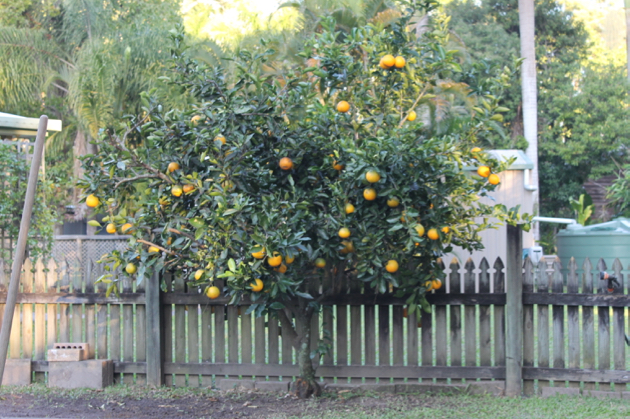

If you have some usable land at your home but not much spare time for gardening, a fruit tree or two will give you good quality produce with very little effort and time. Fruit trees are a great investment. If you can prepare the planting hole well, locate the tree in full sun in a fairly wind-free area, for the expenditure of about $30 - $40 and a couple of hours work, you'll be rewarded with years of fresh organic citrus fruit. Make sure you give the tree plenty of water, fertilise every season with organic fertilisers - comfrey tea/mulch, chicken manure, blood and bone, sulphate of potash, and check for insects. Shape the tree to suit your land and circumstances - for instance, we lifted the skirt on our tree (see photo above) so the branches didn't touch the ground when full of fruit. When the tree isn't producing, it looks like a lovely, dark green moderate sized tree that makes the garden look beautiful. Citrus respond well to pruning so you can adjust the height or width if you need to. Prune after all the oranges have been picked and before the flowers start for the next season's crop.

This is the second Eureka lemon (being guarded by our hen Patrick). Planted two years ago, this is the ideal time to shape and prune the tree if it needed it. We'll let it grow naturally and see what it does. We only allowed a few lemons to grow this year but now the tree is full of flowers and it looks like there'll be a bumper crop early next year.
Last year we severely pruned our lemon tree when it was attacked by borers. We removed half the tree and hoped the other half would survive. This is part of this year's crop, they hung down like grapes. We're hoping for new shoots on the pruned side and while there are none there yet, I doubt it will be too long before the tree recovers and starts growing well again.

I'm looking forward to the years ahead when we might have five or six months of the year with fresh oranges coming into the kitchen every day. Think of all the whole orange cakes I can make! I might have to look around for a few more orange recipes.  I encourage you to grow fruit trees, especially if you'd like to garden but don't have much time. A productive fruit tree will put your land to good use and give you fresh produce with little effort.

 - - - ♥︎|♥︎|♥︎ - - -

I need your help, friends. I'm quite happy to keep writing my blog, I enjoy the discipline of it, but now that I'm not writing as much here, when I do sit down for it, I wonder what to write. I've told you about what I do and although I suppose I could write on these topics again with the benefit of a few years more experience, but unless I change what I do or think of something new, I'm not sure I want to repeat it all.

UPDATE: Comments are closed.

Thanks everyone. I'm closing the comments here because I have a lot of feedback. Thanks to all who contributed.

The daikon radishes are growing like wild fire this year. I think most of them would weigh about 500grams/a pound and they're crisp and delicious.

I've been thoroughly enjoying my time at home and I'm getting caught up on all those jobs I put aside when I was busy writing. It's a great feeling to meet the mornings knowing I don't have to go out and can spend the day doing whatever I choose to do. I've been spending time in the garden late every afternoon, staring into space, watching the birds, breathing the fresh air and just being a part of the landscape. Life is slow and quiet and I'm loving it.

I hope you have a lovely weekend planned. If you have time, tell me about it.

How to search gmail so that it searches everything
Sleep 'resets' brain connections crucial for memory and learning
How to pickle cherry tomatoes
Memory loss can begin from age 45, scientists say
How to stop wasting women’s talents: overcome our fixation with youth
Glencairn Abbey - You Tube
Quick cucumber pickles - You Tube
Votes sought for most disliked English word
Cord Control: 9 Ways to Organize and Disguise Ugly Wires

Most of the work I do here at home is food related with cooking, preserving, baking and growing taking a good slice of my ordinary days. It doesn't feel like a chore to me because I enjoy it and I love the feeling I get when I cook nutritious family meals and when I offer home-baked goodies to visitors. I've read that many people don't cook now and the proliferation of cafes and takeaway food places in every small town and city is testament to that. It's seems very odd to me that adults who strive to possess every thing of value they can have don't see value in one of life's most important skills. And I'm saddened that boys and girls don't learn to cook either at home or at school.


When I go to my cupboard and choose a jar of jam, sauce, cordial or pickles, or place a home made meal on the table, I know what's in it. I know our food stockpile will see us through most family or community emergencies and that even if the worse were to happen, I could still provide food for my family and not go out to the shops to do it. It is the quiet knowledge of what we get from them that keep my patterns of work going year after year.

The days here follow patterns that regularly repeat themselves. Beds are slept in and made; when bread isn't baked, a quick circle of scones fills in; eggs, fruit and vegetables make their way from the garden to the kitchen to be eaten fresh or stored for later. Tea is made, meals cooked, menus planned. My food budget isn't stretched because these meals cost much less than their commercial, pre-prepared cousins. Systems are linked in a simple home and those systems support each other.


Fresh eggs from the backyard are turned into creamy custards that provide the nutrition we need to remain healthy. And the food cooked here is a reminder of our family heritage and culture and a constant comfort because of its familiarity. I can't imagine being cut off from that by not being able to cook.


At this point of my life, instead of working for a living, I work at providing a healthy framework in which to live. Every day a choice is made to keep to the rhythm of this domestic life; every day is the same and different. Working to provide a clean and organised home with good food on the table every day makes sense to me. The small, never-ending tasks that make up my days may look basic and mundane but the true significance of this type of work is evident in what it produces. And that, my friends, is a never-ending stream of good food and the easy self-confidence that comes from being able to produce it. I wish everyone knew how to cook but all we can do is to make sure the children in our own homes are taught to cook as they grow up. If we do that we're giving them comfort and pleasure, an ability to express culture, kindness and generosity, a way to celebrate important events and the potential to provide nourishment for themselves, family and friends that will last a life time. 

Do the children in your family know how to cook?

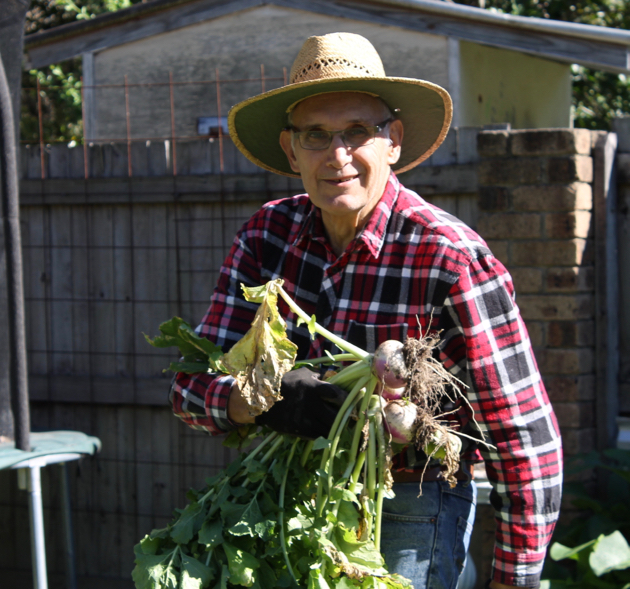
Picking turnips.

We had a fright with the chickens during the week. I heard squawking, ran outside to see what was happening and, at the passionfruit trellis right near the house, an eagle had our frizzle Kathleen by the neck. Luckily it let go and flew off when it saw me. I tried to find the other frizzle, Tricia, but she was no where to be found. I resigned myself to losing both chickens - I thought Tricia was already dead and that Kathleen would die of shock.  Well, much to my delight, Tricia reappeared and Kathleen was fine and dandy the following morning. They might be small and fluffy but those frizzles are tough gals.

Thanks for visiting and to all those who comment, a special thanks. I love reading what you have to say and although I usually don't have time to reply, I often think about your comments and sometimes use an idea to write another post.  ♥︎

Devon sandwiches
How to Pipe Buttercream Flowers
Discover 13 hidden iPad features
Swimming pool for dogs
The Benefits of Living Alone on a Mountain - I vaguely remember posting this a few years ago, but it's interesting, so here it is again.
Why time seems to go by more quickly as we get older
Vegetarian sandwiches
The royal wedding cake - when I saw this I thought it was similar to a cake my mother use to make when I was a young girl. The only difference was I was pretty sure mum's cake contained copha. Later on the same day I was looking through Classics, the CWA cookbook, and found THE recipe. It's called copha cake and is on page 324.
How one family is sending 13 kids to college, living debt free
Off-grid with Doug and Stacey
A rainbow of ice cubes

SaveSave
Serving good food from your own kitchen isn't just one thing, it's many. And it doesn't happen once, it's part of your ordinary days for most of your life. There is food budgeting and shopping, correct storage, meal planning, cooking, baking, preserving, maintenance of your stove, oven, fridge, dishwasher, crockery, cutlery, pantry and stockpile. All of us need to think about food security and some of us think about food production and go on to work in our own backyard gardens. No matter how you go about it, how much money you have for it, how much time you spend on it, food is important and it needs to be organised and managed.


Many readers tell me they're a bit haphazard with their food. They don't plan, budget or work to minimise waste. And that's fine, none of us are born with that knowledge, it's one of the many things we learn to make life easier. As we grow older, we need to make sure we learn what we need to know about food - and that's a lot more than just recipes - and to adjust and refine our food knowledge as we progress through life.


If you're not sure about how to start organising yourself, start with a list of the meals and food you already make regularly. Just making that list will probably start clarifying things for you and then you can go on to develop the skills you need. Slowly, you'll start seeing your patterns emerging and it will all start making sense. I included my list of meals in yesterday's post so if you need a little help, check that out. Don't try to do everything at once. Concentrate on one skill or idea at a time, work on that, and when you feel competent, start on the next one.

Don't think you have to do everything the way I do it, I am just one small example. If you're new to all this, remember it's something that will help you every day for as long as you're responsible for your family food. Take it slow, make sure all your systems work the way you need them to and I promise you it will make the work you do in the kitchen easier and more pleasant. 

When you produce your list, work out if you have enough main meals to serve for about a month. If you do, you'll have variety as well as nutrition. Then start building up the various categories of food you need - look for snack foods, lunches for work and school, morning or afternoon tea foods, drinks, preserves, a vegetarian selection, celebration foods or foods for any dietary requirements in your family. If you need to add to your list, do some research, test your new finds and add them to the list if they're suitable. That will take a long time, so don't rush it.

Use an over abundance of backyard fruit and vegetables, or buy seasonal food when it's cheap, to make jams, sauces, chutney or relish.
Use your freezer to store fruit and vegetables when you don't have time to process immediately. These rosellas have been in our freezer for two months. In the next couple of weeks I'll have the time to defrost them and make them into jam and cordial.

It's a good idea to use fruit and vegetables that are in season. They'll be at their best and cheaper because there'll be a lot of them available. When you grow your own, it's a simple matter of preserving or freezing excess vegetables as pickles, relish or chutney or your sweeter fruits as jam or cordial. But you can also do that when you don't grow your own. Just look around for a roadside stall or small green grocer because they may have cartons of oranges, lemons, tomatoes, peaches, or cheap pineapples, mangoes and passionfruit at the height of the season. You usually have to ask for a price on a carton because the shop won't have them on display. It's handy to have a freezer because if you have a big harvest when you don't have the time to preserve, you can freeze the fruit and use it later. That's what I've done with our elderberries, I've been freezing them as they ripen on the tree. When I have enough berries, I make either elderberry cordial or flu tonic. I also have a few plastic bottles of pure lemon juice ready to be made into cordial in summer. It takes a bit of organising, and you do need a freezer to help you store your produce but it's a simple exercise that will help you manage your food stores effectively.

Simple rissole (meatball) recipe
Meatloaf may be made using this recipe. Just form it into a loaf and bake it in the oven.


  • 250 grams pork mince
  • 250 grams beef mince
  • 3 slices stale bread
  • ½ cup milk
  • 1 large egg
  • 1 medium onion, chopped
  • 1 medium carrot, grated
  • 1 stick celery, finely diced
  • salt and pepper
  • ½ cup parsley, finely chopped
One hour before you want to cook, add stale bread to milk and allow it to stand for 30 minutes.

Add meat to a bowl, break up the milk-soaked bread with your hands and add it to the meat.

Add all other ingredients and mix with your clean hands. When thoroughly mixed, form into balls of the size and shape you require. If you're making rissoles, the shape is like a large ball that you squash down slightly before cooking. If you're making meatballs for pasta, they're much smaller, a little smaller than a golf ball. For meatloaf, simply form into a loaf, either in a loaf tin or baking tray.

Put the rissoles on a plate and leave in the fridge for 30 minutes. That will allow them to firm up a bit and make cooking easier.

Cook the rissoles/meat balls in a frying pan with a small amount of olive oil added, turn every five minutes and brown on all sides.  When they're brown, put the lid on, turn the heat down and let them cook for an extra five minutes.  You can use the pan juices to make gravy. Click here to go to my gravy mix post. You can pre-make your own gravy mix so you don't have to buy one with preservatives in it.

Salmon fish cakes/patties


Make these up at least an hour before you want to cook them. They will firm up in the fridge and be much easier to cook and flip over.

  • large can of red salmon
  • 1 medium onion, chopped
  • 3 medium potatoes, boiled and mashed
  • 1 large egg
  • chilli, finely diced (optional)
  • coriander or parsley, finely chopped
  • salt and pepper
  • breadcrumbs for coating
Drain all the water from the can of salmon, remove the skin and place salmon in a bowl. Leave the bones in. They're soft and you can easily mash them to incorporate into the flesh. The bones contain an extra boost of calcium.

Add all the ingredients to the fish, mix well and form into patties. Coat with dry breadcrumbs, if desired. Fry in hot oil till both sides are golden brown - about 15 minutes.

Tuna loaf
This can be eaten hot or cold. It's good served warm with mashed potato, green beans and tomato and it's also good served cold with potato salad and fresh garden salad.

Drain all the water from the tuna before starting.

Prepare a loaf tin by spraying it with olive oil and place a piece of baking paper, about 6 inches wide, over the middle of the loaf tin to help remove the loaf when it's cooked. The paper should come up the sides of the tin to be used as handles.
  • Large can tuna in water
  • 1 cup breadcrumbs made from stale bread
  • 1 large onion
  • ½ capsicum, diced
  • ½ cup corn
  • 1 stick celery finely diced
  • ½ cup parsley or chives, finely chopped
  • 2 medium eggs
  • 1 tablespoon lemon juice
  • 1 level tablespoon curry powder, chilli powder or paprika (optional)
  • salt and pepper
  • halved cherry tomatoes or tomato slices may be added to the top for decoration
Add all the ingredients to a large bowl and mix thoroughly. This is best done with clean hands. Pack the mixture into a loaf tin, firm it down and allow it to sit in the fridge for an hour to firm before baking. 

Bake in the oven at 180C for 30 minutes or until the top is golden brown.

Additional reading

After a while, cooking, food preparation and planning become second nature but we all have to start somewhere. I hope these posts will assist you either by adding to your recipe collection or by helping you manage your food and build your skills. Remember it's a long process so don't rush, and what you do doesn't have to be what everyone else does, it has to serve you and your family.


When I was growing up we rarely went out to eat. I remember dad taking a saucepan to the local newly opened Chinese restaurant once. The saucepan was filled with Chinese food to be brought home to eat. That would have been in the mid-50s; there were no take away containers in those days. I also remember one exciting day in the 1950s when mum took Tricia and I "to town" (the city of Sydney) to look at the department store Christmas windows and, for the first time, we had lunch at a restaurant. There weren't many restaurants around then but this one was called Cahills Family Restaurant and I think it was in the Strand Arcade. I forget what Tricia and mum had but I ordered spaghetti Bolognese, which I thought was extremely sophisticated. That was the first time I had pasta. Australia was still living in the meat and three veg era then. Back then you could eat at bistros, cafes and milk bars. Most country pubs had food, many city ones didn't but if you wanted really good food everyone knew where to go, you ate at home.

 Chicken casserole.
Meat pie.

We grew up in a time when meat and left overs played a big part in contemporary cooking. Fish was often served on Friday and we were able to tell what day it was by what was on the dinner plate. Cook books were unusual then. Many cooks wrote down their own recipes, had a scrapbook of recipes cut from magazines and pasted into a book or they may have had one cook book which would have been a CWA or church recipe book. Most people cooked meals they'd grown up eating and had been taught to cook as a child. That was the experience in our family so when I was learning to cook, I modified my mother or father's cooking and added things like spaghetti bolognese along the way.

I had an email from a reader recently asking for help with old fashioned recipes. This lady is about my age, has collected over 1000 cook books but feels overloaded and has trouble sorting the information. She and her husband like old style meals and don't like 'new' ingredients. I think she came to the right place because although I do cook the occasional new style meal and experiment with new ingredients, the older I get the more I rely on the foods I grew up with. I like the familiarity of them; they're my comfort foods.

 Satay chicken
 Potato salad
 Quiche in filo pastry
 Rissoles (meat balls) in herb gravy and vegetables

The following list is made up of the meals I make over and over again. Occasionally there will be a stir fry or a new recipe to try and more frequently lately, there are vegetarian meals. Even when we do eat meat, it's far less than we used to eat. We've probably reduced our meat intake by about 50 percent to what it was 10 years ago. What I do focus on in my cooking is to serve real food as fresh as possible. The ingredients are nutritious and thrifty, are often home grown and sit well in our low income lifestyle. You'll often notice ingredients such as potatoes/sweet potatoes in my cooking. I make no apologies for that. We are a family with German, Irish, Swedish, English heritage and potatoes feature in all those cuisines. I hope when you select your list of frequently cooks meals it will reflect your family heritage too. Food traditions link us to our culture and reinforce a feeling of being connected and loved. It's one of the many complex roles food plays in our lives.

  • Shepherd's pie from left over lamb roast
  • Lamb curry from left over lamb roast or lamb neck chops
  • Cottage pie with minced beef and mashed potato topping (sweet potato or pumpkin topping)
  • Corned beef and colcannon
  • Corned beef hash
  • Salmon with potato salad
  • Swedish meatballs, potato salad and fresh pickled cucumbers
  • Pea/lentil soup
  • Chicken noodle soup
  • Beef, barley and bone marrow soup
  • Beef casserole and herb dumplings
  • Lasagne
  • Quiche
  • Spinach pie with filo pastry
  • Sausage rolls
  • Boiled egg salad
  • Canned salmon salad
  • Tuna loaf
  • Fish cakes
  • Cabbage rolls
  • Potato pancakes (Kartoffel Puffer)
  • Pork sausages with onion gravy and vegetables
  • Roast lamb, chicken or pork
  • Rissoles, red cabbage and potatoes
  • Pork chops, cabbage and potatoes
  • Meatloaf
Australia meal recipes - allrecipes

I use the following cook books but you'll find recipes for most of my list items online. Just steer clear of any sites that have recipes with processed, pre-made sauces and spice mixes. Try and cook from scratch and modify the recipes to suit your own tastes.


My favourite book is The Country Table which I bought two copies of a couple of years ago. One for Sunny and one for me. Sunny asked me for Australian recipes so she could cook our favourite foods. The Country Table is full of wonderful recipes that have been part of Australian dinner tables for many years.

The Country Table Published 2009 by ACP ISBN 978-1-74245-155-8

My go-to book for new cakes and slices is the Women's Weekly Cakes and Slices Cookbook. It can be purchased in many newsagents and book shops.

I also like The Thrifty Kitchen written by Suzanne and Kate Gibbs. They are Margaret Fulton's daughter and grand daughter.  It was published in 2009  - ISBN 978 1 921 38207 9.

Another favourite is the Country Women's Association mammoth book, Classics. Published in 2011 - ISBN 978 0 143 56614 4 With over 400 recipes on 881 pages it has a comprehensive index, conversion charts and sections on Soups, Snacks and Starts, Mains, Dessert, Baking and Preserves.

I'll humbly add my own books - Down to Earth and The Simple Home too. Both contain some of my frequently used recipes.

If you have room or money for only one book, I'd go for either The Country Table or Classics. Both would serve you well for many years.

In my next post I'll share a couple of my own recipes and write more about seasonal foods as well as the groups of foods and drinks we generally serve from a well established home kitchen.  See you then. In the meantime, what are your old-fashioned favourites?


It's been a hectic week here with lots of phone calls to my sister and a dear friend who are both in hospital.  A big hello to both Tricia and Rose, I'm hoping you both have a speedy recovery.  The rest of the week was spent on gardening and housework but I've had a break from knitting.  I'm not sure why but I know I'll take up the needles again soon.  Tomorrow we're taking Jamie out for a drive in the bushland northwest of Brisbane and for lunch at one of the tearooms or cafes along the way. It will be a good break for all of us.

I wonder if I can ask a favour. If you've read any of my books, particularly The Simple Home, would you please write a review either at goodreads.com or at the online store you bought it from. It will help with my book sales.  Thanks dear friends.

6 Climate Change Myths — Debunked!
Sustainable-Food Resources
Hughs War on Waste  -  You Tube
The 5 Most Important Things to Know About Your Refrigerator
Classic Corned Beef Hash
How to Grow a lot of Food in a Small Garden - 9 EZ tips - You Tube
A Trip to The Black Country Museum
Make a Splash With a DIY Wallpaper Backsplash
Folding clothes
Pressure mounts on retailers to reform throwaway clothing culture
Thermomix being investigated by ACCC over safety complaints
400-year-old Greenland shark is the oldest vertebrate animal

SaveSave
SaveSave
Before I start today's post I want to thank so many of you for your kind and generous comments.  It really does make blogging a great joy to have feedback - without it it's a one-way conversation.  So thank you for taking the time to comment, it motivates me to continue blogging.

- - - ♥︎ - - - 

Although we've cut down on the amount of food we produce in the backyard, it's still an important part of life for us.  Not only for the fresh food it gives but also for the work required to get a seed or seedling to harvest. That work is still interesting and rewarding and it forms part of the framework we live within.


We have a huge garden but only a small portion of it is taken up with food production. The natural soil here is heavy clay but we've been working the garden soil for almost 20 years now and it's as close to perfect as I imagine it could be. The original clay was broken up when we first arrived here and compost, lime and organic matter added, not just once but continuously. When a crop was harvested and the roots removed, Hanno added more nutrients and compost. Over the years that built up to be dark, rich, fertile soil that has given us many kilos of fresh food. We've always had a compost heap, at times we've kept worm farms and we always grow comfrey with which to make a good natural free fertiliser that is as good as any you can buy.


Daikon, butter lettuce and er, weeds. LOL

One of the major parts of our garden are our rainwater tanks. Hanno constructed an excellent water collection system from our house roof and the shed roof. That gives us 15,000 litres of rainwater to use on the garden. If we didn't have those tanks I doubt we'd grow food in the back yard because tap water is so expensive. Luckily we live in an area where the rainfall is between 1500 to 1800mm (60 - 70 inches) a year, that rain falls in heavy showers throughout the year and is followed by mild to hot sunny weather. We never have frosts and our winter temperatures are between 3 - 23C. Most winter days warm up to about 20C, even after a cold night. We used to garden all year but since we cut back, we plant in March and stop planting in November. That gives us and the garden a break of 3 - 4 months over summer when it's hot, humid and there are a lot of insects around.


Another valuable part of our backyard eco-system are the chickens. They provide eggs for the kitchen but also nitrogen-rich manure for the compost. The addition of fresh manure helps the compost decompose and after a couple of months we have the best soil additive we could hope for. And it all comes together simply by adding chook poo to compost - the microorganisms in the compost do all the work for us and help turn kitchen and garden waste into rich, sweet smelling compost.

Hanno planted out more seedlings yesterday. We're currently growing chard, beetroot, spinach, kohl rabi, curly kale, bush beans, climbing beans, Welsh onions, lettuce, daikon radish, bok choi, turnips, parsley, basil, rosemary, oregano, bay leaves, sage, lemon grass, mint, raspberries, blueberries, youngberries, elderberries, Brazilian cherries, lemons, oranges, bananas, loquats and passionfruit. In the bush house I've planted trays of various chillies and heirloom tomato seeds that have just germinated. There are flowers in the vegetable garden too and they help attract the pollinators.


The afternoon sun catches the tangle of Herb Robert and alyssum.
What started out almost 20 years ago to be the chore of modifying hard clay and then planting seed to bring to harvest, has turned into a gentle and pleasurable way to spend time together outside. That garden of ours isn't just a food garden, it provides us with a space to sit and enjoy the fresh air and all the wildlife that visit on foot and fly through.

I wonder what's in your garden this season.

I took my time last week. I had a list of chores as long as my arm but I stood back, took a deep breath, and then worked out what my priorities are. I won't bore you with the list, it will probably be played out on the blog in days and weeks to come, but I've started it and intend to work slowly.  I have no deadlines to meet and I want to experience every day in its true sense. Having housework to do - work that will make our lives better - always makes me want to put on my apron and get started. I'm motivated when I see others working in their homes and even reading about housework makes me want to get my own house in order. I wonder if it does for you too.


I've broken my work activities into three separate areas - general house work, craft work and gardening.  I try to do a bit in all three categories every day now because then I feel I'm doing all I need to do. And with the work there is always relaxation. Cups of tea with Hanno in the garden, a sleep in my chair after lunch, a stroll around the garden. But the truth is that just living here on this piece of land makes me relax. I feel safe and nurtured here and peace comes along with that. I walk outside to winter smoke from local chimneys, white cockatoos flying high, chickens clucking, the fragrance of alyssum and roses, the distant dull drone of traffic. Here within these fences, life is being played out to a slower rhythm but that doesn't mean it's any less significant, creative, intellectually stimulating or exhilarating. Running a home, cooking, shopping on a budget, mending, gardening and the rest of my particular mix makes a calm and rich life and I feel grateful to experience it all.


At the moment I'm creating a few dishcloths that will be teamed with home made soap for Christmas gifts and on my circular needles, I'm knitting this beauty for my grand daughter. I think I'll make two versions - one with long sleeves and one that ends at the yolk. I'm using EcoYarns fabulous eco-cotton, the ideal yarn for our climate, so I think both cardigans will serve her well.  When I was looking through EcoYarn's website ealier, I noticed some new O-Wool O-Wash Fingering 4 ply suitable for baby and toddler knitting. It's washable and the skeins are in a range of very pretty soft modern colours. I might knit something with that soon.


Portuguese custard tarts.

Today Hanno will be weeding the garden and planting out more seedlings while I make up a hearty bone marrow, barley and vegetable soup. I love this soup, it's my mother's recipe and one that Tricia and I grew up eating numerous times every winter. I cook many of those recipes from long ago and feel privileged that I grew up in the family I was born into. When I finish making the soup, I'll clean up the back verandah and do a bit of repotting in the bush house. After lunch I'll nap for a while and then knit. At some point I'll make tea and we'll sit in the fading sunlight watching the smoke rise from neighbours' chimneys. It doesn't take much to make me happy. I'm on the knife edge of it all the time. Life's been good to us.

Three grand essentials to happiness in this life are something to do, something to love, and something to hope for.   Joseph Addison
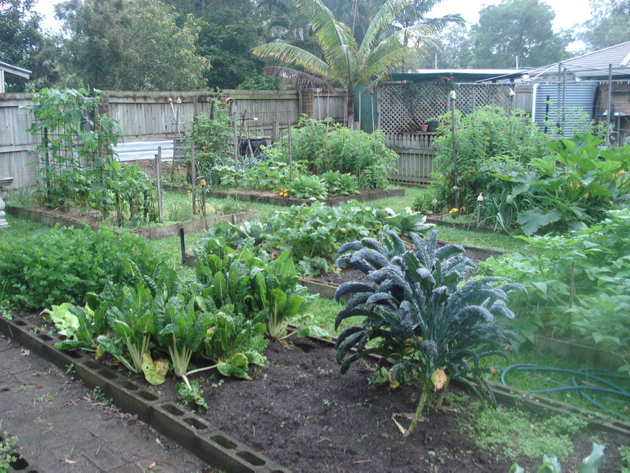
I was going through my photos during the week and found this photo of our garden in 2007. We don't grow so much food now and have removed two of these beds. I see we have a large potato crop there, we don't grow potatoes now, or celery or leeks, which are also seen in this photo. 

Thank you for your visits this week. It seems there many new names on the comments now and I welcome all those new readers. I'm not sure if my long-term readers are still here but if you are, hello! I'm trying to get myself back into the blogging routine but early morning posts just aren't happening anymore. Never mind, I'll establish a new routine soon. I just have to be patient and let it happen. I hope you enjoy the weekend. :- )

Environmental records shattered as climate change 'plays out before us'
The organic farm generating five-star electricity from cow dung and food waste
Choosing Chicken Breeds
The private life of chickens - You Tube
Family of 7 Living Completely Off-Grid in Northern Canada
Ironing the old fashioned way - the way Donna does her ironing is the same way my mum did her's when I was growing up
The health benefits of knitting
Beautiful Christmas ornaments to make right now
Unlimited.world is a new site recently launched by Stephen Hawking


SaveSave
Newer Posts Older Posts Home
View mobile version

MY BOOKS

MY BOOKS


My books were all published by Pengiun, and are available at Amazon US, Amazon UK and Amazon Au

Search here

Total Pageviews

Translate


I'm Rhonda Hetzel and I've been writing my Down to Earth blog since 2007. Although I write the occasional philosophical post, my main topics include home cooking, happiness and gardening as well as budgeting, baking, ageing, generosity, mending and handmade crafts. I hope you enjoy your time here.

MY FAVOURITE PLACES

  • Grandma Donna's Place
  • Grandma Donna's YouTube
  • Grandma Donna's Instagram
  • This Simple Day
  • Nicole's Instagram

Give More

Give More

Popular posts last year

Making ginger beer from scratch

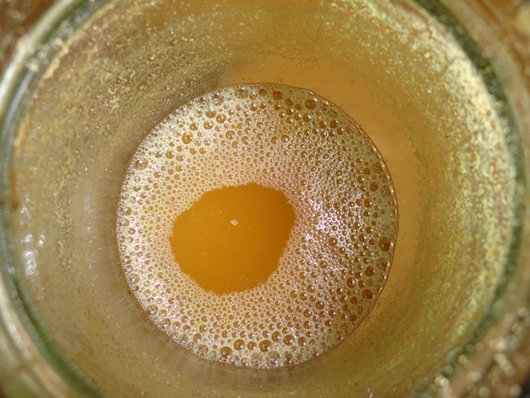
We had a nice supply of ginger beer going over Christmas. It's a delicious soft drink for young and old, although there is an alcoholic version that can be made with a slight variation on the recipe. Ginger beer is a naturally fermented drink that is easy to make - with ginger beer you make a starter called a ginger beer plant and after it has fermented, you add that to sweet water and lemon juice. Like sourdough, it must ferment to give it that sharp fizz. To make a ginger beer plant you'll need ginger - either the powdered dry variety or fresh ginger, sugar, rainwater or tap water that has stood for 24 hours to allow the chlorine to evaporate off. You'll also need clean plastic bottles that have been scrubbed with soap, hot water and a bottle brush and then rinsed with hot water. I never sterilise my bottles and I haven't had any problems. If you intend to keep the ginger beer for a long time, I'd suggest you sterilise your bottles. MAKING THE STARTER In a...
Image

NOT the last post

This will be my last post here.  I've been writing my blog for 18 years and now is the time to step back. I’ve stopped writing the blog and come back a couple of times because so many people wanted it, but that won’t happen again, I won’t be back.  I’ll continue on instagram to remain connected but I don’t know how frequent that will be. I know some of you will be interested to know the blog's statistics. 
Image

How to make cold process soap

I'm sure many of you are wondering: "Why make soap when I can buy it cheaply at the supermarket?" My cold process soap is made with vegetable oils and when it is made and cured, it contains no harsh chemicals or dyes. Often commercial soap is made with tallow (animal fat) and contains synthetic fragrance and dye and retains almost no glycerin. Glycerin is a natural emollient that helps with the lather and moisturises the skin. The makers of commercial soaps extract the glycerin and sell it as a separate product as it's more valuable than the soap. Then they add chemicals to make the soap lather. Crazy. Making your own soap allows you to add whatever you want to add. If you want a plain and pure soap, as I do, you can have that, or you can start with the plain soap and add colour, herbs and fragrance. The choice is yours. I want to add a little about animal and bird fat. I know Kirsty makes her soap with duck fat and I think that's great. I think t...
Image

Preserving food in a traditional way - pickling beetroot

I've had a number of emails from readers who want to start preserving food in jars but don't know where to start or what equipment to buy.  Leading on from yesterday's post, let's just say up front - don't buy any equipment. Once you know what you're doing and that you enjoy preserving, then you can decide whether or not to buy extra equipment. Food is preserved effectively without refrigeration by a variety of different methods. A few of the traditional methods are drying, fermentation, smoking, salting or by adding vinegar and sugar to the food - pickling. This last method is what we're talking about today. Vinegar and sugar are natural preservatives and adding one or both to food sets up an environment that bacteria and yeasts can't grow in. If you make the vinegar and sugar mix palatable, you can put up jars of vegetables or fruit that enhance the flavour of the food and can be stored in a cupboard or fridge for months. Other traditional w...
Image

Cleaning mould from walls and fabrics

With all this rain around we've developed a mould problem in our home. Usually we have the front and back doors open and that good ventilation stops most moulds from establishing. However, with the house locked up for the past week, the high humidity and the rain, mould is now growing on the wooden walls near our front door and on the lower parts of cupboards in the kitchen. Most of us will find mould growing in our homes at some point. Either in the bathroom or, in humid climates, on the walls, like we have now. You'll need a safe and effective remedy at some point, so I hope one of these methods works well for you. Mould is not only ugly to look at, it can cause health problems so if you see mould growing, do something about it straight away. The longer you leave the problem, the harder it will be to get rid of it effectively. If you have asthma or any allergies, you should do this type of cleaning with a face mask on so you don't breathe in any spores. Many peopl...
Image

Five minute bread

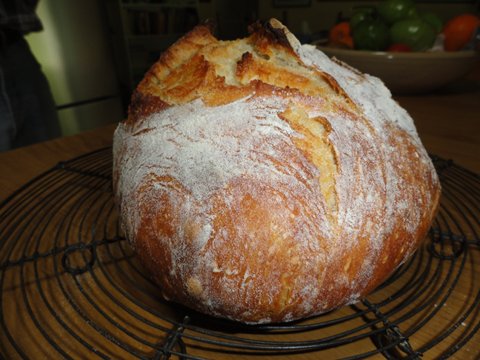
Bread is one of those foods that, when made with your own hands, gives a great deal of satisfaction and delight. It's only flour and water but it symbolises so much. I bake bread most days and use a variety of flours that I buy in bulk. Often I make a sandwich loaf because we use most of our bread for lunchtime sandwiches and for toast. Every so often I branch out to make a different type of loaf. I have tried sour dough in the past but I've not been happy with any of them. I'll continue to experiment with sour dough because I like the idea of using wild yeasts and saving the starter over a number of years to develop the flavour and become a part of the family. However, the loaf I've been branching out to most often is just a plain old five minute bread. By five minutes I mean it takes about five minutes actual work to prepare but it's the easiest of all bread to make and to get consistently good loaves from. If you're having people around for lunch or...
Image

This is my last post.

I have known for a while that this post was coming, but I didn't know when. This is my last post. I'm closing my blog, for good, and I'm not coming back like I have in the past.  I've been writing here for 16 years and my blog has been many things to me. It helped me change my life, it introduced me to so many good people, it became a wonderful record of my family life, it helped me get a book contract with Penguin, and monthly columns with The Australian Women's Weekly and Burke's Backyard . But in the past few months, it's become a burden. In April, I'll be 75 years old and I hope I've got another ten years ahead. However, each year I'll probably get weaker and although I'm fairly healthy, I do have a benign brain tumour and that could start growing. There are so many things I want to do and with time running out, leaving the blog behind gives me time to do the things that give me pleasure. On the day the blog started I felt a wonderful, h...
Image

What is the role of the homemaker in later years?

An email came from a US reader, Abby, who asked about being a homemaker in later years. This is part of what she wrote: "I am a stay-at-home mum to 4 children, ages 9-16. I do have a variety of "odd jobs" that I enjoy - I run a small "before-school" morning drop-off daycare from my home, I am a writing tutor, and I work a few hours a week at a local children's bookstore. But mostly, I cherish my blissful days at home - cooking, cleaning (with homemade cleaners), taking care of our children and chickens and goats, baking, meal-planning, etc. This "career" at home is not at all what I imagined during my ambitious years at university, but it is far more enriching. I notice, though, that my day is often planned around the needs of my family members. Of course, with 4 active kids and a husband, this is natural. I do the shopping, plan my meals, cook dinner - generally in anticipation of my family reconnecting in the evening.  I can't h...
Image

Every morning at home

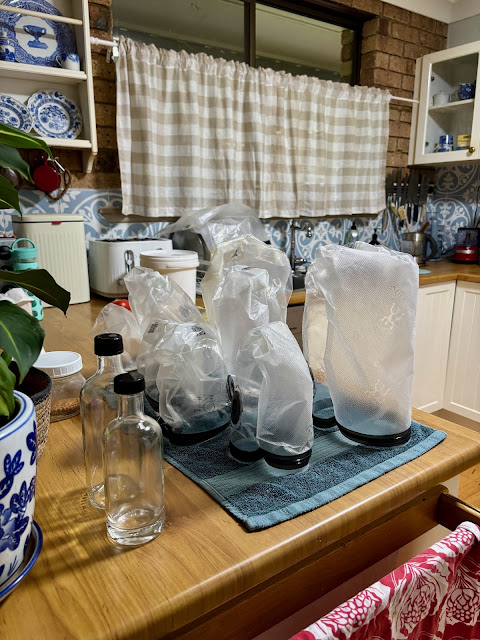
Every morning when I walk into my kitchen it looks tidy and ready for a day's work. Not so on this morning (above), I saw this when I walked in. Late the previous afternoon when I was looking for something, I came across my rolled up Zwilling vacuum bags and decided they had to be washed and dried. So I did that and although I usually put them outside on the verandah to dry it was dark by then. I turned the just-washed bags inside out and left them like this on a towel. It worked well and now the bags are ready to use when I bring home root vegetables, cabbages or whatever I buy that I want to last four or five weeks.
Image

You’ll save money by going back to basics

When I was doing the workshops and solo sessions, I had a couple of people whose main focus was on creating the fastest way to set up a simple life. You can't create a simple life fast, it's the opposite of that It's not one single thing either - it's a number of smaller, simpler activities that combine to create a life that reflects your values; and that takes a long to come together. When I first started living simply I took an entire year to work out our food - buying it, storing it, cooking it, preserving, baking, freezing, and growing it in the backyard. This is change that will transform how you live and it can't be rushed.  
Image

All previous blog posts

  • 2026 3
    • February 3
      • Workshops starting 1 March
      • Planting vegetable seeds and new workshops
      • Back where we belong
  • 2025 7
    • July 1
    • June 2
    • May 1
    • April 2
    • February 1
  • 2024 25
    • December 2
    • November 1
    • October 2
    • September 3
    • August 1
    • July 3
    • June 1
    • May 3
    • April 2
    • March 3
    • February 2
    • January 2
  • 2023 13
    • December 1
    • November 2
    • October 1
    • September 3
    • August 2
    • February 2
    • January 2
  • 2022 17
    • November 3
    • October 4
    • September 3
    • August 2
    • July 3
    • June 2
  • 2021 50
    • December 1
    • November 6
    • October 7
    • September 5
    • August 4
    • July 5
    • June 2
    • May 2
    • April 6
    • March 4
    • February 4
    • January 4
  • 2020 68
    • December 3
    • November 5
    • October 4
    • September 4
    • August 4
    • July 4
    • June 4
    • May 8
    • April 7
    • March 8
    • February 8
    • January 9
  • 2019 66
    • December 2
    • November 4
    • October 5
    • August 3
    • July 4
    • June 6
    • May 8
    • April 8
    • March 8
    • February 11
    • January 7
  • 2018 82
    • December 1
    • September 2
    • August 10
    • July 4
    • June 11
    • May 9
    • April 12
    • March 10
    • February 10
    • January 13
  • 2017 129
    • December 7
    • November 10
    • October 6
    • September 13
    • August 11
    • July 13
    • June 12
    • May 9
    • April 9
    • March 14
    • February 11
    • January 14
  • 2016 125
    • December 7
    • November 13
    • October 10
    • September 11
    • August 11
    • July 8
    • June 9
    • May 9
    • April 12
    • March 10
    • February 13
    • January 12
  • 2015 184
    • December 7
    • November 15
    • October 20
    • September 18
    • August 19
    • July 18
    • June 12
    • May 15
    • April 12
    • March 21
    • February 13
    • January 14
  • 2014 203
    • December 11
    • November 8
    • October 17
    • September 20
    • August 17
    • July 19
    • June 17
    • May 17
    • April 23
    • March 15
    • February 18
    • January 21
  • 2013 225
    • December 13
    • November 17
    • October 17
    • September 17
    • August 21
    • July 24
    • June 20
    • May 19
    • April 17
    • March 22
    • February 17
    • January 21
  • 2012 245
    • December 17
    • November 20
    • October 20
    • September 18
    • August 15
    • July 24
    • June 21
    • May 26
    • April 23
    • March 23
    • February 19
    • January 19
  • 2011 257
    • December 18
    • November 24
    • October 27
    • September 23
    • August 24
    • July 21
    • June 24
    • May 24
    • April 16
    • March 22
    • February 14
    • January 20
  • 2010 283
    • December 20
    • November 18
    • October 18
    • September 19
    • August 25
    • July 24
    • June 25
    • May 26
    • April 25
    • March 22
    • February 29
    • January 32
  • 2009 293
    • December 29
    • November 18
    • October 23
    • September 25
    • August 22
    • July 28
    • June 22
    • May 21
    • April 27
    • March 26
    • February 24
    • January 28
  • 2008 387
    • December 24
    • November 23
    • October 25
    • September 26
    • August 27
    • July 27
    • June 37
    • May 34
    • April 44
    • March 53
    • February 32
    • January 35
  • 2007 372
    • December 37
    • November 40
    • October 55
    • September 51
    • August 49
    • July 63
    • June 49
    • May 28


Trending Articles

NOT the last post

This will be my last post here.  I've been writing my blog for 18 years and now is the time to step back. I’ve stopped writing the blog and come back a couple of times because so many people wanted it, but that won’t happen again, I won’t be back.  I’ll continue on instagram to remain connected but I don’t know how frequent that will be. I know some of you will be interested to know the blog's statistics. 
Image

Every morning at home

Every morning when I walk into my kitchen it looks tidy and ready for a day's work. Not so on this morning (above), I saw this when I walked in. Late the previous afternoon when I was looking for something, I came across my rolled up Zwilling vacuum bags and decided they had to be washed and dried. So I did that and although I usually put them outside on the verandah to dry it was dark by then. I turned the just-washed bags inside out and left them like this on a towel. It worked well and now the bags are ready to use when I bring home root vegetables, cabbages or whatever I buy that I want to last four or five weeks.
Image

You’ll save money by going back to basics

When I was doing the workshops and solo sessions, I had a couple of people whose main focus was on creating the fastest way to set up a simple life. You can't create a simple life fast, it's the opposite of that It's not one single thing either - it's a number of smaller, simpler activities that combine to create a life that reflects your values; and that takes a long to come together. When I first started living simply I took an entire year to work out our food - buying it, storing it, cooking it, preserving, baking, freezing, and growing it in the backyard. This is change that will transform how you live and it can't be rushed.  
Image

Creating a home you'll love forever

Living simply is the answer to just about everything. It reduces the cost of living; it keeps you focused on being careful with resources such as water and electricity; it reminds you to not waste food; it encourages you to store food so you don't waste it and doing all those things brings routine and rhythm to your daily life. Consciously connecting every day with the activities and tasks that create simple life reminds you to look for the meaning and beauty that normal daily life holds.  It's all there in your home if you look for it. Seemingly mundane tasks like cleaning and cooking help you with that connection for without those tasks, the home you want to live in won't exist in the way you want it to.  Creating a home you love will make you happy and satisfied.
Image

Time changes everything

I've been spending time in the backyard lately creating a contained herb and vegetable garden. My aim is to develop a comfortable place to spend time, relax, increase biodiversity and encourage more animals, birds and insects to live here or visit. Of course I'd prefer my old garden which was put together by Hanno with ease and German precision. Together, we created a space bursting at the seams with herbs, vegetables and fruity goodness ready to eat and share throughout the year. But time changes everything. What I'm planning on doing now, is a brilliant opportunity for an almost 80 year old with balance issues. In my new garden I'll be able to do a wide range of challenging or easy work, depending on how I feel each day. It’s a daily opportunity to push myself or sit back, watch what's happening around me and be captivated by memories or the scope of what's yet to come.
Image

It's the old ways I love the most

I'm a practical woman who lives in a 1980’s brick slab house. There are verandahs front and back so I have places to sit outside when it's hot or cold. Those verandahs tend to make the house darker than it would be but they're been a great investment over time because they made the house more liveable. My home is not a romantic cottage, nor a minimalist modern home, it's a 1980’s brick slab house. And yet when people visit me here they tell me how warm and cosy my home is and that they feel comforted by being here. I've thought about that over the years and I'm convinced now that the style of a home isn't what appeals to people. What they love is the feeling within that home and whether it's nurturing the people who live there.
Image

Back where we belong

Surprise! I'm back ... for good this time. Instagram became an impossible place for me. They kept sending me messages asking if I'd make my page available for advertisers! Of course, I said no but that didn't stop them. It's such a change from what Instagram started as. But enough of that, the important part of this post is to explain why I returned here instead of taking my writing offline for good. For a few years Grandma Donna and I have talked online face-to-face and it's been such a pleasure for me to get to know her. We have a lot in common. We both feel a responsibility to share what we know with others. With the cost of living crisis, learning how to cook from scratch, appreciate the work we do in our homes, shop to a budget and pay off debt will help people grow stronger. The best place to do that is our blogs because we have no advertising police harassing us, the space is unlimited, we can put up tons of photos when we want to and, well, it just feels li...
Image

Making ginger beer from scratch

We had a nice supply of ginger beer going over Christmas. It's a delicious soft drink for young and old, although there is an alcoholic version that can be made with a slight variation on the recipe. Ginger beer is a naturally fermented drink that is easy to make - with ginger beer you make a starter called a ginger beer plant and after it has fermented, you add that to sweet water and lemon juice. Like sourdough, it must ferment to give it that sharp fizz. To make a ginger beer plant you'll need ginger - either the powdered dry variety or fresh ginger, sugar, rainwater or tap water that has stood for 24 hours to allow the chlorine to evaporate off. You'll also need clean plastic bottles that have been scrubbed with soap, hot water and a bottle brush and then rinsed with hot water. I never sterilise my bottles and I haven't had any problems. If you intend to keep the ginger beer for a long time, I'd suggest you sterilise your bottles. MAKING THE STARTER In a...
Image