down to earth

  • Home
  • About Us
  • Down To Earth Book
  • Privacy Policy
I’ve been trying to remember the point of transition, when I went from learning how to live simply and taking on one project at a time, to really living it. When does it change from being an experiment to a lifestyle?

I suppose the main starting point for me was to stop spending. When I did that and stood back to observe rather than take part in spending, I had a better understanding of how I was manipulated by advertising and my own expectations. It didn’t take long to change those expectations and to become content with what I had. Now I’m at a point where I haven’t been in a department store for a long time – probably three years. I forget the last time I did that kindof shopping.

Now I’m at that comfortable place of finding beauty and satisfaction in my everyday world. I find beauty in the strangest places
. I have found it while cutting hot bread, when harvesting tomatoes, and by extending the hand of friendship. One of these new friends is a 30ish homeless man who is squatting in a local vacant house. On the face of it, we would have nothing in common, but as we share my lunch when I’m at my voluntary job and we talk about books, Nietzsche, selfishness and generosity, there is beauty lurking. And even if I were the richest women on the planet, I couldn’t buy the feeling of contentment I feel at those times.

One of the easiest ways to save money when grocery shopping is to know what price is a good price. Some supermarkets tag “bargains” that aren’t bargains, so unless you do your homework, you’ll be fooled. Be a smart shopper, create your own database of prices of the things you buy so when you see a real bargain, you can stock up, knowing that you really have saved money.

Start by saving your shopping dockets and making a price book. Use a format that is easy for you. If you’re a list maker, you might want to use a small address book so your items are in order alphabetically. You can rule your book into sections for your various categories. If you’re more comfortable on the computer, use a program like Excel to set up your price book.

My price book is a small address book. My categories are: DATE, PRODUCT, BRAND, SIZE, PRICE, UNIT PRICE. As an example, in the “M” page I have listed:
  • 14.10.06 - milk - Maleny - 3 litre - $5.00 - $1.66/litre
  • 19.10.06 - milk - Aldi - 3 litre - $2.99 - $1.00/litre
  • 25.10.06 - milk - Pura - 2 litres - $2.90 - $1.45/litre
The unit price is not always relevant but I work it out because when it is relevant it will show you which is the cheapest product.

Start your price book after you do your next big shop. Save all your dockets and when you’re home, enter the information into your price book. Update the book every time you buy something new, or every three months to enter increased prices or confirm steady ones.
And don't forget to take your price book when you go shopping.

I made yoghurt today. It's easy, delicious and inexpensive, costing about half the price of supermarket yoghurt. You can make yoghurt with any kind of milk, low fat cow's or from goat or sheep milk. All your equipment should be clean and make sure you use clean tea towels. Adding milk powder to the milk will make a thicker yoghurt.
You can use ordinary bought yoghurt as a starter, but make sure it doesn't contain gelatin. Generally the organic and biodynamic yoghurts have no gelatin. You can buy specialist milk thermometers, but for some reason they have very small dials. I've got a candy thermometer with a bigger dial for my older eyes. You probably need to use a thermometer until you know what the temps feel like on your clean finger. After that, it's easy enough to judge by poking your clean finger in the mix.
RECIPE
4 cups milk
½ cup instant milk powder, more if you want thicker yoghurt
3 tablespoons plain yoghurt at room temperature
  1. Pour 4 cups milk into saucepan and clip a thermometer to the side of the pan. You need to pasturise the milk again to make sure only the beneficial bacteria grow. Heat milk to 80 - 95 degrees C or until little bubbles form around the edge of the pan. Stir the milk while it's heating to stop it scorching.
  2. When the temperature is reached, remove the milk from the stove. Stir in the powdered milk. Leave the thermometer clipped to the pan and cool the milk to 40 - 50 degrees C. To speed up the cooling process, you can transfer it to a cool bowl or put it in the fridge.
  3. Add the starter. Place the plain yoghurt in a small bowl, stir in 1/3 cup of the warm milk and mix until smooth. Then stir the starter mixture into remaining milk and mix well.
  4. Incubate the yoghurt in the crockpot (or in a warm place like an oven on low heat). Preheat the crockpot on low for about 15 minutes, until it feels very warm to the fingertips. Pour yoghurt mixture into the crockpot, cover the crockpot, and turn off the heat. At 35 to 45-minutes intervals, heat the crockpot on low for 10 to 15 minutes then turn off the heat.
The mix needs to incubate for 3-5 hours at a temperature of 43-45 degrees C. Do not shake or disturb it during incubation. After 3 hours, check to see if the yoghurt is set by gently tilting the container. If yoghurt is set and firm, place it in the refrigerator and chill for 6 hours before serving. If not, continue to incubate. Check the yoghurt every hour and place in refrigerator as soon as it sets. The longer the yoghurt incubates the tarter the flavor will be. If your yoghurt sets within 3 hours, but you'd prefer more tartness, continue the incubation process for another hour or so. Yoghurt making is only successful if you use fresh viable cultures, so check the use by date on your yoghurt starter and make it as soon as you can after buying it. Once you've made your own yoghurt you can use it as your next starter.
If you want to sweeten the yoghurt, you do it after it's made. You can add jam, fruit, sugar or honey to sweeten it. When you've got your homemade yoghurt you can use it to make delicious quark cheese - either savory or sweet. There is a photo of my homemade quark cheese on this blog somewhere.
I thought I'd give those interested in our aquaponics system a bit more info. Aquaponics is an intergrated system of growing fish and organic plants, our plants are vegetables. Our system is situated on the back verandah and is connected to the electrical plugs in a little brick shed closeby.


We have a 3000 litre fish tank (see above) that contains a submersible pump. Water is pumped up to the two grow beds above that are filled with gravel and vegetables. The water contains all the fish waste (ammonia, nitrates etc) and when it is pumped to the grow beds, it fertilises the plants organically. The water then falls back into the fish tank as clean water.

This is from:
http://www.aquaponics.com/InfoVillageAquaponics02.htm
How Does it Work?
In aquaponics, the nutrient-rich waste-water from recirculating aquaculture provides a food source for the growing plants and the plants provide a natural filter for the water the fish live in. This creates an ecosystem where both plants and fish can thrive. Aquaponics is the ideal answer to a fish farmer’s problem of disposing of nutrient rich water and a hydroponic grower's need for nutrient rich water.
The key to a successful aquaponic system is a healthy colony of beneficial bacteria. These bacteria convert fish waste into nitrate and other elements which are used by plants as they grow. Without the bacteria, ammonia and nitrite levels, which are toxic to fish and plants, would quickly rise.
Aquaponics can be used to produce large quantities of food in very small spaces in an environmentally friendly way.

This is our fish tank after it had been running for about a month.

We have enough room to humanely farm about 100 silver perch, a fish that is native to Australia's Murray-Darling river system. We chose silver perch as they're a good beginner fish, they taste good and can tolerate a wide variation in temperature.

You can see the baby perch peeking out of the plumber's pipe
we put in for them to hide in.
These are the heirloom Brandywine tomatoes riping in the winter sun. They were planted in late March. The photo was taken this morning.

This is a marketmore cucumber, another heirloom vegetable.
It's using the celery as a growing support.

Aquaponics is a brilliant way to grow edible fish and organic vegetables and fruit in the same small area. Once your system is set up and has matured, you'll be getting organic produce simply by feeding the fish. Imagine that, no fertilising, no watering, no weeding. As a lifelong vegetable gardener, I think that's a pretty good way of growing food.
BTW, for those of you who are worried about excess water use, our system is set up entirely on rainwater we harvested from our roof. You do need to top up a little water when it evaporates off and if you have problems with water quality you might have to change some of the water, but when the system is running well, you use very little water, much less than in a conventional soil garden.

If you're thinking of setting up a system, you'll get all the help you need here:
http://www.backyardaquaponics.com/
A stockpile is a large amount of non-perishable food, cleaning products and toiletries that are purchased at sale price and stored in a cupboard until needed. I started my food and groceries stockpile by allocating $5 from my grocery budget for items on sale. I only ever bought things I knew I'd use and what would keep for a reasonable amount of time. The larger the stockpile became, the less I shopped, because I already had most of what I used at home. Now I shop about once a month for staples, and once a week I buy fresh milk and whatever fruit or vegetables I need that we're not growing in our backyard.


I'd like to point out that a stockpile cupboard is not a pantry. Above is a photo of my pantry cupboard. In the pantry I keep food that is currently being used. My stockpile cupboard (pictured below), which is not in my kitchen, holds food and groceries that have not been opened. It's like my mini-supermarket that is open all hours.

Alternatively, if you can afford it, allocate a set amount for your stockpile. Sit down and work out what your family uses and eats. Look at your menu plan and your grocery list and write a list of every item that will sit on a shelf for a long time without an ill effects. Turn yourself into a squirrel - stockpile those items that are on sale, go searching in your neighbourhood for bargains and when you find something, snap it up and add it to your cupboard. Remember that stockpiling is an ongoing process so don’t be upset if you can’t start with a bang. Go at it steadily so that you are sure that what you have is really what you need.

Start with things like:

  • toilet paper, toothpaste, tooth brushes, tissues, tampons, shampoo, conditioner, soap, or whatever toiletries you use;
  • anything canned - chick peas, beans, tomatoes, fruit, fish, condensed or evaporated milk (good for desserts and treats) etc.;
  • anything dry - pasta, beans, lentils, rice, milk, flour, sugar, spices, oatmeal, cornmeal, tea, coffee, dried fruit;
  • things in jars - honey, jam, pasta sauce, Vegemite, tomato paste;
  • cleaning and laundry items: supplies for homemade laundry soap (soap flakes, washing soda and borax), white vinegar, bicarb soda. These items are kept in a separate cupboard;
  • medical supplies: aspirin or paracetamol, bandaids, peroxide, tea tree oil, antiseptic wipes or cream, any medication your family needs - asthma puffers, contraceptive pill etc.
Only you know what you'll need. Study your buying habits and start putting away those items you buy every week that have a good shelf life, as well as those you use occasionally. Of course, one of the great side effects of stockpiling is that theoretically, you should never have to pay full retail price for anything in the stockpile. By stocking your cupboard with marked down groceries and sale items, you can "shop" from your stockpile, knowing that you're paying less than most other people who are shopping each week. So always keep your eye open for bargains and, when you have a chance, stock up on every item you use. If you can buy 20 cans of tomatoes for $5 (25c/can) and have them sitting in your cupboard waiting for the day you make spaghetti sauce or tomato relish, it's better than rushing out to the supermarket and paying full price for that same item, in my case 89 cents to one dollar for normal retail canned tomatoes. By the time your 20 cans of tomatoes are used, they will have come on sale again, you should grab them and replenish your stockpile.

Just a quick word
on dried goods. When you bring home things like flour, rice etc., whack it in the freezer for a week or so to kill any pantry moth larvae it might contain. Always make sure you put dried goods in a sealed container when you open them as well. It's better to be safe than sorry. Remember when you add to your stockpile to add goods to the back and take from the front. Doing this will help you rotate your stock. Always be guided by the “best before” or “use by” dates if your groceries have them. If they do, remember that they will need special attention and must be used before those dates.

I did it! Check out the photo. It took about 15 minutes to clean this table off, wipe it over with a clean cloth, sort through papers, catalogues, mail and books and put things back where I need them. This desk, my friends, will help me remain organised and on target.

I know now what I'll be doing over the next week because I've written it all down in a place that I'll look. I have my list of tasks to be completed over the next few days. I'm compiling a task list for work next week too so I don't have to organise myself when I get there. I'll add to it as I think of things over the coming week.

I won't forget to do what I'm supposed to so now that I have my list. One of my jobs is to write articles for the local paper. I forgot to include something last week, having a list will keep me on track with my articles.

Keeping lists is something new to me. I used to be suspicious of list keepers. I could always rely on my brain to remind me what I had to do. Now it doesn't work as well as it used to in the past, so the lists take over. I've learnt that lists are helpful. They are just another tool in the tool kit of an organised life that help keep life simple. Eureka!


I was really disorganised and scatty at work yesterday. It didn't help that the day before was a public holiday so I tried to do two days work in one. My main problem was that I hadn't planned anything and hadn't written in my diary or notebook since I was at work last week. I used to have an excellent memory, I used to be strong and rarely got tired, but those things are now in the past for me. Now if I need to remember anything, I need to write it down; if I want my time at work to be productive, I need to plan out what I'm going to do before I get there.

I've realised I need to do that at home too, so from today I WILL be more organised. I have given myself a nice working area at home. It's our old kitchen table that I'm using close to my computer to do things like save and store seeds, keep my household journal, answer letters, write in my diary and various other tasks common to a sustainable home. The table is supposed to keep things organised and away from the kitchen table we now use. But the truth is that things still spill onto the kitchen table and my table here is a real mess.

When it's neat and organised it helps me to remain on track and just by looking at it, I get the feeling that I'm in control and all is well. However, when it gets to be like it is now, it does my head in and even if I'm organised on a particular day, looking at the mess on the table, cuts me off at the knees.

It's 6am now. I'm going to post this with a photo I just took of the table (please forgive me for adding my rubbish to the visual pollution of your day), I'm going to write my week in my diary so I know what I'm doing, and I'm going to clean up the desk as soon as I have breakfast. Then I will work on the "to do" list I have staring at me on my monitor. I have that Google dooverlacky that helps you with your daily tasks. I LOVE it because it's always at the side of my screen and I can add to it as soon as I think of things. Ladies and gentlemen, the list is a full one. I will be back.

I think we should introduce ourselves. My name is Rhonda. This is me in my almost 60th year. Don't look too close, I just came home from work. LOL

I'd love to know a little bit about the readers who stop by here everyday. I love hearing about how people live and how they bring simplicity into their own lives. If you have time, please drop me a line and say hello.
I'm working at my volunteer job today. I usually go in Monday and Tuesday, but yesterday was a public holiday. I love my job. I meet the best people there and we are always doing something interesting.

Today we have two people from the Commonwealth Ombudsman's Office coming to give a talk and answer questions about dealing with Centrelink. Quite a few of the people who come to the Neighbourhood Centre are on some type of Centrelink payment so I know this workshop will be popular. I'll have to prepare our meeting room when I get there - put the chairs out and make morning tea so everyone can have a hot cup of tea or coffee and a biscuit when they arrive. I have a meeting after lunch about organising an event with the local relocalisation group in September. There will also be phones to answer, people to talk to and a bit of office work to do. It's always a full day there.

Since I worked last week, the Centre was broken into. It makes me angry and frustrated that anyone would steal at all, but to steal from a little neighbourhood centre that is run by volunteers and exists on donations is the lowest of the low. We had a laptop taken as well as some X Box games and a few odds and ends. The X Box games are part of our Youth Program. Who ever broke in opened every door with a screw driver, so we have to replace all the locks. The building also houses the local Flexischool and a few small businesses. They had things stolen too.

Maybe I'm too close to this but to me it's like stealing from a blind man. Taking advantage of the vulnerable, just because you can, is wicked. I know robberies and break ins are common now but stealing from an organisation that exists to help the poor and disadvantaged is about as low as you can get.


I've spent part of the morning squeezing lemon juice. The lemons are from our backyard Eureka tree and have been sitting on the back verandah for a few days waiting for something to happen. Today it did.

I feel really connected to this land we live on when I make things from backyard produce. I feel that this is what I'm supposed to be doing. I remember back to my childhood when fruit cordials and ginger beer were the only sweet drink available. Most people made their own, but for those who didn't, the ginger beer man delivered his wares with horse and cart in stone bottles. Lemon and orange cordial could be bought in glass bottles at the store.

Nowadays, cordial is making a comeback. There are a lot of speciality cordials at farmers' markets now - made with everything from wild raspberries and pink grapefruit to elderberries.

This morning I made 40 pure juice ice blocks, 1.5 litres of pure juice to be frozen, and two bottles of cordial. I'll store them in the fridge and we'll drink it over the next month or so.

I've only used about a third of the lemons we picked. I think I need to find more plastic bottles and keep juicing.
The floods in the Newcastle area got me thinking again about being prepared for emergencies if we stayed here at home. Although it's unlikely we would ever be flooded out here, we do have a creek as our back boundary, so I guess anything is possible. Our biggest threat would be bush fires as we are surrounded by pine forests. The more remote possibilities - like a terrorist attack in Brisbane, poison in the water supply, the electrical grid failing, still need to be thought about as the main thing I learnt in the September 11 tragedy, is that anything can happen at any time - even the things we think are impossible.
I'm pretty sure that if we didn't have to leave our house, we'd survive well here. We have enough food and water to last months, we have solar hot water, dozens of candles and hurricane lamps for light at night. We have the chooks and a healthy garden. I do need to stock up on matches and H's prescription medicine and buy some tick preventative for the dogs.
One thing I don't know about is whether we have a town emergency plan. I live in a small town, we have an SES, Bush Fire Brigade and a medical centre. I wonder if any of them would know if there is an emergency plan for the town. I might phone them later.
How would you go in an emergency? Are you prepared?

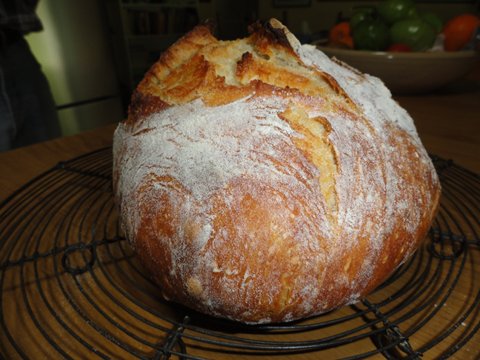
I love making bread and do it almost every day. We eat it fresh and warm at lunchtime and toasted for breakfast the following morning. Any leftovers go to the chooks and the dogs, who always hang around when they smell bread baking.

Here is the recipe for my loaf, pictured above:

  • 1½ teaspoons dried yeast
  • 1 tablespoon sugar
  • 65 mls warm water
  • 3¾ cups baker's flour
  • 3 teaspoons gluten flour
  • 1 tablespoon butter/margarine (softened)
  • 1½ teaspoons salt
  • 1 tablespoon milk powder
  • 250 mls warm water + more if necessary

Just a word about flour. Bread mix, which is commonly used in bread machines, is flour with bread improver and flavour enhancers added. We are NOT using bread mix in this recipe. By adding the ingredients we add, we're adding natural flavour to the bread as well as giving it a lift, that as an inexperienced baker, you won't get without the gluten flour. When you start experimenting with other recipes you can leave out some of these ingredients and try others. Another thing you need to know about flour is that it's different all over the country. When baking with the various flours, they take different amounts of water. A flour in Melbourne will be slightly different to a flour in Brisbane because of the amount of humidity in the air. And even if you use the same bag of flour at different times of the year, you'll probably use slightly more or less water, according to the weather conditions. This is not a problem, it just means you have to know what your dough should look and feel like before going to the next step. Bread making is very tactile, even when making the dough in a bread machine, I feel it to make sure I have enough moisture in the dough. This recipe generally uses 315mls of water, but when I made this loaf yesterday I used about 40mls more. Sometimes the difference will be one spoon full, sometimes it will be almost a cup.

If anyone needs help with their breadmaking, either add a comment or email me and I'm sure we'll get you on the right track.

Newer Posts Older Posts Home
View mobile version

MY BOOKS

MY BOOKS


My books were all published by Pengiun, and are available at Amazon US, Amazon UK and Amazon Au

Search here

Total Pageviews

Translate


I'm Rhonda Hetzel and I've been writing my Down to Earth blog since 2007. Although I write the occasional philosophical post, my main topics include home cooking, happiness and gardening as well as budgeting, baking, ageing, generosity, mending and handmade crafts. I hope you enjoy your time here.

MY FAVOURITE PLACES

  • Grandma Donna's Place
  • Grandma Donna's YouTube
  • Grandma Donna's Instagram
  • This Simple Day
  • Nicole's Instagram

Give More

Give More

Popular posts last year

Making ginger beer from scratch

We had a nice supply of ginger beer going over Christmas. It's a delicious soft drink for young and old, although there is an alcoholic version that can be made with a slight variation on the recipe. Ginger beer is a naturally fermented drink that is easy to make - with ginger beer you make a starter called a ginger beer plant and after it has fermented, you add that to sweet water and lemon juice. Like sourdough, it must ferment to give it that sharp fizz. To make a ginger beer plant you'll need ginger - either the powdered dry variety or fresh ginger, sugar, rainwater or tap water that has stood for 24 hours to allow the chlorine to evaporate off. You'll also need clean plastic bottles that have been scrubbed with soap, hot water and a bottle brush and then rinsed with hot water. I never sterilise my bottles and I haven't had any problems. If you intend to keep the ginger beer for a long time, I'd suggest you sterilise your bottles. MAKING THE STARTER In a...
Image

NOT the last post

This will be my last post here.  I've been writing my blog for 18 years and now is the time to step back. I’ve stopped writing the blog and come back a couple of times because so many people wanted it, but that won’t happen again, I won’t be back.  I’ll continue on instagram to remain connected but I don’t know how frequent that will be. I know some of you will be interested to know the blog's statistics. 
Image

How to make cold process soap

I'm sure many of you are wondering: "Why make soap when I can buy it cheaply at the supermarket?" My cold process soap is made with vegetable oils and when it is made and cured, it contains no harsh chemicals or dyes. Often commercial soap is made with tallow (animal fat) and contains synthetic fragrance and dye and retains almost no glycerin. Glycerin is a natural emollient that helps with the lather and moisturises the skin. The makers of commercial soaps extract the glycerin and sell it as a separate product as it's more valuable than the soap. Then they add chemicals to make the soap lather. Crazy. Making your own soap allows you to add whatever you want to add. If you want a plain and pure soap, as I do, you can have that, or you can start with the plain soap and add colour, herbs and fragrance. The choice is yours. I want to add a little about animal and bird fat. I know Kirsty makes her soap with duck fat and I think that's great. I think t...
Image

Preserving food in a traditional way - pickling beetroot

I've had a number of emails from readers who want to start preserving food in jars but don't know where to start or what equipment to buy.  Leading on from yesterday's post, let's just say up front - don't buy any equipment. Once you know what you're doing and that you enjoy preserving, then you can decide whether or not to buy extra equipment. Food is preserved effectively without refrigeration by a variety of different methods. A few of the traditional methods are drying, fermentation, smoking, salting or by adding vinegar and sugar to the food - pickling. This last method is what we're talking about today. Vinegar and sugar are natural preservatives and adding one or both to food sets up an environment that bacteria and yeasts can't grow in. If you make the vinegar and sugar mix palatable, you can put up jars of vegetables or fruit that enhance the flavour of the food and can be stored in a cupboard or fridge for months. Other traditional w...
Image

Cleaning mould from walls and fabrics

With all this rain around we've developed a mould problem in our home. Usually we have the front and back doors open and that good ventilation stops most moulds from establishing. However, with the house locked up for the past week, the high humidity and the rain, mould is now growing on the wooden walls near our front door and on the lower parts of cupboards in the kitchen. Most of us will find mould growing in our homes at some point. Either in the bathroom or, in humid climates, on the walls, like we have now. You'll need a safe and effective remedy at some point, so I hope one of these methods works well for you. Mould is not only ugly to look at, it can cause health problems so if you see mould growing, do something about it straight away. The longer you leave the problem, the harder it will be to get rid of it effectively. If you have asthma or any allergies, you should do this type of cleaning with a face mask on so you don't breathe in any spores. Many peopl...
Image

Five minute bread

Bread is one of those foods that, when made with your own hands, gives a great deal of satisfaction and delight. It's only flour and water but it symbolises so much. I bake bread most days and use a variety of flours that I buy in bulk. Often I make a sandwich loaf because we use most of our bread for lunchtime sandwiches and for toast. Every so often I branch out to make a different type of loaf. I have tried sour dough in the past but I've not been happy with any of them. I'll continue to experiment with sour dough because I like the idea of using wild yeasts and saving the starter over a number of years to develop the flavour and become a part of the family. However, the loaf I've been branching out to most often is just a plain old five minute bread. By five minutes I mean it takes about five minutes actual work to prepare but it's the easiest of all bread to make and to get consistently good loaves from. If you're having people around for lunch or...
Image

This is my last post.

I have known for a while that this post was coming, but I didn't know when. This is my last post. I'm closing my blog, for good, and I'm not coming back like I have in the past.  I've been writing here for 16 years and my blog has been many things to me. It helped me change my life, it introduced me to so many good people, it became a wonderful record of my family life, it helped me get a book contract with Penguin, and monthly columns with The Australian Women's Weekly and Burke's Backyard . But in the past few months, it's become a burden. In April, I'll be 75 years old and I hope I've got another ten years ahead. However, each year I'll probably get weaker and although I'm fairly healthy, I do have a benign brain tumour and that could start growing. There are so many things I want to do and with time running out, leaving the blog behind gives me time to do the things that give me pleasure. On the day the blog started I felt a wonderful, h...
Image

What is the role of the homemaker in later years?

An email came from a US reader, Abby, who asked about being a homemaker in later years. This is part of what she wrote: "I am a stay-at-home mum to 4 children, ages 9-16. I do have a variety of "odd jobs" that I enjoy - I run a small "before-school" morning drop-off daycare from my home, I am a writing tutor, and I work a few hours a week at a local children's bookstore. But mostly, I cherish my blissful days at home - cooking, cleaning (with homemade cleaners), taking care of our children and chickens and goats, baking, meal-planning, etc. This "career" at home is not at all what I imagined during my ambitious years at university, but it is far more enriching. I notice, though, that my day is often planned around the needs of my family members. Of course, with 4 active kids and a husband, this is natural. I do the shopping, plan my meals, cook dinner - generally in anticipation of my family reconnecting in the evening.  I can't h...
Image

Every morning at home

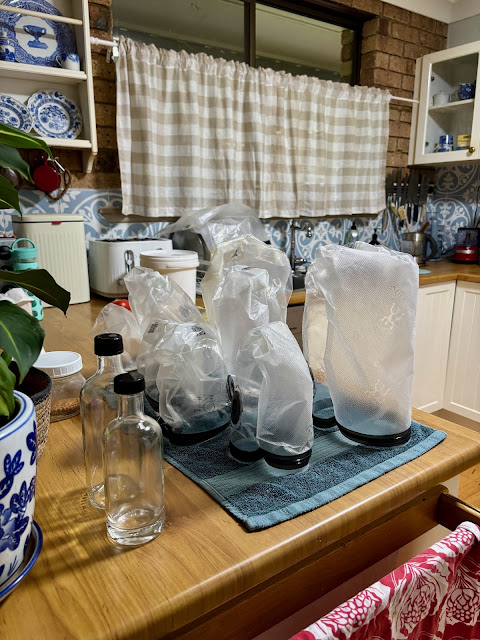
Every morning when I walk into my kitchen it looks tidy and ready for a day's work. Not so on this morning (above), I saw this when I walked in. Late the previous afternoon when I was looking for something, I came across my rolled up Zwilling vacuum bags and decided they had to be washed and dried. So I did that and although I usually put them outside on the verandah to dry it was dark by then. I turned the just-washed bags inside out and left them like this on a towel. It worked well and now the bags are ready to use when I bring home root vegetables, cabbages or whatever I buy that I want to last four or five weeks.
Image

You’ll save money by going back to basics

When I was doing the workshops and solo sessions, I had a couple of people whose main focus was on creating the fastest way to set up a simple life. You can't create a simple life fast, it's the opposite of that It's not one single thing either - it's a number of smaller, simpler activities that combine to create a life that reflects your values; and that takes a long to come together. When I first started living simply I took an entire year to work out our food - buying it, storing it, cooking it, preserving, baking, freezing, and growing it in the backyard. This is change that will transform how you live and it can't be rushed.  
Image

All previous blog posts

  • 2026 3
    • February 3
      • Workshops starting 1 March
      • Planting vegetable seeds and new workshops
      • Back where we belong
  • 2025 7
    • July 1
    • June 2
    • May 1
    • April 2
    • February 1
  • 2024 25
    • December 2
    • November 1
    • October 2
    • September 3
    • August 1
    • July 3
    • June 1
    • May 3
    • April 2
    • March 3
    • February 2
    • January 2
  • 2023 13
    • December 1
    • November 2
    • October 1
    • September 3
    • August 2
    • February 2
    • January 2
  • 2022 17
    • November 3
    • October 4
    • September 3
    • August 2
    • July 3
    • June 2
  • 2021 50
    • December 1
    • November 6
    • October 7
    • September 5
    • August 4
    • July 5
    • June 2
    • May 2
    • April 6
    • March 4
    • February 4
    • January 4
  • 2020 68
    • December 3
    • November 5
    • October 4
    • September 4
    • August 4
    • July 4
    • June 4
    • May 8
    • April 7
    • March 8
    • February 8
    • January 9
  • 2019 66
    • December 2
    • November 4
    • October 5
    • August 3
    • July 4
    • June 6
    • May 8
    • April 8
    • March 8
    • February 11
    • January 7
  • 2018 82
    • December 1
    • September 2
    • August 10
    • July 4
    • June 11
    • May 9
    • April 12
    • March 10
    • February 10
    • January 13
  • 2017 129
    • December 7
    • November 10
    • October 6
    • September 13
    • August 11
    • July 13
    • June 12
    • May 9
    • April 9
    • March 14
    • February 11
    • January 14
  • 2016 125
    • December 7
    • November 13
    • October 10
    • September 11
    • August 11
    • July 8
    • June 9
    • May 9
    • April 12
    • March 10
    • February 13
    • January 12
  • 2015 184
    • December 7
    • November 15
    • October 20
    • September 18
    • August 19
    • July 18
    • June 12
    • May 15
    • April 12
    • March 21
    • February 13
    • January 14
  • 2014 203
    • December 11
    • November 8
    • October 17
    • September 20
    • August 17
    • July 19
    • June 17
    • May 17
    • April 23
    • March 15
    • February 18
    • January 21
  • 2013 225
    • December 13
    • November 17
    • October 17
    • September 17
    • August 21
    • July 24
    • June 20
    • May 19
    • April 17
    • March 22
    • February 17
    • January 21
  • 2012 245
    • December 17
    • November 20
    • October 20
    • September 18
    • August 15
    • July 24
    • June 21
    • May 26
    • April 23
    • March 23
    • February 19
    • January 19
  • 2011 257
    • December 18
    • November 24
    • October 27
    • September 23
    • August 24
    • July 21
    • June 24
    • May 24
    • April 16
    • March 22
    • February 14
    • January 20
  • 2010 283
    • December 20
    • November 18
    • October 18
    • September 19
    • August 25
    • July 24
    • June 25
    • May 26
    • April 25
    • March 22
    • February 29
    • January 32
  • 2009 293
    • December 29
    • November 18
    • October 23
    • September 25
    • August 22
    • July 28
    • June 22
    • May 21
    • April 27
    • March 26
    • February 24
    • January 28
  • 2008 387
    • December 24
    • November 23
    • October 25
    • September 26
    • August 27
    • July 27
    • June 37
    • May 34
    • April 44
    • March 53
    • February 32
    • January 35
  • 2007 372
    • December 37
    • November 40
    • October 55
    • September 51
    • August 49
    • July 63
    • June 49
    • May 28


Trending Articles

NOT the last post

This will be my last post here.  I've been writing my blog for 18 years and now is the time to step back. I’ve stopped writing the blog and come back a couple of times because so many people wanted it, but that won’t happen again, I won’t be back.  I’ll continue on instagram to remain connected but I don’t know how frequent that will be. I know some of you will be interested to know the blog's statistics. 
Image

Every morning at home

Every morning when I walk into my kitchen it looks tidy and ready for a day's work. Not so on this morning (above), I saw this when I walked in. Late the previous afternoon when I was looking for something, I came across my rolled up Zwilling vacuum bags and decided they had to be washed and dried. So I did that and although I usually put them outside on the verandah to dry it was dark by then. I turned the just-washed bags inside out and left them like this on a towel. It worked well and now the bags are ready to use when I bring home root vegetables, cabbages or whatever I buy that I want to last four or five weeks.
Image

You’ll save money by going back to basics

When I was doing the workshops and solo sessions, I had a couple of people whose main focus was on creating the fastest way to set up a simple life. You can't create a simple life fast, it's the opposite of that It's not one single thing either - it's a number of smaller, simpler activities that combine to create a life that reflects your values; and that takes a long to come together. When I first started living simply I took an entire year to work out our food - buying it, storing it, cooking it, preserving, baking, freezing, and growing it in the backyard. This is change that will transform how you live and it can't be rushed.  
Image

Creating a home you'll love forever

Living simply is the answer to just about everything. It reduces the cost of living; it keeps you focused on being careful with resources such as water and electricity; it reminds you to not waste food; it encourages you to store food so you don't waste it and doing all those things brings routine and rhythm to your daily life. Consciously connecting every day with the activities and tasks that create simple life reminds you to look for the meaning and beauty that normal daily life holds.  It's all there in your home if you look for it. Seemingly mundane tasks like cleaning and cooking help you with that connection for without those tasks, the home you want to live in won't exist in the way you want it to.  Creating a home you love will make you happy and satisfied.
Image

Time changes everything

I've been spending time in the backyard lately creating a contained herb and vegetable garden. My aim is to develop a comfortable place to spend time, relax, increase biodiversity and encourage more animals, birds and insects to live here or visit. Of course I'd prefer my old garden which was put together by Hanno with ease and German precision. Together, we created a space bursting at the seams with herbs, vegetables and fruity goodness ready to eat and share throughout the year. But time changes everything. What I'm planning on doing now, is a brilliant opportunity for an almost 80 year old with balance issues. In my new garden I'll be able to do a wide range of challenging or easy work, depending on how I feel each day. It’s a daily opportunity to push myself or sit back, watch what's happening around me and be captivated by memories or the scope of what's yet to come.
Image

It's the old ways I love the most

I'm a practical woman who lives in a 1980’s brick slab house. There are verandahs front and back so I have places to sit outside when it's hot or cold. Those verandahs tend to make the house darker than it would be but they're been a great investment over time because they made the house more liveable. My home is not a romantic cottage, nor a minimalist modern home, it's a 1980’s brick slab house. And yet when people visit me here they tell me how warm and cosy my home is and that they feel comforted by being here. I've thought about that over the years and I'm convinced now that the style of a home isn't what appeals to people. What they love is the feeling within that home and whether it's nurturing the people who live there.
Image

Back where we belong

Surprise! I'm back ... for good this time. Instagram became an impossible place for me. They kept sending me messages asking if I'd make my page available for advertisers! Of course, I said no but that didn't stop them. It's such a change from what Instagram started as. But enough of that, the important part of this post is to explain why I returned here instead of taking my writing offline for good. For a few years Grandma Donna and I have talked online face-to-face and it's been such a pleasure for me to get to know her. We have a lot in common. We both feel a responsibility to share what we know with others. With the cost of living crisis, learning how to cook from scratch, appreciate the work we do in our homes, shop to a budget and pay off debt will help people grow stronger. The best place to do that is our blogs because we have no advertising police harassing us, the space is unlimited, we can put up tons of photos when we want to and, well, it just feels li...
Image

Making ginger beer from scratch

We had a nice supply of ginger beer going over Christmas. It's a delicious soft drink for young and old, although there is an alcoholic version that can be made with a slight variation on the recipe. Ginger beer is a naturally fermented drink that is easy to make - with ginger beer you make a starter called a ginger beer plant and after it has fermented, you add that to sweet water and lemon juice. Like sourdough, it must ferment to give it that sharp fizz. To make a ginger beer plant you'll need ginger - either the powdered dry variety or fresh ginger, sugar, rainwater or tap water that has stood for 24 hours to allow the chlorine to evaporate off. You'll also need clean plastic bottles that have been scrubbed with soap, hot water and a bottle brush and then rinsed with hot water. I never sterilise my bottles and I haven't had any problems. If you intend to keep the ginger beer for a long time, I'd suggest you sterilise your bottles. MAKING THE STARTER In a...
Image