down to earth

  • Home
  • About Us
  • Down To Earth Book
  • Privacy Policy
This post will give me more joy to write than anything else I could think of today.  I told you  there are a few exciting things happening here at the moment, well, I am now able to tell you the most exciting one of them.  Our son Kerry and his beautiful partner Sunny are having a baby!  Hanno and I will be grandparents in late March.  I can barely believe my eyes when I read what I have just written.

 This is one of my original stitchery patterns.

This wasn't planned but it's welcomed wholeheartedly by all of us.  Both Kerry and Sunny are hard workers and now that they have a baby to love and care for, they've decided it's time to buy an apartment together.  Sunny is going home to Korea to tell her family and when she comes back again, the search will start to find their first home together.  We are all so excited!  My knitting has taken on a life of its own and when I think of all the projects I could start, my head spins. 

This is one moment in my life when I feel as full as I could be.  I'm full of hope, love, anticipation, joy, generosity and determination.  Now, more than ever, I know that the way we live is preparing for this new life. I hope that when it comes to be my time to die, the world is more like the one I was born into and less like the one I grew up in.  We all owe that to our children and our grandchildren.

I'll stop writing now, I've already gone overboard because only these words matter today: Our son Kerry and his beautiful partner Sunny are having a baby!

When I first started blogging I felt a bit like a fish out of water. Not only was I much older than most of my fellow bloggers but I was blogging about a way of living that most people didn't seem to be interested in. Back in those early days of the blog, although there were quite a few other bloggers living their versions of a simple life, very few of them blogged about their daily lives in the way I did. Let me say quickly that is entirely appropriate - to each their own. I'm always going on about how each of us needs to express our own values through the way we live. That said, my posts on gardening, homemaking, organising cupboards and linens, budgeting and cooking from scratch were part of only a handful of similar blogs.


Most of the other simple bloggers at that time were more focused on a peak oil world and organising action against global warming. Few wrote about the importance of individual action or recognised the power of the home. I am really pleased that has changed. It is common now to see simple bloggers write about their traditional action plans or frugal living mixed generously with home hints, thoughts on baking, dressmaking, knitting and recipes. Things have changed, my friends and they've changed for the better.


Now when I look around my blog neighbourhood I see delightful home-centred posts like the perfect farm wife's dress. Sara, at Farmama, not only shows us how to tend a flock of goats and raise beautiful children in a wonderful way, she sews and bakes too. And then there is Jenna over at Cold Antler Farm. She has recently bought her own farm and takes us on the most amazing ride with her while she learns about shepherding, sheep dogs and fleece. Jenna works a regular job but she also tends her farm and livestock alone, and has regular get-togethers where she teaches banjo and an appreciation of fine mountain music. Of course, no post on simple life would be complete without my friend Jewel's Eyes of Wonder blog and Amanda's Soulemama. Both are well known but there may be some of you out there not familiar with them. They're beautiful, inspiring and gentle reads that will take you to another place altogether. Jewel's is taking a break at the moment but she'll be back and she has an incredible backlog of posts there just waiting for you.


There is also The Cottage Smallholder and her wonderful blog full of gardens and food, and Jenny at Little Jenny Wren who writes about homemaking and dolls in her Tasmanian home. EcoMILF writes about mothering, family life, cooking and the home and now she's waiting for her latest baby, you can browse through her archives while we all wait for the good news. There hundred of projects just waiting for you at The Long Thread, at the knit and crochet community Ravelry and at Whip up. And last, but by no means least, there is Julie at Towards Sustainability who I have known longer than I've been blogging. Julie has been in a bit of a funk lately so I hope that your visits will bring her back to us and her blog in a big way. She has a lot of sensible and thought provoking ideas and I hope she continues blogging for a long time to come.


In most of our real life communities, there are fewer people at home all day and it's uncommon now to share backyard produce with next door neighbours. That has been replaced for many of us by this vibrant and interesting community of bloggers who chatter via their blogs and send backyard and home made produce through the post. Just yesterday I received some sourdough starter from a friend in Victoria and last week a knitted mini-me Teddy came to me from West Australia. The blog world can be a bit scary and the internet in general can be indescribably ugly, but I have found that in our little corner of it, the women and men who write about their daily lives, do so in a generous and thoughtful way that makes this space feel like a neighbourhood. I hope you'll visit all the neighbours that I've given links to here and I hope you'll feel welcomed, inspired and revolutionised, just like I have been, by being a part of the blog neighbourhood.

ADDITION: I want to add something that Mary commented on this morning. All those people who comment here, both the seasoned readers and the new comers, are an integral part of my neighbourhood. I feel that my comments section is my back fence that we all rest on while we talk about our lives and ambitions. I apologise for leaving that out of my original post above, it's so ingrained in my mind now, I always believe it is already accepted and understood.
These past few mornings have been a real reminder that Winter is here and most mornings I sit at my computer in woolly slippers and at least three layers.  It's 10C now, yesterday it was 6C at this time, and when I go out to feed the animals, my breath comes streaming from my nostrils.  It's good to see your own breath before you; it's proof of life.  Not that we need such proof, we have our daily tasks to show us every day that life, and the way we have chosen to live it, is full of life affirming actions, organic growth and the constant productive forces that make up a simple life.

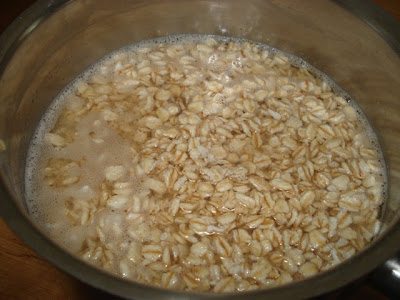
Back inside again and I light the heat under the soaked oats already in their pot and waiting to be cooked for breakfast.  We rarely have the same breakfast two mornings in a row.  Saturday it was bacon and eggs, yesterday we had porridge. Some mornings it will be poached eggs on toast, the next, tea and toast.  It depends on what we have too much of or what needs to be eaten.  It's cold inside now, not the coldness of outside, but cold enough to yearn for an open fire.  We have reverse cycle air-conditioning, but I'd rather freeze than use it.  I am hoping that by next Winter we'll have enough money to install a wood burning combustion stove.  In my future, I can see warm days and nights knitting in front of that fire and the thought of it warms me now, just enough.  It also makes me think of Bernadette.

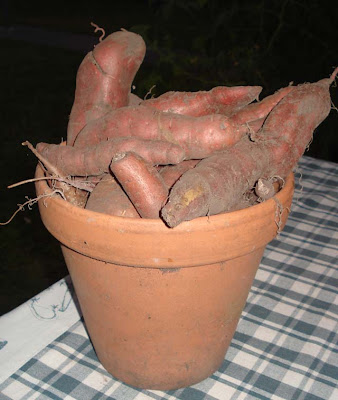
As the day warms up we both move silently towards our tasks for the day.  Hanno is erecting climbing frames for the new cucumbers and beans, digging up sweet potato and fertilising the gardens with blood and bone and seaweed tea.  I am writing, cooking and knitting.  Yes, this is still the jumper I said would be ready for Hanno at the end of June.  I'm just finishing shaping the arms on the front of it, the back is done so I only have the two sleeves to go.  As soon as that is finished I'm onto some other knitting that I'm planning out now.  Actually, we have some big things happening here that I'm not quite ready to tell you about.  Be patient, my friends, all will be revealed soon.  Just know that I'm smiling almost all the time.


I forgot to take photos of the garden until late in the afternoon, so these photos are darker than usual.  You'll be able to see the three mounds where Hanno has planted three zucchinis, there are new bok choy plants as well as beans, tomatoes, lettuces, radishes and cucumbers.  The last of the cabbages was eaten this weekend and now we're getting ready for Spring and Summer.  Life goes on.


I made a loaf of bread for lunch on Saturday but yesterday it was scones - plain and with dates.  We have plenty of our backyard tomatoes for sandwiches at the moment and these simple lunches, with a cup of black tea, fill us until our evening meal.  And that reminds me, Gabrielle is sending me some of her sourdough starter and that should be in the mail today.  What a thoughtful and exciting gift!  Click here to go to her very interesting website, Beechworth Sustainability.  Thank you Gabrielle.


A few days ago Laurienna asked for the apple cake recipe I made last week.  I make up most of my recipes as I go depending on what's in the fridge and pantry, so even though I've probably shared an apple cake recipe with you before, this will be different.  Most cakes are a mixture of butter with sugar, add eggs (one at a time), and when fluffy and light, add the dry ingredients - flour and your flavourings.  I know most cook books say that baking is a science and not to stray from your recipes, but I always do and it generally gives me delicious cakes.  So reduce the sugar or eggs if you want to, add cinnamon (I didn't have any), add more apples, experiment.  Be bold!

APPLE AND PECAN CAKE

Cake filling
2 granny smith apples - peeled and thinly sliced
1 teaspoon butter + cinnamon if you have it
Combine the above and cook in a small saucepan for about five minutes with the lid on.  Remove from heat and cool. When cool, cut up a small handful of pecans.


Cake
180 grams/6ozs room temperature butter
¾ cup sugar
1 teaspoon vanilla extract (not vanilla flavouring - throw that out, it's not good for you)
4 eggs at room temperature

2 cups SR flour + 1 teaspoon baking powder OR 2 cups of plain flour and 2 teaspoons baking powder
enough milk to make a thick batter - depending on your flour and the humidity, between ½ - 1 cup.

In a mixing bowl add butter and sugar and cream it.  Creaming is beating the living daylights out of the ingredients to incorporate air.  When you cream butter and sugar, it becomes lighter in colour, and fluffy.

Add vanilla, then add eggs, one at a time.

Take the bowl off the mixer, fold in the flour by hand and a little bit of the milk. When all the flour is mixed in, add more milk until you have a nice thick cake batter.  Add half the mix to a cake tin, I used a round springform tin, then sprinkle on some crushed pecans and the apples.  Cover that layer with the rest of the batter.  Sprinkle pecans on the top.

Bake on 180C/350F for about 35 - 40 minutes or until the cake is brown on the top and a toothpick inserted in the middle of the cake comes out clean (with no uncooked batter on it).

It seems to me that Sunday is the perfect day for baking.  When I was a girl it was common to smell the roasting legs of lamb and apple cakes wafting through the air on Sunday.  Nowadays it doesn't happen much and I wonder what our neighbours think when they smell cakes, bread and meat being cooking at our place.  Maybe they don't sense the invisible nature of it. I guess most people now aren't used to taking in the natural environment and noticing different aromas that surround them.


At the end of our day we had a simple dinner of crumbed fish from the local fish co-op, coleslaw made from the last backyard cabbage and spicy potato wedges made with our home grown potatoes, still in their jackets.  A glass of water each helped wash it all down.  There was a little apple cake still there but neither of us wanted any dessert.

It still amazes and delights me, even after all this time, that our weekends, once filled with more public and expensive entertainment and leisure, now satisfy and nurture us with their productivity and involvement in ordinary activities and work.  We made a choice many years ago to leave what is superfluous to our needs behind.  We have not yet regretted that decision; I doubt we ever will.

I hope you had a wonderful weekend and that this week will be a good one for all of us.   Take care, friends.

A kitchen is like the engine on a car; it drives the house.  We spend a lot of time in our kitchens preparing meals, making cups of tea, baking bread and biscuits and when we invite visitors into our homes, we often sit at the kitchen table deep in conversation.  Kitchens are where a lot of our home production takes place so it makes sense to keep our kitchens working at their best.  Despite what many of you think, I am no angel. Like most other people, when I'm in a hurry I take shortcuts, I open packets and don't put them straight into a container, I don't look properly for ingredients and sometimes have two jars of the same thing and I don't put things back exactly where I took them from.  I am guessing you know where this post is going.  I'm talking about pantries and keeping them clean and tidy, but this post has an added bonus - it's also a challenge!

 BEFORE - What a mess!

Before we carry on, let me say that my pantry is in my kitchen and it's where I store all food that  I am currently using that doesn't have to be refrigerated.  My stockpile cupboard is just around the corner from the pantry and it stores all unopened and unused food.  When something is taken from the stockpile and opened, it is put in a container and stored in the pantry.  I usually clean the pantry about every three months.  We have no major bugs here to worry about and since we started freezing all our dried goods when they're brought home, we've even eliminated the dreaded pantry moth and weevils.  I don't stop freezing and using containers just because I see no insects, I know that I don't see them because of the freezing and containers.

  AFTER -  it makes me smile.

My pantry was in a really bad state.  Despite knowing I should decant everything into its own container, I had a couple of things in plastic bags held tight with a rubber band, I had two jars each of dates and dried fruit and a couple of unopened packets that should have been in the stockpile cupboard.  Overall the pantry was a disorganised mess - the result of a busy woman taking short cuts, I'm sure many of you can relate.  So I set to work.

I emptied all the shelves into the kitchen benches and wiped the cupboard down with warm soapy water to remove all traces of spilt food, and then carefully dried all the shelves.  I put back the larger items onto their shelves so I would have more room to work, then started sorting jars into categories and checking I didn't have more than one jar of everything.  I made one jar out of the two lots of dates and one of dried fruit.  Any jar that were almost empty had its contents put in a bowl while it was washed and dried then the jar was filled to the top.  The entire exercise took about an hour and now I'm back to having everything is its right place and the pantry set to help me work efficiently in the kitchen instead of hindering me.  It feels good and every time I go into the kitchen I open the pantry door and smile.

Unneeded jars, washed and ready to be put away.

This is an easy task but its one of the important ones.  Having food organised and safely contained will not only help you work, it will keep your food safe and will help eliminate waste.  So if you haven't cleaned out your pantry recently, I challenge you to do it this weekend.  I am going to start a thread at the Down to Earth forum where we can all post our photos.  We may not live close to one another but we can still use our modern technologies to support and encourage each other to work to the best of our ability.  I know it's probably not what you want to do on the weekend, but it won't take long and what else could make you open a door and smile at the pantry?


I forget if I told you that I'm having a two week break from my voluntary job.  It's been really hectic there all year with our move to the new building, setting up new systems, volunteer training and the rest of it, so when my friend and co-worker, Fiona, said she'd cover me for a couple of weeks, I jumped at the chance. Fiona is our Community Development Worker, she watches over all the hinterland neighbourhood centres.  I really appreciate her kind gesture as she has so much other work to do. But I needed time away from there to clear my head and I decided to use the two weeks to write. I've been doing that but as you all know, life never stops and there are many home tasks that need my attention as well.


I'm still working to my regular routine with bed making, bread, floors, washing up and all the other tasks that make a day here but I've also spent time in the kitchen, yesterday putting up pickled beetroot and on Monday making passionfruit sauce for the freezer.  In the midst of our summer here, when I make ice cream, there will be no passions on the vine, so the next best thing is to have homemade topping for ice cream in the freezer.


We had a bumper passionfruit crop this year with our delicious black variety really going overboard to impress us with abundance and taste.  For this simple topping I just made a weak sugar syrup, added just picked lemon juice to a lot of passion pulp, and froze the litre jar.  That will do us all summer and is a good example of how you can manipulate garden produce to be available when you want it,  and not only when it's picked (or bought).  If you don't have a garden, be on the lookout for seasonal fruit when it's cheap and fresh.  I make my annual peach jam from a box of bought peaches, not peaches we have grown.  Making these sauces and toppings is a simple thing and takes little time but it's yet another thing we can enjoy from our garden and another thing we don't have to buy.  Homemade topping on homemade icecream in the middle of summer will be a nice treat and I will be very pleased then that I took the time in Winter to make it.


Yesterday I picked the beets in our garden, cooked them straight away and pickled them in the afternoon.  This type of preserving is so simple.  It relies on the highly acidic medium of vinegar and sugar to preserve the vegetables and if it is stored in the fridge, it requires no water bath processing.


I use different ingredients every time I make this. It relies entirely on what spices are in the cupboard at the time.  Yesterday I used peppercorns, mustard seeds, coriander seeds, celery seeds and bay leaves  from the garden, along with the white wine vinegar and sugar.  This concoction is heated up to not quite boiling point, I turn off the heat and let it sit there for half an hour for the flavours to infuse into the vinegar.  It's strained to remove the larger seeds and bay leaves before adding to the sterilised jars.


While it is infusing, I slice the cooked beetroot into a couple of jars and then pour the hot vinegar mixture over the beets to cover them entirely.  Lids on.  Wait till they cool and put them in the fridge.  Job over.


I even had a small jar of spicey vinegar left over to use in salad dressings.

And I've been baking as well. Walnut biscuits on the weekend and an apple and pecan cake which Hanno asked for after seeing an apple and blackberry cake made on TV.


Like all sweet treats, they taste better when they're shared so we sent a plate of these biscuits over to our neighbours.


And the apple cake, which was rich and moist, was served as dessert last night.  Apple cake, when the aroma of baking apples, nuts and spices fills the house, and when it is being enjoyed, is one of those home made foods that always reminds me of the nurturing role food plays in our lives.  It can be a plate of biscuits passed over the back fence or a favourite cake made because someone saw it on TV, or even the daily bread. Taking the time to bake them, using fresh wholesome ingredients and then sharing, make us stop to appreciate what we have and brings us all together again around the kitchen table.

Yesterday, Hanno and I travelled down the coast to have lunch with our son Kerry and his lovely partner, Sunny.  Sunny is a chef too and she loves using our fresh garden produce, particularly cabbage.  So Hanno bundled up some fruit and vegetables for them, namely, cabbage, snow peas, turnips and lemons.  It is a real pleasure to be able to give away just picked organic produce.  It seems to me that more and more people appreciate it now.

I haven't been in our garden since this picking, but I think there are a few bare patches there.  I will be picking all the beetroot today and they all be pickled and sitting in jars before nightfall.  I know many of you are growing food in your backyards and allotments, and also in container gardens on balconies and patios, so I thought it might be timely to write about harvesting and garden maintenance today.

Before I was a gardener I thought you planted, watered and harvested.  The end.  Now I know  that in addition to those three vital actions, there is more that goes on in the garden.  I know now that if we harvest properly and keep the garden well maintained, we get better and larger crops.  Don't forget that most vegetables are better if they're not left to grow really big.  Generally smaller vegetables are sweeter, juicier and firmer.  Of course, there are always exception to that rule so be guided by your common sense.


At the moment, we have a healthy trellis full of snow peas.  We often eat these when we're out in the garden but there are so many of them now that it makes more sense to harvest them to eat later.  With vine crops that flower, like peas, beans, cucumbers and zucchini/courgettes, you get many more vegetables if you harvest continuously.  That works well if you want to eat them with your tea each evening, but if you don't, if you want to store them in the freezer to eat later in the year, pick as many as you can each day and store them in the fridge in a sealed container.  When you have enough for a batch to be frozen - which depends entirely on the size of your family, blanch them and bag them up in a freezer bag.  Don't forget to mark them with a permanent marker with name and date frozen.

Green leaves are similar and often benefit from continuous picking.  We pick  lettuce, kale, silverbeet and spinach from the outside, just taking the leaves we need for that day.  The plant will keep producing leaves and you can keep harvesting them.  However, if you want to put up some silverbeet, kale or spinach in the freezer, you can harvest the leaves from the entire plant, making sure you leave the centre in tact.  After harvesting, give the plants a drink of weak fertiliser tea such as comfrey, compost or worm juice tea and within a few weeks, you'll have full plants again.


Tomatoes may be harvested either deep red, pink or green.  You can pick them at any size if you need to clear the land or a weather event, such as a hail storm or extremely hot weather, threatens them, but it's best to let them develop to a reasonable size.  We find that if we leave tomatoes on the bush, the grubs will get to them before we do.  We wait until they're a decent size and showing just the first twinges of pink, and we pick them.  They ripen inside away from birds and insects.  Tomatoes don't ripen by sunlight, they need a warm temperature instead.  Don't store tomatoes in the fridge, they'll develop their full flavour if left on the kitchen bench.  Don't worry that they'll go off, you'll only loose those that have a grub in them, the rest will last a few weeks on the bench.

Some vegetables like pumpkins, squash, potatoes, onions can be left growing until they're ripe, and even left  there until you need them.  Naturally, you have to use your common sense when using the garden as a storage container as well.  For instance, if you have continuous rain you'd have to rescue them or they'd rot in all that water.  But if you're hoping to get a few more weeks or even a month in the garden before harvesting, most of the time, with these vegetables, that's okay.  You'll need to keep your pumpkins in check and you can do that by waiting until you see the first pumpkins growing and then nipping off the growing stems, on the same vine, around it.  You'll usually get two or three pumpkins per vine.  When you see those pumpkins have set, nip off the extra shoots. That will stop the vine from rambling all over the garden.  A good indication to pick potatoes is when you see the green tops die down but they are usually ready for picking before the tops go brown.  Be guided more by the growing times for the variety you're growing and if you're impatient for potatoes, you can put your hand into the side of the plant and pick off some small new potatoes underground.  If you're gentle it will not damage the plant at all and these small potatoes are a gift when steamed or boiled and dressed simply with butter, parsley and a bit of seasoning.  Pumpkins are ready when the vine starts dying and they feel heavy for their size.  When you harvest your pumpkins, cut them from the vine leaving about six inches of vine still attached.  If the vine comes away from the pumpkin cover the circle at the top of the pumpkin with some melted bees wax to protect it while it's ripening and drying.  Dry the pumpkins in the sun for a couple of weeks before bringing them inside to store in a cool dark place. 


Leeks, radish, carrots, turnips and parsnips are best picked on the smaller rather than larger size but if they're left a little bit longer in the ground, they don't suffer much from.  You'll notice the sweetness and tenderness more if they're picked younger.

All through the growing season, no matter what you're growing, keep the garden beds weeds-free, pick off every dead leaf you see and watch for wilt in your tomatoes, potatoes, capsicums/peppers and eggplant.  If you see diseased leaves on any of these plants, pick off all the dead leaves and put them in a plastic bag and leave in the sun to completely kill off everything.  Then dispose of the bag in the rubbish bin.  Watch out for caterpillars, grasshoppers, slugs and snails and if you find any, pick them off and give them to the chooks.  Try to get into the habit of inspecting your plants early in the morning or late in the afternoon because that is when most insects will be feeding.


Keep your green leaves growing well with some sort of fertiliser tea - they're easily made at home and cost very little.  If you see any plant that is stressed or being attacked my insects, apply a feeding of seaweed tea to it.  It is a great plant tonic and can help plants survive harsh conditions.  Don't apply too much nitrogen to fruiting plants like tomatoes, pumpkins, cucumbers, beans etc because you'll make the plant grow all leaves and no fruit.  If your fruiting vegetables aren't producing flowers, apply sulphate of potash  (according to the directions on the pack) around the base of the plant and water it in.  BTW, all the applications I've recommended here are organic. 

Make sure you tie up your tomatoes before they become too unruly and keep all your climbing plants attached to their supports.  It only takes a few minutes a week to do this and it makes all the difference.  Vines that are allowed to fly around in the wind will break or at the very least become damaged. Mulch around your vegetables with straw, particularly the tomatoes, as it will help them keep their roots at a even temperature and will help retain water in the soil.  Tomatoes are one of very few vegetables that like the mulch touching their stems - they will grow extra roots into the mulch if you pack it up around them and that will give you better crops.  All the other vegetables should have their stems kept free of mulch, it just needs to cover the soil they're growing in.  Keep applying the mulch through the season as it breaks down.  When it does break down it adds organic matter to your soil, which is always a good thing.


As you clear an area after harvesting, apply some compost, dig it in, and start another crop.  Even if it's just two or three plants.  Gardening this way will give you the best return on the work you put in and it uses the soil productively and sustainably.

It sounds like a lot of work but if you get into a routine with your gardening, it only requires observation and fixing problems as soon as you see them.  There will always be something to fix, adjust, tie back, prune or move.  The rest of it is pure enjoyment - both in the gardening and in the eating.   And you will probably find that you're at your best in the garden, many of us are.  Happy gardening everyone!
Today we travel across the Tasman Sea from Australia to New Zealand to visit Amy and see where she works.

Amy writes:
"As a full-time student doing an Early Years Degree (training to teach from birth to 8 yrs old), my desk area gets rather crowded! And that’s without the knitting bag, seeds, camera, finances, menu planning, card-making equipment and other assorted things I have managed to store out of sight. Having it in a corner of our living area means I can overflow readings and assignments to the nearby dining table or lazy boy chair and work early in the morning without disturbing my husband’s sleep. I am also a newly-crowned Mummy! My son is currently just over 4 weeks old and is a bit of a distraction, but I don’t mind at all! I imagine children’s toys and books will also now find their way into my work area.


The other main ‘work’ I do relates to our eating. I have become chief gardener of my parent’s vegetable garden. A nice 25 minute walk from our house, I love heading out to spend time outside being productive, enjoying the breeze, the birds, my parent’s small dog, and growing things I later get to enjoy eating. We have a share agreement with them: they provide the space, I provide labour, and we all get to enjoy the benefits. This photo was taken in February, during our New Zealand summer growing season."

You can visit Amy's blog here.


I have been secretly savouring a cookbook that I thought would not only be a rich addition to my recipe collection but also help us all get back to real cooking.  I found this treasure when visiting my son Shane on his birthday.  He always shows me his new cook books and there it was, looking very much like an ordinary book.  Do not judge a book by its cover.  (Although this cover is special with a scarecrow and love heart. I should have known.) Hanno bought it for me the next day.  Well, the first week came and went with many opportunities to tell you but this book is so special and I love it so much, I had to keep the love affair quiet for a while.  Now my heart is overflowing and I have to let it all out and tell you all about this most fabulous of books; to do otherwise would be shameful.  The icing on the cake is that it's Australian and it's not written by a celebrity chef.  This, my friends, is the real deal.  This book is about real food.

The Real Food Companion by Matthew Evans.


This is my kind of book.  He uses full cream milk and loves raw milk, butter and cream and makes no apologies for it.  If you want a low fat cook book, and I'm not sure why anyone would, this is not for you.  This has recipes for  yoghurt, ricotta,  marscapone, chicken stock, lemon curd, asparagus with poached egg and cheddar, slow roasted pork belly, homemade baked beans and bacon, rosewater, braised red cabbage, gooseberry fool and many other delicious foods.

There is intelligent information explaining the gassing of tomatoes; that tomatoes don't ripen best on the vine; that Delicious apples are in season for about two weeks each Autumn, yet are available all year round in the shops; the difference between single herd milk and mass produced milk; what buttermilk is; and how to prepare pulses; as well as many good wholesome recipes.  But overall, in addition to the recipes, it speaks on the ethics of the food we eat in an intelligent and non-political way that I found very appealing.  This is not preaching.

I have not been paid for this post, nor am I attached to this writer in any way, except emotionally now because of his book. The only down side of this book is the price - the recomended retail price is $89.95 but I've done a bit of searching and found it here at Fishpond for $60.00, with free postage if you're in Australia, or better still it's 15 pounds (AU$26), plus postage on the UK Amazon.  I have added the UK Amazon box in my right column if you would like to buy it via my blog.

The Real Food Companion is not a guide to producing restaurant-style food  for your kitchen table, it is a nurturer's book that will aim you gently towards more ethical food choices and wholesome home food.  It will help you with the small and simple things like making yoghurt, washing pulses and selecting eggs but it will also be your guide to improving the food you put on the table everyday.  This book is a real winner.

Newer Posts Older Posts Home


My books were all published by Pengiun, and are available at Amazon US, Amazon UK and Amazon Au

Search here

Total Pageviews

Translate


I'm Rhonda Hetzel and I've been writing my Down to Earth blog since 2007. Although I write the occasional philosophical post, my main topics include home cooking, happiness and gardening as well as budgeting, baking, ageing, generosity, mending and handmade crafts. I hope you enjoy your time here.

MY FAVOURITE PLACES

  • Grandma Donna's Place
  • Grandma Donna's YouTube
  • Grandma Donna's Instagram
  • This Simple Day
  • Nicole's Instagram

Give More

Give More

Popular posts last year

Making ginger beer from scratch

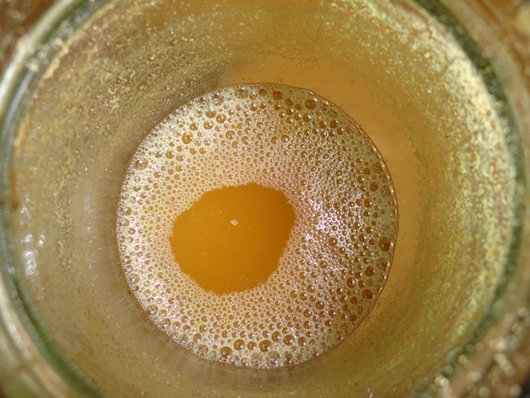
We had a nice supply of ginger beer going over Christmas. It's a delicious soft drink for young and old, although there is an alcoholic version that can be made with a slight variation on the recipe. Ginger beer is a naturally fermented drink that is easy to make - with ginger beer you make a starter called a ginger beer plant and after it has fermented, you add that to sweet water and lemon juice. Like sourdough, it must ferment to give it that sharp fizz. To make a ginger beer plant you'll need ginger - either the powdered dry variety or fresh ginger, sugar, rainwater or tap water that has stood for 24 hours to allow the chlorine to evaporate off. You'll also need clean plastic bottles that have been scrubbed with soap, hot water and a bottle brush and then rinsed with hot water. I never sterilise my bottles and I haven't had any problems. If you intend to keep the ginger beer for a long time, I'd suggest you sterilise your bottles. MAKING THE STARTER In a...
Image

NOT the last post

This will be my last post here.  I've been writing my blog for 18 years and now is the time to step back. I’ve stopped writing the blog and come back a couple of times because so many people wanted it, but that won’t happen again, I won’t be back.  I’ll continue on instagram to remain connected but I don’t know how frequent that will be. I know some of you will be interested to know the blog's statistics. 
Image

How to make cold process soap

I'm sure many of you are wondering: "Why make soap when I can buy it cheaply at the supermarket?" My cold process soap is made with vegetable oils and when it is made and cured, it contains no harsh chemicals or dyes. Often commercial soap is made with tallow (animal fat) and contains synthetic fragrance and dye and retains almost no glycerin. Glycerin is a natural emollient that helps with the lather and moisturises the skin. The makers of commercial soaps extract the glycerin and sell it as a separate product as it's more valuable than the soap. Then they add chemicals to make the soap lather. Crazy. Making your own soap allows you to add whatever you want to add. If you want a plain and pure soap, as I do, you can have that, or you can start with the plain soap and add colour, herbs and fragrance. The choice is yours. I want to add a little about animal and bird fat. I know Kirsty makes her soap with duck fat and I think that's great. I think t...
Image

Preserving food in a traditional way - pickling beetroot

I've had a number of emails from readers who want to start preserving food in jars but don't know where to start or what equipment to buy.  Leading on from yesterday's post, let's just say up front - don't buy any equipment. Once you know what you're doing and that you enjoy preserving, then you can decide whether or not to buy extra equipment. Food is preserved effectively without refrigeration by a variety of different methods. A few of the traditional methods are drying, fermentation, smoking, salting or by adding vinegar and sugar to the food - pickling. This last method is what we're talking about today. Vinegar and sugar are natural preservatives and adding one or both to food sets up an environment that bacteria and yeasts can't grow in. If you make the vinegar and sugar mix palatable, you can put up jars of vegetables or fruit that enhance the flavour of the food and can be stored in a cupboard or fridge for months. Other traditional w...
Image

Cleaning mould from walls and fabrics

With all this rain around we've developed a mould problem in our home. Usually we have the front and back doors open and that good ventilation stops most moulds from establishing. However, with the house locked up for the past week, the high humidity and the rain, mould is now growing on the wooden walls near our front door and on the lower parts of cupboards in the kitchen. Most of us will find mould growing in our homes at some point. Either in the bathroom or, in humid climates, on the walls, like we have now. You'll need a safe and effective remedy at some point, so I hope one of these methods works well for you. Mould is not only ugly to look at, it can cause health problems so if you see mould growing, do something about it straight away. The longer you leave the problem, the harder it will be to get rid of it effectively. If you have asthma or any allergies, you should do this type of cleaning with a face mask on so you don't breathe in any spores. Many peopl...
Image

Five minute bread

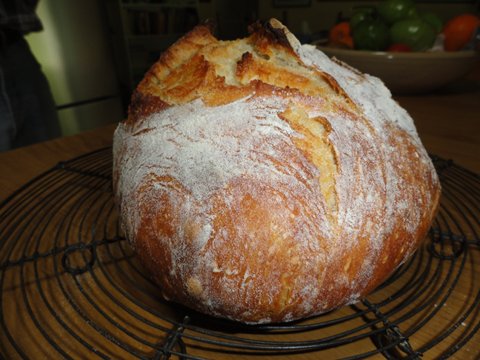
Bread is one of those foods that, when made with your own hands, gives a great deal of satisfaction and delight. It's only flour and water but it symbolises so much. I bake bread most days and use a variety of flours that I buy in bulk. Often I make a sandwich loaf because we use most of our bread for lunchtime sandwiches and for toast. Every so often I branch out to make a different type of loaf. I have tried sour dough in the past but I've not been happy with any of them. I'll continue to experiment with sour dough because I like the idea of using wild yeasts and saving the starter over a number of years to develop the flavour and become a part of the family. However, the loaf I've been branching out to most often is just a plain old five minute bread. By five minutes I mean it takes about five minutes actual work to prepare but it's the easiest of all bread to make and to get consistently good loaves from. If you're having people around for lunch or...
Image

This is my last post.

I have known for a while that this post was coming, but I didn't know when. This is my last post. I'm closing my blog, for good, and I'm not coming back like I have in the past.  I've been writing here for 16 years and my blog has been many things to me. It helped me change my life, it introduced me to so many good people, it became a wonderful record of my family life, it helped me get a book contract with Penguin, and monthly columns with The Australian Women's Weekly and Burke's Backyard . But in the past few months, it's become a burden. In April, I'll be 75 years old and I hope I've got another ten years ahead. However, each year I'll probably get weaker and although I'm fairly healthy, I do have a benign brain tumour and that could start growing. There are so many things I want to do and with time running out, leaving the blog behind gives me time to do the things that give me pleasure. On the day the blog started I felt a wonderful, h...
Image

What is the role of the homemaker in later years?

An email came from a US reader, Abby, who asked about being a homemaker in later years. This is part of what she wrote: "I am a stay-at-home mum to 4 children, ages 9-16. I do have a variety of "odd jobs" that I enjoy - I run a small "before-school" morning drop-off daycare from my home, I am a writing tutor, and I work a few hours a week at a local children's bookstore. But mostly, I cherish my blissful days at home - cooking, cleaning (with homemade cleaners), taking care of our children and chickens and goats, baking, meal-planning, etc. This "career" at home is not at all what I imagined during my ambitious years at university, but it is far more enriching. I notice, though, that my day is often planned around the needs of my family members. Of course, with 4 active kids and a husband, this is natural. I do the shopping, plan my meals, cook dinner - generally in anticipation of my family reconnecting in the evening.  I can't h...
Image

Every morning at home

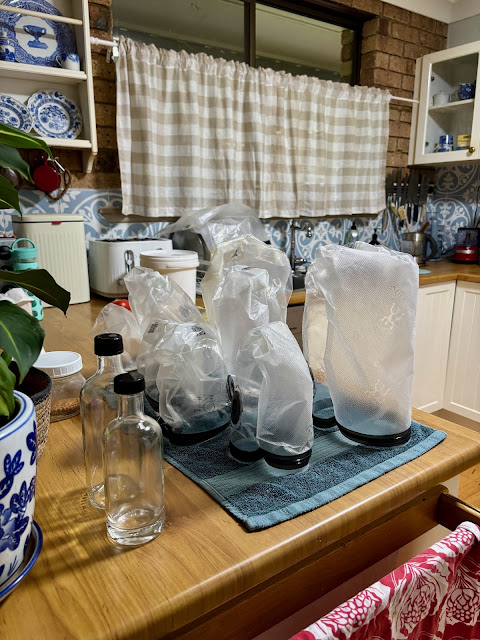
Every morning when I walk into my kitchen it looks tidy and ready for a day's work. Not so on this morning (above), I saw this when I walked in. Late the previous afternoon when I was looking for something, I came across my rolled up Zwilling vacuum bags and decided they had to be washed and dried. So I did that and although I usually put them outside on the verandah to dry it was dark by then. I turned the just-washed bags inside out and left them like this on a towel. It worked well and now the bags are ready to use when I bring home root vegetables, cabbages or whatever I buy that I want to last four or five weeks.
Image

You’ll save money by going back to basics

When I was doing the workshops and solo sessions, I had a couple of people whose main focus was on creating the fastest way to set up a simple life. You can't create a simple life fast, it's the opposite of that It's not one single thing either - it's a number of smaller, simpler activities that combine to create a life that reflects your values; and that takes a long to come together. When I first started living simply I took an entire year to work out our food - buying it, storing it, cooking it, preserving, baking, freezing, and growing it in the backyard. This is change that will transform how you live and it can't be rushed.  
Image


Trending Articles

NOT the last post

This will be my last post here.  I've been writing my blog for 18 years and now is the time to step back. I’ve stopped writing the blog and come back a couple of times because so many people wanted it, but that won’t happen again, I won’t be back.  I’ll continue on instagram to remain connected but I don’t know how frequent that will be. I know some of you will be interested to know the blog's statistics. 
Image

Every morning at home

Every morning when I walk into my kitchen it looks tidy and ready for a day's work. Not so on this morning (above), I saw this when I walked in. Late the previous afternoon when I was looking for something, I came across my rolled up Zwilling vacuum bags and decided they had to be washed and dried. So I did that and although I usually put them outside on the verandah to dry it was dark by then. I turned the just-washed bags inside out and left them like this on a towel. It worked well and now the bags are ready to use when I bring home root vegetables, cabbages or whatever I buy that I want to last four or five weeks.
Image

You’ll save money by going back to basics

When I was doing the workshops and solo sessions, I had a couple of people whose main focus was on creating the fastest way to set up a simple life. You can't create a simple life fast, it's the opposite of that It's not one single thing either - it's a number of smaller, simpler activities that combine to create a life that reflects your values; and that takes a long to come together. When I first started living simply I took an entire year to work out our food - buying it, storing it, cooking it, preserving, baking, freezing, and growing it in the backyard. This is change that will transform how you live and it can't be rushed.  
Image

Creating a home you'll love forever

Living simply is the answer to just about everything. It reduces the cost of living; it keeps you focused on being careful with resources such as water and electricity; it reminds you to not waste food; it encourages you to store food so you don't waste it and doing all those things brings routine and rhythm to your daily life. Consciously connecting every day with the activities and tasks that create simple life reminds you to look for the meaning and beauty that normal daily life holds.  It's all there in your home if you look for it. Seemingly mundane tasks like cleaning and cooking help you with that connection for without those tasks, the home you want to live in won't exist in the way you want it to.  Creating a home you love will make you happy and satisfied.
Image

Time changes everything

I've been spending time in the backyard lately creating a contained herb and vegetable garden. My aim is to develop a comfortable place to spend time, relax, increase biodiversity and encourage more animals, birds and insects to live here or visit. Of course I'd prefer my old garden which was put together by Hanno with ease and German precision. Together, we created a space bursting at the seams with herbs, vegetables and fruity goodness ready to eat and share throughout the year. But time changes everything. What I'm planning on doing now, is a brilliant opportunity for an almost 80 year old with balance issues. In my new garden I'll be able to do a wide range of challenging or easy work, depending on how I feel each day. It’s a daily opportunity to push myself or sit back, watch what's happening around me and be captivated by memories or the scope of what's yet to come.
Image

It's the old ways I love the most

I'm a practical woman who lives in a 1980’s brick slab house. There are verandahs front and back so I have places to sit outside when it's hot or cold. Those verandahs tend to make the house darker than it would be but they're been a great investment over time because they made the house more liveable. My home is not a romantic cottage, nor a minimalist modern home, it's a 1980’s brick slab house. And yet when people visit me here they tell me how warm and cosy my home is and that they feel comforted by being here. I've thought about that over the years and I'm convinced now that the style of a home isn't what appeals to people. What they love is the feeling within that home and whether it's nurturing the people who live there.
Image

Making ginger beer from scratch

We had a nice supply of ginger beer going over Christmas. It's a delicious soft drink for young and old, although there is an alcoholic version that can be made with a slight variation on the recipe. Ginger beer is a naturally fermented drink that is easy to make - with ginger beer you make a starter called a ginger beer plant and after it has fermented, you add that to sweet water and lemon juice. Like sourdough, it must ferment to give it that sharp fizz. To make a ginger beer plant you'll need ginger - either the powdered dry variety or fresh ginger, sugar, rainwater or tap water that has stood for 24 hours to allow the chlorine to evaporate off. You'll also need clean plastic bottles that have been scrubbed with soap, hot water and a bottle brush and then rinsed with hot water. I never sterilise my bottles and I haven't had any problems. If you intend to keep the ginger beer for a long time, I'd suggest you sterilise your bottles. MAKING THE STARTER In a...
Image

An authentic look at daily life here — unstaged and real

Most days Hanno was outside happily working in the fresh air. It may surprise you to know that I started reading my book,  Down to Earth , yesterday - the first time since I wrote it 13 years ago.  I had lent it to my neighbor, and when she returned it, I started reading, expecting to find surprises. Instead, I realised the words were still familiar—as if they were etched into my memory. As I flipped through the pages, I was reminded of how important it was for me to share that knowledge with others. The principles in Down to Earth changed my life, and I truly believed they could do the same for others. After just 30 minutes of reading, I put the book down, reassured that its message still holds true: we can slow down and reshape our lives, one step at a time.
Image