down to earth

  • Home
  • About Us
  • Down To Earth Book
  • Privacy Policy
Today's photos are from Vicky and Abby in Melbourne.   

My daughter and I live in Melbourne with my sister and her daughter, so we’re a household of little women! When we first started living together, there was a common idea of recycling, reusing containers, growing produce and buying produce from local farmers and generally living more environmentally and economically conscious. It wasn’t until we stumbled upon your blog that we could finally put a name to the type of lifestyle we’ve grown into. We are now proud to say we live frugally as best we can and we really enjoy discovering new ways to do this, via your blog. You really are an inspiration to us.

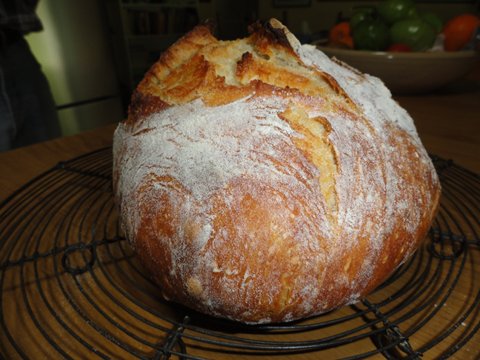
Anyway, I’ve sent you two photos; the first is of our kitchen dresser. This dresser is quite dear to us because for as long as I can remember it has been in our family. I assume our parents bought it sometime when we were children but I have fond memories of it, and when we were sourcing furniture for our new house, our parents offered to let us have it! This dresser sits next to our fridge, on the opposite side of the kitchen to the sink. This dresser houses most of our everyday kitchen needs, including bread, muffin and cake tins, plastic wear, drinking glasses and mugs and our everyday crockery. There’s all our organic fruit, the peaches from our garden. There’s also jars waiting to be sterilized, and what’s left of the loaf of bread I cooked this morning. There is also all our teas, which are houses in recycled jars, and a few other bits a bobs. This dresser gets used everyday and survives a lot of wear and tear from my daughter!

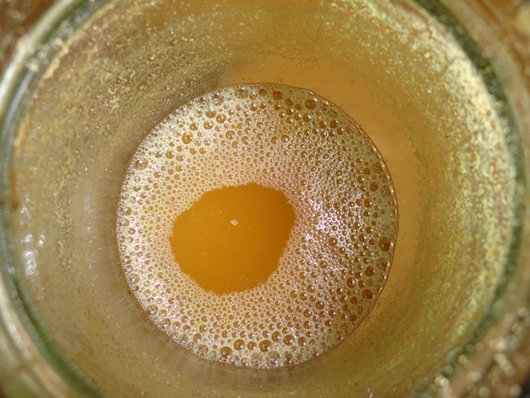
The second photo is of our kitchen sink area. Here is where most of my craft work is put to good use as I am thoroughly enjoying making dish cloths lately, There is one homemade dishcloth and one homemade scrubby in this photo, although there are many more. You can also a see a snap lock bag on the drain board drying out. This is one of our more daggy habits, but we just can’t justify throwing out a plastic bag that’s only had cheese, or vegetables in it for a few days. On the windowsill above the sink you can see our Earth dishwashing liquid, some hand wash (because we haven’t had time to try making your liquid soap yet), the eucalyptus and tea tree oils and our spray bottle of tea tree oil solution for general cleaning. There is also a new addition to the windowsill, a jar of pineapple vinegar, well the beginnings of it anyway. You can also see a spice rack which hold a few odd herbs as well as a couple of bits of things from the garden drying out, like lavender and a sprig of bay leaves which I found drying naturally on the bay tree. 

I hope you enjoyed finding out a little bit more about one of your readers, it’s more than pleasure to share this with you who have been such a guiding inspiration in most of the things you see in these photos.
We are back to a practical subject again today because I've been thinking about the word "germaphobe" and it scares me a little. I've come across this word a few times recently and I want to comment on it.  We all know it makes good sense to keep a clean house, to raise children to wash their hands before they eat and, in general, to maintain good levels of cleanliness in the home.  But you can be too clean.


Hang your dirty cloths and rags over the side of the laundry bin to dry while they're waiting to be washed.

Since television advertising started blabbing about the benefits of whiter than white and how we can rid our homes of germs, we've been brainwashed to believe that every germ is harmful, every germ must be killed and if we don't do that, we're not as good as our next door neighbours.  What hogwash!

There are many medical studies around now that assure us that exposing children to pets and normal household dirt is good for them.  It builds up the immune system and allows the body to naturally develop antibodies that fight those germs.  Back a few years, when I was growing up, and even when my boys were young in the 1980s it was common for children to play out side.  Out there, among the dirt, bugs and grass stains, not only were they having fun swinging on ropes and riding bikes,  they were building bone strength, muscle tissue and healthy immune systems.  Nowadays there is a tendency for children to play inside on computers and playstations, and inside is becoming increasingly clean.  We have gone from the common family home with a dirt floor in the 1800s to stainless steel and the war against germs now.

We are surrounded by millions of bacteria and viruses but only a small number actually cause us any harm, the rest we live with, have evolved with, and being exposed to them has probably helped build tolerance to many of them.  When we do our daily chores it's not necessary to rid the home of germs - it's impossible, and it's not a healthy option.  Now, I'm not advocating that we leave our sink dirty and not sweep the floor.  Of course we continue to do those things.  We also need to wipe handles, cupboard doors, remote controls, light switches etc, but we shouldn't be using antibacterial wipes.  Soap and water, vinegar or bicarb will do the trick.  Using bleach, peroxide or disinfectant every day is overkill.

Wash you dishcloths once or twice a week, depending on how dirty they are.  In between times, thoroughly rinse the cloth, wring it out and hang it over the tap or sink to dry.  Few bacteria can survive dry conditions, they need moisture to propagate and thrive.  Hang your dirty dishcloths and cleaning rags over the side of the laundry bin/basket so if they're wet they can dry out and not sit in the pile of dirty laundry, wet, waiting for a few days to be washed.

Take the pressure off yourself to kill germs, your aim should be to have a clean home.  You'll never eliminate germs completely.  So relax, put the bleach bottle away, stop buying the antibacterial wipes and allow the short sharp exposure to pathogens in the normal home to build your immune system.  If you do that, your immune system will not only protect you from colds and flu but also from more sinister ailments.

ADDITIONAL READING
Getting the dirt on germs.
Can you be too clean? 

PS:  I'm officially on holidays for three weeks! I'm really looking forward to the extra time at home and all that will hold for Hanno and I.  We have our big family gathering on Sunday, we're really looking forward to that.  I'll be writing my blog over the holidays and I thought it might be a good time to ask you to suggest topics.  I'll be doing a new bread baking tutorial soon but I'm open to other suggestions too.

I enjoyed your post. I'm wondering, though, how much your slower more deliberate life is possible because your children are grown and gone? I have tried to be more deliberate in my life, but I have children and I teach them at home. It's certainly a challenge to take from your posts and apply them to my busy life, but I have learned from you and the others. What's really working for me is to take one change at a time. That was great advice. ~ Anonymous


This is a comment from those made yesterday.  I'm sorry I can't name the person who wrote as she is only know to me as anonymous.  Anonymous, I wanted to address your comment today because I think "living deliberately" can confuse some of us.  My interpretation of deliberate living is that I have intentionally taken my life in the direction of my values.  I needed to sit and think, and  I needed to work out for myself what was important to me.  I knew how I didn't want to live, but what exactly did I want?   When I changed, I knew I didn't want to keep spending and rushing around like a loon but I had to replace that with something, and that required me to decide on what my core values were and how I could live by those values.

Essentially, I deliberately focused on my values - generosity, kindness,  independence, self reliance, self respect and respect for others - and I made my everyday life reflect those values.  That, to me, is living deliberately.  You make a deliberate decision to live a certain way and every day make sure your life stays true to that.  It sounds like a huge commitment, and it is, but it is done in small steps, every day, without fail, deliberately following that path.


I read Walden by Henry David Thoreau about 15 years ago, well before I made my changes towards simplicity.  I have no doubt that book, and in particular this quote below, influenced me more than anything else; although I didn't know it at the time and only made that discovery in retrospect.

I went to the woods because I wished to live deliberately, to front only the essential facts of life, and see if I could not learn what it had to teach, and not, when I came to die, discover that I had not lived. I did not wish to live what was not life, living is so dear; nor did I wish to practise resignation, unless it was quite necessary. I wanted to live deep and suck out all the marrow of life, to live so sturdily and Spartan-like as to put to rout all that was not life, to cut a broad swath and shave close, to drive life into a corner, and reduce it to its lowest terms, and, if it proved to be mean, why then to get the whole and genuine meanness of it, and publish its meanness to the world; or if it were sublime, to know it by experience ... 

It still takes my breath away to read those words.  I am trying to live deep and to suck all the marrow out of life; I want to know if life is mean or sublime, and I want to know it by experience.  I do not want to read about it in a magazine or a blog, I want to truly experience my life every day, and every day it is deliberately focused on the values I want to live by.

Now to answer your question: I'm wondering, though, how much your slower more deliberate life is possible because your children are grown and gone?  Living deliberately isn't reliant on who is living in your house. It is the decision to discover your real values and live them, on purpose, everyday. That is important when you're raising children. You want them to reflect and live to your values until they have grown and are capable of making a sound decision for themselves on how they want to live. Hopefully, by that stage, your life and the way they were raised will influence them towards the kind of life you want for them. So for instance, deliberate living would be to decide you want to pay off your debt: you want to homeschool your children: you want to instil in them the values of care for others, kindness and generosity; you want to be healthy and connect with nature. Once those decisions on values (whatever they are) are made, everyday from then on, you would make sure your every day life reinforced those ideals, and deliberately move your family towards them. Every day you would deliberately work towards the outcomes you want by the way you homeschool, the behaviour you model for your children and the example your life sets for those young eyes.  You would make sacrifices to pay off debt, even when it's difficult, you would continue to homeschool, you would plan into your homeschooling a few nature days and read books about the natural world.  You would do all that deliberately - even when it's difficult to do.


Slowing down is another aspect of a simple life.  It's concentrating on the task at hand and being mindful.  It doing and knowing and experiencing what you're doing, and not thinking about what you'll do later in the day.  I've written about slowing down before so I won't repeat that again now.  I hope I've answer your question.

Walden, and in particular the quote above did more for my resolve to live as I do than anything else I've read.  As I said I read it many years ago, but reread it when I started to live a slower and more deliberate life.  That second reading made me certain of the truth of Thoreau's words and I have tried to live true to them ever since.  Walden is available free online here.   I have it quietly tucked away on my computer and frequently revisit it.  It is fine inspiration.  It's not an easy read because it is written in the vernacular of the 19th century, but if you decide to take it on, I'm sure you be rewarded for the effort.  It would be a great holiday project to read a little bit of Walden every day and if you do that, I hope you gain as much as I did from it.
Around our neck of the woods a typical day goes something like this. I rise at 4 and write until the dogs want to go outside, I let them out, feed them and the cat,  then go into the garden to let the chickens out to free range for the day. I count them all, check they have water, and encourage them to have a wonderful egg-filled day. "I will still love you if you don't give me an egg, but don't push your luck too far," I say.


Inside again, I finish off my writing and when Hanno gets up, I make breakfast. After we eat, I clean up the kitchen, put bread on to rise, make the bed, sweep the floor and get ready for whatever the day may hold. Hanno will work in the yard most of the day. He has his projects and the garden and he'll talk to the chooks, the dogs and our neighbours, and generally keep the place neat, tidy and in good working order. I will write, check the forum, and in between times, I'll do bits of housework, sewing, mending, knitting, baking or making soap or cleansers. It depends on what is needed in our home as to what I actually do.

Lunch comes along and usually it's fresh bread with salad from the garden or boiled eggs with soft golden yolks. After lunch we sometimes have a little nap and then I write again, or sew, or make household goods. Hanno will sometimes read the online newspaper or check out some of his German or news sites. It's an easy way to spend each day - our days are filled with our necessities but the pace is relaxed and gentle. Friends and family phone or call in, we have breaks when we want them. This is living how it should be - we are not stressed and we are productive.  One thing is for sure, it is never boring. It just gets better with each passing day, we are more settled, more grateful and closer to each other because of the time spent working towards our common goal - self reliance.


We are fortunate in that we have no debt. Hanno is on an old age pension and I still get paid for my writing. We are both pleased that I am able to earn that money from home. Of course, no simple life can be truly simple without making the decision to dramatically reduce the amount of money spent. The less we spend, the less we have to work and the more time we have for real living. There is an incredible sense of freedom that comes with not having to work. I still do my volunteering, that feeds my soul and I'd be a lessor person without it. The pay off for me is in feeling useful, being able to use my brain in interesting and innovative ways and meeting the wonderful people who walk through the door. I am enriched by the work I do there and I can say with certainty that it is one of the most rewarding things I've ever done. I can do that work because I'm not tied down to a job.


Even though there are many things to be done in each day, the practical day to day things are not the whole story of simplicity. Practicality and the work that goes with it is just one piece of the puzzle. You have to look inside yourself for the other pieces. Ask yourself if you're really living the life that will make you happy and fulfilled. Everyone's idea of happiness is different but if you're not even close to what you hoped for yourself and your family, you should start thinking about changes.

Most of us have made a real effort of get off the consumerism roller coaster, if you don't you're just playing at this. Spending is the one true gauge of authenticity. If you're still spending on non-essentials while you're paying off debt, you're not going to reach those simple life goals anytime soon.


You have to slow down too. This was the hardest thing for me. I was a chronic multi-tasker, I always had plenty of things on the go at the one time and often I felt overworked and unappreciated. Now that I've slowed myself, I can be busy without feeling like I'll never get it all done. I take my time with each part of what I'm doing and I concentrate on my job at hand and not on what will come later. It's made all the difference and eliminated those feelings of being rushed all the time.

One thing is for sure, simplifying will always give you more work to do, it is never the other way around. But this is a different kind of work. It's work that will fulfil you and make your life richer because what you're doing is building self-reliance into your life. Instead of relying on others to make what you need, instead of going to the store to buy your food, you will be able to do a lot of that yourself. That builds self-confidence which makes you believe you're capable of doing more and more.


You will never be in the ideal place to start living simply. Often the move towards it comes when things are really chaotic in your life, you might have lost your job, had a baby, become ill or maybe you're just fed up with life on the roller coaster. You don't have to move to another location, everyone can start simplifying right where they are now. All it requires is for you to stop spending, to re-evaluate your life and to clarify what it is you want from life. The only thing that will be handed to you on a silver platter will be the one size fits all notion that you can spend your way to success and that being is debt is "normal". Everything else requires thought and planning. I'm here to tell you it's confronting, difficult and challenging. But if you can change, if you decide to focus on quality of life rather than the quantity of stuff you own, if you can break out of the mould that mainstream society has encased you in, then you'll have the chance to live a life like no other. Is the time right for you?

Today we travel south from where I live to visit Rose's kitchen in NSW, south of Sydney.


Rose says:  "Mid-week, mid-evening peace. The day's work is done, the kitchen's ready for an early start. A tea towel sits ready for washing, the Italian coffee maker (right) is ready for morning espresso. There is bench space to make everyone's lunches.

A clean sink starts the day right, I don't agonise over the spots."


Thanks for sharing with us, Rose.
Today our kitchen travels take us to Arizona, to Marcia's kitchen in Wilhoit.


Marcia writes: "I love reading your blog.  I, too, live a frugal and sustainable life.  I must admit though, I love your tutorials.  I plan on making my first batch of soap this week.  I submit the following two photos of my kitchen.  They consist of the left and right side.  The back door separates the two sides."


Marica, another lovely old-fashioned kitchen. It reminds me a bit of my grandma's kitchen. She had a stone sink and her bits and pieces out were they would be used.  Thanks for sharing your kitchen with us.

We all know that buying disposable products adds not only many dollars to our grocery bill but also to our carbon emissions.  Luckily, disposing of disposables is quite easy once you set your mind to it.  Many of us here cut up old towels, sheets etc for rags and dishcloths.  Many of us knit dishcloths.  We can use newspaper to wipe out frying pans, then wash the pan, instead of using paper towels.  The beauty of using rags for cleaning is that you can compost them if you wipe up something really horrible.  We are still buying tissues and toilet paper but maybe there will come a day when we don't.

Yesterday I cleaned some of my brushes, which is part of my non-disposables home routine.  I try to keep my makeup brushes, hair brushes, toothbrushes and cleaning brushes going for as long as possible.  So far, I've had my hair brush for over 30 years.

To clean a hairbrush like mine, which is plastic/resin, pull out the hairs in the brush, rub the brush on a bar of soap and rub the brush over the palm of your hand.  This cleans through the bristles without bending them too much or breaking them.  Run the brush under the tap to remove the soap, then soak it in a bowl of warm water with a tablespoon of peroxide added.  If you don't have peroxide, use level tablespoon of your oxy-bleach power, like Napisan or OxiClean.  I soak mine overnight, then rinse it in clean water and allow to dry naturally.

There is a recommendation to replace toothbrushes when they're frayed or every three to four months.  Like most brushes, toothbrushes can hold a lot of germs.  So in between replacements, soak your toothbrushes in a small bowl of water with half a tablespoon of peroxide.  Peroxide is available at some supermarkets or at the chemist/drugstore.  You'll notice there may be a bit of foaming around the bristle, that just means the peroxide is cleaning them.  After an hour, rinse in clean water and place back in the rack, making sure they don't touch each other.  ADA toothbrush care recommendations.

Makeup brushes need to be cleaned regularly.  You use these brushes on your eyes and skin so they must be kept clean.  Be gentle with these brushes as often they're made of sable or other animal hair and they can be damaged with rough treatment.  I wet the brush, rub it over my homemade soap and rub it around the palm of my hand to get into the bristles.   You may need to do this a few times, depending on how dirty the brush is.  Rinse the brush in clean water, shake out as much water as possible, then lay it on a clean towel to dry.


My cleaning and scrubbing brushes are mostly wooden. I soak them for half and hour in a bucket with a tablespoon of liquid bleach added to half a bucket of water.  Rinse when the half hour is up, then dry in the sun, or outside in the shade until dry.  Don't leave wooden brushes to soak or stay in the sun too long.  It's not good for them.

Cleaning your brushes is one of those tasks that requires you to exercise your common sense.  If you have a pure bristle brush you can use the above treatment for hair brushes but don't let the brush soak or you'll damage the bristles.  Make sure you shake it well to remove as much of the water as you can, then lay it on its back - not on the bristle - to dry naturally.  Don't dry it with the hair dryer.  If you have antique or very old brushes, treat them as you would your pure bristle brushes.  They can and should be cleaned, but be very gentle with them.

Looking after your brushes and cleaning them regularly will extend the life of most brushes.  Part of this simple style of living is to use as little as possible and to look after what you already own.  The humble brush is a part of your household armoury, look after them and they serve you long and well.

Thank you for your visits and comments this week.  I appreciate your comments, they assure me that others are with us in this swim against the tide.  I hope you enjoy your weekend.  Don't forget there will be kitchen sink photos on Saturday and Sunday.  Take care.


Today's kitchen sink photos come from Jillian.  Thanks for sending them Jillian.  She says:


"I have included a photo of our kitchen sink, which although rather outdated, is still perfectly functional, and I wonder how many meals have been prepared upon it."


"The leadlight cupboard (below) is one that we bought in a hurry when we moved house, after finding that the previous owners took some of the kitchen cupboards when they moved. It has been with us for over eight years, now, and it serves us well. Although we have moved house several times since then, the cupboard has stayed with us, and has travelled from Laura to Georgetown, to Tumby Bay and to our present location in the mid-north of South Australia. Imagine the tales it could tell if only it could talk!"


Jillian's links are homeschooling4christ and Australian Secondhand Homeschool Curriculum and Books

Last week I said to stop sending these photos because I had enough to last until February.  It's been so popular, I've decided to post kitchen sink photos on Thursdays as well as the weekend.  So, if you wanted to send your photos, please do.  I would like a photo of your kitchen sink and a photo of your kitchen - hopefully with the sink in it so we have a general idea of the layout of your kitchen.  Send to rhondahetzel at gmail dot com

Please don't forget to comment.  A comment is like payment for the time taken to post, and in this case in sending in the photos.  Many of us were enthusiastic about this series, so make sure all the photos get a good number of comments.  I don't want any of the ladies sending in photos to regret joining in.  Thank you friends.

Newer Posts Older Posts Home


My books were all published by Pengiun, and are available at Amazon US, Amazon UK and Amazon Au

Search here

Total Pageviews

Translate


I'm Rhonda Hetzel and I've been writing my Down to Earth blog since 2007. Although I write the occasional philosophical post, my main topics include home cooking, happiness and gardening as well as budgeting, baking, ageing, generosity, mending and handmade crafts. I hope you enjoy your time here.

MY FAVOURITE PLACES

  • Grandma Donna's Place
  • Grandma Donna's YouTube
  • Grandma Donna's Instagram
  • This Simple Day
  • Nicole's Instagram

Give More

Give More

Popular posts last year

Making ginger beer from scratch

We had a nice supply of ginger beer going over Christmas. It's a delicious soft drink for young and old, although there is an alcoholic version that can be made with a slight variation on the recipe. Ginger beer is a naturally fermented drink that is easy to make - with ginger beer you make a starter called a ginger beer plant and after it has fermented, you add that to sweet water and lemon juice. Like sourdough, it must ferment to give it that sharp fizz. To make a ginger beer plant you'll need ginger - either the powdered dry variety or fresh ginger, sugar, rainwater or tap water that has stood for 24 hours to allow the chlorine to evaporate off. You'll also need clean plastic bottles that have been scrubbed with soap, hot water and a bottle brush and then rinsed with hot water. I never sterilise my bottles and I haven't had any problems. If you intend to keep the ginger beer for a long time, I'd suggest you sterilise your bottles. MAKING THE STARTER In a...
Image

NOT the last post

This will be my last post here.  I've been writing my blog for 18 years and now is the time to step back. I’ve stopped writing the blog and come back a couple of times because so many people wanted it, but that won’t happen again, I won’t be back.  I’ll continue on instagram to remain connected but I don’t know how frequent that will be. I know some of you will be interested to know the blog's statistics. 
Image

How to make cold process soap

I'm sure many of you are wondering: "Why make soap when I can buy it cheaply at the supermarket?" My cold process soap is made with vegetable oils and when it is made and cured, it contains no harsh chemicals or dyes. Often commercial soap is made with tallow (animal fat) and contains synthetic fragrance and dye and retains almost no glycerin. Glycerin is a natural emollient that helps with the lather and moisturises the skin. The makers of commercial soaps extract the glycerin and sell it as a separate product as it's more valuable than the soap. Then they add chemicals to make the soap lather. Crazy. Making your own soap allows you to add whatever you want to add. If you want a plain and pure soap, as I do, you can have that, or you can start with the plain soap and add colour, herbs and fragrance. The choice is yours. I want to add a little about animal and bird fat. I know Kirsty makes her soap with duck fat and I think that's great. I think t...
Image

Preserving food in a traditional way - pickling beetroot

I've had a number of emails from readers who want to start preserving food in jars but don't know where to start or what equipment to buy.  Leading on from yesterday's post, let's just say up front - don't buy any equipment. Once you know what you're doing and that you enjoy preserving, then you can decide whether or not to buy extra equipment. Food is preserved effectively without refrigeration by a variety of different methods. A few of the traditional methods are drying, fermentation, smoking, salting or by adding vinegar and sugar to the food - pickling. This last method is what we're talking about today. Vinegar and sugar are natural preservatives and adding one or both to food sets up an environment that bacteria and yeasts can't grow in. If you make the vinegar and sugar mix palatable, you can put up jars of vegetables or fruit that enhance the flavour of the food and can be stored in a cupboard or fridge for months. Other traditional w...
Image

Cleaning mould from walls and fabrics

With all this rain around we've developed a mould problem in our home. Usually we have the front and back doors open and that good ventilation stops most moulds from establishing. However, with the house locked up for the past week, the high humidity and the rain, mould is now growing on the wooden walls near our front door and on the lower parts of cupboards in the kitchen. Most of us will find mould growing in our homes at some point. Either in the bathroom or, in humid climates, on the walls, like we have now. You'll need a safe and effective remedy at some point, so I hope one of these methods works well for you. Mould is not only ugly to look at, it can cause health problems so if you see mould growing, do something about it straight away. The longer you leave the problem, the harder it will be to get rid of it effectively. If you have asthma or any allergies, you should do this type of cleaning with a face mask on so you don't breathe in any spores. Many peopl...
Image

Five minute bread

Bread is one of those foods that, when made with your own hands, gives a great deal of satisfaction and delight. It's only flour and water but it symbolises so much. I bake bread most days and use a variety of flours that I buy in bulk. Often I make a sandwich loaf because we use most of our bread for lunchtime sandwiches and for toast. Every so often I branch out to make a different type of loaf. I have tried sour dough in the past but I've not been happy with any of them. I'll continue to experiment with sour dough because I like the idea of using wild yeasts and saving the starter over a number of years to develop the flavour and become a part of the family. However, the loaf I've been branching out to most often is just a plain old five minute bread. By five minutes I mean it takes about five minutes actual work to prepare but it's the easiest of all bread to make and to get consistently good loaves from. If you're having people around for lunch or...
Image

This is my last post.

I have known for a while that this post was coming, but I didn't know when. This is my last post. I'm closing my blog, for good, and I'm not coming back like I have in the past.  I've been writing here for 16 years and my blog has been many things to me. It helped me change my life, it introduced me to so many good people, it became a wonderful record of my family life, it helped me get a book contract with Penguin, and monthly columns with The Australian Women's Weekly and Burke's Backyard . But in the past few months, it's become a burden. In April, I'll be 75 years old and I hope I've got another ten years ahead. However, each year I'll probably get weaker and although I'm fairly healthy, I do have a benign brain tumour and that could start growing. There are so many things I want to do and with time running out, leaving the blog behind gives me time to do the things that give me pleasure. On the day the blog started I felt a wonderful, h...
Image

What is the role of the homemaker in later years?

An email came from a US reader, Abby, who asked about being a homemaker in later years. This is part of what she wrote: "I am a stay-at-home mum to 4 children, ages 9-16. I do have a variety of "odd jobs" that I enjoy - I run a small "before-school" morning drop-off daycare from my home, I am a writing tutor, and I work a few hours a week at a local children's bookstore. But mostly, I cherish my blissful days at home - cooking, cleaning (with homemade cleaners), taking care of our children and chickens and goats, baking, meal-planning, etc. This "career" at home is not at all what I imagined during my ambitious years at university, but it is far more enriching. I notice, though, that my day is often planned around the needs of my family members. Of course, with 4 active kids and a husband, this is natural. I do the shopping, plan my meals, cook dinner - generally in anticipation of my family reconnecting in the evening.  I can't h...
Image

Every morning at home

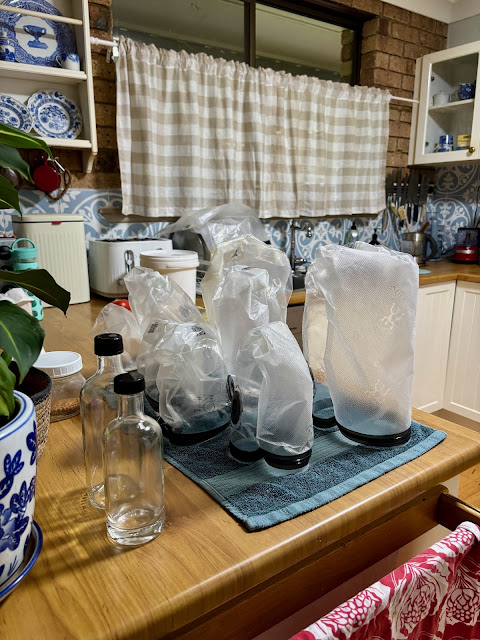
Every morning when I walk into my kitchen it looks tidy and ready for a day's work. Not so on this morning (above), I saw this when I walked in. Late the previous afternoon when I was looking for something, I came across my rolled up Zwilling vacuum bags and decided they had to be washed and dried. So I did that and although I usually put them outside on the verandah to dry it was dark by then. I turned the just-washed bags inside out and left them like this on a towel. It worked well and now the bags are ready to use when I bring home root vegetables, cabbages or whatever I buy that I want to last four or five weeks.
Image

You’ll save money by going back to basics

When I was doing the workshops and solo sessions, I had a couple of people whose main focus was on creating the fastest way to set up a simple life. You can't create a simple life fast, it's the opposite of that It's not one single thing either - it's a number of smaller, simpler activities that combine to create a life that reflects your values; and that takes a long to come together. When I first started living simply I took an entire year to work out our food - buying it, storing it, cooking it, preserving, baking, freezing, and growing it in the backyard. This is change that will transform how you live and it can't be rushed.  
Image


Trending Articles

NOT the last post

This will be my last post here.  I've been writing my blog for 18 years and now is the time to step back. I’ve stopped writing the blog and come back a couple of times because so many people wanted it, but that won’t happen again, I won’t be back.  I’ll continue on instagram to remain connected but I don’t know how frequent that will be. I know some of you will be interested to know the blog's statistics. 
Image

Every morning at home

Every morning when I walk into my kitchen it looks tidy and ready for a day's work. Not so on this morning (above), I saw this when I walked in. Late the previous afternoon when I was looking for something, I came across my rolled up Zwilling vacuum bags and decided they had to be washed and dried. So I did that and although I usually put them outside on the verandah to dry it was dark by then. I turned the just-washed bags inside out and left them like this on a towel. It worked well and now the bags are ready to use when I bring home root vegetables, cabbages or whatever I buy that I want to last four or five weeks.
Image

You’ll save money by going back to basics

When I was doing the workshops and solo sessions, I had a couple of people whose main focus was on creating the fastest way to set up a simple life. You can't create a simple life fast, it's the opposite of that It's not one single thing either - it's a number of smaller, simpler activities that combine to create a life that reflects your values; and that takes a long to come together. When I first started living simply I took an entire year to work out our food - buying it, storing it, cooking it, preserving, baking, freezing, and growing it in the backyard. This is change that will transform how you live and it can't be rushed.  
Image

Creating a home you'll love forever

Living simply is the answer to just about everything. It reduces the cost of living; it keeps you focused on being careful with resources such as water and electricity; it reminds you to not waste food; it encourages you to store food so you don't waste it and doing all those things brings routine and rhythm to your daily life. Consciously connecting every day with the activities and tasks that create simple life reminds you to look for the meaning and beauty that normal daily life holds.  It's all there in your home if you look for it. Seemingly mundane tasks like cleaning and cooking help you with that connection for without those tasks, the home you want to live in won't exist in the way you want it to.  Creating a home you love will make you happy and satisfied.
Image

Time changes everything

I've been spending time in the backyard lately creating a contained herb and vegetable garden. My aim is to develop a comfortable place to spend time, relax, increase biodiversity and encourage more animals, birds and insects to live here or visit. Of course I'd prefer my old garden which was put together by Hanno with ease and German precision. Together, we created a space bursting at the seams with herbs, vegetables and fruity goodness ready to eat and share throughout the year. But time changes everything. What I'm planning on doing now, is a brilliant opportunity for an almost 80 year old with balance issues. In my new garden I'll be able to do a wide range of challenging or easy work, depending on how I feel each day. It’s a daily opportunity to push myself or sit back, watch what's happening around me and be captivated by memories or the scope of what's yet to come.
Image

It's the old ways I love the most

I'm a practical woman who lives in a 1980’s brick slab house. There are verandahs front and back so I have places to sit outside when it's hot or cold. Those verandahs tend to make the house darker than it would be but they're been a great investment over time because they made the house more liveable. My home is not a romantic cottage, nor a minimalist modern home, it's a 1980’s brick slab house. And yet when people visit me here they tell me how warm and cosy my home is and that they feel comforted by being here. I've thought about that over the years and I'm convinced now that the style of a home isn't what appeals to people. What they love is the feeling within that home and whether it's nurturing the people who live there.
Image

Making ginger beer from scratch

We had a nice supply of ginger beer going over Christmas. It's a delicious soft drink for young and old, although there is an alcoholic version that can be made with a slight variation on the recipe. Ginger beer is a naturally fermented drink that is easy to make - with ginger beer you make a starter called a ginger beer plant and after it has fermented, you add that to sweet water and lemon juice. Like sourdough, it must ferment to give it that sharp fizz. To make a ginger beer plant you'll need ginger - either the powdered dry variety or fresh ginger, sugar, rainwater or tap water that has stood for 24 hours to allow the chlorine to evaporate off. You'll also need clean plastic bottles that have been scrubbed with soap, hot water and a bottle brush and then rinsed with hot water. I never sterilise my bottles and I haven't had any problems. If you intend to keep the ginger beer for a long time, I'd suggest you sterilise your bottles. MAKING THE STARTER In a...
Image

An authentic look at daily life here — unstaged and real

Most days Hanno was outside happily working in the fresh air. It may surprise you to know that I started reading my book,  Down to Earth , yesterday - the first time since I wrote it 13 years ago.  I had lent it to my neighbor, and when she returned it, I started reading, expecting to find surprises. Instead, I realised the words were still familiar—as if they were etched into my memory. As I flipped through the pages, I was reminded of how important it was for me to share that knowledge with others. The principles in Down to Earth changed my life, and I truly believed they could do the same for others. After just 30 minutes of reading, I put the book down, reassured that its message still holds true: we can slow down and reshape our lives, one step at a time.
Image