down to earth

  • Home
  • About Us
  • Down To Earth Book
  • Privacy Policy
You all know by now I love my stockpile. It has helped us save a lot of money over the years but it's also helped me organise myself and it's stopped us wasting time at the supermarket every week. Now we shop monthly, but we could easily go a lot longer than that without shopping.


Most of my stockpile is kept in a cupboard right next to my kitchen. It's convenient and easy to check and clean. My pantry is in the kitchen. When anything is taken from the stockpile and opened, it is either eaten straight away or what remains in the packet, jar or tin is poured into a glass jar and stored in the pantry or the fridge. But I also store packs of rice, lentils, nuts, grains, cereal, flour etc in our chest freezer - that sits in our second bathroom. Again, when we open a pack, it is transferred to the pantry and sits in a glass jar.


Most of the jars I use are canning/preserving jars but I also have a number of jars my chef sons have saved for me from their work places. These used to be large catering packs of pickles/gherkins/olives etc and they hold around two litres/quarts. They're very handy for storing rice, self raising flour or dry pasta noodles, which we use in Alice's food. I also recycle old jam and honey jars and although I used them mostly for the jams I put up, they're also handy for small amounts of beans or lentils.


Every pantry needs a few large containers that will safely hold about 5 kilos (12lb) I have a few icing buckets I got from my local baker and a couple of Decor bins that are currently holding groats and plain white flour. My icing buckets hold a couple of types of bread flours, it's mixed grain and rye at the moment. If you go searching for recycled bins and containers make sure you only use food grade containers. A good rule of thumb is that if a manufacturer originally used it to hold food, it's probably food grade. Most old food containers are safe to use, make sure the lids fit properly and if it has a metal lid, it's not rusty and has no small holes.


If you're in the process of establishing a stockpile it's a good idea to see it as an investment - both of time and money. Like any investment you need to look after it. ALWAYS be on the lookout for pantry moths. They're a small brown moth that can be brought into your home in newly purchased bags of grain, flour or rice. Putting dried good in the freezer for a few days when you first bring them home will kill any lurking eggs or larvae waiting to hatch out. But still be on the lookout for them because they can fly into your home and lay eggs in your uncovered and poorly stored goods.


Make sure everything you open is stored in a container that can be properly sealed. You don't have to have everything matching, I quite like the madness of my pantry with jars of all different shapes and sizes. We have a wonderful topic over at the forum where you can see photos of stockpiles and add photos of your own if you wish.


Your stockpile cupboard and pantry should be emptied and cleaned out at least every six months. When you remove the items, check the contents of jars and make sure everything is in order. Wipe over the shelves and inside walls of the cupboard, wipe dry and replace everything. Some ladies use bay leaves and other herbs to keep bugs at bay but I've always found that if I store my larger packs of dried goods in the freezer or freeze them for a few days they're fine.

If you haven't thought about stockpiling yet, I encourage you to do so. It works well at our home - for just the two of us - and it would be an even greater money and time saver for a larger family. I've written more about stockpiling here, here and here.

And now I'm off to get ready for work. It will be very exciting there today because we have the nutrition students from the local university coming up to talk about eating local and sustainable foods and to show us how to cook frugal meals using local ingredients. :- )

Thank you so much for the thought and consideration you put into yesterday's post. The young lady in question emailed overnight to say she was quite overwhelmed with the response. She doesn't live in Australia or the US and asked that I not say where she is from. She said both she and her husband read every comment and they had a good talk about their situation. Things aren't looking so grim for them now and they feel they have a direction to head in, whereas before they were quite confused. So thank you for your thoughts, you helped a couple who needed to read them.


Carrying on from yesterday's post I thought it would be a good opportunity to explore the feelings connected with being at home and knowing that you make your own home what it becomes - be that good or not so good.


I've written before that housekeeping and homemaking were very low on my list of priorities when I first came home for good. I say 'came home' because up until that point, my home wasn't what it is now - it was just a place to sleep and invite people around to if we didn't go out. Pathetic. I'm wiser now, my home has taught me many things, including that if I didn't take the time to be at home, if I didn't fluff my nest and make it the warm and secure place I wanted it to be, no one else would and I would continue to search shopping malls for junk to make me feel better.


That split second when you suddenly realise that home is not the enemy and that looking after it is an act of love for all your family and a gift to yourself, is a powerful moment of absolute clarity and insight. You're aware that you make your home what it will be, no one else will do that but you, and whatever work you put into your home will be a reflection of you. It is an opportunity and a challenge. It will show what is important in your life, it will highlight those things you treasure, and, in turn, will reflect your tastes and interests to all who visit you.


When you realise that your home is your work in progress you are given the opportunity to make it the comfortable and protected place that all families need to relax, renew their energy, and grow closer to each other. The real challenge here is when you don't have a lot of money to spend but want a cosy, interesting and welcoming home. Most young couples fall into this area and the trick is not to fall for all the advertising hype and rush to charge up your credit card with the latest fashionable furniture. Smart couples search op shops, thrift stores and road side throw outs for bits and pieces that will suit their purpose. They build their homes on older furniture that is either free or very inexpensive and then modify it to suit themselves. The end result is a home unlike a million others who fell for the advertising. They have the satisfaction of working together to find what they need, and no credit card debt. My own son and his new wife are doing this right now. They have our old lounge suite and picked up a dining suite from a road side throw out. Their home is a delight to visit, it's comfortable, inviting and interesting. We are going there for lunch on Thursday and I'm looking forward to it very much. Working together through hard times is one of those things that draws couples together, it bonds them like nothing else.

But the furniture and bits and pieces you put in a home are not the full story. This story is completed by the work done by the homemaker and the feeling of contentment that comes from it. And whether you're a homemaker who does most of the work in the family home or if you're the delegator of chores and director of operations, the result is the same. A functional and secure home will nurture all who live there.


When I worked for a living and shopping was part of my recreation I used to be bored if I stayed at home. I wondered what on earth homemakers did all day. Now I know. I was lucky enough to wake up to myself, ditch the shopping and return to my home wholeheartedly. And anyone can do that - those who work outside the home and those who work in it. Accepting the power you have to make your home what is can be, to provide nutritious food, to shop according to your budget, to keep a clean home, to teach young children that everyone contributes to the welfare of the family by doing chores and helping, to look after what you own, to mend, recycle and reuse what you can, to live in an environmentally sound way and to express the love you feel for your family within the confines of a safe and peaceful home is the true gift of a homemaker.

You make your home what it becomes - it is your work in progress.


Hanno asked me to thank you all for the lovely birthday wishes sent his way on the weekend. He is 69 now, the last year of his boyhood. Next year he'll have to start acting more sensibly. ; - 0 We drove down to the beach to have lunch with our friend Diane and god-daughter Casey. For those of you who remember Casey's accident (she was in a bus hit by a drunk driver two years ago), she is still in a wheelchair and has not been able to work since. But it's always good to see them, they are two of our most favourite people, and we talked and laughed for hours over lunch and drinks. Hanno is a member of this club and they had sent him a letter wishing him a happy birthday, offering a complimentary lunch and drink; of course we took up the offer. It was definitely a good way to spend a weekend birthday.


The Christmas knitting has been stepped up a notch. This is a pure cotton and bamboo (the aqua bit) dishcloth.

I received an email last week from a young lady here who is very upset about the prospect of losing her job. She wanted to know what I thought her best course of action would be and asked me to help her and her husband through this difficult time. I sent her a reply telling her my thoughts but said I would also post about it today and see if all of us could workshop this problem for her. Together we should cover all angles.

This girl is 29 years old, married for two years, pregnant and due to have their first baby in February next year. The pregnancy was planned, what they didn't plan on was that she would lose her job before she had a chance to resign. Her job finishes mid-October and she will get a payout of about $4000. Her husband has a good job that is stable, which is good news, but they have nothing for the baby yet and they don't have a stockpile.

I suggested that from now on, even though she is still being paid, they live on his wage. They might as well get used to it now and be ready when they only have one stream of money coming in. Her wage should go in the bank until they work out a plan of action. I think the priority is to sit down and make up a new budget - a realistic one that covers two adults and a baby. They only have five months until the baby arrives and during that time they'll be equipping the nursery, buying and making clothes, blankets etc. When they sit down to do the budget, they'll have to work out what they can get rid of. They have two cars, three phones - one landline and two mobiles, pay TV, no stockpile, no emergency fund, no health insurance and nothing ready for the baby.


The beginnings of some muesli bars made on the weekend.

It sounds pretty grim but the husband gets a good wage that I feel should be enough to get them by and pay the mortgage as long as they sacrifice a few things and live frugally. She said they are committed to living a green and simple life but have just made that decision; she found us and this blog two weeks ago. If they are that way inclined anyway, I think they should be okay with this.

My suggestion to her was to get rid of everything that isn't necessary to their present circumstances. They bought the second car for her to get to work. They'll be able to sell that when she finishes work, they think it's worth about $7000. I think that money should be put away for their emergency fund. They should get rid of one or two mobile phones. I know young people are really connected their phones, but are they really necessary? When their contracts are up, at least the most expensive one should go, I would like to see both go. Pay TV - out! There is enough drivel on regular TV to waste time on, no need to pay for more. I know this sounds harsh but they need to conserve money at this important period of their lives. In a few years, when things stabilise and they're more settled, they can get it back if they want to.

I would suggest the $4000 she gets as her payout should go to pay extra off the mortgage and everything they sell should go towards extra payments too. Getting rid of the mobile phones, TV and extra car will save a lot of money, probably the equivalent of her wage. So hopefully, if they budget well, and live frugally, they should get by quite well on what he earns.

When her paid job finishes, she should consider her job to be manager of the household funds, being able to feed the family healthy food on a weekly budget, searching the op shops and thrift stores for baby clothes, rugs, a pram and cot and paying all the bills on time. She will become a homemaker, with everything that implies. It will be her job to work to her budget, fluff up her nest and make a wonderful home, and I hope she finds satisfaction and contentment doing it. A first baby is such a special time for a family, this should not take away from such a special event. I see it as a challenge. She can use the time between mid-October and February to organise the home, to learn how to sew and knit, to start using green cleaners, to build a stockpile. Maybe she could also make cloth nappies/diapers. Does anyone have a good site with patterns and instructions? I wouldn't start a vegetable garden, not yet. But that could happen in the years to come. But now there are plenty of things to occupy her each day - learning how to cook from scratch, working out how to shop in a different way to get the best value for her money and getting ready for the arrival of her baby.

What started out as a catastrophe could be the catalyst for this young family to change how they live. They can build a good life, but it will be a frugal and simple one, one that is more environmentally sound and dare I say it, one that is more enriching. This will be an equal partnership in every sense of the word - one partner working for a wage, the other managing that money and the home for the benefit of all, while they build their family and future together. Sure, it would be a shock to hear you'll lose your job but once over that, with a few safeguards and budget strategies in place, I think this family will cope well. What do you think? What advice can you give this young couple?


Love seems the swiftest, but it is the slowest of all growths. No man or woman really knows what perfect love is until they have been married a quarter of a century. ~ Mark Twain

Happy birthday Hanno!


It seems that quite a few people have problems germinating seeds and getting seeds to seedling stage which grow strong and healthy enough to plant out. The lovely Rose said the other day that she was having problem so I thought I'd write about my take on growing vegetables from seeds.


Food seeds are valuable items. They have the potential to feed the people of the world and without seeds, we have no corn, rye, barley, wheat, rice or vegetables. So it should concern us who controls our seeds. For the past 50 years or so, multi-national companies have been hybridising seeds so they grow to a specific type and size and in doing do they remove the ability of that plant to reproduce itself. Hybrid or F1 seeds cannot be saved at the end of the season and grown again the following year. You must go back to the store and buy your seeds every year. In the old days, before the commercial seeds market was established, people collected seeds from their own harvested vegetables and saved them for the following year. They swapped seeds with neighbours and bartered for goods with seeds - seeds were seen are a valuable commodity.


Guess what! People still collect seeds from their own vegetables and fruit, they save it and grow the most wonderful array of old time vegetables of the kind you will never see in any supermarket. These people, myself included, are growing open pollinated or heirloom seeds and they would have it no other way. Price, availability of old varieties, and the taste of these old vegetables attract people all round the world, but there is another advantage of growing open pollinated seeds - every year they grow in your garden, they acclimatise themselves to the specific conditions in your garden.


If there is ever a move by our governments towards giving seed companies control of all our seeds, that is the day we must all stand up and be counted. Monsanto, and other seed companies, already have the ability to sue US farmers who grow certain crops from last year's seeds. Whoever controls the seeds controls the food. And that is why it's important for us backyarders to save seeds and keep this valuable seed pool of old vegetables going. Our grandmas and grandpas before us have saved them all so we have this choice, we cannot turn our backs on this heritage because it's easier or more convenient to buy seedlings or new seeds each year. Please read this article on seed saving and look here for seed saving instructions. One of the concerns with seed saving is cross pollination so make sure you read all about that. There is a chart here that will help you.


BTW, I feel the same way about chickens. The caged poultry industry has hybridised chickens for their own benefit and many of the little brown chooks you buy no longer have the ability to reproduce. They're egg layers, nothing else. Those little brown chooks are all bred for the caged poultry industry, a few of the lucky ones are sold off to backyarders. Heirloom chickens are, sadly enough, known now are rare breed chickens. Again, it is the role of the conscientious backyarder to help keep these rare breeds going, just like it is with the seeds. If we don't do it, who will?


Okay, so let's get on to how you actually sow seeds. Large seeds and small seeds are generally sown straight into the garden bed. Large seeds like beans and peas are buried at three times their size - so if you have a seed that is 1cm thick, you'd plant sow that seed 3cm deep. Smaller seeds, like carrot and radish, are scattered on the surface and covered with very light soil or sand. It's better to use sand because it will indicate to you every time you're in the garden, that you have tiny seeds in that spot. All these seeds - the large and the small are best sown directly in the garden. When sowing very small seeds like radish and carrot, sow them together. Get an old spice or salt shaker, add the seeds along with a teaspoon full of fine dry sand. Prepare the furrow for sowing and shake the seeds in along the furrow and cover with sand. Water in very gently with a fine spray. In about a week, the radishes will start to germinate and will grow. While that is happening, the carrots will also germinate but they take longer than the radishes. By the time the radishes are ready to pick, the carrots will just be putting on the root growth and removing the radishes will make way for all those carrots.


It is the medium sized seeds like tomato, cucumber, lettuce etc. that can be planted in seed raising trays and grown to seedling stage before being transferred to the garden. There is also the benefit of raising these seeds to be ready to go in as soon as the chance of frost has passed.

I have written before about sowing seeds and there are guidelines here. Two important things to remember are that the seed raising mix you use must be very fine. The seeds need to be able to emerge from the soil and they can't do that if they are under pieces of bark or compost - it must be fine soil. Also, watering is important. When you plant in the garden bed, plant into moist, not wet, soil. Water large seeds once - they will absorb enough water to keep them going until they germinate. When you see green growth, water again. Small seeds can absorb much less water but will easily be dislodged if you blast them with the garden hose. A fine spray is all they need and keep them moist, spraying once a day until you see green growth. Then water as normal.

Light plays a part too. Seeds don't need any light before they germinate but when they do, they'll need strong light, not full sunlight, but enough light to cast a shadow. As soon as you see green growth, give them morning light, if possible, and keep when protected from the wind and rain. As they grow taller, they need stronger light. Just before I plant my seedlings out, I move them from the greenhouse into full sunlight in their tray. This gets them used to full sunlight before they're transplanted.

The last thing to remember about seeds is that they are a self contained unit of nutrition and do not need any assistance apart from soil and water. Don't fertilise seeds. You will end up with very thin leggy growth and weak seedling. They only need water to germinate.

Seed sowing and saving is a significant skill to have if you have a garden. Like most other things you learn it takes a bit of time to discover how to do it but it's a good investment of your time and effort. I hope you take the time to read all these links, this is an important part of sustainable gardening. And if we backyard gardeners don't do this, who will?

Important article from Mother Earth re crop contamination
Open pollinated and hybrid seeds


I love having a variety of meals I can make quickly using what I have in the pantry and garden. This is an old standby that I make every month or so - salmon mornay. I grew up eating this, although in those days it was considered a sophisticated and fairly expensive meal, even though it's made on tinned salmon. I remember loving this when I was a child, so I think it might be a good meal to encourage children to eat more fish, which is always a good idea.


TO MAKE THE SAUCE
2 tablespoon butter
3 tablespoons plain (all purpose) flour
salt and pepper to taste
1½ cup milk
1 cup grated cheddar cheese

Melt the butter in a saucepan over heat and add the flour, salt and pepper. Mix together into a paste. Take the saucepan off the heat and add the milk, stirring while you do it. Keep stirring to prevent lumps forming. Place the pan back on the heat and when you have a nice smooth sauce, add the cheese. Stir until the cheese has melted and take off the heat.

In a large bowl, add...

1½ cups of cooked brown rice.
I always use brown rice in savoury dishes. It has a delicious nutty flavour and is much more nutritious than white rice. Even if your children don't like brown rice (or have never eaten it before) put it in because when this meal is cooked they won't be able to tell if it's white or brown. I used to sneak in all sorts of food into these dishes when my sons where small boys. It helped them develop the taste for good food without us arguing over what they should eat. I think there is a lot to be said for camouflage. BTW, both my sons are now fine dining chefs.
1 finely chopped onion, 2 finely diced sticks of celery, ½ capsicum (bell pepper) already cooked in a little olive oil
1 cup corn
1 tin of red or pink salmon 415 grams/16ozs
a few sprigs of finely chopped parsley
salt and pepper to taste


Mix all this together then add the cheese sauce and mix in. Pour into a greased baking tray and smooth down the top, sprinkle over about ½ cup cheese and bake in a moderate 180C/350F until the top is golden and bubbling.

Serve with a nice fresh salad from the garden. The recommendation now is to eat five serves of vegetables every day. This dish has the five vegetables (onion, corn, celery, parsley and capsicum), adding the salad is extra for that day - which is always a good option.


Click on photos to enlarge them.
In this photo you can see the down pipe Hanno rigged up on the chook house. It collects rainwater from this small roof and runs into a large black bin that sits beside that white iron wall. We then use a bucket to water the garden from the bin. It's not often full but when it is, it saves us 200 litres in the rain tanks and will keep a just rained on garden going for a week.

Hanno has been feeling ill the passed few days so I've been doing his outside chores. It does me good to get out there and do some physical work and to see with a gardener's eye again. The garden is looking good at the moment. It's green and lush and happily, at this stage of the season, there aren't too many bugs. I did see the last of the white cabbage moths searching for a suitable safe haven to lay their eggs, but a quick spray with the garden hose sent them along to another garden.


This is looking towards the creek. Under that line of rain forest trees and darkness, a permanent creek flows. There are horse paddocks on the other side and beyond that - suburbia.

It does me good to wander around the garden, making sure it's all growing as it should. I was out there very early, before the sun was over our tree horizon, so the air was still hovering nicely between the coolness of the fading night and the promise of the coming day. The only noise I could only hear was the call of wild birds, mainly ducks and parrots, as they started flying around, and our chooks gently clucking as they patrolled the back lawn for early morning bugs.


One of the reasons our garden is looking so good right now is that Hanno is meticulous with his garden maintenance, so being the goodly wife I am ;- ) I carried out that task for him while he slept inside. Much of this maintenance is easy and only requires removing the outer damaged and old leaves from lettuces, cabbages and chard. All of them are thrown over the fence and the chook quickly rush over to get the best bits. We grow food for ourselves and the chickens too so they eagerly hang around on the other side of the picket fence peeking through to watch me.


Quince and Quentin, the two new Sussex girls (pictured above in the distance), are learning to eat greens. They didn't recognise them when they arrived, so every day we make sure there are lettuce, chard, cabbage leaves or radish tops for them to peck on and test taste. Chickens are creatures of habit and if you want them to eat green food, you'll need to introduce it to them early on, otherwise they might reject it altogether.

The other part of my maintenance is to remove diseased leaves. In our garden this is mainly powdery mildew which grows on squash, grape and zucchini leaves and wilt on the lower tomato leaves. If you see disease or damaged leaves, always remove them because they'll never renew themselves and improve, and leaving them is an open invitation to bugs that there is a weak plant to attack. BTW, a mix of 10% milk and 90% water sprayed over the leaves most susceptible to powdery mildew, if done when the leaves are still healthy, does help prevent it. If it gets out of hand, it's best to remove all the affected leaves and spray with a weak solution of copper oxychloride (it's organic).


One of the brandywines putting on new fruit.

It's an important part of growing your tomatoes to go around and remove the leaves close to the ground and any that are brown or with brown or yellow spots. Mulch around the tomatoes will stop water and dirt splashing up when you're watering. Soil borne diseases can be hard on tomatoes. Water your tomatoes at the base, not over the leaves. And pick out any new growth coming from the main stem and side branches. You will probably get the best growth if you have one main leader and trim off most of the side shoots, but many people, including us most of the time, don't like removing branches that look productive. I'm doing an experiment this year with the brandywines - we have two growing side by side, one has been trimmed to one main leader, the other left to grow naturally. We'll check later in the season to see which is the most productive.


I love walking through a garden that is flowering - whether they be ornamental flowers or vegetables flowers. Above are green Welsh onions, sent to me by JudiB, still going strong after a number of years, being moved around each year, and after giving away many of them to friends and family. They're the most prolific green onions we've ever grown. Jude, if you're out there, drop me a line. I have something for you.


Zucchinis with their flowers still attached and ready to pick.


Flowering lettuce set against a red cousin in the background.


And marjoram, healthy, strong and flowering after yet another winter. I'll cut this back soon and it will give us another year of fresh herbs for our tomato sauce.


When I finished picking, removing, cutting and throwing, I set about watering the garden before the sun hit it. Above is a small planting of iceberg lettuce, that supermarket lettuce renown for its crisp heart and little taste. Homegrown icebergs are a different kettle of fish altogether. They grow looser here, forming only a soft heart, but the leaves are super crisp and the flavour is superb. It's well worth trying in the home garden if you only know the limp supermarket type. That's the thing about growing organic vegetables in your backyard. Very ordinary varieties develop flavour when grown in good soil enriched with compost and manure. They grow at their natural pace and are not pushed along fast with artificial fertilisers to comply with production schedules. But I bet you already knew that.

I wonder what everyone here is doing with their gardens. Are you planting a new garden or bedding down for Winter? Either way I'd love to know what you're up to in your garden. Are you trying new things this year or, like Hanno and I, sticking to a selected group of reliables? Are you planting heirlooms? Is your garden organic? What mulch are you using? Do you make your own fertiliser? What stakes do you use for your tomatoes? Are you growing in containers? I'm going to plant up a couple in the next week. But I should end now and get ready for work. There is so much to know and share about gardening, I could keep writing about it all morning. BTW, I'm happy to tell you that Hanno is feeling much better now and is slowly getting back to normal. : - )


I've been making cold pressed soap for a few years now and I had always wanted to add liquid soap to my shelves too. The first hurdle I had to cross was to find potassium hydroxide. That is the type of lye used when making liquid soap, whereas sodium hydroxide is used in hard soap and is easily found at the supermarket.

I think it's illegal in Australia to send potassium hydroxide through the post so you'll probably need a supplier close by where you can go and pick up what you need. Don't use the lye you buy at the supermarket, it won't make liquid soap.

I finally found a supplier close to me and a couple of months ago I picked up my supplies. The only thing standing between me and all those bottles of handwash, shampoo and dishwahing liquid was my own trepidation. I read the instructions and stopped, too afraid to go further.


Notice the potassium hydroxide crystals are much bigger that ordinary lye crystals.

I read about the lye groaning! And it being much hotter than the other lye, and to use a double boiler. I didn't do anything for a while, then realised what an idiot I was being, and made myself start up again. Well, the lye did groan but I didn't use a double boiler, I used a crockpot, and I didn't noticed that the lye was hotter than before. Imagine that - it all went according to plan and apart from being much more of a drawn out process than the cold pressed soap, it went well.

There is an excellent tutorial here, with photos, so I won't repeat what is already done. My advice would be to read the entire process before you start. I didn't and didn't know that it would take as long as it did. Luckily for me there is a natural break in the process, so I stopped there because I had to go out to a meeting that afternoon. I put the soap paste in the fridge and resumed the next morning.


Early on, the liquid was crystal clear, it was darker after the second cooking.

Although I'm happy with my first attempt, my soap isn't crystal clear and it's too dark. That doesn't affect the performance but if I were to give this soap as a gift, which I hope to do with future batches, I would want it a light golden colour and clear. I think I overcooked my soap in stage two because it was much lighter in colour before that second cooking. However, I have tested it over these past few days and I'm very happy with it. I've washed my hair with it, used it as a hand wash, and washed up with it.


Trace - similar to cold pressed soap but the thicker.

It turns the water white, just like bar soap does, but it retains a lather for a few minutes. The best thing though is that it cleans the dishes and pots really well. It cuts through grease. I think it's better than bar soap for washing up, but not much better. If you're thinking that this is going to be the same as detergent, it isn't. But it does the job it's intended for and it isn't made with petrochemicals, like every detergent is.


The soap cooking in the crockpot.

It's great as a shampoo and hand wash. It retains the natural glycerin, so it's not drying on the skin. My next test will be to wash some pure wool with it. I'm going to add some eucalyptus oil to the soap and use it as a wool wash.


My ingredients: I used rainwater instead of distilled.

As you can see, there are several uses for this soap. It does take a long time to make but you only spend a fraction of that time actually doing anything, there is a lot of waiting. I chose olive oil, rice bran oil and coconut oil but I won't give you the recipe I used because I have to fine tune it, when that is done, I'll post it. It made up about four litres (quarts). This is a useful skill to have under your belt, but you should make cold pressed soap before you make this. I'm not sure if I'll continue using it to wash dishes but I really like that it is also shampoo, hand wash and wool wash - all cleaning liquids that are quite expensive. I can already see a lovely cleaning basket gift that this features in.

Are you making liquid soap? I'd love to know how yours turns out. And if you have a fail-safe recipe, please share it.
Newer Posts Older Posts Home

Search here

Total Pageviews

Translate


I'm Rhonda Hetzel and I've been writing my Down to Earth blog since 2007. Although I write the occasional philosophical post, my main topics include home cooking, happiness and gardening as well as budgeting, baking, ageing, generosity, mending and handmade crafts. I hope you enjoy your time here.

MY FAVOURITE PLACES

  • Grandma Donna's Place
  • Grandma Donna's YouTube
  • Grandma Donna's Instagram
  • This Simple Day
  • Nicole's Instagram

Give More

Give More

Popular posts last year

Making ginger beer from scratch

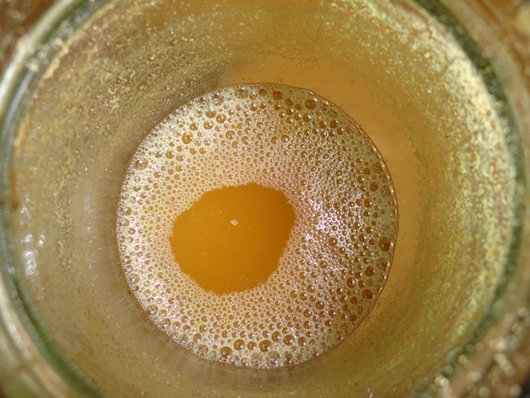
We had a nice supply of ginger beer going over Christmas. It's a delicious soft drink for young and old, although there is an alcoholic version that can be made with a slight variation on the recipe. Ginger beer is a naturally fermented drink that is easy to make - with ginger beer you make a starter called a ginger beer plant and after it has fermented, you add that to sweet water and lemon juice. Like sourdough, it must ferment to give it that sharp fizz. To make a ginger beer plant you'll need ginger - either the powdered dry variety or fresh ginger, sugar, rainwater or tap water that has stood for 24 hours to allow the chlorine to evaporate off. You'll also need clean plastic bottles that have been scrubbed with soap, hot water and a bottle brush and then rinsed with hot water. I never sterilise my bottles and I haven't had any problems. If you intend to keep the ginger beer for a long time, I'd suggest you sterilise your bottles. MAKING THE STARTER In a...
Image

NOT the last post

This will be my last post here.  I've been writing my blog for 18 years and now is the time to step back. I’ve stopped writing the blog and come back a couple of times because so many people wanted it, but that won’t happen again, I won’t be back.  I’ll continue on instagram to remain connected but I don’t know how frequent that will be. I know some of you will be interested to know the blog's statistics. 
Image

How to make cold process soap

I'm sure many of you are wondering: "Why make soap when I can buy it cheaply at the supermarket?" My cold process soap is made with vegetable oils and when it is made and cured, it contains no harsh chemicals or dyes. Often commercial soap is made with tallow (animal fat) and contains synthetic fragrance and dye and retains almost no glycerin. Glycerin is a natural emollient that helps with the lather and moisturises the skin. The makers of commercial soaps extract the glycerin and sell it as a separate product as it's more valuable than the soap. Then they add chemicals to make the soap lather. Crazy. Making your own soap allows you to add whatever you want to add. If you want a plain and pure soap, as I do, you can have that, or you can start with the plain soap and add colour, herbs and fragrance. The choice is yours. I want to add a little about animal and bird fat. I know Kirsty makes her soap with duck fat and I think that's great. I think t...
Image

Preserving food in a traditional way - pickling beetroot

I've had a number of emails from readers who want to start preserving food in jars but don't know where to start or what equipment to buy.  Leading on from yesterday's post, let's just say up front - don't buy any equipment. Once you know what you're doing and that you enjoy preserving, then you can decide whether or not to buy extra equipment. Food is preserved effectively without refrigeration by a variety of different methods. A few of the traditional methods are drying, fermentation, smoking, salting or by adding vinegar and sugar to the food - pickling. This last method is what we're talking about today. Vinegar and sugar are natural preservatives and adding one or both to food sets up an environment that bacteria and yeasts can't grow in. If you make the vinegar and sugar mix palatable, you can put up jars of vegetables or fruit that enhance the flavour of the food and can be stored in a cupboard or fridge for months. Other traditional w...
Image

Cleaning mould from walls and fabrics

With all this rain around we've developed a mould problem in our home. Usually we have the front and back doors open and that good ventilation stops most moulds from establishing. However, with the house locked up for the past week, the high humidity and the rain, mould is now growing on the wooden walls near our front door and on the lower parts of cupboards in the kitchen. Most of us will find mould growing in our homes at some point. Either in the bathroom or, in humid climates, on the walls, like we have now. You'll need a safe and effective remedy at some point, so I hope one of these methods works well for you. Mould is not only ugly to look at, it can cause health problems so if you see mould growing, do something about it straight away. The longer you leave the problem, the harder it will be to get rid of it effectively. If you have asthma or any allergies, you should do this type of cleaning with a face mask on so you don't breathe in any spores. Many peopl...
Image

Five minute bread

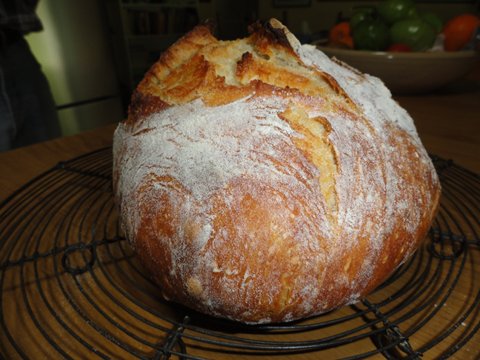
Bread is one of those foods that, when made with your own hands, gives a great deal of satisfaction and delight. It's only flour and water but it symbolises so much. I bake bread most days and use a variety of flours that I buy in bulk. Often I make a sandwich loaf because we use most of our bread for lunchtime sandwiches and for toast. Every so often I branch out to make a different type of loaf. I have tried sour dough in the past but I've not been happy with any of them. I'll continue to experiment with sour dough because I like the idea of using wild yeasts and saving the starter over a number of years to develop the flavour and become a part of the family. However, the loaf I've been branching out to most often is just a plain old five minute bread. By five minutes I mean it takes about five minutes actual work to prepare but it's the easiest of all bread to make and to get consistently good loaves from. If you're having people around for lunch or...
Image

This is my last post.

I have known for a while that this post was coming, but I didn't know when. This is my last post. I'm closing my blog, for good, and I'm not coming back like I have in the past.  I've been writing here for 16 years and my blog has been many things to me. It helped me change my life, it introduced me to so many good people, it became a wonderful record of my family life, it helped me get a book contract with Penguin, and monthly columns with The Australian Women's Weekly and Burke's Backyard . But in the past few months, it's become a burden. In April, I'll be 75 years old and I hope I've got another ten years ahead. However, each year I'll probably get weaker and although I'm fairly healthy, I do have a benign brain tumour and that could start growing. There are so many things I want to do and with time running out, leaving the blog behind gives me time to do the things that give me pleasure. On the day the blog started I felt a wonderful, h...
Image

What is the role of the homemaker in later years?

An email came from a US reader, Abby, who asked about being a homemaker in later years. This is part of what she wrote: "I am a stay-at-home mum to 4 children, ages 9-16. I do have a variety of "odd jobs" that I enjoy - I run a small "before-school" morning drop-off daycare from my home, I am a writing tutor, and I work a few hours a week at a local children's bookstore. But mostly, I cherish my blissful days at home - cooking, cleaning (with homemade cleaners), taking care of our children and chickens and goats, baking, meal-planning, etc. This "career" at home is not at all what I imagined during my ambitious years at university, but it is far more enriching. I notice, though, that my day is often planned around the needs of my family members. Of course, with 4 active kids and a husband, this is natural. I do the shopping, plan my meals, cook dinner - generally in anticipation of my family reconnecting in the evening.  I can't h...
Image

Every morning at home

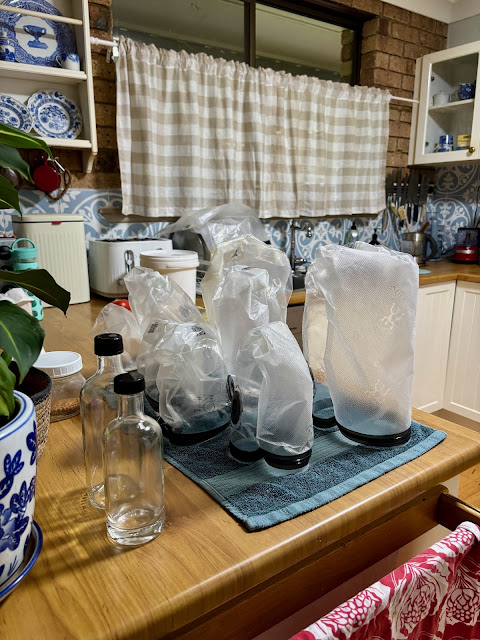
Every morning when I walk into my kitchen it looks tidy and ready for a day's work. Not so on this morning (above), I saw this when I walked in. Late the previous afternoon when I was looking for something, I came across my rolled up Zwilling vacuum bags and decided they had to be washed and dried. So I did that and although I usually put them outside on the verandah to dry it was dark by then. I turned the just-washed bags inside out and left them like this on a towel. It worked well and now the bags are ready to use when I bring home root vegetables, cabbages or whatever I buy that I want to last four or five weeks.
Image

You’ll save money by going back to basics

When I was doing the workshops and solo sessions, I had a couple of people whose main focus was on creating the fastest way to set up a simple life. You can't create a simple life fast, it's the opposite of that It's not one single thing either - it's a number of smaller, simpler activities that combine to create a life that reflects your values; and that takes a long to come together. When I first started living simply I took an entire year to work out our food - buying it, storing it, cooking it, preserving, baking, freezing, and growing it in the backyard. This is change that will transform how you live and it can't be rushed.  
Image


Trending Articles

NOT the last post

This will be my last post here.  I've been writing my blog for 18 years and now is the time to step back. I’ve stopped writing the blog and come back a couple of times because so many people wanted it, but that won’t happen again, I won’t be back.  I’ll continue on instagram to remain connected but I don’t know how frequent that will be. I know some of you will be interested to know the blog's statistics. 
Image

Every morning at home

Every morning when I walk into my kitchen it looks tidy and ready for a day's work. Not so on this morning (above), I saw this when I walked in. Late the previous afternoon when I was looking for something, I came across my rolled up Zwilling vacuum bags and decided they had to be washed and dried. So I did that and although I usually put them outside on the verandah to dry it was dark by then. I turned the just-washed bags inside out and left them like this on a towel. It worked well and now the bags are ready to use when I bring home root vegetables, cabbages or whatever I buy that I want to last four or five weeks.
Image

You’ll save money by going back to basics

When I was doing the workshops and solo sessions, I had a couple of people whose main focus was on creating the fastest way to set up a simple life. You can't create a simple life fast, it's the opposite of that It's not one single thing either - it's a number of smaller, simpler activities that combine to create a life that reflects your values; and that takes a long to come together. When I first started living simply I took an entire year to work out our food - buying it, storing it, cooking it, preserving, baking, freezing, and growing it in the backyard. This is change that will transform how you live and it can't be rushed.  
Image

Creating a home you'll love forever

Living simply is the answer to just about everything. It reduces the cost of living; it keeps you focused on being careful with resources such as water and electricity; it reminds you to not waste food; it encourages you to store food so you don't waste it and doing all those things brings routine and rhythm to your daily life. Consciously connecting every day with the activities and tasks that create simple life reminds you to look for the meaning and beauty that normal daily life holds.  It's all there in your home if you look for it. Seemingly mundane tasks like cleaning and cooking help you with that connection for without those tasks, the home you want to live in won't exist in the way you want it to.  Creating a home you love will make you happy and satisfied.
Image

Time changes everything

I've been spending time in the backyard lately creating a contained herb and vegetable garden. My aim is to develop a comfortable place to spend time, relax, increase biodiversity and encourage more animals, birds and insects to live here or visit. Of course I'd prefer my old garden which was put together by Hanno with ease and German precision. Together, we created a space bursting at the seams with herbs, vegetables and fruity goodness ready to eat and share throughout the year. But time changes everything. What I'm planning on doing now, is a brilliant opportunity for an almost 80 year old with balance issues. In my new garden I'll be able to do a wide range of challenging or easy work, depending on how I feel each day. It’s a daily opportunity to push myself or sit back, watch what's happening around me and be captivated by memories or the scope of what's yet to come.
Image

It's the old ways I love the most

I'm a practical woman who lives in a 1980’s brick slab house. There are verandahs front and back so I have places to sit outside when it's hot or cold. Those verandahs tend to make the house darker than it would be but they're been a great investment over time because they made the house more liveable. My home is not a romantic cottage, nor a minimalist modern home, it's a 1980’s brick slab house. And yet when people visit me here they tell me how warm and cosy my home is and that they feel comforted by being here. I've thought about that over the years and I'm convinced now that the style of a home isn't what appeals to people. What they love is the feeling within that home and whether it's nurturing the people who live there.
Image

Making ginger beer from scratch

We had a nice supply of ginger beer going over Christmas. It's a delicious soft drink for young and old, although there is an alcoholic version that can be made with a slight variation on the recipe. Ginger beer is a naturally fermented drink that is easy to make - with ginger beer you make a starter called a ginger beer plant and after it has fermented, you add that to sweet water and lemon juice. Like sourdough, it must ferment to give it that sharp fizz. To make a ginger beer plant you'll need ginger - either the powdered dry variety or fresh ginger, sugar, rainwater or tap water that has stood for 24 hours to allow the chlorine to evaporate off. You'll also need clean plastic bottles that have been scrubbed with soap, hot water and a bottle brush and then rinsed with hot water. I never sterilise my bottles and I haven't had any problems. If you intend to keep the ginger beer for a long time, I'd suggest you sterilise your bottles. MAKING THE STARTER In a...
Image

An authentic look at daily life here — unstaged and real

Most days Hanno was outside happily working in the fresh air. It may surprise you to know that I started reading my book,  Down to Earth , yesterday - the first time since I wrote it 13 years ago.  I had lent it to my neighbor, and when she returned it, I started reading, expecting to find surprises. Instead, I realised the words were still familiar—as if they were etched into my memory. As I flipped through the pages, I was reminded of how important it was for me to share that knowledge with others. The principles in Down to Earth changed my life, and I truly believed they could do the same for others. After just 30 minutes of reading, I put the book down, reassured that its message still holds true: we can slow down and reshape our lives, one step at a time.
Image