down to earth

  • Home
  • About Us
  • Down To Earth Book
  • Privacy Policy
Of all the elements that make up many convenience foods, preservatives are the ones that make the hairs on my neck stand up. Give me butter, fat, gelatine made from boiled cow heads, colouring that I know is crushed beetles, live bacteria and fungus. I'll take them all many times over before I knowingly consume food containing preservatives. Of course they tell us that all the additives they put in food are there to protect the food from invading pathogens, to add flavour; it's there for our own good!  And it just happens to be cheaper. These additives increase the profit margin for manufacturers. While cancer rates are increasing around the world, our health is being traded for profit.

I came across this article recently and since then I've read it a few times. I knew food manufacturers were adding all sorts to our food, but when I read this article, I was shocked. And terrified. One of my fears is that it's being using on what is supposedly 'fresh' food too. How did things get so bad? Why have our governments allowed this to happen?


I don't have any answers. My only strategy is to stay away from highly processed food but I do think we should all contact our local politicians and talk loudly and publicly about our concerns. Personally, I'd like to see better food labelling laws in every country. Surely we have the right to know exactly what is in our food and to make informed decisions over whether to buy or not. 

I have no magic wand that will make this better. It makes me resolve to continue to cook from scratch but I doubt even that will completely protect us. I hope you read the article and vote for it to change by using the power of your dollars when you shop. If we don't buy this stuff and start demanding better quality food through our politicians, then the "it just happens to be cheaper" will become less of a player in the way food is processed and sold to us.  Because the problem isn't just the fact that our food can be tampered with in this way but also that the labelling laws help hide that it has been done.

I've not had a lot of time for reading this week but here is my list for you. I'll be back to blogging next week so I'll see you then. Take it easy over the weekend. Spend some time doing something you love and enjoy the seasons as they change.

Good enough
The bird tree of life
Japanese milk bread recip
Overnight pleasant bread, baked in pyrex, not cast iron
What it's really like to stop using beauty productsRemove hair dye from porcelain
Studio portraits of owls
How to make a sewing kit for a young girl
Can I recycle all these plastic food wrappers?

Originally published 15 December 2009

I enjoyed your post. I'm wondering, though, how much your slower more deliberate life is possible because your children are grown and gone? I have tried to be more deliberate in my life, but I have children and I teach them at home. It's certainly a challenge to take from your posts and apply them to my busy life, but I have learned from you and the others. What's really working for me is to take one change at a time. That was great advice. ~ Anonymous

This is a comment from those made yesterday. I'm sorry I can't name the person who wrote as she is only know to me as anonymous. Anonymous, I wanted to address your comment today because I think "living deliberately" can confuse some of us. My interpretation of deliberate living is that I have intentionally taken my life in the direction of my values. I needed to sit and think, and I needed to work out for myself what was important to me. I knew how I didn't want to live, but what exactly did I want? When I changed, I knew I didn't want to keep spending and rushing around like a loon but I had to replace that with something, and that required me to decide on what my core values were and how I could live by those values.


I deliberately focused on my values - generosity, kindness, independence, self reliance, self respect and respect for others - and I made my everyday life reflect those values. That, to me, is living deliberately. You make a deliberate decision to live a certain way and every day make sure your life stays true to that. It sounds like a huge commitment, and it is, but it is done in small steps, every day, without fail, deliberately following that path.

I read Walden by Henry David Thoreau about 15 years ago, well before I made my changes towards simplicity. I have no doubt that book, and in particular this quote below, influenced me more than anything else; although I didn't know it at the time and only made that discovery in retrospect.

I went to the woods because I wished to live deliberately, to front only the essential facts of life, and see if I could not learn what it had to teach, and not, when I came to die, discover that I had not lived. I did not wish to live what was not life, living is so dear; nor did I wish to practise resignation, unless it was quite necessary. I wanted to live deep and suck out all the marrow of life, to live so sturdily and Spartan-like as to put to rout all that was not life, to cut a broad swath and shave close, to drive life into a corner, and reduce it to its lowest terms, and, if it proved to be mean, why then to get the whole and genuine meanness of it, and publish its meanness to the world; or if it were sublime, to know it by experience ... 

It still takes my breath away to read those words. I am trying to live deep and to suck all the marrow out of life; I want to know if life is mean or sublime, and I want to know it by experience. I do not want to read about it in a magazine or a blog, I want to truly experience my life every day, and every day it is deliberately focused on the values I want to live by.


Now to answer your question: I'm wondering, though, how much your slower more deliberate life is possible because your children are grown and gone? Living deliberately isn't reliant on who is living in your house. It is the decision to discover your real values and live them, on purpose, everyday. That is important when you're raising children. You want them to live to your values until they have grown and are capable of making a sound decision for themselves on how they want to live. Hopefully, by that stage, your life and the way they were raised will influence them towards the kind of life you want for them. So for instance, deliberate living would be to decide you want to pay off your debt: you want to homeschool your children: you want to instil in them the values of care for others, kindness and generosity; you want to be healthy and connect with nature. Once those decisions on values (whatever they are) are made, everyday from then on, you would make sure your every day life reinforced those ideals, and deliberately move your family towards them. Every day you would deliberately work towards the outcomes you want by the way you homeschool, the behaviour you model for your children and the example your life sets for those young eyes. You would make sacrifices to pay off debt, even when it's difficult, you would continue to homeschool, you would plan into your homeschooling a few nature days and read books about the natural world. You would do all that deliberately - even when it's difficult to do.


Walden, and in particular the quote above did more for my resolve to live as I do than anything else I've read. As I said I read it many years ago, but reread it when I started to live a slower and more deliberate life. That second reading made me certain of the truth of Thoreau's words and I have tried to live true to them ever since. Walden is available free online here. I have it quietly tucked away on my computer and frequently revisit it. It is fine inspiration. It's not an easy read because it is written in the vernacular of the 19th century, but if you decide to take it on, I'm sure you be rewarded for the effort. It would be a great holiday project to read a little bit of Walden every day and if you do that, I hope you gain as much as I did from it.

This was originally published on 3 August 2009


While I don't want to make DTE a question and answer blog, I do want to address a question Donetta posed last week. In part, she wrote:

I see your Dear Hanno laboring in the garden often in your images. What percentage of the physical labor are you able to tend to in the garden? You see many of us women have this heart and the efforts tend to come from our hand. I think it would encourage us to see that it is your combined physical efforts that achieve those awesome wonders grown on your hand. It is a very different story if the woman tends to much if not all of the hard labor of tending the earth. Truly Rhonda do you do the hard labor too?

Donetta and friends, our work here is truly a partnership. Sometimes one of us may do hard work while the other doesn't, but overall, it evens out. We have tended to divide our work according to what we like doing and what we're good at. We both work in our community, me as the manager of our local Neighbourhood Centre, which I do twice a week + extra bits and pieces at home, Hanno drives the bus from the Centre to take elders on shopping trips and to pick up food from the Foodbank. He does that about once a month. We consider that work is part of our normal weekly work.


But on a daily basis, Hanno likes working outside and does most of the gardening. However, I set up the gardens with one of our sons when we first came to live here 12 years ago, and carried on gardening over the years until Hanno took over when he retired about three years ago. Now, he does the day to day tending of the gardens, while I sow seeds, tend seedlings and look after the worm farm. I harvest and still plant a few things, but Hanno likes everything tidy and in straight lines and I'm not a straight line gardener, so I usually leave it to him.


These are the seedlings Hanno planted before the wedding earlier in the year. Shane and Sarndra married in our garden in June 2009. It was a beautiful family garden wedding, made better by the gardening Hanno did beforehand.

I do most of the inside work - the baking, cooking, cleaning etc but now that I'm writing my book and a monthly column for a magazine, writing is a large part of my daily work now, so Hanno helps with the laundry and some cleaning. Now that we're here by ourselves now, that is minimal. When we clean something it tends to stay clean - unlike when our boys lived at home; we do laundry about once a week.

We each work on our little projects - Hanno's are usually outside and mine inside. Hanno worked on making a new lid for the worm farm today while I recovered from a bout of the flu, the first I've had in years. When I work inside I'll do a project like the oil lamps, make soap, sew, knit or mend; at the moment I'm knitting a jumper for Hanno. When Hanno is outside his projects are things like mowing the lawn, making compost, tending the chooks, house and car maintenance.


I have to tell you, none of it seems like hard labour, although in the past I would have seen it as such. Now there is a gentle flow to most days. We rise when we feel like it, we work at whatever task or project we choose for that day along with the normal daily chores. At 10 am each day, tea is taken on the front veranda and we take the time to relax and talk about what we're doing and what we have planned. If we don't want to work, we don't. But we both know that if we want to live this way for a long time, there is work to be done, so we get to and do it. Not every day is a diamond but generally the work we do is enjoyable, gratifying and enriching - not only in what it gives our home but also in what it gives us.

How do you divide up the work to be done at your home?


This post was first published on 16 December 2009

We are back to a practical subject again today because I've been thinking about the word "germaphobe" and it scares me a little. I've come across this word a few times recently and I want to comment on it. We all know it makes good sense to keep a clean house, to raise children to wash their hands before they eat and, in general, to maintain good levels of cleanliness in the home. But you can be too clean.

Hang your dirty cloths and rags over the side of the laundry bin to dry while they're waiting to be washed.

Since television advertising started blabbing about the benefits of whiter than white and how we can rid our homes of germs, we've been brainwashed to believe that every germ is harmful, every germ must be killed and if we don't do that, we're not as good as our next door neighbours. What hogwash!

There are many medical studies around now that assure us that exposing children to pets and normal household dirt is good for them. It builds up the immune system and allows the body to naturally develop antibodies that fight those germs. Back a few years, when I was growing up, and even when my boys were young in the 1980s it was common for children to play out side. Out there, among the dirt, bugs and grass stains, not only were they having fun swinging on ropes and riding bikes, they were building bone strength, muscle tissue and healthy immune systems. Nowadays there is a tendency for children to play inside on computers and playstations, and inside is becoming increasingly clean. We have gone from the common family home with a dirt floor in the 1800s to stainless steel and the war against germs now.

We are surrounded by millions of bacteria and viruses but only a small number actually cause us any harm, the rest we live with, have evolved with, and being exposed to them has probably helped build tolerance to many of them. When we do our daily chores it's not necessary to rid the home of germs - it's impossible, and it's not a healthy option. Now, I'm not advocating that we leave our sink dirty and not sweep the floor. Of course we continue to do those things. We also need to wipe handles, cupboard doors, remote controls, light switches etc, but we shouldn't be using antibacterial wipes. Soap and water, vinegar or bicarb will do the trick. Using bleach, peroxide or disinfectant every day is overkill.

Wash you dishcloths once or twice a week, depending on how dirty they are. In between times, thoroughly rinse the cloth, wring it out and hang it over the tap or sink to dry. Few bacteria can survive dry conditions, they need moisture to propagate and thrive. Hang your dirty dishcloths and cleaning rags over the side of the laundry bin/basket so if they're wet they can dry out and not sit in the pile of dirty laundry, wet, waiting for a few days to be washed.

Take the pressure off yourself to kill germs, your aim should be to have a clean home. You'll never eliminate germs completely. So relax, put the bleach bottle away, stop buying the antibacterial wipes and allow the short sharp exposure to pathogens in the normal home to build your immune system. If you do that, your immune system will not only protect you from colds and flu but also from more sinister ailments.


This was first published, without the photo, on 5 March 2010


If I could, I would send all of you the magic words that would change your life to what you wish it to be. I don't have those magic powers, all I can do is write what I know and hope that the way you understand those words helps you towards a better life. The best I can do today is to say: slow down. I received an email from a reader saying that she wanted the kind of life I'm living but doesn't know how to go about it. I wrote back to ask if she'd read the 2007 parts of the blog where I write about budgeting, paying down debt, housework, gardening, slowing down and being at home. That explains how I came to this life and the closest thing I've written to the kind of guide she was looking for. She wrote back asking if I could condense it for her.

No, I can't.

Everyone who reads here can take what they need from what I write, but what I hope everyone gets is that we all have to take the time to slow down and at every opportunity, add value to our day. I add value to my hours by knitting, gardening, reading, sitting, talking, listening, watching and being still. We can all carry out the tasks of a simple home and live a more simple life by cooking from scratch, sewing and mending, making green cleaners, baking and gardening. That's the easy bit, although it takes persistence and the energy to do it every day. The more difficult bit is to connect the dots and to make those simple tasks mean something to you so you enjoy doing those tasks on a daily basis. The way I do that is to slow down, think about why I'm working in a particular way and to consciously enjoy what I'm doing. Sewing isn't just sewing, cooking isn't just combining ingredients in a pan, I think about why I'm sewing, who I'm sewing for and how I can make it special, not just for them but for me too. I feel the fabric, admire the colour combinations and take my time. I don't want to rush anything. I want the act of sewing to add value to my day.

There are no condensed versions of a slower and simpler life. You have to live the full measure of it. It is a life-long process - a journey with no end. If you look for short cuts you will short change yourself because the point is not to get to the end fast or with more chickens or loaves of bread baked, it's to enjoy the journey.


Hello everyone.  We'll be opening the forum at a new address tomorrow.  Today we're going to close the old forum and open up again tomorrow at the new place. If you're a forum member you'll receive an email with the details.  I hope to see you there soon. We're got a lot of great plans for the new venue.

xxx
I haven't had much time for reading this week but here are my findings. I hope things have been good at your place and you have the chance to rest and enjoy some down time on the weekend.

How to make crocheted rag rugs
The vast realm of "if"
How to prune lavender
Upcycling clothes
DIP slippers - these are lovely
McDonald’s will begin to limit antibiotics in its chicken and offer the choice of low-fat and chocolate milk from cows that have not been treated with the artificial growth hormone
Why the man behind Keurig’s coffee pods wishes he’d never invented them
This post was originally published 28 Dec 2010.

A feeling of renewal always comes calling at this time of year. The new year is looming, an old year almost gone and life is telling me to look around, take it all in, reassess, look toward the coming months and make sure that what we're doing will continue to make us happy and satisfied. I have been doing that reassessment over these past few days away from the blog. I've spent time with my family, talked on the phone with friends, thought about life during the small hours of the morning, and relaxed while looking out the window at the rain. It's been raining for a week, it's still falling now. I picked our garlic crop in the rain at 5.30 this morning. What a crazy and wonderful way to really experience this season and all its wild weather.


In a sense I'm living my dream life right now but if I were to believe many of those women's magazines, I should be yearning for my long gone youth, dying my hair, thinking about botox and clearing out last year's fashions to make way for newer versions. There is much more depth to my life. I am surrounded by a loving family, I have a major creative project to concentrate on, and the freedom to do whatever I feel like doing when each new day dawns. And even though I have that freedom, I choose to remain here, working in my home. From the outside it's just Hanno and Rhonda, two golden oldies, living a very ordinary life in semi-rural Australia; but our lives deceive, we live large. We have the freedom to choose how we spend our time - there is no boss expecting us to turn up for work, no watches telling us we have to be somewhere soon and no other controlling factors we need to be aware of. We have no debt and live frugally so we know that if we remain productive and live within our means, we'll continue along this path and feel the satisfaction and contentment it brings for a long time.


My main occupation at the moment, and for the coming months, is writing a book. After breakfast I come into this little room, close the door behind me, turn on the computer and start reading, editing and writing. Every so often, I check out the forum or emails, or I go out and wash up, make bread, prepare a meal, make the bed, knit or mend and those small actions, while giving me a break, make me feel I'm still contributing to my home. In reality though, Hanno is doing more that he used to and although he's not been gardening due to the season and the rain, he has been doing the washing and the floors, which frees me up to work on the book. Marriages that work well are fine things. 


And what of happiness? Yes, it's here daily, bubbling away in the background, like a tea kettle on a wood stove, always ready and always enough to be shared. I don't know what it is I did to deserve this charmed life but I'm sure many of you feel the same way about your own lives. You are touchstones, in a sense, a way for me to know that even though we live outside the mainstream of our culture, there are others who walk along with us. And now as I look towards tomorrow and next year, I know that I will continue to work towards my goals with enthusiasm, optimism and gratitude and if I can take you all along with me for the ride, it will be even better. 

This post was first published on 21 July 2011.

I really enjoy living where we live. The climate is wonderful, we can grow food all year and unless we have a bad year, it's neither too hot in the summer nor too cold in the winter. We live on a small piece of land at the edge of a pine forest that is bordered by a permanent creek, lined with rain forest. In the old days, trees were cut in the mountains behind us and brought to a timber mill on the other side of our one lane street. Logs were launched from our backyard into the creek and floated downstream to the Pacific Ocean. There, sailing ships waited for the logs which were loaded and shipped to places far, far away. Stripping tall timbers from our forests no longer happens here but not much else has changed at this end of the lane since those days. There are ten houses here now, but the mango and nut trees they planted back then are still here, and when you're quietly working in the garden you can imagine those days when logs would have rumbled by, probably right through where our house now stands. 

Our front garden (above) and our vegetable garden (below).


The house from the back. You can see the solar panels, the solar water heater (right) a couple of skylights and the whirly birds. Of course, Hanno's ladder is there; he's often on the roof pottering around, checking or fixing things.

Life is good here and we hope that even after we've gone, this land will look the same as it does now and support the efforts of a hard working family - hopefully our descendants. The key to this is to protect the land, to keep it vegetated, to remain organic gardeners, to use as few chemicals as possible, to continue to encourage birds and wildlife and to remain radical conservers of the land we live on. We will continue to harvest water from the roof, generate electricity with our solar panels and as much as we can, live a low tech life.

Our outdoor sink and one of the water tanks. We wash vegetables and fruit here, and our hands, so we don't bring too much dirt into the house.

Part of our low tech approach is to gently manage our climate for our own benefit. We use what our natural environment gives us. We dry our clothes in the sun instead of using a dryer;  we use the soil to produce food; we use harvested water on our crops, instead of using town water; we use cross ventilation as much as we can to cool our home. When we first came here to live we installed whirly birds to extract hot air from the roof space; they're powered by even the slightest breeze. Hanno has just finished painting the entire roof with solar-reflective paint which makes a big difference to the temperature of the metal roof and therefore, the temperature inside during the hot months. We also have three skylights on the roof that bring more light to the kitchen, bathroom and laundry without needing to flick a switch.

Water is harvested from the roof and stored in three water tanks. This small one (above) is used to water pot plants on our front verandah. This tank is also used as a platform for food that defrosts in the sun. Even now in mid-winter, a shoulder of pork takes about three hours to completely defrost (below).

Other smaller things we do include defrosting covered food in the sun instead of using the microwave and sometimes using the car sitting in the summer sun to dehydrate food. I sweep instead of vacuum, we removed our dishwasher a couple of years ago and wash up by hand. I would love to say that we harvest wood from our old trees and use it for heating but Hanno has an aversion to wood fires so we go without heating except on very cold mornings when we heat the kitchen for a couple of hours with a reverse cycle air-conditioner. I would also love to say we had an outdoor wood-fired bread oven that we use to bake bread, cakes and biscuits, but I can't. Maybe that is something I can look forward to in the future.

Beans drying in the warm air.

I wish we could use more low tech ways of doing house and yard work, or heating/cooling our home. I wonder what you're doing. I wonder if there are some things we've just not thought of but could easily do if we had a clue. So please, tell me how you manage heating and cooling, water, electricity, defrosting, cooking, drying and washing in a modern home environment. This blog has become a place for sharing ideas, often radical or forgotten ones, so I'd love to hear what you're doing in your home.

This post was originally published 14 April, 2009.


Fifteen years ago, when Hanno and I first bought this little house, we drove along a one lane street, turned onto a dirt driveway and saw a very basic house on a magnificent piece of land surrounded by pine and rainforest. We didn't know it at the time, but this home, of all those we have shared over the years, would nurture us, bring us closer together and ease us along the path to a more simple life. We made some improvements as soon as we moved in to better suit our family, put up fences to keep the dogs in, and in the time since then, we've been happy here and content to wake up each day within these walls.

I am still in awe of the land we live upon. I never say we own it because as far as I'm concerned, we are merely the custodians here until we pass it on to our sons; and in truth, the land probably owns us. We wake up surrounded by trees, sometimes we hear the rushing of the creek that is our back boundary, and when I walk into our back yard, even after living here 11 years, I often just stop and look, amazed at what I see. All my life's roads have lead to this place.

Our gate has been closed these past few days and if I didn't know better, I would say we had been cast adrift, completely cut off from the rest of the world. There is peace here, we hear birds call, sometimes a train in the distance, but apart from that, it's a wind rushing through the trees type of silence that feels alive with activity and energy.


There has been the undeniable whiff of self-reliance in the air over Easter. I've baked bread and nut slices, made a simple evening meal each night, set the table numerous times, washed dishes and clothes, swept, lit candles, watered plants on the verandah, watched rain fall and thought about my life here, on this land with my family, and you, my blog family. I also worked on my project, did some writing, knitting and a stocktake of the soap, yarn and fabric I have on hand. There are a hundred things I could do, and one by one I get to those that need my attention, all else can wait until its time. It's been a beautiful Easter when we both worked to produce what we need here and mended a couple of things to keep them going a while longer. After such days, it's easy to go to bed pleased with the work we've completed and tired enough to sleep deeply until the next morning.


The simple life, full of the home tasks of cooking, mending, cleaning and growing has been the way of life for the majority for many hundreds of years. But now, in the context of our modern times, when shops are full of fashions, leaf blowers, designer dog collars and pre-cooked food, it feels like it's in sharp contrast to how most people live. Working with one's own hands and producing the goods we need to live is truly empowering but the wonder of it is that is so easy to do. These are just life skills that are easily passed on to all of us by example, by watching others.

I look at TV sometimes and I wonder if what they show is real. Are the streets really that mean in cities? Do people really kill each other over drugs and money, and for no reason at all? Is road rage real? What life skills are being passed on by watching all that? I suppose I know the answers to all those questions and for now, on this Easter weekend, I've been content and well and truly happy to stay cocooned here, listening to the rain, stitching and knitting, and wondering if living simply can make a significant and real difference outside my gate. I wonder if Hanno thinks these same thoughts. I wonder if you do.

Thank you for coming here to share our days, it still amazes me that you do. Thank you for sharing your thoughts and lives with us here too. Welcome to the new readers, warm hugs to all the older ones. Let's all work towards getting the simple message out to all those who surround us in the normal course of our lives, and show, by example, that this way of living not only empowers and enriches us, it builds contentment and greater expectations.


Tricia's husband died suddenly a few years ago and she spent the next couple of years deciding whether she would sell the family home and move to a smaller place. She now lives in a beautiful six bedroom mansion house on the outskirts of Sydney. There is a library, chandeliers, four hectares of bushland and a heated pool set in a beautiful secluded garden with fountains. This last couple of months she's started packing up, decluttering and selling or giving away a lot of her unwanted possessions.

She drove up from Sydney in a car packed to the roof with things she wanted to give to me or to the people at our Neighbourhood Centre. The first day she was here, we took a lot of those things with us and gave them away to people whose needs include the blankets, pillows, coats etc she gave.

She also brought some things she thought I would like. One of those things was mum's button box.

We were both born in the 1940s and grew up as part of Sydney's working class in the 1950s. I guess we both did well for ourselves and although I became middle class, I have always thought of myself as working class. I feel comfortable with those values and the collective flaws and strengths that helped shape us.

Our parents left little in the way of material possessions when they died but what I have of my mother's I really cherish. She gave me the amethyst ring and pendant she was given for her 21st birthday, I have a small fruit knife that was her mother's - it has a bone handle with the name 'jean cullen' carved in it, a little green glass that she liked and some very fine Orrefors glasses that I drink from when I'm sick. I also still have a stainless steel wok she gave me in the 1960s.

And now, the buttons.
I went through them yesterday and tried to remember where they were from. I wanted to see, with my mind's eye, the dresses and coats they would have been on. I didn't get far with that because going through the buttons brought back different memories to me. I remembered how mum, and every other woman we knew, saved buttons, string, ribbons, old zippers and fabrics 'just in case' they were needed. And that frugal philosophy was why I had that box of old buttons in front of me.

The buttons were packed in the small, brown, plastic containers that pills used to be dispensed in before the days of pre-packaged bubble packs and child-safe bottles; there were also two little glass vegemite jars. All these were held in a 1970s 'Fresh Pak' plastic box. It must have been one of the first plastic containers sold then. It is brown, with an opaque lid with the words 'Fresh Pak' on it.

I spilled each container out so I could have a good look and along with all the buttons came a flood of childhood memories. It really was a different world then. Now that I look back on it, we, and almost everyone we knew, were what we would now think of as 'poor'. But we didn't feel like that. We had everything we needed, we never went hungry, we took our place within a strong and happy community and we knew everyone, not just in our street, but also in the streets surrounding us.

I was too young and silly to know what people really focused on in their lives then but in our home we rarely talked about money or possessions. My mother taught me valuable things like caring for others, self respect and respectfulness, she told me it was good to be kind, brave and thoughtful, she demonstrated every day the value of hard work and she showed me, by example, the importance of positive role models. So although there may not have been much in the way of physical possessions given from her hand to mine, she left me with the soul of a frugal, hard-working woman and for that I will be eternally grateful.


These are the buttons I will keep. The rest of them will go back to Sydney with Tricia and probably spend the rest of their days, not as they were intended - as a functional part of clothing or furnishings - but as a silent reminder of the days when thrift was a part of almost every life and we all saved things 'just in case'.


Thank you all for the good wishes and love sent during the week when I announced I'm writing another book. It's a wonderful opportunity at any age to write but to do it when I'm nearing 70 is a beautiful gift. The process of writing enables me to think about what we value and how we live those values, and in the end, I feel regenerated and that every morning is a brand new beginning. What a life! I'm delighted to write about it and so thankful to live it as we do away from the mainstream.

I hope you have a lovely weekend watching the seasons start to change. Stay safe, I'll see you again next week.

Eggs Are Back: The Elegant Simplicity of the New Diet Guidelines
We'll all die one day. Isn't it time we got used to the idea?
Cheesy cauliflower breadsticks
Avian flue in backyard chickens - specially for north America but a lesson for everyone who keeps chickens
A family affair
Spurtopia workshops in Brisbane Spurtopia homestead is closing in April. If you want to see what they've set up there, you'll have to move fast.
Gluten-free: health fad or life-saving diet?
Old-fashioned recipes
Vintage photo galleries - wild west, Route 66 etc.
Recycled - an old wooden sofa. I think this is beautiful.
The Clovelly herring festival
Men who knit community

Last week I wrote about soaking your rolled oats before you eat them and the benefits that  come from that. Today I thought I'd continue on and talk about soaking other rye and wheat grains before they're eaten; today's post is about bread. The reasoning behind all this is that grains soaked before cooking are easier to digest than those that aren't, and if they're soaked in an acidic liquid such as whey, buttermilk, yoghurt, or water with lemon juice, the grain will release most of its goodness instead of a small portion of it. It's all got to do with humans having only one stomach so unsoaked grains pass through too fast to be broken down. That causes digestive problems for some people and the grains don't have enough time to release all their goodness, which affects all of us.  Other grain-eating mammals such as cows, goats etc. have more than one stomach, or several compartments in their stomach, that allow them to process their food a lot longer than we do.

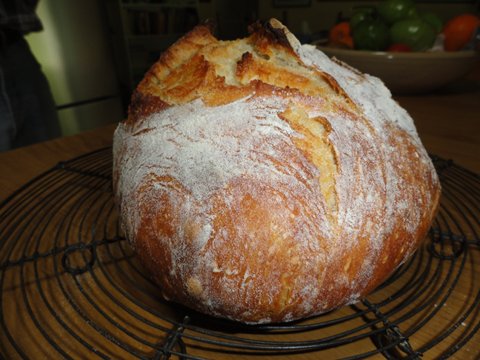
This bread is good on the first day and lasts to a second day but the crust and the bread itself aren't like a soft sandwich loaf. It's drier and the crust is crunchy.
 It makes delicious toast and that's how we have it on the second day.
If you don't like that texture, try the rye mixed loaf below which is more like the texture of a sandwich loaf.  Both are excellent as toast.
This is the half white-half rye loaf. It's the one I like the most because I think it has a better texture than the white loaf. 

If you read about how to make bread in Nourishing Traditions it's a long process that I don't have the time nor the inclination for. I'm sure it produces very good bread but I'm a regular bread maker and need my bread to fit in with everything else I do in a day. I'm happy with the so called five minute bread, that I make up and allow to sit in the fridge for a few days.  It's well and truly soaked by the time I bake my bread.

I found very similar recipe in my Maura Laverty classic Irish cook book, Full and Plenty, that I'm going to try this week. Her recipe for "yeast bread (overnight method)" was published in 1960. I'll share that recipe with you next week when I post about the bread I make.

The way I do the five minute bread is to make up the recipe in Artisan bread in five minutes a day, but with a tweak. You'll need a storage container capable of holding the mixture that will sit in the fridge for at least overnight, and for a few days after that. That takes care of the soaking. You can double the recipe quite easily if you have the room to store the dough and then you'll only make up one batch of dough for several loaves of bread.

The book says it makes four one pound loaves (that's just under two kilos).
  • 3 cups warm water
  • 1½ tablespoons yeast
  • my tweak is to add 1 tablespoon of lemon juice to the water.  OR you could use ½ cup of buttermilk, whey or yoghurt to the liquid before adding it to the mix, but you'll have to adjust the water content accordingly. Mix it thoroughly so it will be easier to incorporate it into the flour. 
  • 1½ tablespoons coarse salt
  • 6½ cups unbleached white flour (or half rye and half white wheat flour)
I do this step in the morning, the day before I want the bread. 

Before mixing them together, mix the top group together, then the second group together. Then add half the liquid to half the flour and mix together thoroughly. If you have a big mixer with a dough hook you can use that because it takes an effort to mix this. I do it in two batches and use a spatula. When the first batch is finished, tip it into your storage container and start the second batch.  When both batches are in the container, mix them together with your hands, put a tea towel over the container and leave it on the bench to start rising. 

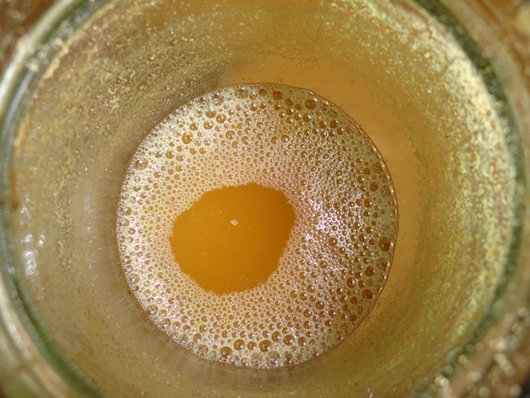
After about two hours, take the tea towel off, put the lid on but don't press it down to make it air tight. The dough will let off gas and it needs to have some means of escape. I use a Decor long plastic bin and have the top attached at one end and sitting on the top other end.  Put the dough in the fridge and store it there until you're ready to use it, but you can use it at any point after this first rise.

The dough after it's been removed from the fridge.

Don't knead the dough. It will develop the gluten and you don't want that. Just fold over the dough onto itself until it forms a smooth top.

When you want to bake a loaf, about two hours beforehand, take a piece of dough suitable for the size of your loaf from the container. Place it on a lightly floured board and fold the dough into itself so you have a smooth top and uneven bottom. You don't want to knead the dough, just bring it togehter as a nice smooth loaf. Let the dough sit to rise and return to room temperature. It won't rise a lot, it will do that more in the oven when it's baking.

Make sure the dough has flour over the top because that will protect it while it rests and rises.

About 20 minutes before you're ready to bake, preheat the oven to 450F/250C and place a cast iron pot with lid in the oven to heat up. After the dough has risen (about 45 minutes) carefully place the dough into the cast iron pot and with a very sharp knife, slash to top of the dough. Place the lid on the top of the pot.  You could use a pizza stone to bake on, that is how they bake it in the artisan bread book.

Bake for 30 minutes, then remove the lid and bake until the top is golden brown.

Remove from the pot and place on a cake rack to cool.

The method below is the same recipe, using a cast iron pot, but with the addition of the dough being baked in a loaf pan inside the cast iron pot.


You can leave the dough in the fridge for up to a week if you want to.  I think it makes better bread the longer it's in the fridge. I usually make a fresh loaf every second day and I get three fairly large loaves from one batch. If I had a large family or we ate more bread, I'd make up a double portion of the dough at a time.  I have to say Maura's recipe looks easier so I'm looking forward to trying it. I have a sneaking suspicion I'll like it. ;- )

If you have trouble making bread it's probably because you don't knead the dough long enough or you under or over proof it. This method takes all that away and replaces it with time in the fridge. If you've never made a good loaf, try this and see how you go with it. Or, maybe you just want to wait for Maura's recipe. And I don't blame you at all for that.

Baking without preheating the cast iron pot


I'm delighted to tell you that last Friday I signed my third contract with Penguin for another book: The Simple Home. It will be a hard cover, similar in size to Down to Earth. I had told my publisher that I wouldn't write another big book because I felt I'd said what I wanted to say. However, a few years down the track, I found that wasn't the case and a new plan started bubbling away in my brain. When I told Penguin what I wanted to do, they were very happy. The new book will be about the work we do in our homes that help us to live a simple life. It will be published next March. Yesterday was the three year anniversary for Down to Earth.

This is going back in time to early 2012 when Down to Earth came out. Above I was signing books at my desk to post out. Below I was signing books at Dymocks in Brisbane.


I've sold the world rights this time, not only those for Australia and New Zealand.  That doesn't mean it will automatically be in book shops around the world but Penguin will take both books to the London Book Fair in April so I'm hopeful that it will be published on a wider scale than Down to Earth originally was. Maybe the two of them will make more sense to an international publisher that one book by an unknown. Fingers crossed.

It means a lot of hard work in these coming months. I've already completed a few chapters but the deadline is June so I can't slow down. I don't want to just write a book, I want it to be a good book, the best book I can manage, and one that readers will use in their daily lives. There will be a photo shoot too. So if I don't write here as often as I used to, or if I'm missing at the forum, you'll know I'm here, tapping away on the keyboard writing something I hope you'll read early next year.

I hope you have a wonderful week ahead.


A cyclone is bearing down on the coast here as I write this. Cyclone Marcia will be a category 5 when it crosses the coast north of here. We're expecting wild weather and a lot of rain in the next couple of days.  I hope everyone in the cyclone's path stays safe.

ADDED @ 11.30AM FRIDAY: Hello everyone. I've had quite a few emails asking if we're okay.  Yes, we're both fine here. We have all we need and although we've already had 150mm/6 inches of rain, there has been no wind yet. I spoke with Shane this morning and they were fine then, they'd only had 40mm of rain but it was windy. Sarndra is 8 months pregnant so I hope they can remain in their home.  Kerry, Sunny, Jens and Cathy are all near us so they'd all have had a lot of rain but no wind. So don't worry, we're good!  :- )

This is part of a poem I love called The Summer Day by Mary Oliver

I don't know exactly what a prayer is. 
I do know how to pay attention, how to fall down into the grass, 
how to kneel down in the grass, how to be idle and blessed, 
how to stroll through the fields, which is what I have been doing all day. 
Tell me, what else should I have done? 
Doesn't everything die at last, and too soon? 
Tell me, what is it you plan to do with your one wild and precious life?

Blooming beautiful
What nobody told me about small farming: I can’t make a living
How Australian food imports are checked (or not)
Season's eatings: sweet passion fruit tarts recipe
Children’s fashion: small people, big business
What record breaking snow looks like
Why do older women always have short hair?
How much sleep do you need?
Vintage doll cradle: step-by-step instructions
Fruit and vegetable stand: step-by-step instructions I love this
A new map of the world's ecosystems

Have a lovely weekend, my friends. Thank you for your comments during the week.

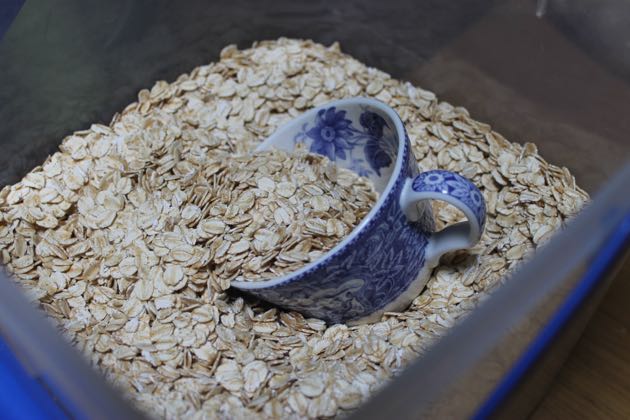
If you're looking for a nutritious and thrifty breakfast that will take only a few minute to prepare, go no further than rolled oats. I'm not talking about quick oats which are processed much more than rolled oats, I'm talking about the plain old traditional rolled oats your grandma used to cook.


Years ago, when I read in Nourishing Traditions that virtually all pre-industrialised people soaked or fermented their grains before making porridge, I related to it immediately. I hadn't been soaking oats before I cooked them but I clearly remember mum and dad, and my grandma, soaking rolled oats in water or milk over night for a quick and easy breakfast the following morning. Almost all cultures used to do this. It was common practice in many African and European countries, the Indian sub continent, Scandinavia, and some Asian countries to soak or ferment grains before they were eaten. I remember that recommendation being on the packet of oats when I was young. I don't think it's there now, which is a pity. If you make sourdough you're doing this by using fermented starter for your bread. It's the same principle.

All grains, including oats, contain phytic acid, which can combine with minerals in the gut to block the absorption of nutrients in the grain. Soaking or fermenting the grains beforehand releases enzymes to help breakdown the phytic acid and gluten which is present in many grains, especially wheat, but oats as well. Oats contain more phytic acid than any other grain so it's important to soak them.

All you have to do is to measure out the required amount of oats into a saucepan, cover them with water or milk, plus another cup, then add ½ cup whey, buttermilk, kefir or yoghurt. Place your saucepan in the fridge overnight. The next morning, you'll see the oats are soft and creamy, like they've already been cooked. Stir the oats, add more liquid if they need it and heat them for a few minutes and serve. They'll be on the table in less than five minutes. If you have a lactose intolerance, use water and a splash of lemon juice or vinegar instead of the milk based liquids. The Nourishing Traditions recipe has ½ teaspoon sea salt in the porridge but I leave that out.


When I was younger and my oats were cooked for me, my parents always added a knob of butter to the oats. Well, it turns out that cream and butter both help with the absorption of minerals contained in the oats.  It also allows the oats to be absorbed over a longer period of time. Isn't it amazing what the old folks knew. And I thought they did it for the taste. :- )

And if you'd like a price comparison to seal the case, here are the prices for Uncle Toby's and organic oats at Woolworths:
  • Uncle Toby's Oats Quick Sachets Original 340g: $4.40 or $1.29 / 100g
  • Uncle Toby's Oats Quick 1kg: $6.76 or $0.68 / 100g
  • Macro Organic Oats Rolled 500g: $4.03 or $0.81 / 100g
We use Homebrand Rolled Oats 750g: $1.06 or $0.14 /100g. The Homebrand oats are good quality, Australian and taste just fine. You know how sometimes rolled oats have that powdery material in the bag? That's usually from some sort of insect that's been eating the grains.  I've never had a packet of Homebrand like that and always the grains are whole and perfect.

So there you have it. Yet another food item that is as convenient as the modern version but more nutritious, and so much cheaper. So don't believe the advertising that tells you that you need the expensive quick oats and a microwave. Just soak your oats instead and you'll have a much healthier breakfast.

How do you prepare your oats?  Will you try this?

Newer Posts Older Posts Home


My books were all published by Pengiun, and are available at Amazon US, Amazon UK and Amazon Au

Search here

Total Pageviews

Translate


I'm Rhonda Hetzel and I've been writing my Down to Earth blog since 2007. Although I write the occasional philosophical post, my main topics include home cooking, happiness and gardening as well as budgeting, baking, ageing, generosity, mending and handmade crafts. I hope you enjoy your time here.

MY FAVOURITE PLACES

  • Grandma Donna's Place
  • Grandma Donna's YouTube
  • Grandma Donna's Instagram
  • This Simple Day
  • Nicole's Instagram

Give More

Give More

Popular posts last year

Making ginger beer from scratch

We had a nice supply of ginger beer going over Christmas. It's a delicious soft drink for young and old, although there is an alcoholic version that can be made with a slight variation on the recipe. Ginger beer is a naturally fermented drink that is easy to make - with ginger beer you make a starter called a ginger beer plant and after it has fermented, you add that to sweet water and lemon juice. Like sourdough, it must ferment to give it that sharp fizz. To make a ginger beer plant you'll need ginger - either the powdered dry variety or fresh ginger, sugar, rainwater or tap water that has stood for 24 hours to allow the chlorine to evaporate off. You'll also need clean plastic bottles that have been scrubbed with soap, hot water and a bottle brush and then rinsed with hot water. I never sterilise my bottles and I haven't had any problems. If you intend to keep the ginger beer for a long time, I'd suggest you sterilise your bottles. MAKING THE STARTER In a...
Image

NOT the last post

This will be my last post here.  I've been writing my blog for 18 years and now is the time to step back. I’ve stopped writing the blog and come back a couple of times because so many people wanted it, but that won’t happen again, I won’t be back.  I’ll continue on instagram to remain connected but I don’t know how frequent that will be. I know some of you will be interested to know the blog's statistics. 
Image

How to make cold process soap

I'm sure many of you are wondering: "Why make soap when I can buy it cheaply at the supermarket?" My cold process soap is made with vegetable oils and when it is made and cured, it contains no harsh chemicals or dyes. Often commercial soap is made with tallow (animal fat) and contains synthetic fragrance and dye and retains almost no glycerin. Glycerin is a natural emollient that helps with the lather and moisturises the skin. The makers of commercial soaps extract the glycerin and sell it as a separate product as it's more valuable than the soap. Then they add chemicals to make the soap lather. Crazy. Making your own soap allows you to add whatever you want to add. If you want a plain and pure soap, as I do, you can have that, or you can start with the plain soap and add colour, herbs and fragrance. The choice is yours. I want to add a little about animal and bird fat. I know Kirsty makes her soap with duck fat and I think that's great. I think t...
Image

Preserving food in a traditional way - pickling beetroot

I've had a number of emails from readers who want to start preserving food in jars but don't know where to start or what equipment to buy.  Leading on from yesterday's post, let's just say up front - don't buy any equipment. Once you know what you're doing and that you enjoy preserving, then you can decide whether or not to buy extra equipment. Food is preserved effectively without refrigeration by a variety of different methods. A few of the traditional methods are drying, fermentation, smoking, salting or by adding vinegar and sugar to the food - pickling. This last method is what we're talking about today. Vinegar and sugar are natural preservatives and adding one or both to food sets up an environment that bacteria and yeasts can't grow in. If you make the vinegar and sugar mix palatable, you can put up jars of vegetables or fruit that enhance the flavour of the food and can be stored in a cupboard or fridge for months. Other traditional w...
Image

Cleaning mould from walls and fabrics

With all this rain around we've developed a mould problem in our home. Usually we have the front and back doors open and that good ventilation stops most moulds from establishing. However, with the house locked up for the past week, the high humidity and the rain, mould is now growing on the wooden walls near our front door and on the lower parts of cupboards in the kitchen. Most of us will find mould growing in our homes at some point. Either in the bathroom or, in humid climates, on the walls, like we have now. You'll need a safe and effective remedy at some point, so I hope one of these methods works well for you. Mould is not only ugly to look at, it can cause health problems so if you see mould growing, do something about it straight away. The longer you leave the problem, the harder it will be to get rid of it effectively. If you have asthma or any allergies, you should do this type of cleaning with a face mask on so you don't breathe in any spores. Many peopl...
Image

Five minute bread

Bread is one of those foods that, when made with your own hands, gives a great deal of satisfaction and delight. It's only flour and water but it symbolises so much. I bake bread most days and use a variety of flours that I buy in bulk. Often I make a sandwich loaf because we use most of our bread for lunchtime sandwiches and for toast. Every so often I branch out to make a different type of loaf. I have tried sour dough in the past but I've not been happy with any of them. I'll continue to experiment with sour dough because I like the idea of using wild yeasts and saving the starter over a number of years to develop the flavour and become a part of the family. However, the loaf I've been branching out to most often is just a plain old five minute bread. By five minutes I mean it takes about five minutes actual work to prepare but it's the easiest of all bread to make and to get consistently good loaves from. If you're having people around for lunch or...
Image

This is my last post.

I have known for a while that this post was coming, but I didn't know when. This is my last post. I'm closing my blog, for good, and I'm not coming back like I have in the past.  I've been writing here for 16 years and my blog has been many things to me. It helped me change my life, it introduced me to so many good people, it became a wonderful record of my family life, it helped me get a book contract with Penguin, and monthly columns with The Australian Women's Weekly and Burke's Backyard . But in the past few months, it's become a burden. In April, I'll be 75 years old and I hope I've got another ten years ahead. However, each year I'll probably get weaker and although I'm fairly healthy, I do have a benign brain tumour and that could start growing. There are so many things I want to do and with time running out, leaving the blog behind gives me time to do the things that give me pleasure. On the day the blog started I felt a wonderful, h...
Image

What is the role of the homemaker in later years?

An email came from a US reader, Abby, who asked about being a homemaker in later years. This is part of what she wrote: "I am a stay-at-home mum to 4 children, ages 9-16. I do have a variety of "odd jobs" that I enjoy - I run a small "before-school" morning drop-off daycare from my home, I am a writing tutor, and I work a few hours a week at a local children's bookstore. But mostly, I cherish my blissful days at home - cooking, cleaning (with homemade cleaners), taking care of our children and chickens and goats, baking, meal-planning, etc. This "career" at home is not at all what I imagined during my ambitious years at university, but it is far more enriching. I notice, though, that my day is often planned around the needs of my family members. Of course, with 4 active kids and a husband, this is natural. I do the shopping, plan my meals, cook dinner - generally in anticipation of my family reconnecting in the evening.  I can't h...
Image

Every morning at home

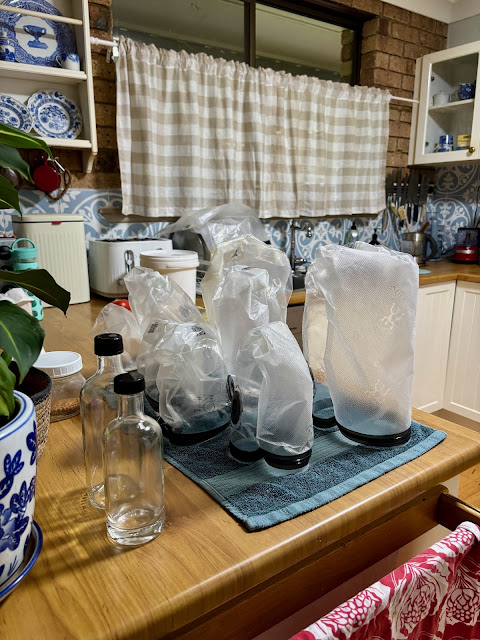
Every morning when I walk into my kitchen it looks tidy and ready for a day's work. Not so on this morning (above), I saw this when I walked in. Late the previous afternoon when I was looking for something, I came across my rolled up Zwilling vacuum bags and decided they had to be washed and dried. So I did that and although I usually put them outside on the verandah to dry it was dark by then. I turned the just-washed bags inside out and left them like this on a towel. It worked well and now the bags are ready to use when I bring home root vegetables, cabbages or whatever I buy that I want to last four or five weeks.
Image

You’ll save money by going back to basics

When I was doing the workshops and solo sessions, I had a couple of people whose main focus was on creating the fastest way to set up a simple life. You can't create a simple life fast, it's the opposite of that It's not one single thing either - it's a number of smaller, simpler activities that combine to create a life that reflects your values; and that takes a long to come together. When I first started living simply I took an entire year to work out our food - buying it, storing it, cooking it, preserving, baking, freezing, and growing it in the backyard. This is change that will transform how you live and it can't be rushed.  
Image


Trending Articles

NOT the last post

This will be my last post here.  I've been writing my blog for 18 years and now is the time to step back. I’ve stopped writing the blog and come back a couple of times because so many people wanted it, but that won’t happen again, I won’t be back.  I’ll continue on instagram to remain connected but I don’t know how frequent that will be. I know some of you will be interested to know the blog's statistics. 
Image

Every morning at home

Every morning when I walk into my kitchen it looks tidy and ready for a day's work. Not so on this morning (above), I saw this when I walked in. Late the previous afternoon when I was looking for something, I came across my rolled up Zwilling vacuum bags and decided they had to be washed and dried. So I did that and although I usually put them outside on the verandah to dry it was dark by then. I turned the just-washed bags inside out and left them like this on a towel. It worked well and now the bags are ready to use when I bring home root vegetables, cabbages or whatever I buy that I want to last four or five weeks.
Image

You’ll save money by going back to basics

When I was doing the workshops and solo sessions, I had a couple of people whose main focus was on creating the fastest way to set up a simple life. You can't create a simple life fast, it's the opposite of that It's not one single thing either - it's a number of smaller, simpler activities that combine to create a life that reflects your values; and that takes a long to come together. When I first started living simply I took an entire year to work out our food - buying it, storing it, cooking it, preserving, baking, freezing, and growing it in the backyard. This is change that will transform how you live and it can't be rushed.  
Image

Creating a home you'll love forever

Living simply is the answer to just about everything. It reduces the cost of living; it keeps you focused on being careful with resources such as water and electricity; it reminds you to not waste food; it encourages you to store food so you don't waste it and doing all those things brings routine and rhythm to your daily life. Consciously connecting every day with the activities and tasks that create simple life reminds you to look for the meaning and beauty that normal daily life holds.  It's all there in your home if you look for it. Seemingly mundane tasks like cleaning and cooking help you with that connection for without those tasks, the home you want to live in won't exist in the way you want it to.  Creating a home you love will make you happy and satisfied.
Image

Time changes everything

I've been spending time in the backyard lately creating a contained herb and vegetable garden. My aim is to develop a comfortable place to spend time, relax, increase biodiversity and encourage more animals, birds and insects to live here or visit. Of course I'd prefer my old garden which was put together by Hanno with ease and German precision. Together, we created a space bursting at the seams with herbs, vegetables and fruity goodness ready to eat and share throughout the year. But time changes everything. What I'm planning on doing now, is a brilliant opportunity for an almost 80 year old with balance issues. In my new garden I'll be able to do a wide range of challenging or easy work, depending on how I feel each day. It’s a daily opportunity to push myself or sit back, watch what's happening around me and be captivated by memories or the scope of what's yet to come.
Image

It's the old ways I love the most

I'm a practical woman who lives in a 1980’s brick slab house. There are verandahs front and back so I have places to sit outside when it's hot or cold. Those verandahs tend to make the house darker than it would be but they're been a great investment over time because they made the house more liveable. My home is not a romantic cottage, nor a minimalist modern home, it's a 1980’s brick slab house. And yet when people visit me here they tell me how warm and cosy my home is and that they feel comforted by being here. I've thought about that over the years and I'm convinced now that the style of a home isn't what appeals to people. What they love is the feeling within that home and whether it's nurturing the people who live there.
Image

Making ginger beer from scratch

We had a nice supply of ginger beer going over Christmas. It's a delicious soft drink for young and old, although there is an alcoholic version that can be made with a slight variation on the recipe. Ginger beer is a naturally fermented drink that is easy to make - with ginger beer you make a starter called a ginger beer plant and after it has fermented, you add that to sweet water and lemon juice. Like sourdough, it must ferment to give it that sharp fizz. To make a ginger beer plant you'll need ginger - either the powdered dry variety or fresh ginger, sugar, rainwater or tap water that has stood for 24 hours to allow the chlorine to evaporate off. You'll also need clean plastic bottles that have been scrubbed with soap, hot water and a bottle brush and then rinsed with hot water. I never sterilise my bottles and I haven't had any problems. If you intend to keep the ginger beer for a long time, I'd suggest you sterilise your bottles. MAKING THE STARTER In a...
Image

An authentic look at daily life here — unstaged and real

Most days Hanno was outside happily working in the fresh air. It may surprise you to know that I started reading my book,  Down to Earth , yesterday - the first time since I wrote it 13 years ago.  I had lent it to my neighbor, and when she returned it, I started reading, expecting to find surprises. Instead, I realised the words were still familiar—as if they were etched into my memory. As I flipped through the pages, I was reminded of how important it was for me to share that knowledge with others. The principles in Down to Earth changed my life, and I truly believed they could do the same for others. After just 30 minutes of reading, I put the book down, reassured that its message still holds true: we can slow down and reshape our lives, one step at a time.
Image