down to earth

  • Home
  • About Us
  • Down To Earth Book
  • Privacy Policy

I love the change of seasons. It's still cool at night but the days are warm and sunny and it's making the garden spring into life. The wisteria is starting to flower, the roses are putting on growth and there are early gardenias forming. Such a wonderful time of year.


We had a full weekend with a visit from my Penguin editor, Jo Rosenberg and her husband, Eli and daughter Sophia. We walked around the garden, had morning tea and we talked and talked. Jo was the person who "discovered" my blog and contacted me, on behalf of Penguin, to ask if I was interested in writing a book for them. Well, you know the rest of that story.

Kerry, Sunny and Jamie were here too. I was so pleased to have them meet Jo and Eli. I thought Sunny would be working as she's training for the opening of her new sushi business. But after all those years of hearing about one another, they all met, there were easy conversations, tea and cake and too quickly, the morning moved into the afternoon. All in all it was a beautiful day and made that way by our family and friends.

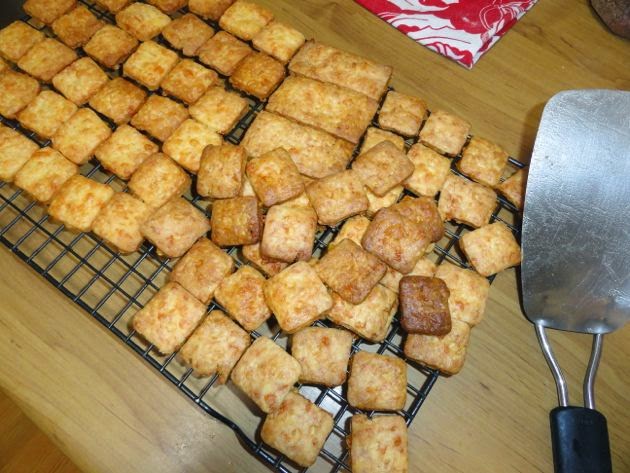
Yesterday was father's day which brought a visit from Jens and Cathy, my step-son and DIL. We had a small piece of the whole orange cake left from the previous day so I sliced that up and made some crackers with cheese and tomato. It all went well with our coffee and tea. Cathy is hobbling around on crutches waiting for a knee operation. Hopefully that will come soon because she's in a lot of pain.

Setting up for the talk at the Caboolture Library.

There is one more talk coming up in Brisbane - at the Redcliffe Library on Wednesday morning. We've had a really good time at the libraries with so many people coming to meet us and to connect with others who live in a similar way. One of the people to come to the Caboolture talk was Doug from one of the local churches. He told us all that the Baptist church has land available for local people who want to grow fruit and vegetables but don't have a garden. If you live in or near Caboolture, you can be part of this. It's a parcel of land on which to grow food, water is provided, there is a small tractor available to break up the ground and prepare the beds, and experienced gardeners will be on hand to guide you if you're a beginner. The cost is $20 per year. Phone 5495 5654 to put your name down if you would like to be a part of this community garden. I think it's great that libraries and community organisations are involved in helping people regain lost skills.

Over the coming weeks I'll be concentrating on book writing again so please don't think I'm just slacking off. I'll be here as much as I can be. In fact, being at the talks last week has given me quite a few interesting topics to write about and I plan on doing that as soon as I can. I'm looking forward to the coming months. It looks like being a very productive time here. I hope you're feeling that way too.  What are your plans for this time before Christmas?

Happy father's day to all the dads out there. And to those men in my life who are dads - Hanno, Shane, Kerry and Danny - I hope you all have a wonderful day. You all make me so proud.

I hope you're looking forward to the weekend as much as I am. We've been out in the community spreading the simple life word for the past two days and will do so again today. Hello again to everyone who came to meet Hanno and I at the libraries. We had a ball and loved meeting all of you. Tomorrow my Penguin editor Jo is visiting from Melbourne with her husband Eli and daughter Sophia. We're all looking forward to that.  

Enjoy the next couple of days as the seasons change for all of us.  ♥︎♥︎

I haven't had the time this week for much online reading, so the list if links isn't what it usually is.

How English language is changing
The happy cheap house is precisely that
Plant dyeing wool and alpaca
Five little projects
How to clean and polish stainless steel
How to grow old gracefully - Lauren Bacall
We had the first of the Morton Bay author talks yesterday with a fully booked out session at the Arana Hill Library. It was such a treat to meet so many people who have been reading the blog and  books. I packed a few books of my own to sell and a box full of goodies to show - laundry liquid, soap, dishcloths and knitting cotton. I discovered long ago it is easier to encourage people to have a go at making these things if they see for themselves that homemade cleaning products, made with so few ingredients, do an excellent job.


There is something special about meeting people whose values you share. You know they get it and they know you do too. A special thanks to the library staff who looked after us so well. They served afternoon tea for everyone, had coffee and water for us and generally couldn't do enough for us. Our libraries certainly do hold an important place in our communities.

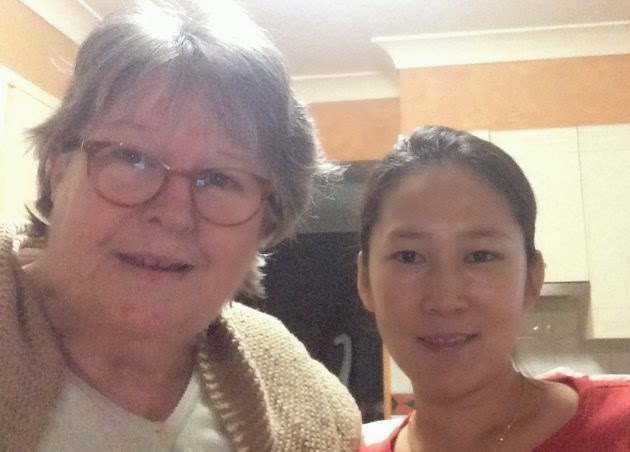
 Jana and Roman Spur and their daughter with me and Hanno.

I was surprised to see Roman and Jana Spur there from Spurtopia blog. You may have seen them a couple of times on Gardening Australia. They are such beautiful, generous people. Visit their blog and see for yourself what an amazing young couple they are. If you're in Brisbane, they often have workshops where they open up their home and garden to share their ideas and to show how to live sustainably in a rental property. Kathy from Our Simple and Meaningful Life blog was there too and her friend Karin as well as a few other bloggers whose names I now forget, sorry.  I have to start writing these important details down.

This is Kathy (front left) and Karin (centre).

Today we're off to Bribie Island, tomorrow we'll be at Caboolture and next week at Redcliffe. I hope to see you if you're in the neighbourhood. And if you read this, please come over and introduce yourself. 


My days are full again. There's a lot going on here and that looks like being our normal for the next few months. We're changing our garden, I'm doing a series of talks in Brisbane, we have visitors coming and I've started writing again. All in all, I have enough to do every day and even though most days are accounted for, I still take time out to have tea with Hanno and to rest whenever I feel I need.


It is the first day of spring today in Australia so I guess I shouldn't be surprised that over the past week we had another snake on the front verandah. This time it's a two metre long python. Hanno called me to come outside and see it, but I only saw the tail. If you look closely at this photo you can see the snake coiled up in the undergrowth.


Our food over the past week has been the last of the winter stews and soups. I'll use up whatever stewing steak I have in the freezer over the next week or so and then it's on to all the summer foods and salads. I whipped up a few banana and walnut muffins. These are truly the easiest and fastest of all my morning tea recipes. You can have them made and on the table in about 35 minutes. It only takes one bowl and no mixer so washing up is a breeze. The recipe is the basic muffins recipe in my Down to Earth book, plus two mashed bananas.


We're harvesting potatoes again - Dutch Creams. Sadly, this may be the last year we grow them but oh, do we love the taste and texture of freshly dug potatoes. These are so crisp it 's like peeling a good apple. We are having them in potato salad, mashed, boiled then lightly fried and baked. We'll continue enjoying them until the last one and then they'll become another one of the things we used to do.

I plan on taking a few photos at my library talks and will share our days out with you via those pics. I'll be back later in the week. What are you doing this week?

It's coming to the end of winter now. Our season changes next Monday and I'm looking forward to the warmer weather this year. I wonder if I'll still feel the same when the humidity sets in. Whatever your climate, I hope you're enjoying what it has to offer. Soon it will be part of our history. Thank you for visiting me. xx

Mimi from Manger blog making apple tart - You Tube
Matron of Husbandry is someone I admire very much. This is a classic post of hers: Too much = Enough Over the years we've known each other, she's been a unique figure, working and writing about her life, livestock and land. Not only is she a skilled and experienced farmer, she also understands the ins and outs of what she's doing and why systems work.
NSW calls for national ban on shampoo additives
Ladies, a plate - a lovely NZ baking site
10 ways to eat an egg tonight
Using yoghurt instead of butter in your baking
Sydney's doll hospital - I remember my mum telling me about this when I was  little girl
Zero Waste Week - a challenge to send nothing to land fill
DIY 50 hour candles
And finally, just a short comment on this headline at the top of The Guardian this morning: Angelina Jolie and Brad Pitt marry in France. I won't link to it because I expect it to be as irrelevant to you as it is to me.  But I've mentioned it because it surprised me. I thought they were already married and had been for years. Who knew! This has made my morning. I love it when I find out I have no idea about pop culture.  :- )
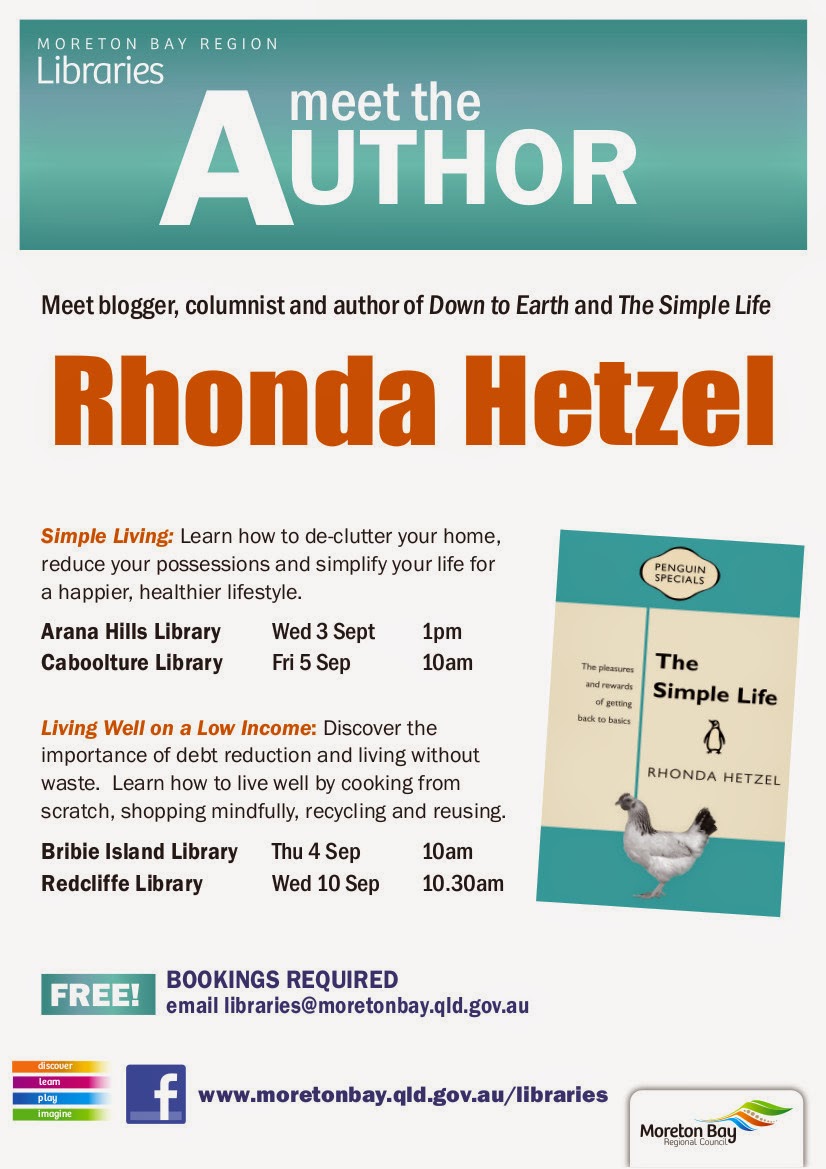
LIBRARY TALKS
If you'd like to meet Hanno and I and listen to a talk on simple and frugal living, the details are below. The talks are free and sponsored by the Morton Bay Council. We can take a few more bookings at all the venues but Arana Hills and Redcliffe are almost fully booked.
  • Wednesday 3 Sept, 1pm at Arana Hills Library.
  • Thursday 4 Sept, 10am at Bribie Island Library.
  • Friday 5 Sept, 10am at Caboolture Library.
  • Wednesday 10 Sept, 10.30am at Redcliffe.
I'll be talking about green cleaning, dishcloths, budgeting, chooks and slowing down and much more, and you'll have plenty of time to ask questions. If you have one of my books and want it signed, bring it along. I'll have both books there on sale as well.

FORUM
The server we use at the forum crashed so no one could get onto the forum for the past two days. To make up for this, I'm offering an ecostore products hamper for one lucky winner who lives in Australia.  If the winner is overseas, I'll send an Amazon book voucher. To enter, simply go to the forum and tell me what you were doing on the two days when you couldn't get to the forum. I think we'll have some interesting, and maybe some funny, stories to read.


WHAT AM I DOING?
At the moment, we're looking after Jamie while Sunny gets a few things organised for her new sushi business. It starts on 24 September at the Caloundra Woolworths.  I've started writing again. I'm working on the final book in the series that will be published in February 2015. This book is a baking book and I'm being very careful about including a lot of hints and tips about baking consistently good bread and cakes. This isn't only a recipe book, it will help you with proving, kneading, oven rise and flours and should get you on the road to getting a healthy, delicious loaf on the table everyday for your family.

I'll be in and out of the blog when I can be so don't give up on me. This is just one of those busy seasons.

I'm sorry the quality of this photo isn't what it should be but it's the only one I have. I only had my phone with me to take the photos and in this one I pointed it toward the overhead light. The rest of them are much better.

Our much loved daughter-in-law, Sunny, invited us over for lunch on Saturday. Outside it wasn't so good, the rain was pelting down, but inside Sunny had prepared a tray of perfectly cut fresh vegetables, prawns and chicken, as well as a few sauces. We were having rice paper rolls. It's a great way to prepare a fresh and healthy lunch for a group because everyone makes their own rolls. It was absolutely delicious. Afterwards I helped Sunny peel garlic for kimchi which she'd already started. Sunny is Korean and she's a chef so I thought you might like to know how to make authentic Korean kimchi. I didn't do anything except test taste the batch I was to take home and peel some garlic. :- )


It's important to get the cabbage right. Kimchi is made using wombok - Chinese cabbage, and this was a one-wombok kimchi. Earlier in the morning, Sunny had cut up one whole wombok and salted it using ½ cup rock salt diluted in 1½ cups cold water. Pour that over the cabbage and using your clean hands, move the cabbage around, making sure the salted water makes contact with all the cabbage. This process is used to draw water out of the cabbage. If you don't do it, the water will come out anyway, but it will come out when the kimchi is made and it will result in a watery mix and a watered down flavour. Sunny said it's best to do this on the morning when you want to make kimchi, not overnight, because you can keep an eye on it so it doesn't go too soft.  You don't want crisp cabbage but it should still have some crunch.  The salting process will take about five or six hours, when the cabbage has shrunk in the bowl quite a bit and is soft but still has a crunch, that is when you can wash the salt off the cabbage and thoroughly drain it.  It should look like the bowl of cabbage above.

While she worked, Sunny told me about how Koreans have kimchi days similar to the tomato sauce making days Italian families have. The grandmas organise the families and will make a 100-wombok kimchi, mainly with the help of the daughters-in-law. Sometimes they will make a 500-wombok kimchi and those larger quantities are stored in huge stoneware pots, which are buried until another pot is needed.


About an hour before you need it, mix one cup of plain (all purpose) flour in two cups of water, in a saucepan. Bring the mix to the boil, stirring as it heats, and when it's thick, take it off the heat and allow it to cool completely.  When the cabbage is ready, place three medium onions and about 20 cloves of skinned garlic in a blender (or whatever amount of garlic you want to use). Add a small amount of water and blend until everything is broken up but not quite smooth. Add that to the cooled flour mix. Above you can see Sunny mixing her onions and spices into the flour mix.

The little bowl on the right is the flour and spice mix for the kimchi I took home. It had much less chilli than Sunny's kimchi. She likes hers very hot.

You can also add one tablespoon of sugar, a teaspoon of ginger powder or fresh ginger if you have it, as much gochugaru (Korean pepper flakes), fresh chilli or chilli powder as you like, Daikon cut into fine strips and green onions. It really depends on the season - here we have no daikon at the moment so Sunny used the green ends of green onions instead. Use your common sense by adjusting the amounts of spice and garlic according to your taste. Sunny also used fish sauce, about a tablespoon full, and mixed it in with the flour mix.  When you have your flour and spice mix ready, pour it over the cabbage and, using your hands again, rub it into the cabbage and make sure it covers the entire cabbage. You can see Sunny doing that below, with a gloved hand.


Sunny gave me a one litre plastic bucket of the fresh kimchi to take home and this is it below. When she filled it, it came up to the lid but over the following hours, water continued to drain from the cabbage and it sunk down in the bucket.  Kimchi is a fermented dish, similar to German sauerkraut, and at this stage it must sit, covered, on the kitchen bench for the fermentation to start. I left mine out for about 30 hours but it will depend on how strong you want the flavour of the kimchi to be. The longer you leave it, the more the probiotics will build up. It can stay on the bench for up to three days. Like all fermented foods, it contains the beneficial bacteria your body craves.


When the bucket of kimchi had reduced in size a bit, after about 30 hours, I put it in the fridge. It was covered with a lid and Sunny wrapped the entire bucket in plastic wrap as well, to make sure the smell didn't seep out into the fridge.

You can see from the photo above that the juices are red from the chilli and sauces. I tipped the bucket upside down a few times to marinate all the cabbage.

And now it's sitting happily in my fridge alongside my Maleny Dairies yoghurt, a half jar of home preserved pickled beetroot, a jar of golden calendula petals macerating in olive oil and the other strange goodies that identify the fridge of a home producer. I'm pretty sure yours looks similar. And that reminds me, this recipe is okay to use if you're lacto-fermenting too. Sunny said her friend makes her kimchi using Yakault - the little probiotic drink. If you have whey add some to this if you want to add Lactobacilli. 

You eat kimchi on its own as a snack or as a side dish for BBQ or fish. I want to use it to make these kimchi devilled eggs. I think they look delicious. I just have to wait for a while for the brew to mature.  Here are a few more ideas: 10 things to do with kimchi. I hope you can make some up to try it.


I hope you have time to relax on the weekend and read this week's selection. I'll see you again next week.

The push to ditch renewables could hand coal and gas industries billions.  If you're as angry as I am about this move to dilute what all Australians should be doing - moving to more sustainable energy options, I encourage you to email your local federal member. I am. You can find their contact information here.
Plans for one of Australia's biggest solar power stations scrapped
How to mend your jeans
The internet is broken
Great knitting videos
Living with voluntary simplicity
Ten ways to renovate sustainably
Tips from the first world war
How to find that book you've spend years looking for
City spiders are getting bigger
I've been thinking a lot about wabi-sabi this year. If you've never heard of the term, it's a Japanese concept about being comfortable with imperfection. I'm very close friends with imperfection and have been all my life but as I grow older, I see it in almost everything I do and in all the beauty that surrounds me - including my family and grand sons. Nothing is perfect and it seems to me that if you strive for perfection, you'll be disappointed more often than not. I don't want to spend time being disappointed when I can just as easily be accepting and even look for wabi-sabi and celebrate it, just like the Japanese do.

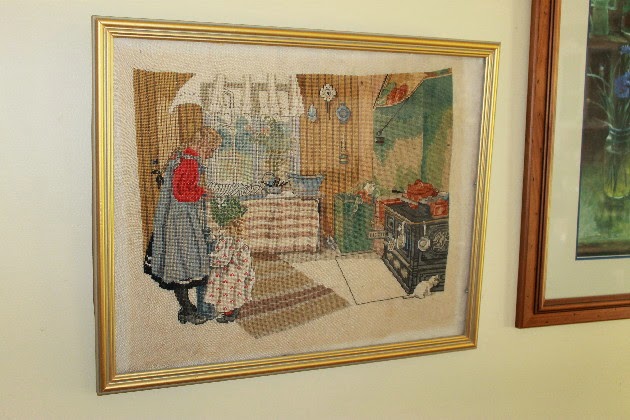
The kitchen on my wall.
The kitchen - a print of the original.

A friend of mine, Gerri, who lives in France and who I met through this blog, sent me a petit point tapestry of Carl Larsson's The Kitchen. Carl Larsson was a Swedish painter (1853 - 1919) and is a favourite of mine, has been since I discovered him when I lived in Germany many years ago. The Kitchen is the depiction of a young girl with a toddler, possibly her sister, in their Swedish kitchen. The older girl is churning butter and the little one is watching her, possibly knowing that one day it will be her job to do that for the family. On the sideline a wood stove holds simmering soup pots, a tiny white cat is almost out of sight, the washing up sits beside a wash bowl and the curtain blows softly in the breeze. And it is that curtain that gets me every time. Little things.

When Gerri sent it to me she said it had been sitting on the wall in her kitchen for many years and now she wanted me to have it. She explained she'd never finished it and if I wanted to, to go ahead. Well, I didn't want to finish it off because to me, it held the history of Gerri and her kitchen just the way it was. I wanted the tapestry to be what it was, not what it was supposed to be. It was more interesting to me as an artefact the way it was. It now hangs on my kitchen wall. Authenticity framed, captured under glass, a wabi-sabi masterpiece. A reminder.

Also in that frame I placed a letter from Gerri, in an envelop with French stamps, and a tiny note on the back of the frame asking: "do you know what this is? Blog 21 August 2014" I suspect that when I die, my family will go through all these things and I hope they'll discover what it is and keep it as their own reminder.  

In her wonderfully descriptive explanation of Wabi-sabi - the art of imperfection, Robyn Griggs Lawrence,  says: 

Broadly, wabi-sabi is everything that today’s sleek, mass-produced, technology-saturated culture isn’t. It’s flea markets, not shopping malls; aged wood, not swank floor coverings; one single morning glory, not a dozen red roses. Wabi-sabi understands the tender, raw beauty of a gray December landscape and the aching elegance of an abandoned building or shed. It celebrates cracks and crevices and rot and all the other marks that time and weather and use leave behind. To discover wabi-sabi is to see the singular beauty in something that may first look decrepit and ugly.

Wabi-sabi reminds us that we are all transient beings on this planet—that our bodies, as well as the material world around us, are in the process of returning to dust. Nature’s cycles of growth, decay, and erosion are embodied in frayed edges, rust, liver spots. Through wabi-sabi, we learn to embrace both the glory and the melancholy found in these marks of passing time.

I guess that says it all and also reminds me why I've been thinking about it more as I age. I think that when I die I'll be a case study in wabi-sabi. And I have to tell you I'd rather go out as a frayed edged, grey haired, spectacled, wabi-sabi grandma than anything else. It comforts me knowing that the history of things, and of people,  plays an significant part in what we are and who we become.


This may not be the most exciting of posts but it's sometimes a struggle to find good wholesome crackers, dips and spreads for snacks, lunches and to accompany drinks when friends drop around. Add to that the ongoing need of parents to send children to school with a good lunch, and you'll know that having a few recipes for these things up your sleeve is a real plus.

If you do have children going off to school, any of the crackers and dip or spreads, along with a container of salad or chopped crisp vegetables, such as carrot and celery sticks, would make a nice change in the lunch box. Add a banana and apple and you'd have the perfect lunch for an older child.

School lunches and snacks


I try to home produce as much as I can and biscuits, crackers, breads, dips, spreads and fillings are high on my list because so many of the commercial products contain preservatives and artificial additives. I prefer not eating anything like that, and want to serve wholesome food to my family and friends. Many of my recipes are based on my farmers cheese and cheese crackers. The recipes for both are here, they contain only natural ingredients and they're very easy to make. I hope they provide a good basis for some of the goodies you'll make up. And here are some other cracker recipes:

  • Homemade Ritz crackers the Ritz crackers sold in Australia now are made in China.
  • Multi seed savoury crackers
  • Vegan herb crackers
  • Lavish crackers from scratch or you can just make your own bread recipe and add one tablespoon of oil to the mix. Make it up as lavish - then cut it up.

Food additives to avoid
MSG and the new flavour enhancers

Last year, my sister Tricia gave me a lovely book called Vintage Tea Party. It holds many old favourite recipes for high tea, morning tea and light meals that are more a snack than a meal. One recipe caught my eye a while ago and I've made it a couple of times since.  It's potted salmon and you can make up a jar of it and keep it in the fridge for serving on toast triangles or crackers.


 Potted Salmon 
  • Tin of salmon (skin removed), or if you're lucky enough to have fresh, cooked or smoked salmon, use that.
  • 40 grams/3 oz melted butter, hold some back for sealing the top of the salmon
  • Pepper
Place the ingredients in a food processor and process until a smooth paste forms.  Add the salmon to a sterilised jar and pour over the remaining melted butter. This is how the salmon was traditionally stored in the fridge, with a butter seal. Serve with crackers or as a spread for sandwiches. It is delicious served with pickled cucumbers - homemade, of course.

  Potted tuna 

This is a similar recipe from Not Quite Nigella but it can't be stored as long in the fridge. It makes a great cracker or bread spread and is excellent with drinks when friends come over.

 Triple layer dip  - another great dip for a party.


 Chicken spread  
For this spread you'll need to get into the habit of saving a cup of cooked chicken when you've made a roast chicken.  Or you can cook a chicken specially for lunches, finely dice the chicken and store it in one cup portions in the freezer.
  • 1 cup farmers cheese (see my recipe above)
  • 1 cup diced cooked chicken
  • Small red onion or one green onion, finely chopped
  • Salt and pepper
  • As much chilli as you like - either fresh or powdered
Combine all the above, mix well and serve on bread or crackers.

 Beetroot dip 
  • 4 beetroot, cooked, skinned and cooled
  • One clove garlic, crushed or finely grated
  • 1 cup farmers cheese (see my recipe above)
  • 2 tablespoons mayonnaise
  • Salt and pepper
Place all the above in a food processor and blitz until the cheese and beetroot is just combined. You don't want a smooth paste for this, it needs some texture. Serve as a dip with crackers.


  Yoghurt cheese - labneh/quark  
When you finish making your yoghurt, or using good commercial plain yoghurt, pour about two cups of yoghurt into a strainer lined with cheesecloth. You need to drain the whey off and as this will take a while, place the strainer in a large jug and store it in the fridge overnight. The following day you'll have a ball of fresh cheese and a jug of whey. Use the whey in your baking or fermenting. If you store it in a sealed jar, whey will keep for about six weeks in the fridge.

To make your cheese, finely chop some chilli and herbs of your choice and add it to the cheese. Add salt and pepper to taste and mix well. Store in a sealed container in the fridge. This is delicious on bread, particularly rye bread, crackers or toast.

These are all good recipes so you can steer clear of those additive-packed dips, spreads, biscuits and chips you buy at the supermarket. All these recipes are delicious and easy to make.  Do you have any recipes like this to share? Please only add those with no additives or artificial flavourings, and no soup mixes or MSG. We all need to have a good selection of these kinds of foods. I'm looking forward to seeing what you can share with us.

I am often praised for just living the way I want to live: I want to sew, bake, mend, tend the garden and spend time with my family. And that gives me a lot of pleasure as well as structure and purpose to my days. When the praise comes, I appreciate it but I never receive a compliment without knowing that this is a team effort - Hanno is here too, working away and helping both of us live our simple lives. 

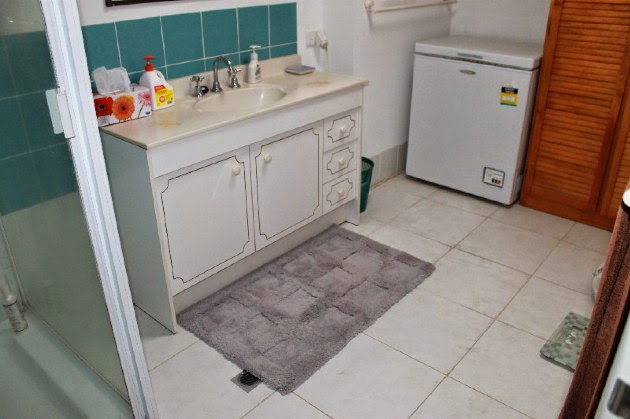
Before.

As some of your know, we're slowly preparing ourselves and our home for a time when we can't do as much as we can now. Hanno has good days and bad days with his health and occasionally he can't walk due to the pain of crystal arthritis/gout in his ankles and feet. He has a good GP whom he trusts and between them they work out what is best for his health. What is obvious though is that prolonged heavy work is no longer possible and whatever work he does, is done as it can be done and not to a timetable.  Part of Hanno's treatment is an emergency supply of cortisone tablets prescribed by his specialist. He is to take it only when the other medications don't work. About a month ago, we had one such time and he started taking the cortisone for the first time. Within the first couple of days the pain and swelling went but he had to continue taking the pills according the instructions, and that would take him through the following month. During that month he renovated the bathroom.

After.

Some of the tiles on the bathroom floor had been stained for some time. The original tiler had left traces of glue and who knows what else on the tiles and although it was invisible, over the years it stained and continued getting worse. We also had an old vanity unit in that bathroom that needed replacing. Neither of us want to live in a home that is falling to pieces and if we can repair and replace while we still have the strength and will to do it, that is what we'll do.  We decided to buy a new vanity and taps and when Hanno removed the old unit, we discovered it had already been moved three times - we'd moved it once.  He started off by removing the old vanity, lights and plumbing, then he painted the walls and ceiling and retiled the toilet floor.


Each day Hanno did the work he felt he could do, he took frequent rests and slowly it all started coming together. We realised that to replace the bathroom tiles would cost us about two thousand dollars and we didn't want to spend that much. We got a quote for a few hundred dollars from a local floor tile cleaner, and when they cleaned the tiles we were both amazed at the change. The tiles look new again. We bought the new vanity, taps and mirror and just had the plumber come in to connect it all up again. Kerry helped with some of the heavy lifting and with putting the new mirror up, Hanno did the rest of the work. And now it looks amazing. Sadly, the effects of the cortisone have worn off now so he's got some pain back but he's really happy he did the work and I'm happy and proud of him for doing such a fine job. I cooked him a favourite meal to say thanks.

If you can do your own house maintenance and renovations, it will always be much cheaper. I think we would have spent about four thousand dollars if we'd had someone do all that work for us. In the end it cost us about one thousand; one quarter. It makes sense to keep on top of all these jobs so they don't get too damaged or expensive to fix, and certainly to change what you need to change as you get older so you can live in your own home as you transition from young old to old old.

We're changing our vegetable garden later in the year, and I'll write more about that when it happens. Small slow steps are not always easy or fast, but they get us to where we want to be.


I can feel the seasons starting to change. I wonder if you feel it too. 

Hoping Maremma bodyguards will help save bandicoots
Lucy Sparrow's felt corner shop in Spitalfields
Take control of slugs the natural way
Using Ollas to water the garden
How to grill pizza
Freezer tomato sauce
Veggie Desserts - craving some cauliflower ice lollies? Great vegetarian sweets blog
The Mason jar blender trick
Basics of a household budget that works
100 tips for frugal living
Homemade modern
The A - Z on water tanks
One for the kids - how to draw dragons
Menu planning can help reduce the cost of living for most of us. It encourages you to think about your food choices, it helps create a healthy balance of meals throughout the week, it gives the potential for less food waste and, for most of us, it reduces the amount of money spent on food.  I think there are two main ways to plan your menus:
  1. you plan before you shop
  2. you plan after you shop
Everything else is dependent on how your household runs. Variations that will impact on what you have to buy include growing food at home, bartering, the amount of time you are able to spend in the kitchen, the number of people in the household, the distance away from the shops, how food is stored in your home, and possibly many other things. So for those reasons, I won't be giving you a list of menus, it is up to you to start working on your menus and shopping lists, dependent on your own circumstances. Basically, you use a calendar-type form containing all the meal times you need meals for. When you decide on a meal you write in down in place then work out if you have everything to make that meal. If you don't, the ingredients you don't have are added to your shopping list. Put aside a couple of hours to set up and prepare your first menus but it won't take that long every week. Keep all your weekly menus because they can be reused when you have enough of them to provide a good rotation.

How to use a menu plan
Menu plan templates


I encourage you to use what you have on hand and what you grow yourself before you think about what to buy. If you shop weekly, the produce you already have in the house shouldn't be too old to consistently do this.  When you start writing up your menus, this produce should be used on those first couple of days.  If you have the time, make as many things at home as you can and if you do that, it will mean you buy more ingredients and less ready-made meals or jars of sauce etc.

 If you menu plan before you shop,  read through the flyers, know by experience where the best value for money is found and shop in those supermarkets. Make up your menu plan and your shopping list at the same time and try to make a regular time to do that every week. Go through your fridge and pantry and note what you have on hand and what needs to be used first and plan you menus accordingly. If you have food  left over from the previous week that should be the first item on your menu, that makes way for the rest of the week which will be based on what you buy that week, what you're growing or bartering, the season and your food preferences.  Try to plan double batch cooking into your plan so you cut down on cooking time, and make sure you plan for breakfast, lunch, dinner and snacks. Make up your menus and your shopping list at the same time.

  If you menu plan after you shop,   some of the above will apply but your main focus will be on shopping for fresh seasonal food, what you can find that you want to cook with, and the rest of your week's groceries, and all for a good price. A problem you might find with this method is that you overbuy and then waste food, so keep that in mind and have a general idea of your week's menu in mind when you buy. Before you shop, check your pantry and stockpile and make sure you stock up ingredients that you're running short of. When you come home with your bounty, sort out what you have, then plan your menus around it. Again, double batch cooking is a time and money saver and make sure you have a plan for every meal and snacks.


Just a quick note on loss leaders: a loss leader is a popular product advertised at a much reduced price. It's a real temptation to go to the store to buy that product. The people who place the advertisement hope you'll buy the loss leader then stay and do all your shopping in their store. Don't be tricked into moving away from your preferred supermarket. If you want to buy the loss leader, make it worth your while and buy as many as you can afford, then leave the store and continue shopping back at your local best supermarket.

Don't forget to mark your special family days, such as birthdays, on your calendar because these will have to be planned for in your menu plan. And if you're cutting down on the amount of meat you eat, maybe you can consider buying organic/free range meat. You might spend the same amount but you'll be eating healthier meat from animals that have lead a decent life.


If you're a new cook, make sure you start building up your recipes to include favourite meals as well as new meals you think the family will enjoy. Always think of the nutritional value of new meals as well as the time they take to prepare and the cost per meal.

I know quite a few ladies from the US and Canada use coupons to cut down on what they spend but here in Australia coupons are generally only for takeaway food or processed food that's not worth buying. I'd be interested in knowing if you've found coupons for healthy food and groceries.

But this post is about menu plans and I'm mainly interested in reading how you do that. Tell us your meal plan secrets.

= = = ♥︎ = = =

If you want to be more prepared this Christmas, Judy has started a Christmas gift, decoration and card list over at the forum. There are lots of good ideas there and plenty of motivation to get started so you can avoid rushing later in the year.

Although I don't write about it nearly as much as I think about it, food budgeting is one of my favourite topics. It's the first area I concentrated on when I started living a more simple life, it's what convinced me that we could indeed live this way and I believe it's the one area where almost everyone can save money. If you can provide good food for the table while saving money doing it, that spare money can go towards debt reduction or something you love. And the good thing is, the money you save on food can be continued savings every week, if you put your mind to it. I have to say too that although spending an extra twenty dollars a week on food won't break the bank here, I think a prudent and thrifty approach to the amount we spend on food, or anything, is a significant and meaningful way of living our simple life. The trick is finding the balance - good food for a good price or value for money, always.


However, food budgeting isn't just about saving money on food, it's more about the wise management of food spending, storage, planning, as well as developing and maintaining a good set of skills.


Of course, it all starts before we ever get to the shops with menu planning, growing food at home, and making many of the things we used to buy. If you plan your menu you'll waste less food and probably spend less money.  Don't feel guilty or inadequate if you don't have the time right now to do all this. There are times in your life when you will be more involved in home production rather than in buying what you need. When you can do it, take the opportunity to get involved in providing for yourself and your family. If you're not there yet, just accept it for what it is and do what you can do. I'll write about menu planning tomorrow.

While I like to think the way I budget here is more about the right food choice for us rather than the cheapest food I can find, there are some little things that make a difference to how much I spend, while still getting the food I want. For instance, I use the delicious milk from my local Maleny Dairies for drinking, cooking, cheese and yoghurt. On the odd occasion I don't have their milk, I use powdered milk for yoghurt and cooking. If you can, work out your own substitutes for those times when you can't get what you'd prefer. Being prepared and organised will help you in those times and you'll be able to avoid buying the most expensive replacement.


One way to reduce the cost of the food budget is to cut cut down on meat consumption. We aim at the three/four rule: three days with meat, four without. Sometimes it's the other way around but I never worry if it is, it generally works it's own way out. If you are going to do this you should find a good vegetarian cook book or web site. At the very least you should understand a bit about "complete protein" - meat and fish are complete proteins, lentils, legumes and nuts aren't, but by combining proteins, you can make complete proteins. For instance, baked beans aren't a complete protein but baked beans on wholemeal toast is. The bottom line many of us eat too much protein. We all need protein but it doesn't have to be animal protein. Learn more about complete protein here.


I guess my top tip would be to start with what you have. So if you're about to shop or menu plan, check to see what you have in your fridge and freezer and if you're growing food or keeping livestock, work out what is available for the kitchen in the next week. Another wise strategy is to barter your excess food for food you need. This requires contact with a lively community or at the very least, a vibrant street of like-minded folk. It's amazing what you can do with bartering once you get into it.


Once you have the food in the kitchen you have to know how to store it correctly so you can cut down on food waste. Stockpiling, preserving, baking your own bread, biscuits and cakes, making your own sauces, jams, relishes and dressings, as well as cleaners and laundry products, will cut your spending at the supermarket. All these skills can be learnt and built upon. Every thing you make yourself will be cheaper and probably tastier and healthier than the commercial version. If you can, build up your home production skills and you'll reap the rewards. One of the reasons I love making my own is that I don't have to ingest all those preservatives and artificial additives that are usually in commercial food. Making my own cleaners and laundry products helps me live with far less chemicals than I would if I had to rely on commercial cleaners. I still get the job done but with less money spent and less risk.


I want you to remember that we're all bound by the time we have available to do all the things I mentioned above.  You may not have time to bake bread or make soap or cheese but I'm sure you could work some of it into your days. For instance, making a batch of washing liquid will take about 15 minutes, organising the slow cooker with your evening meal will take a few minutes but will save on the time you spend preparing a meal when you return from work. Think about how you can change things around to do a few of these things.  Be satisfied with what you can do now and when you have more time you can do more. Don't feel guilty about what you can't do just do what you can and be pleased with that.

I'll carry on with a post about menu plans tomorrow. It's an important topic and it's one of the ways to really cut down on what you spend on groceries.  In the meantime I'm interested in reading about your ideas on food budgeting. What do you have success with? If you've reduced your food expenses and buy healthy food, tell us how you did it.

Newer Posts Older Posts Home


My books were all published by Pengiun, and are available at Amazon US, Amazon UK and Amazon Au

Search here

Total Pageviews

Translate


I'm Rhonda Hetzel and I've been writing my Down to Earth blog since 2007. Although I write the occasional philosophical post, my main topics include home cooking, happiness and gardening as well as budgeting, baking, ageing, generosity, mending and handmade crafts. I hope you enjoy your time here.

MY FAVOURITE PLACES

  • Grandma Donna's Place
  • Grandma Donna's YouTube
  • Grandma Donna's Instagram
  • This Simple Day
  • Nicole's Instagram

Give More

Give More

Popular posts last year

Making ginger beer from scratch

We had a nice supply of ginger beer going over Christmas. It's a delicious soft drink for young and old, although there is an alcoholic version that can be made with a slight variation on the recipe. Ginger beer is a naturally fermented drink that is easy to make - with ginger beer you make a starter called a ginger beer plant and after it has fermented, you add that to sweet water and lemon juice. Like sourdough, it must ferment to give it that sharp fizz. To make a ginger beer plant you'll need ginger - either the powdered dry variety or fresh ginger, sugar, rainwater or tap water that has stood for 24 hours to allow the chlorine to evaporate off. You'll also need clean plastic bottles that have been scrubbed with soap, hot water and a bottle brush and then rinsed with hot water. I never sterilise my bottles and I haven't had any problems. If you intend to keep the ginger beer for a long time, I'd suggest you sterilise your bottles. MAKING THE STARTER In a...
Image

NOT the last post

This will be my last post here.  I've been writing my blog for 18 years and now is the time to step back. I’ve stopped writing the blog and come back a couple of times because so many people wanted it, but that won’t happen again, I won’t be back.  I’ll continue on instagram to remain connected but I don’t know how frequent that will be. I know some of you will be interested to know the blog's statistics. 
Image

How to make cold process soap

I'm sure many of you are wondering: "Why make soap when I can buy it cheaply at the supermarket?" My cold process soap is made with vegetable oils and when it is made and cured, it contains no harsh chemicals or dyes. Often commercial soap is made with tallow (animal fat) and contains synthetic fragrance and dye and retains almost no glycerin. Glycerin is a natural emollient that helps with the lather and moisturises the skin. The makers of commercial soaps extract the glycerin and sell it as a separate product as it's more valuable than the soap. Then they add chemicals to make the soap lather. Crazy. Making your own soap allows you to add whatever you want to add. If you want a plain and pure soap, as I do, you can have that, or you can start with the plain soap and add colour, herbs and fragrance. The choice is yours. I want to add a little about animal and bird fat. I know Kirsty makes her soap with duck fat and I think that's great. I think t...
Image

Preserving food in a traditional way - pickling beetroot

I've had a number of emails from readers who want to start preserving food in jars but don't know where to start or what equipment to buy.  Leading on from yesterday's post, let's just say up front - don't buy any equipment. Once you know what you're doing and that you enjoy preserving, then you can decide whether or not to buy extra equipment. Food is preserved effectively without refrigeration by a variety of different methods. A few of the traditional methods are drying, fermentation, smoking, salting or by adding vinegar and sugar to the food - pickling. This last method is what we're talking about today. Vinegar and sugar are natural preservatives and adding one or both to food sets up an environment that bacteria and yeasts can't grow in. If you make the vinegar and sugar mix palatable, you can put up jars of vegetables or fruit that enhance the flavour of the food and can be stored in a cupboard or fridge for months. Other traditional w...
Image

Cleaning mould from walls and fabrics

With all this rain around we've developed a mould problem in our home. Usually we have the front and back doors open and that good ventilation stops most moulds from establishing. However, with the house locked up for the past week, the high humidity and the rain, mould is now growing on the wooden walls near our front door and on the lower parts of cupboards in the kitchen. Most of us will find mould growing in our homes at some point. Either in the bathroom or, in humid climates, on the walls, like we have now. You'll need a safe and effective remedy at some point, so I hope one of these methods works well for you. Mould is not only ugly to look at, it can cause health problems so if you see mould growing, do something about it straight away. The longer you leave the problem, the harder it will be to get rid of it effectively. If you have asthma or any allergies, you should do this type of cleaning with a face mask on so you don't breathe in any spores. Many peopl...
Image

Five minute bread

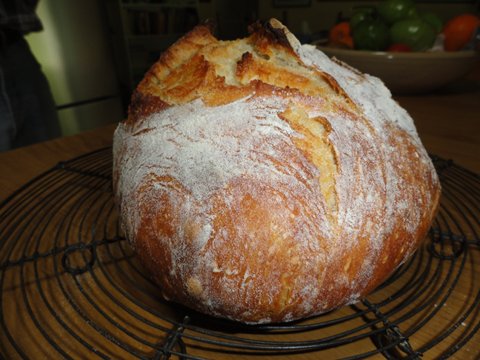
Bread is one of those foods that, when made with your own hands, gives a great deal of satisfaction and delight. It's only flour and water but it symbolises so much. I bake bread most days and use a variety of flours that I buy in bulk. Often I make a sandwich loaf because we use most of our bread for lunchtime sandwiches and for toast. Every so often I branch out to make a different type of loaf. I have tried sour dough in the past but I've not been happy with any of them. I'll continue to experiment with sour dough because I like the idea of using wild yeasts and saving the starter over a number of years to develop the flavour and become a part of the family. However, the loaf I've been branching out to most often is just a plain old five minute bread. By five minutes I mean it takes about five minutes actual work to prepare but it's the easiest of all bread to make and to get consistently good loaves from. If you're having people around for lunch or...
Image

This is my last post.

I have known for a while that this post was coming, but I didn't know when. This is my last post. I'm closing my blog, for good, and I'm not coming back like I have in the past.  I've been writing here for 16 years and my blog has been many things to me. It helped me change my life, it introduced me to so many good people, it became a wonderful record of my family life, it helped me get a book contract with Penguin, and monthly columns with The Australian Women's Weekly and Burke's Backyard . But in the past few months, it's become a burden. In April, I'll be 75 years old and I hope I've got another ten years ahead. However, each year I'll probably get weaker and although I'm fairly healthy, I do have a benign brain tumour and that could start growing. There are so many things I want to do and with time running out, leaving the blog behind gives me time to do the things that give me pleasure. On the day the blog started I felt a wonderful, h...
Image

What is the role of the homemaker in later years?

An email came from a US reader, Abby, who asked about being a homemaker in later years. This is part of what she wrote: "I am a stay-at-home mum to 4 children, ages 9-16. I do have a variety of "odd jobs" that I enjoy - I run a small "before-school" morning drop-off daycare from my home, I am a writing tutor, and I work a few hours a week at a local children's bookstore. But mostly, I cherish my blissful days at home - cooking, cleaning (with homemade cleaners), taking care of our children and chickens and goats, baking, meal-planning, etc. This "career" at home is not at all what I imagined during my ambitious years at university, but it is far more enriching. I notice, though, that my day is often planned around the needs of my family members. Of course, with 4 active kids and a husband, this is natural. I do the shopping, plan my meals, cook dinner - generally in anticipation of my family reconnecting in the evening.  I can't h...
Image

Every morning at home

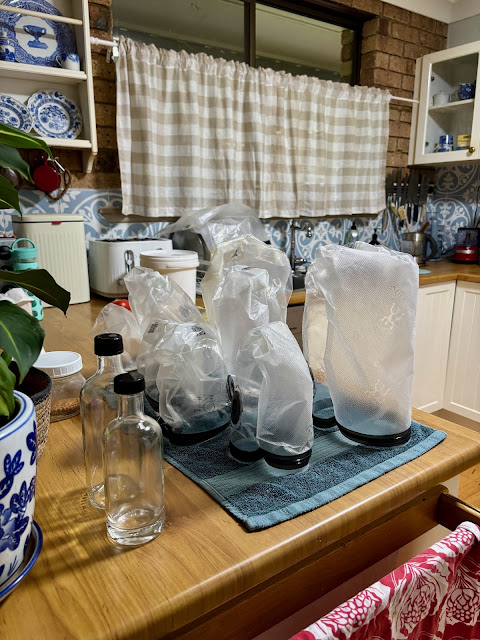
Every morning when I walk into my kitchen it looks tidy and ready for a day's work. Not so on this morning (above), I saw this when I walked in. Late the previous afternoon when I was looking for something, I came across my rolled up Zwilling vacuum bags and decided they had to be washed and dried. So I did that and although I usually put them outside on the verandah to dry it was dark by then. I turned the just-washed bags inside out and left them like this on a towel. It worked well and now the bags are ready to use when I bring home root vegetables, cabbages or whatever I buy that I want to last four or five weeks.
Image

You’ll save money by going back to basics

When I was doing the workshops and solo sessions, I had a couple of people whose main focus was on creating the fastest way to set up a simple life. You can't create a simple life fast, it's the opposite of that It's not one single thing either - it's a number of smaller, simpler activities that combine to create a life that reflects your values; and that takes a long to come together. When I first started living simply I took an entire year to work out our food - buying it, storing it, cooking it, preserving, baking, freezing, and growing it in the backyard. This is change that will transform how you live and it can't be rushed.  
Image


Trending Articles

NOT the last post

This will be my last post here.  I've been writing my blog for 18 years and now is the time to step back. I’ve stopped writing the blog and come back a couple of times because so many people wanted it, but that won’t happen again, I won’t be back.  I’ll continue on instagram to remain connected but I don’t know how frequent that will be. I know some of you will be interested to know the blog's statistics. 
Image

Every morning at home

Every morning when I walk into my kitchen it looks tidy and ready for a day's work. Not so on this morning (above), I saw this when I walked in. Late the previous afternoon when I was looking for something, I came across my rolled up Zwilling vacuum bags and decided they had to be washed and dried. So I did that and although I usually put them outside on the verandah to dry it was dark by then. I turned the just-washed bags inside out and left them like this on a towel. It worked well and now the bags are ready to use when I bring home root vegetables, cabbages or whatever I buy that I want to last four or five weeks.
Image

You’ll save money by going back to basics

When I was doing the workshops and solo sessions, I had a couple of people whose main focus was on creating the fastest way to set up a simple life. You can't create a simple life fast, it's the opposite of that It's not one single thing either - it's a number of smaller, simpler activities that combine to create a life that reflects your values; and that takes a long to come together. When I first started living simply I took an entire year to work out our food - buying it, storing it, cooking it, preserving, baking, freezing, and growing it in the backyard. This is change that will transform how you live and it can't be rushed.  
Image

Creating a home you'll love forever

Living simply is the answer to just about everything. It reduces the cost of living; it keeps you focused on being careful with resources such as water and electricity; it reminds you to not waste food; it encourages you to store food so you don't waste it and doing all those things brings routine and rhythm to your daily life. Consciously connecting every day with the activities and tasks that create simple life reminds you to look for the meaning and beauty that normal daily life holds.  It's all there in your home if you look for it. Seemingly mundane tasks like cleaning and cooking help you with that connection for without those tasks, the home you want to live in won't exist in the way you want it to.  Creating a home you love will make you happy and satisfied.
Image

Time changes everything

I've been spending time in the backyard lately creating a contained herb and vegetable garden. My aim is to develop a comfortable place to spend time, relax, increase biodiversity and encourage more animals, birds and insects to live here or visit. Of course I'd prefer my old garden which was put together by Hanno with ease and German precision. Together, we created a space bursting at the seams with herbs, vegetables and fruity goodness ready to eat and share throughout the year. But time changes everything. What I'm planning on doing now, is a brilliant opportunity for an almost 80 year old with balance issues. In my new garden I'll be able to do a wide range of challenging or easy work, depending on how I feel each day. It’s a daily opportunity to push myself or sit back, watch what's happening around me and be captivated by memories or the scope of what's yet to come.
Image

It's the old ways I love the most

I'm a practical woman who lives in a 1980’s brick slab house. There are verandahs front and back so I have places to sit outside when it's hot or cold. Those verandahs tend to make the house darker than it would be but they're been a great investment over time because they made the house more liveable. My home is not a romantic cottage, nor a minimalist modern home, it's a 1980’s brick slab house. And yet when people visit me here they tell me how warm and cosy my home is and that they feel comforted by being here. I've thought about that over the years and I'm convinced now that the style of a home isn't what appeals to people. What they love is the feeling within that home and whether it's nurturing the people who live there.
Image

Making ginger beer from scratch

We had a nice supply of ginger beer going over Christmas. It's a delicious soft drink for young and old, although there is an alcoholic version that can be made with a slight variation on the recipe. Ginger beer is a naturally fermented drink that is easy to make - with ginger beer you make a starter called a ginger beer plant and after it has fermented, you add that to sweet water and lemon juice. Like sourdough, it must ferment to give it that sharp fizz. To make a ginger beer plant you'll need ginger - either the powdered dry variety or fresh ginger, sugar, rainwater or tap water that has stood for 24 hours to allow the chlorine to evaporate off. You'll also need clean plastic bottles that have been scrubbed with soap, hot water and a bottle brush and then rinsed with hot water. I never sterilise my bottles and I haven't had any problems. If you intend to keep the ginger beer for a long time, I'd suggest you sterilise your bottles. MAKING THE STARTER In a...
Image

An authentic look at daily life here — unstaged and real

Most days Hanno was outside happily working in the fresh air. It may surprise you to know that I started reading my book,  Down to Earth , yesterday - the first time since I wrote it 13 years ago.  I had lent it to my neighbor, and when she returned it, I started reading, expecting to find surprises. Instead, I realised the words were still familiar—as if they were etched into my memory. As I flipped through the pages, I was reminded of how important it was for me to share that knowledge with others. The principles in Down to Earth changed my life, and I truly believed they could do the same for others. After just 30 minutes of reading, I put the book down, reassured that its message still holds true: we can slow down and reshape our lives, one step at a time.
Image