down to earth

  • Home
  • About Us
  • Down To Earth Book
  • Privacy Policy

This is the shambles that I call my sewing room storage. Soon I'll have much more room for my fabrics, cottons, yarns and ribbons. By next week, all this will be in a new place in another room.

We are reorganising our home again. Just when things seem stable and fixed, circumstances change and we modify our home to suit the new circumstances. In this instance we’re taking apart H’s office, which he used when we had the shop and it will soon be my new sewing room. My old sewing room will be turned into a small guest room. Now that we’re older, we seem to have many more visitors. I’m not sure if they think we have more time now, or if it’s because our sons have left home. Whatever the reason, I like the idea of family and close friends visiting and I like the idea of changing our home again. I love change.

This change got me thinking about how we express our individuality in our own spaces and how the character of a home changes many times during the stages of our lives. When we moved here with our teenage sons we needed bedrooms for them and one for us. Then we built an extension of our current bedroom and en suite, and our old room became a guest room. Later Kerry went to live in Canada for a year and H got his office. Shane moved out and I made a sewing room for myself in his bedroom. Now there is no further need for an office, I’ll move my sewing in there as it has much better storage and the former sewing room will be our second guest room. We are geared up for guests instead of teenage boys but it’s wonderful that our sons will continue to sleep in those rooms when they visit us. The first time the new set up will be used is when one of Kerry’s Canadian friends visits with him in a couple of week’s time.

These transformations, either complete room changes or smaller changes within a room, are what make your home uniquely yours. Over the course of your time in that house, especially when you have your children at home, your home will mold itself around you and change according to the needs of everyone in the family. The changes you make to accommodate your shifting family needs will give a cosy, lived-in feeling and provide a practical way to express your creativity and uniqueness. This is where the frugal talents of home sewing and crafts come in to play, as well as the ability to paint furniture and walls. Over time your changes make the house your home, instead of a show house, a copy of something in a magazine, your friends house or your mother’s. Creating your own home style piece by piece is one of the creative tasks we all take on – some do it with flair, some don’t, but overall as long as everyone is happy with their own efforts, it’s all good.

This is an Airedale tea cosy I made a few years ago. For some reason is was sitting in the sewing room waiting to be photographed.

We found this little fellow in a bucket near our tank. It's nice and moist there and it looks like there are tiny tadpoles forming. 

In our grandmother's day, everything in the home was valued and cared for. When something was past its prime, it was sent down a chain where it kept giving value at every stage of its descent. For instance, a hand knitted wash cloth might have been used washing dishes for a year of two, when it started showing signs of age, it would be sent to the laundry to do service as a cleaning rag in the home, then a cleaning rag outside and finally it would end up in the garden, either dug into the garden for worms to feed on or in a compost heap.

That
hierarchy of thorough usage for all items is still being used in my home, and every day I use that hierarchy to deal with our household waste. I want to get the most value from everything at every stage of its life. We've been hoodwinked into thinking lately that products only have one life. Wrong! When something is past its made-for or bought-for use, it can be used in other ways.

We get the most value from our food waste if it is eaten by the chooks. They will turn it into lovely eggs for us to eat - our kitchen waste becomes part of an egg laying cycle. Chooks need high protein food to lay good sized eggs, so we make sure that all our high protein waste goes to the chooks. They are on top of our hierarchy. In the past week they're been given a bowl of left over vegetable soup, some milk that soured before its use by date - chooks LOVE sour milk, some stale cake and finely crushed up egg shells, as well as a lot of greens from the garden and their daily ration of pellets and grain. The chooks will also eat and turn over all the grass clippings, fruit and vegetable peelings, so they're all put into a fenced area in the chook pen and the ladies spend a lot of time in there eating, scratching, pooing on and generally making the best fast compost possible. In our climate, that compost is ready to use in 3 - 4 weeks. The chooks also get most of our shredded paper for their nests.

The next level down in the hierarchy are the dogs. They have absolutely no food value at all but we love them, they give us a lot of joy and they keep us and our home safe and free of snakes and cats. So the dogs get a few small bits of the high protein waste that the chooks get. They get things like uneaten toast with butter on it, or little bits of cheese in a leftover sandwich, bits of egg or cracked eggs etc. If the complete truth be told, they also get their own toast and Vegemite for breakfast. ; )

Next down on the hierarchy is the worm farm. The worms will eat almost anything organic - anything that was once alive. I give them some shredded paper, cellophane, wet and cut up cardboard packets, old cotton, linen or woolen items that have completely exhausted their use, the contents of the vacuum cleaner - checked first for plastic pieces, hair from my hair brush, any overflow of kitchen waste that hasn't gone to the chooks or dogs, garden waste like old plants and leaves and some crushed up egg shells, tea bags, tea leaves, coffee grounds and a small amount of onion peels and citrus skins. All the worm food needs to be very small as it's consumed faster then, so I always chop up every thing that goes in the worm farm.

The next level down is my cold compost heap. This is just an area in the corner of our vegetable garden that is about one metre square and consists of garden waste that doesn't go to the chooks, onion skins and citrus peel, as well as a couple of containers of lawn clippings to help with decomposition and any other organic item that doesn't go to the higher levels of the hierarchy. We turn this heap when we think of it and after a few months we get the most beautiful, dark, moist compost. Following is a photo of that heap. You can see the top layers are still recognisable as lawn clippings and shredded paper, but underneath it's a black gold mine. We have been using this and the compost from the chook pen to build up our garden beds as we change from one season to the next. Compost is the best fertiliser you can use on your garden.


We never throw out any organic waste, it's all recycled either into food, dog energy, eggs or compost. Not only does it give our chooks and dogs treats they look forward to, it also cuts down a lot on the waste we put into our rubbish and recycling bins.

I forgot to let you all know the time frame of the swap. Your napkins must be posted on, or before, October 1. That gives everyone 3½ weeks to make or buy their napkins. I will finish replying to emails later today. If you can't make contact with your partner, please let me know and I'll help you.

I hope you all have fun with the swap. It's a great way of getting to know each other.

I had a big day at my voluntary job yesterday and when I came home, I promptly sat in a lounge chair and went to sleep. I've just woken from a good night's sleep, that was filled with the sound of rain falling on the roof, and now I'm feeling ready to take on the world.

H and I will drive the youth bus into Brisbane today to pick up food for the Centre's emergency food bank. We'll do our own shopping at Aldi on the way home, unpack that, then drive up to the Centre to unload the foodbank food. I'm hoping to have enough time this afternoon to answer some emails, so if you've sent one, I hope to answer soon.

Thank you for stopping by today. : )
This swap is for four 100% cotton napkins, you can send six if you prefer, plus anything else your heart desires. It is fine if you send something extra, it is fine if you don't. The choice is yours. If your swap partner has click-able link (on their name in the swap comments box) to their email, please contact them to say hello and ask for postal details. If you can't make contact, email me and I'll contact them for you. If you are one of the swappers who has not got an email link, please email me with your postal details, as well as the name of your swap partner (so I don't have to keep looking at my list). Thanks everyone. I hope you all enjoy this swap and have some fun with it.

Here is the list of swap partners for the napkin swap.

rhonda gay and karen
alita and darlene
niki and lenny
lib and michele
kate and kim
sharon and chookasmum
jenny and cheryl (copper's wife)
knitterforlife and kirsty
briget and pura
busy woman and dee
susan and debbie
lisa and heather
jen and bobbi jo
polly and mrs mk
tracy and jayedee
alexia and wyndesnow
rhonda jean and deb

Ok swappers, start your engines. : )
I'll just do a small post now, and tidy up a couple of loose ends, and hopefully get time to post again later.

I'm so pleased to announce that I'll have the first guest writer on my blog this week. Bel from belindamoore.com will be sharing some of her wisdom with us. Bel is an Australian mum of six children, aged 3 - 13 years, who lives with her husband and kids on the Atherton Tableland. Bel will be writing about cloth sanitary pads this week and will follow it up, probably a week later, with information about cloth nappies/diapers. I'm sure we'll all learn a lot from her input. Thank you, Bel. Check out Bel's site. There is a lot of information sharing going on there about homeschooling, mothering and life in general.

How is everyone going with their electricity meter readings? Did you work out ways you can reduce your consumption after reading your meter? If you did, please tell me about it, either in the comments box or in an email. If you have any tips for us, let me know so I can share them on the blog.

It's really good to see everyone is so keen on preserving. I'll definitely write more about it in the weeks to come and I'll share some recipes with you all too. If you have a preserved/canned recipe that is a real winner, drop me a line and I might share it with everyone.

Now I'm off to make up the swap buddies list. Stand by swappers! : )

Bread and butter cucumbers with red onion and mustard seeds.

I have only one jar of peach jam left! It's my favorite. I'm hoping to keep this jar going until the peaches are ready to be picked this year. My sister is visiting soon, when she arrives I doubt there will be much hope for the peach jam.

Tomato relish and ginger beer.
I make chutney, relish, sauces, jams, marmalade, butters and cordials during the year. My aim is to make and preserve as many of these things as I can so I'm not buying inferior products at the market. My preserving season will start soon. I'll fire up the old Fowlers water bath and start stacking my shelves with home grown and home preserved goodies.

Home made tomato sauce, made with Amish paste tomatoes.

The first step in this process is to collect a many jars as possible. I have quite a few Fowlers Vacola jars - my favourites are a set of 80 year old jars that are a greenish colour, but I also recycle the French jam jars with the gingham lids and Aldi have recently been selling some jam in nice jars. The thing you look for is a wide mouth on the jar for easy filling. The lids need to be in perfect condition with the rubbery seal inside the lid undamaged. You can buy new lids for these jars. Here is part of my collection of jars. As you can see I reuse a lot of varying sizes. If it's not good enough for preserving, it's generally good enough for storing dry goods in the cupboard.

Some of the jars I use for the various sauces and jams.

Preserving anything generally happens in two stages. Stage one is when you cook the jam, relish or sauce, stage two is transferring the product to a jar or bottle and boiling it long enough to kill bacteria. If you do that correctly, you can store your goods for a year in the cupboard. Sometimes, when I make a small amount of something that I know will be eaten within a couple of months, I don't boil the jars, and just store them in the fridge. Some things can be safely stored that way for a short amount of time.

Pickled onions and beetroot. The beetroot was home grown, the onions bought at the market.

It's coming up to preserving season here, or canning season for our North American friends. I always make peach jam, but this year I'll also make orange marmalade, lemon cordial, ginger beer, tomato sauce, tomato relish, chilli jam, bread and butter cucumbers, pickled onions, beetroot, lemon butter, strawberry jam and rosella jam. This year I'll be making rosella cordial too. There has been research at the Queensland University that indicates eating rosellas in jams and cordials helps reduce blood pressure. H suffers for high blood pressure so I'm hoping to make enough rosella cordial for the year and keep it in the cupboard. I'm sowing rosella seeds next week and when they're a good size, we'll plants about 20 bushes out in the front garden.

Lemon cordial, made from home grown lemons. It is really satisfying to be able to offer friends and family home made refreshing drinks on a hot day. This lemon cordial with crushed ice, cold water and some mint leaves is a wonderful drink during summer.

I'll write more about preserving when I'm actually doing it and if there is anyone here who'd like to learn, I'm happy to post a tutorial and share photos and ideas.

We love eating peaches fresh, but if we have an abundance, I always preserve some for eating later in the year when peaches are a pleasant memory.

Let's face it, homemakers are looked down on as a sort of female underclass. They're seen as old-fashioned, not quite with it and definitely passed their "best before" date. I have a big problem with that, not only because I proudly see myself as a homemaker but also because it just plain wrong ... and stupid.

There is a new type of homemaker emerging. She (sometimes he) is keen to raise happy and responsible children, is environmentally and financially aware and health conscious. There is nothing old-fashioned in that. The new homemaker sees her job as being a confident and capable role model for her children, she not only makes sure they attend school with an eagerness to learn, she also teaches manners and life skills at home. Many SAHMs homeschool their children, taking on the formal role of teacher. This is is certainly not something that some dullard with no ambition would choose to do.

Homemaking is a profession. It's made up of people who choose to develop their own family's life instead of working outside the home. Of course, there are many homemakers here who do work outside the home, but they also hold a strong emphasis on the importance of their home and their place in it. All new homemakers see their home as the heart of the family, a place where everyone relaxes and can be their true self, where important relationships are nurtured away from the influences of the outside world.

The new homemaker acknowledges the importance of a family working hard to reduce its impact on the environment. Where possible she uses green cleaners, shops locally, produces some of her family's food, conserves energy, fuel and water, cooks from scratch, reuses, recycles and repairs, makes do and uses her energy and her intelligence, instead of just her money, to provide for her family and care for her home.

New homemakers see their role as raising healthy children, creating a home where everyone feels at ease and comfortable, shopping responsibly, saving for the future and being environmentally sound. Instead of seeing housework as never-ending, they see each day having its own cycle with new possibilities every day. In the new homemaker's life, the most important place is home, and it is a home where children, family and friends will always find kindness, generosity and affirmation.

These new homemakers see money as not just a means of buying products, but as something that creates more options. They're frugal, often not because they have to be, but because they have changed their attitude to money and possessions. There is a depth of meaning in being frugal that most people don't quite get ... yet. They will catch up sometime in the future. Catch up with what new homemakers have known all along - that more possessions, the latest fashions and biggest car don't make people happy. Happiness is found in creating a meaningful life with those you love and care about. The new homemakers are working towards that contentment with innovation and a sense of purpose, and every new homemaker knows she is a pioneer in a new world.

(graphic from
allposters)
I have been honoured by being awarded Best Homesteading Site for the month of September by The Modern Homestead.

Thank you to Phelan at a-homesteading-neophyte for nominating my blog.
We had a lot of fun with the dishcloth swap, and we may do another one in the future, but today we'll start another swap.

This time we will be swapping four cotton napkins, preferably handmade. If you can't sew, you can buy your napkins, but they must be 100% cotton. They should be around 25 cm square, or 10 inches, give or take a couple of cm. This will help us all build up our stocks of cloth napkins so we can all leave the disposable ones at the store. Another step towards a healthier planet.

If you would like to join the swap, just make a comment and I'll team up swap partners early next week.

Everyone is welcome to join. : )

The end of winter is never the best time to see a beautiful vegetable garden as the harshness of winter does take its toll, but there is still beauty to be seen in a functional garden and even though plants are wilted and yellow, to me that's just part of the cycle of life. You can enlarge the photos by clicking on them.

It's the first day of Spring today so I'm celebrating the end of a beautifully cold winter and the start of warmer days. H cleaned out the chicken coup yesterday and today I hope he'll make a shade structure for them. We want them to have a little area of protection from the sun and rain. We'll use recycled timber and iron sheeting we already have so no money will be spent and waste products will be given a new life.

This is Cocobelle, my favourite chook.

Bare spaces here where we harvested all the turnips and some cabbages. We'll be planting potatoes in this bed.

I cleaned up the aquaponics gardens yesterday. I removed some celery that's been growing there for the past five months and planted beefsteak and Amish paste tomato seedlings. I still have one pink brandywine tomato growing there. It's just a side shoot from one of the large bushes we had growing but it's full of flowers and since the other tomato bushes were removed, it's really taken off.

This is the aquaponics system. The fish are in the 3000 litre tank at the bottom and we grow all sorts of organic vegetables in the two grow beds at the top. The water in the fish tank is pumped up to the vegetables, it trickles down through the gravel and this process and the action of beneficial bacteria growing on the gravel, purifies the water which then falls back into the fish tank.

So far we have planted in the aquaponics beds: tomatoes, capsicums (peppers), parsley,
asparagus and ruby chard. We'll probably finish off the rest of the celery in the next couple of weeks, so I'll plant some celery seeds (tall Utah) today to be planted when they're about 4 inches tall. I love gardening with aquaponics, it's so easy. You just plant and that's it! No watering, fertilising or weeding. It's all taken care of within the system. And the bonus? Fish!


Here you can see one of the two grow beds attached to the aquaponics system. In the centre and just to the left are the just planted tomato seedlings. Joel over at backyardaquaponics harvested 31 kilos of tomatoes from one bush last year. I'm aiming for half of that.

The fish are growing quite well. We have three large silver perch about 6 or 7 inches long.
They're quite fat now and have developed blurry stripes. We expect them to start growing faster as the temperature increases. We took all the plants out of the tank when we had the problem with the fish dying and now that's been rectified, I'd like to put some plants back in. I'm sure the fish like the plants and hiding in them makes them feel more secure. They're very timid creatures until it's feeding time and then they turn into a pack of sharks in a feeding frenzy. It's a good thing to watch as the fish swim right up to the surface and down again, hoping to get every bit of food they can. As soon as they've had their fill, they're quiet again and hang around the plumbers pipes we put in the water for them to hide in.

This large fish is one of the originals along with lots of the newer ones.

The soil vegetable garden is changing quite quickly as we've been harvesting cabbages, cauliflowers, green beans and peas, and planting seeds and seedlings. Our aim is to provide as much of our own food as we can grow and often it's a balancing act to keep the food coming every day. We often have gaps when we have to buy potatoes or pumpkins, with most of the other vegetables we make do with what's in the garden - if we have no chard, we eat cabbage or spinach, if we have no carrots, we eat turnips, no lettuce, we have rocket, there is usually something to keep us going. From my experience, creating a continuous supply is the most difficult thing to manage in the vegetable garden.

Over the past week or two we've planted bok choy, carrots, radishes and silver beet in this bed.

This is our vegetable and fruit growing list at the moment. In the ground producing, or as seeds or seedlings, we have: cabbages, cauliflower, bok choy, potatoes, English spinach, silverbeet and ruby chard, garlic, green and red welsh onions, amaranth, thyme, comfrey, oregano, marjoram, bay, rocket, lettuce, snow peas, green lake beans, kale, tomatoes, cucumbers, carrots, radishes, pigeon peas, chokos, asparagus, parsley, capsicum, celery, zucchini, pumpkin, bananas, pink grapefruit, lemons, oranges, blueberries, raspberries, pineapples, passionfruit, peaches, nectarines, mandarin, grapes, red paw paw and avocados.


This is one of our newer Washington navel oranges. It's two years old now. I'll remove a lot of these flowers as the tree is still not strong enough to hold them all. Removing some of the oranges allows those remaining to grow bigger and removes the risk of the branches ripping away from the trunk while it's still young.

And
now that it's the first day of spring, we hope it will all start growing like Topsy. We'll spend the day making and applying fertiliser, harvesting, pulling out and planting, sowing, reorganising, changing, tying up and pruning and hope that our work helps produce some delicious organic food over the months to come.

My home made 100% cotton napkins. The ones in the fan are small, the larger ones are at the front.

I'm trying to do without as many "disposable" products as I can. These things have become so entrenched in the way we live our lives now that we see them as normal. They aren't. I looked up the meaning of the word "dispose" and it means: cast aside, chuck out, discard, fling, throw out, throw away, toss out" etc. The trouble with "disposables" is that when we cast them aside or chuck them out, most of the time that means they're in a landfill rubbish dump somewhere taking years to decompose. In the case of disposable nappies/diapers it is believed to take about 200 years. Of course, no one really knows as they haven't been around for 200 years for any to have decomposed completely. Maybe they don't decompose at all, maybe a future earth will be full of slowing rotting but ever present dirty nappies/diapers. Ugh!

There is a huge problem in Australia, and around the world, with marine life eating and being tangled in plastic ropes, bags and sheets. I have seen photos of turtles with plastic embedded in their shells and photos of dead dolphins, strangled with plastic. If you don't know there is a problem using plastic by now, you must be living in a world with no newspapers, TV or computers. Plastic kills.

Polystyrene is another catastrophe. "Each year in the United States (US), approximately “60 billion cups, 20 billion eating utensils and 25 billion plates”, all disposable, are used and sent to landfills and incinerators." Source

There is a big problem with the carbon emissions caused by the manufacture, transport and disposal of paper products.
Products like tissues, paper towels and plates, toilet paper and napkins. These products tend to decompose fairly rapidly, if they aren't coated with plastic, but they are still a concern because of the carbon emissions they cause and the forests that are cut down to create them.

So here at my little homestead, I'm trying to get rid of as many "disposables" as I can. I've already given up plastic shopping bags and have my own shopping totes, I've made little net bags for small items, we've given up paper towels and use old terry cloths and newspaper instead and I always try to buy products with the least amount of packaging. A couple of years ago we gave up paper napkins, but over that time we started using the convenient box of tissues sitting in the kitchen to wipe our mouths while eating. Now that's stopped. I've made a few simple cotton napkins that are suitable for everyday use and that's what we're using instead of tissues. I would love to give up tissues completely, but I can't bear to wash handkerchiefs, but if we can reduce our usage of tissues significantly, I'll be happy enough. We used too many of them as napkins, so I'm pleased we've stopped doing that.


This little basket of homemade napkins now sits on my kitchen bench.

We take drinks with us when we go out so we never have to buy plastic bottles of drink or tea in a polystyrene cup. We've given up buying "disposable" dishcloths as we have our wonderful handmade dishcloths, and I'd love to be able to give up toilet paper but when I spoke with H about this, he gave me THE look. I might leave that one for a while. LOL Strangely I have less of a problem with what comes out of a bottom than with what comes put of a nose. But maybe that's TMI. : - O

If I had babies now I would never put them in disposable nappies/diapers, and if I wasn't post-menopausal, I'd be using a Diva cup or home made pads. I'd like to present some information about reusable nappies/diapers and homemade pads, and I am hoping to get a friend to write about these things so I can post some good info for you.

Have you conducted "disposables" audit in your home?
Have you given up using "disposables"? I'd love to hear your stories in the comments box.

Further reading about disposing of rubbish
Further reading about the first sanitary pads
Getting started on cloth nappies/diapers

A good way of building an emergency fund, or to save for other things, is to have a change jar. “Change” can be coins or notes. I usually classify everything in the coin section of my purse as change, even if it’s folded notes. If I come home with change in my purse, it usually goes into my change jar.

When you keep a change jar, never take from it, don’t count it and keep it out of sight. Only count it when you are going to transfer the money into a bank account or to pay off debt. By not counting you give yourself a nice surprise when you do count it. It’s more of a moveable mystery if you don’t know how much you have. Life should have some secrets, let this be one of them.

You can also add to your jar by adding unexpected gifts or savings. For instance, if you have gift money given to you, add it, give up the coffee you buy on the way to work and add that extra $20 a week, give up smoking and add the money you would have spent on cigarettes. If cigarettes are around $14 and you smoke a packet a day, you'll save over $5000 in a year by giving up and saving that money.

Every time your change jar is full, sit down with a smile on your face and count the money. If you have lots of gold coins or notes, you might easily have $300. Whatever it is, take that money and add it to the bank account you use to pay your debts, be that your mortgage or your credit cards. If you are debt-free, add it to your savings account or use it for a holiday.

When H and I went on our holiday recently, the only spending money we took with us was the money from the change jar. It was just under $300 and we each had half. Both of us came home with $100. We did everything we wanted to do, we took Kathleen out to dinner and we enjoyed ourselves. We didn't buy junk, or anything we didn't need. That's the thing about saving, you have to have it firmly in your head that you are saving, and go for it.

For those of you earning a good weekly wage, you might think it's trivial to even talk about such small amounts. But living frugally, whether by choice or by need, is all about small steps. Most people can't save $1000 without starting with those first few dollars.

So think about starting a change jar. If you give up a few things and save all your change, you'll be able to pay off your mortgage faster or take the family on a holiday without it going on the credit card.

Keeping the kids active and occupied doesn't have to cost a lot. There are plenty of activities and hobbies they can do at home that are low cost, fun and don't involve a screen. Taking the kids on an outing can also be a lot of fun, and doesn't have to cost much at all. Put on your frugal hat when it comes to entertainment for yourself and the children. Spending a lot on movies, eating out and travelling around will slowly drain your savings. There isn't much value in a day's outing that you have to work a full day to pay for. There are other ways around it.

Discover your local library, museum, science centre and the long coastline of beaches that Australia is understandably famous for. Look for local free concerts or events in the park. Sometimes local councils sponsor these events and will advertise them in the local paper. Some enlightened councils are now offering free gardening and backyard sustainability courses. Although not available all through the year, these wonderful things can be enjoyed and will not cost you anything except the cost of getting there. If you can't find information on free local activities in your newspaper, go online and google "free local activities [your town]", or phone your local council and ask what's available.

The local paper, magazines and books are available free at any library. They often have DVDs, CD, puzzles and audio cassettes. All you have to do to access this vast free resource is to become a member.

If you live in a city, take advantage of all those taxpayer-funded facilities like the museum, art gallery, science centre and botanical gardens. They will provide hours of enlightening entertainment for yourself and your family. Take a picnic to the closest beach, find some shade and enjoy a day with the family. If you’re in the country and close to a river, you can enjoy a riverside picnic and swimming with the family. You might go for a bush walk and a bike ride. If you’re close to a national park or a naturally beautiful area, there will often be walking trails to follow.

Wherever you are, if you look
around your community you should find ways to entertain yourself without it costing too much. Be creative, team up with other people you know and go for it. Remember, not everything of value has an entry fee.

Here are some links to free activities:

Sydney
Sydney
Brisbane
Toowoomba
Canberra
Melbourne
Moreland
Adelaide
Perth

United States
US cities and towns

UK
Here are photos of some of the dishcloths swapped during our first swap. If you have a photo of your dishcloths you'd like to share, send it to me and I'll post it with these.

These little beauties are by Polly, and were sent to Jewels. Polly included some of her home made soap.

These cloths were made by Jewels and sent to Polly. Jewels also included a beautiful hand made card.

These lovely cloths were made by Robin and sent to Maggie in NZ. Love those autumn colours.


Now we have the cloth sent to Susan by Lenny. Lenny also sent some fudge. mmmm

And the following photo is the beautiful blue package of cloth and soap that Susan sent to Lenny.

Finally the swap between Carla and myself. Carla sent me these two cloths, plus another that's currently in the wash. I really love them, Carla.

And here is what I sent Carla. A cloth and a copy of last month's Grass Roots.


I live a very fortunate life. My husband and I have been hard workers all our lives and we are now enjoying the fruits of that hard work. We don’t have a lot of money, and don’t need a lot, but we live our days as we choose and generally squeeze as much as we can from each day. One of the things I really love about my life now is that I can give something back to the community. I choose to do voluntary work for two days at my local Neighbourhood Centre where we look after the needs of the homeless and disadvantaged. I love that job. It allows me contact with people I wouldn’t normally meet, it gives me real satisfaction to help the people who come in, I write, teach, organise, hug, make cups of tea, give tissues, answer the phone, attend meetings and talk. Yep, talking is one of the requirements of my job, and I make sure I do a lot of it. LOL

So when I come home after my two days work, I’m really tired. It’s physically and mentally challenging work. Monday and Tuesday nights I sleep like a log. But when I get up on Wednesday morning I feel joyous and re-energized by my time spent at that job. I don’t know why I’m lucky enough to have this life.

Today is my catch up day. On Wednesday I do the things not done on Monday and Tuesday so I’ve already done a bit of gardening, I’ve made some vegetable soup for our main meal today and I’ll bake some hot bread for us to eat with it. I also have to check my sauerkraut, tidy up the bedroom and make the bed, sweep the floors and the verandahs. Later I’ll do some sewing. It will be a good day, a day to enjoy time at home, play with the dogs, collect eggs, take photos, experience everything I can, maybe learn something and be thankful that H and I are healthy and breathing.

Oh, I also wanted to mention that I watched a small portion of a brilliant concert on ABC2 last evening. I was washing up and H called me to come watch something – it was Keith Richards and Willie Nelson singing together, after them was Merle Haggard and Jerry Lee Lewis. It was a wonderful thing to see. Did anyone else watch this? I’d like to know what the concert was.


Turn off appliances at the wall. Reorganise your appliances to make this as easy as possible.
Turn off all chargers with a black box on them at the wall, every time you finish charging. Those things really suck up the power, even when they're not charging but still "on".
When buying new appliances, always buy the best energy rating you can afford.
Sweep the floor instead of vacuuming.
Wash up by hand instead of using the dishwasher.
Use a programmable thermostat for your furnace. Set the thermostat five degrees lower/higher (depending on the season) at night.
Use a table-top cooker, like a Nesco (not a crock pot).
Turn the monitor off when you leave the computer.
Exchange old electricity globes with compact fluoros.
Keep light usage to a minimum. Only do full loads of washing.
Don't let rice cooker sit on warm after rice is cooked.
Go to bed earlier – this saves on a lot of things like lights, computer, TV, stereo, extra cups of tea.
Use your mobile phone alarm rather than an electric alarm clock.
Ring your local electricity supply company and get all the information you can on your usage, tariffs and how you can save for your particular situation.
If you have a 3 in 1 light fitting in the bathroom that contains a light, exhaust fan and heater, take the heat globe out.
Watch less TV.
Use a solar camping lamp in the evenings when you don't need strong light.
Try to do without your small appliances like coffee maker, sandwich maker etc.
Do less ironing. Shake clothes when hanging them on the line, hang shirts and dresses on a hanger to dry, give up the idea that you have to be absolutely creaseless.
Use a wall clock instead of relying on your oven or microwave clock. Turn these ovens off when not in use.
“Snuggle up" instead of turning on the heater, get a rug and snuggle with your loved ones on the lounge.
Dress warmer in winter instead of turning on the heat.
In winter, keep lap quilts and rugs on the sofa to encourage the family to use them instead of the heater.
No clothes dryer – hang your clothes outside to dry. Turn on hot water heater for 1 hour a day. Key wind clocks in all rooms. No air-conditioner, no electric heater. Just a wood burning stove in the winter and fans in the summer.
If possible, put a timer on your hot water system.
Change to solar hot water.
Install skylights in dark rooms.
Close the door when you’re heating or cooling a room.
In very cold climates, install double glazed windows and insulated blinds.
If it’s cold outside, hang window quilts. Read about them here:
http://www.manytracks.com/Homesteading/winquilt.htm
If you’re using a dishwasher, shut the dishwasher off and open the door after it's finished washing and let the items air dry.

Fact sheet on CF lights:
http://www.conscientiousshopper.com.au/conscientioushouse/4523353276
http://en.wikipedia.org/wiki/Compact_fluorescent_lamp

Info on mercury in CF lights:
http://www.treehugger.com/files/2005/06/what_about_merc.php

REMINDER:
When recycling your compact fluoro globes, to take them to the recycle station, just like you would your old batteries, mercury thermometer and old style fluoro tubes.

Below is a list of energy saving hints from
this source There are lots of good tips here.
Refrigerator/Freezer
A typical home uses 600-1200 kiloWatt-hours per year for refrigeration and freezing. To become more energy efficient with refrigeration in your home, follow these tips:
Keep your refrigerator at 37°- 40° F (2° - 4° C) and your freezer at 5°F (-15° C).
Keep your refrigerator filled to capacity, but don't overcrowd to the point where doors cannot be closed or air cannot circulate.
Vacuum the condenser coils (underneath or behind the unit) every three months or so.
Check the condition of door gaskets by placing a paper sheet against the frame and closing the door. If the sheet can be pulled out with a very gentle tug, the door should be adjusted or the gasket replaced.
Do not put uncovered liquids in the refrigerator. The liquids give off vapors that add to the compressor workload.
Allow hot food to cool off before putting it in the refrigerator.
Plan ahead and remove all ingredients for each meal at one time.
Try switching off the power-saver switch, if your refrigerator has one. If only a small amount of condensation appears, save energy and leave the switch off.

Range/Oven
A typical home uses 200-700 kiloWatt-hours per year with its range/oven. To become more energy efficient with your range/oven, follow these tips:
Only use pots and pans with flat bottoms on the stove.
Include more stews, stir-frys, and other single-dish meals in your menus.
Develop the habit of "lids-on" cooking to permit lower temperature settings.
Keep reflector pans beneath stovetop heating elements bright and clean.
Carefully measure water used for cooking to avoid having to heat more than is needed.
Begin cooking on highest heat until liquid begins to boil. Then lower the heat control settings and allow food to simmer until fully cooked.
Cook as much of the meal in the oven at one time as possible. Variations of 25°F still produce good results and save energy.
Rearrange oven shelves before turning your oven on - and don't peek at food in the oven! Every time you open the oven door, 25°-50°F (-3° - 10° C) is lost.
There is no need to preheat the oven for broiling or roasting.
When preheating an oven for baking, time the preheat period carefully. Five to eight minutes should be sufficient.
Use your microwave oven whenever possible, as it draws less than half the power of its conventional oven counterpart and cooks for a much shorter amount of time.
Use the self-cleaning cycle only for major cleaning jobs. Start the cycle right after cooking while the oven is still hot, or wait until late in the evening when electricity usage is low.

Dishwasher
Wash only full loads of dishes - but do not overload dishwasher.
Scrape food off dishes and rinse them with cold water before placing them in the dishwasher.
Soak or pre-wash only in the cases of burned-on or dried-on foods.
Don't use the "rinse hold" feature on your dishwasher when you only have a few soiled dishes.
Clothes Washers
Follow detergent instructions carefully. Adding too much detergent actually hampers effective washing action and may require more energy in the form of extra rinses.
Set the washing machine temperature to cold or warm and the rinse temperature to cold as often as possible.
Wash only full loads of clothing- but do not overload machine.
Sort laundry and schedule washes so that a complete job can be done with a few cycles of the machine carrying its full capacity, rather than a greater number of cycles with light loads.

Clothes Dryers
A typical home uses 360-1400 kiloWatt-hours per year with the clothes dryer. To become more energy efficient with your laundry, follow these tips:
Hang your laundry outside when weather permits.
Clean the lint filter thoroughly after each use.
Dry towels and heavy cottons in a separate load from lighter-weight fabrics.
Avoid over-drying. This not only wastes energy, but harms the fabric as well.

Hot Water
One of the biggest energy users in your home, next to heating and cooling systems, is your hot water system. A typical home uses 1000-4000 kiloWatt-hours per year with its water heater, including dishwashing and laundry water. To become more energy efficient with your water heater, follow these tips:
Reduce your water heating bill by 10 percent by lowering the water heater temperature from 140°F to 120F° (60° - 40° C). (Keep the temperature at 140°F (60°C) if you use a dishwasher without a temperature booster.)
Once a year, drain a bucket of water of the bottom of the water heater tank. This gets rid of sediment, which can waste energy by "blocking" the water in the tank from the heating element.
Locate water heaters as close to the points of hot water usage as possible. The longer the supply pipe, the more heat is lost.
Insulate your hot water supply pipes to reduce heat loss. Hardware stores sell pipe insulation kits.
Consider buying a water heater insulation kit, which reduces the amount of heat lost through the walls of the tank.
Repair any leaky faucets promptly.
Use sink stoppers instead of letting water run while shaving and washing dishes.
Take showers instead of baths.
Set the washing machine temperature to cold or warm and the rinse temperature to cold as often as possible.
Wash only full loads of clothing and dishes - but do not overload machines.
Scrape food off dishes and rinse them with cold water before placing them in the dishwasher.

Lighting
A typical home uses 400-1000 kiloWatt-hours per year in lighting. To become more energy efficient with lights throughout your home, follow these tips:
Clean your light fixtures regularly.
Turn off lights when leaving a room.
Provide task lighting over desks, tool benches, etc., so that activities can be carried on without illuminating entire rooms.
If possible, put lamps in corners of rooms, where they can reflect light from two wall surfaces instead of one.
Use compact fluorescent bulbs in fixtures that are on for more than two hours a day. Compact fluorescent bulbs will given an incandescent bulb's warm, soft light, while using up to 75 percent less electricity. They also last about 10 times longer. Typically, a 23-watt compact fluorescent bulb can replace a 90- or 100-watt incandescent bulb.
Use dimmable bulbs when possible.
Install photoelectric controls or timers to make sure that outdoor lighting is turned off during the day.

Heating
Set the thermostat as low as comfort permits. Each degree over 68°F (20° C) can add 3 percent to the amount of energy needed for heating.
In the heating season, water vapors from bathing and cooking are beneficial because they help humidify the home. Use kitchen and bath exhaust fans sparingly in the winter to keep as much heat as possible inside your house.
In the winter, the air is normally dry inside your house, which is a disadvantage because people typically require a higher temperature to be comfortable than they would in a humid environment. Therefore, efficient humidifiers are a good investment for energy conservation.
Locate the heating thermostat on an inside wall and away from windows and doors. Cold drafts will cause the thermostat to keep the system running even when the rest of the house is warm enough.
Lubricate pump and blower bearings regularly in accordance with manufacturers' recommendations to limit the amount of energy lost to friction and to extend equipment life as well.
Close heating vents and radiator valves in unused rooms. Make sure that drapes, plants, or furniture do not block registers for supply or return air.

Air-Conditioning
A typical home uses 250-1000 kiloWatt-hours per year for air conditioning in one room. To become more energy efficient with air conditioning throughout your home, follow these tips:
Set your thermostat to 78° F (24° C), or as high as comfort permits. When the weather is mild, turn off the AC and open the windows.
Close your blinds and curtains during the hottest part of the day.
Close cooling vents in unused rooms and keep doors to unused rooms closed.
Check and clean or replace air filters every month.
Clean the outside condenser coil once a year.
Reduce your usage by 10-20 percent by caulking and weather-stripping your doors and windows.
Insulate your house.
Schedule periodic maintenance of cooling equipment by a licensed service representative.
Attics must be ventilated to relieve heat buildup caused by the sun. If necessary, improve attic airflow by adding or enlarging vents.

Newer Posts Older Posts Home

MY BOOKS

MY BOOKS


My books were all published by Pengiun, and are available at Amazon US, Amazon UK and Amazon Au

Search here

Total Pageviews

Translate


I'm Rhonda Hetzel and I've been writing my Down to Earth blog since 2007. Although I write the occasional philosophical post, my main topics include home cooking, happiness and gardening as well as budgeting, baking, ageing, generosity, mending and handmade crafts. I hope you enjoy your time here.

MY FAVOURITE PLACES

  • Grandma Donna's Place
  • Grandma Donna's YouTube
  • Grandma Donna's Instagram
  • This Simple Day
  • Nicole's Instagram

Give More

Give More

All previous blog posts

  • 2026 4
    • February 4
      • First workshops, book by Friday
      • Workshops starting 1 March
      • Planting vegetable seeds and new workshops
      • Back where we belong
  • 2025 7
    • July 1
    • June 2
    • May 1
    • April 2
    • February 1
  • 2024 25
    • December 2
    • November 1
    • October 2
    • September 3
    • August 1
    • July 3
    • June 1
    • May 3
    • April 2
    • March 3
    • February 2
    • January 2
  • 2023 13
    • December 1
    • November 2
    • October 1
    • September 3
    • August 2
    • February 2
    • January 2
  • 2022 17
    • November 3
    • October 4
    • September 3
    • August 2
    • July 3
    • June 2
  • 2021 50
    • December 1
    • November 6
    • October 7
    • September 5
    • August 4
    • July 5
    • June 2
    • May 2
    • April 6
    • March 4
    • February 4
    • January 4
  • 2020 68
    • December 3
    • November 5
    • October 4
    • September 4
    • August 4
    • July 4
    • June 4
    • May 8
    • April 7
    • March 8
    • February 8
    • January 9
  • 2019 66
    • December 2
    • November 4
    • October 5
    • August 3
    • July 4
    • June 6
    • May 8
    • April 8
    • March 8
    • February 11
    • January 7
  • 2018 82
    • December 1
    • September 2
    • August 10
    • July 4
    • June 11
    • May 9
    • April 12
    • March 10
    • February 10
    • January 13
  • 2017 129
    • December 7
    • November 10
    • October 6
    • September 13
    • August 11
    • July 13
    • June 12
    • May 9
    • April 9
    • March 14
    • February 11
    • January 14
  • 2016 125
    • December 7
    • November 13
    • October 10
    • September 11
    • August 11
    • July 8
    • June 9
    • May 9
    • April 12
    • March 10
    • February 13
    • January 12
  • 2015 184
    • December 7
    • November 15
    • October 20
    • September 18
    • August 19
    • July 18
    • June 12
    • May 15
    • April 12
    • March 21
    • February 13
    • January 14
  • 2014 203
    • December 11
    • November 8
    • October 17
    • September 20
    • August 17
    • July 19
    • June 17
    • May 17
    • April 23
    • March 15
    • February 18
    • January 21
  • 2013 225
    • December 13
    • November 17
    • October 17
    • September 17
    • August 21
    • July 24
    • June 20
    • May 19
    • April 17
    • March 22
    • February 17
    • January 21
  • 2012 245
    • December 17
    • November 20
    • October 20
    • September 18
    • August 15
    • July 24
    • June 21
    • May 26
    • April 23
    • March 23
    • February 19
    • January 19
  • 2011 257
    • December 18
    • November 24
    • October 27
    • September 23
    • August 24
    • July 21
    • June 24
    • May 24
    • April 16
    • March 22
    • February 14
    • January 20
  • 2010 283
    • December 20
    • November 18
    • October 18
    • September 19
    • August 25
    • July 24
    • June 25
    • May 26
    • April 25
    • March 22
    • February 29
    • January 32
  • 2009 293
    • December 29
    • November 18
    • October 23
    • September 25
    • August 22
    • July 28
    • June 22
    • May 21
    • April 27
    • March 26
    • February 24
    • January 28
  • 2008 387
    • December 24
    • November 23
    • October 25
    • September 26
    • August 27
    • July 27
    • June 37
    • May 34
    • April 44
    • March 53
    • February 32
    • January 35
  • 2007 372
    • December 37
    • November 40
    • October 55
    • September 51
    • August 49
    • July 63
    • June 49
    • May 28


Trending Articles

NOT the last post

This will be my last post here.  I've been writing my blog for 18 years and now is the time to step back. I’ve stopped writing the blog and come back a couple of times because so many people wanted it, but that won’t happen again, I won’t be back.  I’ll continue on instagram to remain connected but I don’t know how frequent that will be. I know some of you will be interested to know the blog's statistics. 
Image

Every morning at home

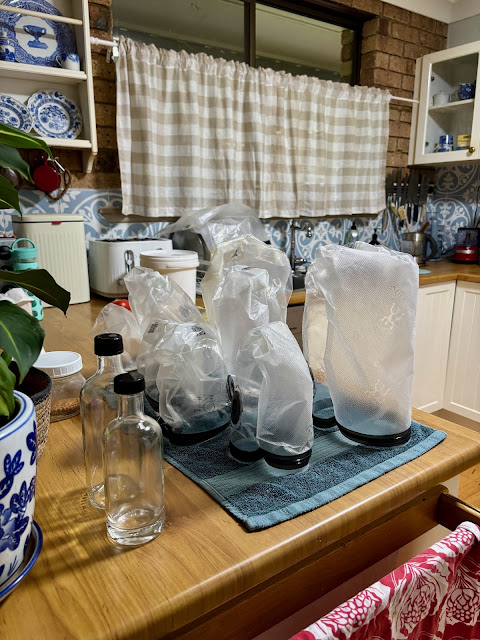
Every morning when I walk into my kitchen it looks tidy and ready for a day's work. Not so on this morning (above), I saw this when I walked in. Late the previous afternoon when I was looking for something, I came across my rolled up Zwilling vacuum bags and decided they had to be washed and dried. So I did that and although I usually put them outside on the verandah to dry it was dark by then. I turned the just-washed bags inside out and left them like this on a towel. It worked well and now the bags are ready to use when I bring home root vegetables, cabbages or whatever I buy that I want to last four or five weeks.
Image

You’ll save money by going back to basics

When I was doing the workshops and solo sessions, I had a couple of people whose main focus was on creating the fastest way to set up a simple life. You can't create a simple life fast, it's the opposite of that It's not one single thing either - it's a number of smaller, simpler activities that combine to create a life that reflects your values; and that takes a long to come together. When I first started living simply I took an entire year to work out our food - buying it, storing it, cooking it, preserving, baking, freezing, and growing it in the backyard. This is change that will transform how you live and it can't be rushed.  
Image

Creating a home you'll love forever

Living simply is the answer to just about everything. It reduces the cost of living; it keeps you focused on being careful with resources such as water and electricity; it reminds you to not waste food; it encourages you to store food so you don't waste it and doing all those things brings routine and rhythm to your daily life. Consciously connecting every day with the activities and tasks that create simple life reminds you to look for the meaning and beauty that normal daily life holds.  It's all there in your home if you look for it. Seemingly mundane tasks like cleaning and cooking help you with that connection for without those tasks, the home you want to live in won't exist in the way you want it to.  Creating a home you love will make you happy and satisfied.
Image

Time changes everything

I've been spending time in the backyard lately creating a contained herb and vegetable garden. My aim is to develop a comfortable place to spend time, relax, increase biodiversity and encourage more animals, birds and insects to live here or visit. Of course I'd prefer my old garden which was put together by Hanno with ease and German precision. Together, we created a space bursting at the seams with herbs, vegetables and fruity goodness ready to eat and share throughout the year. But time changes everything. What I'm planning on doing now, is a brilliant opportunity for an almost 80 year old with balance issues. In my new garden I'll be able to do a wide range of challenging or easy work, depending on how I feel each day. It’s a daily opportunity to push myself or sit back, watch what's happening around me and be captivated by memories or the scope of what's yet to come.
Image

It's the old ways I love the most

I'm a practical woman who lives in a 1980’s brick slab house. There are verandahs front and back so I have places to sit outside when it's hot or cold. Those verandahs tend to make the house darker than it would be but they're been a great investment over time because they made the house more liveable. My home is not a romantic cottage, nor a minimalist modern home, it's a 1980’s brick slab house. And yet when people visit me here they tell me how warm and cosy my home is and that they feel comforted by being here. I've thought about that over the years and I'm convinced now that the style of a home isn't what appeals to people. What they love is the feeling within that home and whether it's nurturing the people who live there.
Image

Back where we belong

Surprise! I'm back ... for good this time. Instagram became an impossible place for me. They kept sending me messages asking if I'd make my page available for advertisers! Of course, I said no but that didn't stop them. It's such a change from what Instagram started as. But enough of that, the important part of this post is to explain why I returned here instead of taking my writing offline for good. For a few years Grandma Donna and I have talked online face-to-face and it's been such a pleasure for me to get to know her. We have a lot in common. We both feel a responsibility to share what we know with others. With the cost of living crisis, learning how to cook from scratch, appreciate the work we do in our homes, shop to a budget and pay off debt will help people grow stronger. The best place to do that is our blogs because we have no advertising police harassing us, the space is unlimited, we can put up tons of photos when we want to and, well, it just feels li...
Image

Making ginger beer from scratch

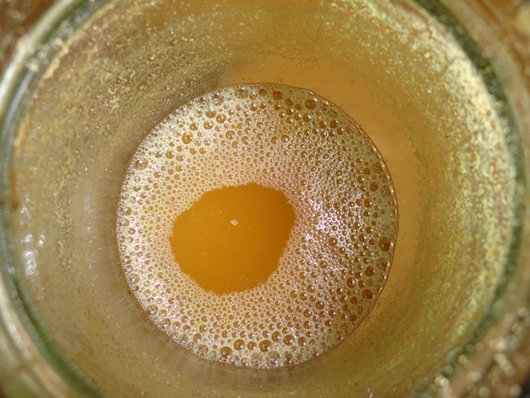
We had a nice supply of ginger beer going over Christmas. It's a delicious soft drink for young and old, although there is an alcoholic version that can be made with a slight variation on the recipe. Ginger beer is a naturally fermented drink that is easy to make - with ginger beer you make a starter called a ginger beer plant and after it has fermented, you add that to sweet water and lemon juice. Like sourdough, it must ferment to give it that sharp fizz. To make a ginger beer plant you'll need ginger - either the powdered dry variety or fresh ginger, sugar, rainwater or tap water that has stood for 24 hours to allow the chlorine to evaporate off. You'll also need clean plastic bottles that have been scrubbed with soap, hot water and a bottle brush and then rinsed with hot water. I never sterilise my bottles and I haven't had any problems. If you intend to keep the ginger beer for a long time, I'd suggest you sterilise your bottles. MAKING THE STARTER In a...
Image