down to earth

  • Home
  • About Us
  • Down To Earth Book
  • Privacy Policy


HOMEMADE CLEANING RECIPES
LAUNDRY

Laundry Liquid
Makes 10 litres
You may add any essential oil of your choice to these homemade cleaners. Oils like tea tree, eucalyptus, lavender or rose are ideal but are not an essential ingredient. They are not necessary to the recipe but do not detract from the effectiveness by adding them. Use essential oil and not a fragrant oil.

Ingredients
1½ litres water
1 bar Sunlight or generic laundry soap or any similar pure laundry soap, grated on a cheese grater OR 1 cup of Lux flakes
½ cup washing soda – NOT baking or bicarb soda
½ cup borax

Tools
Saucepan
10 litre bucket
Slotted spoon or wooden spoon for mixing
Into a medium sized saucepan add 1½ litres of water and the soap. Over a medium heat, stir this until it is completely dissolved. Make sure the soap dissolves properly or the mixture will separate when cold.

Add the washing soda and borax. Stir until thickened, and remove from heat.

Pour this mixture into your 9-10 litre bucket then fill the bucket with hot water from the tap. Stir to combine all the ingredients. The laundry liquid will thicken up more as it cools. When cool, store in a plastic container. I use one of those 10 litre flat plastic box containers with a lid. Use ¼ cup of mixture per load or monitor to see what works well for you. I keep a ¼ cup measuring scoop in the box to measure the mixture into the washing machine.

This detergent will not make suds when you wash as it does not contain the chemicals that supermarket detergents add to make suds. You do not need suds to wash your clothes or for the detergent to be effective. The agitation of the washing machine does most of the washing. Additives loosen the dirt and grease. If you use the greywater from your laundry on your garden, leave out the borax.
All these washing aids are suitable for top loaders AND front loaders. I have been using them in my front loader machines for years with no ill effects.

So, lets do a costing on this first recipe of 10 litres of laundry liquid.
These prices are a bit old, I'd say today in Australia it would cost about $2

Lux Flakes - $5.50
Sunlight soap 4 pack - $2.47
Homebrand laundry soap 4 pack - $1.39
Borax 500 grams - $2.55
Washing Soda 750 grams - $1.65
I’ll use the median soap price (Sunlight) for my calculations.
1 bar of Sunlight soap = 61 cents
½ cup borax = 63 cents
½ cup washing soda = 55 cents
Total comes to $1.79 for 10 litres of laundry liquid. The equivalent amount of national brand, TV advertised detergent is currently $4.30 for a litre in a refill pack. So, $4.30 x 10 = $43.00 for the same amount.
And it works too!
There is also a powdered version of this recipe. I like the liquid because you can use it for stain removal too, but the powder is much easier to make up. I am now using the powder for my washing and the I usually have about a litre of the liquid made up for general cleaning.

CONCENTRATED LAUNDRY POWDER - this is the powder I use in my front loader
4 cups grated laundry or homemade soap or soap flakes (Lux)
2 cups borax
2 cups washing soda
Mix all the ingredients thoroughly and store in a plastic container with a lid. Use 2 tablespoons per wash. Again, this powder will not make suds and again, this is perfectly okay.


HEAVY DUTY WASHING POWDER
For use on worker’s greasy or dirty overalls, football and sports uniforms or fabric that has food spills.
2 cups grated Napisan soap
2 cups grated laundry or homemade soap
2 cups borax
2 cups washing soda
Mix all the ingredients thoroughly and store in a plastic container with a lid. Use two tablespoons per wash. The powder will not make suds.

For a very heavily stained load of washing or tradesperson’s clothes, if you have a top loader turn the machine off when the powder is completely dissolved. In a front loader, operate the machine to dissolve the powder and then stop the machine for an hour to soak the clothes. Leave to soak for an hour, or overnight, and then turn the machine on and continue washing as normal.

NEVER EVER mix ammonia and bleach together. It will form a gas that could kill you.

STAIN REMOVER #1
½ cup ammonia
½ cup homemade laundry liquid
½ cup water

Mix all these ingredients well, and store in marked spray bottle.
Make sure you mark all your bottles so you know what they contain. If you reuse a bottle that previously contained other cleansers, make sure the bottle is completely clean and marked before you fill it with your homemade cleanser.


STAIN REMOVER #2
¼ cup borax or washing soda
2 cups cold water

Sponge on and let dry, or soak the fabric in borax mixture before washing in soap and cold water.

STAIN REMOVER #3
¼ cup hydrogen peroxide
¼ cup water

Mix together and dab onto stain. Leave two hours and repeat if necessary. Good on white clothes.


FABRIC SOFTENER
½ cup white vinegar in final rinse


NAPPY SOAKER and WHITENER (DIAPERS)
Bicarb soda is a good pre-soaker for soiled nappies. Dissolve ¼ cup of bicarb soda in a bucket of warm water, soak for at least an hour or overnight, then wash the nappies in hot water with homemade laundry liquid. Add ½ cup of vinegar to the final rinse and let them dry in the sun.


KITCHEN

ALL-PURPOSE CLEANER #1 - do not use on aluminium
1 tablespoon ammonia
1 tablespoon liquid soap or homemade laundry detergent
2 cups hot water
Combine in a spray bottle. Pour in hot water, screw on the spray bottle top and shake until completely dissolved. This cleaner can be stored in this spray bottle, so mark it “HOMEMADE ALL PURPOSE CLEANER” with a permanent marker.
Spray the cleaner on surfaces you wish to clean. Use your terry cloth to rub on as you go. For hard to move grease or dirt, leave the cleanser on for a few minutes before wiping it off.

ALL-PURPOSE CLEANER #2
½ cup washing soda
2 litres warm water
Mix together and store in a sealed plastic container that is marked with the name.
Can be used as a floor cleaner – tiles, laminate or vinyl or for general cleaning of walls, counter tops or sinks.


SINK CLEANER
Combine equal parts of bicarb soda and course salt to scrub hard to move dirt and grease. This is an abrasive but it will make the sink shine. Finish off with a litre of water in the sink, add a cap full of liquid bleach and remove the plug. You’ll sanitise and clean the pipes at the same time. Wipe with a dry terry cloth.


OVEN CLEANER
¼ cup ammonia
2 cups of warm water

Be careful of the ammonia fumes.

Turn on the oven and leave to heat up for 5 minutes. Pour ammonia and warm water in a baking dish and leave in the warmed oven overnight. This will loosen the grime in the oven, which you can then clean with an ammonia-based cleaner or soap and water. You can also scour with a paste of bicarb soda and water.


CLEANING SILVER
This method works by a chemical reaction of the aluminium, salt and bicarb soda. Put the plug in the kitchen sink. Lay a piece of aluminium foil on the base of the sink and add your silverware. Pour in enough boiling water to cover the silver.
Add one teaspoon of bicarb soda and one teaspoon of salt to the water. Let it sit for about ten minutes. The tarnish will disappear without you touching it.


CREAMY SOFT SCRUBBER
Simply pour about ½ cup of bicarb into a bowl, and add enough liquid soap to make a texture like very thick cream. Scoop the mixture onto a sponge, and start scrubbing. This is the perfect recipe for cleaning the bath and shower because it rinses easily and doesn’t leave grit.
Note: Add 1 teaspoon of vegetable glycerin to the mixture and store in a sealed glass jar, to keep the product moist. Otherwise just make as much as you need at a time.


WINDOW CLEANER # 1
¼ - ½ teaspoon liquid or grated soap
3 tablespoons vinegar
2 cups water
spray bottle
Put all the ingredients into a spray bottle, shake it up a bit, and use as you would a commercial brand. The soap in this recipe is important. It cuts the wax residue from the commercial brands you might have used in the past.


WINDOW CLEANER # 2
Vinegar and newspapers

Pour a little vinegar onto a sheet of newspaper and wipe windows. Remove all the grime and polish the window with a clean sheet of newspaper.


FURNITURE (WOOD) POLISH
½ teaspoon olive oil
¼ cup vinegar or fresh lemon juice

Mix the ingredients in a glass jar. Dab a soft rag into the solution and wipe onto wooden surfaces. Seal in the glass jar and store indefinitely.


FLOOR CLEANER – tiles, vinyl or laminate
½ cup white vinegar plus 2 litres hot water in a bucket and a clean mop will clean up all but the worst floor. If you have a really dirty floor to deal with, add a squirt of homemade laundry liquid to this mix.


MOP CLEANING
A clean mop is a necessity when cleaning floors. If you start with a dirty mop you’ll just loosen the dirt on the mop by making it wet again and then spread that on the floor. When you finished your cleaning jobs, rinse the mop out to get rid of the loose dirt then let it soak in the bucket half filled with water and a ¼ cup of bleach. Let the mop soak for 30 minutes, rinse the bleach out and dry the mop in the sun.


WOODEN FLOOR CLEANER - Ammonia will strip floor wax (one cup to a bucket of hot water)
2 tablespoons homemade vegetable soap - grated
½ cup vinegar
500 mls strong black tea
bucket warm water
Combine all the ingredients in the bucket and apply with a cotton mop.


REMOVING CRAYONS FROM A PAINTED WALL
Add a few drops of water to some bicarb and make a thick paste. Wipe over the crayon marks and scrub off with a terry cloth.

HOMEMADE OLIVE OIL AND COCONUT OIL SOAP
This is the recipe for another soap I use. It's a very simple soap that is nourishing and free of harmful additives. It is basically a castile soap with coconut oil added for its good lathering qualities.

Here is the recipe:
800mls of cheap olive oil - the low grade stuff is fine for this.
200mls coconut oil - you can get it from health food stores and Asian supermarkets.
130g caustic soda - from hardware stores or supermarket
400mls rain water
Make the soap up according to the instructions in the soap making tutorial post.

HOMEMADE TOOTHPASTE
¼ cup Olssons cooking salt or any natural sea salt.
¼ cup bicarb soda

Make up ½ cup at a time and store it in a sealed jar. Just sprinkle some of the powder onto your toothbrush and clean your teeth in the normal way. This powder is bitter and takes a little while to get used to but it works well. I don't notice the taste now. You could add a few drops of peppermint essential oil to mask the taste.

HOMEMADE SHAMPOO - I also wash my hair with my homemade soap
This works very well. Say goodbye to all those expense hairdresser shampoos. It’s great for dandruff too.
Dissolve a tablespoon of bicarb soda in a cup of water. If you’ve got children, it might be better doing this in a squirt bottle.
Wet hair thoroughly and apply the mixture to the hair, massaging it in well.
To rinse, just run water through your hair, or you could use a splash of vinegar. The vinegar smell will go when your hair is dry.
You’ll be amazed at how good your hair feels. It will be clean and healthy.
This is an excellent shampoo for long and frizzy hair or short hair.


HOMEMADE DEODORANT
Add some bicarb to a shaker and use that. Dabbing a bit of bicarb under your arms is very effective as long as you wash every day.

HOMEMAKER’S LOG BOOK
It’s a great organisational tool and safety measure to keep a record of all the cleansers you use. If you ever have an accident with the cleansers, you’ll need to tell the doctor what the ingredients are so I recommend you keep your recipes together in a Homemaker’s Log Book. You can also keep food recipes in it as well as printed information you need in your home. I have made a Home Log from a three-ringed binder. That way I can add and remove pages when necessary. There is more about the Homemaker’s Log here.

Most of the ingredients for these recipes will be found in supermarkets in Australia. If you're in another country, I'd really appreciate you letting us know where you find your ingredients. Thank you ladies. : )

We live in a world where we come in contact with chemicals every day. We have plastic seats in our cars, plastic money, furniture covered with polyurethane, fumes from the paint on the walls and the plastic covering on TVs, DVD players and computers, clothing made from recycled plastic soft drink bottles and plastic wrap. Our pure, fresh, crystal clear drinking water contains chemicals used in the purification process. Even some of our processed food contains suspect chemicals.

Many cleaners available at the supermarket contain a cocktail of synthetic chemicals that when used, leave residue on our skin, bench tops and cooking utensils. If you’re lucky you will get through life with only minor problems caused by this chemical invasion.

I try to add as few synthetic chemicals to my life as I can. This, of course, means taking control of the chemical invasion and making many of the cleaning products I use in my home. I don’t mind doing this, it saves money as they are always much cheaper, and I know what is in the cleansers I’m using. I hope this will help you clean your clothes and your home using homemade cleaners. They are all easy to make, inexpensive and they are tried and true.

Just a word of warning. We are all used to supermarket cleansers working first time, every time. They can do this because of the chemical power punch they deliver. You may have to tweak a homemade recipe to suit your individual needs, you may even look for different recipes. Whatever your initial experience, stick with it for a while because when you use the correct recipe for the job homemade cleaners work well.

All my cleaning recipes work well here, however, hard and soft water, various greases, soil types and other factors play a big part in stain removal and keeping clothes clean. If these recipes don’t work first time, fiddle around with it until you get the right mix for you and your area.

Everything is harmful if not used in the correct manner, even green chemicals. I’ve included a short explanation of the products we talk about. The ingredients are all freely available in any supermarket, but they still need to be treated with caution. If you buy these products, you’ll be able to use them for every cleaning job in your home. Each area does not need its own product. That is something made up by manufacturers and advertising agencies to help sell products. If you know why something works then you can use that knowledge to great effect when cleaning your home, and you’ll save a lot of money by doing it.

Generally your cleansers will be used according to what material you’re cleaning. Wood needs polish to replace wood oils and to keep it from splitting, you’ll need a cleaner for plastic or Laminex surfaces, a scourer for porcelain and stainless steel sinks, a floor and wall cleaner, and laundry powder and stain remover for fabric. If you need an added antibacterial boost, just add a bit of tea tree oil to these basic cleansers.

Get rid of the spray and wipe idea that you apply a specialist product to a problem area, wipe and it’s solved. Good cleaning in a simplified home takes a bit more time making the cleansers but though they are effective, they are less environmentally damaging and far less expensive.

ESTABLISH A CLEAN GREEN ROUTINE IN THE KITCHEN
The answer to many cleaning problems is hot water and soap, sometimes you need to add something else, but often just plain old hot soapy water will work well. My basic cleaning routine in the kitchen is to wipe down the bench tops and stove with hot soapy water and a terry cloth. If there are spills on the enamel stove top, I pour a small amount of hot soapy water onto the spill about 10 minutes before I intend to wipe everything down. This loosens the food spill and it will generally be wiped away with the terry cloth. For stubborn spills or a greasy stove, use some bicarb. Shake a small amount onto the spill with some hot water and leave for 10 minutes. Then wipe it clean with wet terry cloth and dry it with a dry terry cloth.

You don’t buy terry cloth wipes. Make them yourself by recycling your old towels. Terry cloth is full of woven cotton threads that create a rough texture on the cloth. It is this roughness that is useful in cleaning as it picks up dust, grease and dirt without scratching the surface.
For stainless steel surfaces, stoves tops and ovens use two drops of eucalyptus oil in a litre of hot water. Mix well and use your terry cloth to wipe it over all the stainless steel surfaces. Wipe dry with a dry terry cloth. For stubborn food spills, use some of your homemade pure soap on the wet cloth and wipe the spill with that. Finish off with the eucalyptus oil and a dry cloth.

YOUR HOME CLEANING KIT
The laundry is a convenient place to make up your cleansers and to store your big bottles of cleaning ingredients. Make up two small kits – one for the kitchen and one for the bathroom. Keep your cleaning equipment close to the area you will clean. For example, keep rubber gloves and a small bucket full of your homemade cleaners under the kitchen sink, keep another kit in your bathroom cupboard. Store these kits under the sinks in those rooms.
Your home cleaning kit will include a small four litre bucket, rubber gloves and whichever of the homemade cleansers you choose for that area.


INGREDIENTS FOR HOMEMADE CLEANERS

  • Bicarb
  • Washing soda
  • Borax
  • Pure laundry soap or homemade soap
  • White vinegar
  • Tea tree oil
  • Eucalyptus oil
  • Ammonia
  • Liquid bleach

All these products will cost you less about $30 to buy at the supermarket and you’ll have enough to make the recipes for various cleaning jobs for many weeks.


WHAT’S IN THE CLEANING PRODUCTS YOU’RE ABOUT TO MAKE?

BICARB

This is sodium bicarbonate. It can neutralise acid, so it’s usually not used with vinegar or lemon juice. It can be used in several cleaning applications and it shines metal, porcelain, plastic and glass without scratching it. Mixed into a paste with a little tea tree oil and water, it makes an excellent bathroom cleaner. It absorbs odours so can be used in the fridge as a deodorizer and sprinkled on carpets to freshen them. It can be used as a deodoriser in the refrigerator, on smelly carpets, on upholstery and on vinyl.
Bicarb soda, or baking soda - pH 8.1, is in the same family as washing soda. They are processed differently and washing soda, or sodium carbonate, is much more alkaline with a pH of around 11 Try to find a bulk source of bicarb. I buy a 5kg bag of it for $6 and that lasts me at least a year.

WASHING SODA
Washing soda or sodium carbonate is a natural mineral. It can cut through grease and can be used on engines as well as to remove wax from floors and furniture. It softens hard water and is used in our laundry detergent recipe, along with borax and soap.

BORAX

Borax, or sodium borate, is a naturally occurring mineral. It is an ingredient in the washing liquid and powder we'll talk about tomorrow. It removes stains and boosts the cleaning power of soap or detergent. It is also a disinfectant and can kill ants and cockroaches.

SOAP – this is NOT detergent
All soap is made from fats and lye – even the so called “natural” soaps. The fat used in soap can be either vegetable or animal. Vegetable oil could be olive oil, coconut oil, sunflower oil or any other vegetable oil. Animal fat is often called tallow and it is from beef, pigs or sheep. Lye is caustic soda but in the process of soap making the caustic soda is neutralised. Detergents are synthetic or man-made materials. Pure laundry soap – like Sunlight and its generic equivalents, or a pure soap you make yourself, are good for removing dirt and grease.

I think the best soap for every purpose is homemade soap because you know exactly what is in it and you can make soap exactly for the purpose you need to use it for. Olive-oil based soap is gentlest on the skin. I've written a post on how to make an olive oil based soap. You can even make an inexpensive cleaning soap that uses cheaper oils than olive oil. You can also make soaps for a specific purpose – like dog soap, gardener’s soap, mechanic’s soap or very mild soap suitable for a baby. An all-purpose liquid soap for hand washing or washing dishes can be made by dissolving the old ends of bar soap, or grated pure soap, in warm water.

VINEGAR
Vinegar is an acidic solution made from fermented juice, grain, or wine. Vinegar can dissolve mineral deposits, grease, remove traces of soap and deodorize. It is a wonderful glass and mirror cleaner as if leaves no streaks. Vinegar is normally diluted in water, but it may be used straight. Buy cheap white vinegar for your cleaning needs. You can usually find this in a large two or five litre container.

TEA TREE OIL
Tea tree essential oil is used as a natural mould and mildew remover. It may also be added to many other homemade preparations as a booster disinfectant or mould inhibitor. Tea tree oil is expensive but make sure you buy the pure oil, not the watered down oil. You’ll only use a few drops so the bottle will last a fair while. Make sure you buy Australian tea tree oil.

EUCALYPTUS OIL
Mixed with water this is excellent for cleaning stainless steel. It’s also the best thing to use to remove glue, stickers or labels. Make sure you buy Australian eucalyptus oil.

SAFETY WARNING
Use the following two products with caution and never, never, never mix them together.

CHLORINE BLEACH
I know this is not green but I use it for certain cleaning jobs like cleaning my mops and removing mould and mildew stains. I use a small amount of bleach when I do use it and I never allow it contact with my skin. If you decide to use bleach, be careful and follow the precautions on the bottle.
AMMONIA
Another non-green, but old fashioned, cleaning aid. You must be careful when using it and never smell the contents of an ammonia bottle; it will lift your head off. When using ammonia, always work in a well ventilated room. NEVER mix ammonia with bleach.

CLEANING EQUIPMENT
The equipment needed for general household cleaning are:

RUBBER OR LATEX GLOVES
These are necessary to avoid contact with any harmful solutions and bacteria.

SMALL BUCKET – 4 LITRES
I use a nice half size bucket of about 4 litres. You can buy these at most supermarkets. You need a handle as you’ll be moving around and it’s easier to move four litres of hot water in a container with a handle. A small enamel or galvanised bucket would also be ideal.

TERRY TOWELLING CLOTHS – WET AND DRY
I use old towels that I cut up into 12 inch squares. Old flannel would also be fine. You need a natural cotton or linen cloth that can be rinsed out between wipes and then washed and dried between uses. Terry towelling works well as it has a soft roughness and lots of looped pile that assist in cleaning. Some people like the microfibre cloths. They do work well but I don’t see the point of buying an expensive cloth that is made of polyester or nylon when a recycled pure cotton cloth will work just as well. We have to get out of the mindset that there is a specialist product for everything. Try to recycle old towels, bath mats, shirts, and sheets. If it’s pure cotton or linen, then it will make a fine cleaning cloth. You can hem the edges if the frayed edges annoy you, but it isn’t necessary.

PLASTIC SHAKER – similar to those used as a salt shaker in fish and chip shops. Put some of your bicarb soda in it. You can shake the powder straight onto the surface and you won’t spoil your bicarb by dabbing your moist cloth into it.

This post is longer than I thought it would be, so tomorrow I'll give you recipes for all sorts of green
cleaners, including homemade laundry powder and liquid.

I can feel love sometimes. It manifests itself in many ways as H and I live together and although I know he loves me all the time, sometimes, I feel it too.

As you know we’ve both been sick with colds or flu, or whatever it is. I get asthma too so I have to be careful as my asthma is always worse when I get any respiratory tract infection. Luckily we’re both pretty healthy and I can count on one hand the number of times I’ve been sick in the past ten years.

I haven’t been strong enough to do much over the past few days. H made sure I’ve been sitting either on the front verandah, in the lounge room or next to the bedroom window with the sun pouring in. He’s been bringing me glasses of water, cups of tea and soup and cut up pieces of fruit. To me, peeling and cutting someone’s fruit for them is an act of love. It’s been with me since forever and I always associate it with being cared for and nourished.

He’s listening to my breathing too. Just like I did last week when he was sick, and I listened to his. I wonder if he thinks of us aging, like I did, and that we’re getting older now. When I start wheezing at night, he wakes me up with my asthma puffer and while I organise myself with it, he gets some lemon and honey tea, and then we settle back into our warm bed together again. I know he’s been covering me up too. I have a habit of throwing off the quilt, but he keeps retrieving it to make sure I stay warm. I know what he’s doing, but he doesn’t know I know. : )

This love we’ve grown through our marriage is like an old sourdough starter that’s been developing its flavours for years. Those flavours are complex and delicate, yet robust enough to last through time. When I was young I didn’t know that love matured and changed through the years, but it does. As we change, so does the expression of our love. This is unlike the young love of a new marriage, it’s confident, softer and mellowed.

The first thing he asks each morning is “how are you feeling today?” I want to say “I’m feeling love” but I tell him, “I’m ok” instead. It’s a wonderful thing to find someone who will look after you as a mother would and who maintains a loving and patient attitude not only when things are wonderfully bright and positive, but also when they’re not. It’s at those times I have more than the knowledge of love, I feel it too.

Hearts to all of you who drop by today. I hope you feel love in your life too.

Leah, Marianna and Shula. Congratulations ladies. : )

Leah wins Sunnyside Eggs, Marianna wins Good Morning and Shula wins Feeding the Chooks. Leah, Marianna and Shula, would you email your addresses to me please. Thank you.

I have a few more stitcheries to give away so we will have another draw later in the month.


H and I are off on a trip up north soon and as we want it to be a frugal trip, I need to start organising it now. We are taking the tilt train to Townsville. Luckily my sister and son will be staying here to look after the animals and chooks so home is all sorted.

Here is the Tilt Train site:
http://www.traveltrain.com.au/traveltrain_services/Coastal_Services/tilt_train/Overview.asp#

We'll leave at 8pm and I'll pack a Thermos of hot chocolate that we can have while we watch a movie and settle in for the night. We don't have a sleeper so I'm taking two pillows and a patchwork quilt that will fit over both of us. They will all be rolled up and packed into an overnight bag that I'll carry. H will be looking after our other luggage - which is one of those pull-along bags on wheels. At 7am the next morning we'll be at Mackay. Our breakfast will be an apple and cinnamon muffin each, tea and some cut up fruit. I'll prepare all our food just before we leave. We'll each take a bottle of water that can be refilled on the train from the public water dispenser - ie free. LOL!

Okay, so far, so good. Our frugal travel is on target. I'll pack a container of cashews for snacks and a few pieces of fruit, oh, and I intend buying a block of Lindt dark chocolate from the local IGA - it will be $3. That will supplement the cashews and fruit.

We arrive in Townsville at lunchtime so my guess is my sister-friend Kathleen, will have something prepared for that. We're going to visit her so we can see her new home, just built, brand new and still shiny. We have a few friends up there so our activities will involve visiting them, wandering along the famous Strand and maybe having a coffee or a cold drink at one of the cafes on the beach.

Our trip back will start on Sunday afternoon at 2.45pm. We'll have our water bottles full, more hot chocolate and tea, and the rest of the Lindt chocolate and cashews. I'll just buy the makings for some sandwiches, some fruit and get one of the loaves from the neighbourhood organic baker. Those sandwiches and our tea will fill us up for dinner on the train. Our trip ends at 7.30am, so we'll have breakfast with the family when we arrive home.

I think we'll be well and truly satisfied with our little picnics along the way and if it all goes to plan, it will be a very frugal trip, although we will take Kathleen out for dinner the night before we come home.
I've forgotten if I've told you about the prices for our train trip. My ticket was $520 and H's was $24. Actually his was a bit more because the return trip was booked out for pensioners so he had to buy a normal return ticket. All up it cost us around $700 for both of us. And yes, I know we could fly for a fraction of that but flying creates huge amounts of greenhouse gases so it's something we don't do anymore.

We're really looking forward to our trip. We've driven the road up the coast many times but neither of us have travelled it by train. Neither of us have been on the tilt train either, so we're looking at it as a bit of an adventure to enjoy together. We still have to watch what we spend though, so this planing phase is an important part of the trip. It reminds me of the trips I used to take with my parents when I was young - all organised and planned beforehand with little spending along the way.


It was almost like a spring day today. I hope the worst of winter is over. I'm down with a cold at the moment, it seems I caught the bug H had so I've been taking it easy all day. I took a stroll around the front garden and found the true violets were flowering. These are very special flowers, they are from my mother's garden and the one plant of hers that still lives on in my garden. True violets shouldn't really grow well here, but these do. I picked a little vase full and brought them inside, it so reminds me of my mother. She used to always have a tiny vase for tiny flowers and it's probably the reason why even now, small things, especially tiny flowers, are among my most favourite things.
The readers who have been visiting for a while now will know that I love change, and in fact did promise to change things here from time to time. So here is a change. It didn't do what I wanted but it's close enough. What I was after right-sided blog, with the incidentals on the left, but I also wanted an email that is linked to the email program. I want readers who want to email me to just click. At the moment a lot of people forget to add on the "au" at the end of my email. Can someone help me do it. Is it possible to link the "Email Me" to the email program?

Also, if the blog is too big now, let me know and I'll modify it a bit. I have a large monitor so I'm not sure if it's too wide.

If you've decided to move from two incomes to one so you can stay at home with your baby, you'll enter a period of review. Now would be an excellent time to overhaul your lifestyle and shift from the modern mainstream life to a more simple way of living. Before you are pregnant, and while you're both still working, make up a new budget. Try to live on one wage and use the other to pay off debt. This might be the first time you've really limited your spending and it will be difficult, but when you feel that it's getting too much for you, think about why you're changing your spending habits and how much you'll benefit from it when the baby arrives.

When you're pregnant, decide exactly when you'll stop working so you have a goal in site. If you have any credit card debt, try to pay it off while you still have those two pays coming in. If you only your mortgage to pay off when you stop work, you'll be in the best situation you can be in. If you stop work while you still have credit car debt, or other high interest debt, it might be wise to consolidate those high interest debts into your home loan.

When you stop work use the short amount of time you have before baby arrives to reassess how you shop and make some adjustments to help you save money. Sit down with your partner and make up another new budget. This will be the budget you'll live with for a few years, so think about it carefully. Both of you need to do it together. If you can save money on your grocery bill, you'll save a considerable amount as it will be ongoing saving. Read as much as you can about stockpiling and if you have the cash, invest about $200 - $300 in starting a stockpile. Buy those things that are on sale that you use frequently like toilet rolls, toothpaste, soap, bread, butter, canned goods, meat, flour, rice, pasta etc. And even if you don't add to the stockpile for a month, you'll save yourself going to the supermarket so much with your newborn.

If you have a second car,
sell it.

Review your expenses - now
is the time to be ruthless with your expenses and cut off all those extra monthly bills:
  • Stop dining out and buying takeaway.
  • Put expensive family holidays on hold for a few years.
  • Stop buying so many gifts. Make up a list of those people you feel you must continue to give to and keep it at that. Start making homemade gifts. You might feel a bit strange at first but most people love receiving something you've made yourself.
  • Stop buying magazines. Join the local library for a never-ending supply of books, magazines and DVDs.
  • Do you really need a mobile phone? If not, get rid of it.
  • Pay TV is a luxury you can say goodbye to until you're in a better financial position.


When baby is born, and if you're Australian, claim all the government benefits you are entitled to. I think the baby bonus is about $4000 now, make sure you claim it, and also look into parenting payments that will be ongoing until your child goes to school. Those readers in countries outside Australia, make sure you know what your government gives you when your baby is born, and after it in the form of family payments.

Remember that you'll only have real success with your new simplified life if you change your attitude to spending. You can't expect to live the way you used to, there are many things you'll give up. But I can assure you that after the initial shock of not having the things that used to take up your spare time and make things easier for you, you'll settle in to a new kind of living that doesn't rely on those things. And once you're used to your new life, I know you'll love it.

If you go back into the archives here, I've written about budgeting, emergency funds and change jars. They'll all help you save for your new lives. Don't be afraid of budgeting - it is the one thing that will organise your thinking about money as well as the money itself. And despite what a lot of people think, a budget frees up your money instead of taking it away. H and I have a tight budget, we do this voluntarily, and even though we live on the very small amount of $355 a week, we still save $150 a month, we still have holidays and we still have private health insurance. It can be done.

Can a family do it?

There is a common understanding in contemporary Australia that it’s financially wise for both husband and wife to work. While I believe that is true when there are no children in the marriage, I don’t believe that’s necessarily true for all couples with young children. When you add up the actual cost of having both parents in the workforce, when child care costs are in the equation, and often when they are not, it’s often financially sound to have one parent at home. And when I say “parent” I mean either the mother or the father. The partner who can earn the most money, for the least expense and the shortest time away from home, should be the one who goes out to work.

The actual costs of earning a living are those that might be hidden or forgotten about. Some things to consider are whether you will go into a higher tax bracket, day care or babysitting costs, transportation, fuel costs or running a second car, clothing for the new job, equipment needed or tools of the trade, cleaning costs for clothes, grooming in the form of haircuts and cosmetics necessary for your level of work, lunch at work, all those lattes and espressos, magazines to read en route to work and at lunchtime, bottles of water and the added cost of food at home when you start buying convenience and pre-packaged foods. When you calculate all those factors in, many people find that they are working for less than the basic wage.

You should factor in related matters too - those factors that will lessen the impact of one parent not working. When one parent is at home with the children, their job is to look after the day-to-day needs of the children and to save money in the home. When one parent is home they can shop for grocery bargains to make the most of the food budget, food can be cooked from scratch and they can bake bread – this is the healthiest way to cook and it’s also the cheapest. When one parent is at home they can grow vegetables and have chickens for eggs. If there is surplus in the garden they can preserve the excess for eating later in the year - again saving money. Clothes can be sewn and knitted and in general, there will be time to look after the things you already own.

When one parent stays at home with the children, you can read to them, teach them how to write their name, tie a knot, how to count and identify colours. You could teach them to garden, bake cookies and boil eggs and you could show them, by example, what a joy simple living can be. You can be there when they come home from school, or homeschool them, and you can watch them grow to their true potential. Value comes from many things apart from those with a dollar sign attached.

This is one of those decisions you need to make with your partner before have children. It's better to go into your big life changes having already discussed them together and knowing what each other wants. I think the ideal, which is not always possible, is that you both work hard when you first marry to save for the deposit on a home and then to pay off as much as you can on your mortgage. When your babies come along, you can start on this next stage of your life - raising your children within a strong and loving family where both mum and dad have a good balance between family and work.

So if you're thinking about taking on a job sit down and work out if it will really be worth it. For instance, if your new job will pay $500 a week you might pay $150 of that in taxes, making your take home pay $350. You have to get to work so you spend $50 a week on public transport or running the car. Your $350 is now $300. Child care costs $100 a week, so now your income is $200. Take off the amount you need to spend on clothes and grooming, your coffees and lunches and you’ll soon realise that working when you have to pay childcare is sometimes a no-go zone.

As you can see, it's not straight forward and you need to think about what you get from working as well as what you'll give away. There is no doubt that working together to pay off the mortgage is a good thing to do, but your first priority as parents is to your children and you may find there is more value in having one parent be with the children to guide them through childhood. No matter which way you go, when you think about it and talk to your partner and then make your decision, make sure you do everything to make that decision work for your family as a whole. And if you're sure that your decision is the best for your family, work towards your goals together with no guilt and no regrets.

Tomorrow I will continue this theme with - Transitioning to a single income.

As always, I'm interested in your opinions and comments. If you've had experience with this one way or the other, please let me know how you coped.

While I was cleaning up my untidy corner in the bedroom this morning, I found some stitcheries that I think would make a good give-away prize. They all relate to chickens, and they were all drawn and stitched by me on an off-white pure cotton fabric.

Here they are:

They measure about 10 -12 inches by 8 inches and have a border of fabric to allow them to be attached to something - maybe a cushion, a tray cover, a tote bag or a wall hanging. They look a bit wonky but the edges are straight. I had them on an uneven surface for the photos.

So if you would like to be included in the draw for one of these stitcheries, put your name in the comments section, I'll draw the three winners on Sunday and post them out on Monday. Everyone is welcome to enter.


Another Tuesday and another day for catching up on the two days I wasn't here. I have so much I have to do today and as usual, if I write about it here, it makes me more accountable and more likely to get through my tasks.

I'll start in the kitchen as the benches need cleaning. That means moving everything I have on the benches, wiping it all down with a homemade dishcloth dipped in warm soapy water. I'll wipe them all dry with a terry cloth and replace everything. The fridge needs checking, just a quick check to make sure there are no science experiments lurking in the back. After breakfast and the cleaning up of it, I'll start my bread off and get it on the rise. I have to put it outside in the sun with a clean tea towel over it as the kitchen is too cold at the moment to allow a good rise.

Into the bedroom then to strip the bed and wash the bed linen. I'll remake the bed, do a small amount of tidying in an untidy corner, check H's side of the bed for snotty tissues (ack) and open the windows to let in some fresh air. The shower needs a wipe over but I'll do that when I take my shower tonight, but this morning I'll wipe over the sink and mirror. When all that is done, I'll vacuum all the floors and wash the wood floors with some hot water, vinegar and eucalyptus oil.

Hopefully all that is done by 10am when I'll make us some morning tea and sit on the verandah in the sun with H and my knitting. I'm going a bit nuts on the dishcloths at the moment and I want to use up all that cotton yarn I bought recently. Between 11 and 12.30pm I'll be in the garden. The blueberries need some blood and bone and potash as they're just starting to put on new growth. H will be preparing a garden bed for our main potato crop of the year, so I'll "supervise" that project ; ), do some watering and talk to the chooks.

After lunch I want to do some sewing. We are going to visit a good friend in her new house in a couple of weeks time and I want to take her a few house warming gifts. Late this afternoon, just before I start on dinner, I want to pull down the luffah vines that are still standing like skeletons over two trellises. This evening I'll be reading before I fall asleep to prepare for, hopefully, a less strenuous day tomorrow. If I do everything I wrote about above, tomorrow I'll be rewarded with a day where I only have to sweep the verandahs, and make the bed and some bread.

I operate really well when I tell others what I'm about to do. Sorry everyone, I am using you! But if I do that, I feel obliged to do what I said I would do and it's more likely to be done. It's a bit primitive, I know, but I am what I am. : )

I do realise my post is pretty ho-hum today but I have a treat for you all. Visit Duck Herder's blog to read the most sublime post. She is on my must read list now and I'm sure many visitors here will appreciate her writing as much as I do.

As always, I love your visits, your comments and your emails. Thank you for stopping by and if you haven't made contact yet, please do. I'd love to hear from you.


Graphic from http://www.allposters.com/


When my sons were in primary school, there was an anti-drug message aimed specifically at kids to say no to drugs. It was on T shirts, on TV, on billboards. The message was everywhere. And although that message didn't save everyone, it did save a lot of kids from a life defined by crime and the horrors of drug use.

At work yesterday I talked to a young man who I see every so often when he needs help with a bit of food. When he came in yesterday he was nervous and looked sick. After a few questions, he told me he'd been with "friends" on the weekend and had "shot up speed". For those of you not used to the terminology, he'd been injected with amphetamines. He'd since been to the doctor, was on antibiotics for an infected arm that he couldn't bend and would need a lot more treatment to get back to normal. I asked him why he did such a stupid thing and he told me it that he was with friends and didn't want to say no when they suggested it. But in the cold light of Monday morning, saying no seemed like a much better option to him, he just wished he'd been strong enough to say it when he needed to.

I told him he has to learn how to say no, and if he can't learn it, he has to say no to going out with these people. Luckily, the entire episode scared him a lot. I'm not sure he's scared enough to stay away from these people but after our talk about saying no, he certainly knows now that it's ok to say no, and often it's important for our own safety and health that we do say it.

It was really busy at the Centre yesterday. When I thought it was about 11am, I looked at the clock and it was 1.20pm. I decided to say no to taking a call and yes to a cup of tea. I try to pack a lot into those two days. I work as the co-ordinator, so I have that work to do but I also have a lot of people who come in to talk to me or ring up, so that adds to the work load. Yesterday my day was longer than normal as there was a two hour committee meeting at the end of the day. At that meeting, I agreed to take on a couple of extra things that I can do on the two days I work. I was also asked to be on a panel of three who will administer a community fund for local children. This I said no to. It would require that I work outside my two days and I'm not prepare to do that. I also said no to another request for my time, but gave them a solution so it was not a problem.

One of the skills you must learn when living simply, and even when you're not, is to say NO. If you say yes to everything you lessen the time you have to live the way you want to live. Simplifying isn't just cutting down on the clutter in your cupboards, it's also cutting the clutter in your day to day life. Saying no to some requests for your time and energy helps you to cut this clutter.

You have to make judgements about what you give yourself to and stick to your decision, even when you're pressured. Just like the young man earlier in the day, saying no is sometimes the intelligent and sensible thing to do. You do need to think about it beforehand though. Think carefully about the amount of time you have available and make conscious judgements about what you're comfortable doing and what will make your life more difficult. If you've thought about it beforehand, saying no when the question arises - no matter what the question is or who it comes from - makes the no word come out more easily. If you're prepared to say no, and not try to please everyone with yes, then it makes it easier.

It's impossible to please everyone and your first responsibility is to yourself and your family. You have to have enough energy and time for the things you've decided are important to you. So think about how to say no, think about what you've got time for, what is good for you and your family, and say no to the rest of it. And if you can do this, if you can say no in a polite but definite way, it will allow you to say YES to all those things that are significant and valuable.


I've been thinking a lot about growing old lately. It's something that's never really bothered me before, but seeing H so sick and frail this past week focused my mind of some unthinkable thoughts.

Yesterday, as H was working slowly through his day, he kept coming inside to rest. He sat in a lounge chair and almost immediately, was asleep. He did that four times. I told him not to overdo it but he insisted he was ok and felt better doing something.

It made me think of how we both used to work hard when we were a bit younger and it never affected us. H used to be really strong and took pride in being able to work on most projects alone, but was always ready to help others along side him not as strong. We've both lost a lot of our strength in recent years and when I saw H so sick, I realised it's not just physical strength that's been lost.

It's a strange thing growing older when you get past about 55. Until then I still felt I was as strong and capable as I had ever been, and then in a really short time, I felt much weaker. H has also become weaker in the past few years. He has tried to keep going as he always did but he's given up trying now and asks for my help fairly frequently.

It is good that we're still happily married as I think it would be quite different, and maybe difficult, if we were alone. It seems we compliment each other now better than we ever have. What I can't do, H does, and what he can't do, I can. I hope it continues on like that because it feels very comfortable. Old shoes fit the best.

But I also know that our future will hold sad goodbyes to many friends, both human and animal, and that scares me a little. We've already been to the funeral of one friend this year and it was sad and very confronting. Who knows who the next funeral will be for. The Australian statistics tell us that if you're a man and you've reached the age of 60, you have, on average, another 22 years to live. An Australian woman, having reached 60, is likely to live another 25 years. So if the statistics prove to be accurate in our case, we still have a long way to go.

Having someone you love so sick makes you think though. Listening to breathing in the still of the night makes your mind wander to the unthinkable. I was glad to be up and showered this morning and glad that it's a new week with so many new possibilities.

It's been a busy morning here with everyone up at 5.30 to get Kerry on the bus that will take him home. We all had toast and tea and I made the men up some scrambled eggs with herbs to get them through the morning. The remainder of Kerry's birthday cake was packed in a plastic bread box for the trip back; I hope he doesnt throw the bag around and end up with squashed cake.

Before he left I had a load of washing on, when he left I did another with his bed linen and towels. I had him warmly cocooned in a heavy blue flannelette and a doona (duvet) and quilt that he loves in Winter. I put out a couple of wheat bags for him and some extra throw rugs to keep him warm while he watched TV at night. I know my kids think I sooky them up when they stay here buy I love doing it and it teaches them, by example, how to nurture others. I hope that when they have their own babies, they'll pass on this heritage of cosiness and support that is but one of the ways parents express their love for their children.

After the washing was hung out to dry, I did the dishes, swept the floor, made the guest room up again - my sister is visiting soon, made our bed and did some ironing. I've just picked a cabbage for our dinner tonight and dug up some kipflers to have with pumpkin, carrots and herbs. I'll make a cheese sauce for the cabbage and bake it in the oven so it's golden and crispy.

It's taken H a full week to recover from the flu. It made him really sick and weak and the only time he looked ok was when he dosed himself up on flu medication to go out to dinner the other night. But now he's almost back to his healthy self and he's been catching up on chores in the backyard. He's cleaned out the chook coup, let the chooks out for some free ranging and done some gardening.

Soon I'll make a lunch of leftovers and a cup of tea for us both and we'll enjoy the afternoon doing whatever we want to do - nothing is planned and nothing needs to be done. H will probably have a nap and I'm going to do some sewing. I want to make a ironing pad for my sewing circle ladies. After that, I'll put my feet up and read about the Nearings. Everything back to normal after a week of celebrations, visitations and a time with children (albeit adult children) at home again. Another good week. : )

This is our home.

I cannot stress enough that simple living is not about a particular geographical location, it is not something that happens only in the countryside, it is not confined to a certain city, nor to the suburbs. Simple living is more about a change in your attitude to your life and how you apply that change to the way you live. You could be living on the top of Mount Kosciusko, in a high rise apartment in Melbourne, in the suburbs of London or in the wild open spaces of Alaska; it is possible anywhere.

Natalie, in her Isabella in the 21st Century blog, wrote yesterday: "I used to think that to live a simple life I must up-sticks and head for a rural idyll; perhaps Dorset or Mid-Wales; there I would learn all about goats and pullets and clothe my children in hand spun woolly jumpers dyed with woad. I would also keep bees and make my own candles and balms out of their wax and mead out of the honey ... I've come to understand that simple living is not just for country folk, and it's definitely not just for the rich." Natalie knows.

The vision of packing up and leaving the city to live a simple life in the country is a common one, but it is not all that realistic. It’s often a romantic, idealised dream to live a life uncomplicated by traffic, pollution, crowds, violence and uncertainty. Sometimes people move to a location that looks perfect but when they get there, they can't find a job, the schools are too far away and the idyllic simple life they dreamed of is still out of reach. Their life is still complicated and difficult, but by different things.

This is part of our front garden.

One of my favourite aspects of simple living is that you make do with what you have. It's a really old fashioned thing, and the opposite of what's currently in favour - instant gratification and having what you want at any price. Simple living is not about buying a lifestyle, it's about making one. Instead of buying your simple life premade, you fashion it yourself from scratch. And just like a meal when you make it from basic ingredients, what you end up with is something that is suited exactly to you, it's not someone else's idea of what you should want. So if you're living in a flat in the city, or a small home in the suburbs, or even a larger place that you're not happy in, you can make it better by changing your attitude and by making the best of what you have.

Location is just a small part of a simple life. Along with location there is building a strong family; raising healthy, happy and decent children; reducing debt; not spending; reskilling yourself for the life you want to live by learning to bake, preserve, cook, mend, sew, knit and garden; building your community; getting to know your neighbours; slowing down and living with a peaceful mindset; cultivating generosity and kindness; decluttering unwanted and unnecessary possessions; being aware of your environmental responsibilities; reducing your use of water, power, petrol and gas; reusing, reducing and recycling; being grateful for what you have and making do. Maybe you can start on the many other aspects of a simple life and location might sort itself out while you concentrate on other things.

This is where I've done a lot of my thinking about the way I live and it's where we sit to enjoy our morning tea.

Make the best out of what you have right now - and that is if you're currently living your dream or if you are still far from it. That is simple living just as much as growing vegies, collecting eggs and making soap in the middle of an old growth forest. I can’t tell you what will give you a life of happiness, enjoyment and satisfaction, that is for you to decide. What I hope to do however, is to give you the courage to start moving towards simplicity, and to tell you as clearly as I can, that you can start living your simple life today.
We are going on a short holiday soon. It will be a trip on the tilt train to visit good friends in Townsville, about 2000 kms north, in the dry tropics. We saved the money for the holiday from our meagre monthly allowance, by putting whatever was leftover in to our change jar.

Let me explain.

We spend $355 a week, or $1420 a month, on everything we need. Of that $1420, $765 is put in the bank for our fixed expenses like payments for rates, electricity, phone, car and dog registration, insurance - health, car and house. When the bills come in, the money is already there waiting, the bills are paid by direct debit. Any money left over in this account is transferred to a no-free interest bearing ING online account and goes towards our savings.
Out with the old and in with the new.
This is the leftover cash from last month to put into the change jar,
along with a new allocation of cash for this month.

We also withdraw $655 in cash and that is the money we live off for the month. That covers food, petrol, garden, dogs, cat and chook food and flea and tick meds, medical and chemist, postage and house maintenance. We also give each other $40 a month pocket money. Yep, ten dollars a week to be spent on whatever our hearts desire.

I have a number of ziplock bags and I put the allocated amount for all the above items into each bag. So I have a bag with $50 for chemist and medical, a bag with $250 for food, a bag with $50 for the animals etc. Organising my money this way has helped me a lot with budgeting and knowing when I've reached my limit. Actually seeing the money separated in the bags has been the one thing that's kept me on the straight and narrow. When nothing is left, well, nothing is left, so I can't spend anything. But I always have money left over. Usually it's about $60, this month it was $65 and that goes straight into the change jar.

My change jar is an old Carl Larsen tin that hold all our spare coins and notes. If I have any coins in my purse after shopping, they go in; we sell our eggs, that goes in; money left over from our month's budget, that goes in. I now have $255.40 in my change jar. We haven't given up anything to save that money, it's just leftover cash, that we SAVED. It's easy enough to go out and spend it, but the trick is to not spend and SAVE instead. That $255.40 might not seem like much in the overall scheme of things, but when it's collected from a very tight budget, it's not just a big saving, it's a confirmation that it is possible to live well and be happy while spending very little.

The coins from the change jar - the notes are out of shot.

We do have our pocket money to spend during the month and although H always spends his, I hardly ever do. Not spending becomes a part of you after a while and spending on unnecessary things seems kind of wasteful. In the old days I would have thought nothing of spending $10 on a magazine, now I think it's pointless. So I usually save mine for the makings of small gifts - fabric or yarn and the like.
All the bags full for the month and my $40 pocket money for my purse.
I have two purses, one for my money, one for household money.


I have to say too, that organising your money like this takes the thought of it away from your everyday life. You don't have to think about money because you know it's all taken care of and waiting in your bags to pay bills and to live on. You stop worrying about money, you don't think about it all the time and it seems to just take care of itself.

If you're having trouble trying to manage your money, try the ziplock bags to see if they help. Just divide the cash you have to live on and put it in your bags. Be responsible with it - this is about personal responsibility and change - and after a couple of months you'll probably have settled into a new way of living with your cash. Good luck.
Newer Posts Older Posts Home

MY BOOKS

MY BOOKS


My books were all published by Pengiun, and are available at Amazon US, Amazon UK and Amazon Au

Search here

Total Pageviews

Translate


I'm Rhonda Hetzel and I've been writing my Down to Earth blog since 2007. Although I write the occasional philosophical post, my main topics include home cooking, happiness and gardening as well as budgeting, baking, ageing, generosity, mending and handmade crafts. I hope you enjoy your time here.

MY FAVOURITE PLACES

  • Grandma Donna's Place
  • Grandma Donna's YouTube
  • Grandma Donna's Instagram
  • This Simple Day
  • Nicole's Instagram

Give More

Give More

All previous blog posts

  • 2026 4
    • February 4
      • First workshops, book by Friday
      • Workshops starting 1 March
      • Planting vegetable seeds and new workshops
      • Back where we belong
  • 2025 7
    • July 1
    • June 2
    • May 1
    • April 2
    • February 1
  • 2024 25
    • December 2
    • November 1
    • October 2
    • September 3
    • August 1
    • July 3
    • June 1
    • May 3
    • April 2
    • March 3
    • February 2
    • January 2
  • 2023 13
    • December 1
    • November 2
    • October 1
    • September 3
    • August 2
    • February 2
    • January 2
  • 2022 17
    • November 3
    • October 4
    • September 3
    • August 2
    • July 3
    • June 2
  • 2021 50
    • December 1
    • November 6
    • October 7
    • September 5
    • August 4
    • July 5
    • June 2
    • May 2
    • April 6
    • March 4
    • February 4
    • January 4
  • 2020 68
    • December 3
    • November 5
    • October 4
    • September 4
    • August 4
    • July 4
    • June 4
    • May 8
    • April 7
    • March 8
    • February 8
    • January 9
  • 2019 66
    • December 2
    • November 4
    • October 5
    • August 3
    • July 4
    • June 6
    • May 8
    • April 8
    • March 8
    • February 11
    • January 7
  • 2018 82
    • December 1
    • September 2
    • August 10
    • July 4
    • June 11
    • May 9
    • April 12
    • March 10
    • February 10
    • January 13
  • 2017 129
    • December 7
    • November 10
    • October 6
    • September 13
    • August 11
    • July 13
    • June 12
    • May 9
    • April 9
    • March 14
    • February 11
    • January 14
  • 2016 125
    • December 7
    • November 13
    • October 10
    • September 11
    • August 11
    • July 8
    • June 9
    • May 9
    • April 12
    • March 10
    • February 13
    • January 12
  • 2015 184
    • December 7
    • November 15
    • October 20
    • September 18
    • August 19
    • July 18
    • June 12
    • May 15
    • April 12
    • March 21
    • February 13
    • January 14
  • 2014 203
    • December 11
    • November 8
    • October 17
    • September 20
    • August 17
    • July 19
    • June 17
    • May 17
    • April 23
    • March 15
    • February 18
    • January 21
  • 2013 225
    • December 13
    • November 17
    • October 17
    • September 17
    • August 21
    • July 24
    • June 20
    • May 19
    • April 17
    • March 22
    • February 17
    • January 21
  • 2012 245
    • December 17
    • November 20
    • October 20
    • September 18
    • August 15
    • July 24
    • June 21
    • May 26
    • April 23
    • March 23
    • February 19
    • January 19
  • 2011 257
    • December 18
    • November 24
    • October 27
    • September 23
    • August 24
    • July 21
    • June 24
    • May 24
    • April 16
    • March 22
    • February 14
    • January 20
  • 2010 283
    • December 20
    • November 18
    • October 18
    • September 19
    • August 25
    • July 24
    • June 25
    • May 26
    • April 25
    • March 22
    • February 29
    • January 32
  • 2009 293
    • December 29
    • November 18
    • October 23
    • September 25
    • August 22
    • July 28
    • June 22
    • May 21
    • April 27
    • March 26
    • February 24
    • January 28
  • 2008 387
    • December 24
    • November 23
    • October 25
    • September 26
    • August 27
    • July 27
    • June 37
    • May 34
    • April 44
    • March 53
    • February 32
    • January 35
  • 2007 372
    • December 37
    • November 40
    • October 55
    • September 51
    • August 49
    • July 63
    • June 49
    • May 28


Trending Articles

NOT the last post

This will be my last post here.  I've been writing my blog for 18 years and now is the time to step back. I’ve stopped writing the blog and come back a couple of times because so many people wanted it, but that won’t happen again, I won’t be back.  I’ll continue on instagram to remain connected but I don’t know how frequent that will be. I know some of you will be interested to know the blog's statistics. 
Image

Every morning at home

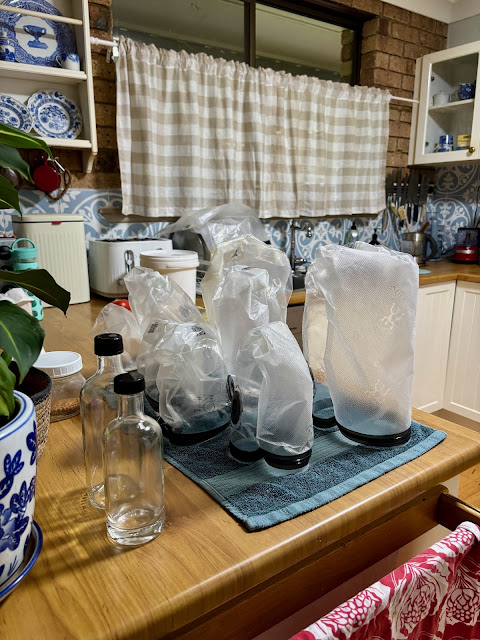
Every morning when I walk into my kitchen it looks tidy and ready for a day's work. Not so on this morning (above), I saw this when I walked in. Late the previous afternoon when I was looking for something, I came across my rolled up Zwilling vacuum bags and decided they had to be washed and dried. So I did that and although I usually put them outside on the verandah to dry it was dark by then. I turned the just-washed bags inside out and left them like this on a towel. It worked well and now the bags are ready to use when I bring home root vegetables, cabbages or whatever I buy that I want to last four or five weeks.
Image

You’ll save money by going back to basics

When I was doing the workshops and solo sessions, I had a couple of people whose main focus was on creating the fastest way to set up a simple life. You can't create a simple life fast, it's the opposite of that It's not one single thing either - it's a number of smaller, simpler activities that combine to create a life that reflects your values; and that takes a long to come together. When I first started living simply I took an entire year to work out our food - buying it, storing it, cooking it, preserving, baking, freezing, and growing it in the backyard. This is change that will transform how you live and it can't be rushed.  
Image

Creating a home you'll love forever

Living simply is the answer to just about everything. It reduces the cost of living; it keeps you focused on being careful with resources such as water and electricity; it reminds you to not waste food; it encourages you to store food so you don't waste it and doing all those things brings routine and rhythm to your daily life. Consciously connecting every day with the activities and tasks that create simple life reminds you to look for the meaning and beauty that normal daily life holds.  It's all there in your home if you look for it. Seemingly mundane tasks like cleaning and cooking help you with that connection for without those tasks, the home you want to live in won't exist in the way you want it to.  Creating a home you love will make you happy and satisfied.
Image

Time changes everything

I've been spending time in the backyard lately creating a contained herb and vegetable garden. My aim is to develop a comfortable place to spend time, relax, increase biodiversity and encourage more animals, birds and insects to live here or visit. Of course I'd prefer my old garden which was put together by Hanno with ease and German precision. Together, we created a space bursting at the seams with herbs, vegetables and fruity goodness ready to eat and share throughout the year. But time changes everything. What I'm planning on doing now, is a brilliant opportunity for an almost 80 year old with balance issues. In my new garden I'll be able to do a wide range of challenging or easy work, depending on how I feel each day. It’s a daily opportunity to push myself or sit back, watch what's happening around me and be captivated by memories or the scope of what's yet to come.
Image

It's the old ways I love the most

I'm a practical woman who lives in a 1980’s brick slab house. There are verandahs front and back so I have places to sit outside when it's hot or cold. Those verandahs tend to make the house darker than it would be but they're been a great investment over time because they made the house more liveable. My home is not a romantic cottage, nor a minimalist modern home, it's a 1980’s brick slab house. And yet when people visit me here they tell me how warm and cosy my home is and that they feel comforted by being here. I've thought about that over the years and I'm convinced now that the style of a home isn't what appeals to people. What they love is the feeling within that home and whether it's nurturing the people who live there.
Image

Back where we belong

Surprise! I'm back ... for good this time. Instagram became an impossible place for me. They kept sending me messages asking if I'd make my page available for advertisers! Of course, I said no but that didn't stop them. It's such a change from what Instagram started as. But enough of that, the important part of this post is to explain why I returned here instead of taking my writing offline for good. For a few years Grandma Donna and I have talked online face-to-face and it's been such a pleasure for me to get to know her. We have a lot in common. We both feel a responsibility to share what we know with others. With the cost of living crisis, learning how to cook from scratch, appreciate the work we do in our homes, shop to a budget and pay off debt will help people grow stronger. The best place to do that is our blogs because we have no advertising police harassing us, the space is unlimited, we can put up tons of photos when we want to and, well, it just feels li...
Image

Making ginger beer from scratch

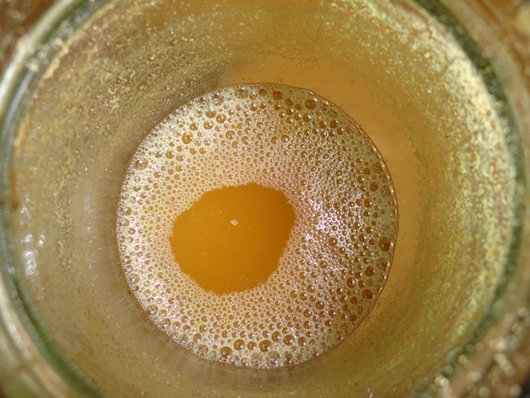
We had a nice supply of ginger beer going over Christmas. It's a delicious soft drink for young and old, although there is an alcoholic version that can be made with a slight variation on the recipe. Ginger beer is a naturally fermented drink that is easy to make - with ginger beer you make a starter called a ginger beer plant and after it has fermented, you add that to sweet water and lemon juice. Like sourdough, it must ferment to give it that sharp fizz. To make a ginger beer plant you'll need ginger - either the powdered dry variety or fresh ginger, sugar, rainwater or tap water that has stood for 24 hours to allow the chlorine to evaporate off. You'll also need clean plastic bottles that have been scrubbed with soap, hot water and a bottle brush and then rinsed with hot water. I never sterilise my bottles and I haven't had any problems. If you intend to keep the ginger beer for a long time, I'd suggest you sterilise your bottles. MAKING THE STARTER In a...
Image