down to earth

  • Home
  • About Us
  • Down To Earth Book
  • Privacy Policy

Hanno and I have been overwhelmed by the sweet messages left about Rosie. They helped us during that first day, the most difficult one, when we were still expecting her to walk inside or bark at the Pee Wees (Magpie Larks), her nemesis. Any other bird could land in our backyard and she didn't care, but let one PeeWee set foot here and she was after them.

We buried Rosie under the Banskia rose where she loved to sit. It's shady there and she had a view of both the backyard and the front. Hanno planted a daisy bush on her grave, I placed some flowers there for my sister Tricia, and we both had a cry. It was a sad day.

Alice is still looking for Rosie. Hanno let her get into the car to sit on the blanket he brought Rosie home on. She sat there for ages, sniffing and taking in as much of Rosie as she could. Now she is sleeping on a single bed and I don't think she likes it very much. They used to sleep together on a bed on the kitchen floor - on the night before she died, Rosie cuddled up to Alice, it was the first time she'd ever done that.


We went out yesterday. We visited a thrift shop near here and then went down to the beach for a cup of coffee. It was the best thing for us. The water was beautiful, we watched holidaying families cook their BBQ breakfasts and run around playing games; I smiled when I saw the benches were all in the shape of surf boards. When we came home it was like we'd packed Rosie away in our hearts and got on with our chores.


Today Bernadette is coming down the mountain with her dog Iona to visit Alice.


Hanno and I would like to thank each and every one of you who wrote a message of support. The kindness shown to us through this blog has helped us through these sad days, and it has proven, once again, the power of the written word.


Rosie grew sicker as the day progressed yesterday. I walked around the garden with her in the afternoon because she couldn't sit still inside. When Hanno came home, he took her to our old vet, the one who operated on her eye a couple of years ago. Rosie had kidney failure and we were advised that even if they started treatment, because of her age and current condition, she probably would not survive. We chose to have her euthanised. She died late yesterday afternoon. This morning we will bury her in the backyard under the Banksia rose where she loved to sit.

We Have A Secret
We have a secret, you and I
that no one else shall know,
for who but I can see you lie
each night in fire glow?
And who but I can reach my hand
before we go to bed
and feel the living warmth of you
and touch your silken head?
And only I walk woodland paths
and see ahead of me,
your small form racing with the wind
so young again, and free.
And only I can see you swim
in every brook I pass
and when I call, no one but I
can see the bending grass.
Author Unknown


I've been looking forward to today ... Thursday is the first day of the week when I'm home all day. Being at work since Monday has working away from my home, socialising and being in the midst of many people and all that busyness out of my system. Today, and the next few days, I will concentrate on my family and my home and getting my house in order. Yes, friends, I'll be fluffing my nest again.

I want to do some sewing today. I have a few bags of fabric to go through, given to me by daughter-in-law Cathy. What I don't need, I'll give to our sewing circle. I want to work on my pin cushion swap today and hopefully get that finished and ready to send. That sewing room needs to be tidied too. It always amazes me how quickly a sewing room can look like a cyclone has whipped through it, when only the most gentle and calm chores are done in there.

Hanno is taking the Centre's mini bus into Brisbane this morning to pick up our Foodbank stores. The Foodbank supplies food and groceries to charities for a very small amount of money. We buy a lot of the Centre's staples at our local IGA and when we supplement that with what we get from the Foodbank we are able to make up a good parcel of food for people who need it.


I won't bake bread today but there are plenty of other chores to keep me busy. The floors need sweeping and washing, the kitchen looks like it needs a good going over and the front verandah is covered with leaves. A basket of apples is waiting to be turned into a pie and I have several lemons to be squeezed and frozen. There are a couple of loads of washing to be done and hung out to dry.

If I have time later I'll plant some lettuce and beetroot seedlings. It will do me good to get into the garden again. It's always the sweetest of pleasures to be out there on these cool days of late Winter, and when I look around me at the lushness of a garden that provides so much of our food, I know I'm really at home, and this is where I belong.

Rosie is still sick. She is good for a day or so and then is unwell again. We've had her to the vet twice but I'm not sure he knows what he's doing. Tomorrow I hope to take her to a specialist terrier vet in a township about 30 kms away. I thank you all for the thoughtful wishes you are sending us for Rosie's recovery. To tell you the truth, I'm not sure she will survive this. She's lost more weight - she's lost more than a third of her weight now, and she's still not really interested in eating. I hope the new vet will make some progress with her.

For the ladies who asked about the washing soda, here are photos of my supplies. I have two brands of washing soda here - Prepact and Lectric.


Washing soda is Sodium Carbonate, nothing else. So if you look on the back of your package, find the ingredients list and if it says sodium carbonate, you have the right product, no matter what it is called. It generally comes as a white powder but it is also sold in crystal form.


Good luck with your hunt. Here is the Cedel Lectric website for more information.

And finally I want to welcome back an old friend. Jewels returned her wonderful blog to blogland yesterday and it's a real pleasure to see her again. Welcome back, friend, your new home is absolutely beautiful! If you don't know Jewels, her blog, Eyes of Wonder, is on my side bar. Do yourself a favour and visit.


I try to maintain a balanced view in my life and on my blog and I generally believe that what others do is their own business and not anything that I should be bothered with, but this is wrong. I want to shout this as loud as I can. Everyone who has some land at the back of their home should be able to keep chickens! Everyone should not only be allowed, but should be encouraged, to collect rainwater from the roof! Everyone should have the right to hang their washing in the sun to dry!

Joanne's comment the other day really surprised me. She said: "Love your new water tank. I've done some checking & found out that it's illegal in Colorado USA to capture water. Can you believe it? I also live with a HOA that doesn't allow clotheslines much less chickens! We're supposed to have all landscaping approved also, but think we can "sneak in" some square foot beds next spring as our land is on a downward slope & we don't have bad neighbors. " I've been thinking about that comment since it was made and I feel I have to say something about it. In doing so, I mean no disrespect.

I don't want to be critical but those regulations are just plain wrong. Is this only happening in the USA or do other countries have similar laws?

There was a time when all those things were so common no one questioned them. All of our great great grandparents would have raised chickens, had vegetable gardens, line dried their clothes and collected rainwater to drink and wash with. Why are you able to carry a gun but not raise chickens for eggs? As far fetched as it may sound, both are linked. From my understanding, guns are still allowed for self protection and hunting. Chickens will help you feed your family just as much as hunting wild game will; raising chickens in the backyard is a form of sustainable protection against hunger and debt. So why are guns allowed but chickens aren't? If they want to regulate, let them regulate the number of chickens allowed, not just ban them outright.

Read this: city residents seek relaxed rules on keeping chickens.

I have no idea why harvesting rainwater would be illegal. Have we removed ourselves so much from the natural world that the things we do to stay clean and hydrated must come from inside the house? We should be asking why these regulations are in place. Here is an interesting article about this very topic. If the argument is that rainwater collection will not allow enough runoff into streams, that's hogwash. Landowners will only collect as much rainwater as their barrels will hold. If they have two 5000 gallon tanks, when they're full, with each fall of rain they will just be topping up. They won't collect 10,000 gallons every time it rains. If they want to put controls in place, regulate the number and capacity of barrels or tanks allowed, but residents should be encouraged to take responsibility for their own water collection is they choose to do it.

Line drying clothes in the sun must be one of those regulations that seemed like a good idea at the time. I doubt there are any valid reasons for not allowing anyone to hang clothes in the sun if they're on their own property. What is wrong with that! Does everything have to be processed by a machine for it to fit within the norms we've set for ourselves?

Regulations like these make residents dependent on their regulators when what is needed in these current times is for all of us who are capable of it to be as self-sufficient and sustainable as we can be. We need to be independent and encouraged to do as much for ourselves as we can.

I don't think it's right to look backwards, and I know that we are far better off now than we were in 1950, 1900 and beyond that, but our ancestors knew how to look after themselves long before our chickens were frozen and delivered to us in plastic bags. We are all here because they kept themselves alive with the things they grew to eat and the water they collected to drink. Why has that right been taken away now?

If I was told I couldn't keep my chooks, harvest rainwater or hang my clothes out to dry in the sun, I'd complain loudly to my politicians, I'd write letters to the editor of my local newspaper and I'd form a group of like minded people to help fight against those controls. I hope I've encouraged those who live with these incredibly stupid regulations to find their own voice and protest. It is your right to do so, it is also your right to keep chickens, save rainwater and hang your clothes in the sun.


Another of the jobs I did on the weekend was maintenance on the worm farm. On Friday afternoon, Hanno and Jens moved the old bathtub I have the worm farm in. I found it too difficult to easily get to the worms and the farm was suffering for lack of adequate care. Now the tub is sitting on a bench in the greenhouse, it has a piece of corrugated iron over it to prevent rain soaking the bed and drowning the worms.

I have written about setting up a worm farm here. It's a simple matter to set your own farm up and if you're having trouble with composting - if you don't have enough material for a compost heap or bin, then a worm farm will provide you with valuable organic nutrients for your garden with less raw materials. Once you've built the bedding up for your worms, all you need to provide them with is enough food to keep them alive and breeding. That is generally done with kitchen scraps, garden waste, old newspapers, old cotton or linen clothes. Worms eat most things but they don't like citrus peels or onions. This is a good fact sheet on the value of worm farming.


Worm castings ready to be used in the garden or for making worm cast tea.

On the weekend, I checked out the worm farm thoroughly. We always have reduced numbers of worms in winter but they are quite healthy and when the warm weather hits us, the worm population will double, then double again. I have the farm set up with casts on one side, that I'm constantly taking from, and the breeding and eating worms on the other side. Of course, the worms travel from one side to the other, but I check castings for worms when I take it out and although there generally aren't many there, I usually find one or two.


The layer of straw before watering.

I removed the old bedding the worms are in and placed it on a tarp on the floor. I had collected all my materials and started placing it all in the bathtub after making sure it was moist, but not wet. The new bedding is made up of straw, a small amount of cow manure, some old silverbeet and cabbage leaves and the old bedding. It's all mixed together gently to avoid harming the worms. Then I added a layer of food from the fridge. There was a bowl of thick vegetable and barley soup, and old chopped up boiled egg, a couple of slices of bread and some apple cores and peels. Then I poured over about a litre (quart) of diluted black strap molasses. The worms love this and it provides them with added nutrients. Finally, I placed another layer of straw, an old wet cotton mat and sheets of newspaper. The mat and paper provide the worms with darkness, which they prefer, and keeps the layers underneath moist. Every few days I lightly sprinkle water on the worm farm to keep it moist.


Final layer of matting and newspaper.

All I need to do now is to keep the farm moist and feed the worms a couple of times a week. As the population increases in the coming months, I'll add food more frequently, possible three or four times a week.

Worm farming is a great project, especially for the kids. It's easy to do, safe, and, best of all, it is a productive project that will give you valuable nutrients for your soil.


Yesterday held the kind of loveliness that only comes in late Winter here. The morning was cold but it warmed to a mild day which almost convinced me to take off my jumper. Almost. As usual, there was plenty to do with all the normal chores and a fair bit of relaxing and talking on the front verandah. We had one trip out to have morning tea with my step son and daughter-in-law. Cathy gave me several bags of fabric, some of it vintage, for our sewing circle at the Centre and Jens showed us his newly built chook house. They're buying their girls in late Spring, after a trip to Europe.

I have been meaning to mend one of my nighties since I put my elbow through the sleeve a couple of weeks ago. That mending was done now, along with tightening some button holes on one of Hanno's shirts and stitching the hem of a skirt. I think this nightie will be in the rag bag next year but as long as it sees me through this Winter I'll be pleased, and if I get any extra, it will be a bonus. I think the nightie is about eight years old.


I topped up my laundry powder box so we should be right for the next few months. It's a simple mix of soap, borax and washing soda that I've been using for many years now and it's still giving me a perfect wash. It doesn't make all those suds commercial cleaners do so it's perfect for my front loader. If you would like to make it, the recipe is:

CONCENTRATED LAUNDRY POWDER
4 cups grated laundry or homemade soap or soap flakes (Lux)
2 cups borax
2 cups washing soda
Mix all the ingredients thoroughly and store in a plastic container with a lid. Use 2 tablespoons per wash.


We have to watch the chickens when they're free ranging now because they scratch the new garden we planted last week. I let them out on Saturday and they wandered around chasing bugs and shadows. It is always a pleasure to watch their antics, they walk along calmly, then run for no reason, then continue their hunt for wandering bugs.


By the time the free ranging is over, they've covered the entire yard, always keeping in their group.


We didn't need to do much in the garden, except pick food to be eaten. Hanno picked kale for his usual feast and I picked silverbeet (chard) for a pie and herbs for my scrambled eggs. We checked on the potatoes, they're growing nicely with new potatoes ready to be picked from the sides. We call that bandicooting here. You can take the new potatoes from each plant without disturbing the main crop. Those potatoes are the sweetest and most tasty and you could easily make a meal of only those potatoes, with some butter and herbs. I think we'll be doing that next week and have the new potatoes with some steamed silverbeet and green beans on the side.


I don't think I took a photo of the finished small tank project. This tank is our third, it's only small, holding 500 litres (132 gallons), but it provides water harvested from the front of the house roof for use on the potted plants and the crop of potatoes we planted along the driveway.


The down pipe coming in from the roof takes the harvested water into the tank. The pipe coming from the top of the tank to the ground is the overflow. That allows the overflowing water to flow onto a stone paver instead of gushing from the top of the tank.

Rosie is slowing getting better. We took her to the vet last Thursday and he said she had a problem in her intestines. She has lost about one third of her weight and doesn't look well at all, but after a few days on the Scourban the vet prescribed, she is eating again. She is still weak and often stumbles when she is walking around but I think she is improving each day. Thank you to all for your good wishes and prayers for Rosie.

Another week is starting today and I'll be back at work in a few short hours. It looks like being busy week and I have to tell you I look forward to all we will do, both here and at work. I hope your week is a good one and that we all look back at the end of it pleased with our efforts and satisfaction with what we've achieved.


Hello all. I wanted to drop in to remind everyone that the deadline for either the pin cushion/needle book or for those who chose the water bottle holder will be coming up next month-September 6, 2008. Pleas don't forget to take photos of your handiwork also and send them to me, Sharon at: cdetroyes at yahoo dot com. I will then post them all on our flickr account. I wanted to give you a few links that relate to the posts and ideas on how to save money that Rhonda and all of you have been putting on the blog this week. We are all striving to save our money and live as simply as we can, knowing that 'one size' does not fit all. We must pick and choose, modify and fold, striving to fit new ideas into our lives-this is truly an ongoing learning process. I have found a few links that we can fit into our lives and save us a bit of money all the while having a bit of fun in the process of learning and creating. Here is an idea for those colds and flus that always seem to hit us as the seasons change: http://www.ehow.com/how_2059479_simple-homemade-vapour-rub.html to go along with that here is a non-petroleum jelly http://www.care2.com/greenliving/non-petroleum-jelly-formula.html . For a bit of fun with the children and as great gifts for teens : http://www.instructables.com/id/How-To-Make-Bath-Bombs/?ALLSTEPS To save money and recycle old clothes when one already has plenty of rags here is an idea for kitting them that you can use to make all sorts of rugs and other things (just don't forget a non-slip mat if you make the rugs-especially in the bathroom!!) http://www.cocoknits.com/info/tutorials/ragknit.html And for the animal lovers (like me) here are two fun ideas that can provide our pets with recycled fun: http://www.evilmadscientist.com/article.php/catchaise and http://evidentlylost.blogspot.com/2008/07/doggie-bones.html Until next time- remember to have fun all the while creating a more fugal and simpler life! Sharon

It generally takes a lot to change patterns of behaviour but change is happening right here in Australia, and I'm sure all around the world. I read recently that people are using their cars less, staying home more than ever and giving up extras like magazines, newspapers and their cup of coffee on the way to work. Worry is changing those behaviour patterns because many people are trying to keep up with mortgage payments, ever increasing rents and the rising cost of child care, groceries and fuel.

The prices we are paying now for groceries, fuel and our homes will remain high for a while so I believe it's wise to plan a strategy rather than just cut back randomly. Here in our neck of the woods we've cut back just like a lot of others but ours is a planned approach, rather than haphazard.

I have no doubt some readers here have their own frugal plans already in motion but I also know that others would be a bit confused about how to cut back when they've already set a budget and are living without luxuries. So what to do?

I doubt there is one answer. We are so diverse and our circumstances so different that I thought the best way to tackle this, and to try to get some answers, would be to make a list of some of the things Hanno and I are doing and to ask you to contribute to the list with your own ideas. Then people can pick and choose what might work in their own circumstances. I'll break the list into categories so if it becomes really long, you can go to the area you're interested in instead of reading through the entire list.

As with most changes in this simple life, the suggestions will be small step items. I'm guessing you've already made the major and obvious modifications you need to make and just need to see those small things that other are doing to help you along. Remember, all those small things add up - even a saving of $10 a week will add up to $500 a year. That money could buy clothes and shoes for your children, pay for Christmas and birthday gifts or help with mortgage or rent payments.

If you are doing something that works for you that isn't already on the list, please add a comment and I'll add your suggestion to the main list. I thank you in advance for your help with this and for those of you needing help, I hope you find that something that makes a difference. Where you see different coloured text in the list below, clicking on it will take you to more information.

FOOD
  • Stockpile - when you have a little bit of extra cash, buy items that you use often when they're on special. Store them at home until you need them. I have written about stockpiling here and here.
  • Cook from scratch - processed foods cost a lot more than basic food.
  • Find and test more frugal food recipes.
  • Cook a couple of meatless meals each week.
  • Use a little bit less of everything. If a recipe calls for 3 eggs, use two and some milk, if you need 500grams of beef mince (1 lb) use less and add some mashed baked beans - no one will notice. Most recipes could be scaled back in some way without affecting the final product.
  • Pack lunches for work and school instead of buying lunch out.
  • from Eileen: People who live alone often have a harder time saving as many things are cheaper if bought in quantity. Besides the obvious ( make 4 portions and freeze 3) why not get together with others in the same position and have a day a week when you eat at each others houses. This also saves fuel both for cooking and heating on that day.
  • from Eileen: Make best use of an oven and dont put it on half full. If making a casserole fill the other shelf with a fruit cake or make biscuits to last a week for example.
  • from Kris: I always make casseroles and soups in double batches so I can either freeze half or share half with someone else that needs it. I also freeze leftover bread heels and such in the bottom of my freezer. I grate the frozen bread into crumbs and add to lots of dishes to make the meat go farther. Vegetables are delicious with a bread crumb coating on them as they cook.
  • from Niki Ruralwritings: We have gone back to daily bread baking, only cooking from scratch, yogurt (& quark) making instead of buying. I am also keeping to a menu plan and shopping list, and stocking up on sale items, but only those items I usually use.
  • from Jinger: I try to eat lower on the food chain...mostly plants and from scratch meals.
  • from Hilde: Use your pressure cooker! Especially with food like beans, rice, potatoes etc. you save a lot of cooking time and electricity. You can also cook complete meals in it and save on the washing up too.
  • from Konigskind: Instead of crisps I always have corn in the cupboard to make some popcorn. It is easy, it needs a small amount of storagespace and it is a great pleasure for the kids.
  • from Hawthorn: Add rolled oats to minced beef to make it go further (do this when it is cooked....especially delicious in bolognaise dishes). By using this method, I can make a pound of mince serve 12 servings.
  • from Young Snowbord: For people who cannot go without coffee, instead of buying the special roasted fancy brand, buy the most generic "restaurant supply type" brand that is already ground. Then take it home and send it through your own grinder 2-3 times until it is like powder. I worked for a German restaurant many years ago and the owner did just that. Everyone raved about her coffee, that it was the BEST, truely Gourmet. It's all in the grinding!
SHOPPING
  • Buy generic brands. It's very hard to tell the difference between generics and well known brands and the savings are really worth while.
  • Stop buying soft drinks/soda pop. If you or the children want sweet drinks, make up a batch of fruit cordial or ginger beer.
  • Check unit prices and always by the best value for money. If there is no unit price available, check it yourself by comparing weights and volume instead of going by the size of the pack.
  • Don't shop when you're hungry.
  • Try to shop without the children.
  • from Jen: I don't know what Australia has in the way of thrift shops or garage/yard sales, but shopping at those venues can save you a fortune, too...especially on clothes. (The only thing is, you never know what will be there, so you have to go with an open mind or go often to get just what was on your list.
  • from Elizabeth: Here in th US places offer Senior Citzens Discounts. It starts at 50 with some places but 55 is the adv. age. It has really helped us. When Dave got his eye checked and new glasses last week it saved us over 250.00. Then we get 10% off our food at the market.We ask about a senior discount everywhere we go.
  • from Kris: Most of the time I do my grocery shopping only on the outside of the store where the essential items are. I find that if I venture into the middle aisles to just look I always find something I "need." I cook exclusively from scratch, so it is rare for me to need something from the middle aisles, which are mostly convenient (expensive) non-foods.
  • from Niki Ruralwritings: We STAY OUT OF STORES...the very best way to save. When you have to go, put on your "blinders" and head in with a list and really avoid browsing or looking at anything else.
  • from Lis: I do the menu planning and try to "shop" from my cupboards and freezer before I leave the house.
    Buy your meat in bulk - if possible buy a 1/4 or 1/2 a cow and get the butcher to trim and package it for you. This works out heaps cheaper. If you don't have the storage space, get some friends together and split the meat between you.
    Look into food co-ops in your area.
    Find the food wholesalers that also sell to the public. This is a great way to buy flour and other dry goods. Again look at splitting it with friends if you don't have storage space.
    Find your local markets for fresh produce and buy in bulk. Menu plan your purchases and then on-sell, freeze, preserve or barter the excess. My best bargain was 3kg of swiss mushrooms for $6 - the sell in the supermarket for $10 a kg. Yes, we ate a lot of mushrooms in two weeks and I sold some to friends but it added some luxury to our menus at a bargain price.
  • from Em: keep a list for shopping and groceries - and only buy what is on the list.
    I actually like to have my kids with me shopping b/c we talk to them how to work out what is the best value (comparing price per wgt), and we discuss what the advertising on packages is trying to make us do, or read the labels and discuss which foods are better for our body. I know this is a luxury of sorts b/c it takes time and energy from me, but I want them to have the tools to shop well themselves.
  • from Konigskind: When I need something for my home I tell it everywhere I go Most of the time someone who heard this calls me to tell that they have the thing I need and don't use it anymore.
  • from Stacy W: Don't just buy from auction sites/bootsales/yard sales etc sell at them too! Bric n Brack, old kitchen equipment, clothes and toys the kids out outgrown, old CD's and DVD's. All this can be sold and this means you get some money, the good are recycled which is greener than throwing them out and the goods are loved by someone else!
  • from ITZME the Scavenger: Use Freecycle or Craigslist - especially good for swapping baby clothes (they grow so fast) and those fun toys that can cost a fortune.
  • from Gwensmom: When you are doing errands that include grocery shopping, take along a cooler with ice or frozen gel packs. Grocery stores open earlier than other stores, so you can get the groceries first and put milk, frozen items, etc. in the cooler. Then do all your other errands and your food will not have spoiled or melted before you can get it home and into your fridge or freezer.
    Also, make a Word document with a list of everything you buy at the grocery least once a month. Put the items the order they appear in the store you use the most. When it's time to go shopping, get your list and check the pantry and fridge circling the items you need to restock. Write in anything you need that isn't on the list. Your shopping trip with take much less time and you won't have to run back to the store for something you forgot.
SEWING and HOBBIES
  • When sewing a pant or a dress use a wide hem (undo it when their height is gained add a trim if the hem line is faded.
  • from Jinger: I make baby quilts from fabric friends and family have given me.
  • from Konigskind: When you have a hobby it is worthwile to watch if you can make money with it or change services. I repair clothes for others. They pay me by cooking a meal or some tomato-plants.
  • from Young Snowbird: I'm single and for years had a twin bed. I switched to a full size. Spent all my money on the new bed, no money for linens. I took two fitted twin sheets, removed one side of elastic each and sewed the two together to make a full size fitted sheet. This would work for Queen or King size too, as I had quite a bit of overlap. top sheets could be sewn together too. No wasting perfectly good sheets just because of size!
CLEANING
  • Stop buying cleaners at the supermarket and make your own. There are recipes here.
  • Cleaning floors and furniture.
  • Cleaning the kitchen.
  • Simple cleaning here.
  • Cleaning with rags here.
  • from Donetta - When doing the dishes fill your sink half full then wash, rinse dishes over half full sink and the rinse water becomes wash water for the deeper items.
  • from Kris: I dilute shampoo. I buy several bottles when it goes on sale and as soon as I get home I pour some out into containers I have saved and add water. If you keep turning the bottles for a few days it will mix together. I then store these under the sinks in the bathrooms. The shampoo goes twice as far, cleans exactly the same and is actually easier to rinse out of your hair.
  • from Niki Ruralwritings: I routinely use only half or even less of the recommended amount of laundry dtg. There is no difference in the cleanliness of the clothes.
  • from Lavonne: Tear up old linens or clothes and use them for napkins, toilet wipes, feminine hygiene, diapers, baby wipes, etc.
    Wash sponges with laundry and make them last longer.Make a baking soda/water paste to wash hair and use 1/2 vinegar-1/2 water to rinse it.
    Use natural or homemade dish soap for laundry. One short squirt cleans as well as the recommended cup of detergent.
    Use a mix of half vinegar and half water with a drop or two of dish soap in spray bottles for cleaning countertops, walls, windows, appliances, etc.
    Stop buying specialized cleaning products -- make your own. Here are some good places to get started: here and here.

TRANSPORT
  • Stop using the car for short trips.
  • If you use the car to go out, do as many things as you can while you're out.
  • Rediscover your public transport system.
  • Ride a bike.
  • Walk.
  • Start a walking bus to school if it's close by. Arrange to pick up neighbour's children along the way. Take it in turns with other parents to supervise the walking bus.
  • from Niki Ruralwritings: We are using our little Toyota Echo almost exclusively rather than our larger farm vehicle. It saves us a fortune.
  • from Lis: I've started catching the bus to work on average once a week - saves wear and tear on my car and petrol.
    Make sure your tires are properly inflated and try and combine all your trips out to one day per week.
  • from Jinger: I try to have one non driving day per week.
CHILDREN
Include your children in the changes. Explain why it is necessary, without worrying them, and suggest ways they could help:
  • Turn off the lights, TV, radio, Xbox when not in use.
  • Care for clothes and shoes.
  • Stop asking for junk food in the supermarket.
  • Use the library more - libraries often have DVDs, videos, computer games and board games as well as books and magazines.
  • Show them how to read the water and electricity metres and have them monitor everyone's usage.
  • Teach them how to make good pizza at home and replace your Friday night delivered pizza with a delicious homemade one.
  • Record children's movies or documentaries during the week so they have something special to watch on the weekend.
  • from Donetta: Make toys out of recycled things. My kids use cardboard and elastic to make a toy today and love it. Show them fine motor skills doing this.
BABIES
  • from Hawthorn: Invest in Cloth nappies/diapers and wipes - saves a fortune on the disposable type.
PETS
  • from Young Snowbird: For those with cats who feed them wet canned food. Use a half or a third of the amount they you normally feed and add water to it. Mix to create a gravy. The cat will still get its "wet", you'll stretch the food, and the cat will get additional water intake which most of them desperately need as they really are reluctant drinkers.
BILLS/MONEY and BANKING
  • Make sure you pay your bills on time, especially if you get a discount for early payment.
  • Check EVERY bill that comes in. Make sure it is correct before you pay it.
  • Check your bank statement every month. Banks often make mistakes.
  • Are you on the best plan for your mobile/cell phone, home phone, internet, TV? Do some research and change to a better plan if you find one.
  • Think carefully about the services you're paying for. Maybe you could give some of them up while the prices are so high.
  • Make a plan to pay off your debt.
  • Make a budget and stick to it. There are plenty of budgeting posts under 'budgeting' in my side bar.
  • from Niki Ruralwritings: We had scaled back our TV package. Also changed our long distance plan to a less expensive one. We recently called our cell phone company to make sure our plan was the best one for our useage. It was and is quite reasonable. but worthwhile to call and check.
  • from Niki Ruralwritings: We do only online banking and save postage. Also we use a chequing account that is very cheap in terms of service fees.
  • from stuff: Make sure that any savings you have is doing the most it can for you. Savings accounts and cds vary greatly.
    Do an audit of your insurance policies and get new quotes. You want to be covered, but sometimes it doesn't pay to have full coverage on an older car.
    If, and only if, you are comfortable with credit card use and don't carry a revolving balance, make your credit card work for you. I am moving what bills I can to credit card for several reasons. I get cash back, most of my bills are on one statement, payments are automatic so no late fees, money can sit in an interest bearing account for longer before it goes to bills. You have to stay on top of things, but it works for me.
  • from Gill: One thing I do is have a variety of different pots, which I put money into each week, for a variety of things. I explain more about it on my blog. I also have a simple way of saving money by doing a daily savings pot, which basically means putting your change into a pot.
BARTERING, SWAPPING AND CO-OPS
  • If you grow vegies or have spare eggs, ask you friends if they'd like to buy some. This might be embarrassing for you but I can assure you many people out there really want to buy home grown food.
  • If you have a fruit tree, barter your fruit for something you need, maybe eggs or honey. Remember, many people are in the same boat as us, they'll be looking for ways to save and will probably welcome the offer to barter.
  • Do you have children constantly growing out of their clothes? Swap clothes with friends.
  • You can also swap games and toys your children are tired of playing.
  • Form a buying co-op with friends and neighbours. You can bulk buy things like meat, fish, vegetables and fruit. Take turns with the buying and sorting and have everyone pick up their own box.
ENTERTAINMENT
  • Invite friends around for a BBQ, ask them to bring a plate or food to share.
  • Rent a movie instead of going to the cinema, record a movie on TV instead of renting.
  • Make a deal with a friend to watch your children while you have a morning out. Return the favour to your friend.
  • Okay, this is anti-entertainment to some, but stop smoking, drinking at pubs and clubs and gambling. You'll save a fortune.
  • from Stuff: Make get together with friends productive. Don't head out to eat and shop...walk, sew, can, cook, etc. Any time with a friend is good time, even if it's cheap.
  • from Jinger: I take advantage of all my city's free entertainment, for example the outdoor symphony concerts every Sunday evening and free outdoor movies in the summer.
  • from Judie: For those of us trying to reduce TV or cable expenses, remember the public library. There are any number of magazines to read, CD and DVD rental in addition to best sellers and how-to's. There is no fee for checking them out and if the due date sneaks up on you, renewal can be done by phone or internet. By the way, if there is a college or university nearby, check into non-student library privileges.
HOME
  • from Donetta - A clothes line is a good thing.
  • from CB: we walk through woods with the dog on a daily basis and in the Summertime we pick up pine cones and small twiggy branches that have fallen down.Sometimes if we walk where trees have been cleared we can pick up some nice sized wedges that the woodcutters slice out of the trees when they're being felled as they always leave them leave behind.As it's Summer and the weather is good, everything is mostly dry and so fairly light to carry home with us. We save the sacks from the dry dog food we use to keep the bits of wood and cones we've collected dry until we need it to burn on our fire in the Winter, it saves us quite a lot of money.
GIFT GIVING
  • from Niki Ruralwritings: I try to give homemade gifts. I have a standard Baby Afghan I make for all new mothers and babes. I will work on these over the year, in between other projects and just put them away, for the next baby gift.
  • from Niki Ruralwritings: Hostess gifts or small token gifts are usually knitted dishclothes, candles or soap.
  • from Niki Ruralwritings: Bigger gifts to friend are usually knitted or crocheted afghans, or very simple sewing like table runners.
ELECRICITY, GAS and WATER
  • Joanne from Dubbo: I have recently received my electricity bill and I am proud to say we have virtually halved our usage from the same time last year, We went from 38kwH per day to 20.74 kwH per day and our bill from $510 to $330. (There has been a price rise in this time) Our strategy was turn everything with a shiny standby light or display off at the wall when not in use eg TV, computer, stereo, DVD, microwave. We got rid of our bedside alarm clock and use a wrist watch or a mobile phone alarm if very important to get up on time. We also changed all lights possible to CFC variety. We have a Lopi wood heater for our heating which is cast iron?? and has a large area on top of it that you can cook on. We keep a kettle on it for hot water at any time like washing your face in the morning, doing dishes or cups of tea and the great majority of our meals have been cooked on there eg pasta, stews, steak, risotto, steamed veges etc. I am also batching what I cook in the oven, doing 3 to 4 things in a row. So for those people that think little things dont make a difference our proof is in the pudding and in being organised. If anyone is looking at getting a wood fire I would recommend looking at one you could use as a stove in winter and save on electricity. Ours is about 25years old and still going strong.
  • from Konigskind: One thing we do in our familiy is putting a bucket in the shower to catch the cold water that comes before warm water arrives. This cold water we use for flushing our toilet.
  • from Jess: Not sure if this would be a tip of sorts but once the mornings start getting cooler, instead of turning on the heat I just spend the morning baking. The oven warms the house until the sun comes up.
  • from Elizabeth: Here in the UK most of us heat our homes with gas central heating and the gas price has just been raised by 35 per cent - scandalous!! I'm hoping to really cut down on our gas usage this coming winter by turning down the thermostat, making sure all drafts from windows and doors are blocked, fitting aluminium foil behind each radiator to reflect the heat back into the room, and putting on extra jumpers to keep warm.
And now it's over to you, my friends. What wise words can you add to this list that aren't there now?


Lions organic pure cotton

My house is untidy. I'm at home today so I'll have plenty of time to put things back in their rightful places. I remember when I was much younger, I used to look forward to my days off and I would make sure I was out most of the time. I'd be visiting friends, going to the movies, dining out and shopping. Now is a much more gentle time, now I look forward to fluffing my nest and in the doing of it, slowing down and thinking about tasks and my place here at home.

When I was younger and out there living my life in public, I thought being at home was the dullest thing out. I neither valued nor understand the significance of a home; nor did I place much stock in a woman being there. I found my worth in external places, never realising that until I discovered a place where I could slow down, take off all masks and be my true self, whatever worth I thought I found, would be vacuous and brief.

I also needed to discover respect - for myself, other women and my home.

I guess I started that major discovery when I had my children. I saw my home then in a very different light. Before children, my home was just a place I slept and kept my belongings. After children, it became a safe haven where we nurtured our sons, where we modelled the behaviour we wanted to see in them and where those boys lead us to a better life.

And now they've gone. They grew into two fine men that I am very proud of. They're now establishing their own lives with successful careers and with girlfriends that may turn into something more special.

But after all that reminiscing, I'm still left with an untidy home. That's okay though, it's easily put right by gathering up and putting away, my broom does wonders. It's an enriching part of my life now being a homemaker; I discover myself here.

I love my home because it gives me feelings of security and of working towards sustainability. I feel safe here, the comfortable feeling of the familiar gives me more than refuge, it settles my soul. Do you have similar feelings about your home? What makes your home special and just right for you?

A special message to Kate in NY who sent me the book, Not Buying It. It arrived on Monday, I read it Monday and Tuesday nights and gave it to a friend to read on Wednesday. No doubt it will keep on being passed on. Thanks Kate!


We make compost, year round, in this corner of our garden. We also have compost in the chook pen, and we have a worm farm. We used to enclose the compost on three sides but we found it was easier for us to take away some of those sides to allow easier access when turning the heap.

Compost is the end result of organic matter that breaks down and decomposes. Organic matter, in this context, is anything that was once alive and is usually things like vegetable scraps, lawn clippings, newspaper and cardboard, outer leaves of vegetables, leaves, hair, straw etc. Just about any leafy product may go into compost, but never include diseased leaves like those from tomato bushes as that will just keep that disease in your garden and spread it around. Diseased plants are best put into a plastic bag, sealed up, left in the sun for two weeks, then put into the rubbish bin.

There are many different ways of making compost. The purists make sure their compost bin is a certain size to ensure it heats up - that encourages decomposition and kills some weed seeds. Other people use enclosed at the top, open at the bottom bins. This type of composting relies on anaerobic organisms. I have found that using one of these bins to make compost generally results in a very wet mix and it needs more brown material than green. We have one of these bins but it's rarely used here.

There are three important requirements for making compost:
  • Aeration
  • Nitrogen
  • Carbon
It sounds complicated, doesn't it? Well, it can be, but it can also be easy if you get your mix right.

Aeration is simply moving the compost ingredients around to introduce air into the mix. You could do this by turning the compost over with a fork, by using a tumbler that spins the compost around or by building your compost heap around a wide plumbers pipe that would allow air to go deep within the heap. Generally, it's best to turn the compost with a fork about week or two. The more air you get into the mix, the fast you'll make compost.

Of course, you will make compost simply by piling a heap of organic matter in a corner and waiting for a long time - about 6 - 9 months. The heap will very slowly decompose with no outside help. But if you're wanting compost for your garden, generally you would give it a helping hand and turn it as much as you can. Depending on your climate, turning a compost heap that has been made with the right ingredients, will give you compost in about two or three months.

Nitrogen is wet green vegetable waste, scraps, lawn clippings and old vegetables. It's the stuff that's still juicy or slimy, all that waste that hasn't yet dried out. Nitrogen comes from the fresh kitchen scraps you'll have most days.

Carbon is dry waste like straw, newspaper, cardboard and dried leaves.

You compost will need about three parts carbon to one part nitrogen and all the ingredients should be as small as possible. If you have big pieces of cabbage or pumpkin, or sheets of newspaper, get your spade and cut them into smaller pieces.


These are all links to other sites. I've checked the information there and recommend it to you.

There is a very good slideshow here with a step by step guide to making compost.

Making compost in a warm climate.

Several methods of making compost.

18 day compost

Adding the manure of vegetarian animals and birds, including chickens, to your compost will help it break down much faster. So will adding comfrey or yarrow leaves. In summer, I make comfrey tea and pour it over the compost heap. It helps it along very nicely.


Comfrey

So let's recap here.
  1. To make good compost, you'll need ¼ wet, nitrogen, green waste, like lawn clippings or vegetable scraps. Add that to ¾ dry, carbon waste like straw, dried leaves or shredded newspaper.
  2. Add the ingredients in layers where you have a lot of dried carbon mixed with a smaller amount of green wet leaves.
  3. Add some manure or comfrey/yarrow leaves.
  4. Wet this with some water.
  5. Mix.
  6. Shape into a neat pile and leave it.
  7. Add to the pile as often as you can, making sure you always have more dry than wet waste.
  8. Keep the heap moist, not wet, and turn it as often as possible.
If you notice the compost has a terrible smell, you've got too much green wet waste in there. Add some shredded newspaper or other dry carbon waste and mix it in.

If the compost looks dry and isn't decomposing, add more wet green waste, or a sprinking of water from the hose, and mix.

If you have a lot of wet weather, it would be a good idea to cover your compost heap with a tarp or plastic to keep some of the rain out.


This is a compost heap we just added to over about 6 months and never turned.

Your compost is ready to use when everything has lost its shape and has blended in together. It will look like dark loose soil with little bits in it. It will smell like soil. When you have this excellent additive, either add it to a new garden bed and dig it in, or use it in the planting hole in the garden bed to plant your seedlings in.


This is the compost after six months and several days of rain. We mixed this into our garden soil before planting up a new bed.

You can never have too much compost, so when you successfully make one lot of compost, make more the next time. Compost will add fertility and health to your garden but it will also help you cut down a lot on the amount of organic waste you throw out. If you're serious about your vegetable garden, this is one skill that will help you produce good healthy food for your table.

ROSIE UPDATE: We haven't taken her to the vet yet. She seemed much improved yesterday and has started eating properly and she slept through the night last night. We'll keep watching her and see if we can nurse her back to good health without going to the vet. I'll keep you all posted. Thank you all for your concern, both Hanno and I appreciate it.


Gardening is one of those things that is very difficult to write a one size fits all formula for. What works for me, might not work for you because of our different climates, soil and level of experience. But what I hope to do today is to write a general guide to starting a garden and hope it encourages you enough to give it a go and in doing so develop your own skills in this important subject. I also hope to answer some of the questions asked after yesterday's post.

Hanno and I live in the sub-tropics, and although our temperatures in summer are always in the 30s C (86 - 100 F) with high humidity, we experience that only from late November till February. In winter - June - August our general temperature range is 5C (at night) to the mid 20s during the day (41 - 77F). So for six months of the year we have what I would call extreme temperatures and the remaining six months the weather is perfect - low humidity, with temperatures ranging from 15 - 25 (59 - 77F) day and night.


Here is our home - the yellow area is where we have our vegetable garden, the pink is the chook run, blue is the screen Hanno built last week and the light dots are fruit trees and vines. (Clicking on photos will enlarge them.)

Those temperatures allow us to grow food all year round, although what we grow and how we grow changes according to the season. We have one acre of land and our home is about in the centre of it. There is a little one lane, dead end track leading to our place, we have an old abandoned timber mill across the road that we can't see due to a planting of pine trees, there are neighbours on both sides and a permanent creek and remnant rainforest at back. We are at the edge of a pine forest and about 15 kms from the Pacific Ocean. Our creek at the back runs into the ocean.

I have been a vegetable gardener for many years and have grown vegetables and kept chickens for the past 25 years. Over that time we have never deviated from the one true guide to what we grow. We grow what we eat. So I guess my first piece of advice to you if you're just starting out with a garden, is to make a list of the fruits and vegetables you eat regularly, then start cutting that list back. Strike out anything you know you can't grow. For instance, if you're in northern Canada or Scotland and eat pineapples and bananas, strike them off your list because I doubt you'd be able to grow them. And if you could, it would be such a trial it wouldn't be worth it. This is a guide to practical vegetable gardening, not in forcing food to grow against all odds. If you live in sunny and hot northern Australia or Hawaii, you probably won't be able to grow cabbages, cauliflowers or swedes.


Where I live we never grow onions. We have Welsh (green) onions, but never the bulbous red, brown or white onions that both Hanno and I love. We tried them for two years and the harvest of them was so poor, and they took up so much room, we decided that onions where one of the vegetables we would have to always buy. Ditto for garlic. We grew some but much of it rotted in the ground, so now we buy organic garlic from the market.

Do you see where I'm going with this? You'll finally have a list of food you like to eat that you can easily grow, once you have developed your skills and have the time it takes to do it. You will also have some things you can't grow, or will take too much room or effort to make it worthwhile. Remember, vegetable gardening is not something you'll dabble with when you feel like it. Once you've made the commitment to it, you will be working hard on producing your food and that will require time and effort. Don't go down that path unless you will give it the necessary time and effort.

Get yourself a good book on gardening in your climate and read all about the vegetables and fruit you want to grow. If you're in Australia, I recommend Lyn Bagnall's Easy Organic Gardening and Moon Planting. It is, by far, the best book on gardening in Australian conditions that I've read. Plant up everything you want and be guided by your book for the care of your plants. I would recommend you start with seedlings and when you have a bit more experience, start growing from seed and save your own seeds each year. This will cut down on your costs but also give you seeds ideally suited to your climate and soil conditions. Each year your seeds with get better and be more inline with your own conditions. When you have some experience, push the boundaries imposed by your climate and, if there is something you really want to grow, try it and see what happens.


It is commonly held to be true in my region that you plant one crop of potatoes in Autumn to be harvested in early Spring. We did that for a few years, then wondered if we could push our boundaries to another later crop - it worked. Then we tried for an earlier crop as well, that worked too. Now we plant potatoes all year through and generally have good crops that make it well worth our time and effort. You probably know already that home grown tomatoes taste far better than anything you'll get from a supermarket, the same applies to potatoes. They have a much better taste if you grow them in your own backyard and one taste of a new potato, cooked to perfection and dressed with butter, parsley, salt and pepper will convince you, far better than my words can, they are a valuable back yard crop.

But I digress, we are still at the planning stage. You will always have some foods you can't grow, that's just a fact of life. Don't be upset by that, just accept it and get on with what you can grow. Once you have a list of possible contenders, if you're a novice gardener work out what it is you eat the most of, or what is the most expensive to buy, and start with that. Don't take on too much in the first year. I know you'll be excited and optimistic, but this is a new skill, just like sewing and knitting. Start off with a dishcloth or apron, instead of a cable jumper or ball gown. Each year add new things or grow more but in those early stages, be prudent and concentrate on a small but well grown garden.


The best bit of advice I can give you is to improve your soil before you start gardening. Unless you live on an old volcano your soil will be like mine and will need improving. If you plant into virgin soil, your plants will grow but you'll most likely have small crops or small vegetables. Remember too, that the bugs attack stressed plants much more than healthy ones. Gardening takes a lot of time and effort so make sure you maximise the potential of your crop and give your plants every chance. Improve the soil before you start. That may mean that you work on your garden soil for a while before you start. If you have clay soil, you'll improve it by adding compost. If you have sandy soil, you'll improve it by adding compost. (I'll write about compost tomorrow.)

If you have clay soil and are prepared to add compost to it, you'll end up with the best rich soil you can imagine. Clay holds a lot of nutrients but as it's so sticky and dense, the plant roots cannot breathe and they die. Adding compost to clay lightens up the soil, providing air spaces for roots and worms, and it frees up the nutrients already there so they're available for your plants. Clay also holds the water and often plants drown if they're planted into unimproved soil.

Sandy soils are at the other end of the range. They don't hold water or nutrients and you'll have to water much too often if you don't improve the soil by adding compost. Planting in sandy soils will give you grief because your plants will fail to thrive and probably die without fruiting.

If you take the time to improve the soil you will grow plants quite easily. They'll be fed by the nutrients in the soil, they'll benefit from the moisture holding capacity of your soil and not go constantly from dry to wet, or sit with their roots in water that can't drain away. Don't be tempted to buy in garden soil either. Unless you can get a tested organic blend, you'll be importing more trouble in the form of weed seeds that might take you ten years to get rid of. And remember, garden soil and the mix you put in pots, are two different things. Garden soil is the topsoil from the earth. Potting mix is manufactured soil made by combining compost, sand, peat etc that is free draining and won't go hard in a pot when you add water.

I hope by now I've convinced you to improve your soil before you start anything. You should start building your list of foods to grow and look around for good quality seedlings. The first step though is to build some compost, we'll start that tomorrow.

ADDITION: Rosie is unchanged. Hanno will try to get her to the vet today.

I am worried about Rosie, our 12 year old Airedale Terrier. She's lost a bit of weight over the last week or so and she's been vomiting. She's still eating her evening meal but won't touch the biscuits in the morning. I've been giving her a little bit of porridge during the day, which she loves. Hanno will take her to the vet today. :- |


For the past few months, we've been talking about putting up a screen near our bedroom to shade the wall from the summer western sun. Our plan is to grow luffas all along the screen during summer and smaller crops, that would allow the sun through, in winter. Well, last week Hanno built that screen. You can see him in action, with his sidekick, Rosetta, above. (Clicking on the photos will enlarge them.)


We enriched the soil, which was mainly the natural clay we are on here, with compost, worm castings and some of the rich soil from the chicken coop. It was watered in with a weak solution of seaweed tea. Our first crop is lettuce and tomatoes - two Tropics and two beefsteaks. We've covered it all with straw to keep the soil at an even temperature and to conserve the water used on the garden. When these tomatoes have cropped, they'll be pulled out and the luffas planted. I will be selling those organic luffas with my homemade soap in a few months time.


Tomatoes are an important crop to us and generally I like to plant pink Brandywines. If you've never seen a Brandywine, above is a photo of one we ate on the weekend. I think they're the perfect tomato - juicy without being watery, more sweet than tart, few seeds and they have the most divine flavour.


What we eat depends on what is growing in the backyard. On Saturday I made some coleslaw and we had that with a garden salad with snow peas, and potatoes with butter and parsley.


I had just started taking off the outer leaves of the cabbage and out popped this little fellow! He's a sedge frog - a tiny leaf dwelling green frog which, when fully grown, will be about two inches long. He's now living in our green house.


We pulled out all the brandywines and cucumbers last week, enriched the soil again and planted up some leeks and more tomatoes. If you're new to vegetable gardening, I can't encourage you enough to enrich your soil. Compost, worms and all sorts of organic matter in your soil will help you grow the best vegetables possible. It is well worth the time it takes to do it.


And here is yesterday's garden, taken from behind the lazy housewife beans. We're eating some of these green beans raw and the rest I'm allowing to dry on the vine. I'll harvest a couple of jars of the finest dried white beans for my stockpile cupboard from them. They'll be a nutritious addition to soups and casseroles later in the year. I love those dual purpose vegetables.


Above you can see a pineapple growing among the kale. I am hoping it will produce pineapples this summer.


And in this last photo, meet some of my peeps. Here are Pippa and Mrs Rudd - two silver sussex, Margaret, my big light sussex, Martha, the buff Orphington at the top, and Bernadette, the Barnevelder at the bottom. Bernadette always looks angry but she's quite timid and sweet.

Gardening and knitting took up the best part of my weekend. My daughter-in-law, Cathy, found some Lion organic pure cotton for me last week so I experimented with that, knitting and unpicking it a few times until, at last, I was happy with the result.

Every so often my family and friends tell me they've read something on my blog, but none of them ever comments. So, in the hope of flushing them out, I'd like to say hello to Trisha, Kathleen (my sisters), and friends Susan, Bernadette, Wendy and Anna. :- )

Just one last word to my Australian friends. If this truck drivers' strike goes ahead, I encourage you to top up your stockpiles. Hanno and I are not due to shop for a while yet, but if the truck strike is on, it will affect grocery deliveries very quickly, so Hanno will stock up on a few items today. If you need to stock up, shop today or tomorrow if you can.

Newer Posts Older Posts Home

MY BOOKS

MY BOOKS


My books were all published by Pengiun, and are available at Amazon US, Amazon UK and Amazon Au

Search here

Total Pageviews

Translate


I'm Rhonda Hetzel and I've been writing my Down to Earth blog since 2007. Although I write the occasional philosophical post, my main topics include home cooking, happiness and gardening as well as budgeting, baking, ageing, generosity, mending and handmade crafts. I hope you enjoy your time here.

MY FAVOURITE PLACES

  • Grandma Donna's Place
  • Grandma Donna's YouTube
  • Grandma Donna's Instagram
  • This Simple Day
  • Nicole's Instagram

Give More

Give More

Popular posts last year

Making ginger beer from scratch

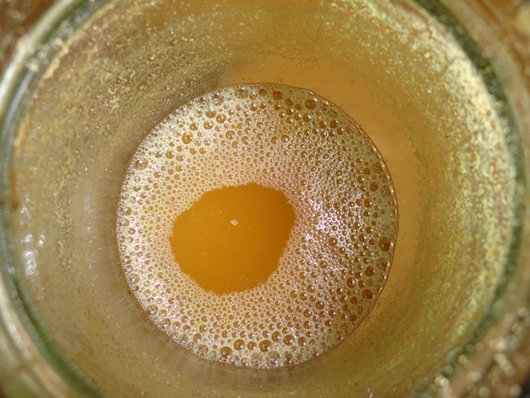
We had a nice supply of ginger beer going over Christmas. It's a delicious soft drink for young and old, although there is an alcoholic version that can be made with a slight variation on the recipe. Ginger beer is a naturally fermented drink that is easy to make - with ginger beer you make a starter called a ginger beer plant and after it has fermented, you add that to sweet water and lemon juice. Like sourdough, it must ferment to give it that sharp fizz. To make a ginger beer plant you'll need ginger - either the powdered dry variety or fresh ginger, sugar, rainwater or tap water that has stood for 24 hours to allow the chlorine to evaporate off. You'll also need clean plastic bottles that have been scrubbed with soap, hot water and a bottle brush and then rinsed with hot water. I never sterilise my bottles and I haven't had any problems. If you intend to keep the ginger beer for a long time, I'd suggest you sterilise your bottles. MAKING THE STARTER In a...
Image

NOT the last post

This will be my last post here.  I've been writing my blog for 18 years and now is the time to step back. I’ve stopped writing the blog and come back a couple of times because so many people wanted it, but that won’t happen again, I won’t be back.  I’ll continue on instagram to remain connected but I don’t know how frequent that will be. I know some of you will be interested to know the blog's statistics. 
Image

How to make cold process soap

I'm sure many of you are wondering: "Why make soap when I can buy it cheaply at the supermarket?" My cold process soap is made with vegetable oils and when it is made and cured, it contains no harsh chemicals or dyes. Often commercial soap is made with tallow (animal fat) and contains synthetic fragrance and dye and retains almost no glycerin. Glycerin is a natural emollient that helps with the lather and moisturises the skin. The makers of commercial soaps extract the glycerin and sell it as a separate product as it's more valuable than the soap. Then they add chemicals to make the soap lather. Crazy. Making your own soap allows you to add whatever you want to add. If you want a plain and pure soap, as I do, you can have that, or you can start with the plain soap and add colour, herbs and fragrance. The choice is yours. I want to add a little about animal and bird fat. I know Kirsty makes her soap with duck fat and I think that's great. I think t...
Image

Preserving food in a traditional way - pickling beetroot

I've had a number of emails from readers who want to start preserving food in jars but don't know where to start or what equipment to buy.  Leading on from yesterday's post, let's just say up front - don't buy any equipment. Once you know what you're doing and that you enjoy preserving, then you can decide whether or not to buy extra equipment. Food is preserved effectively without refrigeration by a variety of different methods. A few of the traditional methods are drying, fermentation, smoking, salting or by adding vinegar and sugar to the food - pickling. This last method is what we're talking about today. Vinegar and sugar are natural preservatives and adding one or both to food sets up an environment that bacteria and yeasts can't grow in. If you make the vinegar and sugar mix palatable, you can put up jars of vegetables or fruit that enhance the flavour of the food and can be stored in a cupboard or fridge for months. Other traditional w...
Image

Cleaning mould from walls and fabrics

With all this rain around we've developed a mould problem in our home. Usually we have the front and back doors open and that good ventilation stops most moulds from establishing. However, with the house locked up for the past week, the high humidity and the rain, mould is now growing on the wooden walls near our front door and on the lower parts of cupboards in the kitchen. Most of us will find mould growing in our homes at some point. Either in the bathroom or, in humid climates, on the walls, like we have now. You'll need a safe and effective remedy at some point, so I hope one of these methods works well for you. Mould is not only ugly to look at, it can cause health problems so if you see mould growing, do something about it straight away. The longer you leave the problem, the harder it will be to get rid of it effectively. If you have asthma or any allergies, you should do this type of cleaning with a face mask on so you don't breathe in any spores. Many peopl...
Image

Five minute bread

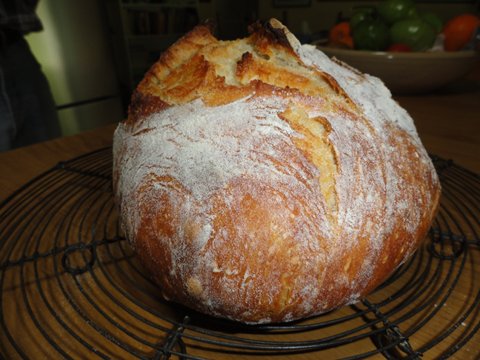
Bread is one of those foods that, when made with your own hands, gives a great deal of satisfaction and delight. It's only flour and water but it symbolises so much. I bake bread most days and use a variety of flours that I buy in bulk. Often I make a sandwich loaf because we use most of our bread for lunchtime sandwiches and for toast. Every so often I branch out to make a different type of loaf. I have tried sour dough in the past but I've not been happy with any of them. I'll continue to experiment with sour dough because I like the idea of using wild yeasts and saving the starter over a number of years to develop the flavour and become a part of the family. However, the loaf I've been branching out to most often is just a plain old five minute bread. By five minutes I mean it takes about five minutes actual work to prepare but it's the easiest of all bread to make and to get consistently good loaves from. If you're having people around for lunch or...
Image

This is my last post.

I have known for a while that this post was coming, but I didn't know when. This is my last post. I'm closing my blog, for good, and I'm not coming back like I have in the past.  I've been writing here for 16 years and my blog has been many things to me. It helped me change my life, it introduced me to so many good people, it became a wonderful record of my family life, it helped me get a book contract with Penguin, and monthly columns with The Australian Women's Weekly and Burke's Backyard . But in the past few months, it's become a burden. In April, I'll be 75 years old and I hope I've got another ten years ahead. However, each year I'll probably get weaker and although I'm fairly healthy, I do have a benign brain tumour and that could start growing. There are so many things I want to do and with time running out, leaving the blog behind gives me time to do the things that give me pleasure. On the day the blog started I felt a wonderful, h...
Image

What is the role of the homemaker in later years?

An email came from a US reader, Abby, who asked about being a homemaker in later years. This is part of what she wrote: "I am a stay-at-home mum to 4 children, ages 9-16. I do have a variety of "odd jobs" that I enjoy - I run a small "before-school" morning drop-off daycare from my home, I am a writing tutor, and I work a few hours a week at a local children's bookstore. But mostly, I cherish my blissful days at home - cooking, cleaning (with homemade cleaners), taking care of our children and chickens and goats, baking, meal-planning, etc. This "career" at home is not at all what I imagined during my ambitious years at university, but it is far more enriching. I notice, though, that my day is often planned around the needs of my family members. Of course, with 4 active kids and a husband, this is natural. I do the shopping, plan my meals, cook dinner - generally in anticipation of my family reconnecting in the evening.  I can't h...
Image

Every morning at home

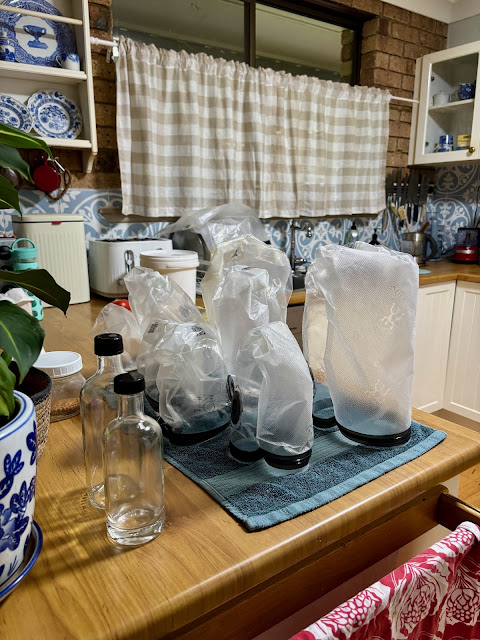
Every morning when I walk into my kitchen it looks tidy and ready for a day's work. Not so on this morning (above), I saw this when I walked in. Late the previous afternoon when I was looking for something, I came across my rolled up Zwilling vacuum bags and decided they had to be washed and dried. So I did that and although I usually put them outside on the verandah to dry it was dark by then. I turned the just-washed bags inside out and left them like this on a towel. It worked well and now the bags are ready to use when I bring home root vegetables, cabbages or whatever I buy that I want to last four or five weeks.
Image

You’ll save money by going back to basics

When I was doing the workshops and solo sessions, I had a couple of people whose main focus was on creating the fastest way to set up a simple life. You can't create a simple life fast, it's the opposite of that It's not one single thing either - it's a number of smaller, simpler activities that combine to create a life that reflects your values; and that takes a long to come together. When I first started living simply I took an entire year to work out our food - buying it, storing it, cooking it, preserving, baking, freezing, and growing it in the backyard. This is change that will transform how you live and it can't be rushed.  
Image


Trending Articles

NOT the last post

This will be my last post here.  I've been writing my blog for 18 years and now is the time to step back. I’ve stopped writing the blog and come back a couple of times because so many people wanted it, but that won’t happen again, I won’t be back.  I’ll continue on instagram to remain connected but I don’t know how frequent that will be. I know some of you will be interested to know the blog's statistics. 
Image

Every morning at home

Every morning when I walk into my kitchen it looks tidy and ready for a day's work. Not so on this morning (above), I saw this when I walked in. Late the previous afternoon when I was looking for something, I came across my rolled up Zwilling vacuum bags and decided they had to be washed and dried. So I did that and although I usually put them outside on the verandah to dry it was dark by then. I turned the just-washed bags inside out and left them like this on a towel. It worked well and now the bags are ready to use when I bring home root vegetables, cabbages or whatever I buy that I want to last four or five weeks.
Image

You’ll save money by going back to basics

When I was doing the workshops and solo sessions, I had a couple of people whose main focus was on creating the fastest way to set up a simple life. You can't create a simple life fast, it's the opposite of that It's not one single thing either - it's a number of smaller, simpler activities that combine to create a life that reflects your values; and that takes a long to come together. When I first started living simply I took an entire year to work out our food - buying it, storing it, cooking it, preserving, baking, freezing, and growing it in the backyard. This is change that will transform how you live and it can't be rushed.  
Image

Creating a home you'll love forever

Living simply is the answer to just about everything. It reduces the cost of living; it keeps you focused on being careful with resources such as water and electricity; it reminds you to not waste food; it encourages you to store food so you don't waste it and doing all those things brings routine and rhythm to your daily life. Consciously connecting every day with the activities and tasks that create simple life reminds you to look for the meaning and beauty that normal daily life holds.  It's all there in your home if you look for it. Seemingly mundane tasks like cleaning and cooking help you with that connection for without those tasks, the home you want to live in won't exist in the way you want it to.  Creating a home you love will make you happy and satisfied.
Image

Time changes everything

I've been spending time in the backyard lately creating a contained herb and vegetable garden. My aim is to develop a comfortable place to spend time, relax, increase biodiversity and encourage more animals, birds and insects to live here or visit. Of course I'd prefer my old garden which was put together by Hanno with ease and German precision. Together, we created a space bursting at the seams with herbs, vegetables and fruity goodness ready to eat and share throughout the year. But time changes everything. What I'm planning on doing now, is a brilliant opportunity for an almost 80 year old with balance issues. In my new garden I'll be able to do a wide range of challenging or easy work, depending on how I feel each day. It’s a daily opportunity to push myself or sit back, watch what's happening around me and be captivated by memories or the scope of what's yet to come.
Image

It's the old ways I love the most

I'm a practical woman who lives in a 1980’s brick slab house. There are verandahs front and back so I have places to sit outside when it's hot or cold. Those verandahs tend to make the house darker than it would be but they're been a great investment over time because they made the house more liveable. My home is not a romantic cottage, nor a minimalist modern home, it's a 1980’s brick slab house. And yet when people visit me here they tell me how warm and cosy my home is and that they feel comforted by being here. I've thought about that over the years and I'm convinced now that the style of a home isn't what appeals to people. What they love is the feeling within that home and whether it's nurturing the people who live there.
Image

Making ginger beer from scratch

We had a nice supply of ginger beer going over Christmas. It's a delicious soft drink for young and old, although there is an alcoholic version that can be made with a slight variation on the recipe. Ginger beer is a naturally fermented drink that is easy to make - with ginger beer you make a starter called a ginger beer plant and after it has fermented, you add that to sweet water and lemon juice. Like sourdough, it must ferment to give it that sharp fizz. To make a ginger beer plant you'll need ginger - either the powdered dry variety or fresh ginger, sugar, rainwater or tap water that has stood for 24 hours to allow the chlorine to evaporate off. You'll also need clean plastic bottles that have been scrubbed with soap, hot water and a bottle brush and then rinsed with hot water. I never sterilise my bottles and I haven't had any problems. If you intend to keep the ginger beer for a long time, I'd suggest you sterilise your bottles. MAKING THE STARTER In a...
Image

An authentic look at daily life here — unstaged and real

Most days Hanno was outside happily working in the fresh air. It may surprise you to know that I started reading my book,  Down to Earth , yesterday - the first time since I wrote it 13 years ago.  I had lent it to my neighbor, and when she returned it, I started reading, expecting to find surprises. Instead, I realised the words were still familiar—as if they were etched into my memory. As I flipped through the pages, I was reminded of how important it was for me to share that knowledge with others. The principles in Down to Earth changed my life, and I truly believed they could do the same for others. After just 30 minutes of reading, I put the book down, reassured that its message still holds true: we can slow down and reshape our lives, one step at a time.
Image