down to earth

  • Home
  • About Us
  • Down To Earth Book
  • Privacy Policy
Very early last Sunday morning, Hanno and I drove over to a town about 30 kms away to buy our first seedlings of the season. 
March, week 3 in The Simple Home

There has been a sharp rise in the number of products labelled 'organic' and 'free range' on supermarket shelves in the past few years. Often I am asked if the weekly shopping should include organic or free range fruit, vegetables, meat and chicken, as well as the newer organic products we’re seeing now – butter, cheese, wine and tinned goods. It’s a tricky one to answer because there is never just one clear path to follow, we’re all so different; we have different needs, tastes and incomes, and we all know that 'organic' and 'free range' come at a price.


What I thought was going to be my second eye operation turned out to be a post-op check. But now, vision in my fixed eye is just below 20/20, there is no infection or inflammation, the lens is in place.  I go in for the second op 27 March. I'm pleased it will happen soon, I'm sick of having wonky vision.  

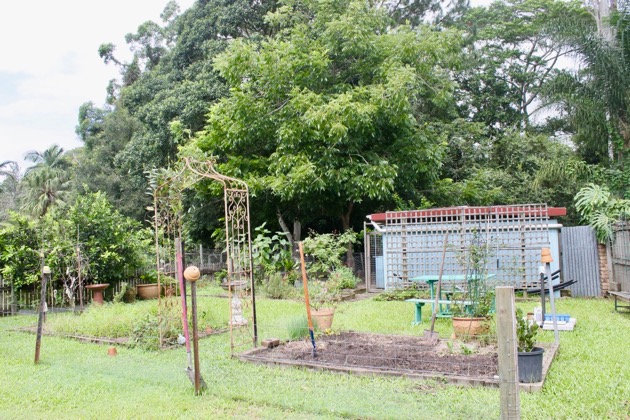
While I've been writing The Simple Home series, you've probably noticed I'm not writing much about what is happening here on a day-to-day basis. Well, my friends, we're still pottering around doing what we do. Currently we're moving from a fairly slow time, when the weather restricted what we could do outside, to our busy season.  March is when we plant our garden every year.  The garden beds are still full of weeds with only one 90 percent ready, the rest are waiting their turn. We hope to visit the market next Sunday and buy a range of seedings. These will be planted along with seedlings we have growing in the bush house, Glen Large garlic from Green Harvest, ginger plants and Welsh onions in poly boxes and a stand of potatoes in a cage. We're keeping it small, having reduced the size of the garden last year, but we should have a good range of what we eat and that will help cut back our grocery bill while giving us the freshest food possible. It will be good to get out to the garden once again.

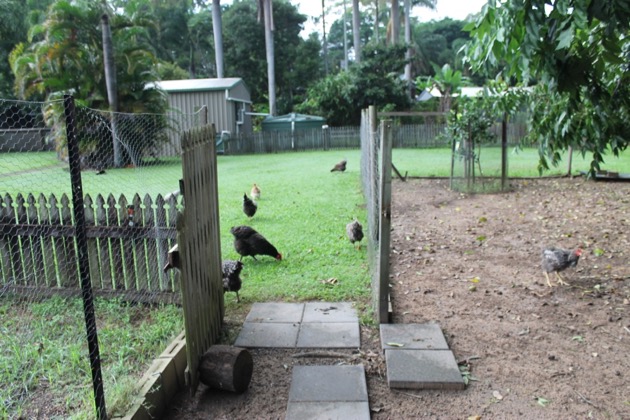
Above are the new chickens and below are some of the new and old chickens together.
Below are two of our Barnevelders - a silver lace and a blue lace.

March, week 2 in The Simple Home

This week we'll focus on shopping for food and I'm guessing that will mean vastly different things to most of you. Some will be buying everything they eat, some will be producing a small amount - maybe herbs or eggs, some will produce most of their food and many of us will buy raw ingredients so we can home-make some of the products we used to buy.

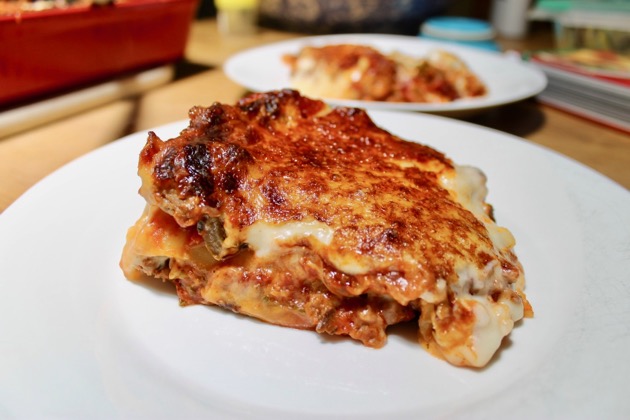
A popular meal here and very easy to make and freeze - lasagne.

I’ve gone from being an ordinary housewife, using my food budget to provide as much as I can for the money I have, to being someone who looks for fresh food that’s produced locally and ethically. I only want to buy into a food chain that considers kindness and quality of life in close alliance with nutritional values and profit. I always check labels and never buy products from compromised locations such as China and Thailand. I silently sigh every time I pick up a food product that I know is grown in my own country, but it has been imported from somewhere else. We are shooting ourselves in the foot doing that.

It's been a busy week here. We started on another home maintenance project, I cleaned the fridge out yesterday and suddenly I have more room after four months of five people in the house. Gracie had a full wash and groom yesterday, I've been sewing and of course the everyday tasks of cleaning, tidying up, shopping and cooking.

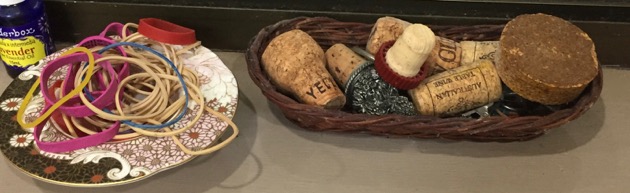
I collect rubber bands and corks because you never know when you'll need a cork to plug a bottle or a rubber band to keep something together or in a bag.  These are sitting on my kitchen window sill.

March, week 1 in The Simple Home

Going back to basics
This is one of the most important chapters in The Simple Home as it deals with something we all do - we all eat. Providing food for yourself and a family, getting value for your food dollar, buying as close to home as possible, storing food, organising your food stocks and being able to cook and bake in the time you have available, all come into play this month. If you can work out a food system that works for you, you'll increase your chances of eating well, you'll provide good nutrition in your family meals, work to a budget, get value for money and add the power of your dollars to your own community when you buy local.

Cinnamon tea cake is a favourite cake in our home. I made it again yesterday because Jamie loves it and it's a good cake for his lunchbox. He usually has it for afternoon tea with a glass of milk.  It's one of the many excellent recipes in The Country Table cookbook - details below.

One busy period of our lives ended yesterday with Kerry, Sunny and Jamie moving out and into their own new home.  We wish them the very best and we're grateful to have had those four months together, growing closer.  

We're preparing for another year of healthy chooks and the eggs they'll produce as well as an abundance of home grown vegetables and fruit.  

Now we're getting ready for another busy time - we're collecting six new chickens to add to our flock next week and we're planning our vegetables garden. We should start planting mid-March.  Like all good gardens, there'll be a period of soil preparation and systems checking before we start. All gardens need that because gardening is always more than putting a plant or seed in the ground and standing back.  We're both looking forward to being more active in the garden after a long hot summer.  I'll make sure I take plenty of photos so you can follow our progress.

I'm looking forward to Skyping with my blogging group tomorrow.  Ten people from all around the world, all chatting and sharing. I'm still amazed that we can do that face to face while we're so far from each other.  What are you doing?

~.~.~ 🦋🐔🐝 ~.~.~

Grow your own and forage: eat better without costing the earth
The Pineapple Project - My friend Andrew Davies from the ABC sent me this link. I think you'll like it. The Pineapple Project a podcast by Claire Hooper who is on a mission to help us better understand and handle money.  Have a look at a couple of them and tell me what you think.
Arctic warming: scientists alarmed by 'crazy' temperature rises
All parents with young kids should know about these 23 hacks
20 office and craft room organization tips
DIY hanging rain gutter garden
With your own healthy choices, this makes packing school and work lunches easier
Non-sandwich school lunch ideas
A beginner's guide to whittling
Pegs/clothespins and hangers up-cycled and repurposed - I particularly like the peg animals
11 years living off-grid
Ginger mint tea
This simple trick makes it quicker and easier to iron clothes
I haven't bragged about my grandchildren for a while and I don't want you to think I'm slacking off in that area, so here goes.


February, week 4 in The Simple Home

This is the last week of our money month. I hope you've sorted out what needs to be done, organised a budget and thought about where you're headed, financially. Most of the activities we've addressed this month are simple exercises that will put you on track towards a healthier financial future.  The one thing that will make these things make sense and appear to be easy to set up and maintain over a long period of time is changing your attitude towards money. Many of us grow up thinking we deserve good things and that we should keep up with our brothers and sisters and the next door neighbours.  There is sometimes a feeling now that if you don't look like you have as much as everyone else you're not as good, or a failure. That's rubbish. Although we like to think that things are fair and equal, they aren't and I doubt they never will be. So get rid of those negative thoughts if you have them and just focus on what you need and what you have, everything else is irrelevant.

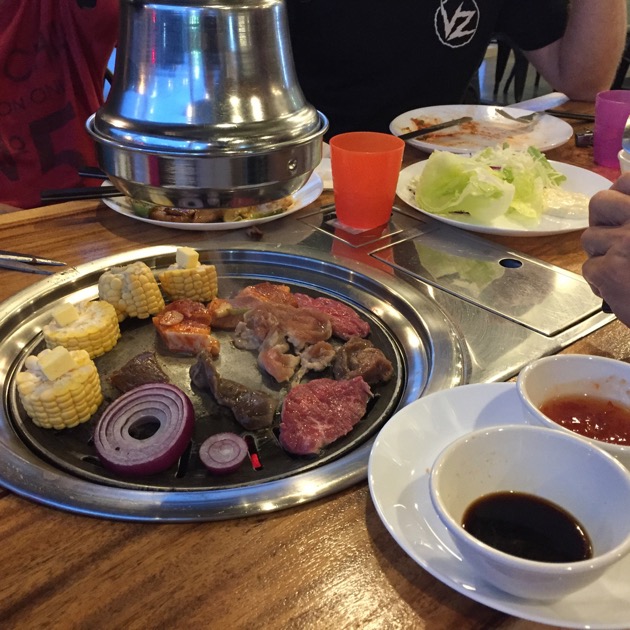
We went out to dinner at the local Korean BBQ last night with Kerry, Sunny and Jamie.  The dinner was a little family celebration of Kerry and Sunny's new family home being finished.  It looks like they'll be moving in next week.

Hanno and I had never been to a Korean BBQ restaurant before but we both loved the food. There was a buffet of vegetable spring rolls, tempura vegetables, chicken and miso soup which we had while we cooked our BBQ at the table. They had containers of marinated pork, chicken, beef and seafood as well as a variety of vegetables and sauces. We'll definitely be going back there.

Thanks to everyone who contributed to the useful discussion on family finances during the week.  It's such a help for people who are struggling with money to read ideas from others who have had the same struggles and successfully worked out ways to manage their money.

I hope you have a great weekend and have time to reflect, relax and spend time with the people you love. xx

Living with the land
A winter too many - this beautiful lady died at the end of January
Dublin's workhorses
A day without plastic. Can you do it?
Career transitions are possible at any age
Why some chickens lay brown eggs and some lay blue
The Basketmakers of Lough Nafooey living on the land
How to hem pants - tutorial
Felting inspiration - Easter hares
Half of world's oceans now fished industrially, maps reveal

February, week 3 in The Simple Home

The Gender Pay Gap
Throughout the developed world, there is a significant difference between what men and women earn. In Australia the gap is currently around 17 per cent. All through their working lives, women usually earn less than men even when doing the same type of work; they move in and out of employment during the years they have babies and often work part-time when they do return to work. As such, a woman’s overall lifetime income is much lower than a man’s. As well as being unfair, this means that women’s superannuation is much lower than their male counterparts, putting them in a precarious situation as they age. I wish I had a solution to this problem. I wish we had politicians who were strong enough to stand up and work towards a solution. I don’t have the answers, but I do have some suggestions. 

The list below is mainly targeted at women who have chosen to be at home to raise children or those who leave the workforce when a baby is born.  It could also cover men who choose the same path.  The main point of this list is to protect people who are working within a relationship for the mutual benefit of the couple and their children, who do not get paid.
Newer Posts Older Posts Home


My books were all published by Pengiun, and are available at Amazon US, Amazon UK and Amazon Au

Search here

Total Pageviews

Translate


I'm Rhonda Hetzel and I've been writing my Down to Earth blog since 2007. Although I write the occasional philosophical post, my main topics include home cooking, happiness and gardening as well as budgeting, baking, ageing, generosity, mending and handmade crafts. I hope you enjoy your time here.

MY FAVOURITE PLACES

  • Grandma Donna's Place
  • Grandma Donna's YouTube
  • Grandma Donna's Instagram
  • This Simple Day
  • Nicole's Instagram

Give More

Give More

Popular posts last year

Making ginger beer from scratch

We had a nice supply of ginger beer going over Christmas. It's a delicious soft drink for young and old, although there is an alcoholic version that can be made with a slight variation on the recipe. Ginger beer is a naturally fermented drink that is easy to make - with ginger beer you make a starter called a ginger beer plant and after it has fermented, you add that to sweet water and lemon juice. Like sourdough, it must ferment to give it that sharp fizz. To make a ginger beer plant you'll need ginger - either the powdered dry variety or fresh ginger, sugar, rainwater or tap water that has stood for 24 hours to allow the chlorine to evaporate off. You'll also need clean plastic bottles that have been scrubbed with soap, hot water and a bottle brush and then rinsed with hot water. I never sterilise my bottles and I haven't had any problems. If you intend to keep the ginger beer for a long time, I'd suggest you sterilise your bottles. MAKING THE STARTER In a...
Image

NOT the last post

This will be my last post here.  I've been writing my blog for 18 years and now is the time to step back. I’ve stopped writing the blog and come back a couple of times because so many people wanted it, but that won’t happen again, I won’t be back.  I’ll continue on instagram to remain connected but I don’t know how frequent that will be. I know some of you will be interested to know the blog's statistics. 
Image

How to make cold process soap

I'm sure many of you are wondering: "Why make soap when I can buy it cheaply at the supermarket?" My cold process soap is made with vegetable oils and when it is made and cured, it contains no harsh chemicals or dyes. Often commercial soap is made with tallow (animal fat) and contains synthetic fragrance and dye and retains almost no glycerin. Glycerin is a natural emollient that helps with the lather and moisturises the skin. The makers of commercial soaps extract the glycerin and sell it as a separate product as it's more valuable than the soap. Then they add chemicals to make the soap lather. Crazy. Making your own soap allows you to add whatever you want to add. If you want a plain and pure soap, as I do, you can have that, or you can start with the plain soap and add colour, herbs and fragrance. The choice is yours. I want to add a little about animal and bird fat. I know Kirsty makes her soap with duck fat and I think that's great. I think t...
Image

Preserving food in a traditional way - pickling beetroot

I've had a number of emails from readers who want to start preserving food in jars but don't know where to start or what equipment to buy.  Leading on from yesterday's post, let's just say up front - don't buy any equipment. Once you know what you're doing and that you enjoy preserving, then you can decide whether or not to buy extra equipment. Food is preserved effectively without refrigeration by a variety of different methods. A few of the traditional methods are drying, fermentation, smoking, salting or by adding vinegar and sugar to the food - pickling. This last method is what we're talking about today. Vinegar and sugar are natural preservatives and adding one or both to food sets up an environment that bacteria and yeasts can't grow in. If you make the vinegar and sugar mix palatable, you can put up jars of vegetables or fruit that enhance the flavour of the food and can be stored in a cupboard or fridge for months. Other traditional w...
Image

Cleaning mould from walls and fabrics

With all this rain around we've developed a mould problem in our home. Usually we have the front and back doors open and that good ventilation stops most moulds from establishing. However, with the house locked up for the past week, the high humidity and the rain, mould is now growing on the wooden walls near our front door and on the lower parts of cupboards in the kitchen. Most of us will find mould growing in our homes at some point. Either in the bathroom or, in humid climates, on the walls, like we have now. You'll need a safe and effective remedy at some point, so I hope one of these methods works well for you. Mould is not only ugly to look at, it can cause health problems so if you see mould growing, do something about it straight away. The longer you leave the problem, the harder it will be to get rid of it effectively. If you have asthma or any allergies, you should do this type of cleaning with a face mask on so you don't breathe in any spores. Many peopl...
Image

Five minute bread

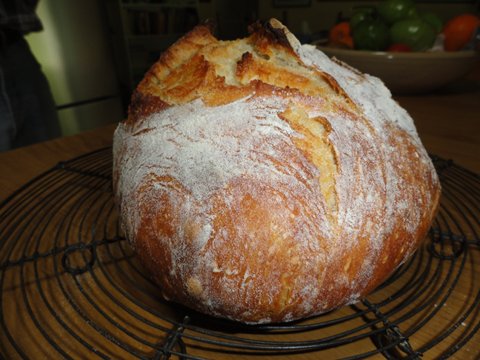
Bread is one of those foods that, when made with your own hands, gives a great deal of satisfaction and delight. It's only flour and water but it symbolises so much. I bake bread most days and use a variety of flours that I buy in bulk. Often I make a sandwich loaf because we use most of our bread for lunchtime sandwiches and for toast. Every so often I branch out to make a different type of loaf. I have tried sour dough in the past but I've not been happy with any of them. I'll continue to experiment with sour dough because I like the idea of using wild yeasts and saving the starter over a number of years to develop the flavour and become a part of the family. However, the loaf I've been branching out to most often is just a plain old five minute bread. By five minutes I mean it takes about five minutes actual work to prepare but it's the easiest of all bread to make and to get consistently good loaves from. If you're having people around for lunch or...
Image

This is my last post.

I have known for a while that this post was coming, but I didn't know when. This is my last post. I'm closing my blog, for good, and I'm not coming back like I have in the past.  I've been writing here for 16 years and my blog has been many things to me. It helped me change my life, it introduced me to so many good people, it became a wonderful record of my family life, it helped me get a book contract with Penguin, and monthly columns with The Australian Women's Weekly and Burke's Backyard . But in the past few months, it's become a burden. In April, I'll be 75 years old and I hope I've got another ten years ahead. However, each year I'll probably get weaker and although I'm fairly healthy, I do have a benign brain tumour and that could start growing. There are so many things I want to do and with time running out, leaving the blog behind gives me time to do the things that give me pleasure. On the day the blog started I felt a wonderful, h...
Image

What is the role of the homemaker in later years?

An email came from a US reader, Abby, who asked about being a homemaker in later years. This is part of what she wrote: "I am a stay-at-home mum to 4 children, ages 9-16. I do have a variety of "odd jobs" that I enjoy - I run a small "before-school" morning drop-off daycare from my home, I am a writing tutor, and I work a few hours a week at a local children's bookstore. But mostly, I cherish my blissful days at home - cooking, cleaning (with homemade cleaners), taking care of our children and chickens and goats, baking, meal-planning, etc. This "career" at home is not at all what I imagined during my ambitious years at university, but it is far more enriching. I notice, though, that my day is often planned around the needs of my family members. Of course, with 4 active kids and a husband, this is natural. I do the shopping, plan my meals, cook dinner - generally in anticipation of my family reconnecting in the evening.  I can't h...
Image

Every morning at home

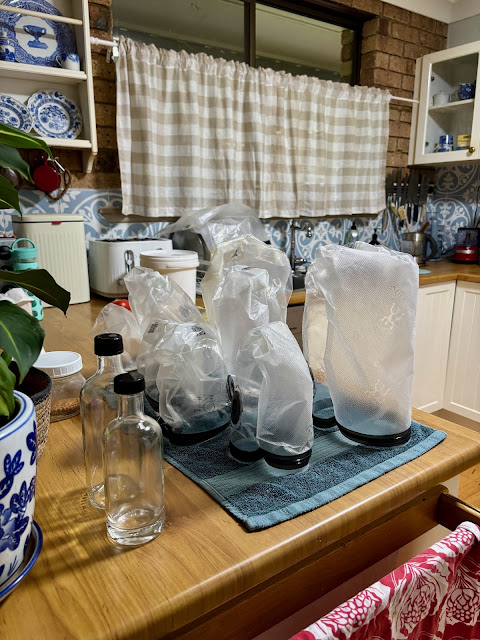
Every morning when I walk into my kitchen it looks tidy and ready for a day's work. Not so on this morning (above), I saw this when I walked in. Late the previous afternoon when I was looking for something, I came across my rolled up Zwilling vacuum bags and decided they had to be washed and dried. So I did that and although I usually put them outside on the verandah to dry it was dark by then. I turned the just-washed bags inside out and left them like this on a towel. It worked well and now the bags are ready to use when I bring home root vegetables, cabbages or whatever I buy that I want to last four or five weeks.
Image

You’ll save money by going back to basics

When I was doing the workshops and solo sessions, I had a couple of people whose main focus was on creating the fastest way to set up a simple life. You can't create a simple life fast, it's the opposite of that It's not one single thing either - it's a number of smaller, simpler activities that combine to create a life that reflects your values; and that takes a long to come together. When I first started living simply I took an entire year to work out our food - buying it, storing it, cooking it, preserving, baking, freezing, and growing it in the backyard. This is change that will transform how you live and it can't be rushed.  
Image


Trending Articles

NOT the last post

This will be my last post here.  I've been writing my blog for 18 years and now is the time to step back. I’ve stopped writing the blog and come back a couple of times because so many people wanted it, but that won’t happen again, I won’t be back.  I’ll continue on instagram to remain connected but I don’t know how frequent that will be. I know some of you will be interested to know the blog's statistics. 
Image

Every morning at home

Every morning when I walk into my kitchen it looks tidy and ready for a day's work. Not so on this morning (above), I saw this when I walked in. Late the previous afternoon when I was looking for something, I came across my rolled up Zwilling vacuum bags and decided they had to be washed and dried. So I did that and although I usually put them outside on the verandah to dry it was dark by then. I turned the just-washed bags inside out and left them like this on a towel. It worked well and now the bags are ready to use when I bring home root vegetables, cabbages or whatever I buy that I want to last four or five weeks.
Image

You’ll save money by going back to basics

When I was doing the workshops and solo sessions, I had a couple of people whose main focus was on creating the fastest way to set up a simple life. You can't create a simple life fast, it's the opposite of that It's not one single thing either - it's a number of smaller, simpler activities that combine to create a life that reflects your values; and that takes a long to come together. When I first started living simply I took an entire year to work out our food - buying it, storing it, cooking it, preserving, baking, freezing, and growing it in the backyard. This is change that will transform how you live and it can't be rushed.  
Image

Creating a home you'll love forever

Living simply is the answer to just about everything. It reduces the cost of living; it keeps you focused on being careful with resources such as water and electricity; it reminds you to not waste food; it encourages you to store food so you don't waste it and doing all those things brings routine and rhythm to your daily life. Consciously connecting every day with the activities and tasks that create simple life reminds you to look for the meaning and beauty that normal daily life holds.  It's all there in your home if you look for it. Seemingly mundane tasks like cleaning and cooking help you with that connection for without those tasks, the home you want to live in won't exist in the way you want it to.  Creating a home you love will make you happy and satisfied.
Image

Time changes everything

I've been spending time in the backyard lately creating a contained herb and vegetable garden. My aim is to develop a comfortable place to spend time, relax, increase biodiversity and encourage more animals, birds and insects to live here or visit. Of course I'd prefer my old garden which was put together by Hanno with ease and German precision. Together, we created a space bursting at the seams with herbs, vegetables and fruity goodness ready to eat and share throughout the year. But time changes everything. What I'm planning on doing now, is a brilliant opportunity for an almost 80 year old with balance issues. In my new garden I'll be able to do a wide range of challenging or easy work, depending on how I feel each day. It’s a daily opportunity to push myself or sit back, watch what's happening around me and be captivated by memories or the scope of what's yet to come.
Image

It's the old ways I love the most

I'm a practical woman who lives in a 1980’s brick slab house. There are verandahs front and back so I have places to sit outside when it's hot or cold. Those verandahs tend to make the house darker than it would be but they're been a great investment over time because they made the house more liveable. My home is not a romantic cottage, nor a minimalist modern home, it's a 1980’s brick slab house. And yet when people visit me here they tell me how warm and cosy my home is and that they feel comforted by being here. I've thought about that over the years and I'm convinced now that the style of a home isn't what appeals to people. What they love is the feeling within that home and whether it's nurturing the people who live there.
Image

Making ginger beer from scratch

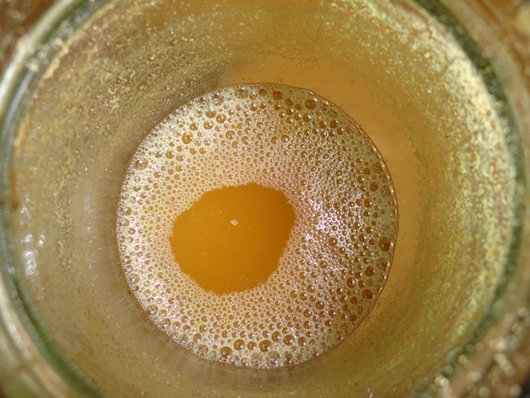
We had a nice supply of ginger beer going over Christmas. It's a delicious soft drink for young and old, although there is an alcoholic version that can be made with a slight variation on the recipe. Ginger beer is a naturally fermented drink that is easy to make - with ginger beer you make a starter called a ginger beer plant and after it has fermented, you add that to sweet water and lemon juice. Like sourdough, it must ferment to give it that sharp fizz. To make a ginger beer plant you'll need ginger - either the powdered dry variety or fresh ginger, sugar, rainwater or tap water that has stood for 24 hours to allow the chlorine to evaporate off. You'll also need clean plastic bottles that have been scrubbed with soap, hot water and a bottle brush and then rinsed with hot water. I never sterilise my bottles and I haven't had any problems. If you intend to keep the ginger beer for a long time, I'd suggest you sterilise your bottles. MAKING THE STARTER In a...
Image

An authentic look at daily life here — unstaged and real

Most days Hanno was outside happily working in the fresh air. It may surprise you to know that I started reading my book,  Down to Earth , yesterday - the first time since I wrote it 13 years ago.  I had lent it to my neighbor, and when she returned it, I started reading, expecting to find surprises. Instead, I realised the words were still familiar—as if they were etched into my memory. As I flipped through the pages, I was reminded of how important it was for me to share that knowledge with others. The principles in Down to Earth changed my life, and I truly believed they could do the same for others. After just 30 minutes of reading, I put the book down, reassured that its message still holds true: we can slow down and reshape our lives, one step at a time.
Image