down to earth

  • Home
  • About Us
  • Down To Earth Book
  • Privacy Policy
I was pleased to read a post about teabags on nannachel's blog yesterday as a follow up to my link to how tea bags are made.  Chel wrote to Neranda, the maker of the tea she buys. You can read here what they wrote back. This tied in well with my planned post today because a few readers wrote and asked what's the best way to make tea using loose eat instead of tea bags.  They've all been tea baggers in the past, have never made loose tea, and want to change.  So here goes.  

If you make frequent cups of tea or coffee, it's a good idea to set up a tea station. Organise this close to where you keep your cups and electric kettle, or next to the stove where you boil water. In addition to the tea, store your sugar, honey, tea spoons, tea strainers and tea pot there. 

There are many different tea balls and baskets of varying shapes and sizes, the ones I have here are just a few of the vast variety.  Buy what you think will work best for you. I can't tell you which shops have these things but you'll probably find them in Kmart and Target as well as the kitchen shops.  You'll also need some loose leaf tea.  Like Chel, I buy Neranda tea.  I buy the 250 gram pack for $3. It's always cheaper to buy loose leaf tea and it's usually better quality tea.  This pack will last us 4-6 weeks. How much you use will depend on how strong or weak you like your tea, how big your cups or mugs are and how many people you're making tea for. Don't buy too much at a time. A 250gram pack is good for a single person or a couple, 500 grams for a larger number. 

The tea basket over the side of the cup and the tea basket in the cup will help you make a good cup of tea for one using loose tea.

Of course you could always pay much more for organic black loose leaf tea - it's at least double the price but I'm happy with Neranda. It's grown and processed in Australia, it's insecticide-free, it's very tasty and I can get it locally at a very good price. I'm also fond of Earl Grey tea, which is just black tea with the essential oil bergamot added. However, a 125 gram pack of Twinings Earl Grey loose tea costs $7, so it's an occasional buy, not a frequent one, here. I used to buy King tea but I haven't seen it in any store lately.  Another one bites the dust.
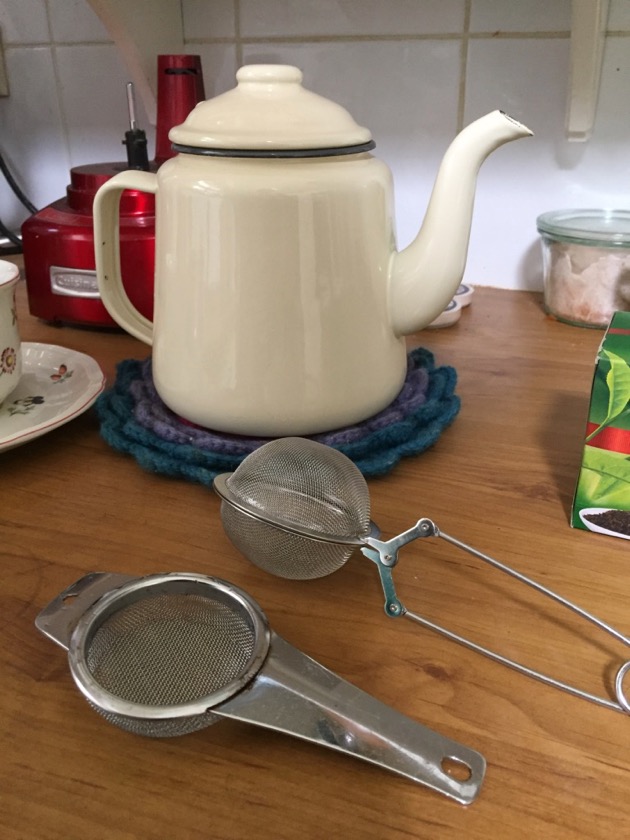
A tea pot and a tea strainer will have you making tea the same way your great grandma made it.

The traditional way to make tea is in a tea pot.  I have a large tea ball (above) in which I put three teaspoons of tea and cover with boiling water. I let it brew with the lid on for about three minutes.  Large tea balls are very handy because they'll retain the tea leaves and you won't have to strain them through a tea strainer when you pour the tea.  However, you can easily just throw the loose tea into the tea pot, cover with boiling water and let it sit for a few minutes to brew.  If you make tea this way, you can either use a tea strainer or carefully pour the tea into the cup. If the tea is brewed properly and you don't shake the pot, most of the tea leaves will remain at the bottom of the pot and you won't need a strainer.


Above and below, these tea balls are like tea bags. They float in the boiling water and slowly the tea is brewed. When you remove the ball, it sits in the little cup to drain. They can be used repeatedly for years and are easily cleaned in the dish washer or can be washed by hand.


A pot of tea is ideal for a group of two or three, or more.  If the tea is for you alone, use one of the little tea balls, or a tea basket hooked over the side of the cup or a basket inside the cup.  One teaspoon of tea, pour over boiling water and let it sit for three minutes. The crucial element here is time.  Tea needs time to brew. The boiling water will soften the tea leaves and leaving them to steep for a few minutes will give you a full flavoured cuppa. You can then add milk, honey, sugar or lemon, depending on your taste.

Tea can be reused a few times before all the flavour goes. If you've got a few people to make tea for, make up a pot, pour the tea into all the cups you need, then add more boiling water to the pot. Allow it to steep for four minutes, remove the tea ball from the tea pot and put a tea cosy on the pot to keep it hot for a second cuppa for everyone.  And when the tea leaves are discarded, throw them into the compost where they'll decompose with the organic matter already there. The leaves will break down just like fruit and vegetable peelings do.  You can also use tea leaves on your blueberry bushes. They add a bit of acidity to the soil which the bushes love.

Good tea can't be rushed. Making tea like this and taking the time to slow yourself down enough to do it helps build slowness into your days. The urge to move through the day going as fast as possible is challenged by the process of making a cup of tea, especially if you make a pot and you go through the ritual of pouring tea from a pot. The ritual slows you down before you sit down to enjoy the tea. Surely in these days of multitasking and doing as much as you can in a day, the time you take to make a good cup of tea is an investment in your own mental health. 
It can be a struggle adjusting to a simpler life. Some people think that the way I live is THE way and that is just not true. I live as I do because it makes me happy, it makes sense to me, I've got time to do a lot of things in my home, I want to live in a productive home and I want to stay interested and engaged as I move into older age.  If I were 40 years younger my priorities would be different and the way I lived my simple life would reflect that.


At every stage of life, from very young to very old, there will be a way to configure your life and home to help you live well within the framework of your values. Each stage is different and you will change and grow through those changes.  I am a retired woman, almost 70, no debt, with the luxury of time. I freely choose to live without holidays, we buy the best quality we can afford so that it lasts longer, we gave up magazines and pay TV, don't have Netflix and most of the time, we make do with what we have. But I didn't start living this life that way. 

We live on a pension now but we worked hard to set ourselves up before we received it so we would be able to manage well into our old age on what we have. I know that is not the case for a lot of people. Many people have far more than we do and many have less and struggle from week to week. I am grateful I had the opportunity make the choice to simplify. We don't have a lot of money but we have enough and that is all we need.


There was a comment from a new (to me) reader a couple of days ago. I followed the link to her blog to read that she is dealing with this very thing. She is struggling to fit modern life in with simple life. This was never a problem for me because I chose to live a slow simple life in a modern context and didn't want to return to the old times. In my opinion, anyone who yearns for the 1950s wasn't there to experience the sexism that was commonplace then. Our society is better now than it was then. It was slower back then, we knew our neighbours and spent time with family and friends, but there is more freedom and opportunity now, especially for woman and girls. The advances we've made since the 50s make me grateful to live now but I cherry pick some good parts of the old days - mainly living debt-free, cooking from scratch and homemade cleaners - and incorporate them into my daily life.


When I moved away from paid work I had the time to become more productive. I'd always been a gardener so we grew fruit and vegetables, and kept chickens because I wanted to produce as much as I could in the backyard. I wanted to use the land we owned and not just the house. I wanted to reduce the number of chemicals we lived with so I started making my own cleaning products and laundry liquid.  I shopped in a different way and stockpiled because we had less money coming in and needed to save every penny we could.  I still do all those things because I enjoy that lifestyle, it keeps me busy and interested in daily life. There is always something to do and I don't want to be a 70 year old who is bored and thinks there is nothing to do.


We have the trappings of modern life here and it makes what we do easier, but we would never have gone into debt to buy what we have. If we can't pay cash, we don't buy it. We both have phones because it's easier to keep track when one of us is away from home; they help keep us safe as well as being our phones. I communicate to you via a computer, I've used a computer every day since 1988. We have solar panels and a solar hot water system - both vast improvements in the old electrical and gas technology. We have a poly tank that holds 10,000 litres of water which is an improvement on the old 5,000 litre corrugated iron tank we installed 20 years ago when we first arrived here. I have a self cleaning oven, dishwasher, bread machine, stick vacuum cleaner, an ironing press and iron - all modern appliances that help us live the way we choose.


But if I were 40 years younger with two small children, many of my choices would be different.  I'd still be supporting my simple life values but my choices would be appropriate for the life I was living then. I'd have less time to do many of the productive things I do now but I'd have a firm base of simple chores I'd carry out. I'd make laundry liquid because it does an excellent job, it contains fewer chemicals than modern washing products and it's cheaper. I'd take food and drinks with me when I went out, I'd pay off any debt I had. I'd cook from scratch, cooking double portions when I could so I had a supply of home cooked meals in the freezer for those times when I just didn't have the time or energy to cook after work.


Life isn't always about practicalities. We can also use our homes as a safe and stable base where we build relationships and teach our children how to be decent people. That home base provides a secure space in which we all can be the people we are, interact with those around us and while we do that we learn (and teach) kindness, generosity, courage, strength, respect, loyalty, honesty, self-control and individuality as well as how to be part of a family and a community.


Simple life isn't a product, it's a creation that we all make in different ways. Many of us have the chance to choose how we live and what we do each day. That will be different at 30, 40, 50, 60, 70 and 80, and it's always changing to reflect how we earn a living, the amount of debt we have, our children and parents, how much time, strength and energy we have, and a hundred other considerations. Don't expect life to be one thing that remains the same. It's okay to be different. It's okay to do things your friends and neighbours don't do. If it's working for you, keep at it. Change helps you shed your old ways and replace them with values that support you in your chosen life. It also gives you the opportunity to improve and grow. In the end we become who we are and settle into life with who and what we love. It's only when you look back you notice just how much you changed over the years and how you reacted to different stages.


I've been waiting for the new organic cotton to arrive at Ecoyarns. Last week it came in and Salihan sent me two skeins of Blue Sky organic cotton in a very pretty soft pink Shell colour.  I was going to knit up a quick cotton shawl for my granddaughter but Gracie chewed up my most of my circular needles 🙄 so I ended up making a cowl scarf. The cotton is beautifully soft and as this scarf will be near Eve's face, I know she'll be happy to wear it.


The cotton is 10ply so it was quick and easy to knit with. I've decided to do make this as my Christmas knit so it will be ready for Eve to wear next winter.  That should use up the remaining Blue Sky Shell cotton and give me enough time to start a vest for myself using the Allhemp 8ply I have here. It's a lovely soft grey which will go well with some of my clothes.


My plan was to embroider some rose buds on the scarf but the knit rows were too bulky and they got lost, so I went with buttons instead.  I haven't decided which ones to use yet but I'm probably going to go with the three red buttons in the top photo or the teddy faces in this one.

The Blue Sky cotton comes in a range of beautiful colours which you can see here at Ecoyarns.


If you're making the recipes I posted yesterday, please check them again. A couple of kind readers alerted me to two mistakes which have now been fixed.  My thanks to Bernie and Sandra.

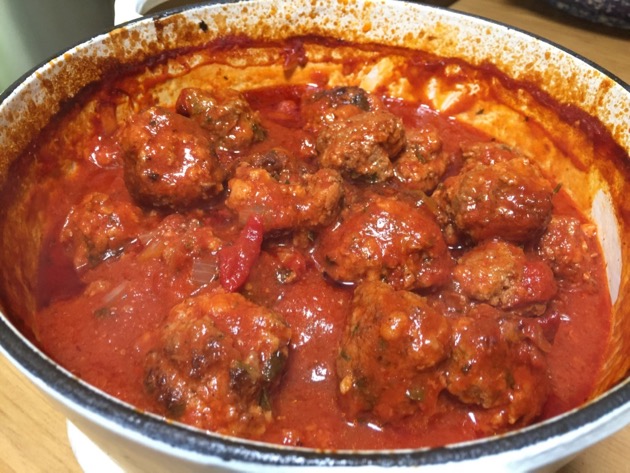
Enough meatballs cooking on the stove for a few days.  Yesterday we had them with pasta, today it's meatball tacos and tomorrow, who knows.

With the weather moving from hot to cold and from cold to hot, depending in the world you are located, I hope you enjoy the change over the coming weekend and weeks ahead.  Here, we've been putting the final touches on our summer garden preparations and can now sit back and relax for a short while.  I'll be cleaning up my work room tomorrow with some knitting and sewing on Sunday.

Thanks for your visits this week, enjoy your weekend and try to take it easy, at least for a few hours. :- )
🌿❤️🌿

My first link is to one of my blog workshop ladies.  Frances Lee Studio I'm sure you'll find Frances' blog interesting and helpful.
Women doing housework - Easy does it. The voice over on this is incredible, I remember when women were thought about in these terms. Thank goodness we've improved ourselves since then.
Looking after pets in emergencies: Why having a plan can be vital
America's first 100% organic, self-sustainable neighbourhood
Frugal Workshop blog
The Simple Year - Simple living in rural Alaska
St Clements polenta cake with blueberries
Here is a radio broadcast I did last year on simple living
So Now You've Got a Chest Freezer


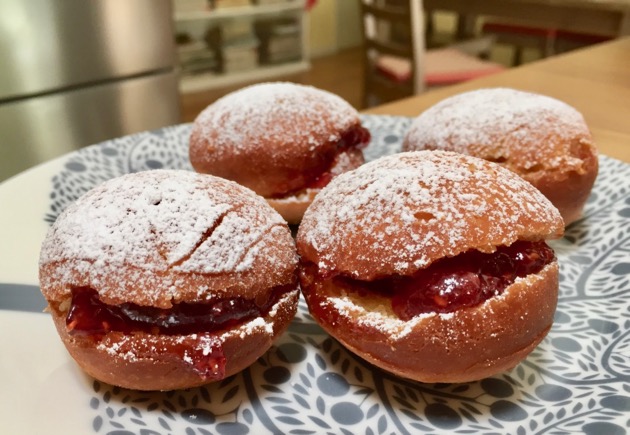
Some readers asked for recipes for the Berliners and brownies I made recently. Here they are:

Berliners 


Berliners are made using a sweet, rich dough similar to bread dough. This recipe makes up about 30 small, or 24 medium sized doughnuts.  I use raspberry jam and dust them with icing sugar.

4 cups plain/all purpose flour
3 teaspoons dry yeast
½ teaspoon salt
4 tablespoons castor sugar
1 ½ cups warm milk. I use buttermilk but whole milk is fine as well.
4 eggs
125 grams/4 ounces butter, melted

Vegetable oil for frying -  I use sunflower oil.

Place all ingredients in a bread machine (use the dough setting) or in a mixer with dough hooks. To make by hand, mix ingredients in a bowl and knead for 10 minutes.

When the dough is mixed and kneaded, it should be left to rise for about an hour. Once risen, turn the dough out into a floured board. Roll the dough out with a rolling pin to about 1 - 2 inches in height.  At this stage you can bag them up for the freezer. When you want to cook them, they must defrost completely, return to room temperature and rise again before cooking.


If you want to cook the Berliners straight away, allow the dough to rise again for about 45 minutes then heat up the oil to 180 C in a saucepan. The oil must be at the right temperature when you put the dough in because oil will soak into the dough if it's not hot enough.  If the temperature is at the correct temperature, the heat will seal the dough and the oil will cook the Berliners without becoming greasy and soggy.

Berliners will burn if they touch the bottom of the pan so use a saucepan with enough oil for the dough to float free of the base.  They'll be ready when they are golden brown, this should take about 2 - 3 minutes.  Use a slotted spoon or tongs to turn them half way through the process. Allow to cool slightly, inject warmed jam into the Berliner with a long nozzle (recycled) sauce bottle or cut a pocket in the side with a sharp knife and spoon it in. Dust with icing sugar or castor sugar.  They should be eaten the same day they're cooked.

Father's Day Brownies

These are good rich brownies, made better by using the very best cocoa you can find. I used Dutch cocoa and I undercooked them.

If there is a secret to good brownies, it is to undercook them. Cooking them so they look cooked - like cake, will give you dry brownies.  I cooked mine for 20 minutes and they were still squelchy when touched. However, they continue to cook when you take them out of the oven and when you cut them, they'll be moist, rich and delicious.  This is the recipe I used.

I hope you enjoy these sweet treats.


Over the past few days our time has been spent in a steady, slow stream of work here in our home. Meals have been cooked, cleaning done, drinks made, morning teas enjoyed and the vegetable garden work has been finished. I've also been reading Gay Bilson's magnificent Plenty, Digressions on Food. It's such a good book and as I read it I realise I'd love to sit down and have a good talk with this talented cook and writer. She, like me, is a bit of a recluse now so I doubt our paths will cross any time soon. 

Meanwhile, out in the backyard, I reconfigured the back verandah to move the table and chairs back into the shade.  The garden is now fertilised, watered and mulched. We've netted our thriving blueberry bushes to save the coming crop from local birds who actively look for berries. Tomatoes and some herbs have been removed and with the onset of warmer weather, it looks like we were just in time. Now all we need is rain. The tanks are almost empty.

I thought it would be a nice change to show photos instead of write about what we've been doing. So here are a bunch of photos, taken over the past week, that show a small part of what we do here on a regular basis.

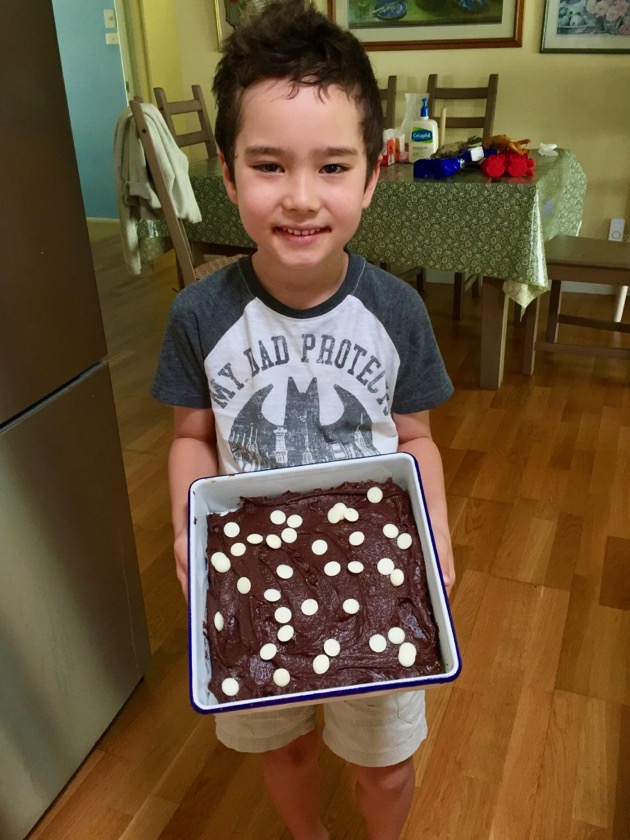
Jamie was here yesterday and we made brownies for his dad for Father's Day.  These were just about to go into the oven.
I hand-washed the cake pan and my compost bucket. I bought both these from one of my favourite shops - Odgers and McClelland Exchange Store in Nundle. Check out the link, I'm sure you'll be delighted.

Herbs picked and sitting in water awaiting lunch prep.

 Ginger was harvested ...
... and made into another batch of ginger beer.

A few days ago I made up some donut dough so I could have a batch of small frozen Berliners ready for cooking in the freezer.  Hanno loves these.

I freeze them on trays then package them, four at a time, in freezer bags.

We're still eating seasonal strawberries from the local farm. 

A recent avocado, cucumber and tomato salad. I use my flavoured vinegar as a dressing.

Yesterday's lunch would have been a familiar sight on many 1950s kitchen tables. Cold pickled pork, mashed potato with herbs, fried cabbage, sliced home grown tomatoes and pickles. It was delicious.

This is where we have morning tea. I moved the table and chairs back a bit so they're out of the sun now. Soon we'll move to the front verandah for our tea as it's much cooler there during summer.

 And outside, Grace was on duty watching the rain forest for a bush turkey that comes in every day.
 
A bale of mulch ready to be laid on the gardens. 

Tomatoes harvested with cayenne peppers and banana pepper seedlings. All have been planted now.

 The garden working bee in full swing. 

 Some of these herbs have been thinned out to make room for the peppers.

And those of you who are following the saga of the Cecile Brunner rose, here it is yesterday with many new shoots.  If we get a bit of rain, I think it will be a bumper year for these tiny roses. The small bush at the front is a salvia.

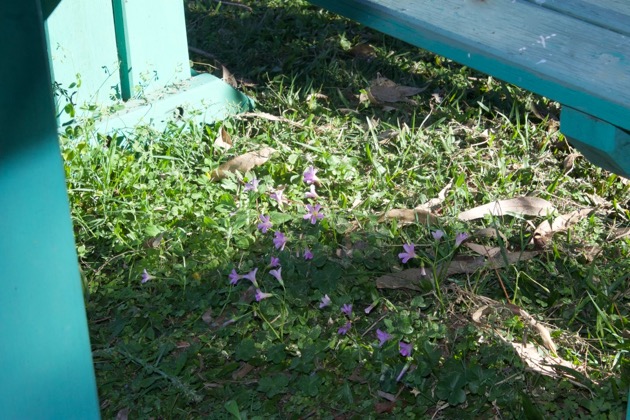
We have wood sorrel growing in the dappled shade under our outdoor table in the vegetable garden. The leaves add a citric taste to salads.

I have a bee in my bonnet this week. I acknowledge that I'm far removed from today's advertising and I have no clue about many of the new products that are being wheeled out (and don't want to know). Most of the time I just roll my eyes and move on. But I saw an advertisement for roast chicken on TV yesterday and I was stunned.

More than I usually am.

The ad was for chicken that you roast in a PLASTIC bag. And yes, that shocked me and I thought Oh boy, cooking in plastic now. I'm sure someone will tell me it's "special plastic" that won't adulterate the food, I don't believe it. I just know cancer rates are rising and hope that people won't be lured by the convenience of this. But as disturbing as that is, that wasn't my main problem. The selling points of the plastic bag chicken were: No touch, no prep, no mess. You all know that I cook from scratch but I do understand the need for taking shortcuts. Working people need them and cooking food at home with a few shortcuts is much better than buying takeaway. Not everything can be slow and take its own time.

No prep - tick, no mess - tick, but no touch!  Why don't you touch the food you're about to eat? What's the problem with touching food when you cook it? We are already far removed from the origins of a lot of our food, please don't think that you shouldn't touch the food you eat when it's in a raw state. You need to touch food to feel the freshness of it, to make sure the food is safe to eat, to gauge how long to cook it, to add flavour to it and prepare it in the best way possible. The main problem with this product is that it is cooked in a sealed plastic bag so you can't check the chicken or add your own touches before it cooks.

This is an expensive way to buy a chicken for roasting. If I had to buy this chicken because there was nothing else, I would open the bag and check the chicken, possibly add fresh herbs and an onion to the cavity and I would cook it on the tray it's presented on. I would not cook it in the plastic bag.

End of rant.  😐

These are the final three blogs from my blogging workshops. Please visit the ladies and see what they have waiting for you. I'm sure they'd appreciate your support.

  • Hundreds of tiny threads
  • She did what she could
  • Gran's green acres

The toxic antidote to goodwill
Your online identity is precious. Here’s how to protect it
What to plant in September - in Australia
Spring has arrived — so why do we have seasons?
There is a crack in everything, that’s how the light gets in
Easy ways to maximise egg lay in your hens
A way to garden
20 tips professional organisers swear by
Edible weeds that are safe to eat and how you can use them
Finding hidden treasures in op-shops is easy – and good for the planet
Using hula hoops in the garden

One of the easy ways to cut back a bit on your grocery bill is to make some of the things you usually buy.  We all know about laundry liquid, bread, biscuits and meals from scratch but there are a few others you might like to try.  The added bonus in most of these things is that you cut out the preservatives that usually come as part of the food products we buy. Yesterday I spent 30 minutes making pure lemon juice ice blocks, gravy mix and flavoured vinegar. They'll be small savings but I'll never buy lemon juice, gravy mix or salad dressing again so these small savings are permanent. And we'll eat fewer preservatives.

If you have your own tree or a friend with a lemon tree, making lemon juice ice blocks in ice block trays makes up a convenient, long term juice.  I just looked up the Woolworths site and their lemon juice 500ml is $1.65, but according to the label, it contains Reconstituted Lemon Juice (99.9%), Food Acid (Ascorbic Acid), Natural Flavour, Preservative (223). Preservative 223 is in the sulphite group, it's Sodium metabisulphite, which can cause allergic reactions.  Ugh.


I just juice lemons and freeze the pure juice in trays, then store them in bags in the freezer. If I organise myself properly, I'll have enough small portions of pure juice to see me through the year. It's easy enough to take out a small or large juice block for salad dressing, cordials or cooking. And it's just pure juice! Fancy that. 

My next task was to make gravy mix.  I make a very simple mix of plain flour, salt, pepper and paprika. I also make one for roast lamb to which I add dried rosemary and one for roast chicken with dried sage.  When added to pan juices, it makes an excellent gravy or sauce. I make up about a cup of the simple mix at a time and that lasts a month or so. I use one or two tablespoons stirred into pan juices with enough water to make up the sauce. It's easier than getting all the ingredients from the cupboard every time I make gravy and it's healthier and cheaper than Gravox or one of those packet mixes.  This is stored in the pantry cupboard.

Simple Gravy Mix - customise this to your own taste but start off with:
1 cup plain flour
2 tablespoons paprika
1 teaspoon salt
1 teaspoon pepper

To make the herb mixes, add 1 teaspoon of dried herbs of your choice to the above mix.


According to the Woolworths listing of Gravox it contains: Maltodextrin (From Maize), Maize Starch, Salt, Shortening Powder, Vegetable Gum (Guar), Colour (Caramel Iii), Flavours, Dextrose, Anticaking Agent (450), Canola Oil, Yeast Extracts.  😮

My final product was flavoured vinegar. I don't like oil in my salad dressing so this is what I use. I make up about 300 ml at a time and store it in the fridge. I use it on salad and add it to mayonnaise when I make potato salad. It cuts back the creaminess a bit.


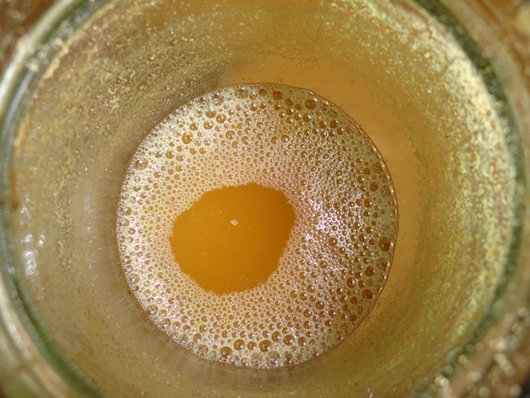
To make my flavoured vinegar I use Cornwells white vinegar (not cleaning vinegar) 😵 and to a small saucepan I add a teaspoon of celery seeds, a teaspoon of mixed black and yellow mustard seeds, ¼ teaspoon turmeric, 2 fresh bay leaves from the garden and salt and sugar to taste. You can add water as well if you want to mellow it out a bit.  Place the saucepan on the stove and bring to the boil. When it comes to the boil, turn off the heat, leave the lid on and allow the pan to sit on the stove overnight to steep.  Heating and steeping the brew will get the best flavour from the seeds and seasoning you use.

In another version of this, you could add any dried herb, spice, garlic, chilli, wasabi or ginger. Test taste as you go and make sure it's to your taste before you bottle it. Adding olive oil and mustard when the vinegar cools down could replace conventional salad dressing. Most supermarket salad dressing cost $4 for 250ml. This is cheaper and healthier. This is the ingredient list from the conventional Paul Newmans salad dressing: Water, Vegetable Oil (Soybean and or Canola Oil), Red Wine Vinegar, Olive Oil, Dijon Mustard (Vinegar, Water, Mustard Seed, Salt, White Wine, Acidity Regulators: {Citric Acid, Tartaric Acid}, Spices), Onion Puree, Sugars, Lemon Juice Concentrate, Salt, Mustard Flour, Pepper, Garlic Powder, Distilled Vinegar, Natural Flavour, Emulsifier (435).

So, for very little effort and around 30 minutes of my time, I've made up healthy versions of three commonly used kitchen products. I'd say that's time well spent because I've spent less than I would have had I bought these products and I know what is in the food we eat.  Win-win!  🌶


We finished off the blog courses yesterday with a Skype chat. I really enjoyed the course - I loved meeting the ladies and helping them move ahead with their blogs. It was great matching a talking face and personality to wonderful women who had just been a name to me before the course. I'll publish a list of the final few blogs on Friday so you can check out what the ladies have been working on.

 The workers having a break on the front verandah.

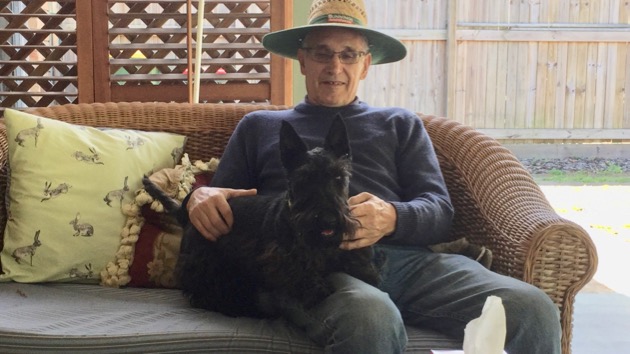
We usually don't allow Gracie up on the furniture so she made the most of it yesterday by taking up as much space as possible.

After the course, I cooked lunch then we cleaned up and did a bit of work in the front garden.  Gracie came out there with us as the chickens were roaming the back yard. She loves being in the front garden. She sniffed and followed ant and lizard trails, did a bit of digging and running and was on the lookout for dogs being walked along the street. She's such a character.  When we came inside again, she ran through the house at full speed for five minutes, then dropped and rested for a while. We've never had a dog that has made us laugh so much. She's a real joy to live with.

During the week I'll be making a few things in the kitchen, Shane, Sarndra and the kids will be here for dinner tomorrow night, I'm starting on some live Christmas gifts and I want to write about sun angles in the garden. Of course, I'll write about it all as I go so I hope to see you again as the days pass.  I think it will be a good week.  ❤️
Hello everyone. I'm looking forward to a quiet and relaxed weekend. I made a lemon tart yesterday and lunch is left overs so not much cooking to be done today. Most of my time will be spent gardening and decluttering. 

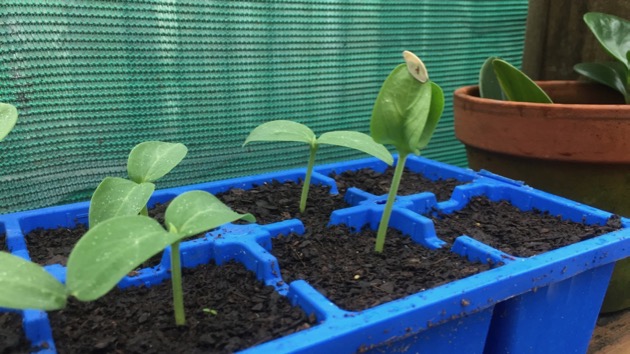
Our cucumber seedlings are growing well. This one still has the seed clinging to the tip of a new leaf.

I have the last of the blogging Skype chats tomorrow; this is the fourth one. They've been an unexpected joy. A gaggle of us sit around with our cuppas, me here and the other ladies in their homes, we can see and hear each other and we talk about how to write about our lives. It's like having a series of morning teas with friends. It's shown me just how close we can be when we have the technology to support it.  If you've developed friendships online over the years, and you wish you could pull up a chair and sit down together for morning tea, there is nothing stopping you from doing that now. Sure, you're not in the same room but you can have a good talk just as you would around your own kitchen table. All you need is Skype and someone to organise your gaggle. I think you can have up to about 10 people in the session. Here's how to do it. Why not give it a try?

I hope you have a lovely weekend. Rest up, relax and take advantage of your down time. Next week will come soon enough. xx

This is Australia as 100 people
1.5 Acres of High Intensity, No-Till Vegetable Production
Australia's Karenni refugees cultivate community through Wollongong farming initiative
The Paper Pot Transplanter
Tiny house living - Australia
The impossible farm
A bit of old crumpet
Stripey peeled Vietnamese cucumber salad - if there will be only one more food blog you look at this year, make it this one
How to make jam
Very practical sewing - new napkins
The Basic Needs of Each Starter Culture and How to Bring Them Back to Life
The triple puff granny square - free crochet pattern
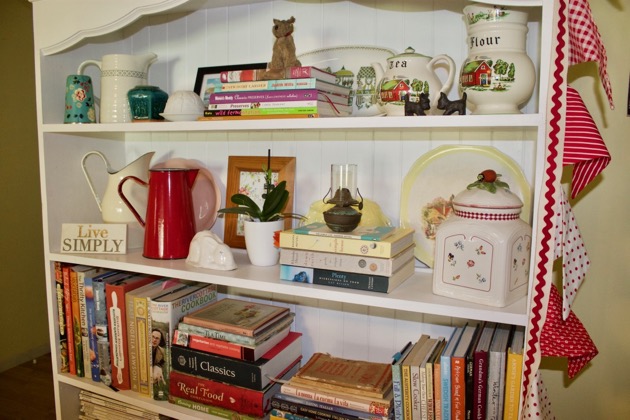
I don't know about you but I have a hard time keeping my cook books organised. Often I take them into my work room and after I find what I need, they sit on my sewing table for a couple of weeks.  By the time they are returned to the shelf, other books have taken their place and they go to a new spot.

I don't like sorting them into categories, because I'm quite a chaotic person and I'm comfortable with random placements. I'd never sort them by the colour of the cover and as crazy as it sounds, I've seen photos of books that have been sorted by colour.  That's the book equivalent of buying art to suit the colour of a room. Pfffft!  

But I'm happy with the placement I have now.  To my eye it's interesting and neat but even though it doesn't look like it, there are reasons for all the placements.  It probably doesn't matter much though. In two weeks it won't look like this because I look through these books frequently and my photos are memorialising their temporary places. Still, I'm happy with it and for a couple of days it will make me smile as I sneak a peak walking past.

What's your cook book shelf like?

Newer Posts Older Posts Home


My books were all published by Pengiun, and are available at Amazon US, Amazon UK and Amazon Au

Search here

Total Pageviews

Translate


I'm Rhonda Hetzel and I've been writing my Down to Earth blog since 2007. Although I write the occasional philosophical post, my main topics include home cooking, happiness and gardening as well as budgeting, baking, ageing, generosity, mending and handmade crafts. I hope you enjoy your time here.

MY FAVOURITE PLACES

  • Grandma Donna's Place
  • Grandma Donna's YouTube
  • Grandma Donna's Instagram
  • This Simple Day
  • Nicole's Instagram

Give More

Give More

Popular posts last year

Making ginger beer from scratch

We had a nice supply of ginger beer going over Christmas. It's a delicious soft drink for young and old, although there is an alcoholic version that can be made with a slight variation on the recipe. Ginger beer is a naturally fermented drink that is easy to make - with ginger beer you make a starter called a ginger beer plant and after it has fermented, you add that to sweet water and lemon juice. Like sourdough, it must ferment to give it that sharp fizz. To make a ginger beer plant you'll need ginger - either the powdered dry variety or fresh ginger, sugar, rainwater or tap water that has stood for 24 hours to allow the chlorine to evaporate off. You'll also need clean plastic bottles that have been scrubbed with soap, hot water and a bottle brush and then rinsed with hot water. I never sterilise my bottles and I haven't had any problems. If you intend to keep the ginger beer for a long time, I'd suggest you sterilise your bottles. MAKING THE STARTER In a...
Image

NOT the last post

This will be my last post here.  I've been writing my blog for 18 years and now is the time to step back. I’ve stopped writing the blog and come back a couple of times because so many people wanted it, but that won’t happen again, I won’t be back.  I’ll continue on instagram to remain connected but I don’t know how frequent that will be. I know some of you will be interested to know the blog's statistics. 
Image

How to make cold process soap

I'm sure many of you are wondering: "Why make soap when I can buy it cheaply at the supermarket?" My cold process soap is made with vegetable oils and when it is made and cured, it contains no harsh chemicals or dyes. Often commercial soap is made with tallow (animal fat) and contains synthetic fragrance and dye and retains almost no glycerin. Glycerin is a natural emollient that helps with the lather and moisturises the skin. The makers of commercial soaps extract the glycerin and sell it as a separate product as it's more valuable than the soap. Then they add chemicals to make the soap lather. Crazy. Making your own soap allows you to add whatever you want to add. If you want a plain and pure soap, as I do, you can have that, or you can start with the plain soap and add colour, herbs and fragrance. The choice is yours. I want to add a little about animal and bird fat. I know Kirsty makes her soap with duck fat and I think that's great. I think t...
Image

Preserving food in a traditional way - pickling beetroot

I've had a number of emails from readers who want to start preserving food in jars but don't know where to start or what equipment to buy.  Leading on from yesterday's post, let's just say up front - don't buy any equipment. Once you know what you're doing and that you enjoy preserving, then you can decide whether or not to buy extra equipment. Food is preserved effectively without refrigeration by a variety of different methods. A few of the traditional methods are drying, fermentation, smoking, salting or by adding vinegar and sugar to the food - pickling. This last method is what we're talking about today. Vinegar and sugar are natural preservatives and adding one or both to food sets up an environment that bacteria and yeasts can't grow in. If you make the vinegar and sugar mix palatable, you can put up jars of vegetables or fruit that enhance the flavour of the food and can be stored in a cupboard or fridge for months. Other traditional w...
Image

Cleaning mould from walls and fabrics

With all this rain around we've developed a mould problem in our home. Usually we have the front and back doors open and that good ventilation stops most moulds from establishing. However, with the house locked up for the past week, the high humidity and the rain, mould is now growing on the wooden walls near our front door and on the lower parts of cupboards in the kitchen. Most of us will find mould growing in our homes at some point. Either in the bathroom or, in humid climates, on the walls, like we have now. You'll need a safe and effective remedy at some point, so I hope one of these methods works well for you. Mould is not only ugly to look at, it can cause health problems so if you see mould growing, do something about it straight away. The longer you leave the problem, the harder it will be to get rid of it effectively. If you have asthma or any allergies, you should do this type of cleaning with a face mask on so you don't breathe in any spores. Many peopl...
Image

Five minute bread

Bread is one of those foods that, when made with your own hands, gives a great deal of satisfaction and delight. It's only flour and water but it symbolises so much. I bake bread most days and use a variety of flours that I buy in bulk. Often I make a sandwich loaf because we use most of our bread for lunchtime sandwiches and for toast. Every so often I branch out to make a different type of loaf. I have tried sour dough in the past but I've not been happy with any of them. I'll continue to experiment with sour dough because I like the idea of using wild yeasts and saving the starter over a number of years to develop the flavour and become a part of the family. However, the loaf I've been branching out to most often is just a plain old five minute bread. By five minutes I mean it takes about five minutes actual work to prepare but it's the easiest of all bread to make and to get consistently good loaves from. If you're having people around for lunch or...
Image

This is my last post.

I have known for a while that this post was coming, but I didn't know when. This is my last post. I'm closing my blog, for good, and I'm not coming back like I have in the past.  I've been writing here for 16 years and my blog has been many things to me. It helped me change my life, it introduced me to so many good people, it became a wonderful record of my family life, it helped me get a book contract with Penguin, and monthly columns with The Australian Women's Weekly and Burke's Backyard . But in the past few months, it's become a burden. In April, I'll be 75 years old and I hope I've got another ten years ahead. However, each year I'll probably get weaker and although I'm fairly healthy, I do have a benign brain tumour and that could start growing. There are so many things I want to do and with time running out, leaving the blog behind gives me time to do the things that give me pleasure. On the day the blog started I felt a wonderful, h...
Image

What is the role of the homemaker in later years?

An email came from a US reader, Abby, who asked about being a homemaker in later years. This is part of what she wrote: "I am a stay-at-home mum to 4 children, ages 9-16. I do have a variety of "odd jobs" that I enjoy - I run a small "before-school" morning drop-off daycare from my home, I am a writing tutor, and I work a few hours a week at a local children's bookstore. But mostly, I cherish my blissful days at home - cooking, cleaning (with homemade cleaners), taking care of our children and chickens and goats, baking, meal-planning, etc. This "career" at home is not at all what I imagined during my ambitious years at university, but it is far more enriching. I notice, though, that my day is often planned around the needs of my family members. Of course, with 4 active kids and a husband, this is natural. I do the shopping, plan my meals, cook dinner - generally in anticipation of my family reconnecting in the evening.  I can't h...
Image

Every morning at home

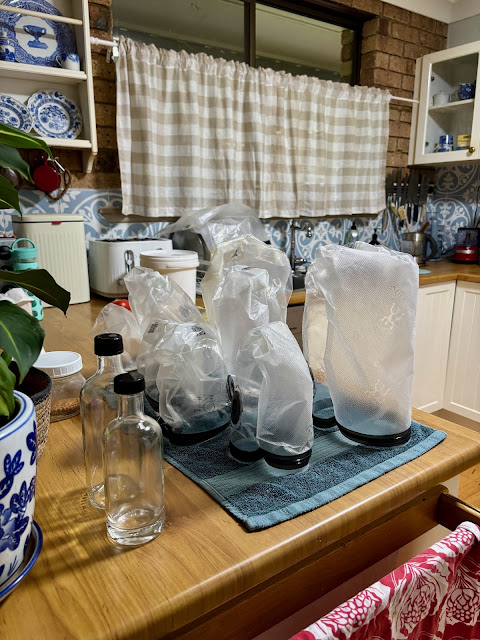
Every morning when I walk into my kitchen it looks tidy and ready for a day's work. Not so on this morning (above), I saw this when I walked in. Late the previous afternoon when I was looking for something, I came across my rolled up Zwilling vacuum bags and decided they had to be washed and dried. So I did that and although I usually put them outside on the verandah to dry it was dark by then. I turned the just-washed bags inside out and left them like this on a towel. It worked well and now the bags are ready to use when I bring home root vegetables, cabbages or whatever I buy that I want to last four or five weeks.
Image

You’ll save money by going back to basics

When I was doing the workshops and solo sessions, I had a couple of people whose main focus was on creating the fastest way to set up a simple life. You can't create a simple life fast, it's the opposite of that It's not one single thing either - it's a number of smaller, simpler activities that combine to create a life that reflects your values; and that takes a long to come together. When I first started living simply I took an entire year to work out our food - buying it, storing it, cooking it, preserving, baking, freezing, and growing it in the backyard. This is change that will transform how you live and it can't be rushed.  
Image


Trending Articles

NOT the last post

This will be my last post here.  I've been writing my blog for 18 years and now is the time to step back. I’ve stopped writing the blog and come back a couple of times because so many people wanted it, but that won’t happen again, I won’t be back.  I’ll continue on instagram to remain connected but I don’t know how frequent that will be. I know some of you will be interested to know the blog's statistics. 
Image

Every morning at home

Every morning when I walk into my kitchen it looks tidy and ready for a day's work. Not so on this morning (above), I saw this when I walked in. Late the previous afternoon when I was looking for something, I came across my rolled up Zwilling vacuum bags and decided they had to be washed and dried. So I did that and although I usually put them outside on the verandah to dry it was dark by then. I turned the just-washed bags inside out and left them like this on a towel. It worked well and now the bags are ready to use when I bring home root vegetables, cabbages or whatever I buy that I want to last four or five weeks.
Image

You’ll save money by going back to basics

When I was doing the workshops and solo sessions, I had a couple of people whose main focus was on creating the fastest way to set up a simple life. You can't create a simple life fast, it's the opposite of that It's not one single thing either - it's a number of smaller, simpler activities that combine to create a life that reflects your values; and that takes a long to come together. When I first started living simply I took an entire year to work out our food - buying it, storing it, cooking it, preserving, baking, freezing, and growing it in the backyard. This is change that will transform how you live and it can't be rushed.  
Image

Creating a home you'll love forever

Living simply is the answer to just about everything. It reduces the cost of living; it keeps you focused on being careful with resources such as water and electricity; it reminds you to not waste food; it encourages you to store food so you don't waste it and doing all those things brings routine and rhythm to your daily life. Consciously connecting every day with the activities and tasks that create simple life reminds you to look for the meaning and beauty that normal daily life holds.  It's all there in your home if you look for it. Seemingly mundane tasks like cleaning and cooking help you with that connection for without those tasks, the home you want to live in won't exist in the way you want it to.  Creating a home you love will make you happy and satisfied.
Image

Time changes everything

I've been spending time in the backyard lately creating a contained herb and vegetable garden. My aim is to develop a comfortable place to spend time, relax, increase biodiversity and encourage more animals, birds and insects to live here or visit. Of course I'd prefer my old garden which was put together by Hanno with ease and German precision. Together, we created a space bursting at the seams with herbs, vegetables and fruity goodness ready to eat and share throughout the year. But time changes everything. What I'm planning on doing now, is a brilliant opportunity for an almost 80 year old with balance issues. In my new garden I'll be able to do a wide range of challenging or easy work, depending on how I feel each day. It’s a daily opportunity to push myself or sit back, watch what's happening around me and be captivated by memories or the scope of what's yet to come.
Image

It's the old ways I love the most

I'm a practical woman who lives in a 1980’s brick slab house. There are verandahs front and back so I have places to sit outside when it's hot or cold. Those verandahs tend to make the house darker than it would be but they're been a great investment over time because they made the house more liveable. My home is not a romantic cottage, nor a minimalist modern home, it's a 1980’s brick slab house. And yet when people visit me here they tell me how warm and cosy my home is and that they feel comforted by being here. I've thought about that over the years and I'm convinced now that the style of a home isn't what appeals to people. What they love is the feeling within that home and whether it's nurturing the people who live there.
Image

Making ginger beer from scratch

We had a nice supply of ginger beer going over Christmas. It's a delicious soft drink for young and old, although there is an alcoholic version that can be made with a slight variation on the recipe. Ginger beer is a naturally fermented drink that is easy to make - with ginger beer you make a starter called a ginger beer plant and after it has fermented, you add that to sweet water and lemon juice. Like sourdough, it must ferment to give it that sharp fizz. To make a ginger beer plant you'll need ginger - either the powdered dry variety or fresh ginger, sugar, rainwater or tap water that has stood for 24 hours to allow the chlorine to evaporate off. You'll also need clean plastic bottles that have been scrubbed with soap, hot water and a bottle brush and then rinsed with hot water. I never sterilise my bottles and I haven't had any problems. If you intend to keep the ginger beer for a long time, I'd suggest you sterilise your bottles. MAKING THE STARTER In a...
Image

An authentic look at daily life here — unstaged and real

Most days Hanno was outside happily working in the fresh air. It may surprise you to know that I started reading my book,  Down to Earth , yesterday - the first time since I wrote it 13 years ago.  I had lent it to my neighbor, and when she returned it, I started reading, expecting to find surprises. Instead, I realised the words were still familiar—as if they were etched into my memory. As I flipped through the pages, I was reminded of how important it was for me to share that knowledge with others. The principles in Down to Earth changed my life, and I truly believed they could do the same for others. After just 30 minutes of reading, I put the book down, reassured that its message still holds true: we can slow down and reshape our lives, one step at a time.
Image