down to earth

  • Home
  • About Us
  • Down To Earth Book
  • Privacy Policy
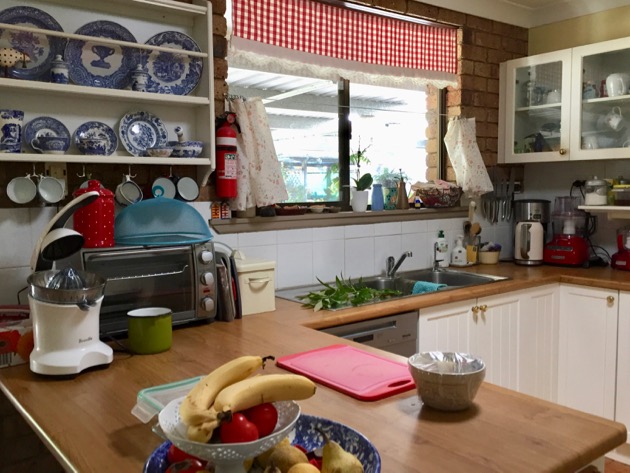
We have so many visitors here that sometimes it feels like we're camping in the middle of Central Station. I'm a solitary soul and while I thrive with my family around me, I need silence and solitude as well. Hanno and Jamie went to the movies yesterday so I took the wonderful opportunity for some alone time. I spent some time in the garden pottering around and planning future projects and when I came inside again, went straight to the kitchen and made up two quick liquids that we'll enjoy in the coming days. I feel refreshed and full of beans now, so watch out. 😊


When I make salads, I prefer a no-oil dressing. I grew up long before the days of bottled salad dressing and olive oil. If we dressed salads at all, it was with vinegar. I remember my grandmother making salad by sprinkling a teaspoon of sugar, salt and pepper over the salad and then pouring in some vinegar. By the time the salad was eaten, the dressing was a mix of tomato, cucumber and onion juices mixed in with the vinegar and sugar. Grandma drank it straight down and taught the habit to my sister, Tricia. I drink it now too and have discovered there is nothing quite as bracing as a mouth full of vinegar juices.


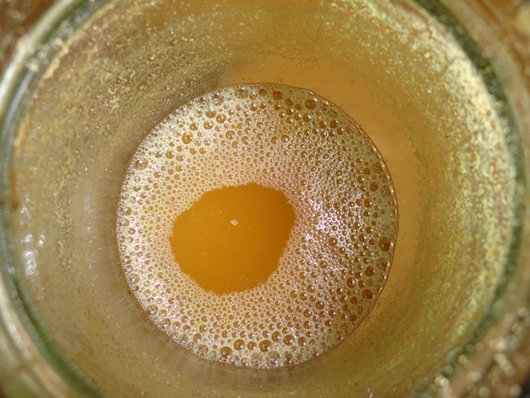
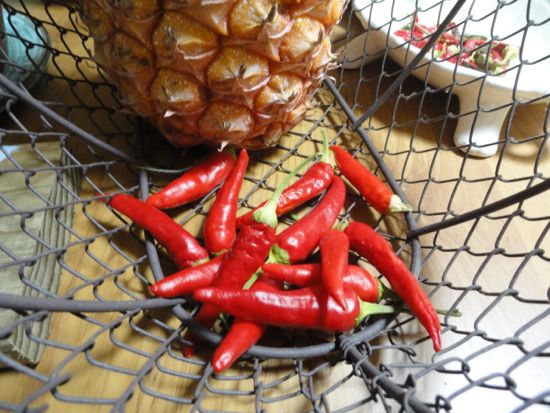
I often have flavoured vinegar in the cupboard. I make it up ahead of time so it can develop flavour and add extra depth to potato salad, coleslaw, fish and quick pickles. If you add two tablespoons of this vinegar to mayonnaise, it cuts the creaminess back nicely and gives it a little kick.  I've been using flavoured malt vinegar recently so I decided on an apple cider vinegar this time.  It's a simple process that takes less than five minutes. All I do is place vinegar, sugar and spices in a saucepan and bring it up to a hot, but not boiling, temperature.  You can use any spices you fancy, I tend to use the traditional pickling spices of mustard seed - I have yellow and black here, celery seeds, pepper, chilli flakes and salt. I used two small fresh bay leaves too. I'm not giving you any set amounts because this is one of those things where you throw the recipe out the window and rely on your own taste to guide you. When it tastes right, it's right.  But as a little hint, I used 400 mls of cider vinegar and ½ cup raw sugar.  If the taste is too sharp and it's already sweet enough, add a little water to mellow it. When you have the base liquid to your taste, start adding the spices you like.


White vinegar will result in a clear liquid, cider vinegar will go cloudy.

Pour it into a jar while it's still hot and let it sit on the bench while it cools. Stir it occasionally to bring in the flavour of the spices even more.  If you don't like the floating seeds in the vinegar, strain them out after a couple of days when the flavours have completely developed.  I always store this in the fridge. I'm not sure of the acidity level of the vinegar, it needs to be 5% to be stable in a cupboard, so it's safer in the fridge.


A great use for this is to do a quick pickled cucumber. Three to fours hours before using it, slice cucumber and some onion and place in a bowl. Sprinkle over about a tablespoon of salt and let the cucumbers sit for 45 minutes. This draws water from the vegetables so you don't get watered down vinegar when you fill the jars. Wash the salt off before placing the cucumbers in a jar. Pour over just enough vinegar to cover the slices and allow it to sit until you use them.


We're still working our way through the citrus. The orange tree has been picked, we have a jug of fresh orange juice in the fridge and the last bucket of oranges waiting to juiced.  There are still a lot of lemons on the trees and I had about 1500 mls of lemon juice in the fridge waiting to be used. I made more 100ml portions of lemon juice ice blocks and used the rest of the juice I had to make a small amount of lemon cordial.  It will give us a nice boost of vitamin C over winter.  This is my usual recipe for cordial.   It's delicious made up as a cold drink but you can also add it to hot black tea in winter.

Such simple liquids, but they both transform any food they're added to. Do you have a favourite vinegar or juice recipe?

If you were reading here last year or the year before, you'll probably remember how I became hooked on watching brown bears live streaming from Brooks Falls  in Alaska's Katmai National Park. It was fascinating viewing and, I believe, a true privilege to be able to watch wild animals living side by side in their natural habitat so far away.

 I took these two photos this morning.

As with most things we find joy in, bear watching comes in fairly small doses and in October/November the bears start climbing nearby Dumpling Mountain to hibernate over winter. When they make that climb, they're in top condition with enough fat and nutrition to see them through months with no food.

They came back this week and the past couple of days Jamie and I have been catching glimpses of the bears as they return to Brooks Falls. They're not there all the time but soon they will be. The bears are drawn to the falls by hundreds of thousands of sockeye salmon as they swim up stream to spawn. The cycle replays every year - the salmon return to reproduce and as they swim upstream to do that, many become weak, the bears get their fill of high value food, the salmon eventually reach their destination, spawn, die and float back down river where the bears and gulls tidy up, fuelling their bodies for the coming winter.

This photo was taken late last year.

There is only one camera operating at the moment, and there will be four soon, but even with one camera it's something you should see. It's a rare sight seeing those huge bears scrambling after fish, swimming, establishing their place in the hierarchy, and living alongside other wild creatures such as wolves and the ever-present seagulls.

July is the peak bear watching month but there are already a few small bears at the falls, along with a mother with three cubs. Every week from now on we'll see an increase in the number of bears feeding at the falls. If you get a chance, have a look. Like me, you'll probably be amazed at how we can sit in our homes while watching these beautiful animals, live out there, living in the wilderness.

ADDED LATER:

This little fellow is at the falls now. It's 5.30pm there and the bears will continue feeding until midnight.

🐻🐻🐻

My sincere thanks to everyone who left a comment on the previous post about how they reduce their household waste.  There were many excellent ideas that I know will help others work on this important aspect of home management.  Soon there will be other posts dealing with the waste issue and I hope we have your continued involvement as we build up a resource for everyone to refer to.


We're having a fairly mild winter so far with cool to cold nights and warm sunny days. It's ideal gardening weather. How is it where you live?  I haven't had much time for gardening this week because I've been writing the notes for my blogging course. Happily, I've finished that now and I'm hoping to get out into the garden this afternoon to tie up some wayward tomatoes and sweet peas and fertilise some of the vegetables.

I hope you've had a good week. I look forward to seeing you again on Monday.  😋

Cut power bills this winter
3 ways to turn herbs into cleaning products
How to make chilli powder
How to make passatta
How to make sauerkraut
Australians spend less on food but waste more of it than we did in the 1970s
The good, bad and ugly truth about your career after 50
4 most common budget black holes Aussie families fall into
How To Stop Losing Your Socks in the Wash
Vegan cashew icecream
Easy Aloo Paratha
Throwaway culture has spread packaging waste worldwide
Mary Berry - Feeding the family


We all work in different ways in our homes.  Some of us have babies, children or elders to care for, some produce fresh food in the backyard, there are readers with cows, goats, chooks, ducks, geese and bees, many of us make laundry liquid and soap, we have candle makers, quilt makers and producers who, for necessity or love, make all sorts of things. We also have people who go out to work and who are part-time homemakers, doing their chores after their paid work and on weekends. There is no doubt about it, there is always something to do in our homes and homemakers, both full time and part time, are the ones who get things done.


The idea that is sometimes floated in magazines, or gossiped about, that homemakers sit around drinking coffee with their friends or watching TV is laughable. I'm sure there are some women, and men, who do that but it is not the group defined as homemakers.  We're busy creating the life we want to live and we do that by working at a thousand different things in our homes.


Here at our place, Hanno has been busy harvesting and juicing oranges and lemons. I've been picking herbs so I can freeze them before they die off during winter. We look after grandchildren. Hanno has deep cleaned the chook house and tidied the yard. I made up a ten litre batch of laundry liquid a few days ago. I've sown seeds, cleaned cupboards and washed curtains with Hanno's help. I don't know what we'll do tomorrow, but it will be very similar to what we did today. And yes, we sit down to rest and drink tea, we have conversations about work and life and then we carry on.


As I was thinking about all this yesterday, it occurred to me that it is the traditional work that most of us love doing. It's the harvesting, the slow cooking of food, the jam making, fermenting, soap making, sewing, mending and reusing, over and over again, what we can. They are our pleasures. If we can do our work using a traditional method, that is what we do. I can't say I've ever thought how wonderful it is to use a tea bag but I love making tea in a pot so that I can pour that properly brewed tea into cups standing on saucers. I've never celebrated paying through the teeth for a bottle of laundry liquid at the supermarket but I adore opening my plastic bucket to scoop our a tiny portion of homemade laundry liquid. Do you know of anyone who looks forward to a store-bought frozen meal heated in the microwave?  I don't, but I know many who want to eat the food I cook from scratch. Beautiful handmade soap is such a tender treat and sleeping under a homemade family quilt surely brings the best sleep.  It's the keeping of old ways that make these tasks remarkable and significant.


I'm always motivated to work when I see or read about others working in their homes. I feel like I'm part of a big working bee and that if we all pull together, everything that needs doing will be done. Most of us aren't part of a community that takes part in barn raisings or working bees but we have one going here. You in your home making bread and biscuits this morning, me starting to prepare vegetables for our lunch at noon, Hanno out the back fixing a fence, Kate who has been knitting beanies and gloves, Jack who moved his bee hives yesterday, and I've seen those gorgeous photos of cakes and slices made by our local ladies for the recent show. No, we're not part of a real life community who does those things but we're doing them nonetheless and we're reaching around the world with our photos and words. Let's celebrate our work and what we do at home. We're keeping traditional skills alive and supporting each other in the work that others seem to have forgotten. And that's worth celebrating. ❤️


Another week almost over and I don't have much to show for it. I've been concentrating on my blog course this week and should have it ready to send out on 26 June.  It's been raining or overcast here so the temperature has been at a mild 10 - 15C at night and 20C during the day. Next week will probably be colder.  If you're in the northern hemisphere, I hope you're enjoying your summer temperatures, if you're here in the south, I hope you're not too cold and have a warm home to shelter in.

Thanks for your visits this week. Visitor numbers are starting to increase again which is surprising as I've been around so long.  Still, I hope my new readers find the blog interesting and motivating. I'll see you all again next week. Have a lovely weekend, my friends. xx

How your clothes are poisoning our oceans and food supply
Arctic stronghold of world’s seeds flooded after permafrost melts
Australians want government to focus on renewables even if it costs more
The Great Allotment Challenge - first series, no. 1  I love this series, particularly the Make challenge.
20 best vegetarian recipes: part 3
A story about cold chickens and their knitted jackets - this is in my neighbourhood 😊
Patterns for aprons, modest clothing - women, girls, men and boys, some free patterns
Consumer watchdog launches legal action against Thermomix
Cooking hacks - You tube
Swedish Food - lots of delicious recipes here
How to control tomato caterpillar


We had this for lunch yesterday and it was delicious.  Just to set the scene for you, outside was wet, windy and cold and this meal was an aromatic pleasure that carried on for hours.  As soon as it started cooking on the stove top, then braising in the oven, the aroma sent out the message: you'll be having a delicious warming lunch soon.

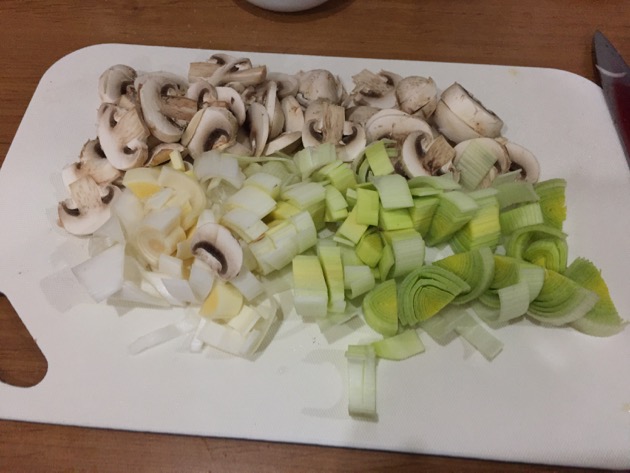
If you want to make this recipe, when you buy your meat, don't buy good quality steak. It will dry out and be tasteless. You want a cheaper cut, something like round, blade or skirt steak. The meal will cook slowly for a couple of hours so even if there is a bit of gristle or sinew in the steak, which is often present in secondary cuts, it will melt during the cooking process and add to the flavour of the dish.  I used two thin pieces of round steak. The vegetables you choose can be whatever you're growing or what's in the fridge. I had some mushrooms and a leek I wanted to use but I started with what I usually start with - onion, carrot and celery. This is commonly known as a mirepoix, which is the flavour base of most European-style casseroles/stews.  

INGREDIENTS

Meat
one thin slice of round, skirt or blade steak for each person you're serving. This needs to be thinned out with a meat mallet so all the meat is the same thickness.
For the stuffing
Mushrooms
Leek or onion
Garlic
Speck - cut into lard ons, or bacon - cut into small pieces
Mirepoix
1 large onion, chopped
1 medium carrot, chopped
2 sticks celery, chopped
The sauce
Either beef or chicken stock or water and a stock cube
Salt, pepper, paprika, plain flour, parsley

chopping vegetables
First, prepare vegetables for the stuffing.

Place into a frying pan with a small splash of olive oil and cook until the speck/bacon is crispy and mushrooms and leeks/onions wilt a little.
prepare meat
While the stuffing is cooking, thin all the meat slices.


stuffing meat
Then place a small amount of stuffing on the meat and fold it so you can secure all sides with toothpicks.  The steak isn't rolled, it's folded so it forms a pocket.

cooking beef rolls
Place the stuffed steaks in the same frying pan you cooked the stuffing in and start browning them on both sides.  Don't miss this step because this browning process is where you start building natural flavour in your meal.
When the meat is seared on both sides, place it in a casserole dish suitable for slow cooking in the oven.
When the frying pan is free again, start your mirepoix. Add chopped carrot, celery and onion (the onion went in after I took the photo), salt and pepper to your taste, two teaspoons of paprika, two tablespoons plain/all purpose flour and cook on medium heat till the vegetables and flour develop some brown colour.  Again, this will add natural flavour to your meal.

Add the mirepoix mix to the casserole dish, add whatever vegetables you want to add. In addition to the mirepoix, I used the rest of my mushrooms, some chopped herbs and the leftover stuffing. Pour in about one litre of water with a stock cube, or stock. You could also add some Worcester Sauce for added flavour. 

Heat up the mix on the stove top, put the lid on, then place in a pre-heated oven and cook at 165C/330F for about two hours.

beef stew
About one hour before you intend eating the meal, add some potatoes and greens so it's a one pot meal.  I added potatoes and Brussel sprouts. Test taste to see if you need to add a little more seasoning. 

beef stew
This is a really delicious meal that will fill you up and make you feel well fed. It is good home cooking that is tasty and healthy and you can mix it up depending on what's available in the fridge or garden. Don't forget to remove the toothpicks before serving. 

I hope you try this, especially if you're having a cold spell where you live. If you give it a go, let me know what you and the family think of it.

I want to recommend two products to you. I use these here and as they're not in the mainstream of consumer products, I thought some of you may be interested in them.  I have no affiliation with Slipgard or Clover.

Many of you might remember we renovated our bathroom last year and instead of a regular shower enclosure, we installed a walk-in shower with tiled floor and a glass screen. It's been a real pleasure to shower in there but it had one draw back for both of us. We felt we might slip on the tiles in the shower when they were wet. We used an anti-slip tile to the Australian standard but they felt slippery. We bought an anti-slip mat but it absorbed and held water and eventually it became a slip hazard too.  I couldn't find anything in our local hardware stores or paint shop but online I found an Australian product called Slipgard  We purchased a pack for $69 which included the Slipgard and a bottle of Tile Power, which cleaned and prepared the tiles.


Hanno applied two coats of Slipgard, it took minutes to dry, there were no fumes, it's environmentally sound and the tiles look the same. We've been using it for a week and the floor feels very safe now. Even when wet, it's not slippery and we can move around with ease. We also did the tiles at the front door, they too now have a good grip, even when wet.  Slipgard is guaranteed for 5 years. It's a really good product that I've never seen advertised anywhere.


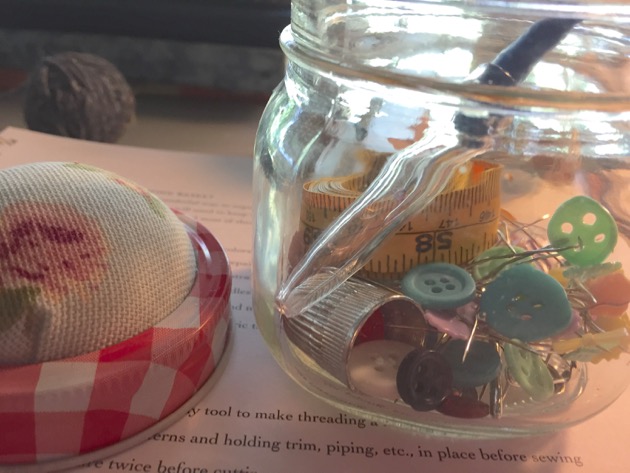
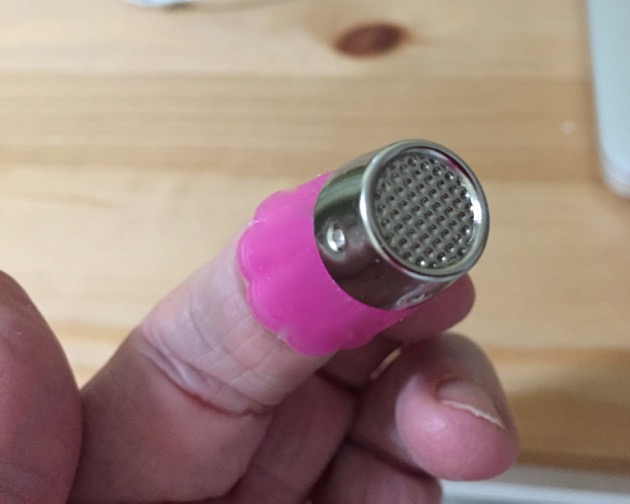
My next product is an excellent thimble from Clover. I'm sure many of my patchworking friends would know this thimble. It's got a metal tip with a silicone cup which fits over the finger comfortably. You can use it for hours with your hand stitching. It's much better than any other thimble I've ever used.  I bought mine from my local patchwork shop, The Patchwork Angel.


Dying happy

Homemaking attracts people from all walks of life, with differing wants, needs, philosophies and ambitions. I have a degree, a moderate amount of quiet success in small business and, regrettably, a personal history of waste and overspending. But I had an epiphany of sorts many years ago and since then my aim was to create a safe, comfortable and loving home for Hanno and I and everyone who visits us here. I'm glad I made the changes I did all those years ago because I have grandchildren now and the reason we live as we do is crystal clear to me now. 

I think my history focused me like a laser beam on my home because over spending, waste and living in a disordered home made me unhappy. We only have the pleasure of living in a beautiful and secure home if we put the time and effort in to create it. Nothing is handed to us on a silver platter and most of us have the opportunity to not only work for a living but to also create the kind of simple  life we want to live.  I want to be comfortable and content in my final years, I want an interesting life because I have more time to enjoy my days now and I want to die happy.  We all want that, don't we?


When I first came home, I wasn't really sure what to do, so I tried to do it all. I remembered how things were as I grew up and my days were full of home production, growing food, storing and preserving, mending, creating and serving delicious food in an atmosphere of fluffy, calm comfort. It was very self conscious and focused at first. I've mellowed a lot and relaxed into it now, everything flows and I have much more time to enjoy the process and breathe in the fresh air.  I smile a lot, especially when no one else is around.


I think I'm very fortunate to have had the upbringing I did, the family I have, the education I had and that I took advantage of most of the opportunities that came my way. All that made me the person I am today. But when I look back and see where I've been and where I am now, I am absolutely convinced that I'm here right now because I changed the way I think about money and possessions. And that is the opposite of what I grew up believing, which was that I, and everyone, were made happy by earning as much money as possible and then spending it on whatever we wanted.


I'm happier now than I've ever been and I'm grateful to have learned lessons that were often hidden and not talked about.  It takes a bit of digging and self belief, but the truth, your truth, is there. You just have to find it and believe it when you do, because it won't be the truth you expect and it won't be what everyone else is doing.

Is your story similar to mine? Do you think you're on that path now?

It's been comforting to get back to my regular household routines after a few years of intensive writing. Once established, rhythms and routines help you get through repetitive housework. They reduce procrastination that can take hold of us sometimes and they help us work at the same time and pace as we did yesterday and will do again tomorrow. You don't sit at the kitchen table wondering what you should be doing, or staring at the computer screen with another cup of coffee wondering where the day went. When you have your daily routine worked out, you'll have all your tasks done and still have time to do what you want or need to do - be that sewing, gardening, talking to friends, looking after grandchildren, working in your home business or going out to work.


I don't set specific times for my domestic tasks. Instead, I have a list of things that I want done by a certain time. That works well for me but it's not the only way to do it.  We eat our main meal at midday here so my routine is to have a group of tasks completed before I start making lunch. That includes making the bed, tidying the kitchen, general cleaning, straightening the lounge room and doing the floors. My routine isn't the same every day. It's either that exact list or a variation of it, depending on what needs to be done.


The way to start developing your own routines is to make a short list of what you need to do, either on a daily basis, over the course of a week or month.  A list for a daily routine would probably look something like this:
  • Make the bed
  • Prepare breakfast
  • Prepare lunches for school and work (although this is probably better done the night before)
  • Pack dishwasher and wipe down kitchen benches
  • Prepare the evening meal to go into the slow cooker or remove a meal or frozen meat from the freezer 
  • Load washing machine with one load
Decide how much time you have to carry out everything on your list. I would expect the list above to take about one hour, or you could do what I do and tell yourself everything on the list has to be finished by 7 or 8 or 9 or 10 or 11am.


When you do your list the first time, you may need to make minor adjustments. For instance, if you have a limited amount of time to get through the list and you can't do it all, you could carry out a couple of the tasks the evening before. Things like preparing lunches or preparing the evening meal could be done after dinner the evening before.  Don't be shy in asking the family for help with this. You are not the only person who should be working in your home. This work should be shared.  Teenagers and older primary school children could load the dishwasher, wipe the benches, change their bed linen or load the washing machine. They could probably make their own lunches too.  They might complain when they start all this, particularly if they haven't helped with house work before, but they will grow into the habit of it, just as you will, and it will become easier and just be a part of their day. And believe me, when they grow up, they'll be able to look after themselves and they'll thank you for it.


After the first day, decide what worked and what needs changing. Whatever needs tweaking, do it after that first day so that on day two you have a clear run through.  If you still have problems, keep tweaking so you can do your list in the time you allow yourself.


Often you'll have at least two sets of daily routines - one morning, one evening. When they're established, work out your weekly and monthly routines. Weekly routines will be for cleaning bathrooms, changing bed linen, vacuuming the floor, menu planning etc while monthly routines will help you deal with cleaning the fridge and dishwasher etc.  It you need help creating your lists, there are hundreds of housework lists here. Just make sure your lists cover all the work you need to do and you set realistic time goals.

You can make up short lists for other areas at other times too, and this is especially helpful for seasonal cleaning or on weekends when you need to get through your housework as well as spend time with your family. But start with daily routines first and when you've settled into them, create weekly and monthly lists as well. How do you organise your housework? Do routines work for you?

Just a short note on the War on Waste post. There is no radio program, it's an online digital program as well as a downloadable podcast. I hope you have the time to listen. It is relevant to all of us.

☘


I've been concentrating on my family tree recently and was very excited last week when I received my DNA profile. This is what I discovered:
  • Ireland  - 68%
  • Europe West - 16% - primarily located in Belgium, France, Germany, Netherlands, Switzerland, Luxembourg, Liechtenstein
  • Great Britain  -  8%
  • Scandinavia  -  6%
  • Iberian Peninsula - less than 1% - primarily Spain and Portugal
  • West Asia - less than 1% - this is the Caucasus region which is Armenia, Azerbaijan, Georgia, Iran, Iraq, Syria, Turkey
It's pretty much what I expected although, even though I "feel" very Irish, I didn't expect my Irishness to be 68 percent.  Win/win, Australian AND Irish. My main cultural group is Munster Irish, which is the southern parts of Ireland - Cork, Limerick, Tipperary, Clare and Kerry. I had often wondered why I'd been compelled to name one of my sons Kerry, and maybe there is a reason. Maybe I have a significant but forgotten link to County Kerry.

Since receiving my DNA profile, I've been contacted by a cousin I'd never heard of. Our great grandmothers were sisters.  When we were on the book tour, Tricia and I took advantage of our visit to Wagga and visited the house our mother was born in. This "new" cousin was born in Wagga too, so knowing my DNA profile connected me with a place and a time and through that, a relative. The past is such an intriguing, engaging and endlessly interesting place and having done this research I'm very comfortable with my own history.

Hanno and I had an easy Monday. Most of our days are easy now, I think it's the payoff for growing old.  We had our breakfast and were at Aldi when the doors opened at 8.30am. We had a moderate amount of shopping to do - vegetables, fruit, groceries and meat, and we were home again with everything packed away by 9.30am. It's easier and faster when we shop together. Our local Aldi was refurbished recently and reopened in April. It's made the store easier to shop in and the products seem to be in a logical place now. It still has that big area in the centre with all the cheap specials, which I'm not a fan of, but the rest of the store flows well and the displays and frozen goods are easier to access.  Has your local Aldi been transformed too?

Clearing the mulch to add more fertiliser. The soil here, once heavy clay, is now fertile, friable and full of worms.

The garden is growing really well this year. All the turnips and bok choy have been harvested and the lettuce and daikon will be finished next week. We've been drinking fresh orange juice every day for the past couple of week so the oranges will be finished soon too. Tomatoes are flowering and the first tomatoes are hanging like green jewels on the plants.  I am really looking forward to having home -grown tomatoes once again. The chickens have lifted their game too and yesterday we got eight eggs.  Looks like a spinach and cheese pie will be on the menu next week. Hanno removed the mulch where the turnips had been yesterday and added more organic fertiliser. Today we'll plant sprouting broccoli there.

I've been moving pots around again and brought in an old bird bath and filled it with smooth pebbles so the birds and insects have access to clean water and a safe place from which to drink.  It's always a work in progress, things change all the time in vegetables gardens and with care and work, we can keep ours productive and beautiful well into November. It seems that 2017 is a good year for gardening. How is your garden going?


I thought I was fairly up to date on the growing waste issue in the world but a three part ABC TV program called War on Waste showed me that it's a much bigger disaster than I ever imagined. The last of the TV shows aired yesterday so I was really pleased and grateful to receive an email from a friend at the ABC (thanks Andrew) telling me about a continuing conversation about the growing problem on an ABC podcast.

The show is hosted by Craig Reucassel and the wonderful Wendy Harmer, and will continue to cover many of the issues started by the TV show. You can listen online or download the podcast.  This service is available for our international readers too.  

Did you know that disposable coffee cups aren't recycled?  I didn't know that clothes shopping had become such a huge problem - that's all covered in episode 3.  Watching a group of girls shop for clothes (almost a daily activity) and listening to the stats associated with fashion waste shocked and upset me. We are all responsible for the products we buy and the waste materials that come from those products.  I'll be listening to these radio programs hoping to learn as much as I can so I can make changes here.  We all need to be in this, step up, take responsibility and put our own sensible plans in place. All of us need to do this in our own homes because we're almost at the point of no return.

http://www.abc.net.au/radio/programs/war-on-waste/

https://itunes.apple.com/au/podcast/war-on-waste/id1236017271?mt=2

If you're in Australia, you can watch the three TV shows on iView, then continue with the podcasts. These can be listened to online or you can download the podcast. Let me know what you think of the program and if it's made you change your buying habits and what you do at home.
Baked caramel custard.

Yesterday was the first day of winter here and right on time the cold weather arrived. I wrote this post last night when it was 8C degrees outside and I sat tapping at my computer dressed in a summer cotton nightie, lambswool slippers and three cardigans. Daggy till the end, me. Everlong a fashion maverick. 🙄

Thanks to all the people who emailed about the blogging course. We'll start the first course in late June. I'm particularly looking forward to the Skype sessions. I'm sure it will be a lot of fun. If you want to join in, please check the previous post and email me.

I hope you enjoy your weekend doing the things you love. xx

A Bethnal Green childhood
Urban Homesteading - You Tube
No dig vegetables and fruit, and compost - You Tube
If in doubt, add an egg. The 10 cooking tips everyone should know
How to build cold frames
Britain’s new wave of militant grocers
Budgeting tips
How to knit
Nancy Luce – Pet Chicken Folk Hero
'I'm not doing this any more': the rush to escape Sydney's mad house prices


Newer Posts Older Posts Home


My books were all published by Pengiun, and are available at Amazon US, Amazon UK and Amazon Au

Search here

Total Pageviews

Translate


I'm Rhonda Hetzel and I've been writing my Down to Earth blog since 2007. Although I write the occasional philosophical post, my main topics include home cooking, happiness and gardening as well as budgeting, baking, ageing, generosity, mending and handmade crafts. I hope you enjoy your time here.

MY FAVOURITE PLACES

  • Grandma Donna's Place
  • Grandma Donna's YouTube
  • Grandma Donna's Instagram
  • This Simple Day
  • Nicole's Instagram

Give More

Give More

Popular posts last year

Making ginger beer from scratch

We had a nice supply of ginger beer going over Christmas. It's a delicious soft drink for young and old, although there is an alcoholic version that can be made with a slight variation on the recipe. Ginger beer is a naturally fermented drink that is easy to make - with ginger beer you make a starter called a ginger beer plant and after it has fermented, you add that to sweet water and lemon juice. Like sourdough, it must ferment to give it that sharp fizz. To make a ginger beer plant you'll need ginger - either the powdered dry variety or fresh ginger, sugar, rainwater or tap water that has stood for 24 hours to allow the chlorine to evaporate off. You'll also need clean plastic bottles that have been scrubbed with soap, hot water and a bottle brush and then rinsed with hot water. I never sterilise my bottles and I haven't had any problems. If you intend to keep the ginger beer for a long time, I'd suggest you sterilise your bottles. MAKING THE STARTER In a...
Image

NOT the last post

This will be my last post here.  I've been writing my blog for 18 years and now is the time to step back. I’ve stopped writing the blog and come back a couple of times because so many people wanted it, but that won’t happen again, I won’t be back.  I’ll continue on instagram to remain connected but I don’t know how frequent that will be. I know some of you will be interested to know the blog's statistics. 
Image

How to make cold process soap

I'm sure many of you are wondering: "Why make soap when I can buy it cheaply at the supermarket?" My cold process soap is made with vegetable oils and when it is made and cured, it contains no harsh chemicals or dyes. Often commercial soap is made with tallow (animal fat) and contains synthetic fragrance and dye and retains almost no glycerin. Glycerin is a natural emollient that helps with the lather and moisturises the skin. The makers of commercial soaps extract the glycerin and sell it as a separate product as it's more valuable than the soap. Then they add chemicals to make the soap lather. Crazy. Making your own soap allows you to add whatever you want to add. If you want a plain and pure soap, as I do, you can have that, or you can start with the plain soap and add colour, herbs and fragrance. The choice is yours. I want to add a little about animal and bird fat. I know Kirsty makes her soap with duck fat and I think that's great. I think t...
Image

Preserving food in a traditional way - pickling beetroot

I've had a number of emails from readers who want to start preserving food in jars but don't know where to start or what equipment to buy.  Leading on from yesterday's post, let's just say up front - don't buy any equipment. Once you know what you're doing and that you enjoy preserving, then you can decide whether or not to buy extra equipment. Food is preserved effectively without refrigeration by a variety of different methods. A few of the traditional methods are drying, fermentation, smoking, salting or by adding vinegar and sugar to the food - pickling. This last method is what we're talking about today. Vinegar and sugar are natural preservatives and adding one or both to food sets up an environment that bacteria and yeasts can't grow in. If you make the vinegar and sugar mix palatable, you can put up jars of vegetables or fruit that enhance the flavour of the food and can be stored in a cupboard or fridge for months. Other traditional w...
Image

Cleaning mould from walls and fabrics

With all this rain around we've developed a mould problem in our home. Usually we have the front and back doors open and that good ventilation stops most moulds from establishing. However, with the house locked up for the past week, the high humidity and the rain, mould is now growing on the wooden walls near our front door and on the lower parts of cupboards in the kitchen. Most of us will find mould growing in our homes at some point. Either in the bathroom or, in humid climates, on the walls, like we have now. You'll need a safe and effective remedy at some point, so I hope one of these methods works well for you. Mould is not only ugly to look at, it can cause health problems so if you see mould growing, do something about it straight away. The longer you leave the problem, the harder it will be to get rid of it effectively. If you have asthma or any allergies, you should do this type of cleaning with a face mask on so you don't breathe in any spores. Many peopl...
Image

Five minute bread

Bread is one of those foods that, when made with your own hands, gives a great deal of satisfaction and delight. It's only flour and water but it symbolises so much. I bake bread most days and use a variety of flours that I buy in bulk. Often I make a sandwich loaf because we use most of our bread for lunchtime sandwiches and for toast. Every so often I branch out to make a different type of loaf. I have tried sour dough in the past but I've not been happy with any of them. I'll continue to experiment with sour dough because I like the idea of using wild yeasts and saving the starter over a number of years to develop the flavour and become a part of the family. However, the loaf I've been branching out to most often is just a plain old five minute bread. By five minutes I mean it takes about five minutes actual work to prepare but it's the easiest of all bread to make and to get consistently good loaves from. If you're having people around for lunch or...
Image

This is my last post.

I have known for a while that this post was coming, but I didn't know when. This is my last post. I'm closing my blog, for good, and I'm not coming back like I have in the past.  I've been writing here for 16 years and my blog has been many things to me. It helped me change my life, it introduced me to so many good people, it became a wonderful record of my family life, it helped me get a book contract with Penguin, and monthly columns with The Australian Women's Weekly and Burke's Backyard . But in the past few months, it's become a burden. In April, I'll be 75 years old and I hope I've got another ten years ahead. However, each year I'll probably get weaker and although I'm fairly healthy, I do have a benign brain tumour and that could start growing. There are so many things I want to do and with time running out, leaving the blog behind gives me time to do the things that give me pleasure. On the day the blog started I felt a wonderful, h...
Image

What is the role of the homemaker in later years?

An email came from a US reader, Abby, who asked about being a homemaker in later years. This is part of what she wrote: "I am a stay-at-home mum to 4 children, ages 9-16. I do have a variety of "odd jobs" that I enjoy - I run a small "before-school" morning drop-off daycare from my home, I am a writing tutor, and I work a few hours a week at a local children's bookstore. But mostly, I cherish my blissful days at home - cooking, cleaning (with homemade cleaners), taking care of our children and chickens and goats, baking, meal-planning, etc. This "career" at home is not at all what I imagined during my ambitious years at university, but it is far more enriching. I notice, though, that my day is often planned around the needs of my family members. Of course, with 4 active kids and a husband, this is natural. I do the shopping, plan my meals, cook dinner - generally in anticipation of my family reconnecting in the evening.  I can't h...
Image

Every morning at home

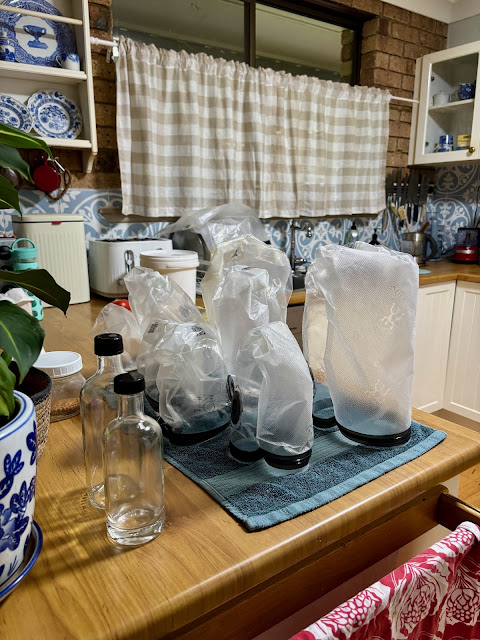
Every morning when I walk into my kitchen it looks tidy and ready for a day's work. Not so on this morning (above), I saw this when I walked in. Late the previous afternoon when I was looking for something, I came across my rolled up Zwilling vacuum bags and decided they had to be washed and dried. So I did that and although I usually put them outside on the verandah to dry it was dark by then. I turned the just-washed bags inside out and left them like this on a towel. It worked well and now the bags are ready to use when I bring home root vegetables, cabbages or whatever I buy that I want to last four or five weeks.
Image

You’ll save money by going back to basics

When I was doing the workshops and solo sessions, I had a couple of people whose main focus was on creating the fastest way to set up a simple life. You can't create a simple life fast, it's the opposite of that It's not one single thing either - it's a number of smaller, simpler activities that combine to create a life that reflects your values; and that takes a long to come together. When I first started living simply I took an entire year to work out our food - buying it, storing it, cooking it, preserving, baking, freezing, and growing it in the backyard. This is change that will transform how you live and it can't be rushed.  
Image


Trending Articles

NOT the last post

This will be my last post here.  I've been writing my blog for 18 years and now is the time to step back. I’ve stopped writing the blog and come back a couple of times because so many people wanted it, but that won’t happen again, I won’t be back.  I’ll continue on instagram to remain connected but I don’t know how frequent that will be. I know some of you will be interested to know the blog's statistics. 
Image

Every morning at home

Every morning when I walk into my kitchen it looks tidy and ready for a day's work. Not so on this morning (above), I saw this when I walked in. Late the previous afternoon when I was looking for something, I came across my rolled up Zwilling vacuum bags and decided they had to be washed and dried. So I did that and although I usually put them outside on the verandah to dry it was dark by then. I turned the just-washed bags inside out and left them like this on a towel. It worked well and now the bags are ready to use when I bring home root vegetables, cabbages or whatever I buy that I want to last four or five weeks.
Image

You’ll save money by going back to basics

When I was doing the workshops and solo sessions, I had a couple of people whose main focus was on creating the fastest way to set up a simple life. You can't create a simple life fast, it's the opposite of that It's not one single thing either - it's a number of smaller, simpler activities that combine to create a life that reflects your values; and that takes a long to come together. When I first started living simply I took an entire year to work out our food - buying it, storing it, cooking it, preserving, baking, freezing, and growing it in the backyard. This is change that will transform how you live and it can't be rushed.  
Image

Creating a home you'll love forever

Living simply is the answer to just about everything. It reduces the cost of living; it keeps you focused on being careful with resources such as water and electricity; it reminds you to not waste food; it encourages you to store food so you don't waste it and doing all those things brings routine and rhythm to your daily life. Consciously connecting every day with the activities and tasks that create simple life reminds you to look for the meaning and beauty that normal daily life holds.  It's all there in your home if you look for it. Seemingly mundane tasks like cleaning and cooking help you with that connection for without those tasks, the home you want to live in won't exist in the way you want it to.  Creating a home you love will make you happy and satisfied.
Image

Time changes everything

I've been spending time in the backyard lately creating a contained herb and vegetable garden. My aim is to develop a comfortable place to spend time, relax, increase biodiversity and encourage more animals, birds and insects to live here or visit. Of course I'd prefer my old garden which was put together by Hanno with ease and German precision. Together, we created a space bursting at the seams with herbs, vegetables and fruity goodness ready to eat and share throughout the year. But time changes everything. What I'm planning on doing now, is a brilliant opportunity for an almost 80 year old with balance issues. In my new garden I'll be able to do a wide range of challenging or easy work, depending on how I feel each day. It’s a daily opportunity to push myself or sit back, watch what's happening around me and be captivated by memories or the scope of what's yet to come.
Image

It's the old ways I love the most

I'm a practical woman who lives in a 1980’s brick slab house. There are verandahs front and back so I have places to sit outside when it's hot or cold. Those verandahs tend to make the house darker than it would be but they're been a great investment over time because they made the house more liveable. My home is not a romantic cottage, nor a minimalist modern home, it's a 1980’s brick slab house. And yet when people visit me here they tell me how warm and cosy my home is and that they feel comforted by being here. I've thought about that over the years and I'm convinced now that the style of a home isn't what appeals to people. What they love is the feeling within that home and whether it's nurturing the people who live there.
Image

Making ginger beer from scratch

We had a nice supply of ginger beer going over Christmas. It's a delicious soft drink for young and old, although there is an alcoholic version that can be made with a slight variation on the recipe. Ginger beer is a naturally fermented drink that is easy to make - with ginger beer you make a starter called a ginger beer plant and after it has fermented, you add that to sweet water and lemon juice. Like sourdough, it must ferment to give it that sharp fizz. To make a ginger beer plant you'll need ginger - either the powdered dry variety or fresh ginger, sugar, rainwater or tap water that has stood for 24 hours to allow the chlorine to evaporate off. You'll also need clean plastic bottles that have been scrubbed with soap, hot water and a bottle brush and then rinsed with hot water. I never sterilise my bottles and I haven't had any problems. If you intend to keep the ginger beer for a long time, I'd suggest you sterilise your bottles. MAKING THE STARTER In a...
Image

An authentic look at daily life here — unstaged and real

Most days Hanno was outside happily working in the fresh air. It may surprise you to know that I started reading my book,  Down to Earth , yesterday - the first time since I wrote it 13 years ago.  I had lent it to my neighbor, and when she returned it, I started reading, expecting to find surprises. Instead, I realised the words were still familiar—as if they were etched into my memory. As I flipped through the pages, I was reminded of how important it was for me to share that knowledge with others. The principles in Down to Earth changed my life, and I truly believed they could do the same for others. After just 30 minutes of reading, I put the book down, reassured that its message still holds true: we can slow down and reshape our lives, one step at a time.
Image